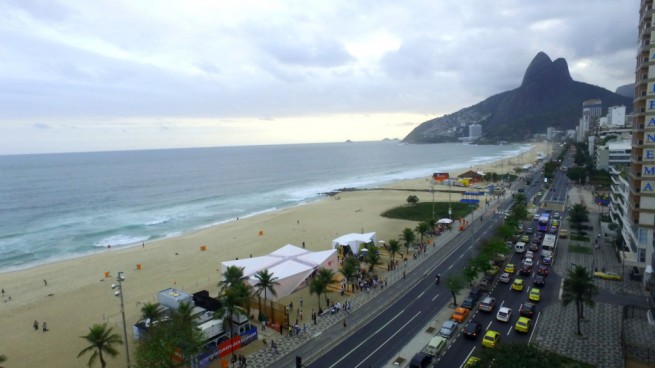
Skibotn in Northern Norway is probably the best place around the Lyngenfjord to go mountain biking. Here you will find a wide range of trails to choose from and in August the Downhillfestival “Stifestivalen” and the offroad race “Lavkarittet” take place.
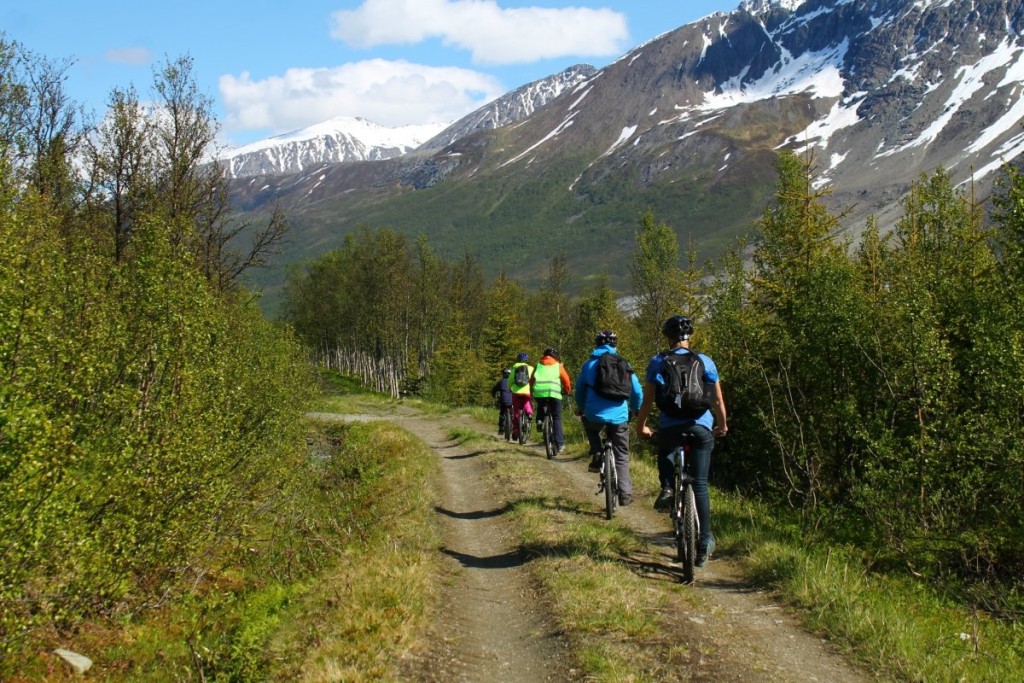
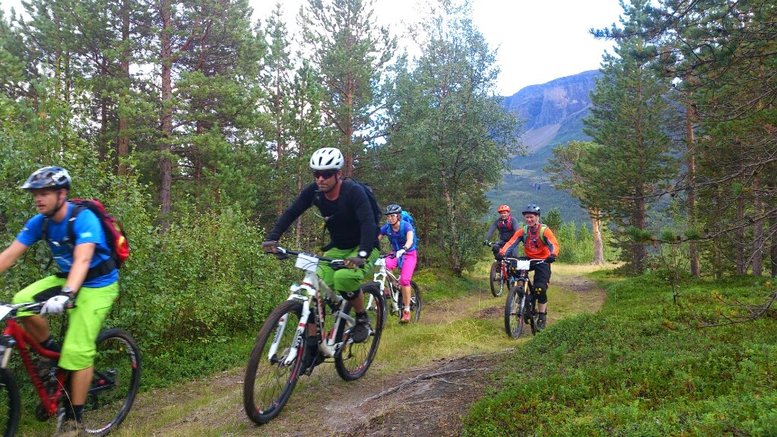
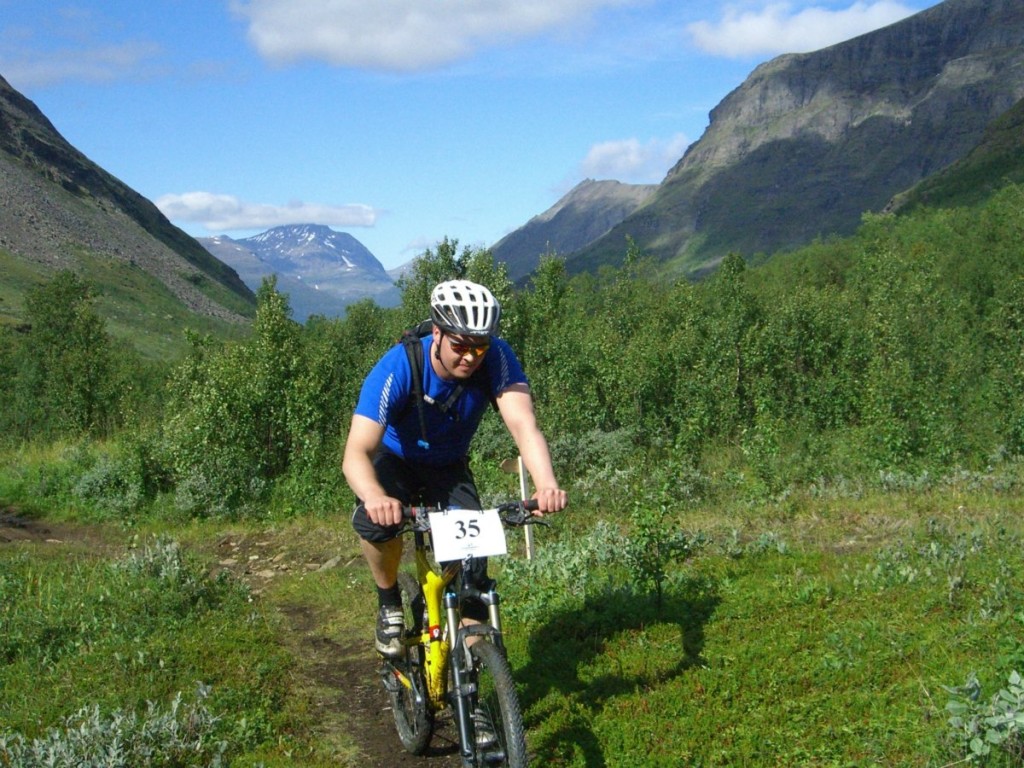
Bicycling tour at Jægervatnet. Photo: Inge StorsteinnesMTB race. Photo: Chris Brynjulfsen
Mountain biking in Northern Norway, and especially in the Lyngenfjord region, is an arctic experience. Trails up to almost 1000 meters above sea level, creates views of the impressive Lyngen Alps and the Lyngen Fjord, the midnight sun that allows for trips 24/7 and in the autumn the possibility to see the northern lights.
The village of Skibotn and the Skibotn Valley are the center of the mountainbike activities in the Lyngenfjord region and therefore most information is about Skibotn. Also the nearby valleys Kåfjorddalen, Signaldalen, Kitdalen and the mountains in between, are an Eldorado for mountainbikers who are looking for something special. Around Lyngseidet you will also find some trails.
Mountainbiking in Skibotn The dry climate in Skibotn and the Skibotn Valley ensures that you already early in the season can mountainbike here. The Lyngen Alps with the mountain Jiekkivarri (1834 meters) protects Skibotn from the wet weather coming from the Atlantic and is the reason for the dry climate. Skibotn have a rainfall of 300 mm per year, which is almost 10 times less than for example Bergen on the western coast of Norway.
Best time of year for Mountainbiking
Already in April/May, when there still is a lot of snow other places in Northern Norway you can go mountainbiking in the Skibotn region. From the middle of May the midnightsun is there, providing daylight 24 hours a day, giving you great experiences all day long.
Lavka race. Photo: Roy Mortensen
From July, when the snow has melted in the mountains, you can go higher in the mountains with the mountainbike. You will find several trails and smaller roads leading up to about 1000 meters providing great views of the region.
Skibotn biking
August can be considered the best month as there is no snow in the mountains, all trails are clear and it is still daylight for almost 24 hours a day.
Also September can be beautiful, with the autumn colors and northern lights dancing across the sky in the evenings.
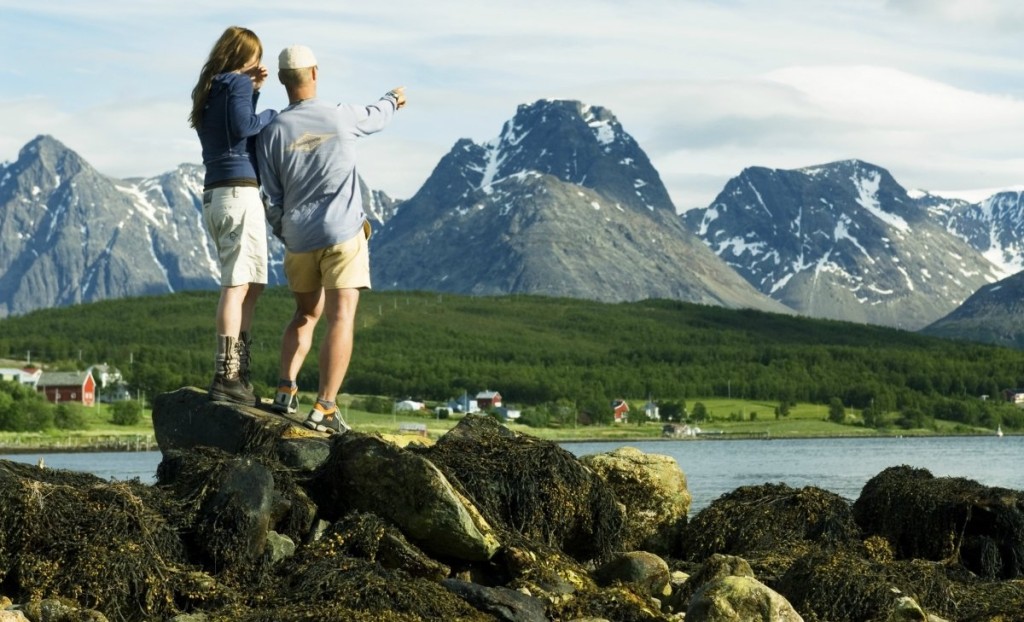
View towards the Lyngen Alps. Photo: Inge Storsteinnes
In October the first snow normally falls in the mountains, it gets colder and darker which makes the forest-trails around Skibotn more attractive before the snow falls there as well.
Lavka race (Lavkarittet). Photo: Sigmund Steinnes
The trails There are many single trails and forest roads in the valleys. In the mountains it is generally forest roads, ATV roads or construction roads for the power lines and/or the hydroelectric powerplants which you can use. There are also scattered hiking trails in the mountains, which can be difficult to navigate due to obstacles on the trails. Close to Skibotn, is also a partially prepared Downhill trail (“Hengen Ned”) which invites to fast downhill runs.
In general there are no marked mountainbike trails, with the exception of the Lavkarittet trail.
You will find a selection of tours here, in and around Skibotn. Furthermore you are reliant upon having your own map with you in order to find trails.
Visit Lyngenfjord
A possibility to experience new trails is to participate in the “Stifestival” which happens every august. At Stifestivalen you will meet likeminded people and join different guided tours in and around Skibotn.
Festivals/Races There are some popular bike events in the region. The offroadrace “Lavkarittet”, as well as the Skibotn Stifestival in Skibotn and “Lyngen Exp Enduro” in Lyngseidet. Skibotn Stifestival The Skibotn Stifestival is a gathering of likeminded people, interested in mountainbiking and downhill. Every year in August this festival takes place between a weekend, Friday – Sunday. Several guides ensure that you find the right trails and the offered guided tours are quite different so there is something for everyone.
Strandbu Camping is the basecamp for this festival. Here you can put up your tent, camp in your car or rent one of the cabins. In the evenings we gather around the open fire or inside the big tent. The meals will also be served here and on Saturday evenings there is usually live music.
Lyngen Exp Enduro This mountainbike and downhill gathering is a new festival in the region around Lyngseidet, showcasing what this region has to offer.
The basecamp is Magic Mountain Lodge in Lyngseidet, where you everyone can stay and eat together. Different guided tours will be offered and the social aspect of the festival is a big part of the gathering.
Lavkarittet The first weekend in August the race “Lavkarittet” takes place in Storfjord. It is the biggest offroad race in Northern Norway with over 500 participants. The event is divided into three different difficulty levels, so that everyone can participate.
The “Mini-Lavka” is for kids under 10 years and is 2,5 km.
The “Lavka30” is for 10 – 16 years and for those who want to participate in a shorter race.
The main race “Lavkarittet” is 65 km and starts in Hatteng. At first you follow the gravelroad up Kitdalen, before heading up the mountain. The trail becomes narrower once you get to the mountain and the views more impressive. After you pass the highest point, it goes fast down the Skibotnvalley and after 65 km you reach Skibotn and the goal.
Professional mountain bikers from the whole of Scandinavia participates, as well as amateurs who want to experience the mountains here. Lavkarittet is really an offroad race for everone.
H17, Scandinavia’s largest drug injection room in Vesterbro, Copenhagen, opened officially on 1st August.
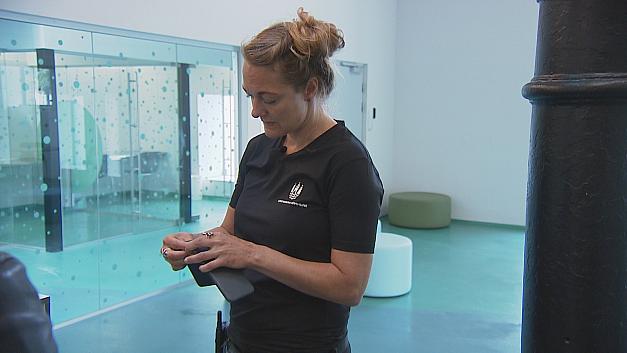
H17 offers 1,000 square meters of supervised facilities and is a new drug consumption room (fixerom) designed and decorated to specially suit the needs of drug users. Here they will find a sterile, supervised and supportive environment with access to medical and psycho-social services.
“Our primary goal is to reduce the impact of the harmful effects that come with living with a drug addiction on the street,” Louise Runge Mortensen, the head of H17, told Politiken.
Louise Runge Mortensen
“Here they can take their drugs in a safe environment, and because it’s so peaceful here, we can hopefully get some of them to consider talking to a treatment worker.”
Copenhagen Municipality estimates it will cost about 30 million kroner annually to run the facility.
Liselott Blixt
Liselott Blixt, the health spokesman for Dansk Folkeparti, believes the fixerum indirectly supports the sale of controlled substances by offering a space for drug users.
“I don’t think we have any other options,” Jesper Christensen, the deputy mayor for social issues, told DR.
“If we should give these people a life with dignity and a chance to move on, this is the best bet we have right now.”
According to Foreningen Fixerum, some 300 drug users die from overdoses in Denmark every year – one of the highest rates per capita in Europe.
Scandinavia’s Largest Drug Injection Room, source: Copenhagen Post
Photos by Nanna W. Gotfredsen (Danish Street Lawyers) and Sune Kehlet. Portrait photos:DR and private.
Østfold is the second smallest county in Norway, about the same size as Tana in Finnmark.
In the Middle Ages the name of the county was Borgarsysla, first recorded in 1543. The name Østfold is based on Norse dialect, as “Fold” at that time was the word for “fjord”. Later, when Norway was under Danish rule, the Danish king divided the area into many baronies. These were merged into one county (amt) in 1662 – and it was then named Smaalenenes Amt ‘the amt consisting of small len‘. The name was changed back to Østfold in 1919.
It is logical to divide Østfold into four parts; Halden and Halden water courses, The district of Fredrikstad and Sarpsborg, Askim / Mysen and the district of Moss.
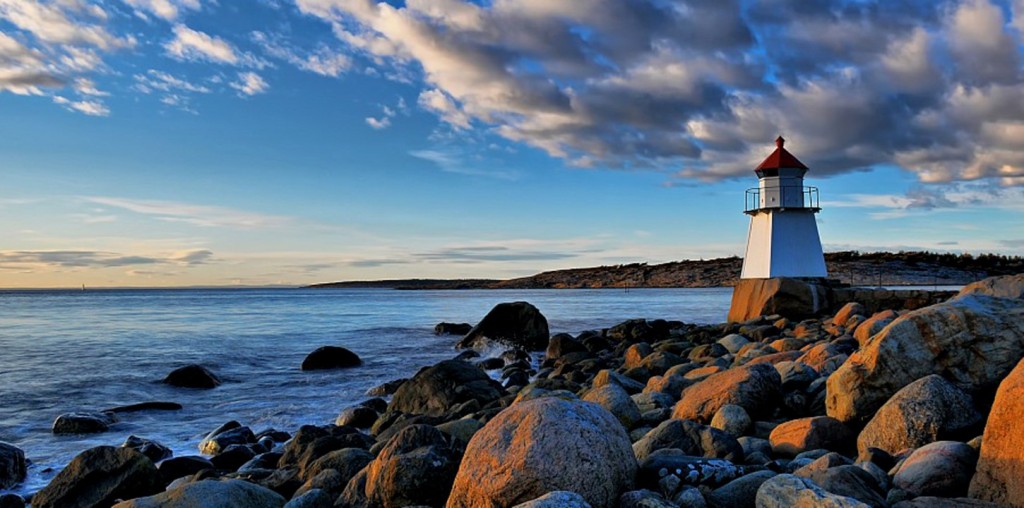
Walter Lighthouse
Østfold is among the nation’s oldest inhabited regions, with petroglyphs (rock drawings) and burial mounds throughout the area.
In the Viking Age, the area was part of Vingulmark, which in turn was part of Viken and included Båhuslen. It was partly under Danish rule until the time of Harald Fairhair.
Border between Sweden and Norway, Svinesund
The map may help us to describe Østfold. We cannot deny that the small “appendix” has played an important role in many contexts.
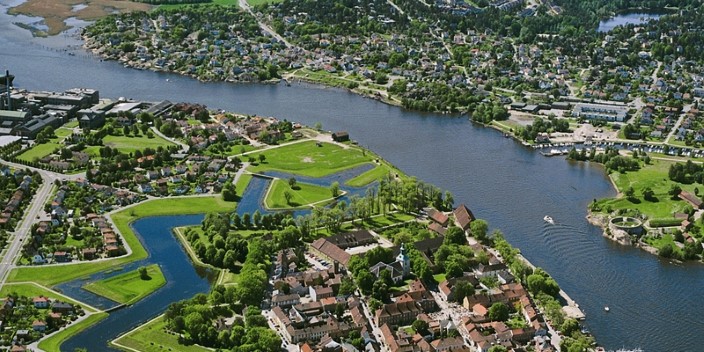
The old town in Fredrikstad
Østfold sits between the Oslo Fjord and Sweden. It is dominated by flat landscape with a lot of woodland in the north and along the Swedish border, a major lake system in the central part, and densely populated lowland area along the coast, with a relatively large archipelago.
The Glomma River
Norway’s longest river, the Glomma, flows through the county and out into the Oslo Fjord in Fredrikstad.
Photos: Visit Oslofjord
Feature image (on top): Autumn in Old Town, Fredrikstad
The Next Smallest County in Norway, written by Admin, based on Wikipedia.org
Spirits accelerator Distill Ventures decided last December to make a DKK 100m+ investment to finance significant growth for the Danish whisky distillery Stauning in Ringkøbing Skjern Municipality.
“It’s a dream come true.” So says Alex Højrup Munch, co-founder of Stauning Whisky, after the announcement today that they have secured an investment of over DKK100m (£10 million) in the Danish distillery.
The investment is coming from Distill Ventures, an accelerator for spirits brands backed and funded by Diageo, the world’s leading premium drinks business, and sees the maker of whiskies such as Talisker, Lagavulin, Oban and Caol Ila become a minority shareholder in Stauning Whisky, with the nine founders retaining control of the business and continuing to run it as an independent Danish distillery.
Alex Højrup Munch
“I have to pinch myself!. It is only 10 years ago that we started doing the first experiments with quality Danish whisky at Stauning. And now we suddenly get the opportunity to tell our story worldwide and let more people taste our unique whisky. We are obviously incredibly proud of the confidence that this investment shows in us and our whisky” says Alex Højrup Munch.
Ten years ago nine guys in the back of an old butcher’s shop stirred their very first mash in a 15 liter pot, getting ready to experiment with distilling in a 400 liter wash still and a 200 liter spirit still. One experiment led to another and soon their new hobby became a small distillery with one of them becoming employed full time.
Recently the distillery has slowly expanded, and today it employs five at the distillery, making approx. 15.000 liters of Stauning Whisky every year. “At Stauning Whisky we do every part of the process ourselves, at the distillery – from floor malting to bottling, design, and everything in between. We use Danish ingredients for our whisky, with most of the rye and barley grown in the fields around us, and even the peat for our peated single malt is from Denmark, giving it a unique taste. Besides single malt, we are also making a malted Rye that has been very well received around the world. Distilling our malted rye in our very small direct fired pot stills definitely gives it a lot of oily and fruity intensity, and makes it stand out compared to other rye whiskies,” says Munch.
The future
Now Stauning has been given the chance to take the dream of the founders to the next level, and make its whisky available around the world. “We are proud to announce that after looking at many new distilleries around the world, Distill Ventures was impressed with our whisky, brand and story; actually so impressed that they have made an investment. We, the founders, are still the main shareholders, so we are still very much in charge of Stauning Whisky and can keep our focus on making handmade Danish whisky of the highest possible quality. We are just going to make more of it, and the investment will allow us to expand our production significantly. We will keep every process in-house using the same local Danish ingredients,” says Munch.
Munch added: “We cannot wait to get started on building our new distillery which will stay true to how we make whisky today: using local barley and rye, doing all our own malting in house, using small stills and direct heat. Imagine the still house with more than 20 small potstills. It is going to be beautiful. We don’t know of another distillery of this size which does all of its own malting in house – doing it at a bigger scale has involved much planning and many experiments, until we were satisfied we can make exactly the same whisky as we do today.” The plan is to expand the distillery to a capacity of about 50 times the production of today. This will make it a similar size to the Scottish distillery of Oban. The construction is due to begin this autumn and the first distilling will take place in 2018. In the meantime Stauning will keep distilling in its current buildings.
Awards:
2014 World Whisky Awards
Stauning Peated
2014 World Whisky Awards
Best European Rye 7 years and under.
2013 International Review of Spirits Award: Platinum Medal (96 points)
Stauning Young Rye
In the mid-1800s, Sondre Norheim, a young farmer from Morgedal, in the county of Telemark, created a whole new style of skiing. Morgedal is in the mountains, so the skimakers there sought designs that would perform well in the surrounding rugged terrain, both in everyday winter skiing and for impromptu sporting meetings.
Norheim modified his skis by adding firm bindings, which hold the ski boots to the skis and allow rhe feet control over them. He also gave them “sidecut”, a slight hourglass profile when seen from above, which enables the skis to run true and turn easily.
Sondre NorheimTelemark ski binding and boots
Norheim and his friends used the adapted skis to perfect new manoeuvres, including landing from airborne flights off snow-covered rooftops and natural outcrops. Soon they were ready to show off their new skills, and this led to the first ski-jumping contest in 1879. The bent-knee stance with one ski trailing soon became known as the “Telemark”.
Telemark skiing in Telemark costume
In modern Telemark skiing, the heel is free to lift up from the ski and turns are steered, with one ski trailing and at an angle to the other. Competitive Telemark ski races are now held on packed slopes, as are Alpine ski races, but true Telemark skiing has spawned the revival of skiathlons, in which competitors must ski jump, ski through a slalom course, and run a cross-xcountry ski race, ll on the same pair of skis.
The bicycle is an important mode of transport for Danes and visitors to Denmark alike. Bikes outnumber cars in some city areas, where the streets have bicycle lanes and traffic lights.
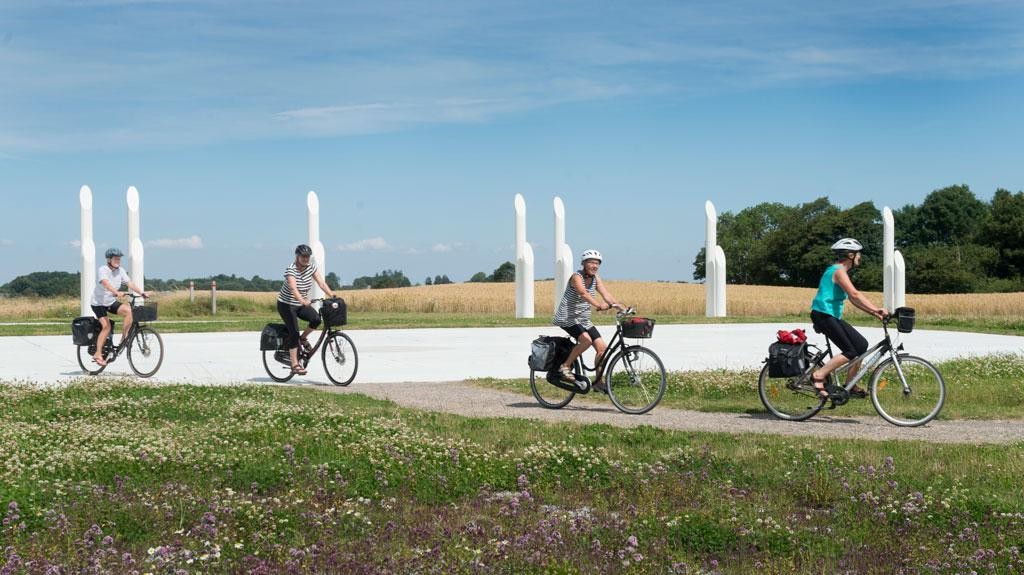
Denmark has thousands of miles of cycle paths, and bikes may be taken on most trains and ferries. Tourist offices can provide detailed maps of routes. Hærvejen is a bicycle and walking trail that stretches from the German border to Viborg in north-central Jutland.
Bicycling on Hærvejen
Traders and travelers beat this path a few thousand years ago, and much of it still looks as it did during Viking times. All along the route there are inns, hotels or hostels, as well as shops for provisions.
Hærvejen Cycle Route
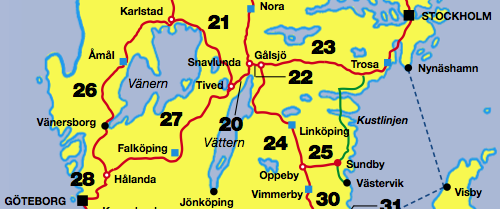
Cycling is also a popular outdoor sport for Swedes, and there are many well-designed and well-lit routes all over the country. You could spend a week touring the islands of Gotland or Bornholm on a bike. Keen cyclists alsp head for Östergötland, particularly along the banks of the Göta Kanal where the towpaths make ideal cycling tracks.
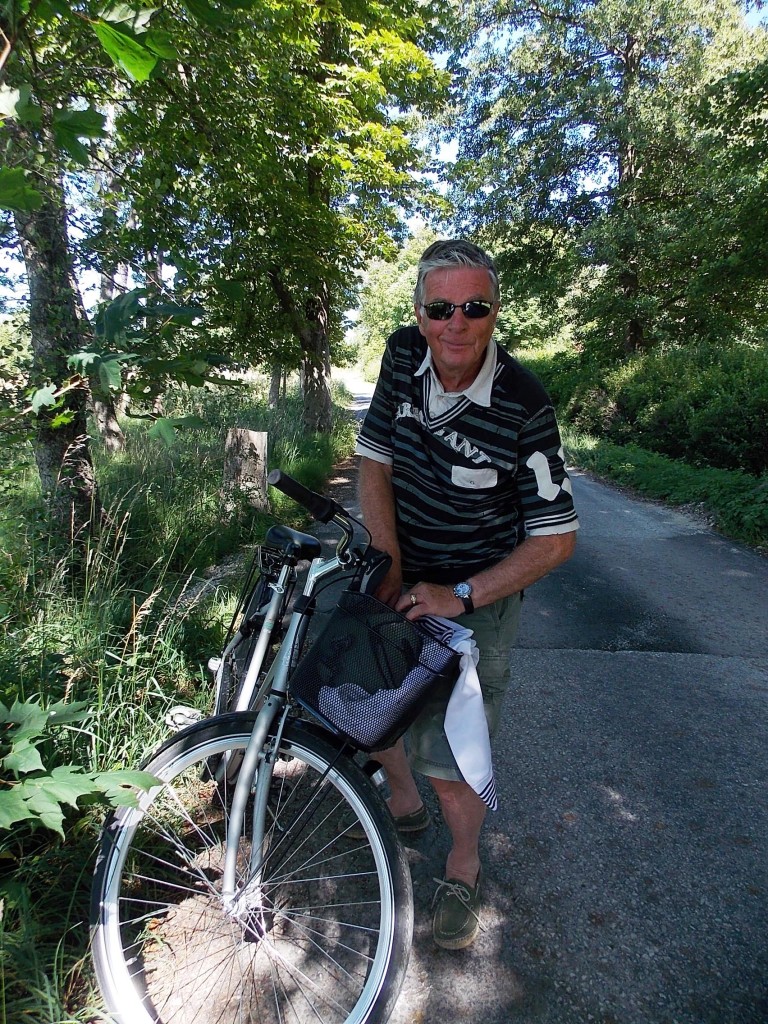
The editor bicycling in Sweden. Photo: Helgard Mahrdt
Bikes can be hired at several places along the canal, and the most popular stretch for cyclists is between Berg and Borensberg. For the truly ambitious, there is the Sverigeleden (Sweden Bicycle Route), from Stockholm to Gothenburg – a distance of 2,600km (1,600 miles).
Sverigeleden
On Two Wheels in Scandinavia, written by Tor Kjolberg
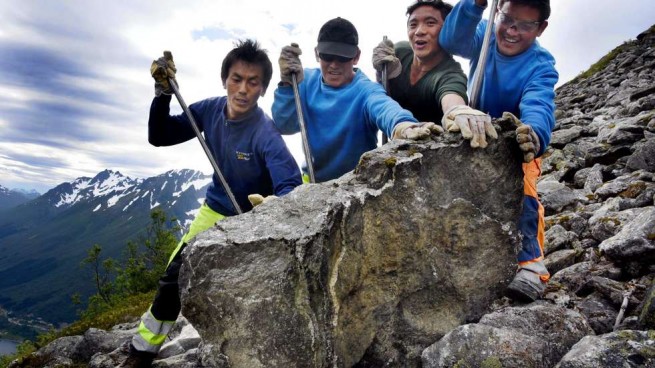
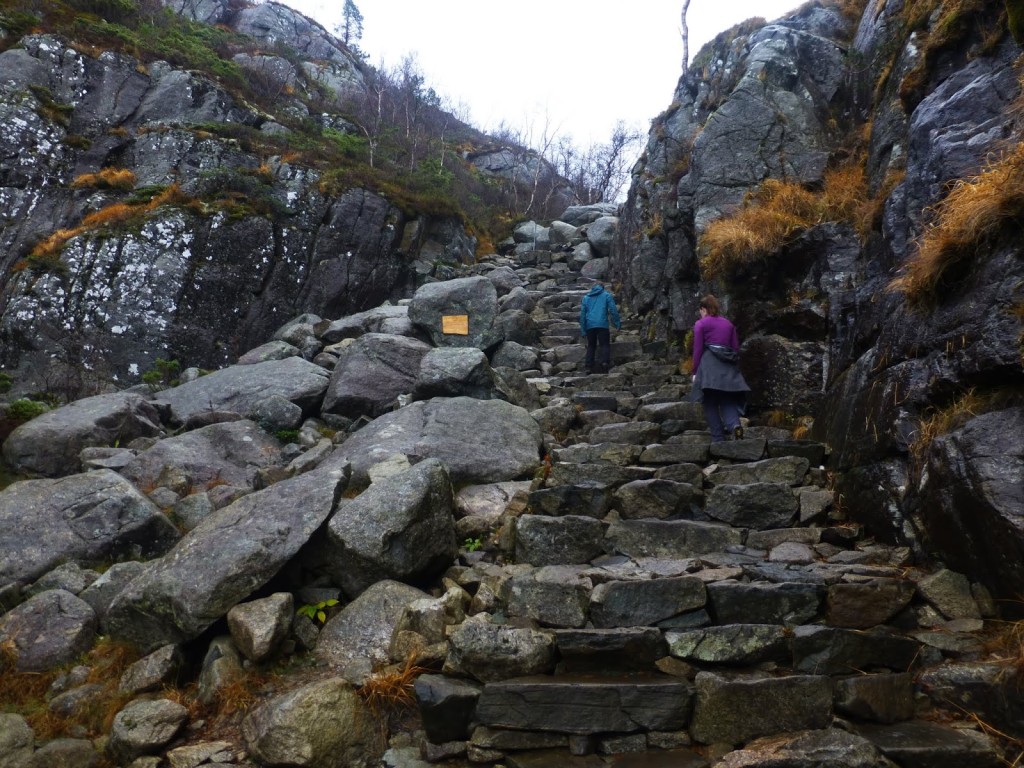
Two years ago, Sherpas from Nepal finished building the 2,000 stone steps at Hallingskarvet, Norway. Record number of visitors has walked the steps this year.
According to a NRK report, in the course of five weeks, 18,000 people have walked up to the characteristic Hallingskarvet, which is the highest mountain in the county of Buskerud.
Sherpa stairway at Hallingskarvet
The Sherpa team was contracted by Tinn and Vinje municipalities four summers in a row to improve trekking trails, including the one at Gaustadtoppen. Some of the Nepalis work on Himalayan expeditions, and this off-season work in Norway supplemented their income. They all came from Khunde village in Khumbu, situated at 3,840 m.
Crossing a river near Nesbo
“Everyone wants to walk the path to Hallingskarvet. It is easy, and you come to Prestholtseter, located 250 meters from the national park boundary. It is safe for everyone, young and old,” says Petter Braaten in the Norwegian Nature Inspectorate about the stairs the Sherpas built.
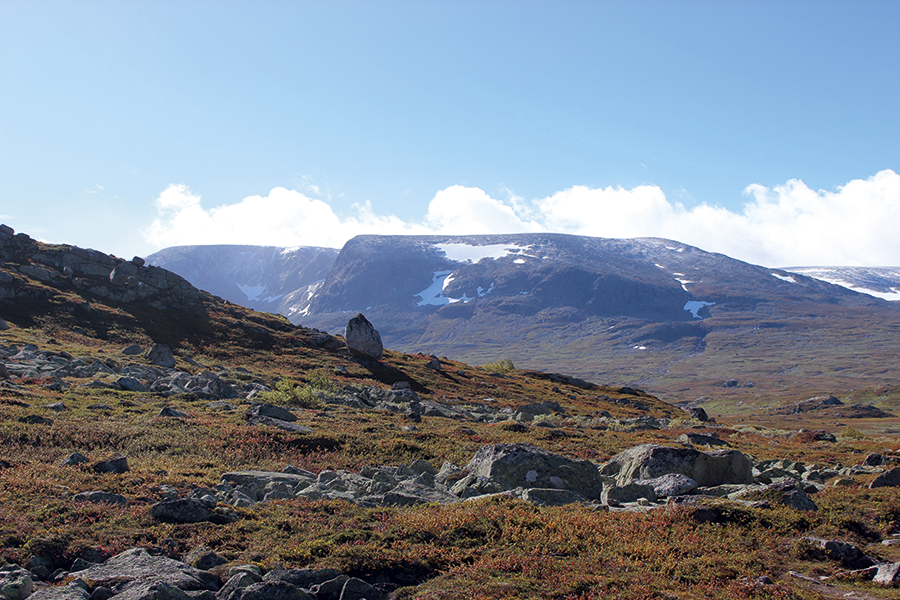
Hallingskarvet
“It has been a good investment. It saves the terrain from wear, which is important to preserve the national park. But at the same time it is important for the added local value, tourism and the Hol municipality,” explains Braaten.
Small portion of sherpas’ stonework
The Sherpa stairs extend from Prestholseter to Skarvsenden on Hallingskarvet, 1705 meters above sea level. The stairs were placed according to Nepalese traditions to fit the terrain and to make it easier to walk into the national park while protecting the landscape.
Sherpa stairs leading to record visitors at Hallingskarvet, source: NTB scanpix / Daily Scandinavian
What accounts for the Nordic countries’ strong welfare states? Hint: it’s not white homogeneity.
There’s a reason the Scandinavian welfare states are still the envy of many across the world. Even decades into a neoliberal project to reform them, Scandinavia sports relatively high income equality, large, tax-financed welfare programs, powerful unions, and relatively low unemployment rates.
Neoliberal textbooks tell us that the only way to societal prosperity is through low tax rates, deregulated business, and cut-throat competitive labor markets. Yet despite failing to meet the metrics of the Anglo-American variety of capitalism, Scandinavian countries stubbornly continue to prosper, and regularly come out on top of the global indexes of happiness and quality of life.
It is no surprise, therefore, to find neoliberals and conservatives devoting considerable intellectual energy to delegitimizing the “Nordic Model” of public welfare.
Earlier this year, the Institute of Economic Affairs, a British neoliberal think tank, devoted an entire book to Scandinavian “unexceptionalism.” The aim was to explain away the success story of the Nordic welfare states, arguing in classical Hayekian fashion that the success of the Nordic countries predates the era of public welfare, and that anything exceptional and successful about it has vanished since then.
Meanwhile in the US, where the Bernie Sanders campaign has thrown ideas of Nordic social democracy into the political mainstream, National Review’s Kevin Williamson has adopted the opposite strategy. In a couple of recent pieces he acknowledges the continuing exceptionalism of the Nordic experience and admits that the Nordic countries have indeed been relatively successful until very recently.
But in a strange plot twist Williamson also racializes the Nordic experience, tying the success of social-democratic policies to the alleged whiteness and homogeneity of the Nordic countries, thus undermining its credibility as a source of inspiration for American progressives committed to antiracism.
Bernie Sanders
The “Nordic Consensus”
In a National Reviewpiece published in early July, Williamson calls Sanders a “national socialist” and denounces his use of “Us and Them” rhetoric as un-Scandinavian.
Kevin Williamson
Williamson construes Sanders’s willingness to highlight conflicts of interest in popular power as being supposedly the “polar opposite” of how politics is done in Scandinavia — where politics is “consensus-driven” — and that where this “conformity” constitutes a “stabilizing and moderating force in politics, allowing for the emergence of a subtle and sophisticated and remarkably broad social agreement that contains political disputes.”
Scandinavian politics is much less partisan and more coalition-prone than in the US, with proportional representation effectively denying any one party an absolute parliamentary majority. But we should not mistake a contingent twentieth-century historical conjuncture of relative political civility for a supra-historical essence of Nordic political culture.
The Nordic consensus
Today the universal welfare state and regulated, egalitarian labor markets, are so popular among voters that even liberal or conservative politicians wanting to dismantle them have to run as defenders of public welfare if they wish to avoid electoral suicide. But this situation did not emerge from the mists of history. It is the product of decades of struggles from organized labor and other popular movements throughout the twentieth century.
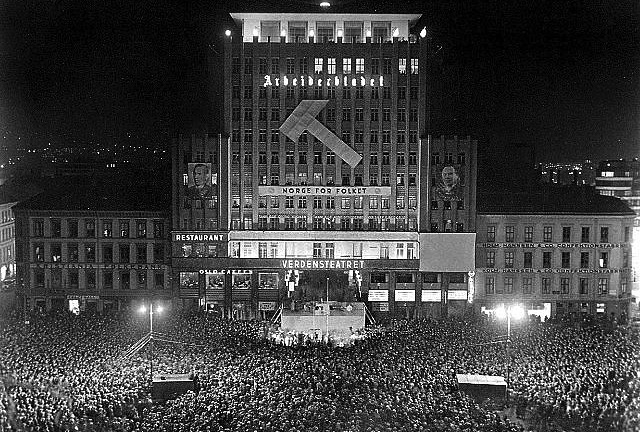
The social-democratic welfare state has faced strong historical challenges — both from the Left, by strong communist and new left movements, and from the Right, by organized business, such as the powerful Swedish employer organization SAF, and by Tea Party-like anti-taxation movements, which appeared in the 1970s in Norway and Denmark.
Simply put, the “Nordic Consensus” has never been as comprehensive as Williamson would have us believe.
Norway’s prime minister Erna Solberg is warning Britain’s prime minister David Cameron not to exit EU
Social-Democratic Privilege?
Shortly after the “national socialist” essay, Williamson published another piece entitled “The Whitest Privilege.” In it, he performs an astonishing piece of pseudo-psychoanalysis of those on the American left who point to the Scandinavian welfare states as a source of political inspiration.
White privilege
Progressives might say they want to adopt Scandinavian-style institutional models of public universal welfare, but what they reallymean, Williamson informs us — with a hefty dose of hermeneutics of suspicion — is that they don’t like ethnic diversity: “’We’d like to make America more like Norway or Finland’ is, among other things, a way of saying, ‘We’d like to make America more like a virtually all-white society.’”
This accusation seems all the more odd considering it was Williamson himself who only two days prior reminded us that it is conservatives — not progressives — who have long theorized ethno-cultural homogeneity as the key to political-economic success: “That the relative success of the Western European welfare states, and particularly of the Scandinavian states, is rooted in cultural and ethnic homogeneity is a longstanding conservative criticism of Bernie-style schemes to recreate the Danish model in New Jersey and Texas and Mississippi.”
In any case, the premise of Williamson’s masked attempt to racialize the Scandinavian success story is flawed. Williamson writes that the “nations of Northern Europe” were until recently “ethnically homogeneous, overwhelmingly white, hostile to immigration, nationalistic, and frankly racist in much of their domestic policy.”
The first two of these observations — homogeneous and white — are obviously true, but mundanely so. However, the ensuing claims bring Williamson onto thin ice. Perhaps half-realizing that it would be plainly false to directly describe his actual target, the Nordic countries, as particularly racist, xenophobic, or nationalist compared to other countries, in Europe or around the world, Williamson opts for the wider and vaguer descriptor “Northern Europe.”
Scandinavia is not exceptional by European standards when it comes to racism and nationalism, and one can readily find examples of both hostility to immigration, chauvinistic nationalism, and racist policies in the histories of the Nordic countries.
For example, like most European countries, antisemitism was bad in the Nordic countries before World War II, and nationalist fervor swept through all of the Nordic countries in the nineteenth century, as it did around the world.
Likewise, to the limited extent that the Nordic countries have colonial histories, there is also a history of institutionalized racism (á la Belgium, Germany, Spain, Portugal, the UK, the Netherlands, France, the US, etc.) that has survived into contemporary times. The abysmal treatment by Danish authorities of the indigenous population of Greenland is a case in point from the post–World War II period.
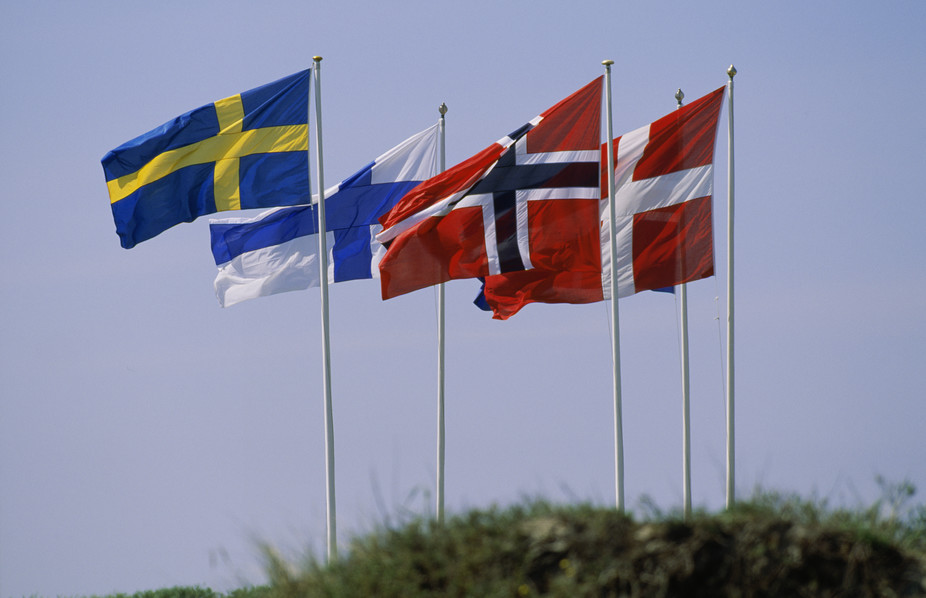
Prime ministers of the Nordic countries on a meeting
But Williamson fails to prove first, that the Nordic countries — whether we are talking about state policy or popular sentiment — really do have a consistently worse track record than other countries (including the US), and second, that racism played any part in the establishment of the Nordic-style universal welfare states in the twentieth century.
Williamson’s attempt at substantiation of the claim of intrinsic Nordic xenophobia is limited to a selective set of facts about Swedish immigration history, presumably the ugliest truths he could find. On closer inspection, they all seem to be derived from a single article by anthropologist Charles Westin, and none seem to really support Williamson’s insinuation of institutional Swedish racism.
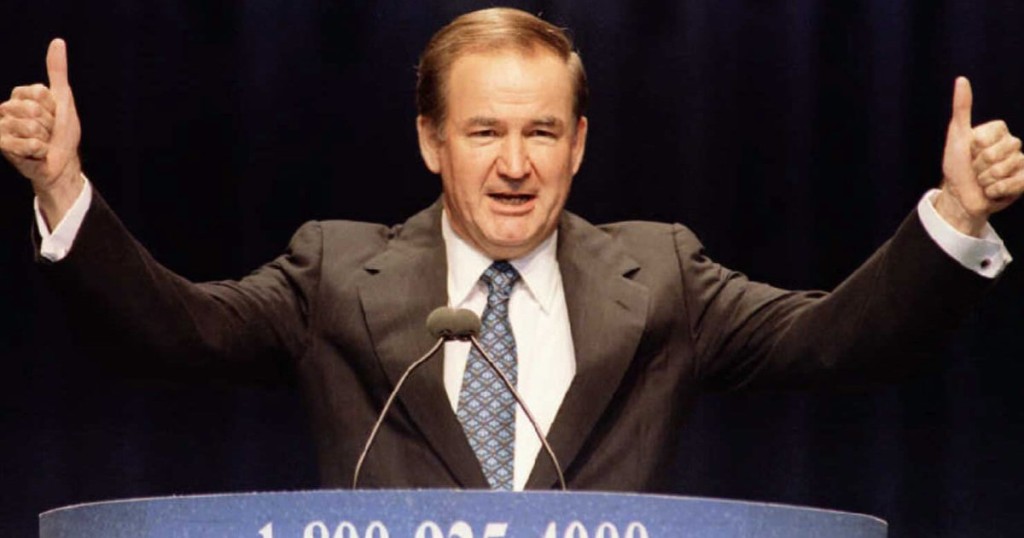
We are given three pieces of information. First, that most of the worker immigrants coming to Sweden for many years were from other Scandinavian countries, because the trade-union confederation was worried about “cheap foreign labor.” In highlighting this fact, Williamson simply displays his ideological proclivities by identifying any opposition to controls on national labor market entry, whatever its motivations, as by definition “Buchananite.”
Pat Buchanan
Yet the stance of the Swedish trade-union confederation, the LO, was evidently not motivated by xenophobia. Rather, the purpose was to defend the living conditions of any worker in Sweden, regardless of race, ethnicity, or citizenship. As Westin writes (but Williamson conveniently forgets to add): “[The LO] agreed that importing cheap labor would not be allowed and that foreign workers were to enjoy the same wage levels and rights as Swedes, including access to unemployment benefits.”
Second, we are told that many Jews were rejected when seeking refuge in Sweden in the 1930s and 1940s due to prevalent antisemitism. What Williamson does not tell us is that this picture changed fairly drastically during the war itself, as large numbers of Jews from both Norway and Denmark (alongside members of the movements resisting the German occupation) escaped to Sweden. Here, again, Westin is informative: “At first there was some reluctance to accept these foreigners but fairly soon they were generally accepted and even welcomed.”
Parliament of Sweden (Riksdag)
Third, we are told that “the modern Swedish word for ‘immigrant’ does not mean ‘foreign-born person,’ but ‘non-Nordic person in Sweden.’” This fact does have some bite, but here too Williamson forgets to give us the whole story — this time about the active attempts of the Swedish state to combat this unfortunate habit of thought.
As Westin writes:
Today, authorities avoid the term “immigrant,” using instead “persons of migrant origin” in official discourse. A policy of diversity management was introduced some years back in order to counteract tendencies of social exclusion and stereotyping. More teeth have also been put in to the previously rather weak laws on ethnic discrimination.
In sum, Williamson’s case presenting the Nordic Model as inherently racist is weak at best. It is certainly true that the Nordic countries today all have sizable right-wing populist movements dominated by xenophobic sentiment, but this is equally true for most other European countries.
Obama hosts Nordic leaders
Indeed, if the Nordic-style welfare state is particularly compatible with and conducive to racism, how does one explain the similar growth of xenophobic right-wing populism in France, Switzerland, and the UK, all countries with distinctly different social systems?
It is true that we have yet to see strong antiracist and anti-discrimination movements in Scandinavia analogous to the Civil Rights Movement in the US. But on the other hand, one would also be hard-pressed to find examples in modern Nordic history of equivalents of the organized grassroots racism of the Ku Klux Klan or the institutionalized racism of Jim Crow.
We are not suggesting that the Nordic populations are inherently less racist than other populations. We are merely saying that Williamson fails to prove there is anything intrinsically racist or nationalist about the Nordic experience. Nor did twentieth-century Nordic welfare states make ethnic exclusion a key principle of functioning; on the contrary, they were based on universal principles of entitlement-through-citizenship, and not on internally exclusionary principles based on race or culture.
Scandinavian Exceptionalism
If “white homogeneity” is not a key variable, how should we then explain Scandinavian exceptionalism? The first step is realizing that many aspects of the development of the Scandinavian welfare state are not that exceptional — they are a variant of the general Western European experience.
The modern Nordic states have been in the fortunate position of developing in the immediate geographical proximity of the core countries of the capitalist world system, while also maintaining political independence. This serendipitous historical circumstance meant that the Nordic countries profited, directly or indirectly, first from the trade flows of early mercantile capitalism and later from industrialism and colonialism.
At first they developed through lucrative trade in primary commodities — processed agricultural goods in Denmark, timber and metal ore in Sweden — but from the late nineteenth century onward they managed to industrialize. As a result, the Nordic countries, like the rest of Northwest Europe, turned out comparatively rich and well-organized.
Scandinavia was also not alone in developing comprehensive social welfare systems in the twentieth century. Across Western Europe, the kernel of a social compromise around the building of universal welfare institutions emerged in the early twentieth century in step with the rise of organized labor movements.
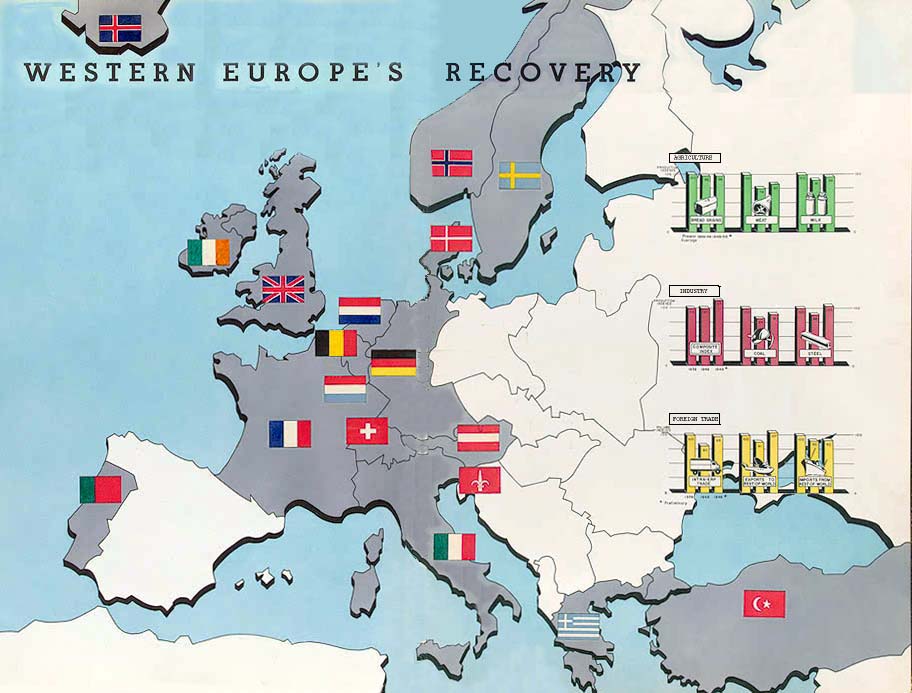
The Marshall plan
In the aftermath of World War II, European elites, wary of a radicalized workforce and the rise of Soviet Communism, found it necessary to compromise with labor in order to retain the capitalist system. This resulted in rapidly rising real wages and the building of social welfare institutions in all of US-controlled Western Europe, helped along by Marshall Aid and generous access to the American market.
Here again, Scandinavia conformed to the general West European trend. But this new model of social capitalism took a more radical form here than elsewhere. Under the hegemony of strong social-democratic parties, redistribution and welfare provisions in areas such as health care, education, transport, and housing reached an extent not seen anywhere else in Europe.
This was to a large degree the product of uniquely strong labor movements, politically empowered by robust alliances with social-democratic parties. Labor managed to achieve political hegemony by forging alliances with other popular movements supporting egalitarianism and democratization, most notably the peasant-based corporative movement and the women’s movement after the 1970s.
The Scandinavian welfare state probably reached its apex in the 1970s and ’80s, when inequality was at some of the lowest levels recorded in capitalist economies. In addition, Denmark and Sweden saw widespread union support for programs of economic democracy, which through wage-earner funds would gradually take over the ownership of the means of productions.
However, it was also at this time that the Nordic model started to show its first cracks.
The social-democratic project never managed to successfully challenge the power of privately owned capital. When the pressures of international competition and European economic integration narrowed the space for national policy and moved the political terrain decisively in favor of business, the social compromise underlying the “Nordic welfare model” started to unravel.
In this conjuncture, the Nordic model proved fragile, and Scandinavia was not immune to the neoliberal wave that swept the globe after the fall of the Berlin Wall. Since the 1990s even the Nordic social-democratic parties have largely adapted to a new policy consensus around privatization, deregulation, and reduction of social rights and benefits. As a consequence, the social systems of Scandinavia are gradually approaching the European mainstream.
The Rise of the Right
It is within the context of the welfare state’s deterioration that one can understand the specific form that right-wing populism has taken in Scandinavia.
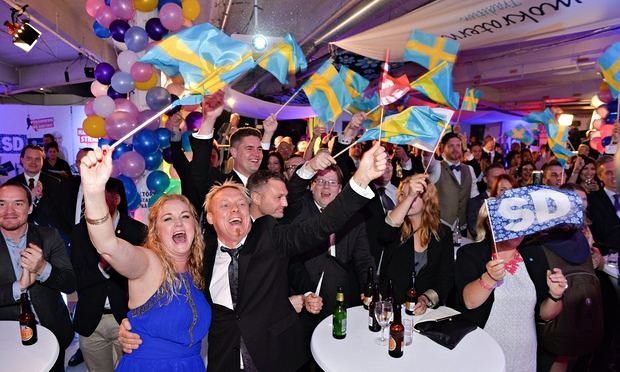
Sweden democrats
Williamson is actually on the mark when he points to “welfare chauvinism” as a contemporary malaise in the Nordic political climate, but he fails to understand the causes of this phenomenon. The rise of the True Finns, Norway’s Progress Party, the Danish People’s Party, and the Sweden Democrats is a product of national particularities. But common to all of these groups is the crucial support they draw from significant fractions of the working class that, since the 1980s, have become uprooted from relatively secure lives as a consequence of deindustrialization and welfare retrenchment.
Moreover, the weakening of the labor movement in the neoliberal era has produced a negative feedback loop that has cut the deep ties — the civil society infrastructure — between the labor movement, the Social Democrats, and the working-class public and undermined solidaristic values.
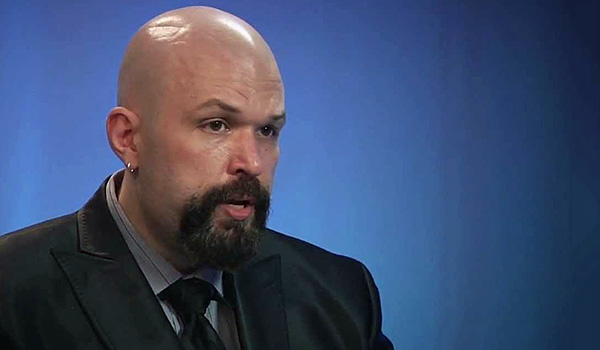
Magnus Marsdal
In his book on the rise of Progress Party, Norwegian author and researcher Magnus Marsdal describes how traditionally social-democratic working-class voters are unable to identify with a social-democratic party that seems absorbed by academic technocracy and completely detached from the worries of ordinary blue-collar voters. With the dominant parties advocating the same sort of economic policy, these voters instead turn to the issue of immigration when deciding their political allegiance.
The historical peculiarity of the xenophobic, right-wing populism now sweeping the Nordic countries and the rest of Northern Europe is its co-articulation with the defense of the crumbling welfare state. As social protection decreases, some people come to misconstrue two effects of globalization and capital restructuring — mass immigration and deteriorating welfare services — as being causally related.
It is precisely because the Nordic welfare states are universal, and not ethnically exclusionary, that two analytically distinct problems have become juxtaposed in contemporary Nordic politics: on the one hand, maintaining a welfare state under the pressure of neoliberal globalization; on the other, managing the transformation from mono-ethnic to multiethnic society.
The intermarriage between two forms of security-inducing nostalgia — ethno-cultural and material — is welfare chauvinism in a nutshell. But this welfare chauvinism is not a logical continuation of the Nordic welfare state. Rather, it is a sadly infectious deviation from it, produced by popular despair after more than three decades of neoliberal reforms.
Lessons From the Nordic Experience
This does not mean that there is no inspiration to be drawn from the Scandinavian social system for progressives abroad. From tax-financed free education to subsidized child care and generous unemployment benefits, there are plenty of programs that are still among the most progressive in the world.
The Nordic welfare system
But while drawing on these policies for inspiration, it is important to note that Scandinavian exceptionalism is not based on a given set of institutions and policies ready to be implemented by enlightened technocrats. The Nordic countries’ institutional blueprints were produced by a strong labor movement in alliance with other popular forces. When this basis started to erode, as happened in Scandinavia from the 1980s onwards, so did the welfare institutions.
The only way to get “Scandinavian levels” of redistribution and social protection is to start building powerful popular movements capable of advancing this agenda.
A successful US movement for a comprehensive welfare state in a multiethnic country would provide not only an excellent response to explicit or implicit cultural determinism, but could also be an important source of inspiration for European progressives in search of effective tools to combat welfare chauvinism.
What Makes Scandinavia Different? written by
Rune Møller Stahl and Andreas Møller Mulvad, PhD candidates in political science at the University of Copenhagen
“What Makes Scandinavia Different?” was first published by Jacobin Magazine. We thank the publishers for their kind permission to reprint the article.
In May 2001 Hans Rasmus Astrup paid almost six million US dollar for a larger than life gilded statue in porcelain made by the American artist Jeff Koons. It is a rendering of the King of Pop, Michael Jackson, and his beloved pet chimpanzee.
The statue was bought at a Sotheby’s auction in New York, 13 years after Jeff Koons had made the porcelain figure with religious associations likely based on a press photo titled “Banality”.
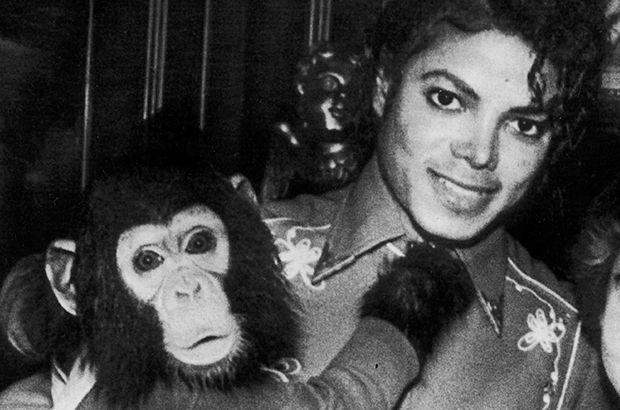
Michael Jackson with Bubble
The price the Norwegian collector paid was more than double of the artist’s previous auction record, even if the statue “Michael Jackson and Bubbles” exists in four versions. Since then prices on Jeff Koons’ works have increased considerably. Today you may watch Michael Jackson and other Jeff Koons works at the Astrup Fearnley Museum of Modern Art in Oslo.
Astrup Fearnley Museum of Modern Art in Oslo
Koons has a knack for genre-bending. His tolerance for all aspects of culture has garnered him more than a few celebrity fans. Lady Gaga commissioned Koons to create an artwork for her 2013 albun “Artpop”. Jay Z name-checked him in “Picasso Baby” and Kim Kardashian posted an Instagram photo of the artist with her and Kanye West’s infant daughter and Pharrell Williams collects his works.
Jeff Koons with his Michael Jackson Bubble sculpture
“Michael Jackson and Bubbles” depicts the legendary Michael Jackson leaning back on a flower bed while his pet chimpanzee Bubble rests on his lap. Jackson and Bubbles wear similar clothing, and are colored similarly while parts of their bodies mirror with each other.
The sculpture is fabricated by Italian ceramists using gold and white “Rococo” palette and measures almost six feet across. Michael Jackson will forever reign as King, but at the time Koons had the sculpture made, there were murmurings in the media and in society about Jackson’s lightening skin tone. Koons presents Jackson with almost stark white flesh.
Michael Jackson and his Bubble
“If I could be anyone,” Jeff Koons repeatedly proclaimed, “it would be Michael Jackson”. It made sense, then, that Koons would choose a portrait of the entertainer as the centerpiece for his 1988 exhibition. Koons produced four editions, and many of Jackson’s fans were offended by how the porcelain made Jackson appear white and feminine. Koons, however, claimed that Michael Jackson is the contemporary Apollo.
“…The work makes many people uncomfortable – angry, even. Why is that? Is it the physical relationship between the man and the animal? The fact that Bubbles is dressed? The mere fact of depicting Jackson at all? Or perhaps the gaudy use of gold? Jackson’s gilded costume brings out his red lips, and the dark make-up around his eyes. His porcelain-white skin may be the most unsettling detail of all.”
“…The works from “Banality” represent a line from Duchamp’s ready-mades and Andy Warhol’s silkscreen image transfers, but through the appropriation of such subject matter as fairytales, Buster Keaton, the Pink Panther or Michael Jackson. Their chief originality and achievement lies in the way in which Koons creates a new kind of artistic language, extracted from “mass consciousness.” “
Filmmaker John Waters, who had public conversations with Koons, refers to the sculpture as the artist’s “scariest piece”. Jackson himself, however, was “very supportive” of the project and even sending over press photographs at Koons’ request. “This was a time when Michael was going through a lot of plastic surgery, so I had to use multiple pictures to keep up with it,” says Koons.
This piece is now a beautiful representation of Jackson’s younger days before he was ridiculed by some and deified by others. The gold almost depicts a time when anything Michael Jackson touched turned to gold.
About Jeff Koons Jeff Koonswas born in 1955 in York, Pennsylvania. He studied at the Art Institute of Chicago, and received a BFA from the Maryland Institute College of Art, Baltimore (1976), and honorary doctorates from the School of the Art Institute of Chicago (2008) and Corcoran College of Art and Design, Washington, DC (2002). Koons plucks images and objects from popular culture, framing questions about taste and pleasure.
Watch Michael Jackson in Oslo, written by Tor Kjolberg
Visit Denmark and The Danish Ministry of Business and Growth are in charge of the Denmark House on Ipanema Beach in Rio – an initiative supported by and developed in cooperation with among others Industry Foundation, Nordea Foundation, Realdania and Grundfos.
Olympic Pavilion on Ipanema Beach, Rio de Janeiro
The Danish presence on the iconic Ipanema Beach has proved to be a success. Everyday hundreds of people are coming to see the innovative and interactive exhibitions and all exciting activities.
Activities at Danish pavilion in Rio
The Heart of Denmark pavilion brings action to the sands of Life Guard Post 10, on Ipanema, this August – and besides the permanent exhibition, concerts, sports games and cultural schedule, two activities will attempt to break world records:
Visitors working on making world’s biggest LEGO bicycle
On August 6 and 7, visitors to the pavilion accompanied the construction of the biggest bicycle made of LEGO® pieces during an Olympics Games, built by fans of the brand, known as AFOLS (Adult Fans Of LEGO®), while the general public took part, as pairs, to build miniature versions.
Danish bicycles in Rio
On August 16 and 17, a large heart made of recycled materials is another record that the Danish Hospitality House wants to break during the Rio 2016 Olympic Games.
Promoting Denmark at the Danish pavilion
”LEGO has become one of the world’s strongest brands, because they know how to take children’s play seriously and they recognize its significance in child development and learning. The same line of thought is reflected in other parts of Danish society, where play is used as a means to bring people together and to encourage innovation and creativity. We would like to share some of these Danish examples with the Brazilians and the rest of the world, while we are on Ipanema Beach. We hope to see many happy LEGO® fans, of all ages, at the Danish pavilion, having a lot of fun playing and learning,” says Jan Olsen, CEO of VisitDenmark.
LEGO in Rio
In order to show a little more about the values, interesting facts, and wealth of the Danish culture, on August 16 and 17, the objective will be to create the world’s biggest work of art in the shape of a heart, made from recyclable materials. To that end, the task will have the collaboration of a number of students from the NGO and art school, “Spectaculu”, which is coordinated by Eric Fuly, who is responsible for the project.
Danish pavilion by night
The Danish heart will be set up in the B2B area of the pavilion and, later, will be exhibited outside, until August 21, as a true symbol of the hospitality and sustainability of the Heart of Denmark house.
Danish royal family attending the opening of the Danish pavilion
The Danish pavilion on Ipanema Beach is an export drive aiming at strengthening international awareness of Denmark and generating interest in key Danish strongholds.
Heart if Denmark in Rio
The initiative builds on the successful experience from the Olympic Games in London in 2012, where VisitDenmark managed a similar Danish export drive, with up to 250,000 visitors from around the world. The Danish Pavilion will serve as a showcase for Denmark, Danish companies and Danish products throughout the Olympic Games in Rio and introduce fields of expertise and solutions from Denmark.
Refuel your thirst
The pavilion will also be a focal point for Danish athletes, representatives and spectators. The Olympic Games 2016 in Rio is expected to attract between 500,000 and 1 million affluent international visitors and more than 27,000 journalists.










 “If we should give these people a life with dignity and a chance to move on, this is the best bet we have right now.”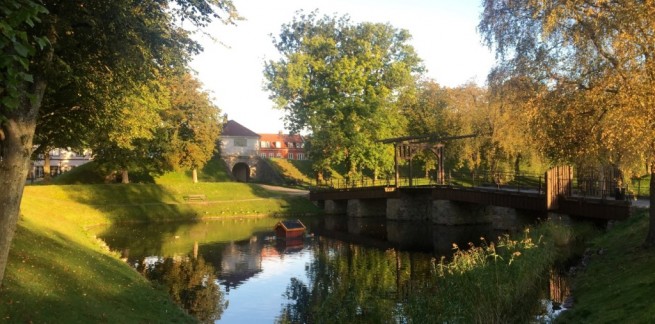





 Recently the distillery has slowly expanded, and today it employs five at the distillery, making approx. 15.000 liters of Stauning Whisky every year. “At Stauning Whisky we do every part of the process ourselves, at the distillery – from floor malting to bottling, design, and everything in between. We use Danish ingredients for our whisky, with most of the rye and barley grown in the fields around us, and even the peat for our peated single malt is from Denmark, giving it a unique taste. Besides single malt, we are also making a malted Rye that has been very well received around the world. Distilling our malted rye in our very small direct fired pot stills definitely gives it a lot of oily and fruity intensity, and makes it stand out compared to other rye whiskies,” says Munch.






 competitive labor markets. Yet despite failing to meet the metrics of the Anglo-American variety of capitalism, Scandinavian countries stubbornly continue to prosper, and regularly come out on top of the global indexes of