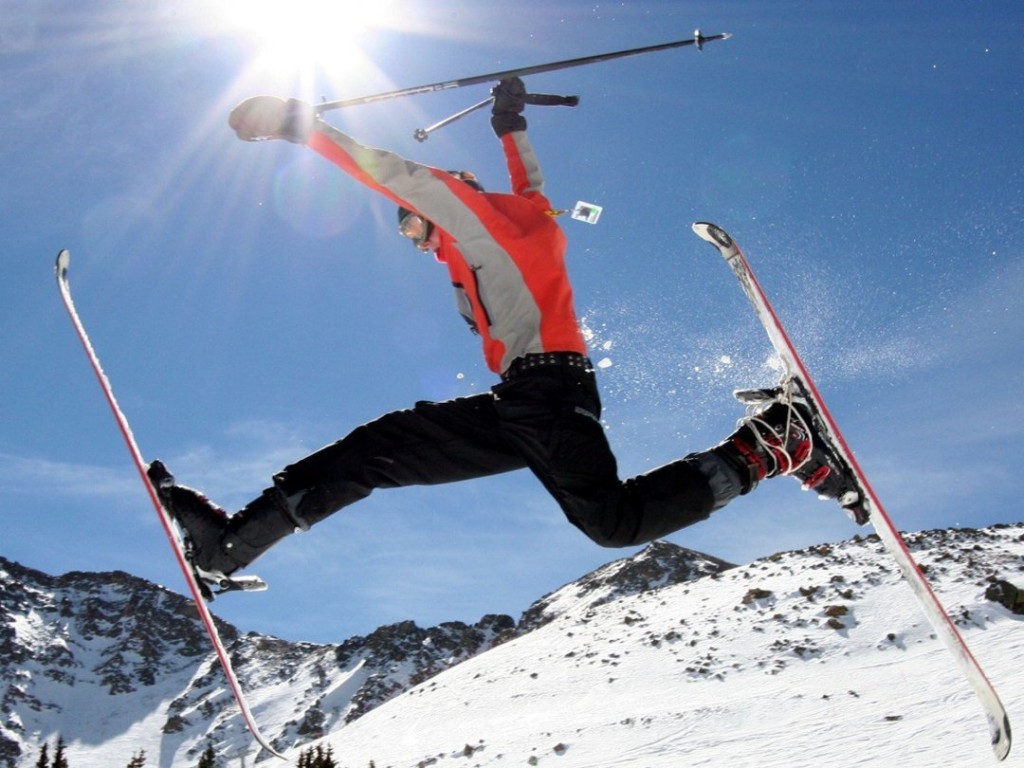
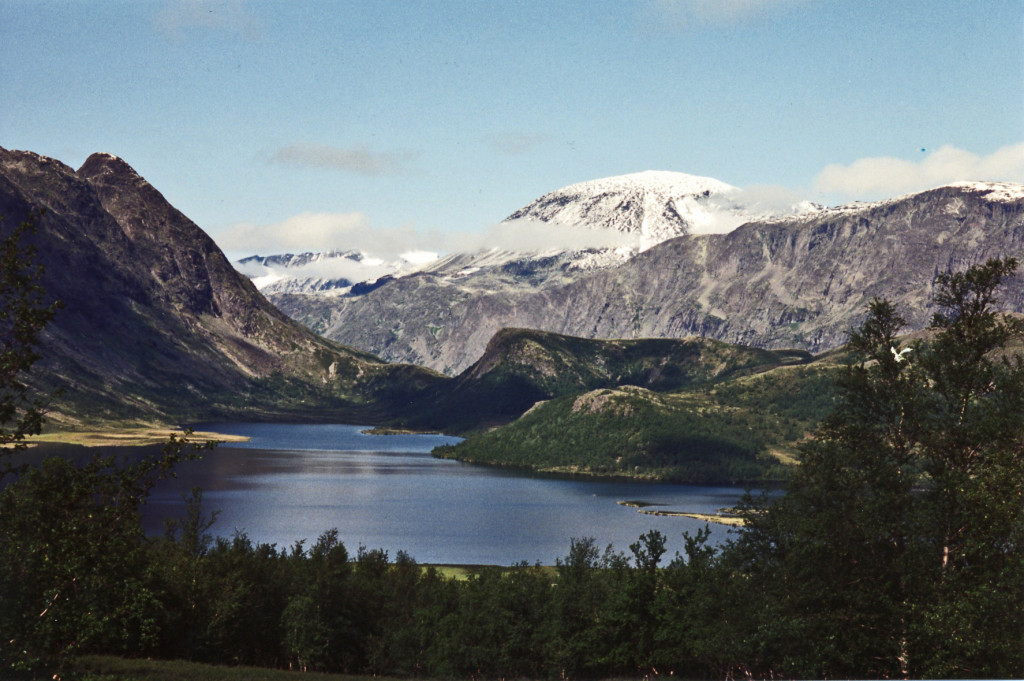
To the north of Finse lie the Jotunheimen Mountains, literally the «Home of the Giants». Nonetheless, even the loftiest of the Jotunheimen peaks, Galdhøpiggen and Glittertind, which are the highest in Northern Europe, with summits rising more than 2,400 meters (7,900ft), rank low on the international scale of noteworthy mountains where sheer altitude, nit challenge, is the main criterion.
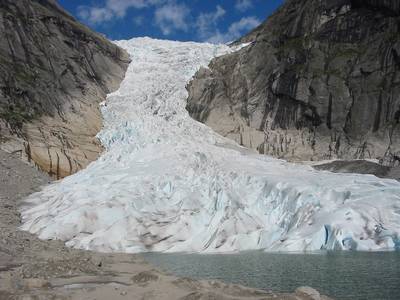
Jostedalsbreen
Though this fact has led to relative anonymity – few Norwegian peaks appear in the classic mountaineering literature – it does mean that you can ascend the equivalent of the Matterhorn or Mont Blanc without the problems associated with high altitude.
The Lyngen Alps in northern Norway
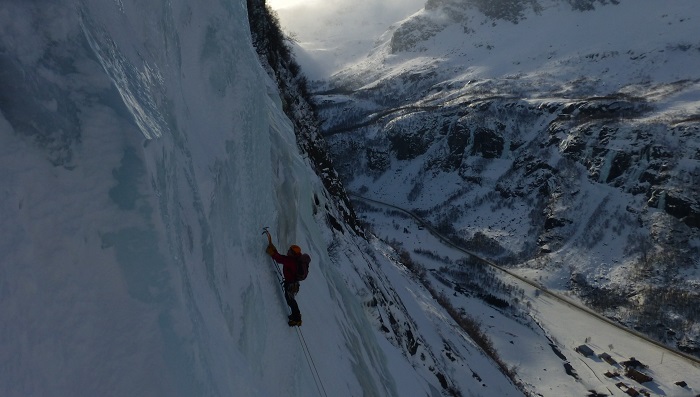
Some of the glaciers that hewed the Norwegian landscape left offspring. Jostedalsbreen (Jostedal Glacier), is the largest in mainland Europe. Jostedalsbreen and its siblings throughout the coutry are the places to see crampon-shod parties wielding ice axes from spring until summer.
From Aurland
Contact with the ice that shaped our land is currently the Norwegians’ fastest growing wilderness recreation, and many centers now organize specialist courses.
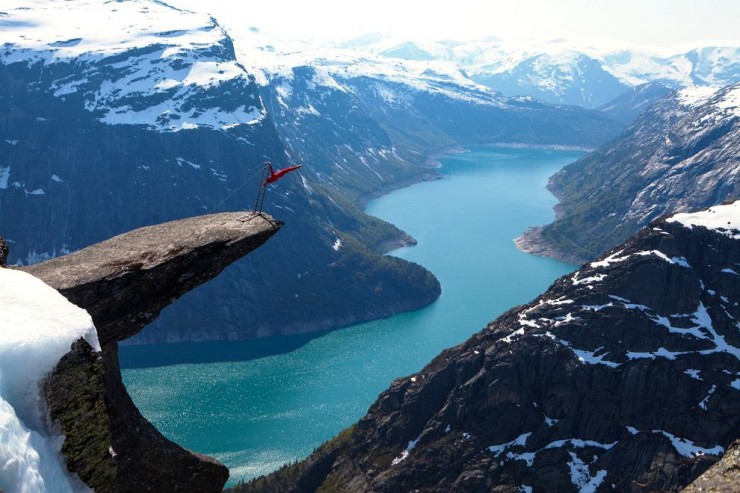
Troll’s tongue, Hardanger
The most striking feature of outdoor recreation in Norway is its variety, people enjoy everything from a quiet stroll near home, to fishing, mountaineering and downhill skiing in winter. Such outdoor experiences may become memories of a lifetime.
Valdresflya
Nine out of ten Norwegians go for a walk or take part in other forms of outdoor recreation about twice a week. Studies show that people first and foremost seek peace and quiet, and fresh air.
Accessible Mountaineering in Norway, written by Tor Kjolberg
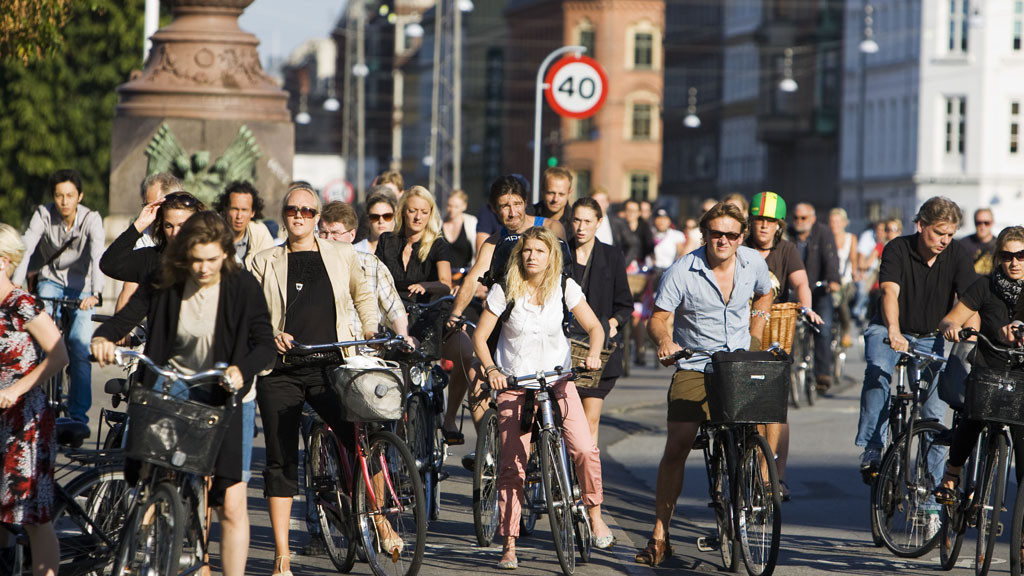
Every day 1.2 million kilometers (0.75 million miles) are cycled in Copenhagen, with 36% of all citizens commuting to work. There are five times more bikes than cars in Copenhagen. In Oslo there are twice as many.
95 percent of bikers in Copenhagen claim that they feel completely or quite safe in traffic. The count in Oslo is only 9 percent.
39 percent of people living in Copenhagen are biking to their workplaces or studies compared to Oslo with 8 percent.
Copenhhagen cyclists. Photo: Kasper Thyge
In the Danish capital almost eight out of ten bikers are biking all year round, compared to Oslo with one out of four.
Only one percent of bikers in Oslo are under 20 years old. 41 percent of people between 18 and 25 years never bike. Students in Oslo prefer commuting by four wheels.
Bicycling in Oslo
60 percent of students in Copenhagen commute by bike compared to 15 percent in Oslo, and only one percent during winter time. At every fourth school in Oslo none of the students are commuting by bike summer or winter.
Almost seven out of ten bikers in Oslo are men compared to Copenhagen where the ratio is 50-50.
About every third family with two children in Copenhagen use a bike trailer. The health benefit of biking in Copenhagen is estimated to two billion Danish kroner (250 million US dollars).
Cyclist with child carrier
Norwegians are buying almost 400,000 bikes every year, placing them second in Europe, counting by inhabitants. Only Denmark ranks higher with 550,000 bikes for 5,5 million Danes.
Girls cycling in Oslo
Five percent of Norwegians are bikers, placing the country number 10 in Europe.
Bicycling in Copenhagen and Oslo, compiled by Admin
Kristiansand is the beating heart of Norway’s favorite holiday destination; the place Norwegians go to relax and enjoy life or actively pursue their preferred leisure activities.
For many people the town and its surrounding area are synonymous with summer, sun, sea and unforgettable holiday memories. Kristiansand can offer a unique collection of activities and experiences. From boating and island-hopping in the archipelago, to strolls among inland fields and woods – all within walking distance of each other. Imagine watching the waves lapping the beach in the center of town, the wind blowing in your hair and the tang og salt in the air. A couple of hundred meters away you can fish for salmon in the Otra River. You can join a boat tour of the archipelago, take a trip out to one of the islands to bathe, or just sit still and enjoy life.
Gateway for travelers Kristiansand is also a hub for travelers, with Kjevik Airport and car ferry routes to Denmark’s Jutland peninsula. Seen from the European continent, Kristiansand is the gateway to Norway. If you decide to head east o west from Kristiansand, you will find an abundance of charming south coast holiday attractions. Museums In the eastern bank of the Otra River, just beside the E18 highway, lies the south coast’s largest cultural museum, Agder National History Museum and Botanical Gardens, which boasts one of Norway’s largest collections of cacti and a number of carnivorous plants.
Agder Natural History Museum and Botanical Garden
Ravnedalen Valley Country Park Just north of the town lies the Baneheia and Ravnedalen Country Park (Naturpark). It is a great area to walk in. Fiskebrygga is more than just a place for fishing boats to unload their catches. Here you will also find a wide range of restaurants and a fish market with tanks full of live fish to choose from. You can also make your way from here to Odderøya, with its rocks, footpaths, sea views and summer café. Beautiful!
Ravnedalen valley nature park
Pause for breath Sørlandet Art Museum is situated in the town center. It offers a permanent collection of Norwegian art in the period 1800-2000, as well as temporary exhibitions of paintings and arts and crafts. There are also several private art galleries.
Sørlandet Art Museum
White-painted villages Along the coast you will find a string of charming villages, with white-painted houses dating from the 18th and 19th centuries. Generations of seafaring, whether to far-flung fishing grounds or on merchant vessels plying European waters, has left an indelible mark.
From Lyngør
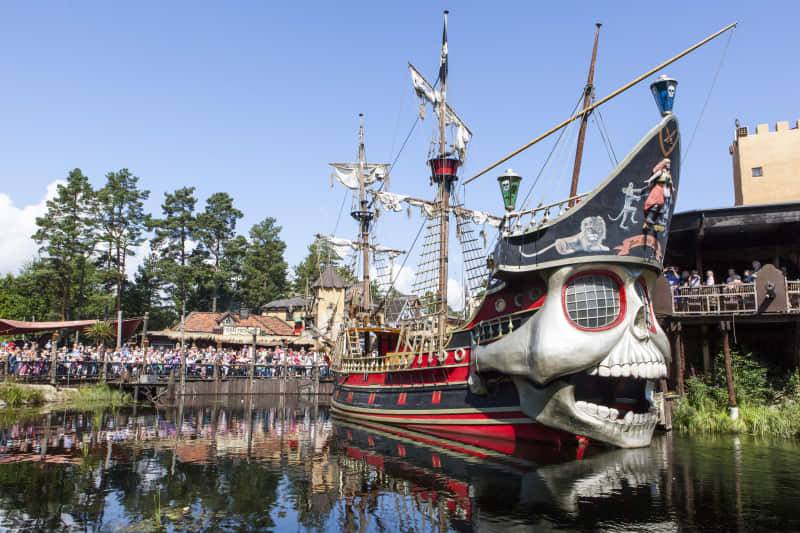
Zoo celebrations Once a small park with bears as its main attraction, now Kristiansand Zoo and Amusement Park is housing a number of large, national attractions. The facilities have evolved into one of Norway’s most popular tourist attractions. This year it is turning 50, an occasion that is being celebrated with two stamps prepared by Norwegian Post.
Kristiansand Zoo and Amusement Park
There is always a lot of fun to be had in the park. You can visit the waterpark, with its bathing facilities, you can go on the fairground rides, or visit the zoo and see giraffes and zebras, among many others. The endangered red panda is a popular attraction. The Kristiansand Zoo works closely with the World Wildlife Foundation to save species threatened with extinction.
The zoo also offers a rainforest full of monkeys and apes. Here you can see them swinging freely in the trees. Further into the steaming jungle are dark passageways filled with crocodiles, alligators and other reptiles. The zoo is home to more than 800 animals and birds, which live in surroundings, which are as close as possible to their natural habitats. You can also see native Nordic animals, such as wolves, lynx, wolverine and elk.
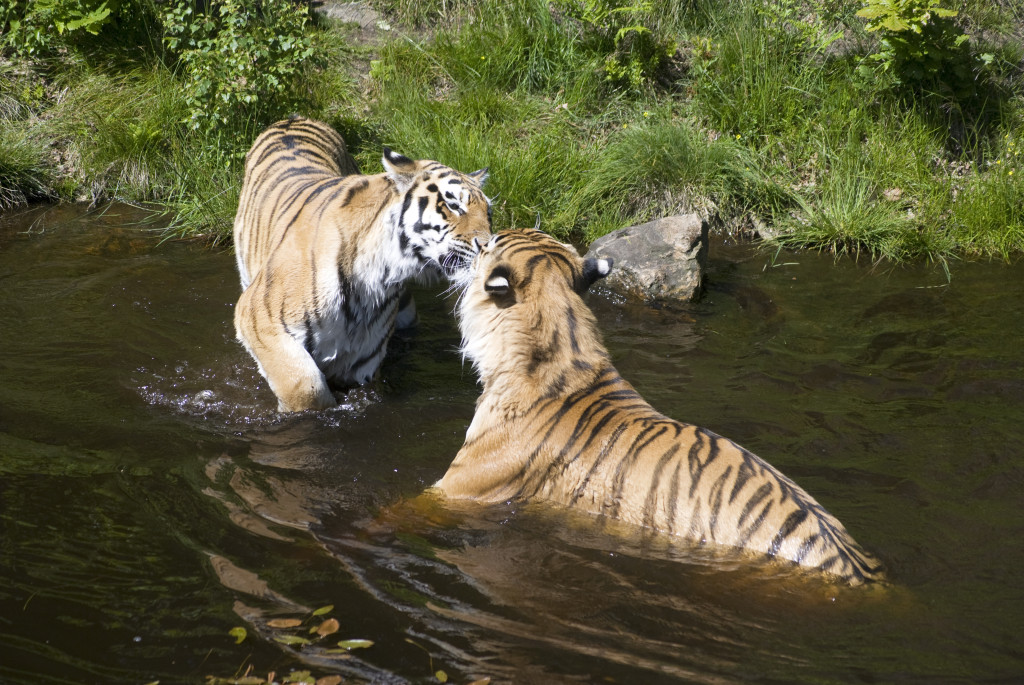
Tiger kingdom One of the zoos biggest attractions opened in 2002. Tiger Kingdom is a massive area which the zoo has reserved for among other Siberian tigers. Tiger kingdom has been nominated as the world’s best tiger area.
Tiger Kingdom
Kristiansand Zoo and Amusement Park also won the prestigious ‘Brass Ring Award’ in 2002 for its marketing campaign, in competition with the world’s most famous attractions.
Feature image (on top): View from Odderøya, Kristiansand
Danish pop promise Christopher and Norwegian super producer Matoma have teamed up on a brand new single called ‘Take Me Back’!
This collaboration is quite the Nordic pairing, joining together the musical minds of two artists that are already well known for their individual careers. Christopher has firmly established his reputation as one of Denmark’s biggest pop icons, and has been releasing a steady stream of collaborations throughout the year including ‘Limousine’ with Norway’s Madcon, as well as ‘I Won’t Let You Down’ featuring Bekah Boom.
Madcon
Matoma has also been keeping extremely busy in recent times, with his 2015 track ‘Running Out’ featuring Astrid S reaching more than 100,000,000 streams on Spotify, while his latest single, the Summer smash ‘False Alarm’ with Becky Hill, is edging ever nearer to the 20,000,000 stream mark.
Matoma
The pair have now joined forces to come up with a brand new track that will undoubtedly inject a heady slice of tropical pop into the August summer days! Led by Christopher’s distinctive and playful voice, the track plays host to Matoma’s trademark lush and lively electronic backdrop, producing a completely irresistible combination and a distinctively cool Nordic collab.
Astrid S.
Both artists are spending the Summer of the road, so make sure to check out Matoma on his Summer tour, while Christopher makes his way around Denmark in the coming weeks.
The German painter Kurt Schwitters’s work was banned by the Nazi regime in 1937 as “degenerate art”. The same year, the artist flied to Lysaker, Norway, where he constructed a second Merzbau.
He lived in exile in Norway, a country he had visited as a tourist several times. He stayed until the Germans invaded Norway in 1940. He lived in Lysaker, but during summers he stayed on Hjerøya, outside Molde, where he built his Merz-huts and worked with collages and assemblages. He traveled frequeltly around the Norwegian west-coast to grind the bread of life.
Kurt Schwitters
During his stay in Norway Schwitters built one Merzbau construction, Haus am Bakken in Lysaker, and also decorated his cottage on Hjertøya into an artwork. Haus am Bakken burned to the ground in 1951, while the remnants nif the installation in Merzhytta on Hjertøya now is preserved in Romsdalsmuseet.
Schwitters had to flee from Norway in 1940, and the cabin was left unattended for 50 years. Unprotected the interior was interior declined rapidly from the harsh climate and ravages of time. However, valuable items remained still when the project Kurt Schwitters and Norway started 70 years later, in 2010, and a large-scale rescue operation was launched. To best preserve what was left, the interior of Merzhytta was moved into what is called the children’s Schwitters-room.
The research project Kurt Schwitters and Norway, which started In 2010, aimed to put his art and his connection to Norway on the map, and to initiate new research. The initiative was a collaboration between Romsdalsmuseet, Henie Onstad Art Centre in Oslo and Sparebankstiftelsen DNB. Responsible for the project was mag. art. Karin Hellandsjø.
Hellandsjø has done research for many years on this unique artist’s life and work in Norway. Her book, “Ultima Thule” presents several of Schwitters texts , some of which have never been published. The book is richly illustrated.
Church at Fantoft by Kurt Schwitters
In a collage on the back wall in the entrance to Merzhytta, Schwittler had placed a reproduction of a woman portrait of the Renaissance. This has over the years become almost an icon of the museum. His Hjertøy-madonna appears still intact.
The image is a reproduction of a painting by Bernard von Orley, a portrait of Margaret of Austria, from ca.1518. So it is no secret Mona Lisa, but a beautiful, sensual woman portrait which urges contemplation and will forever be associated with Kurt Schwitters and Hjertøya.
Remainings of Schwitters’ merz-building at Hjertøya
After the German invasion of Norway in 1940, Schwitters escaped to Great Britain, where he was interned for over a year. He settled in London following his release, but moved to Little Langdale in the Lake District in 1945. There, helped by a stipend from the Museum of Modern Art, he began work on a third Merzbau in 1947. The project was left unfinished when Schwitters died on January 8, 1948, in Kendal, England.
Painting on plywood from Lysaker, about 1939
Kurt Schwitters (1887–1948) was one of the most innovative artists of the 20th Century. His creative diversity is evident in everything from collage, sound poetry, and architecture, to sculpture, painting, and typography.
Feature image (on top) Photo of Kurt Schwitters painting at Djupvasshytta, by Ernst Schwitters
Kurt Schwitters and Norway, written by Tor Kjolberg
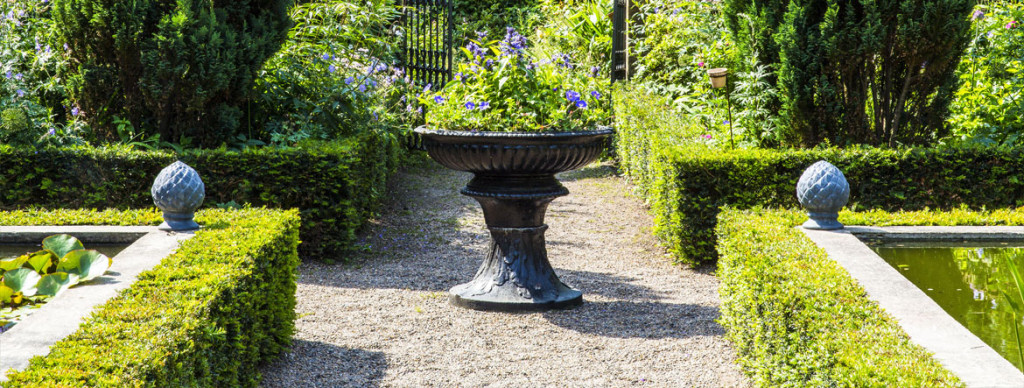
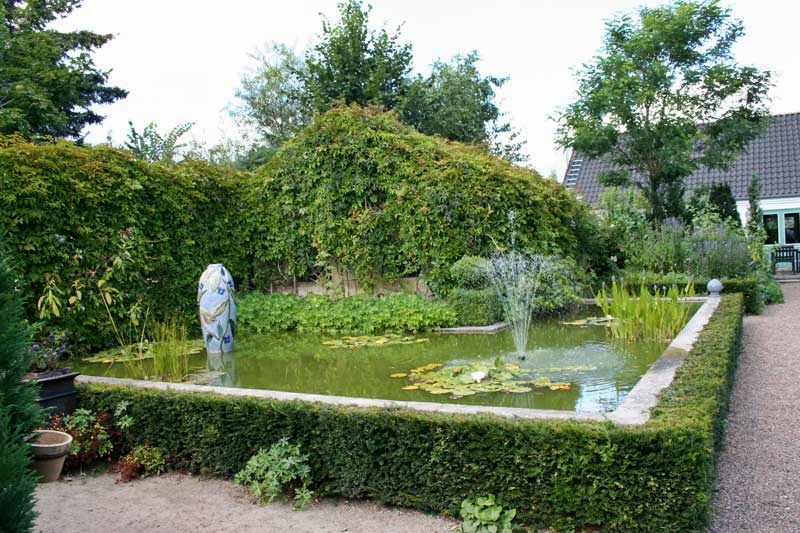
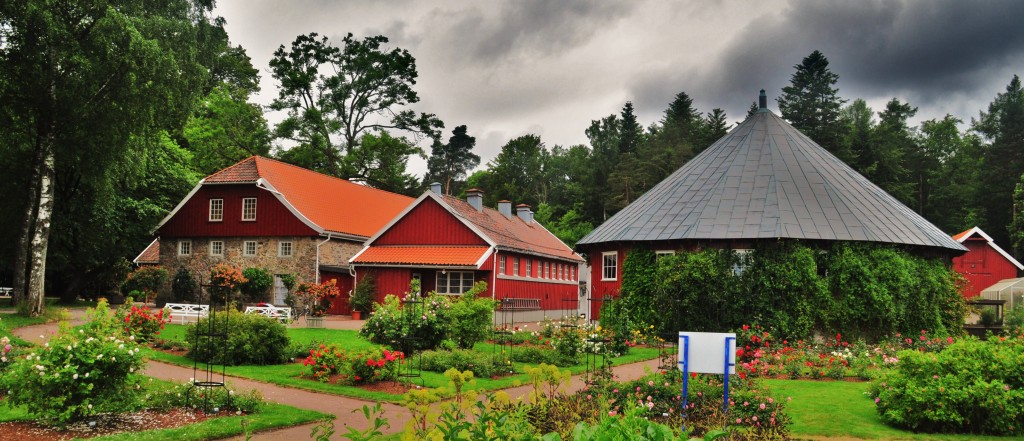
The Garden in Hune, also known as Anne Just’s Garden, is a truly a piece of art. Here you will find thematic gardens with colorful flowers in a beautifully architect-designed park.
“My whole life has been a love affair with flowers,” said Anne Just, the avid painter of plants and blossoms, who gave birth to her Garden at Hune.
A childhood brim full of flowers, her favorite motives when, bedecked in beret, her bicycle basket full of water colors, brushes and canvas, she would cycle out to the countryside around her childhood home in Kalvehave, in southern Zealand, Denmark.
Later she would travel the world, soaking up sights and skills with a sole goal: becoming a painter. The garden of Anne Just – a painter’s garden, containing 5100 square meters of thematic gardens in hilly surroundings – was founded in 1991. At that time, the area was part of a great dune plantation; however, since then, the garden has constantly changed.
The southern section of the Rose House was constructed in 1993 and hedges planted, while the North Garden was planted and its elongated rainwater basin constructed the following year.
The house was built and the curved water basin between the pines was constructed in 1997. And so it continues up until today, where you may experience the iris hill and the forest floor, The Olympic Garden, The Pastel Garden with a small pond, raised beds, a pavilion, The Yellow Garden containing pergola and a garden house. Furthermore, the three-towered pigs’ house as well as the drift tower for winter storage, The Palette Garden, Erik’s Garden, a coffee house, a pottery pavilion and the latest built garden motel.
In 2014 the Garden at Hune was selected for Phaidon’s The Gardener’s Garden, featuring the world’s 250 most beautiful gardens.
In her spare time Anne Just studied art history and cookery books. The latter with a passion that met the standards of professional gastronomy at gourmet restaurants, with or without French chefs and hand-painted menus, before winding her way surreptitiously, coming finally to settle at Hune.
Perhaps in was the Duck House that made the difference. In any event, the architect Claus Bonderup designed one for her when she lived at one point at the manor house at Skeelslund, west of Aalborg. The very same Duck House that today takes pride of place in the rainwater basin coiling around Iris Hill, at Hune.
Claus Bonderup has designed underground nightclubs along the Amazon in Brazil, planned fishing harbors on the Aleutian Islands off Canada’s west coast, catalogued historic buildings in northern Yemen, and secured international fame with his Arctic Centre, which, like a beacon in the Polar night, transforms Rovaniemi in northern Finland into a space utterly unique.
On top of all this, Claus Bonderup has to his credit several outstanding works within Danish architecture.
In 1972 Claus Bonderup came across a plot of land behind the dunes on the outskirts of Blokhus which would constitute the beginning of his comprehensive experiments with space, its form and its volume generated by pure geometry.
One fine day he met the colorful Anne Just, for whom he built a house for the ducks she reared in her park-like garden. Designed with a west-facing terrace it adhered rigorously to the rules of the golden section.
But then the ducks gained weight, obviously, and the door soon became too small! To make a long story very short, the ducks ended up on the dinner table, as Claus and Anne found love and each other.
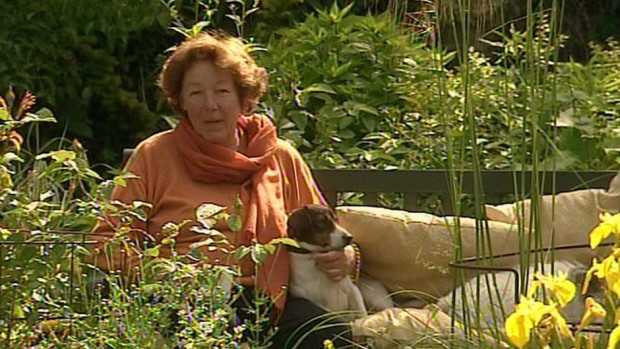
Anne Just
Today, it all appears as one great theme park, supplemented with a shop, a painting exhibition, plant sales, book publications created by the flower artist Anne Just and the professor, designer and architect MAA, Claus Bonderup, in a unique symbiosis between his house and her garden. The Garden in Hune is visited by more than 20.000 people every year. A newly founded fund secures the future of the house and garden.
B&B for Garden Lovers, source: The Garden in Hune.
Wildlife conservation programs are vitally important in the effort to protect species and their habitats. Norwegian wildlife conservation’s surveys bring good news this year for the much prosecuted wolf population of the country and not so good for the shy lynx population.
Wolves in Norway
This summer nine family groups of lynx have been registered in the wild predator regions of Norway, including Vestfold, Buskerud, Telemark and Aust-Agder.
The Eurasian lynx is a wild cat native to Norway and Sweden as well as large swathes of Eastern Europe and Siberia. Its natural prey includes deer and foxes. This constitutes a reduction of 6.5 family groups compared to last year, according to NRK (Norwegian Broadcasting).
Lynx
There are only 30 wolves in Norway—and last year 11,000 people applied to kill half of them.
However Norway’s wolf population has nearly doubled according to another article in the Local published in June. Over the past winter, there were about twice as many Norwegian wolves compared to the year before.
“This winter, a total of seven litters were registered. Six of them were born in territory that is more than 50 percent within the administrative area for breeding wolves. The Norwegian population target of three annual wolf litters within the zone is therefore reached,” Jonas Kindberg of Rovdata said in a press release.
Jonas Kindberg, Tovdata. Photo: Fredrik Widermo
Rovdata is responsible for operating, communicating and developing the Norwegian Large Predator Monitoring Program. The organization collects, analyzes, and reports monitoring data on the Eurasian lynx, wolverine, brown bear, wolf and golden eagle. It communicates data to the media, the public, key stakeholders and government authorities.
PM & Friends (PM & Vänner) ranks among Sweden’s top ten restaurants, according to the country’s leading authority on dining, the White Guide.
Restaurant PM & Vänner’s culinary philosophy is based on three cornerstones: forest, lake and meadow. The raw produce is transformed by the modern Småland kitchen with international perspectives.
Entrance at PM and Friends
In 2012, the company acquired a large 1960’s office block in which PM & Vänner was located, and commissioned Lindvall A & D to create a concept and to design the interior, as well as a number of unique pieces of furniture for Sweden’s first gastro hotel, which opened in April 2014.
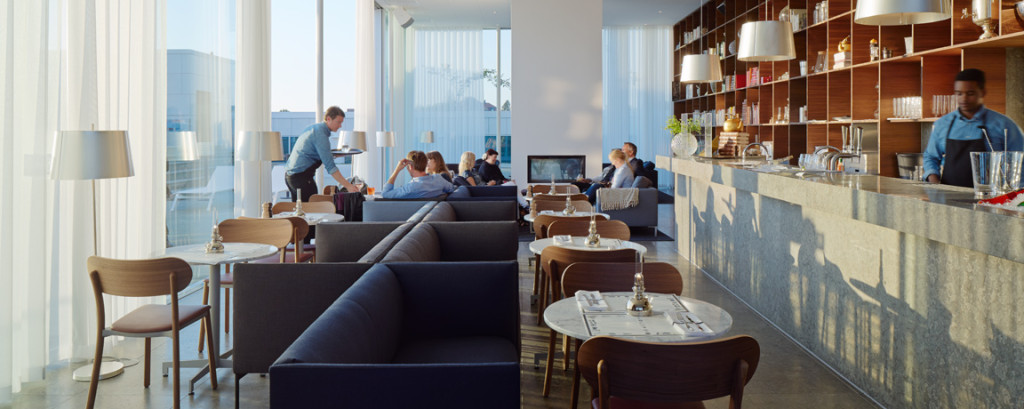
Relaxing in the bar
The hotel offers its guests a grand hotel experience. PM & Friends Restaurant is named one of the Nordic region’s best restaurants and has one of the world’s 300 best wine cellars and wine lists according to the prestigious guide World of Fine Wine .
Restaurant at PM and Friends in Smaaland
In February 2016, PM & Vänner Hotel was awarded three red houses and its restaurant one Michelin star by the Michelin Nordic Guide. PM & Vänner is among the first establishments in the Småland region to enter the famed guide.
The fine dining dishes are like small works of art
The creativity at PM & Vänner is enormous and the fine dining dishes are like small works of art. You can find wood sorrel in little parcels or delicate, baked spades to eat with. The tasting menu is the flagship, but it’s not all about fine dining.
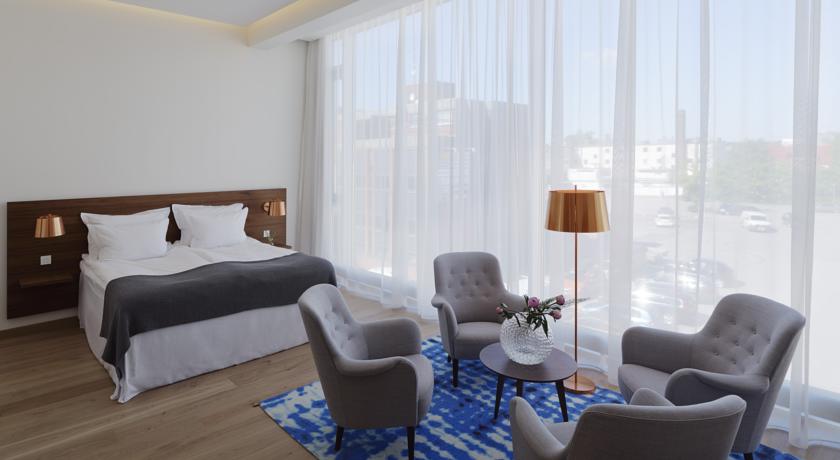
Rooms with a welcoming atmosphere
The hotel is an experience in itself. For example, limestone from the neighboring island of Öland was used in the bathrooms, reception and bar, representing not only the foundation of the hotel, but also the topography of the region. Oiled oak floors made of wood from Småland adhere to the simple palette, creating a neutral backdrop to design classics such as Carl Malmsten chairs. The façade was also painted white, to reflect its minimal interior.
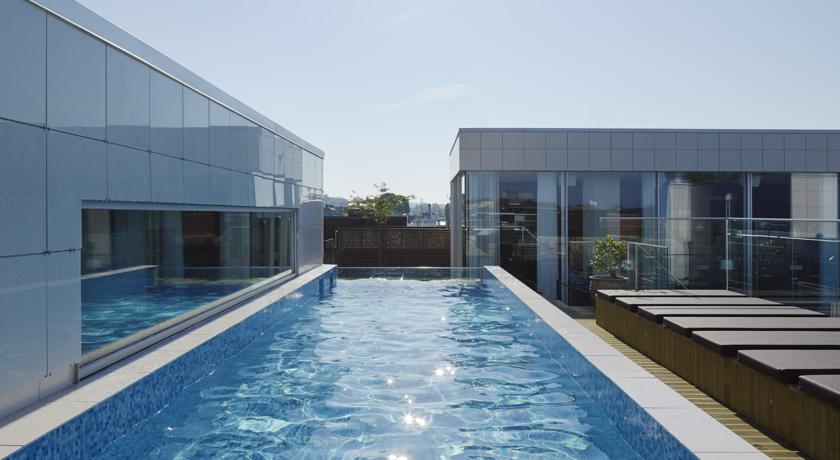
The pool area
A main entrance, double-height master suite, smaller suites and a rooftop bar and pool area were added to the existing architecture. The cube-like suites are slotted in between the row of buildings, and jut out from the façade. Each has a unique layout. The 160 m2 rooftop bar was built on top of the existing flat roof. It has a glazed façade on three sides, constructed from 4.1-metre-high by 16-metre-wide motorized sliding glass panels. The roof also contains an outdoor swimming pool and hot tub, and two separate terraces, one of which is used as an outdoor dining area.
The hotel is a perfect place for those who want to mingle with “the locals” as the rooftop bar has become a watering hole for both hotel guests and Växjö residents.
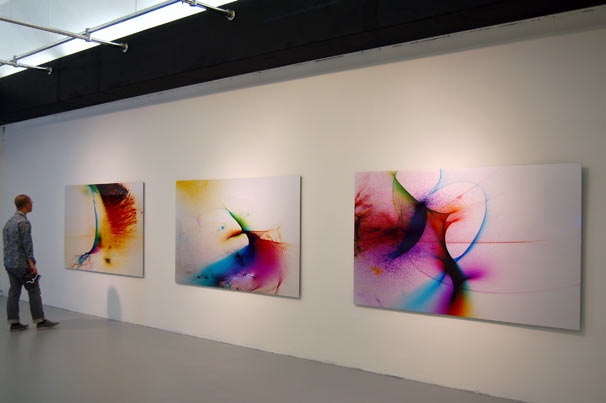
Center for Future Art in Stavanger, Norway, has produced and hosts the Sixth Article Biennal 2016 in Stavanger.Article Biennial – represents the region’s most innovative arts festival focusing on media art that expresses contemporary technology and science.
The first Article Biennal was arranged in 2006, and the main purpose is to promote art forms commenting on our contemporary technology that affects ethical and political issues concerning our time.
Article Biennal is a dynamic festival arranged at various places and with a new theme for each production.
A biennal for unstable art
Article Biennial 2016 is curated by i/o/lab by Hege Tapio in collaboration with co-curator Nora Vaage, who wrote her doctoral thesis on Bioart at the University of Bergen.
The theme for this year’s Article Biennal is “New Eden” or the new paradise. What happens when human beings become aware of everything and the opportunity to create the world in his own image? Where is the line between good and evil, and will we be able to know everything, or have eternal life?
Article biennal
According to Christian creation story, man lived thoughtless and innocent in the Garden of Eden, until the serpent tempted Adam and Eve to eat of the tree of knowledge.
Article Biennial 2016 exhibition New Eden explores our advanced knowledge of manipulating life, and where we might be heading with this.
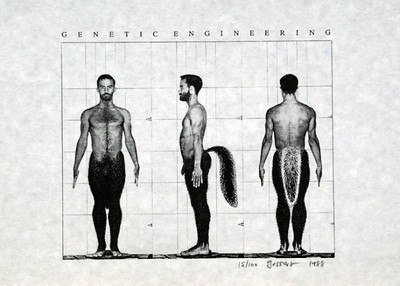
“Vital beauty” by Heroge Gessert
In the New Eden you may experience creatures that have been created through advanced intervention in the natural order. Today we have enough knowledge to create gold, make skin to withstand bullets, and store information in DNA. What do we do with this knowledge? And what does it do to us? What are the implications of the new biotechnology on society?
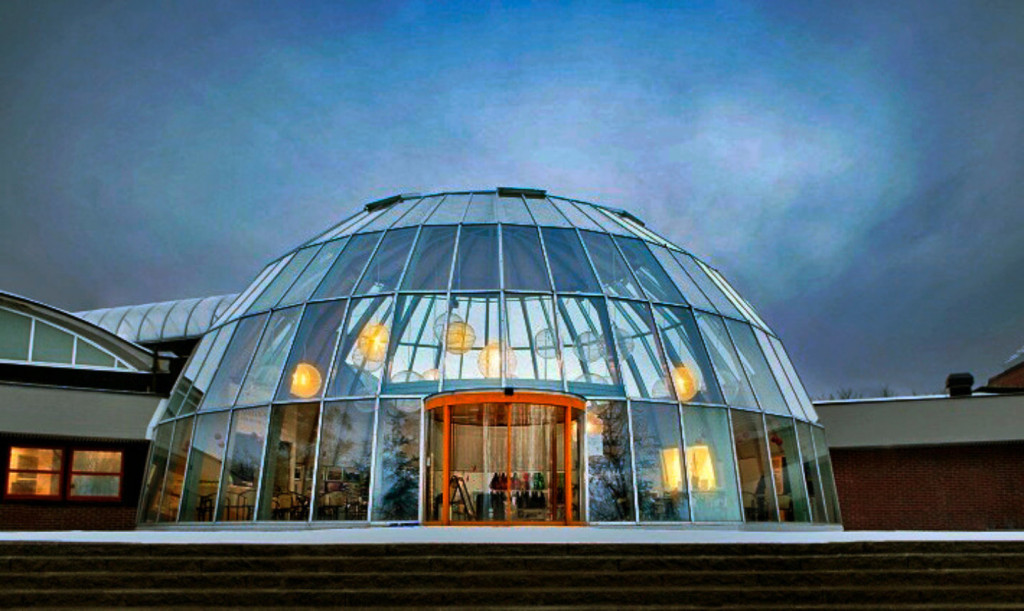
Stavanger Art Museum
The art exhibition will feature art with advanced use of biotechnology, participatory plant breeding, continuation of primeval Norwegian traditions and the ability to preserve your secrets for eternity. During the opening weekend, Norway’s premiere film festival BIO · FICTION will also be presented in collaboration with Stavanger Kino. This international film festival for synthetic biology, science and art is produced by Biofaction.
Photo paintings by Gints Gebrans
Afterwards, you can quench your thirst of knowledge under i/o/lab`s suite Art Science & Cocktails – and pamper yourself with exquisite experiences of the three things we love most.
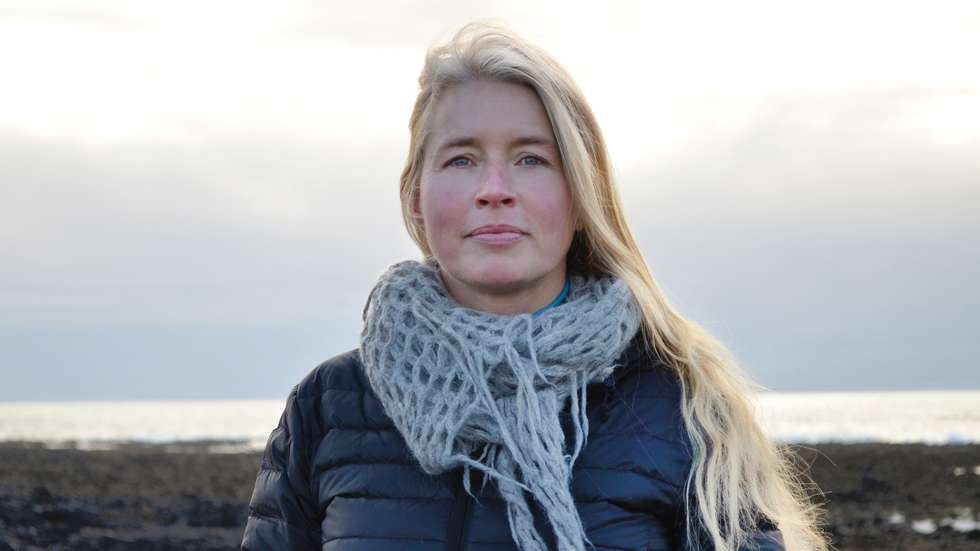
Participating artist Eva Bakkeslett
The opening weekend will be spiced with opportunities for discussions, reflections, and a meeting with artists who have made their mark internationally with their research.
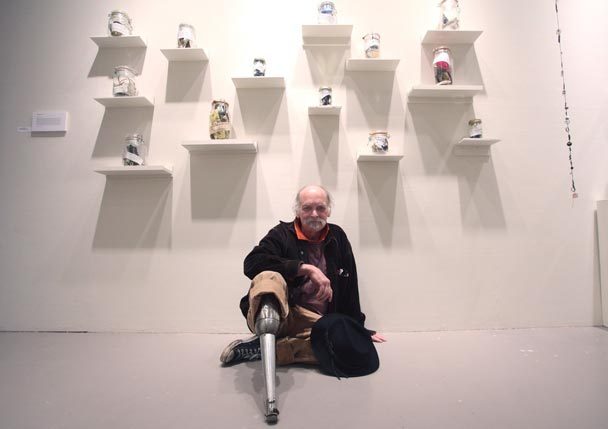
Participating artist Joe Davis
Participating artists are Eva Bakkeslett (Norway) / Joe Davis (USA) / Jalila Essaïdi (Germany) / Gints Gabrans (Latvia) / George Gessert (USA) / Margherita Pevere (Germany)
Participating artist Jalila Essaidi
The Sixth Article Biennial is presented in Stavanger
August 11th – 2nd October 2016 at Sølvberget Galleri
Looking for facts about Scandinavia? Here they are…
Swedish people recycle so much that the Waste-to-Power plants actually import wastefrom Norway.
Norway is one of the largest oil exporters in the world, yet has one of the highest prices of gasoline ($9.79/gallon as of this writing).
Danish pastries aren’t Danish, but Viennese.
Danish ‘Wienerbrød’
Good Swedish drivers can take part in a lottery funded by bad driving fines.
It’s illegal to buy sex, but it’s ok to sell it in Norway.
There’s a 100% tax on gasoline in Denmark.
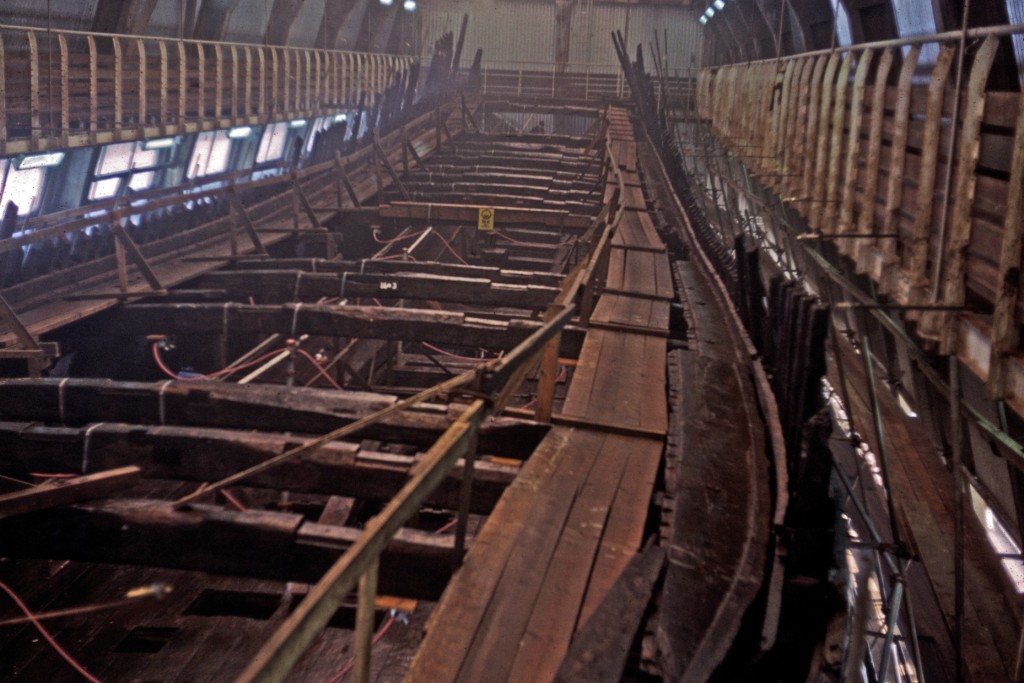
In 1628, the Swedish nation was so proud it created a huge warship (the Vasa) to reflect the country’s power. The boat sank a mile from shore within 20 minutes.
Many Norwegians claim Leif Erikson as their explorer, although he was actually born in Greenland.
In Denmark it’s illegal to burn any foreign flag, but it’s ok to burn a Danish flag.
Warship Vasa in its steam chemical treating building will preserve the wood
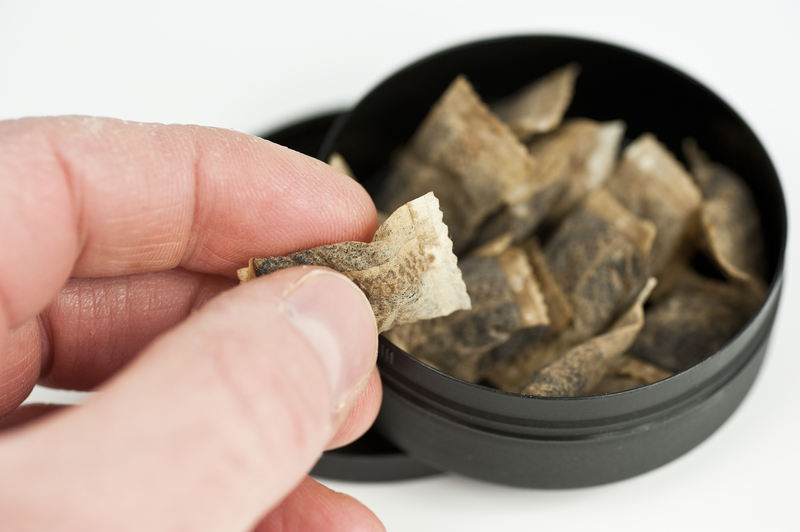
Snus (snoose) is incredibly popular in Sweden. The trendier brands come in something which looks like a teabag to tuck into your mouth.
Norway has spent millions on a ‘Doomsday Vault’ on an island that is designed as a seed preserve for plants from all over the world. International millionaires have also donated funds to support it.
Dane Niels Bohr won the Nobel Prize in 1922 and to reward him, the Carlsberg Brewery bought him a house with a direct pipeline into the brewery.
Swedish snus
Men in Sweden are strongly encouraged to take 2 months of (paid) paternity leave. Daycare is based on a family’s income.
A Norwegian non-working pregnant woman’s entitlement money runs at about $5,500-6,500.
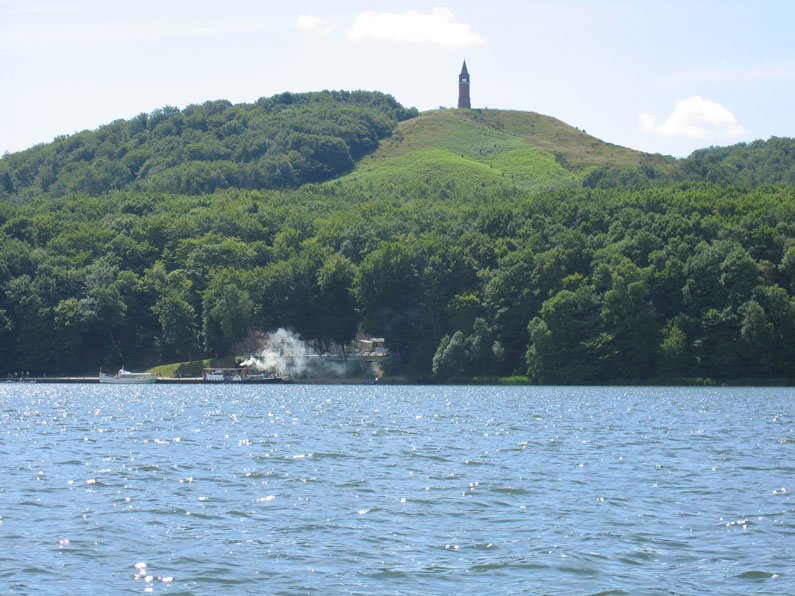
Denmark’s highest mountain is a paltry 170m.
Heaven Mountain in Denmark with Hjelten lighthouse
Famous Swedes include actress Greta Garbo, tennis player Bjorn Borg and inventor Alfred Nobel (of the Nobel prize). Interesting Swedish inventions are dynamite, the Celsius thermometer and the pacemaker.
Norwegian police stations run on office hours and are often closed for the weekend.
Legos were invented in Denmark as was the fiberscope. The drummer Lars Ulrich, the actor Mads Mikkleson and author Hans Christian Andersen are a few famous Danes.
Greta Garbo Photo by Moviestore Collection / Rex Features (1579080a) Mata Hari, Greta Garbo Film and Television
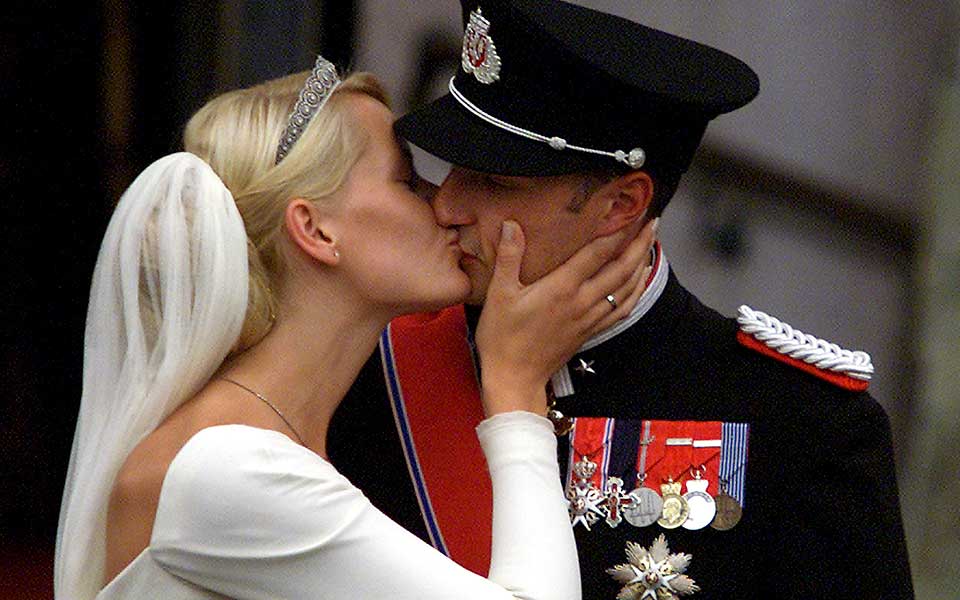
Norway’s current Crown-Prince married a single mother with a dodgy past.
Scandinavian countries take Eurovision extremely seriously.
The border trade between Norway and Sweden (Sweden’s much, much cheaper for basics like meat and milk products) is around $2 billion a year.
Mette Marit and Norwegian crown prince Haakon
Scandinavians skied over 6,000 years ago, and also worshiped a ski god: Ullr.
You can be put in prison for speeding in Norway. Just ten miles over the speed limit can cost you $500+. Compare that to being caught with heroin: $250 fine or so.
Scandinavians believe most in evolution and they also publish more books (per capita) yearly than any other area.
If you want to upset a Norwegian, ask them about whale hunting. It’s an insult to their heritage.
Krakens, trolls, dwarves, elves and ‘Nisse’ (the trickster version of Santa Claus) are very much a part of Scandinavian cultures.
Famous Norwegians include play-write Henrik Ibsen, explorer Roald Amundsen and painter Edvard Munch. Norwegians are also behind the beta invention of the spray can and the cheese slicer, but not paperclips.
Norwegian trolls
Lutefisk is a popular Norwegian fish dish but beware: it’s slightly rotted and then put into lye (used in soaps and such) to cure it.
Strange Facts about Scandinavia, collected by Admin













 Schwitters had to flee from Norway in 1940, and the cabin was left unattended for 50 years. Unprotected the interior was interior declined rapidly from the harsh climate and ravages of time. However, valuable items remained still when the project Kurt Schwitters and Norway started 70 years later, in 2010, and a large-scale rescue operation was launched. To best preserve what was left, the interior of Merzhytta was moved into what is called the children’s Schwitters-room.