Norwegian painter Peder Balke is an unsung forerunner of modernism, and still today few will recognize his name.
Peder Balke (1804-1887), explored the Arctic Circle as a young man and was so thrilled that he painted the frozen spectacle of the most remote regions of Norway for the rest of his life. The grandeur of the northern extremes got inside him. Balke’s imagination is ice-bound.
North Cape, 1853
In Peder Balke’s The Tempest (1862) a dark group of birds battle against a gale with more success than the stricken ships listing perilously on the grey waves beneath them. Th whole turbulent scene is contained on a small wood panel, painted with a sense of haste that befits the weather, almost calligraphic, with its confident sweeps of pure black over the white ground.
Peder Balke, portrait
Balke was also a political visionary – and it was therefore natural to highlight him when the North Norwegian Art Museum in Tromsø celebrated the 200 years anniversary of the Norwegian Constitution.
North Cape, probably 1840s
A lack of commercial success forced him to abandon his career as a painter, yet, so alluring was this wilderness on him that he continued to paint small scenes for pleasure.
Stetind in Fog
Last year several of his paintings, including The Tempest, were exhibited at the National Gallery in London, and thus brought the unjustly obscure visionary back into the light of the day. Balke brings out the ineffable mystery where tourists travel to see the midnight sun, where the sky above the massed rocks is terrifying empty and the sea stretches into inhuman void.
Peder Balke, The Tempest
Peder Balke was trained in Oslo, Stockholm and Dresden, before taking the unusual decision to journey north, to the Arctic Circle. He visited Norway’s spectacular North Cape in 1832. “I never, not in a foreign country, nor anywhere else in our country, had the opportunity to contemplate something so impressive and inspiring,” he wrote in his memoirs.
Peder Balke, The Lighthouse
Balke was the first Norwegian artist who painted the magnificent scenery in Northern Norway in his highly distinctive technique. His depictions of stormy seas, towering glaciers and threatening skies has made him recognized as one of the forerunners of modernism.
Peder Balke, The Stormy Sea
Explorers only reached the North Pole in the late 1900s, two decades after Balke’s death in 1887. In Balke’s day there was no knowledge of global warming and not very precise information about the Arctic Ocean.
Balke resorted to quick, dynamic brushwork to describe the landscape’s changeable atmosphere, often returning repeatedly to a particular scene in different conditions.
Peder Balke, Sami with Reindeer, about 1850. Northern Norway Art Museum
As his memoirs of the Arctic became more distant, it seems to have become ever easier for him to abstract it in a set of stupendous motifs. He paints icy mountains so high and steep they seem to hang over the shores below. His eerie vision has a lot in common with that of his predecessor, the German Romantic artist Caspar David Friedrich, who also painted landscapes as cold and perfect as gelid vodka. For both of them, the landscape’s grandeur is a psychological metaphor. Balke’s identification with extreme scenery communicates a boundless isolation. He is a poet of solitude.
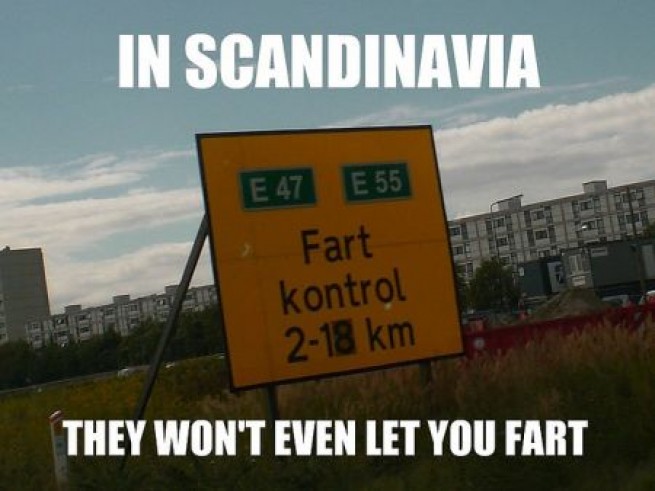
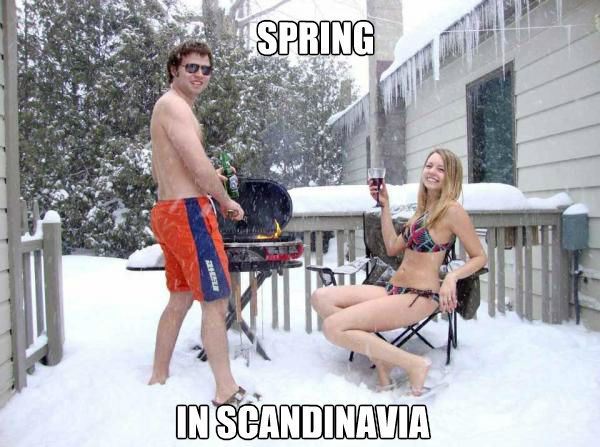
If you happen to deal with Scandinavians from time to time, you will know how sensitive they are when being compared to their neighboring countries. If you do want to annoy them, here are some hints. If you want to be polite, just read on.
Claim that Denmark, Norway and Sweden are all the same
The three countries are Scandinavia all right, but they are three individual countries, with their own language and individual inhabitants.
Scandinavian joke:
Ole and Lars were business partners and good friends. One day Lars started off for work and discovered he’d forgotten his tools. Returning home, he looked around for his wife, Lena, and finally found her in the bedroom. To his surprise, she was on the bed with no clothes on. “Vat in the vorld are you doing vidout any clothes, voman?” Lars asked. “Vell, I yust don’t have any clothes to vear, dat’s why,” answered Lena. “Vat you talking about,” said Lars as he opened the closet door and began counting: “Vun dress, two dress, tree dress, four dress… Oh, hello Ole… Five dress…
A Scandinavian home
Forget to remove your shoes before entering a home Scandinavians don’t like dirt being dragged all over their homes, or heels on their wooden floors. It’s polite to remove your shoes in the hallway.
Scandinavia joke:
An elderly Norwegian named Lars decided to March to the alter at the ripe old age of 85 with a shapely miss who was only 35. His friends cautioned him about the health hazard involved, saying that the exertion of amour could prove to be fatal. “Vell, dat’s the chance I’ll have to take,” said Lars. “If she dies…she dies.”
Swedish fika
Asking for Tea Scandinavians drink more coffee than anyone else in the world, tons of it. Norway is rated no. 2 (7,2kg per capita) after Finland (9.6kg per capita). Denmark is no. 7 (5.3kg per capita).
Scandinavian joke:
Swede: When is your birthday? Norwegian: March 21st. Swede: What year? Norwegian: Every year.
Claim that the Danish language is Dutch. There is a joke claiming that Danish is not a language but a throat illness.
Scandinavian joke:
Judge: You’ve been brought here for drinking. Dane: Swell! Let’s get started.
Claim that Swedes are Swiss They are not even neighbors. Do you know your Europe?
Scandinavian joke:
A Swede was walking down the street with a duck under his arm.
“Where did you find that monkey?” asked the fellow pedestrian.
“It happens to be a duck.” claimed the Swede.
“Shut up, Swede! I am talking to the duck.”
Tell a Norwegian that KvikkLunsj is inferior to KitKats KitKats are so not even close to Kvikklunsj. Don’t compare them, don’t tell us KitKats are superior. Don’t go there.
Scandinavian joke:
Q: What is the difference between Swedes and Norwegians?
A: The Swedes have nice neighbours!
Asking if there are reindeer in the streets of Oslo Of course there are! Even in the roaming the streets of Copenhagen you’ll find them. Some Scandinavians keep them as pets, next to their penguins.
Scandinavian joke:
Norwegian was bragging to his friend:
– I just bought a piece of field that is 2 cm wide and 10 km long.
– What on Earth are you going to do with a field like that?
– Grow spaghetti, of course.
Saying that a Scandinavian doesn’t look like a Scandinavian Well, perhaps you don’t look like an American either.
Scandinavian joke:
There were two Swedish carpenters building a house. One of them opened a pack of nails, and asked the other: “Why are half of the nails lying in the wrong direction?”
The other replied: “You moron! They are supposed to be used on the other side of the house!”
Schedule a conference call at 12 a.m. Oh, no! That’s lunch time (fika in Sweden). Don’t infer with the Scandinavian coffee breaks. Remember, Scandinavians drink tons of coffee.
Scandinavian joke:
Interpol was looking for an escaped convict in Denmark, and sent pictures of the man to the Danish police. The pictures were taken from both sides and the front. After a few days the Danes replied: “We caught the guys on the left and the right but the one in the middle got away”.
How are you?
Not waiting for an answer when you ask “How are you?” Scandinavians WANT to answer, in great detail. Just skip the ‘how are you’ bit if you don’t want to listen to a Scandinavian complaining about his back pain.
Scandinavian joke:
Q: Why do Danish people never play hide and seek?
A: Nobody wants to look for them. Be on time Scandinavia hate lateness, so you better be on time.
Scandinavian joke:
The Danish man had a problem. His wife was coming home on the train but he could not remember if she was coming at 8:40 or 4:80.
Believing that Scandinavians can’t feel the cold Of course they can, just like you. Their veins are not made of ice. Don’t forget, they are filled with hot, strong coffee.
Scandinavian joke:
Q: What does it say at the bottom of Norwegian Beer Bottles?A: Open At Other End.
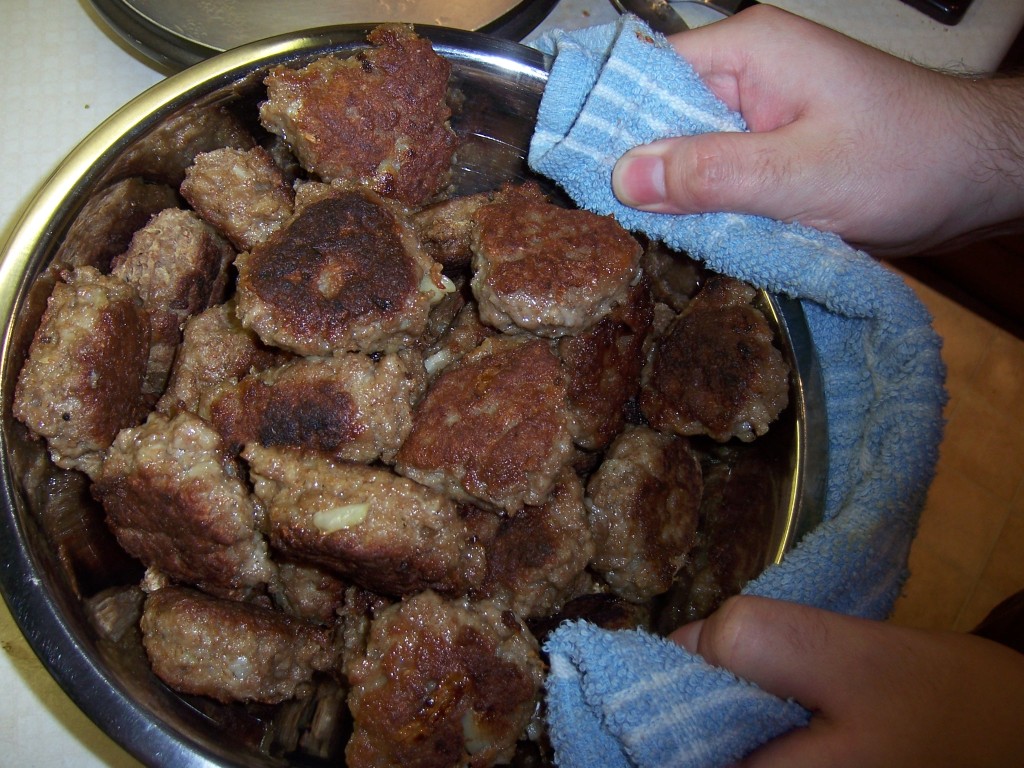
Danish frikadeller
Believing that Scandinavians only eat Lutefisk First of all, Lutefisk is a Norwegian dish. And they are of course eating it every day, all the time, for breakfast, lunch and dinner.
Just kidding, Norwegians only eat Lutefisk for lunch.
Scandinavian joke:
Q: What sign is at the bottom of Norwegian Swimming Pools?A: No Smoking.
The counties of Hedmark and Oppland are found in the heart of Norway, a vast area where Mother Nature offers large variations.
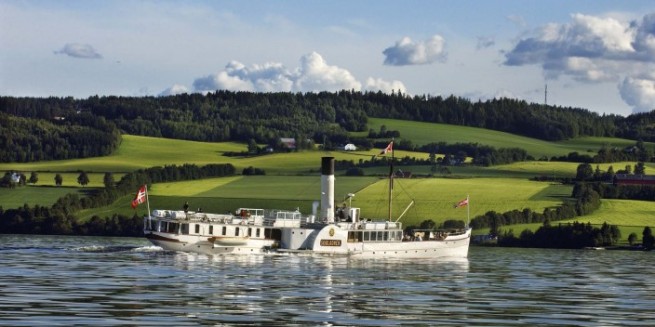
In Hedmark and the districts around Hamar, we find lowlands with large expanses of excellent agricultural conditions. Valleys are narrow and have lots of forests. Lake Mjøsa is Norway’s largest, and is located midway between the counties of Hedmark and Oppland. Here we find the great mountain wildernesses – Jotunheimen and Rondane. These mountains are high and pointed and quite dramatic with their forested hills.
Lake Mjøsa
A common feature of Hedmark and Oppland is climate and weather conditions, with hot summers and cold winters. If the soil has meant a lot to the people here, the woods have been just as important – at least financially.
From Alvdal
These two eastern counties have no shoreline nor are they adjacent to the sea. Yet they are by no means closed off from the rest of the country. Routes criss-cross the region, and contribute to good communications.
Hedmark is a stout piece of Norway. Describing this county is not easy; it’s sort of rich and poor at the same time. If we look at its size and scope, Hedmark comes in a good third place after Finnmark and Nordland. Its name has been given by the Norse Heidmork.
Sveinhaug farm
Here we find some of the most fertile land areas and in its lowlands we may experience the mighty mansions. Some of these can be traced back in history to the time when chieftain mountain pastures chiefdoms existed there.
Biking at Stange
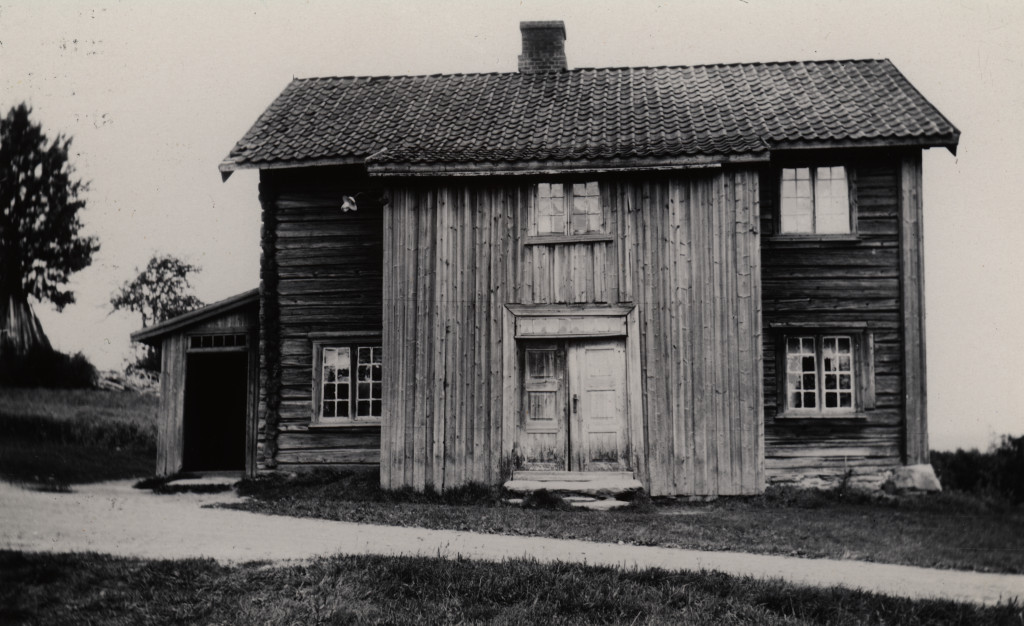
Peasants who struggled for their daily bread stood in sharp contrast to the noble forest owners’ lifestyle that existed on the large farms in Hedmark. Outside of the grey, small homemade wooden houses where the peasants lived, grew rhubarb, inside those timber walls we found rough wooden benches and stools. It was like another world compared to the big farms with their rose beds under rows of windows and up the sides of walls.
Old farm at Galterud, North Stensbøl, Hedmark
Inside you could find both rococo chairs and wide panels with acanthus decor. All large farms had cotters’ farms and it was important to know their lot in life. The son inherited the father and daughter the mother and so it had always been. In this way we can also signify Hedmark as a county of contrasts.
Bunåva, Hedmark
However, obviously there has been an equalization here as in other parts of the country. General modernization, economics and engineering have contributed to this development. Also the food culture has followed this trend. Old recipes from Hedmark’s large farms and the more general food market are still in use. It cannot be stressed strongly enough how important it is to preserve this part of the area’s common national treasures.
Hiking in Hedmark
Many poets, writers and artists have been concerned about Hedmark and its many charming contrasts, many of whom also have their roots in Hedmark. The poet and troubadour Alf Prøysen has described the everyday people of Hedmark in lyrics and music. Peasants have been given a face through countless popular songs.
Poet and singer Alf Prøysen
Asta Holt has immortalized the Finnish immigrants and their hardships in Finnskogen. The charm of peoples in Alvdal and Tynset has been humorously described in text and drawings by Kjell Aukrust. Several cultural personalities have given life to everyday living. Einar Skjæråsen is a name to mention in this context.
Soland and Ludwig, two of Kjell Aukrust’s popular figures
Several Norwegian national dishes also have their origin in the counties of Hedmark and Oppland especially in Hedmark. Many farms have existed since the Viking Age. The court house was to be found in Aker, and the Vang rectory was a famous dining venue. Some would argue that It was the best in the country, especially when Hanna Winsnes (1789 – 1872) was the pastor’s wife there. Much good food was served then, especially for Christmas. Twelve varieties of cakes belonged to the menu, and moreover vørterbrød was customary.
Christmas dish from Hedmark
The Christmas Eve the menu could look like this:
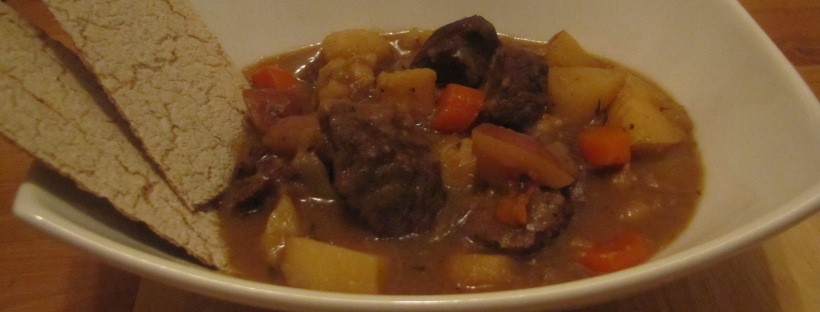
Whole grain milk soup, lutefisk, ribs, sausage – accompanied by good, home-brewed beer! Before church on Christmas Day it was served mølje with meat and pork – no one could travel before they had eaten this. Molja consisted of flatbread broken into pieces on the plate with the broth over so the bread was soft. This was taken before meat fat skimmed off the pot.
Norwegian lapskaus
Later in the day this was served meat and soup bowls. In all, a lot of food was served during the Christmas weekend. A farmer with respect for himself was a bit generous with his servants and tenant farmers during the festival.
Recipes from Hedmark are many and varied, and are still in use in many places – albeit in slightly more modern versions.
We will cover Oppland in an article in the near future.
The Inland Counties in Eastern Norway, written by Tor Kjolberg
The Scandinavian region is known for its great open landscapes and is a mecca for hikers and backpackers. Waymarked footpaths are found in scenically outstanding areas.
The Danish countryside offers the most gentle introduction to walkers, with an appealing patchwork of dense forests, coastal dunes, marshes and meticulously manicured farmland. In every type of landscape there are paths or trails that stretch for miles, and a labyrinth of winding country roads.
Hiking in the dunes of Skagen, Denmark
The greatest proportion of Sweden is virgin country. You can stroll for miles along tracks without seeing another human being. Throughout Sweden there’s an excellent network of waymarked footpaths. Close to Stockholm is Södermansleden (Söderland trail), with over 1.000km (620 miles) of pathways, starting at Björkhagen underground station.
Kungsleden trail, Sweden
Carefully laid out, the trail offers hikers constantly changing vistas of deep forest, historic sites, lookout points and lakes. It passes several camps where you can eat, rest and buy supplies, with shelters at regular intervals.
Kungsleden trail, Sweden
Södermansleden, Stockholm, Sweden
Sörmlandsleden is an easy hike, but it offers plenty of excitement, with deer, elk, capercaillie, hawks and grouse along the way. For the most exotic views, head for the Kungsleden trail which runs for 450km (280 miles) between Abisko and Hemavan.
Hiking in Lofoten, Norway
Norwegians are quite at home in their wild, unspoilt country, and have a great feeling for its mountains. In Norway, the bulk of the trails and lodges are conveniently in the middle of the triangle bounded by the cities of Oslo, Bergen and Trondheim.
Finse, Norway
A central point is Finse, situated above the timber line at 1.200 meters (4.000ft). Finse’s main street is the station platform; there are no cars, because there are no roads.
Hitting the Walking Trails in Scandinavia, written by Tor Kjolberg
Fannaråken is one of the most well-known mountains in Norway. One reason is that the mountain is very visible, either you drive across the Sognefjell (highway 55), or the Turtagrø-Årdal road.
The mountain is also easily accessible for those who find the strength to hike this mountain, and the mountain is probably one of the most visited 2000m peaks in Norway. In addition, the mountain is known from Norwegian literature, as many of the famous Norwegian poets had a “warm heart” for this part of Norway, among them Henrik Wergeland.
Access
Locate the Turtagrø hotel on the west side of Sognefjellsvegen (highway 55). Drive north-east 1km and exit right onto a gravel road that takes you into Helgedalen valley. After a few hundred meters, the road ends by a gate, and you will find parking.
If the parking is full, go back to Turtagrø and find parking there. A “T” trail will take you into the Helgedalen valley.
Turtagrø hotel
The Trail A trail sign is found by the parking. Follow the “T” trail which will take you back onto the gravel road that continues into Helgedalen. The bypass is probably there for cabin privacy reasons.
After approx. 2,7Km, at the juncture of two streams, the road starts ascending. Follow the road for another 500m, and exit left when you see another trailsign to Fannaråken.
Ekrehytta cabin
Follow the trail up to Ekrehytta hut. The trail then forks. The right trail takes you towards Skogadalsbøen, while the left trail takes you directly up to Fannaråken. The climb up to 1500-1600m is the most strenuous part of the hike, but reasonable switchbacks in the terrain helps. Although the hillside might look steep, there are no exposed points on the trail.
Fannaråken
Once on the ridge, you see the “humps” that takes you towards the summit. A lot of effort has been made to make the trail easy to hike. Close to 2000m, you might run into snowfields leading towards the summit. The summit is a large, flat plateau with two buildings on top. The primary building – Fannaråkshytta, offers opportunities for food and shelter. The hut is operated by DNT (The Norwegian Mountain Touring Association).
Fannaråken cabin, Jotunheimen National Park
Upon return, you may choose to hike the trail down to Keisarpasset. Be aware of that the weather can change in an instant. Bring warm clothes even if the weather forecast is good. Fannaråken is known for its shift in weather.
A Trip Report
On a summer day in 2002, I suddenly got the urge to hike Fannaråken. The weather was shifting between sunshine and rain. Fannaråken summit was hidden in clouds, but of the lighter kind. I expected that the clouds might disappear in the afternoon.
I parked the car in Helgedalen and was on my way 15:50 pm. My dog Troll was kind enough to walk by himself all the way to the foot of the mountain, but then he requested the “back-seat service”. After hiking the first 100m, I remembered I hadn’t eaten all day. Here I was, running out of strength at the start of the hike, 1000m vertical to go. The rest of the hike was very strenuous. I can’t remember last time I was this tired. Then it started to rain. The rain was followed by hail. Higher up it began to snow, and on the summit it was freezing cold
Helgedalen valley, Jotunheimen
A small group heading down, informed me that it was “Mountain’s Day”, and that dinner was served at 18:00 at the summit hut. I hadn’t even thought about the DNT hut on top, and carried no money. As I reached the hut at 18:35PM, in a mixture of wind, snow, rain and fog, I heard the sounds of laughter and cutlery. That was too much. I went in the hallway, gave Troll his lunchbox and took a minute to worship misery. I never took a look inside; Anti-social behavior at its finest.
Rondane National park
I decided that Troll could walk all the way down, which he did. The trail is almost too good to be true. We were back at the car 20:00pm, and continued the trip towards Otta. I can still remember the taste of the hot dogs at the gas station in Lom…
In 2010, Hannah Modigh won the Swedish Photo Book Award for Hillbilly Heroin and now the publisher Bokförlaget Max Ström has published the book version of Hurricane Season which was released in conjunction with the opening of the exhibition by the same name at Fotografiska in Stockholm.
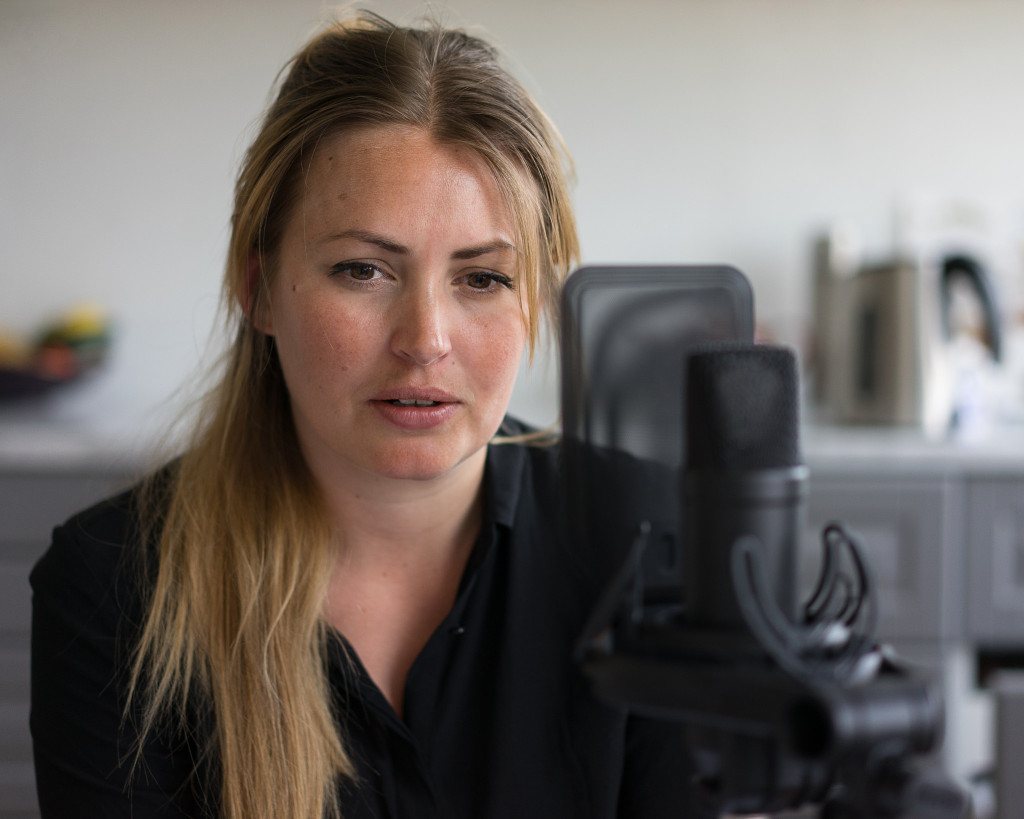
Hannah Modigh
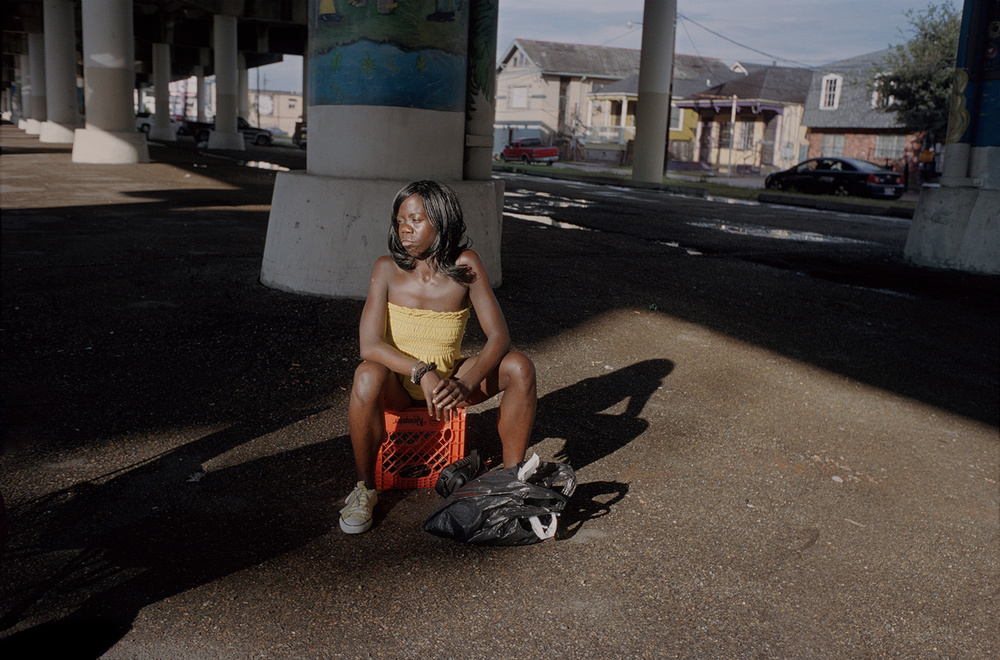
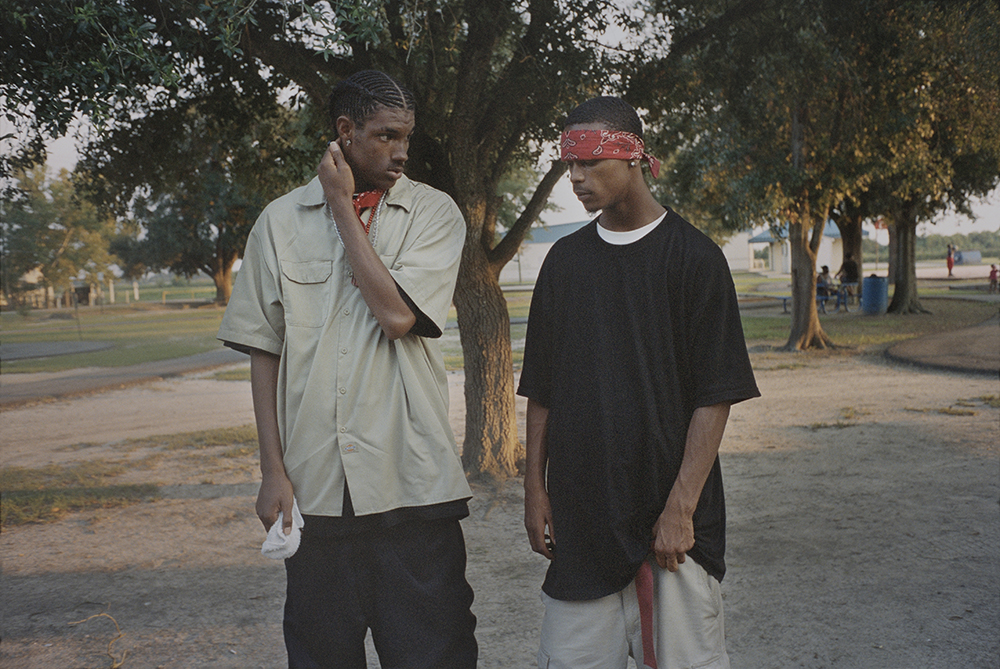
Louisiana is a place under constant threat of hurricanes and flooding. Hannah Modigh’s lyrical photographic series Hurricane Season captures profound human sentiments in the midst of inhuman suffering. Modigh’s images radiate threats of death and destruction combined with a powerful feeling of living in the moment.
The exhibition opened at Fotografiska in conjunction with the release of the eponymous book published by publishing house Max Ström. They are seated at a table full of papers. Three men. Their bodies covered by tattoos. In a room full of symbols. Symbols of the Ku Klux Klan. In an atmosphere of relaxed anticipation and a pervading sense of menace.
A feeling that imbues Hannah Modigh’s ethereal series Hurricane Season which is the result of having shared the lives of the people of the hurricane-battered and poverty-stricken Louisiana, where people face the same threat but seeming never side by side – always segregated, divided into we/them, depending on the colour of their skin. The poverty, however, they share. And an over- whelming majority of prisoners (who are often incarcerated in penitentiaries run by the private sector) are black. History repeats itself, as unfree black people work the cotton fields under the roasting sun …
“It all began because I wanted to explore a macho culture that I believed existed in the area. I was struck by how segregated it still is. Because the groups are so removed from each other, this destructive us-against-them system is entrenched,” Hanna Modigh says.
“I am attracted by nature and skin, which have been abandoned, which have been left behind. Nature and skin that are exposed and the connection between them. I’m very interested in how our surroundings affect us. Where we feel at home. And I often use many images in order to create a sense of being stuck in a repetition of emotions. It’s like a loop and it’s difficult to break free from your background,” she explains.
That she presents the KKK sympathizers seated at a table on “a normal day at the office “, instead of opting for the traditional imagery of people in hoods and burning crosses, creates an even stronger impression. The systemic need to belong, to be part of a clan, to have a place to go to, regardless of the aim of the activities.
“I try to find the everydayness in the most intense environments. Common- place situations with an awareness of death. Then I look for body language and attach importance to how people carry and move their bodies. It says a lot about a person, where you are and about your history. To me it’s important to use my art to interpret situations rather than documenting or judging them. I present my interpretation to the viewer and trust that the images will initiate a process in them, because I’m not trying to impose an agenda. Whatever the photograph may say is up to the viewer.”
This is the first solo exhibition of Modigh at Fotografiska, a delighted Pauline Benthede, Exhibition Manager, explains.
“We have followed Hannah Modigh’s exciting development for a long time and she participated in our 2015 Autumn Salon as one of the juror’s choices, with works from various series. That we now present Hurricane Season is a natural consequence of the fact that Modigh, with her unique photographic idiom, has established herself as one of the most interesting contemporary photographers. If there was only one camera left in the world, Göran Segeholm, our head teacher at Fotografiska Academy, would place it in the hands of Modigh, which tells all you need to know …”
This is the third time multiple award-winning photographer, Hannah Modigh, has explored a place in America with tough living conditions and created heartbreakingly beautiful photography, which, filtered through her poetic mind, turn into lyrical contemplations of how life turns out when the veneer of civilization wears thin.
When death is omnipresent, life is often lived in the fast and dangerous lane, and fate is tempted. Life can feel much more tangible and powerful when under threat, and when one lives in the moment the result is often a relaxed kind of joy. Thus it may not be strange that, on a hot summer’s day, one turns one’s car into a pool, because who knows, in two months’ time the car maybe crushed under a fallen tree. The images also contain a flourish of cultural expressions, such as the special Cajun cuisine with its seafood and legendary blues music.
“This attitude partly explains why I find it easy to approach people outside my usual context with its expectations on who I am and how I should behave. When I encounter strangers I also encounter new sides of my personality, and this is important to my photography. I don’t normally make any plans. I move randomly from place to place and allow myself to be guided in different directions by following what’s going on around me, through my encounters with the people.”
In 2010, Modigh won the Swedish Photo Book Award for Hillbilly Heroin and now the publisher Bokförlaget Max Ström has published the book version of Hurricane Season which will be released in conjunction with the opening of the exhibition. Modigh takes us to places where people deal with fear by transforming it into anger, combined with a happy-go-lucky kind of attitude.
“There is a subtle language here where things occur under the surface. There is an underlying tension, which is about to explode, or a feeling of being trapped under a glass dome. Not giving voice to one’s pain, but swallowing it. This is often what I portray. A silence, the energy of waiting. A condition that is very much about a person’s interior world. Questions which may have no answers, rather than answers which may have no questions.”
Working extremely intuitively with the atmosphere of the place vibrating in her body, her beautiful photography evokes a reality which is like being in the eye of the hurricane. The quotidian activities transmit the message that you cannot trust anything – nothing lasts.
Because, at any moment, things may blow up, by violence, by disaster. A punch on the jaw, delivered by Mother Nature in the form of yet another hurricane followed by flooding in the style of Katrina or an explosion between her children who live segregated with the threat of natural violence, in combination with wide-spread poverty and alienation. Because in the middle of the devastation after the disaster, you are lonelier than during the minutes that preceded it, attempting to patch up that which has been broken. A broken heart caused by the death of a dear one in the chaos, or just the ragged hopelessness of having to start all over again, knowing that there will be another hurricane season, which may demolish everything in its path.
The exhibition runs through 28 August
Hannah Modigh was born in Stockholm but spent big parts of her childhood in India and on Österlen in the south of Sweden.
She has during her adult life lived in Paris and Copenhagen and is now living and working in Stockholm.
Hurricane Season in Stockholm, source: Fotografiska, Stockholm
Since the Nobel Peace prizes are awarded to people and accomplishments that even laymen have opinions about, they are creating more controversies than most other prizes.
The Nobel Peace Prize is one of the most impressive awards around. When the Swedish chemist and engineer Alfred Nobel, who invented dynamite, died in 1986 he bequeathed about USD260 million to create prizes to reward various scientific and cultural advances produced by people or organizations around the world.
The Nobel Prizes are chosen in five categories: Physics, Chemistry, Physiology or Medicine, Literature and Peace.
According to Alfred Nobel’s will “the Peace Prize is to be awarded to individuals and institutions that “have done the most or the best work for fraternity between nations, for the abolition or reduction of standing armies and for the holding and promotion of peace congresses.”
Alfred Nobel
Since the late 1800s the Nobel Peace Prize has been awarded to scientists, writers and peace and political activists. Not everyone has agreed on who is or isn’t worthy of the $1.2 million prize.
Alfred Nobel stated in his will that the recipients of the Nobel Peace Price should be selected by the Norwegian Nobel Committee, a five member committee appointed by the Parliament of Norway.
Nobel Peace Prize ceremony in Oslo
Since 1990, the prize has been awarded on 10 December in Oslo City Hall each year. Formerly the prize was awarded in the Parliament (1901-04), the Norwegian Nobel Institute (1905-46) and the Atrium of the University of Oslo Faculty of Law (1947-89).
On rare occasions the committee’s choices may have been short-sighted or naïve, and a number of poor decisions have been made. Here are some of them.
Carl von Ossietzky (1936)
The journalist, anti-Nazi and camp prisoner Carl von Ossietzky was awarded the Peace Prize in 1936, when he revealed that the German authorities were secretly engagement in rearmament contrary to the Versailles Treaty. For this he was found guilty and imprisoned. After the seizure of power by the Nazis in 1933 he was arrested again and sent to a concentration camp.
An international campaign was organized to have Ossietzky released. As one step in this campaign, he was nominated for the Peace Prize. It attracted attention that the Norwegian Royal Family stayed away from the award ceremony in December 1936, probably prompted by the Government, which feared German reactions.
Hitler reacted to the news of Ossietzky’s Peace Prize with fury, and prohibited all Germans for ever from receiving Nobel prizes. The seriously ill Laureate was refused permission to leave for Norway to accept the distinction. He died in a prison hospital in May 1938.
Cordell Hull (1945) Cordell Hull was given the prize for his role in establishing the United Nations. He is considered a controversial winner due to an incident in 1939 when he was President Roosevelt’s Secretary of State.
The President was amenable to helping 950 Jewish refugees aboard a ship called the SS St Louis settle in America. But Hull and a group of Democrats from the American South voiced “strong opposition”, threatening to withdraw support for Roosevelt if he let the ship dock.
The president buckled, the SS St Louis was turned around and many of its passengers became victims of the Holocaust.
Henry A Kissinger (1973) The former US Secretary of State was awarded the prize together with Vietnamese leader Le Duc Tho for their efforts in bringing peace. The latter did not want to share the prize with Kissinger and rejected the award as he did not feel peace had been achieved.
Kissinger was also accused of playing a role in America’s secret bombing of Cambodia in 1969 and 1975.
Rigoberta Menchú (1992)
Rigoberta Menchú won the Nobel Peace Prize in 1992 for her autobiography I, Rigoberta Menchú, first published in 1982. The book was translated into 12 different languages, making people aware of the genocide of the indigenous Guatemalan people in the late ’70s and early ’80s.
Later the American anthropologist David Stoll discovered that Menchú had stretched the truth to make her story more emotionally persuasive. She did not witness the torture and murder of her brother, and her historical portrayals were not accurate.
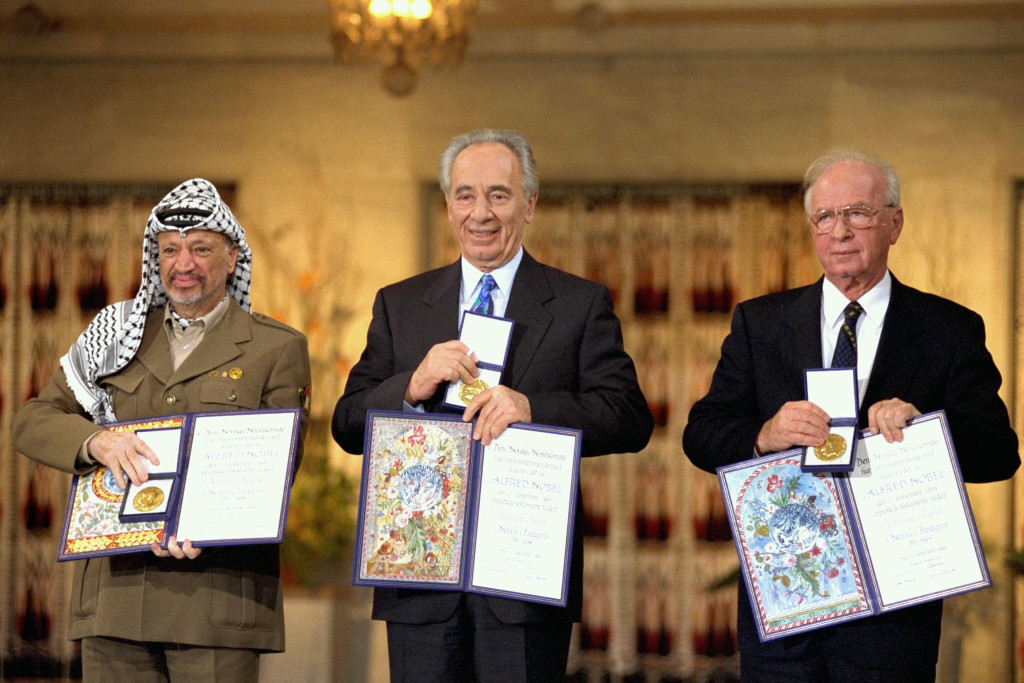
Yasser Arafat (1994) Palestinian leader Yasser Arafat shared the prize with Israeli Prime Minister Yitzhak Rabin and Israeli Foreign Minister Shimon Peres for their work on the Oslo Peace Accord, a document meant to create “opportunities for a new development toward fraternity in the Middle East.”
The committee has been criticized not only because of the failure of the Oslo accords, but for giving the prize to Arafat, who has been called “the worst man to ever win the Nobel Peace Prize”. The author Jay Nordlinger described Arafat in The Times of Israel as an “unrepentant terrorist with a long legacy of promoting violence” for terrorist campaigns against Israel.
The long list of Arafat’s numerous crimes has spurned many to call the Palestinian leader “the father of modern terrorism”.
From right to left: Prime minister Yitzhak Rabin, Foreign minister Shimon Peres and PLO Chairman Yasser Arafat
One member of the Nobel Commission, Kaare Kristiansen, also resigned to show his opposition to this award, also calling Arafat a terrorist. In 2002, several members of the Committee suggested Peres’ award should be withdrawn after the Israeli politician was named Foreign Minister of Ariel Sharon’s government.
Jimmy Carter (2002) Jimmy Carter was awarded the Peace Prize “for his decades of untiring effort to find peaceful solutions to international conflicts, to advance democracy and human rights, and to promote economic and social development”. It was very controversial because it was awarded right after the US senate authorized use of military force against Iraq to enforce UN resolutions.
Wangari Maathai (2004)
The first African woman to win a Nobel Peace prize died in 2011 at the age of 71. The New York Times has described her as an “environmentalist, feminist, politician, professor, rabble-rouser and human rights advocate” who created jobs for women and an organization that planted trees across Kenya in a bid to fight erosion.
The day before she was due to collect the peace prize in Oslo an African newspaper claimed she had likened Aids to a “biological weapon” and told participants in an Aids workshop that the disease was “a tool” to control Africans “designed by some evil-minded scientists.”
Maathai confronted the storm of controversy by insisting her comments had been taken out of context. “I neither say nor believe that the virus was developed by white people or white powers in order to destroy the African people,” she said in a statement released by the Nobel Peace committee. “Such views are wicked and destructive.”
Al Gore (2007)
The committee claimed that “Al Gore is probably the single individual who has done most to create greater worldwide understanding of the measures that need to be adopted” regarding climate change and global warming.
Many felt, however, that Gore was undeserving of the award since he hardly practiced what he preached. Shocking electric and gas bills from the Gore household in 2006 showed that his 20-room home and “pool house” were eating up over 20 times the national average electricity usage.
Barack Obama (2009) Barack Obama received the prestigious Norwegian award the same year he became president of the United States for “his extraordinary efforts to strengthen international diplomacy and cooperation between peoples” and, especially for his “vision of a world with no nuclear weapons.”
The award was heavily criticized as undeserved, premature and politically motivated. Obama himself said that he felt “surprised” to receive the prize and did not consider himself worthy of it. Nonetheless he accepted it.
Even if many consider Obama as an anti-war president, he has increased the US military presence in Afghanistan, ordered the military involvement in Libya in opposition to Muammar Gaddafi, and also ordered military intervention in Iraq in response to gains made by the Islamic State after the 2011 withdrawal from that country.
European Union (2012)
The Peace committee claimed EU deserved the award “for over six decades contributed to the advancement of peace and reconciliation, democracy and human rights in Europe.”
The award was widely criticized because it came at a time when social rights were suffering greatly due to discord between member states resulting from economic crisis.
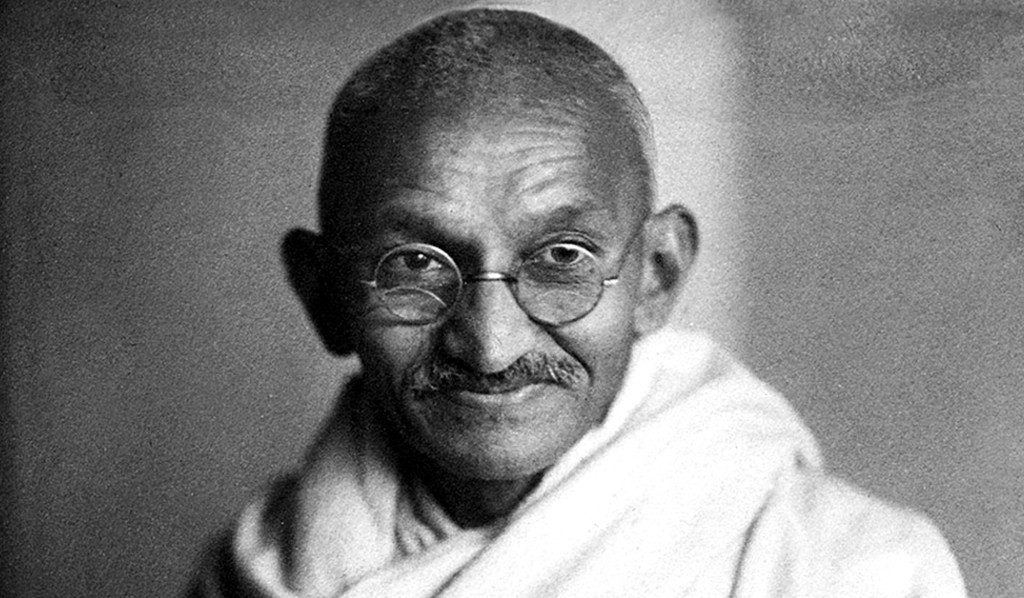
The prize never awarded The fact that Mahatma Gandhi never got the Nobel Peace Prize is considered one of the great blunders in the history of the Nobel Peace Prizes.
It’s hard to think of anyone in modern history who symbolizes non-violent struggle better than the Indian independence leader.
Gandhi was nominated five times but never won.
The Nobel committee later admitted that this was an omission, and in 1989 the chairman of the Nobel committee paid tribute to Gandhi as he presented that year’s award to the Dalai Lama.
The prize never to be awarded The list of official nominees for the 2016 Nobel Peace Prize is a tightly guarded secret, the award required to be posted to Nobel Institute in Norway by February 1.
The director of the Peace Research Institute of Oslo, Kristian Berg Harpviken, reveals however that U.S. presidential candidate Donald Trump has been nominated for the prestigious prize.
Harpviken said he had received a copy of a nomination letter for Trump – whose proposal to ban Muslim immigration to the United States has attracted international condemnation – that claims he deserves the Nobel prize for “his vigorous peace through strength ideology, used as a threat weapon of deterrence against radical Islam, ISIS, nuclear Iran and Communist China.”
Controversial Nobel Peace Prize Winners, compiled by Tor Kjolberg
On the Swedish Westcoast, in the little town of Lysekil, we recently paid a visit to the Strandflickorna (“Beachgirls” in English) Coastal Hotel and had a conversation with the two owners, Bettina and Åsa. This is their story.
Good friends Asa and Bettina attended to the same school after which Bettina worked at a large conference hotel in Uddevalla, not far from Lysekil, while Asa worked at the tourist office in her little coastal hometown. Hostels did not exist in the area at that time, but the two noted that many visitors inquired about them.
One summer Åsa asked Bettina if they should start a hostel together, Bettina was at first reluctant, but was ultimately persuaded to go into business with Asa.
Starirway down to the beach sauna. Photo: Helgard Mahrdt
“The hostel was fully booked and guests arrived and paid for their stay,” says Åsa, who was quite nervous. “But it was fun. We had rented the second and third floor. An art dealer had rented the ground floor for the summer. He was a bit eccentric.”
The art dealer did not like the fact that a hostel existed on the floors above his business. Suddenly Åsa heard pounding on the stairs and their door flew open, in storming the art dealer. “What are you doing?” he screamed, “Water is flowing all over in my premises. I have artwork worth millions! ”
The girls had made a temporary bathroom where guests could shower, but the room was not really designed for that. “We had put in a wash basin and a small tub,” says Åsa. “It was approved by authorities. I ran into the room, but everything was dry and nice there,” she continued.
She ran down into the cellar, seeing lots of water. All the drains were clogged up, and water floated around. It was a complete disaster. Åsa says she went back upstairs again with tears in her eyes. Suddenly Bettina called from her brother’s wedding in Gothenburg, asking if everything was ok. “It is going to hell!” cried Åsa tearfully.
The two girls rented an old house in central Lysekil, gathered together some beds and bedding and started Toppensnäckan 1. It turned into a total disaster the very first day, that midsummer evening in 1990.
Åsa Nilsson (left) and Bettina Salesjö
In the end Åsa had to tell all the guests that the toilets were closed and that the guests would have to use the public toilet in the town square. Åsa called her boyfriend and told him about the clogged drains. On that Midsummer’s Eve he put on his rubber boots and tried to help, but did not succeed. Bettina asked her father – in the middle of the wedding dinner, who had some contacts in the waste water industry, for help. He called his contact just in time before he would join a midsummer night party table. It proved to be a huge clog in the drains in the old house along with broken pipes.
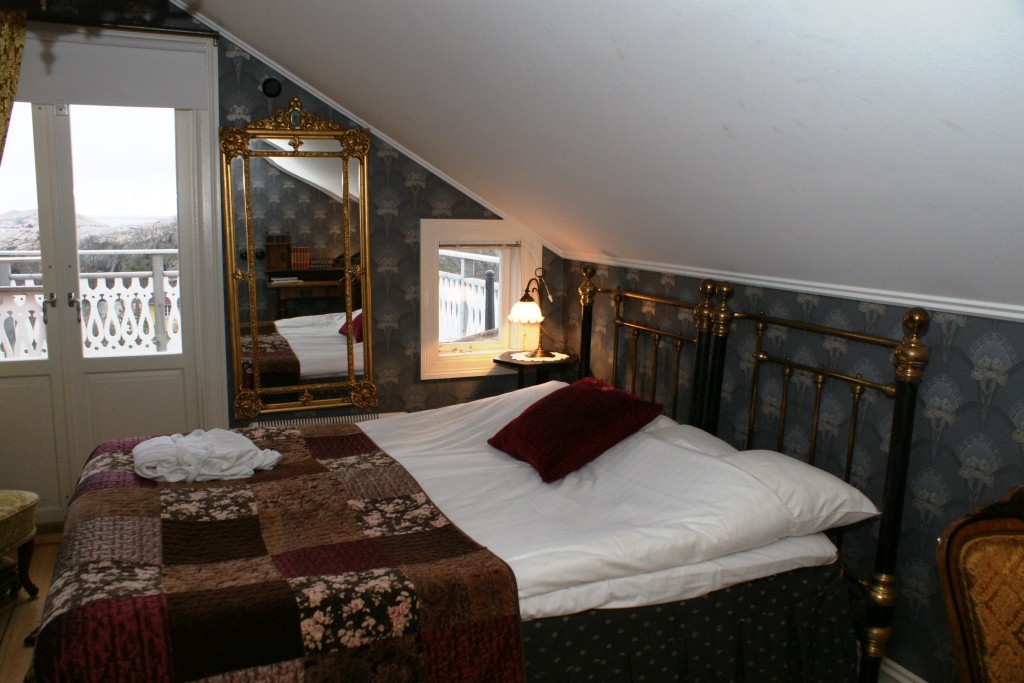
Romantic bed in Strandflickorna Coastal Hotel. Photo: Helgard Mahrdt
“We close tomorrow,” the two girls said to themselves although they had bookings for the whole summer. In the end, everything worked out. The price was SEK 80 per person, and people were happy. It was actually fun, as the girls recall.
Since then the two have remained partners and friends. “Of course there have been ups and downs,” they admit, but they have stayed together on amicable terms. “We’re two very different people who complement each other,” they say. “Bettina is hardware and I am software, “says Åsa.
The next summer they had other jobs alongside their studies. The summer of 1992, however, they tried again with Toppsnäckan 2 in another larger and more spacious old house, which was later torn down.
“That summer we worked ourselves nearly to death and thought that enough is enough,” they say. “We had other jobs in addition to the hostel, but this was our summer vacation. It was absolutely hysterical. We felt that we did nothing but to clean. Later I hated to hear that it had been good weather that summer, with plenty of sunshine. But we were never out. We were pale. We would never do this again. ”
After operating their first hostel they were actually able to afford their own laptops. None of their friends could afford so at that time. They used what they had earned and were quite proud of themselves. After the second hostel they were also better acquainted with the municipality.
In the summer of 1993 two old beach hotels were renovated by the municipality, and were advertised for rent. Åsa and Bettina submitted tenders and won the contract.
Beach houses in Lysekil
The girls started their whole year open hostel and hotel in 1993 . “We called it Strand Hostel and Coastal Hotel,” they say.
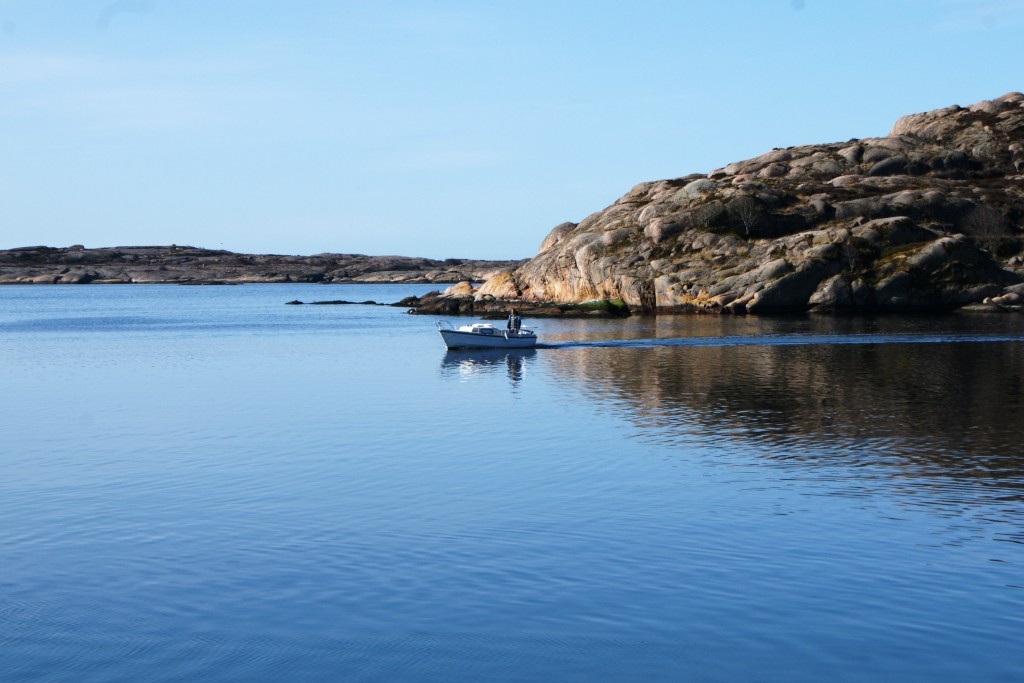
Idyllic coastline near the hotel
Åsa, the economist, was responsible for marketing management, while Bettina, the non-economist, was in charge of finance and accounting.
Detail from room
“In 1994 Swedish Television was filming the Christmas Calendar in our hotel, so we were fully booked for a month and a half during low season,” says Åsa. “One of their requirements was that there should be television in in every room, and the company invested in the connections. We had to buy the television sets.”
In 1995-96 Bettina and Asa began to consider buying a hotel nearby. It had been purchased by a couple from Stockholm, who ran it and stayed in the house as well. However, they were not used to staying in the country, so it was a bit too much for them. Åsa and Bettina heard rumors that they considered selling the house, but when they approached the couple, they denied everything.
Morning at Lysekil beach
After three weeks, however, they contacted the girls and asked if they were still interested. Just then Bettina had booked a vacation to Central America together with a friend. On the way to the airport she stopped at an office in Gothenburg, which supplied her with the forms for purchase contracts, completing one and sending it to Asa just before her departure.
Cabin near Strandflickorna Coastal Hotel
Åsa was now left alone to run the business for almost seven weeks. The loan application to the bank was denied by the credit officer. Asa called the bank manager and told him that the credit manager had refused their application and wondered if she could have a meeting with him to present their ideas.
Detail from the sauna area
It ended up that Bettina and Asa were granted the loan on one condition; they had to amortize 300.000 kronor the first year. In 1998, they bought the hotel. All friends and family helped out – and took decisions. “It was a hell for six weeks”, Åsa recalls.
Dining room at Strandflickorna
“When I came home after six weeks I was informed that also I could decide,” says Bettina with a smile.
Beach motif
They fulfilled all the bank’s requirements in the first year, the hotel consisting of 15 rooms. Now they were in charge of two hotels, and the municipality called them Strandflickorna (The Beach Girls). “We thought it was a fun name and wanted to name the hotel just that. We submitted the name to the company registry more or less for fun. We did not for a moment believe that it would be accepted. However, accepted it was, and the name has given us both fun and benefits. It was good PR. However, it was misunderstood once when a person called in middle of the night and wondered if we were doing escort service. ”
From old town, Lysekil
Then they started to renovate the rooms. “We wanted to turn time back to the turn of the century,” they say. “We started reading old gossip newspapers, released in summers of the period 1895-1920. There we found lots of ideas on how to furnish the rooms. We read about prominent people who had stayed there. The house was actually originally built by King Oscar II, who was fond of girls, and always had a swarm of young ladies around him. The building was raised as a home for weary nurses. Frida Aaron’s room is one of several that is inspired from this time. She was a very beautiful woman from Marstrand. One of the pictures is hanging on the wall in the room shows her photographed together with King Oscar.”
King Oscar II of Sweden and Norway (1829-1907). Painting in stairway at the hotel
Many prominent people have stayed at the new Beach Girls Coastal Hotel. Scandinavians will recognize names like Fredrik and Jørn Skavland, Arja Saijonmaa, Thomas Ledin, Jan Guillou and Ulf Lundell, to name a few.
Room at Lysekil
“It has been wonderful to work here these years,” says Asa. “We have satisfied and happy guests. It has been a privilege to furnish the rooms as we wanted. We’ve had the opportunity to work with great people aged 16-65, real beach girls, who we thrive wonderfully well together with.”
Photo from the old sardine factory at Lysekil
Week-end guests visit the hotel year round, and many conferences take place with guests and participants very pleased with the facilities. “When we took over the hotel we closed on weekends, since no one came here. But that changed after we renovated and built the beach pavilion right at the water’s edge, “says Bettina.
From the beach studio with jaccuzzi and sauna
The bathing pavilion is an experience in itself. Guests are advised to book the facility in advance, since it is extremely popular, and intended for guests traveling together.
King Oscar II Room
When we ask Bettina and Asa what has been the most difficult, they say in unison that it was to find time for private life. “It’s wonderful to be home, and it is wonderful to be at work. Finding the balance is perhaps one of the biggest problems, “they say.
Seafood at Strandflickorna
The menu at the hotel is short and simple, but homemade. “We do not want a complicated kitchen with a lot of staff,” they say. “Still we have dinner guests not staying at the hotel. With us, the environment is more important than the food. But we cooperate with unique eateries in town, and we can guarantee guests who want to combine environment and activities with food experiences a unique stay with us,” Bettina and Asa assures us.
Walking path near the hotel
There is a staff of 15 working full time at the Strandflickorna Hotel today. In 2013 the girls invested six million kronor in six new double rooms and the so-called orangery, and do not intend to end their story there. Over the next two years there will probably be room for more guests, and new experiences are already on the drawing board.
Strandflickorna hotel with Lysekil chirch in background. Photo: Helgard Mahrdt
Going to Lysekil? Here you can read more about what Lysekil has to offer.
One of the many charming pictures in the rooms at Strandflickorna hotel
All images by Tor Kjolberg, except when noted.
Feature image (on top): Helgard Mahrdt.
More images below.
Hidden Gem in Sweden: Stranflickorna were interviewed by Tor Kjolberg
In Salon 39, Fredriksberg in Copenhagen, the bartenders have specialized themselves on classic cocktails. If Sazerac or Red Snapper mean something to you, you know what we’re talking about. But you may also taste some of their own mixes, like Hemingway Punch, Jackie Brown or Mona Lisa.
The classy cocktail bar, established in 2005 by Michelin-trained chef Kasper Georg Jensen and bartender Thomas Raae Rasmussen from Hotel Vier Jahrzeiten in Hamburg, combines the sleek old-timey charm of the classic cocktail bar with a tempting dinner menu in an intimate setting.
Food at Salon 39
It is a small place near the lakes with an amazing ability to mix a few ingredients together to create outstanding flavors in both food and drinks.
We defy anyone not to have a memorable evening at Salon 39. First-class drinks, delicious food, shabby chic decor and an excellent atmosphere make it the place to go for the Danish smart set. You can try cocktails you will not find any other place, as well as the classics.
The two friends wanted to create a great cocktail-bar while serving a few simple dishes and snacks so people would hang around instead of leaving to go get food elsewhere.
Burger at Salon 39
The bartenders and staff here really know how to mix the liquor to perfection and how to treat all guests with smiles and true hospitality. And by the way, the chef here makes one of the best burgers in town. Food is prepared with lots of love and great ingredients.
The best liquors are imported from around the world; Pisco from Chile and Peru, Bourbon from small American distilleries and homemade infused vodka and cognacs.
The ambience in the dimly lit Salon 39 is cool, relaxed and perfect for a romantic date as well as a night out on the town. The music is mostly jazz, soul and blues to complete the experience.
A cafe by day, bistro in the evening and a cocktail bar after dark; what Salon 39 doesn’t know about cocktails frankly isn’t worth knowing.
Why not let the bartender surprise you with new concoctions?
All images, couresy of Salon 39
Best Cocktail Bar in Copenhagen, written by Tor Kjolberg
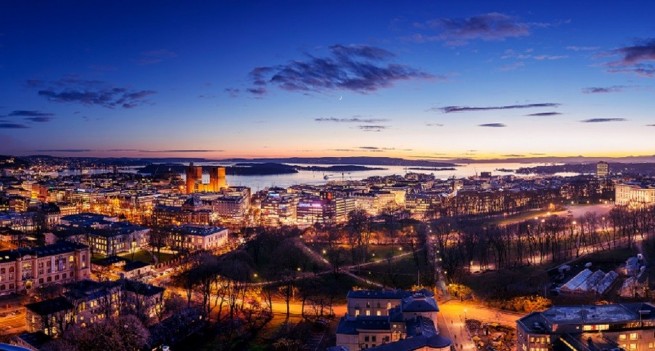
Oslo is the smallest and quietest of the Scandinavian capitals and also a familiar name on Europe’s top 10 most expensive cities. However, thanks to a recent oil price collapse, the Norwegian capital is again within reach to travelers. And Oslo is bustling, bohemian and beautiful. Read the article and experience Oslo – on a budget.
If you glide in to Oslo by train after a flight with low-cost airline Norwegian to Oslo Airport, you’ll glimpse an array of tiny islands apparently bobbing about in the Oslo fjord. They’re an enchanting sight with their miniature beaches, diminutive woods and brightly colored little cabins, all just a short ferry trip from the city.
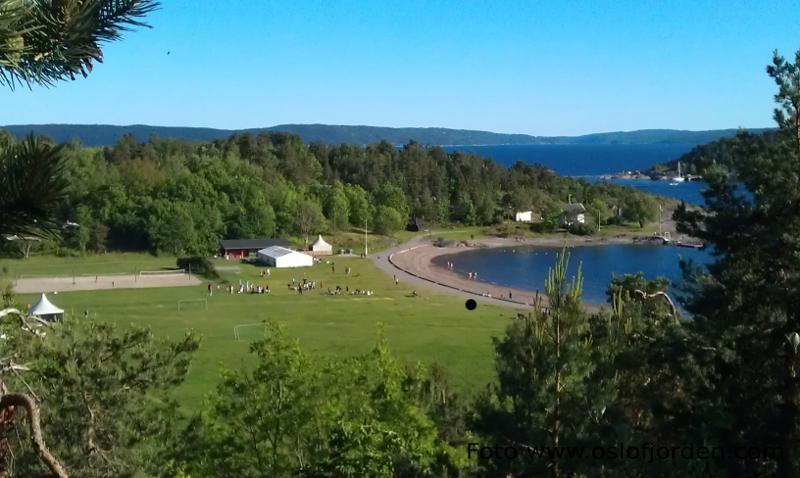
A trip to Langøyene from the Town Hall pier takes only 15 minutes. Langøyene means “long islands” and is actually two narrow isles that were joined together by a rubbish tip which was grassed over and landscaped. The island is now dedicated to summertime fun.
Barcode, Oslo
What’s more, there’s a frequent ferry service to Langøyene during the summer that takes about 15 minutes, making it eminently feasible to stay on the island and visit the city every day. (Read also: Freedom to Roam in Scandinavia).
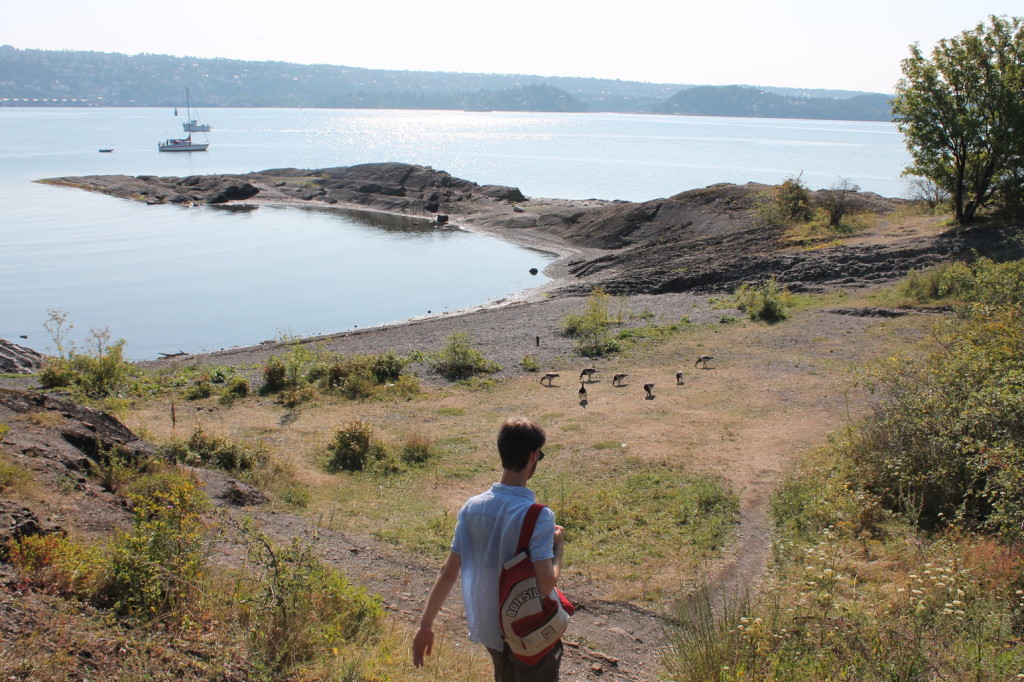
However Langøyene is only one of half a dozen islands at the city end of the Oslo fjord. The remaining five are served by two ferries that spend all day doing little circuits of them, so we recommend you to do some island-hopping.
From Langoyene
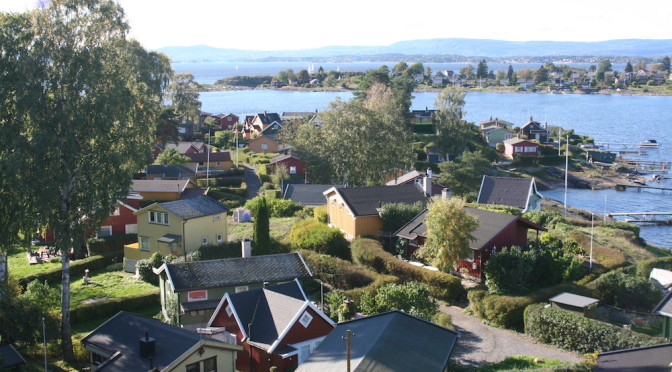
Ferry no 93 first calls at diminutive Bleikøya. It’s worth jumping off here for a wander around the exquisite wooden cabins where wealthier Osloites spend their summers.
From Bleikoya
But greater treasures await you at Gressholmen. Very sparsely populated and mainly given over to a nature reserve, this is a place where you can flop on to a beach or lose yourself among the woods and wild pansies with no inkling whatsoever that Oslo city center is just two miles away. A cafe is open from noon until late.
From Gressholmen
Next stop is Lindøya, where the 93 will drop you off at its eastern end, leaving you to saunter on footpaths and tracks across the car-free island (again served by a cafe). Here you can marvel at the numerous hamlets of cabins and their proud owners tending their tiny gardens, before arriving at the western end to pick up the 92.
From Lindoya
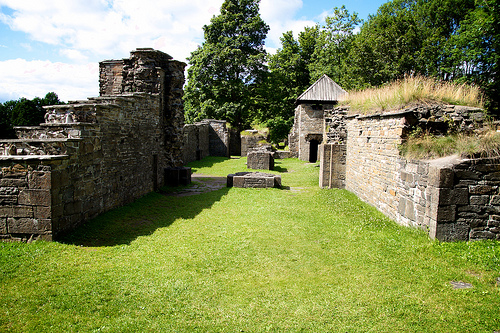
Those eager to see everything will want to stop off at Nakholmen, a smaller version of Lindøya. Otherwise, stay on the boat to Hovedøya (“main island”), a popular picnicking and bathing destination and possessor of a historical gem: the remains of a 12th-century Cistercian monastery founded by Lincolnshire monks. The beautiful barn of a cafe right next door makes for a perfect final watering hole before you head back to the hubbub of the city.
NakholmenFrom Hovedoya
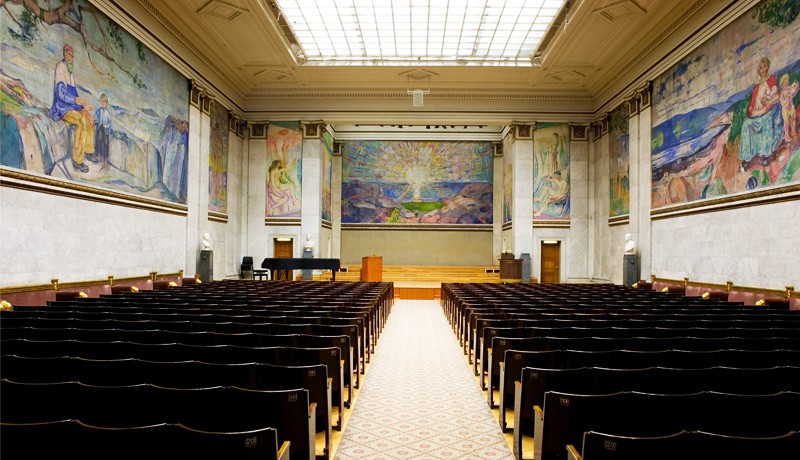
Today Oslo is a diverse, bustling city with a growing immigrant population. Art lovers should visit the Edvard Munch museum. You may also see some of the troubled artist’s best painting for free at the old University Aula on Karl Johans gate. Visitors interested in old Norse tradition should swing by the Viking Ship Museum.
From the Oslo University Aula
In summertime, with nearly 14 hours of sunlight, it’s best, however, to stay outdoors.
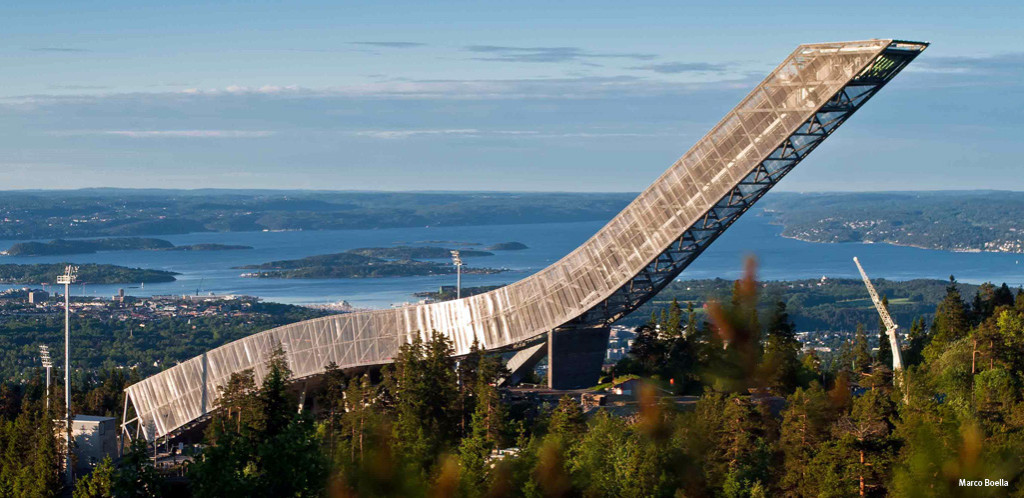
Holmenkollen ski jump
North of the center, but well connected by tramcar service, is Holmenkollen, which is a source of national pride for Norwegians. This ski jump has been hosting ski festivals since 1892, and has been home to many prestigious international competitions, including the Winter Olympics. The jump itself is an impressive sight, while a ski museum and a display of polar artefacts will also be of interest to snow-ophiles. Don’t miss out on visiting the observation deck on top of the jump tower and seeing unparalleled 360 degree views of Oslo any time of year.
Summertime in Nordmarka
Winter is perhaps the perfect time to visit Oslo – it’s the only place in the world where city break and ski break collide so happily. Get yourself a pair of skis, take them on the metro (everyone does), and within 20 minutes you’ll reach Nordmarka forest complete with miles upon miles of cross-country ski trails in peaceful and idyllic surrounds. You can keep going until late, as they’re lit up past 10pm – if you’ve never skied in the dark, believe us you should.
If slope skiing or boarding is more your thing, Oslo Winterpark, similarly close to the center, is another option. This comes with the added bonus of cozy winter cabins where you can sip mulled wine by an open fire – but be warned that drinks here are unsurprisingly pricey. Mulled wine aside, it’s completely kid friendly, too.
There are more than 50 museums and galleries in central Oslo, including those dedicated to magic, music, medicine and the military, but don’t try to do too many. The two mentioned above should however be on your list.
If you have special interests, pick up the Visit Oslo’s pocket guide for full details of the capital’s free attractions, Akershus Fortress, the Oslo City Museum and DogA, the Norwegian Centre for Design and Architecture.
Vigeland park
The free Vigelandsparken (also known as Frogner Park) is a popular destination. You have probably never seen an art installation quite like it. Staggering 212 of the Norwegian sculptor Gustav Vigeland’s human naked creations, including a towering 50-foot monolith carved from a single stone are on display there. It’s most famous piece is a statue of a young boy having a tantrum in his birthday suit.
Tantrum boy in the Vigeland park
While the Frogner Park remains Oslo’s best-known repository of open-air art, it now has a rival on a hillside overlooking the harbor, the 63-acre Ekebergparken. The park was a gift to the city from a local beer magnate and displays works by internationally renowned artists such as Dalí, Rodin and Bourgeois. Not to be missed is a disorientating piece by James Turrell (Sundays only, 12pm-6pm) in which visitors enter a tunnel beneath a reservoir to look into what is apparently infinite space. The park is just a few minutes’ climb from the city center on tram no 18 or 19, so grab a picnic basket and spend the afternoon there.
Oslo Opera House
A trip to the ultra-modern opera house is a must. It is also designed for scampering up the building’s sloping walls.
Where to stay? The 60-room Oslo Hostel Central has been rated the second-best hostel in the world by Hostelling International backpackers. Housed in an elegant red-brick end-of-terrace building and located in the heart of Oslo between the city’s main drag and the Akershus Fortress, it offers private rooms as well as dorms, friendly multilingual staff on reception, and a decent breakfast to fill up on. The rooms are informed more by a stylish minimalism than any attempt to thrill, but are finished to such a high standard that the “s” in “hostel” becomes all but silent.
Oslo Hotel Central
Comfort Hotel Xpress, just a short walk from Oslo’s main station, is designed to prioritize the things young travelers care about (clean and comfortable, free wifi, free coffee, some communal kitchen space) and save on things they don’t (your sheets won’t be changed unless you request it, space is limited, there’s no room service).
Comfort Hotel Xpress
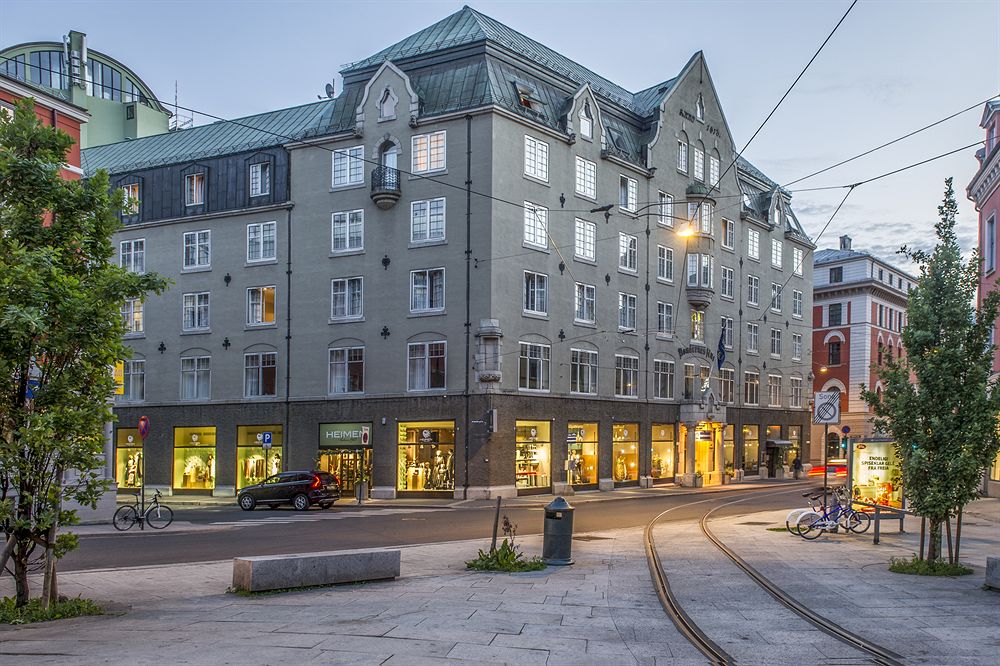
We also recommend the moderately-priced and historic Hotell Bondeheimen, which offers not only a very central location close to the main square, royal palace and plenty of sights, but a complimentary and delicious breakfast.
Hotel Bondeheimen
Getting around Sold in 24-, 48- and 72-hour form, the Oslo Pass not only offers free travel on all public transport (including ferries), it also gets you into more than 30 attractions, outdoor swimming pools and walking tours, and offers discounts at restaurants, shops and on concert tickets. Highlights include the harbor-front Astrup Fearnley Museum of Modern Art the Holmenkollen ski jump (see above) and the Popsenteret, the surprisingly brilliant interactive museum of Norwegian pop (more than just A-ha, it turns out). The pass is available from tourist information centers, hotels, hostels, campsites, and some museums.
Astrup Fearnley Museum of Modern Art
If you don’t want to buy an Oslo Pass, grab a Zone 1 season ticket, valid on all buses, trams, trains, metro and ferries (except to Bygdøy). They’re available from kiosks and shops, ticket machines and bus terminals.
Eating and drinking out Oslo’s dining scene has really upped its game over the last few years. The result is that you can eat very well indeed without going to the city’s most expensive spots.
Shop at Grunerlokka
Oslo is not a city that’s short of hipsters, with its Grünerløkka district to the east of the center, boasting a vibe a lot like eastern parts of London, New York or Berlin. Once an industrial wasteland and the city’s poorest area, it’s now home to coffee shops, microbreweries, bars and restaurants galore.
Park at Grunerlokka
Be sure to check out great spots like coffee legend Tim Wendelboes eponymous shop in the Grünerløkka negighborhood. “Our goal is to be among the best coffee roasters and espresso bars in the world and to be a preferred source for quality coffee, knowledge and innovation,” says Wendelboe.
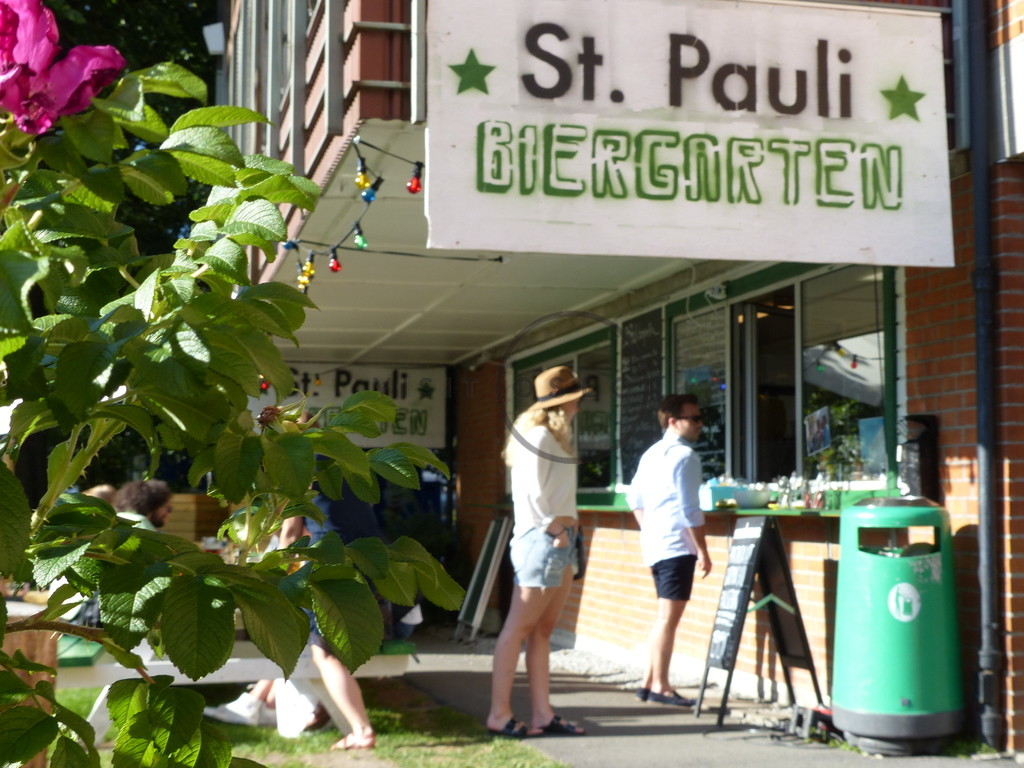
Also try St. Pauli– if just for novelty value. This waterside beer garden serves German beers, Norwegian and German food and shows old football matches. Bustling gastropub Grünerløkka Brygghouse, which comes complete with its own microbrewery, is also a good shout.
Akerselva
While in the area, consider a cycle down the fast-flowing Akerselva river (there’s no shortage of places to hire bikes), a spot of shopping at the many vintage markets and boutiques, or a graffiti-spotting stroll.
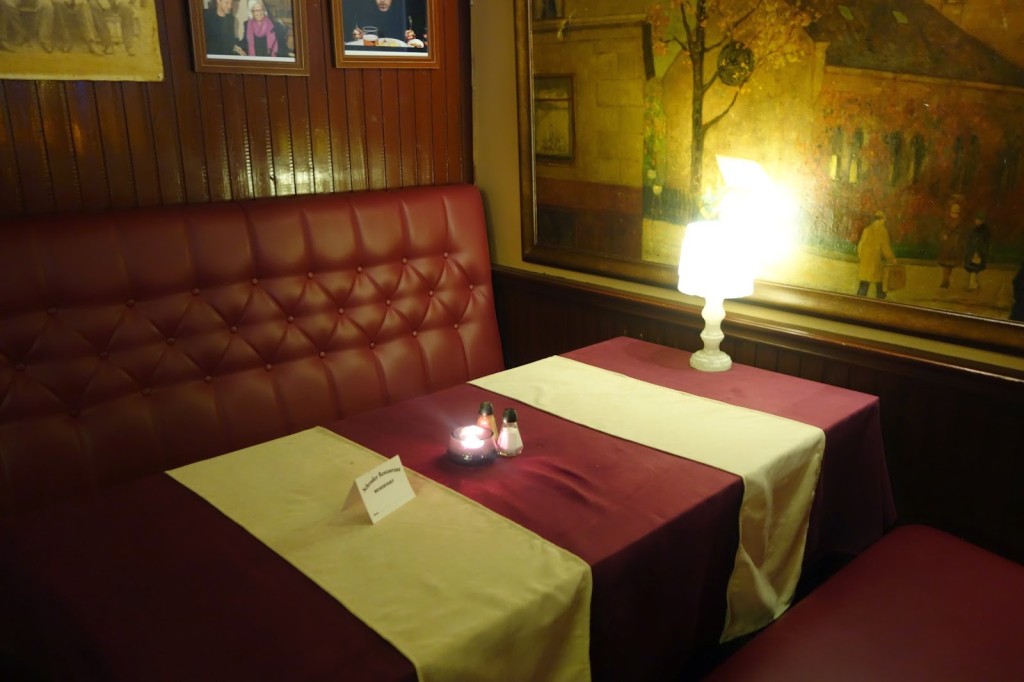
Schroeder restaurant
Lurking in the less-than-trendy St Hanshaugen district, Restaurant Schrøder may be off the tourist trail but the eatery boasts a devoted local following drawn to its traditional Norwegian menu and, in particular, its cod and mackerel dishes (when in season). Grey lino, red-check tablecloths and huge sepia paintings of old Oslo give the place a stuck-in-the-1950s feel. The prices are moderate. If you’re lucky, the diner at the next table might be crime writer Jo Nesbø, who likes the place so much he’s also made it the favorite hangout of his fictional detective, Harry Hole, who has become so popular that Hollywood has turned the crime novel The Snowman into a film, starring German-Irish actor Michael Fassbender.
If you’re looking for genuine Norwegian cooking, head to a place like Elias mat & sånt. If you like Chinese, Thai og kebabs, there are several possibilities in the capital.
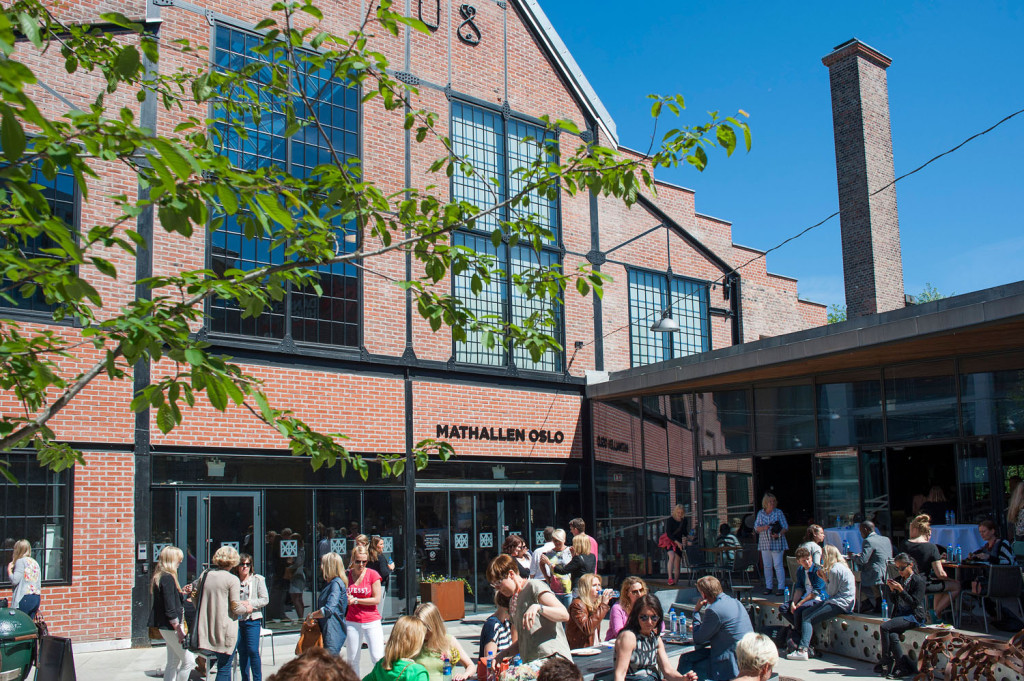
Mathallen
Try hip Lokk (information in Norwegian only), which specializes in soups (and more recently some stews) and does them very well indeed. A must visit is Mathallen (literally ‘food hall’) which is an indoor food market in the Grünerløkka area, with more than 30 stalls, bars and restaurants. It could be described as the beating heart of Oslo’s new food movement, and is a reliably atmospheric and affordable place to get your fill. Make sure you try some pickled herring – pretty much Norway’s national dish – at some point. Entertainment
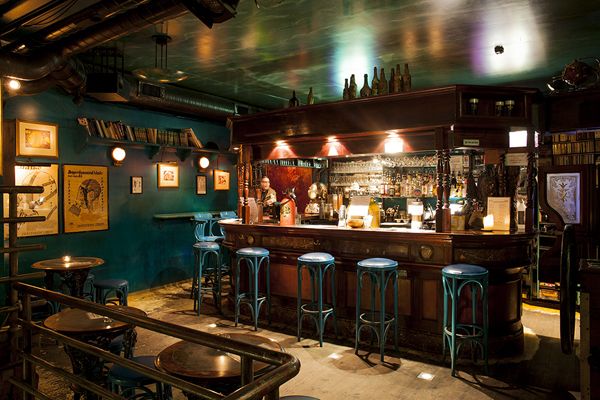
The Underwater Pub may not actually be underwater (it owes its name to its sub-aqua decor) but it does allow you to bring in your own food. Alternatively, you can ask the bar staff to get one of three local takeaway joints to deliver a meal to your table. For a truly joyous experience, go on a Tuesday or Thursday and nurse your half liter of the local Ringnes beer while professional opera singers perform choice excerpts for your listening pleasure. Most of the action takes place at the top of the stairs of this split-level pub, so get there in the early evening to secure a table with a good view.
Jazz friends should have a look at what’s happening when they’re staying in the capital of Norway. Jazz in Oslo may be a helpful resource.
At Herr Nilsen pub there are live performances almost every night
Oslo, of course, isn’t East European cheap, but it’s not so expensive that you’ll end up calling your embassy to get back home. Our advice is this: If you’re willing to spend money on a trip to New York City, Tokyo, Moscow, or London, you can definitely afford a trip to Oslo.












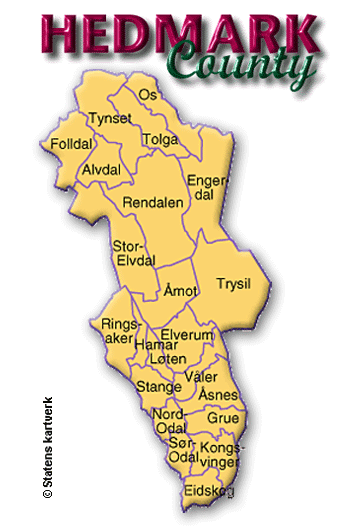 Hedmark is a stout piece of Norway. Describing this county is not easy; it’s sort of rich and poor at the same time. If we look at its size and scope, Hedmark comes in a good third place after Finnmark and Nordland. Its name has been given by the Norse Heidmork.















 “There is a subtle language here where things occur under the surface. There is an underlying tension, which is about to explode, or a feeling of being trapped under a glass dome. Not giving voice to one’s pain, but swallowing it. This is often what I portray. A silence, the energy of waiting. A condition that is very much about a person’s interior world. Questions which may have no answers, rather than answers which may have no questions.”