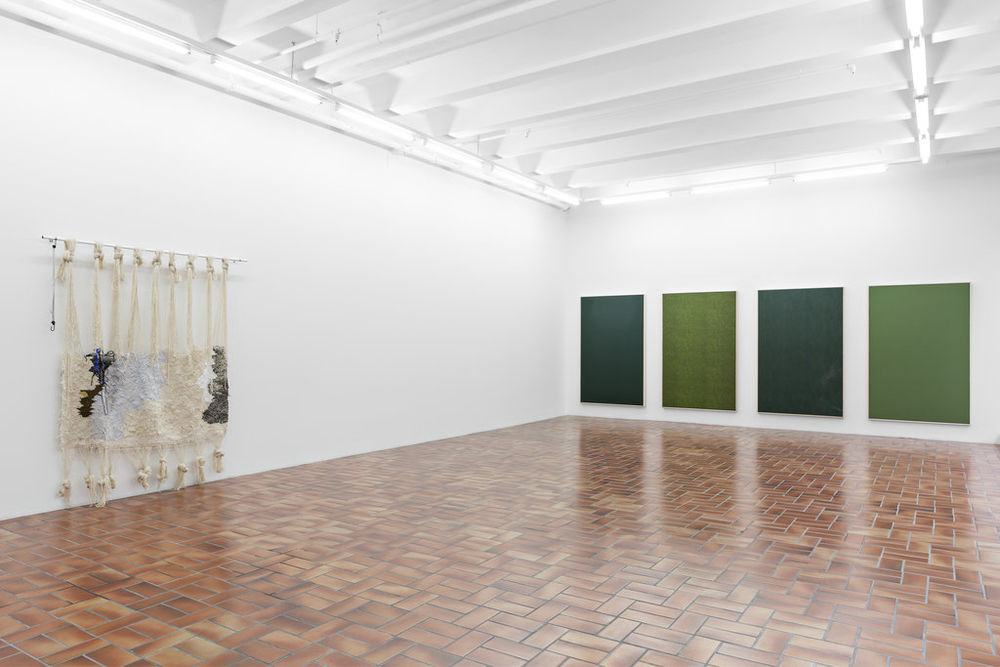
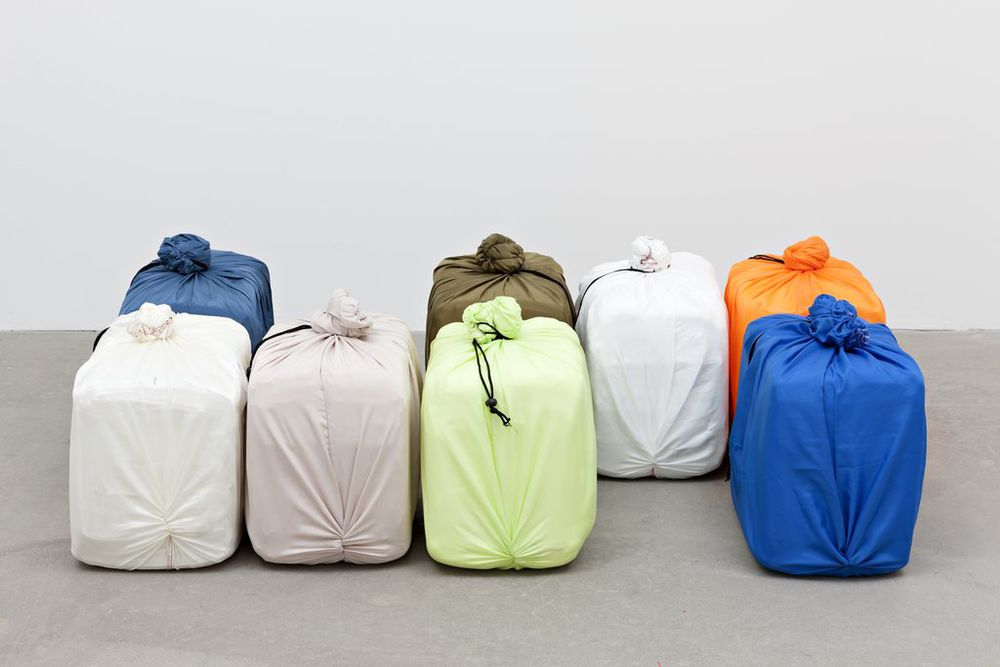
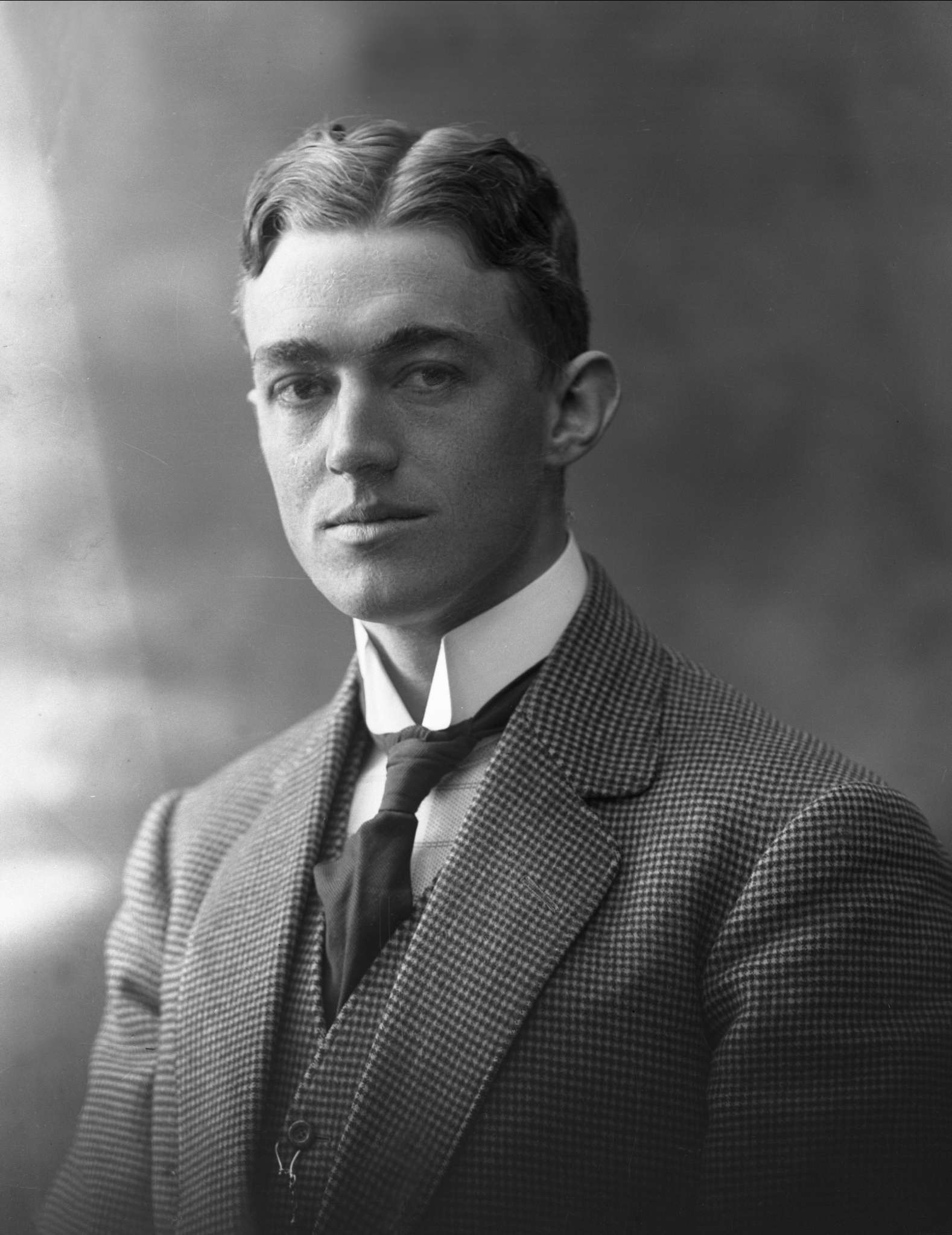
The Norwegian contemporary artist Ann Cathrin November Høibo has gathered international attention for her sculptures and paintings utilizing weaving, fabric, dangling string and cords, rubber bands, various found objects and spare, intense color.
Ann Cathrin’s tapestries form a part of a lineage of Norwegian textile art that stretches back through her mentor, Else Marie Jakobseb, in turn a pupil of Hannah Ryggen, to Frida Hansen, who established the Workshop for National Tapestry Weaving in 1892.
Piece, November 2014
The ravishing work of November Høibo from Kristiansand has caught the attention of art galleries around the world. Her characteristic treatment of gallery- and museums spaces, in which she arranges exhibitions of temporary situations from singular elements that interact in different ways is certainly one of the reasons.
Ann Cathrin preparing for a masterpiece in 2010
Although her background is in weaving, she is by no means a textile artist per se. She often combines natural and synthetic materials, wool fashioned on a loom and commercial products, hinting at an abstract painting sans paint, while also suggesting landforms seen from above. Working both with and against associated traditions, her works are thus typically finished at a moment before they are complete.
Using the gallery room as her studio, she assembles half-finished works with new whims and acquisitions.
Weaving
Her work ranges from installation-based, site-specific pieces comprised of mixed media and found objects to large-scale abstract canvases incorporating materials like acrylic paint, acid and salt.
Installation
Høibo’s straightforward works disclose exactly what was accomplished, and with what materials, while they reference or incorporate commonplace domestic objects. Working in such an improvised way, she often ignores any regular sequence of warp and weft and leaves threads trailing or casually bundled up.
From Standard, Oslo
She is indeed demonstrating that textiles are a legitimate artistic medium for voicing her concerns regarding self or society. Her works have a remarkable air of mystery, wonderment and transformation. She rejects a homespun aesthetic: natural threads are counterpoised by shiny nylons and other oil-derived, highly durable looking polyesters.
Høibo’s site specific installations consist predominantly of threads and textiles in various conditions, weaved, draped, laddered, bundled and seducing.
From Standard, Oslo
Ann Cathrin November Høibo was trained at the National Academy of Arts, Oslo, and Städelschule, Frankfurt am Main. She lives and works in Oslo. She has already participated in group shows at Rodeo in Istanbul, White Columns in New York and Standard (Oslo) Henie Onstad art Center (Oslo), as well as a solo presentation at Art Basel in Miami Beach.
Refreshingly Eccentric Young Norwegian Artist, written by Tor Kjolberg
Scandinavia is home to a number of exquisite and unique milk products, aside from all the ones available in the rest of the world.
Sour milk, like yogurt, was originally produced to make fresh milk keep, but also for its health-giving and culinary properties.
The fermenting process makes milk much easier to digest. Most Scandinavians are able to digest milk, when over the age of breast-feeding, as opposed to many other human beings who, apart from nomads, are usually not able to digest milk, and will get sick from eating large amounts of milk products.
The ability to digest milk is taken too far in Scandinavia, where almost every adult drinks lots of milk every day. It stems from a popular misconception that milk is the only source of calcium and that it is just basically good for you.
The truth is more complex, and milk drinking is certainly a way to get fat. Obesity is now a huge problem in Scandinavia.
Let’s have a look at the three most common sour milk products:
Laangfil from Sweden
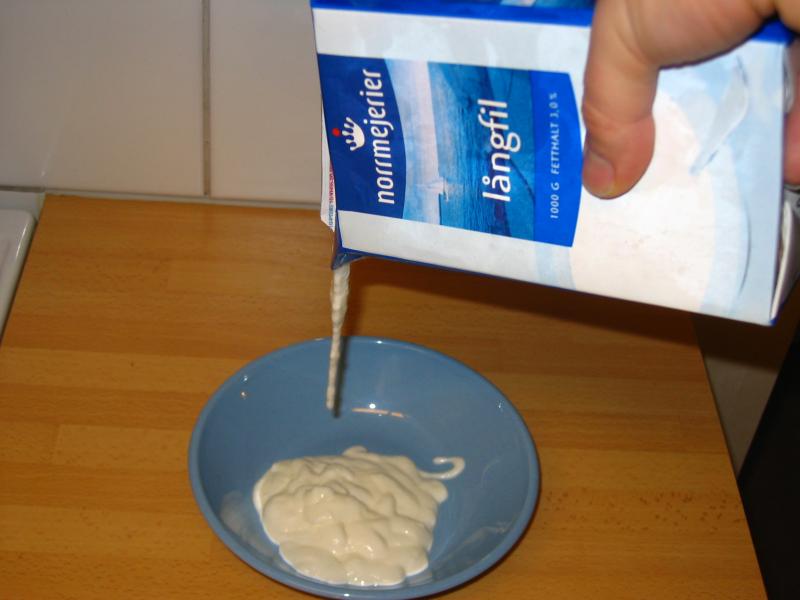
Långfil This is a type of fermented cow’s milk, which is only available in Sweden. It ferments at low temperatures over a long period, and was traditionally a way of making milk keep (and still is), to make while you are out in the wilderness tending your herd, timbering or hiking or just to take along.
Skyr Originally from Norway, skyr was taken by the Vikings to Iceland, where it is tremendously popular as an everyday health food. Skyr is a dense, drained milk product, essentially a fresh, unfermented cheese, much like fresh ricotta.
Cheesy Skyr with blueberries
Buttermilk The story of butter and the resulting buttermilk is closely entwined with the Scandinavian pig export business. Genuine buttermilk is the whey that’s left after you have churned the butter, and the real stuff is delicious.
Buttermilk dessert
Recipe:
Buttermilk and sweet grass cream whith rhubarb jelly
2 sweet grass leaves or 4 rose geranium leaves
250 ml water
For the cream:
100g sugar
300ml full-fat cream
200 ml buttermilk
4 leaves of gelatin
For the jelly:
5 leaves of gelatin
500ml rhubarb cordial or leftover syrup from rhubarb compote or soup
A handful if edible flowers
Serves 6
Boil the sweet grass in the water for 10 minutes, the leave to cool. Discard the grass.
Bring the sugar and cream to the boil, then take off the heat. Stir in the grass water and buttermilk.
Soften the four leaves of gelatin in a little cold water for a few minutes until it feels like a jellyfish. Squeeze off any excess water and place in a small pan along with a little of the cream. Put over a very low heat until the gelatin is completely melted, then stir in some more of the cream, making sure there are no lumps, and finally the rest of the cream.
Divide between six tall glasses or bowls, allowing room for the jelly on top. Leave in a cool place to set.
Meanwhile, soften the gelatin for the rhubarb jelly as before, and then dissolve in the rhubarb cordial. When the buttermilk cream has set, pour or spoon over the rhubarb jelly, and leave it to set completely. Do not put it in the fridge, as this will spoil the taste. Decorate with edible flowers.
Enjoy!
Variations: berries instead of rhubarb
Scandinavian Sour Milk Products, written by Tor Kjolberg
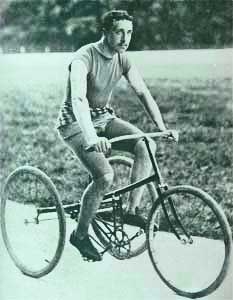
Dutchman Peter Scheltema Beduin was a true pioneer. In the years before 1900 he distinguished himself as racer cyclist and won prizes in many parts of Europe. Reporters called him “The Flying Dutchman”.
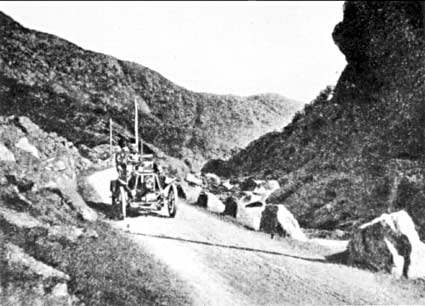
On Thursday 9 August 1901 Beduin (1870-1928) arrived in Christiania as the first car tourist on Norwegian soil.
Beduin driving through Laerdal in Norway
Beduin was an adventurer with a sense of drama and had been on long expeditions by car in the Alps and through St. Gotthardpass. He embarked on this expedition to Scandinavia and Norway along with two others. Scandinavia was then considered as “Europe’s wilderness,” and a car expedition there would be an even greater challenge.
On 3 September his “Panhard & Lavassor” rolled over the county border to Sogn and Fjordane at Filefjell. The car had eight horsepower, four cylinders and four gears.
Peter Scheltema Beduin on bike
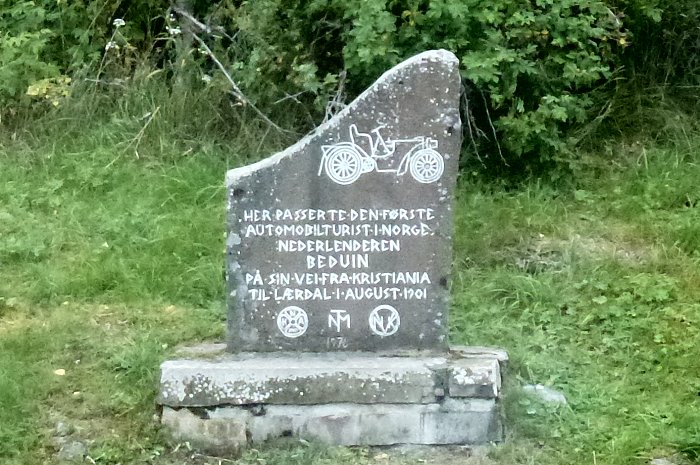
Outside Vindhella youth home in Laerdal you’ll find a stone raised in memory of the first car that drove through the municipality.
At Nes in Buskerud Beduin suffered his greatest defeat on the trip. The whole village had flocked to see the new driving vehicle. Right there, with a large audience, they met the only steep hillside where the car with its motorized horsepower failed to pass. They had to bring horses to pull the car upwards.
Norwegians must undoubtedly have given Beduin a mixed impression as a people: first of all he had to pay a motor vehicle fee of 200 kroner to the Norwegian authorities to be allowed to bring his car into the country. At that time there were only four cars in the country, so the government was then as now quick to see profits on cars.
First car tourist in Norway, memory stone
The next requirement came from the Technical Committee, who required being a part on a trip in order to judge whether the Panhard was a capable conveyance.
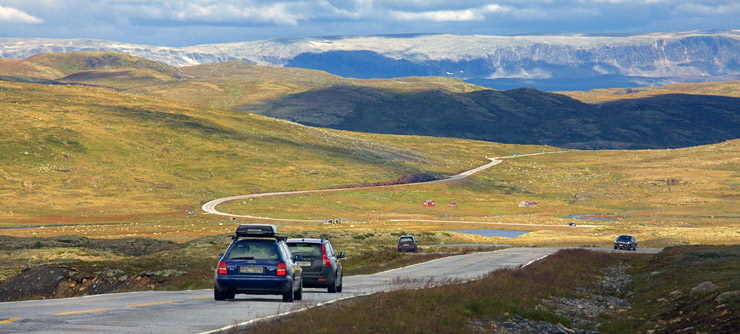
A virw from Riksveg 55 at Sognefjellet
The first car imported to Norway was in 1895.
Borgund Stave Church, Sogn
Beduin died in 1928 and had been general secretary and later treasurer of the RAI, the Dutch organization of importers and manufacturers of motor vehicles.
Feature image on top: Panhard & Lavassor, 1901
The First Car Tourist in Norway, written by Tor Kjolberg
A man from southern Sweden, who was accused of murdering his wife, is suing authorities for damages after it was established that she was in fact killed by an elk.
The man, a resident of Loftahammer in southern Smaland, is now demanding tens of thousands of kronor in compensation for being falsely accused of murder.
The former murder case involving a 63-year-old Swedish woman has now been reopened by local police.
The man’s lawyers are critical of the way in which prosecutors and the police handled the investigation after his wife was found gravely injured near the shore of a lake in September 2008. She was last seen as she took her family dog for a walk in the nearby forest but when she did not return her husband went looking for her and discovered her dead body.
According to the man, investigators were too quick to assume that he had killed his wife. For months he labored under the suspicion that he had murdered his wife, and he was also detained for ten days. After he was released, the suspicions against him remained.
It would take several months before police identified the real culprit after hairs found on the woman’s body were finally identified as coming from an elk.
“When my children and I buried my wife I was still suspected of killing her,” he claimed. According to The Local, the man was released in January this year without charge as investigations took on a new course.
The man says that because of the false accusation, he was viewed as a killer by his neighbors where he lived and had to move away.
Now he is asking for damages totaling 621,000 kronor; -300,000 kronor in compensation for suffering and 321,000 kronor in compensation for lost income.
Police refused to comment on the new findings but announced a press conference, where also an elk expert will be present to explain the forensic analysis findings.
Swedish Murder Case with Elk as Prime Suspect, source: The Local, Sweden
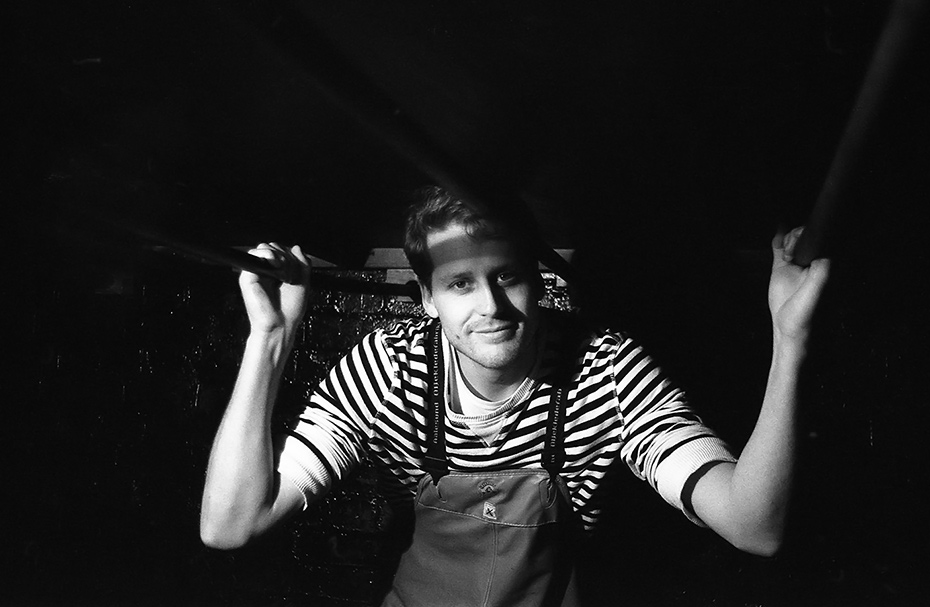
“Welcome to Hansen and Lydersen,” says owner Ole-Martin Hansen from Norway when arriving at a secluded brick building in a side street in Stoke Newington in North London. Here Hansen has built a small smokehouse – an upgraded copy of his old great-grandfather. Delicious salmon fillets hanging on long wooden sticks are dancing in the gentle breeze from a fan.
The traditional Norwegian Smokehouse in London, Hansen & Lydersen, has in a few years developed into a successful gastronomic enterprise with regular customers that include chefs and sheiks. The salmon is salted and traditionally hung and slowly cold-smoked. Ole-Martin uses the recipe that his great-grandfather, Lyder-Nilsen, devised back in 1923. A fishmonger by trade, he started the family business in Finnmark, Norway, and passed it on to his son Leif in the early 60s. He in turn passed his expertise on to his daughters, who chose not to continue the family business. But it was this family tradition that Ole-Martin brought to London after his musical studies in 2009.
“My grandfather, a technical engineer, believed that the energy of the wind would transfer to the salmon,” Hansen-Lydersen says with utter sincerity. “Like linie aquavit, which crosses the equator twice in an oakwood barrel, he thought that salmon should keep moving. If it’s moving then there’s an energy which changes the characteristics of the taste.” He designed as smoking chamber using fans to create a high velocity loop of air which kept his salmon moving.
Lady Bramford, known for her philanthropy as well as her sustainable approach to food production, has invested in Ole-Martin’s company. “I think it is a brilliant idea to invest in a farm to show people the future of farming,” says Hansen enthusiastically.
Lady Carole Bramford-Daylesford
The salmon is sourced from his brother’s fish farm, between the Norwegian Sea and the North Atlantic. To secure the high quality it’s prepared less than 48 hours after it has been fished. After the salmon fillets have been salted using Fleur de Sel de Guérande salt from North West France they are left for 12 hours. Then beach wood is used to create the subtle, sweet smoke which infuses the salmon with its distinctive smoky flavor.
Ole-Martin explains that he get salt from this part of France since the Vikings used to get salt from there to cure their cod.
The beech used is delivered from a sustainable farm in Germany processed by a Danish Artisan family business.
Using sketches of his grandfather’s Finnmark smokery, Ole Martin has recreated the family business in London, and added his own touches. He plays piano every time they close the smoking chamber. That’s what I would call chamber music.
People might think he is a little eccentric, but relentless research and experimentation are central to the business, and sticking to one product allows Hansen to painstakingly perfect his techniques.
Olke-Martin’s working days are long, and his methodology is labour intensive.
The salmon comes in early every morning at around 4am. It comes from the Faroe Islands by ferry, and then lorry.
Ole-Martin is using a technique that is very Japanese, since he for a while studied under the head chef at Nobu.
“It is very similar to the Scandinavian in how it focuses on heritage and respect for what you’re eating,” says Ole-Martin.
Ole-Martin supplies high-end restaurants with his produce, including Sake No Hana, The Albion, Nopi and Viajante, as well as local consumers.
But why London?
“There’s 12 million people living here, and I don’t want to go anywhere else. I have people coming from Italy, Spain and Japan. I even sell my salmon to a sheik in Kuwait who sends his private jet to buy it.”
Now he is still recovering from the two weeks before Christmas when he worked 214 hours. Hansen-Lydersen remains uncompromising in his approach and salts each salmon individually.
However, the superstar of his smoking chamber is a largely unseen, complex, fully automated and iPad-operated system of pipes, a feat of engineering that makes Hansen very proud and allows him to control every aspect of production.
“You might think it’s just pipes,” he explains, “but in fact it’s a delicate balance, and it’s about pushing the boundaries of design and engineering together.”
Ole-Martin’s dream is to go on tour. He is actually designing a shipping container, a glass cube, where people will be able to look into it from 360 degrees. It’s divided into three glass compartments: the salmon will be smoked in the middle with one end for filleting in and the other for packing. The idea is to travel around with it to show off the process.
“We might bring it to New York, or to Tokyo, or to a mountain up in Scotland, to show people the process. I think it’s grounding to watch people work. Maybe children will come and have a look through the windows, like I did when I was a child,” Ole-Martin smilkes.
The delicious smoked salmon from Hansen & Lydersen may be bought from their Stoke Newington Smokehouse, online at Hansen-lydersen or at London’s food markets: Broadway Market, Maltby Market and Lower Marsh Market.
Thank you for smoking, Mr. Hansen, written by Tor Kjolberg
New Year’s Eve in Scandinavia offers locals as well as visitors lots of parties, fireworks and celebrations. This is the festive time of year for everyone to enjoy, regardless of faith, nationality or background.
New Year’s Eve is also one of the largest global celebrations because it marks the last day of the year in the Gregorian calendar.
Danish new year, Wilhelm Larsen
Happy New Year in Denmark
Few days are so joyfully celebrated by Danish people than New Year’s Eve, with lots of excitement and jollity.
Parties usually start around 6pm, because this is when their appreciated creative and artistic Queen Margrethe’s New Year’s speech starts. They will listen to the Queen’s New Year’s Eve speech (no matter where they celebrate). In her speech, she always mentions the people of Greenland and the Faroe Islands and the many Danes at sea and always concludes her speech with a hearty “God save Denmark” (Gud bevare Danmark).
NYE Copenhagen
Special dishes are served, and fine and varied quality of champagne flow all night. Also, as soon as the clock rings twelve at midnight, marzipan ring cake is served to all those present. The traditional KRANSEKAKE is decorated with Danish flags. The tradition of serving this cake at New Year is about 100 years old, but the cake was invented in the end of the 1700 Century.
Apart from the modern day parties organized all around the country, Danish people do ensure to concord their celebrations with their traditions and customs, as they are seen as occasions to promote Danish cultures, traditions and rich heritage, as well as pass them on to future generations.
The list of traditional dishes served in these parties includes boiled cod, stewed kale, and pork. Serving them to guests during New Year’s Eve is considered to confer good luck, prosperity and happiness in the coming year.
Bursting firecrackers is also a very intact part of New Year’s celebration in Denmark. At the mark of twelve, preplanned shows of fireworks are carried out, which illuminates the entire sky and skylines of the towns. The noisy fireworks are most awaited and enjoyed by young children. It is done with an old belief in concern, that loud noises of fireworks sway away all the evil spirits and negative energies.
Another traditional event the majority of Denmark’s population is waiting for is the live broadcast of the Town Hall clock in Copenhagen turning twelve on midnight.
Many people attend private parties or spoil themselves in restaurants where multi-course menus are on offer. If you’re going out, restaurants might close around eleven to enable the staff the opportunity to celebrate as well! Cafes, bars and clubs, however, usually don’t follow this practice. It’s best to ask the maitre d’ about their opening hours when making your reservation.
If you want to join in on the fireworks at midnight, you should stick to large open squares and keep the fire hazard in mind.
Happy New Year in Norway
New Year’s Eve in Norway is a big celebration. Many city people will travel to their holiday homes, often located in the mountains, so Oslo and other cities can be a bit quieter than normal.
Apart from being rich in economy and growth, Norway is considered equally rich in its heritage and tradition. New Year celebrations as made all around the Norway are an intact part of those traditions, followed by the inhabitants of Norway since centuries.
NYE Oslo
On New Year’s Eve (Nyttårsaften), Norwegians usually meet for dinner at someone’s home or invite guests over to theirs. Norwegians love to bring in the New Year in high spirits of joy and happiness. Many hotels and restaurants are also hosting New Year’s Eve parties. The most popular places in many of Norway’s ski resorts are fully booked for New Year’s Eve within the early autumn.
The New Year celebrations as made in Norway are high on content and style, and are quite distinctive from the regular celebrations which usually go around the world.
It is common to see Norwegians dressed their best to bring in the New Year. There isn’t a traditional dinner on this evening. Some eat a version of Norwegian Christmas dinner while others have different meals. Wine is considered to be compulsory part with which celebrations truly boast off.
After dinner, some parents will let their younger children play with sparklers or set off small fireworks before they head off to bed. Some lucky older children get to stay up until midnight to watch the fireworks. Norway is famous for the fireworks display, which starts promptly at 12, with a countdown. The toasting of the New Year starts the moment the clock turns 12 and wishing the family, friends and neighbors a happy new year (and that’s when the mobile network usually collapses).
At midnight everyone starts to wish their friends, family, loved ones, and neighbors Godt Nytt År, takk for det gamle(Happy New Year, thank you for the past year). There will be hugs, kisses, cheers, and calling over to other groups to wish them well in the streets.
Without drawing any distinction, everyone irrespective of their age and gender is encouraged to be a part of these celebrations, and inhabitants as well as tourists party all day and all night till the early hours of the first day of the New Year.
There is also a Halloween-like tradition in Norway, referred to as ‘Nyttarsbukk’, when small children visit all the houses in the neighborhood, while singing special New Year songs. In turn, people give them candies.
With regards to private fireworks, rules and regulations tightened in 2008 prohibiting rocket type fireworks with stabilizers and fireworks looking like toys. From the 27th to the 31st of December, smaller fireworks will be available for sale to consumers. You will see these fireworks sold in stores such as Coop and Europris, among others. There will usually be big banners to let customers know that there are fireworks being sold in that store.
New Year’s Day is generally a quiet day spent resting from the festivities of the night before. Some Norwegians also make it a point to go to church on this day. The King will also give a speech on this day, which can be seen on TV.
Happy New Year in Sweden
New Year in Sweden is considered to be the perfect time for everyone to have some enthralling time, and thus everyone ensure to celebrate it with splendor and joy. They dress up in newly bought clothes and pretend the icy wind howling outside the door is not there.
Swedes like to celebrate New Year’s Eve with friends, and in spite of freezing temperatures, they often toast the New Year outdoors, the sky lit up by fireworks.
During dinner, they discuss both the past year and the year to come. They promise to become a much better person in future, and when the clocks strike midnight they make their New Year’s resolutions. Many promise to stop smoking, or to lose weight, or to start exercising at a gym or make more money. As a rule, these promises are kept − for a few weeks, at least.
NYE Stockholm
During the time of the New Year, most of the Sweden, in particularly the northern part, goes through unconscionable cold climatic conditions. In such weather, people do tend to come out covered up all over from head to toe, and never miss a chance to let a few extra pegs of champagne down their throats. They love their New Year celebrations to be intensely prolific, modern, and flamboyant.
Many actually prefer the cold night air. Those who are not lucky enough to live in a town flat with a view, tend to seek out public places at midnight from where they can fire off rockets and sneak a look at other people’s firework displays.
It is easy to find many who are planning to be a part of New Year Eve parties, which reflect less of the local culture and are more of an evidence of the adopted continental lifestyle. New Year celebrations are also more about spending time with friends, rather than members of the family, which otherwise is outright reserved during the time of preceding Christmas time. New Year celebrations begin on New Year’s Eve and go on the whole night to conclude in the early hours of New Year’s Day.
With the arrival of the moment of New Year, people cheer out loud with whatever they have. Their natural senses, car horns, whistling talent, church bells, or drum beats, all live their vibrant moment as soon as clock turns twelve at midnight.
It is quite an endearing sight: people standing outside, shivering, teeth clattering, up to their knees in heavy snow – just to wish each other a happy new year, accompanied by the bang and sparkle of fireworks. It is also symptomatic of modern Sweden. In many respects, Swedes have begun to absorb the outdoorsy continental lifestyle, but somewhere along the way a collision always occurs, in this case, with the climate.
Swedes don’t mind Christmas celebrations being an old-fashioned family affair, but New Year is nowadays supposed to be lavish, ostentatious, international and modern. In city market halls and delicatessens, last-minute customers fight over the last lobsters and the last box of oysters.
Each year ends with a live broadcast from the Skansen open-air museum in Stockholm, where the bells chime and a New Year’s verse (interestingly enough a translation of a poem by the British poet Lord Alfred Tennyson) is solemnly declaimed by a famous Swede to the nation. There’s something nice and secure about rounding off the year in front of the TV in your living room.
Happy New Year from Scandinavia, written by Tor Kjolberg
You might also enjoy the following article from last New Year’s Eve:
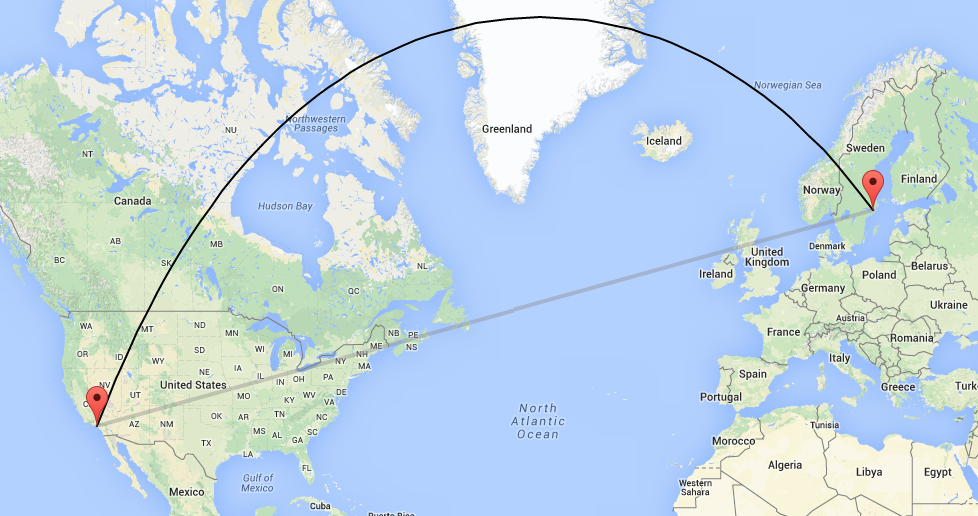
From March 14, 2016 travel to and from Sweden is about to get a boost from SAS (Scandinavian Airlines) when it inaugurates daily flights between Stockholm and Los Angeles.
This marks the first time in more than 20 years that SAS will operate non-stop, flights from Los Angeles to Stockholm, Sweden with connection to other stunning Scandinavian destinations.
Up to now, west coast travelers have had to book non-direct flights to Sweden, adding hours of travel time switching planes in one city hub or other to reach their final destination.
Compare this scenario with daily departures that will operate during the summer months and five to six weekly flights in winter.
SAS’ new service will streamline travelers’ way leaving them with a little less jet lag, glitches and more time to enjoy Sweden and/or Scandinavia.
Sweden’s natural beauty, island-rich archipelago, wilderness, aboriginal Sámi people in the north, and long tradition of Scandinavian folk-music-melodies form the back-story to this multi-faceted country that stands at the cusp of two major travel trends: cultural and culinary tourism.
Appearing on many bucket lists, Sweden is a place that promises life-changing experiences: trekking or cross-country skiing through Lappland; cruising its archipelagos; touring Umea, 2014’s European Cultural Capital; or setting out on an expediton to catch, cook and dine on Sweden’s locally-sourced ingredients on a seafood safari.
A taste of Wallenbergare at Opera Bar in Stockholm
To celebrate– the NORTH-Nordic Food Festival, the world’s largest Nordic food festival outside Scandinavia – will feature A Taste of Stockholm for two days on November 16 and 17 in Los Angeles.
Stockholm
Recently awarded a Michelin star, Stockholm’s restaurant VOLT will work side by side with Rekorderlig Cider to prepare a gourmet multi-course dinner for two nights for a blogger tasting and to udate the travel trade on travel trends.
The fifth busiest airport in the world and second in the U.S., Los Angeles International links Sweden with an untapped market with great potential. Likewise, Los Angeles is a popular destination for Scandinavian travelers wishing to visit Southern California or onwards to destinations such as Hawaii or even south of the border to Mexico and other destinations.
Los Angeles skyline
Frequent Flyers enrolled in the SAS EuroBonus Program can expect an enhanced in-flight experience with world-class cabins and seats converting into fully flat beds in Business Class; more comfort in Plus, the premium economy class as well as in Go, economy class.
Stockholm Airport
Because SAS will increase its fleet from 12 to 16 aircraft in 2016, the carrier will also launch new routes between Miami and Oslo and Copenhagen and will increase the number of flights from Stockholm to New York and Chicago in 2016.
Sweden – Los Angeles Non-Stop, source: SAS press release
Few places have so much rich nature to offer its visitors and residents as the Norwegian county of East Agder with Ulvøya as its southern and western most points on the coast, and Gjærstadtangen as the eastern most.
The county also has a large hinterland to its north and center where the borders meet Rogaland, Hordaland and Hardangervidda.
Aust-Agder has an exciting coastline, with many narrow straits between a myriad of islands, islets and reefs. There are good fishing opportunities, although little regular fishing takes place anymore in comparison to the rest of the Norwegian coast. Mackerel is still important, and it is mentioned as early as in the Saga Age, when it was called “iolunn”. Mackerel got its current name in the 1500s.
The coastal climate here is mild, as this is probably the part of Norway which gets the most sun during a normal summer. Also, the southern coast, including East Agder, has beautiful and well protected harbors and a rich sailing tradition – making the environment particularly pleasant. Tourists from far and wide come here to experience this charming coastline.
Knutshavnsund
The hinterland in East Agder has rich forest resources which have formed the basis for trade in timber and timber products, both intended for export and domestic trade. The towns along the south coast have been influenced from abroad by diverse ship calls, thus learning about foreign lands, cultures and the eating habits of the outside world.
From Bratteland in Bykle
This outside influence has resulted in access to new products including different kinds of spices and salt. Salt was not new, however, as local inhabitants had long evaporated seawater to extract salt, mainly used for food storage.
Lillesand
Locals here have an early knowledge of honey. There are no reliable sources stating that bee-keeping began in Norway in the Middle Ages, although the practice had been attempted on official farms and in convents.
Hardangervidda National Park. Photo Visit Norway
The county was in many ways a step ahead of the rest of the country in understanding and exploiting natural resources.
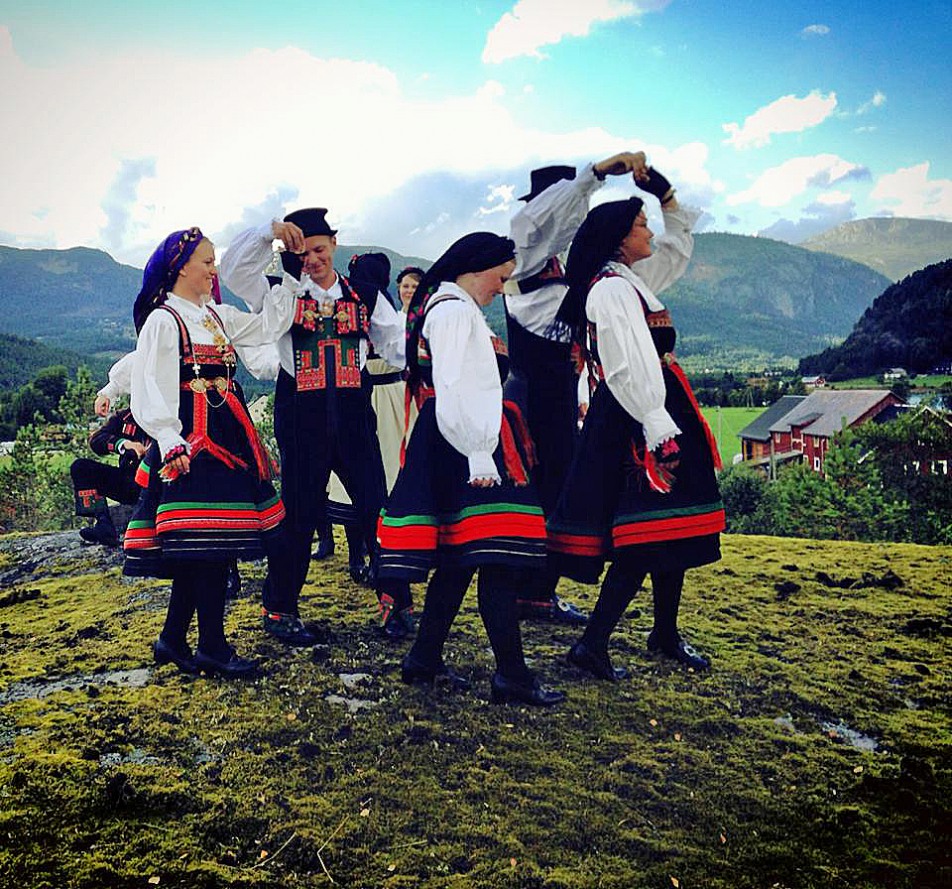
Folk Dance in Setesdal
East Agder does not only consist of its coastline, but also goes inland with long valleys. Setesdalen is unique, and has a long tradition in building methods, handicrafts, folk music and culinary traditions. People here have also been better at preserving their traditions than at many other places in Norway. Until the 1800s the inhabitants of Setesdalen lived their own lives and were not much concerned about what the new people along the coast were doing. Setesdalen consisted of relatively small farms where forests were an important source of income, producing a great deal of fruits, berries and vegetables both here and in the coastal district of Grimstad.
The poet Vilhelm Krag from Kristiansand
East Agder has so much to offer, and for those who are looking for Norwegian national dishes this area is an Eldorado.
The national character here is the same as on the rest of the southern coast – a smiling landscape and smiling people – if one can put it that way. The soft dialect reinforces this impression. The poet Vilhelm Krag from Kristiansand also reinforces this impression in his poems, in which he tells of this southern Norwegian smile.
There are many Norwegian national dishes to be discovered in this county; a tension between inland and coastal areas, between the old farmer and the fishing culture. Here is our recipe for mackerel soup:
1 kilo salted mackerel
2 liters of water
80 grams whole grain
150 grams turnips
150 grams carrots
300 grams potatoes
100 grams cabbage
0,5 liter milk
fine chopped chives
Serves 4 – 5 persons
Place the mackerel in water for 24 hours. Let the grains soak in water equally long.
Let the grains boil for about one hour. Rinse and slice the cabbage, the carrots and the potatoes into cubes or sticks.
Cut the mackerel into suitable pieces, if desired remove the fish-bones. Add more water to the barley, and add the vegetables. Let it cook for 10-12 minutes. Add the fish and let it simmer for a further 10 minutes.
This soup is popular all over the South Coast. In some places it has gained a more modern form with different additions. Ask a southerner about traditional food, and he or she will mention “mackerel soup” with a smile on their faces – even if they remember that they might not like it as a child.
The Smiling Landscape of Southern Norway, written by Tor Kjolberg
Not only today, but from the 1950s onwards, Scandinavia began to receive its first immigrants –«Guest workers» from Turkey and the former Yugoslavia, and political refugees from Hungary and the former Czechoslovakia.
Initially immigrants received a warm welcome, but the growing number of foreigners, particularly from Muslim countries, led to a steady rise in the popularity of mainstream eight-wing, anti-immigration political parties across Scandinavia.
The past 25 years have also seen an increase in activity by the extreme right wing, apprehensive over jobs and the perceived threat to traditional Nordic culture.
The debate over Muslim immigration and integration reached a head when the Danish newspaper, Jyllands-Posten, published cartoons, some of them depicting the Prophet Muhammad, as a way of stimulating debate on the place of Islam within Western democracies. Their publication caused widespread offence across the Muslim world.
Early this year Sweden has made global headlines after unknown suspects torched three mosques in different parts of the country. Coupled with a growing anti-immigrant sentiment flowing from the increasingly popular nationalist Sweden Democrat party, the head of Sweden’s Islamic Association said things were getting worse.
Anna Lindh
Minister for Foreign affairs, Anna Lindh was killed on 11 September 2003.
22 July 2011, the far-right Norwegian terrorist Anders Breivik bombed Oslo, and the gunned down dozens of young people on the island of Utøya. His rationalization for the atrocity was to stop the “Islamisation” of Norway: that the Norwegian left had opened the country’s doors to Muslims and diluted its Christian heritage.
Norway’s response, however, was not retribution, revenge or clampdowns. “Our response is more democracy, more openness and more humanity,” said prime minister of that time, Jens Stoltenberg.
Mullah Krekar is a notorious figure in Norway, having survived an assassination attempt, made a threat against Norwegian prime minister Erna Solberg and praised the January attack on Charlie Hebdo. (Photo : Twitter Photo Section)
What has happened? Christianity is evidently diminishing, but the new faith that has arisen is multiculturalism. As you watch the morning commuter trains or buses unload, at least four out of every ten non-tourist passengers appear to be non-native. A significant number of the capitals’ bus- and train-drivers and other uniformed personnel appear to be Africans, many of Middle Eastern origin.
Immigration Tensions in Scandinavia, written by Tor Kjolberg
Last Sunday, Solveig Sings presented a perfect kick start to the festive period at Amsterdam Café in downtown Oslo. Vocalist Solveig Borgen, accompanied by Harald Galåen (piano) and Einar Bergem (bass), celebrated the season with Norwegian and international Christmas gems.
It’s no wonder why the almost three hours’ long Christmas show by the likeable Solveig Borgen received warm applause from the enthusiastic visitors. It was an evening with a sleigh full of swinging holiday hits, including Christmas standards as ‘The Christmas Song’, ‘Jingle Bells’ and ‘White Christmas’.
It was an evening of sublime, cool and swinging holiday mood interlaced with Solveig’s smooth-as-silk takes on the beloved songs with her acclaimed performers Harald Galåen and Einar Bergem on piano and bass, respectively.
Solveig Borgen was educated at the famous Liverpool Institute for Performing Arts, also known as the Paul McCartney School. She has lived in Amsterdam for the last eight years, before recently returning to Oslo with her husband and two kids.
First time guests Lisa Rygh and Carlos Silva enjoyed the Swinging Christmas Concert
Solveig Borgen was born in Northern Norway where, in her own words, she was surrounded by a fairytale landscape with steep mountains, deep green fjords and trolls hiding behind every three.
“My dream is to perform with big bands in Norway,” she says.
Sunday 20 December at Amsterdam Café turned out to be the jolliest sleigh ride in town.
From 14 Februart and the second Sunday every month Amsterdam Café invites you to join their Live Sunday Jazz Performances.
Cafe manager Niels Smits (left) with owner Peter Romme
Amsterdam Café was the perfect venue for the Christmas kick-start. Owner, Dutch Peter Romme, opened his second Amsterdam Café in November last year. Peter opened his first Amsterdam Café just 100 meters away from the new one in 1993. It was closed after 14 years, when the lease contract terminated.
Facade painting, Two Pogeons, by Stefan Thelon
Today Amsterdam Café is a chic, modern meeting place where you can enjoy drinks and finger food, such as the famous Dutch ‘Bitterballs’. They have served almost 50,000 bitterballs during the first year, and you should definitively try them out if you’re visiting the café. It’s a Dutch specialty, and the only place you can enjoy them in Norway is at Amsterdam Café.
Bitterballen are a savoury Dutch meat-based snack, typically containing a mixture of horsemeat or veal. The ones served at Amsterdam Café are made of veal.
Before entering the place, take a look at the façade panting by the Dutch artist Stefan Thelon. It’s called “Two pigeons”, and according to the artist, “pigeons are symbols for peace, freedom and love as well as house owners’ worst nightmare. They show us the contradiction of urban living.”
Swinging Christmas in Oslo, text and photos: Tor Kjolberg