
Sculptures Around Norway

0

On the landscapes of a few select locations in Eastern Norway, sculptures by well-known contemporary artists have appeared, and makes your rest stops even more rewarding.

In the project Skulpturstopp (Sculpture stop), several accomplished artists are invited to make sculptures in counties throughout Eastern Norway. The artists choose the location and create their sculptures specifically for the site.

In this way the site becomes a part of the artwork. For visitors this is an opportunity to combine the experiences of art and nature in beautiful harmony.

Sculpturestopp is an initiative by and under the management of Sparebankstiftelsen DNB. The aim of the project is to bring sculptures of a high international caliber to Eastern Norway. Sparebankstiftelsen DNB wants to bring art to the people as a means of contributing to increased awareness and knowledge about art.

200715-Norwegian-wood-sculpture-dan-graham-vågå-norway
Norwegian Wood Lattice Bisected By Curved 2-way-mirror by Dan Graham was the first work to be unveiled in the sculpture project.

Dan Graham (b, 1942)  is an American contemporary artist whose artistic fields include sculpture, video, performance and architecture. He was one of the leading figures in the avant-garde art scene in New York during the early 1970s, along with both Robert Smithson and Gordon Matta-Clark. Graham’s politically oriented and conceptual art projects have been highly influential on subsequent generations of artists, in both Europe and the USA.

Vågå in Gudbrandsdalen is a municipality in the county of Oppland, Norway. It is a gateway to Jotunheimen National Park.
A typical feature of Dan Graham’s sculptures is that they provide an extra dimension to the experience of nature. Graham visited many locations before choosing the site at Lake Lemonsjøen. For him it was important to locate the work in a location where people pass, so that it would be seen, and that it would be close to water. In this way nature is reflected in the water, which in turn is reflected in the surfaces of the artwork.

Dan Graham’s sculpture, or pavilion, is located on the banks of Lake Lemonsjøen in the municipality of Vågå. The artwork in wood and glass reflects the surrounding landscape and gives the viewer different experiences as one moves around the structure. With this sculpture Graham questions how we, the spectators, observe. The sculpture is made of glass and mirrored walls to let the spectator see both their own reflection and the reflection of the landscape. In this way the viewers become a part of the artwork.

Through his sculptures Dan Graham explores a current issue with regards to how art is created today; what is the role of the spectator when viewing art? Graham’s approach is based upon the sculptural structure of the artwork. He considers his own works as instruments allowing you to see and be seen.

200715-Herd-Gitte-Dæhlin-South-Fron-Norway
HERD (Norw. Flokk) is a series of 21 tall, narrow figures cast in bronze with glass eyes created by Gitte Dæhlin.

Gitte Dæhlin (1956-2012) was a Norwegian artist. She lived in Mexico for several periods in 1978 – 2012. Inspired by the Native Indians she made busts, sculptures and heads from organic materials, such as boiled palm leaves mixed with glue, paper and chalk. Dæhlin also worked with drawing and painting.

Dæhlin passed away 2. december 2012, only 56 years old. Sparebankstiftelsen DNB is grateful for the opportunity to work with this remarkable artist.

Sør-Fron is a municipality in the county of Oppland, Norway. The municipality extends on both sides of Gudbrandsdalen, from Rondane in the east to Valdres in the west.

The landscape of Sør-Fron is quite different from that of Mexico where the sculptures were created. Gitte Dæhlin feels, however, that there are similarities, like for example the surrounding mountains. She also sees cultural similarities, for example in the music and the myths. She was pleased with the location of the figures in Gudbrandsdalen.

21 figures cast in bronze look out over the river Gudbrandsdalslågen from a field near the medieval farm Sygard Grytting in the municipality of Sør-Fron, Norway. Visitors to the farm might expect to see a herd of sheep grazing but see instead a group of tall elegant bodies.

The figures have glass eyes. They appear relatively similar, but at the same time different. They form a group and each one is unique. Dæhlin hopes that the figures will spark our curiosity and set in motion our thought processes.

“Displaying art in unconventional ways and in unexpected locations encourages a new way of interpreting both the art and our surroundings,” said Dæhlin
Dæhlin is known for creating sculptures that are rich in color and textural effect, both expressive and suggestive. FLOKK was made in Mexico. The figures were molded in clay with steel reinforcement. Wax castings were produced from the clay figures. Finally the sculptures were cast in bronze. Upon completion they were shipped to Sør-Fron where they currently stand looking out over the landscape and the river Gudbrandsdalslågen.

The artwork Mothership with Standing Matter is a sculpture designed by Antony Gormley.  It is situated inside a pavilion designed by the Norwegian architecture firm Snøhetta.

Antony Gormley (b. 1950) is an accomplished British sculptor.  Since the early1980s he has mainly created works taking the human body as his subject.  He often uses his own body as mold for the sculptures. His most known works however, are of a much larger scale than his own body; for example the enormous Angel of the North (1998) located in Gateshead, England.  Gormley works with several different materials such as clay, fiberglass, cast iron, steel, metal, and granite.

Lillehammer is both a municipality and a town in the county of Oppland, Norway. It is located at the northern end of Lake Mjøsa. The town is the administrative centre of Oppland county. Lillehammer hosted the 1994 Winter Olympic Games.

The location of Mothership with Standing Matter in Lillehammer was important since this is also the location of one of Snøhetta’s first large projects, namely the Lillehammer Museum of Art.  Gormley also wanted his artwork to be situated in an urban location where people move around.  In this respect, Jernbaneparken in Lillehammer was an ideal location.

Mothership with Standing Matter is located at Jernbaneparken in Lillehammer and is the first thing that people see upon arriving to the city by train.  The sculpture by Antony Gormley stands upright inside a concrete pavilion.
Through this sculpture Gormley explores the relationship of the human body to space at large.  The sculpture in Mothership with Standing Matter measures 190 cm in height.  It doesn’t have a uniform cohesive shape, but is comprised of steel balls of various sizes.  This gives it an ephemeral and transparent expression.  Some of the balls have accidently fallen off the sculpture and scattered onto the floor.  It is as if the sculpture is about to disintegrate.  The sculpture’s placement inside a compact room creates an effective contrast to the sculpture’s evolving character.
“When I grew up in North London during the postwar era, everything had to be rational and functional. Today there’s more room to integrate art into the society, and I’m proud to be a part of this,” says Gormley.
Jernbaneparken in Lillehammer is a good location for the sculpture since it allows large numbers of people to experience the artwork.  Gormley uses his works in different ways to question people’s function and role in society; their relationship to one another either in hectic urban situations or in more deserted, remote locations.
Skulptur-stopp Gjovik, Richard Deacon
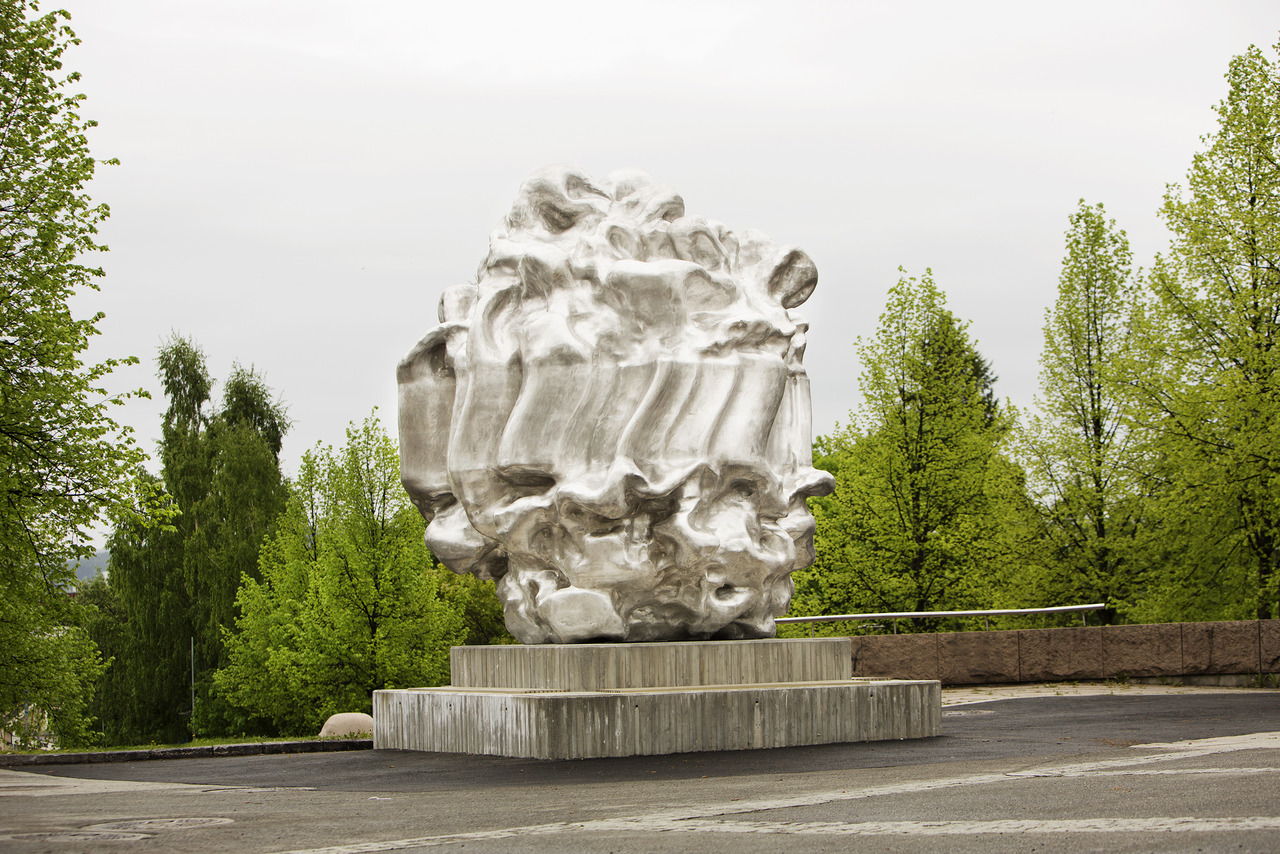
Artist Richard Deacon has created an amalgamation of his impressions from Gjøvik in the form of a five-meter high sculpture in sand cast aluminum, Gripping (2014).

The British artist Richard Deacon (b. 1949) is internationally well-known and has won a series of prizes. In 1987 he won the Turner Prize which is awarded annually to a British artist. His public sculptures are to be found throughout the entire world.
Deacon often employs different materials in his sculptures: wood, steel, aluminum, iron, marble, vinyl and leather. Independent of his choice of materials, Deacon works within an abstract expression, often with organic forms. The sculptures can produce associations of anatomical and uniquely human features in the viewer.

A city centre, a rural village and nature constitute the municipality of Gjøvik in Oppland, located right by Mjøsa. The municipality is a leader in industry. The iron and metal industry is important in the municipality and the factory O.Mustad & Søn is known as the world’s largest manufacturer of fish hooks.

Gjøvik also has a rich outdoor and cultural life. Fjellhallen was built for the 1994 Winter Olympics and since the installation of two new climbing walls in 2008, this has become one of inland Norway’s best climbing centers.

In Gripping we find references to industry, to the factory O.Mustad & Søn and to Fjellhallen, as Deacon also emphasizes:

“The space between these constructed climbing walls was particularly fascinating to me and could perhaps be characterized as exemplifying or analogizing the gap between nature and culture, image and object. The richness of metaphorical associations between fish hooks, hair grips, pins, paper clips and nails is breath-taking.”

Gripping is enthroned in front of Fjellhallen in Gjøvik. Created in an abstract artistic idiom, at first glance it appears to be virtually an undifferentiated mass. It does not depict a specific shape and if we approach and move around it, it gives the impression of being composed of different elements that have been melted together.

Associations of stone and mountains are immediate, and Gripping can be viewed as a site-specific commentary. Fjellhallen is known for its climbing walls and the sculpture’s title Gripping emphasizes a requisite when climbing: maintaining a firm grasp on the hand- and footholds. But references to the factory O.Mustad & Søn in Gjøvik are also hidden in the title. The factory produces fish hooks, paper clips and nails, objects that are designed to grip and hold. And although we cannot see it directly, the climbing walls, the paper clips and the fish hooks are all elements in the artwork, melted into a composite whole. The forms, functions and variations of hooks and fastenings created the background for Deacon’s work with the sculpture.

Gripping is made of sand cast aluminum, and also the choice of materials carries with it references to fish hooks and paper clips from O.Mustad & Søn.

“All of these things are metamorphosed from metal wire. Indeed, the ability to be drawn into wire is one of the defining characteristics of metal.”

With Gripping Deacon has virtually done the reverse: combined all of the different objects into what greets us in front of Fjellhallen: an abstract and multifaceted sculpture that offers new impressions from every angle.

Sverre Wyller, Allium, løken, skulptur Ãstre Toten
The sculpture Allium (2014) by Sverre Wyller is situated in an open landscape in Østre Toten. Allium means onion and the sculpture’s form is inspired by the farming in this area.

Sverre Wyller (b.1953) is a Norwegian artist who works with painting and sculpture. He received his education at the Oslo School of Architecture and the Oslo National Academy of the Arts, the Bergen Academy of Art and Design, and the Academy of Arts in Berlin.

Wyller has created several public art works, including the sculpture Miramichi # 19 which stands outside The Vigeland Museum in Oslo. A typical feature of Wyller’s sculptures is the abstract and organic expression. With powerful, twisting and turning steel beams, the sculptures often recall living creatures.

Østre Toten in Oppland County is one of Norway’s largest agricultural municipalities and is particularly well-known for the production of potatoes and onions. Industry also has a clear presence in the municipality.

Allium derives a deep connection to Østre Toten through Wyller’s implementation of reused steel from AS Oppland Metall. The sculpture was produced at Kai Gran’s steel workshop in Kolbu, and with its onion-like form Allium imbibes Østre Toten’s status as a farming municipality and onion producer.

“I wanted a site that was in contact with Mjøsa and the surrounding landscape. It was also critical that there was a local source for the materials used in the project,” Wyller says.

Peder Balke-senteret gallery and culture center is situated close by the sculpture.

Allium is situated on a gravel road that leads up towards the Billerud Farm, with a view over Mjøsa. With one part on each side of the road, it acquires the role of a portal to the old estate, formerly a residence for high-ranking public officials with wall paintings by Peder Balke. The sculpture is 15 metres high and is made of reused steel. It is lacquered in a light blue colour that Wyller has used on several of his sculptures.

The word allium (Latin) means onion and the sculpture’s form is inspired by the farming of Østre Toten. The sculpture is conceived as a line drawing of an onion and lies in the landscape like an onion on a tray in a classical still life. The portal is positioned on the diagonal across the gravel road, so that the sculpture’s largest volume is clearly visible from the county highway above. Locally the sculpture has been given the nickname Lauken (“The Onion”) and has assumed the role of an identity symbol in the surrounding community.

Used materials are important for Wyller because the materials’ history gives the art work meaning.

“The steel has been used, it has been degraded, now it has been revitalized and gains once more a significance and status. Steel that has been used before bears the mark of this. But the form is new – and thereby the meaning,” says Sverre Wyller.

200715-Gran-Boathouse-Rachel-Whiteread-gran-norway
Internationally renowned and award winning Rachel Whiteread is the artist behind The Gran Boathouse.

Rachel Whiteread (b. 1963) is one of Great Britain’s leading contemporary artists. In 1993 she was the first woman to win the prestigious Turner Prize. Whiteread is connected to Young British Artists, a group which started exhibiting in London in 1988, and which includes Damien Hurst and Tracey Emin. Rachel Whiteread’s sculptures are often casts of everyday objects. Her sculptures are typically casts of “negative space”. The Gran Boathouse is her first work in Norway.

Gran is a municipality in the southern part of the county of Oppland, by the fjord Randsfjorden.

Rachel Whiteread was asked to make a sculpture in Gran municipality. She had for some time wanted to work with smaller buildings in remote places. Røykenviken in the municipality of Gran was the kind of peaceful location she had been looking for. The boathouse and its interior had the qualities she was after. It represents the history of the place. This sculpture is preserving what would otherwise have been lost.

The Gran Boathouse is located on the waters edge in Røykenviken, Hadeland. From a distance it looks like any other boathouse, but closer inspection reveals that this is a work of art in concrete. The work is a cast of the interior of an old boathouse. Whiteread turns the boathouse inside out thereby capturing a moment in time. In this way she encourages us to reflect on what we see around us.

“I have mummified the air inside the boathouse,” says Rachel Whiteread. “I wanted to make a shy sculpture, a sculpture that would stand there peaceful and nobel.” The boathouse and its interior had all the qualities that she was looking for. It represented the history of place. The sculpture is preserving what would otherwise have been lost.

Rachel Whiteread is known for her sculptures, which are often casts of everyday objects, everything from bath tubs, boxes, and cabinets to rooms and entire buildings. Her work is characterised by “negative space”. The work is not a cast of the object, but of the empty space inside or under the object.

Marianne Heske, skulpturstopp, avdukning, Torshovdalen, Hodet
HEAD N.N is an artwork which appeals to the intellect. The artist behind the work is Marianne Heske.

Marianne Heske (b. 1946) is one of Norway’s most renowned artists. She uses traditional graphical techniques, photography, collage, and installations in her work. Her video paintings have attracted a great deal of attention, both locally and internationally. Heske has been a pioneer of conceptual art in Norway, art where the idea behind the work constitutes the medium and the realization. The doll’s head is a recurring theme in her work. Heske has carried out several public art projects and is well- represented in museums and collections.

Torshovdalen is located in the district of Sagene in the municipality of Oslo. The valley stretches from Trondheimsveien to the east, Sinsenkrysset to the north, and Torshov to the west.

When Sparebankstiftelsen DNB invited Marianne Heske to create a sculpture she chose Torshovdalen in Oslo.  According to Heske, the valley is a marvel, beautiful and anonymous.

The valley deserves recognition, with a public place where people can gather, similar to the amphitheaters of ancient times.

From its location in Torshovdalen in Oslo, the HEAD looks out over the city and the fjord. From a distance the artwork arouses curiosity. Closer inspection reveals a large sculpture and an amphitheater.

HEAD N.N is an enlargement of a doll’s head which Marianne Heske bought at a flea market in Paris in 1971. The doll’s head has since become an important metaphor in her artistic development. The HEAD measures 7 meters in height and is cast in bronze.

On the surface of the doll’s head there are red lines and numbers. These are derived from phrenology, an obsolete pseudoscience from the 1800s. According to phrenology our abilities and traits are related to specific areas of the brain´s surface. The lines and figures are inspired by illustrations showing the location of various abilities and senses.

“The head is hollow, so there’s room for big thoughts. Those thoughts come from one’s own head – a ‘think tank’,” says Heske.

Marianne Heske’s intention behind the artwork is to let the public use HEAD N.N. and let their thoughts flow freely.

The amphitheater in Torshovdalen is intended to be a place where one can sit and have a clear view of both the sculpture and Oslo fjord.  Almost like watching a puppet show.

More Sculpture Stops are planned erected in Eastern Norway.

Sculptures Around Norway, source: Skulpturstopp

Feature image (on top): From Ekeberg Sculpture Park, Oslo (Photo Tor Kjolberg)

Eggs & Dairy in Scandinavia

0

Eggs are beautifully packages, nutritious food and have been a source of fascination to man since the earliest times. In the north Atlantic islands, where sea birds lay their eggs on narrow shelves on incredibly high and inaccessible cliffs, egg-collecting has long been the ultimate test of male cunning and bravery.

010915-scandinavian-egg-dish-2
While the conscientious egg-collecting habits of the indigenous people never posed a threat to the bird population, most of the egg gathering is now prohibited. Twenty years ago seagull’s eggs were available in the spring.

010915-Seagull-eggs-daily-scandinavian
These beautiful, spotted eggs are a quite different and exciting experience when boiled – the yolk a deep sunset color, the white eerily opaque – and the taste is more intense and creamy than that of a hen’s egg, but eating gulls’ eggs is an experience lost to political correctness, we’re afraid. People up north in Norway were extremely fond of their gulls’ eggs combined with Mack beer (the local beer – still available).

010915-mack-pilsner
These days the gulls’ numbers are restricted by making holes in their eggs rather than eating them. In some places, wild birds’ eggs are still collected in a sustainable way; the eggs of the common guillemot and the fat chicks of the northern fulmar are eaten by people in the north as a delicacy in spring – the habit of people used to searching for nutritious food for their families at the scarcest time of year, when winter stocks have mostly been eaten and new crops are only on their way.

010915-hard-boiled-eggs
The perfect soft-boiled egg starts with the best eggs. You don’t necessarily want it to come straight from the chicken. We have learned this the hard way. Super duper fresh eggs will stick the the shell when you boil them. But if you use the older eggs, say a week old, the shell will slide right off. Boil your egg at a rolling boil for 6 minutes for a small egg and 9 for a large. Remove egg from the hot water immediately and dunk in an ice bath to stop the cooking process. The yolks should be creamy and delicious.

butter on a dish with knife. shutterstock photo.
Butter is an essential ingredient in many Scandinavian dishes

Scandinavian food is unthinkable without lots of dairy products: butter for crisping fish and meat, and for sauces in which to bathe mushrooms and vegetables; cream for potatoes and berby sauces; cream and sugar for the sweet berries; and whipped cream for every dessert and cake.

010915-scandinavian-dessert-cake
Cheese is eaten around the clock, and is a vital component of lots of lovely dishes. Even if, nowadays, we are more reluctant to eat massive amounts of animal fat everyday, we will not demolish our traditional dishes and culinary heritage that demand the rich cream and butter.

010915-scandinavian-bread
We choose to eat a little less of it and enjoy the richness of beautiful dairy products when it’s necessary.

010915-scandinavan-cheese-platter
The most common Scandinavian cheeses are perhaps the Castello Blue, a triple-cream, blue-veined gourmet cheese with a washed-rind. The Norwegian Jarlsberg is known for its distinctive sweet and nutty taste, and of course, those large, round holes, Jarlsberg is often called the Norwegian Emmental Cheese.

A cheese that cannot be misses in a Scandiavian chesse platter is Gjetost. A sweet red-orange gourmet cheese with an unmistakable sweet, almost fudgy, caramel taste. A Swedish Darmer Cheese is part of our selection and is a lovely creamy cheese.

Eggs & Dairy in Scandinavia, written by Tor Kjolberg

Popular Adventures in Stavanger

0

A bundle of activities for different generations await you in the Stavanger region on the west-coast of Norway. Experience mother nature, immerse yourself in a vibrant cultural life, ready for you to explore.

Lysefjord
Enjoy a sightseeing cruise on board the tourist ferry, through the Lysefjord and the famous Pulpit Rock and Kjerag and not to forget Flørli and the stairs. The Lysefjord is 42 kilometers (27 miles) long and full of amazing sights. The wildlife, steep mountains and waterfalls guarantee you a lot of stories to tell your friends. This is a fjord cruise filled with great photo opportunities.

130715-Lysefjord-Stavanger-Norway
The ferry calls at Forsand, Songesand and Flørli in both directions.

Pulpit Rock
Preikestolen (the Pulpit Rock) is one of the most visited attractions in Norway, and one of the most photographed sites. To visit this popular rock formation 604 meters (1982 feet) above the Lysefjord is a fantastic nature experience.

130715-Pulpit.rock-stavanger-norway
In 2011 Preikestolen was listed as one of the world’s most spectacular views and natural attractions by Lonely Planet and CNN GO travel magazine.

See 360 videos here!

Getting there:

From April to the end of September:
The bus departs from Tau to Preikestolen Moutain Lodge several times daily. The bus corresponds with ferry departures from Fiskepirterminalen in Stavanger. Rest of the year the bus stops at Jørpeland 9 kilometers from Preikestolen Mountain Lodge. Further transportation will be with a taxi. The hike up to Preikestolen is a two hours marked trail.

Vitenfabrikken (Science Factory)
Did you know that one of the world’s leading mathematicians was born not far from Sandnes? Visit us at «Vitenfabrikken» and explore Abel’s sketchbook. How many meters of DNA does your body contain? How long can you keep your balance on the skateboard? What is 101 in the decimal system? How heavy is your brain? Can you relax more than the person next to you? Perhaps you’ll be invited on a guided tour through the planetarium to take a closer look at Orion, Pegasus and the other constellations. You can also learn more about Leonardo da Vinci and his inventions! And don’t miss the exhibitions of the town history of Sandnes 2nd floor.

130715-science-factory-stavanger-norway
The Science Factory is full of exciting things to do and discover, it is the perfect place for anyone with an inquiring mind. Everything in The Science Factory is connected to science, technology and art. Exhibitions, theatre performances, films, workshops and demonstrations: You will smell, hear, feel and see how the world works. After a visit to The Science Factory, you will know how good your balance is, how fast you react, how warm your brain is, what happens when you flush the toilet, how strong a spider web is and much more.

Vitenfabrikken is part of Jærmuseet, a regional museum for the municipatilities of Sandnes, Time, Klepp, Hå, Randaberg, Sola and Gjesdal. Jærmuseet was awarded the “Museum of the Year 2009” award in Norway. The museum also received the European “Micheletti Award 2009”, for best technological museum in Europe.

Sogndalstrand
is one of the most popular tourist destinations in Rogaland. Sogndalstrand is the only village in Norway where both the wooden buildings from the 1700s and 1800s and the surrounding cultural landscape are protected.

130715-sogndalstrand-stavanger-norway

It used to be a staple port and its own municipality up until 1944. In the last few years it has experienced quite a boom with the development of a culture hotel, gallery, golf course, village shop, outdoor amphi theatre, sculpture jetty, sea rafting, a fishing museum and more. Several large concerts are held in Sogndalstrand Amfi in the summer. The Sokna, a salmon river, flows into the fjord near Sogndalstrand.

Stavanger Maritime Museum
demonstrates the development of shipping, commerce and shipbuilding over the last 200 years. Contains sail loft, shipping company office, general store and merchant’s apartment, as well as a “playshop” for children.

130715-stavanger-maritime-museum-norway
Kjerag
The majesty of the Lysefjord – Kjerag
 is a popular mountain peak that towers a 1000 meters (3281 feet) over the Lysefjord.

130715-Kjerag-Stavanger-Norway
The Lysefjord is 42 kilometers long (approximately 26 miles) and a pearl in Norwegian nature. The glaciers formed the fjord landscape during the last Ice Age, and can be called a canyon. The mountain soar up to 1000 meters above sea level on both sides of the fjords and some places it ranges as deep in the fjords as its height above sea level.

At Kjerag the fjord’s special characteristics are intensified to the extreme. The Kjerag plateau is a barren mass of rock with polished crags and the Kjerag boulder lies approximately 300 meters south of the cairn.
The mountain side that swoops vertically to the fjord below is an impressive sight from the deck of a boat. Understandably, Kjerag is a seductress of mountain climbers and base jumpers alike during the summer time.

The Norwegian Petroleum Museum
is a museum for everyone. Its exhibits explain how oil and gas are created, discovered and produced, and what they are used for. The museum also provides information about technological advances and the way petroleum influences Norwegian society. Original objects, models, film and interactive exhibits illustrate everything from everyday life offshore to technology and dramatic incidents.

130715-norwegian-petroleum-museum-stavanger
The exhibit “North Sea Divers” is a new exhibition about the pioneer-divers in the North Sea. Interactive stations, films and texts explain the challenging work the divers had. In the cinema, the 3D movie “Petropolis” is shown all day. Here you can experience scary dinosaurs and technological adventures told in a humoristic and engaging way. The exhibitions are texted in English as well as Norwegian and all the films are in English.

Activity sheets for children and activities for youngsters throughout the exhibitions. Try the Catastrophe room and rescue chute – if you dare! Museum shop with interesting gifts for young and old as a memento of your visit to the museum. Something which expands your knowledge of oil and gas, or simply something you like. Museum café Bølgen & Moi serves delicious light meals.

Surfing Jæren
Norway’s best surf is found along the beaches of Jæren. This stretch of coastline invites you to explore the North Sea for wind and waves. The spots range from easy and gentle beginner beaches, to the more demanding and better boulder rock points, which doesnt work as often as the beaches.

130715-surfing-jaeren-norway
The summer season is most welcoming for beginners, while the late autumn and winter has more exciting conditions, rewarding for those who brave the colder temperatures. Modern wetsuits and equipment open the entire winter season for  both wave-, wind- and kitesurfing. Especially suited for beginner level surfing is Solastrand beach, Hellestø beach, Sele point/beach, Borestrand beach, Brusand and Ogna beach.

Windsurfing and kiting is a popular activity at at the Solastrand beach due to its relatively sheltered wave conditions even in strong winds (S-SW). If you need more information, equipment and coaching, please contact: www.surfschool.no. For reliable and detailed wind forecast, go to www.yr.no. Talk to the surfshops in Stavanger for local knowledge about the conditions. Please respect local landowners and agriculture when travelling and parking along the Jæren landscape.

For wave-forecasting and general spot information, visit: www.magicseaweed.com.

130715-king-park-amusementpark-stavanger-norway

Kongeparken (The King Park)
Western Norway’s largest amusement park and Rogaland’s most popular attraction.

Discover the delights of the magic chocolate factory where children are invited to make real Freia milk chocolate! The park has much to offer, including Norway’s longest bob run, “Brumleband”, Norway’s biggest merry-go-round – “the Bumble Bee) and Norway’s highest Ferris wheel – “the Airship”, and a teddy bear hotel.

Located in scenic surroundings at Ålgård by highway E39, 10 minutes from Sandnes city center.

Old Stavanger
comprises 173 wooden buildings from the turn of the 18th century. Most of them are small, white cottages. Stavanger has received several awards for its efforts to preserve Old Stavanger.

130715-old-stavanger-norway
This was one of three pilot projects carried out in Norway during the United Nations’ Architectural Heritage Year in 1975. Many galleries and handicrafts’ boutiques are located in this section of town.


Salmon Safari
An extraordinary experience of nature, floating in the Suldalslågen river. Through a half hour course you will learn how to act when floating in the current down the river, as well as everything about security. Qualified and experienced instructors will lead the group. One of them will join you in the water; the other will stay behind the group paddling a canoe. You will try out the survival suits and all the equipment in the swimming pool at Mo Laksegard before entering the river. Once in the water, the current will take the participants down the river. Through the diving mask you are able to study the wild salmon in their natural element.

130715-salmon-safari-stavanger-norway
This is a chance to literally feel the “strong” river on your body for approx. 2.5 km. To see wild salmon in their right element, you will never forget. This river is well known for its big salmon that can be up to 20 kg (44 pounds). You don’t catch the salmon – you swim with them!

Another fesature story you might like:

A Touch of Paradise in Norway

Popular Adventures in Stavanger, compiled by Admin


Heroes of World War II in Scandinavia

0

As the storm clouds of World War II gathered, Hitler’s rise was especially worrying to Denmark because Germany had never formally agreed to the Schlesvig-Holstein border after World War I.

Accepting his surprising offer of a non-aggression pact, Denmark nevertheless joined Sweden and Norway in another declaration of neutrality.

Swedish soldiers during WWII

The Resistance movement in Denmark and Norway was crucial in undermining the German campaign during World War II. Anders Lassen epitomized the 20,000-strong Danish Resistance. By the time he died aged 24, he had fought in France, Greece, the Balkans and Italy. His commanding officer said, “Anders caused more discomfort to the enemy over five years of war than any other man of his rank and age.”

Anders Lassen 1920-1945

On the night of 8th – 9th April 1945 eighteen men from the Special Boat Service set out across Lake Comacchio to attack heavily defended German positions. The assault was led by a Danish national, 24 year old Major Anders Lassen, already a legend within the British Special Forces, three times decorated with the Military Cross for his exploits during raiding parties on enemy occupied ships and positions.

240815-anders-lassens-krig-book-cover

He was originally recruited by the Special Operations Executive after he arrived in Britain as a merchant seaman in 1940. They judged his independent character unsuitable for covert spying but well suited to raiding and patrolling. He began his career for the British with a raid on a Spanish ship in African waters – and then graduated to the Small Scale Raiding Force which made covert cross Channel raids on the Channel Islands and the French coast, before joining the new Special Boat Service in the Mediterranean in 1942.

Other heroes included the Norwegians who knocked out the heavy water plant at Rjukan.

Two museums, Frihedsmuseet, Copenhagen and Norges Hjemmefrontmuseum, Oslo, document the movement’s history.

Feature image (on top) Danish soldiers on April 9, 1940 (Wikipedia)

Heroes of World War II in Scandinavia, written by Tor Kjolberg

Successful Norwegian-lead Ebola study

0

WHO, the World Health Organization, said in a new release published on its website that results from an interim analysis of the Guinea Phase III efficacy vaccine trial is highly effective against Ebola.

The ‘ring’ vaccination method used in the trial is based on the smallpox eradication strategy, in which everyone who has come into contact with an infected person gets vaccinated, according to Dr. John Arne Rottingen, head of the Study Steering Group and also the director for the Division of Infectious Disease Control of the Norwegian Institute of Public Health.

280815-fight-against-ebola-outbreak
“The initial results give us reason to believe this could be the first effective Ebola vaccine developed,” says Dr. Rottingen. “This strategy has helped us to follow the dispersed epidemic in Guinea, and will provide a way to continue this as a public health intervention in trial mode,” he continues.

The Ebola vaccine ring strategy trial for affected communities in Guinea started on March 23 and involved 100 Ebola patients. More than 4,000 people who have come into close contact with these patients have participated.

280815-ebola-vaccine

The trial stopped randomization on 26 July to allow for all people at risk to receive the vaccine immediately, and to minimize the time necessary to gather more conclusive evidence needed for eventual licensure of the product.

The Ebola vaccine has also been proven safe, allowing the trial to test the vaccine on younger patients from the age brackets 6 to 12 and 13 to 17. The vaccine will also be tested on frontline workers.

280815-Preliminary-study-shows-Ebola-vaccine-100-percent-effective
“None of the participants receiving immediate vaccination have become ill so far, 10 days after the vaccine was given and expected to work,” states John-Arne Røttingen and continues, “In the control group, however, where participants received the vaccine 21 days later, there were several Ebola cases. This could indicate that the vaccine provides complete protection against Ebola.”

The trial was done in collaboration between the health authorities in Guinea, the World Health Organization (WHO), Doctors Without Borders, and the Norwegian Institute of Public Health.

The trial is funded by WHO, with support from the Wellcome Trust, the United Kingdom Department for International Development, the Norwegian Ministry of Foreign Affairs to the Norwegian Institute of Public Health through the Research Council of Norway, the Canadian Government through the Public Health Agency of Canada, Canadian Institutes of Health Research, International Development Research Centre and Department of Foreign Affairs, Trade and Development and MSF.
The trial team includes experts from The University of Bern, the University of Florida, the London School of Hygiene and Tropical Medicine, Public Health England, the European Mobile Laboratories among others.

Successful Norwegian-lead Ebola study, written by Tor Kjolberg

Ecovillages in Scandinavia

Hurdal Ecovillage outside Oslo, Norway is the first formal ecovillage in Norway. In Sweden you may experience Utsikten Ecovillage, near Gothenburg, Suderbyn Ecovillage in Gotland and Tuggelite Ecovillage in Karlstad.

What is an Ecovillage?
According to Wikipedia, Ecovillages are intentional communities whose goal is to become more socially, economically and ecologically sustainable. Most range from a population of 50 to 150 individuals, although some are smaller, and larger ecovillages of up to 2,000 individuals exist as networks of smaller sub-communities. Certain ecovillages have grown by the addition of individuals, families, or other small groups who not necessarily are members settling on the periphery of the ecovillage and effectively participating in the ecovillage community.

210815-from-hurdal-ecovillage-norway
Hurdal Ecovillage, Norway
The organization CTV (Change the World) has contributed to the development of the Hurdal ecovillage with both technical and social aspects.

Hurdal Ecovillage was established on the former rectory Gjoding farm in 2001. Initially small houses of straw and massive wood were erected, but during the last decade the philosophy, plans and organization have been changed.

The vision is “to create a place to enjoy life” through a combination of ecofriendly housing, ecological lifestyle and a good social fellowship.

Within two years 175 family homes in addition to several other facilities for businesses and leisure time will be completed.

210815-from-Svanholm-ecovillage-denmark
Svanholm Ecovillage, Zealand, Denmark
Denmark’s largest intentional community and ecovillage, is a collective with a multifunctional agriculture operation, including dairy cows and sheep, and the home of about 140 people. It began in 1978 when the founders bought 400 hectares (998 acres) on the island of Zealand, 55 kilometers (34 miles) from Copenhagen.

About half of the population work onsite — in maintenance, administration, farming, cooking, or teaching in their kindergarten, etc. — and half have jobs in the local area.

As an income-sharing community 80 percent of each person’s income goes to Svanholm for taxes and common living expenses such as maintenance, food, electricity, childcare, etc.; 20 percent is kept for personal use.

210815-tuggelite_karlstad_sweden
Tuggelite Ecovillage, Karlstad
Tuggelite is an urban ecovillage with 16 households in five apartment houses near Karlstad, a city of 60,000 inhabitants in the center of Sweden. It’s a 10 kilometer (6.2 miles), 20 minutes, bus ride to the city center.

Their website reads: “We hope Tuggelite can serve as an inspiration for other housing developments with social cohesion, active stewardship, and low-energy and resource use.”
And due to the close distance to Karlstad the community has proved to be an inspiration for similar enterprises.

210815-cooking-in-suderbyn-ecovillage-gotland-sweden
Sunderbyn Ecovillage, Gotland

Sunderbyn is an old farm property located just outside Visby (population 22,000), the main city in Gotland. Robert Hall and Ingrid Gustafsson took the initiative in establishing the ecovillage.

“We realize that our approach is not attracting masses of people,” Robert observes. “I don’t think this because we don’t have a flush toilet. I think what scares people off the most is that in an ecovillage project we have to do thingstogether, we have to create a community where people work together — as that’s how you can reduce costs and energy consumption,” the couple told Etienne Gernez, a French engineer, working in Norway and Iceland.

210815-etienne-gernez
Etienne Gernez works with technologies to reduce the environmental impact of shipping (for example through the use of wind energy. Etienne designed and led the One Step Beyond project, assisted by Toril Mentzoni, leader of the urban cohousing project Økobo.

Feature image: From Naturbyn Ecovillage Central Sweden (Photo Visit Sweden/Jacque de Villiers)

Ecovillages in Scandinavia, compiled by Admin

World’s Largest Sauna – in Norway

The cultural platform, art festival SALT, is promoting unique installations, music and a collection of architectural structures. This year the festival is launching the world’s largest sauna.

The SALT festival, which celebrates the culture and landscape of the Arctic region, takes place at the sandy shores of the Norwegian island of Sandhornøy and runs into 2016.

Photo Martin Losvig
Photo Martin Losvig

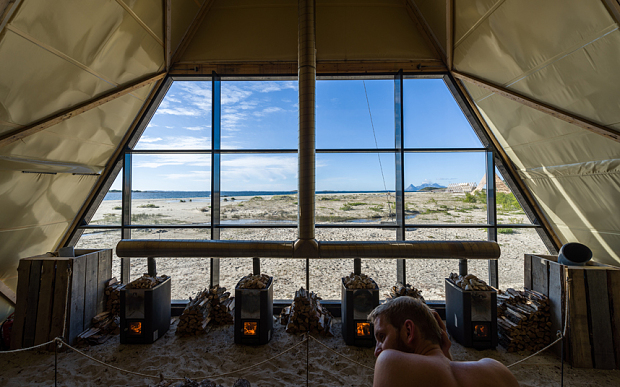
The new sauna, named Agora and claimed to be the largest public sauna in the world, opened this summer. We also believe that no other sauna in the entire world give the guests a more extraordinary and breathtaking panoramic view over the Arctic Sea and the island’s mountain landscape.

Photo Martin Losvig
Photo Martin Losvig

Agora, housing up to 150 people, is set within a timber A-frame and includes a bar where visitors have a place for social exchange, complemented with ambient background soundtrack.

Photo Martin Losvig
Photo Martin Losvig

More closely Agora resembles a set of bleachers or an amphitheater than an average boxy sauna. The pace will in fact, when not heated, be used as a lecture hall for festival events.

Most of the festival’s buildings are modeled after traditional Norwegian fish-drying racks, referencing the livelihood of many of the area’s inhabitants.

Photo Gunnar Holmstad

The festival is just outside the town of Bodø, and you may fly directrly from Oslo, Trondheim or Tromsø. Travelers can access the SALT site in just over an hour by car, bus or boat from Bodø in just 30 minutes. And for those who need a respite from the heat, there’s actually a bar inside offering cool libations.

The venue will be open every Saturday between 12pm and 6pm until the autumn. Entry fee is NOK 175 for adults and NOK 90 for children under 17. Towels and bathrobes can be rented at the sauna.

270815-salt-festival-bodø-norway
After the stay in Sandhornøy, the festival, with its sauna and all, will make stops in Greenland, Iceland, the Faraoe Islands and other Arctic states.

The SALT site also features a large scale gallery structure known as The Arctic Pyramid which exhibits different art projects, such as its current video installation called ‘The Light That I Feel’. The site also has a live performance hall, Gildehallen, which can hold up to 1,000 people for concerts, club nights and dining events.

Photo Gunnar Holmstad

Guests can also access Naustet Bistro, a café and bar space featuring the Lantemen Restaurant which offers Norwegian fare made from fresh locally-sourced seasonal ingredients.

All images, courtesy SALT Festival.

World’s Largest Sauna – in Norway , written by Tor Kjolberg

You may also like to read:

Art, Music and Architecture in the Polar Landscape of Norway

Where to Eat in Stockholm

0

Dining out in Stockholm can be ludicrously pricey, but these stylish restaurants offer a more affordable taste of the city’s fine cuisine

Babette

Here you meet Fredrik Lundberg, Jon Lacotte, Johan Agrell and Olle T Cellton, the acclaimed quartet behind Babette, a neighborhood joint located in a former pizzeria in Vasastan. The menu offers good honest food with a creative touch, and the pizzas have become somewhat of a signature dish.

Roslagsgatan 6

Photo White Guide
Photo White Guide

Woodstockholm Matbar

Woodstockholm is, without doubt, one of this year’s most pleasant culinary surprises, loved by the general public and critics alike. This hangout, which was conceived as a way to further spread the word of the Woodstockholm furniture brand, now also offers a superb meal by chef Elias Eriksson, as well as a chance to try out one of the designer chairs.

Mosebacke torg 9

190815-woodstockholm-restaurant-photo-woodstockholm

Shibumi

If you follow the narrow staircase down into the basement underneath the old Jarla theatre you’ll find one of the city’s most buzzing restaurant experiences. The Shibumi izakaya is chef Sayan Isaksson’s third venue and is already booked solid due to its small gastronomic treats, its heavenly cocktails and its great atmosphere.

The site states that they have 10 sits for drop-in every evening if you find the booking calendar full, so you’re welcome to drop by.

Kungstensgatan 2

190815-shibumi-logo

Yuc!

Stockholm has indeed discovered South American food and at the forefront of this culinary excursion is none other than Yuc! Run by jack-of-all-trades Damon Rasti, a night out at Yuc! not only entails great tacos and taquitos, but also an amazing cocktail program, inspired entertainment and some damn good vibes.

Norrtullsgatan 15

Photo Olof Grind
Photo Olof Grind

Surfers Stockholm

This restaurant specializes in Chinese Sichuan cuisine.
Meals at Surfers are eaten as the Sichuan eating ritual dictates – in small portions, family-style – so get a menu, order the whole lot and start working your way through what might very well be the city’s best Chinese meal.
Regeringsgatan 88

190815-surfers-stockholm

Lilla Ego

The egotistical pursuit of chefs Tom Sjöstedt and Daniel Räms resulted in the Söder area’s restaurant Lilla Ego, but with a mission to create an unpretentious and generous spot where the focus is on good food, service minded personnel and a relaxed personal atmosphere. The food at Lilla Ego is described as a hybrid between fine and “ugly” dining.

Västmannagatan 69

190815-lilla-ego-restaurant-stockholm

Frantzén

With two Michelin stars Frantzén is ranked on the list of the world’s best restaurants.

It doesn’t get much better than Frantzén, located in Gamla Stan. Having completed a recent renovation, Björn Frantzén is back in the kitchen wowing 17 lucky guests with refined and creative dishes in a set menu.

Lilla Nygatan 21

190815-Restaurant-Frantzen-Stockholm

Nook

Street food meets fine dining in yet another Söder restaurant with high ambitions. Nook is run by chef Claes Grännsjö and restaurant manager Alexander Bäckman. The casual dining room offers a multicultural gastronomic excursion that spans all over the map – in a good way. Bring out your inner explorer for this unique dining experience. This is very close to one Michelin star level cooking and it’s exceptional value for money.

Åsögatan 176

190815-nook-restaurant-stockholm-photo-gustav-karlsson
Photo Gustav Karlsson

Matbordet

Mathias Dahlgren is expanding his repertoire beyond the traditional restaurant experiences of Matsalen and Matbaren through the creation of Matbordet. At Matbordet (‘dining table’ in English) ten strangers share a meal with a predetermined topic, resulting in something that borders between a meal and a conversation.

Grand Hôtel, Södra Blasieholmshamnen 6

190815-Matbordet-restaurant-stockholm

Oaxen Krog & Slip

A meal at Oaxen simply cannot go wrong. Whether one opts for the fine dining at Krog (now with two Michelin stars), or the Nordic bistro-like cuisine at Slip, there’s just no way you’ll leave this quintessential Stockholm restaurant feeling anything other than great. At Oaxen, food is a pure and simple pleasure.

Beckholmsvägen 26

190815-oaxen-slip-stockholm

The restaurants are not listed in any particular order. Enjoy!

Where to Eat in Stockholm, compiled by Admin

Yoga and Puccini in Norway

For a whole new way of enjoying opera, gourmet food and events, visit the Boutique Festival of Opera in the Åmot Country Villa and Opera Farm on the West-Coast of Norway in August.

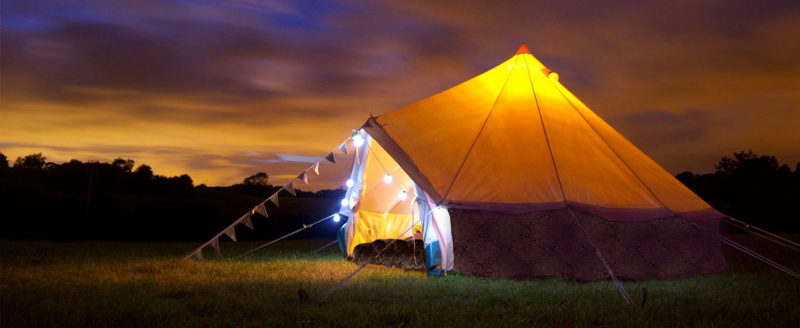
Bergen National Opera and Åmot Country Villa and Opera Farm invite you to this year’s Opera Festival 21 – 23 August, “Mimi goes glamping”. You may actually hear snatches of La Bohème, in addition to the enjoyment of gourmet food, speakers, late-night singer-songwriters, pop-ups, masterclasses, yoga and forest walks.

140815-aamot-country-villa-map
In the Åmot Country Villa, you will have the opportunity to experience an authentic Norwegian atmosphere. The interior of the Villa tells the story of strong female characters, whose spirits can still be felt in the house. Being the family home of co-owner Steinar, every piece has a story to tell, every picture on the wall captures a moment that passed in this family, on this farm.

140815-Aamot-Country-Villa-and-Opera-Farm-Norway
While recently renovated, the villa still has the feel of a country home. The modern elements of comfort, such as the tiled bathrooms and sleek kitchen appliances, manage to fit together perfectly with antique wooden furniture. Most of the furnishings are authentic, family pieces with a history of their own.

140815-aamot-country-villa
The living room areas of the villa harken back to the days of sitting rooms, with a table instead of a television as the centerpiece, the perfect place for conversation over after-dinner drinks. An atmosphere of pomp and ceremony from the 1890s still pervades, but is inviting, not stiff. Attention has been given to every beautiful detail from floor to ceiling. The Villa is home to two suites, the Kiri Suite and the Sina Suite.

140815-Aamot-country-villa-before
Hidden amongst The Fjords and Valleys of Norway the Villa together with the estate may be rented. The historic villa is restored by the Åmot family into a modern villa without losing the history. Amongst the most well-appointed properties in the fjords, the country villa is like paradise where privacy, seclusion and proximity to the nature have not come at the expense of comfort and service.

140815-farm-opera-in-norway-amot-operafarm
Program          Accomodation                       Food and Drink

How to get there:

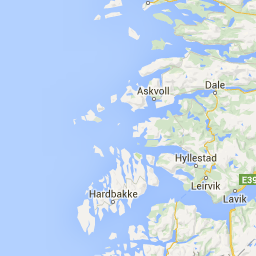
From abroad, you can fly to Oslo or Bergen, the two largest cities in Norway. Both cities have good connections to the region, and both cities have daily flights with the airline Widerøe to the closest airport in Førde. From Bergen, the flight takes about 30min, from Oslo about one hour, and you will be picked up at the airport.

From Bergen you can also take a regional bus to Sande, where the management will pick you up. The bus ride takes about 3 hours.

"Glamping"
“Glamping”

Yoga and Puccini in Norway, written by Admin

The World of Astrid Lindgren

0

In the deep forests of Smaaland in Sweden, Pippi Longstocking as well as Emil and Ronja the robber-daughter come alive during the Swedish summer months.

The park in Vimmerby, southern Sweden, a Swedish version of Disneyland, was founded in 1981. Vimmerby is the native town of this popular award-winning authoress of children’s books and was therefore the natural choice for the world of Astrid Lindgren.

Astrid Lindgren's childhood home
Astrid Lindgren’s childhood home

The theme park is placed just at the end of the road where she lived as a child and young adult and is today Sweden’s largest open-air theme park set on 180,000 square meters.

Vimmerby (population 15,000) is one of Sweden’s oldest towns, dating to the 12th century. It is about four hours’ drive south of Stockholm, or a short ferry trip from the Danish town of Helsingör.

Kids as well as adults love Astrid Lundgren’s books and characters, and in the park you can meet all of her characters in person.

180815-astrid-lingrens-world-map
A completely new theme area dedicated to Emil in Lönneberga and his adventures was opened on a 22,000 square meter large area in June 2013.

According to the park’s charter, Astrid Lindgren’s World aims to encourage children to read and write. Astrid Lindgren’s World receives some 490,000 visitors every year, of whom around 30% come from abroad.

180815-the-world-of-astrid-lindgren
The park is open from 13 May to 30 August and on weekends in September, as well as certain weeks in October (week 43) and November (week 44). During the peak season Astrid Lindgren’s World has approximately 400 employees, just over 120 of whom work on the theatrical side.

180815-emil-in-maple-holl-astrid-lindgren
The best time to travel to Smaaland is between June and September as all the attractions are open. However, we recommend traveling to Småland in the middle of May or early October as all the tourists will be gone and you have everything to yourself.

180815-Astrid-Lindgren
Lindgren began writing her children’s books in 1946 and continued until late in her life, during which she penned such classics as Emil of Maple Hill (“Emil i Lönneberga”), Madicken, Karlsson-on-the-Roof, Ronia the Robber’s Daughter and the series about the strongest girl in the world, Pippi Longstocking.

180815_astrid_lindgren_stamp
“With such an unusual name, she became an unusual girl,” noted the late Swedish author Astrid Lindgren, whose story about the freckle-faced, pigtailed 9-year-old has been loved by children for 70 years. Since Pippi Longstocking was first published in 1945 (in the U.S. in 1950), it has sold more than 60 million copies worldwide and has been translated into some 70 languages.

The World of Astrid Lindgren, written by Tor Kjolberg