… or rather bring it with you in your own watch.Ladies’ watch Lady Fjord is designed by a former Norwegian physiotherapist, Rune Bruvik. It consists of a chamber filled with water from Norwegian mountain lakes. While the mantra of the industry has been to keep water out, Bruvik incorporates the floating element in the very watch.
These steep, water filled valleys carved out by ancient glaciers are spectacularly beautiful. Still, water is water, some might say, but isn’t there something special about a drop of water traveling down a small river in the western Norwegian mountains, about to rush over the edge of the 612 meter drop of the mighty Langefoss waterfall, down into the beautiful Aakrafjord? Isn’t that a fortunate drop of water? We would argue that it is, and that it is, in fact, water at its most beautiful.
“The idea is to always carry a piece of Norwegian nature,” says Bruvik.
It’s that water you’ll find in the case back of your BRUVIK Fjord timepiece. Taken from a river on the very edge of the northern fjords, out of circulation, this will always be water which has seen the fjord, and nearly made it in. Like a brief moment, taken out of the flow of time, this drop represents a change of pace; a moment’s relief from the relentless ever forward flow of time. Look at your watch as you carry it through the concrete jungles that make up our urban lives. You’ll know when it’s time to see the fjords again.
Bruvik left his own physiotherapy practice to pursue his passion and hobby. For years he had collected watches with special design touches. Suddenly he was designing watches himself. He is unskilled as a designer.
“Some says it is almost an advantage,” smiles Bruvik. “You dare bend the rules.”
Bruvik watches contain clockwork parts from some of Europes most renowned manufacturers.
Today Bruvik Time has several designs in its collection.
Watch a Norwegian Mountain Lake…, source: Bruvik time
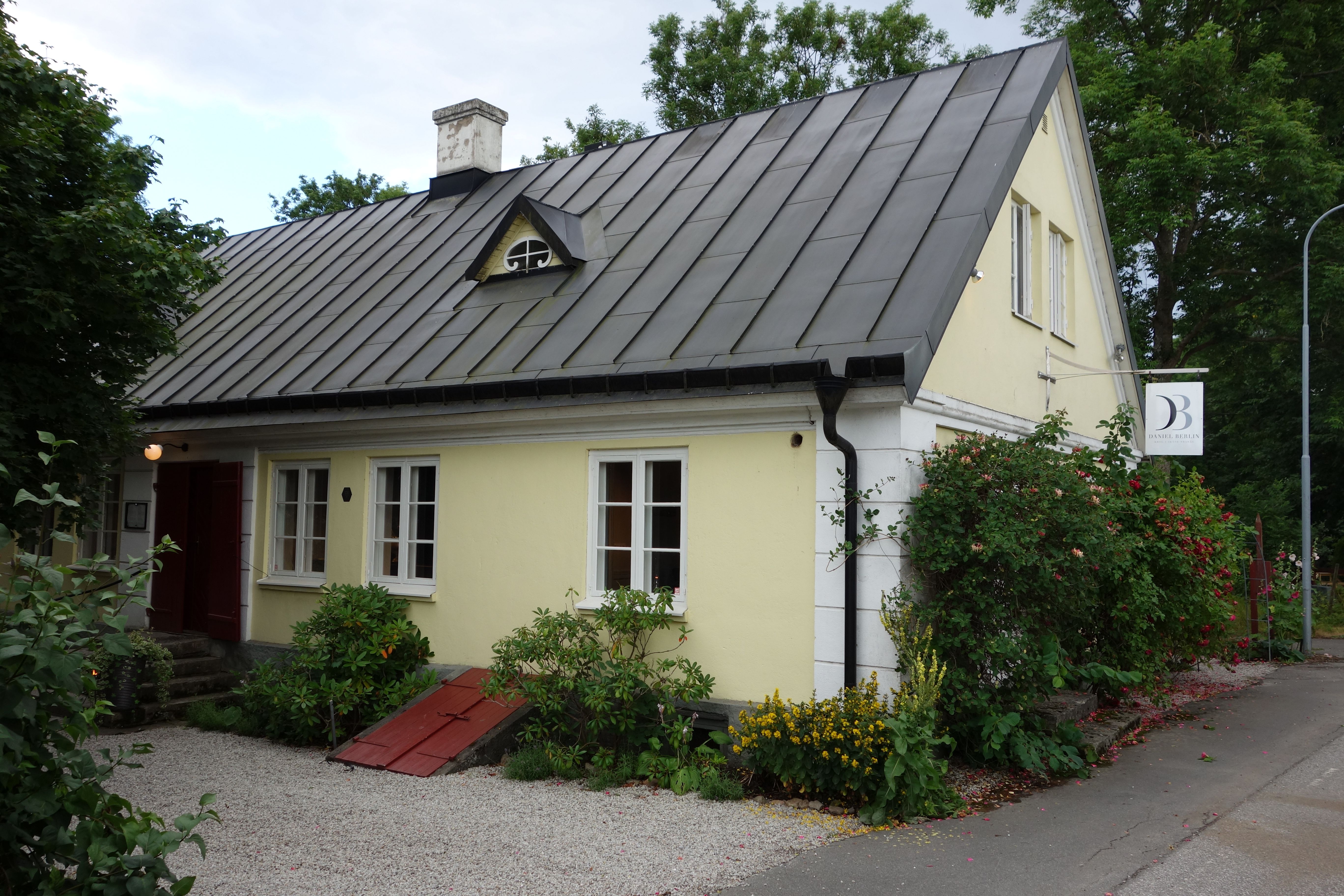
If you happen to be in South Sweden or are planning to visit Skåne-Tranås, don’t miss Daniel Berlin Krog, ranked as “Restaurant of the Year” by Swedish White Guides in 2013.
You need to book far in advance to reserve a table at Daniel Berlin Krog– there is only room for about 25 persons at each seating in the cozy small dining room.
If you stay in Stockholm, we advise you to take the train to the little village of Tomelilla and stay overnight in the middle of the cornfields at Logi Gamlegaard (homepage in Swedish only).
In Daniel Berlin’s restaurant you’ll experience an unique world of flavors. Everything from elegant appetizers, through the day’s “catch” or Berlin’s signature dish, the eight-hour beechwood-grilled celeriac, to the desserts, all accompanied by the very best wines seem as thoughtful as they are flavorful.
The house favorite fish is cod. If you like dessert, don’t miss the iced buttermilk from goat in salty egg whites with candied rosemary.
Daniel’s intimacy with his ingredients translates into beautiful dishes, his father is the sommelier and his mother is garden manager and also serves in the restaurant.
Berlin says, “I wanted to say something with my cooking that no one else could.”
We certainly agree. He has succeeded.
Daniel Berlin Working experience from Petri Pumpa, Torso Twisted, Operakällaren and Bagatelle. Prizes:Gold medal from Gastronomic Academy 2012, Young Cook of the Year, 2011, from S. Pellegrino & Aqua Panna and Restaurant of the Year, 2013 by Swedish White Guides.
In 2005, three economists and an award-winning chef got a bright idea. They wanted to create a Norwegian lamp brand. Despite the long, dark winters, there were very few lamp manufacturers in Norway and so, the Northern Lighting Company was born.
“I was tired of my job as a business advisor with much traveling, and where my tasks largely consisted of downsizing. However, one of my clients was a lighting company, and I became interested in lamps and lighting,” says founder and CEO Ove Rogne.
Ove Rogne with the Big Mama lamp. Photo: Tor Kjolberg
2015 will be a landmark year for the Northern Lighting Company, a design-driven hub that makes the lighting landscape a brighter place.
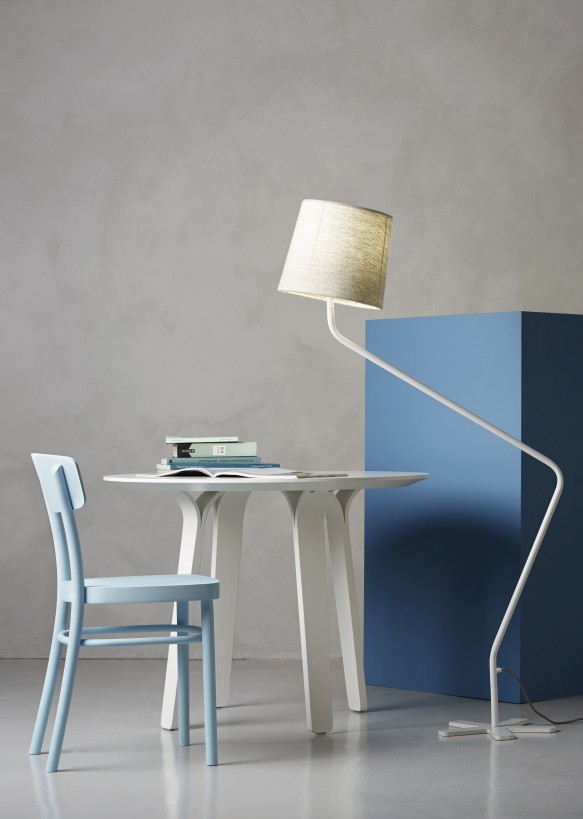
The lighting fixtures from Northern Lighting are dedicated to creating mood light for all occasions. Each one of Northern’s models tells a story about Nordic tradition, nature and culture, inspired as they are by the northern lights, snow, ice crystals, mountains, sea, wood and stone, and the unique natural light, which is a stylish interior object itself.
Big Mama. Photo: Damian Heinisch
After World War II there was a strong wave of Scandinavian lamp design. There was modernism, organic design, new materials and new manufacturing processes. Then came a long period of poor lamp selection in the stores. Many interior design shops, however, had begun to take in Scandinavian designs in general. “Why not a similar range of products around light?” thought the four friends who presented the idea and convinced the retail owners to incorporate lighting in their assortments. Today, all furniture stores sell lighting.
Photo: Tor Kjolberg
According to Northern Lighting, there are all too many well-educated and talented designers, whose wonderful ideas unfortunately never see the light of day. Northern Lighting has therefore opened its doors to all designers who have good ideas. Every year the company receives more than 1,000 product ideas for consideration.
Groggy. Photo: Colin Eick
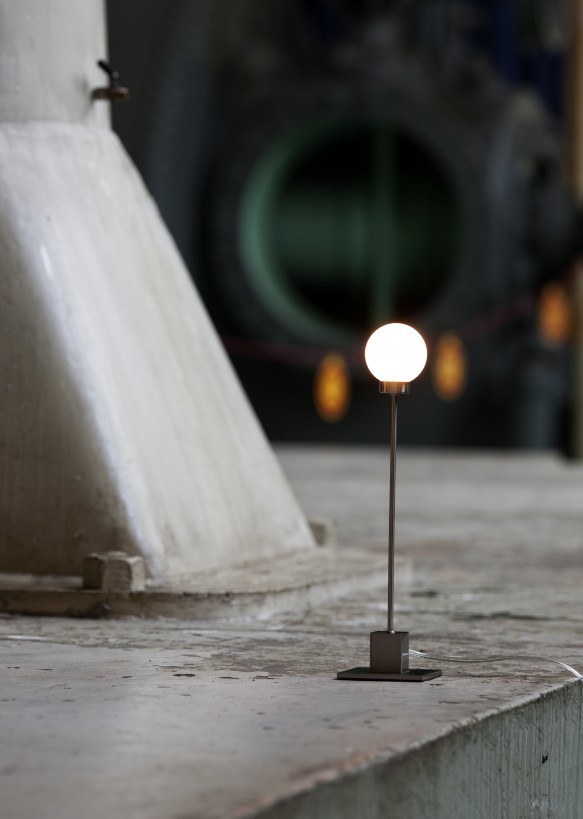
Although Northern Lighting would become known for its innovative, cutting-edge designs, the company began making the clean lines and classic shapes of the past relevant to the present day. The brand was launched with a spectacular “Snowball” lamp, a redesign of a classic Bauhaus shape for the twenty-first century. The collection then grew to include more than 45 products distributed to an ever-widening base of architects, interior designers and retailers in more than 50 countries.
Snowball. Photo: Tom Gustavsen
“Developing a lamp takes from two to three years,” says Rogne. “It includes research, design, material approval, facilitation of production and marketing.”
Photo: Tor Kjolberg
The brand pays homage to Norway’s own design history by reintroducing classic Norwegian lamps from the 1950s and 1960s, which prove to be as contemporary today as they were when first designed. Other products have broken away from lighting convention and a few have sparked new approaches to the way we light up spaces we live and work in.
Today the company consists of 32 designers, including young talent as well as renowned designers. Despite different levels of experience, the designers have some important things in common; they create good and lasting products, and they are all enthusiasts who love to experiment with innovative and exploratory lighting concepts.
Diva. Photo: Colin Eick
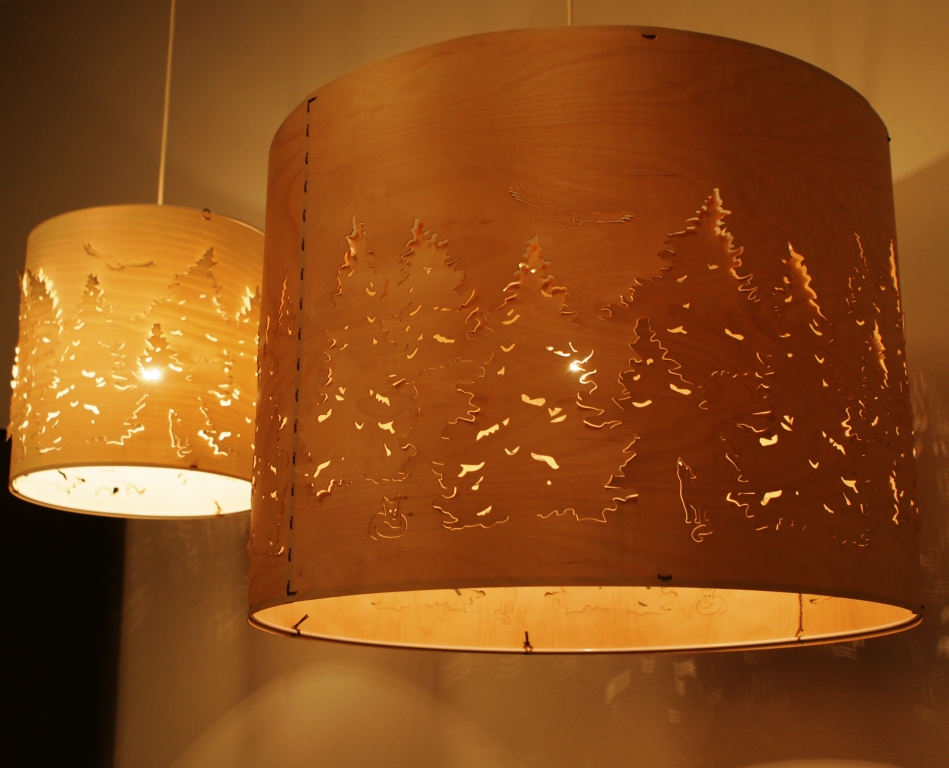
In connection with the 10 year anniversary Northern Lighting has launched the “Oslo” lamp, designed by Ove Rogne, in two different anniversary models. ”Oslo Wood” is a studio lamp with a tripod base. The screen reflects the light, providing a warm and diffuse light, and includes a rotatable shadow part providing opportunities for exciting angles of light in the room, reminding us of the woods that surround the Norwegian capital.
With ten enlightening years behind them, Ove and the team are determined to make the decade ahead just as bright.
“As we move into the future, we’ll continue to innovate, illuminate and inspire,” concludes Ove.
Norwegian Lighting was the only Norwegian exhibitor with its own booth at the London Design Festival last month.
Feature Image (on top) Moo. Photo: Tor Kjolberg
Ten Enlightening Years in Norway, written by Tor Kjolberg
Danish designer Ole Lyngaard possessed an inexhaustible supply of creativity and inspiration, for which he was almost as thankful as the women who wear his jewelry. The Ole Lyngaard label is still the preferred jewelry studio of some of the world’s most captivating celebrity women.
When Tasmanian-born Crown Princess Mary saw a handcrafted tiara exhibited at the Danish Royal Palace in 2009, she decided she simply had to wear it.
Official supplier to the Danish Royal Court, the Scandinavian Ole Lynggard label sets an extremely high bar with its highly desirable, handmade jewelry.
Ole Lynggard worked as an apprentice goldsmith in the 1950s in the small town of Hellerup, some 15 minutes by car from Copenhagen, and it was here he started out in 1963.
Like all children Ole Lyngaard was wide open to new impressions. But while the majority of 17-year-olds put on a mask of bored languor and arrogant isolation, Ole at that age chose instead to set up his own goldsmith’s bench and experiment with precious metals. Could what he saw and experimented with be translated into gold? And the experience was the start of a fascination which lead him around the world in search of inspiration and knowledge.
Ole Lyngaard Store in Copenhagen
For five whole years he moved from country to country and let experience and inspiration come together as the building blocks of what was to become Ole Lyngaard’s unique style. Jewelry which invites women who wear it to be creative themselves, to put it together in a new way, with a new expression. Timeless and solid, unaffected by the ebb and flow of fashion trends, but with a cheerful twinkle in the eye, which says: “Hey, don’t you see how funny and beautiful it can be?”
“I can tell you that I make a living out of something I have been playing with since I was a boy,” he said when he just had celebrated his 70th birthday in 2006.
Charlotte Lynggaard
The tiara that excited Crown Princess Mary was, however, crafted by Charlotte Lyngaard, daughter of the company founder, and took more than 400 hours to make. The effort paid seemingly off.
The midnight tiara was the first addition in 35 years to the palace’s collection.
Charlotte Lynggaard, goldsmith and designer like her father, has worked side by side with Ole Lynggaard since she joined the company in 1992.
Six years ago, the company was stamped By Appointment to the Royal Danish Court, based on the longstanding relationship with the royals.
Uncompromising Danish Jewelry Designer, written by Tor Kjolberg
Through February 28 the Exhibition “Poor Art – Rich Legacy” will be displayed at the Museum of Contemporary Art in Oslo, the venerable, former Norwegian Bank building.
The thematic exhibition of works from the collection concentrates on the arte povera movement, which is central to the museum’s collecting policy.
The basis for Arte Povera was furnished by the political protest movements of the late 60s – student revolts and civil rights efforts, and a general opposition to consumerism and the increasing commercialisation of the art world. The term arte povera was introduced by the Italian art critic Germano Celant, who organised the exhibition “Arte Povera – Im Spazio” together with a small group of young Italian artists in 1967.
Arte Povera’s conceptual views, approach to materials and working processes have influenced contemporary artists for the past 40 years. This is reflected in the history of the museum’s collection, which includes both acquisitions of significant Arte Povera works, as well as related practices within land art, post-minimalism and conceptual art.
The exhibition “Poor Art – Rich Legacy: Arte Povera and Parallel Practices 1968–2015” is based on some of the most significant works from the Norwegian National Museum’s collection of contemporary art.
The exhibition gives visitors a new chance to see Michelangelo Pistoletto’s notorious installation Image and Body (1991). Consisting of the museum’s old pieces of furniture, some of which have been turned upside down, Image and Body was shown at the solo exhibition “Minus Objects” in 1991 and later purchased by the museum. The acquisition gave rise to a major public debate.
Mario Merz
Arte povera was a short-lived but influential art movement whose roots lay in the protest movements of the late 1960s. One thing the arte povera artists had in common was their revolt against the commercial art scene. They were opposed to modern consumer society and wanted to make art more common and quotidian. The leading artists of the movement included Michelangelo Pistoletto, Mario Merz, and Gilberto Zorio.
Paolini L’Altra Figura
All in all, sixty-three artists and ninety works of art are represented in the exhibition. Also featured are fourteen filmed interviews with artists, critics, and the museum’s director, as well as the NRK documentary Time, Money, and Art from the Museum of Contemporary Art’s opening in 1990.
Artists represented at the exhibition: Giovanni Anselmo, John Baldessari, Miroslaw Balka, Per Barclay, Per Inge Bjørlo, John Bock, Hanne Borchgrevink, Louise Bourgeois, Kristina Bræin, Bård Breivik, Gerard Byrne, Pier Paolo Calzolari, Jeannette Christensen, Hanne Darboven, A K Dolven, Elmgreen & Dragset, Ida Ekblad, Ólafur Eliasson, Matias Faldbakken, Ian Hamilton Finlay, Hilmar Fredriksen, Jon Gundersen, Gjertrud Hals, Svanhild Heggedal, Siri Hermansen, Georg Herold, Marianne Heske, Ane Mette Hol, Ragna St. Ingadottir, Iver Jåks, Marte Johnslien, Donald Judd, Ilya Kabakov, Berit Soot Kløvig, Jannis Kounellis, Sol LeWitt, Løvaas & Wagle, Camilla Løw, Mario Merz, Camille Norment, Kirsten Ortwed, Sidsel Paaske, Giulio Paolini, Guiseppe Penone, Michelangelo Pistoletto, Kirstine Roepstorff, Dieter Roth, Ulrich Rückriem, Lara Schnitger, Richard Serra, Robert Smithson, Susana Solano, Bente Stokke, Gerd Tinglum, Mario García Torres, Mette Tronvoll, Tone Vigeland, Camilla Wærenskjold, Franz West, Snorre Ytterstad, and Gilberto Zorio.
The museum’s permanent installations are also part of the exhibition. In the square outside the museum’s entrance, the audience can view Richard Serra’s towering sculpture Shaft (purchased in 1992), Per Inge Bjørlo’s installation Inner Room V by the ground floor staircase (purchased in 1990), Ilya Kabakov’s installation Garbage Man (The Man Who Never Threw Anything Away, acquired in 1994), and Louise Bourgeois’ Cell VIII.
Exhibition: “Poor Art – Rich Legacy” in Oslo, compiled by Admin
The German invasion of Denmark and Norway began on 9 April 1940. Some troops crossed the Jutland border into Denmark, others emerged from hiding in German merchant ships in Copenhagen harbor, and paratroops landed at key points around the country.
The invasion of Denmark was a part of the operation “Weserübung” directed towards the invasion of Norway. German invasion was to ‘protect’ Denmark against an Allied attack.
German planes over Denmark 1940
Hitler was not particularly interested in Denmark in itself, but he needed to control the country and its air bases to make it easier for the German army to attack Norway.
The Danish army was in barracks, the navy was too surprised to fire a single shot, and the air force was destroyed on the ground. If nothing else, the Royal Life Guards at Amalienborg Palace in Copenhagen prevented the Germans from capturing King Kristian X just long enough for him to order a surrender. Hitler now added a second conquered nation to his quarry, which began with Poland.
Denmark remained in theory a sovereign state under German protection, but when the king ignored Hitler’s effusive greetings on his birthday in 1942, the pretence was dropped.
Operation Weserubung
By the summer of 1943, in the midst of World War II, Denmark had been occupied for more than three years. Resistance to the invaders had been sporadic, mainly limited to displays of Danish cultural identity or scattered acts of sabotage.
However, provoked by German brutality and refusing to sanction death sentences of the increasingly active Resistance movement, the Danes began to act more boldly to resist the Nazi war machine. Mass nonviolent direct action began first with labor strikes. When SS troops arrived to round up Danish Jews for deportation to the death camps, the Danes rescued their fellow citizens, ferrying most to safety in Sweden.
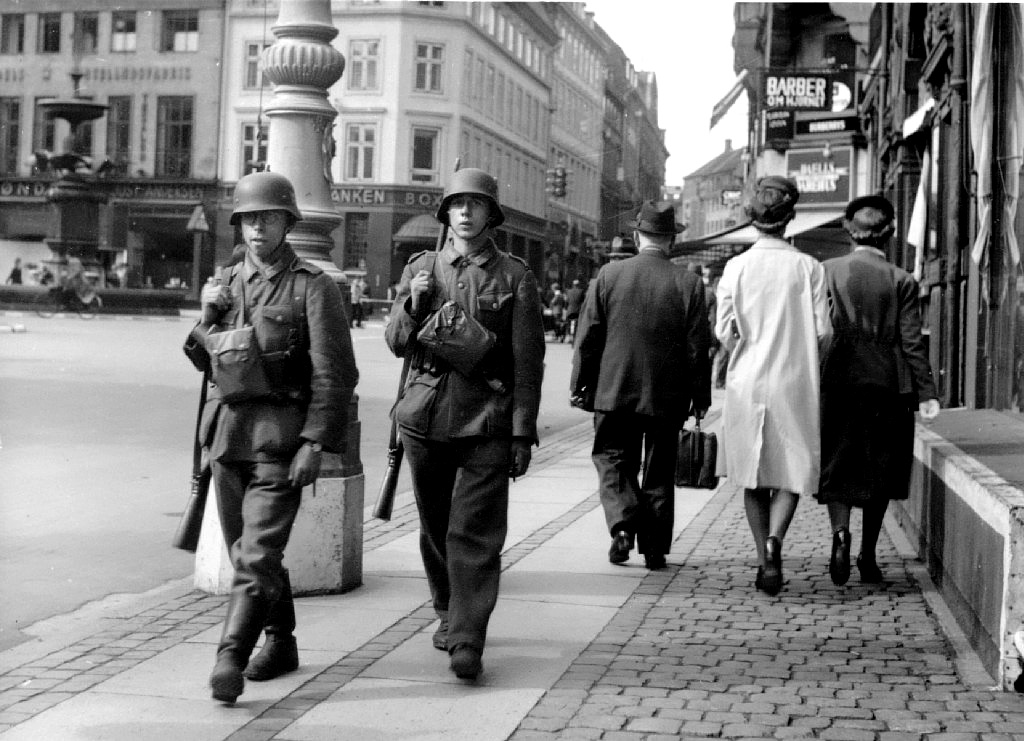
German troops pass Danish civilians in Copenhagen
Although Denmark is not liberated until the end of the war, nonviolent resistance stymied German plans for extracting value from the occupation.
A new government was expected to jump at Hitler’s whim, but it refused to sanction death sentences on members of and made arrangements to smuggle Denmark’s endangered Jews to safety in Sweden.
Feature image (on top) Invasion of Denmark 1940 (Photo Bundesarchiv Jutland)
German Invasion of Denmark, written by Tor Kjolberg
Swedish designer Jonny Johansson and his fanatically popular fashion brand, ACNE, are in the power seats.
When Jonny Johansson and three colleagues started his lifestyle label in Stockholm in 1996, they claimed they would conquer the world after having created 100 pairs of unisex jeans and given them to 100 influential friends. A cult was born.
Acne Fashion 2015Acne Studios 2015
Soon the brand was supplying a young global fan base with everything from radically elegant casual sportswear to stuffed animals. They even have their pwn biannual magazine. The name, by the way, is an acronym for Ambition to Create Novel Expressions.
Jonny Johansson has put Scandinavian fashion on the world map with his jeans, shoes and basic garments with a bit avant-garde twist. Has been named designer of the year, denim designer of the year and Sweden’s most powerful fashion man. Among others, he has made a collection in cooperation with fashion house Lanvin.
Today it seems like Acne has transformed from a streetwear label to one that is comfortable in the world of ready-to-wear.
Johansson says that the challenge has been to be able to make really interesting designs which are functional but still remain interesting. He started out in a time where Helmut Lang and Prada were making amazing clothes without being too abstract.
Johansson is a hardworking and exceptionally inspiring designer and good at finding the right people to work with. More importantly, perhaps, is the willingness to do something different, something that nobody has done before, often with people who are better than him.
From London Brompton Cross Studio
He did not have a traditional fashion education, so he had to be learning by trial and error, creating styles that the industry might dub ‘editorial’ (oddly fitting trousers, ungainly proportions and frankly ugly fabrics). The core Acne style is not only ready-to-wear, but easy to wear.
With styles that the industry might dub ‘editorial’ (oddly fitting trousers, ungainly proportions, frankly ugly fabrics), the core Acne style is not only ready-to-wear, but easy to wear. In a way it mimics Scandinavian furniture design with its simplicity and focus on fusing both form and function into clothes that work. You can’t help but think of Ikea, and their championing of interesting design that still does its job incredibly well. Acne’s doing the same for your wardrobe.
Jonny Johansson grew up in Umeå, north in Sweden. He was a good guitarist, played in band and was fired after a concert in Japan. To take revenge, he moved to Stockholm.
His mother wanted him to go to art school because she saw that he was a creative boy, but he wanted to pursue music, which was important in his family, on his father’s side. But in the end it was about creating.
One day Jonny was walking down Drottninggatan, having dyed his hear red, wearing white lederhosen, black t-shirt and rockabilly shoes – and was spotted by a party-fixer who wanted to have him on his list. One party led to another. Johanssen became familiar with every who’s who in advertising, media and fashion, and in 1996 he and three buddies invested 200,000 kroner and established Acne International.
One day the founder of Wallpaper came by the office and hailed the company in the magazine. After that things happened in furious pace. The Fashion department grew to over 20 people and the upcoming star, Ann-Sofie Back, who today runs her own brand, Cheap Monday, was hired to create women’s clothing.
Acne Studios Lookbook The Impression Resort 2015
In an interview Johanssen said, “The older I get, I realize I have a Swedish inheritance. I never really knew about it, I almost fought against it, and tried to be international… I think we are different; local and global at the same time.”
And he actually never wanted to do something that was Swedish. Acne is global – but it’s been achieved by exporting that local sense of Swedish ease. It has over 650 outlets in 66 countries around the world, and a turnover of over €100m, achieved without advertising, but rather through the cultish pull of the clothing.
Sweden’s Most Powerful Fashion Man , written by Admin
Last summer a convicted sex offender managed to escape from an island prison in Norway on a surf board, paddling to the mainland with the help of a plastic shovel.
The prisoner, said to be in his mid-20s, went missing overnight. The next morning a surf board and shovel that were property of the prison were found on the mainland around three kilometres away. The man is not considered a danger to the general public.
Prison chief Tom Eberhardt said: “If it hadn’t been a surfboard, it could have been something else. “It’s not so hard to find a floating device of some sort on the island.”
Escape attempts are rare at Bastoy, which was founded in 1982 and hosts approximately 115 inmates, partly because of its unparalleled amenities and partly because those who are subsequently caught have little chance of returning. Escapees are usually placed in one of Norway’s high-security facilities.
Norwegian prisons are known for being among the world’s nicest places to be locked up. One of them, Bastoy, is situated on a plus one-square-mile island and features no walls or fences or cells. instead it’s treating inmates to tennis courts, beaches and a sauna. It’s all part of the Scandinavian country’s emphasis on humane rehabilitation rather than harsh punishment.
When inmates come to his island jail, the governor Arne Kvernvik Nilsen, gives them a little talk.
Among the wisdom he imparts is this: “If you should escape and make it across the water to the free shore, find a phone and call so I know you’re OK so we don’t have to send the coast guard looking for you.”
Prisoners need to pass a screening test before being selected for the Bastoyprison, where tasks include organic farming and cooking.
Set on the picturesque island, the prison is designed to prepare inmates for an eventual return to normal life.
In Hälsingeland north of Stockholm visitors may watch and photograph wild Scandinavian Brown Bears (ursus arctos) from safe wooden hides.
Hälsingland is a historical province in central Sweden. It borders Gästrikland, Dalarna, Härjedalen, Medelpad and the Gulf of Bothnia. It is part of the land of Norrland. In English the province is sometimes referred to as Helsingia.
If you want to see a wild bear in your lifetime, then you should go to the Bear Mountain in Hälsingeland. There is a high success rate and you often see the bears’ daily life up close in peace and quiet in safe and comfortable wooden hides with chairs and berths.
Included is also a great picnic, together with accommodation and breakfast in the hide’s cosy beds.
Don’t forget to bring your camera since there are excellent photo opportunities. The hides are adapted to photography and your images will have natural backgrounds.
The journey to the hide is a short hike of about an hour. Visitors leave cars and minibuses behind, entering slowly the forest of the bears and absorbing the special ambience of the wilderness. Often there are signs of the animals tracks, pawed anthills and claw-marked stumps. Ants are a favorite snack of the brown bear, especially nice juicy carpenter ants. The territorial markings on the trees let you know that you are in the right area, and if you’re lucky you might see a bear right here!
Brown bears can run in 50 kilometers per hour, but only over short distances. Vision and hearing are not particularly well developed, but the sense of smell is excellent. The lips are also very sensitive and is actively used when the bear is searching for food.
Photo: Mikael Brandsten
Males weigh 100-350 kilograms, while females can weigh 60-200 kilograms. Withers height can be up to 1.5 meters.
Brown bears eat berries, roots, grass and small animals, moose calves and reindeer.
Photo: Göran Ekström
There are approximately 3,000 brown bears in Sweden. They are not particularly aggressive. Usually they run away when they detect the scent of humans.
Excursions are ‘quality marked’ with the Swedish Eco-tourism Society’s ‘Best of Nature’ award. You can read more about the safaris here.
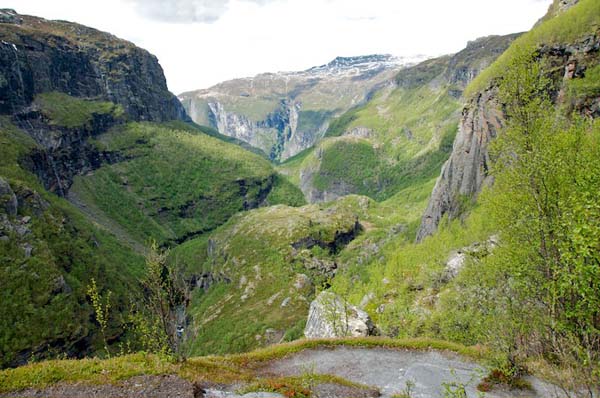
The Aurland Valley is wild with breathtaking nature, often compared to Grand Canyon in the US.
Aurlandsdalen, as it is called in Norwegian, is located in the county of Sogn og Fjordane in West-Norway. The Norwegian Trekking Association (DNT) has marked a trail from Finse (1,222 meters above sea level) to Vassbygdi (50 meters above sea level). This is a four days trekking, and you can stay in the association’s cabins along the trail. If you prefer, you may choose to hike only parts of the valley.
In former times, Aurland Valley was one of the most important connections between west and east Norway.
Trekking suggestion
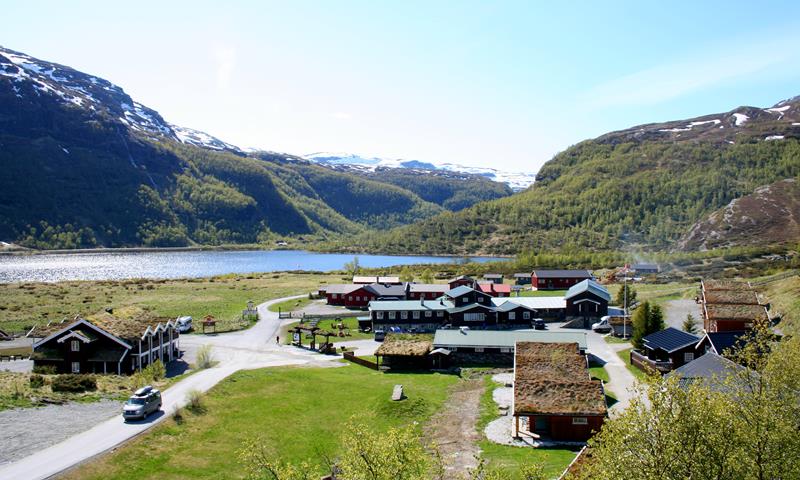
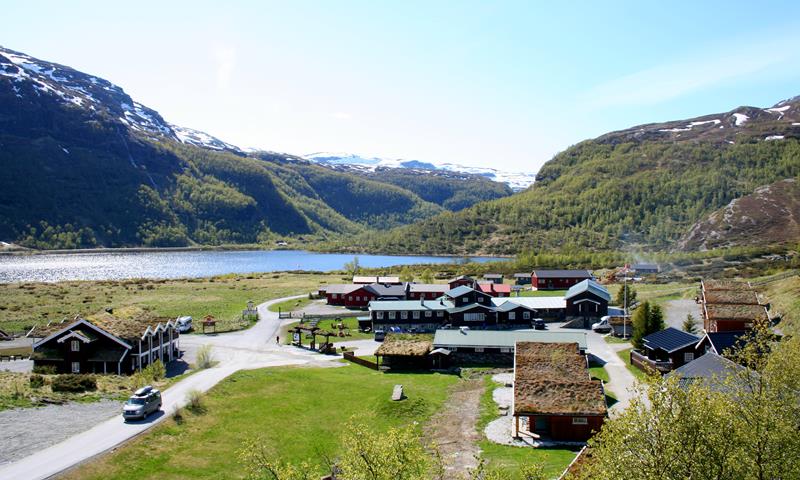
Walk from Østerbø to Østerbø Mountain Lodge (820 meters above sea level). The path is in the lower part of the valley, mostly going downwards, and is easy to walk. Some minor parts, however, are exposed, and extra caution needed.
Østerbø Mountain Lodge
As late as in 1850, there were a total of ten farms and crofts in the valley. Today, these farms are abandoned, but many are restored and in good conditions. The two farms at Østerbø became tourist cabins in the early 1900’s.
Nesbø Lake
Continue to Nesbø Farm, situated at the beautiful Nesbø Lake. The farms was abandoned 100 years ago, but is now restored by the owner. People has lived here from 1664. Most of the farms in Aurland Valley were left between 1875 and 1907.
From here you have two choices, but we recommend you to walk the Bjørnestigen (Bear’s ladder) trail. This is a steep part, rising to more than 1,000 meters above sea level. You will enjoy a fantastic view. Wires are installed at the most difficult parts.
Bear’s Ladder
The other choice is along the Aurland River. The two paths meet again further down in the valley at Vetlahelvete (“Little Hell”), a giant pothole, the biggest in the valley. Underground veins hold the water in the pothole at a constant height and temperature.
View from Little Hell
Enjoy the fantastic landscape on your way to Sinjarheim Mountain Farm. You’ll pass a wild waterfall before on your way. Sinjarheim was the last farm to be left in the Aurlandsdalen Valley. It was left in 1922, and was used as a mountain farm until 1964.
Sinjarheim Mountain Farm
Sinjarheim is situated at the edge of a cliff. Down in the valley below the cliff, there is a raging river. Therefore, in the old days, it was common to secure the children with rope. The farm exists of seven buildings, including a drying house for corn, and has now been restored.
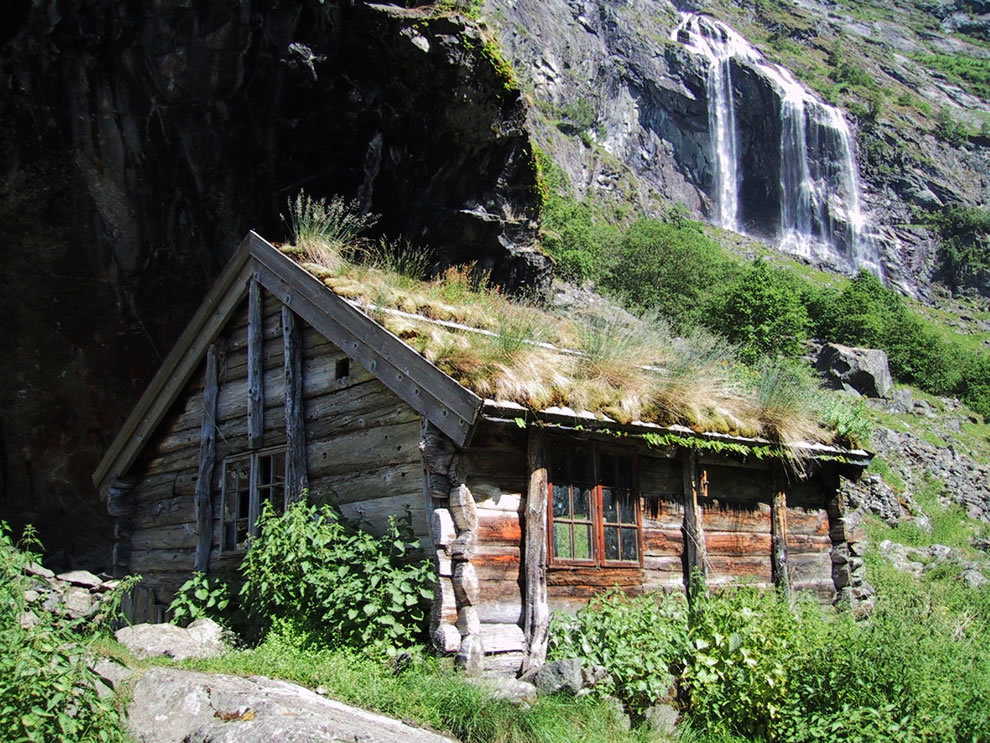
From Sinjargeim the path goes steep down towards the Almen Farm, the last farm in Aurland Valley. The Almastova (the building) is well protected under a big rock.
Almen Mountain Farm
The end point of the Aurland Valley is Vassbygdi. From here you can trek to Gudvangen, the innermost part of the Nærøyfjord. You may stay at the Styvi Farm. If you like kayaking, you should take a brief tour out the fjord to Skalmeneset.
About the Aurlandsdalen Valley
The Aurlandsdalen Valley is one of the most popular hiking trails in Norway. It is located in Sogn, close to Aurland and Flåm at the inner part of the Aurlandsfjord, a 29-kilometer long branch of the 204 kilometer long Sognefjord. It is normal to use between six and seven hours to walk the lowest part of the valley, but I recommend to spend the whole day so you can see more of this beautiful piece of Norway.
Farming in Aurland Valley
Facts
– The Aurlandsdalen Valley, from Geiteryggen to Vassbygdi, is approximately 40 kilometers long. The most common places to start the walk are at Finse, Geiteryggen, Stemmerdalen or Østerbø.
– The lowest and most picturesque part of the valley, from Østerbø to Vassbygdi, is approximately 20 kilometers long.
– The Aurlandsdalen Valley lies between 50 and 1,660 meters above sea level. The lowest part of the Aurlandsdalen Valley from Østerbø to Vassbygdi lies between 820 meters above sea level (Østerbø) and 50 meters above sea level (Vassbygdi).
– As late as 1850, there were a total of ten farms in the Aurlandsdalen Valley: Almen, Sinjarheim, Teigen, Berekvam, Skori, Nesbø,Vikaneset, Aurviki and two farms at Østerbø. These farms are now left, but many of them are restored. The students from Sogn Agricultural School in Aurland use Sinjarheim Mountain Farm as a teaching aid
– The Norwegian Trekking Association (DNT) has two cabins in the upper part of the Aurlandsdalen Valley, Finsehytta and Geiteryggshytta.
– Østerbø Fjellstove and Østerbø Turisthytte are two private cabins located at Østerbø in the lower part of the Aurlandsdalen Valley.
Guided walk or walk by your own
There are well-marked trails, and most people walk from one of the mountain huts located along the trail. The wildest and most picturesque part of the valley is the lowest part, between Østerbø and Vassbygdi. You normally walk this part of the valley in six to seven hours. The Norwegian Trekking Association (DNT) offers led group hikes and tours in the Aurlandsdalen Valley.
Nice to know
The weather in the Norwegian mountains can change rapidly, and snow during summer is not unusual. Remember to bring clothing and equipment designed for all types of weather. Solid hiking shoes are highly recommended. The Norwegian Trekking Association (DNT) is providing a summer hiking gear list.
Combine the walk with biking and a fjord cruise
You can combine this walk with other adventures in the nearby area. Bike along Rallarvegen (the Navvies’ Road) from Finse to Flåm. Or join a Fjord Cruise or a Rib Boat on the Nærøyfjord and Aurlandsfjord. Read more about what to do in the Nærøyfjord and Aurlandsfjordin the Fjord Guide.
Getting to the Aurlandsdalen Valley
The Aurlandsdalen Valley in the Sognefjord area is centrally located in the heart of Fjord Norway, between Oslo and Bergen, and is easily reached by public transport. You can travel to the Aurlandsdalen Valley with a combination of plane, train, bus and boat or by car. From Oslo and Bergen, you can travel by train to Flåm. From Bergen, you can also travel by express boat to Flåm. From Oslo and Bergen, there are daily flights to Sogndal Airport. From Sogndal Airport, there are bus departures to Sogndal. From Sogndal you can travel by bus or express boat to Aurland and Flåm.
From Aurland and Flåm, there is only a short distance with bus to the different starting points of the walk in the Aurlandsdalen Valley. This bus route starts at the end of May and ends at the end of September, check Fjord1 for more information.
You can also contact Østerbø Fjellstove. They can pick you up with their own bus and give you transport to Vassbygdi, Østerbø or Stemmerdalen when the bus route is closed.
The Norwegian Trekking Association (DNT) has two cabins in the upper part of the Aurlandsdalen Valley, Finsehytta and Geiteryggshytta. There are also two private mountain cabins at Østerbø in the lowest part of the valley, Østerbø Fjellstove and Østerbø Turisthytte. Members of the Norwegian TrekkingAssociation (DNT) get discounts on both the DNT-huts and the private cabins in the valley.
The best time for hiking in the Aurlandsdalen Valley is from late May to late September. In May and June, there is usually snow left in the upper part of the valley. Due to the snow, you should avoid walking this part of the valley, between Finse and Østerbø, in May and June. The lower part of the valley, from Østerbø to Vassbygdi, is possible to walk from late May to the beginning of October. The mountain lodges at Østerbø are open from late May to the beginning of October.
Who can join
The walks in the Aurlandsdalen Valley varies from easy to difficult, and you must be in normal good shape. In parts, the path goes through exposed terrain. Take this in consideration if children are joining the walk. It is not recommended to bring children less than eight years on this walk.
Prices
Train and bus
You can travel from Oslo or Bergen to Flåm by train. From Flåm, there is a short distance with bus to Østerbø, the starting point of the walk. There are also bus connections from Vassbygdi (the end point of the walk) back to Aurland and Flåm.





 “The idea is to always carry a piece of Norwegian nature,” says Bruvik.