Norway’s Leading Hotel

Grand Hotel Oslo was named “Norway’s Leading Hotel”, and received the award “Norway’s Leading Suite” at the World Travel Awards in Athens earlier this month.

140814_grand_hotel_facade

World Travel Awards is regarded as the tourism industry’s Oscar, and was this year held for the 21st time. The prizes are a result of more than 500,000 individual votes among business and leisure travelers.

In addition to the two prices the hotel was nominated “Norway’s Leading Business Hotel” and “Norway’s Leading Spa Hotel”.

Grand Hotel won these categories in 2013 and 2012, respectively.

– The two prizes are an important confirmation that the work we put into the hotel being noticed and appreciated, says a proud executive director of the Grand Hotel, Frederikke Næss.

Grand Hotel has undergone a major renovation during the last years to meet today’s individual needs. Each of the hotel’s deluxe rooms and junior suites are renovated.

– The award is a big victory for the hotel and a recognition of the long-term and good work being done every day by all who work here, says the CEO of the mother company, Scandic Norway, Svein Arild Steen-Mevold.

Svein Arild Steen-Mevold
Grand Hotel was founded 140 years ago by Julius Fritzner, on August 15. In spite of the modernization, the hotel has retained its classic style, and is still the epitome of a dignified world class. The hotel is full of tradition and history, with Henrik Ibsen and Fridtjof Nansen among former regulars, and Nobel Prize winners, rock stars and state leaders preferred accommodation in Oslo.

– It is important for us to maintain the history. It is the soul of the Grand Hotel. At the same time we have in the course of more than 140 years developed and renewed the hotel in step with the times, which makes the hotel stand out as modern, functional and luxurious, says Næss.

Other Norwegian prize winners were:

Norway’s Leading Boutique Hotel – Herangtunet Boutique Hotel

140814_Herangtunet-boutique-hotel-norway

Norway’s Leading Business Hotel – Comfort Hotel Grand Central

140814_Grand_Central_hotel_Oslo_Norway

Norway’s Leading Resort – Radisson Blu Resort, Trysil

140814-Radisson-blu-resort-trysil-prestige-norway

Norway’s Leading Spa Resort – Farris Bad, Larvik

140814_Farrisbad_hotel_norway

Axor Shower Products by Front

0

Front Design Group was inspired by Water pathways in their most original form. It wanted to draw attention to the hidden aesthetics of technology in a particularly elegant way, turning pipes, joints, valves and funnels into a new shower set.  150814_Daily_Scandinavian_Overhead_Shower_Wall_by Front_Grohe

The Stockholm based design group Front consists of Sofia Lagerkvist, Charlotte von der Lancken and Anna Lindgren. The products are sold as Axor Shower Products.
150814_Daily_Scandinavian_Front_Design_Group_Stockholm

Their works are based on common discussions, explorations and experiments and they are all involved in the projects from initial ideas to the final product. Front’s design objects often communicate a story to the observer about the design process, about the material it is made of or about conventions within the design field. In their work they have assigned part of the making of design to animals, computers or machines. Front has made a constantly changing interior, created objects with explosions, robotic furniture and a range of furniture inspired by their fascination with magic. You may watch other products by Front here.

Federico Zanellato From Copenhagen’s NOMA Participates In “Sabor a Cabo” November 30 – December 6.

A selection of the world’s finest chefs will gather in Los Cabos November 30 – December 6 in celebration of the 9th Annual “Sabor a Cabo” (The Flavors of Cabo) food & wine festival.

130814_Federico_Zanellato
This highly anticipated event is expected to be the largest yet and for the first time, will include a weeklong series of ticketed events highlighting Baja California Sur’s cuisine and Mexico’s celebrated Baja wine region.

130814_sabor-a-cabo-2013-2
The festivities, beginning November 30, include a Country Side Taste incorporating Baja’s local flavors; a Sunset Gourmet Gala aboard a luxurious yacht; an Oktobeer Fest showcasing artisanal beer; a Wine & Art Walkin San Jose del Cabo with participation of 16 wineries, art galleries and restaurants; and a Star Chef Dine-Around. The main event, consisting of 50 participating restaurants, will take place December 6 from 5pm – 11pmat the Sculpture Garden in Puerto Los Cabos and is expected to attract over 2,000 attendees.

130814_8th-sabor-a-cabo-2013

“We are looking forward to welcoming the world’s best chefs to Los Cabos for the 9th Annual Sabor a Cabo event,” said Eduardo Segura, Managing Director of the Los Cabos Tourism Board. “Our destination has a rich and booming culinary scene that many people are still discovering. Events such as Sabor a Cabo highlight these offerings and provide us with a platform to position the unique products, sustainable brands and delicious flavors available in this particular region of Mexico.”

Confirmed to attend are several world-renowned chefs including Federico Zanellato, Chef and Partner of Copenhagen’s NOMA Restaurant in Denmark, Richard Sandoval, Chef and Restaurateur of over 35 restaurants world-wide, including Pampano and Zengo in New York City, and Dieter Koshina, Owner of Portugal’s Vilajoya Restaurant.

130814_Noma_Copenhagen

Travelers interested in attending can purchase tickets by visiting http://saboracabo.workzentre.com/. General admission tickets are $100 if purchased prior to September 30 and $125 if purchased after. Special lounge area access tickets are $150 and for a seat at one of the event’s VIP tables tickets are $1,000 per person.  Main event proceeds will be donated to the Fire Department, Red Cross and Children’s Foundation of Los Cabos.

SOURCE Los Cabos Tourism Board

Norway – A Cashless Society by 2020?

0

The leading Norwegian financial organization, Finans Norge, claims the country is on course to becoming a cashless society by 2020.

Despite critics arguing that people should be allowed to purchase things without a trace, data shows that just five per cent of Norwegian transactions involve issuing cash.

Finans Norge supports bringing an end to cash-based transactions in the Scandinavian country, claiming that such a policy could prevent issues such as financial crime, so-called black money and robberies. The confederation, which represents 200 active financial institutions and groups in the country, said that it would be possible to live in a cashless society as only a small proportion of transactions were made with cash.

The organisation pointed out that in the first six months of this year there was an 8.6 per cent increase in card use, with people less inclined to handle cash due to the costs involved. It also noted that cash is now used in just five per cent of Norwegian transactions, with just the UK and Sweden recording a lower figure.

120814_guri-melby-leftwingHowever, critics of scrapping cash as well as privacy advocates believe that bringing an end to cash transactions could affect a person’s right to privacy. Venstre Party member Guri Melby said people must be allowed to pay with cash for things without everything they purchase being recorded.

She went on to say that the removal of cash won’t lead to crime disappearing as there is already a high amount of fraud linked to electronic payments and bank cards as well as new payment methods such as Bitcoin, pop up. She added that the crime opportunities did not depend on the payment methods available in society.

Datatilsynet, Norway’s data protection authority, also was against the idea, noting that it would be a major concern from a policy perspective if people were not allowed to pay for things anonymously. Norway – a cashless society by 2020?

The Cobalt Works and Mines in Norway

In 1772, a miner called Witloch found cobalt in Modum. This was the beginning of an industrial fairytale. The first half of the 1800s the Cobalt Works was the most modern and successful mining and refining cobalt industry in Europe.

????????
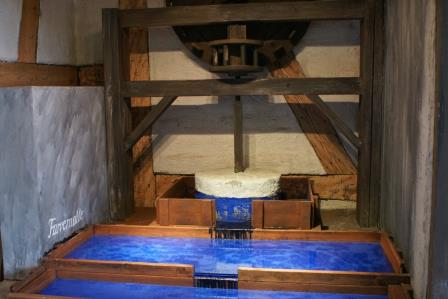
The Cobalt Works and Mines in Norway met an amazing 80% of the world’s demand for cobalt blue pigment, which was used for coloring porcelain and glass.

????????
The Royal Cobalt Works of Modum, Norway was established in 1773 to extract ore from the cobalt mines. The cobalt was used in the production of cobalt blue pigment for the world’s porcelain and glass industry.

????????
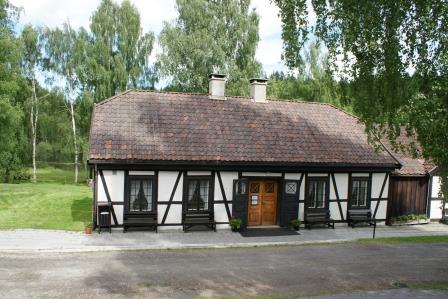
Today it is a museum stretching 8 km (nearly five miles) mixing art, culture and beautiful nature, offering recreation and experiences for all generations with:

  • Daily guided tours in the mines from the 19th century
  • The mining museums show the mining technology????????
  • Hiking areas around the quarries with great viewpoints
  • Cheese matured in the mine
  • Koboltkoia – The Norwegian Trekking Association’s cabin at the Cobolt Mines????????
  • Three new art exhibitions every year
  • Six exciting museum shops with many specialities and Scandinavia’s best selection of cobolt blue glass products????????
  • Three inviting cafés where traditional homemade Norwegian dishes are served
  • Haugfossen waterfalls (with its 39 m drop and the source of hydroelectric power), scenic viewpoints by the Cobalt Works????????

Be sure to visit The Th. Kittelsen Museum. Theordor Kittelsen (1857 – 1914) was one of his time’s most interesting and beloved Norwegian artists. His magnificent interpretations of nature, forest, mountains and trolls are presented with authentic works in oil, mixed techniques, watercolors, drawings and personal belongings.

????????


All Photos: Tor Kjolberg

Lunch Concert At Troldhaugen

Enjoy the daily, half-hour lunchtime concerts in Troldsalen, perhaps Norway’s most beautiful chamber music hall. In the midst of the Grieg Museum grounds in Bergen, a concert in Troldsalen is an experience not to be missed.

070814_Edvard_Grieg_copyright_Troldhaugen

In the period 1st June to 14 September 2014 there is a bus service from Bergen Tourist Information at 11:30am. Return to Bergen at 2pm.

Price for concert and bus:
NOK 250 for adults
NOK 200 for students and Bergen Card holders
NOK 100 Children

Unique opportunity to visit the composer Edvard Grieg’s beautiful villa, his charming little composer’s cabin and his monumental gravesite – all located in the lovely natural surroundings at Hop in Bergen.

The ticket includes the concert, entrance to the exhibition and a guided tour through Edvard Grieg’s villa, Troldhaugen.

For groups:
All year round Edvard Grieg Museum Troldhaugen offers a standard concert package for groups. The package includes a 30 min piano recital followed by a guided tour in the villa.

Tickets can be bought at the Tourist Information in Bergen or at Edvard Grieg Museum Troldhaugen.

Until September 14 2014 Monday – Sunday 01.00 pm – 01.30 pm

Troldhaugen – home of composer Edvard Grieg
The home of composer Edvard Grieg (1843-1907) and his wife Nina. Grieg lived here for 22 years and composed many of his best-known works in the little garden hut. Also visit the cliff-hewn tomb where he was buried, the concert hall “Troldsalen” and the museum.

Troldhaugen in Bergen is now a living museum comprising an exhibition centre with shop and cafe, concert hall, composers’ cabin and Grieg’s villa dating from 1885.

Guided tours of the villa run continuously for both groups and individual tourists.

It is also possible to hold private concerts in the villa or concert hall.

Images © Troldhaugen / Bergen Museum


Thank You For The Music, ABBA

Early this summer I landed in prison, only it is now a hotel, housed within what used to be a state penitentiary in Langholmen, not far from the Swedish capital Stockholm.

060814_Langholmen_hotel_stockholm
Once you get over the size of your room — it was a prison cell after all — you’ll love the atmospheric building, complete with its own prison museum as well as the green, quiet island on which it is located.

Just saying its name, Langholmen, puts you in a languid mood. It is the sort of place where you see allotment gardens, boats tied to a quiet jetty, joggers, dog-walkers and children dipping in a tiny cove while parents sit on deckchairs in a café.

After an evening walk, I sat in the hallway listening to what the walls could tell me, before I went to sleep to the calls of seagulls.

I woke up to a lush breakfast with scrambled eggs and caviar cream.

Venice of the North
The island I “escaped” to following my sojourn in jail was Skeppsholmen. All of Stockholm is distributed over 14 islands, which means you see water and bridges everywhere.

060814_Skeppsholmen_Stockholm
Not surprisingly, it is sometimes called “Venice of the North”, except that its roads are wider, its summer sky a more pastel blue, and the people taller, leggier, blonder, all looking as if they had stepped out of a fashion catalogue.

The interface of water, land and sky has resulted in an appealing pale light and openness, and I couldn’t really imagine how this city has inspired so many dark crime novels, including the ultra-successful Stieg Larsson trilogy.

Hostel on a ship
Skeppsholmen used to be a base for the Swedish navy, but many of the buildings and installations have been converted into museums and theatres interspersed by green spaces.

My base here was a 19th-century English sailing ship called the Chapman once owned by the Swedish navy.
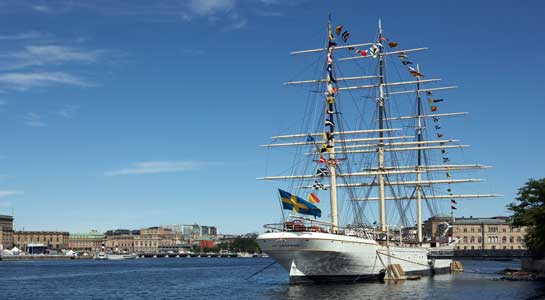
060814_Chapman_Hostel_Stockholm
It is now a youth hostel that is so cool that even the locals visit it in the evening when its bar and kitchen are open for dinner.

Guests and locals can relax on the decks and enjoy bayside views, live music drifting from the nearby Grand Hotel and people-watching.

Nobel Prize route
Across from “my” boat, I could see the lights of Gamla Stan, the Old Town, which is actually a warren of narrow, cobbled streets originating from the Middle Ages.

060814_Stockholm-Gamla_Stan_Sweden
The oldest square here is the Stortorget, where the Nobel Museum is located.

There are many cafés, restaurants and touristy stores, and I was happy to chance upon the English Book Shop at Lilla Nygaten 11, and Comics Heaven at Stora Nygatan 23 with its
excellent selection, including English comics.

The northern edge of Gamla Stan backs onto the Royal Palace, which has more than 600 rooms. A changing-of the-guards ceremony takes place in the outer courtyard at midday.

I also visited the Town Hall to see its famous Blue Room and Gold Room. The Blue Room is where the annual dinner for Nobel Prize winners is served; the Gold Room is where they dance.

SVERIGES_RIKSTAG_3

World’s first open-air museum
Stockholm claims to have about 100 museums, a high density even for a capital.

060814_Skansen-Stockholm
Families should allocate at least half a day for Skansen, the world’s first open-air museum featuring authentic old houses, farmsteads and workshops moved from their original sites all over Sweden to cluster on the island of Djurgarden.

Realizing that history needed to be more than antiquated artefacts, Skansen is filled with people in costumes who can explain the old ways of life.

I met Bosse, a woodcutter; Stig and Eva, a house-proud printer and his wife; and another Bosse, an affable baker who still baked in a woodfired oven.

Skansen also has a zoo featuring Nordic animals such as the reindeer, lynx and wolverine.

Down the road from Skansen is the VASA museum, which houses a 17th- century ship that sank on its maiden voyage.

060814_Vasa_Museum_Stockholm_2
After lying in watery depths for 333 years, the ship was salvaged and is now displayed, adorned with numerous sculptures, contents, and even the skeletal remains of its crew and passengers. A must if you are into maritime things.

ABBA Museum
Almost next door is the ABBA Museum, which opened last year and is dedicated to the most successful Swedish pop group ever.

060814_abba-the-museum-stockholm
There is plenty of stuff to do besides seeing their recording studio and following the story of how the group of four got together, won the Eurovision Song Contest and enjoyed a decade of glorious success.

You can audition with an ABBA song, try on their costumes and dance with hologram images of ABBA. I left humming ABBA melodies on the ferry.

After a few days of glorious sunshine, it rained just as I was leaving. I left, wishing I could go to “jail” again.

Written by guest contributor

Norway at Its Most Dramatic

Enthralled by the unmatched countryside and in search of perfect salmon and trout fishing, Europeans (particularly the British and Germans) «discovered» Norway’s fjords in the late 1800s.

060814_Geriangerfjord_Norway_Daily_Scandinavian
The vertical cliff-walled Geirangerfjord, 10 miles long, was – and still is – held as the plus ultra: Norway at its most dramatic. View it from the remarkable Ornevegen (Eagle’s Road), from Andalsnes to Geiranger with its eleven hairpin, hair-raising turns – completed in 1952, it remains an astonishing feat of engineering.

Stop at the Eagle’s Turn to take an unforgettable view of the fjord winding through the valley. From Andalsnes to Valldal in another of Norway’s audacious serpentine roadways, the Trollstigen (Troll’s Path), which crosses one of Norway’s most desolate regions.

Photo Trollstigen (Feature image on top).

Not the most accessible of the fjords but arguably the most popular, tourists can choose from numerous attractions – half-day cruises, excellent salmon fishing, hiking, bicycling, visits to poignantly deserted farming hamlets inaccessible by road, and excursions to Jostedalsbreen, Europe’s largest glacier, and spectacular waterfalls with names like Seven Sisters and Bridal Veil.

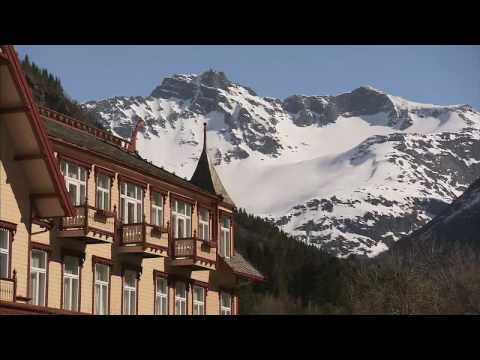
A great base for enjoying the Geirangerfjord area and neighboring Norangsfjord is the Union Hotel. It’s one of the old-time “fjord castles” so popular at the end of the 19th century. Today renovated and modernized, the hotel still holds sway in the area: Norway’s King Harald and Queen Sonja chose to celebrate their silver wedding anniversary here in 1993.

060814_Unioun_Hotel_Geiranger_Norway_Daily_Scandinavian
You can even bath in German Kaiser Wilhelm’s original bath (he returned no fewer than twenty-five times) if you can wrangle Room 12.

Oslo Jazzfestival 2014

Oslo Jazz Festival 2014 starts as usual with the opening concert at The Norwegian Opera & Ballet. Tord Gustavsen has the honor to be the main artist at this years’ event. Extended Circles is the title of the concert, introducing a completely new composition signed Tord and singer Synne Sanden.

050814_Tord_Gustavsen
Later in the evening there will be an exclusive concert where the French jazz musician, singer and film composer Michel Legrand and his trio include Karin Krog and Solveig Slettahjell as musical guests.

050814_Michel-Legrand
During the week you may enjoy concerts at various locations in the center of Oslo. For the first time this year concerts will be performed at the venues Edderkoppen, Cosmopolite and Kulturhuset. New is also the Indian House, formerly known as New Orleans Restaurant in Rosenkrantzgate.

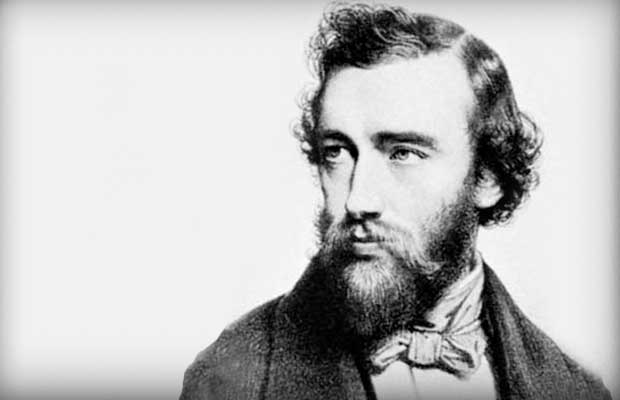
050814_adolphe_saxSlightly overshadowed by the Norwegian Constitution jubilee, the Oslo Jazzfestival is celebrating Adolphe Sax’ 200th birthday this year. He was born in 1814, and he invented the saxophone. There will be a strong list of both Norwegian and international saxophone players during the festival, including names like Sonny Fortune, Billy Harper, Scott Hamilton, Marshall Allen, John Surmann, Tore Brunborg, Barry Møster, Knut Riisnæs, Bodil Niska and Hanna Paulsberg.

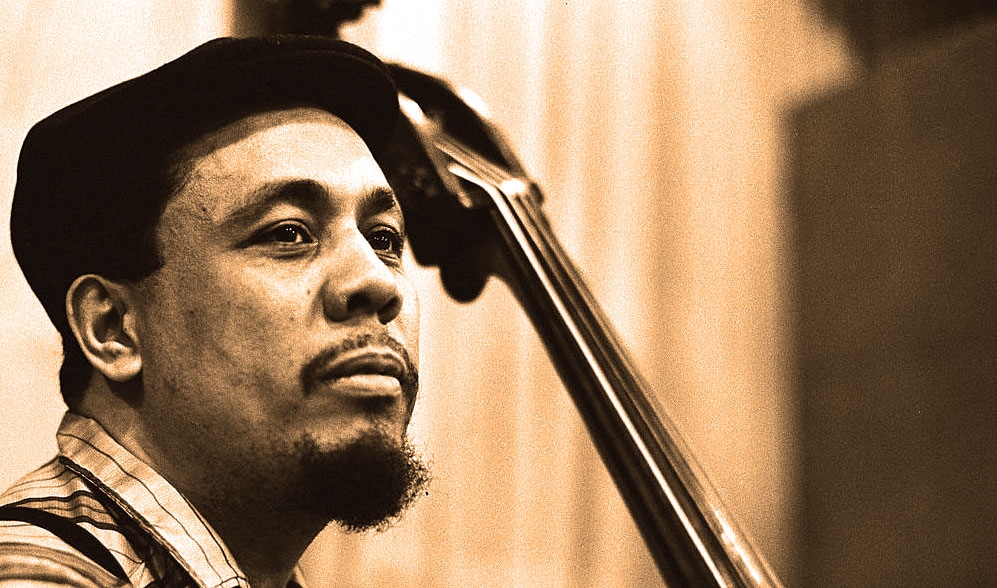
This is also the 50th anniversary of modern jazz in Oslo, since the Charles Mingus Sextet performed at the University Hall in 1964. The University hall was overcrowded at that time, and the contemporary composer  Arne Nordheim and poet Jan Erik Vold wrote raving reviews in the daily paper Dagbladet. The Norwegian eminent jazz bassist Arild Andersen has taken on the responsibility to reproduce Mingus’ musical universe to this years’ listeners. He attended the legendary concert 50 years ago.

050814_Charles_Mingus
For those who want to reminisce about Oslo’s jazz scene there is a photo exhibition at Kulturhuset, and city walks to old jazz clubs, guided by Bjorn Stendahl. At Kulturhuset you may also be viewing jazz productions from the French TV channel Mezzo, a partner of this year’s festival.

A strong focus on children and young people has for many years been characterizing the Oslo Jazz Festival. This year promising young bands from the Nordic countries have been invited to Oslo. They will perform on the outdoor stage at Karl Johan and participate in seminars and master classes with some of the musicians playing at the festival.

Related article Click here

1814 Revisited – The Past is Still Present

Akershus Art Centre (Akershus kunstsenter) celebrates the Norwegian Constitution Bicentennial by presenting their exhibition 1814 Revisited – The Past is Still Present.

030814_1814_Revisited_Lene_Berg_Kald_Klump_Photo_Istvan_Virag

The initiative is one of the largest exhibitions in conjunction with the Constitution Bicentennial in 2014.

The exhibition invites to reflection and discussion on issues related to democracy and Norwegians’ national identity. Through exhibitions, debates and works in public space the art centre aims to highlight various discussions it believes are relevant to the anniversary year.

The exhibition presents works by as much as 26 established and renowned artists: Ayman Alazraq, Andvig and Lars Laumann, Lene Berg, Ahmad Ghossein, Ane Hjort Guttu, Trond Hugo Haugen, Siri Hermansen, Frithjof Hoel and Rustan Andersson, Ane Mette Hol, Lise Bjørne Linnert Hilde Maisey, Lionel Pierre Matte, Alex White Mazzarella / Artefacting, Ebba Moi, Victor Mutelekesha, Juan Andres Milanes Benito, Lars Ramberg, Merete Rostad, Morten Slettemeås, Charlotte Thiis-Evensen, Roghieh A. Torvund Gelawesh Waledkhani, Artur Zmijewski and Sten Are Sandbeck.

Among the 25 different works in the exhibition, there are 18 new productions, two social projects and three projects in public space.

1814 Revisited – The Past is Still Present appears at three locations: Akershus Art Centre in Lillestrom, Mago A Eidsvoll Verk, and Stallgården at Eidsvoll Verk. One work is also displayed on the façade of Oslo Central Station.

Exhibition ends on September 14.

1814 Revisited – The Past is Still Present is an initiative of Akershus Art Centre, and is part of the Norwegian Parliament’s official program for the Constitution Bicentennial. The exhibition is produced by Akershus Art Center and curated by Rikke Komissar (CEO Akershus Art Centre).
Practical information and how to get there, see here.

Photo above by Istvan Virag presenting Lene Berg’s Kald klump

Related link: https://dailyscandinavian.com/?s=1814