First female World Rally-cross driver – Ramona Karlsson

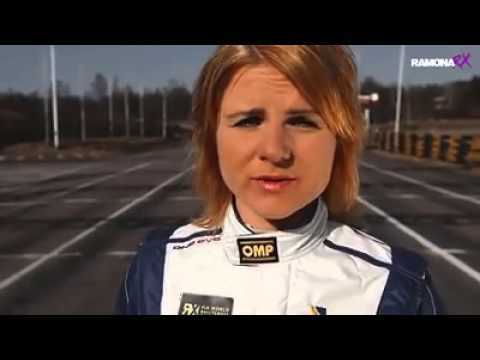
Ramona Karlsson is the first female to race in the new-for-2014 World Rallycross Championship this season.

European rallycross Championship, Hell, Norway, 24-26.06.11
The experienced rally driver has signed a deal to race an Eklund Motorsport Saab 93 Supercar in a minimum of seven events in 2014.

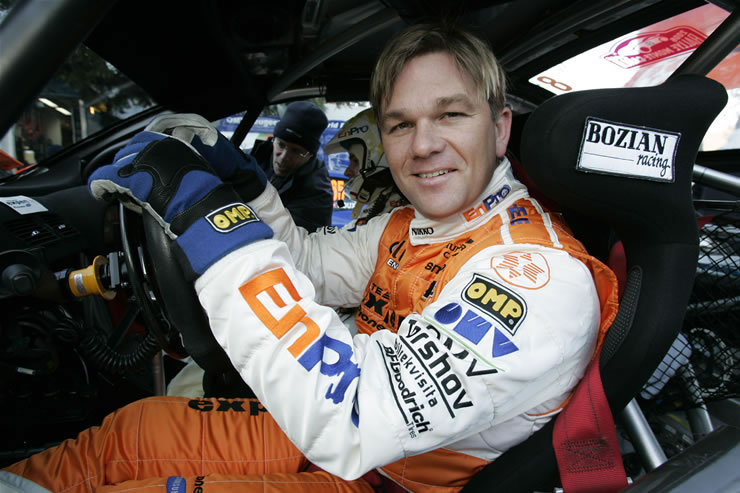
The first female world rally-cross driver will be joined in the team by World Rally Championship driver Henning Solberg, who will contest selected rounds of the world series.

010814_Henning-Solberg

“It feels great to be working with Per Eklund, one of Sweden’s top racing drivers,” said Karlsson.

“The team has a lot of experience, and the Supercar class is where the most extreme rallycross cars are, so I’m excited to be involved.

“I’m obviously looking to fight with the top drivers. I can’t wait to get the season underway in Portugal.”

While Karlsson will race at the first event of the series in Portugal, Solberg’s first drive will be at round two, the AUTOSPORT World RX of Great Britain.

The Norwegian raced an Eklund Saab in 2013, and made the final at Holjes in Sweden.

The cars will again be engineered by experienced team boss Eklund.

“Henning is very quick, last year he did no testing before events and still got good results, he is a proper driver,” said Eklund.

“It feels really fun and exciting with Ramona in the team. She was fast in rallying, and rallycross now becomes a new challenge.

“We previously invested in young Finn Toomas ‘Topi’ Heikkinen when he came into rallycross, and now he is one of the fastest in the world.

“It feels extra fun with a female driver, something that has never occurred before. It will be very interesting and exciting to follow Ramona’s development.”

Happy ever after on this fairy-tale gastronomic journey in Copenhagen

It might change your outlook on food forever. “Our philosophy is to share our stories and emotions,” explains Jakob Mielcke, the owner and executive chef of Mielcke and Hurtigkarl. “Just like in the fairy-tales you’ll never know what to expect.”
300714_Dinner_at_Mielcke_Copenhagen

Mielcke wasn’t just reeling off words when he made this statement. From our first glass of R&L Legras Blanc de Blancs Champagne in the pavilion, to the last homemade beer-fudge chocolate, these words rang true.

Situated in Copenhagen’s stunning Frederiksberg gardens, the surroundings are an integral part of the organic experience. And while the gardens may be cultivated, Mielcke aims to inject as much “organic wilderness” into his cuisine as possible.

Princess and the pistachio
This was evident from the moment we sat down with our starters on an outdoor terrace reminiscent of those in Provence.

We enjoyed leeks rolled with pistachios and puffed potato, freshly-picked carrots with a carrot cream, and lovingly crafted ‘leaves’ made of sea-buckthorn with garden herbs.

And just as we thought we were on a journey through the spring garden, a Japanese street food called Takoyaki was served up.

300714_Takoyaki_at_Mielcke_Copenhagen

This was my absolute favourite and a fine example of Mielcke’s aim to present elements that are “playful and in the moment”.

After moving indoors here, you quickly notice that Mielcke’s obsession with nature has been captured in the interiors.

The walls are artfully painted with greenery, and if you look closely, you’ll even notice the small plastic garden bugs too.

Pork takes the plaudits
Having been spoilt by the starters, we moved onto the fish and meat courses.

Mielcke is on a mission to play with people’s senses, and the dish that best embodied this was the asparagus.

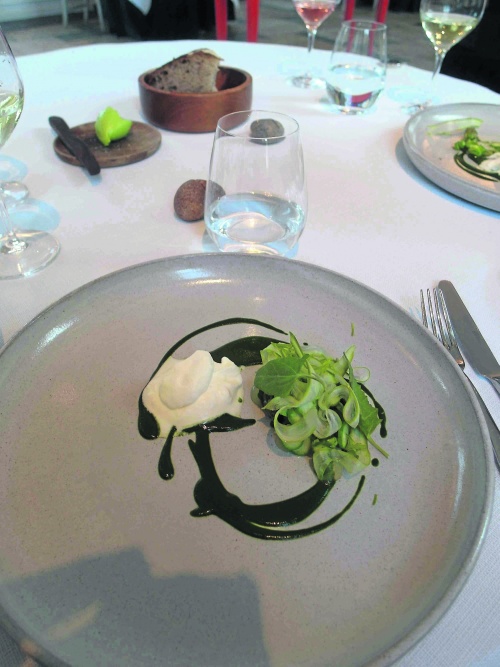
Surrounded by a green curry sauce and a generous dollop of cream infused with Italian pork breast, the dish etched a place in my mind due to its sheer creativity and complexity.

After five fine courses we reached a main of pork infused with a richness that I’ve rarely tasted.

Fermented in miso for two days, then cooked over charcoal with black garlic, it came served with hearty flamed overtones.

This was offset by a salad component that was tart, fresh, and earthy.

Pairings and puds on par
Now while the food here is magnificent, the wine pairings are certainly also on equal par.

The delightful sommelier, Jose Santos, fills the room with a charm and a passion for his craft.

He sources the most in-demand vintages from around the globe and works closely with the chefs on a daily basis.

After a night here, it’s certainly clear why this restaurant was awarded ‘Best wine experience 2014’ by White Guide Denmark.

The desserts here are made for the moment. Take the Woodrof for example. Made with apples, almonds and wild herbs, it was fragrant and raw.

The dessert wine – a 2013 Spätlese Burgenland Weingut Kracher – further enhanced the dish. An Austrian drop made with Chardonnay and Welsh Riesling, it was acidic yet sweet.

A fine dining game-changer
A dining experience at Mielcke and Hurtigkarl is one of those fairy-tale gastronomic journeys with surprises at every turn.

Never have I witnessed such a creative expression of food that left such a strong impression.

I can’t recommend this place highly enough. The gastronomic journey in Copenhagen might change your outlook on food forever.

Written and photographed by Emily McLean

Published by arrangement with the Copenhagen Post

Safe Swimming in Denmark’s North Sea

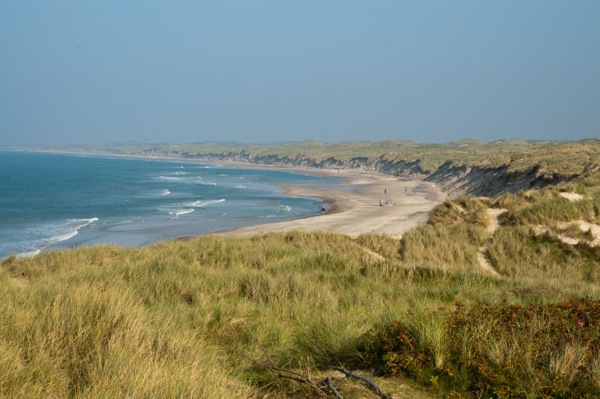
The first sea pool in Denmark was opened two weeks ago in Nørre Vorupør in northern Jutland. Now visitors can enjoy swimming in the sea in safer conditions.

310714_Northern_Vorupor

Vesterhavet, the name given to Denmark’s North Sea area around this region of Denmark, has been a tourist trap for many years because high waves and dangerous rip currents made swimming in the sea quite dangerous.

The new 50 x 50 meter sea pool, which opened on Saturday July 14, is similar to Copenhagen’s Islands Brygge Harbour Bath, but is constructed out of a beach. A wall fitted with hatchets stops the dangerous waves from getting in but allows fresh sea water to flow in. At the back end of the pool you’ll find a beach, and along the other three sides you may enjoy the promenades.

The local council believes that the pool will attract more tourists and therefore is a sound investment to the area. The official opening of the pool is however on August 15, so until then there will probably still be ongoing construction work.

In North Vorupør you may also experience The Jutland Aquarium  (JyllandsAkvariet) which is one of the smaller aquariums in Denmark – located almost as far west in Denmark as possible and just next to the North Sea. Almost all the fish at this aquarium come from the North Sea.   In the small fishing villages of North Vorupør and Stenbjerg Landing, you can witness fishermen dragging their boats up onto the shore after a day out at sea.

Feature photo on top: Visitdenmark.co.uk

Norwegian cross-skiing world champion Marit Bjoergen received the “Fair Play Mecenate” for 2014

0

Last Wednesday Marit Bjoergen received the internationally prestigious Fair Play Mecenate award for 2014 in Castiglion Fiorentino in Italy.

“It is a great honor to be awarded such a prestigious award. I am proud and humble. To be recognized with the Fair Play Mecenate Award is something I greatly appreciate. Although cross country is an individual sport, I would not be where I am today without the other girls on the team. I am proud to be part of our strong team, where we begrudge our teammates success and support each other in prosperity and in adversity,” says laureate Marit Bjoergen, the Norwegian cross-skiing champion.

“Marit Bjoergen has for years been a role model for athletes in particular, and children and young people in general. Marit is concerned with the team and recognize the importance of having good teammates. She gives of herself both when it comes to sports and human relationships and represents the sport in an excellent manner. It is highly valued by the entire ski community in Norway. The international recognition proves that she has distinguished herself with his positive attitude far beyond Norway’s borders,” says ski president Erik Røste.

???????????????????????????????????????????????????????????????????????????????

The jury consists of members from all continents, representing the international sports press and various international sports organizations. The jury states that  Bjoergen “Marit Bjoergen receives the award for her particular ethical and fair play behavior that she always demonstrates both in her agonistic career and in her demonstrations of great sportsmanship and solidarity.”

Feature photo on top: Karl Filip Singdahlsen

Bike and Bite: Copenhagen’s Gardens of Eden

The most common of activities visitors to Copenhagen and Denmark will see is Danes biking everywhere.

Biking is a national sport in Denmark. Whether road, mountain biking or even unicycles you will find bike trails and lanes for every bike craze in every city, county and region. It’s a real pleaure to bike through Copenhagen’s gardens of Eden.

Experienced biker or not, Denmark is the perfect place to travel by bike, and there are accommodations for bikers are everywhere.

Visiting a close friend in the suburbs, 15 minutes from the city of Copenhagen, I was left with the feeling of being in the country side and could easily notice the Danish encouragement of using bikes to enjoy their amazing gardens and lakes.

280714_Nybro_Kro_Denmark_Daily_Scandinavian
The morning started with bikers leading the way to Nybro Kro, a tavern that struck me as the Hobbit tavern from Lord of the Rings! A great start of a morning on to a scenic bike ride around the lakes.

280714_Nybro_Kro_2_Denmark_Daily_Scandinavian
For a morning start, treat yourself to one of Nybro Kro‘s signature breakfasts and the city’s best sunny side eggs on roast beef and home baked bread. With a hearty breakfast, it’s a good time to burn those calories for a ride around the lakes and channels, rich in activities, history, scenery and wildlife.

280714_Fure_and_Lyngby_Denmark_Daily_Scandinavian
The communities of Fure and Lyngby are made up of three lakes interconnected by stunning channels known as The Millstream system, Bakvaerd Lake, famous for rowing world championships, Lyngby lake for its scenic beauty, fishing and bird life and the largest lake, Fure, rich in wild life and home of the Grey Heron are literally the “Gardens of Eden” of Copenhagen.

280714_The_Mill_Stream_Denmark_Daily Scandinavian
The Mill Stream gained its name from the system of mills running through the channels and starts from Bastrup Lake, and leads all the way into Oresund (Øresund) that separates Denmark and Sweden. According to Danishnet.com “The Mill Stream has been used for mill operations all the way back to Viking times”.

280714_Kayak_renting_Denmark_Daily_Scandinavian
If you want to enjoy a beautiful scenic day on the lake and the stunning canals, a canal ferry, boat, canoe and kayak rentals are conveniently accessible on either end of the Millstream channel between Lyngby and Fure.

280714_Hotel_Fredriksdal_Channe-_Denmark_Daily_Scandinavian
To end a fantastic day in the Gardens of Eden, why not enjoy a local summer grill Buffet by the channel at the Hotel Fredriksdal directly off to the right of the river cruise dock.

Grillbuffet – Hotel Frederiksdal, v. Lyngby, June 13 – August 14, 2014,  6.00 – 9.00 p.m.

Contributors:

Lars T. Tanskanen

Jannik Stuhr – local expert on biking trails and photography.

Top Ten Swedish Beach Hot Spots

0

While Sweden is a popular destination for the great outdoors, northern lights and big city sights of Stockholm, few connect the country with a beach holiday. Here are ten reasons to think again.

At Daily Scandinavian we have decided that something needs to be done to promote Sweden’s coast which, while often lashed by bracing waters, is graced by long stretches of golden sand with plenty of space to plant a parasol. Here are our favourite Swedish Beach hot spots.

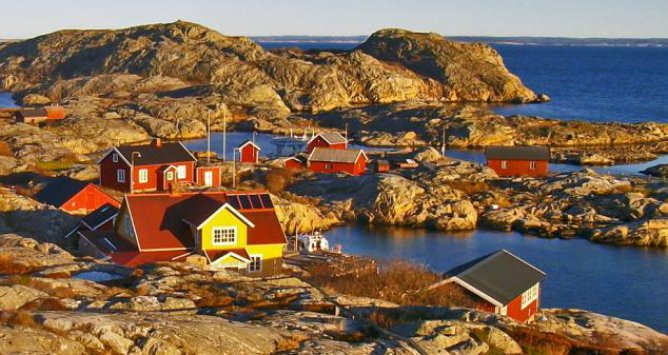
Bohuslän is a Swedish province in Götaland, on the northernmost part of the country’s west coast. It is bordered by Dalsland to the northeast, Västergötland to the southeast, the Skagerrak arm of the North Sea to the west, and the county of Østfold, in Norway, to the north.

Bohuslän is named after the Norwegian medieval castle of Båhus. Båhuslen was a Norwegian county from around 1050 until the Treaty of Roskilde in 1658, when the kingdom of Denmark-Norway lost this area as well as Skåneland to Sweden. (Wikipedia)

250714_bohuslän
Gotland is a provincecountymunicipality, and diocese of Sweden. It is Sweden’s largest island. The island of Gotland and the other areas of the province of Gotland make up less than one percent of Sweden’s total land area. The province includes the small islands of Fårö and Gotska Sandön to the north, as well as the even smaller Karlsö Islands (Lilla and Stora) to the west. The population is 57,221. of which about 23,600 live in Visby, the main town.

The island’s main sources of income are agriculture along with food processing, tourism, IT solutions, design and some heavy industry such as concrete production from locally mined limestone.  (Wikipedia)

250714_Gotland_Sweden
Stenshuvud
 is a hill in the southeastern corner of Sweden, in the province of Skåne, close to Kivik in Simrishamn Municipality. Since 1986, it is one of the National parks of Sweden. The park covers an area of about 3.9 km².

The hill is 97 metres high and faces the Baltic Sea. Since the surrounding landscape is relatively flat, it can be seen from a great distance and has traditionally been used as a landmark for seafarers. Many visitors trek up the hill to enjoy the view which is very good in clear weather.

Most of the area is covered with broadleaf forest, especially European hornbeam. The park also contains heaths, meadows and swamps. Because of the mild climate and varied habitats, many different animal and plant species can be encountered in the park. The park contains unusual Swedish wildlife such as the hazel dormousegolden orioleEuropean tree frog and agile frog. There are about 600 vascular plant species, including several types of orchids and the very rare barren strawberry. (Wikipedia)

Stenshuvud, nationalpark i Skåne Foto: Anders Good / IBL bildbyrå
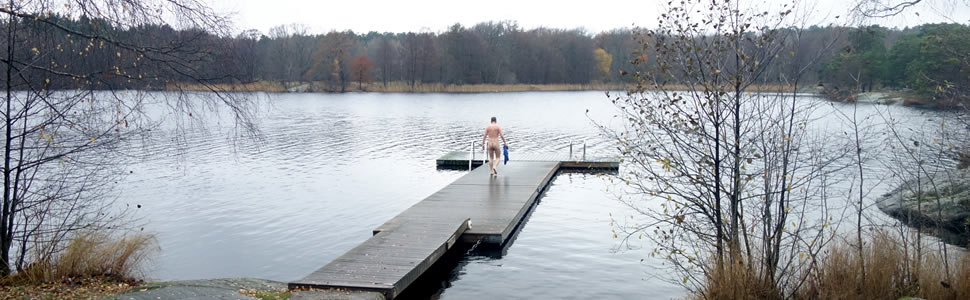
Hellasgarden. Located just 15 minutes from Slussen in the Nacka nature reserve, Hellasgården boasts a pristine lake, endless expanses of forest, an inexpensive sauna, and extensive walking, running, cycling and skiing tracks.

Below the hill there is a popular swimming beach. Close to the top one can find the remains of a ruin of a 5th- or 6th-century fortress.

According to local folklore, the hill got its name (Sten’s head) from a giant living in the cave Giddastuan.

At the north of the hill you will find the arboretum of Hällevik.

250714_Hellasgarden_Stockholm_Sweden
Ribersborg open-air bath
 (Ribersborgs kallbadhus in Swedish, also known as Ribban by the older and Kallis by the younger generation) is an open-air public bath on the Ribersborg beach in MalmöSweden approximately one kilometre southwest of Turning Torso. The bathhouse is open for a skinny dip all around the year and has separate areas for men and women and each area is equipped with two saunas. There is also one mixed sauna (fkk-sauna) between the ladies and gentlemen’s area. There are a cafe and a restaurant.

The bath was inaugurated in June 1898 with initiative by C.A. Richter, who bought the old bathhouse at Nyhamn port, which was being sold because of the port’s expansion. Four years later a storm damaged the new bath during Christmas and it was rebuilt. During the refurbishment a diving tower was added to the men’s department, with a view of the strait and the women’s department. During the 1930s it was modernised with nude bathing and confidentiality was added between the departments. In 1966, the City of Malmö purchased the baths. It was again damaged by a storm in 1988 and in 1995 it was declared a historic building. (Wikipedia)

250714_Ribersborg_Sauna-and-bath-house_Malmo

Skanör with Falsterbo. The beaches are several kilometres long and shallow with an array of caramel-coloured bathing huts, now permanently erected up on the dunes, in place of the original dismountable huts that the owners took home every autumn. Today most bathers visit Kämpinge in the east, even though the crowds diminish further west, via Ljunghusen all the way to Falsterbo and Skanör.

250714_Skanor-beach_skane
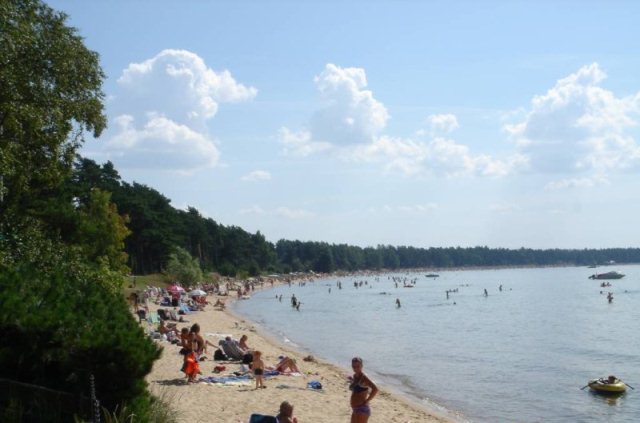
Mellbystrand has one of Sweden’s longest sand beaches – 12 km.
The sandy beach stretches between Stensån at Båstad up to the Lagan.  North of the River Lagan continues sandy beach up to Halmstad.

In addition to swimming, you can play ball and other ball games, playing in the sand, sunbathing, windsurfing, kite surfing.

250714_Mellby_beach_halland
Orbaden is the most famous beach in Hälsingland.

Photo on top

Pite Havsbad is one of the biggest tourism and conference centres in Northern Europe. 

Relaxation is a constant theme at Pite Havsbad. Whether you prefer the cooling sea breeze on the beach or a massage by candlelight, there is a stress-free environment around the corner. Lazy days on the beach are spiced up with activities such as the Amusement Park, golf, go-carts, beach volleyball and street basket. And if that’s not enough, the events city of Piteå offers the street festival Piteå Dansar och Ler (Piteå Dances and Smiles), Pite Summer Games (one of Sweden’s biggest football tournaments for youths), the Music Festival (music and culture) and much more.

250714_pitea_Sweden

Varamon Beach, Ostergotland is the “Pearl of Vättern” and is blessed with 80 more hours of sun per year than the rest of Sweden. You can play various sports – windsurfing, volleyball -, and there are plenty of cafes and restaurants. It’s a good option for families with children.

???????????????????????????????

Swedish Spruce May Be World’s Oldest Living Tree

The spindly trunk of a Norway spruce reaches above the lichen-covered rocks. Nothing about the tree is remarkable aside from it being the only thing to reach more than a few feet off the ground on a windswept plateau. Yet Rachel Sussman traveled the roughly 3,500 miles from her Brooklyn studio to western Sweden to photograph it.

240714_Rachel_Sussman_Book

Its age is what drew Sussman to it. At 9,550 years old, this Norway spruce is the single oldest known tree on the planet. But it’s not just the age of the tree that matters, it’s what the image reveals.

“This 9,550-year-old tree is like a portrait of climate change,” she said.

The mass of branches near the ground grew the same way for roughly 9,500 years, but the new, spindly trunk in the center is only 50 or so years old, caused by warming at the top of this mountain plateau in Western Sweden.

Feature photo (on top): Rachel Sussman

240714_Rachel_Sussman_Photo_
The image Sussman took graces the cover of her new book, “The Oldest Living Things in the World,” in which you also can read about the world’s oldest living tree, which hit bookstores today on Earth Day. The project has taken her across the globe over the past 10 years in an effort to capture images of the oldest species in the natural world. Her work shows both how they have developed and persevered over thousands of years while shedding light on how present human activities are changing those rhythms and endangering their very existence.

Sussman defined “old” as 2,000 years. The Declaration of Independence, the Mona Lisa, and the Magna Carta are all in their infancy compared to some of Sussman’s subjects. Many of them have been around for much longer, including a yucca plant in the Mojave desert in California that’s 12,000 years old and a sea grass meadow near Ibiza, Spain, that has been around for an incredible 100,000 years.

Longevity is about the only trait they have in common. Sussman’s subjects are spread over all corners of the planet, from California to Greenland to the Antarctic to the Atacama Desert in Chile. They include giant baobab trees and diminutive lichens and mosses. The 30 subjects in her book took her across thousands of miles covered by plane, taxi, helicopter, foot, Zodiac boat, and scuba diving. What kept her going through long layovers, missed contacts, and arduous treks was a belief in the power of the project to inspire people to ponder the deep issues the images raise.

“There are only so many times you can talk about facts and figures,” she said in an interview at her Greenpoint studio. “This project is about climate change, art, science, and philosophy. It’s about allowing people to connect with things. And part of it is also just about being wowed.”

There’s certainly something wow-worthy about a 9,550-year-old spruce growing on a chilly plateau in Sweden. But the deeper climate change message can be seen in its trunk, which only shot up in the past 50 years. For the millennia prior to that, its branches grew slowly outward and crept close to the ground, an adaptation to the cold harsh winds that sweep across the mountain.

Biologists at Umea University in Umea, Sweden, who have studied this tree, which they nicknamed Old Tjikko after one of their dogs, believe that warming temperatures are one of the main reasons for the sudden upward growth. In this light, Sussman’s photo captures what climate change looks like in the early 21st century. The tree’s future growth is still uncertain, though, as researchers expect regional differences in increased warming and precipitation changes will have different effects on Norway spruce across Scandinavia.

Bristlecone pines are also featured in Sussman’s book and like the spruce, they have an obvious climate change connection.

The pines grow in pockets in high mountains of the western U.S. and the oldest ones are around 5,000 years old. Bristlecones grow very slowly and take on a gnarled and knotty appearance that seemingly befits their age. Even their needles can last up to 40 years.

Like many of Sussman’s subjects, theirs is a story of survival by taking the slow road. Scientists have been using tree ring samples taken from these trees for years to gain a better understanding of past climates. The samples reveal that in the past 50 years, bristlecones have been growing about 30 percent faster than at any other time in the past 3,700 years. According to a 2009 study of the tree rings, the growth is “unmatched in millennia and is suggestive of dramatic environmental changes, most likely linked to increases in temperature.” It’s possible that the increased rate of growth could have unintended consequences and could weaken the tree’s natural defenses that aid in its longevity.

Warmer temperatures are also disrupting other parts of the pines’ ecosystem. The most notable impact is the spread of mountain bark beetles into the high elevation zone the pines inhabit. The bitter cold acted as a barrier that protected the pines from beetles, but as temperatures have warmed, bark beetles have been spreading to the pines’ habitat.

For some of Sussman’s subjects, local human actions can be a more present danger. A 3,500-year-old cypress Sussman had photographed for the project met a sudden end in January 2012 when a group of people inadvertently set it on fire. Habitat loss due to deforestation, local air and water pollution, and the introduction of invasive species can all snuff out the long strands of time these species represent.

The reality is climate change is likely to affect many of the species in Sussman’s book, but it’s not always clear exactly how. A patch of 5,500-year-old moss was discovered in Antarctica in 1987 and was so off the beaten path that nobody had likely visited it since. Its location is just around the corner from the landing spot of a more famous Elephant Island visitor, Ernerst Shackleton who was marooned there in 1915.

Yet Sussman wanted to find the moss and photograph it for her collection. Located somewhere on Elephant Island, Sussman said her odds of landing on the island and finding it were in the “single digits” in a New York Times blog post. Yet in February 2012, she found herself dropping from the decks of the sleek National Geographic Explorer into a Zodiac then skimming white knuckle over the frigid Southern Ocean waters toward the island. She became the first person to visit the moss in a quarter century yet could only spend 25 minutes photographing it before returning to ship. It’s unlikely anyone will visit the moss again in the near future so understanding the impacts of climate change on it are likely to remain vague at best.

What we can say is that current greenhouse gas emissions have the planet on a trajectory to warm by as much as 9°F over the next century. The last time the Earth saw such rapid warming was around 55 million years ago, long before Sussman’s subjects laid down their roots. This century is likely to represent a break with the dozens of centuries of adaptations they’ve accumulated unless greenhouse gas emissions are slowed.

In that light, it might be easy to view Sussman’s work as an elegy, but that’s not her goal.

“It lets people see these as global symbols, as symbolic of the planet we live on,” she said. “(This is an) act of environmental conscience, but it’s not prescriptive.”

The prescriptive part is up to viewers and how they interpret and react to these symbols.

Photograph of Sara Sussman: Laura Holder

Article syndicated from Climate Central

Journey to the Top of the World

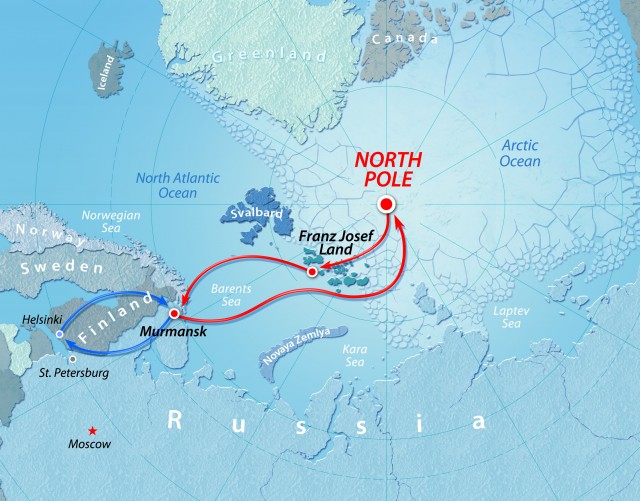
Just a century ago, no man had ever stood at latitude 90 degrees north. Today the North Pole, a spot that fascinated generations of explorers, is a tourist destination, albeit a rarefied one, and officially part of Norway.

230714_Map-North-Pole-Cruise-Daily-Scandinavian
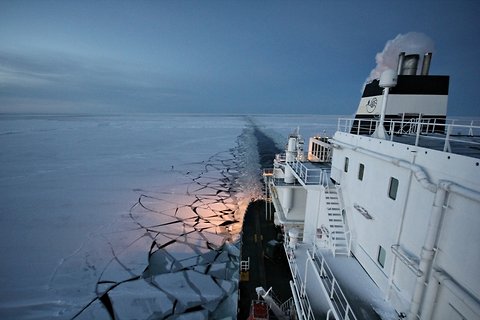
Sailing from the mountainous, heavily glaciated Norwegian island of Spitsbergen or from Murmansk, Russia’s northernmost port, special nuclear-powered icebreaker ships negotiate the Arctic. Basin’s ever-changing panorama of wind-polished ice, navigating at speeds of up to 20 knots.

Aboard ship, a series of lectures and presentations by on-board specialists punctuate days when the sun never sets on the top of the world, and passengers stay on the alert for sightings of polar bears, seals, walruses, and Arctic birds.

230714_Ice_Bear_Daily_Scandinavian
Inflatable expedition boats and helicopters are used for the reconnaissance essential to icebreaker navigation, and also give passengers the chance to experience the area up close. When the ship reaches 90 degrees north it finds a suitable parking space, lowers the gangway (ice conditions permitting), and allows passengers to descend for a walkabout, a barbecue, and, for the truly hardy, a quick plunge into the Arctic Sea.

230714_Arctic_Journeys_Daily_Scandinavian
Champagne flows, dancing and celebrating begin, a crew member rides his bike across an ice floe, another begins a game of Arctic golf (using Day-Glo golf balls), and everyone remembers the great names who came to this place through so much adversity.

230714_Icebreaker_Daily_Scandinavian
The Pole at last!
wrote Robert E. Peary on April 6, 1909. “The prize of three centuries, my dream and ambition for 23 years. Mine at last.”

Explore the North pole with:
Cruise Norway
Fjellborg Arctic Journeys
North Winds
Polar Cruises
Polar Explorers
Polar Expeditions
Quark Expeditions
Sphere

Forbes Billionaire’s Off-piste Hotel Launch

International hotel tycoon Petter Stordalen teamed up with Olympic alpine medalists Lasse Kjus andOle Kristian Furuseth last spring to make the opening video for his new flagship hotel, « Clarion Hotel The Edge», in Tromsø, Norway.

Forbes Billionaire's Off-piste Hotel Launch
“From his previous hotel openings I knew he was quite the daredevil, but I just never anticipated that he would actually participate himself. I mean, this is some serious off-piste skiing, and the other guys are our Olympic alpine heroes,” says director Sindre Kinnerød of Flash Studio, who shot the video of Stordalen’s breathtaking stunt.

The 75 million USD off-piste hotel, located in the waterfront of the midnight sun capital of the world, Tromsø, was opened in the regular style of the hotel mogul, with world-renowned electronica duo Røyksopp DJing.

“It is really fantastic. This is probably the biggest party in Tromsø, and the North of Norway in more than 10 years,” said Road Dons, chairman of the board at Pellerin, one of the investors in the unique 287-room hotel, which also boasts a restaurant by Michelle Obama’s favorite chef, Marcus Samuelsson.

Watch the video here.

If there was ever a rock star in the global hotel industry, it would be Petter Stordalen – owner of Scandinavia’s largest hotel chain, Nordic Choice Hotels. Named “the flashiest Scandinavian on the planet” by Forbes Magazine, the 51-year-old billionaire has completed an Iron Man race, chained himself to a bridge to protest against a UK nuclear treatment plant, and did a double arabian flip when invited on stage at a Prince concert.

Forbes Billionaire's Off-piste Hotel LaunchBut even for him, this latest promotional activity was pushing the limit.

“We were seven people ascending the top of the breathtaking Lyngen Alps by foot with our skis on our backs. Our two guides set off first, then me, then Lasse and Ole Kristian. It was a humbling experience, off-piste skiing in one of the world’s most beautiful areas with two of the world’s best skiers. We went from 1800 meters and all the way down to sea-level – it was a rare treat for a ski aficionado like myself,” says Stordalen.

The whole idea of the video was to show Stordalen and his Olympic friends move «on the edge» as the promotional video for his new hotel « Clarion Hotel The Edge » in Tromsø – an hour’s drive away.

“This part of Norway is all about the nature and the midnight sun. Everyone who has ever been to the North ofNorway will want to return, especially now that we have created a hotel to match the experiences this area delivers,” says Stordalen.

The Forbes billionaire is known for spectacular hotel openings (and for driving the world’s first biofueled Ferrari): In 2012 Stordalen opened his 200 million dollar Clarion Hotel Post in Gothenburg, Sweden, descending from the ceiling inside a giant disco ball rigged out with drums, which he was playing. Three months later he opened Clarion Hotel & Congress in Trondheim, Norway, driving through the audience on his 2200 cubic custom built motorbike, before parking it onstage and giving his speech. He topped off the year by Australian abseiling – head first – down the 57 meter facade of Clarion Hotel Arlanda Airport in Stockholm.

All photos: Nordic Choice Hotels/Flash Studio

SOURCE Flash Studio AS

Swedish company wants Öresund bike path

With an ever-growing population in the Öresund region, a Swedish construction company wants to improve cross-country commuting with a speedy new metro line and “super bike tunnel” to Copenhagen.

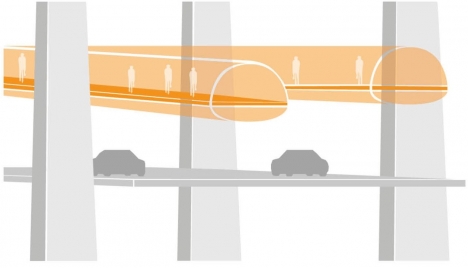
210714_Oresund_Super_Bike_Tunnel

It’s currently forbidden to cycle across the Öresund bridge, a part-bridge, part-tunnel connection between Malmö and Copenhagen, which was made famous by the hit television show The Bridge.

But if new proposals by Sweden-based construction company Skanska and Swedish consultancy firm Sweco come into effect, the dream for commuting cyclists could become a reality.

The report proposed six new connections across the Öresund strait, including tunnels between Helsingborg and Helsingör that would shave forty minutes off trips from Helsingborg to the Danish capital, a metro between Malmö and Copenhagen, and a high speed connection from Malmö to the Copenhagen airport.

The Öresund Bike Path, referred to as a “super cycle path” (supercykelväg), would run in separate tunnel above the cars on the Öresund Bridge.

A report from the two companies explained that growth is expected to skyrocket in the Öresund area, meaning an increase of an estimated one million people by the year 2070.

To keep the region internationally competitive, the report suggested building 500,000 new homes as well.

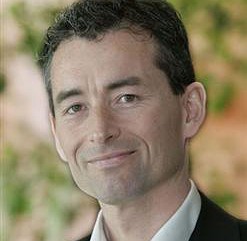
210714_pierre-olofsson-skanska
“The goal of our our work is to start discussions between the business sector and both the public and non-profit sectors about how we can realize the potential of the region,” Pierre Olofsson, CEO of Skanska Sweden, said in a statement.