Paul Robeson – In Memoriam

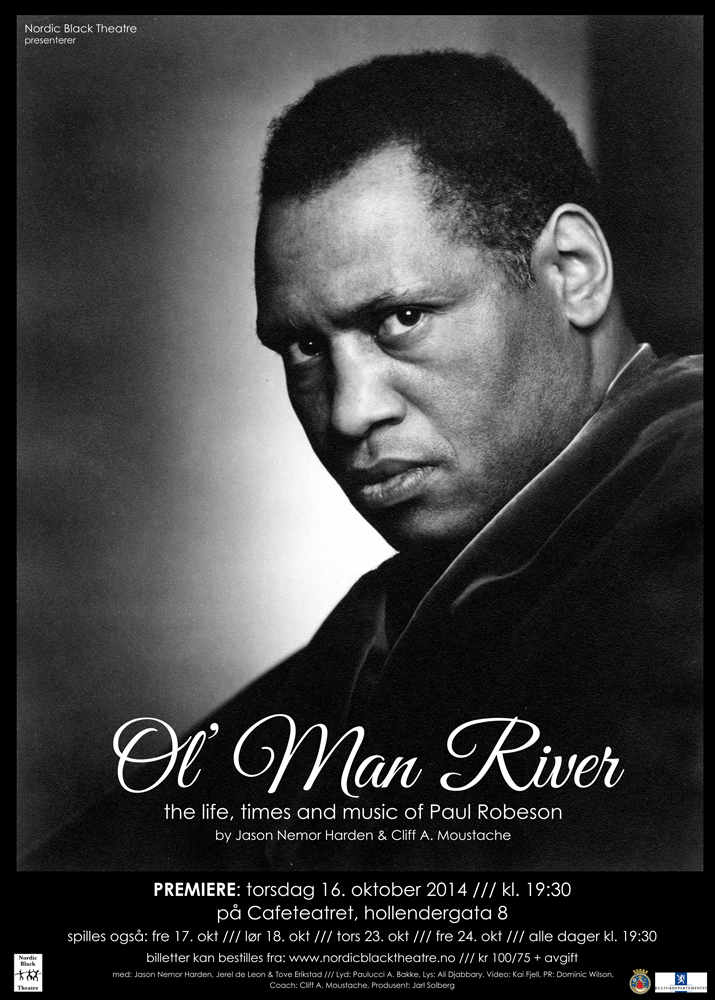
Experience the life, times and music of “Ol’ Man River” himself, Paul Robeson, performed at Cafeteatret, Oslo, premiering today. The play is written by Jason Nemor Harden and Cliff A. Moustache.

161014_Paul_Robeson_Black_Theatre
“No one told us about Paul Robeson when I was growing up in Texas in the 80’s!” says Jason Nemore Harden who is starring in the play “Ol Man River”. “Robeson has been a great inspiration to people all over the world, but we did not hear anything about him.” He is adding.

“Yes, it makes me sad in a way, or frustrated, but it also provides inspiration and motivation to work with the notion that more people may know about Robeson’s life and work”

Jason Nemor Harden in "Motown Revisited" at Norwegian Opera. Photo: Monica Santos Herberg
Jason Nemor Harden in “Motown Revisited” at Norwegian Opera. Photo: Monica Santos Herberg

Actor, singer and musician, Jason Nemore Harden was first acquainted with Paul Robeson when he worked at Nordic Black Theatre’s “Tribute to the Heroes” which was performed at The Norwegian Opera and Ballet in February 2014.

“After that I started reading about Robeson and soon realized that this was a show I wanted to do to convey his story and music.”

Paul Robeson is more or less forgotten today, but in his time he was one of the world’s greatest artists. The Afro-American entertainer and civil rights activist managed to lift his music from small local scenes in the United States to the most renowned stages across the world. He used his position to fight against the violent racism in the United States.

Harden was so inspired that he along with film maker Cliff A. Moustache prepared the script for this performance. This has become an intimate and moving story of Paul Robeson’s life and music, and the challenges he battled through a lifetime.

Robeson was educated lawyer before becoming a football player and artist. This he managed despite heavy segregation in the United States. Discipline and hard work took him to the top in the United States and on the world before his career was brutally stopped by McCarthyism and the CIA witch hunt for communists. He refused to change his opinions, which made him even more popular in the world.

Robeson was an inspiration for the next generation of freedom fighters such as Martin Luther King and Nelson Mandela.

The show is about Paul Robeson’s life and his music in a difficult time in America. The main role is played by the Afro-American musician Jason Nemore Harden, accompanied by Jerelene de Leon on piano and Tove Erikstad on Cello.

161114-alston-drawing-of-paul-robesonEditorial Drawing of Paul Robeson by artist, Charles H. Alston 1943

“This amazing man, this great intellect, this magnificent genius and his everlasting love for humanity is a devastating challenge to a society built on hypocrisy, greed and profit-seeking at the expense of common humanity.” (New York Times)

Don’t miss this opportunity to experience the show, performed at Cafeteatret, Hollendergate 8, Oslo at 7:30 pm on the following dates in October: 16, 17, 18, 23 and 24.

Cool Off In Scandinavia

Why not escape to a cooler climate? Here’s a sampling of tours that offer a choice of chilling out in the cosmopolitan cities of Oslo, Copenhagen and Stockholm to the majestic fjords of Norway. A journey to Scandinavia promises spectacular scenery, cultural riches and cool breezes.

This is just a short sample cruise possible through the travel agency Authentic Scandinavia.

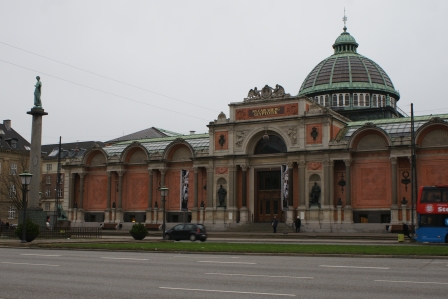
Glyptotek, Copenhagen, Photo: Tor Kjolberg

Copenhagen, Cruise & Oslo – 4 days
Explore two of the Scandinavian capitals, Oslo and Copenhagen. Enjoy an overnight cruise from Oslo to Copenhagen, including the beautiful Oslo Fjord. This short break is the ideal extension for tours starting or ending in Oslo.

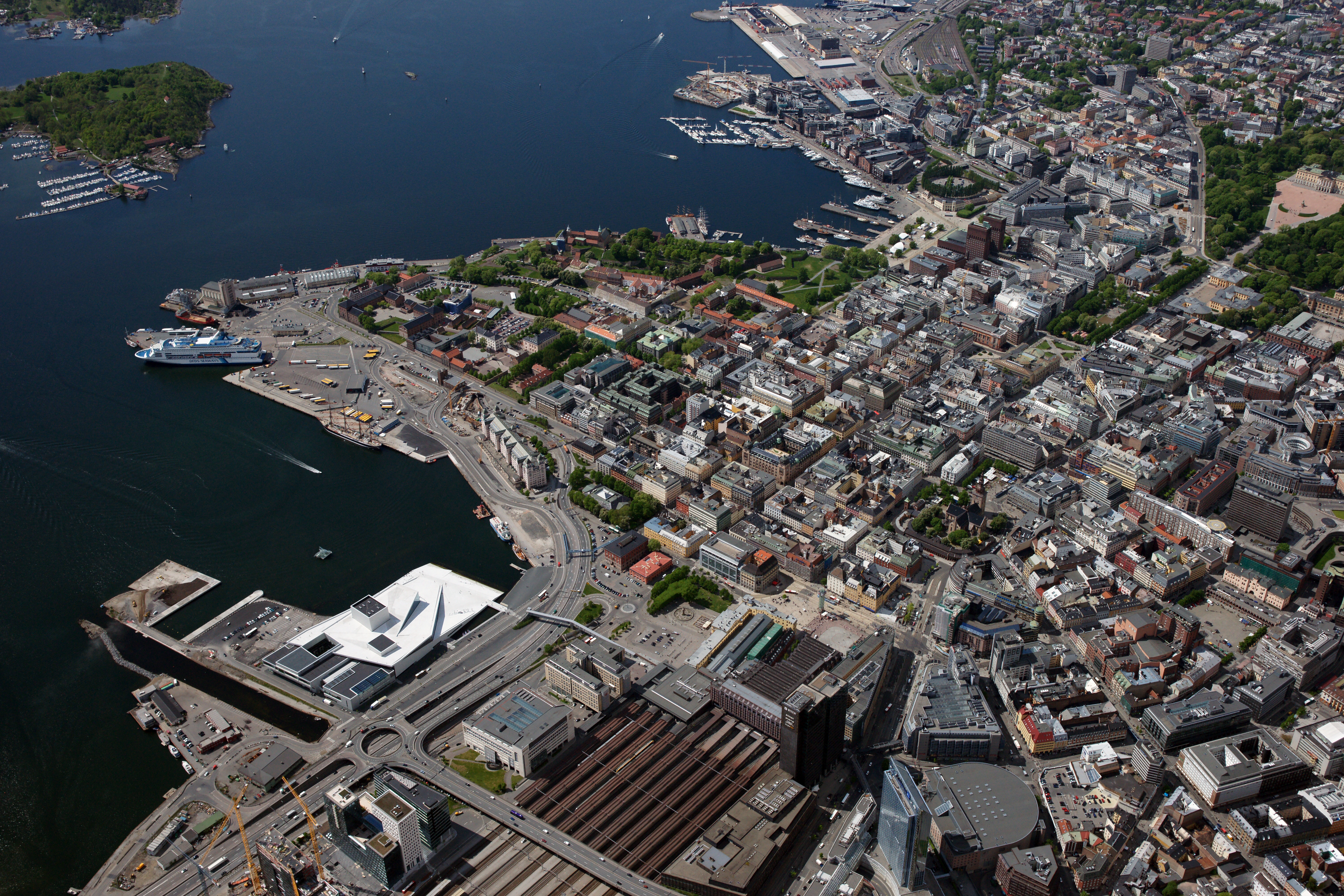
Oslo ftom above. Photo: Lasse Tur

Day 01: Oslo, the Capital of Norway

Arrival in Oslo. The Norwegian capital is beautifully situated at the head of the Oslo Fjord and surrounded by forested ridges. Arable fields, vast forests and the untouched nature areas. The city’s surroundings provide recreational opportunities that are frequently taken advantage of by the city’s inhabitants, as well as increasingly by visitors.
Oslo offers many well know sights such as the Vigeland Sculpture Park, the Viking Ship Museum, the Munch Museum and Oslo’s new opera house. We recommend one of the many sightseeing tours in Oslo . Accommodation in Oslo.

151014-DFDS_Pearl_Seaways
Day 02: Overnight cruise from Oslo to Copenhagen

Breakfast at the hotel. This day is at your own leisure before departure from Oslo in the late afternoon with a ferry from DFDS Seaways. Accommodation onboard.

151014_Nyhaven_Copenhagen_Denmark
Day 03: Copenhagen, the capital of Denmark

Breakfast onboard before arriving in Copenhagen, the capital of Denmark, at 09:45 hrs. In this charming city one thousand years of history awaits you in the medieval streets; the same streets walked on by every generation of the world’s oldest royal family, the same streets and canals which have inspired artists for centuries and been home and workplace to meticulous craftsmen and famous designers. The city offers many attractions such Tivoli, Nyhavn wharf, the Little Mermaid, the Gefion Fountain, the Royal Palace Amalienborg and much more.
Accommodation in Copenhagen.

Day 04: Departure from Copenhagen

Breakfast at the hotel. Departure from Copenhagen according to your own itinerary.

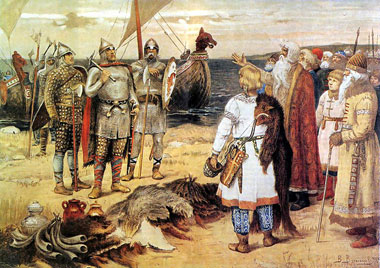
Vikings’ Trade with Byzantium

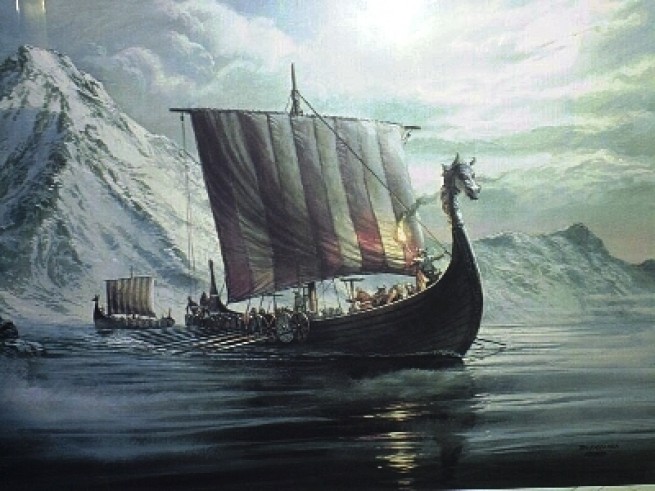
Muslims conquests in Europe disrupted traditional trade, encouraging the Swedes to open up alternative routes through Russia.

Apparently the Slavs then begged them to take charge of their territory. “Our land is large and fruitful but it lacks order,” the message allegedly read. “Come over and rule us.”

131014_varangians_rus
By 900, Swedish influence radiated throughout Eastern Europe from their strongholds Novgorod and Kiev. The Swedes were soon assimilated under the weight of Slavic numbers, but they left an indelible mark in the name by which they were locally known, Rus.

Marauding expedition of Northmen AKA Vikings
Polygamy and primogeniture also shaped the Viking Age. Only a tiny proportion of Scandinavia was actually habitable, and farmland could only be subdivided so many times. The whole of patrimony generally went to the eldest son, or rather the eldest surviving son, so Swedish kings with 40 women in their harem, or Norwegian earls with a dozen sons by various wives and concubines, were sure recipes for orgiastic fratricide.

131014_Harald_Fairhair
Harald Fairhair’s ascendancy, c. 890, went a long way towards defining Norway, but as he stropped and disbanded numerous lesser dynasties, their scions were compelled to try their luck abroad.

131014_Varangians_besiege_the_Byzantine_city_of_Chersinesos_in_Crimaea
To begin with, Viking enterprise abroad was a matter of independent initiative, as epitomized by a certain Hasting. Born in Denmark, his first foray in 844 opened with a rebuff at La Coruña on Spain’s Atlantic coast, improved with the sacking of Lisbon, Cádiz and Seville, and ended with the loss of two ships crammed with gold, silver and prisoners to the Moors.

Related articles:
Viking ship design
1,000 years of Viking adventure, Denmark

DølaJazz – Highlights

This jazz festival in Lillehammer is a great place to discover talented Scandinavian musicians.

A small, laid back music festival, which for over 30 years has been attracting local jazz musicians and fans with its small, intimate format. The festival is also a platform for young Scandinavian artists to perform in front of a wider audience. There are concerts throughout the day, with several free events and various venues.

The stage is set for great jazz this year’s Super Natta (Super Night) in Dølajazz, when the legendary and world famous band Mezzforte enters the stage. In addition, the band Pixel including Ellen Andra Wang will perform.  Kulturhuset Banken Saturday 18 October!

Many terms are used to characterize the Icelandic band Mezzoforte; volcanic jazz rock. Nordic funk and even the term fusion. Mezzoforte blends elements of funk, jazz and rock with sounds taken from the saga island’s musical heritage. A recipe that has made them sought after by record buyers and festival organizers around the world.

Many may claim that a band which celebrated its 35th year anniversary in 2012, is outdated. Not Mezzoforte. Unlike other concepts where most of the original members are gone, while some try to squeeze the money through touring under the rights of an acquired name, Mezzoforte still consists of the core staff that started in 1977 and created the world hit “Garden Party” in 1983.

Their success was a complete surprise at the time. When the song Garden Party went round the world, the four boys from Iceland had just come of age. Since then, Mezzoforte has been considered Europe’s most important fusion band. The new ISLANDS album documents the band’s process of maturing musically and adds another gem to its discography.

“Anyone who has a chance to experience this band with its furious instrumentalists in a live show will know what artistic fire is in this formation”.(BHM productions)

Do you not get the chance to confirm this at this year Dølajazz, – you miss etgourmetisk fusion meal, with guaranteed long and rich aftertaste.

121014_Pixel-the-band
The young band Pixel offers a fusion of jazz and rock. The band includes Ellen Andre Wang (bass / vocals). Pixel receives wonderful reviews wherever they play! Dølajazz are very proud to have Ellen Andrea Wang back at Dølajazz. She is joined by Harald Lasser (Sax), Jonas Kilmork Vemøy (trumpet) and Jon Audun Baar (percussion).

Visitors to the Super Night may experience several concerts in the Festival Hall and Cafe Pin for only one ticket with a real festival feeling  and party atmosphere into the late night hours.

Read more about program and tickets here.

Related articles:
Scandinavia – the Best Jazz Region in the World?
Best festivals in Scandinavia
Umea- A Swedish Music Loving City

Burns Pub in Oslo, Norway, Celebrates its 25 Year Anniversary

In the same year and season as the fall of the Berlin Wall, a new watering hole opened in downtown Oslo, just a few steps from the National Theatre. On October 2, 1989 the doors opened for the first time to what since has become both a loved and hated drinking establishment for many Oslo inhabitants.

????????
The owner, Sephr Saeïd (61), tells us that he bought the lease and goodwill from two Arabians who owned a small clothing store at Stortingsgaten 28, planning to start a delicatessen there. He later realized that he had paid too high a price for the lease of the small shop in that the ventilation system was inadequate for an eatery due to the local Oslo building codes.

????????
With the good help of Mr. Loeken, the building manager at that time (the building is owned by the Independent Order Of Odd Fellows in Oslo),  he was advised to make the room into a bar,  Saeïd then drew a sketch with pencil on a piece of paper, showed it to the local authorities and got it approved on the spot.

Having paid a considerable amount of money for the enterprise, income was needed, so he inquired about selling hot dogs at the entrance.  This was approved by the building owner, thus Burns pub opened it’s business as a hot dog stand.

Manager Bjorn Magnussen serving guests hot dogs

At that time Saeïd lived in Drammen, a city about 40 kilometers from Oslo, traveling back and forth seven days a week. Working from three in the afternoon to five in the morning, he had almost no contact with his family for nearly seventeen months. There were lot of discos in that area of Oslo in those days, and hungry young people simply loved hot dogs.

Bjorn, Linda and Saeïd

Saeïd had some money left, and with his partner, Jens Rojan, engaged an interior design company from Holland to make a pub in the little shop.  For several months the establishment was run as a coffee bar with a hot dog stand, the name Burns being taken from the Scottish poet Robert Burns for no particular reason.

Happy Anniversary
Happy Anniversary

The two partners felt that something was missing – music. They bought 20 CD’s, mainly operatic and jazz recordings. The music was popular, especially among employees from the nearby National Theatre and Continental Hotel.  The 12 – 14 seats in the pub were steadily occupied, and after 10 months had paid their dues to the two Arabians –but still more hot dogs were being sold than beer.

????????
Adjacent to Burns was a small tourist shop and eventually the partners secured that lease too, rearranging the premises by moving the hot dog stand into that new section, but after complaints about the smell, the hot dog area came to an end.

In 2003 Bjoern Magnussen (58), who worked for the Hansa brewery, became a partner. Today Saeïd and Magnussen own 40 percent each and Siamak Saeïd, eldest son of Saeïd, owns 20 percent.

Two years later the neighbor store was closed down, and Burns was once more extended and turned into what it is today.  When the smoke prohibition laws were introduced in 2004 the partners rented the outdoor area from the Oslo municipality.

Typical guest at Burns

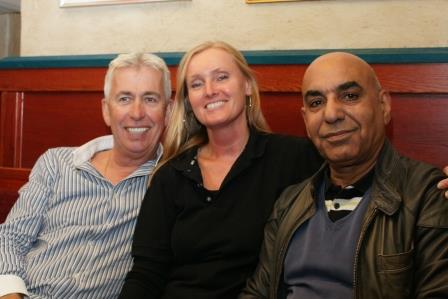
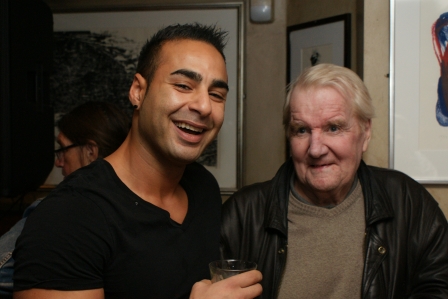
Today Burns is a pub that one either loves or hates. The visitors are mainly well seasoned people, shabby-glam, artists, authors, architects, journalists, diplomats, doctors, actors, intellectuals and a broad range representing the adult community in Oslo.

Guests having fun at Burns

As one guest, a distinguished lady, expressed it, “It is a wonderful place for the old boys, but terrible if you don’t belong to the Chesterfield type.  I have never been to there without receiving a marriage proposal from an old uncle coming from north of the Polar Circle.”

Happy gathering at Burns

Many couples have started their relationships at Burns. Even if the guests are almost the very same as 25 years ago, don’t forget, they were 25 years younger at that time.

Happy Anniversary!
Happy Anniversary!

Our distinguished lady continues, “Don’t misunderstand me, I love this place where you still meet the ‘ship o’ hoi’ generation, who come in for their lunch pint with yesterday’s paper under their arm and then stay until closing time.”

Didi serving guest
Didi serving guest

One of the reasons people are attracted to Burns is without doubt the friendly staff.  Both the men and women working there are almost like family members of  the guests – always helpful, smiling and with a good sense of humor.  Today’s stars are Linda (employed there for nearly 20 years), Elisabeth, Didi (from Romania) and the youngest son of Saeïd, Siavash.

Today,  October 2, 2014, is the 25th anniversary celebration day, and we are treated with what else – free hot dogs in wraps. The drink price list is the same as in 1989 – three pints for 100 Norwegian kroner (including tips),  or about five dollars each,  roughly  one third of 2014 prices.

Hanne Korsbrekke Askeland performing
Maria Therese Bersas performing
Bernhard Greter performing

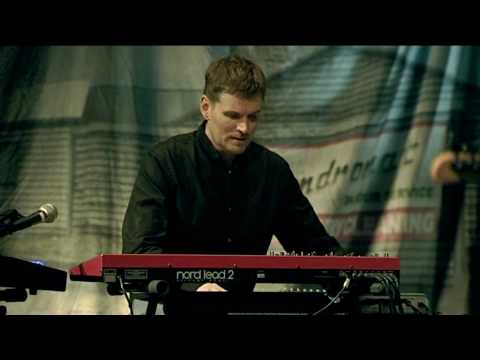
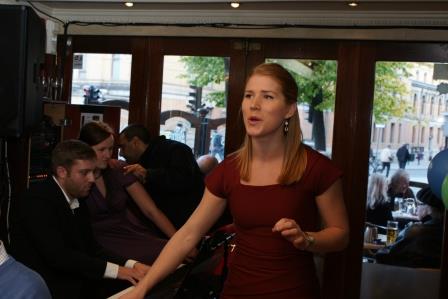
There is also live music, not surprisingly, opera to the people. The sopranos Maria Therese Bersas and Hanne Korsbrekke Askeland, along with Bernhard Greter on keyboard perform operetta and opera arias all through the night to ovations from the guests.

Siavash Saeïd with guest

When we asked the owners if they planned make changes to attract a younger clientele,  they answered that it would depend on the new  lease in 2017. The rent has increased considerably over the years, so they just have to wait and see.  Revenue has increased in the latter years, but the bottom line has not,  mainly due to higher rental costs and the impact of the Norwegian tax system on business.

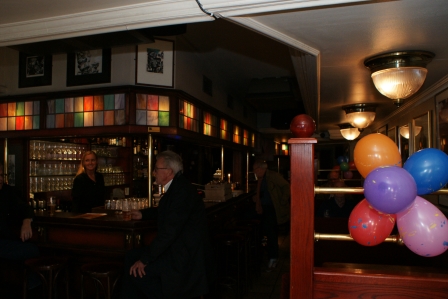
After hours at Burns pub in Oslo

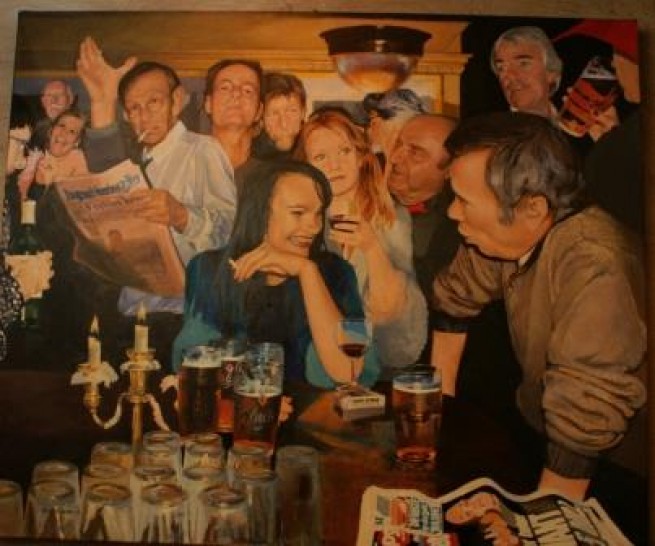
Feature image (on top) Guests at Burns, painted by Knut Husebo

Text and photos: Tor Kjolberg

The New York Times recommends Norway

A travel writers description of his voyage onboard Hurtigruten, along Norway’s impressive coastline.

The Hurtigruten website modestly describes its cruise up the Norwegian coast as “the world’s most beautiful voyage.” When I read this, I could not help but think of that old Monty Python skit in which a man writes the world’s funniest joke — a joke so funny that everyone who reads it instantly dies from laughter. I wondered if beauty, pressed toward hyperbole, could become similarly perilous. Would the decks of the ship be littered with tourists smitten by the sublime?

091014-Walk-on-Trollfjord
A view from the MS Trollfjord north of Rorvik, Norway. Credit Damon Winter/The New York Times

We were about to find out. I was standing on the top deck of the nine-deck MS Trollfjord with my wife, Katie, and 6-month-old son, Holt. On the quay far below us, my Norwegian relatives were maniacally waving at the boat, though not at where we were standing on the ferry. I had just spent the last day running around Trondheim — a lovable, wharf-laden university town perched on the lip of a fjord — trying to track down my grandfather’s old house, with mixed success. It seemed he had lived in several different houses, or maybe no house at all. I, like many Americans before me, had dragged my family to Norway for mysterious reasons. I was only technically one-quarter Norwegian, though yearned for much more. My heart swelled every time Norwegians mistakenly addressed me in their native tongue even when I would have to sheepishly reply in English. I both relished and hated my role as an impostor.

I also fancied myself a kind of amateur anthropologist. The previous night around 10 p.m., as the sun showed no real intention of setting, my cousin Coleman had asked if we wanted to go on an “afternoon” walk. Such is the casual relationship that people seemed to maintain with time at northern latitudes, where in winter the daylight shrinks to a couple of hours and in the summer the night never quite grows dark. Above the Arctic Circle, this binary existence becomes even more extreme, to the point where the entire year becomes a kind of single, interminable day, with six months of light and six months of night. I wanted to go as far north as I could and see for myself how people managed to survive such a dualistic relationship with the sun without going at least some kind of crazy.

My relatives had finally located us on the top deck. I tried to match the enthusiasm of their waves. The breeze had freshened against our faces; a hovering gull eyed us skeptically. I could feel that very particular tingle that one feels just before departing for uncertain territory. With a long blast from the ship’s horn, we pulled out into the fjord and headed north. I watched as the mint-colored steeple of Trondheim’s cathedral slipped from view, replaced by layered mountains of pine that swept down to the water’s edge, forming a narrow channel to the sea.

Hurtigruten literally means “the express route,” and while there is nothing “express” about it these days, back when it was founded in 1893, the ferry line was nothing short of a revelation, delivering mail and cargo and passengers to northern communities that were otherwise completely isolated from the rest of the world. By combining navigational prowess, humble practicality and stunning natural beauty, the Hurtigruten has become one of Norway’s treasured national symbols. My grandfather took my father on this same route 50 years ago.

Yet the Hurtigruten of 2014 bears little resemblance to the Hurtigruten of old. Over time, the original service mission of the coastal express became largely redundant as mail, cargo and passengers turned increasingly to the convenience of air transport, forcing the company to look toward tourism for its primary source of revenue. Its transition from a utilitarian coastal ferry to an all-out cruise line has caused more than a few growing pains.

Built in 2002, our ship, the 445-foot MS Trollfjord, was representative of this new Hurtigruten. As Holt and I excitedly explored the ship’s decks, what quickly became apparent was that we were witnessing a company in the midst of a mild identity crisis. Our hosts were trying to simultaneously indulge the desires of the increasingly discerning modern cruise passenger while also maintaining the understated modesty of Norwegian culture. Thus, the MS Trollfjord featured two small Jacuzzis on Deck 9, complete with multicolored party lights, but these closed promptly at 11 p.m. There was no swimming pool or water slide or mini-golf course. Deck 8 featured an abandoned dance floor that nonetheless piped out soft ’80s ballads 24 hours a day, as elderly couples sat nearby sipping Scotch and playing bridge. One night around 1 a.m., insomniac and alone, I couldn’t resist dancing solo to “Life Is a Highway,” as I stared out at a distant smattering of islands silhouetted like beached whales against a sky that had forgotten to turn dark.

Part of the issue here was the crowd. The passengers were 80 to 90 percent German retirees, a high percentage of whom sported fanny packs and matching Jack Wolfskin parkas. Needless to say, these people had not come to Norway to dance. Much of our fellow passengers’ focus was concentrated on the various off-boat excursions offered each day. This was a relatively recent addition to the Hurtigruten package, and clearly an attempt to placate the demands of the modern cruise tourist. On any given day you could go dog sledding, hang out with sea eagles or eat a meal with a man dressed as a Viking. There were also near constant P.A. announcements in Norwegian, German and English about the excursions. When I later met Esklid Arne Ognes, who broadcast these announcements, I felt a bit as if I were meeting the voice of God.

People act in peculiar ways when forced to live together in confined places. This is particularly true on sightseeing cruises like the Hurtigruten, where landscape is transformed into a kind of currency. By boarding a ship that declares itself “the world’s most beautiful voyage,” passengers maintain an expectation of transcendent topographic voyeurism and this was encouraged by the ship’s layout: almost all chairs faced outward. Such an arrangement did not inspire community or group engagement. People could get territorial about their sightlines. Seats in the very front of the panorama lounge on Decks 8 and 9 were always occupied, and if someone abandoned a post (gasp), a keen lingerer would quickly take up the position.

The view, admittedly, was fantastic. If you have never been to Norway, you must understand it is blessed with an overabundance of staggering landscapes. Glaciers tend to leave dramatic geology in their wake, and Norway is no exception: Soaring granite mountains drop straight down into the sea; waterfalls plunge 300 feet through scree fields and terraced alpine meadows; everywhere you look there are clusters of rocky islands and impossibly cute red farmhouses poised on the crook of some bluff. Think coast of Maine meets Yosemite meets Tolkien. After a day or two navigating these panoramas, one becomes so desensitized to the utter stunningness of it all that you begin to take just another spectacular sea-and-mountain vista for granted, even if this same vista in the United States would instantly become a national park.

Despite being only 150,000 square miles (about the size of Montana), the country boasts one of the most undulatory coastlines in the world, measuring an astonishing 64,000 miles long. (By comparison the entire coast of the United States is 95,471, according to the National Ocean Service.) Unsurprisingly, the Norwegian coastline is essential to the country’s identity — and not just because of the country’s primary industries of fishing and offshore drilling. A line of skerries — essentially small, uninhabited rocky reefs — creates a naturally protected coastal passage all the way to the North Cape and gives rise to the country’s name: Nor-way means “the way north” in Old Norse. Studying Norway’s ragged coast, with its hundreds of thousands of islands, is like studying the country’s metaphorical DNA: It is unique; it is unendingly complex; it is the fingerprint of a nation.

But what’s fascinating is that the view from the Hurtigruten’s panorama lounges is also very slow. As in: very, very slow. Despite once upon a time being billed as the “coastal express,” the Hurtigruten actually travels at a maximum speed of around 15 knots, which is about the speed of a brisk bicycle ride. So you really have time to linger on every skerry, every shoal, every little red farmhouse.

This protracted (and mediated) narrative pace mirrors a baffling trend taking place in Norwegian television called Slow TV. In 2009, the public television station NRK broadcast a six-hour, 22-minute uninterrupted train trip from Bergen to Oslo by mounting a camera on the front of the locomotive. NRK had modest expectations for viewership, but the show became an overnight sensation — approximately 20 percent of all Norwegians tuned in to the train ride at some point. One 76-year-old viewer, upon arrival of the train in Oslo, forgot that he was not actually a passenger himself, and when he got up to fetch his overhead luggage he crashed into his living room curtains.

NRK followed this up two years later with an even slower program, “Hurtigruten Minute for Minute,” in which the entire 134-hour coastal journey was broadcast live. After a relatively subdued departure from Bergen, the show began to steadily gather viewers, such that by the third or fourth day, entire towns were coming out to greet the camera. People dressed up in ridiculous Norwegian costumes; marching bands serenaded the boat’s arrival and departures; one opportunistic local politician announced her candidacy on the show by unfurling a giant banner across the quay. The last day of the trip the queen of Norway even waved to the ship from her royal yacht. The program became a bona fide national event —half the country watched the voyage at some point. I made a habit of asking almost every Norwegian I met why they thought Slow TV was so popular in Norway. Most of them gave me highly unsatisfactory answers — they said that Norwegians were simply “patriotic” or that they found the shows “relaxing.” I explained to them that many people were patriotic or wanted to relax, but this did not mean they would sit down and watch a train for six hours.

091014_Trollfjord

I began to develop a more robust hypothesis about what attracted Norwegians in particular to Slow TV after speaking with Sverre Andreas Rud, the MS Trollfjord’s first officer. He was showing me around the ship’s impressive bridge, demonstrating how the boat’s giant twin propellers could rotate 360 degrees and turn the boat on a dime, which is convenient for some of the smaller harbors.

We got to talking about how much Norway has changed in the last 20 years, a sentiment echoed by many of those I talked to. Officially founded in 1905 after finally ridding itself of Swedish rule, Norway is the second youngest of the Scandinavian nations. But then oil reserves were discovered off Norway’s coast in 1969, and everything changed. The youngest child had suddenly become rich.

One of the byproducts of this sudden influx of capital has been an intensive modernization in nearly all sectors of Norwegian life. Just 20 years ago, Oslo was a sleepy, provincial town known mainly for annually handing out the Nobel Peace Prize. Today, it is Europe’s fastest growing capital. Everywhere you look, skyscrapers are being hastily erected, including a controversial sequence of five metal and glass buildings disparagingly called the “bar code.” As income and consumerism have increased, the pace of life has also accelerated dramatically. In trying to adjust to such rapid change in a relatively short amount of time, many Norwegians seem to be suffering from a kind of cultural whiplash, leaving them apprehensive for the future and nostalgic for a past that was barely the past.

When I asked him about his thoughts on Slow TV’s popularity, Mr. Rud became reflective.

“Maybe it’s a way for people to get back to the way things were not so long ago,” he said. “To remember what it was like.”

“What was it like?” I asked.

“I’m not sure,” he said. “Slower.”

The more I thought about this, the more sense it made, as even Norwegians in their 30s would grow nostalgic about their youth using the same kind of hyperbole normally reserved for people in their 80s. It seemed particularly appropriate that this mode of nostalgia, while directed at a mythical pace of life that perhaps never quite existed, does so via an entirely modern medium. The live Twitter feedback that NRK receives over the course of a program (which the station claims affects its content and editing choices in real time) feels like new media recreating old forms of storytelling: Norwegians gather around the virtual campfire to hear wistful tales from the old frontier.

Of course, Norway, with only five million people, is still small enough (and homogeneous enough) to allow a story or program to become a national event. When I visited the country a couple of years ago, all anyone could talk about was Karl Ove Knausgaard’s 1,600-page autobiographical novel “My Struggle,” the first two volumes of which had just been published. Never in my life had I seen a culture so captured by a piece of literature. And “My Struggle” is perhaps the ultimate form of slow storytelling — it is a celebration of the exquisite beauty of the mundane, in which Mr. Knausgaard recounts his life’s minutiae. Just like Slow TV, Mr. Knausgaard manages to reinvent narrative stakes by pushing past the point when we feel the camera should cut away or the writer should put down his pen. He dares us to keep reading, to keep watching, and in doing so we become complicit in a mutual humanness — we are all this ordinary, and isn’t that extraordinary.

We disembarked and bid adieu to the MS Trollfjord at the village of Stamsund, on the southern coast of the Lofoten Archipelago, which extends out into the Norwegian Sea like a lazy finger. Lofoten is famous for its scenery, and in a country blessed with a bounty of scenery, this is really saying something. The island chain features a wall of soaring, granite peaks running down its spine. In the summer, the rock faces of these mountains are brushed with a soft palette of green scrub and lichen; from a distance, the islands appear to be floating above the surface of the sea.

Even though it lies 100 miles north of the Arctic Circle, Lofoten, like the rest of Norway, remains relatively temperate due primarily to the Gulf Stream flowing up from Florida. Every Norwegian should write an annual love letter to the Gulf Stream. The warm currents keep harbors from freezing in the winter, provide bountiful fishing grounds and moderate sea and land temperatures all year round. From Stamsund we drove out to Moskenes Island, at the very tip of the finger. The drive, across a series of 16 bridges, was jaw-dropping and also nose-wrinkling, especially when we passed by one of the many racks of cod being air-dried into stockfish, a popular dish in Italy, Spain and Nigeria. Cod fishing used to be Lofoten’s main industry but industrial boats, offshore processing and corporate consolidation have caused entire villages to disappear. We stayed in the village of Reine, at Reine Rorbuer, which lies on a beautiful little nugget of a peninsula bordered on three sides by towering Middle Earth mountains. The rorbuer, or fisherman’s cabin, is the classic accommodation in Lofoten, particularly because so many of them are unused these days. Our cabin, painted in immaculate Norwegian red, sat on stilts and overlooked a sleepy little harbor of puttering fishing boats.

Drained from taking in so much landscape, we settled down for a dinner at the cute Gammelbua restaurant and sampled whale steak, which tasted a bit like overcooked entrecôte, and cod fish tongues, a local delicacy, which tasted divine. We eventually climbed into bed around midnight, though such a choice seemed merely happenstance, since the light was still streaming through the windows.

The next day, we headed back to Stamsund to catch our new boat, the MS Kong Harald. If the Trollfjord was the Bellagio of Hurtigrutens, then the Kong Harald was the El Cortez in downtown Vegas. Built in 1993, it had a lovely element of ’80s kitsch — inappropriate brass columns, faux leather couches, heavy carpeting, a ceiling that was a couple of inches too low. It felt a bit as though Barry Manilow might show up at any minute and warble out a couple of numbers. And I mean this as a compliment — I actually preferred the Kong Harald’s décor to the clean, cool modernity of the Trollfjord. The Kong was a decisive step back toward Hurtigruten’s workmanlike roots.

The crowd had also changed. Gone were the parka-clad Germans, replaced by a boisterous French charter group. God now spoke in Norwegian, French and English. There was a palpable liveliness in the air. This French crowd was also remarkably aggressive. When the ship squeezed through the Trollfjord — a narrow fjord buttressed by soaring cliffs on either side — the value of landscape currency skyrocketed. Elbows were thrown; grown men could be seen sprinting from one side of the boat to the other brandishing their telephoto lenses; several children were knocked down in the mayhem.

On our last night on the Kong, as we rounded the very north of Norway and brushed against the rolls of the Barents Sea, we finally decided to spring for the seated dinner, since it was a lavish seafood buffet appropriately named “The End of the World.” We had not sat down to a proper dinner yet in the dining hall. Unlike most passengers, who had purchased full board, we had bought a basic ticket that included only our cabin and breakfast.

I would be remiss, at this point, not to mention the prices in Norway. Let us not mince words: The country is bone-chillingly expensive. The spiraling cost of living is another inadvertent offshoot of the oil boom, but it is also the single biggest impediment to the tourism industry and is why I cannot fully endorse a trip to Norway unless you, like me, are on some crazy ancestral/identity goose chase. I was told never to convert Norwegian kroner into dollars lest you give yourself a stroke, but after purchasing a $12 coffee and $30 personal pizza for the umpteenth time, my very moral fibers began to erode and I contemplated becoming a kleptomaniac just on principle alone. For most of the trip, we had subsisted on apples and nuts and open-face sandwiches, but our last night on the Kong seemed as good a time as any to splurge on all-you-can-eat king crab legs and halibut.

But we never got to taste those king crab legs. The dinner hostess, who was a bit shocked to see us — “Where have you been the whole trip?” — seated us at Table 1, the delinquent table, and we waited for the French, who had gathered in a kind of pulsating, impenetrable nebula around the buffet table, to finish loading up their plates. This did not happen. By the time diners had just completed amassing their first helping, people were already getting their second. Wave after wave of passengers came at the buffet, like some kind of culinary re-enactment of the Battle of Normandy. After 15 minutes of waiting without so much as a glimpse of the food through this mass of humanity, our appetites disappeared, and we left the dining room under the reproachful eye of the hostess for the safer ground of the cafeteria, where we ordered our usual prawn-and-tomato-on-bread standby.

Unlike the televised Hurtigruten, our boat sailed into Kirkenes sans royal greeting. Nestled in a sheltered bay next to the Russian border, Kirkenes is an oddly anticlimactic terminus for such a beautiful journey. The town, like much of the north, was destroyed during World War II and it feels like a place that was rebuilt without a plan. Walking through the streets, I could not help but be reminded of certain pop-up mining towns in the American West.

We stayed at the lovely, if minimalist, Sollia Guesthouse, a 15-minute drive out of town, 500 yards from the Russian border station. Sollia has an operating husky kennel; in the winters you can go on dog sled runs through a boreal forest of small spruce and pine. Curiously, the no-nonsense guesthouse also features a world-class restaurant, Gaphahuken, housed in an elegant wooden wave of a building on the shore of a lake. We ate silky arctic char and reindeer — which is possibly the best tasting meat in the world — and slowly sipped at glasses of white wine while staring at the foreboding specter of Mother Russia on the other side of the lake.

The owners, Jorunn and Eivind Nordhus, were delightful. Eivind was also the accomplished chef. A lanky, understated man, he looked a bit like an amateur magician in his chef’s whites. He has cooked for, among others, the Norwegian royal family and the president of Russia. I asked him if the different seasons of light and darkness affected his preparations. He shook his head, “I used to cook in a submarine when I was in the navy,” he said. “So I can cook in a box.” But after pausing a minute he added, “I like the winters. The winters are bigger than the summers.”

Indeed, in my anthropological quest to discover how Norwegians survived such extreme seasonal light conditions, I was met with a giant collective shrug. People did universally admit that they slept less in the summer and gained a kind of energy from the sun, but beyond that, they had not really thought about it.

“I lived in Florida for a year,” said Trine Moller, the husky trainer at Sollia. “It was much weirder to have no seasons at all.”

In the end, I realized my whole premise about the interrelationship between light and sanity was flawed. It was like my turning to someone and asking, “But how do you survive the night? It gets dark every day, right? That’scrazy.” The answer is: Repetition normalizes all. People adapt. It’s what we do.

Norwegians do not speak of the midnight sun. The midnight sun is an arbitrary concept invented for tourists’ hats and perpetuated by writers of uncertain talent. But if I’d learned anything on this trip to the north, it is that truth and significance have little to do with each other. Even if glimpsing the sun at midnight was completely arbitrary, I still wanted to see it. And I hadn’t gotten to all trip, as we were blessed with the quite common Norwegian weather of complete, 24-hour cloud cover, which is incredibly disorienting because the light remains flat and endless, and time begins to feel like a distant memory.

On our last night in Norway, the sky finally began to clear. So I scurried up a small mountain, just reaching its crest at 11:58 p.m. I had low expectations; I was ready to be disappointed by whatever I saw. The clock struck midnight and there it was: the sun, unimpeded, resplendent. The same sun as always. But what a sun. And what an earth. I imagined myself at the top of a swiftly spinning planet, tilting its head in salutation to that distant solar body. It was what I had seen every day but I had never seen it before today.

Text Reif Larsen Photos: Damon Winter/The New York Times

Feature image (on top): The village of Reine in the Lofoten Islands. Credit Damon Winter/The New York Times

Reif Larsen is the author of “The Selected Works of T. S. Spivet,” which has been made into a film. His second novel, “I Am Radar,” will be published in February.

In this way New York Times recommends Norway as a tourist country.

Read also: Hurtigruten (The Speed Route)

IF YOU GO

To get from Oslo to Bergen to start your boat trip, you can take the stunning Bergenspan train across the Hardanger plateau to Bergen (seven hours; from 249 kroner, or $40 at 6.15 kroner to the dollar, one way; nsb.no).

Hurtigruten’s vessels depart Bergen to Kirkenes daily (one way, seven days, from about $2,000 per person in summer, and lower in winter; prices include full board;hurtigruten.us). You can also book shorter port-to-port trips, which include only breakfast.

In Lofoten, Reine Rorbuer and Gammelbua restaurant (range of cabins, from 1,395 kroner; classicnorway.com/hotels/reine-rorbuer).

In Kirkenes, Sollia Guesthouse and Gaphuken restaurant (rooms from 1,690 kroner for four people; storskog.no/engelsk).

Star photographer visits Oslo Kameraklubb

You might have seen the work of Ashley Cameron and not have even known it. He has worked with an array of magazines and advertising agencies. London-based Cameron has over the past 15 years built a reputation as a studio with a flexible, problem solving approach.  

031014-Ashlery-Cameron-2
Cameras have always intrigued Cameron. “Photography is the seventh most popular job in the worId,” said Watermann when he visited Oslo Kameraklubb (Oslo Camera Club) in Oslo last week, but added it is very few who really succeed. “You must keep going and never give in,” he said. He started out with wedding photos and developing photos in an Apple computer shop, always scanning and experimenting. He loves taking pictures but perhaps even more so, manipulating with elements. He collects backgrounds into which he can place elements like people, cars, buildings or whatever. He showed photographs and asked members of the club which photos were manipulated, using his puzzle- and airbrush-technique, and which were not. With his almost mathematical precision and excellent retouch it was nearly impossible to distinguish them.

081014_Asheley_Cameron-and-model-in-Norway
When he works for advertising agencies he uses his problem solving approach. “My studio combines production and retouching to deliver an art director’s vision,” he said. “Clients come to us, confident that we can solve a broad range of visual problems. Our diverse output covers everything from still life to lavish locations all over the world.”

081014-Ashely_Cameron-with-model-in-Norway
He loves to photograph in Norway. “I am literally always pushing borders to keep my enthusiasm going,” he said. “I am photographing normal things and making them special.”

081014_Ashely-Cameron-and-modelmayhem
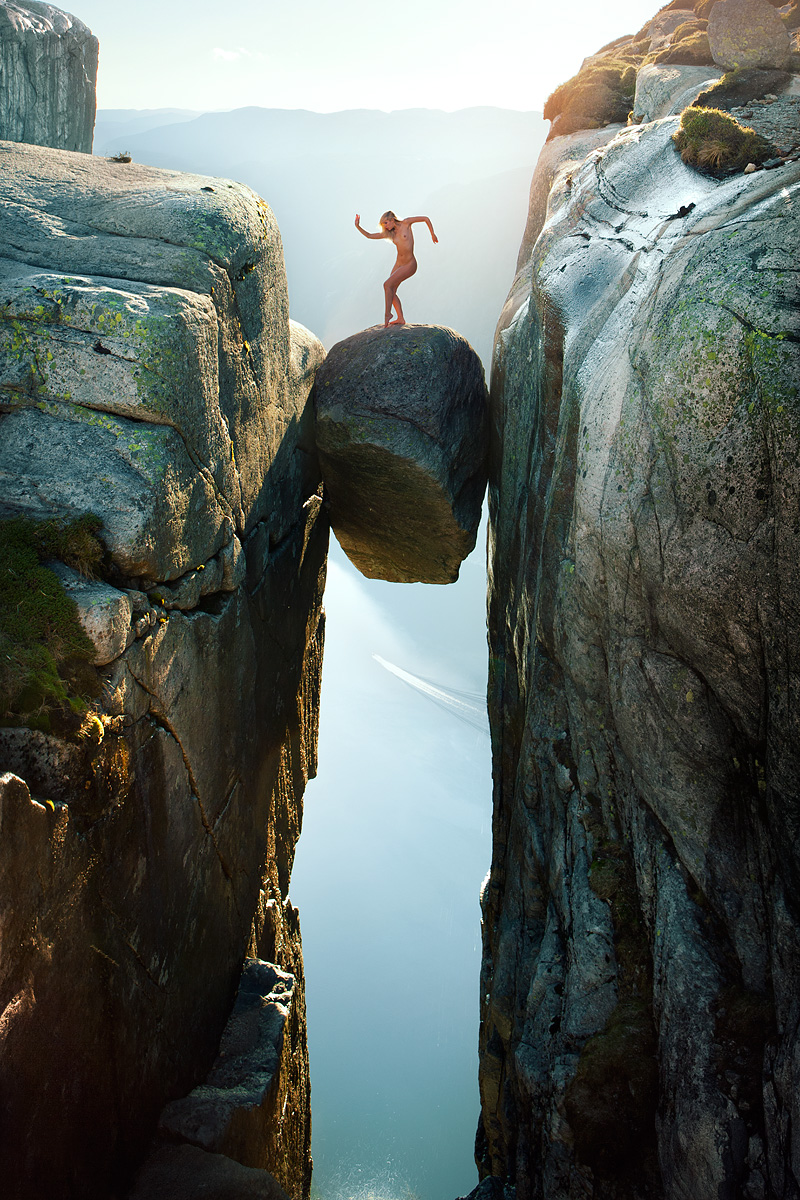
So he did when he brought a model to Trolltunga in Norway, a huge piece of rock that extends to a height of 0.8 kilometers off the ground. You need 8 to 10 hours to get there, but the view is spectacular. We are sure you never have seen “Language of the Trolls” photographed like this before.

Here is a proof that the background is genuine. Cameron photographing in Northern Norway.

081014-Cameron proving that this is a genuine backround
“I am not a fantastic photographer,” concluded a humble Cameron, “I just shoot in front of fantastic things. I am constantly looking for stuff.”

Text: Tor Kjolberg
All photos Ashley Cameron, except feature image on top, showing Cameron in front of one of his images from Geilo, Norway.

Oslo Kameraklubb
was established March 21, 1921 and is a meeting point for photo enthusiasts. All are welcome, novices as well as experienced amateurs.

Related articles:
Photographs and memory
A Night with Garbo

How Danish are you?

We’ve all heard about how happy the Danes are, and the many great things about living in Denmark such as a healthy approach to work/life balance. While you can’t generalise about all 5.5 million people in this small Scandinavian country, there is an undeniable Danish mentality which has put Denmark on the map. Take this short and fun quiz to see how you rank in comparison to the world’s happiest people!

071014-bikig-on-snow-denmark

Let’s find out – How Danish are you?

1. Do you enjoy a cold Carlsberg on a summer day?

071014-Enjoy-Carlsberg
2. Do you see the snow on the ground and still think it’s a good idea to bike to work?

3. Are you able to navigate the snowy streets on your bike with the greatest of ease?

If you answered yes to any of these questions, you might have the spirit of a true Dane — but how Danish are you really?

Take this short and fun quiz with our friends at PineTribe to see how you rank in comparison to the world’s happiest people!

Take the quiz

Festivals & Events In Stockholm

Choose from a smörgåsbord of festivals, from Nobel Day to Pride Week

Swedes hold hard to traditions and the calendar is dotted with beloved, quintessentially Swedish events such as Valborgsmässoafton (Walpurgis Night) and Luciadagen (Lucia Day); both great opportunities for visitors to dabble in Swedishness.

The calendar isn’t all age-old tradition, though; there are plenty of events with a more contemporary flavour – for example the Pride celebrations and Re: Orientfestivalen – and the festivals & events scene in Stockholm continues to diversify each year.

071014-Celebrating-National-Day-Sweden
Nationaldag (National Day)

When: 6 June
Sweden’s National Day became a bank holiday in 2005. It celebrates Gustav Vasa’s election as King of Sweden on 6 June 1523 and the adoption of a new constitution on the same date in 1809. If you want a glimpse of the royal family in their traditional blue-and-yellow folk costumes, visit the open-air Skansen museum, where, since 1916, the King of Sweden has presented flags on this day to representatives of various organizations and charities.

071014_Midsummer-eve-sweden
Midsommarafton (Midsummer Eve)

When: Friday closest to 24 June
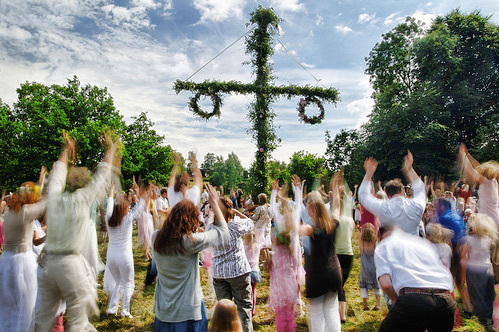
The longest day of the year has been revered in Scandinavia since the days of pagan ritual. Modern Swedes flock to summer cottages and Stockholmers set sail for quiet coves in the archipelago to commemorate this festive feast to fertility. Women and men in traditional dress dance around the flower-decorated maypole. After the dancing and family games a meal of marinated herring is washed down with spiced aquavit. It’s said that if an unmarried girl picks seven different flower types and puts them under her pillow on Midsummer Eve, she will dream of her future husband.

071014-Stockholm-Pride-Week-Photo-Andre-Landeros
Stockholm Pride Week

Where: Tantolunden, Södermalm
When: 1wk in July/Aug
Website: www.stockholmpride.org
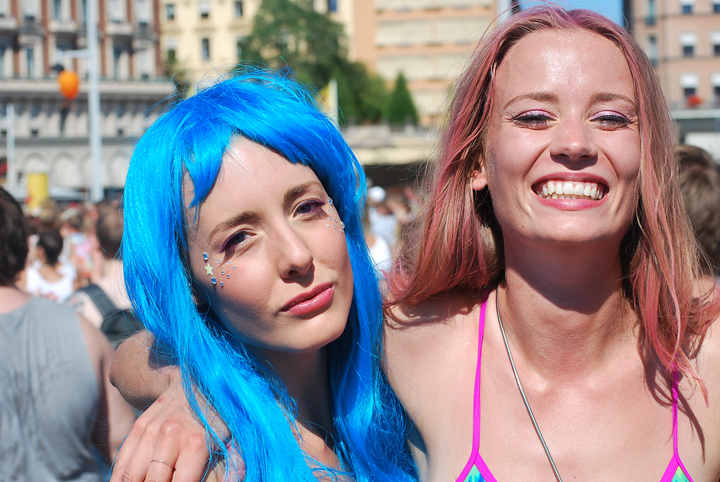
Since its birth in 1998, Stockholm Pride Week has grown into one of the city’s largest festivals, and the biggest gay Pride celebration in Scandinavia, with five days of partying, plus debates and entertainment. The heart of the action is the large open space of Tantolunden park on the island of Södermalm. The festival includes art exhibitions, debates, films, parties and, on the Saturday, the big parade.

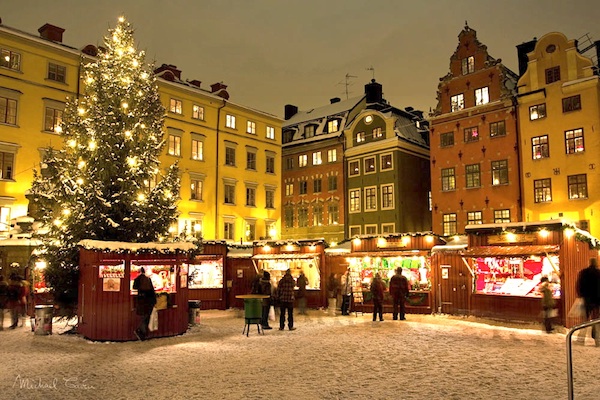
071014-christmas-market-stockholm
Christmas markets

Where: Skansen
When:
 early-end Dec
Skansen’s Christmas market – one of the biggest in Sweden and dating back to 1903 – is held at weekends throughout December until Christmas Eve (the only day Skansen is closed). Look out for Swedish craft products, traditional Christmas ornaments made of straw, hand-dipped candles, sweets (including polkagris, oversized red and white striped peppermint sticks) and Christmas fare such as smoked sausage, eel, salmon, pepparkakor (gingersnaps), glögg (mulled wine) and saffron buns.

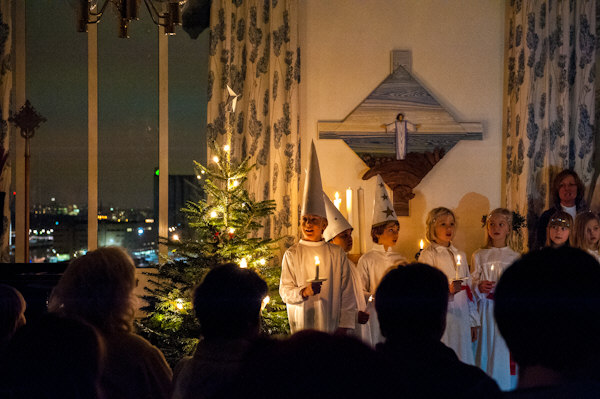
071014-Celebrating_Saint_Lucia-stockholm
Luciadagen (Lucia Day)

Where: around Stcokholm
When:
 13 Dec
Among the best-known of Sweden’s festivals, Lucia is celebrated in mid-December, in the heart of the winter darkness. The Lutheran Swedes adopted the Sicilian St Lucia because Lucia is connected with lux, the Latin for light. All over Sweden, a procession of singers, dressed in white, full-length chemises with red ribbons around their waists, are led by a woman dressed as Lucia, with a crown of lit candles on her head.

Spring

071014_EasterPåsk (Easter)

When: Mar/Apr
For many Swedes, Easter’s greatest significance is getting a four-day weekend, well timed to polish up the boat, shake the cobwebs off the summer cottage or tidy up the garden. Still, the painting and eating of eggs is a hallowed tradition at the Easter smörgåsbord, along with salmon and pickled herring prepared in endlessly creative ways. On Maundy Thursday or Easter Saturday, young girls dress up and paint themselves as Easter witches, and then go around begging sweets from generous neighbours, giving hand-drawn Easter cards in exchange. This custom recalls an old northern European superstition that witches flew off to dance with the devil on the Blåkulla (Blue Mountain) at this time of year.

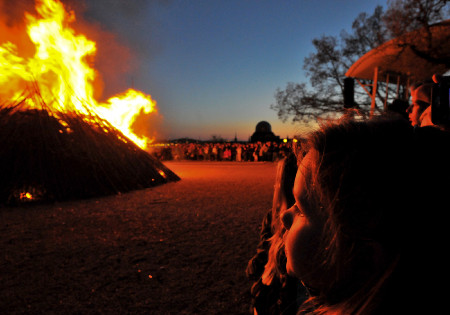
071014-Walpurgis-Night-Sweden
Valborgsmässoafton (Walpurgis Night)

Where: throughout the city
When: 30 Apr
Ancient pagan custom dictates that Swedes light bonfires on the last night of April to protect themselves against witches gathering to worship the devil. Today the celebration marks the end of winter and the coming of spring, and the bonfire is usually accompanied by choral singing. Walpurgis Night is celebrated all over Sweden, but for visitors to Stockholm the place to be is either the open-air Skansen museum, where fireworks add extra sparkle to the evening’s festivities, or Evert Taubes Terras on Riddarholmen.

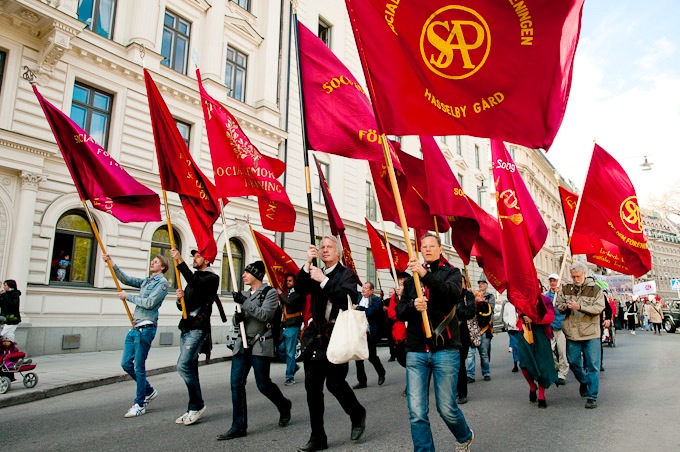
071014-MayDay-sweden
Första Maj (May Day)

Where: throughout the city
When: 1 May
If you happen to be in Stockholm on May Day, you’ll probably run into marchers waving banners in Sergels Torg and other large squares throughout the city. The first of May has been celebrated in various ways since 1890. In the early 19th century, May Day was a hugely popular festival in Djurgården park and featured a royal procession. By the late 19th century, though, it had turned into a rally of industrial workers. It’s a lot more low-key these days, but it’s still an important event for left-wing Stockholmers. Due to the cold weather, there’s no maypole dancing – that’s saved for Midsummer.

071014-tjeiloppet-sweden
Tjejtrampet

Where: location varies, check website for details
When: May
Tel & website: 450 2610/www.tjejtrampet.com
Given that Stockholm is such a bicycle-friendly city, it makes sense that it should host the world’s largest women-only bicycle race. Since the first race in 1990, some 80,000 women have cycled the 42km (26-mile) course. It is open to cyclists of all levels. Teenage girls and grandmothers pedal side-by-side in a show of female unity and a spirit of friendly competition.

Summer

071014_Park-theatre-stockholm
Parkteatern (Park Theatre)

Where: parks throughout the city
When: June-Aug daily
Tel & website: 506 20 284/www.stadsteatern.stockholm.se
There’s been free outdoor theatre in Stockholm’s parks since 1942, and many performances can be enjoyed by non-Swedish speakers, such as circus shows, music concerts, modern and classical dance. There are workshops on everything from playing steel drums to klezmer or Swedish folk dance.

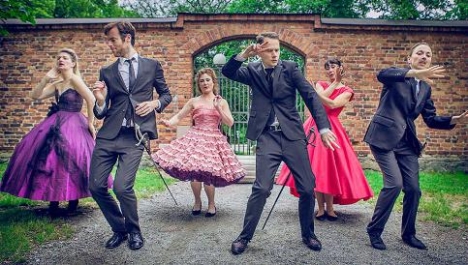
071014_Stockholm-early-music-festivalStockholm Early Music Festival

Where: Tyska Brinken 13, Gamla Stan
When: early June
Tel & website: 070 460 03 90/www.semf.se
This four-day event attracts an impressive roster of established and new artistic talent from Sweden and Europe performing a programme of music from the Middle Ages, Renaissance and baroque periods. The festival takes place in Gamla Stan.

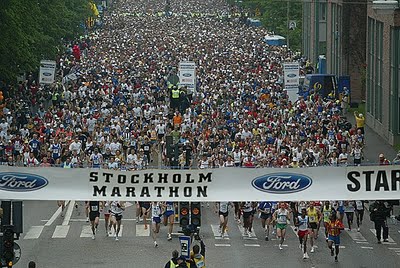
071014-stockholm-marathon
Stockholm Marathon

Where: start point: Lidingövägen, Hjorthagen
When: Sat in early June
Tel & website: 54 56 64 40/www.marathon.se
Few cities can match the beauty of this marathon route, which takes runners along waterside Strandvägen, Norrmälarstränd and Skeppsbron. Head for Lidingövägen to watch the runners take off, or if you want to be ready to glimpse the winner at the finish line, position yourself at Stockholms Stadion on Vallhallavägen.

071014-Archipelago-Boat-Day-Stockholm
Skärgårdsbåtens Dag (Archipelago Boat Day)

Where: Strömkajen, Norrmalm
When: 1st Wed in June
Tel: 662 89 02
If the idea of travelling on one of Stockholm’s old-fashioned steamboats appeals, there’s no better day to do it than Archipelago Boat Day. A parade of steam-driven vessels make their way from Strömkajen to Vaxholm in the early evening. For those who don’t catch a ride, good places to view the boats are Strömkajen, Skeppsholmen, Kastellholmen and Fåfängen. The boats arriving in Vaxholm are greeted by live music and an outdoor market; visitors have a couple of hours to explore Vaxholm before returning to Stockholm.

Nationaldag (National Day)

When: 6 June
Sweden’s National Day became a bank holiday in 2005. It celebrates Gustav Vasa’s election as King of Sweden on 6 June 1523 and the adoption of a new constitution on the same date in 1809. If you want a glimpse of the royal family in their traditional blue-and-yellow folk costumes, visit the open-airSkansen museum, where, since 1916, the King of Sweden has presented flags on this day to representatives of various organisations and charities.

Midsommarafton (Midsummer Eve)

When: Friday closest to 24 June
The longest day of the year has been revered in Scandinavia since the days of pagan ritual. Modern Swedes flock to summer cottages and Stockholmers set sail for quiet coves in the archipelago to commemorate this festive feast to fertility. Women and men in traditional dress dance around the flower-decorated maypole. After the dancing and family games a meal of marinated herring is washed down with spiced aquavit. It’s said that if an unmarried girl picks seven different flower types and puts them under her pillow on Midsummer Eve, she will dream of her future husband.

071014-accellerator-stockholm
Accelerator

Where: Stockholm University, Frescati
When: end of June
Website: www.acceleratorfestivalen.se
The end of the month brings another Frescati festival, the two-day event featuring bands from as far afield as the US and Brazil, plus several UK acts.

Re:Orientfestivalen

Where: Södra Teatern, Mosebacketorg 1-3, Södermalm
When: 2nd wk in Aug
Tel & website: 702 15 99/www.reorient.se
Stockholm takes on a multicultural flavour during this annual festival, bringing together artists from the Middle East, northern Africa, India and Europe to perform at Södra Teatern on Södermalm. During the four-day festival, there’s a bazaar selling crafts, clothes and food and, in the evenings, festival-goers can sit back and smoke a Turkish water pipe at the Oum bar or dance at the Re:Orient Club. A lecture series adds some intellectual weight to this laid-back festival.

Mayo Boules Festival 071014_stockholm-Mayo-Boules-Festival

Where: Rålambshovsparken, Kungsholmen
When: mid June
Tel & website: 714 04 20/www.mayo.se
Boules, or pétanques as aficionados call it, has a long history in Sweden, particularly with upper-class seniors, but a group of boules-crazy folk breathed new life into the sport by launching northern Europe’s largest boules festival in 1994. The name, La Mayonnaise (or Mayo for short), is a jibe at the world’s largest boules festival, La Marseillaise, in France. But there’s nothing stuffy about this crowd-pleasing festival, which organises friendly competitions for work colleagues, seniors and rookies, as well as more serious contests between the official international teams.

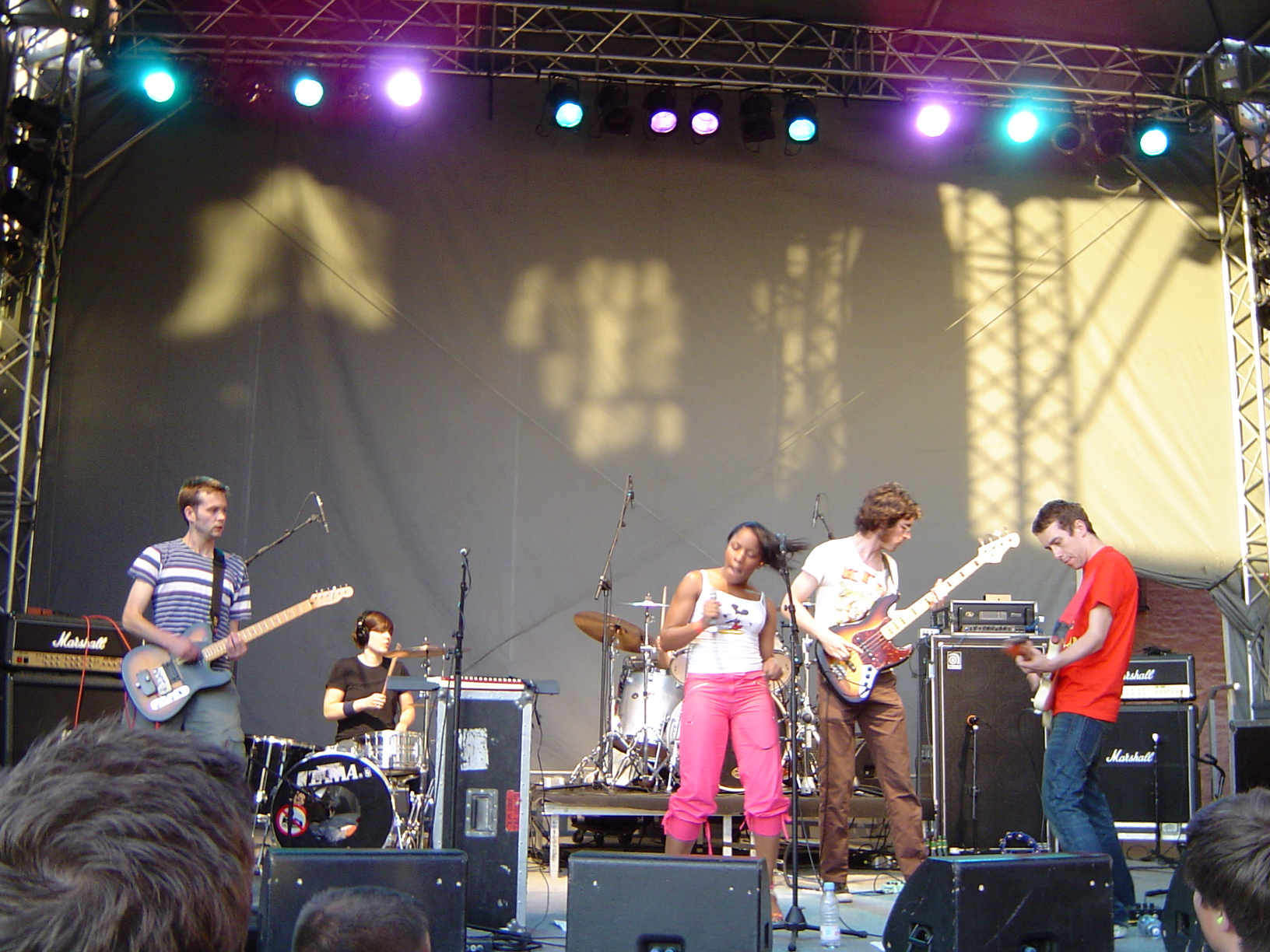
071014-Stockholm_Jazz_FestivalStockholm Jazz Festival

Where: Skeppsholmen
When: 1wk mid July
Tel & website: 55 61 45 64/55 69 24 40/tickets 07 71 70 70 70/www.stockholmjazz.com
The Stockholm Jazz Festival in July is one of Sweden’s premier live music festivals, pulling in some top-rate international artists (Steely Dan in 2007). The main site on the island of Skeppsholmen couldn’t be more picturesque; other venues include Konserthus, and stages in Kungsträdgården,Mosebacke Etablissement and Fasching. Some 30,000 spectators come to listen to more than 40 concerts featuring jazz, soul, blues and more.

Stockholm Pride Week

Where: Tantolunden, Södermalm
When: 1wk in July/Aug
Website: www.stockholmpride.org
Since its birth in 1998, Stockholm Pride Week has grown into one of the city’s largest festivals, and the biggest gay Pride celebration in Scandinavia, with five days of partying, plus debates and entertainment. The heart of the action is the large open space of Tantolunden park on the island of Södermalm. The festival includes art exhibitions, debates, films, parties and, on the Saturday, the big parade.

Uppsala Reggae Festival071014-Uppsala-Reggae-Festival

Where: Uppsala
When: 1st wk Aug
Website: www.uppsalareggaefestival.se
Reggae is a Swedish summer favourite, and this festival just north of Stockholm in the first week of August, is the largest reggae festival in Scandinavia. It has featured artists such as legendary Bob Marley sideman Bunny Wailer and dancehall star Beenie Man. It’s as close as you’ll get to the Notting Hill Carnival this near the Arctic Circle.

071014-Midnight-Race-Stockholm
Midnattsloppet (Midnight Race)

Where: start: Ringvägen
When:

mid Aug
Tel & website: 649 71 71/www.midnattsloppet.com
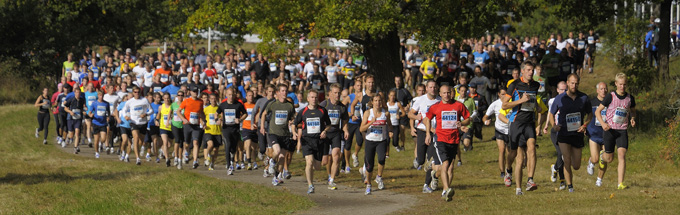
This popular night-time race, which has been going for over 23 years, could only be possible in the land of the midnight sun. More than 16,000 runners of all ages navigate a 10km (six-mile) course around Södermalm. But it’s much more than a race – and some 200,000 spectators get in on the act with loud cheering, asphalt-pounding enthusiasm, music and partying. To catch the starting gun, position yourself at Ringvägen, just south of the Zinkensdamm athletics field, at 10pm and then wait for the first runners to cross the finish line at Hornsgatan, not far from the starting point.

Autumn

071014-dans-dakar-stockholmPop Dakar

Where: Stockholm University, Frescati
When: Sept
Website: www.popdakar.nu
Small, intimate and free, Pop Dakar is held at Frescati and marks the end of the festival season.

071014_lidingoloppet-stockholm
Lidingöloppet

Where: around Lidingö
When: weekend in late Sept-early Oct
Tel & website: 765 26 15/www.lidingoloppet.se
The world’s biggest cross-country race has become a tradition for Swedes and runners from all over the world, drawn to the beautiful scenery and the challenging course. The first Lidingöloppet was held in 1965, and every year thousands of runners from some 30 different countries pass the finish line on Grönsta Gärde.

071014-stockholm-open
Stockholm Open

Where: Kungliga Tennishallen, Lidingövägen 75, Norra Djurgården
When: Oct
Tel & website: 450 26 25/www.stockholmopen.se
This prestigious tennis tournament was the brain-child of veteran tennis star Sven Davidson. In 1969 he received a letter from American colleagues asking him to arrange a competition in Sweden with tennis pros and amateurs from all over the world. The event was televised from the start, thus drawing a huge worldwide audience, along with 40,000 spectators each year, and has earned accolades as one of the most well-organised tournaments in Europe.

Stockholm International Film Festival071014-stockholm_film_festival

Where: various venues around Stockholm
When: mid Nov
Tel & website: 677 50 00/www.filmfestivalen.se
As the leading competitive film festival in northern Europe, the ten-day Stockholm Film Festival is aimed at launching young filmmakers and broadening the forum for innovative high-quality films in Scandinavia. It might not be Cannes, but the festival attracts some big names: past guests have included Dennis Hopper, Quentin Tarantino, the Coen brothers and Lars von Trier.

Winter

Advent

When: Dec
You can tell Christmas is approaching when you start to spot the Advent candles or Advent stars (made of straw, wood or metal) hanging in the windows of homes, shops and offices. Nearly every home has an Advent candlestick, usually a little box with four candle-holders nestled in moss and lingonberry sprigs. The first candle is lit on the First Sunday of Advent and allowed to burn down only one quarter, so that it won’t burn out before the fourth candle is lit.

Christmas markets

Where: Skansen
When:
 early-end Dec
Skansen’s Christmas market – one of the biggest in Sweden and dating back to 1903 – is held at weekends throughout December until Christmas Eve (the only day Skansen is closed). Look out for Swedish craft products, traditional Christmas ornaments made of straw, hand-dipped candles, sweets (including polkagris, oversized red and white striped peppermint sticks) and Christmas fare such as smoked sausage, eel, salmon, pepparkakor (gingersnaps), glögg (mulled wine) and saffron buns.

071014-nobel-day-stockholm
Nobeldagen (Nobel Day)

Where: Konserthuset, Hötorget, Norrmalm & Stadshuset, Hantverkargatan 1, Kungsholmen
When: 10 Dec
Tel & website: Nobel Foundation 663 09 20/www.nobel.se
The year’s Nobel Prize laureates are honoured in a ceremony at Konserthuset (Concert Hall). In the evening, the royal family attends a banquet at Stadshuset (City Hall). Tickets for this glittering affair are coveted by Stockholmers, but they are usually only granted to the privileged few, though 250 of the 1,300 seats are reserved for lucky students. The rest have to be content with watching the proceedings on television and sighing over the fabulous menu, prepared by a top Stockholm chef.

Luciadagen (Lucia Day)

Where: around Stcokholm
When:
 13 Dec
Among the best-known of Sweden’s festivals, Lucia is celebrated in mid-December, in the heart of the winter darkness. The Lutheran Swedes adopted the Sicilian St Lucia because Lucia is connected with lux, the Latin for light. All over Sweden, a procession of singers, dressed in white, full-length chemises with red ribbons around their waists, are led by a woman dressed as Lucia, with a crown of lit candles on her head.

Jul (Christmas Day)

Where: around Stcokholm
When: 24-26 Dec
The main celebration is at home, held on Christmas Eve (though restaurants all over the city offer the traditional, overflowing Julbord or smörgåsbord for most of December). A traditional Julbord (‘Christmas table’) is typically eaten in three stages. You start with various types of herring and salmon, then move on to the meats (meatballs, sausages and ham), accompanied by ‘Jansson’s Temptation’ – an anchovy, potato and cream casserole. You polish it all off with a sweet berry-filled pastry. Later in the evening, rice porridge is eaten. Tradition has it that finding the hidden almond in the porridge means you’re destined to marry within the year. Christmas Day itself is usually a quiet day.

Nyårsafton (New Year’s Eve)

Where: around Stcokholm
When:
 31 Dec
The New Year’s Eve celebration in Sweden is a public and raucous contrast to the quiet and private Christmas festivities. Visitors can join the crowds atSkansen, where New Year’s Eve has been celebrated every year since 1895. At the stroke of midnight, a well-known Swede reads Tennyson’s ‘Ring Out, Wild Bells’. Throughout the city, crowds fill the streets, feasting on seafood at various restaurants and moving from one club or bar to another. At the stroke of midnight, streamers and party trumpets accompany the sound of fireworks.

071014-stockholm-art-fairStockholm Art Fair

Where: Sollentunamässan, Sollentuna
When: 4 days in early Apr
Website: www.sollentunaexpo.com/eng
At the beginning of April, the Swedish art industry gets together for four intense days. Everyone’s there – art students, artists, gallery owners, dealers, curators, critics and visitors – and events include seminars, talks and meetings, as well as the opportunity just to enjoy the art.

Public holidays

On public holidays, virtually all shops, banks and offices, and many restaurants and bars, are closed. Banks are also closed the day before a public holiday. Public transport runs a limited service on Christmas and New Year’s Day.

New Year’s Day (Nyårsdagen) 1 January
Eve of Epiphany (Trettondedagsafton) 5 January
Epiphany (Trettondedag Jul) 6 January
Maundy Thursday (Skärtorsdagen) 20 March 2008
Good Friday (Långfredagen) 21 March 2008
Easter Sunday (Påskdagen) 23 March 2008
Easter Monday (Annandag Påsk) 24 March 2008
Walpurgis Night (Valborgsmässoafton) 30 April
May Day (Första Maj) 1 May
Ascension Krist (Himmelfärds Dag) early May
National Day (Nationaldagen) 6 June
Midsummer’s Eve (Midsommarafton) mid June
Midsummer’s Day (Midsommardagen) mid June
All Saints’ Day (Alla Helgons Dag) 1 November
Christmas Eve (Julafton) 24 December
Christmas Day (Juldagen) 25 December
Boxing Day (Annandag) Jul 26 December

Our listings

While every effort and care has been made to ensure the accuracy of the information contained in this guide, the publisher cannot accept responsibility for any errors it may contain. Before you go out of your way, we strongly advise you to phone ahead and check the particulars.

Source: Time Out Stockholm

Related articles:
10 Top Attractions in Oslo
Tivoli Gardens invites to Christmas party – and New Year’s eve celebration

Ikea donates millions to Ebola fight

Swedish retailer Ikea has donated 45m kronor (US$6.2m) to aid group Doctors Without Borders in France to help fight Ebola in West Africa. The figure becomes the largest amount ever donated to the French-founded group, which has around 2,000 workers deployed in West Africa.

031014_Ebola-victim

The donation is likely to go towards funding Doctors Without Borders’ work until the end of 2015.

According to figures from the World Health Organization (WHO), more than 3,000 people have died from Ebola since the virus first broke out in March.

Around 80 per cent of the aid organization’s funding comes from private donors, but Ikea has urged more global names to play their part. Per Heggenes, the CEO of the Ikea Foundation, the company’s corporate social responsibility arm, said they hope that now more private donors will follow suit.

031014-Per Heggenes-Ikea-Foundation-CEO
He went on to say that the crisis is not going to disappear quickly nor will the pain people have suffered from losing their loved ones, which is why groups such as Doctors Without Borders must receive long-term help from partners such as the Ikea Foundation.

031014_Ebola-workers
WHO states that the fatality rate of Ebola is as high as 90 per cent, but figures recorded during this outbreak show that 47 per cent of sufferers have survived. The virus is passed on by direct contact with body fluids and blood.

About IKEA Foundation
The IKEA Foundation aims to improve opportunities for children and youth in the world’s poorest communities by funding holistic, long-term programs that can create substantial, lasting change. The Foundation works with strong strategic partners applying innovative approaches to achieve large-scale results in four fundamental areas of a child’s life: a place to call home; a healthy start in life; a quality education; and sustainable family income. Currently-funded programs benefit an estimated 100 million children. Learn more at www.ikeafoundation.org, or find out about how we respond to emergencies here.

About Médecins Sans Frontières
MSF is an international, independent, medical humanitarian organisation that delivers emergency aid to people affected by armed conflict, epidemics, exclusion from health care and natural disasters. MSF offers assistance to people based on need and irrespective of race, religion, gender or political affiliation. In West Africa, the organisation operates five Ebola management centres providing a total of 502 hospital beds in isolation. More than 435 tonnes of supplies have been shipped to the affected countries since March. Learn more at www.msf.org