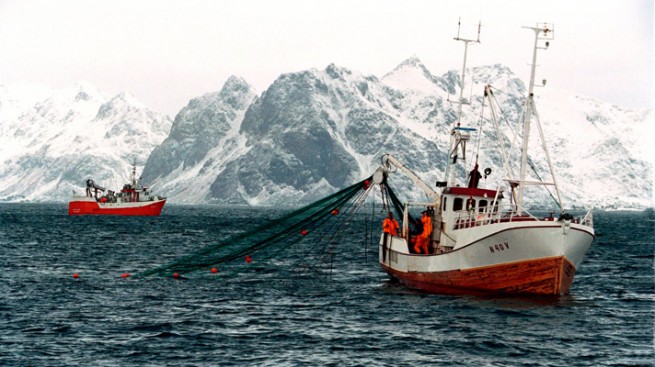
This Robot Can Transform Norwegian fishing industry

0

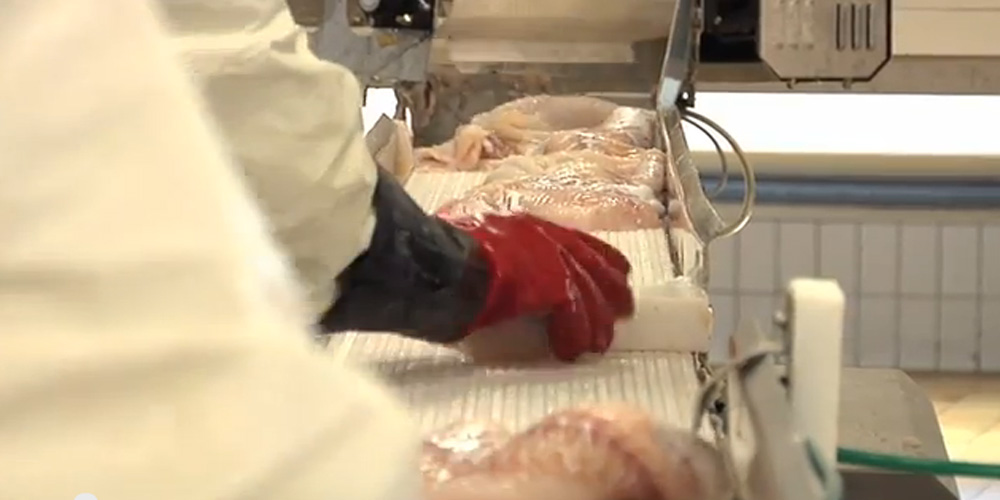
There is now a machine that locates the fish bones using X-ray technology, and fillets the fish quickly and precisely with a powerful jet of water.

Unlike farmed salmon, white fish varies greatly in size and weight. This means that until now, no one has been able to develop a machine that can fillet these fish.

271114-fileting-robot
The new filleting machine can, however, result in a positive upturn in the Norwegian fishing industry. The machine is a result of a development project run by Nordic Innovation, in which Sintef, Marel, Faroe Origin and Norway Seafoods have been working together.

Getting the bones out
White fish is complicated and time-consuming to fillet, because the bones are difficult to find and remove.

As a result, three to seven per cent of the most valuable part of the fish is currently cut away unnecessarily.

Researchers at SINTEF ICT have conducted X-ray tests in the laboratory, and have used CP scanners at Oslo University Hospital to learn more about where fish bones are located.

The technology focuses on image analysis and recognition. The new machine locates the fish bones using X-ray technology, and fillets the fish quickly and precisely with a powerful jet of water. This means that the fish is guaranteed to be boneless, with considerably less wastage than with manual filleting.

Processing in Norway
“Norway only exports 10 to25 per cent of processed products – depending on whether it is white fish or farmed fish”, says Marit Aursand, Research Director of SINTEF Fisheries and Aquaculture.

271114-Marit Aursand-SINTEF“Most of our most important seafood products – such as salmon, cod and herring – receive only minimal processing or treatment before they are sent abroad. In other words, the potential for carrying out more processing in Norway is huge, and this robot could provide a breakthrough, giving us a much-needed competitive advantage over low-cost countries in Asia, Eastern Europe and Russia”, says Aursand.

Currently, fish caught in Lofoten may travel through two other countries for filleting and packing before it returns to Norway. But this new invention would make it possible to send fresh fish direct to the shops from Norwegian facilities.

“Fish processing in Norway will soon become a thing of the past if the filleting process is not automated and made efficient and profitable. This is why this new invention is so important. It means that we can improve the quality and selection of fresh fish products, and keep the industry on Norwegian soil”, says Aursand.

Culinary Attractions in Gothenburg, Sweden

0

There are several interesting landmarks for the foodie to explore in Gothenburg. The two things that Sweden does exceptionally well are wild game and seafood, and for seafood, locals head straight to Gothenburg, Sweden’s second-largest city.

The cold clean waters of the North Atlantic Ocean blesses this city with the freshest fish and shellfish in the country, which has solidified Gothenburg its gastronomic reputation.

Here are some of the most famous market halls and culinary attractions in Gothenburg, Sweden you should not miss.

261114-fiskekyrka-fishchurch-gothenburg-sweden
Gothenburg has an iconic food market — dedicated to all things fish. A scenic walk along Rosenlund’s Canal, which surrounds the city’s core like a moat, takes you to the instantly recognisable Feskekörka, or  ‘fish church’ in Swedish, as it quickly became known, is an indoor fish and seafood market where you can buy all kinds of seafood delicacies caught on the day.

Feskekorka was built in 1874 and was an architectural experiment by Victor von Gegerfelt, a military man and architect and one of the two most influential architects from the mid-19th century. He was inspired by the wooden Norwegian stave churches and stone Gothic churches. The idea was to have a room without pillars.

???????????????????????????????
This reverence for fish and shellfish continues within the cathedral-style building of the iconic Sjömagasinet. Sjömagasinet is a flagship for Swedish gastronomy and offers excellent service in a rustic setting. The restaurant has a picturesque location by the waterfront in Klippan.

Sjömagasinet has one star in Guide Michelin and is run by owner Ulf Wagner and head chef Gustav Trägårdh (Chef of the year 2010). The restaurant building dates back to 1775 and was previously used as a warehouse for the East India Company. World-famous stars like Bruce Springsteen and U2 have dined at Sjömagasinet.

261114-kometen-restaurant-gothenburg-sweden
Kometen (The Comet) is a popular eatery with both locals and celebrities. Kometen has always been an entertaining place to visit. Countless are the authors, artists and musicians who made their mark on the atmosphere. Here customers have enjoyed well-known Swedish dishes of high quality ingredients since ages. Their renowned wiener schnitzel is really out of the ordinary. Today, the restaurant is under the direction of the famous star chef Leif Mannerström.

261114-Thörnströms-kok-gothenburg-sweden
A culinary experience beyond the ordinary is promised at Thörnströms Kök, You will find eight to 10 different types of sourdough bread alongside your meal, featuring flavours of fennel and sea salt, lemon and dill, walnut, onion, rosemary and cumin among others, which chef Håkan Thörnström has baked every day for the last 15 years. Modern Swedish cuisine using carefully selected regional products, served in an elegant restaurant setting. Thörnströms kök has one star in the prestigious Guide Michelin.

261114-restaurant-familjen-gothenburg-sweden
If you would rather eat meat over seafood, locals nod in consensus whenever restaurant Familjen (The Family) is mentioned. Familjen is a contemporary West Swedish brasserie with a warm and friendly atmosphere. The chefs have high ambitions and use locally produced ingredients after season.

From the menu you can either choose from a wide range of small dishes with classic Swedish flavours or a set three-course menu. In the summer you can enjoy the sunset at Familjen’s outdoor terrace.

261114-norda-bar-grill_gothenburg-sweden
Navigating Gothenburg’s culinary scene would be incomplete without a nod to native son-turned-celebrity chef, Marcus Samuelsson of Red Rooster fame in New York City’s Harlem neighbourhood, who is now one of the creative forces behind Norda Bar and Grill.

“If it’s difficult to get a seat at the bar, getting a table at the Norda Restaurant isn’t exactly easy either. Reservations are a must. The popularity of the restaurant is turbo charged by local celebrity chef hero Marcus Samuelsson adding his name and face to the concept, but the kitchen is headed up by the talented Jimmy Lappalainen on a daily basis. I’m always a skeptic when celebrity chefs attach their names to hotel restaurants on the other side of the globe from where they actually live, so my expectations were honestly not that high,” wrote Huffington Post.

Compiled by Daily Scandinavian

Prestigeous Prize to Norwegian Film Director

0

Norwegian film director Morten Tyldum won the Hollywood Director Award at the 18th annual Hollywood Film Awards earlier this month.

251114_The-imitation-game-posterRobert Pattinson, who won the New Hollywood Award at the 2008 awards, presented the Hollywood Director Award to The Imitation Game director Morten Tyldum, who thanked the crowd, saying, “I’m new to Hollywood and this is the warmest welcome I could imagine.”

Keira Knightley was honored with the Hollywood Supporting Actress Award for her role as Joan Clarke, a cryptanalyst who was part of Alan Turing’s code-breaking team, in The Imitation Game.  The film also picked up the award for best male actor (Benedict Cumberbatch) and best composer (Alexandre Desplat).

The Imitation Game is a film about a group of British experts selected to work in a covert operation in 1939 to crack the Nazi’s Enigma code.

Norwegian film director Morten Tyldum

The film is expected to receive several Oscar prizes as well.

Showing at selected theatres in USA now.

Eight Delicious Reasons Why You’ll Love Scandinavian Food

It’s only in the last couple of years that Scandinavian food has risen in popularity, but now it is getting global acclaim – especially after Rene Redzepi’s Copenhagen restaurant Noma was named the best in the world.

Sweden, Denmark and Norway are famous for their fresh flavours and foraged produce. From sweet berries to wild game and cured fish, Scandinavian cuisine relies heavily on wild, natural ingredients. Most Scandinavians are great foragers, bakers and preservers, making for a wonderful array of dishes and delicacies. As Scandinavian food writer Signe Johansen says: “There is so much more to our little corner of the world than herrings and meatballs – excellent though they are.”

Daily Scandinavian rounds-up eight delicious reasons why you’ll love Scandinavian food.

Fish
The cool waters of the Norwegian, Baltic and North Seas supply an abundance of sweet-tasting fish and shellfish; according to Camilla Plum, author of The Scandinavian Kitchen, these fish are the cornerstones of Scandinavian cooking.

241114-norwegian-fish-dish

Salted fish (known as clipfish/klippfisk) is a popular Scandinavian delicacy. It is usually made with cod that are gutted and salted as soon as they are caught at sea, then dried when the boats come back to shore. Salted fish is reconstituted by drawing out the salt in a few changes of water – the resulting taste is still quite salty, however.

Gravadlax is a well-known Scandinavian dish consisting of raw salmon cured with salt, sugar and dill. It is traditionally eaten with mustard sauce, rye bread and lots of fresh dill.

241114-graved-salmon

Cured fish, particularly herring, is another delicacy strongly associated with Scandinavia, in particular Sweden and Denmark. It is traditionally eaten with rye bread, crisp bread or potatoes, and flavoured with onion, sherry, mustard and dill.

Fermented herring (surströmming), sold in cans, is also popular. Known as Scandinavian rotten fish, due to the strong smell, it’s fermented for 1-2 months before canning, and is banned on some commercial flights as it is believed the pressurised containers could be dangerous.

Jansson’s Temptation is a popular Scandinavian dish that epitomises the cuisine: potatoes, cream and cured fish. Traditionally made with pickled sprats, the dish is now made with anchovies.
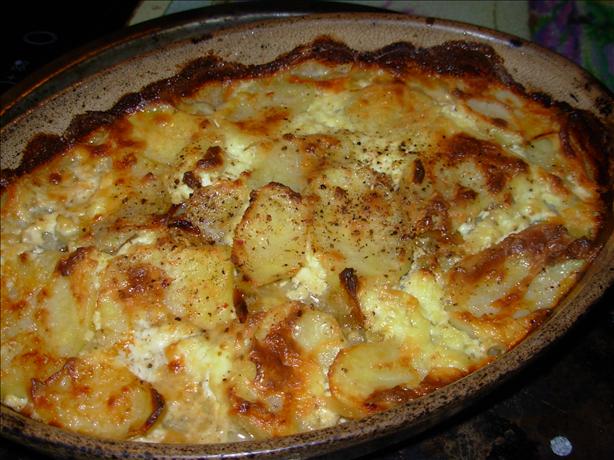
241114-Janssons-temptation 
Meat

Hunting is a popular sport in Scandinavia, and game such as venison, deer and wild boar is popular.

241114_scandinavian-game-dish

The traditional way of serving game and reindeer is with a creamy sauce, potatoes and a berry conserve or jelly such as lingonberry jam.
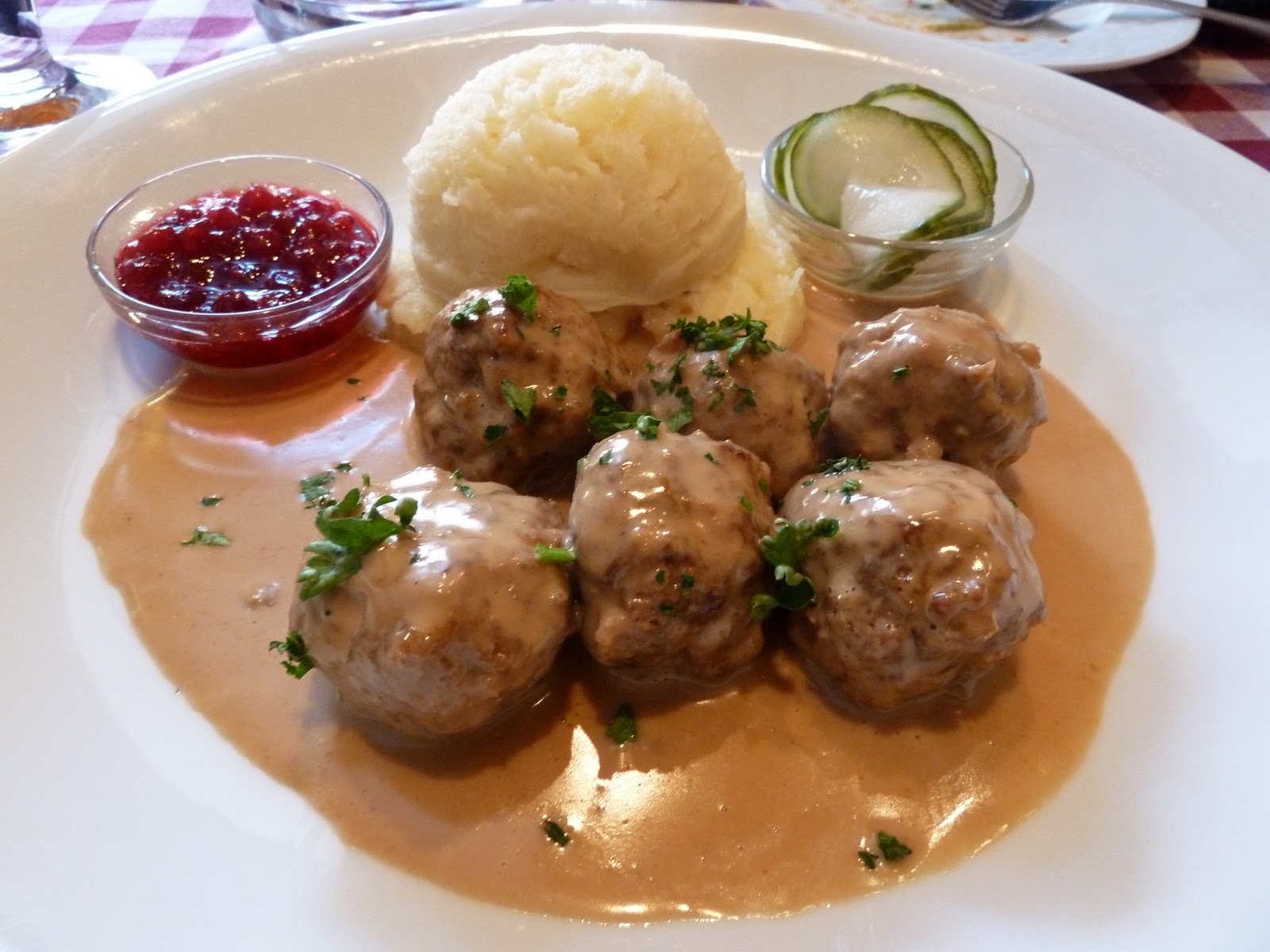
241114-scandinavian-meatballs
Meatballs
 are, of course, the dish everyone associates with Scandinavia – again, Ikea is known for its Swedish meatballs. According to Camilla Plum, this is the ultimate Scandinavian dish, eaten everywhere, every day. The shape and size of meatballs differ across Scandinavia, although most tend to be made from pork and veal. In Sweden, meatballs are usually served with mashed potato and lingonberry jam, whereas in Denmark they are served with pickled red cabbage in winter and creamed kale, potatoes and beetroot.

241114-scandinavian-strawberries
Berries

These feature heavily in sweet or savoury dishes. Although wild blueberries, strawberries and raspberries are popular, there are two berries that Scandinavia is known for. The lingonberry (known as the cowberry in the UK) is perhaps the most well-known and a cornerstone of Scandinavian cooking. They are a staple food in Sweden and are enjoyed with porridge and on toast as a jam, as well as forming the basis of many sauces for meats and other dishes. Similar to cranberries, and quite bitter, these berries need sugar, hence they are mostly eaten in jam form.

241114_Cloudberries
The cloudberry is another popular berry, but it’s extremely hard to find (and therefore expensive) due to the conditions it grows in. Found in acidic ground in damp areas such as bogs and marshes, they are almost impossible to grow industrially. Cloudberries have a striking golden appearance and are similar in shape to the raspberry, their cousin. They are mostly bought frozen or as a jam or juice.

Other delicacies
Scandinavians have a great tradition of baking – everything from rye bread and crisp breads to cinnamon buns and Danish pastries.

241114-scandinavian-bread
Rye bread is dark, rich bread made with rye, which used to be the staple grain in Scandinavia. It is often used as the basis for open sandwiches (pictured), known as smørrebrød, smørbrød, smörgås, another famed Scandinavian dish. One slice of rye bread is topped with anything ranging from herring to gravadlax to beef. Scandinavian Kitchen, a deli/café based in London, is well known for its beautiful and authentic open sandwiches.

Crispbreads are mainly thought of as a diet snack in the UK, but are a real favourite in Scandinavia and are often used as a base for pickled fish or cheese. Peter’s Yard crispbreads are said to be popular with Scandinavians in the UK, and are made to a Swedish recipe.

241114-Swedish-cinnamon-bun
Cinnamon buns
 (also known as cinnamon swirls or rolls) are very popular and in Sweden there is even a Cinnamon Roll Day (kanelbullens dag, on 4 October) dedicated to this sweet treat.


Legendary Mathieu Matêgot Flirting with Danish Interior Designers

0

Mathieu Matêgot’s Organic Forms Presented by the Danish Interior Design Company Gubi.  

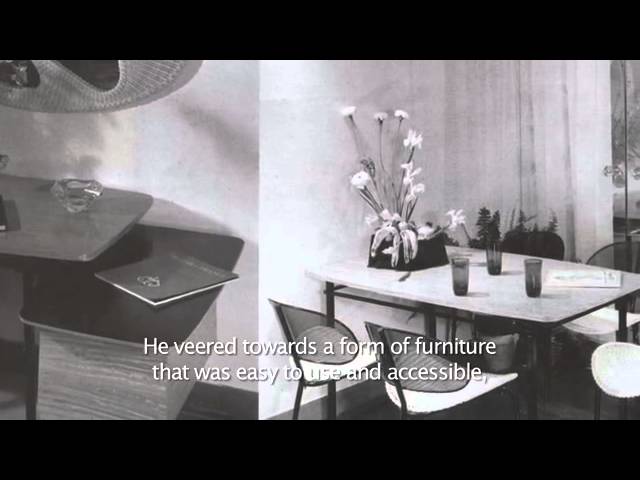
Mathieu Matégot’s lightness of touch created a sense of joy and was the ground breaking and innovative techniques that resulted in unique aesthetics and, above all, contemporary designs.

Today, Matégot’s designs are equally fit for the purpose as when they were originally conceived, and his legendary designs are both timeless and classic.211114_Mathieu Matégot

Like many of his peers Mategot travelled the world in search of inspiration, techniques and upon return transformed these impressions into his own unique designs and interpretations. Whether it was industrial processes or aesthetics, he always collected and interpreted – he even patented and set up his own production to apply these new technologies into his designs, He was a true innovator of his time!

From the spring of 2014 Gubi’s collection of original Mategot designs will include: The Nagasaki Chair & Stool, The Dedal Shelf, The Mategot Coatrack and the Kangourou Table plus four new pieces; The Mategot Trolley, The Demon Shelf and the Copacabana chair and tables.

It was presented this year at IMM Cologne, at Maison & Object Paris and at Stockholm Furniture & Light Fair. The new designs are now available at selected retailers, so the legendary Mathieu Mategot is now flirting with Danish interior designers.

Mathieu Matégot (1910 – 2001) was a Hungarian designer and architect. After studying at Budapest’s school of art and architecture, he settled in France

Norwegian Designer Makes Traditionally Knitted Reading Lamps

0

Cosy Concept is all about going back in time, use old handicraft techniques and old patterns to give them a modern look. With traditional patterns the Norwegian designer Turid Lindeland creates handicrafts of high quality.

201114_garnglede_i_rosendal-lindeland_turidTurid has written the book Garnglede i Rosendal (Joy with Yarn in Rosendal), inspired by an old sock pattern and an old hotel from 1887 in Rosendal. She has given traditional patterns a modern look both when it comes to color and choice of models. Her vision is to preserve the ancient handicraft techniques shown here in knitting and crocheting and making tangible products as counterpart to today’s disposable.

Together with the Norwegian design company Northern Lighting, the Norwegian designer Turid Lindeland has created a fusion between old and new. The result is a tribute to the Norwegian folk tradition and design – a real Norwegian icon. They have created the Cosy Concept hand knitted Seed-lamp. The limited edition is made in three different colors: light blue, green and gray.

Seed is a wall mounted nightlight designed to create a unique reading environment. Through a filtered LED light source, Seed creates a soft beam that makes it possible to read in bed while your partner sleeps. The rotatable arm of light enables different angles and can easily be attached to the wall at any desired position.

201114-Turid-Lindeland
Norwegian designer, Turid Lineland, now also makes traditionally knitted reading lamps.

Northern Lighting was founded in 2005, and has since established itself as a small dynamic Nordic company specializing in design and manufacture of lights. Northern Lighting creates designer lights for different moods inspired by the unique Nordic nature, culture and society and the very special natural light.

201114_Seed
The company delivers its creations to commercial projects and retailers in more than 30 countries, always following the same basic values. Northern Lighting reflects the fact that it is a young, fun, playful and mood-oriented lighting company, which uses its light portfolio to represent and promote the joy of creative design and the Nordic geographical and cultural heritage within the international design scene. The place of origin explains the choice of the name, Northern Lighting – inspired by the company’s positioning on top of the world in the Kingdom of Norway.

201114_Seed-blue
Northern Lighting
 is a commercial hub for designers. The people responsible for the generation of these designer lamps include both young up-and-coming talents and recognized designers. Despite their different levels of experience, the designers have one thing in common; they are fiery souls who are fascinated by the mood-creating possibilities of light.

Two Swedish Sisters sing for Peace in Syria

Two Swedish sisters from the town of Sodertalje near Stockholm have posted a video on You Tube, now seen by more than 1.3 million.

The two Swedish sisters , Rihan (23) and Faia Younan (22) whose family is from Syria, say on the video that the three-year-long war is “crazy, selfish and illogical”. The sisters speak and even sing in Arabic as they urge politicians to work together and resolve the crisis so the country can be “safe, prosperous, triumphant and dignified” again.

191114-Faia-and-Rihan-Younan-in-To-Our-Countries-Anthem

The video, in which the two Swedish sisters sing for peace, was posted at the beginning of October but were first picked up by international media last month. Since then thousands of YouTube users have left comments with the hashtag #ToOurCountries.

‘To Our Countries’ is an 8 minute and 44 second plea to the Arab world to take action against the injustice and suffering sweeping the Middle East. The video is a project produced by a group of youths who live in Sweden, originally from Syria, Lebanon, Palestine and Iraq. The two young Syrians created a heartbreakingly exquisite tribute to Iraq, Palestine, Syria and Lebanon; summarizing the mixture of pain and hope that reverberates the troubled region.

Faia says the sisters want to remind everyone how beautiful their native country was and hope it will regain its original charm in the near future.

Many people have contacted them and thanked them for posting the video.

“Our aim is to show the world that there is a need to show something else than blood, crying and destroyed buildings in Syria. Let Syria return to its dignified beauty again,” Faia concludes.

Almost Forgotten Norwegian Romantic Painter Exhibits in National Gallery, London

When the prestigious National Gallery in London exhibits the Norwegian landscape painter Peder Balke as a modernistic pioneer it is quite an event.

In 1992 paintings by Edvard Munch was exhibited separately in London National Gallery. In 2010 the “Danish master of Light” Kristen Koebke was exhibited, and last week The National Gallery opened a separate exhibition with the Norwegian modernistic romantic painter, Peder Balke.

28 small paintings by the norwegian romantic painter Peder Balke, once purchased by King Louise Philippe of France, are still on the walls in Musée du Louvre in Paris.

161114-Spetind-in-fog
Largely forgotten for more than a century, this Norwegian artist was ahead of his time and is only just being rediscovered and recognized as one of the forerunners of modernism, claims the National Gallery on their website.

This groundbreaking free exhibition is a collaboration with the Northern Norway Art Museum in Tromsoe and exhibits around 50 paintings representing every facet of the artist’s career travelling to London from private and public collections across Europe. The vast majority of these works have never been seen in the UK before.

Peder Balke (1804-1887) represents a link between the classical Koebke and the expressionist Munch. Balke was indeed born some years before Koebke, but lived almost four decades longer, and although both painters share romantic impulses, London Galley finds Balke’s experimental painting techniques particularly interesting.

161114-Peder_Balke-Lighthouse-on-the-norwegian-coast
Sadly Balke’s lack of commercial success, as well as his misfortunes in social projects, forced him to abandon his career as a painter; however his later endeavours as a property developer of housing for the poor, and as a politician, are fascinating and important in their own right. Nevertheless, the small scenes he then painted for his own pleasure are now recognized as highly original improvisations: they are more experimental – with Balke using brushwork or even his hands to suggest seascapes – and extraordinarily prescient of later expressionism.

161114-Peder-Balke-painting-on-norwegian-stampThe exhibition seems to be organized for visitors knowing almost nothing about Balke. Four completely different paintings from Balke’s North Cape are central in this exhibition. These paintings are painted in the course of four decades with shifting light conditions, color and representation of nature.

More than 60 paintings by Balke are exhibited at National Gallery through April 2015.

The exhibition is being curated by Christopher Riopelle, National Gallery Curator of Post-1800 Paintings, in collaboration with Knut Ljøgodt, Director of Northern Norway Art Museum, and Dr Marit Ingeborg Lange (formerly chief curator of the National Gallery of Oslo). Christopher Riopelle said:

”This long-overdue exhibition will highlight Peder Balke’s unique, innovative and virtuosic paintings of Scandinavian seascapes and we sincerely hope it will put an artist, who is richly deserving of recognition among a much wider audience, finally back on the map.”

The National Gallery owns just one painting by Peder Balke: ‘The Tempest‘ (about 1862), which was generously presented to the Gallery in 2010 by Danny and Gry Katz.

Knut Ljøgodt says, ”Peder Balke has only recently been recognized as one of the most outstanding painters of the romantic period. We are thrilled that the National Gallery collaborates with us on this – and we hope that a large, international public will discover Balke’s art. He deserves a place in the art history of the world – alongside Edvard Munch!”

161114-Peder_balke
About Peder Balke
Born into poverty on the Norwegian island of Helgøya (in Lake Mjøsa, Eastern Norway) in 1804, Peder Balke studied decorative painting in Christiania for two years from 1827. Determined to become an artist, in 1829 he transferred to Stockholm, where he was taught by the landscape painter Johann Fahlkrantz (Professor at the Art Academy). Balke was drawn to the landscape of Norway; he walked across much of its lower regions and, decisively, in 1832 travelled by ship to the North Cape, a rugged and largely inaccessible area of the country. There he found bleak and original landscape motifs which allowed him to define his highly individual painting style. He continued to explore these motifs in increasingly austere images throughout his career.

Swedish Pop Singer Moved to 1st Place on Billboard’s Radio Songs List

The Swedish pop singer  Tove Lo, born Tove Nilsson, moved from third to first place on the Billboard’s list with her hazy pop jam “Habits (Stay High)” last week.

171114-tove-lo
The Billboard Radio Songs List measures every kind of music being played on radio stations throughout USA. The hit has thereby reached 131 million listeners just last week.

The Swedish pop singer Tove Lo was raised in a stable, happy household in a posh Stockholm suburb. “IU was always dascinated by something that was a bit more dramatic and dark, so I was kind of looking for that,” said the Swedish pop singer to USA Today.

Tove Lo will perform at Rockefeller Stage in Oslo on Friday January 30th.

Feature image (on top): Johannes Helje

New designs by Norwegian interior designer Andreas Engesvik

The Norwegian interior designer Andreas Engesvik’s  studio is working in various fields of design ranging from furniture and tableware to industrial design for various international clients such as Iittala, Muuto, FontanaArte, Ligne Roset and Asplund.

Here is an overview of some of the latest designs by Engesvik.

Ease – made for Edsbyn kontorsmöbler
made in cooperation with Jens Fager

Ease is a new product line of flexible screen solutions, designed by Jens Fager and Andreas Engesvik for Edsbyn Kontorsmöbler. Ease features light weight panels that link together to create free-standing partitions and room configurations for open areas in offices, hotels and homes. It is easy and quick to construct and to change; unique and diverse in its capabilities to modify the design.

131114-Ease-office-furniture
Whether the screen solutions are used as free-standing room dividers, angled partitions or for a complex room configuration, the screens instantly create a positive working atmosphere. In addition, their versatility makes them amenable to any further layout changes.

The Ease screen programme is based on the use of pressed PET fiber technology.

Tiki sofa – made for Fogia
Tiki sofa is a light and casual sofa with great comfort. The visual apperance of the sofa is rooted in the top line of the couch and the silhouette this line creates. The line gives associations to something soft and well used which has been shaped over time; as a garment, shaped leather, wood or a sail. Tiki’s identity lies in this line and the slim and visually lightweight construction.

131114-tiki-sofa
The sofa is low in both seat height and total height. Tikis thin loose cushions, in combination with the springs in the bottom frame offers a good, old school comfort. The idea is that this comfort not is apparent as one views Tiki – but that it is perceived as one sits.

The aim has been to create a sofa that can withstand use over time. It is solid without being too heavy in weight. The materials used is a mix of visco-elastic foam and regular cut foam – in combination with filling of down.

Sol – made for LK Hjelle
Sol is a versatile little stool with a lot of character and a friendly presence. The low height of Sol makes it subordinate larger furniture. It can stand freely in connection to low tables and sofas or be placed against a wall when not in use. The length of the stool provides space for two people – also suitable for small environments. The canopy gives it direction – a front side and a rear side. It can also act as a light backrest and as a handle when moving it around.

131114-sol-chairs
Andreas Engesvik, Oslo was awarded with Elle decorations award in the category Furniture of the year by Norway, for Sol.

Gol cabinet and Gol table made for tonning & stryn
Gol Cabinet and dining table are the two first products in the Gol collection from Tonning & Stryn. The new Norwegian brand Tonning & Stryn, was formerly two separate companies situated in the same small town. They have now joined forces and are focusing on traditional craftsmanship and quality. Gol cabinet and table are made out of solid oak.

131114-gol-cabinet

New Bunad blankets made for Mandal veveri
Two new versions based on the Beltestakk bunad from East Telemark and the Vest Agder 1810 bunad was launched in January this year in Oslo. The Bunad blankets represents a simplification and transferring of the Norwegian folk costumes and introduces this rich tradition into our daily environments and interiors.

131114-bunad-blanket
In May 2013, The Bunad blankets won the The Editors Award in the category Best Textile at the International Contemporary Furniture Fair in New York.

About:
Andreas Engesvik has a Bachelors degree in Art History from the University of Bergen Norway (1991/1995). Andreas went on to study Design at the National College of Art and Design.

He graduated in 2000 with a Masters degree in Design and founded in the same year Norway Says. In 2009, after 6 successful years, as a company, Andreas Engesvik went solo and founded his new studio ANDREAS ENGESVIK, OSLO, and he soon became one of the most prestigeous Norwegian interior designers.

Awards (a selection): Red Dot Award 2012 & 2014, Elle Decoration Award (Norway) – Furniture of the year 2013,  Designer of the Year 2012 & 2013, Bo Bedre Magazine awards, ICFF Editors Award, best textile, New York 2013, Designer of the Year 2012, Elle Decoration Award, Oslo 2012, IF Product Design Award 2010, Wallpaper design Award 2009, (best light) 2009, Torsten & Wanja Søderberg Award, Sweden 2007, Wallpaper design Award 2004, (best sofa) 2004, The Bruno Mathsson Award, Sweden 2004.

Andreas Engesvik was in 2012 appointed Guest Professor at The University College of Arts, Crafts and Design (Konstfack) in Stockholm.