Best in Scandinavian Design

The first golden age of Scandinavian design extends from the 1930s to 1970s. Its founders are called Alvar Alto, Arne Jacobsen, Borge Mogensen, Hans J. Wegner, Verner Panton, Poul Henningsen, Maija Isola, etc. These precursors have provided the model and set of values which still inspire the new Scandinavian design: durability, functionality, reliability – but also less tangible values such as simplicity, equality, joy, courage, daily pleasure visible through the simple forms, not ostentatious and often colorful forms.

160515_Oslo_Opera_House
Oslo Opera House. Norway
This striking building in white granite and glass sitting on the waterfront is one of Oslo’s top attractions.

160514_Carl_Larsons-Hiuse_Museum_Sundborn_Sweden_Daily_Scandinavian
Carl Larsson’s house. Sundborn, Sweden
The artist’s beautiful riverside cottage is a humbling example of love, family life and Swedish design working in perfect harmony.

160514_Designmuseum_Copenhagen
Designmuseum. Copenhagen, Denmark
Ceramics, furniture, textiles, prints and posters – the best in Danish design is here.

160514_Ole-Bull-s-residence
Lysøen. Norway
The residence of violin virtuoso Ole Bull, on an island outside Bergen, is a daring blend of styles that never fails to wow visitors.


Scandinavian Perfection

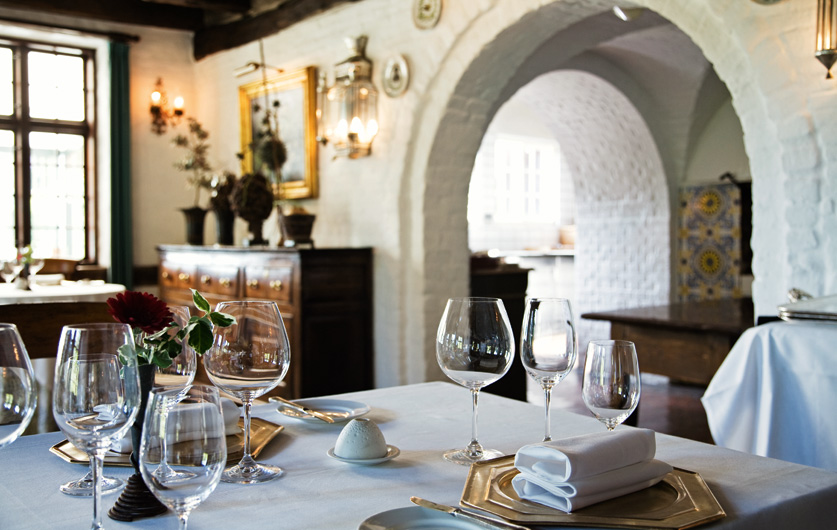
Located in a picture-perfect farming village on the southern coast of Funen, Falsled Kro consists of a charming complex of elegant but rustic buildings with thatched roofs and large open fireplaces.

150514_FalsledKro2_Funen_Denmark
But the charm of this quintessential Scandinavian country inn isn’t the reason patrons travel here from afar: it’s Falsled Kro’s stellar restaurant.

Together with suppliers and gatherers from neighboring castles and manor houses, chef and co-owner Jean-Louis Lieffroy, whose wife Ellen was Danish, created a kitchen with a reputation reaching far beyond the Danish border.

Today Randi Scmidt and Per Hallundbæk continue Falsled Kro with the same respect for quality and service which has been characteristic for the establishment throughout times.

This is Scandinavian perfection.

A Pilgrimage for Fairy-Tale Lovers

The island of Funen, Denmark, is known to the world as the birthplace of Hans Christian Andersen. Possibly the world’s most esteemed storyteller, Andersen’s work, including beloved classics like “Thumbelina” and “The Ugly Duckling”, is more widely translated and read than anything except the Bible and the writings of Karl Marx, and his Little Mermaid is Copenhagen’s world-recognized icon.

140514_From_Odense_Funen_Denmark
Odense, his hometown, is Denmark’s third-largest city. With a charming medieval core, it attracts fairy-tale lovers from all over.140514_HansChristianAndersen

Born in 1805 to a local shoemaker and washerwoman, both illiterate, Andersen was an inveterate traveler whose battered suitcases are on display at the museum adjoining his childhood home, as is the fire rope he never traveled without, hanging it outside his hotel window.

Visitors can view original manuscripts (officials still await the return of “The Emperor’s New Clothes”, which diapperead some years ago) and letters to his close friend Charles Dickens. Also make time to enjoy the island’s bucolic rolling countryside. Dotted with thatched-roofed farmhouses, orchards, country manors and inns called kro.

140514_Funen_map
An 11-mile suspension bridge connects Copenhagen, on the island of Zealand, to Funen.

140514_From_H_C_Andersen_Museum_Odense_Denmark

Come Celebrate the Norwegian Constitution

Eidsvoll House (Eidsvollsbygningen) is a house full of exciting history! For Norwegians it is one of the most important national symbols, inextricably tied to the constitution, independence and the dramatic events of 1814, which are celebrated on the 17th of May every year.

130514_Eidsvoll_House_Norway_Daily_Scandinavian
This is why Eidsvoll House became Norway’s first national monument in 1837. Numerous extensive restoration operations have all been directed towards recreating the historic site of the birth of the modern Norwegian state.

However, Eidsvoll House is more than just a monument to politics. An ironworks was situated here since the early 1600s, and a works owner residence dating from approximately 1770 constitutes part of the main building. When Carsten Anker created his luxurious residence around the turn of the 19th century, it became one of the country’s most modern private residences and was modelled on French and Danish ideals. Anker’s passionate attention to detail and sure sense of style is reflected in everything from the neo-classicist architectural main features down to the details of the interior.

1814 – The Year of Miracles
At the start of 1814 Norway was part of the absolute monarchy Denmark-Norway. By the end of the year the country had entered into a personal union with Sweden. In between, Norwegians had mobilised, drawn up the world’s most democratic constitution and elected their own king. It was hailed as ‘the year of miracles’ and the year of the Norwegian constitution.

The union between Denmark and Norway had begun 434 years before. In the years up to 1814 Denmark-Norway had allied itself with Napoleon Bonaparte in the French emperor’s wars with the other major European powers. Following Bonaparte’s defeat at a crucial battle near Leipzig in the autumn of 1813 , peace negotiations were opened in the port city of Kiel. Here, as punishment for Denmark-Norway’s support for France, Denmark’s King Frederik VI was forced to cede his Norwegian territories to Sweden, which had long wished to take control over Norway.

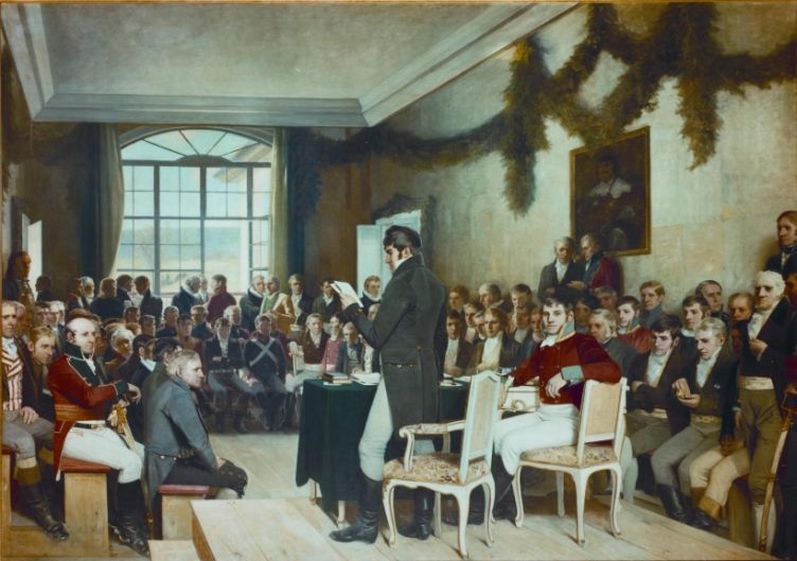
Denmark’s viceroy in Norway when news of the Treaty of Kiel arrived was Crown Prince Christian Frederik, heir presumptive to the Danish throne. He opposed the treaty, arguing that he was the rightful heir to the Norwegian crown, and was therefore entitled to take over as king as soon as Frederik VI’s rule no longer applied there. Initially the Crown Prince sought the advice of his good friend Carsten Anker, owner of the Eidsvoll Verk ironworks. Then he embarked on a journey up the Gudbrandsdalen valley and over the Dovre mountains to Trondheim to whip up support among the people. Having returned to Eidsvoll he convened a council of the country’s leading men. At this meeting, on 16 February, he presented his plan to declare himself king and, when time allowed, give the country a constitution.
130514_Norwegian_Constitution_Assembly_Daily_Scandinavian
Not everyone backed the plan. Professor Georg Sverdrup protested: “You have no more right to the Norwegian throne than I or any other Norwegian,” he said. According to Sverdrup, it was up to the people themselves to elect a new sovereign now that the union with Denmark was over. And before a king could be elected those very same people had to draw up a constitution for themselves. Giving assurances that Christian Frederik would be the one elected king, the meeting decided to call together representatives from the whole country to an assembly at Eidsvoll that would adopt a new constitution.

Christian Frederik instructed every parish in the country to swear an oath to support the Norwegian independence process, after which the parishioners were to elect delegates who would, in turn, choose the representatives who would make up the Constituent Assembly.

Restoration up to 2014
In connection with the Constitution’s bicentenary in 2014 the Norwegian Ministry of Culture has tasked Statsbygg (the Norwegian public construction and property management service) with restoring Eidsvoll House (Eidsvollsbygningenn) to how it may have looked in 1814. The main house and the two adjacent pavilions are being restored to give the public an idea of how they appeared in 1814. The project also includes the reconstruction of the Eidsvoll house basement, and an upgrade of the surrounding park. The restoration ahead of 2014 is the largest and most comprehensive ever undertaken at Eidsvoll House, and is provisionally estimated to cost NOK 380 million.
130514_Eidsvoll_House_Norway_Interior_Daily_Scandinavian

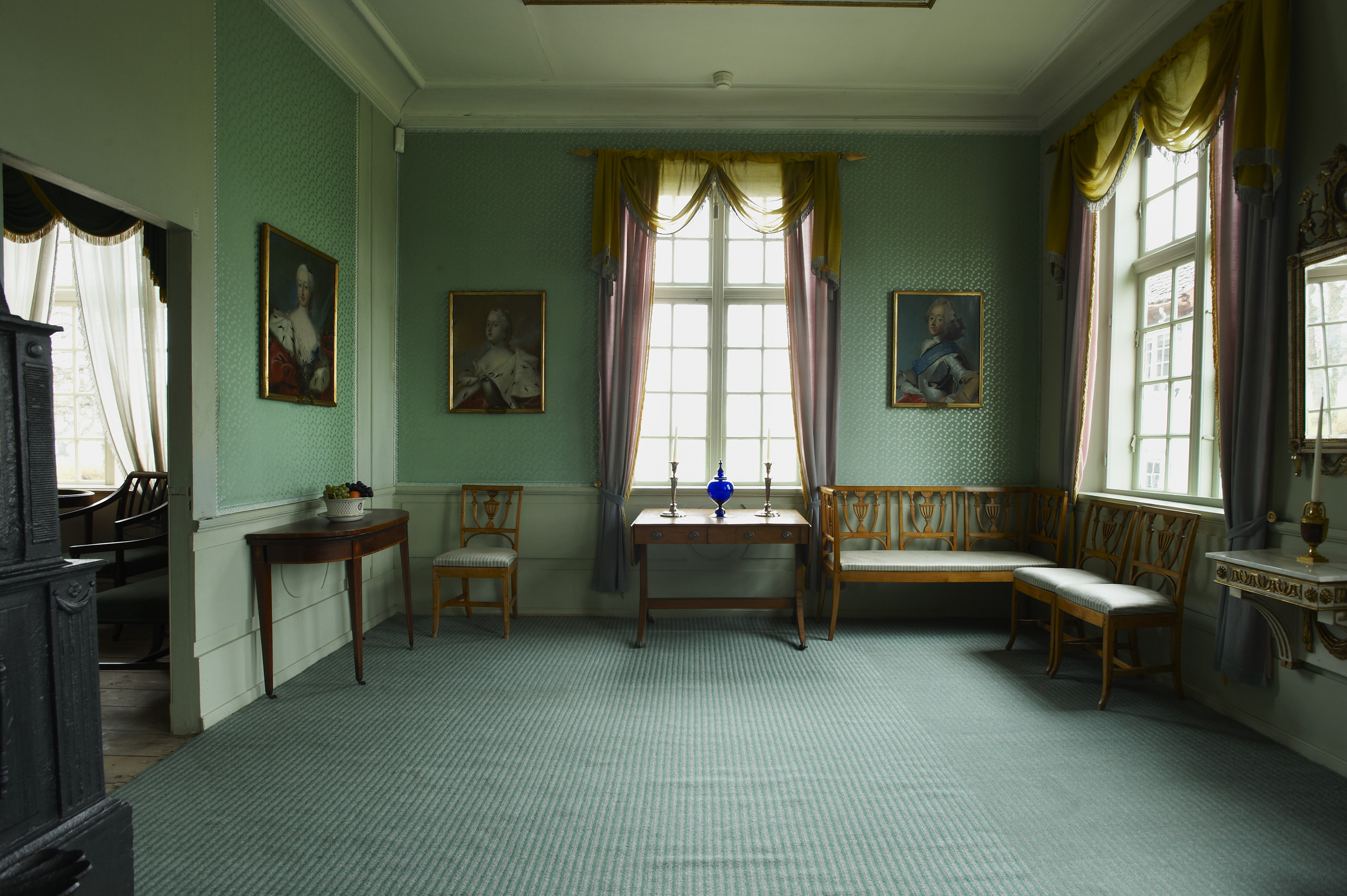
In October 2011 Statsbygg began the work of restoring Eidsvoll House to its former glory under the ownership of Carsten Anker and how it appeared to the men who assembled at this building “of extraordinary size” to draw up Norway’s constitution in the spring of 1814. Recreating Anker’s basement floor is one of the restoration project’s most exciting undertakings.

Before work commenced the buildings and park were comprehensively surveyed. Inside the house colour samples have been taken of the various surfaces in search of paint and other traces dating from 1814. The woodwork and structural elements have also been extensively tested to determine the building’s condition. Statsbygg has engaged the Norwegian Institute for Cultural Heritage Research (NIKU) to study the colour samples, and Multiconsult AS to assess the building structure. Geir Thomas Risåsen, art historian and curator at Eidsvoll 1814, has been engaged by Statsbygg to trawl the historical record in pursuit of documentation.

Eidsvoll House was first emptied of its contents and then closed to visitors. The extensive construction work means that the public cannot access the house or pavilions, unless by special arrangement with Statsbygg, when it is possible to see how far the work has progressed. However, the Eidsvoll 1814 museum remains open! While restoration is underway the public can still enjoy a wide range of activities and displays. Statsbygg and Eidsvoll 1814 have also set up a dedicated restoration information centre.

So when Eidsvoll House opens its doors in connection with the Constitution’s bicentenary celebrations in 2014, visitors will encounter a new entrance to the north, through which they will enter the basement floor, with its open hearth and servants going about the day’s household chores, and gain an insight into the social differences that existed in Norwegian society at that time. Then they will be able to go where no visitors have gone before – up the old staircase to the beautiful entrance hall. These stairs have not been in use for 150 years.

There they will find room after room looking just as they did when Carsten Anker turned Eidsvoll Manor into a fashionable modern home in 1814, with wallpaper-clad walls bordered in a colour palette far different to that we would feel comfortable with today, and accentuated by textiles of the sort Anker himself would have chosen. The ‘year of miracles’ in Norwegian history will come alive for new generations, and Eidsvoll House will stand ready to continue being the country’s foremost national symbol for another hundred years!

Norwegian Center for Constitutional History
Main attractions: Eidsvoll House, Wergeland’s House democracy centre, Kafé Standpunkt lunch café, Museum shop.

Due to restoration works for the bicentenary celebrations in 2014 the Eidsvoll House is closed for the public until February 2014. In the meantime you can hear the exciting history of 1814 in our visitors center, Wergelands Hus, which also includes a film about the danish Prince Christian Frederik, who was elected to be the new King in Norway in 1814.

Opening times 2014:
1 May – 31 August
Mon – Fri: 10am – 5pm
Sat – Sun: 10am – 5pm
Thurs: 10.00 – 8.14pm in May and June
(The museum shop opens every day at 11am)
1 September – 31 December
Wed – Fri: 10am – 4pm
Sat – Sun: 11am – 4pm
Thurs: 10am – 8.14pm in September
(The museum shop opens every day at 11am)
Contact
Tel: +47 63922210
Fax: +47 63922211
email: Booking@eidsvoll1814.no

Nordic Watercolor Museum exhibits Lars Lerin

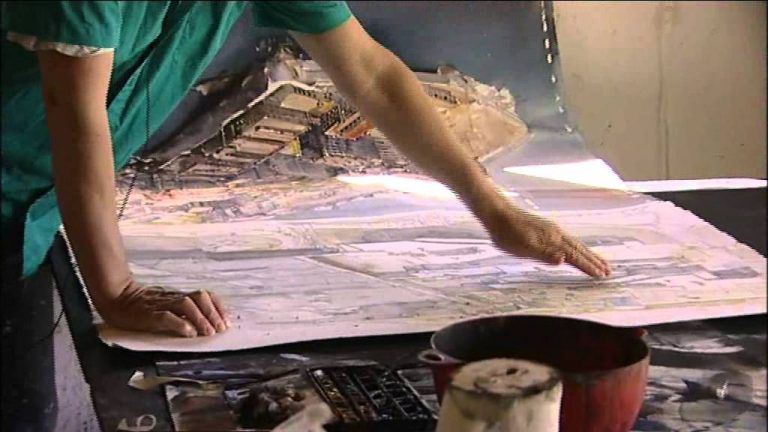
Lars Lerin is now back again a whole decade later at the Nordic Watercolour Museum. The 2014 summer exhibition presents new artworks, in which he continues to give fresh expression to atmospheres and feelings while at the same time depicting the visible world around us.

120515_Lars_Lerin_Library_watercolor
Lars Lerin’s watercolours, with their masterly play of light, affect us almost like an invocation. His images stick in our memory despite their not displaying any oddities. Our gaze wanders across the details – house facades, trunks of birch trees, patches of snow, abandoned farms and industrial towns. His pictures range from the chill of the Lofoten islands to the heat of India, from the forests of his childhood in Sweden’s Värmland province to unexplored stretches of Iran. Near and far brought together in one place.

120514_lars_lerin_photo_Manoel_Marques
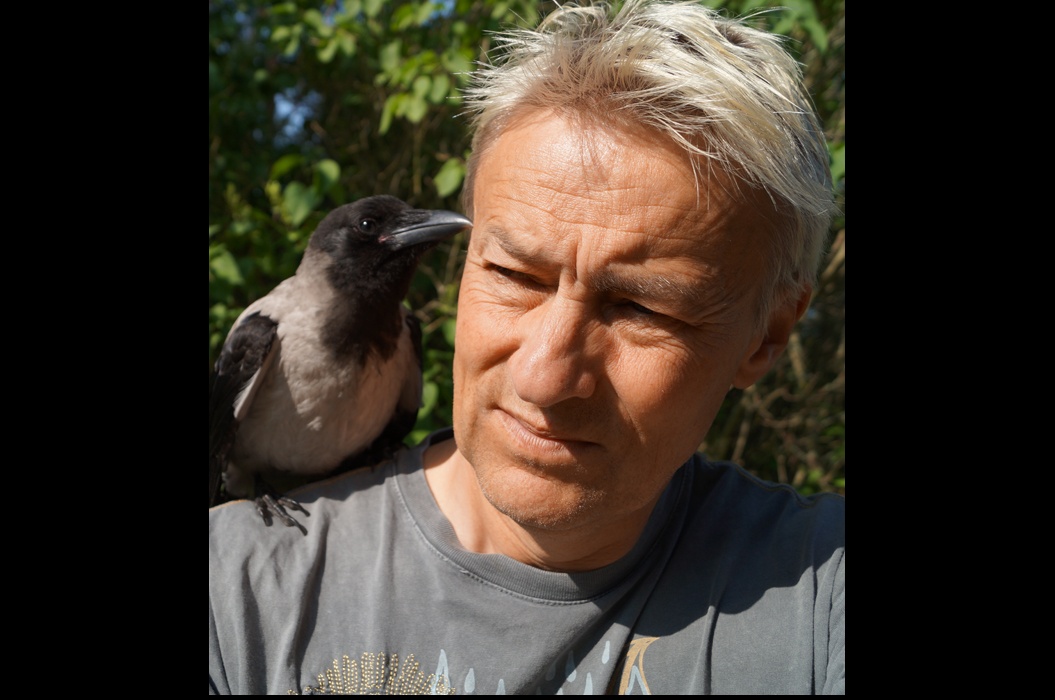
Lars Lerin was born and raised in Munkfors, Värmland. He studied at the school of Gerlesborg 1974-75 and at the Department of Fine Arts, Valand 1980-84. Lars Lerin is considered to be one of Scandinavia’s leading artists in watercolor technique. He has had solo exhibitions and group exhibitions in art museums and galleries in Sweden, Denmark, Finland, France, the Faroe Islands, Iceland, Germany, Norway and the United States. Lars Lerin’s work is exhibited in County Councils and Municipalities in Sweden and Norway.

Lars Lerin is also a prolific author and has since his debute Utpost (1983), written and released more than fifty books.

Visitors come to the Nordic Watercolor museum to view world-class exhibitions, listen to interesting lectures or enjoy a concert. The museum’s unique coastal site means that you can combine art with a dip in the sea, mingle cultural experiences with good food, or you can also visit the open studio to paint for a while.

The Lars Lerin exhibition opens May 18 and lasts through September 14.

Nordiska Akvarellmuseet
Södra hamnen 6, 471 32 Skärhamn, Sweden, Tel. +46 304-60 00 80

Best Festivals in Scandinavia

Daily Scandinavian’s choice of the month. Here is a list compiled by the editor showing what he considers some of the best festivals in Scandinavia. Everything from sports, classical music and rock to history. You’ll find something for young and old.  Enjoy!

Midsummer
Celebrated with bonfires, parties and great gusto across Scandinavia on the nearest weekend to 23 June.

080514_Midsummer_Sweden_Daily_Scandinavian

Holmenkollen Ski Festival. Norway
Oslo’s Holmenkollen ski jump is the focus of this traditional sports event, held annually in March.

080514_Holenkollen_Ski_Festival

Horsens Middle Ages Festival. Denmark
Medieval history is brought to life in late August at this lively festival, with music, dancing and traditional performances.

080514_Horsens_Medieval_Festival
Dalhalla Summer Music. Sweden
There’s something to appeal to everyone at this cavernous open-air arena, set in the depths of an abandoned limestone quarry near Rättvik. Its summer-long music programme encompasses opera, jazz, pop and rock.

080514_Dalhalla_Summer_Music

Roskilde Festival. Denmark
Northern Europe’s largest annual music festival, held over four days in early July, features world-famous rock and pop bands.

080514_Roskilde_Festival_Denmark
Bergen International Festival. Norway
Norway’s answer to the Edinburgh festival; from late May to early June artists and musicians flock to Bergen from all over the world to perform in this, the loveliest of Norway’s cities. Ibsen and Grieg are, of course, focal points.


Cycling in Sweden

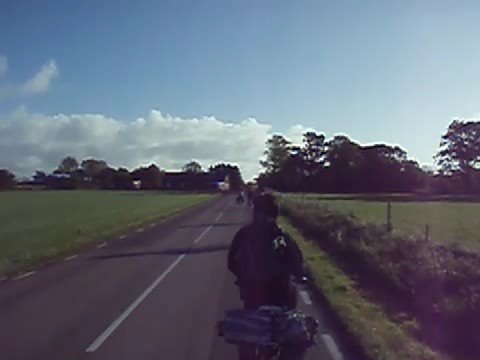
The upside of high gasoline prices in Sweden is that it encourages people to bike to school, work or shops. And since southernmost Sweden, the region known as Skane, has so many cyclists, it has developed an extensive system of bike lanes and trails, including converted rail lines, to accommodate them. That plus terrain ranging from level ground to rolling hills makes Sweden an unusually bike-friendly country. Another plus for travelers — English is almost a second language there.

Krankessjoen, Skane, Sweden

My husband and I have taken up cycling in our retirement, and since we have friends in Lund we decided to make a bike tour of Skane.

When we were planning our adventure, we had a hard time getting tourist information in English via the Web, but now Daily Scandinavian offers information in several interesting subhects, including cycling all over Scandinavia. The site mapmyride suggests biking routes on Skane and you may rent a bicycle here. The site Bopalantgard lists farmstay accommodations.

Using the Web to locate the tourist bureaus for some of the towns we planned to visit, we ordered a cycling map of Skane and a brochure from Osterlen, the southeast corner of Skane.

You find digital maps of Skane here.

We used the Web and the Lonely Planet Guide “Sweden” to locate lodgings along our route and booked via the Web.

We arrived at Copenhagen by plane and took the train across the Øresund Bridge/tunnel, which lasted for 20 minutes and deposited us in Malmö. Our friends from Lund picked us up at the train station and stored our baggage while we went on our week-long ride, cycling in Sweden.

Our route took us south from Lund, through Malmö and down to the port town of Trelleborg. The next day, we biked mainly along the coast to Ystad, and from there, again skirting the coast or passing quiet pastureland, we biked on to Brantevik, a small village on the coast just south of Simrishamn.

Brantevik, Sweden
Brantevik, Sweden

We stayed two nights there so we could spend a day biking around some of the old farm villages and visiting a 16th-century fortress, Glimmingehus, as well as touring the postcard-pretty town of Simrishamn.

Glimmingehus castle
Glimmingehus castle


We then headed north along the coast to Yngsjö and inland to the village of Everod. The next day, our only rainy day, we made directly for Horby, where we stayed on a small sheep farm. The route for our last day took us south through the nature preserve at Krankesjon and then over to Sandby, where the bike path follows an old rail line into Lund. We celebrated the completion of our trip with coffee and pastry in the old square in central Lund before picking up the bike trail back to our friends’ subdivision south of town.

Windmill in Skane
Windmill in Skane

Food and services were never a problem on our trip. Breakfasts at our lodgings were more than ample. Lunch consisted of fruit, bread and cheese purchased from stores along the way. Local restaurants provided ample, reasonably priced, well-prepared evening meals. At the sheep farm, the owner prepared us lamb stew in the evening, which was a real treat.

Skane is characterized by small fishing villages, farms, windmills, castles and neat old towns. For the most part, our route tended to follow marked bike routes or paths, so we were “off the beaten path” and avoided road traffic. We had to use some roads to make connections and found that most had shoulders, plus the drivers were used to seeing cyclists.

The prevailing wind blows west to east in the summer, which made the first legs of our adventure a “breeze,” though the trip back was a challenge. We generally covered about 35 miles a day, which made for easy rides with time for touring. We had rain one day, but otherwise the weather was cool and sunny.

Considering what a pleasant bicycling area Skane is, we were surprised at how few touring cyclists were there. We met only a few other folks, mostly Germans, who were making a similar circuit.

We felt our Scandinavian adventure was unhurried and relaxing and worked out well. We hope to try a repeat in the near future.

Written by guest contributor.

Oslo’s Non-Profit Art Gallery

Tidens Krav is an artist run enterprise located in the last down town block of scruffiness; the final frontier of Oslo low-life, in the middle of Oslo high life. The name, Tidens Krav, is a language specific expression that translates into “Time’s Demand”, or more loosely into “Whatever required by the now”.

Not limited to tendencies, fads, or flings, nor by faith or karma, the requirement of the now, could be you exhibiting yourself in your own gallery, your friends exhibiting themselves in their gallery, or us exhibiting each other in our galleries – the requirement of the now could be whatever – whatever given the connotation: “ok, that’s happening…”

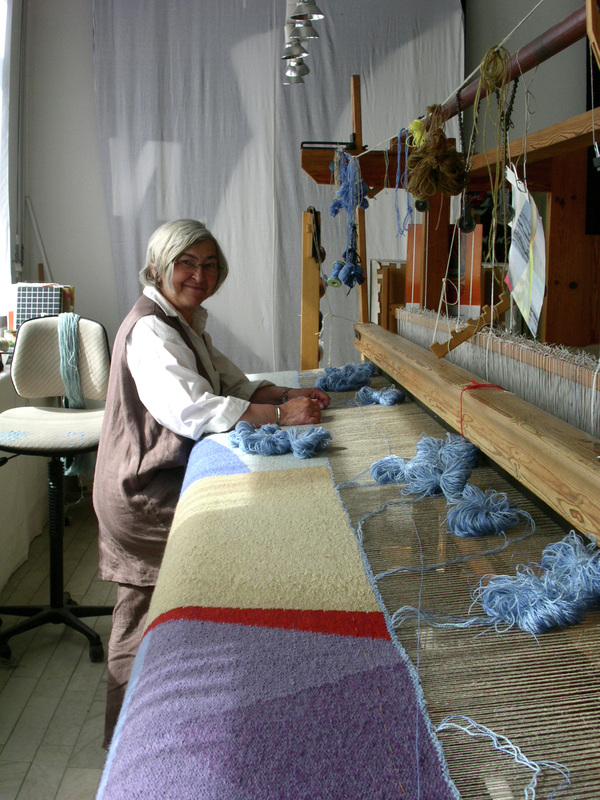
060514_Sissel_Blystad_at_workThe next exhibition presents works by artist Sissel Blystad from May 6 – 25.
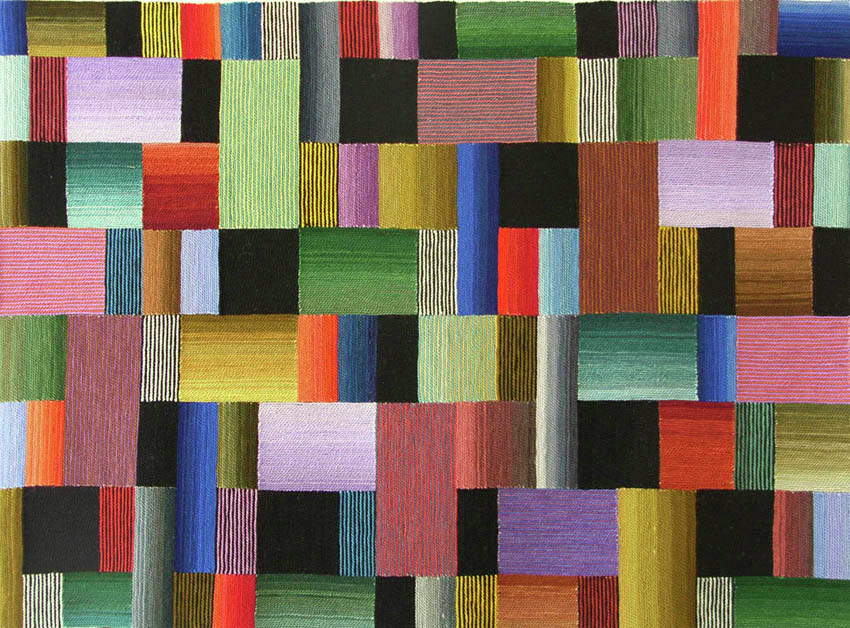
Finished with Bergen Arts and Crafts school in 1970 Sissel Blystad began to weave tapestries with stripes. The tapestries were so careful they appeared very daring. To weave tapestries where the composition consisted of horizontal bands of blue, red, yellow, purple, green and pink, what could this then mean? Of course the weaved stripes in tapestries do have reference to other, folk art, traditions, especially those on the Norwegian west coast, but this was something else, something different. Even if the tool was an ordinary flat loom, the weaving was a matter of picture-making: space, horizons, at home within our modern art concept.

Some critics have claimed that in large format her works are a form of monumental decor. I do see essentially more in them; even if the compositions are built up on the repetition of small basic elements they are supported by an underlying experience, such as the horizon of a landscape, a space, or a condition in an inner sphere, perhaps signals of tension or excitement, an uneasiness, a sway of emotion or an expression of great happiness, fun, celebration! The tapestry is a picture of something – maybe beautiful, but too active to be pretty.

Visit Oslo’s non-profit art gallery.

060514_Sisses_Blystad_work_from_2006
(From the catalogue of an exhibition in 1996 written by Peter Anker)

Sissel Blystads tapestries are alive, they continue to disturb.

060514_Sissel_Blystad_huge-dimensions

Biking in Oslo

Bike enthusiast and freelance journalist Oyvind Wold has just released the latest versions of his books “Cycling in the mountains” and “Bicycling in Oslo“. Here you will be inspired to try various bicycle routes both in town, in the woods and day trips in a variety of attractive mountainous areas in southern Norway.

050514_Oivind_Wold_Biking_in_Norway_2

050514_oyvind wold– I have focused on selecting diverse walks in nice surroundings and not more demanding than most can hold for them, says Oivind.  – There is an emphasis on family-friendly hikes of between 15 and 50 km in length. There are also suggestions for little more challenging trail bike tours for those who want to experience the wilder side of the forests around Oslo.
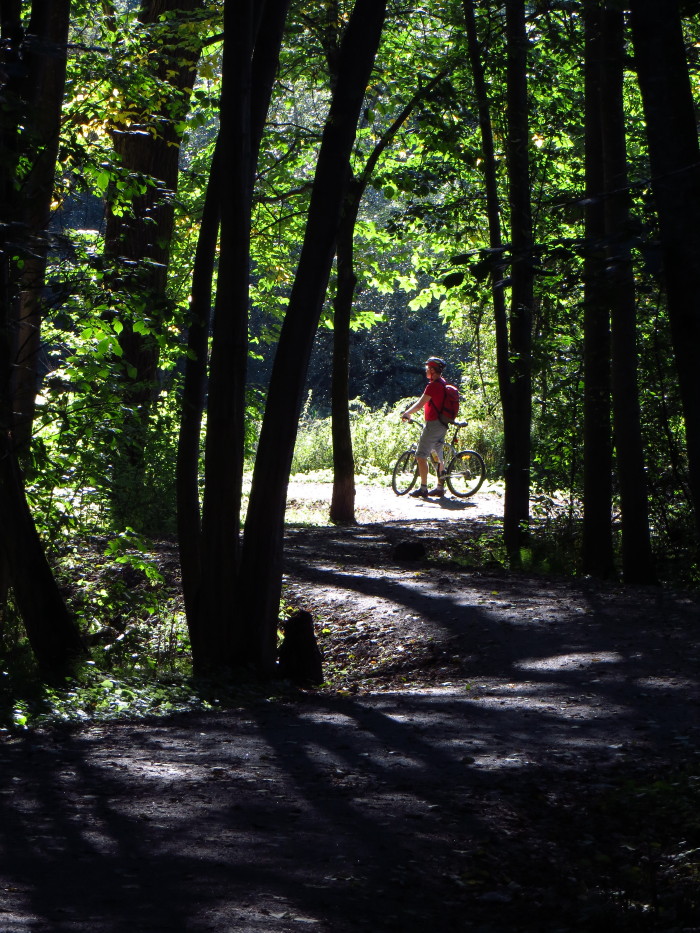
Wold says that the idea to make the Oslo book came when he discovered that quite a few of those who live in the city really do not know the possibilities for biking very well. He wanted to show unknown and exciting aspects of the city, different viewpoints, somewhat secluded swimming spots and beautiful but little used trails. For example, a chapter on trails along five of the city’s rivers, hiking trails which the author believes many in Oslo do not know.

We asked him to come with a tip for biking in Oslo, and a walk in the mountains. 050514_Oivind_Wold_Biking_in_Norway

Tour tip Oslo

Along the Alna river from Lillomarka to Svartdalen

Starting at Ammerud subway station. Ending at Galgeberg Crossing, Old Town

Distance: 9 km

Surface : asphalt , gravel and fine trail

Difficulty: easy

Season : about 1 April – 1 November

Suitable for: eclectic trip with little traffic; also suitable for children as young as 6-7 years of age

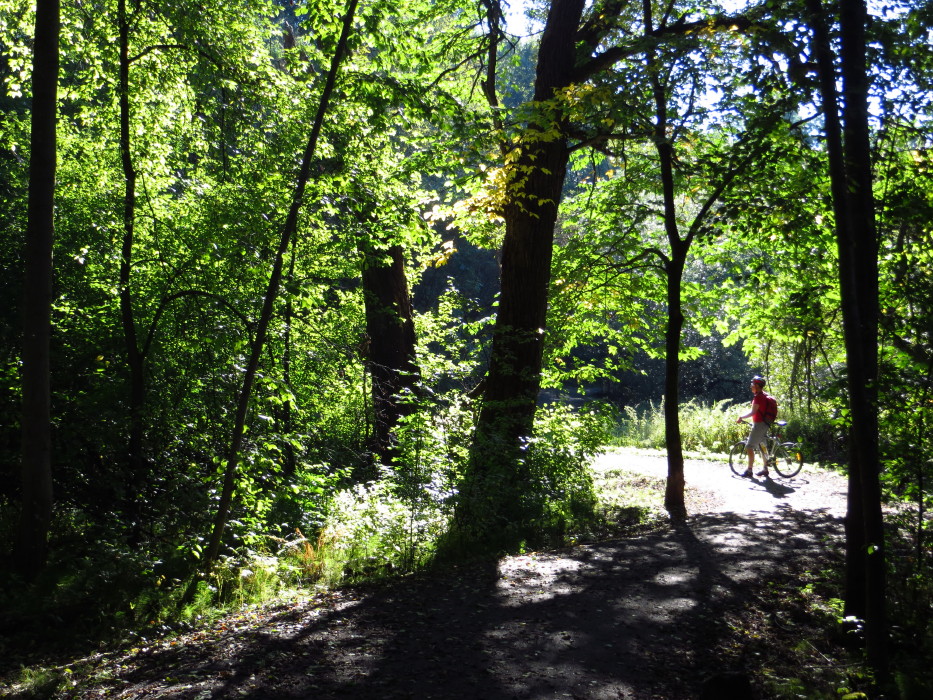
Description: One of the city’s secret trails! From Ammerudveien follow the river on the marked trail down through wooded areas , blocks of flats and eventually industrial areas, floodplains and finally the narrow exciting Svartdalen south of Bryn station . Along the way there are both swimming areas, picnic areas, one suspension bridge and several waterfalls.

050514_Biking_in_Oslo_BookMuch of the way we see only the river and the dense green foliage, it is sometimes impossible to know that you are in the middle of a big city, especially when you’re in what is called the Alna park, south of Grorud station.

Oivind Wold is our contributor on biking in Norway.
All photos: Oivind Wold

Oslo Escape Routes

Between the Oslofjord and the forests lies the Norwegian capital. As a gateway to all of Norway, and as an inspiration for Disney’s Frozen, Oslo offers a unique combination of city life and easy access to great outdoors. Experience unknown Oslo by the means of four new maps, Oslo Escape Routes.

Oslo escape routes
Explore four captivating walks through Oslo – between the new harbor district Tjuvholmen and the post-industrial riverside area alongside the Akerselva river. Oslo escape routes are four caredully selected routes through the city centre of Oslo. The routes will guide the individual visitor through design, architecture, art and alternative culture in Oslo. All you need is a map and a comfortable pair of shoes. The map is available at the Tourist Information Centre at “The Thief” hotel, at the “DogA” – Norwegian Centre for Design and Architecture and at “Vulkan”, former industrial district at the Akerselva river, with hotels and Mathallen food court.

020514_Mathallen-Food_Hall_Oslo
The new Oslo is shaped by ground-breaking architecture, a nrw food culture and urban development of old industrial areas. The Oslo Escape Routes range of maps lead you through a new and different Oslo on foot, from Tjuvholmen in the west to Vulkan in the east.

020514_Oslo_Escape_Routes
Forget Holmenkollen, the Vigelandspark and Karl Johan. Today Oslo’s most exciting treasures are in new urban areas. “When it comes to architecture, design and population figures the biggest urban development in Europe in recent years has been taking place in Oslo. Many discerning guests are looking for new perspectives, and we welcome both the map and the initiative,” Tor Sannerud, head of tourism in Oslo, said when the range of maps was released at DogA – the Norwegian center for Design and Architecture earlier this year.

Urban energy
Oslo Escape Routes consist of four different routes with different themes: Architecture, design, art and alternative experiences, and is a partnership between DogA, Aspelin Ramm, the company behind Vulkan, and The Thief. All four tours run between Tjuvholmen and Vulkan next to the Akerselva river, two new urban areas which were formerly shaped by industry.

Now both of them showcase architecture, art, food and urban energy, bit both have their own distinctive identities. Tjuvholmen consists of several signal buildings on the waterfront and has the city’s highest building-plot prices, while the environment at Vulkan is more diverse.

Along the banks of Akerselve there is a fascinating mixture of industrial buildings transformed to house cultural institutions such as DogA, the Oslo National Academy of the Arts and Dansens Hus (House of Dance), Norway’s national dance theatre. Oslo city center is right in the middle.

Unknown pearls
“With Oslo Escape Routes we want to show that it is possible to walk through the city and encounter nrw pearls in every quarter you pass through. Oslo is so much more than the main street Karl Johan. The maps provide inspiration to experience Oslo’s many contrasts in a simple and easy-to-follow way,” says Anna Hammer, general manager of DogA.

020514_Opera_House_Oslo_Norway
The highlights of the architectural route are of course the two new prides of Oslo, Snöhetta’s opera building at Björvika and Renzo Piano’s Astrup Fearnley Museum on Tjuvholmen. The latter is also a stop on the art route, while the design toute leads you to less known perals such as Anti Bradstore and Fuglen (The Bird).

The route for alternative experiences crosses Våre Frelsers gravlund, visits DogA and passes Hausmania. Each route features goodies for the hungry and thirsty and those who want to shop.

Oslo Escape Routes are handed out for free in the reception at The Thief.