Scandinavia is a family-friendly region. The Daily Scandinavian editor has selected some of the best attractions for families in Denmark, Norway and Sweden. Enjoy!
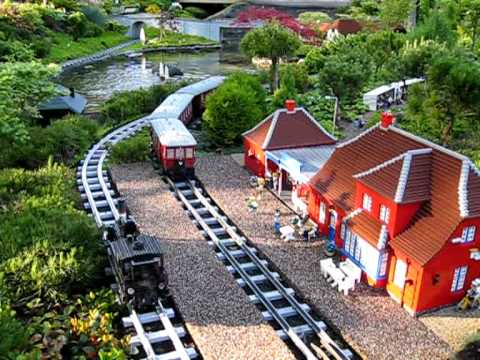
Legoland. Billund, Denmark Win eternal admiration by taking your children to Legoland, with bwaterpark, rides and the marvelous Miniland, created from 20 million bricks. Related article.
Tivoli. Copenhagen, Denmark Utterly delightful theme park and gardens, right in the heart of the capital city. Fountains and fairground as well as jugglers and acrobats make this a fun family day out for everyone. Related article.
Glasriket. Smaaland, Sweden For something a little different, let your children paint, engrave and even blow their own glass at a traditional glassworks.
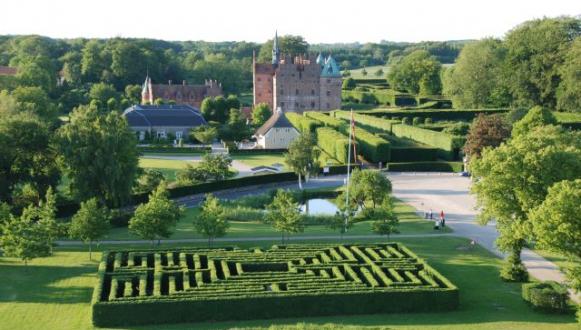
Egeskov Slot. Funen, Denmark One of Denmark’s most famous historic sights. This well-preserved fairytale castle has a gardenful of endearing attractions, including one of the world’s biggest permanent mazes. Related article. Norwegian Museum of Cultural History. Oslo, Norway The Folk Museum in Bygdoey peninsula offers something for children of all ages. Horse and wagon rides, livestock, folk dancing and music and a playground all in na charming historic setting.
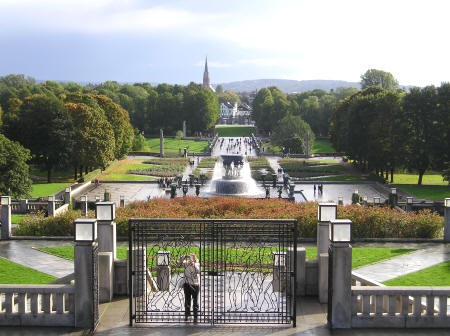
Frogner (Vigeland) Park. Oslo, Norway Oslo is a very family-friendly city, with outdoor pools, an adventure playground and the Vigeland sculpture park.
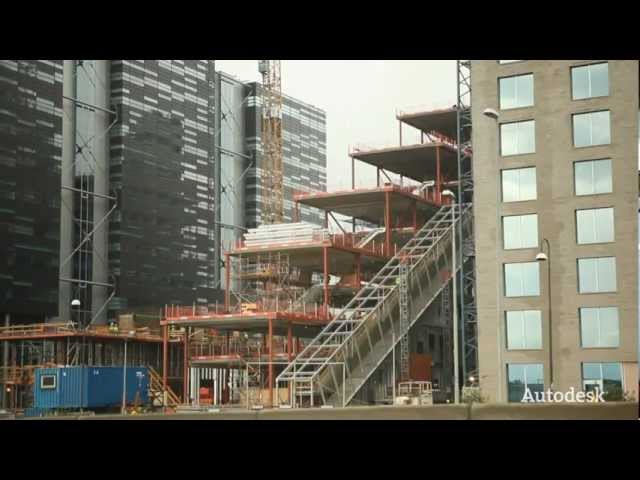
Oslo following many cities worldwide over the past two decades is redeveloping its waterfront, and rethinking the way it approaches the water, now that these areas are required less and less for industrial use.
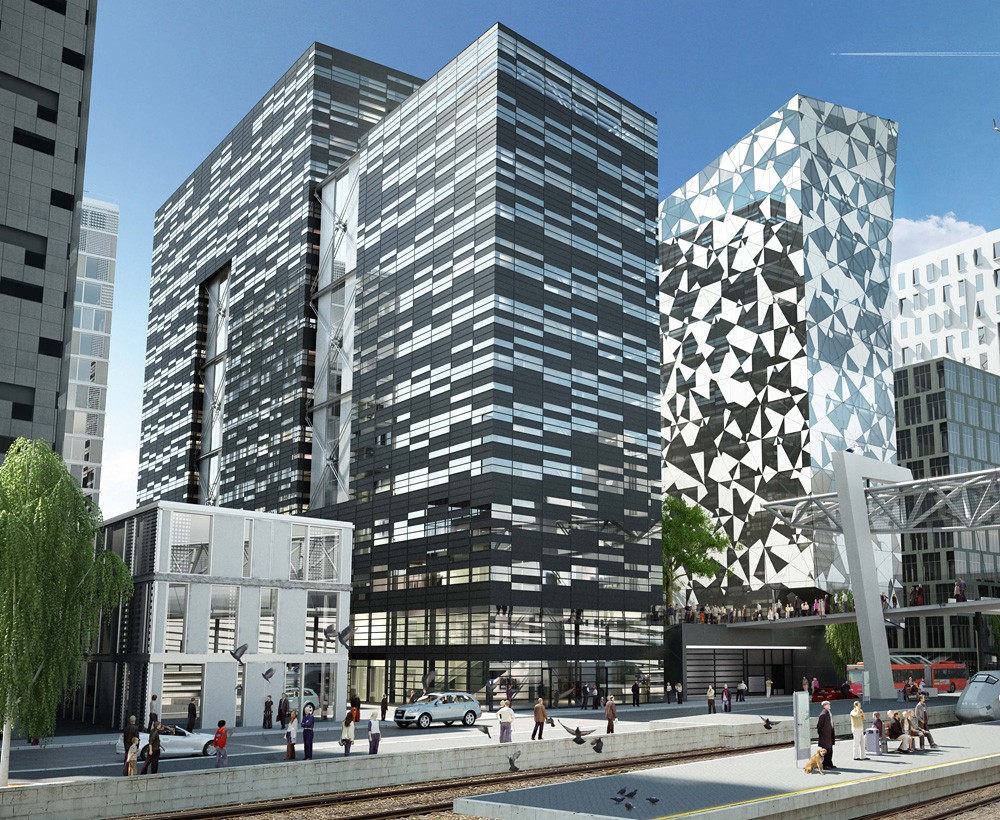
The area of Bjørvika, a no man’s land behind Oslo’s Central station is being redeveloped into a new city district. Barcode is the name of this small area of mainly office redevelopment, part of a greater regeneration of Oslo waterfront. It’s a tight space for offices with Oslo’s planning limitations deliberately changed for the area. Higher buildings are allowed, the tallest in Norway, and the planning law was aesthetically subverted too.
‘This is the first plan in Norway where rules are not drawn up regarding each plot, but instead there are rules for how plots within a particular area should be designed in relation to each other. If we design a house with a flat roof, then the next house may not have a flat roof. If we design a glass building, the next house must use a different material.
The Barcode masterplan was conceived by MVRD in partnership with a-lab and Dark. It’s interesting because the master plan imposes change between each new building without defining a particular style, only that it be different from the last. It also uses a modern ‘valueless’ iconography of the barcode to impose some order instead of an architectural aesthetic, a classic reworking of a MVRDV theme. I like that it reverses the normal planning rules and imposes non conformity with the neighbouring buildings to try to create a sense of urban life.
Hans Christian Andersen – you know the name and love many of his timeless characters, such as The Little Mermaid and The Ugly Duckling. But what about the man himself?
As the father of fairy tales, Hans Christian Andersen was a famous man in his time, courted by royalty and recognized for his greatness whilst living. Follow in the footsteps of Hans Christian Andersen and dwelve deeper into Hans Christian Andersen’s Denmark at these fascinating sites.
The Little Mermaid
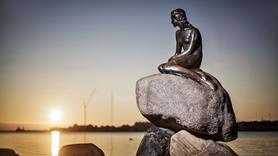
What better place to start a fairy-tale tour of Denmark than The Little Mermaid statue in Copenhagen Harbour. For over 100 years, she’s impressed visitors on her rock and is the most photographed statue in Denmark. You will find one of Copenhagen’s most famous tourist attractions at Langelinje Pier. 23 August 2013 she turned 100 years old.
Unveiled on 23 August 1913, The Little Mermaid was a gift from Danish brewer Carl Jacobsen to the City of Copenhagen.
The sculpture is made of bronze and granite and was inspired by Hans Christian Andersen’s fairy tale about a mermaid who gives up everything to be united with a young, handsome prince on land. Every morning and evening she swims to the surface from the bottom of the sea and, perched on her rock in the water, she stares longingly towards the shore hoping to catch a glimpse of her beloved prince.
Fell in love Carl Jacobsen fell in love with the character after watching a ballet performance based on the fairy tale at the Royal Danish Theatre in Copenhagen.
The brewer was so captivated by both the fairy tale and the ballet that he commissioned the sculptor Edvard Eriksen to create a sculpture of the mermaid.
Inspired by a ballerina
The sculpture was inspired by ballerina Ellen Price, who in 1909 danced the lead role in the ballet The Little Mermaid at the Royal Theatre. However, Ellen Price would not model in the nude for sculptor Edvard Eriksen. Thus Eriksen’s wife, Eline Eriksen, posed for the sculpture of The Little Mermaid.
The headless mermaid The little mermaid has several times been the victim of vandalism. Twice she has lost her head, once the arm was sawn off, and several times she has had paint poured on her.
But every time she is rescued and restored, so she can stay in her place by the water and bid travellers welcome to Copenhagen harbour. Nyhavn
Colourful Nyhavn is a must-see on any visit to Denmark. Hans Christian Andersen spent most of his life living in three different houses here and wrote many famous tales overlooking the harbour in Copenhagen’s centre.
Especially during summer Nyhavn is the perfect place to end a long day. Have dinner at one of the cozy restaurants or do like the locals and buy a beer from a nearby store and rest your feet at the quayside.
Nyhavn was originally a busy commercial port where ships from all over the world would dock. The area was packed with sailors, ladies of pleasure, pubs and alehouses.
Today the beautiful old houses have been renovated and classy restaurants dominate the old port. Nyhavn is filled with people enjoying the relaxed atmosphere by the canal, jazz music and great food.
Hans Christian Andersen’s Nyhavn
No. 9, Nyhavn, is the oldest house in the area dating back to 1681. The design of the house has not been altered since that time.
Many of the houses lining the quays of Nyhavn have been the homes of prominent artists.
Hans Christian Andersen used to live in no. 20. This is where he wrote the fairy-tales ‘the Tinder-Box’, ‘Little Claus and Big Claus’, and ‘the Princess and the Pea’. He also lived twenty years in no. 67 and two years in no. 18.
Hans Christian Andersen Fairy-Tale House The Fairy-tale House in Copenhagen guides the audience through a series of brilliant tableaux depicting the universally known fairy-tales by Danish writer Hans Christian Andersen.
The “live” exhibit boasts state-of-the-art lighting effects and a three-lingual sound system in Danish, English, and German.
In addition to the fairy-tale exhibits, you can visit Hans Christian Andersen’s study and listen to the great poet giving an account of his life and many travels abroad.
The museum also features a hand-written manuscript and a collection of props and appliances that were important to him during his lifetime.
Hans Christian Andersen arrived in Copenhagen in 1819 and several of the places that were the center of his life can still be visited today. Among these The Royal Danish Theatre, which played a huge role in his life as well as some of the cafés and homes he frequented. On HC Andersens Boulevard you can see one of the two statues of the writer in Copenhagen. The other one you will find in The King’s Garden. HC Andersen died in 1875 and is buried in Assistens Kirkegård in Nørrebro. The cemetery is beautiful, and the locals often use it as a park.
Scandinavia is a gastronomic treat, with fresh seafood in abundance. Here you can read about the finest food traditions in this part of the world.
Crayfish and shrimps parties
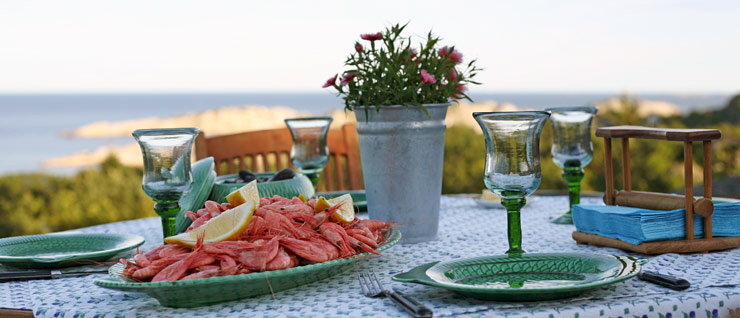
In July and August, crayfish and shrimp parties are the speciality to celebrate the long days in Norway and Sweden.
Artistic sandwiches Smørrebrød in Denmark and smorgasbord in Sweden – all wonderfully pretty hot-and-cold buffet dishes.
Pickled herring An acquired taste, but one that will always bring back fond memories of Scandinavia.
Cloudberries Picked and devoured in Norwegian and Swedish forests and mountains in late summer and early autumn.
New Nordic cuisine The rise of this type of food, led by Copenhagen’s pioneering restaurant Norma, has put Scandinavian’s capitals firmly on the culinary map.
Plan to experience the finest food traditions in Scandinavia now!
Jazz brings together communities, schools, artists, historians, academics, and jazz enthusiasts from all over the world to celebrate and learn about jazz and its roots, future and impact; raises awareness of the need for intercultural dialogue and mutual understanding; and reinforces international cooperation and communication.
This international art form is recognized for promoting peace, dialogue among cultures, diversity, and respect for human rights and human dignity; eradicating discrimination; promoting freedom of expression; fostering gender equality; and reinforcing the role of youth in enacting social change. Is this the reason why the Scandinavian jazz scene has been internationally acclaimed?
In 1987 American jazz pianist Armen Donelian wrote the following:
“For a musician coming to Norway from the United States, such as myself, it’s very refreshing to play with Scandinavian musicians who are familiar with the methodology of improvisation but have a different tradition. I have a different experience playing with Norwegians than I do with musicians in New York, where I live.
The Norwegians’ sense of rhythm is freer, and there is a darker, more introspective quality to their music. I don’t want to say American Jazz musicians are burdened, but we have a tradition, a tradition from the’40s through the ’60 of using Broadway show tunes and pip music (as springboard for improvisation). And a tradition is at once beautiful and limiting. We may not be able to conceive of playing certain things in certain ways because we conceive of playing them in other ways.
The same holds true for Norwegians. Although jazz has been played in Norway at least since the ‘20s, they don’t have the tradition that goes back top black slaves coming out of the Mississippi Delta. They have their own pop tunes and their own folk tradition.
Norwegian (read Scandinavian) jazz musicians are knowledgeable about the American tradition, but because they grew up outside of it, they have a certain freedom to take whatever they want from that tradition and incorporate it into their own.”
Copenhagen Jazz Festival
Copenhagen Jazz Festival July 4 – 13 Every single summer since 1979 Copenhagen Jazz Festival has been taking over Copenhagen as one of Europe’s most important international music events based on eminent artistic quality and a sharp focus on new departures in both Danish and international jazz. Lasting 10 days, the festival envelops the Danish capital, offering a sumptuous musical feast to the 250,000 guests who join us year after year. Enjoying live jazz on the city’s streets, in its clubs cafés and concert halls, and at open-air night venues – all in the very heart of historical Copenhagen.
Copenhagen’s legendary status as one of the jazz capitals of Europe grew in the 1950s and 1960s, when a whole host of leading American jazz icons had their creative base in the city. Among those who have called Copenhagen home are Dexter Gordon, Stan Getz, Ben Webster, Stuff Smith, Ed Thigpen, Thad Jones and Kenny Drew. Each and every one of them has drawn inspiration from Denmark’s jazz scene and the era’s most important jazz club: Jazzhus Montmartre. This was also the time when some of Denmark’s best musicians had their international breakthrough, musicians like Alex Riel, Niels-Henning Ørsted Pedersen and Palle Mikkelborg.
Copenhagen’s unique jazz history is a key factor in the exceptionally high level of the Copenhagen Jazz Festival, something that can be experienced at the many free open-air stages strategically located throughout the historical city centre. Together with Copenhagen’s record number of cafés and music venues, these stagers create a unique atmosphere, bringing the city alive with jazz from early morning to late at night. As Signe Lopdrup, director of Copenhagen Jazz Festival, says: “People don’t only come for a fantastic musical experience, but for the unique atmosphere throughout Copenhagen when jazz takes over the city.”
The festival audience can listen to top international jazz names at the stunning Royal Theatre, Copenhagen’s Opera House and Jean Nouvel’s architectural world-class Koncerthus – as well as along the harbour front, where they can take a dip in the clear waters to the sounds of Danish and international jazz. Copenhagen Jazz Festival also proudly presents music at the border of jazz and other genres as part of the programme ‘Something Else’. And everyone’s welcome to take their kids to the beautiful parks to the east of the city where thousands of children and their parents flock every summer to enjoy a packed programme of live jazz, circus, painting workshops and singing – all part of the ‘Jazz for Kids’ festival programme.
Copenhagen Jazz Festival takes a pride in reaching many – and new – audiences, with tailor-made programmes for pensioners and teenagers, kids and their families, as well as catering for jazz aficionados and enthusiasts. Visitors can look forward to Copenhagen as a friendly and creative city where it’s safe to wander around accompanied by jazz night and day. A modern and open-minded metropolis that can be experienced at its very best during Copenhagen Jazz Festival.
Oslo Jazz Festival
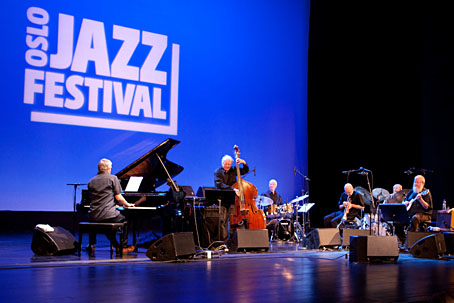
Oslo Jazz Festival August 11 – 16 For jazz lovers, this annual event in Oslo is the ultimate festival. The Oslo Jazz Festival takes place every year in mid-August and attracts thousands of music-lovers during the Norwegian capital’s festival.
The Oslo Jazz Festival offers visitors a variety of performances and concerts – not only jazz, but also entertainment in similar musical styles like blues and soul. Among the big names are Bebel Gilberto and John Hammond, and there are countless other well-known jazz performers.
The jazz festival’s main venues are the Grand Hotel, the Oslo Domkirke (Oslo Cathedral), and the Oslo Konserthus (Concert House) in Norway’s capital Oslo.
Stockholm Jazz Festival October 10 – 19 Stockholm Jazz Festival is one of Sweden’s oldest festivals and Stockholm’s biggest jazz events. Stockholm Jazz Festival is a festival with a solid reputation in the music world and is considered one of the most well kept and friendly festivals that long had it’s home on the island of Skeppsholmen. With the move to Skansen in 2011 we began the journey into the future.
Stockholm Jazz Festival
In 2012 the festival landed indoors, on the best venues in Stockholm. The festival moved to the Concert Hall (Konserthusert), House of Culture ( Kulturhuset), and, of course, to the jazz club Fasching. But it didn’t stop there! 2012 was also the year when the festival spread out over nearly 20 “satellite venues” around Stockholm and many more all over the country!
It’s now 2014 and we’re looking forward to another great festival. It will be a real jazz manifestation. Ten days, with over twenty venues, filled with the best jazz!
There are several other jazz concerts in the three Scandinavian countries during the summer months:
Nature is powerful in Norway, perhaps nowhere more so than in the Lofoten Islands, 123 miles north of the Arctic Circle.
This 118-mile-long archipelago of small fishing communities set against a dramatic wall of towering snow-patched peaks – granite formations that date back several billion years – has drawn increasing numbers of mainlanders (and foreign artists) attracted to its seclusion, special light, bracing vair, and unpolluted waters.
Viking woman at Saltstraumen
The traditional rorbu (fishing cottage)was traditionally built on the docks extending out over the water; today they are popular as rentals for their simplicity (and the insight into the local way of life). This steep island-world is bathed in summer nights of eight-hour dusk, with the midnight sun shining from June until late July. Svolvaer (population 4,000), the main town for the islands, has a thriving summer art colony. Ferries arrive here from mainland Bodø, where Edgar Allan Poe spent a number of years writing A Descent into the Maelstrom, describing the unique phenomenon of immense volumes of water flushed through deep, narrow gorges with the outgoing tide.
Saltstarumen maelstroen
A maelstrom – the word, of Dutch origin, means “grinding stream” – is a furious, natural whirlpool (also known as “kettle”) thatr creates a goose-bump-inducing howl. Before catching the ferry to the Lofoten, visit Saltstraumen Brygge on the mainland to see what mesmerized Poe.
Fishing village Roest
I dare claim: Lofoten – an isolated archipelago of striking beauty!
Text and photos: Tor Kjolberg (Featured Image on top: The Island of Roest)
Only two months until the start of The Tall Ships Races 2014 and fifty nine vessels have already entered. The excitement is building and plans are being finalized for a fantastic summer of sail training, exciting racing and host port festivities.
Race entries are still being taken and all remaining vessel operators are urged to submit their completed entry forms by the closing date of Thursday 1 May 2014.
Ports, times and races
Harlingen, The Netherlands Thursday 3 – Sunday 6 July
Race 1
Fredrikstad, Norway Saturday 12 – Tuesday 15 July
Cruise-in-Company
Bergen, Norway Thursday 24 – Sunday 27 July
Race 2
Esbjerg, Denmark Saturday 2 to Tuesday 5 August
The Races start with a grand port event in Harlingen, The Netherlands. This will be the first Tall Ships event in Harlingen and the most impressive event of the year in the northern region of The Netherlands. Harlingen is one of the oldest seaports in The Netherlands and the Whadden Sea is on the UNESCO World Heritage list for its large marine nature reserve. It is a Tall Ships friendly port and at the forefront of all their activities will be the organization of activities for young people.
From Harlingen the vessels will race to Fredrikstad, Norway, a host port in 2005. The Tall Ship Races in Fredrikstad coincides with the celebrations of the 200th anniversary of Norway’s Constitution and independence. The port therefore promises a social and cultural program to give every crew member and visitor the ‘experience of a lifetime’. The port is at the center of the city, which is rich in culture and has hundreds of years of maritime traditions.
From Fredrikstad vessels and crew can leave race conditions aside and enjoy a Cruise-in-Company to Bergen, Norway – a Tall Ships host port for the fourth time. This will be the biggest and most attractive event in the western part of Norway, with an estimated 500,000 visitors over four days. Bergen is one of the world’s most beautiful natural harbors and promises the experience of a lifetime for the crews.
The final leg is a race from Bergen to Esbjerg, Denmark where a maritime celebration, enthusiastic crowd and great atmosphere are promising to greet the fleet. The port anticipates this to be the event of the year – if not the decade, with the whole community becoming involved – from sports clubs, to shops, restaurants and local businesses.
What is sail training?
Sail Training is an adventure activity, which includes far more than sailing instruction. Participants are required to confront demanding challenges, both physical and emotional. It is an activity that inspires self-confidence and personal responsibility. It promotes an acceptance of others, whatever their social or cultural backgrounds, and develops a willingness to take controlled risks. Those who undertake Sail Training on Tall Ships generally find it a positive life-changing experience.
About Sail Training International (STI)
STI is the international voice of Sail Training, a registered charity (not-for-profit organization), which has worldwide membership and activities. Its purpose is the development and education of young people through the Sail Training experience, regardless of nationality, culture, religion, gender or social background. It organizes the annual Tall Ship Races and other international Tall Ship sailing events. STI members are 29 national Sail Training organizations around the world and STI’s head office is in Gosport, Hampshire, UK.
The organization was nominated for the Nobel Peace Prize 2007 for its work in promoting international understanding and friendship.
Umeå – where the hell is it? And what’s so special about it? No doubt you’ve already heard about Stockholm. Umeå on the other hand, you’re probably still having trouble pronouncing. Well, it’s ‘u-may-o’.
Umeå is actually situated along the coast of the Baltic Sea, one of the last cities before the polar circle. Oh, and to answer your (unbidden) question – yes it’s a real city. With normal people, 118,000 of them in fact.
What’s worth seeing in terms of culture?
Culture isn’t just galleries and museums; in Sweden, music’s pretty high on the list. Umeå is no exception. To combat the blues induced by the long winters this far north, Umeå holds a Jazz Festival every October. It’s been running since 1968, making it Europe’s oldest, and it is still among Scandinavia’s largest jazz festivals.
Despite the reputation for ABBA-love, northern Swedes like to go to the opera. Created in 1978, Norrlands Operan is the city’s opera house and one of the strongest drivers of culture in the region with both modern and classic performances showing all year round.
Still, they do know how to rock. As well as having lots of local bands, there’s now a dedicated space for the icon of rock: the guitar. The newly-opened Guitars – The Museum is one of the world’s largest privately-owned vintage guitar collections, with 500 electric and bass guitars, and amps. There are enough instruments here to start a very large electric orchestra.
If music isn’t your thing, the local art museum Bildmuseet (the Museum of the Image) situated along the riverbank, is a center for contemporary art and visual culture as well as a place for experience, reflection and discussion. Designed by Henning Larsen Architects in collaboration with White, the building is definitely one of the most striking in the city. It was nominated for the European Mies van der Rohe Award 2013 – so the architecture buffs can geek out too.
Photography fans should visit the Sune Jonsson Centre for Documentary Photography at the Västerbottens Museum, which has an exhibition by famous local photographer Sune Jonsson’s depicting regional life in Västerbotten from the 1940s up until the 1960s. The center also holds workshops, seminars and a photo archive, so you can get a sense of just how much Umeå has changed.
Anything I can skip?
Umea’s pretty small, so you’re unlikely to need to skip things but if you’re short of time, don’t miss the Bildmuseet.
I’ve had my fill of culture – what else can I do? Umeå is the gateway to Sweden’s epic natural landscape – meeting an elk here is like meeting a sheep in Wales… sort of. If you want to get up close and personal with the ’king of the forest’, take a day trip to Älgens Hus, an elk farm around 80km (50 miles) outside Umeå, where visitors can pet these beautiful animals.
Let there be no soubt about it: Umeaa is a Swedish music loving city!
Norwegian director/writer Mona Fastvold received a prestigious production grant from The Norwegian Film Institute for her directorial debut, The Sleepwalker, which was co-written by Fastvold and Brady Corbet. The Sleepwalker premiered at Sundance last January in the US competition. The two of them are next set to shoot Corbet´s directorial debut which they also wrote together, The Childhood of a Leader. Her previous credits include a wide variety of well-regarded Music Videos.
“Two semi-estranged sisters and their mates spend an uncomfortable country weekend together in The Sleepwalker, a consistently intriguing psychodrama that may nonetheless leave many viewers feeling that it’s all buildup and scant payoff. Commercial prospects look iffy for helmer/co-writer Mona Fastvold’s debut feature, which gestures toward thriller and explosive-family-secrets terrain without ever quite committing to either,” wrote the entertainment paper Variety.
“The Sleepwalker proves all too apt a title for MonaFastvold’s debut feature, an oblique, haltingly paced drama concerning family secrets and wounded psyches. Euro fests and markets may warm to the film’s emotionally distant tone, but attracting American audiences could turn out to be a tough sell,” wrote the Hollywood reporter.
Perhaps the most daring film in the U.S. Dramatic Competition, Mona Fastvold’sThe Sleepwalker is an elliptical, borderline surreal study of childhood trauma and repressed memories. Director Fastvold lets the story simmer as the action builds in and around a secluded, half-renovated house in the woods. Ingenious use of sound design and atmospheric score drive the psychological turmoil as the film slowly reveals what the characters have been through. Actors Gitte Witt, Stephanie Ellis Christopher Abbott and Brady Corbet (who co-wrote the screenplay with Fastvold) create a mounting feeling of tension as odd behavior, inappropriate dinner stories and poor manners bring out everyone’s madness.
Mona Fastvold had her Norwegian directorial debut at Sundance January this year.
Northern Norway is known for northern lights, wildlife safaris and midnight sun. It is also home to the Sami, Norway’s indigenous people.
Cities and places
Many of the most important Sami institutions, such as the Sami Parliament, are located in Karasjok. Kautokeino is Norway’s largest municipality, covering 9,687 square kilometres, with a population of 3,000 people and 100,000 reindeer. Alta is one of Northern Norway’s largest educational and research centres and is home to the Finnmark University. Lofoten is known for spectacular nature attractions and good fishing.
Vadsø is the administrative centre of Finnmark and has offices belonging to the state government as well as the Finnmark county council.
The North Cape is the northernmost place on mainland Europe. Northern Norway consists of the counties of Finnmark, Troms and Nordland. Midway between Norway and the North Pole you will find the islands of Svalbard.
Landscape
Northern Norway’s landscape changes from alpine mountains and narrow fjords, with thriving coastal communities, to endless tundra and wilderness. There are mountains plunging into the sea from over a thousand meters at some stretches along the coast.
What to do
There is a selection of wildlife safaris in Northern Norway. Get close to whales, eagles, sea birds and king crabs. You can visit the North Cape and feel the breeze from the North Pole. Take a cruise with Hurtigruten (The Norwegian Coastal Voyage), which calls at many ports in Northern Norway. Snow scooter safaris and dog sledding are popular activities at winter.
Midnight sun and northern lights
In summer, night-time is just a dimmer version of daytime. The light of the midnight sun gives the landscape a magical and romantic dimension.
At winter the sun never rises and you can experience the magical northern lights, or aurora borealis, a spectacular colourful lightshow which dances across the sky.
The Sami
You can meet the Sami, Norway’s aborigines, who have their own language and culture. These indigenous people have strong traditions in fishing, hunting and reindeer herding, but have also adopted new technology and modern ways of living. There is a Sami theme park in Karasjok.















 “The Sleepwalker proves all too apt a title for Mona Fastvold’s debut feature, an oblique, haltingly paced drama concerning family secrets and wounded psyches. Euro fests and markets may warm to the film’s emotionally distant tone, but attracting American audiences could turn out to be a tough sell,” wrote the Hollywood reporter.