Copenhagen’s Culinary Scene

Scandinavia’s Gourmet Capital Continues to Influence the Global Culinary Landscape through New Restaurants and Star-Powered Chefs.

On the heels of San Pellegrino’s “World’s 50 Best Restaurants” list, Copenhagen continues to influence the global culinary scene, with Noma at number two and Geranium at number 45 on the list. While the ongoing influence of New Nordic cuisine has created waves of new interpretations from both former Noma chefs opening their own restaurants and foreign chefs coming to Denmark, Copenhagen’s culinary culture also embraces craft beer, rustic cooking, and designer-hotel cocktails.

New Nordic 2.0
Food fads come and go but New Nordic cuisine has a proven staying power. The opening of Noma in 2004 began a culinary movement that now inspires a new generation of chefs and a team of alumni who have branched out to create their own restaurants and are redefining the New Nordic philosophy.

Restaurant Noma
Restaurant Noma

The chefs behind Restaurant Bror, Victor Wågman from Sweden and Samuel Nutty of the United Kingdom, showcase their Noma roots through a clean menu full of fresh, seasonal vegetables and foraged edible flowers. Former Noma head chef, Matthew Orlando is starting his own venture with the opening of Amass in July last year offering a menu of New Nordic cuisine influenced by his international travels. Other takes on the New Nordic movement include Höst, meaning harvest, a concept from Cofoco (Copenhagen Food Consulting) headed by Jonas Christensen. The young talent is taking the cuisine to the next level by making it more accessible for a broader audience. Kadeau, a newcomer to the Michelin star family, continues the New Nordic movement with a menu focused on produce from the Danish island of Bornholm, the ‘sunshine island’ in the Baltic Sea.

New Kadeau Restaurant


Restaurant Bror
Restaurant Bror

Copenhagen chefs have also developed concepts that are unpretentious and playup Danish humor such as Pony, serving rustic cuisine such as pig, sausage, and steak tartar. Please note that this is a gay bar. Other irreverent concepts include Congo, owned by Casper Christensen, a comedic actor and talk show host in Denmark who has put his energy and love of humor into the restaurant. Informal spots like Marv & Ben (meaning marrow & bone), located on the oldest street in Copenhagen, offer traditional Danish cuisine in a warm and modest atmosphere.

Congo Restaurant
Congo Restaurant

Beers and Bars

Drinking is as essential as eating in Copenhagen and the gourmet capital offers plenty of libations from micro brews to expertly crafted cocktails. Inconspicuous bars such as Lidkøb Bar located in an old half-timbered house in the back of an alley on Vesterbrogade Street, are packed with full-bearded men in lumber jack shirts and open fireplaces. Housed in a former pharmacy lab, the bar will soon feature a whiskey lounge on the top floor.

Lidkoeb bar
Lidkoeb bar

Beer enthusiasts flock to taste the elixir of ‘the beer gypsy’ at Mikkeller, a brewery with locations in Vesterbro and Nørrebro and coming soon to San Francisco. Founder Mikkel Borg Bjergsø is known internationally as one of the most innovative and cutting-edge brewers and has made house brews for some of Denmark’s most prominent restaurants including Noma, Mielcke & Hurtigkarl and Kiin Kiin. The teacher turned brewer now runs the Copenhagen Beer Celebration 2013 which he started last year for beer geeks to celebrate extreme beer culture. More traditional Danish beer lovers are drawn to the Copenhagen Beer Festival, where guests are invited to celebrate the diversity of Danish beers, try rare foreign brews, and sample beer and food pairings.

At Mikkeller Bar
At Mikkeller Bar

Gourmet Hotels – Copenhagen’s New Trend

From fine dining to world-class brews, Denmark has a little of everything and Copenhagen’s top hotels are establishing themselves as destinations for both luxury accommodations and exceptional food experiences. Hotels are keeping the gastronomic-traveler in mind with award-winning chefs and chic bars including the recently renovated and über luxurious Hotel ‘DAngleterre, boasting the brand new restaurant Marchal from Michelin-starred Chef Ronny Emborg. The hotel also added Balthazar, Copenhagen’s first Champagne bar a few months ago.

Atop the Radisson Blu Royal, a uniquely designed hotel from Danish modern architect Arne Jacobsen, is the restaurant Alberto K. Also bearing the stamp of Jacobsen’s design, the restaurant has some of Copenhagen’s best views and will soon be helmed by Chef Jeppe Foldager, the winner of last year’s Bocuse d’Or Silver medal. Not far from there, The Nimb Bar at Copenhagen’s upscale Nimb Hotel, is a classic bar with an innovative and rotating cocktail list and was recently added to the eponymous “World’s Best Bars” list.

Alberto K Restaurant

To get a taste of all that Copenhagen has to offer, travelers can indulge in social dining experiences such as: Copenhagen Food Tours, Dine with the Danes, CPH: Gastro Tours from CPH: Cool, Guerilla Dining by Silver Spoon, or with one of the city’s exciting food festivals like the Copenhagen Cooking Festival running from August 22-August 31, 2014.

Wer hope you’ve got a taste of Copenhagen’s culinary scene by now.

Air France Has Opened New Route to Stavanger, Norway

0

The 31 March Air France opened a new route from Stavanger Airport Sola to Paris Charles de Gaulle.

This means that the residents of Stavanger area and visitors to Norway’s oil capital now have access to two daily direct flights to and from the French capital.

Paris is one of the world’s most popular destinations, and more than 30 million tourists visit the city every year. Now they can expand their flying schedules directly to Stavanger. Ticket prices from NOK 459 one way (including all taxes) make Stavanger a very affordable destination for visitors.

The two daily flights will be operated by Embraer 170 aircraft with seating for 76 passengers.

– We have very great faith in the Stavanger region. Sola will be our main airport in Norway after Oslo. The Stavanger region is a very exciting area, both oil capital, but also as a growth area for many other industries, says Daniel Eggenberger , Norway Head of AIR FRANCE KLM to Travel News.

Air France has opened new route to Stavanger, Norway:

Flight schedule:
AF 1747: Departure Stavanger 07:00, arrival Paris-Charles de Gaulle 09:10 (daily)
AF 1847: Departure Stavanger 12.45, arrival Paris-Charles de Gaulle 14.55 (daily)
AF 1846: Departure Paris-Charles de Gaulle 10.00, arrival Stavanger 12.05 (daily)
AF 1746: Departure Paris-Charles de Gaulle 19:20, arrival Stavanger 21:25 (daily)

Only in Scandinavia

Scandinavia is exotic, exciting, special and worth a visit. Here you may experience destinations and events not to be found nowhere else in the world.

Sami culture
The nomadic Sami still base their calendar and culture around ancient reindeer-herding traditions.

Swedish Lappland
In Swedish Lappland, about 200 kilometers north of the Polar Circle in the small town of Jukkasjärvi, you will find the world’s largest hotel made solely by snow and ice.

090414_Icehotel_CrystalChandelier

Scandinavian style
From Volvo cars and Arne Jacobsen chairs to Moods of Norway fashion, the success of Nordic design is a global phenomenon.

090414_Moods_of_Norway

Christiania, Copenhagen
A fascinating social experiment, the “Free City” is open to curious visitors.

090414_Christiania_Copenhagen

Father Christmas
Several places in Scandinavia claim Santa Claus as their own. Every year tons of letters to Father Christmas are received from all over the world from children with their X-mas wishes.

090414_Fasther_Christmas_Scandinavia

Norwegian Stave churches
Two of the most striking of these ancient wooden churches are at Urnes at the west coast and the Heddal in Telemark.

These are some of the attractions you will find only in Scandinavia.

Photo: Tor Kjolberg
Photo: Tor Kjolberg

Nocturnal Norwegian Ice Climbing

0

A couple of years ago, German photographer Thomas Senf assembled a crew of top ice climbers and riggers, a huge pile of gear, and Swiss artist David Hediger, who works with the medium of light, in Eidsfjord, three hours east of Bergen, Norway, where frozen waterfalls line the fjord.

Working with the support of Mammut, and using Mammut athletes Dani Arnold and Steph Siegrist, Senf and his team created perhaps the most original Norwegian ice climbing portfolio ever shot.

“I had considered for a long time how to work with artificial light,” Senf said, “which is normally only possible in a photo studio, in major mountains. The idea of illuminating frozen waterfalls was the result of a meeting with Mammut. The transparency and reflective properties of ice in the sun had often caught my eye. With its virtually unlimited number of icefalls, Norway seemed like the perfect place to put our ideas into practice.

“Photography and filming at night is a big challenge. The right lighting determines whether you succeed or fail. The ways to play with the factors of light, time, and environment are boundless and fascinating in equal measure.”

Swiss climber Arnold, who holds the speed record for climbing the north face of the Eiger, said, “One moment the icefall looked like a dripstone cave, the next like a gothic cathedral.”

Thomas Senf
grew up in Leipzig. In 2002 at the age of 21 his passion for mountains made him move to Switzerland. Today he lives in Interlaken in the Bernese Oberland. Besides his studies in mechanical engineering he was constantly drawn to the big mountain faces of the world. In this context he and his friends succeeded in the first ascents of both the route Harvest Moon at the Thalay Sagar and the North Face of the Arwa tower, two peaks that are situated in the Garhwal Himalaya in India. Besides his qualification as a mountain guide, photography started to play an increasingly important role for Thomas. Today he works in partnership with the outdoor photo agency Visual Impact.

To realize his photographic projects Thomas Senf works together with outstanding athletes. Because of his personal skills in mountaineering, he has primarily specialized in the following areas: Mountaineering, rock climbing, ice climbing, expeditions, B.A.S.E., outdoor, Air, Ski.

Spectacular Gaustadtoppen in Norway

0

The mountain road over Gaustatoppen between Rjukan and Tuddal is a spectacular scenic experience.
040414_Lasse_Tur_Gaustatoppen2
You start off up the narrow, steep, twisting road from Tuddal and continue up to Flistjønnskaret at an altitude of 1,260 meters. This is one of the highest mountain passes in Norway, and from here you can see Gaustatoppen towering magnificently above you on your left with Heddersvann lake on your right.

Further on you will pass Svineroi, where there is a turning off to the right to the area around Gausta and Kvitåvatn, where there are several hotels and other places offering accommodation and various different activities.

From Svineroi, the road winds its way down to Rjukan.

The photos in this article are from the book Gaustatoppen sett fra oven (Gaustatoppen seen from above) taken by our associate photographer Lasse Tur.

See other books by Lasse Tur here.

Read also Pictures from above.

Read more

Spectacular Gaustadtoppen in Norway.

040414_Lasse_Tur_Gaustatoppen3

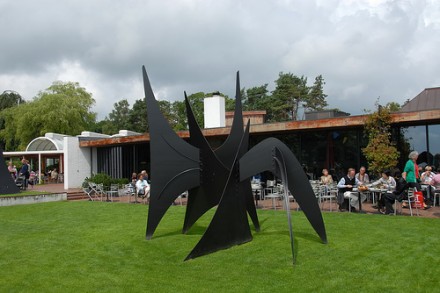
Louisiana Museum of Modern Art, Copenhagen

A Remarkable Day Trip and Not Just for the Art

Louisiana Museum of Modern Art, Copenhagen

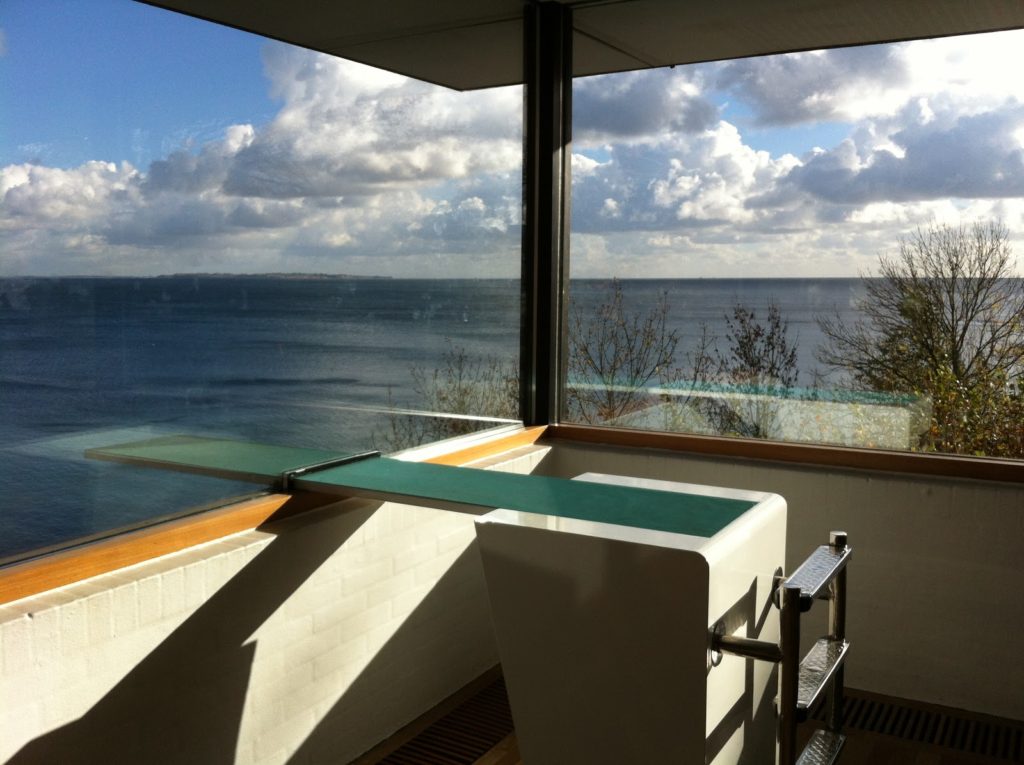
Follow one of Zealand’s most picturesque drives north of Copenhagen to this exceptional museum situated at a stunning site on the “Danish Riviera”. Since opening in 1958, the Louisiana Museum has brought together art, nature, and architecture in perfect harmony.

Its highly regarded exhibitions of modern classics of post-WW II era as well as the (sometimes controversial) vanguard of contemporary art are displayed in spacious, natural-light-flooded halls that embody the very essence of Danish modernism.

Louisiana Museum of Modern Art, Copenhagen
From the exhibitions

No less impressive is its permanent collection, including an estensive collection of the fragile and spindly sculptures of Alberto Giacometti and works by Picasso, Francis Bacon, and George Baselitz.

Louisiana Museum of Modern Art, Copenhagen
The sparkling waters of the Oresund separates Denmark from nearby Sweden

The sparkling waters of the Oresund that separates Denmark from nearby Sweden vie for your attention from every window, and the open-air sculpture garden boasts work by such artists as Alexander Calder, Henry Moore, and Jean Arp.

The origin of the name of the Louisiana Museum of Modern Art, Copenhagen, is a curious one: the original landowner had a succession of three wives, all named Louise.

Source: Louisiana Museum of Modern Art, Copenhagen

Weekend Cabin in Vega, Norway

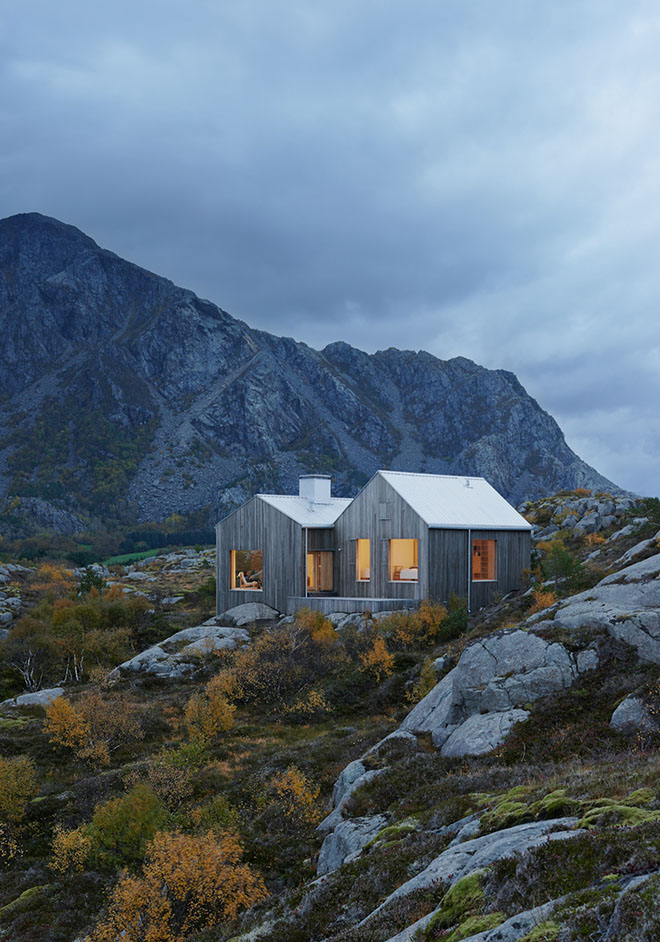
The house stands on the island of Vega in the Norwegian archipelago not far from the polar circle. The site is distinctive for its grand and harsh northern landscape with wide panoramas of the Norwegian Sea and the jagged mountains rising from it.

020414_Cabin_in_Vega_Norway

Seemingly growing from the landscape, the weekend cabin in Vega, Norway sits on a rock beneath a granite shoulder negotiating the uneven terrain. As not to disturb the dominant view towards the sea, access to the house is given through a narrow natural ravine densely grown with gnarled birch shrubs and laid out with sea-sand from the nearby shore. The surrounding landscape remains untouched and wild.

The large windows of the house face three directions, each with its strong unique characteristic. They are simple and robust in detailing and the optically white glass conveys undisturbed frames of the ocean, the mountain range and the bedrock. 020414_Cabin_Vega_Norway_2

Organised on two levels adapting to the terrain, the plan is compact, providing generous social spaces within a limited floor area. The upper level is comprised of smaller scale bedrooms and family rooms, whereas the lower level is a large gallery-like space structured around a stone hearth.

Completed in linseed oil painted pine with untreated birch skirting, frames and reveals – the interior is kept subtle with a character of being hand-built – promoting tactile qualities and the attractive patina developed over time.

020414_Cabin_Vega_Norway_interior
Written by guest contributor

Portraits Showing Life Before Death

Coming up spring/summer 2014: Life before death (Noch Mal Leben), showing 26 portraits of death – exploring experiences, hope and fair of the ones that are dying.

010414_Noch_mal_Leven_1
Few experiences are likely to affect us as profoundly as an encounter with death. Yet most deaths occur almost covertly, at one remove from our everyday lives. Death and dying are arguably our last taboos – the topics our society finds most difficult. Opportunities to learn more about them are rare indeed. Experience the exhibition at Norsk Teknisk Museum in Oslo between March 4 and August 25.

The exhibition with portraits showing life before death in Oslo is in collaboration with Kreftforeningen / Norwegian Cancer Society
010414_Noch_mal_leben-3

Photographer Walter Schels and journalist Beate Lakotta asked terminally ill people if they could accompany them during their last weeks and days. This exhibition explores the experiences, hopes and fears of the dying, and gives them one more opportunity to be heard. All of them agreed to be photographed shortly before and immediately after death. The majority of the 26 subjects portrayed spent their last days in hospices. All those who come to such places realize that their lives are drawing to a close. They know there is not much time left to settle their personal affairs. Yet hardly anyone here is devoid of hope: they hope for a few more days; they hope that a dignified death awaits them or that death will not be the end of everything. In preparing this exhibition, Walter Schels and Beate Lakotta spent over a year in hospices in Germany.
See also: Noch Mal Leben

Hans Gedda & Masters of Darkness

Last chance to visit National Museum in Stockholm showing some 140 works by Hans Gedda, one of Sweden’s most notable photographers. Portraits of international and Swedish celebrities appear alongside still lives and semi-documenatary images, from the 1950s to the present day. The exhibition lasts until 30th of March.

Hans Gedda
 (born 1942) has long been recognized as one of Sweden’s most notable photographers. This retrospective will feature some 140 works: a mix of portraits, still lifes and semi-documentary images. The sliding scale on which the various genres are classified invites questions such as what constitutes a portrait, and what makes it different from other motifs. The featured works will cover Gedda’s long and productive artistic career from the 1950s to date.

Hans Gedda displayed a precocious talent for photography, making his artistic debut while still a teenager. The exhibition will therefore include several early works never previously exhibited. It will then trace Gedda’s ongoing development, from his student days with Teddy Aarni in Eskilstuna through the period he spent as assistant to Rolf Winquist at Ateljé Uggla.

NMGrh 4877

FAMOUS PORTAITS

Gedda’s breakthrough came in 1967 with his portraits of Sara Lidman and Tove Jansson. As one of the dominant components of Gedda’s oeuvre, portraits will make up a major part of the exhibition. Visitors will encounter well-known images of Angela Davis, Andy Warhol, Nelson Mandela and famous Swedes such as Olof Palme, Birgit Nilsson and Jonas Gardell. In these portrayals, time and space are non-existent; everything is pared down. Examples of closeness and distance alike can be seen. One of the most innovative works is a portrait of King Carl XVI Gustaf.

NMGrh 4874

COMMERCIAL AND ARTISTIC

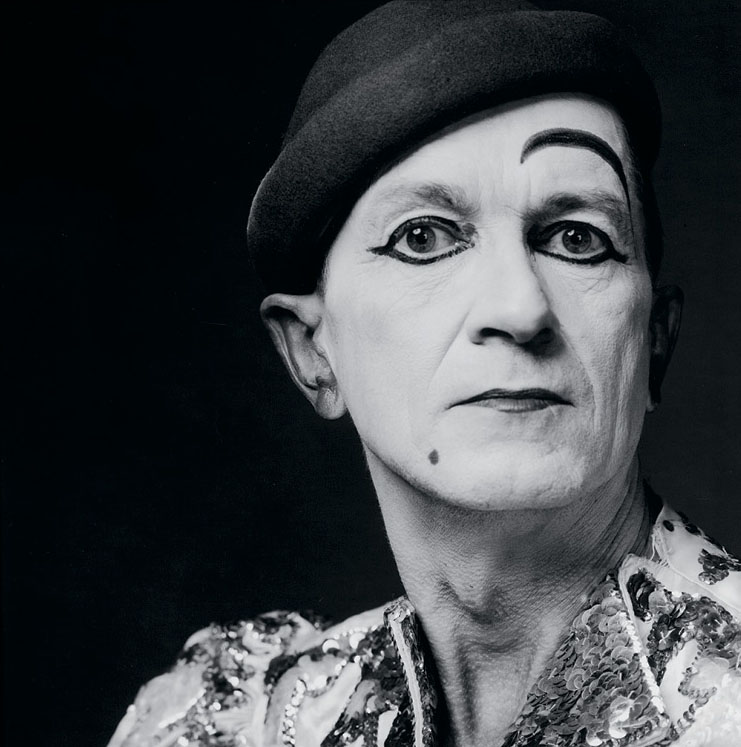
Gedda has worked as a commercial photographer all his life, frequently changing perspectives and using the same models in his artistic projects. His pictures of older men with colourful personalities were created in parallel with jeans advertisements. Another example is Gedda’s circus images, commissioned by Cirkus Scott, which mix portrait photography with semi-documentary photojournalism. Since these are among the most fascinating of Gedda’s works, separate sections will be dedicated to them.

310314_HansGedda_Clown

As far as self-portraits are concerned, Gedda has employed a variety of motifs as reflections of himself. He has appeared both as a white clown and as a still life in the form of scrap metal parts. In this way, he continues to experiment to this day with a sliding scale covering a number of genres such as portraiture, nature studies and still life.

310314_gedda_cirkus_princess

MASTERS OF DARKNESS

As a historical counterpoint to Gedda’s contemporary imagery, a selection of works from Nationalmuseum’s collection of Caravaggisti and related artists will be on view.

In early 17th-century Rome, a group of artists devised a radical painting style that was a major influence on baroque art and, later, on photography and cinema.

The distinctive features of their paintings are strong contrasts between light and dark, dramatic narratives, and real, flesh-and-blood characters. The strong emotional expression and tense, almost aggressive composition have appealed to contemporary filmmakers such as Scorsese, Jarman and Pasolini. Although more than three centuries separate the Caravaggisti from Hans Gedda’s images, they have many features in common.

A total of 30 oil paintings by 24 artists from six countries will be exhibited. The artists include famous names such as Jusepe de Ribera, Francisco de Zurbarán and Jacob Jordaens. Nationalmuseum does not own any originals by Caravaggio, on whom these artists modelled themselves, but does possess a high-quality collection of works by his followers.

CATALOGUE

To coincide with the exhibition, a lavishly illustrated catalogue has been published in Swedish and English. It contains two essays by Magnus Olausson and Eva-Lena Karlsson, the exhibition curators, which draw extensively on numerous conversations with Gedda.

GUIDED TOURS AND PROGRAMMES

A full listing of guided tours and programming for adults and children is now availalble.

To Be or Not to Be at Hamlet’s Elsinore

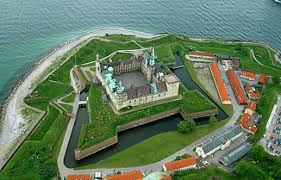
So Elsinore Castle’s real name is Kronborg Slot, and so it was built centuries after the time of the Danish prince in whom Shakespare based his tormented, brooding Hamlet. But his fortified Nordic icon of secret passages, with its suitably dungeon and canon-studded battlements, could not have been a better backdrop for Shakespeare’s dark tragedy. 

280314_Kronborg_Slot_seen-from-above

After several miles of sleepy fishing villages along the coastal road north of Copenhagen, the great moat-encircled castle rises above the town of Helsingor that grew up around it. Filling its vast coffers via “400 years of legal piracy,” Helsingor Castle (as it is also called) collected tolls paid to the Danish crown from passing ships, until taxes were abolished in 1857.

Hamlet’s Elsinore, originally built in 1420 and enlargened in 1574, Kronborg had all the trappings og a great regal Renaissance residence.  Its starkly furnished Knights Hall is one of the largest and oldest in northern Europe; the luxurious caste chapel is still the dream of wedding location for many a lucky Danish couple.

Occasional performances of Hamlet are staged in the torch-lit courtyard where audiences can envision the inky fog and the tormented prince agonizing over the “slings and arrows of outrageous fortune.”

280314_Holger_Danske
Meanwhile, somewhere off in a dark and dank chamber reposes the spirit of Viking chief Holger Danske, a mythic Charlemange-era hero: legend has it that as long as he sleeps, the kingdom of Denmark will be safe.