

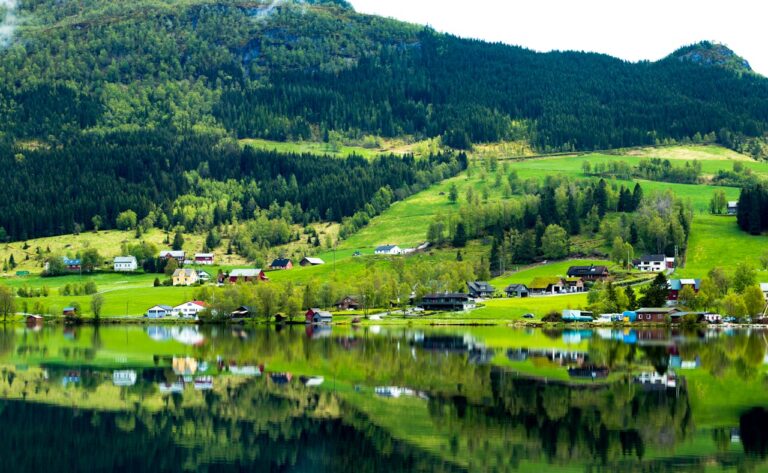
From Urban Hustle to Tranquil Fjords: A Guide to Moving to Rural Norway

0

The land of Odin and Thor is calling you back. Picture living close to nature, surrounded by lush green fields and the stunning beauty of the Norwegian fjords. It’s time to reconnect with the essence of life in rural Norway, where your backyard offers sweeping views of forests and mountains. This article, From Urban Hustle to Tranquil Fjords is a guide to moving to rural Norway.

Imagine walking the same lands, exploring Nordic folklore in a quiet retreat where family bonds are strengthened, and daily life slows to the rhythm of nature. Moving to rural Norway offers a return to simplicity and peace, far from the hustle of city life.

Why Move to Rural Norway?

Norway’s rural areas offer a peaceful, serene lifestyle that many seek in order to escape the noise and chaos of the cities. The vast landscapes of mountains, forests, and fjords provide an ideal environment for those who cherish nature, silence, and a slower pace of living. Living in rural areas allows you to enjoy activities like hiking, fishing, and exploring nature right in your backyard. Here are some other benefits of moving to rural Norway:

  • Close connection with nature
  • Tranquil environment for family life
  • Access to endless outdoor activities
  • Smaller, tight-knit communities
  • Opportunities to grow your own food and enjoy a sustainable lifestyle

Although rural Norway offers all these benefits, it’s important to remember that living in the countryside can be quite different from urban life. There are fewer services and amenities, and the pace of life is slower. However, the quiet and calm it brings are well worth the adjustments.

Moving to Your New Country Home

The light of Valkyries will not show you the way from a different country.  When relocating to a new country, especially one as unique as Norway, it’s essential to have the guidance of international moving experts who can streamline the process. They can assist with everything from packing and transporting furniture to ensuring your personal items arrive safely and on time. Their support can make the transition to Norway much easier.

an old home in rural Norway
When moving to rural Norway, you can choose from a variety of real estate locations for buying, renting, or building. Photo: Ketut Subiyanto/Pexels

Choosing Your Home in Rural Norway

One of the first tasks upon moving will be finding a place to live. Norway’s rural areas offer a variety of housing options, from charming cabins to modern homes. The availability of larger properties with beautiful views makes rural living especially appealing. Websites like Finn.no and Homestra offer a range of listings, from renting to buying, and you’ll likely find more affordable options than in the bigger cities.

Adjusting to the Seasons

One of the most unique aspects of rural Norway is the drastic change between seasons. Winters can be harsh, with snow covering the land for months, but this is when the country is at its most magical. Imagine living in a winter wonderland, with opportunities for skiing, snowshoeing, and experiencing the Northern Lights.

On the flip side, summer in rural Norway offers long days of sunshine, with the sun barely setting in the far north. The endless daylight provides the perfect chance to enjoy outdoor adventures, hiking, and exploring the stunning landscapes. Be prepared to adjust your routine to fit the changing seasons, and remember that each one brings its own special beauty to the landscape.

An old home in rural Norway
Adjusting to seasons might be a little bit harder, but it is all beautiful nature. Photo: Ikloeppel/Pexels

Coastal vs. Continental Rural Norway

Coastal rural Norway and continental rural Norway offer distinct living experiences. The sea areas are known for stunning fjords, islands, and access to the sea. These coastal regions are perfect for those who enjoy maritime landscapes and activities. The weather is milder, thanks to the Gulf Stream, which brings less harsh winters. Cities like Bodø and Ålesund offer beautiful views and a vibrant maritime culture.

In contrast, continental rural Norway is characterized by rugged terrain and colder winters. The temperatures are lower, and snowfall is heavier. Cities like Røros, a UNESCO World Heritage site, and Lillehammer, known for winter sports, offer a traditional atmosphere. Whether you prefer the peaceful coast or the mountainous interior, both regions provide an idyllic rural lifestyle, perfect for connecting with nature.

Sunrise in rural Norway during winter
Coastal rural Norway offers maritime landscapes and milder weather, while continental rural Norway provides rugged terrain, colder winters, and traditional charm. Photo: Roland Juhasz/Pexels

Moving to Rural Norway: Embrace a Simpler Life in Rural Norway

Moving to rural Norway offers the chance to reconnect with nature, live in a peaceful community, and enjoy a slower pace of life. While the transition may take some adjustment, the rewards are well worth the effort. From breathtaking landscapes to close-knit communities, rural Norway has much to offer those seeking a simpler, more fulfilling life. If you’re ready to embrace the beauty of the outdoors and step away from the city’s hustle and bustle, rural Norway could be the perfect place for you to call home.

Moving to rural Norway
Maria Cross

From Urban Hustle to Tranquil Fjords: A Guide to Moving to Rural Norway, written dedicatedly for Daily Scandinavian by Maria Cross. Maria is a professional content writer and a moving consultant at A2B Moving and Storage DC, with a passion for different cultures and mythologies. Through her writing, she shares practical moving and lifestyle advice to help people relocate and adjust to new settings. In her free time, Maria studies Nordic myths and writes poetry.

Feature image (on top) © Nextvoyage/Pexels

Smart City Sweden

Smart City Sweden is a state-founded export platform that initiates cooperation between Sweden and other countries within smart and sustainable city solutions.

Stockholm is the capital of Sweden and the country’s largest city. Built on 14 islands and connected by over 50 bridges, the city boasts a beautiful old town as well as very modern buildings. In 2016, the city, with almost one million inhabitants, topped the Ericsson smart city index. Today, it has dropped by a few positions, but it still features in the top 30 of the world’s smartest cities. Here are the Top 10 (2024):

Smart City Sweden
Smart Cities are urban areas that leverage technology and data-driven solutions to improve efficiency, sustainability, and the overall quality of life for their residents.
Rank City                              Change in rank Change in Rank
1 Zurich                                           0 0
2 Oslo                                              0 0
3 Canberra                                       0 0
4 Geneva                                        +5 +5
5 Singapore                                    +2 +2
6 Copenhagen                                 -2 -2
7 Lausanne                                    -2 -2
8 London                                        -2 -2
9 Helsinki                                       -1 -1
10 Abu Dhabi                                  +3 +3

**********************************************
Related: Danish Architect on What a “Real City” should look like
**********************************************

Smart City Sweden
Despite losing some momentum during the pandemic, Stockholm is again on a journey to becoming the world’s smartest city by 2040.

Smart Cities are urban areas that leverage technology and data-driven solutions to improve efficiency, sustainability, and the overall quality of life for their residents. These cities integrate various systems, such as transportation, energy, infrastructure, and public services, to create a more connected and intelligent urban environment.

Six regional offices around Sweden welcome international delegations on the decision-making level with an interest in implementing Swedish solutions in their local context.

Despite losing some momentum during the pandemic, Stockholm is again on a journey to becoming the world’s smartest city by 2040. This is the city government’s self-declared goal. It goes hand in hand with becoming carbon-neutral by 2040. Digital infrastructure will be key to “facilitating the services of the future”, ranging from IoT to 5G and data centers for edge processing and edge computing.

Sweden and the U.S. are actively involved in research and innovation related to smart cities, recognizing their potential to address urban challenges and support the green transition. Both Sweden and the U.S. recognize the importance of collaboration and knowledge sharing in the smart city domain. They actively participate in international networks, engage in partnerships, and share best practices to foster global advancements in smart city technologies and strategies. By investing in research and innovation, the aim is to create sustainable, inclusive, and resilient cities that enhance the well-being of their residents while minimizing environmental impact.

Smart City Sweden
Sweden and the U.S. actively participate in international networks, engage in partnerships, and share best practices to foster global advancements in smart city technologies and strategies.

Smart City Sweden gathers best practices from Sweden within six areas: EnergyClimate & EnvironmentMobilityDigitalizationUrban planning and Social sustainability. The organization tailors its visit programs depending on the needs of the visitors.

******************************************
Related: The Danish 15-Minute Concept
******************************************

Stockholm’s smart city strategy places great importance on sustainability, stating that a smart city is a sustainable city. Connectivity, publicly accessible data, smart IT platforms, sensors, and innovation are the pillars of the Swedish city’s plans for its urban future. Together with the employees, residents, businesses, and academia, a strategy for a smart and connected city was developed and approved by the City Council of Stockholm in 2017.

Sweden has been at the forefront of smart city initiatives, with a strong emphasis on sustainable urban development. Swedish cities prioritize research and innovation in areas such as renewable energy, energy-efficient buildings, intelligent transportation systems, and digital infrastructure. The country invests in research institutions, startups, and collaborative platforms to develop and test cutting-edge technologies, including advanced sensors, data analytics, and Internet of Things (IoT) solutions. Swedish smart city projects often focus on optimizing resource usage, reducing emissions, improving mobility, and enhancing citizen engagement through technology-driven solutions.

Smart City Sweden’s headquarters are located in Stockholm, but there is a lot to discover in all parts of Sweden. On its website, or by visiting one of the six regional offices, you can explore smart and sustainable city solutions from all over the country.

The City of Stockholm regards data as a community resource. The government works with open data wherever possible, hoping that more actors will use the city’s data to develop new and smart services. Providing this data in a standardized way is important for external developers to freely use it. Currently, open data from the city’s businesses and administrations are available on dataportalen.stockholm.se.

The U.S. also places significant importance on smart city research and innovation. Many U.S. cities are actively pursuing smart city strategies to address urban challenges and enhance sustainability. Research efforts in the U.S. focus on areas such as smart grids, energy management, intelligent transportation, urban mobility, and digital governance. Collaborations between academic institutions, technology companies, and local governments drive innovation, leading to the development of scalable and replicable smart city solutions. The U.S. government supports research and development initiatives through funding programs and grants, encouraging the adoption of emerging technologies and data-driven approaches in urban planning.

Smart City Sweden, reported by Tor Kjolberg

Norway Buys Submarines from Germany

0

Germany and Norway shelled out 5.5bn euros for six 212CD submarines between them in 2021: two for Germany, four for Norway. A new order for half a dozen more will even those numbers to six boats each. Read on and learn more about why Norway buys submarines from Germany.

Germany announced the submarine contract extension as part of €21 billion in defense spending approved by the Bundestag, the country’s parliament. Other approvals including the go-ahead for the F127 anti-air warfare frigate, Elbit Systems’ PULS rocket artillery, missiles for the Patriot air-defense system, reactive armor for the Puma infantry fighting vehicle and the development of sea-to-air missiles.

************************************
Related: Swedish Gripen Jets Joined NATO
************************************

Norway Buys Submarines from Germany
“The turning point in history is finally arriving in the maritime sector,” says Oliver Burkhard, CEO of ThyssenKrupp.

ThyssenKrupp Marine Systems is thus receiving with this comprehensive order expansion in the current 212CD program one of the largest orders in the recent history of the company. The President of the Bundeswehr Procurement Agency, Annette Lehnigk-Emden, and CEO Oliver Burkhard officially signed the contract in Koblenz on the basis of the parliamentary approval. An order of this size will involve advance payments that will have a positive impact on cash flow in the current financial year and will be used accordingly for the milestones of the order.

The 212CD is a hefty craft. At 74 meters long it is significantly larger than the 212A currently operated by the German Navy or the Ula-class of the Royal Norwegian Navy. “The cooperation with our Norwegian partner will provide our two armed forces with new opportunities for deployment in the context of national and alliance defense, particularly on NATO’s northern flank,” Lehnigk-Emden said in the statement.

Oliver Burkhard, CEO of ThyssenKrupp, emphasized the importance of the German contract extension: “The turning point in history is finally arriving in the maritime sector. We are delighted at the trust that the German government has once again placed in us with the additional order for the world’s most modern conventional submarine. We are making a decisive contribution to the changing times and strengthening the defense capabilities with this strategically important project between Germany and Norway.”

Norway Buys Submarines from Germany
212CD compared to 212A

This doubling of the 212CD fleet by the two Nato partners reflects obvious concerns about Russian machinations in the Baltic and further north. In Germany in particular, perhaps the acquisition will renew debate about the degree to which the country really wants to get over itself and finally grow into a military power commensurate with its economic and diplomatic stature.

************************************
Related: The World’s Largest Airship Fleet – In Finland
************************************

Norway Buys Submarines from Germany
“The cooperation with our Norwegian partner will provide our two armed forces with new opportunities,” says President of the Bundeswehr Procurement Agency, Annette Lehnigk-Emden.

“With the expansion of the 212CD order, other countries could join this project in the near future. Our strong position has now become even stronger. We are well on the way to achieving our goal of independence,” says Oliver Burkhard.

Norway Buys Submarines from Germany, reported by Tor Kjolberg

Scandinavian Blacksmithing Traditions: The Craftsmanship Behind Timeless Tools

Scandinavian blacksmithing history is an important part of the history of this part of the world and, thus, important for making the culture and economy what they became. Read on and learn more about Scandinavian blacksmithing traditions: the craftsmanship behind timeless tools.

This blacksmithing dealt with the work of hammering the mold to perfect some of the best and longest-lasting tools that have accumulated throughout history. This article shall hold a perspective in terms of history, techniques, and legions of Scandinavian blacksmithing to permit insight into how this ageless act is represented in modernity in tools.

The Origins of Scandinavian Blacksmithing

Scandinavian blacksmithing traces back to ancient times, but evidence says it started during the Viking Age. With the need to make long-lasting tools and weapons, the blacksmiths of these times were skilled at using the primitive hammer, the anvil, and simple forges to forge metal. The Nordic people, in their enterprise, depended extremely on blacksmithing to make everything from tools of agriculture to weapons of war. There would thus have been a wonderful mixture of blacksmiths in Scandinavia, working during the Viking Age, 800 to 1050 A. D. Viking blacksmiths were highly skilled craftsmen, whose works — swords, axes, and knives — attain an unequaled degree of artistry. These were more or less functional but were embellished and detailed with intricate set designs, a showcase of artistic avenues taken by the blacksmith.

Scandinavian Blacksmithing Traditions
Scandinavian blacksmithing traces back to ancient times, but evidence says it started during the Viking Age.

********************************************
Related: The Danish Viking Town
********************************************

Key Features of Scandinavian Blacksmithing Techniques

1. Forging by Hand

In Denmark, Nordic blacksmithing is virtually a classic use of hand-forging. Since time immemorial, blacksmiths have put iron in the forge to heat it; when it was red-hot, they made it malleable and hammered it, making use of hammers and anvils for shaping. This left the smith proud of botanical control over the metal and the ability to make implements that were super-ductile and sturdy.

Scandinavia has traditionally relied on experience and intuition to produce one-off pieces instead of machine-driven mass production.

The method of hammer-forging has been carried on through the ages, such that there still are blacksmiths today who wish to see these traditions live on.

2. The Use of High-Quality Steel

It is said that one of the reasons Scandinavian blacksmithing is so legendary is due to the high-quality steel used therein. The famous “Damascus steel” initiated by the Viking blacksmiths is recognized for its toughness, sharpness, and patterned appearance. After repeatedly folding and hammering the metal to remove impurities, it emerged as a strong work. This same principle of steelwork is what we practice today, only with less manual labor replaced with modern equipment.

3. Attention to Detail in Design

Like many other tools, the Viking sword, axe, and knife were not only functional but also of aesthetic concern to the Scandinavian blacksmiths. Their design often consisted of intricate patterns, engravings, and ornamental-style details. A belief in artistic design is present, even today, in some Scandinavian blacksmiths who build utilitarian tools and weapons with beauty in mind.

4. Artifacts for Living and Combating

Like all Scandinavians, these blacksmiths then practiced the art of designing tools fundamental to existence: knives for hunting, axes for cutting trees for building, and farming implements. Side by side with the blades fashioned for several kinds of fighting — Viking swords and axes, etc. These are the only types of weapons that can demonstrably speak of the skill of the blacksmith with their fine designs and working capacities. With utility and simplicity, therefore, without any allowance for luxurious features or ornaments that would unnecessarily increase weight, the Nordic people managed to survive under exceedingly tough conditions.

******************************************
Related: The Vikings – Medieval Thugs or Merchant Traders?
******************************************

Tools and Weapons of Scandinavian Blacksmithing

Scandinavian Blacksmithing Traditions
A Viking sword from Lesja, Norway. Photo: KHM/University of Oslo

1. The Viking Sword

The Viking sword is probably the most emblematic artifact produced by the blacksmiths of Scandinavia. These swords were characterized by long, curved blades, developed in some manner to cut with efficiency in battle. Swords of such craftsmanship were artistic as well as functional, with many decorated with quite unforgettable designs on the hilt or blade. The forging techniques in making these swords are worth studying because they account for an important part of blacksmithing in history and are still studied by modern blacksmiths in this regard.

Among the best-known Viking sword patterns is the Ulfberht sword. It was made of high-carbon steel and was noted for its toughness. The precise process of making these swords is still a subject of historical research and conjecture, but the legacy of the Viking sword is a symbol of Scandinavian craftsmanship.

2. Axes and Knives

Scandinavian blacksmiths produced many axes and knives for daily living and warfare. The Viking broad axe was designed so that it would serve its purpose well: long shoulders with broad blades made it good at chopping wood and fighting in battle. Knives, conversely, were used for anything from hunting to carving to eating.

3. Tools for Agriculture

Besides weapons and knives, Scandinavian blacksmiths also forged a tremendous variety of agricultural tools like hoes, plows, and sickles optimal for their generally unfriendly northern landscape. These tools were made to enhance the primary economy in the North. Their great durability attests to the abilities and craft of their makers.

Reflection of Blacksmithery Traditions of Modern-Day Scandinavia

Over the last few years, there has been a revival of interest in traditional Scandinavian blacksmithing. Perhaps inspired by this renaissance, blacksmiths around the globe, especially from the northern parts of Europe, fancied doing the closed doors of smithy to foster the development of high-quality hand-forged tools and weapons. Besides the romance of craftsmanship, it is also being fueled by a cultural movement to preserve the old traditions of its practice. One such organization upholding blacksmithing in Scandinavia is the Scandinavian Blacksmithing Association, along with Nordic Blacksmithing, fostering workshops, educational activities, and events to keep these skills alive.

Scandinavian Blacksmithing Traditions
Viking broad axe

The Legacy of Scandinavian Blacksmithing

Scandinavian blacksmithing has written its history in a big letter and, like Scandinavian craftsmanship, is still very relevant today. The famous swords of the Vikings came to work, while medieval blacksmiths used to forge many functional, durable agricultural tools in their short lives. It passes from generation to generation — the knowledge of blacksmiths in Scandinavia gives it life even today, that of being an art form as much as something functional.

Scandinavian Blacksmithing Traditions: The Craftsmanship Behind Timeless Tools – Conclusion

Scandinavian blacksmiths stand as instances of skill, artistry, and practical ingenuity among the Nordic peoples. The blacksmiths of the Viking Age symbolized craftsmanship and utility with tools, which remained timeless and lethal. The techniques and traditions, whether made in sword working or farming tool construction, continue to inspire present-day craftsmen with an undying torch for the excellent heritage.

Scandinavian Blacksmithing Traditions: The Craftsmanship Behind Timeless Tools, written for Daily Scandinavian by Fadir Tools.

The Importance of Reporting Scams in Norway

0

A Norwegian consumer was offered a trial package of dietary supplements, and there was no binding period. However, when the customer terminated the agreement, he received a debt collection notice for almost 2,000 kroner. It proves the importance of reporting scams in Norway.

Scams pose a serious threat to personal security and financial health, not just for individuals but for the economy as-a-whole. Therefore, it is important to report scams of any kind.

The Importance of Reporting Scams in Norway
If you have been unfortunate to order a sample package from Norwegian Lab, don’t be scared off by the debt collection claim if you have canceled further deliveries.

Forbruker Europa has received several inquiries about the health food company Norwegian Lab, where consumers say they feel they have been tricked into a subscription trap.

On Trust Pilot, a customer in Sweden wrote:

Fraudulent Norwegian lab company

“I subscribed to their product in February, but after receiving it, I found it subpar and promptly canceled in March. Despite this, they sent me another box in June with a 50% discount. To avoid the hassle of back-and-forth emails, I reluctantly paid the reduced price.

Fast forward to November, and I was shocked to receive yet another box, this time with a staggering SEK 1996 invoice. I immediately disputed it, as I had never resubscribed. The company ignored my emails completely. When I escalated the dispute to their invoice provider, Riverty, they outright lied, claiming I had resubscribed.

Their claim is blatantly false. If I had truly resubscribed, why would they give me a repeated discount, which is only offered for first orders? It’s obvious they are making things up to extort money. The customer service is atrocious—arrogant, unresponsive, and shamelessly trying to milk their customers.”

Date of experience: December 06, 2024

The Importance of Reporting Scams in NorwayForbruker Europa has been in contact with several people who experience that they are offered a trial package of dietary supplements, and there is no binding period after this.

They also say that money claims are quickly sent as debt collection notices. Many people are stressed and worried by this.

“You should not pay, and do not be intimidated by the debt collection claim,” says Linn Hogner Jahr in Forbruker Europa.

The Importance of Reporting Scams in Norway
“You should not pay, and do not be intimidated by the debt collection claim,” says Linn Hogner Jahr in Forbruker Europa.

She says that if you have not been informed that it is a subscription agreement, you are not bound by this.

“If you have received such a claim, you should send the company an email and write that you disagree with the demand and why. Feel free to attach a picture of the advertisement,” she says.

If you have already paid such a demand and are unsure whether it was correct, you can contact Forbruker Europa for help.

The Importance of Reporting Scams in Norway
The telephone sellers claim that the customer is in the latest draw for a gift card from their preferred grocery chain.

Non-serious telemarketers

The telemarketer who contacted the Norwegian customer, mentioned at the beginning of this article, started the conversation by saying that the customer was in the latest draw for a gift card from his preferred grocery chain. Was it Rema 1000, Norgesgruppen or Coop? A forgivable, but off-putting introduction. Probably, Norwegian Lab does not have an agreement with any of these chains, but we have not investigated this.

The customer has, however, later received several telephone calls from sellers from the same company, communicating the very same message.

The Importance of Reporting Scams in Norway
How can you believe in the nutrition value in products from a company with such a sales philosophy?

The customer has sent several complaints to the company as well as to their accountants (Riverty) and debt collector (Gouda). He has even involved his own insurance company. It should have been a straightforward case, but dispute has continued for weeks. The order was placed on December 2024 and terminated on January 2025.

As we’re publishing this story, the case has not yet been solved. The claim has not been settled either.

If you have been unfortunate to order a sample package from Norwegian Lab, don’t be scared off by the debt collection claim if you have canceled further deliveries. Avoid so-called welcome offers from Norwegian Lab. How can you believe in the nutrition value in products from a company with such a sales philosophy?

The Importance of Reporting Scams in NorwayIt is, however, important to report a case. Save all emails, text messages, social media messages, and any notes from phone conversations related to the scam. Document who you communicated with, the date/time of communications, and what was discussed. Keep records of any related financial transactions, including bank statements, receipts, credit card statements, and proof of payments. If applicable, document the account numbers, transaction IDs, and the amount transferred.

If the scam involved a website, take screenshots of the site, noting the URL and any company contact information listed. Record the dates and times when you accessed the site.

The Importance of Reporting Scams in Norway, reported by Tor Kjolberg

Oslo Open ’25 – Artists’ Anniversary Party

Back in 2000, 275 artists opened the doors to their studios for the first Oslo Open. The aim was to showcase art outside the traditional venues – and the rest is history. Experience the Oslo Open ’25 Artists’ Anniversary Party.

On 26-27 April, Oslo Open is celebrating 25 years of open studios with an award ceremony, art and music! Oslo Open’s board will announce this year’s honorary award recipient. The award is given annually to someone who has made an exceptional contribution to improving artists’ working conditions.

****************************************
Related: 50 Years of Living Art in Oslo
****************************************

Oslo Open ’25 - Artists’ Anniversary Party
Screenshot, participating studios

Expect an experience for all the senses: music from RnB artist Natnael, recently nominated for a Spellemann music award; an installation by artist Robel Temesgen; and an edible sculpture by artist Javon Bennett – everyone will get a taste. The program is curated by Nesteren Hasani and organized in collaboration with ØST KUNST.

When you go into a studio, you get a rare insight into the process and work that goes into a finished artwork. The program ØST KUNST and Nesteren Hasani have curated for this year’s opening party also explores the artistic process – in the form of experiments in art, dance, and music. The performers move across genres and expressions. By building bridges between different expressions, the organizers also want to create bridges between different parts of Oslo.

****************************************
Related: An Art Lover’s Guide to Oslo
****************************************

Oslo Open ’25 - Artists’ Anniversary Party
Monotype workshop with Enrique Guadarrama Solis Photo: Alejandra Aguilar Caballero

Visitors will be guided through the program for the evening by host Felipe “Fela” Orellana,  will also experience an improvised piece by the dance collective B16 and music by Mariama Ndure.

The exhibition Free Education for All: It is Time is open until 22:00. Use the chance to see the graduation show from the master students at the Academy of Fine Art (KHiO).

Oslo Open ’25 is celebrating that the studios once again are open on the weekend 27 and 28 April from 12–17. Welcome to the party!

Oslo Open ’25 Artists’ Anniversary Party, based on announcements from Oslo Open.

All images © Oslo Open
Feature image (on top): Fredrik Floen explaining his art. Photo: Jan Khür, Abrakadabra Studio.

Decorate with Swedish Textiles to Create a Warm and Cozy Feeling

0

Textiles have an incredible ability to transform a room. From being a bare and impersonal surface, the right choice of textiles can create a warm, inviting and personal atmosphere. This article, Decorate with Swedish Textiles to Create a Warm and Cozy Feeling, guides you through the world of textiles, from material selection to practical interior design tips.

A room without textiles can easily feel cold and echoing. Soft rugs, flowing curtains and comfortable cushions immediately make a big difference. Textiles not only add color and pattern, but also texture – a tactile dimension that invites touch and creates a sense of security. They also have a sound-absorbing effect, which contributes to a calmer and more harmonious environment.

Swedish textiles
Different materials convey different emotions and contribute to different styles.

Choosing materials for warmth and style

Different materials convey different emotions and contribute to different styles. Wool and velvet are classic choices for creating a warm and cozy feeling, especially during the colder months. Wool, with its natural texture, gives a rustic and genuine feel, while velvet, with its soft luster, adds a touch of elegance. Linen, on the other hand, gives a more relaxed and airy feel, perfect for a Scandinavian style. Cotton is a versatile and practical material that fits in most rooms and styles. For those looking for extra softness, bamboo bedding can be an excellent option, known for its silky feel. The choice of textiles, especially when it comes to bedding, is extra important in creating a restful sleeping environment.

Color and pattern – more than just surface

The color choice of your textiles sets the tone for the entire room. Warm tones such as beige, terracotta and muted pastels create a welcoming and cozy atmosphere. Light shades can make a room feel larger and airier, while darker shades contribute to a more intimate and cozy feeling. Pattern, on the other hand, adds personality and life. Textiles can even serve as inspiration for the rest of the room’s color palette – a beautiful pillow or curtain can set the color theme for the entire room.

Swedish textiles
The color choice of your textiles sets the tone for the entire room.

The art of combining patterns

Mixing and matching patterns can create an exciting and dynamic interior, but it’s important to do it with finesse. A good basic rule is to start with a uniform color palette. Choose two to three colors that you like and let them recur in the different patterns. For example, you can combine a large floral pattern with a narrow striped one in the same color range, or mix graphic patterns with more organic shapes. Another option is to stick to solid-colored textiles in different shades of the same color – this creates a calm and harmonious base, while the variation in texture adds life and depth.

****************************************
Related: 3 Ways to Incorporate Scandinavian Design Into Your Home
****************************************

Swedish textiles
Texture is at least as important as color and pattern.

Texture – feel the difference

Texture is at least as important as color and pattern. By combining different textures, you create depth and dimension in the room. Imagine a coarsely knitted wool blanket combined with a smooth silk cushion and a soft velvet armchair – it creates an interesting and inviting whole. The combination of different textures contributes to a vibrant interior design.

****************************************
Related: Swedish Furniture Design Conquers the World
****************************************

Practical tips for all rooms

Textiles are a fantastic tool for creating change and renewing the home. Here are some concrete tips:

Renew with cushions and blankets

Changing cushion covers is an easy and affordable way to renew the sofa or bed. Adapt the color and material to the season and mood. A soft blanket invites cosy moments and gives a feeling of warmth.

Swedish textiles
Changing cushion covers is an easy and affordable way to renew the sofa or bed.

Create room in the room with rugs

Rugs have the ability to define different zones in a room and tie furniture together. A large rug under the sofa group creates a clear and cosy seating area. Choose the material and color carefully – a soft rya rug gives a completely different feeling than a plain-woven rug made of natural material.

Frame with curtains

Curtains are so much more than just privacy protection. They frame the windows, affect the light entering and contribute to the room’s acoustics. Light and airy linen curtains create a summery feeling, while heavier curtains in velvet or dark colors provide a more cozy and subdued atmosphere during the winter months. One tip is to place the curtains a bit outside the window to maximize the light entering and create the illusion of a larger space.

Dare to use wall textiles

Textiles on the walls are an effective way to create a unique and cozy atmosphere. A beautiful wall hanging, a vintage fabric or a hand-woven rug can transform a bare wall into an eye-catcher. Textiles on the walls also improve acoustics by dampening sound and reverberation, which is especially valuable in rooms with hard surfaces. Using textiles on the walls can create new, exciting expressions.

Textiles in every corner of the home

The uses of textiles are endless. In the bedroom, soft bedding, bedspreads and blackout curtains contribute to a peaceful and restful atmosphere. In the living room, cushions, throws and a well-chosen rug create an inviting and comfortable feeling. Even in the bathroom, textiles can make a big difference – imagine the luxury of soft, fluffy towels and a comfortable bath mat. In the kitchen and dining room, you can use tablecloths, runners, napkins and chair cushions to create an inviting.

Decorate with Swedish Textiles to Create a Warm and Cozy Feeling, written by Lisa at tingest.se. Translated by Daily Scandinavian.

All images © tingest.se

Enjoy Beer in Warsaw

The Warsaw Beer Festival is more than just a meeting with good beer – it’s three days (April 3-5) full of positive energy, conversations, laughter and new experiences. Enjoy beer in Warsaw!

Since 2014, every spring and autumn, the organizers create a space where passionate people come together: craft brewers, beer enthusiasts, and everyone who enjoys a good time in a relaxed, friendly atmosphere.

Beer in Warsaw
The Warsaw Beer Festival is a place where friendships are formed, new flavors are discovered, and patterns are broken.

It is a place where friendships are formed, new flavors are discovered, and patterns are broken. Without pompousness, but with a heart for the craft and openness to anyone who wants to feel the atmosphere of this unique community, the Warsaw Beer Festival is not just about beer – it is a festival of people, ideas and endless creativity.

***************************************
Related: Foodie Adventures: Exploring Beer Culture Around the World
***************************************

For those longing for summer – the Warsaw Beer Festival brings together modern breweries from Poland and beyond. There are more than 1,400 beers to sample, food trucks that give a taste of Warsaw’s unique and multicultural food scene, and – if you’re done eating – competitions, master classes and features from the thriving alternative culture of the Polish capital. This is so much more than just a beer festival! After the festival, you can find your favorite beers on the OnTap.pl app – which will show you where to find a pint – there are more than 30 bars with local beer in Warsaw itself!

Beer in Warsaw
For those longing for summer – the Warsaw Beer Festival brings together modern breweries from Poland and beyond.

********************************
Related: Best Beer in Scandinavia
********************************

Warsaw’s street-food tradition is more than a century old and has always combined flavors from all over the world. The festival presents 19 selected food-trucks that offer a very diverse menu for every budget.

Enjoy Beer in Warsaw, reported by Tor Kjolberg

The Beauty of Sweden at Your Feet

0

IKEA designers Paulin Machado and Maria Vinka take inspiration from Sweden’s forests, meadows and beaches for an idyllic collection of handmade wool rugs. Bring the beauty of our home into your own. The beauty of Sweden at your feet.

With thousands of kilometers of coastline dotted with islands and archipelagos, and over half of the country covered in forests, lakes and meadows, nature is all around us in Sweden. Tiny fishing villages and cozy forest cabins are woven into the fabric of the land. So, when it came to designing a collection of handmade rugs, IKEA designers Paulin Machado and Maria Vinka didn’t have to travel far – inspiration was right here.

Using the surrounding countryside as their living mood-board, the collection of handmade wool rugs invites the rural beauty of Sweden into your home. Although not all rugs are available globally, they are just too beautiful not to share; not to mention, you’ll find plenty more to choose from in our handmade rug range at IKEA.

**********************************************
Related: From Blue Shopping Bags to IKEA Chick Fashion
**********************************************

The forest

Rows upon rows of tall green pine and spruce trees grow, but what’s that? A small red cabin sits nestled in the woods. Handwoven in wool and cotton, this playful pattern evokes the cosiness of a rustic log cabin. Where would you plant it in your home?

IKEA rugs
Dvärggras rug

“With the Dvärggras rug, I wanted to create something playful. Children have play rugs, maybe this is a play rug for grown-ups? I guess the design represents how many people think of Sweden. Trees, trees, trees and, look, a sweet little red cabin. I’d love to live in that little cabin. I would be among friends here. Among pines trees, spruces, rabbits, owls and mosses. Lovely,” says designer Paulin Machado.

West coast charm

From Gothenburg to neighboring Norway, Sweden’s west coast is dotted with fishing villages and small islands. Inspired by the vintage Bohus knitting style of the coastal region, the intricate blue stripe patterns of the HARSVANS rug rolls across the floor, reminiscent of waves breaking along the shore. The combination of different weaves, textures, and shades of blue bring a calming mood to any space. Lay on its flatwoven wool surface and pretend you’re floating in the open water.

IKEA rugs
The Harsvans rug

“The inspiration for the pattern of the Harsvans rug comes from the traditional Swedish sweaters that women in the small west coast fishing villages used to wear. Just like the sea out here – I think the pattern is beautiful and mysterious at the same time,” says designer Maria Vinka

In the meadow

Paulin Machado’s pastoral rug invites you to walk barefoot on its hand-knotted surface. Created using the pit loom weaving technique, the varying heights of the pile add extra softness and texture, making it ideal for creating coziness in the bedroom. Imagine waking up to step on soft blades of toe-tickling grass.

***********************************************
Related: Sweden’s IKEA Conquered the World with Innovation and Design
***********************************************

IKEA rugs
The Groddsvingel rug

“Groddsvingel is almost like an Impressionist painting – that you can walk on. And it feels good to walk on it, too. It’s like a tiny three-dimensional landscape under your feet. My intention was to create a feeling of a beautiful Swedish meadow with a small stream running through it. Can you see that? If you can’t, try to narrow your eyes and take another look,” says Paulin Machado.

The Swedish coastline

Enjoy the feeling of summer all year round in the home. Hand knotted with a mix of low pile and flatwoven surface, its textured chevron pattern is reminiscent of the wavelike ridges left by the tide on the beach. It’s sandy, toasted tones make for a neutral, cozy base for bedrooms and living rooms alike.

IKEA rugs
The KLAPPERSTARR rug

When the sun is setting on the west coast of Sweden, everything turns golden. The sea, the sand, even the grass seems to change from green to orange gold. The KLAPPERSTARR rug is like a snapshot of all that woven into a rug. It’s a piece of the Swedish coastline ready to roll out anywhere in the world.

The Beauty of Sweden at Your Feet, based on a press release from IKEA.

All images © IKEA

Danish Teacher Changing the Way We Learn Languages

0

Sigga Hansen, teacher and founder of Lingua Danica, is on a mission to make the Danish language and culture accessible to learners worldwide through social media. Read on and learn more about the Danish teacher changing the way we learn languages.

With over 75,000 followers on social media, @linguadanica has become one of the largest communities for Danish learners globally, offering resources and support to those eager to connect with Denmark on a deeper level.

Danish flag
Lingua Danica has become one of the largest communities for Danish learners globally

SIGGA’S STORY

Born in 1982, Sigga’s dedication to languages is the foundation of her career. Holding a degree in French and Spanish language, culture, and history, as well as specialized training in teaching Danish as a second language, she spent years teaching at prominent language schools in Copenhagen. In 2021, she took her expertise into the digital realm, launching Lingua Danica as an independent platform, with the mission of combining accessible online courses with dynamic social media content to support learners of all levels in discovering the Danish language and culture.

“I’ve always been passionate about building communities and making a meaningful difference for those learning Danish,” says Sigga. “Lingua Danica is the realization of that vision, allowing me to connect with students around the world.”

*****************************************
Related: Understanding the Scandinavian Language
*****************************************

EMPOWERING EXPATS THROUGH LANGUAGE

Lingua Danica serves a diverse audience, many of whom are expats in Denmark seeking to integrate more fully into their new home. “While Denmark’s English proficiency is widely recognized, learning Danish is key to unlocking deeper cultural and social connections,” explains Sigga.

Level up your Danish
“I’ve always been passionate about building communities and making a meaningful difference for those learning Danish,” says Sigga.

Students’ motivations range from professional aspirations to personal goals, such as communicating with Danish family members. “Learning Danish literally opens doors,” Sigga adds, emphasizing the practical and emotional benefits of fluency in navigating life in Denmark. Lingua Danica provides a bridge for newcomers, offering tools to help them thrive in their adopted country.

********************************************
Related: Scandinavian High School Dropout Has Sold Online Tutoring for $360K
********************************************

E-LEARNING: BREAKING DOWN BARRIERS

Recognizing the potential of e-learning, Sigga has embraced digital platforms to expand access to Danish language education. Through daily social media content—including tips, engaging reels, and cultural insights—Lingua Danica has made the learning process more approachable and enjoyable.

For those seeking a more structured approach, Sigga offers online courses that allow students to learn at their own pace, regardless of location. “Creating content that is both educational and entertaining is central to my approach,” says Sigga. “I want to make Danish a language that anyone can feel confident learning, no matter where they are in the world.”

Lear Danish by elearning
With a master’s degree in language studies from the University of Copenhagen Sigga began teaching Danish as a second language in 2010.

We have asked Sigga how she got where she is now.

With a master’s degree in language studies from the University of Copenhagen I began teaching Danish as a second language in 2010. By chance really! I applied for one job but got hired for another one as a Danish teacher. But oh boy! Am I happy for this life-changing opportunity!

When I started out teaching, I worked for two of the biggest language schools in Copenhagen, but since 2018, I’ve been a solopreneur, rocking it and helping Danish learners from all over the world to speak better Danish from my own company, Lingua Danica.

For the last few years, I’ve been discovering the possibilities of online teaching. I love how the internet makes the world smaller, making it possible for me to teach students not only in my own city but anywhere else in Denmark and in the rest of the world really.

For someone who never wanted to teach, it’s a pretty awesome turn of event… that helping people just like you(!) to speak better Danish turned out to be one of my biggest life missions!

Why did you do it?

I love when my students get those “aha moments” when they suddenly get something they never understood. And I love even more when they come and tell me about their achievements with Danish. Then I know my mission is accomplished!

Also, in Denmark, it’s possible for newcomers to manage just with English. But to get the full “Denmark experience”, to feel included in the society, it’s important to learn the language.

I’m here with the Danish toolbox under my arm, helping you towards those Danish goals you have, whatever they may be! Whether you want to work in Denmark or whether you do have a job but want to speak more Danish at work or whether you “just” want to be able to speak more in general, I’m determined to make this journey together fun and enjoyable!

So, jump on board and let’s learn Danish together!

Danish Teacher Changing the Way We Learn Languages, based on a press release from Lingua Danica.

All images © Sigga Hansen