Facing surging egg prices, the United States asked Denmark and other European nations last week if they can export eggs – even as President Donald Trump has threatened some countries with economic sanctions and steep tariffs, and despite Trump’s threat over Greenland. United States has asked Danish Egg Association to export eggs. According to Reuters, the U.S. Department of Agriculture has contacted Denmark and other European countries, asking them to ramp up egg exports amid the U.S. poultry farm’s battle with avian flu.
United States has Asked Danish Egg Association to Export Eggs, article continues below image.
The USDA’s reported openness to accept exports from Denmark is markedly different in tone than President Donald Trump’s. Photo: KLF
“We’re still waiting to get more guidance from Washington on next steps, but do you have an estimate of the number of eggs that could be supplied to the United States (assuming they meet all the import requirements)?” a USDA letter sent earlier this month to the Danish Egg Association said.
Trump promised to lower egg prices on his first day in office, but prices increased 59% on a year-on-year basis in February, the first full month of his administration.
The USDA’s reported openness to accept exports from Denmark is markedly different in tone than President Donald Trump’s. He repeatedly claimed he would annex Denmark’s self-governing territory Greenland, even threatening economic sanctions and refusing to rule out military action to seize the island for its natural resources.
***********************************
You might also like to read The Taste of Scandinavian Chicken
***********************************
The Danish Egg Association said it would look into the request but that there was no surplus of eggs in Europe. Photo: Dava Foods
The Danish Egg Association said it would look into it but that there was no surplus of eggs in Europe. European countries also process their eggs differently, not washing them of their natural protective coating, which requires them to be refrigerated, as they are in the U.S. The different hygiene standards could complicate how eggs are shipped.
Urban hiking is quickly becoming a trend for 2025. As more people seek accessible, sustainable, and engaging ways to stay active, city trails and green corridors have become the go-to choice for hikers of all experience levels. Read on and learn about the top five urban hikes in Sweden in 2025.
Sweden, with its well-planned cities, lush parks, and scenic waterfronts, offers some of the best urban hiking experiences in the world. Here are the top five urban hikes in Sweden this year:
Djurgården guest harbor. Photo: Visit Sweden
1. Stockholm’s Djurgården Loop
A classic favorite, Djurgården offers a blend of history, nature, and waterfront views. The 10km loop takes you through Royal Parkland, past cultural landmarks like Skansen and the Vasa Museum, and along serene canals. Whether you’re a casual walker or an avid hiker, this trail provides the perfect mix of urban exploration and green escape.
From Skargarden Gothenburg. Photo: Göteborg
2. Gothenburg’s Änggårdsbergen Nature Reserve
Tucked between the city and nature, this reserve is an urban hiker’s paradise. The trails wind through rolling forests, open heathlands, and scenic viewpoints overlooking Gothenburg. Depending on your chosen route, hikes range from 5 to 15km, making it suitable for various levels.
Ribban. Photo: Werner Nystrand/Bisit Malmö
3. Malmö’s Ribersborg Beach & Västra Hamnen
For those who love a mix of cityscapes and coastal scenery, Malmö’s Ribersborg Beach trail leading to Västra Hamnen is ideal. This 8km route lets you soak in the Öresund strait views, pass through vibrant cultural districts, and end at the city’s modern architectural hub, including the iconic Turning Torso.
Photo Niklas Lundengård / Destination Uppsala
4. Uppsala’s City & River Trail
Uppsala’s urban hiking experience offers a fascinating blend of history and nature. A 7km route along the Fyris River takes you past Uppsala Castle, the Botanical Gardens and Gamla Uppsala, home to ancient Viking burial mounds. It’s a perfect way to mix walking with cultural discovery.
Photo: Destination Lund
5. Lund’s Botanical Walk & Stadsparken Loop
Lund’s charm lies in its historic streets, university vibe, and green spaces. A 6km loop through Lund’s Botanical Garden, Stadsparken, and medieval city center offers a relaxing yet engaging urban hike.
Urban hiking is more than just walking through a city – it’s an immersive experience that blends exercise, culture, and nature. It’s about re-routing your commute to work, moving your body and re-discovering your city. The rise of urban hiking in 2025 can be attributed to several factors:
Accessibility: Unlike traditional hiking, urban hikes don’t require heavy and expensive gear, travel, or extensive planning. Anyone can step out of their door and start exploring.
Sustainability: It’s a great way to get around without a car and to avoid long car trips to national parks.
Social connection: Hiking in cities encourages community interaction, group hikes, and fitness clubs. At Merrell Hiking Club we have 3 events in Sweden this year! (See below).
Mental well-being: Studies continue to show the mental health benefits of walking and keeping your body active.
*********************************************
Related: Berry Picking in Sweden
*********************************************
Photo: Merrill Hiking Club
How hiking in towns and cities makes hiking so much more accessible
One of the biggest advantages of urban hiking is its inclusivity. Unlike mountain trails that may be challenging for beginners, city-based hikes provide a variety of terrains suited to all fitness levels. Additionally, urban trails are often equipped with benches, rest stops, and nearby cafés, making the experience more inviting for all ages.
With Sweden’s well-maintained green spaces, waterfront trails, and pedestrian-friendly urban planning, urban hiking is opening the doors for more people to enjoy the benefits of an active lifestyle.
Merrell Hiking Club’s 2025 events in Sweden:
For those looking to experience the best of urban hiking with a supportive community, Merrell Hiking Club is hosting three exciting events in Sweden this year:
Photo: Visit Stockholm
Stockholm Urban Hike (Spring 2025): A guided hike on March 30th with lifestyle influencer Olivia Lodenius Björk and adventurer Annelie Pompe to celebrate the end of Women’s History Month.
Gothenburg’s Urban Hike (Summer 2025): Partnering with incredible photographer Clara Morberg, we will host a hike and photography workshop in June.
Stockholm’s Sunset City Walk (Late Summer 2025): A relaxed urban hike designed to enjoy Stockholm’s fall colors, waterfronts, and city lights at dusk with new mum and wellness coach Sofie Kraft in late August.
These events are perfect for anyone looking to embrace the urban hiking trend while meeting like-minded adventurers.
Ida Lundkvist, a community lead for Merrell Hiking Club
The Top Five Urban Hikes in Sweden in 2025, presented by Ida Lundkvist, a community lead for Merrell Hiking Club, a collective championing women in the outdoors.
Midway between the big cities of Islamabad and Lahore was the bus stop from which many Pakistanis took the bus to Europe. The journey usually took them via Afghanistan, Iran and Turkey. Now it has a new name: Oslo Chowk and was inaugurated in Pakistan last month.
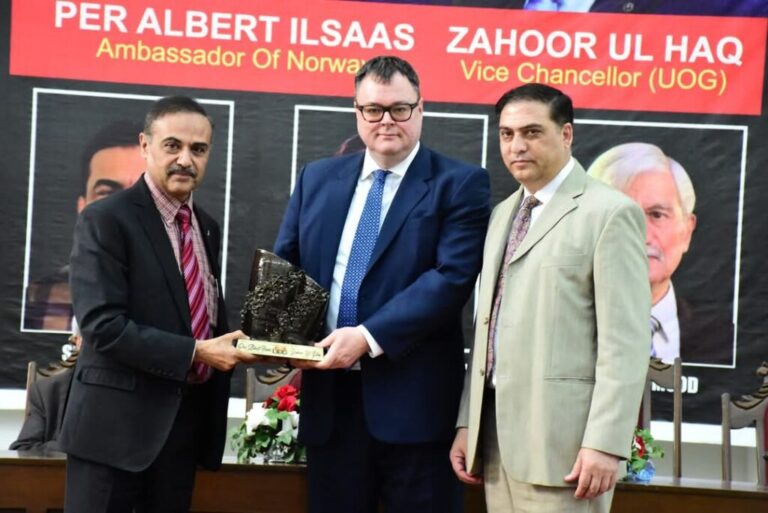
On February 25, Norwegian ambassador to Pakistan Per Albert Ilsaas inaugurated the Oslo Chowk which is located close to the bus stop where many Pakistani migrant workers embarked on their journey towards Europe in 1970. The ambassador remarked that Pakistanis have played a significant role in shaping Norway’s society.
Pakistanis have played a significant role in shaping Norway’s society.
The area has also been referred to as “Little Norway” for years. Aneela Khan, the political secretary of Norwegian Embassy and prominent figures from Pakistani community in Norway who belong to the area, were also present at the occasion.
The Norwegian delegation attended a seminar titled “Celebrating 55 years of Pakistani Diaspora in Norway” held at the Quaid-e-Azam Library Auditorium. “Pakistani immigrants have become the largest migrant community in Norway and are stabilizing Pakistan’s economy by sending remittances”, Ambassador Ilsaas stated.
Khalid Mahmood is one of the initiators behind the name. Photo: Facebook
Khalid Mahmood is one of the initiators behind the name. Mahmood came to Norway at the age of 15 in 1975. For 32 years he was a member of the Oslo city council where he represented the Norwegian Labor Party. He also works as a tram driver. “With this, we want to thank Oslo for the goodwill it has shown our ancestors. There are several thousand people living in Oslo with roots in both Norway and Pakistan. That is why such a commemoration is important,” he said during the inauguration.
Speaking to the participants, the ambassador said that the bilateral relationship between the Kingdom of Norway and the Islamic Republic of Pakistan goes back to the foundation of Pakistan in 1947.
*****************************************
You may also like to read: India is Looking to Scandinavia
*****************************************
“Pakistani immigrants are serving in various fields in Norway, and their contributions have brought the two nations closer. Norway stands by Pakistan in addressing energy crises, women’s empowerment and human rights advancement”, the envoy declared.
Norwegian ambassador to Pakistan Per Albert Ilsaas
The naming of the intersection has, however, received a mixed reception locally. Some voices are critical of how the name has been implemented. One of the critics is Muhammad Zubair Raza. He runs the association Mera Apna Kharian.
Norway established its first embassy in Islamabad in 1976, preceded by an honorary consulate in Karachi. Today, Norway also maintains an honorary consulate in Lahore. In 2023, the two countries marked 75 years of diplomatic relations with Pakistan.
Pakistani immigrants are serving in various fields in Norway, and their contributions have brought the two nations closer.
Pakistanis were the first non-Western immigrant group making way to Norway in the 1970s.
‘Oslo Chowk’ Inaugurated in Pakistan, reported by Tor Kjolberg
Train journeys are a great option if you would like to save on transportation costs. Many get you from the airport to the city center for as little as $3 in some cases. Trains are also sustainable, comfortable and cost saving.
Beyond being a means of transportation, trains enrich the journey by offering unique landscapes, access to less touristy destinations, and seamless connections to other transport modes.
Also, given the considerable share of travel emissions, organizations must reassess their travel practices to meet ambitious climate targets. Beyond reducing the number of trips, shifting from air travel to trains or other ground transport is crucial for minimizing the environmental impact of travel.
Trains enrich the journey by offering unique landscapes, access to less touristy destinations, and seamless connections to other transport modes.
However, while trains are cheaper, trains can be tricky to navigate, especially if you have to transfer to a different train at a particular station. I like to screenshot the map of the train stops on my phone in advance, so I know if I am going in the right direction or not. This has been a helpful tool on many train journeys around the world. In Poland, for example, looking at the screenshot, I once could tell that I was moving away from my intended stop and this saved me time. I was able to hop off as quickly as possible to wait for the next train traveling in the opposite direction.
Trains offer spacious seating and services that other modes of transport can’t match. On a train, you can move around freely, enjoy a meal in the dining car, or relax with stunning views from your seat. Additionally, there are no strict baggage restrictions as with airplanes, making planning for long trips easier.
On a train, you can move around freely and enjoy a meal in the dining car.Photo: The Orient Express/Railbookers
For my own consciousness, trains are significantly less carbon intensive, producing between seven and more than 40 times fewer emissions than airplanes. For many short- to medium-haul trips, trains are cost-effective and even faster when accounting for airport procedures and the time it takes to get into the city center from an airport.
Trains are often more economical, especially if booked in advance or when using travel passes such as the Interrail Pass in Europe or the Japan Rail Pass in Japan. These options allow for exploring multiple destinations without worrying about additional costs. You might also consider the Deutschland-Pass.
When planning your next trip, consider incorporating train travel. Whether it’s for an overnight journey, exploring off-the-beaten-path regions, or simply relaxing while admiring the scenery, trains have a lot to offer.
Train Journeys: Sustainable – Comfortable and Cost Saving, reported by Tor Kjolberg
Designed as the home stadium of Norwegian football club FK Bodø/Glimt, Oslo-based Nordic Office of Architecture hopes the new faceted Arctic Football Arena Bodø, designed for the Norwegian football club, will be a landmark venue for Bodø and a space where local residents feel a sense of community.
The Arctic Football Arena, Bodø will not only be one of Europe’s northernmost football stadiums and a tribute to football and northern Norwegian strength, but it will also unite the region and contribute to the development of Bodø as a destination.
Passionate spectators under the midnight sun and northern lights will soon be ready for the big moments.
The 10,000-seat stadium will have a faceted exterior that draws on the shape of diamonds, intended as a representation of Norwegian resilience. “Designed with respect for the Arctic climate, northern Norwegian rawness and timeless Nordic architecture, Arctic Football Arena, Bodø emerges as a new icon,” said Nordic Office of Architecture partner Knut Hovland.
Arctic arena-is designed for the FK Bodo Glimt football club.
Passionate spectators under the midnight sun and northern lights will soon be ready for the big moments. Featuring architecture that captivates from the moment of entry, the arena guides the audience into an immersive atmosphere where spectators and players are seamlessly united through the intensity of the match. Arctic Arena will put Bodø and Northern Norway on the map as international football now gets its place at 67° north.
New Faceted Arctic Arena Designed for Norwegian Football Club, based on a press release from NordicArch.
When the winter cold comes, Scandinavians don’t just prepare for cozy nights by the fire and Scandinavian Christmas celebrations—they also master the art of seasonal storage. With limited daylight and frosty weather, every bit of space becomes valuable real estate, making efficient storage a necessity and a way of life. Read on and learn how Scandinavians store summer gear during winter.
From stowing away kayaks and camping gear to preserving bicycles and garden furniture, their clever solutions are rooted in both practicality and tradition. This article dives into how Scandinavians store summer gear during winter, offering tips and insights into making the most of your own storage space—no matter where you live.
The Scandinavian Approach to Seasonal Storage
Scandinavian homes balance simplicity with function. Most people focus on keeping only the essentials, minimizing clutter. This mindset ensures that every item has a defined place. Storage spaces often include smartly organized basements, neatly packed attics, or sturdy outdoor sheds. Apartment dwellers use clever under-bed compartments or local storage rental options to maximize smaller spaces.
Eco-consciousness shapes storage habits, too. Scandinavians prefer reusable containers or biodegradable bags. They often repurpose household items, reinforcing a culture of practical living.
Scandinavians have a minimalist approach towards most things. Photo: Priscilla du Preez/Unsplash
Innovative Storage Solutions Scandinavians Use
Scandinavian storage hacks include clever tools and systems:
Stackable bins that save precious room.
Vacuum-sealed bags to compress summer clothes like swimsuits and light jackets.
Wall-mounted racks for bicycles, paddleboards, and gardening equipment.
These solutions reflect a mindset where functionality meets aesthetics. No object feels out of place. Many homeowners even label boxes with bold lettering to simplify retrieval. This commitment to order ensures no item hides in forgotten corners, waiting for years to find its use again.
Maintain Summer Gear During Storage
Before storing items for months, proper care ensures durability. Scandinavians clean camping tents, bikes, and patio furniture to remove dirt or mold. For example, they wipe down metal parts to prevent rust. Patio cushions often go into airtight bags, shielding them from moisture.
Inside storage rooms, temperature control takes priority. Dehumidifiers keep air dry, reducing the risks of mold or warping. Seasonal shoes are stored with silica gel packs to protect the leather. These thoughtful steps preserve each item’s quality, ensuring it lasts through repeated use.
Long layovers can also double as storage opportunities when preparing for extended winter travel. Many families use long layovers as a tool to gather supplies or ship surplus items back to a base location. This blend of travel and storage planning showcases Scandinavian ingenuity.
The Role of Sustainability in Scandinavian Storage
Scandinavians prioritize sustainability when they store summer gear during winter. Many prefer containers made from recycled materials or natural fibers, avoiding single-use plastics. This focus reduces waste while keeping homes eco-friendly. Families often invest in durable storage solutions that last for years. Reusable wooden crates or metal racks ensure both strength and style.
Communities promote sharing instead of buying. Families swap items like tents or outdoor furniture at local events. This practice not only saves money but also builds connections. Some typical items people store away, such as bicycles or hiking boots, become communal resources. These shared solutions reflect Scandinavian values of trust and practicality.
Even storage is approached with a minimal approach. Photo: Paxson Woelber/Unsplash.
Community Storage Trends in Scandinavia
Scandinavians embrace communal storage systems. Neighbors share garages or rent cooperative spaces to minimize costs. These setups encourage efficient use of large areas while reducing personal burden. In some cities, you’ll find apartment blocks with shared basements for skis, kayaks, and small motorboats.
Trust plays a big role in these arrangements. People respect boundaries, ensuring items remain safe and accessible. These shared facilities often become the most convenient option for renters with limited space. This practical solution allows people to store their items without clutter at home.
Smart Tech and Scandinavian Storage
Modern technology transforms how Scandinavians manage seasonal items. Smart storage systems help track possessions with ease. Apps allow users to log items and their locations, avoiding misplaced gear.
In addition, climate-controlled units offer solutions for sensitive items. They preserve leather, electronics, or delicate furniture by maintaining proper temperature. Families traveling for extended winters often store valuables while exploring northern lights tourism destinations. These services highlight the synergy between technology and efficient living.
A Tradition of Organized Living
Scandinavian design prioritizes order and simplicity. This cultural influence extends to storage practices. Homes remain free from clutter because people embrace minimalism. By reducing unnecessary items, they make space for meaningful ones.
Hygge, the Danish concept of coziness, often centers on creating harmonious spaces. An organized home fosters this feeling. When individuals store summer gear during winter, they enhance the overall balance of their surroundings. This principle resonates across Scandinavian countries, blending practicality with emotional well-being.
Tips for Storing Summer Gear Like a Scandinavian
Scandinavian methods can help you organize your items and maximize storage space effectively. Here are practical steps to follow:
Clean every item thoroughly to prevent mold, rust, or odors during storage.
Categorize belongings into groups like outdoor gear, summer clothing, and sports equipment for easy access later.
Choose sturdy, reusable wood or recycled plastic containers to protect items and align with eco-friendly practices.
Label boxes clearly with their contents and storage dates to save time when retrieving items.
Use stackable bins to optimize vertical space in tight areas.
Rotate storage seasonally, placing winter essentials within easy reach.
Compress your clothing using vacuum-sealed bags to save space efficiently.
Opt for collapsible bins, which are easy to pack and stow when not in use.
Following these steps lets you keep your home organized and clutter-free, no matter where you live.
Storing items the right way will ensure that they stay in good condition. Photo: Arina Krasnikova/Pexels
Store Summer Gear During Winter Like A Scandinavian!
Scandinavians master the art of organizing and preserving seasonal gear. They redefine storage solutions by adopting eco-friendly methods, embracing shared spaces, and using smart technology. As you apply these lessons, you ensure your belongings remain safe and accessible. When you store summer gear during winter, you create a functional and welcoming home. Begin your journey today and experience the joy of living with intention.
KW: store summer gear during winter
Meta description: Learn how Scandinavians store summer gear during winter with sustainable, space-saving, and innovative solutions inspired by their culture.
Emma Jensen
How Scandinavians Store Summer Gear During Winter, written dedicatedly for Daily Scandinavian by Emma Jensen. Emma is a professional organizer and a valued team member at Centennial Moving, where she combines her passion for creating efficient, clutter-free spaces with the company’s moving and storage services. Specializing in Scandinavian-inspired organization techniques, Emma helps clients embrace functional, sustainable living by ensuring their transitions are seamless and thoughtfully arranged.
Scandinavia carries its past like a heartbeat, steady and ever-present. You see it in the sturdy wooden beams of a centuries-old house, in the intricate embroidery of a family’s bunad, and in the way a silver brooch catches the light at a summer festival. Read on and learn more about preserving Scandinavian traditions: The role of heirlooms and memory in modern life.
Heritage does not sit behind museum glass here. It lives in the hands that pass down heirlooms, in the stories told at the dinner table, and in the traditions that refuse to fade.
Modern life moves fast. Trends come and go, and disposable goods fill homes where craftsmanship once thrived. Some things should not be lost. The family ring worn through generations. The handwoven blanket that has kept newborns warm for over a century. The wooden chest that once carried a young bride’s most cherished belongings across the sea. These are not just objects. They are pieces of history, and they carry something irreplaceable.
A familyæ’s history lives in the things that have been held, used, and loved across generations. From Vik, Norway. Photo: Hans H. Lie/Maihaugen
The Cultural Importance of Heirlooms in Scandinavia
A family’s history does not live in books or photographs alone. It lives in the things that have been held, used, and loved across generations. In Scandinavia, heirlooms are more than sentimental objects. They act as bridges, carrying the significance of the past into the living present. Scandinavian celebrations often feature heirlooms passed down through generations, reflecting a deep connection to heritage and family history.
Walk into a Swedish home during Midsummer, and you’ll see heirloom crystal glasses set on the table, filled with elderflower cordial. In Norway, during Constitution Day, families proudly wear their bunads, each stitch a tribute to their ancestors. In Denmark, antique furniture passes through generations, its worn edges a quiet testament to years of use and care.
Some treasures are delicate, like lace-trimmed tablecloths that have survived a century of gatherings. Others are built to endure, such as iron candlesticks forged by hands long gone. Each piece tells a story. Each one whispers the names of those who came before.
Preserving Scandinavian Traditions: The Role of Heirlooms and Memory in Modern Life, article continues below image.
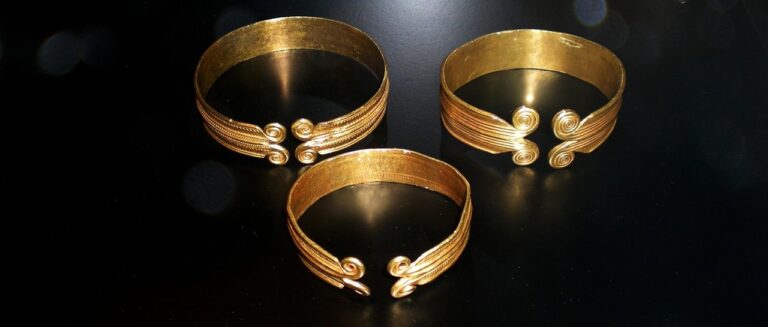
Gold treasures from Norway. Photo: khm.uio.no
Preserving and Protecting Family Treasures
Heirlooms last because someone chooses to protect them. Without care, silver tarnishes, wood cracks, and fabric fades. Preserving them takes effort, but that effort keeps history alive.
Jewellery, in particular, needs attention. A grandmother’s ring, worn daily, can lose its brilliance if not stored correctly. Tarnish creeps into the delicate grooves of a silver pendant. A family crest, engraved in gold, can wear away over time. Protecting jewellery pieces means knowing how to clean them, how to store them, and when to pass them on.
Furniture and textiles require just as much care. A wool blanket, folded neatly and placed in a cedar chest, stays intact for another hundred years. A wooden dining table, polished with natural oils, carries the laughter of generations without losing its strength. When you preserve an heirloom, you do more than save an object. You safeguard the stories it holds.
Hornsea heirloom breakfast set from Vinterior
The Emotional Connection: Nostalgia and the Power of Memory
Hold a worn leather book, and you feel it. Every crease and faded edge whispers of the readers who came before you. Nostalgia is not just remembering the past. It’s stepping into it, even for a moment.
Heirlooms have this power. A child wearing a great-grandfather’s wool sweater feels a connection deeper than words. A woman fastening her mother’s pearl earrings before her wedding carries a piece of her family with her down the aisle. These experiences reveal that time is shared, not solitary. You stand in a long line of people who lived, loved, and left something behind.
Reflecting on positive memories strengthens identity. It brings comfort during hardship and roots you in something bigger than yourself. When life moves too fast, these small connections become anchors. They remind you where you come from and why that matters.
Preserving Scandinavian Traditions: The Role of Heirlooms and Memory in Modern Life, arricle continues below image.
Norway’s bunad is a national treasure. Photo: Gjensidige
Scandinavian Heirlooms and National Heritage Recognition
Some heirlooms belong to families. Others belong to entire nations. Across Scandinavia, cultural preservation is not just encouraged. It is celebrated.
Norway’s bunad is a perfect example. More than a folk costume, it is a national treasure. Each region has its own variation, embroidered with patterns that tell a story of place and heritage. Wearing one on Constitution Day is not just a tradition. It is an act of pride, a declaration of identity.
Beyond clothing, heirlooms take many forms. In Sweden, Dala horses, carved and painted by hand, remain symbols of folk art and craftsmanship. In Denmark, Viking artifacts, including rings, goblets, and weapons, remind people of a time when their ancestors sailed the seas. Some of these pieces rest in museums, protected for future generations. Others remain in homes, treasured as family legacies.
Antique markets across the region tell the story of Scandinavian artifaxts and traditions well. Here an item from the Gundersen collection.
Unique Scandinavian Artifacts and Traditions
Scandinavians do not collect heirlooms to hide them away; they use them. A centuries-old ceramic dish still holds warm apple cake on a chilly evening. A handwoven tapestry still hangs above a family’s fireplace. These objects are not relics—they are living parts of everyday life.
Across Scandinavia, antique markets are filled with Viking-era silver, heirloom-quality furniture, and historical artifacts that continue to be treasured and used in modern homes. Antique markets across the region tell this story well.
In Sweden, old silverware and hand-carved furniture fill stalls, each piece waiting for a new home. In Denmark, collectors search for Viking-era jewellery, knowing that these artifacts carry stories older than written records. People here understand that history is not something to look at. It is something to hold, to use, and to pass down.
Preserving Scandinavian Traditions: The Role of Heirlooms and Memory in Modern Life, arricle continues below image.
Urnes stave church in Luster. Photo: Thomas Morel/Visit Norway
Scandinavian Heritage Preservation Efforts
Keeping history alive takes effort, and Scandinavians take that responsibility seriously. Museums dedicate immense effort to preserving and cataloging artifacts, safeguarding them for years to come. Families record the history of their heirlooms, passing down not just the objects but the stories behind them.
Heritage organisations work to protect historic buildings, traditional crafts, and folk practices. Heritage preservation initiatives ensure that Scandinavian history remains intact, allowing future generations to experience and appreciate the cultural richness of their ancestors.
Festivals celebrate old traditions, keeping them relevant in the modern world. Every time someone wears an inherited bunad, drinks from a hand-painted wooden cup, or reads an old family letter by candlelight, they take part in this effort. They ensure that the past does not fade.
Preserving Scandinavian Traditions: The Role of Heirlooms and Memory in Modern Life – Conclusion
You are part of a story that reaches back through centuries. The heirlooms you inherit, the traditions you keep, and the memories you protect form the intertwining strands that create your history.
A silver locket, a wooden chest, and a wool shawl matter because they remind you of where you come from. They connect you to the hands that made them, the voices that once filled the rooms you now stand in. In a world that moves too quickly, these heirlooms ask you to pause, to remember, and to honour what came before.Your heritage is not something to be studied from a distance. It is something to hold, to live, and to pass on.
Ainsley Lawrence
Preserving Scandinavian Traditions: The Role of Heirlooms and Memory in Modern Life, written dedicatedly for Daily Scandinavian by Ainsley Lawrence. Ainsley is one of our regular contributors. She is a freelance writer from the Pacific Northwest. Ainsley is interested in better living. through technology and education. She is frequently lost in a good book.
Irish Whiskey Association, launched its Irish Whiskey Passport to encourage locals and international travelers alike to ‘Discover Ireland’s Whiskey Distilleries’. Learn how you can obtain your own Irish Whiskey Passport.
Are you eager to see Ireland’s whiskey distilleries on your next visit to the Emerald Isle? In Northern Ireland people have a passion for distilling, and they love to share it with you.
In Northern Ireland people have a passion for distilling, and they love to share it with you. Photo: Irish Whiskey Museum
IrishWhiskey360°, passport will be a unique record of your journey through extraordinary Irish whiskey distilleries where you collect stamps at every distillery on your journey. Visitors who collect at least six stamps can become an IrishWhiskey360° Champion, with special rewards.
The Whiskey passport is part of an outreach campaign to help visitors discover the range and diversity of Ireland’s many whiskey distilleries. There’s a whole world of spirits to discover here, with a special welcome for everyone who explores it. Of course, if you’re going exploring, you’re going to need a guide. So the Discovering Ireland’s Whiskey Distilleries campaign includes a downloadable map and other information on the Irish whiskey distilleries that you can visit.
Stop by any of Ireland’s 24 distilleries that are currently members of the association and pick up your card. You can expect to encounter all sorts of characterful spirits along the way. There are some pretty special characters amongst their makers too. No need to rush. Let the distillers share their pride in their creations with you. Savor the nose and the mouthfeel of each spirit. Experience their individual tastes, the way they express the land of their birth, the grain and the water that brought them into being.
Stop by any of Ireland’s 24 distilleries that are currently members of the association and pick up your card. Photo: Courtesy West Cork Destilleries
************************************************
You might also like to read Danish Whisky Distillery Expanding
************************************************
William Lavelle, Head of the Irish Whiskey Association
“Irish whiskey distilleries have developed a world-famous reputation as great places to visit – all offering unique experiences. We hope the new IrishWhiskey360° Passport will encourage staycationers and future international tourists to explore Ireland’s diversity of distillery experiences,” says William Lavelle, Head of the Irish Whiskey Association.
The brutal climate of Greenland’s capital, Nuuk, means that architecture must not only offer shelter but be in balance with nature. Entreprenørdalen, a district in Nuuk, is currently undergoing a transformation from a former industrial area into an attractive new urban district.
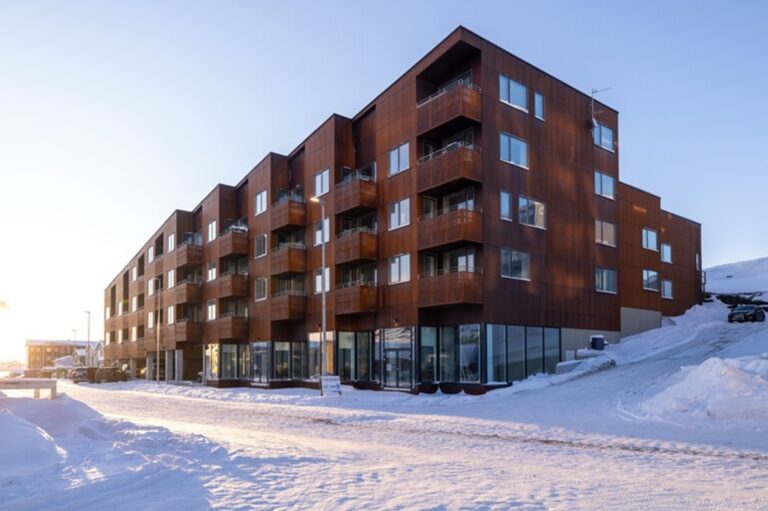
Copenhagen-based multi-disciplinary architects BIOSIS works from a climate-driven design approach which for Nuukullak 10 meant finding solutions that could break down the forceful northern winds and optimize the few daylight hours in winter.
Each of the building’s 45 suites also has a southeast-facing balcony, maximizing residents’ ability to enjoy the warm daylight hours.
And although the tundra climate brings cold, long, and snowy winters, it’s the wind — not the temperature — that makes for particularly grueling conditions. Then there’s the northern latitude’s seasonal lack of sunlight, which makes year-round outdoor life much harder to embrace. The challenge of accommodating the region’s wind and sun proved to be the genesis for the design of a striking new apartment complex that celebrates local culture and climate.
The project is a singular building containing 45 apartments for young professionals and families, strategically arranged around a central courtyard, allowing for sea and mountain views. This architectural form, with visual links to nature, shouldn’t come as a surprise, given that Biosis’s design philosophy advocates minimizing environmental impact and creating projects that are in harmony with the natural world.
*****************************************
You might also like to read: The Viking Mystery on Greenland
*****************************************
To provide the needed protection against the harsh northern winds, the building forms a distinctive horseshoe shape that envelopes the truncated triangle-shaped courtyard.
Thorough studies of wind, flow, and daylight were applied to refine the design and increase the building’s performance, and influence the livability of its residents during the entire design process. By creating an intimate scale of a low-rise building that orients according to the micro-climate, the architects created a building that improves the indoor and outdoor comfort for its residents. To provide the needed protection against the harsh northern winds, the building forms a distinctive horseshoe shape that envelopes the truncated triangle-shaped courtyard. The open end of the courtyard towards the south brings in light and views of the backdrop landscape and sea.
******************************************
You might also like to read: The Father of Eskimology
******************************************
Thorough studies of wind, flow, and daylight were applied to refine the design and increase the building’s performance.
Each of the building’s 45 suites also has a southeast-facing balcony, maximizing residents’ ability to enjoy the warm daylight hours. At street level, meanwhile, a 270-square-meter café welcomes pedestrians and cyclists. Like all of the building’s at-grade entries, its glazed façade is slightly tucked into the body of the building, making for a sheltered environment. Upstairs, the apartments — layouts range from one to four bedrooms — feature minimalist finishes and expansive south-facing bay windows.
Instead of flatting the sloping site, the structure steps with its natural contours reducing the need for rock blasting, and preserving critical, natural habitats. Biosis also developed the horseshoe-shaped layout to break down the fierce winds and maximize sunlight.
The inner courtyard space serves as the residents’ year-round landscape for play for children, communal space in summer, and wind-sheltered entrance points.
“By keeping the rocky features in the design, the building becomes a harmonious extension of its natural environment,” says BIOSIS co-founder Morten Vedelsbøl.
“Our aim is always to minimize the impact and preserve and respect the natural terrain, habitat, and biotopes by, for example, keeping blasting to a minimum. By keeping the rocky features in the design, the building becomes a harmonious extension of its natural environment,” says BIOSIS co-founder Morten Vedelsbøl. “This allowed us to map out a microclimate and refine the building’s form to respond effectively to its natural surroundings.”
The result is a building that offers comfort, connection and beauty to those who call it home.
Building Challenges on Greenland, reported by Tor Kjolberg
In six volumes about himself and his loved ones, “My Struggle” by Karl Ove Knausgård has become the longest novel in Norwegian history. Read on and learn more about the struggle of a Norwegian writer.
In six volumes of books published in English, Karl Ove Knausgård talks candidly about laying himself and his family bare on the page, and his interest in black metal and transhumanism.
In Norway, the author has become a literary phenomenon with the publication of his autobiographical novel “Min Kamp (My Struggle)“. Published in six volumes in Norwegian between 2009 and 2011, it has been an astounding success, with more than half a million copies of one of the titles sold in Norway, which means, one book for every nine adult inhabitants. Since then, the series has been available in 35 languages. The most demanding critics do not shy away from comparisons with Proust, Joyce or Virginia Woolf.
***************************************
You may also like to read: Century Love War
***************************************
“The story is written in a closed room and that is really the only place where what is said can be said. I was like an animal caught in floodlights,” the most famous Norwegian writer since Henrik Ibsen wrote after the books were published.
Syvert is the novel’s narrator for 400 pages. The book is fully Knausgaardian: here are family struggles, difficulties with girls, and extensive digressions into football and the frying of fish. But there’s something else. Syvert dreams of his father, killed in a car crash nine years ago – a dream that provokes a conversation with his mother. This, in turn, leads to some letters from a woman his father had been in love with before he died, and the revelation that he had a daughter with her: Alevtina, who narrates most of the book’s second half.
In sex volumes of books published in English, Karl Ove Knausgård talks candidly about laying himself and his family bare on the page.
In English, My Struggle is more than 3600 pages or as audio-book version, superbly interpreted by Edoardo Ballerini, more than 133 hours of listening. The “My Struggle” books have made Karl Ove Knausgård an international star. He has received awards all over the world. He is interviewed by the biggest newspapers and magazines and has even started his own publishing house (Pelikanen).
as audio-book version, My Struggle is, superbly interpreted by Edoardo Ballerini, more than 133 hours of listening.
But, in fact, he didn’t plan to write “My Struggle”. But when he was studying in Bergen in the 90s, there were some devil worshippers, black-metal musicians, more extreme than punk. Some were incredibly destructive. They burned churches, there were murders. “They were in the same city as me, the same age as me, but I didn’t really pay attention. Later, I started to get interested in the music and in the whole attitude, because in Norway, when I was growing up, there was nothing going on. There was only one TV channel. It’s a kind and gentle society, and then you have these violent outbursts, and I wondered where it came from. I thought that one day I’d like to write about it”.
Karl Ove Knausgard reading from My Struggle” by editrrix is licensed under CC BY-SA 2.0 (via Wikimedia Commons)
The radical thing about “Min Kamp” is that Knausgård tells his whole life story, at length, with details that at first sight seem trivial and banal. How he makes a cup of coffee or tea, goes out to smoke a cigarette on the balcony of his apartment and watches the neighbors, has to juggle three children and a stroller to get them to the nursery without having a nervous breakdown (and every now and then he does). When and how he meets, falls in love with, but also quarrels with Linda, his Swedish second wife (“A Man in Love”, volume 2).
Karl Ove was very nervous before the revelations in “My Struggle.” Has that changed since then? Has he gotten thicker-skinned?
“Yes,” he answers, adding that he has also accepted the consequences. However, he doesn’t read reviews of himself.
The Struggle of a Norwegian Writer, written by Tor Kjolberg
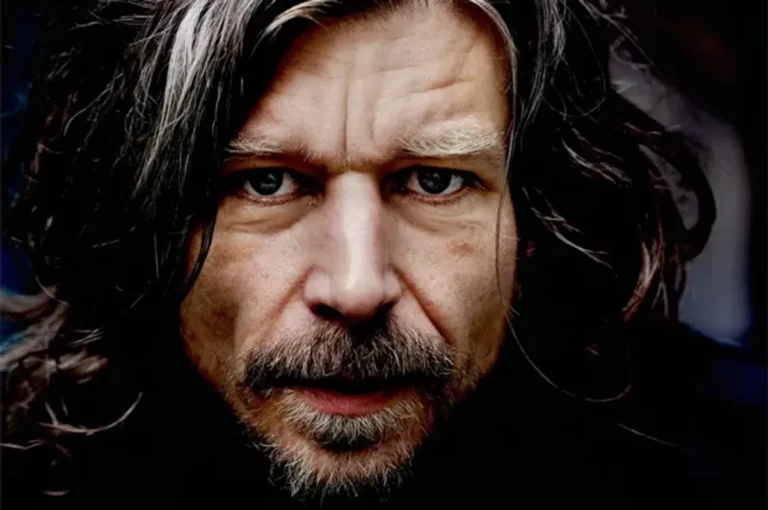
Feature image (on top): Karl Ove Knausgård, in cover detail of “My Struggle: Book 1” (Farrar, Straus and Giroux)