
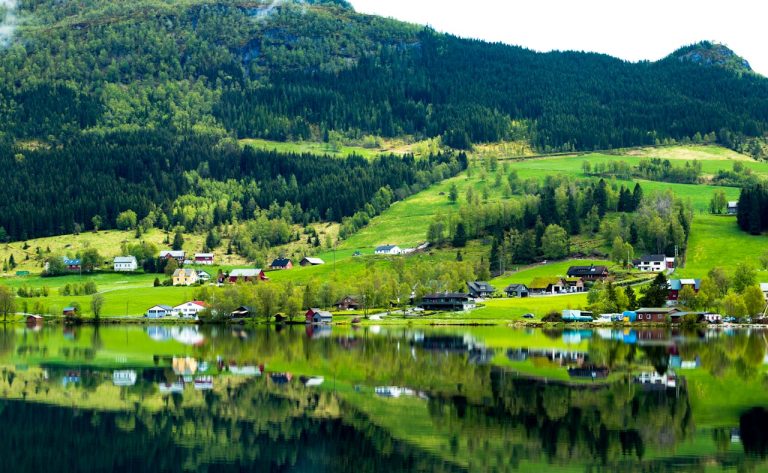
Golf and Wellness Retreats in Scandinavia: The Perfect Balance

Booking a golf and wellness retreat in Scandinavia might not be your first thought. But you’ll be surprised. Golf and Wellness Retreats in Scandinavia: The Perfect Balance.

Scandinavia is like the pot of gold at the end of the rainbow. It’s an exciting blend of spectacular landscapes, unusual experiences, and world-class services—and all three of those extend to both golf and wellness experiences.

Picture yourself enjoying an energizing morning on the greens… Followed by an afternoon of spa treatments or yoga, all set against the photo-worthy backdrop of Scandinavia’s forests and lakes.

Sound like something on your bucket list? Here are the golf and wellness retreats in Scandinavia that we highly recommend… But do your own research, too!

Top Golf and Wellness Retreats in Scandinavia

Sweden, Norway, and Denmark might not be the first places you choose when picking a golf and wellness destination. But trust us—they’re home to some beautiful spots with jaw-dropping golf courses and melt-into-relaxation spas. Here are our favorites.

Sweden 

Sankt Jörgen Park Resort

Just a short drive from Gothenburg, you’ll find this sleek vacation spot. The tranquillity and modern style of the building make it feel a little like a cruise ship, giving you that ultimate relaxation feeling on dry land.

Golf and Wellness Retreats in Scandinavia: The Perfect Balance
Just a short drive from Gothenburg, you’ll find the sleek vacation spot Sankt Jörgen Park Resort

The 18-hole course starts with 8 very park-like holes and moves onto 10 heathland holes. It features some unique holes, and one of the best things about it is that it’s very walkable—in most cases, you’ll have less than 25 meters to go before you’re at the next tee.

To wind down and ease your muscles after a round, stop in at the on-site spa. Sweat it out in the sauna, give yourself some hot-and-cold treatment, or choose a treatment from the spa menu.

Elisefarm Golf Club

This intimate club sits in the Skåne countryside, and if you thought golf courses couldn’t be more tranquil and beautiful, then you haven’t seen this one. The course has been ranked one of the best in Sweden multiple times, so experienced golfers will enjoy every shot maneuvering around water hazards and through subtle hills.

When you’re in relaxation mode, you can soak into one of three outdoor hot springs, an experience like you’ve never had before. A sauna, steam room, and 4 indoor treatment rooms where you can be pampered and let your cares melt away for a little while.

Norway 

Lily Country Club

Within a 15-minute drive from the Oslo airport, this resort is more than just convenient. It’s got a gorgeous country feel to it, so even though you’re not exactly far from civilization, you’ll feel like your stress is nowhere near.

Golf and Wellness Retreats in Scandinavia: The Perfect Balance
Within a 15-minute drive from the Oslo airport, Lily Country Club is more than just convenient.

The Miklagard Golf Club is right next door, and if you’ve ever wanted the chance to play on one of Scandinavia’s best courses, this is it. It’s got 5 sets of tees so that you can get a really good game no matter your skill level.

Be forewarned—there’s quite a bit of elevation change, which adds something extra to each hole. You can warm up on the golf mats at the driving range or put green before hitting the course.

When you need to chill, there’s a full-service spa at your leisure. For deeper relaxation, try some yoga—a stunning place like this is the perfect place to get that energy flowing. The moms will LOVE the baby spa! Every Monday morning is a time for you and your little one to bond in a different way.

Kragerø Resort

Kragerø Resort might be a little more minimalistic than some others in Norway, but it’s home to one of the country’s top golf courses. The woodland course reaches around 5,400 yards and features multiple great holes. There’s also hiking and tennis, if you want something different.

Choose from a range of spa treatments, but that’s not the best part. The unforgettable part is the view—a majestic look over Norway’s most beautiful archipelago. Kragerø understands that self-care is about more than a spa treatment or two—it’s also about the environment you’re in.

Denmark 

Lübker Golf & Spa Resort

Treat yourself at the Lübker Golf & Spa Resort. Their spa is based on ancient health principles, using the magic of nature to soothe and rejuvenate you. You can choose from regular facilities like the sauna or a massage, or opt for one of their unique experiences: Sauna Fumes (essential oil treatment), their Spa & Tapas offer, or a luxury spa day with the kids.

Golf and Wellness Retreats in Scandinavia: The Perfect Balance
Treat yourself at the Lübker Golf & Spa Resort.

Nominated by the World Golf Awards as Denmark’s Best Golf Course and labeled the “World’s Best New Golf Course” when it opened in 2008, the resort has three 9-hole loops, which create various different 18-hole courses. Never a boring play here, and the courses wind through lakes, hills, and woods, all beautiful.

You can also get in a great training experience if you aren’t up for the full course. They have a Trackman Range, 2 putting greens, and a 9-hole academy course if you’re not ready for the full course.

Great Northern

This enchanting resort is worth a visit whether you’re a golfer or not! Let’s start with the golf—an 18-hole Jack Nicklaus course awaits your swing, the first by the legend in Denmark. An astounding seven artificial lakes were built just to create the golf course of dreams,

The course itself is varied, with many water hazards, elevation changes, and some exciting plays that you just don’t see on other courses. A lot of the course isn’t just played over the water… It’s actually played ON the water. Play a round and see for yourself!

The 4,5000 square-metre spa is another whole experience on its own. An aqua spa, yoga center, and special seasonal experiences bring a whole new meaning to “relaxation”. Each room looks out over the golf course, adding to the tranquil feeling.

Golf and Wellness Retreats in Scandinavia: The Perfect BalanceConclusion

Scandinavian golf and wellness retreats could be the best-kept secret for lovers of relaxation. It’s hard to find more beautiful countryside than this, and when you add the meditative sport of golf and the soothing spa experience, it’s really a wonderful place to spend some downtime.

Another great thing about Scandinavia as a golfing destination is that it’s not a huge golfing tourist destination. You won’t be fighting off other golfers, but that doesn’t make it any less worthwhile—every shot you play on these courses will be etched in your memory, from the view to the slopes.

Trust us, these resorts are the places you want to be if you’re looking for an out-of-the-way place to reframe your mind, loosen up your golf swing, and meditate on life for a while.

Golf and Wellness Retreats in Scandinavia: The Perfect Balance
Jordan Fuller

Golf and Wellness Retreats in Scandinavia: The Perfect Balance, written dedicatedly for Daily Scandinavan by Jordan Fuller. Jordan is a retired golfer and businessman. When he’s not on the course working on his own game or mentoring young golfers, he writes in-depth articles for his website, Golf Influence.

Other articles by Jordan Fuller:

Teeing off in the midnight sun: Exploring golfing opportunities in Scandinavia
An Expat’s Guide to the Best Golf Courses in Scandinavia

Feature image (on top) © Nextvoyage/Pexels

One Million Norwegians on Holiday Abroad Surfing More Than Ever

0

According to a new report from Telia, Norwegian mobile customers on holiday abroad used 20 per cent more mobile data than last year, and the low NOK exchange rate did not stop Norwegians from vacationing abroad. Number of travelers was the same as in 2023, and Sweden, Denmark and Germany are the most popular countries for Norwegians to travel to. One million Norwegians on holiday abroad surfing more than ever

Despite the poor NOK exchange rate and higher expenses: Norwegians do not forsake their0 summer vacation abroad. Recent figures from Telia show that we traveled abroad just as much this year as last year. Just over a million of Telia’s customers visited another country during July.

One Million Norwegians on Holiday Abroad Surfing More Than Ever
“Our figures show that the urge to travel has not diminished, and for a large part of us, traveling abroad during the summer is a natural part of the holiday”, says Pål Rune Kaalen, head of the private market in Telia Norway.

******************************************
You might also like to read: A Smarter Smart Phone from Norway
******************************************

“Our figures show that the urge to travel has not diminished, and for a large part of us, traveling abroad during the summer is a natural part of the holiday”, says Pål Rune Kaalen, head of the private market in Telia Norway. “Although most people do not travel that far and prefer Sweden and Denmark, we see that many people are very happy to travel to warmer countries in the south of Europe during their holidays”.

Telia’s overview of mobile data use among those who traveled abroad shows an increase of 20 per cent compared to 2023.

One Million Norwegians on Holiday Abroad Surfing More Than Ever
Telia’s overview of mobile data use among those who traveled abroad shows an increase of 20 per cent compared to 2023.

**********************************************
You might also like to read: How I Use TripAdvisor for Booking Tours
**********************************************

“The mobile phone is as important a part of the trip abroad as the passport, and it is on the mobile phone that we have the flight tickets, the hotel booking and everything we need for a successful holiday. It helps us a lot along the way, and we use the map to find our way, apps to check the weather and the camera to take pictures for the holiday album. It is simply indispensable when travelling, and thus the use of mobile data also increases”, says Kaalen.

One Million Norwegians on Holiday Abroad Surfing More Than Ever
The mobile phone is as important a part of the trip abroad as the passport.

Telia’s figures show that Sweden is still Norwegians’ preferred holiday destination abroad. Here is the list of where most Norwegians went in July:

  1. Sweden
  2. Denmark
  3. Germany
  4. Spain
  5. Poland
  6. Greece
  7. Italy
  8. France
  9. Great Britain
  10. Turkey

*The figures are based on aggregated roaming data and are completely anonymized

One Million Norwegians on Holiday Abroad Surfing More Than Ever, a press release from Telia

Mystical Nordic Folklore and Where to Experience It

Could the Viking sagas and your childhood fairytales hold more truth than you think? Mystical Nordic folklore has enchanted generations, weaving tales of trolls, elves, and otherworldly spirits that seem to transcend mere fiction. Read on and learn more about mystical Nordic folklore and where to experience it.

These stories have shaped the cultural fabric of Scandinavia, where the line between myth and reality often blurs. From Norway’s rugged landscapes to Sweden’s mystical forests, each region offers its own unique set of legends. The volcanic terrains of Iceland add even more to this rich tapestry of folklore. For this reason, you should learn more about the rich tradition of Nordic mythology. Also, it will present the fascinating stories that have captivated people for centuries. So, let’s explore the regions where these stories come to life, offering an unforgettable glimpse into the enchanting world of the Nordic past.

The Legends of the Northern Lights

The Aurora Borealis, or Northern Lights, has long fascinated those who witness its magical display. Ancient tales speak of Valkyries, the warrior maidens of Norse mythology, riding across the sky with their armor reflecting the vibrant colors. On the other hand, the Sámi people believe that the lights are the souls of the departed and that disturbing them brings misfortune. These stories have been passed down through generations, adding a layer of mystery to the already stunning spectacle.

Best places to witness the Northern Lights in the Nordics:

  • Tromsø, Norway: Known as the “Gateway to the Arctic,” it offers some of the most reliable Northern Lights sightings.
  • Abisko, Sweden: Famous for its clear skies, it’s one of the best spots for uninterrupted views of the Aurora.
  • Reykjavik, Iceland: A blend of urban life and nature, with easy access to prime viewing locations.
  • Rovaniemi, Finland: The official hometown of Santa Claus, where the lights often put on a spectacular show.
The Northern Lights in the sky above the snow-covered ground
This beautiful phenomenon represented the souls of the departed for the Sámi people. Photo: Pexels/Pixabay

Visiting the Land of the Giants: Jotunheimen, Norway

Jotunheimen National Park in Norway, known as the Land of the Giants in Nordic folklore, is steeped in ancient myths and legends. According to legend, Jotunheimen was home to the Jotnar. This race of fearsome giants was a formidable opponent of the Norse gods. The towering mountains and rugged landscapes of Jotunheimen seem to echo the presence of these mythical beings. This creates a powerful connection to the past.

Visitors to Jotunheimen can explore numerous trails that lead through the park’s dramatic terrain. They offer breathtaking views of its towering peaks. Hiking, glacier walking, and wildlife spotting are popular activities in this region, providing adventure and a deeper appreciation for the natural surroundings. For those interested in mystical Nordic folklore, Jotunheimen offers a unique opportunity to experience the very landscapes that inspired these ancient tales.

An informational wooden sign in Jotunheimen National Park
Jotunheimen National Park in Norway is a place where mystical Nordic folklore draws inspiration from its stories of fearsome giants. Photo: Efstathios Selimis/Pexels
Exploring the Home of the Elves: Ásbyrgi Canyon, Iceland

Ásbyrgi Canyon in Iceland is a mystical site deeply tied to Icelandic folklore. Legends say that the hoof of Odin’s eight-legged horse, Sleipnir, created this horseshoe-shaped canyon, but locals also believe it to be the home of hidden people or elves. These supernatural beings, known as the Huldufólk, are thought to live within the cliffs and forests of Ásbyrgi.

Walking trails wind through the canyon, giving glimpses of the dense birch forest where the elves are said to dwell. Local guides often share stories of encounters with the Huldufólk, enriching the experience with a sense of wonder. Whether you’re exploring the canyon’s towering cliffs or its tranquil pond, Vesturdalur, every step connects you with the ancient myths that still thrive in this part of Iceland.

The Haunting Spirits of the Sami People: Sápmi, Northern Scandinavia

In the vast and rugged landscapes of Sápmi, the traditional homeland of the Sami people, folklore and spirituality intertwine. Sami folklore is rich with tales of spirits and mystical creatures that inhabit this northern region’s mountains, forests, and rivers. Among these is the Stállu, a terrifying figure often depicted as a giant who preys on humans. Also, Noaidi, or shaman, serves as a bridge between the physical and spiritual worlds.

Sápmi visitors can experience this unique culture through guided tours that delve into the ancient rituals and traditions. These tours often include learning about the Sami’s deep connection to nature and their belief in the powerful spirits that protect and sometimes challenge them. Traditional ceremonies, such as the drum rituals led by a Noaidi, offer a rare glimpse into the mystical practices passed down through generations.

The Gates to Hel: Helgafell, Iceland

Helgafell mountain in Iceland is unique in Norse mythology, often associated with Hel, the underworld ruled by the goddess Hel. According to legend, this sacred site is a gateway to the afterlife, where souls would pass into Hel’s domain. The mountain’s eerie presence and historical significance have made it a focal point for those interested in the mystical aspects of Norse mythology.

Visitors to Helgafell can explore this ancient site by hiking to the summit, a relatively easy climb that offers a panoramic view of the surrounding area. Visitors usually ascend in silence to respect the location’s spiritual significance. Those who reach the top with pure intentions may receive a granted wish. Local guides share stories of the mountain’s connection to the underworld and its role in Icelandic spiritual practices.

Planning Your Own Mystical Nordic Journey

Exploring Nordic folklore firsthand offers a deep dive into the myths and legends that have shaped Scandinavian culture, but careful planning is necessary. Start by selecting a few key locations known for their rich folklore. Map out your travel route to make the most of your time while immersing yourself in the ancient tales. Guided tours offer valuable insights into local myths, making them an ideal option for first-time visitors.

Of course, understanding the cost of moving overseas is essential if you’re captivated by Nordic folklore and considering an extended stay in Scandinavia to explore it further. It will help you plan your adventure without financial surprises. Also, include cultural etiquette in your preparations, especially when visiting sacred sites connected to these legends. Respect for local customs will enhance your experience and keep you in good standing with locals.

Mystical Nordic Folklore in Modern Scandinavian Culture

Ancient myths continue to shape modern Scandinavian culture in many fascinating ways. Mystical Nordic folklore isn’t just a relic of the past; it actively influences contemporary art, literature, and daily life. The stories of trolls, elves, and other mythical beings have found new life in festivals. Locals celebrate these legends with traditional music, dance, and storytelling. Events like the Norwegian Troll Festival and Iceland’s Ásatrú celebrations highlight the enduring presence of folklore in the region.

Museums across Scandinavia also keep these ancient tales alive. Institutions like the Viking Ship Museum in Oslo and the National Museum of Iceland offer immersive exhibits that explore the rich history and mythology of the Norse people. These cultural touchpoints ensure that the spirit of Nordic folklore remains vibrant and relevant today.

Parents reading a story to their child
These ancient stories live on through storytelling, songs, and dances. Photo: Pavel Danilyuk/Pexels

Mystical Nordic folklore and where to experience it -Conclusion

Exploring mystical Nordic folklore offers a unique opportunity to connect with the ancient stories and traditions that shaped Scandinavian culture. Whether you visit Jotunheimen, Ásbyrgi Canyon, or Helgafell, these places bring the legends of giants, elves, and spirits to life. Careful planning and respect for local customs. This will enhance your experience as you uncover the mystical elements that make the Nordic landscape so intriguing. With a well-thought-out plan, your exploration of mystical Nordic folklore will be rewarding and memorable.

Mystical Nordic Folklore and Where to Experience It
Mila Nash

Mystical Nordic Folklore and Where to Experience it, written by Mila Nash. Mila is a travel writer and folklore enthusiast with a deep passion for exploring the mystical elements of Nordic culture. Specializing in uncovering the legends and myths of Scandinavia, Mila shares unique insights and travel tips to help others experience the enchanting world of mystical Nordic folklore.

Feature image (on top): © Fernando Cortes/Pexels

Norway’s Climate Crossroads: A Call to Lead

0

Fossil fuels have positioned Norway with the largest sovereign wealth fund in the world. Additionally, Norway possesses the financial muscle, industrial know-how, and natural resources to become a global leader in climate innovation. Yet, our climate efforts are lagging behind our potential. Norway’s Climate Crossroads: A Call to Lead

The Norwegian Expert Committee on Climate Finance rightly asks, “If not Norway, then who?” Indeed, who else is better positioned to spearhead innovative climate solutions?

Yes, we’re good at making new (industrial) green technology, but we’re not making enough of it. Norway’s climate tech startups are growing in numbers and over 50% of the country’s venture capital is invested into climate tech solutions. But that’s a drop in the ocean of what is needed to drive real change.


We need investments on a bigger scale to make the green transition possible. How can Norway rise to the occasion?

Climate Capital

At the Drop, one of Europe’s leading climate tech meeting arenas, Oslo Business Region is hosting “Help! We’re addicted to fossil fuels” with climate tech investors Dinesh Ganesan (ArcTern Ventures), Anniken Hofgaard (Ferd Impact Investing) and Adele Unneberg (Sandwater), to discuss what is needed to make Norway a climate tech leader.

Norway’s Climate Crossroads: A Call to Lead
Anniken Hofgaard, Dinesh Ganasan, and Adele Unneberg

****************************************
Related: Norway – Country of Conflict and Climate Resolution
****************************************

We had a chat with them and got some of their thoughts prior to the conference:

How can Norway’s VC ecosystem better support and scale climate tech startups to make a global impact?

Anniken: Access to capital is key! Especially for the scaling phase. Many of the climate technologies needed already exist, the challenge now is to achieve commercial adoption. That will require huge amount of later stage capital: not only equity, but also debt, infrastructure and project financing.

Adele: In building out a robust domestic capital base covering seed through growth stages. We can work together to leverage the experience and knowledge contained in the Norwegian ecosystem, as well as the connections to bring in collaborative foreign capital along the journey of supporting our climate tech startups to reach their global potential.

Dinesh: Norwegian VCs should continue to strive to make strong connections internationally, especially with potential customers for these startups. This will not only help open doors, but also increase the level of recognition that startups have globally.

Norway’s Climate Crossroads: A Call to Lead
“Access to capital is key! Especially for the scaling phase,” says Anniken Hofgaard, (Ferd Impact Investing.

************************************
Related: How the Nordics Are Standing Up To Climate Change
************************************

What climate tech technologies do you believe offer the most promising investment opportunities for Norway, given its unique resources and expertise?

Adele: Norway has a natural competitive advantage in offshore and maritime industries, and we see a great opportunity to leverage our industrial heritage – benefiting from existing value chains, infrastructure and expertise – to develop sustainable solutions for shipping, aquaculture and offshore energy production.

Dinesh: The maritime sector will always be relevant for Norway. Beyond that, Norway has a good mix of expertise and resources within the minerals value chain, agriculture, industrial software, fintech, and marketplaces. Solutions that blend these verticals with climate impact have strong potential for success.

Anniken: I would also say that Offshore wind and CCUS are great examples where Norway has some very unique competitive advantages: long coastline, world class offshore expertise and infrastructure, as well as access to huge amounts of renewable energy.

Norway’s Climate Crossroads: A Call to Lead
Norway’s financial power and industrial capabilities offer an unparalleled opportunity to lead the world in combating the climate crisis.

How can Norway take leadership in the collective effort on green investments?

Dinesh: Fostering further collaboration between the public and private sector to offer blended capital instruments. While the EU has to constantly deal with the perspectives and ambitions of various stakeholders, Norway has an opportunity to showcase speed and agility in public-private partnerships.

Anniken: The million-dollar question. There might be a cultural aspect of it. I think we need to let go of ‘Janteloven’. We need to support and cheer for the winners, as well as the underdogs.

Adele: A Norwegian leadership position on green investments needs to be spearheaded by a concrete and holistic policy strategy in which long-term goals are supported by sector-specific milestones and action plans, incentivizing corporate engagement. Within that, availability of non-dilutive funding is critical to realize the required build-out of green infrastructure technologies – from government-sponsored grant programs as well as from commercial banks providing debt structures.

Some final thoughts from Tonje Ørnholt, Head of Investment at Oslo Business Region:

I echo the importance of focusing on building a strong international network and being present at key international arenas. The last 3 years, 65-80% of total investment into Norwegian startups came from international investors. Yes, it is important to be active in Norway too but we need to go out of our bubble and be out there on a global level to be attractive for international investors and to support Norwegian startups scaling abroad.

Norway’s financial power and industrial capabilities offer an unparalleled opportunity to lead the world in combating the climate crisis. It’s time for Norway to step up and take decisive action. The climate crisis demands leadership, and Norway is well-positioned to provide it.

Norway’s Climate Crossroads: A Call to Lead, published by Oslo Business Region

World’s First Fully Autonomous and Emission-Free High-Powered Street Cleaning Technology Born in Finland

Finnish firm Tombia Technologies has taken street sweepers to the next level with the world’s first fully autonomous and emission-free high-powered street cleaning technology – born in Finland.

Trombia Free is the world’s only high power, autonomous and electric street sweeper system that is designed to automate industrial districts or closed municipal environments cleaning at once. The system includes sweeper units, docking station for autonomous emptying and washing, remote monitoring center and advanced Helpdesk and support services.

World's First Fully Autonomous and Emission-Free High-Powered Street Cleaning Technology Born in Finland
“This the first time in the global heavy equipment industries that a diesel-fueled heavy equipment vehicle is electrified without compromising the power and performance capabilities,” says CEO of Finnish-based Trombia Technologies, Antti Nikkanen.

Trombia Free cleaning devices use less than 15% of the power required by currently available heavy suction sweeping technologies. This unlocks the potential for mass-electrification and carbon-neutralization of one of the heaviest vehicle technologies currently in use in the cities globally.

*****************************************
Related: Crows ‘Paid’ to Pick Up Cigarette Litter in Sweden
*****************************************

World's First Fully Autonomous and Emission-Free High-Powered Street Cleaning Technology Born in Finland
Trombia Free cleaning devices use less than 15% of the power required by currently available heavy suction sweeping technologies..

The machine uses Lidar (light detection and ranging) and satellite data to map its environment and can then perform shifts day and night using less than 15 per cent of energy of a traditional sweeper and performs up to 30 000 m2 of high power cleaning per charge.

World's First Fully Autonomous and Emission-Free High-Powered Street Cleaning Technology Born in Finland
The system includes sweeper units, docking station for autonomous emptying and washing, remote monitoring center and advanced Helpdesk and support services.

****************************************
Related: How to Find the Right Vacuum Cleaner in Norway
****************************************

The CEO of Finnish-based Trombia Technologies, Antti Nikkanen, says of his company’s new autonomous electric sweeper: “This the first time in the global heavy equipment industries that a diesel-fueled heavy equipment vehicle is electrified without compromising the power and performance capabilities. Trombia Free is also the world’s first street cleaning device that is built to be operated fully autonomous in all-weather conditions in the modern smart cities and industrial destinations”.

And it’s quiet too!

World’s First Fully Autonomous and Emission-Free High-Powered Street Cleaning Technology Born in Finland, written by Tor Kjolberg

The UMAMI Leadership Conference in Oslo

UMAMI Arena has partnered with Thought Leader Global and is currently working on developing the program for the very first UMAMI Leadership Conference in Oslo next year.

On Wednesday 19 March 2025, the UMAMI Leadership Conference will be held under the UMAMI Arena. The conference will inspire leaders in the food and beverage industry to gain new perspectives, tools and courage to take the next step into the future.

Riggers for the future

The food and drink industry is at the intersection of climate change, food waste and food insecurity, supply chain challenges, increasing threats to global food systems, together with changing consumer trends that will influence and shape the meal going forward. This complex needs a deeper understanding to be able to see new solutions and ways forward.

  • What do the major trends mean for the individual business?
  • How to adapt to take advantage of the opportunities that exist?
The UMAMI Leadership Conference in Oslo
“The UMAMI Leadership Conference will explore how companies can work together to build robust, profitable and environmentally responsible businesses for the future”, says Torill Engelberg, director of UMAMI Arena. Photo: NOVA Spektrum

“Today’s leaders need fresh ideas, insight and powerful tools to navigate these landscapes and be able to see the future possibilities”, says Torill Engelberg, director UMAMI Arena.

“The UMAMI Leadership Conference will explore how companies can work together to build robust, profitable and environmentally responsible businesses for the future”, she adds.

Thought Leader Global are the professional advisors in the development of the program. They have a broad national and international network, and the aim is to offer participants both national and international injspiration.

Long experience and global coverage

Mikkel Becker-Aakervik and Natalie Bridgette Becker-Aakervik are the founders and heads behind Thought Leader Global. They work with both Norwegian, Scandinavian and global organizations that want to make a difference in their respective environments.

“Over the years, there has been a lot of travel and research to find the good stories”, says Mikkel Becker-Aakervik and adds “And he who seeks, finds!”

The experienced duo has also worked with many exciting large conferences, such as the SHE Conference and the Nordic EV Summit. “These are large European conferences that put growth and sustainable innovations high on the agenda”, says Becker-Aakervik.

The UMAMI Leadership Conference in Oslo
Mikkel Becker-Aakervik and Natalie Bridgette Becker-Aakervik are the founders of Thought Leader Global

Why UMAMI Arena?

“It is an inspiring collaboration. UMAMI is the largest meeting place of its kind for the entire food and drink industry in Norway, where everyone in the entire value chain meets, from top management level to everyone who works in the kitchen, in sales and purchasing, in production and serving. It is a completely unique composition that leaves room for many possibilities, says Mikkel.

The UMAMI Leadership Conference in Oslo
The lobby in NOVA spektrum

“The goal of the UMAMI Leadership Conference is to create a program that is so interesting that leaders at all levels simply MUST participate”, concludes Mikkel Becker-Aakervik.

The UMAMI Leadership Conference in Oslo, based on a press release from UMAMI

Feature image (on top) © Thought Leader Global Media

The River Dredgers in Oslo

0

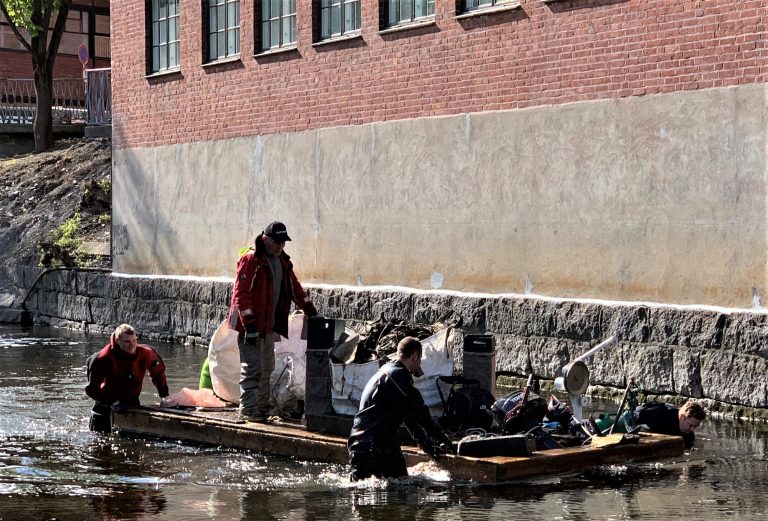
The River Dredgers in Oslo (Rusken) started in Akerselva in 2017 and has since been extended to Alnaelva. The goal of the clean-up actions is to prevent waste in the rivers ending up in the Oslofjord, where it is much more difficult to clean it up.

This spring, things became frantic when a volunteer pulled up an undermined grenade out of the river. A photographer from the prestigious magazine Monocle, being there to report from the renovation action, drops his camera and calls the police. Soon, the bomb squad is getting involved.

The River Dredgers in Oslo
Rusken is a community action project to clean up streets, rivers, beaches and parks in Oslo

Thankfully, these kind of finds are rare for the Rusken voluntarily picking crew. The annual cleaning operation is carried out in early summer in collaboration with students from the Norwegian University of the Environment and Life Sciences, the Church’s city mission, Friends of Akerselva, Oslo River Forum, Oslomarka’s Fisheries Administration (OFA), the Urban Environment Agency and the Urban Environment Agency’s contractors for the area.

*****************************************
Related: Oslo – A Pioneer in Green Transport Solutions
*****************************************

Rusken is a community action project to clean up streets, rivers, beaches and parks in Oslo and started in 2011. It involves kindergartens, schools, housing cooperatives, voluntary organizations, sports clubs, the business community and the general public. It emphasizes joint community action, shared responsibility and the breaking down of social divisions.

The River Dredgers in Oslo
The orange-clad picking members make their way up and down the Oslo’s Akerselva river

The orange-clad picking members make their way up and down the Oslo’s Akerselva river in boats or on foot along the banks, the usual suspects emerge, plastic containers, glass bottles, cigarette butts, poches of snus tobacco, the occasional rusted road sign, and the obligatory electric scooter.

This year, the scavengers walked around the base, and a little way down and up the river. NCC provided a barge and picked up waste from the river which was loaded onto the boat. In addition, Mad Goats had kayaks and packrafts so that volunteers could pick up rubbish in the river from a boat. Around 50 cleaners were in action this day. Rusken is Oslo municipality’s initiative for a clean, tidy and pleasant city. The background for the River Dredgers initiative is linked to the international commitment against plastic pollution in the sea, which really arose in 2017, after several terminally ill whales were found with stomachs full of plastic.

“This city has been very lucky,” says Jenny Krohn, whose official title is “Rusken general”. “We have been bringing people together to keep Oslo clean since 1976.”

Krohn has only two full-time employees, plus three hired seasonally. ”The trick is to make yourself look bigger than you are,” smiles Krohn.

The River Dredgers in Oslo, written by Tor Kjolberg

Moving to Denmark – Pros and Cons

0

We know that moving to a new country has its ups and downs. The excitement of something new can mix with the feeling of fear of the unknown. Leaving your ordinary, well-known environment behind and starting a journey in a new country takes courage. Before a change of this proportion, it might be a good idea to plan and investigate the new country and city you want to settle down in, so we have compiled a list of pros and cons. Moving to Denmark – pros and cons.

PROs

High Quality of Life
Denmark consistently ranks high in global quality of life indexes. The country boasts an excellent healthcare system, top-notch education, and a strong social safety net. The Danish welfare system ensures that citizens and residents have access to essential services, contributing to a sense of security and well-being.

Denmark has a very relaxed atmosphere, lots of people using bikes as their main transport option. When the weather is good and the sun is shining people will be outside in the parks, by the seaside or the harbors, hanging out, listening to music, barbecuing. During the cold months, it’s mainly indoor gatherings with hot tea and blankets.

Moving to Denmark – Pros and Cons
The official workweek in Denmark is 37.5 hours, and there is a generous amount of vacation time

Work-Life Balance
Danish culture places a strong emphasis on work-life balance. The official workweek is 37.5 hours, and there is a generous amount of vacation time, usually five to six weeks per year. This balance allows people to enjoy a fulfilling personal life alongside their professional commitments.

Most offices are empty by 5pm. And parents with small children often leave work at 3.30pm. to pick their kids up from daycare. This does not mean that people in Denmark are less productive than people from countries with longer work hours. In fact, they work just as hard. Denmark just has a culture of separating professional and personal lives, and spending time doing what they love or with family and friends is seen as important.

Moving to Denmark – Pros and Cons
Denmark is a global leader in environmental sustainability.

Environmental Awareness
Denmark is a global leader in environmental sustainability. The country has made significant strides in renewable energy, particularly wind power. The cities are designed to be bike-friendly, reducing the carbon footprint and promoting a healthy lifestyle. The emphasis on green living is a significant draw for those who value environmental consciousness.

Moving to Denmark – Pros and Cons
The strong sense of community and social trust enhances the overall feeling of safety.

Safety and Low Crime Rate
Denmark is known for its low crime rate and high levels of safety. This makes it an attractive destination for families and individuals seeking a secure environment. The strong sense of community and social trust further enhances the overall feeling of safety.

Criminal activity that does occur is usually in the form of petty offences, and these occasions are few and far between. Expats going about their normal lives in the country will not have to worry about their safety.

Cultural Richness
Denmark offers a vibrant cultural scene, from historic landmarks like castles and Viking ruins to modern art museums and music festivals. The Danish concept of “hygge” emphasizes coziness and contentment, contributing to the warm and welcoming atmosphere of the country.

Moving to Denmark – Pros and Cons
Denmark is famous for its free healthcare system. Photo: Yadid Levy / Norden.org

Healthcare system and governmental supports
Denmark is famous for its free healthcare system. Of course, it is only technically free, every citizen has healthcare included in their taxes, which means that you will not be charged directly when you visit the doctor.

In general, Denmark has a high rate of taxation, some would say too high. However, when you look at all the healthcare benefits and government support you receive for free, it doesn’t look that bad.

In addition to free healthcare, this is an example of a few things that Denmark offers:

  • Free education
  • Financial support for students (from EU member countries)
  • Maternity leave and benefits
  • Clean and well-maintained cities, parks, and other public spaces
  • Extensive bike-lines

Professional childcare availability
It is very common in Denmark that both parents are working outside their home, even before their child turns one year old. Therefore, professional childcare is available to help the parents. The teachers in these childcare facilities are trained professionals. They usually highlight integration and social rules and teaching Danish to the kids from an early age.

This professional childcare system however is not for free. Depending on where you live, it could vary between 300-500 euros per month. Although, depending on how many kids you have, the price can be lowered.

********************************************
Related: Best Schools for Expat Children in Copenhagen
********************************************

CONs

High Cost of Living
One of the most significant downsides of living in Denmark is the high cost of living. Everything from housing to groceries and dining out can be expensive. Taxes are also high, which, while funding excellent public services, can be a financial burden for newcomers, especially those not accustomed to such a tax structure.

Everything in Denmark is expensive, from accommodation to utilities to fuel and eating out. In fact, Denmark’s capital, Copenhagen, is one of the most expensive cities in the world. Luckily, salaries in Denmark tend to the high and in most cases, can cover an expat’s cost while also providing them with a good quality of life.

Moving to Denmark – Pros and Cons
Learning Danish can be challenging for newcomers.

Language Barrier
While many Danes speak excellent English, especially in urban areas, Danish is the official language and is necessary for full integration into society. Learning Danish can be challenging for newcomers, and fluency is often required for certain jobs and social settings. This language barrier can make it difficult to fully integrate into the local culture.

Denmark has the second highest percentage of English-speaking population in the world according to the 2020 English Proficiency Index, while Copenhagen is the first on the list of English Proficiency Index in the capitals of the world.

In general, this means that you will have no problem coming to the country and communicating basically to anyone about anything if you speak a good level of English. However, if you are planning on staying in Denmark for more than one to two years, it might be a good idea to learn the language.

In general, people prefer to speak their first language, and they are also more opened and direct when it comes to social life speaking Danish.

According to linguist Rocky Barnes, Danish is not an easy language, especially when it comes to their pronunciation. However, you will most certainly have a better experience and feel more included in society if you speak the language of the Danes.

Moving to Denmark – Pros and Cons
Denmark’s weather can be a downside for some. Photo: Sxience Nordic

Weather and Climate
Denmark’s weather can be a downside for some. The country experiences long, cold winters with short daylight hours, which can lead to seasonal affective disorder (SAD) for some people. The summers, although pleasant, are brief and often unpredictable. The climate may take time to adjust to, particularly for those from warmer regions.

The weather is not Denmark’s biggest charm. Approximately from around October, the days are getting shorter and shorter in terms of daylight, it is rainy, it is cold, and this can last until March, some years even April.

Summers are usually quite nice; however, the average temperature is usually around 23 degrees, and depending on the year, the whole summer can be rainy too.

For the ones that are used to heavy sunlight and warm weather, Denmark might be a tough one to get used to and like.

Cultural Adjustment
While Denmark is welcoming, its culture can be quite different from what some expats are used to. The society tends to be more reserved, and making close friendships can take time. The cultural norm of “Janteloven,” which discourages excessive pride and boasting, may also require some adjustment for those from more individualistic societies.

Migration and population change are something that is happening all around the world, also in Europe. Unfortunately, the so-called passive racism is present in almost all countries towards especially minority racial groups.

Denmark is a country that advocates for freedom and equality; however, you might encounter high nationalism and cultural superiority when living in Denmark.

******************************************
Related: Cultural Etiquette in Denmark: What New Migrants Need to Know
******************************************

Moving to Denmark – Pros and Cons
The job market in Denmark is competitive, especially for non-EU citizens.
Photo: Yadid Levy / Norden.org

Job Market Competition
The job market in Denmark is competitive, especially for non-EU citizens. While there are opportunities in sectors like IT, engineering, and healthcare, it can be challenging to secure a position without proficiency in Danish. Additionally, the country has a strong preference for hiring locally, making it difficult for foreigners to break into certain industries.

Moving to Denmark – Pros and Cons: Conclusion
Living in Denmark is a good experience for most people. No matter where you go, it is always extremely difficult to leave your home and create a new one somewhere else, where you will feel safe, comfortable, and happy. However, Denmark is a country with good governance, a safe and clean environment, and peaceful people.

The negative side of Denmark is balanced out by the supportive services and structure of the country. There is a chance you face failures and things you don’t like or are not used to. You might find that this country is not for you. But you also might find that it’s just the perfect place for you to be.

Moving to Denmark – Pros and Cons, compiled by Tor Kjolberg

Feature image (on top) © University of Copenhagen

How Does Sweden Succeed in Emissions Reduction Combined with Economic Growth?

0

Sweden has emerged as a standout example in Europe, proving that substantial economic growth and significant reductions in greenhouse gas emissions can go hand-in-hand. How does Sweeden succeed in emissions reduction combined with economic growth?

Sweden’s success in reducing emissions while achieving economic growth is often highlighted as a model for sustainable development. The country’s approach can be understood through several key factors:

How Does Sweden Succeed in Emissions Reduction Combined with Economic Growth?
The country already emitted five times less carbon dioxide, or CO2, per capita than the European average back in 1990.

Carbon Taxation

Sweden introduced a carbon tax in 1991, one of the first countries to do so. This tax incentivizes businesses and individuals to reduce fossil fuel consumption by making it more expensive. Over time, the carbon tax has been increased, covering a wide range of sectors. The revenue generated is often reinvested in renewable energy projects and other environmental initiatives.

From Europe and the US to Brazil and Indonesia, countries around the world are looking into carbon pricing to reduce emissions. However, only until recently, there has been limited evidence on whether it has effectively reduced firm carbon emissions.

Carbon pricing accounts for at least a third of emissions reduction between 1991-2015 in Sweden. Without it, emissions would have been 30% higher, underscoring the importance of effective carbon pricing policies in the global fight against climate change.

The country already emitted five times less carbon dioxide, or CO2, per capita than the European average back in 1990. Since then, Sweden has reduced its net greenhouse gas emissions by another 80%, while the average reduction in the EU has only been 30%.

“You don’t need to reduce welfare to reduce your climate impact,” said Mattias Goldmann, founder of the Swedish 2030-secretariat, who works towards Sweden reaching its climate target for the national transport sector.

How Does Sweden Succeed in Emissions Reduction Combined with Economic Growth?
Sweden is at the forefront of the endeavor to tackle climate change through clean energy innovations.

Investment in Renewable Energy

Sweden has heavily invested in renewable energy sources, particularly hydropower, wind power, and bioenergy. As of recent years, around 54% of Sweden’s energy consumption comes from renewables. This investment has reduced the country’s reliance on fossil fuels and significantly lowered its greenhouse gas emissions.

But it wasn’t just hitting the natural resources jackpot that got the country to where it is now. Sweden realized its natural potential early on and started investing in renewable energy sources much earlier than many other countries.

“Sweden has had hydropower for more than a century,” according to Goldmann.

Sweden has some natural advantages. 70% of Sweden is forest land. And forests are very useful when it comes to reducing greenhouse gas emissions because they remove CO2 from the atmosphere.

Sweden is at the forefront of the endeavor to tackle climate change through clean energy innovations and prides itself on a domestic energy value chain that is 98 per cent carbon-free. No less than 54.6 per cent of the electricity mix in the national grid comes from renewable sources today – making Sweden the EU leader in renewable energy.

How Does Sweden Succeed in Emissions Reduction Combined with Economic Growth?
Sweden has implemented strict energy efficiency standards across various sectors.

Energy Efficiency

Buildings, industry, transport, and mobility are all identified as the sectors with the largest potential for energy saving. This is true in industrialised as well as developing countries. These sectors are markedly different from each other but also have many challenges in common, like creating and maintaining sustainable systems of power supply, heating, cooling, and lighting, just to name a few.

Sweden has implemented strict energy efficiency standards across various sectors, including buildings, transportation, and industry. These regulations have led to innovations in energy-saving technologies and practices, further reducing emissions. For example, Swedish buildings are required to meet rigorous insulation and energy efficiency standards, which reduces the overall energy demand.

How Does Sweden Succeed in Emissions Reduction Combined with Economic Growth?
Sweden has invested in sustainable urban planning and public transportation.

Public Transportation and Sustainable Urban Planning

The journey towards fossil-free, low-carbon public transport began way back in the 1980s. Thanks to hard work, a long-term approach and clearly defined interim targets, the goal of 100 % renewable energy for the metro, buses and local trains was achieved in 2017. The next goals for 2030 are to have fossil-free maritime traffic, cut emissions by 75% compared with 2009 levels, and to use 15% less energy per passenger kilometer than in 2011.

Sweden has invested in sustainable urban planning and public transportation. Cities like Stockholm have well-developed public transit systems that reduce the need for private car use, thereby lowering emissions. Additionally, urban areas are designed to encourage walking, cycling, and the use of public transport.

How Does Sweden Succeed in Emissions Reduction Combined with Economic Growth? Article continues below illustration.

How Does Sweden Succeed in Emissions Reduction Combined with Economic Growth?
The first country in the world to pass an environmental protection act in 1967, Sweden also hosted the first UN conference on the global environment in 1972. Here, Uppsala Plan.

Circular Economy Initiatives

Sweden is a leader in promoting a circular economy, where the focus is on reducing waste and promoting recycling and reuse. The country has one of the highest recycling rates in the world, which helps in reducing the overall carbon footprint.

As of 2024, a new Swedish law declares that everyone must separate their food waste – this goes for households and businesses alike. It’s also mandatory for all of Sweden’s local authorities to provide separate collection of food waste.

This has already been done for years in many parts of the country, but it hasn’t been regulated by law until now.

Food waste is a great source of energy and is used, among other things, as biogas – to replace fossil fuels.

How Does Sweden Succeed in Emissions Reduction Combined with Economic Growth?
The country already emitted five times less carbon dioxide, or CO2, per capita than the European average back in 1990.

Government and Policy Support

The Swedish government has consistently supported environmental sustainability through legislation, research funding, and public awareness campaigns. Sweden’s long-term commitment to reducing emissions is backed by clear policies and goals, such as the aim to achieve net-zero emissions by 2045.

The first country in the world to pass an environmental protection act in 1967, Sweden also hosted the first UN conference on the global environment in 1972. Since then, Sweden has not looked back, managing to grow its economy substantially while reducing carbon emissions and limiting pollution. Around 60 per cent of Sweden’s national energy supply comes from renewables, and thorough legislation aims at further reducing emissions.

For more than a decade, Sweden has been in the top ten of the respected Environmental Performance Index produced by Columbia and Yale universities, with exceptionally clean air and clean water alongside its low emissions.

How Does Sweden Succeed in Emissions Reduction Combined with Economic Growth? Article continues below illustration.

How Does Sweden Succeed in Emissions Reduction Combined with Economic Growth?
Swedish society is highly environmentally conscious, with strong public support for sustainability initiatives.

Public-Private Partnerships

Sweden fosters collaboration between the government, private sector, and academia to develop innovative solutions for reducing emissions. This collaborative approach helps in scaling up successful projects and technologies, thereby accelerating the transition to a low-carbon economy.

******************************************
Related: World’s First Fossil-Free Steel From Sweden
******************************************

Sweden is a leading donor of development assistance, but meeting the funding needs for a green and digital transition requires closer cooperation between development assistance and trade, greater mobilization of private capital and harnessing the business sector’s innovation capacity. A current example of this is Sweden’s partnership with Bangladesh, which HRH Crown Princess Victoria visited together with Minister for International Development Cooperation and Foreign Trade Johan Forssell on 18–21 March.

Societal Awareness and Engagement

Swedish society is highly environmentally conscious, with strong public support for sustainability initiatives. This cultural aspect drives both individual behavior and policy acceptance, making it easier to implement and maintain stringent environmental regulations.

The first part of the 2021-2022 EIB Climate Survey explores people’s views on climate change in a rapidly changing world.

  • 75% of Swedish people think that climate change and its consequences are the biggest challenge for humanity in the 21st century
  • 76% are in favor of stricter government measures that impose changes on people’s behavior (six points higher than last year)
  • 51% think the country will fail in drastically reducing its carbon emissions by 2050, as pledged in the Paris Agreement
  • 58% believe that they are more concerned about the climate emergency than their government is
  • 54% feel that climate change has an impact on their everyday lives
  • 82% say they want to replace short-distance flights by fast, low-polluting trains in collaboration with neighboring countries

Decoupling Economic Growth from Emissions

Through these combined efforts, Sweden has managed to decouple its economic growth from carbon emissions. While its economy has grown, the country has reduced emissions by over 25% since 1990, demonstrating that economic prosperity and environmental sustainability can go hand in hand.

With the highest level of CO2 tax worldwide, Sweden provides strong evidence that decoupling GDP growth from CO2 emissions is possible and that CO2 tax is an efficient way of achieving a decrease in CO2 emission with fossil origin.

******************************************
Related: Sweden Contributes to Making Europe Greener
******************************************

Technological Innovation

Sweden has been at the forefront of developing and adopting new technologies that contribute to emissions reduction. This includes advancements in energy storage, electric vehicles, and smart grid technologies. Continuous innovation ensures that Sweden can maintain its progress in reducing emissions while supporting economic growth.

Sweden has notified to the European Commission of its plans to adopt a €3 billion (SEK 36 billion) scheme to support projects removing biogenic COemissions through permanent CCS. The measure aims to enable CCS as a viable and effective tool to mitigate climate change. This is expected to increase investor confidence in CCS-technology, reduce costs for its future applications and thereby facilitate the development of a CCS value chain in the EU.

Under the scheme, the aid will be awarded through a competitive bidding process, with the first auction expected in 2024. Auctions will be open to companies that (i) carry out an activity in Sweden, emitting biogenic CO2, and (ii) implement projects with a capacity to capture and store at least 50,000 tonnes of biogenic CO2 per year.

How Does Sweden Succeed in Emissions Reduction Combined with Economic Growth?
Sweden’s success in combining emissions reduction with economic growth is the result of a comprehensive and multi-faceted approach. Photo: Visit Sweden

Lessons learned

So, what can other countries learn from the Swedish success story?

“Sweden, I think, illustrates that yes, it’s indeed possible to produce electricity without any greenhouse gas emissions at all, and that’s an example for other countries in the world,” said energy expert De Schrijver from the European Environment Agency.

Sweden’s success in combining emissions reduction with economic growth is the result of a comprehensive and multi-faceted approach. By integrating environmental concerns into economic policies, investing in technology and infrastructure, and fostering a culture of sustainability, Sweden has set a powerful example of how countries can pursue both environmental and economic goals simultaneously.

How Does Sweden Succeed in Emissions Reduction Combined with Economic Growth? edited by Tor Kjolberg

Meet Norwegian Design Chairs Fluffy and Unfluffy

0

Last June, the Norwegian “Fluffy” lounge chair became available in an “UnFluffy” version with textile. Meet Norwegian design chairs Fluffy and Unfluffy.

“We have been working on customizing Unfluffy for the market all winter,” says founder of Eikund, Morten Hippe (47).

Morten Hippe has worked for the Danish furniture manufacturer Carl Hansen & Søn, known for a number of furniture classics. When he was refurbishing his own apartment in 2016, he contacted the cabinetmaker Frode Tingbø, and they started talking about the Norwegian design furniture that was designed in the 1950s and 60s. How about starting a company that collects the best Norwegian design classics – and put them into production again?

Meet Norwegian Design Chairs Fluffy and Unfluffy
“We have been working on customizing Unfluffy for the market all winter,” says founder of Eikund, Morten Hippe (47).

A year after, the new Norwegian furniture company Eikund was re-launching Norwegian furniture classics that definitely impress. The scope of creativity blooming in Norway around the mid-twentieth century is unknown territory for many. Pulled into the spotlight again, there is no doubt that these objects fit perfectly into contemporary interiors of today, both in public and private sector.

The Fluffy lounge chair by Fredrik A. Kayser is characterized by its ultra-soft upholstery in Norwegian sheepskin, and its sloping armrests leaning you into a welcoming embrace. Kayser graduated from National Academy of Craft and Art Industry back in 1945 and the lounge chair was designed while being employed at Rastad & Relling Tegnekontor. It combines both art and function into one, a floating cloud of fluffiness that builds on the past for the present. This is a brand-new species that can live anywhere!

Meet Norwegian Design Chairs Fluffy and Unfluffy
The Fluffy lounge chair by Fredrik A. Kayser is characterized by its ultra-soft upholstery in Norwegian sheepskin,

*************************************
Related: Be Seated the Norwegian Way
*************************************

The UnFluffy lounge chair is characterized by its sloping armrests leaning you into a welcoming embrace. This is the more versatile sibling of the Fluffy lounge chair.

“This product has great potential, as several people have expressed that they could imagine a slightly more “toned-down” version of Fluffy”, says Morten Hippe.

Norwegian designers from this period were clearly influenced by the modernistic trends rushing through Europe and joined the common mission to create simple and functional furniture for the masses. Like the pioneers from neighboring countries, such as Hans J. Wegner and Alvar Aalto, they never lost sight of the refined and cultivated aesthetics that characterize many of these pieces today and have made them into collector items at auction houses worldwide.

Meet Norwegian Design Chairs Fluffy and Unfluffy
The UnFluffy lounge chair is characterized by its sloping armrests leaning you into a welcoming embrace.

“As a trained industrial designer, I long had design history as a hobby, and immersed myself in everything to do with Norwegian as well as international products and designers,” says Hippe. “I knew there was a lot of Norwegian gold out there.”

Transforming the Fluffy Chair to the UnFluffy Char has been done relatively easily, according to Hippe. “We were two people who worked through the solutions together. One person with a background as an industrial designer and the other person with training as an upholsterer. We planned most of it before we started, based on an original chair and how the core casting looks. After two prototypes, we were able to fine-tune all the necessary details to bring it up to a “high-end” level”, adds Hippe.

Meet Norwegian Design Chairs Fluffy and Unfluffy
The Eikund catalogue

While UnFluffy is based on the original Fluffy drawings and manufacturing process, there are subtle differences all around. With the thick, raggy sheepskin gone, the basic shapes and clean lines becomes the center of focus. Fitting the fabric without creases around the armrests and creating elegant seams were two problems that had to be solved. The shapes of the seating and back have also been tweaked to compensate for the brand-new look without fluff.

“We have chosen Elle and Safire as our standard textiles. This is based on their aesthetics, texture and thickness, as well as how they fit the shape of the chair. Both fabrics are from our partner Kvadrat and have the Greenguard Gold environmental certificates. Elle is a type of boucle with a nice structure, and it is quite soft. While Safire is on the edge of being boucle without being it. Safire is a bit tighter than Elle, but with nice texture and structure. The chair gets a visible softness with these textiles”, says Hippe.

Meet Norwegian Design Chairs Fluffy and Unfluffy, written by Tor Kjolberg, based mainly on information published of Eikund official website.