



A compelling customer story rarely appears when a marketing team suddenly needs a case study for a campaign. The strongest stories emerge over time through the deliberate collection of customer story leads. Stop chasing case studies: Build a living library of customer stories.
Consistently collecting customer story leads from internal and external parties, as well as directly from customers, and pre-qualifying customers should be best practices for uncovering customer successes.
Customer-story leads are early signals that a customer has experienced something meaningful:
- A surprising business outcome
- A personal transformation
- A creative use of a product
- A challenge overcome
- A relationship with a brand that goes beyond a transaction
By identifying these moments early, brands can transform everyday customer experiences into authentic storytelling assets.
Great customer stories disappear every day
Many companies wait until they need a testimonial, case study, or campaign asset before seeking customer stories. By then:
- The emotional details have faded
- The customer may no longer remember the journey clearly
- The internal champion may have moved roles
- The opportunity to capture the story at its most authentic moment is gone
A good customer story is not just a record of success. It is a narrative arc:
Challenge → Change → Outcome → Meaning
Marketing teams need systems to capture that arc while it is still alive.
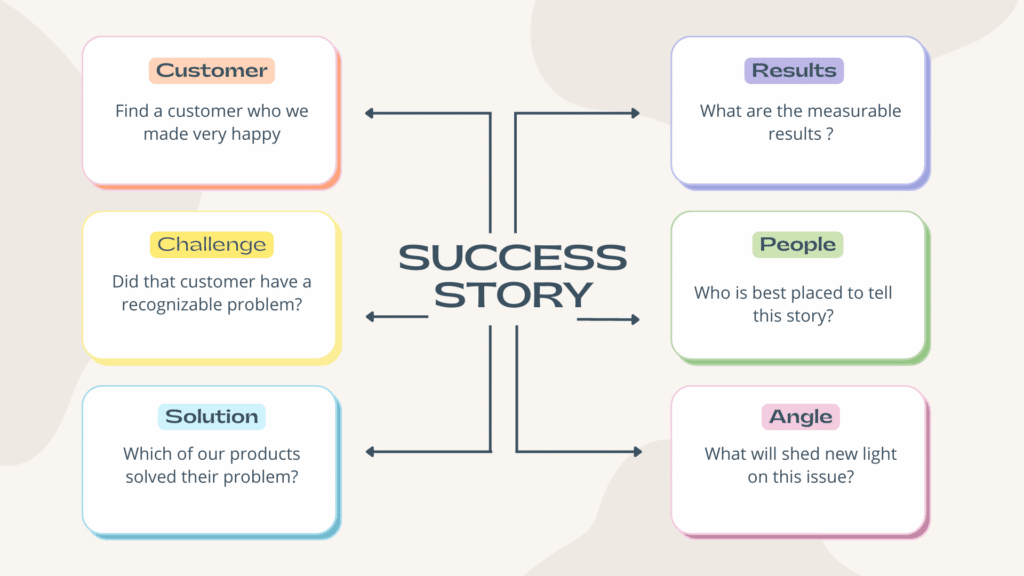 What is a customer-story lead?
A customer-story lead is not necessarily a finished story. It is a potential narrative worth exploring. To find candidates, start by identifying which customer-facing employees or external partners may be aware of customer successes. Consider common candidates, such as sales reps and account managers, partners and resellers, consulting and service teams, support reps, or end customers.
Business impact signals might be
- “We reduced our process time by 50% after adopting the solution.”
- “This helped us enter a new market.”
- “Our team works differently because of this partnership.”
Human impact signals might be
- A customer sends an unsolicited thank-you note
- A user shares an emotional success moment
- A customer describes how a product changed their daily work
Advocacy signals might be
- A customer recommends the company publicly
- A customer volunteers to speak at an event
- A customer frequently engages with brand content
Do not only collect testimonials. Collect moments.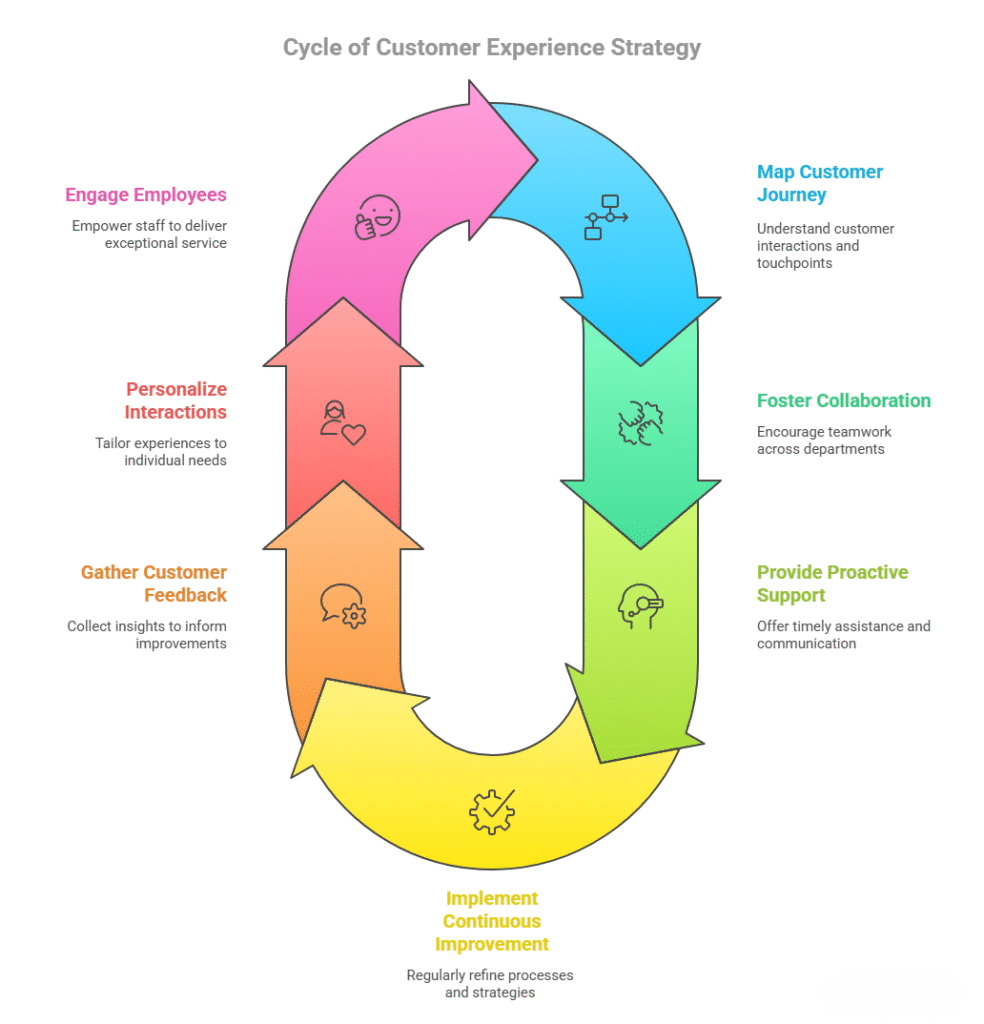 Where to find customer-story leads
Customer stories are often hidden across the organization. Customer success teams hear transformation stories first. Create simple processes such as “Monthly story discovery” meetings, a shared story-submission form, or recognition for employees who identify strong stories.
Toyota Motor Sales built a self-service story link that has been highly effective at gathering stories for its owners’ site. Owners can also read “Stories from the Road”, a collection of positive accounts submitted by fellow Toyota owners via a “Submit Your Story” link.
 Turn customer stories into marketing assets
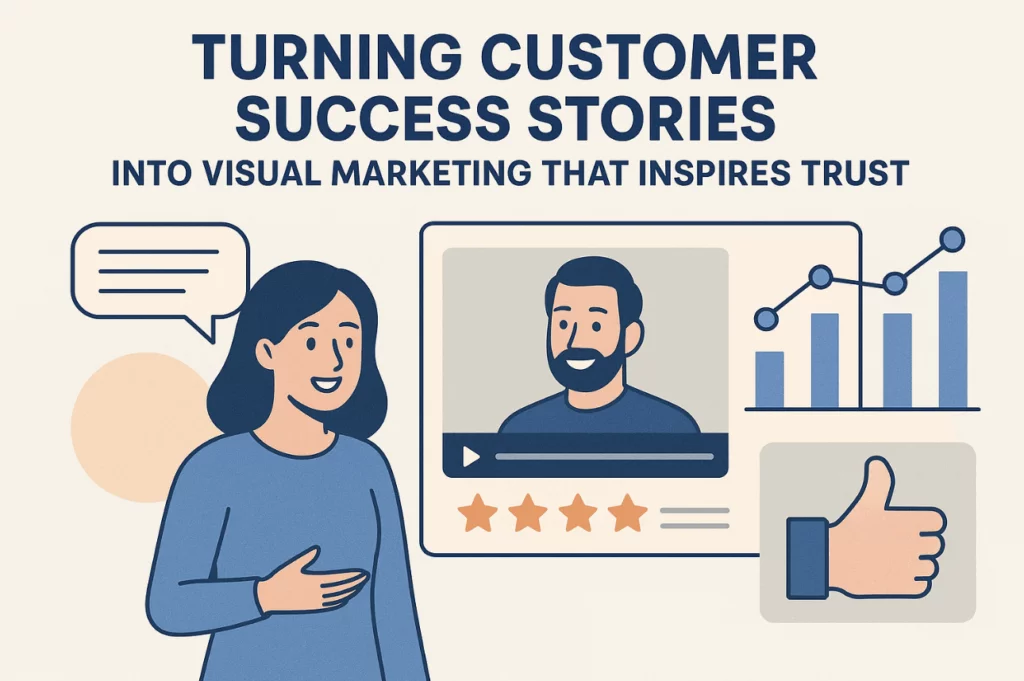
A customer story should not live only as a PDF case study.
One story can become long-form content, such as a case study, a blog article, a customer interview, or a documentary-style video.
Another customer story could be used as pitch material, an industry example, or a customer proof point.
Brand storytelling can include campaign content, social storytelling, or event presentations.
And don’t forget internal storytelling, which should act as employee communications, culture-building, and customer-focused training.
Think of customer stories as strategic content infrastructure, not isolated campaigns.
The storytelling framework: make the customer the hero
A common mistake is making the brand the main character. What is the strongest structure of the two examples below?
“Our company created an innovative solution that helped Company X succeed.”
Or
“Company X faced a difficult challenge. Their team made a change, overcame obstacles, and achieved a meaningful result.”
The customer is the protagonist. The brand is the guide or partner.
A useful framework:
 Create a customer-story engine, not a campaign
The best brands create ongoing habits:
- Add story discovery to customer success workflows
- Train employees to recognize story moments
- Maintain a customer-story database
- Regularly revisit old leads
- Build relationships with potential storytellers
A customer-story pipeline works similarly to a sales pipeline:
Discover → Qualify → Develop → Publish → Repurpose
Stop Chasing Case Studies: Build a Living Library of Customer Stories: Conclusion
The most powerful brand stories are rarely invented in a marketing meeting. They are discovered through real customer experiences. Brands that build systems to collect customer-story leads gain more than content—they gain a deeper understanding of why customers choose them, the value they create, and how to communicate that value authentically.
 Take-away
If you learned something from this article, I believe you’ll also enjoy my recent book, “How I’ve Survived as a Storyteller for Over 50 Years: 12 Survival Techniques.” Get your FREE e-book copy by sending me your name and e-mail address, and include “Storytelling” in the subject line. Thank you for reading!
Stop Chasing Case Studies: Build a Living Library of Customer Stories, written by Tor Kjolberg.
More articles on Storytelling by Tor Kjolberg you may like:
A Brand’s In-House Storytelling Library
Brand Masters of Storytelling 2
How Smart Brands Republish Content Without Repeating Themselves
Why Organizations Are Turning to Storytelling to Win Public Attention
Brand Masters of Storytelling 3