


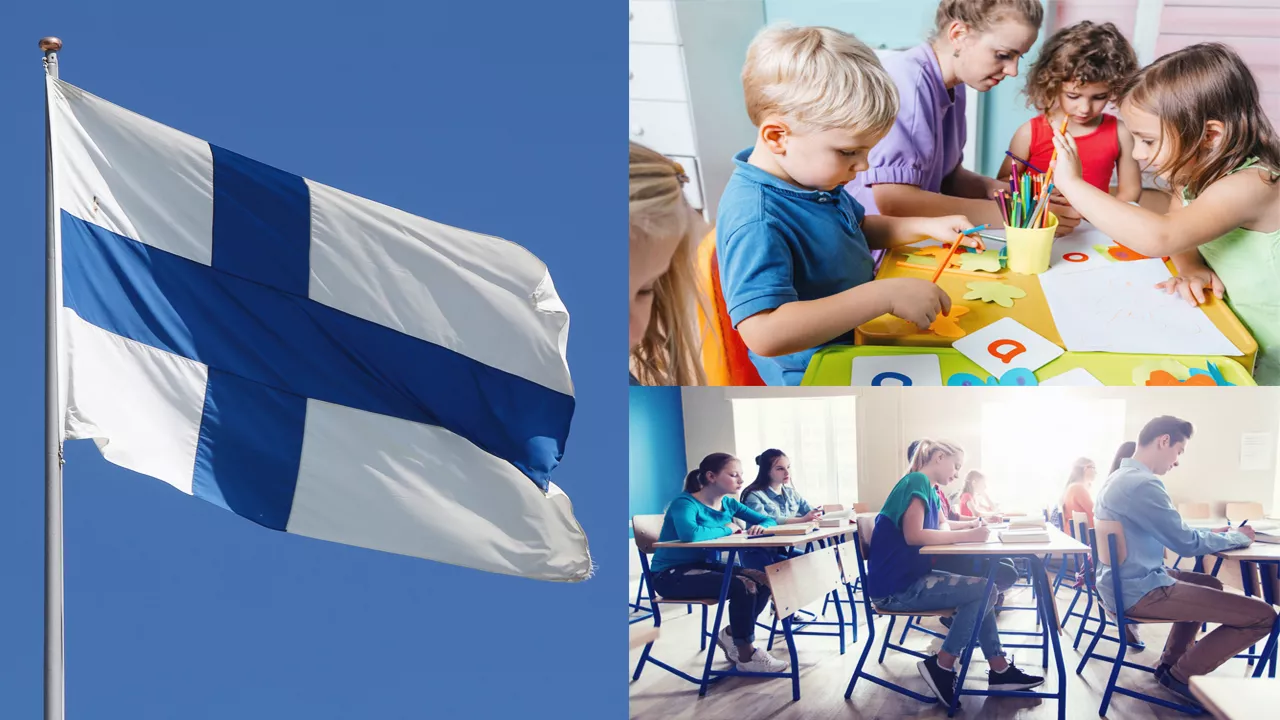
The OECD PISA rank history illustrates a clear story of Nordic education over the last quarter-century: Finland’s historic rise and steady defense of its lead, Sweden’s volatile free-market experiment, drop-and-recovery, and Norway’s ongoing battle to break out of average global tiers. Why is the Finnish School System Best in the Nordics?
The newly released PISA 2025 results highlight that while learning outcomes have dropped globally, Finland continues to lead the Nordic pack. Finland’s school system likely succeeds because it prioritizes equity, student well-being, and teacher autonomy over competition and high-stakes testing.
The core factors that make it a global model—and stand out in the Nordic region—include:
Strict Equity and Free Access
Education is a universal human right. Every child receives free schooling, free hot lunches, free transport, and necessary health or learning support, regardless of background or local municipal wealth. Private elite schools and tuition fees are virtually non-existent.
********************************************
Related: Benefits and Drawbacks of Scandinavian Educational Program
********************************************
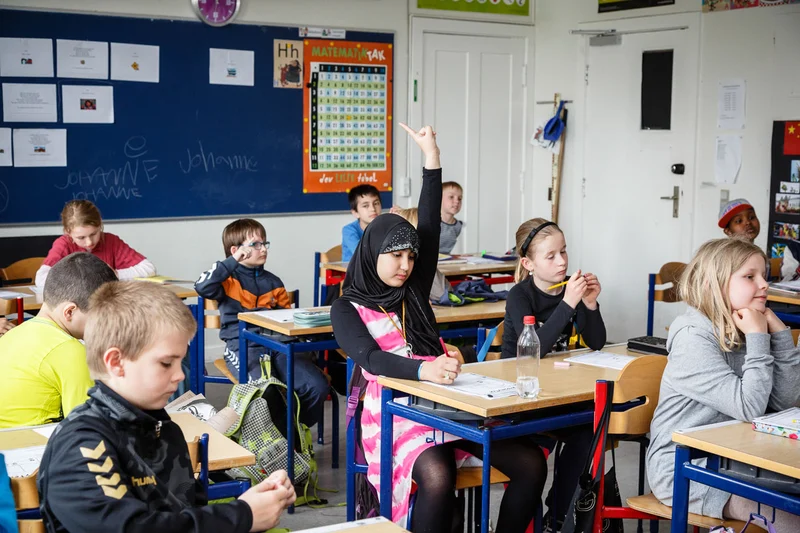
Highly Trained, Respected Teachers
Teaching is one of Finland’s most selective and respected professions. All teachers must earn a research-based master’s degree, and they are granted broad autonomy to design their own lesson plans and shape the curriculum.
No Standardized Testing Culture
Finland has no mandatory national standardized testing during basic comprehensive school. Instead of teaching to a test, educators focus on deep conceptual understanding, practical problem-solving, and critical thinking.
Late Start and Play-Based Early Years
Formal schooling does not begin until children turn seven. Before that, early childhood education focuses heavily on play, social-emotional development, and outdoor exploration.
Low Stress and Short School Days
Finnish students enjoy shorter school days, frequent and long outdoor breaks, very little homework, and minimal outside tutoring compared to students in most other countries.
Cooperation Over Competition
Classrooms emphasize teamwork, peer support, and collective growth rather than grading curves or competitive rankings.
*********************************************
Related: The Top 3 Secrets to Scandinavian Innovation In Education
**********************************************
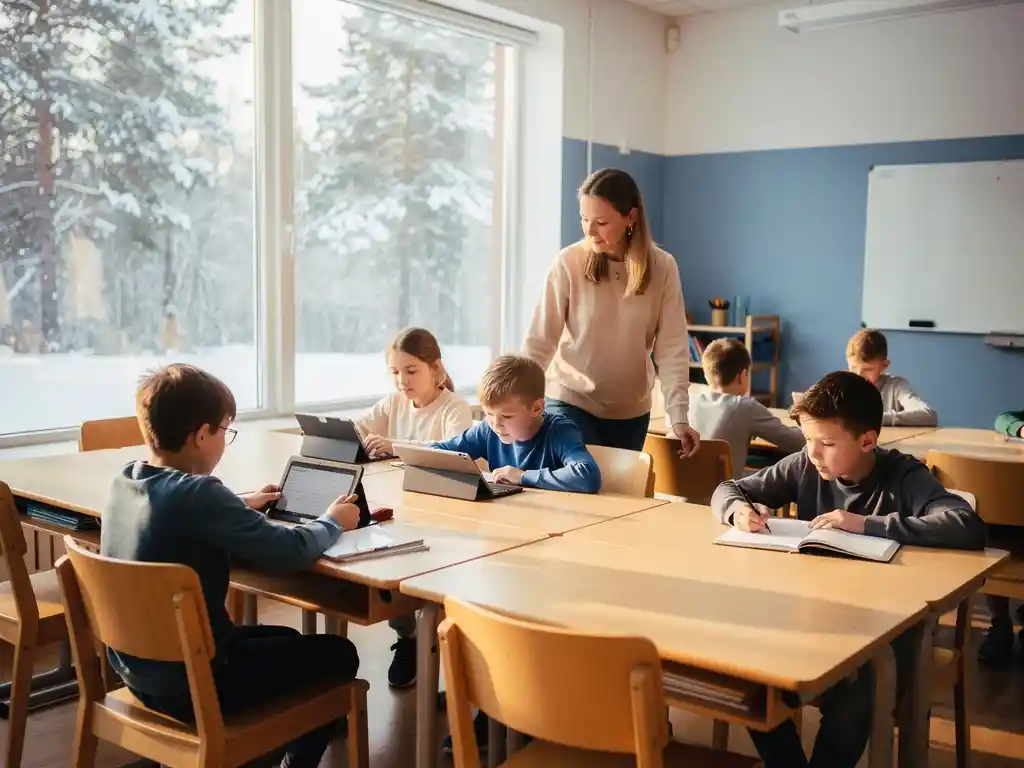
Why is the Finnish School System Best in the Nordics?
Compared with its neighbors, Finland shares the core Nordic educational ideology of promoting equity, inclusion, and universal free access. However, significant policy choices made in the late 20th century caused Finland, Sweden, and Norway to diverge structurally and culturally.
The core differences lie in how each country handles market competition, teacher status, and structural support:
| Feature | Finland | Sweden | Norway |
| Marketization & Private Sector | Virtually no private schools. Strict rules prevent tuition fees or corporate-run education. | High school choice. Features a large independent, voucher-funded school sector (friskolor) run by for-profit corporations. | Publicly dominated. Very strict regulation of private schools; tuition fees or profit-making are generally illegal. |
| Teacher Prestige & Status | Very high. Universally respected profession on par with law or medicine. Stricter entry bars. | Moderate to Low. Historically declined due to marketization, leading to ongoing recruitment challenges. | Moderate. Stable status, but faces common Western recruitment hurdles and bureaucratic pressures. |
| Minimum Teacher Qualifications | A master’s degree is required for all classroom and subject teachers. | Stricter licensing rules implemented recently, but many non-certified substitutes are used. | A master’s degree has been mandatory since 2017 for primary and lower secondary school teachers. |
| Special Education Approach | Proactive & Early. Up to 31% of basic education students receive early, preventative learning support. | Reactive. Support is often delayed until a student falls severely behind due to tracking. | Reactive. Only about 8% of students receive specialized support, usually much later in school. |
| School Lunches | Fully free and universal hot meals since 1948. | Fully free and universal hot meals. | Students usually bring a packed cold lunch (matpakke). |
Why Finland Outpaces Sweden
The divergence between Finland and Sweden stems from a philosophical split in the 1990s. While Finland doubled down on teacher autonomy and egalitarianism, Sweden bet heavily on free-market competition.
Sweden introduced a voucher system allowing corporate-run free schools to compete for students. Critics and researchers point out that this market model increased socioeconomic segregation and inequality across Swedish cities, driving down overall OECD PISA scores from their 20th-century peaks.
Why Finland Outpaces Norway
Norway and Finland look very similar on paper—both favor a stress-free environment, lack a competitive grading culture, and emphasize outdoor play. However, educational researchers pinpoint early intervention as the main reason Finland scores higher on international benchmarks
Finland employs a robust network of special education teachers who identify learning challenges as soon as they appear. If a Finnish child struggles slightly with reading at age seven, they immediately receive tailored, low-stigma coaching. In Norway, specialized assistance historically requires a formal pedagogical assessment, so children often wait years for support, dragging down overall national competencies.
The Core Metric: Science Performance (PISA 2025)
Because science was the major domain of the latest PISA cycle, it acts as the primary benchmark for the 2025 report. Finland continues to lead its neighbors, while Sweden has suffered severe drops in reading and math. Finland: 504 points (well above the OECD average of 482). Sweden: 485 points (Right at the OECD average; hits historical 25-year lows in reading/math). Norway: 470 points (Significantly below the OECD average)
The Historical Narrative (2000–2025)
Finland: The “PISA Shock” Hero in Decline
2000–2006 (The Peak): Finland stunned the world by ranking #1 globally in reading, science, and math. This era cemented the mythos of Finnish education.
2009–2022 (The Slow Drift): Finland’s scores began a long-term, gradual downturn. Experts attribute this to rising screen time, shifting demographics, and minor school funding cuts, though it still consistently stayed ahead of the rest of Europe.
2025 (The Current Status): Despite experiencing a noticeable performance gap widening between top and low-achieving students inside individual schools, Finland remains an elite Western performer, easily outpacing Norway and Sweden.
Sweden: The V-Shaped Rollercoaster
2000–2012 (The Free Fall): Sweden began the millennium with strong scores, but plummeted rapidly following its aggressive 1990s marketization reforms. By 2012, Sweden experienced the worst drop in PISA history, falling well below the OECD average.
2015–2018 (The Recovery): Sweden introduced stricter teacher licensing laws and heavy state interventions, triggering a brief bounce back to average levels.
2025 (The Worst-Ever Deficit): The latest data represents a “cold shower” for Sweden. Swedish 15-year-olds posted their lowest scores in a quarter-century for math and reading comprehension, wiping out previous recoveries.
Norway: The Consistent Average
2000–2015 (The Flat Line): Norway has never experienced the stratospheric highs of Finland or the devastating valleys of Sweden. It has historically hovered around, or slightly below, the OECD average.
2018–2025 (The Current Struggle): Norway’s scores dropped alongside global trends after the pandemic. In the latest 2025 rankings, Norway sits deep in the lower tiers of the Nordic countries, requiring a substantial boost in foundational skills to catch up to Finland’s benchmark.
Why is the Finnish School System the Best in the Nordics? -Conclusion
Finnish students get everything they need to do well in school without the added pressure of excelling in a subject. Without having to worry about grades and busywork, they are able to focus on the true task at hand – learning and growing as a human being.
Finnish architects may also shape the school system. Recently built schools reject open-plan learning environments in favor of a calmer, more focused atmosphere. Open atriums and inner courtyards bring light into the school, boosting alertness and helping sustain students’ concentration. Schools serve as both educational spaces and centers of community and civic life.
Editor’s note: I have excluded Denmark in this article for editorial reasons only. However, Denmark’s education system shares many of the core strengths found across the Nordic region.
Why is the Finnish School System Best in the Nordics? Compiled by Tor Kjolberg.
Feature image (top) © Her Finland.