



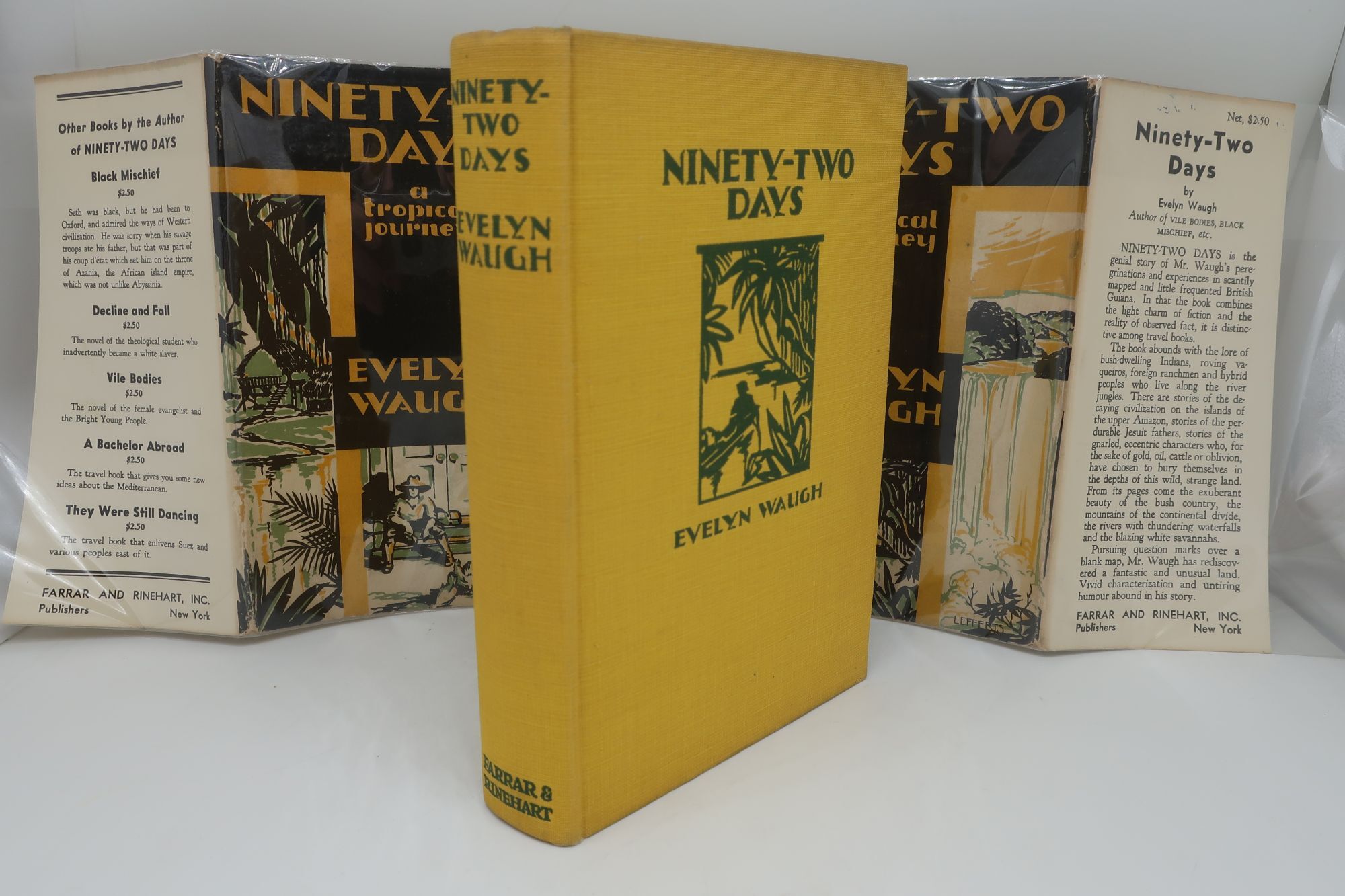
Historical Travel Books #14: Ninety-Two Days by Evelyn Waugh. Waugh was a master of comic travel writing, and Ninety-Two Days is a hilarious account of his travels through Guiana and Brazil—a grueling jungle misadventure.
Despite its characteristic whinging tone, Ninety-Two Days becomes a delightful, if somewhat broody, trudge through the tropics. Waugh’s gift for word portraiture was never better.
Waugh offers spontaneous revelations
When Evelyn Waugh writes about his travels, you might get the impression that he is an Englishman, one of the world’s aristocrats, and a deeply cultured individual who wants to visit strange and foreign lands just to report on them. His books, however, offer spontaneous revelations of his own feelings and thoughts. He was horrified by Guiana and Abyssinia, yet he finds both emotional and intellectual satisfaction in his travels and suffers vicariously for his readers. He defines himself in relation to the landscape and its people, showing how an extraordinary personality responds to the spirit of the place.
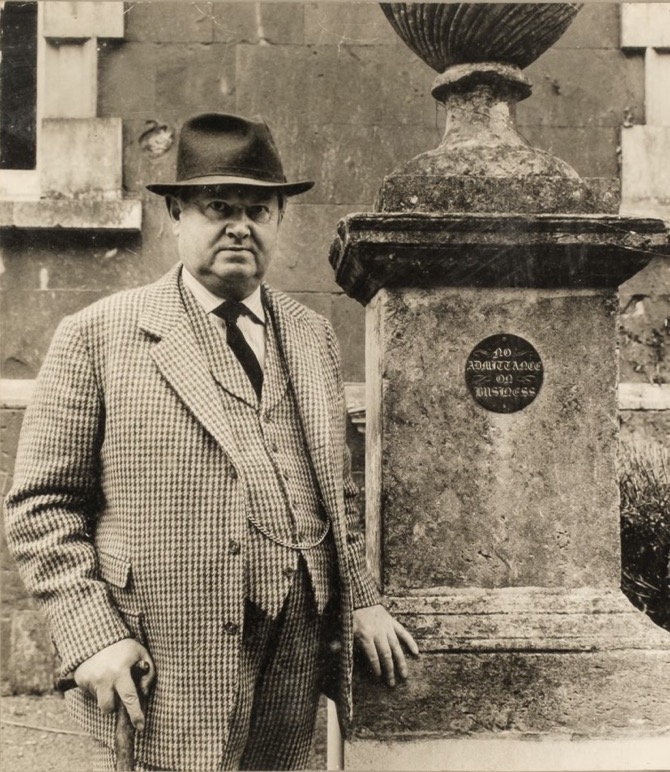
Evelyn Waugh’s travel writings offer such a litany of complaints that, by his third expedition in 1932, one suspects he was in it just to grumble. The lands visited here were the most distant yet for Waugh: the colony of British Guiana and a vast neighboring section of northern Brazil. Hot weather, bad roads, awful food, leaky roofs, frenzied insects, and an ever-present sense of torpor were just some of the tortures Waugh endured for his readers.
Fascinated by distant and barbarous places
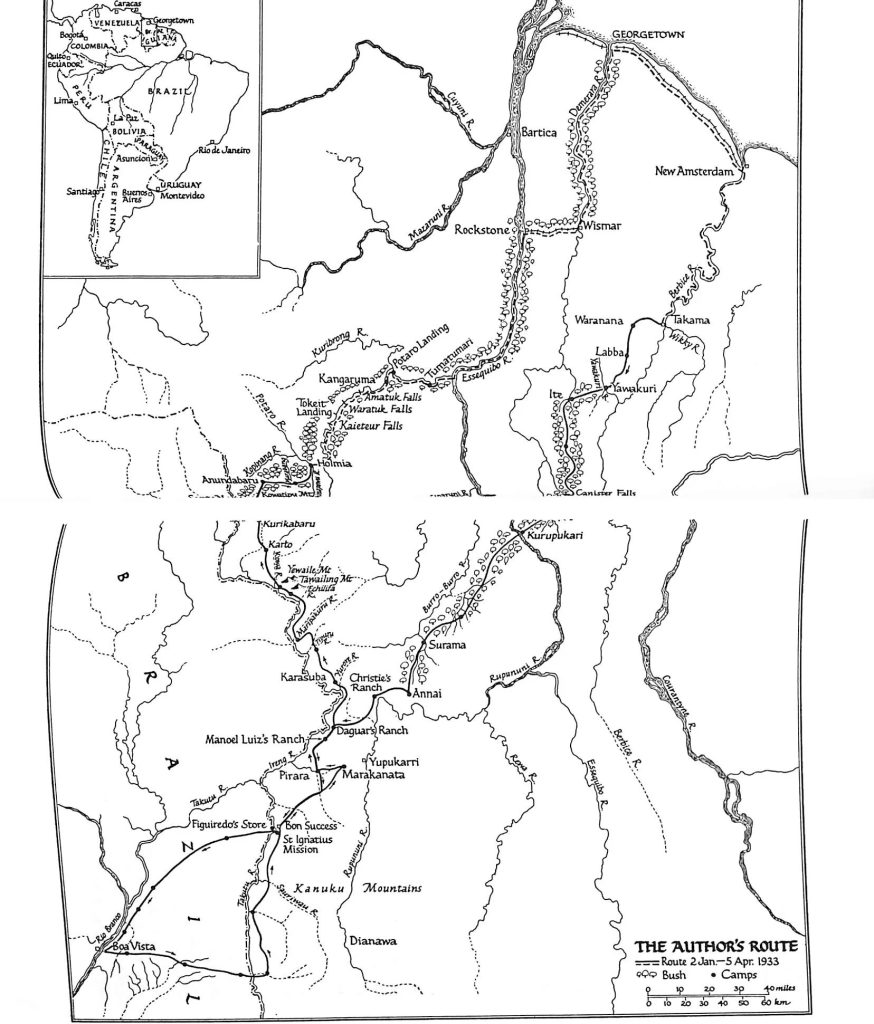
He went to Guiana, more or less because it was a British colony in a different part of the world, and he wanted to see how things there compared to what he’d seen in British Africa (in Remote People). He traveled upcountry by horse and on foot, crossed the border into Brazil, and then returned via a somewhat different route that also included some boats.
Biographer Jeffrey Meyers writes that “Waugh was fascinated by “distant and barbarous places, particularly in the borderlands of conflicting cultures and states of development.” He went to South America because he knew so little about the countries […] Though there is nothing much to see and he is often bored, his trip becomes a dangerous adventure and test of endurance. Though Waugh describes himself as a victim in the tropics, he turns out to be much tougher than the pampered aesthete of Oxford and the spoiled visitor to fashionable country estates.”
What were his reasons for going?
Ostensibly, he was curious about a far-flung remnant of the British Empire left behind “in the general explosion of South American self-government.” Guyana, as it came to be formally known after achieving independence in 1966, featured the world’s tallest waterfall, a dormant bauxite industry, and minimal diamond mining. Otherwise, Waugh says, not much.
The point was not to visit any particular place or person, though he did pass by the famous Kaieteur Falls, nor to understand local government, nor even to show any obvious anthropological interest in the people of Guiana. No, it seemed purely like, “This is a part of the world my people own; I want to take a look at it.” And so he did, spending, as he noted, ninety-two days doing so.
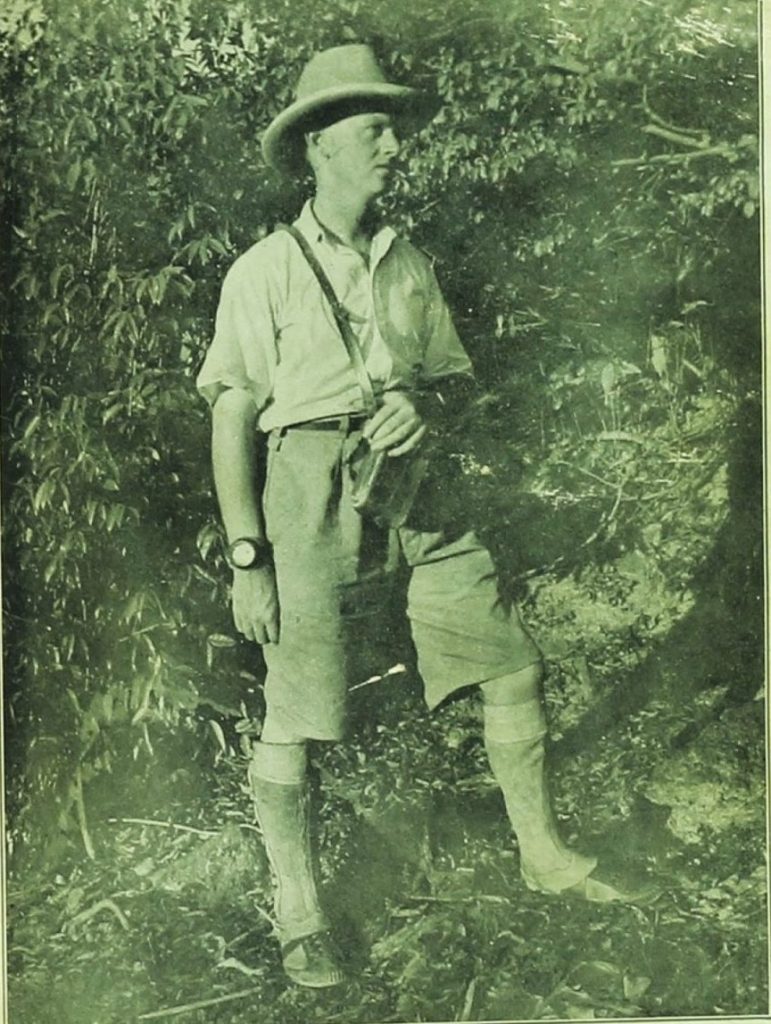
Boa Vista in Brazil
Meyers is especially good on the visit Waugh makes to Boa Vista in Brazil:
…the natives are suspicious and contemptuous, and “only their listlessness prevented active insult.” Accustomed to bountiful hospitality, he inquires, “where do strangers stay?” and is told, “strangers do not come to Boa Vista.”
Waugh is not shy about his suffering. “There are a hundred excellent reasons for rough traveling, but good living is not one of them,” he writes.
Waugh has an extraordinary ability to engage the reader in this tedious episode, which offers a chance to fantasize about European luxury and culture while rotting away in a barbaric outpost. Since neither pleas nor bribes secure him passage on the overcrowded boat to Manaus, he focuses on escaping Boa Vista in any direction and reluctantly retreats to British Guiana.

Dadanawa Ranch
Dadanawa Ranch, sometimes described as one of the most remote working cattle ranches in the world, as seen today. It was a stopping point for Waugh, who complained about both the wind-blown accommodations and the brattiness of the children living there.
Of course, all this is written by Evelyn Waugh, who, even early in his career, was a master of prose and deeply entertaining. It’s a common cliché that travel books are better the more uncomfortable they were for the writer, and this trip was deeply uncomfortable for Waugh. There’s a lot of insight, fine writing, and thoughtful sentences throughout: the whole thing might seem vaguely pointless, but it made for a deeply readable book, the kind where the reader is happier the greater the contrast between Waugh’s travails and the reader’s comfort, perhaps in a nicely overstuffed chair.
A Grueling Jungle Misadventure, compiled by Tor Kjolberg.
Previous articles in our series of Historic travel books:
Frigate “Pallada” – A Tour Around the World
Historical Travel Books #9: Journey Without Maps
One of the Most Influential Travel Books of the 1930s: The Road to Oxiana
One of the Most Neglected Masterpieces of 20th-Century Travel Writing
An Epic Travel Across Central Asia