




Stories are the currency of business activity because they are the most effective way to transform an audience, yet many brand stories are boring. Many are dreadful failures of communication, and the rest are simply uninteresting. Why are so many brand stories boring?
Our professor in marketing communications told us: “There are no sales letters that are too long, only too boring.” The American author Seth Godin began one of his books by stating that “All Marketers Are Liars.” He then quickly added: “No, they are not,” proposing that successful marketers aren’t actually liars; rather, they are storytellers. Consumers “lie” to themselves, believing in stories that fit their preexisting worldviews and biases.
 Authentic storytelling
Authentic storytelling aligns your product with these existing beliefs, so consumers trust and embrace the message.
Could there be a way to resuscitate brand stories so they not only signal life but also engage audiences with rapt attention?
If you’ve been trapped with a bad brand story, you recognize the feeling almost immediately. How can a brand story told through media, print, or digital create the feeling of person-to-person communication?
People rarely form relationships with “brands”—they form relationships with perceived people, intentions, and personalities. Is it possible to design one-to-many communication to feel like one-to-one communication?
How does mass communication create the psychological experience of interpersonal communication?
Modern brands communicate at scale, yet the most memorable messages often feel deeply personal. A print ad, a TV commercial, a podcast, or a social media post reaches thousands or millions of people at once. Still, the audience can experience it as if the brand is speaking directly to them. How come?
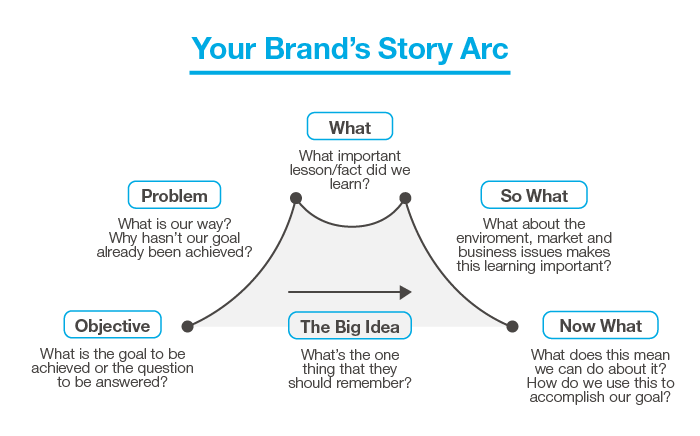 Brands don’t become human—they become social actors
Research in psychology and communication suggests that humans naturally attribute agency, personality, and intentions to non-human entities. We thank our cars, yell at computers, and name our robots.
Brands benefit from the same tendency. When a brand consistently communicates recognizable values, emotions, and intentions, audiences begin to treat it as a social actor rather than a commercial institution.
The key point is that people are not fooled into believing the brand is literally a person. Rather, the human mind uses the same social-processing mechanisms it applies to interpersonal relationships.
A story creates a conversation—even when nobody answers
Most advertising is technically a monologue, yet audiences often experience it as dialogue. Why?
Because stories invite mental participation. While reading or watching, people constantly ask themselves:
- “Would I do that?”
- “I’ve felt that.”
- “That’s exactly my problem.”
- “This brand understands me.”
Communication scholars sometimes describe this as an internal dialogue. The audience supplies half of the conversation, and the storyteller simply creates enough openings for the audience to participate mentally.
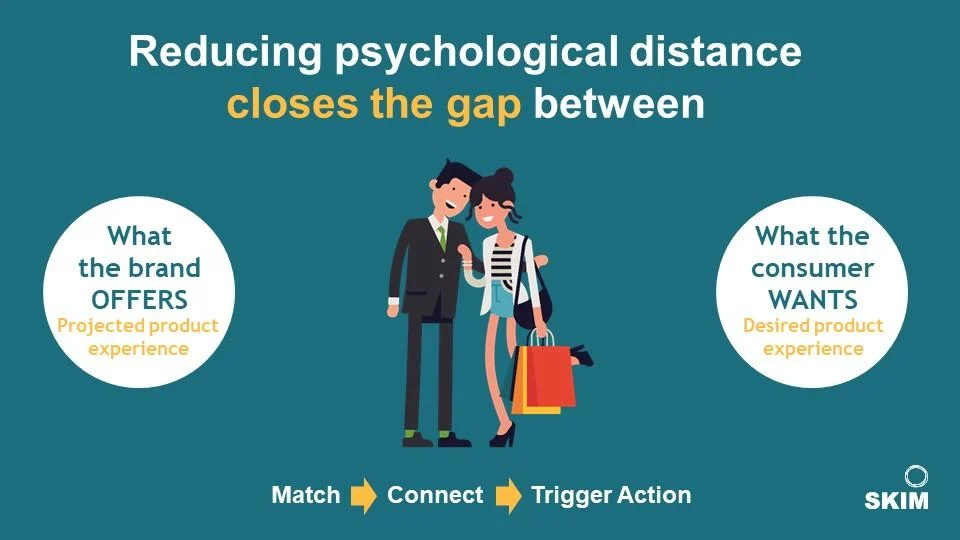 Good brand stories reduce psychological distance
Person-to-person communication is characterized by proximity. We feel someone is “close” when they:
- understand our situation
- share our language
- acknowledge our emotions
- reveal something about themselves
- appear consistent over time
Brand storytelling can have the same effect. Instead of talking about products, successful stories often begin with situations the audience already recognizes.
Instead of saying, “Our running shoe has better cushioning,” the story becomes, “You know that moment around kilometer eight when your motivation disappears before your energy does?” The second statement sounds as if it were from someone who knows the listener personally.
Voice matters more than visibility
Many companies focus on visual identity, but interpersonal communication depends heavily on voice. People recognize elements like rhythm, vocabulary, humor, emotional range, honesty, and curiosity.
Over time, these elements create personality. A consistent voice makes every communication feel like another conversation with someone already known. This is why the best brand stories rarely sound “written by marketing.” They sound as though they were told by someone.

Specificity creates intimacy
Human conversations are full of specifics. Generalizations sound institutional. Compare, for instance, these: “We value customer satisfaction.” versus “We know that replacing a broken dishwasher on a Friday afternoon isn’t anyone’s idea of a good weekend.”
Specific observations signal lived experience. Specificity tells the audience: “I know your world.” That feeling is remarkably similar to interpersonal understanding.
Vulnerability increases credibility
People trust those who seem authentic rather than flawless. Today, brands increasingly acknowledge mistakes, uncertainty, learning, and purpose beyond profit.
This doesn’t mean manufacturing vulnerability. It means replacing corporate perfection with believable humanity. People rarely build relationships with perfection. They build them with sincerity.
 Media can simulate interpersonal cues
Different media recreate different aspects of face-to-face communication.
| Medium | Interpersonal cue it simulates |
| Reflection and thoughtful attention | |
| Podcast | Voice, tone, companionship |
| Video | Facial expressions and emotion |
| Social media | Ongoing conversation |
| Personal correspondence | |
| Live events | Shared experience |
An interesting insight is that none of these media actually reproduce interpersonal communication. Instead, each media recreates selected cues that trigger interpersonal interpretation.
Consistency builds relationships
One conversation rarely builds trust. Relationships emerge from repeated interactions. The same holds for brands. Every communication either reinforces or weakens expectations.
Over time, audiences begin to predict how a brand speaks, what it believes, how it reacts, and what kind of “person” it is.
Psychologists would call this a stable mental model. Brand managers might simply call it character or persona.
 The audience completes the story
Perhaps the most important insight is that stories are never finished by the storyteller.
Readers interpret, imagine, compare, and remember. They also insert themselves into the narrative.
In that sense, every successful brand story becomes co-created. The brand provides the narrative framework, and the audience supplies personal meaning.
That collaborative meaning-making closely mirrors what happens in genuine interpersonal communication.
Brand Stories are Boring – Conclusion
The future of brand storytelling is not about making brands seem more human. It is about designing communication that triggers the same psychological processes people use in human relationships. Whether encountered in a magazine, on a smartphone, or in a thirty-second film, the most effective brand stories do not merely convey information. They invite participation, reduce social distance, and foster the sense that someone understands, remembers, and speaks directly to us. The medium may be mass communication, but the experience feels personal.
 Take-away
If you learned something from this article, I believe you’ll also enjoy my recent book, “How I’ve Survived as a Storyteller for Over 50 Years: 12 Survival Techniques.” Get your FREE e-book copy by sending me your name and e-mail address, and including “Storytelling” in the subject line. Thank you for reading!
The Anatomy of a Brand Story for Destinations, written by Tor Kjolberg.
More articles on Storytelling by Tor Kjolberg you may like:
How Smart Brands Republish Content Without Repeating Themselves
Why Organizations Are Turning to Storytelling to Win Public Attention
Brand Masters of Storytelling 3
Stop Chasing Case Studies: Build a Living Library of Customer Stories
The Anatomy of a Brand Story for Destinations
Brand Stories are Boring, written by Tor Kjolberg.