Taking a loan is something most people do in their lifetime, whether it is for big things like housing and a car, or as a consumer loan in connection with small expenses that you may not have enough savings for. But the rules concerning loans can be a little different from country to country, even though there are many similarities. Here is what to keep in mind before applying for a loan in Norway
In this article, you will get an introduction to some of the conditions that will apply when you take a loan in Norway, or the other Scandinavian countries, so that you can get a better understanding of the requirements you have to deal with when you want to take up a loan.
In this article, you will get an introduction to some of the conditions that will apply when you take a loan in Norway
There can be various reasons why one wants to take a loan. W hether it is a large amount such as a mortgage or you need an overview of consumer loans online, there is advice to get.
One of the things many people do not know is that there are rules when it comes to who can apply for a loan in Norway. The main requirement is that you must either be a Norwegian citizen or have lived in Norway for a certain number of years to be able to get a loan. But if you can get a loan, it is primarily these two types that you should deal with: secured loans and unsecured loans.
There is a high probability that you can get a loan when you move to Norway, especially if you are with someone who is eligible to do so.
Different types of loans Having said that, there is a high probability that you can get a loan when you move to Norway, especially if you are with someone who is eligible to do so. So here is a list of the two most common types of loans one can apply for, namely secured loans, and unsecured loans. Always remember to consider other options before taking out a loan, because sometimes it is better to save money than borrowing them, if the purchase is something that can wait a bit, and it often can. Perhaps you could use money from your savings or adjust your budget to gather the required amount for that purchase.
Secured loans: Secured loans are a term for loans where the bank has security in what you borrow, typically a home, boat, or car. This is a loan that often has a decent interest rate and a repayment period over many years. It is always good to make sure that you can handle the monthly instalments, but with loans of this size, the bank often helps you identify whether it is a loan that fits into the budget you have or not.
Unsecured loans: This is a term for those types of loans, where the bank does not have collateral in what you borrow. Keep in mind that fees and interest rates are often a little higher than with secured loans. It can still be a good option if you know for sure that you can repay the instalments within the agreed framework so that the extra costs are minimised as much as possible.
What To Keep In Mind Before Applying For A Loan In Norway, is written exclusively for Daily Scandinavian by Matchbanker.
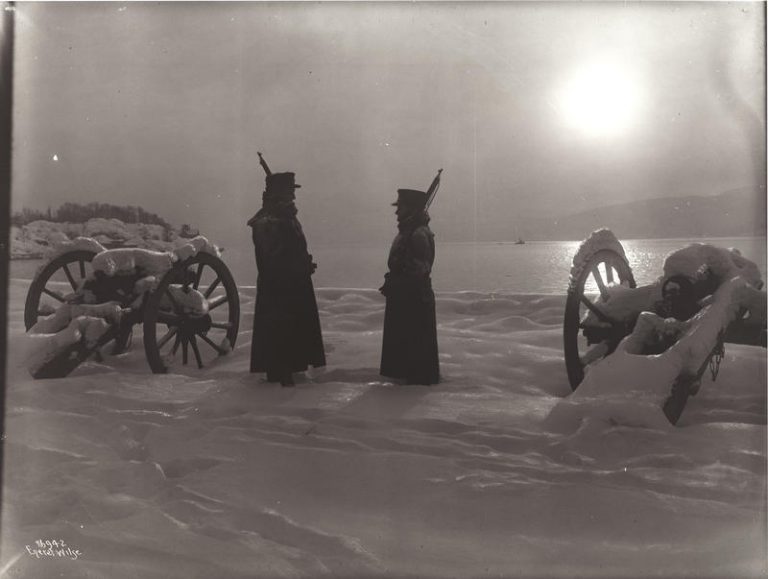
Photographer Anders Beer Wilse (1865-1949) is often nicknamed “The National Builder in Norwegian Photography”. He is also called the most prominent photographer in Norway.
Anders Beer Wilse documented Norway in the early mid-20th century and also worked in the United States. He gave us the image of modern Norway – the conquering of nature through exploration and industrialization, shaping the “Norway brand” as we still see it today.
Anders Beer Wilse documented Norway in the early mid-20th century and also worked in the United States.
Many Norwegian stamps used images of Wilse’s famous photographs. Wilse was born in Flekkefjord and grew up in Kargerø. He graduated with a technical degree from the technical school in Horten in 1882 and emigrated to the USA as a 19-year-old in 1884, where he got a job as a surveyor and cartographer. After using a camera to map the desolate mountains of Montana and Idaho, he began photographing other objects as well. His genuine interest in photography began when he bought his first camera in 1886 and began taking photographs. In 1897 he founded a photographic business in Seattle, but returned to Norway three years later and opened a studio there.
Through thousands of books, stamps, postcards and not least slide shows across Norway, Wilse became known as the great landscape and tourist photographer. He also worked as Aftenposten’s correspondent on Svalbard, photographed stage images and actors at the National Theater in Oslo and took portraits of the great personalities of the time.
Anders Beer Wilse has played an important part in the shaping of Norway’s national self-image. He is perhaps most famous for documenting Norway’s landscape and its natural and urban life, but he also worked as a photographer for many major Norwegian companies – among them Norsk Hydro.
A collection of his negatives is also kept in the Chusseau-Flaviens collection at George Eastman House. These images are being scanned digitally, and many are available online. In 2014, Wilse’s photos were included in “Norges dokumentarv” – the most important documentary heritage of Norway. Dagens Næringsliv describes Wilse as Norway’s most prominent photographer. “He left behind a cultural heritage,” the newspaper writes.
Norway’s Most Prominent Photographer, written by Tor Kjolberg
The Scandinavian territory is on top of the list of many hikers and backpackers. Whether you are looking for scenic views, breathtaking landscapes, or volcanic terrain, Scandinavia has all of that, and more. Find out more about the best backpacking trails in Scandinavia.
Hiking on these lands is a mind-blowing experience where you’d get to see unspoiled views and unusual wildlife. In this article, we’ll talk about the best trails you can set foot on in this marvelous land of wonders.
King’sw Trail will take you far to the north of the country, through four national parks. Photo: Wikipedia
The King’s Trail – Sweden If you are starting your backpacking journey in Sweden, hitting the King’s Trail is the perfect choice for you. The road will take you far to the north of the country, through four national parks and the scenic beauty of the mountains surrounding it.
The hike is one of the most famous and longest in Sweden since it takes around a month to complete. The most popular region is between Nikkaluokta and Abisko, being 105 km in length. You can start the hike near the STF Abisko Turiststation and head out to the National Park nearby.
On the way, you’ll witness many lakes, mountain huts, and breathtaking landscapes. Despite being located on such an inconvenient surface, the King’s Trail is pretty straightforward for hiking. If you are well-equipped and fit, you can finish it with minimal effort.
A fun fact: In the 70s, the government tried to extend the King’s Trail, but that was unsuccessful and Sweden ended up with a Southern King’s Trail. This trail stretches to Grövelsjön on the North and Salen on the South.
As a side note: Make sure you are equipped with the essential backpacking gear! You need to bring items like sleeping bags, lightweight backpacking tents, or sleeping pads to stay protected outdoors.
The Romsdalseggen trail is the best road for seeing the fjords and the western coastline of Norway. Photo: Visit Norway
Copyright: Unsplash I License: CC0 Public Domain
Romsdalseggen – Norway The Romsdalseggen trail is the best road for seeing the fjords and the western coastline of Norway. It’s a hike that every backpacker is looking forward to due to the mesmerizing terrain, untouched nature, and wonderful remote locations.
The starting point is the town of Andalsnes, however, you can start your trip at Vengedalen Valley and finish in Andalsnes. You will head out to a hillside where you can see muddy trails and livestock.
As you climb higher, you will see alpine grass, bushes, and rocky landscapes. Ascending 800 meters through the field, you will hike along the ridge, and down the boulders. The end stop is in Andalsnes, which is a steep path that will take you back to the town.
A fun fact: Stairs have been added on the trail for faster descending to Åndalsnes.
Farum Lake Loop – Denmark The Farum Lake Loop is the favorite backpacking trail among backpackers in Denmark. The path is a 10 km hiking trail around the lake which is perfect for a morning hike. The road features romantic sceneries with hidden meadows, crannies, ancient relics, and grasslands. You’ll feel like you are hiking through a land of fairytales.
If you prefer a hike filled with nature, rowing boats, and rare plants, the Farum Lake Look has all of that. You can even go kayaking or canoeing and enrich your backpacking experience with an exciting activity.
Get Your Backpack Ready! While this is our list of favorite Scandinavian backpacking trails, feel free to check other roads and determine the one that will suit your needs. For more content regarding backpacking, hiking tips, and most famous trails, head out to our blog and check our insights.
Gloria Mabery
Best Backpacking Trails in Scandinavia, written exclusively for Daily Scandinavian by Gloria Mabery. Gloria is a passionate traveler who has given up trying to tame her nomadic streak. She’s been backpacking around the world for seven years, transforming her travel and wellness experiences into stories. As well, she works as a content writer, mostly administering her interest in digital marketing. Gloria’s main interest is towards alternative medicine and discovering the traditional ways people deal with health issues and strive for longevity.
Nordic countries have so much to offer that many people choose Scandinavia as their travel destination. If you plan to first visit one of these amazing places, check out these travel tips for an unforgettable trip. Learn these 5 Scandinavia travel tips for first-time visitors.
Speaking about travel to Scandinavia, everyone imagines the clear Norwegian fjords and the snowy Scandinavian Mountains. But this region has many more fascinating places, rich history, and culture.
When you visit the lands of the Vikings for the first time, it is necessary to prepare everything for a smooth trip. These travel tips will help you understand the Nordic region better and make your way to picturesque Norway, Sweden, and Denmark enjoyable.
What to See in Scandinavia On a Scandinavia map, we find Denmark, Finland, Greenland, Iceland, Norway, and Sweden. If this cool end of Europe is on your bucket list, you should know the best Scandinavian places. The beauty of this region lies in its contrasts so let’s find what Scandinavia has for you.
The distinct feature of all you encounter there is this unique Scandi design.
Scandinavian Design Scandinavian countries will impress you with ultra-hip urban destinations. Nordic cities hide many amazing places to visit, including cafés, museums, boutiques, galleries, etc. The distinct feature of all you encounter there is this unique Scandi design. Oslo, Helsinki, and Copenhagen are all imbued with minimalism and functionality in architecture, furniture, clothes, and more. Visiting any city in the North you will find this unmistakable design.
Picturesque Nature The cold and distant Scandinavia landscape attracted people from around the world for centuries. There’s a mystery in the Northern Lights, Swedish archipelagos, Lapland mountings, and Norwegian fjords. Anytime you visit Norway, Sweden, or Denmark, you will always find a cozy village with spectacular winter views. Indulge in outdoor activities and relax in the sauna.
Reindeer filet
Exceptional Cuisine Scandinavian restaurants will feed you with tasty dishes and make you understand the flavor of Nordic cuisine. You will be able to taste what was on the Vikings’ tables back in those brave times. Scandinavian food is simple and hearty, so you should try Palt, Leverpalt, Kroppkakor, and Paltbröd. Be ready for a lot of meat, fish, potato, and bread.
Prepare for the Trip to Scandinavia If you fell in love with the region from movies about Scandinavia, you should not fully rely on your watching experience. You hunt for picturesque spots, and unforgettable feelings will not be easy until you prepare well for the journey. Thankfully, Scandinavians are one of the world’s best non-native speakers of English, so there’ll be no language barrier.
Photo by Raimond Klavins/Unsplash
#1 Learn More about the Place You Visit In order to make your journey to Scandinavia unforgettable, you should explore this region before visiting. Read articles, watch travel videos, films, and lectures to know more about culture and history and fully understand the value of the trip.
As a part of the preparation, you can watch engaging and informative webinars featuring ardent travelers revealing secrets about visiting Scandinavian countries. Use a screen recorder to capture useful information and a video editor to make a video guide (after getting the author’s permission).
#2 Plan Your Budget Being a secure family travel destination, Scandinavia is not cheap, and you will have to pay a lot for food, transport, and accommodation. But everything will be much better if you use a trip planner. Browse the information about hotels or book housing from locals. Compare prices and reviews, and always book accommodation in advance to save money.
There are different means to get to Scandinavian countries, choose what suits you the most in terms of comfort and money. Public transport and walk trips are cost-effective solutions for travelers. If you are renting a car, do not forget about checking the best app for navigating traffic to enjoy picturesque road trips.
Photo by Osman Rana/Unsplash
#3 Check the Weather You should be ready for the Scandinavian climate and check the weather for each country you are going to visit. Climate and weather vary between the regions. So take different clothes for your trip to the Nordic countries.
Use a weather checker to find if you need to take a raincoat and waterproof shoes or sunglasses. Winters are wet and cold, so make sure you have weather-resistant gear. And a pair of sunglasses is a good choice not only in summer as snow can reflect dazzling sun rays.
Photo by Cytonn Photography/Unsplash
#4 Explore Scandinavian Etiquette Tolerant and reserved Scandinavians impress foreigners with their progressivism. They are punctual and always arrive on time. People are sincere and can discuss different topics with you. But they will never show their emotions, especially negative ones, in public.
When visiting Nordic countries, make sure you know the specifics of Scandinavian humor. Shy at first glance, these people are open and funny in an informal setting. They like to joke and are good at it. So be ready to laugh a lot in a snowy country with many positive Viking descendants.
#5 Rely on Your Bank Card One of the most important travel tips is to have cash and money on your bank card. Scandinavian countries build a cashless society, and they are doing well with it. So you will pay for most of the services in these countries with your card. If you decide to exchange money and get local ones, try to avoid high-value banknotes as some venues will not be able to simply give you any change.
Make sure your bank works for paying in foreign countries. Sometimes, you will have a local phone number for mobile payments. Everything now is digitized so stay tuned, check the latest news, and have a contactless card for a flawless trip.
5 Scandinavia Travel Tips For First-Time Visitors– Conclusion The travel restrictions are over, and people start planning their trips to different places after tiresome quarantine restrictions. Scandinavian countries appear frequently on travelers’ bucket lists. The uniqueness of the Nordic region attracts travelers from all over the globe, and they need to be aware of some travel tips to avoid challenges in a foreign country. We hope that this article provided you with much valuable info. Break a leg and discover new places.
5 Scandinavia Travel Tips For First-Time Visitors, written exclusively for Daily Scandinavian by Evelina Brown. Evelina is a digital marketer with more than 10 years of experience. She is a contributor to Content Marketing Institute and regularly quoted as an expert in large media outlets. Her job is to make your business known all over the Internet.
When Swedish television adapted the British 1960s slapstick serial Steptoe and Sons (Albert & Herbert) it became such a beloved phenomenon that it ran for 10 years (1974-84). The Norwegian television series about Fleksnes (a kooky protagonist) ran even longer (1973-1988), both series adopted from British scriptwriter Ray Galton. Here, we want to share with you a Scandinavian chuckle – or maybe a huge laugh.
A Swede and a Finn sit in a bar. The Swede raises his glass to toast: “Cheers!” The Finn challenges: “Are we going to talk or are we going to drink?”
– – – –
A Norwegian is driving from Oslo towards Gothenburg when he hears a warning on the radio: “A lunatic is speeding against oncoming traffic on the highway!” To this the Norwegian mutters as he swerves to avoid crashing head-on into lorry after lorry: “What lunatic? They’re all on the wrong side of the road!”
– – – –
Two Norwegian boys were talking and one of them wondered why seagulls turned upside down when they flew close to the Swedish border. The other speculated, “Maybe because Swedes aren’t worth a shit?”
_ _ _ _
A Danish alcoholic visited a Swedish doctor to get cured from double-vision, and the doctor asked him to sit down on the sofa. The Dane asked: “Which one?”
The Swedish local Shakespeare, poet and composer Carl Michael Bellman (1740-95)
Bellman jokes
The Swedish local Shakespeare, poet and composer Carl Michael Bellman (1740-95) was witty too. He is among other things known for his “Bellman jokes”.
The Bellman joke is a type of simple joke cycle popular among Swedish schoolchildren, always including a person named Bellman as the main character. The jokes first became popular in the 19th century, and were originally inspired by Bellman’s life. In the preface to an 1835 collection of Bellman’s works, in which the publisher reprints an 1808 letter from a contemporary of Bellman, contains the following anecdote.
Bellman rarely owned more than one coat. Once when King Gustav met him in the street he was wearing no more than a nightdress, at which the King said: “But my dear Bellman, you look so ill-clad,” to which he bowed and replied, “I humbly assure your Majesty that I have the whole of my wardrobe on me.”
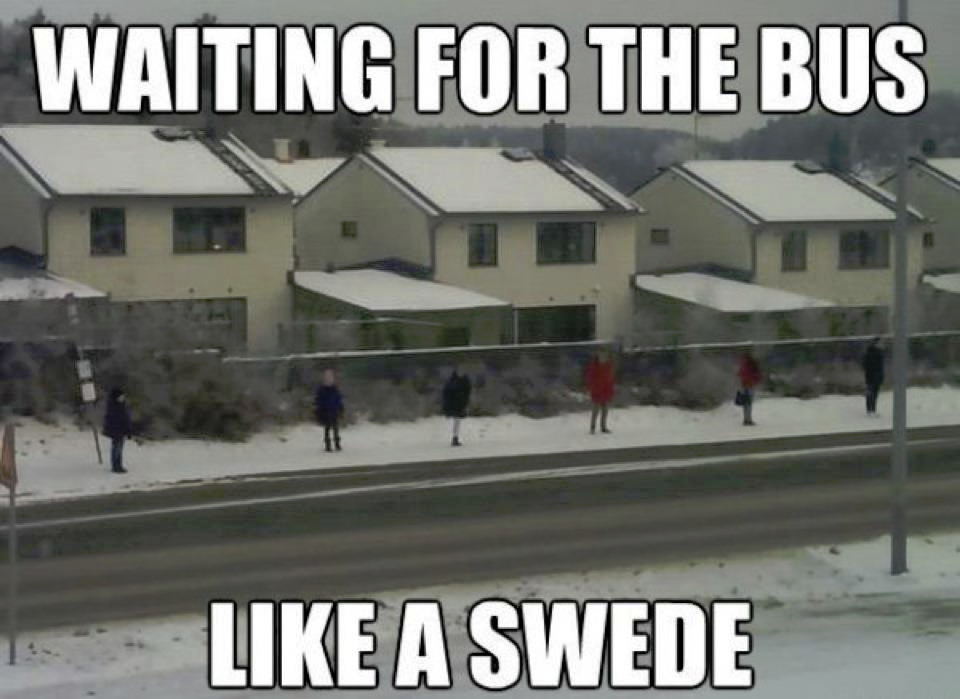
Swedish bushalt before the pandemic
A less offensive subgenre of Bellman anecdotes is about foreigners, perhaps dating to the ’50s, whence ethnic jokes may have originated as a manner of dealing with the increasingly multicultural complexity of society during the post-World War II Cold-War era.
A modernized version of a typical Bellman joke concerns Bellman, representing the generic Swede, and two foreigners who are in a swimming race to the US and what happened is: The Dane drowned after a kilometer. The Norwegian sunk after 10km. Bellman went on until he spotted Donald Trump pottering outside the White House, but felt tired so he swam back.
To sum up Two Danes, two Finns, two Norwegians, and two Swedes are shipwrecked on a desert island. By the time they’re rescued, the Danes have formed a hippie commune, the Finns have turned all the island’s trees into furniture, the Norwegians have tinned the fish in the ocean and exported it abroad, and the Swedes are still waiting to be introduced.
Explorers
In an article on Scandinavian humor, Peter Gundelach Department of Sociology, University of Copenhagen, Denmark writes: “Based on joke collections from books, the Internet and other sources, we find that Danes tell jokes about the Norwegians and Swedes, while Norwegians and Swedes tell jokes about each other, but not about the Danes. In general, the Danes tell jokes in which the butt, or object, of the jokes is a stupid Norwegian or a Swede whose values differ from those of the Danes. The Norwegians and the Swedes tell jokes in which the object is stupid – either a Norwegian or a Swede. The different values/stupid characterizations can be found in other contexts. The character of the jokes can be explained in part by the countries’ respective national habitus, as they have been shaped by the types of conflictual and co-operative relationships among the countries.”
Recently moved to Denmark, Sweden, or Norway? Read our expat’s guide to the best golf courses in Scandinavia so you don’t miss out!
Golf is not likely to be the first sport that comes to mind when you’re thinking of Scandinavia. You’re probably picturing snowy peaks, ice, skis, and roaring log fires after a day out.
But if you’ve recently moved to one of the Scandinavian countries and you’re missing golf, you’re in luck! When the snow has cleared, there’s excellent golf to be played in the summer months. Don’t forget the sunscreen!
We’ve put together an expat’s guide to the best golf courses in Scandinavia. So what are you waiting for? Go search about golf bags and invest for it!
While these golf courses are our favorite, they’re by no means the only ones around that are well worth the play!
While culturally, Finland, Iceland, and the Faroe Islands are considered part of Scandinavia, they’re technically part of a different area. So we’ve settled on just the main three, and a few public golf courses from Norway, Denmark, and Sweden.
Norway
Lofoten Links
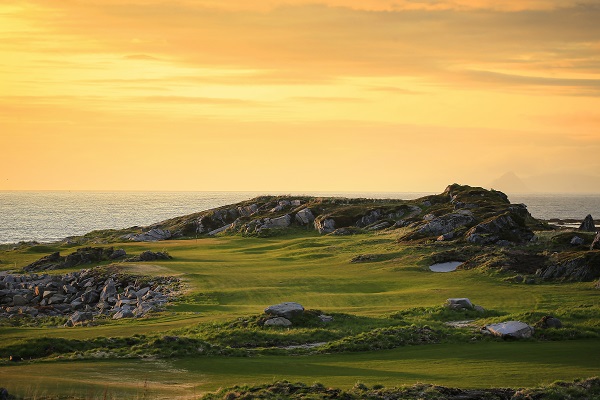
This spectacular course is set alongside the ocean, which makes an appearance as a hazard on multiple holes. Built on old Viking burial grounds, you get a feeling of magic and mystery in the air, and the golf follows suit.
Lofoten Links
The signature 2nd hole plays to a tiered, almost-island green, starting things off with a bang. Visually stunning, and not for the faint of heart in terms of skill.
Kongsvinger Golfklubb
Each hole at Kongsvinger is an experience on its own. Every fairway is hugged by lines of majestic fir trees, making each one feel like an intimate corridor on its own. The fairways are of medium size but undulate with the natural terrain to add some challenge.
The greens are large and the bunkers even larger, so play carefully! Hole number 12 is the one to look out for, as it trips up many experienced golfers.
Meland Golfklubb
Packed with interesting holes and supplemented by scenic views, this forest course starts with a bang with three par-5s in the first 5 holes. It’s been labeled as difficult by many golfers, but the only way you’ll really know is to try it!
The sloped fairways present a challenge, and the closing hole is one of Norway’s trickiest—a devious par-3, played from an elevated tee to a well-protected island green.
Denmark
Holstebro Golfklub
With a full 18-hole course, a 9-hole layout, and a 9-hole par-3 course, there’s something for everyone at Holstebro. Although the fairways have a gentle roll and bunkers are few, if you venture off course the heather will trap you.
You’ll need accuracy more than the power to win on this course! It’s a challenge but a fun one, and you’ll get a good test of your game on these fairways. A great training aid!
The Scandinavian Golf Club (New)
Both the Old Course and the New Course are worth a play, but we particularly like the New course for its challenge. It’s visually intimidating but absolutely spectacular, featuring multiple water hazards that stretch across many holes, white bunkers, and sneaky rough areas.
Fanö Golf Links
Fanø Golf Links
Located in the Wadden Sea National Park, this course looks and plays like a true links layout thanks to its heather and dune design. It’s also the oldest course in the country and the only true links-style one!
As true to nature as they come, this course is well worth a play if you’re a links fan or if you want to experience the rawest form of golf you can find!
Sweden
Ullna Golf Club
Stunning views abound as multiple holes on this course are set on the shores of Lake Ullna. Located just 12 km from Stockholm, this is a popular golfing spot despite its compact and challenging layout.
There are no weak holes in this course, but you should definitely bring an extra sleeve of balls and be gentle with your driver!
Bro Hof Slott Golf Club
Bro Hof Slott Golf Club
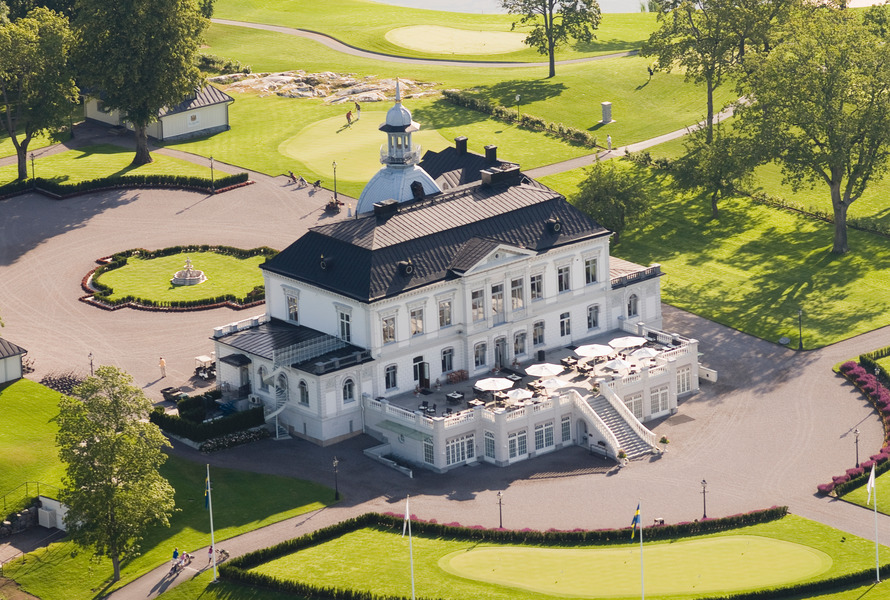
Featuring 2 courses, long holes, large bunkers, playable waste areas, and spacious greens, Bro Hof Slott may be less technical than some but it’s certainly gorgeous and memorable.
The wind comes into play often on these two courses, so keep your wits about you as you move through the course! Keep in mind the wind may make gadgets such as rangefinders a little more difficult to use.
Halmstad Golfklubb (Norra)
Also featuring 2 spectacular courses (of which Norra is one), Halmstad is a unique place. You can hear the sea, and taste the salt on your lips, but no hole has ocean views. Peppered with doglegs, the MOrra course is a challenge and a beauty.
Also home to Sweden’s best golf restaurant, it’s a great spot to have an excellent round of golf and a hearty meal!
Jordan Fuller
An Expat’s Guide to the Best Golf Courses in Scandinavia, compiled by Jordan Fuller. Jordan is an American retired golfer who’s played on golf courses all over the world. When he’s not on the course, he’s researching and writing for his website, Golf Influence.
Sally Franson from Minneapolis never got in touch with her Swedish heritage until she became the winner of the Swedish reality television show “All for Sweden”. Learn more about theUS author’s emotional journey to Sweden.
Sally Franson is a novelist and a visiting English professor at the Twin Cities’ Macalester College. In December 2019, she decided on a lark to apply for a Swedish reality show. In this season’s (the tenth) episodes of the very popular Swedish television program “Allt for Sverige”, some of the participants will go to Lidköping in search of their roots. 10 Swedish Americans are recruited to come to the homeland of their ancestors.
for the participant Sally with roots in Härjevad it was an emotional journey. Härjeved wooden church. Photo: Wikipedia
The television show helped 38-year old Franson trace her Swedish roots through her late father, a Lutheran pastor, whose great-grandfather immigrated from Sweden to the U.S. Before applying, she felt little connection to her ancestors. She’d never even been to Sweden and viewed genealogy as a “baffling” and hard-to-crack hobby.
However, for the participant Sally with roots in Härjevad it was an emotional journey. Not only did she discover her distant relatives, she also became the crowned winner of the popular program shared with 1.4 million people.
Sally Franson is a novelist and a visiting English professor at the Twin Cities’ Macalester College. (c) Sally Franson
The ultimate goal of the show is learning about Swedish culture and exploring family history — a genealogist is cast to help on that — and a series of challenges adds to the entertainment factor.
“Even when I came to Sweden, I had the feeling that I had come home, that I belong here. I was surprised how many emotions I had when I arrived,” she says on the TV show. “I think I probably cried 15 times on Swedish national television,” she explained later. “It’s a very powerful experience understanding in a visceral way where I come from.”
Watch Allt För Sverige Season 10 Episode 1 (Behind the Scenes) here.
“These are intimate moments during this recording,” said producer Christer Åkelund. Sally learned of the hardships that her ancestors often had to endure in those days, ranging from infant mortality to selling everything for the chance to get to the U.S.
US English Professor’s Emotional Journey to Sweden, written by Tor Kjolberg
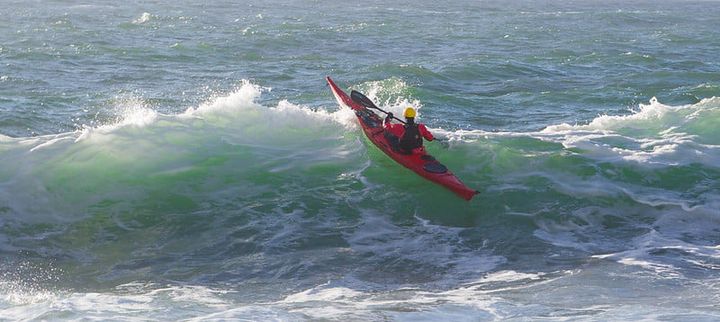
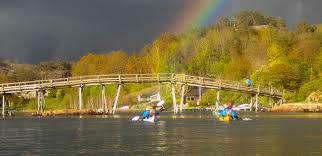
Kayaking is a fantastic leisure activity that is suitable for most people. You can experience the beauty of Southern Norway on an exclusive and enjoyable kayaking adventure. Why not try lighthouse kayaking in Southern Norway?
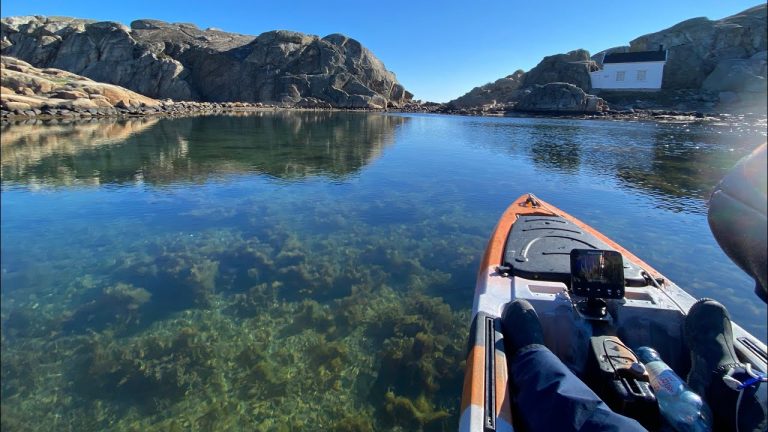
Norway’s South coast is called Sørlandet and is known for its rocky coastland, whitewashed houses and its idyllic archipelago. There are several lighthouses along the coast, so it’s ideal for kayaking from lighthouse to lighthouse. Several players in the area can help you to plan such an expedition.
The routes can be significantly varied as far as destinations are concerned. Photo: Wannado
The routes can be significantly varied as far as destinations are concerned, with trips from Lindesnes in the west and as far east as Tønsberg. Kristiansand is the biggest city here and fifth-largest in all of Norway.
Norway’s South coast is called Sørlandet and is known for its rocky coastland and its idyllic archipelago. Photo: Wannado
Adventure Norway is one of the premier rafting companies in Norway. Lista Aktiv offers courses in windsurfing as well as kayaking and yoga. TrollAktiv is the leading supplier of outdoor adventures for youth groups and families in Norway, while Wannado has specialized in kayaking along the coastline and spending the night in one of the lighthouses, which is a spectacular cultural and nature-centric experience.
Watch video of a motorized kayak trip to a lighthouse here.
Wannado has specialized in kayaking along the coastline and spending the night in one of the lighthouses. Photo: Wannado
“Our mission is to make the world’s activities and events easily accessible for everyone to discover and explore,” says event company Enjoy, which is one of the players, offering kayak expedition in Southern Norway.
Offering both single and double kayaks, Wannado emphasizes that the trips are not designed to be exhausting. Wannado, based in Arendal, presents several different trips based on experience.
Kayak course by Wannado
According to Wannabe it is a very special feeling to spend a night in one of the unique lighthouses and then continue the journey along the spectacular coastline the following day.
Lighthouse Kayaking in Southern Norway, compiled by Tor Kjolberg
In the groupshow “Swedish acquisitions: Matches” you will encounter about 40 works of art that were purchased last year for Moderna Museet’s collection in connection with the acquisition project “Swedish Acquisitions 2021”. Learn more about Swedish acquisitions for Moderna Museet – Stockholm.
The works in the exhibition all have in common that they highlight art’s power to push boundaries and shake up the way we perceive our surroundings as well as what we see as possible.
If the first exhibition, “Insights”, lingered on the intimate and the painful, “Matches” opens up to the world. Curiosity and imagination characterize the artistic methods, forms and themes that are being examined. Movement and interplay, action and friction, community and collectivity are some leitmotifs.
“Matches” is rich in angles, encompasses a wide variety of languages and methods and involves artists from different generations from all over the country.
With their work “Cosmic Latte” (2020) the art-duo Norberg-Sundén travels into space to create a universe of shapes and materials connected with the history, meaning and symbolism of milk. An explosive video manifesto by Joar Nango shows us innovative architectural solutions in Sápmi and how all things and materials carry the ability to become something completely different.
A story of the mediocre and the mean value becomes a commentary on individualism in Iris Smeds’ surrealist film “The Average” (2019).
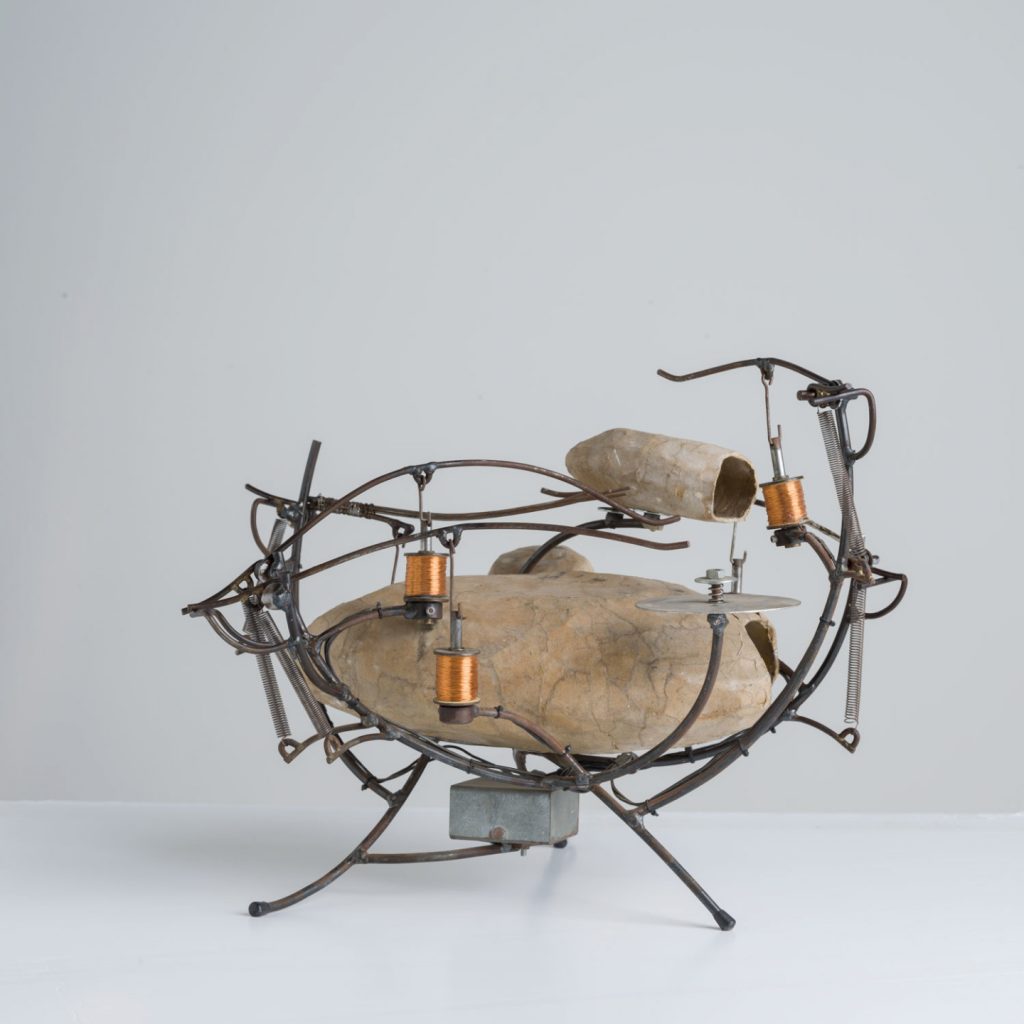
The artist’s role and the conditions for creation See installation, performance, video, painting, drawing, sculpture and discover how art can lead us into magical and mythical worlds, promote biodiversity or generate its own systems, symbols and living conditions. Some of the artworks critique society and are research oriented while approaching alternative ways of examining and seeing the world around them as well as historical events. Others hold space for love of nature and the earth on which we stand.
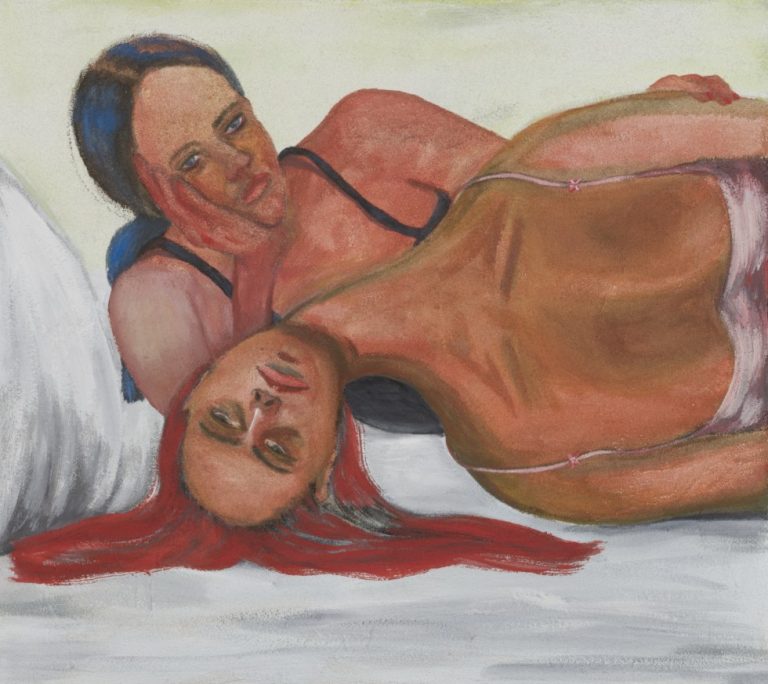
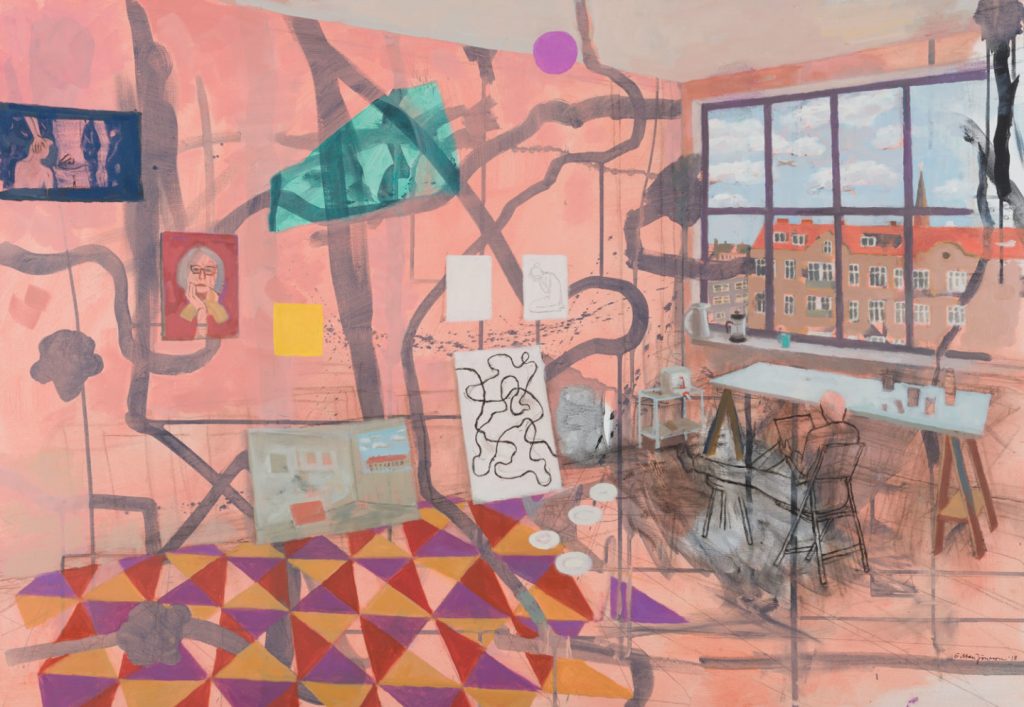
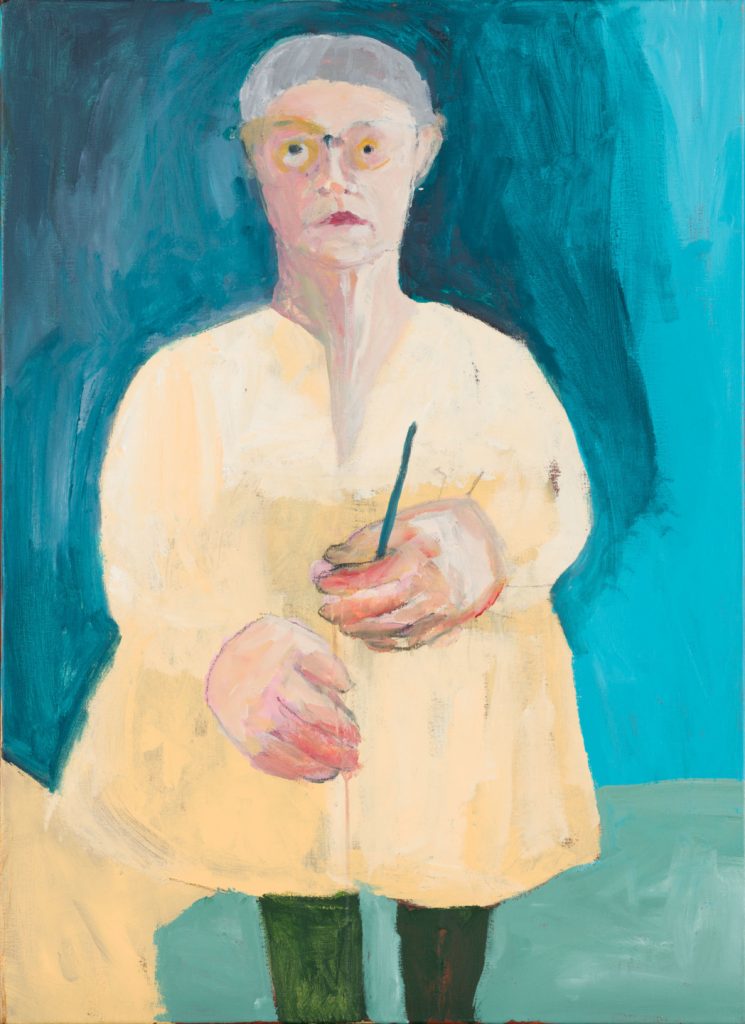
The artist’s role and the conditions for creating exists in the exhibition as an open question. In Ami Bergman’s self-portrait (above), an older woman appears with huge hands that possess the ability to create her own place in the world. Gittan Jönsson invites us into her studio on Drontheimstrasse in Berlin where we see paintings in different stages (above).
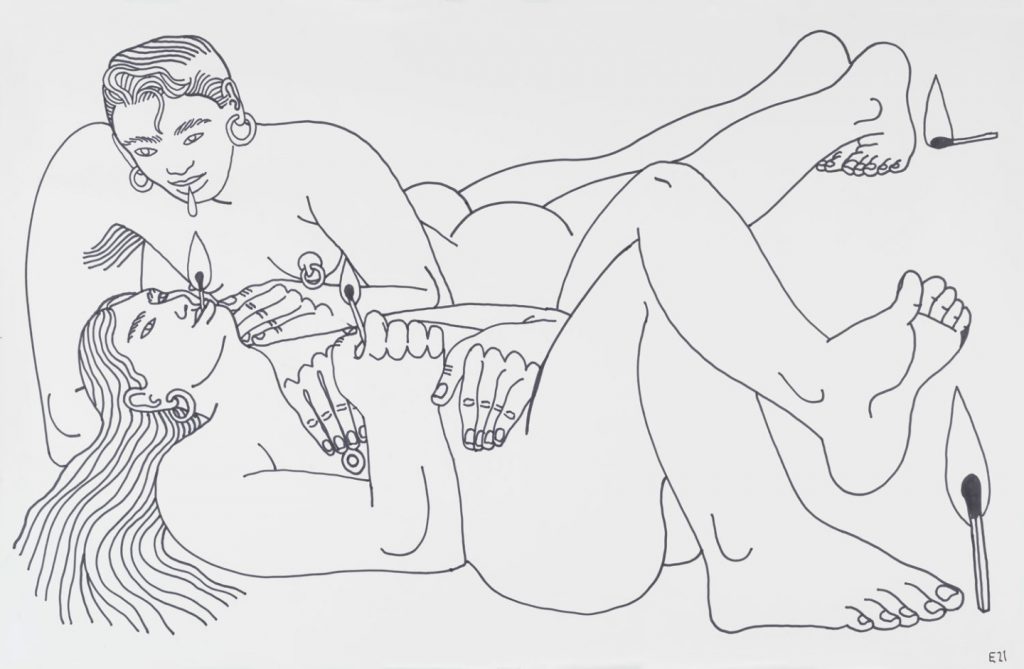
“In Swedish acquisitions: Matches we find art which lights a spark or plays with fire. It can be transformed into heat but also into something powerful and flammable,” says curator Asrin Haidari.
About Swedish Acquisitions 2021 The major initiative “Swedish acquisitions 2021” was launched after the government allocated SEK 25 million to Moderna Museet to support the Swedish art sector in the wake of the covid-19 pandemic. The project led to the acquisition of 373 new works made in 1962–2021 by a total of 169 artists.
The exhibition runs through 14 August 2022. Free admission.
Swedish Acquisitions for Moderna Museet – Stockholm, based on a press release
When people travel to Europe, it’s often in the summertime, and to the south. The south of Europe is wonderful in the summertime, but the more northern countries are a real treat as well and not something to miss out on. The Nordic countries, also known as Scandinavia, are very unique in their ways. If you haven’t thought about visiting Scandinavia yet, maybe this article will change your mind, and tell you why Scandinavia should be on your bucket list.
The Nordic countries (Scandinavia) include Denmark, Sweden, Norway, Finland, and Iceland. Each country is different, yet there are many similarities. It’s not like you can go to Copenhagen, which is the capital of Denmark, and then expect Stockholm (the capital of Sweden) to be the same. Even the languages are different. Many Swedes, Danes, and Norwegians can communicate well though, but the languages still differ. What many people around the world know Scandinavia for, is the Vikings. If you’re doing a trip to Europe, don’t miss out on Scandinavia, but remember to complete the etias application form, if this is relevant to you.
Clarion Hotel, Stockholm. Photo by Cecilia Larsson Lantz/Swedish imagebank.sweden.sew
Sweden Sweden is well known for being home to world-famous music artists throughout the time, as well as having famous designers and warehouse brands. The architecture in Sweden is also worth checking out, especially in Stockholm which is a beautiful city. Sweden has a lot of wilderness, so if you’re dreaming about tranquility and a few nights in a wooden house surrounded by nature, then Sweden is the place. Regarding Swedish foods, you must try out Swedish meatballs, mashed potatoes, and lingonberry, which you might have heard about.
Denmark Denmark is worth considering as well. In this small Nordic country, you can experience a lot of history and interesting museums. Especially if you’re into the history of the Vikings. Denmark was home to Harald Bluetooth, which you might have heard about. A must-do is experiencing the capital of the country – Copenhagen. Especially in the summer when it’s full of life. Rent a bike, eat smørrebrød (Danish open sandwiches) at Nyhavn or sail the channels of the city. Denmark’s traditional dish is fried pork belly with potatoes, beetroots, boiled potatoes, and parsley sauce. This dish is called ‘stegt flæsk med persillesovs’ in Danish.
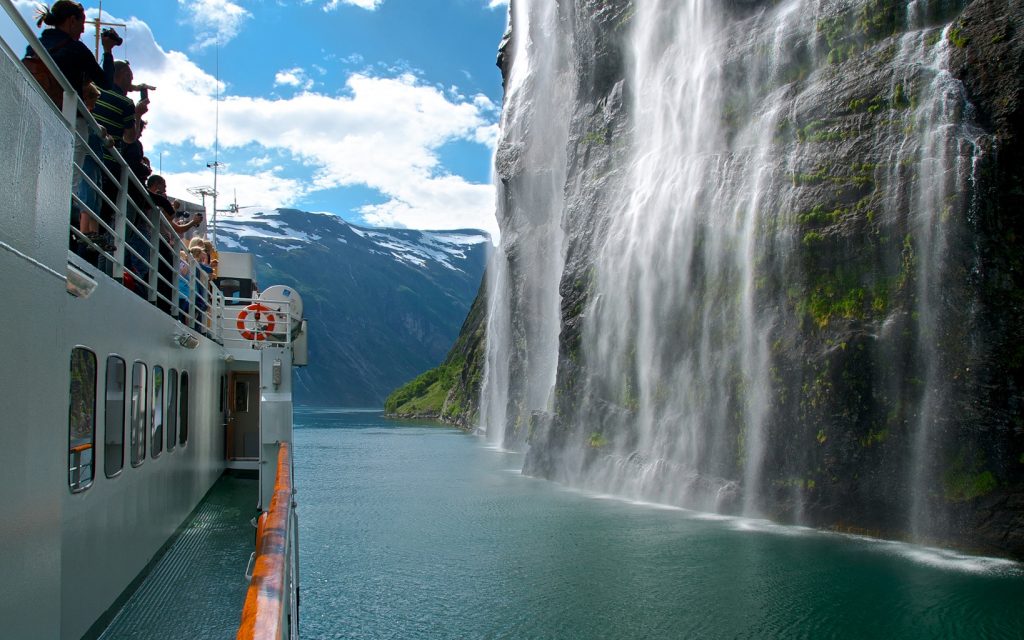
Fjordcruise on Geiranger Fjord passing Brudesløret waterfall. Photo by Øyvind Heen/fjords.com
Norway Norway is just breathtaking. Over and over again rated as one of the most beautiful countries in the world. From snowy high mountains to beautiful fjords, northern lights, wilderness, polar bears, and much more. Norway is truly a destination for nature lovers. Don’t miss out on a visit to the country’s capital Oslo and be prepared for an amazing experience. In Norway the national dish is mutton and cabbage stew also called ‘fårikål’ in Norwegian.
What is Scandinavia well known for? The living standards in Scandinavia are very good compared to many other countries, in terms of medical care, education and personal income, general well-being, and life quality. Many Scandinavian businesses thrive, and many people have a good life and great jobs. All five countries have free education as well as free medical care, but higher taxes.
Food and drinks While some dishes vary a lot from each other in the Nordic countries, one thing is for sure. Seafood is very famous. In terms of drinks, Scandinavia is famous for ‘mjød’, beers, and aquavit. You will get your taste buds stimulated with delicious foods and drinks in these countries.
Why Scandinavia Should Be On Your Bucket List, is a promotional article from ETIAS.