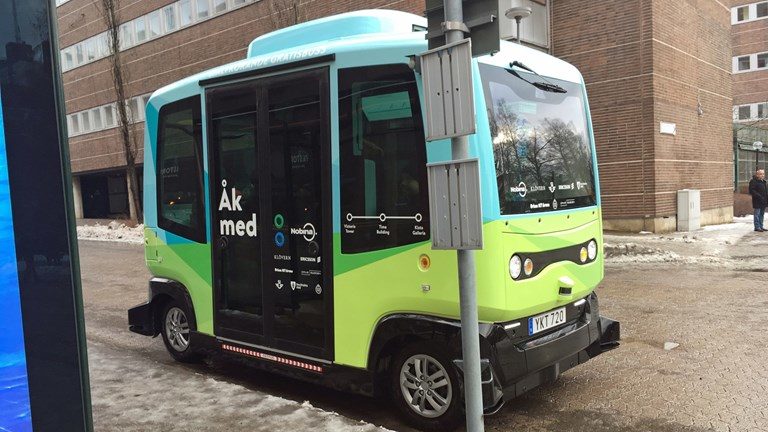
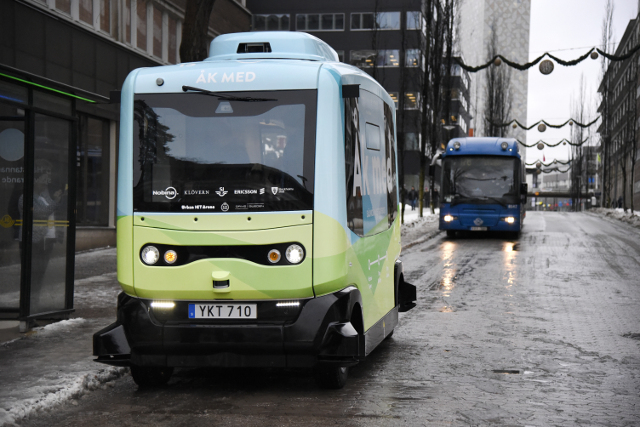
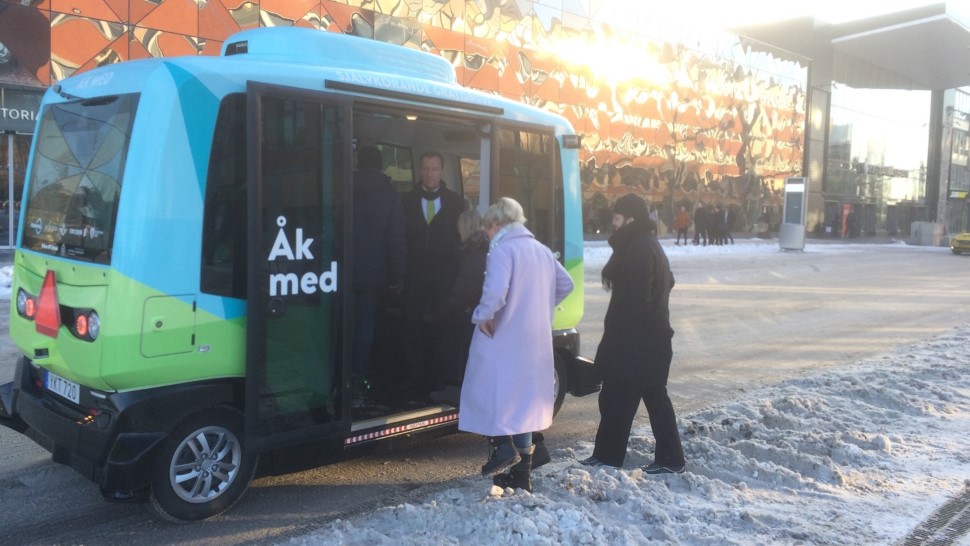
Last month, for the first time in Scandinavia, two self-driving shuttle buses started to mix with pedestrians, cyclists and other traffic along a straight 1.5kilometer public road in Kista, northern Stockholm.
Possibly no-other European nation loves technology as much as the Swedes. Stockholm has more tech startups per capita than any other city in the world apart from Silicon Valley. This pilot project will try out the technology over the next six months on normal road conditions on weekdays from 7 am to 6 pm.
The travel speed of the self-driving bus will be up to 24 km per hour Photo: Marko Säävälä
The travel speed will be up to 24 km per hour, and the small ugly looking buses, taking up to 11 passengers, set a bold example for multimodal urban transport, which many predict as the model for the near-future of smart cities.
Automation is almost everywhere in Sweden, helping to eliminate the requirement for expensive Swedish labor or cash. Ericsson’s Connected Urban Transport platform serves as the virtual bus driver for the shuttles in Stockholm, communicating with smart, sensor-enabled bus stops, traffic lights and road infrastructure.
Already by the end of the summer, in a new residential area in Barkarby northern Stockholm, self-driving buses are supposed to be part of the normal public transport route.
A self-driving bus evokes a photographer’s interest in Stockholm
For transport companies, the attractions of cutting out bus drivers and saving on those wages are obvious, not to mention the expected improvements in safety. Ericsson offers installation and operation of smart traffic solutions, minimizing installation time, operational costs and staffing headaches.
“If this project is successful, I would say that in just a few years, this will be a very common part of Stockholm transport system,” says Kristoffer Tamsons, Stockholm’s regional transport commissioner, and chairman of Stockholm transport.
Self-Driving Buses in Sweden, written by Tor Kjolberg
In its 75 years IKEA has stood out as a particularly innovative organization. Seventeen years old its founder, Ingvar Kamprad, wanted to start his own firm in Älmhult in Sweden’s Småland. The company’s name is an acronym consisting of the initials of his first and last name, Ingvar Kamprad, the farm where he grew up, Elmtaryd and his hometown Agunnarud in Småland.
After his death last month, it’s important to remind ourselves of Kamprad’s way of future thinking: “As long as there is human housing on our earth, there will be a need for a strong and efficient IKEA,” he said.
The company’s name is an acronym consisting of the initials of his first and last name, Ingvar Kamprad, the farm where he grew up, Elmtaryd and his hometown Agunnarud in Småland
IKEA’s philosophy has always been to create products for the user, carefully thinking over how a product fits into an individual’s situation, familywise and financially. Functional design combined with user-friendly prices have been IKEA’s trademark. Today, vintage IKEA furniture can be worth a fortune on auctions, proving that the company’s innovation has stood the test of time.
I have always wondered how it is to be a product designer at IKEA, so I traveled to IKEA’s hometown, Älmhult to meet one of the in-house designers, Iina Vuorivirta from Finland.
“Good design is first and foremost a focus on how the product should work,” says Iina Vuorivirta, in-house designer at IKEA
I was curious to find out how a young designer landed a position at a huge company like IKEA, and Iina explains that it was quite accidentally. She had lived among IKEA products in Finland all her life and studied product design in Sweden, later to start her own studio in Stockholm. One day she sneaked into IKEA, which launched a new product next to her own small gallery.
Designers at IKEA can meet in an informal atmosphere to discuss their individual projects.
There she met head of design, Marcus Engman, and she made a quick decision to apply for a position.
Iina tells me that she is open-minded and likes to challenge herself. She is curious and more than average interested in materials. She has been doing glassblowing and worked with ceramics.
Ingvar Kamprad in conversation with his workers
At IKEA she is currently working on a new dish-brush, which she has been doing for two years now. When I look like a question mark, she explains that a brush lasts for approximately one year. Being concerned about the environment, the brush and the shaft should be recycled in the same process, not separately, like most dish-brushed are treated today. She is therefore searching for sustainable materials meeting these requirements.
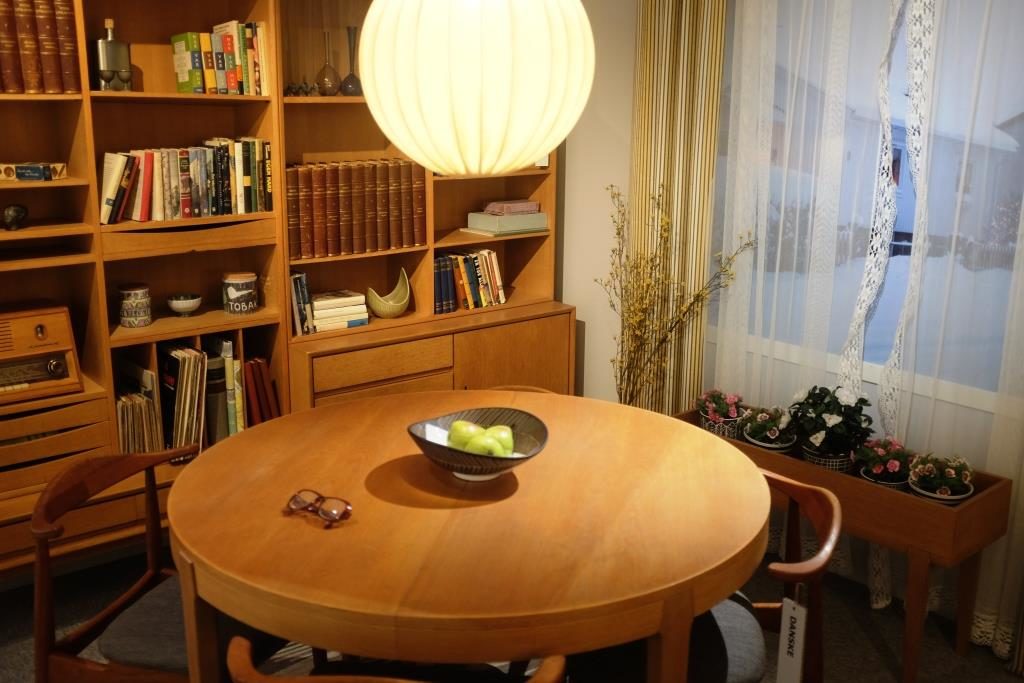
IKEA furniture from the 70s exhibited at the IKEA Museum
“Good design is first and foremost a focus on how the product should work. This is the stage at which many questions will arise. Doing proper design and material research will help answer those questions,” she says.
Travelling to suppliers is a big inspiration for Iina. It is the most exciting part of the process. Her interest for natural fibers arose when visiting Indonesia and Vietnam. She is concerned about using materials in the best possible ways – respectfully and esthetically, not focusing on a beautiful layout only.
‘Design based on facts, not assumptions’ is her mantra. She is concerned about the smaller details, the fingertip feeling.
“When this is right, I am right,” she concludes.
Today IKEA works with students, in-house designers as well as well-established designer brands.
Portrait of IKEA founder Ingvar Kamprad at the IKEA Museum in Älmhult
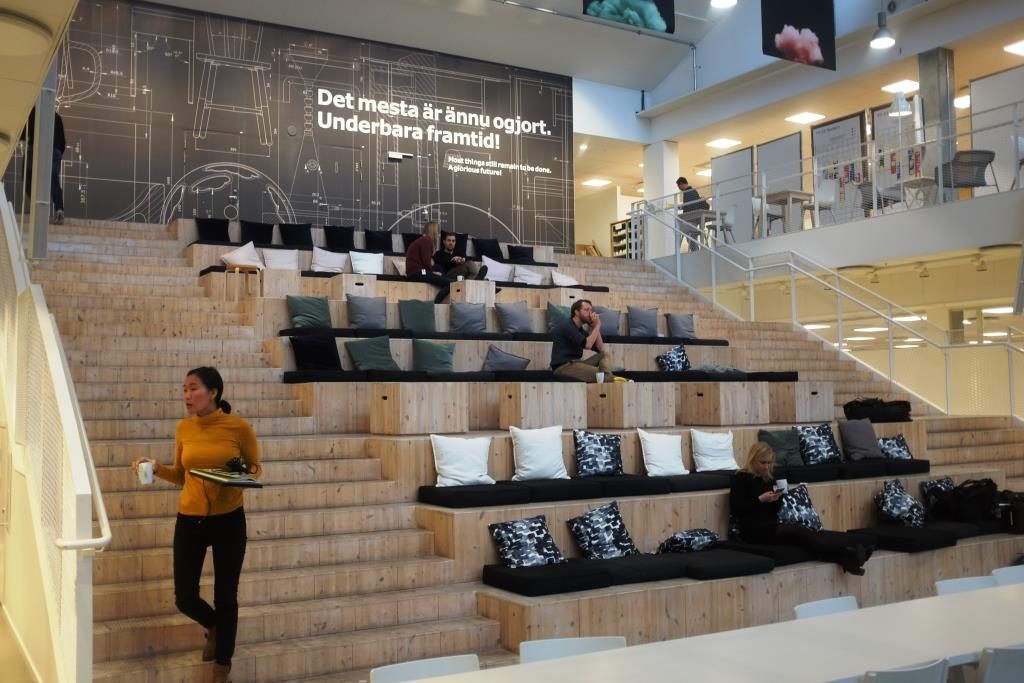
IKEA has today more than 400 stores worldwide. The first store opened in Älmhult in 1958. In 2012 the store was relocated. The old building has now been transformed into the IKEA Museum. The exterior of the building has to large parts been restored to its original form, following the drawings of architect Claes Knutson. The interior has been created to meet the needs of a modern museum and is well worth a visit.
Sweden’s IKEA Conquered the World with Innovation and Design, written by Tor Kjolberg
The new floating open air cold bath, inspired by the success of Treehouse hotel is planned to be situated downstream from the bridges of Bodstrackfors on Lule River. With the river frozen in wintertime and summertime free-floating, this lodge will be a year-round attraction.Arctic Bath is a sister retreat to the country’s Treehouse hotel.
The Northern Lights may be checked in lots of cool ways, but they might not come any cooler than the experience to be offered by this new floating hotel in the Swedish Lapland. This upcoming resort, literary floating on a river, couldn’t be further from normal life.
Activities at Arctic Bath Hotel will include cold baths, different water activities, several saunas and spa treatments
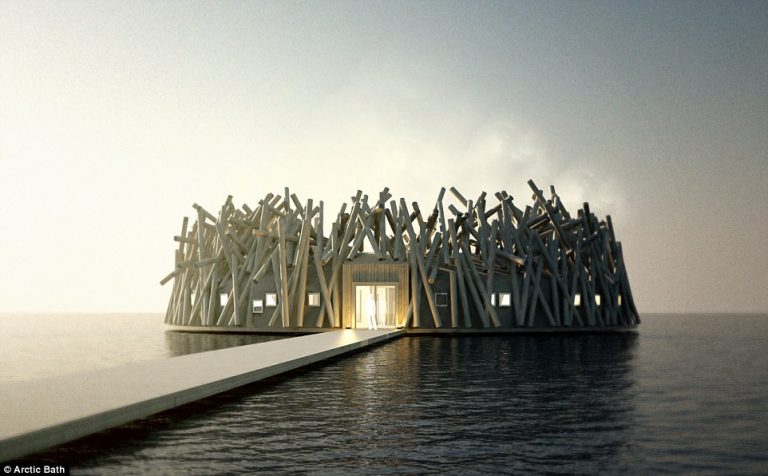
Activities there will include cold baths, different water activities, several saunas and spa treatments. The hotel houses four different saunas and a spa treatment room, along with six hotel rooms, a shop, bar and a restaurant. This logjam-inspired floating lodge honors the jogged piles of timber that once clogged up the river and offers visitors a refreshing! dip in an ice-cold bath in its center. The Lule River stretches 280 miles through northern Sweden and was once an important thoroughfare for moving timber.
The developers are billing Arctic Bath Hotel as an exclusive hotel suitable for small conferences, group events and private parties
Now it will be home to an eye-catching floating hotel that pays tribute to this heritage, cutting a spooky, serrated figure atop the waterway’s surface.
Owners Britta Jonsson Lindvall and Kent Lindvall will offer a mix of luxury and nature
The area is a glacial haven of snow-tipped forests, world-class fishing, amazing wildlife and the Northern Lights.
The hotel is planned to be situated downstream from the bridges of Bodstrackfors on Lule River
Inspired by the wild, stunning Swedish surroundings, owners Britta Jonsson Lindvall and Kent Lindvall will offer a mix of luxury and nature. Swedish architects, Bertil Harström and Johan Kauppi are responsible for architecture and design.
The developers are billing it as an exclusive hotel suitable for small conferences, group events and private parties.
Astrup Fearnley Muesum of Modern Art in Oslo will for the first time in Norway present a solo exhibition featuring the works of American artists Lizzie Fitch and Ryan Trecarin, both born 1981.
Since they met in 2000, the critically acclaimed artist duo has created large-scale video installations that examine the effects of technology and social media on identity formation and the mutability of language. Their expansive collaborative practice includes video, sculpture, sound and installation.
American artist duo Lizzie Fitch and Ryan Trecarin
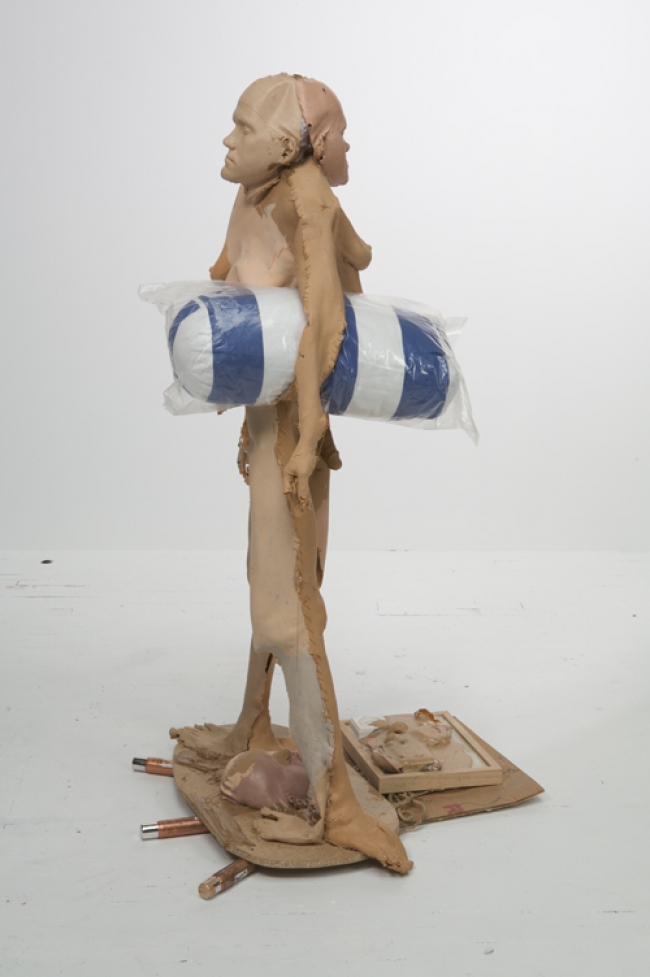
Sculpture has always played a role in Fitch and Trecartin’s practice, both on and off the screen. Here the concept of “scripting” is foundational to the way the artists set the parameters for interaction, whether between humans, objects, or even environments, treating the source materials as words in poetic compositions.
The artists’ expansive collaborative practice includes video, sculpture, sound and installation.
Astrup Fearnley Muesum of Modern Art in Oslo will for the first time in Norway present a solo exhibition featuring the works of American artists Lizzie Fitch and Ryan Trecarin, both born 1981.
Plaza Point, 2009
Since they met in 2000, the critically acclaimed artist duo has created large-scale video installations that examine the effects of technology and social media on identity formation and the mutability of language. Their expansive collaborative practice includes video, sculpture, sound and installation.
The Edge, Skinny 2008
Sculpture has always played a role in Fitch and Trecartin’s practice, both on and off the screen. Here the concept of “scripting” is foundational to the way the artists set the parameters for interaction, whether between humans, objects, or even environments, treating the source materials as words in poetic compositions.
Fitch and Trecartin purposefully guide us toward a time when the connections between technologies and humanity have passed a milestone, but before the effects of this ontological change have been fully assessed. As Trecartin says: “I love the idea of technology and culture moving faster than the understanding of those mediums by people.”
Sculpture has always played a role in Fitch and Trecartin’s practice
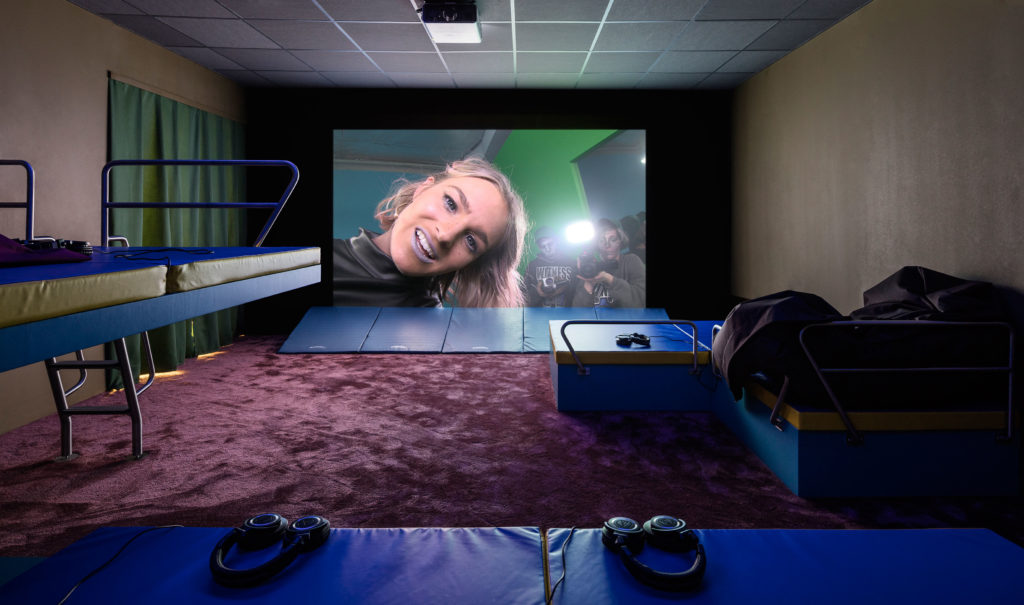
Astrup Fearnley Museum will exhibit one of the artists’ room size “sculptural theaters” Plaza Point (2009), alongside a major presentation of Fitch and Trecartin’s sculptures. This is the first museum show to focus on their sculptures as autonomous works, placed in an indoor “sculpture garden” within the main museum space. The works, made from an overwhelming variety of traditional and non-traditional materials, are single figures or complex narrative groups that express a simultaneously grotesque and celebratory view of human nature.
Related: At the Edge in Oslo
About the artists
Ryan Trecartin (b. Webster, Texas, 1981) and Lizzie Fitch (b. Bloomington, Indiana, 1981) received BFAs from the Rhode Island School of Design in 2004 and currently live in Los Angeles. Their collaboration has endured over 15 years producing works that have been shown at contemporary art centers and museums around the world, including the Musée d’Art Moderne de la Ville de Paris; MoMA PS1, New York; KW Institute for Contemporary Art, Berlin; the Museum of Contemporary Art, Los Angeles; and the Francois Pinault Foundation at the Punta della Dogana, Venice.
About the museum
Astrup Fearnley Museet is a private museum of contemporary art, and has since its opening in 1993 been one of the most important art institutions in Oslo.
The museum moved to Tjuvholmen in 2012, beautifully located by the Oslo Fjord in a building designed by world-renowned architect Renzo Piano. The museum presents temporary exhibitions of international art, and houses the Astrup Fearnley Collection, one of Norway’s most important and most extensive private collections of contemporary art, with iconic works by artists such as Damien Hirst, Anselm Kiefer and Jeff Koons.
The exhibition opens 23 February and lasts through 20 May 2018.
Artist Duo Lizzie Fitch and Ryan Trecartin Exhibits in Oslo, written by Tor Kjolberg
Feature image (on top): Image Ready: Ryan Trecartin
Ready (Re’Search Wait’S)
2009-2010
HD Video, 26:50
Courtesy the artist and Elizabeth Dee, New York
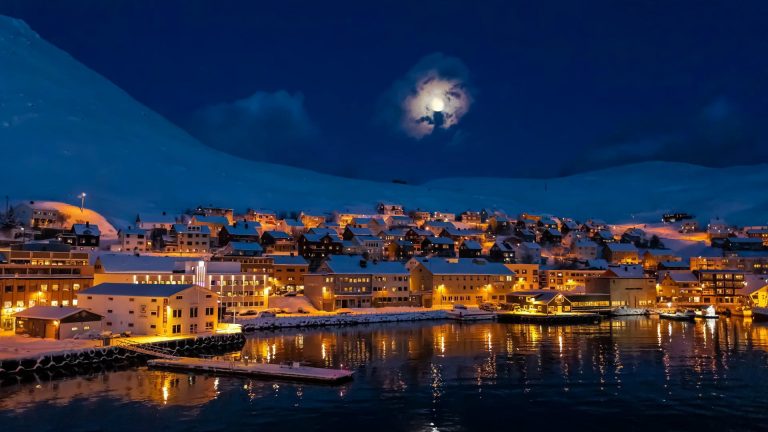
Alta, is located in Norway’s Finnmark county more than 375 kilometers north of the Arctic Circle. The fjord town has a population of just under 15,000 inhabitants and I definitively worth a visit!
You should make a stay at the world’s northernmost Ice hotel, the Iglo Hotel, found on the banks of the Alta. It’s built each year in January and melts away in the spring. The hotel offers tours and more heat-round. There’s also an ice chapel, and an excellent restaurant.
Dogsled ride through in Alta
Alta is also the starting point for the annual Finnmarkløpet, the longest sled dog race in Europe, first arranged in 1981. Every year approximately 130 entrants participate in the Finnmark Dogsled Race.
Alta is also known for its slate production, and some ancient rock carvings are recognized by UNESCO.
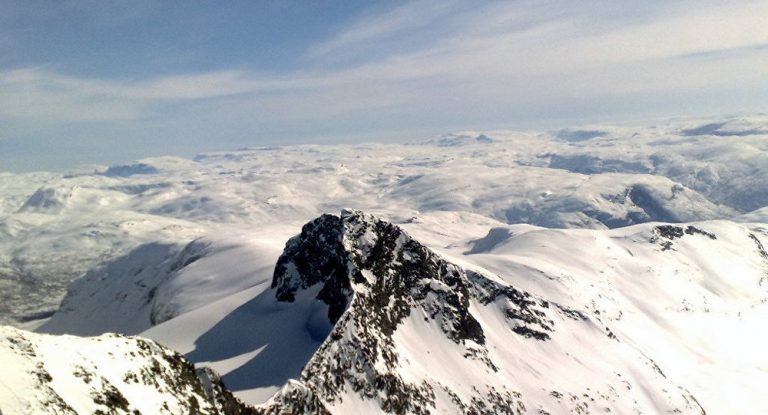
Alta is also known for its slate production, and some ancient rock carvings are recognized by UNESCO. However, not many rocks are visible in the winter, (see below). And of course, Alta is known for its Northern lights. The world’s first observatory dedicated to studying the Northern Lights was built in Alta in 1899.
Hadde – The Northern Lights Observatorium in Alta
Being in Alta, we recommend that you immerse yourself in the local Sami cultures. In the Boazo Sami Slida, a settlement of reindeer herders, visitors can try activities based on Sami culture and traditional food. It’s open from mid-June throughout the summer.
Holmen Husky Lodge, a cozy modernized lavvu (traditional Sami tent)
Stay overnight at the Holmen Husky Lodge, a cozy modernized lavvu (traditional Sami tent). Included in the price is a nighttime dogsled ride through the forest, a delicious dinner, and the the lavvu glamping.
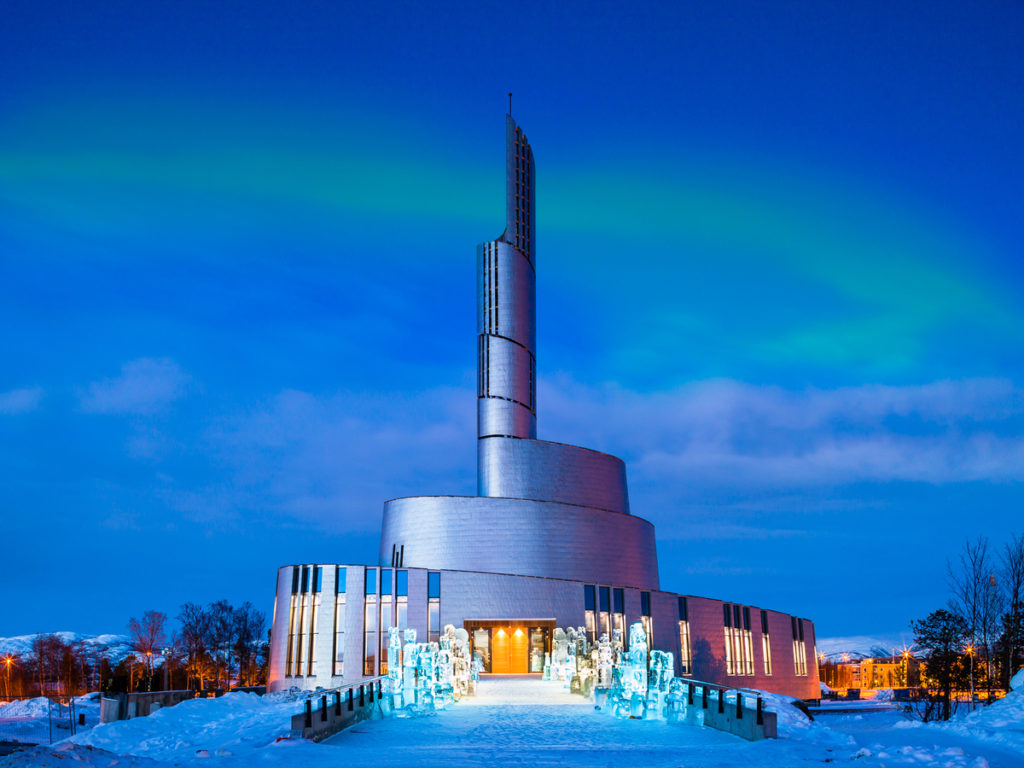
The Northern Lights Cathedral is a huge modern church, finished in 2013
Due to its location on the inner part of the Alta fjord and the Gulf Stream, the are doesn’t actually get bitterly cold during the winter months.
In the center of the town you cannot miss the Northern Lights Cathedral. It’s a huge modern church, finished in 2013. The architecture is not surprisingly supposed to represent the falling sheets of the Northern lights.
A traditional sami village
Alta museum was voted Europe’s best museum when it opened back in 1993. It still offers an excellent insight into the region’s history. In autumn, visitors can explore the UNESCP-listed Rock Art Center, 2 kilometer of footpaths that connect a field of rock carvings from 6,000 years ago.
If you like some action, you should join a Snowmobile safari into the wilds of Finnmark, or do a snowshoeing / Ice fishing trip. Join one of GLØD Explorer’s trips.
If you’re looking for an intimate experience, there are less tourists in Alta than in many other parts of Northern Norway, except on days when a cruise ship is in the port.
Alta, Norway – Town of the Northern Lights, written by Tor Kjolberg
An incredibly well-preserved Viking sword and a roughly 1,400-old arrow were found by hunters on a remote mountain in Southern Norway.
Last summer the Glacier Archaeology Program at Oppland County Council was notified about the sword, which was found at 1640 m [5381 feet] in the high mountains of the Lesja area. A roughly 1,400-year-old arrow was found in the same area.
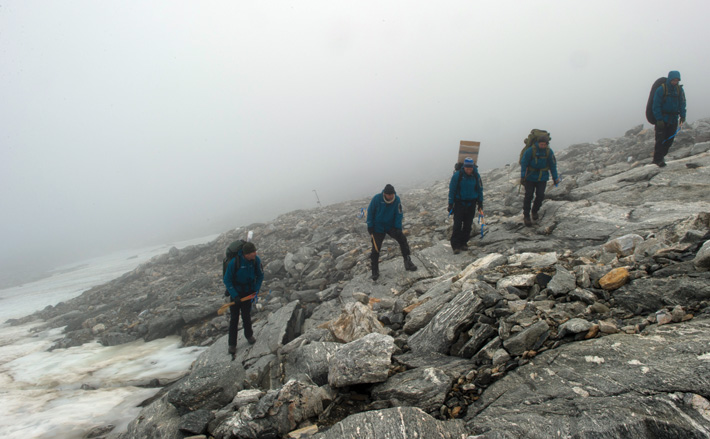
The ancient sword was found at 1640 m [5381 feet] in the high mountains of the Lesja areaFour friends while hunting reindeer in Oppland noticed a rusty object sticking out of the rocks. Since 2006 Norwegian archeologists have searched for artifacts left behind by ancient reindeer hunters in the mountainous region of Jotunheimen in southern Norway.
Since 2006 more than 2,000 artifacts have been found in the same area
According to archeologist Lars Pilø at Oppland County Council, the sword is a common type of Viking sword, and the context and the preservation of the sword is special. Archaeologist Espen Finstad confirmed to the Norwegian newspaper Dagbladet that the sword was a Viking Age relic created in the 900s AD. Finstad is also the chief editor of Secrets of the Ice , a group of glacier archaeologists working in the same region where the Viking Age sword was found.
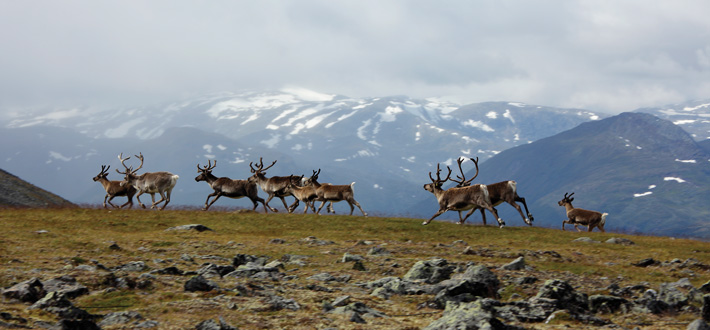
Original wild reindeer in Norway
Ancient reindeer hunters’ tools and belongings come into view as ice patches melt away as a result of climate changes. In Norway, reindeer often live on ice patches during the summer months to avoid parasitic insects.
“To my knowledge, a Viking sword has never been found at such a high altitude before,” said the man who discovered the sword, Einar Åmbakk.
Since 2006 more than 2,000 of these artifacts have been found, and scientists are now determining when and how people hunted reindeer in Norway’s mountains over the ages with tools having been lying on the mountain surface for around 1,100 years.
Reindeer often live on ice patches during the summer months to avoid parasitic insects
Also a number of artifacts dating back to the 14th century, from the time when the plague hit Norway, has been found. The excellent quality of these items is no doubt due to the cold, dry conditions on the mountain.
The Secrets of the Ice website, is describing the context in which the sword was found:
“The find spot is in a scree-covered area with traces of permafrost movement, situated at 1640 m [5380 ft.] above sea level. Einar Åmbakk told us that the sword was lying with the hilt down between the stones and half of the blade sticking out. He had seen the blade and pulled it out. Only then did he understand that he had found a sword.”
A Viking arrowhead emerges from the melted ice
Researchers at the Museum of Cultural History at the University of Oslo in Norway, have studied and dated 153 of the objects with radiocarbon dating. The oldest artifacts are dated to 6,000 years ago, which means that there’s been hunting there for at least that long.”
The retreat of mountain glaciers and ice patches in Oppland is part of a worldwide phenomenon linked to climate change.
Ancient Hunting Ground Discovered in Norway, written by Tor Kjolberg
A team of young architects based in Copenhagen has won first prize for a museum competition in Norway. Their proposal for a new Museum of Forest Finn Culture (Finnskogens hus) in Svullrya, Norway was chosen from 203 entries in the fourth largest architectural competition in Norway to date.
The international team is composed by architects Juráš Lasovský (Czech Republic), Filip Lipinski (Sweden), Hanna Johansson (Sweden) and Andrea Baresi (Italy).
The Finn Forest Museum, Svullrya, Norway
‘Finnskogens Hus’ is a museum in the forest, relating to its close context as a transition between inside and outside. The Forest Finns migrated from eastern Finland towards the forested regions in central Sweden and eastern Norway in the late 16th / early 17th century. They practiced so called slash-burn agriculture, which involves sowing grain in the ashes of the burnt forest. In addition to their special slash-burn technique they also brought with them their building tradition with smoke cabins.
Hide and seek at the Finn Forest Museum
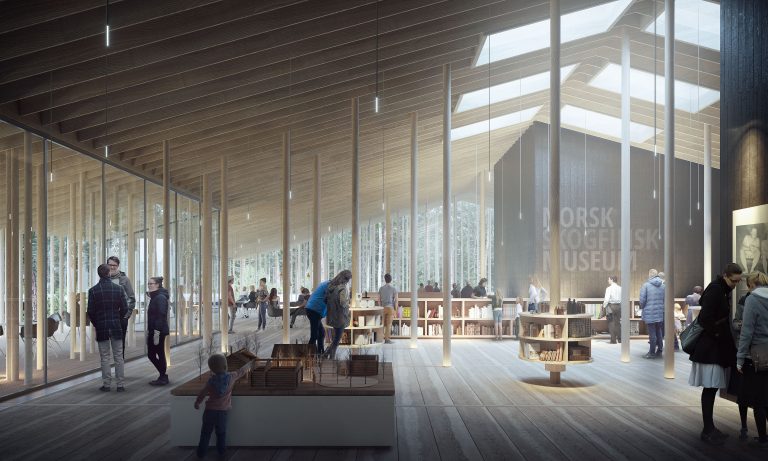
Surrounded by a forest of columns the new museum building evokes curiosity and attracts visitors to interact with the building and the surrounding landscape. It creates a new framework where visitors can learn about the rich history of the Forest Finns. The museum is characterized by the large roof and the forest of columns; creating a symbiosis between the nature and the building, between inside and outside.
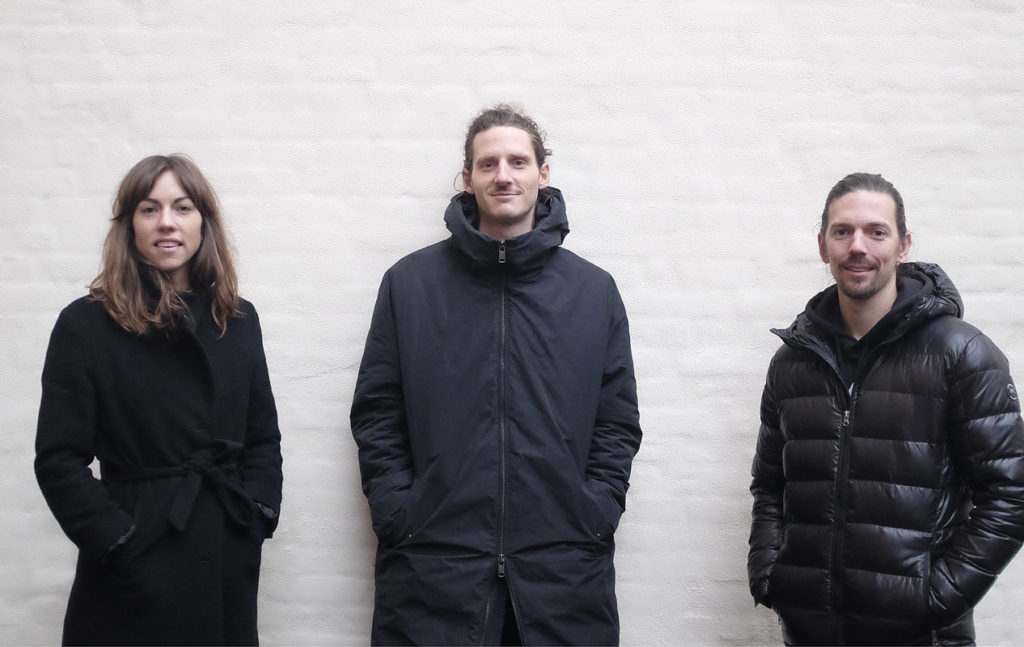
From left: Hanna Johansson, Filip Lipinski and Juráš Lasovský
The playful column facade gives the building a unique expression, especially during the dark hours of the day when the light from the inside trickles through the forest of columns and light up the surrounding landscape. When you approach the building, the entrance will appear as a glade through the forest and lead you into the reception area, café and library.
Light filtered through the ceiling is a reference to the Forest Finns building technique where smoke was ventilated out through a smoke hatch in the ceiling. Finnskogens Hus is a simple building that in many ways are relating to the Forest Finn Culture with its direct relation to the forest. Wood is present in both structural elements and interior spaces, where for example burnt wood is present to tell a story about the slash-and-burn cultivation in the Forest Finn Culture.
Winter is coming to the Finn Forest Museum
Filip Lipinsky tells Daily Scandinavian that four architects met in Copenhagen and became good friends. Three of them started 2 years ago to do open architectural competitions. “Already in the first competition for a Cultural House in Sweden, we got 2nd prize amongst about 60 entries, which proved we had a strong team,” says Lipinsky.
Thereafter the architects have indeed proved to be a winning team, with prized for a church in Copenhagen and a school building in Sweden. “After this we joked that we now only were missing a first prize,” says Lipinski. And now they’ve succeeded with thee winning prize for the Museum in Norway.
Team member Andrea Baresi moved to Barcelona to start his own visualization studio and joined the museum competition from there.
Copenhagen Architects Won First Prize in International Architectural Competition, written by the Daily Scandinavian team in cooperation with the architects.
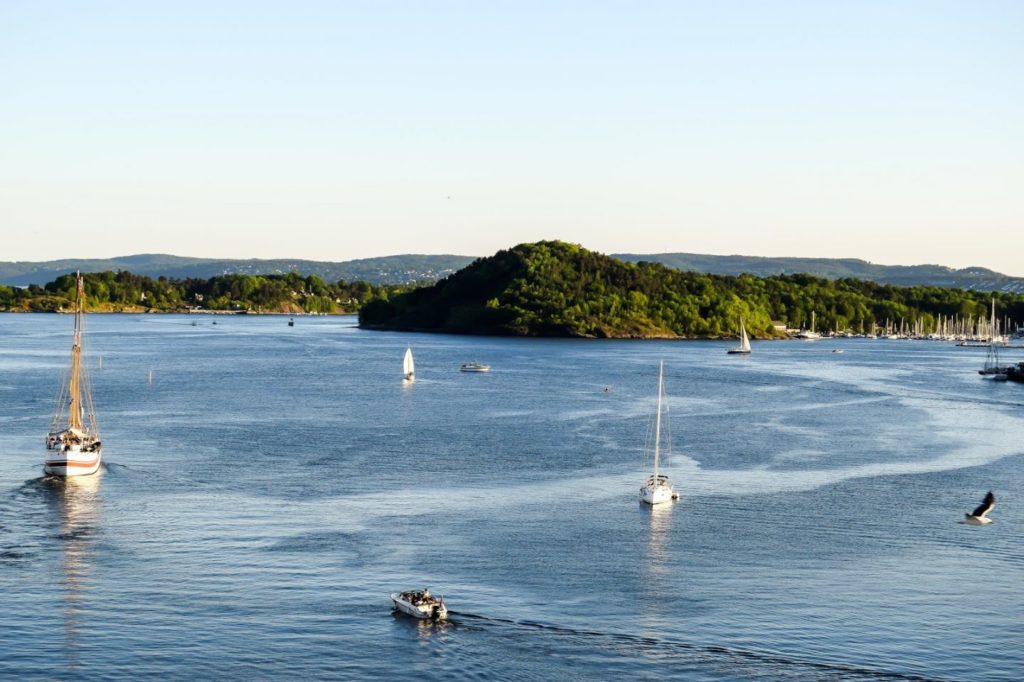
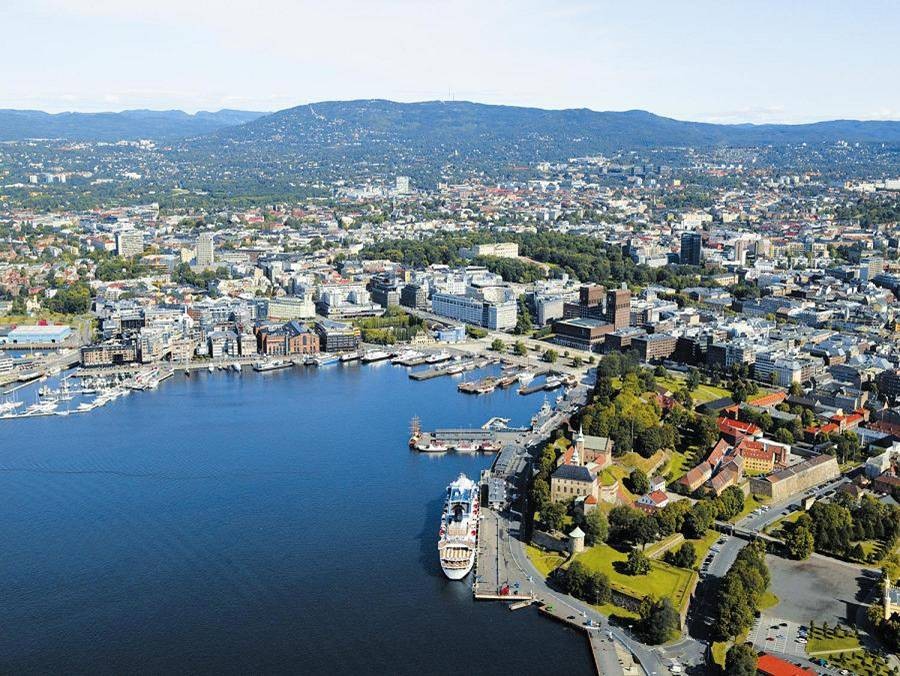
Oslo with a population of about 600,000, is a green city, which means you pay a toll to bring in a car. It is committed to eco-friendly tourism.
The center I easy to get around on foot, and the integrated transport system whisks you in less than half an hour to the hills, forests and fjords. Oslo covers an astonishing 454 square kilometers (175 square miles), and it is the magnificence of the surrounding countryside that gives Oslo the benefit of a plethora of outdoor activities that cannot be competed by any other capital city.
Oslo declared itself a sustainable city a few years back, and has remained committed to backing up the claim. It won the European Sustainable City Award in 2003 for its efforts to reduce greenhouse gasses, offer electric car-charging stations and enhance public transportation.
People tend to forget that there are warm, humid summers in Oslo
Norway is associated with snow, ice and extremely cold temperatures, but people tend to forget that there are also warm, humid summers. Oslo is alive and kicking all year round, but it’s during summer that the average tourist can enjoy the maximum benefits of a visit to the city. In fact, being able to down that first outdoor “summer pils” is part of Norwegian culture.
Oslo covers an astonishing 454 square kilometers (175 square miles)
Oslo has been described as “the world’s biggest village, and Reader’s Digest magazine ranked it as number 2 on a list of the world’s greenest and most livable cities, following Stockholm.
Oslo – The World’s Biggest Village, written by Tor Kjolberg
Copenhagen Tivoli has recently announced that the Norwegian pop group A-ha will be its main attraction on the 2017 Tivoli Festival.
Visitors can enjoy more than 50 concerts during a five-month long music series by international singers, entertainers and musicians in Copenhagen Tivoli this summer. A-ha will bring their Electric Summer World Tour to Tivoli on 27 July, their only performance in Denmark this year. The group has not performed in Denmark since 2004, when they played at the Rock Under Broen Festival in Middelfart.
A-ha will bring their Electric Summer World Tour to Tivoli on 27 July
Paying visitors to Tivoli Gardens will have free entrance to the concert, but Inner Circle tickets near the stage will cost extra. Tickets for the inner circle is on sale now.
A-ha had its breakthrough in 1984 with the hit “Take on Me”
A-ha had its breakthrough in 1984 with the hit “Take on Me”. Since then the group has had several hits, including “The Living Daylights” from the James Bond movie by the same name.
A-ha gig, London 2017
This is Copenhagen Tivoli’s 175th season, and the Tivoli Festival opens on 13 April.
Norwegian Pop Group A-Ha Visits Copenhagen’s Tivoli Festival, written by Tor Kjolberg
Nordic Food Lab in Copenhagen is the brain child of gastronomic entrepreneur Claus Meyer and head chef René Redzepi of Noma restaurant. As a part of Department of Food Science at University of Copenhagen, they have introduced the lecture series Monday Aperitivo, held on the last Monday of the month and everybody is welcome.
Driven by the pursuit of a sustainable cuisine and the idea that the Nordic landscape should define Nordic food, the two entrepreneurs bent their cooking into a creative framework, only allowing Nordic ingredients, and letting the wild, the herbal, the untamed from the coldest lands of Europe define the language of flavor they explored.
The Nordic Food Lab’s mission is to teach and inspire people about taste and the flavor of biodiversity
Since then the lab has not only attracted world wide attention by issuing the book On eating insects but also contributed to numerous festivals, symposiums and food events in Denmark and beyond.
The Nordic Food Lab’s mission is to teach and inspire people about taste and the flavor of biodiversity. Last year it participated in the Danish Berry Festival as well as Japanese workshops teaching Gyotako (Japanese fish prints) techniques.
The Monday Aperitivo lectures will explore the intersection of gastronomy and science and the lectures will be given by invited personalities in the two disciplines
The Monday Aperitivo lectures will explore the intersection of gastronomy and science and the lectures will be given by invited personalities in the two disciplines.
Monday Aperitivo is an informal forum where food and science are discussed passionately in order to find new ways to stimulate the appetite
Monday Aperitivo is an informal forum where food and science are discussed passionately in order to find new ways to stimulate the appetite. Responsibility for Monday Aperitivo rotates among the team members at the Nordic Food Lab and scientific assistant Louise Beck Brønnum, who has just been working with extraction in the research project Taste for Life, was responsible for the first event.
In the video above, professor of gastrophysics Ole G. Mouritsen talks about the fish katsuobushi, while chef Philipp Inreiter from Slurp Ramen Joint demonstrates how to make a delicious Dashi – a broth based on seaweed and in this case katsuobushi. Dashi, which can also be made from mushrooms, is the foundation for Japanese noodle soup (ramen).
Monday Aperitivo, which always has a special theme, will take place on the last Monday of the month from 4:30 to 6:30 pm. The tickets cost about 125 kroner.
Waxed plums at the Nordic Lab, Copnhagen
On 26 February, Nordic Food Lab goes to Montreal, Canada. Scientific and humanistic approaches with culinary techniques from all over the globe will be the theme. The project, conceived by the University of Copenhagen, addresses our experiences of food, at three levels: sensorial, biological and semantic.
Monday Aperitivo in Copenhagen, written by Tor Kjolberg