Small, but perfectly formed, Denmark is a country of fun-loving, environmentally conscious people.
Hamlet was wrong – there is nothing rotten in the state of Denmark. Yes, winter is dreary, but they’re mild with little snow, and summers are sunny, with long hours of daylight.
Map of Denmark
Yes, the tax rate is among the world’s highest. But taxes are reinvested to help make this country “where few have too much and fewer too little”.
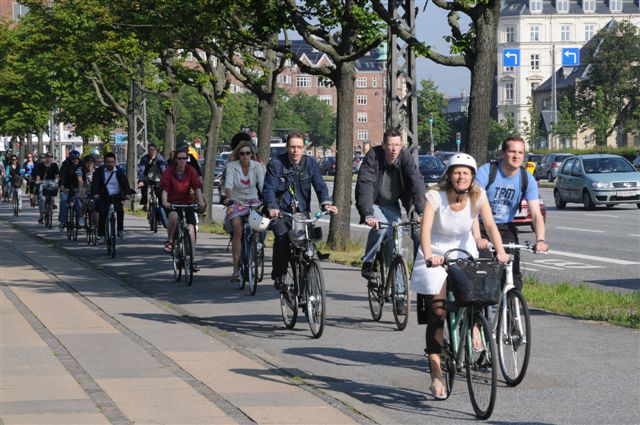
Bike-loving Danes
The world’s oldest kingdom packs plenty of international clout. The Vikings are gone, but their descendants are spreading their seed far and wide: Denmark is the biggest supplier of frozen human sperms on the planet. It’s also a major purveyor of computer elements and electronic devices, windmills, agricultural products, arts and crafts and skilled professionals.
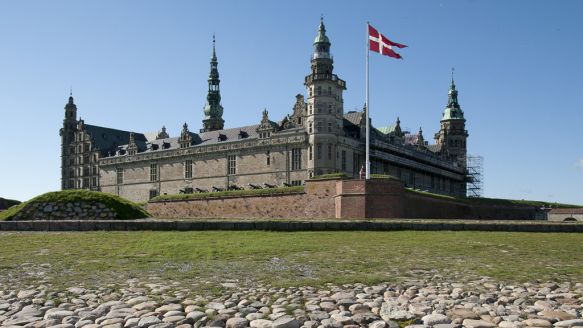
The oldest kingdom in the world has its Kronborg castle (the Hamlet castle)
Denmark is a green nation of cyclists and recyclers. Nine out of 10 Danes own a bicycle, half the country’s rubbish is recycled, and windmills provide 20 percent of the country’s power needs.
The great belt-bridge between Zealand and Funen
Nowhere is very far away. The Jutland peninsula and main Danish islands are linked by a network of spectacular road and railway bridges, which even extends across the Øresund to Sweden. Ferries still play their part, linking islands and crossing the larger lakes, for this is a nation with a strong seafaring past.
Danish wind turbines
Zealand, in the east, holds Scandinavia’s liveliest capital city, Copenhagen, and Hamlet’s castle, Kronborg at Helsingør (Elsinore).
Holidday coast Henne strand
Jutland in the west, is Denmark’s link with mainland Europe. North Jutland’s seascapes have captivated artists over the centuries, and its beaches draw summer holidaymakers. East Jutland boasts a intricate lake system, well used for canoeing and water sports, and Århus, Denmark’s second city, with its esteemed international arts festival.
From Bornholm
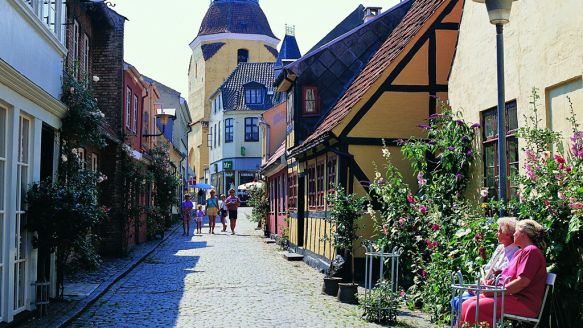
Funen, sandwiched between Jutland and Zealand, is the “garden of Denmark”.
Faaborg, Funen
Out in the Baltic is Bornholm, Denmark’s sunniest holiday spot.
Lake in mointain Sorgvagsvatn, the Faroe Islands
Far to the west and north lie outposts of the Danish kingdom: the windswept Faroe Islands (“Sheep Islands”), a favorite haunt for birdwatchers, and Greenland, offering adventurous travelers stunning scenery and a pristine natural environment.
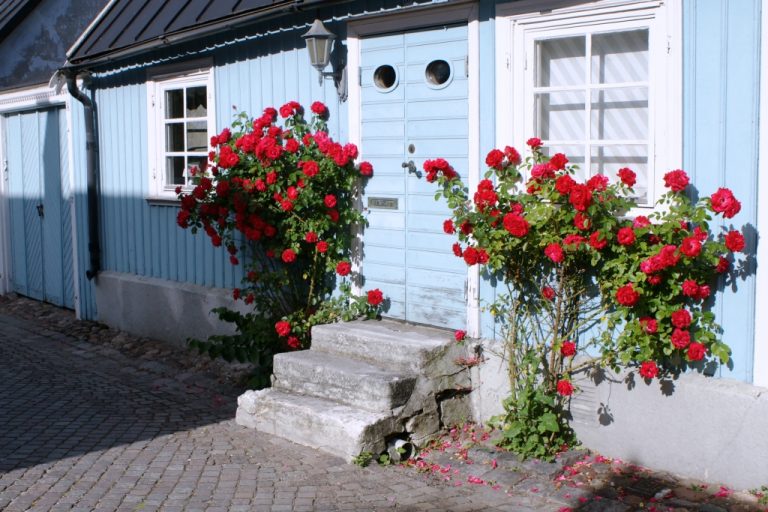
Feature image (on top): House in Fanoe (Visit Denmark)
Lonely Planet, one of the world’s most renowned travel guide, has given the Swedish gem Gotland an impressive no. 2 position in its ‘Best in Europe 2017’ listing.
Gotland is a special yet somewhat unexpected part of Sweden, boasting the most sunshine and highest density of historical sites in the country and more restaurants per capita in Unesco-listed Visby than any other Swedish city.
Gotland is a special yet somewhat unexpected part of Sweden
“This does not come as a surprise to us who work with beautiful Gotland and promote all the area has to offer, but it is of course absolutely amazing that a great travel guide like Lonely Planet praises the region,” says Thomas Johansson, general manager of Visit Sweden in Norway .
This ancient Baltic island has breathtaking scenery
This ancient Baltic island has breathtaking scenery, with pastoral countryside, mysterious forests, time-warped fishing villages and tranquil sandy beaches – except in the height of summer, when Swedes flock there from the mainland and the island takes on an exuberant air, accentuated this year by the week-long 2017 Biennial Island Games in June.
In recent years there has been an increase of foreign guests visiting Gotland
“We and the tourism industry in Gotland have for many years been working to facilitate more international guests and, not least, an extended season. This statement emphasizes that the goals set for Gotland are correct,” Johansson adds.
“It’s absolutely amazing that a great travel guide like Lonely Planet praises the region,” says Thomas Johansson, general manager of Visit Sweden in Norway
Most visitors content themselves with marginally less exertion when it comes to activities, however: the island is simply wonderful for exploring by bicycle with virtually traffic-free roads and unspoiled landscapes.
Unesco-listed Visby is worth a visit
“In recent years we have seen an increase of foreign guests visiting Gotland, especially for long weekends. These guests come year-round, which is an excellent addition to summer tourism,” says Press Officer in Inspiration Gotland, Lena Thorn.
Gotland boasting the highest density of historical sites in the country
Great dining experiences, sand between your toes and a taste of delicious hippie life with surfing on the beach are just some of the things awaiting you when you put your feet on Gotland.
All photos: Tor Kjolberg
Gotland – Best in Europe 2017, written by Tor Kjolberg
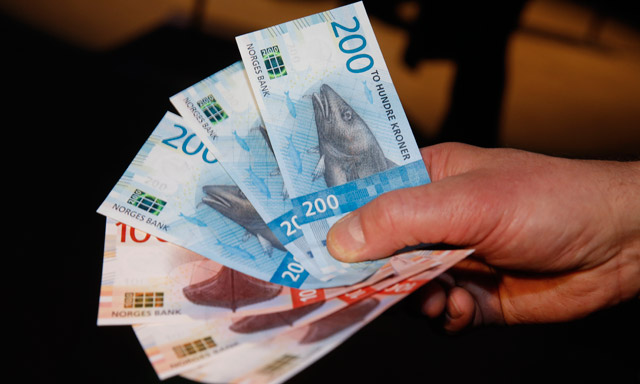
Last week two of Norway’s new maritime banknotes entered circulation, 100 and 200 kroner. Viking ships and fish have taken the place of cultural and historical figures on the reverse.
For the first time in history, Norwegian banknotes do not feature portraits. Instead, the new notes all reflect a common theme: “The Sea”.
200 kroner banknote
According to Norges Bank, each denomination features an easily recognized primary motif on one side that communicates central characteristics of Norwegian maritime history. Think Viking boats, lighthouses, and the like. The reverse side is pixelated and feature an abstraction of sea and wind.
100 kroner banknote
Norway’s new banknotes have earned praise and adulation online for the unusual artistic design behind them.
Norway’s central bank has also made a bizarre music video to celebrate its new ‘cod’ banknotes, promoting the imminent launch of its new banknotes, which feature the national fish, the cod, on them and using the slogan “cod is coming” (torsken kommer). The video plays on the rhyme between the Norwegian words ‘torsk’ (cod) and ‘norsk’ (Norwegian).
The video has received international attention, with British newspaper Financial Times even translating the lyrics to English.
50 kroner banknote
New 50 and 500 krone notes, which will be adorned on the reverse by a lighthouse and the lifeboat Stavanger respectively, will be released at the end of next year. A new 1000 kroner note with a blue wave will be released in 2019. All banknotes are designed by The Metric System (the team of Christian Schnitler and Are Kleivan).
500 kroner banknote
The old 100 and 200 krone notes remain legal tender for 12 months and can be exchanged by Norges Bank for up to ten years after the release of the new notes.
Norway’s New Banknotes in Circulation, written by Tor Kjolberg
Whether you’re in a car or coach, on a bicycle, boat or train, on foot or on skis, the Scandinavian countries have an enormous variety of sights and scenery to beguile the visitor.
Denmark is neatly beautiful with its white sand beaches, well-groomed farmland, gentle hills and fairytale castles. Chilled-out Copenhagen is a particularly enjoyable capital with pedestrianized streets, pavement cafés, superb shops and entertainment.
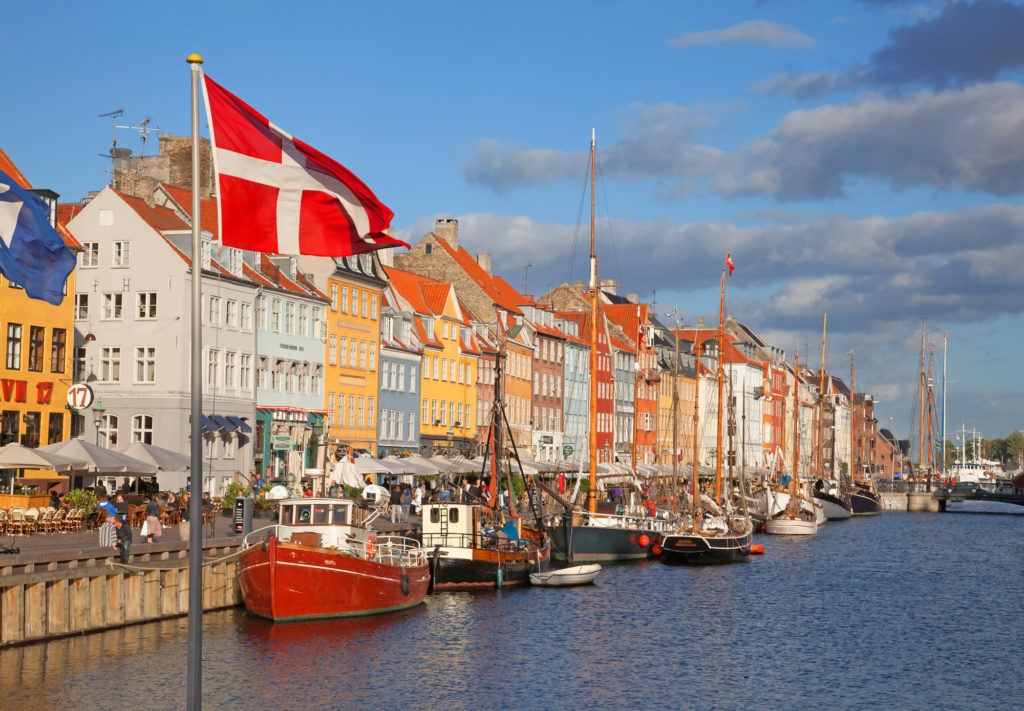
From Nyhavn, Copenhagen
Every Danish town has its museum and art gallery, every castle its collection. Remote from the rest of Denmark lie the Faroe Islands, a birdwatcher’s paradise, and Greenland, a terrific adventure destination.
Norway is made up of mountains etched with beautiful fjords and dramatic valleys. From the southern beaches, the coastline stretches right into the Arctic Circle, dotted with islands, fishing villages and historic towns like Bergen.
The Oslo Opera House at dusk, with the illuminated Havnelageret building to the right – Oslo, Norway
Inland, the rugged landscape beckons walkers and skiers. The capital, Oslo, offers every city delight, with forests in its doorstep.
A short drive from Copenhagen brings you to southern Sweden’s gentle farmland and sunny islands. At the country’s heart lie two vast lakes, Vänern and Vättern, linked by the Göta Kanal, a pleasure-boaters’ mecca.
Further north, the folklore province of Dalarne gives way to lakes and forests, winter sports centers and rugged Lapland.
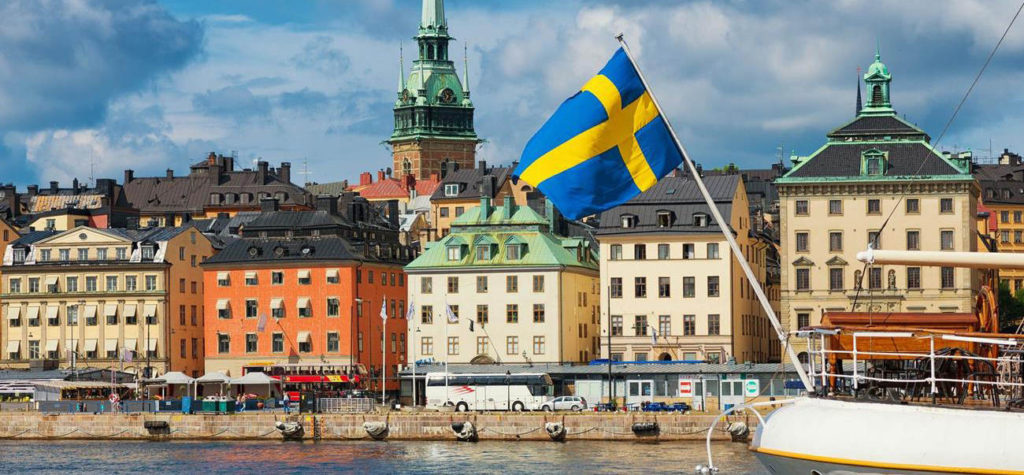
From Stockholm
Stockholm floats majestically on 14 islands, probably the most sophisticated of Scandinavia’s capitals.
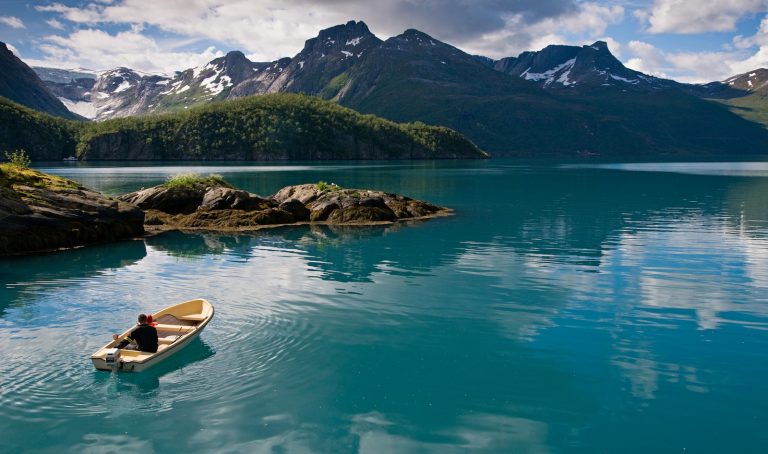
Feature image (on top): Small boat with two persons on Norwegian fjord
Scandinavian Places in a Nutshell, written by Tor Kjolberg
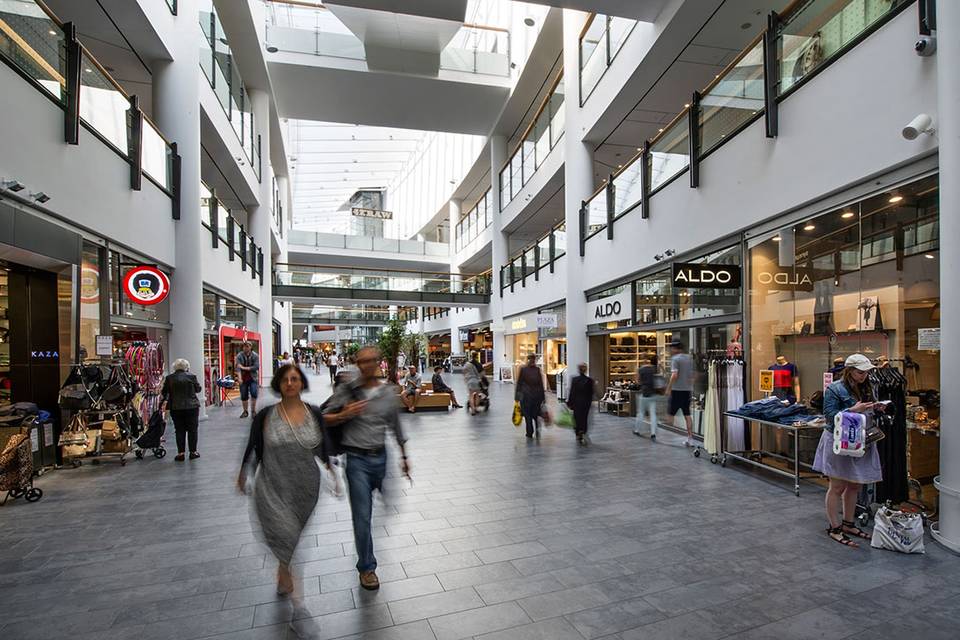
The International Councils of Shopping Centers (ICSC) has awarded Fredriksberg Centeret in Copenhagen one of the world’s best shopping centers in the world. Every year ICSC honors the real estate industry’s most cutting-edge properties, innovative solutions, and creative responses to market trends. The award was presented during a ceremony held in Las Vegas 21 May.
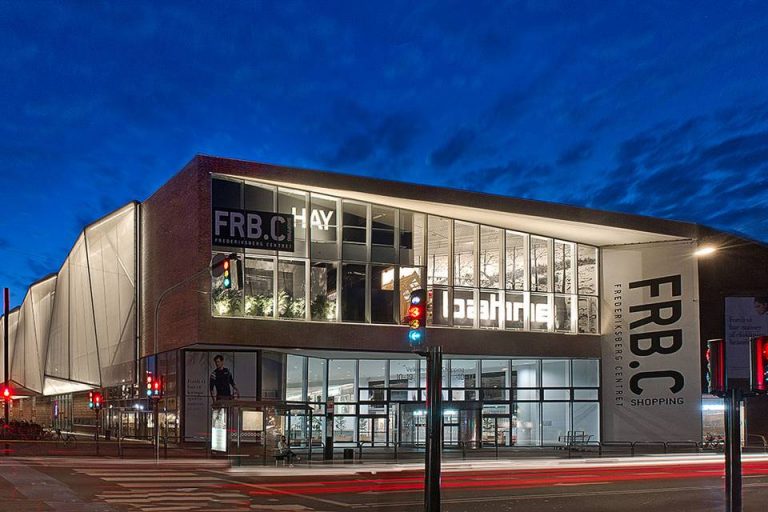
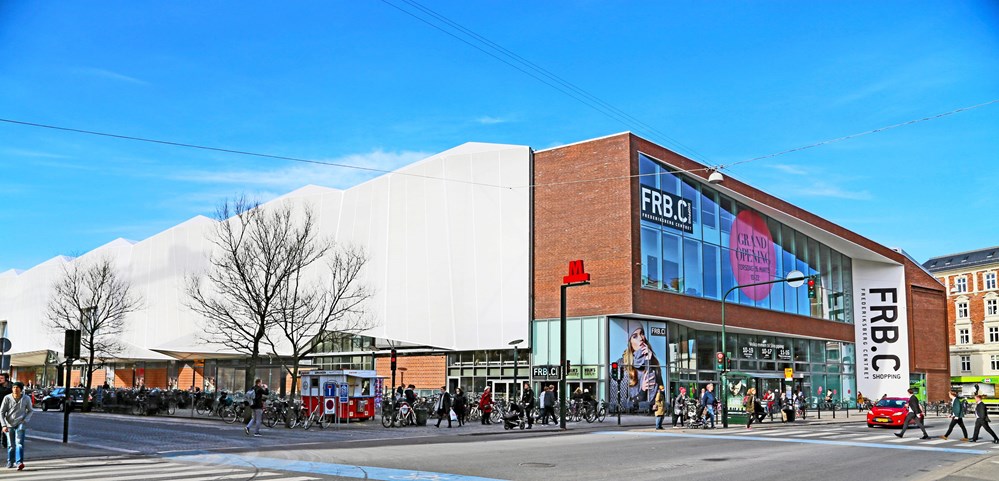
Fredriksberg Centeret, Copenhagen
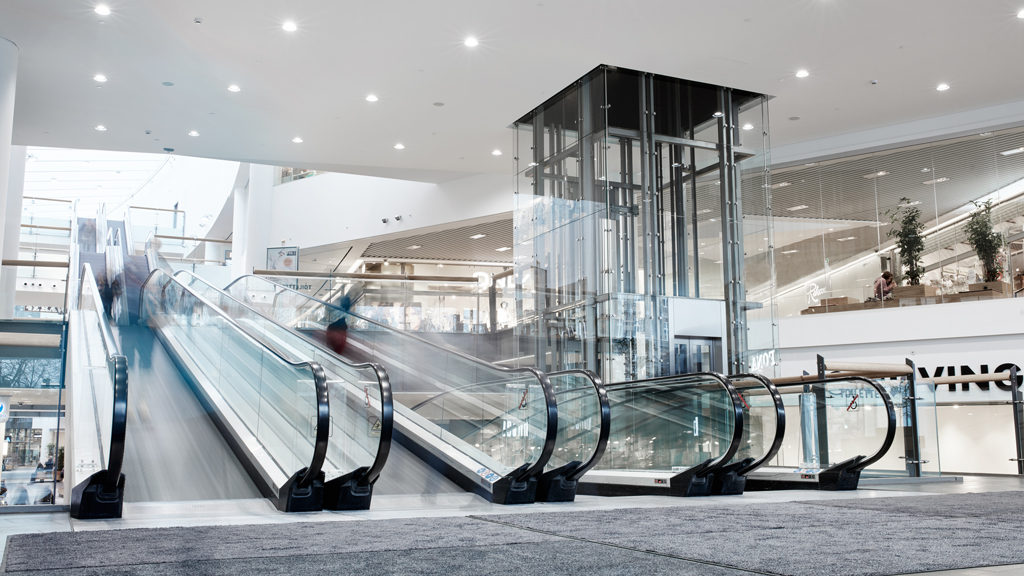
Fredriksberg Centeret was awarded the 2017 Design and Development Award, stating that “Haskoll Fredriksberg’s Scandinavian design combines dynamic shapes and lines, attractive textures, and quality materials to create a warm, comfortable ambience throughout the newly expanded center.”
The shopping center contains a good selection of clothing stores as well as outlets for shoes, bags and accessories
Fredriksberg Centeret is conveniently located next to the Fredriksberg Metro station and just a short walk from Radisson Blu Falconer Hotel and Conference Center. Visitors can combine shopping with a trip to the beautiful nearby Fredriksberg Garden.
Haskoll Fredriksberg’s Scandinavian design combines dynamic shapes and lines
The shopping center contains a good selection of clothing stores as well as outlets for shoes, bags and accessories. There is a large supermarket, three cafes and electronic stores.
One of the World’s Best Shopping Centers – in Copenhagen, written by Tor Kjolberg
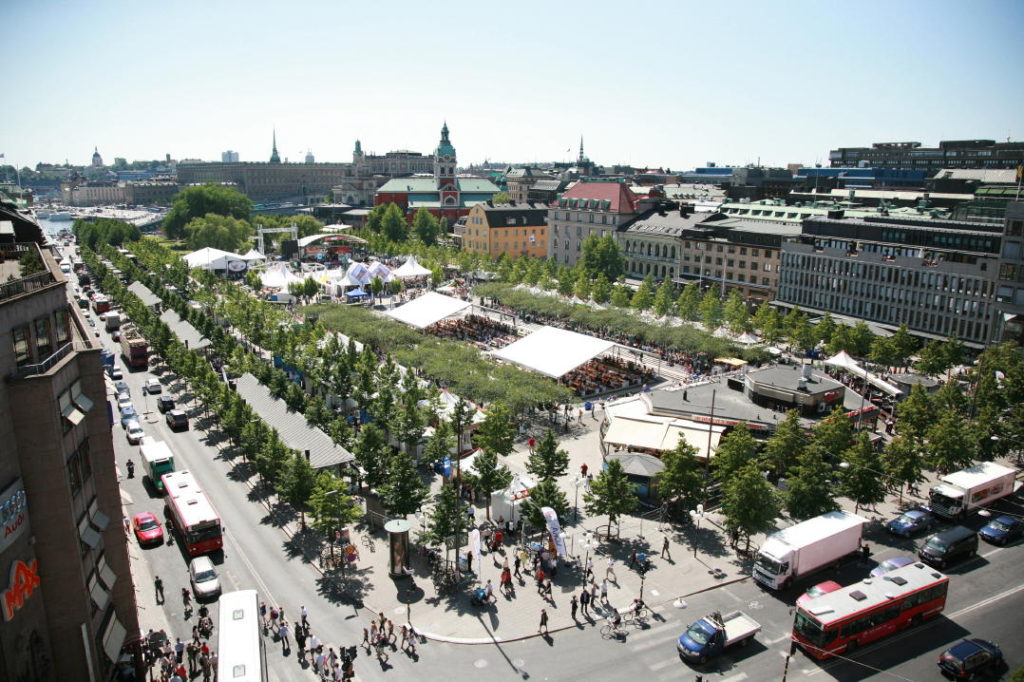
Smaka på Stockholm (A Taste of Stockholm) is Sweden’s biggest and one of the world’s biggest food and drink festivals. Every year more than 350,000 visitors are attracted to this early summer food festival.
Several of Sweden’s best chefs and collaborators provide a range of scrumptious sustenance from a broad spectrum of food traditions and cultures across the huge festival ground at Kungsträdgården in Stockholm.
Visitors with a shared interest in food and drink can visit the festival for free
The offerings are as diverse as the capital itself, and visitors can enjoy Swedish cuisine as well as exotic creations from all over the world.
Visitors with a shared interest in food and drink can visit the festival for free – at least until they decide to taste some of the amazing food and drink being served. During the first week of June Kunsträdgården is transformed into a culinary sensation, presenting some of the best restaurants, food-trucks, bakers and local producers in Sweden.
A taste of Stockholm poster
The organizer expect to sell 200,000 portions of food, 100,000 pints of beers and 65,000 glasses of wine at the event, and there will be cooking contests, drink and food tastings as well as several free concerts from jazz to rock, performed by many well-known artists.
Stockholm culinary festival
Over the festival’s five-day run you can experience “chef duels’ and happy Swedes celebrating the beginning of summer. Initially, the festival was called Restaurangernas Dag (‘the Day of the Restaurants’), but in 2004 it changed the name to Smaka på Stockholm (A Taste of Stockholm).
This self-proclaimed ‘festival for all’ emphasizes on diversity for all ages, genders and backgrounds, and expect environmental awareness to play a big role. “We, and all participating companies recycle as much as we can,” says the organizer.
Chef duel at the festival
When: June 1 – 6
Opening hours: 1 – 5 June 11 am-11 pm, 6 June 11 am-10 pm.
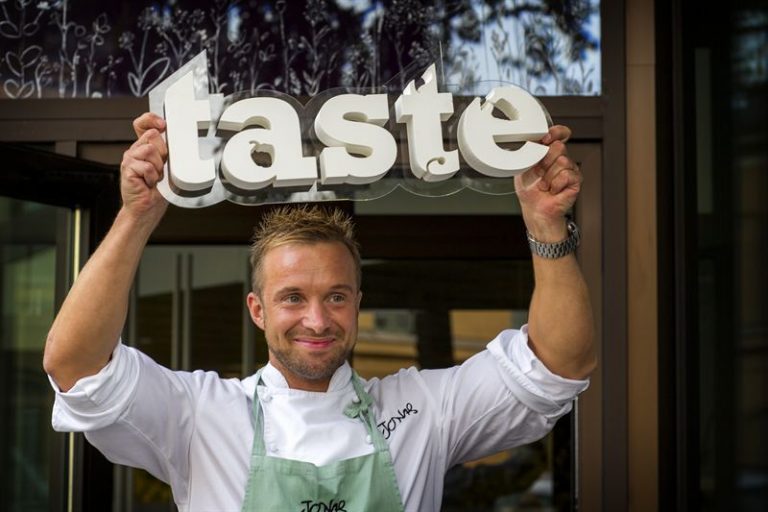
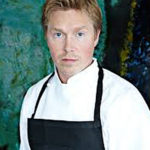
Feature image (on top): Top Chef Jonas Lundgren, 2009 Bocuse D’or silver medalist
OAD (Opinionated About Dining) is the only dining survey that factors experience into its rating system. Its 2016 results are based on over 160,000 reviews contributed by more than 4,500 people who registered for the survey. Scandinavian restaurants are well represented. OAD was established by Steve Plotnicki as a dining blog. Steve is a strong proponent of dining as a hobby. As a way of promoting the hobby, Steve moderates a discussion forum group which also goes by the name Opinionated About Dining.
Steve lives in Manhattan with his wife and twin teenage sons. He has a day job in the entertainment industry with offices in New York and London. More importantly, he gets hungry every day.
Here are the Scandinavian restaurants featured in his 2016 list:
Magnus Nilsson
Fäviken magasinet (Järpen, Sweden) (4) Magnus Nilsson’s restaurant is set in the midst of the woods in central Sweden (the closest town is 30 minutes away by car). The combination of hard-core naturalism and science defines the cooking of this era. When you finally arrive, you feel you have journeyed into the past.
René Redzepi
Noma(Copenhagen, Denmark) (5) René Redzepi created the culinary narrative that came to be known as the New Nordic cuisine. It created such a sensation that it is now being copied in restaurants all over the globe.
Daniel Berlin
Daniel Berlin (Tranås, Skåne, Sweden) (12) Located in an area people refer to as “the Tuscany of Sweden”, this restauranmt is one of Sweden’s most inventive young chefs. His cooking is referred to as “poetic and lyrical”.
Björn Frantzen
Restaurant Frantzén (Stockholm, Sweden) (16)
Björn Frantzén’s restaurant breaks with the minimalist tradition one associates with the NewNordic cooking. One reviewer described it as “really top-quality produce and delicious creative dishes: a must go for any food-loving individual traveling in Scandinavia,” while another lauded the “casual elegance” of the place, claiming it was “one of my top three meals of the year.”
Nikolai Nørregaard
Kadeau Bornholm (Aakirkeby, Denmark) (23) The reason to make the arduous trek to this island 240 kilometers north of Poland is twofold: the unusual and amazing ingredients that are raised on the island, and the talented team of Nikolai Nørregaard and Rasmus and Magnus Kofoed. More than one reviewer described the experience as “the best dinner of the year.”
Espen Holmboe Bang
Maaemo (Oslo, Norway) (24) Espen Holmboe Bang is utilizing “the right blend of modernism and classicism,” and the result is “a more refined version of Scandinavian cuisine”. Sommelier Pontus Dahlstrøm’s cellar is filled with tasty examples of classic French bottlings.
Rasmus Kofoed
Geranium (Copenhagen, Denmark) 26) Bocuse D’Or winner Rasmus Kofoed’s restaurant Geranium should be a mandatory stop on any trip to the city.
Claus Meyer
Studio (Copenhagen, Denmark) (40) The Standard in Copenhagen is a combination of jazz club, brasserie and a fine-dining restaurant that Claus Meyer named Studio.
Christian Puglisi
Relæ (Copenhagen, Denmark) (41) Do not be fooled by the casual appearance of Christian Puglisi’s restaurant. Some of the most refined cooking in Copenhagen is happening here. Reviewers speak of “modern cooking techniques that are respectful of nature” and “Nordic cooking at its simplest and grandest.”
Magnus Ek
Oaxen (Stockholm, Sweden) (50) Swedish chef Magnus Ek got the King of Denmark to give him permission to plant a garden on the Djurgården, where he raises as much of the produce he uses as possible. And Ek is a real patriot. Everything from the tables to the porcelain to the knives used in the restaurant were fabricated in the shipyard a few hundred meters from the restaurant.
Kadeau (Copenhagen, Denmark) (70) Nicolai Nørregaard, Rasmus Kofoed and Magnus Hoegh Kofoed has firmly established itself among the top tier of the second generation of New Nordic restaurants.
Jacob Holmström and Anton Bjuhr
Gastrologik (Stockholm, Sweden) (83) This attractive dining room features the cooking of Jacob Holmström and pastry chef Anton Bjuhr. This is one of the few fine-dining restaurants where dairy products play an important role in the cuisine.
Niklas Ekstedt
Ekstedt (Stockholm, Sweden) (94) Niklas Ekstedt does an amazing job cooking everything over a wood fire.
Paul Cunningham
Henne Kirkeby Kro (Henne, Denmark) (95) British-born Paul Cunningham gave up the big city life and moved from Copenhagen to this idyllic location on the west coast of Denmark.
Mathias Dahlgren
Mathias Dahlgren (Stockholm, Sweden) (97) Located in Grand Hotel, Stockholm, Mathias Dahlgren’s restaurant is famous for its interpretation of the “New Nordic Cuisine”.
Sayan Isaksson
Esperanto (Stockholm, Sweden) (103) Sayan Isaksson’s restaurant is on the short list of Scandinavian restaurants that people should pay attention to.
Falsled kro (Milinge, Denmark) (144) A two-hour drive from Copenhagen, this lovely inn offers diners a break from the hustle-bustle of Denmark’s largest city. While the “top-quality food,” “superb wine list” and “spotless service” may be enough to prompt you to visit the restaurant, when you add the beautiful hotel and amazing gardens to the mix, the place is almost irresistible.
Matt Orlando
Amass (Copenhagen, Denmark) (165) California-born Matt Orlando did a two-and-a-half-year stint as Noma restaurant’s executive chef before opening Amass in 2013. Orlando’s menu offers a more international take on Nordic cuisine.
Søren Selin
AOC (Copenhagen, Denmark) (171) Despite losing the chef who put the restaurant on the map (Ronny Emborg), AOC manages to quietly soldier on, attracting positive responses from the list’s reviewers along the way. Emborg’s shoes were filled by Søren Selin, who after a slow start, has managed to raise the profile of the restaurant to where it was before the change in chefs.
Rasmus Munk
Alchemist (Copenhagen, Denmark) (178) Rasmus Munk is the name of the brave young man behind this restaurant, and if you can secure a seat at the 13-person counter where he serves dinner four nights a week, he will bombard you with a menu of culinary and liquid delights that totals over 40 courses.
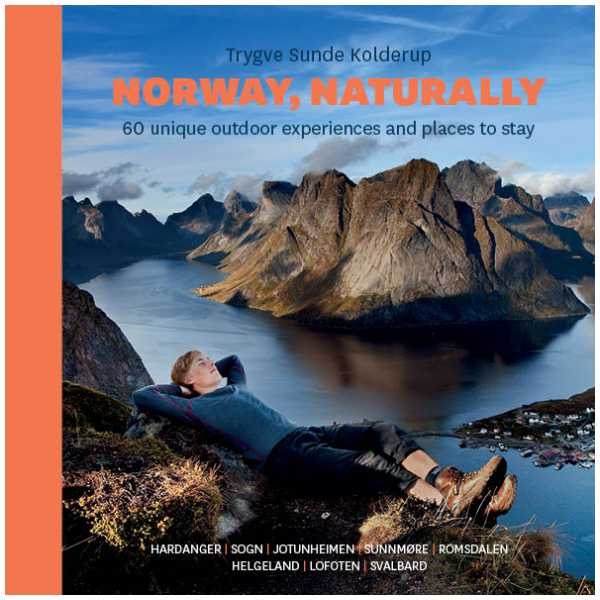
Author Trygve Sunde Kolderup has produced an excellent guide to 60 unique Norwegian outdoor experiences and places to stay. Kolderup is manager of Hvitserk, a company that organizes expeditions and adventure tours all over the world, so he knows what’s all about.
This book describes 60 unique outdoor experiences and places to stay, ranging from the far south to the Arctic regions. Chosen because the author wants foreigners as well as natives to experience the wonderful and diverse scenery Norway has to offer. What makes Norway special for travelers is the variety of outdoor experiences that you’ll find in this book – and in real life.
Norway, Naturally book cover
Most trips described in the users’ guide are accessible by public transport, and the 180 pages contain eight chapters, each guiding you to very diverse outdoor areas and unique accommodation. The areas described are Hardanger, Sogn, Jotunheimen, Sunnmøre, Romsdalen, Helgeland, Lofiten and Svalbard.
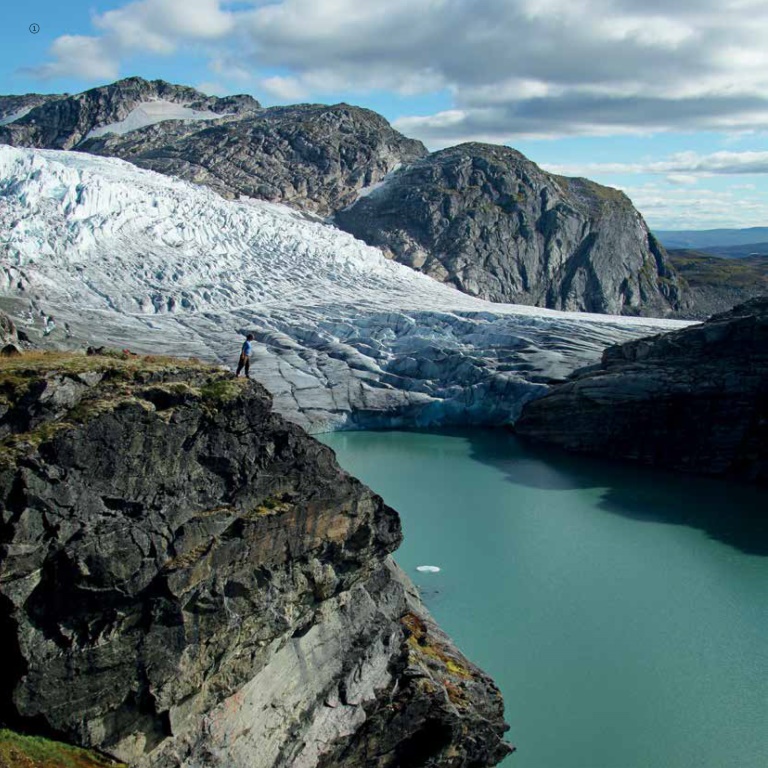
On the way from Finse to Demmevasshytta, it is a a demanding trip, where the final strech to the no-service cabin goes across the Rembesdalskåret glacier
Many of the areas are close to one another, making it easy to connect different routes for a fortnight’s holiday, or as stated in the introduction: “These areas are so close to each other that you can live in one area and hike in the other.” This guide contains maps for planning purposes and fact panels provide information on level of difficulty, length, base etc.
Villa Norangdal lies right by Kvitegga (1691m) and Blæja (1420m) at the eastern end of Norangsdalen
If you visit some of the gems Trygve Sunde Kolderup has written about, you’ll probably discover other treasures as well.
“Don’t be surprised if you feel the urge to change your holiday plans after reading Norway, naturally!” wrote outdoor journalist Iver Gjelstenli.
Garfish (belone belone) come to the Scandinavian shores in May, and are a very popular angling fish as they put up a good fight. They are one of the few true seasonal treats, in their short spring season, and again in August, when they return to deeper waters.
They’re the favorite fish for many Scandinavians; the flesh is very loose when raw, but becomes meaty and delicious when fried.
Garfish
Appearance and taste Garfish are wondrous creatures. When their long and slender bodies, which dart through the waters like liquid silver, they are hard to mistake for any other fish. The long beak is full of razor-sharp teeth and the bones are eerily green, which has led to much superstition about the garfish’s eating habits, but they are quite harmless.
Garfish bones
Garfish usually reach about one meter in length yet weight less than 1kg. Their meat tastes more like veal than fish.
North Sea, Skagerak and Kattegat
Buying and storing Garfish are best when they are boned, when the meat cam be cut into squares and is easy to handle. But you must ask the fishmonger to do it, as it’s rather difficult to do it yourself. The alternative is to cut them into chunks and fry them on the bone, like an eel. Un Denmark there are special boning machines for garfish, but these probably don’t exist anywhere else. One garfish should feed two people.
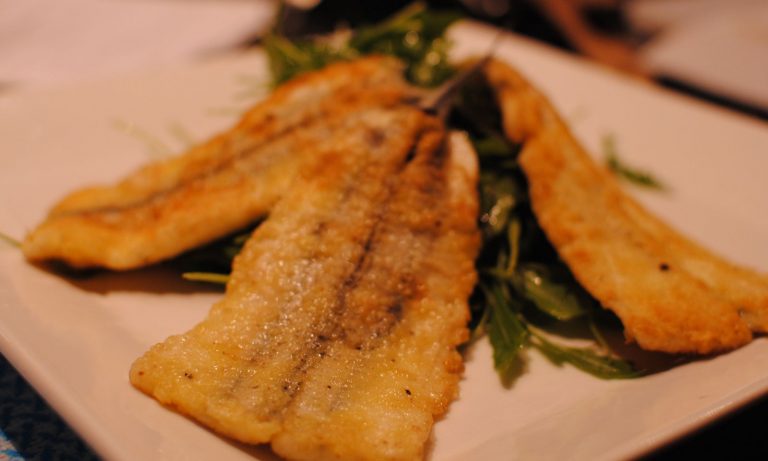
Fried garfish
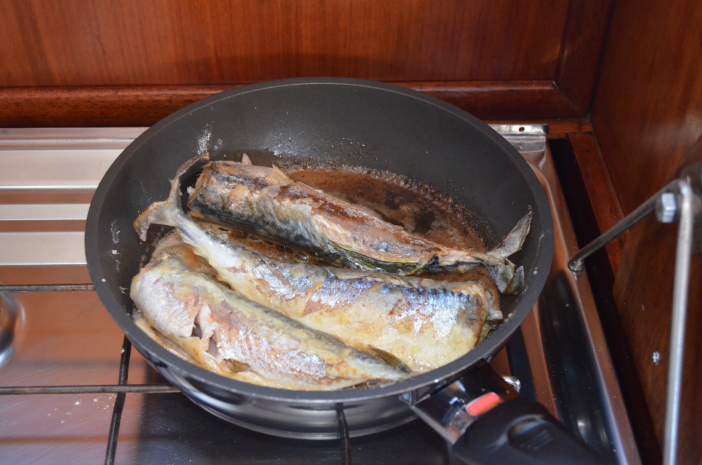
Culinary uses Garfish come into their own when dusted with fine rye flour and fried in butter until crispy, which takes just a matter of a few minutes. Eat with new potatoes, cucumber and dill salad, and gooseberry compote with elderflowers. They are very good when barbecued. Garfish can also be soused like herrings, and this is a clever thing to do with leftover fried garfish.
Alcohol is expensive in Scandinavia and the sale of strong beer, wine and spirits in Sweden and Norway is restricted to state alcohol shops (Systembolaget in Sweden and Vinmonopolet in Norway) and licensed bars and restaurants. In contrast, alcohol flows freely in Denmark.
No Scandinavian herring dish is complete without aquavit, literally “water of life”. Distilled from potatoes or grain and flavored with herbs and seasonings (caraway seed, cumin, fennel, dill or St. John wort), ice-cold aquavit warms body and soil. One of the best is Norway’s Løiten Linje: part of its maturation involves a sea voyage across the equator and back. Connoisseurs claim it should be drunk at room temperature.
Scandinavian aquavit
In line with the growing local-food movement, microbreweries have mushroomed all over Scandinavia. At Christmas, out comes gløgg – hot spicy mulled wine, served with gingerbread, cinnamon buns, Danish æbleskiver (puff pancakes) or rice pudding.
Vinmonopolet (Norway)
To gain instant friends in Scandinavia, lift your drink and say the word for cheers: skål (pronounced “skoal”). The correct way to skål us to look at the person, say the word, lift the glass slightly, drink and look at the person again.
Swedish actor Max von Südow demonstrates the stylish skoal
At formal occasions, strict rules of etiquette govern the “skål”-ing: for example, never drink until your host has given a welcome toast.