Earlier this year officials in Aarhus, Denmark’s second city, declared a war on the local seagulls’ aggressive actions. The city appears to have lost its battle.
The gulls’ aggressive actions, which have become unbearable in recent years, forced the authorities to take action. 16 hunters were given permission to hunt them with powerful air guns from 15 April before the mating season begins.
Residents had complained at “horrific noise 20-21 hours a day, saying they could not even go out onto their balconies.
However, the birds are too smart for the hunters. They disappear when the hunters shoot, and stay away for a long time.
Annie Paaboel
“A very low number of seagulls have been shot,” says city spokeswoman Annie Paabøl to Aarhus Stiftstidende. Chairwoman of Aarhus’s hunting association, Susanne Madsen, confirmed the project had been a flop. “They are smart,” she says, “and at the same time security issues have to be considered when we show up with an air rifle. That means there are a lot of places where we can’t shoot.”
Danish Battle with Seagulls, source: The Local
The continued influence of expert Norwegian designers like the ones described in this overview can still be seen today in many ways. Norwegian furniture design has survived and thrived these many years and has been highly popular with its sophisticated and yet practical pieces. Let’s have a look at famous Norwegian chairs.
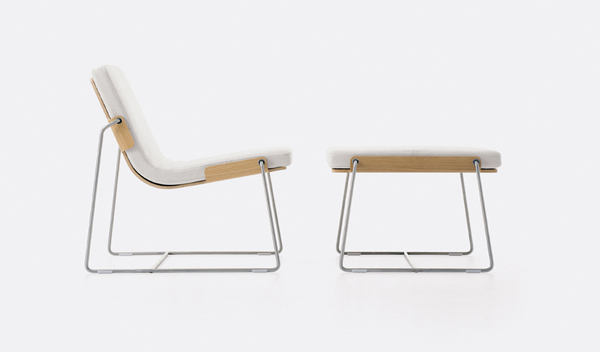
Pancras by Espen Voll and Tore Borgersen
Pancras lounge chair
has been designed in 2001 by Espen Voll and Tore Borgersen from the Norwegian design group Norway Says.
Peel by Olav Eldoy
The Peel Chair
has been designed for posture, comfort and ergonomic reasons by Olav Eldoy, Johan Verde and Ole Petter Wullum.
The back rest shape of the Peel chair has been influenced by the shape of falling orange peel and is to enhance the correct posture contours of the body.
Loop by Johan Verde
The Loop Chair
Designed by Johan Verde, the Loop chair is a design icon and can stand alone as a sculpture or in a loinge setting. Johan Verde is one of the best known industrial designers in Norway.
Loop has an encompassing organic form that invites to various sitting positions. Award for Design Excellence by the Norwegian Design Council in 2002.
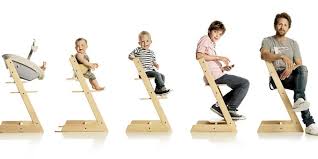
Trip Trap by Peter Opsvik
Tripp Trapp child’s chair
The Tripp Trapp iconic child’s chair, designed by Peter Opsvik, actually grows with your child well into the teenage years, evolving from a high chair to a child’s chair, and finally to an adult sized seat.
Tripp Trapp, manufactured by Stokke of Norway, has been clinically proven to help children maintain proper seating through solid foot support. The results concretely suggest that children seated in the Tripp Trapp Chair show decreased signs of fidgeting, increased stability, and improved levels of table top activity performances.
City chairs by Oivind Iversen
City Chair
The City Chair was designed by Øivind Iversen and manufactured by More Mobler during the 1950s. The chairs were made from teak with chrome bases.
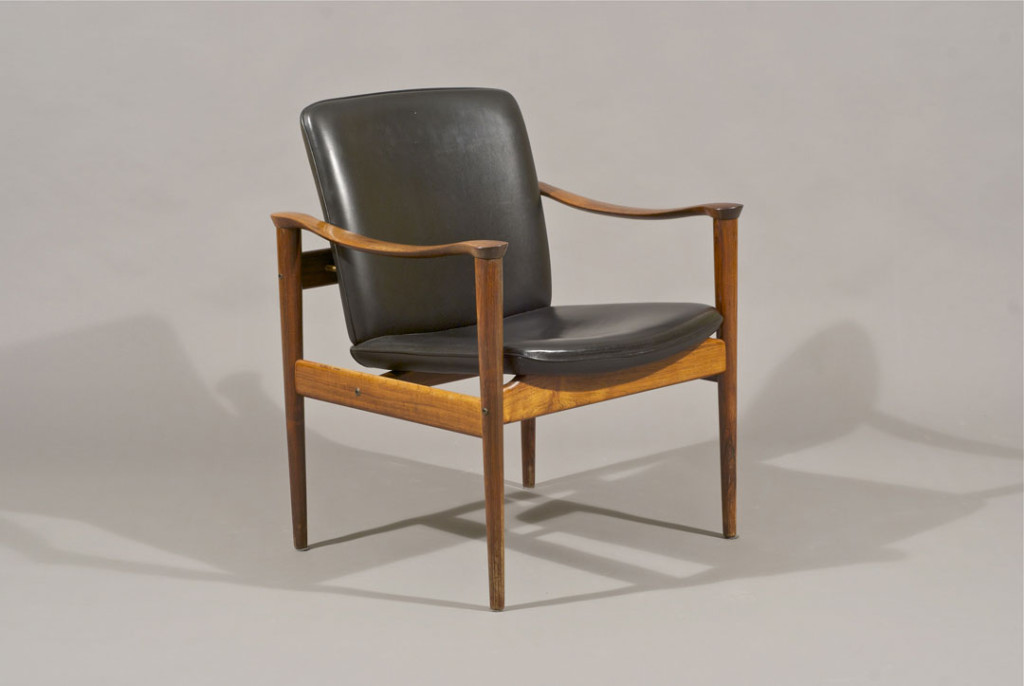
711 by Fredrik A. Kayser
711 Armchair
The model 711 designed in 1960 by Fredrik Kayser features a spacious Mid-Century wooden frame with horned armrests that gently slope up to form comfy and attractive armrests.
The armchair offers slightly reclined seat equipped to go with bottom and back cushions, providing optimal comfort and support.
Fredrik A. Kayser is one of Norway’s most respected designers. He was born in 1924 in Bergen, Norway’s second most populated city.
Designer Sven Ivar Dysthe in his Planet chair
Planet Chair
The Planet chair was designed for Varier by Sven Ivar Dysthe in 1965. It rotates and the new patented mechanism allows you to tilt the seat as well.
This chair is for social occasions. There is also a Planet coffee table.
Dysthe was born in 1931 in Oslo and received a number of international and national design awards. In 2010 he was made Knight of the First Class of the Royal Norwegian Order of St. Olav.
Scandia Senior Chair by Hans Brattrud
Scandia Senior Chair
was designed by Hans Brattrud in 1957 as a student project at the National College of Art & Design in Oslo. The chair was revolutionary both in shape and expression.
By using horizontal ribs, a two dimensional laminated shape was strung up and made three dimensional.
The Scandia chair won immediately recognition and became an obvious eye-catcher at several exhibitions and fairs. In 1967 the chair was awarded gold medal at the International arts and crafts fair in Munich.
Variable Balans Chair by Peter Opsvik
Variable Balans Chair
was designed by Peter Opsvik who is best known for his innovative and ergonomic chairs, like the Variable Balans. His book, Rethinking Sitting, came out in 2009, giving insight into the thinking about sitting and explaining the philosophy behind his chairs.
“This chair does wonders for your back by forcing the body to actively hold itself in position,” wrote one user. “It can’t be slouched in but reminds you to sit up straight.”
Pair of Ekstrem lounge chairs by Terje Ekstrom
Ekstrem Lounge Chair
has a bold, unconventional form that in 1972 pointed the way to the future of design. Ekstrem by Terje Ekstrom gives extreme freedom for the mind – and extreme freedom for the body.
The chair was commercialized in 1984, in a time where new designers tried to break with existing norms within Scandinavian furniture.
The sculptural shape makes this chair a real 80s icon and a true ambassador of post modernistic design.
Copenhagen chair by Lars Tornoe
Copenhagen armchair
was designed by Lars Tornoe as part of his Master’s degree project in 2008, using the Norwegian Ambassador’s residency in Copenhagen as case.
Lars Tornoe qualified at the Bergen National Academy of Arts. He has acquired experience in most aspects of furniture design and has created design icons which are sold all over the world.
Jazz collection by Steinar Hindenes and Dave Vikoren
The Monk Chair
was designed in 1993 by Steinar Hindenes and Dave Vikoren as a part of the Jazz Collection.
The cooperation between Dave Vikoren and Steinar Hindenes in Circus Design has resulted in several international and national design awards.
Siesta chair by Ingmar Relling
Siesta chair and ottoman
was designed by the famed Ingmar Relling in 1965 and won a design award in 1966. The company making it was called Westnofa went out of business and the chair disappeared from the market. Later it resurrected in its current form.
Ingmar Relling was an impassioned designer, who created a series of functional furniture designs during his long career. Today he is considered as one of the greatest contributors to the Scandinavian Design. Ingmar Relling opened his own practice in 1950, and in 1965 he designed his greatest creation: the Siesta chair. The Siesta is a simply harmonious and classical chair, free of unnecessary details, and it became an icebreaker that opened up international markets to Norwegian furniture exports.
Stressless by Ekornes
Stressless by Ekornes
Stressless was introduced in 1971, as the first recliner to meet your body’s need for movement and support when seated.
In 1980 the sales exceeded 100 million NOK (12 million USD).
Since then several new models have been introduced. Stressless is one of the biggest international success stories in modern Norwegian industrial history.
Loop by Johan Verde
Norway has kept up with its stylish yet minimalistic traditions to this day and the styles are celebrated by millions of furniture buffs and regular people like.
Sweden will start its first state-funded Islamic theology training program in Stockholm this autumn. The course organizers hope it will provide more locally-educated imams.
The program is aimed at introducing potential spiritual leaders with a “locally anchored” version of Islam, instead of any radical interpretations they may have adopted abroad.
Kista folk high school, Stockholm
“I welcome it, it’s a step forward,” writes Malmö Imam Salahuddin Barakat, in a comment to the Swedish news agency TT.
Salahuddin Barakat
The course will last for one year and will be provided by adult education center at Kista Folk High School (Kista Folkehögskola), situated north-west of Sweden’s capital.
Abdulkader Habib
“The first year is only an introduction. Over, the next few years, the study program will be broadened and deepened,” Abdulkader Habib, the principal explained to Sveriges Radio.
“The need is great. Today, (foreign) scholars lead most of the mosques in the country, so that there are people who are trained in Sweden is required,” continued Habib.
Salahuddin Barakat claims that there is a great interest in higher education within Islam and to become an Imam. The availability is one reason why he believes it is important to get to a higher Islamic education in Sweden.
The institution has been awarded money from ‘folkbildningsanslaget’, a central government grant that is distributed annually to Sweden’s folk high schools.
The principal believes that by offering Islamic training to young Muslims and immigrants in particular, the high school can help raise clerics who are familiar with Scandinavian values. Such religious training will also fight any radical indoctrination that may take place in some Muslim communities.
According to Salahuddin Barakat It is particularly important for women because of various reasons, often they find it difficult to study Islam abroad.
The question over how Swedish imams should be educated has been debated previously. In 2008 the then education minister Lars Leijonborg made a proposal for state-run courses, arguing that they could serve as a way to counteract fundamentalist groups taking advantage of a lack of locally qualified imams.
Currently there is no possibility for higher denominational theology studies of Islam. Salahuddin Barakat says that scholars in Sweden are not sufficiently proficient in Islamic theology and jurisprudence.
The biggest mosque in Scandinavia, Copenhagen
“There are few relevant initiatives, except the Islamic Academy and Kista high school, that I know of in Scandinavia. None of them are at university level,” writes Salahuddin Barakat.
Imam Khatib school in the Danish city of Slagelse
Mina Hindholm Imam Khatib School in the Danish city of Slagelse opened in spring last year and was the first Islamic Theology boarding school, taking on students aged 18 and up from Denmark, Norway and Sweden.
State-funded Imam Training in Sweden, edited by Tor Kjolberg
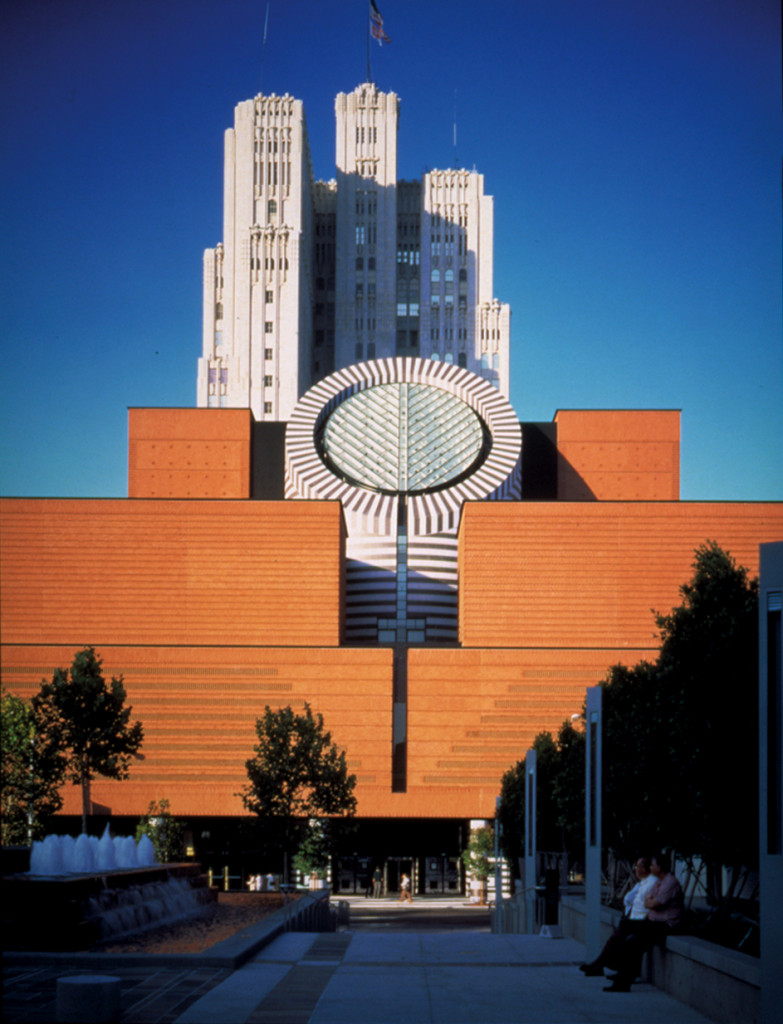
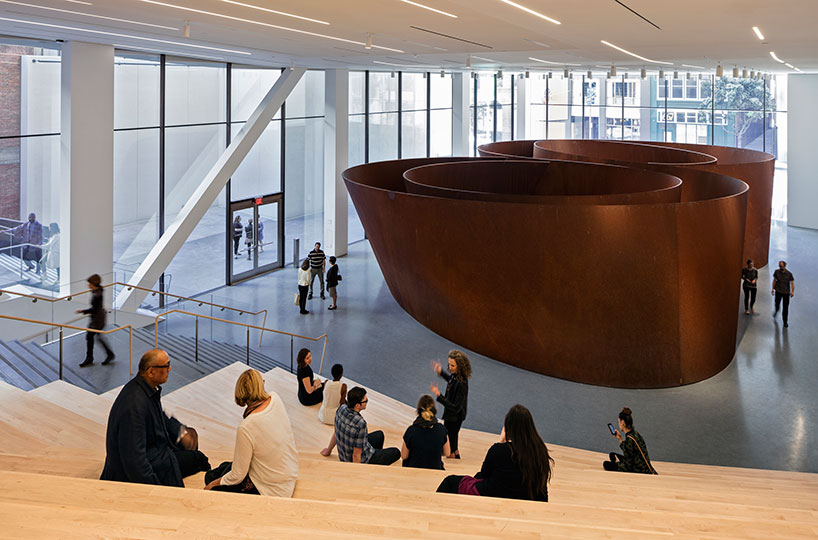
The transformed and expanded San Francisco Museum of Modern Art (SFMOMA) opened to the public on Saturday, May 14, 2016. Purpose-built to showcase the museum’s celebrated collection, the new SFMOMA was designed by the architecture firm Snøhetta, and seamlessly integrates a 10-story expansion with the original Mario Botta-designed building.
With nearly three times more gallery space than before, the museum is opening with 19 special exhibitions, including a curated selection of 260 postwar and contemporary works from the distinguished Doris and Donald Fisher Collection.
The expansion includes 170,000 square feet of new and renovated indoor and outdoor galleries tailored to the collection, enabling SFMOMA to display more of its outstanding holdings of modern and contemporary artworks.
Craig Dykers, founding partner of Snøhetta and leader of the firm’s design team for SFMOMA, explains:
“Our design seeks to create an intimate experience, welcoming a diversity of visitors to the magnificent collection, and fostering a connection between the visitor and museum for years to come. All of the senses will be engaged as part of the experience. Wonderful day lit staircases lead visitors from floor to floor, the galleries create a comfortable viewing experience of the art, and terraces allow for moments of repose, to be reinvigorated by fresh air, sunlight and vistas of the city between galleries. The visitor should sense that the building is inspired by one of the great cities of the world, San Francisco.”
New SFMOMA Transformed by Norwegian Architects, source: DogA
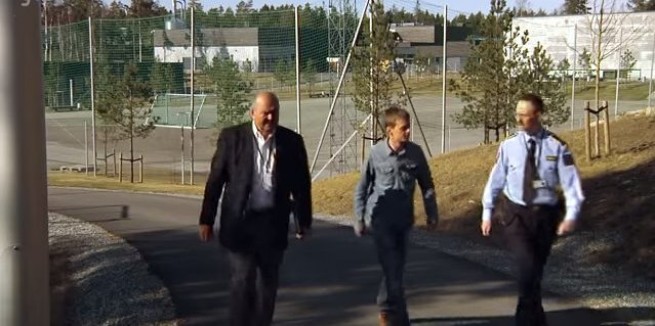
“What is the Scandinavian prison system like?” wondered James Conway, a former correctional officer from the notorious US prison Attica. He was invited by Finnish Broadcasting, YLE, to comment on prison life in Scandinavia.
Conway could not believe what he experienced. The ultra liberal regime in Norway was nothing like what he was used to.
In Norway, fewer than 4,000 of the country’s 5 million people were behind bars as of August 2014. That makes Norway’s incarceration rate just 75 per 100,000 people, compared to 707 people for every 100,000 people in the US.
Both Denmark and Sweden have far lower incarceration and crime rates, prison is about rehabilitation, and it’s proved to work far more effectively.
Nils Oberg
“Why don´t you just give them the keys?” asked Conway as he inspects the top modern music studio complete with electric guitars, mixing console and, as icing on the cake, a Toto poster on the wall when he visited Halden prison in Norway.
James Conway
But when criminals in Scandinavia leave prison, they stay out. Norway has one of the lowest recidivism rates in the world at 20%. The US has one of the highest: 76.6% of prisoners are re-arrested within five years.
“Our role is not to punish. The punishment is the prison sentence: They have been deprived of their freedom. The punishment is that they are with us,” Nils Öberg, director-general of Sweden’s prison and probation service, told theGuardianin 2014.
Where Conway comes from everything in sight might be turned into a lethal weapon, a coat hanger for example. But in Halden there are no plastic spoons. There are tools like hammers, chain saws and axes available for the inmates. Cutlery and sharp knives can be found in the kitchen.
Based on figures, it’s safe to assume Norway’s criminal justice system is doing something right. Few citizens there go to prison, and those who do usually go only once. So how does Scandinavia accomplish this feat? The countries rely on a concept called “restorative justice,” which aims to repair the harm caused by crime rather than punish people.
Sweden’s prison system boasts impressive numbers. In the past decade, the number of Swedish prisoners has dropped from 5,722 to 4,500 out of a population of 9.5 million. The country has closed a number of prisons, and the recidivism rate is around 40%, which is far less than in the U.S. and most European countries.
From Halden prison, Norway
The thing is, in the Scandinavian countries, the inmates will be treated as “normal” as possible in an attempt to make them suitable for life outside prison once they have served their sentence.
Conway’s view, however, is that it’s you who put yourself in prison. Not the staff, not the judge, not society. You’ve only got yourself to blame so you deserve to be treated like a prisoner. Not like a rock star.
From Bastoy prison, Norway
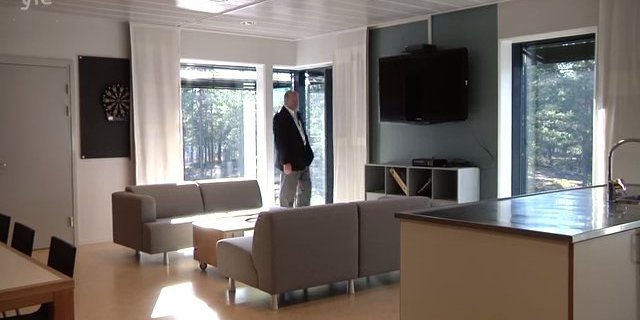
But the 75-acre facility Halden prison in maintains as much “normalcy” as possible. That means no bars on the windows, kitchens fully equipped with sharp objects, and friendships between guards and inmates.
Officials in Scandinavia believe that the way they treat its prisoners is partly responsible for keeping incarceration and recidivism rates so low.
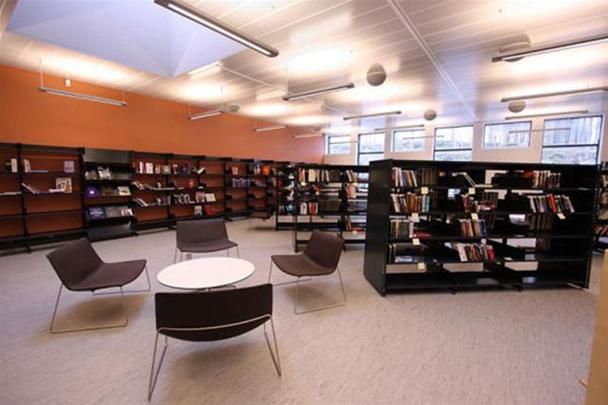
Norwegian prison library
“If you come to prison your right to privacy is gone. The inmate has given up his right to be in society by violating the law. That person shouldn’t be given a situation where we’re concerned about how they would feel if somebody walks by their cell and sees them on the toilet. Who cares how they feel?” Conway says.
Silverware Halden prison
At Bastoy prison in Norway governor Arne Wilson, who is also a clinical psychologist, explained to the British paper The Guardian:
“In closed prisons we keep them locked up for some years and then let them back out, not having had any real responsibility for working or cooking. In the law, being sent to prison is nothing to do with putting you in a terrible prison to make you suffer. The punishment is that you lose your freedom. If we treat people like animals when they are in prison, they are likely to behave like animals. Here we pay attention to you as human beings.”
“It has to do with whether you decide to use prison as your first option or as a last resort, and what you want your probation system to achieve,” he told the Guardian. “Some people have to be incarcerated, but it has to be a goal to get them back out into society in better shape than they were when they came in.”
In an insightful article intheAtlantic, Doran Larson explains how his research on prisons revealed that Nordic countries’ rehabilitative ethos produces tangible results for those countries. Even in the high-security prisons he visited in Sweden, Denmark, Norway and Finland, he observed some remarkable things:
“Common areas included table tennis, pool tables, steel darts and aquariums. Prisoner art ornamented walls painted in mild greens and browns and blues. But the most profound difference is that correctional officers fill both rehabilitative and security roles. Each prisoner has a “contact officer” who monitors and helps advance progress toward return to the world outside — a practice introduced to help officers avoid the damage experienced by performing purely punitive functions.”
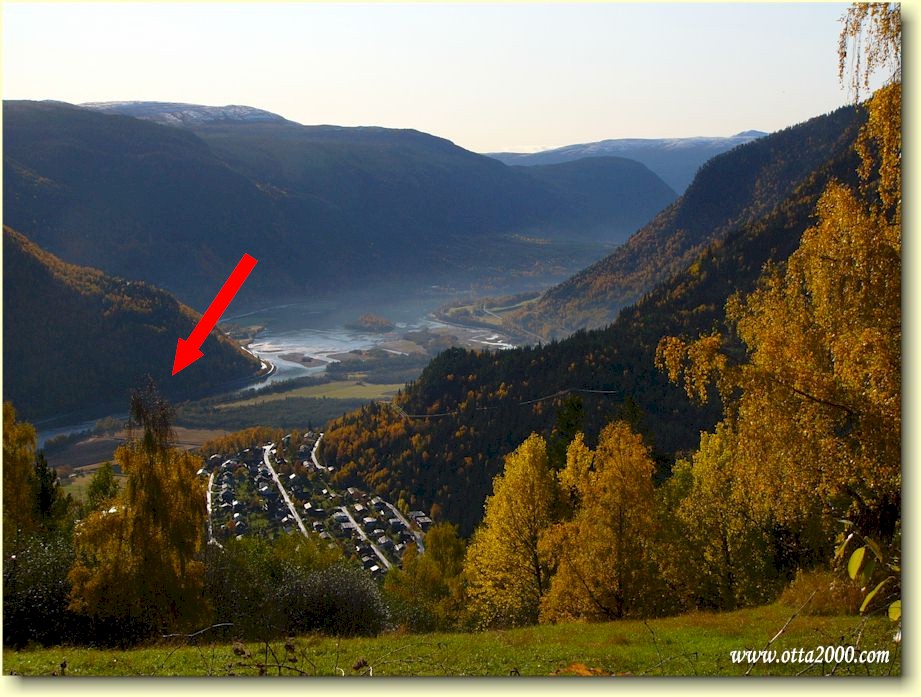
The counties of Hedmark and Oppland have often been at the center of events in Norwegian history. But also people who live there are important – to some extent the inhabitants might be characterized as a bit of a stubborn!
Let’s for instance look at a figure like Dale-Gudbrand from Hundtorp (also called Gudbrand Herse). He was the real ruler of Gudbrandsdalen (Gudbrand Valley) in the 1000’s, and fought long and fiercely against King Olav’s attempts to christen the country.
Dale Gudbrand
However, he was only herse in title. Sigvald, the skald, has written the following verse, comparing Dale-Gudbrand with Erling Skjaldson:
“I know but one who can compare
With Erling for broad lands and gear
— Gudbrand is he, whose wide domains
Are most like where some small king reigns.
These two great bondes, I would say,
Equal each other every way.
He lies who says that he can find
One by the other left behind.”
Nearly 400 years later, during the Kalmar War, we find the roots of the legend of the heroes of the Battle of Kringen. When the rest of the Norwegian army deserted and went home from the war, some farmers from Gudbrandsdalen fought against the Scottish army. This has over the years become a hero story in verse and prose about the Scottish captain Sinclair who met his death between Norwegian cliffs, and about Norwegian farmers and not least Pillar-Guri who blew the horn when the farmers attacked.
Battle of Kringen: Hjellim Bredebygden seen from Kleiverudaasen
Sweden and Denmark-Norway were actively engaged in the Kalmar War. Nearly three hundred conscripts from Gudbrandsdalen had been massacred at Nya Lödöse by the Swedes. In July the Mönnichhoven’s march (Mönnichhoven-marsjen) across Norway through Stjørdalen had ravaged the area. Hence a peasant militia force of around 500 decided to ambush the Scots at Kringen (the narrowest part of the valley). The terrain chosen by the Norwegians made ambush very effective.
Dale farm, Hundorp
The Scottish force was soundly beaten in a manner that took the character of a massacre. The fact that about half the Scots were executed by the Norwegian peasants the day after the battle took place can be a reason why the tradition tries to “smooth over” the grim events. A reason for this reaction may have been rumors of the looting and harrowing done by the Scottish mercenaries during their trip from Romsdalen. Another reason is that the municipalities in the area did not have any capacity to harbour prisoners of war, and the fear of more looting from escaped mercenaries can have given the farmers just reason to kill the soldiers on the spot. 14 Scotsmen were sent to trial in Denmark.
Pillar-Guri
The story of Pillarguri has been popularized in poems and songs, including a traditional song from the area. Pillarguri first appears in written form in Sagn, samlede i Gudbrandsdalen om Slaget ved Kringen, 26de August 1612 written during 1838 by Hans Peter Schnitler Krag, the minister in Vågå. Pillarguri became more commonly known in the 1880s from a novel by the popular Norwegian author Rudolf Muus. Pillarguri appeared as well in poetry by Edvard Storm, Henrik Wergeland, and Gerhard Schöning.
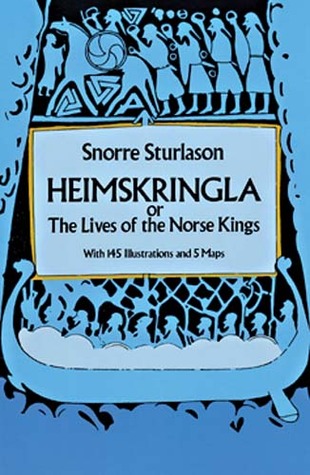
Heimskringla, book cover
A statue depicting Pillarguri is located in the community of Otta. The Pillarguri prize is awarded in conjunction with the annual Pillarguri Festival at Otta. She was also reproduced on a memorial erected in 1912 in connection with the 300-year anniversary of the battle. Pillarguri is also depicted on the municipal coat of arms of Sel in Oppland county.
Stubborn Norwegians, written by Tor Kjolberg, with historical facts from Wikipedia
Feature image: The death of Erling Skjalgsson. Drawing by Peter Nicolai Arbo
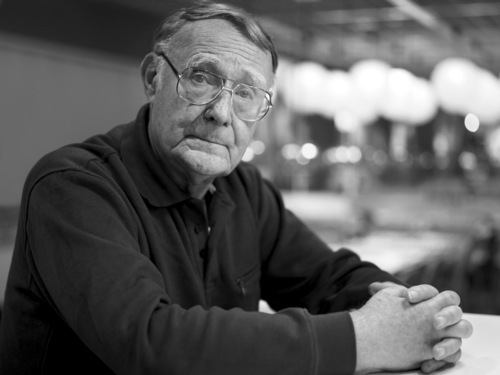
Europe’s richest person, IKEA founder Ingvar Kamprad, 87, returns to Sweden from Switzerland where he’s been living for almost four decades.
According to the Bloomberg Billionaires Index Kamprad is the world’s fourth wealthiest person. He fled his homeland because of high tax rates.
During the 1980s, Kamprad introduced an intricate ownership structure of foundations as well as other legal entities in order to protect the IKEA brand and ensure its long-term future. Because he still controls this structure, Bloomberg credits him with the full value of IKEA and its operations when calculating his worth net.
Kamprad, however, claims that the total IKEA value should not be classed as his as he separated the retailer into two parts over three decades ago.
Inside an IKEA warehouse
Ikea has grown despite austerity in Europe, and now Kamprad’s three sons must take up the challenge of spreading in markets like China and India and making further inroads online.
Kamprad’s decision to return to Sweden comes after several moves within the world’s biggest furniture retailer to prepare for a handover of power to the next generation. The Kamprad family still controls the complex corporate structure that makes up the Ikea empire and Kamprad himself has kept a tight grip behind the scenes.
From the 2015 IKEA catalogue
Kamprad says he will settle down on a farm outside the town of Alhult in southern Sweden where he founded IKEA in 1943 and made the Swedish “flat-pack” furniture a global success. IKEA is an acronym “I” for Ingvar, “K” for Kamprad, “E” for the family farm Elmtaryd and “A” for the village of Agunnaryd.
Kamprad has now decided that the time is right for him to return home. “Moving back to Sweden gets me closer to my family and my old friends,” he told Swedish media. “After my dear wife Margareta died about a year and a half ago, there is less that keeps me in Switzerland.”
IKEA catalogue 2015
For the last decades Kamprad has been a mythical creature around IKEA. Just think about the naming of the products. It’s said that Kamprad, who says he is partly dyslexic, christened the products himself – beds after places in Norway, fabric and curtains after Scandinavian girls’ names, plants or flowers, and bookcases after Scandinavian boys’ names or certain professions. The reason being, that it was easier to keep track of names than numbers. “He loves to tell that story,” says Juni Wannberg, who is a guide in the Ikea Museum in Almhult.
The running narrative on Kamprad is that he is the bastion of frugality—reusing tea bags, flying economy, and driving an old Volvo—a trait that also permeates Ikea.
IKEA Through the Ages The exhibition of 800 m2 shows 20 different room settings with IKEA furniture and objects from the 1940’s until today. The exhibition is located in the basement of IKEA Tillsammans, the company’s culture center, adjacent to IKEA Värdshus.
When the old IKEA Älmhult store was replaced in November 2012 by a new store, it left a building rich with history at the heart of the IKEA world – the perfect home for the new IKEA Museum. This first and only IKEA Museum will be “a house of stories”; stories about people, challenges, opportunities, design, homes and home furnishing. The new IKEA museum will open 30 June this year. The ambition of the museum is to engage all visitors and encourage them to take an active part in the IKEA story.
“Ingvar Kamprad has devoted his adult life to Ikea and its democratic ideals,” the company says.
IKEA Founder Returns to Sweden, edited by Tor Kjolberg
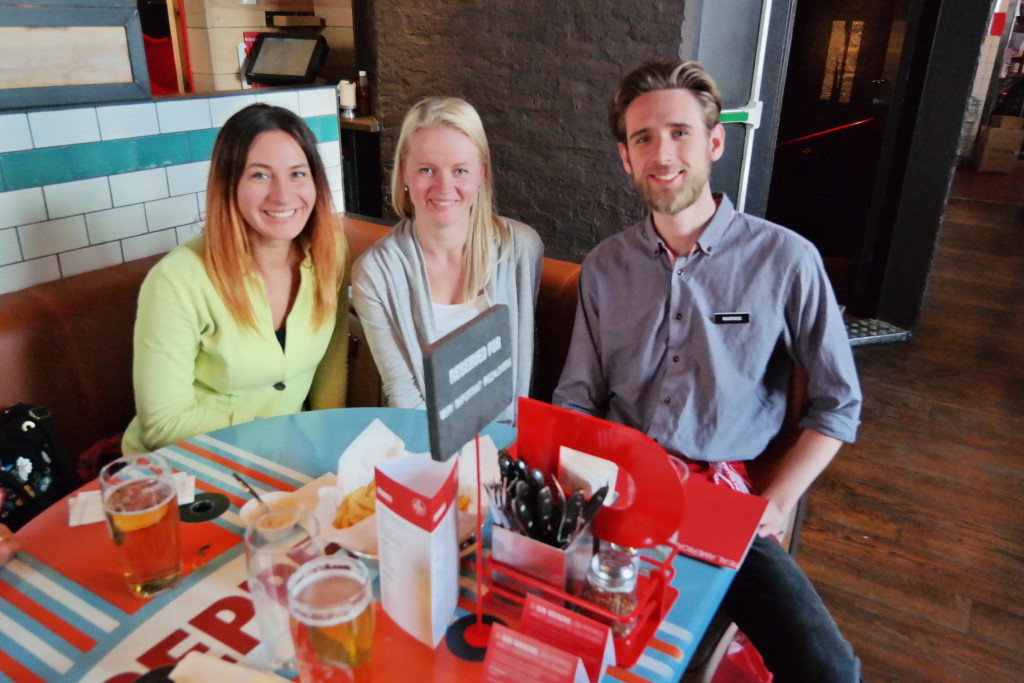
Two Estonian women, while working at a Norwegian company in Tallin, heard such great praise from their employer about Peppe’s Pizza in Norway , particularly about one item on the menu, the “Moby Dick”, that they decided to fly to Oslo – solely in order to sample this vaunted pizza.
The two women had followed all the customer complaints on Facebook regarding the removal of Moby Dick from Peppe’s menu and its subsequent reinstatement which brought on the decision to travel to Norway and taste it for themselves.
Kirke Hellamaa (left) and Helena Tammik (right), editor Tor Kjolberg in the middle
Last week Helena Tammik and Kirke Hellamaa visited Peppes Pizza on Oslo’s main street, Karl Johans gate. They smiled broadly when they finally were served their Moby Dick pizza with its curry and garlic marinated shrimps, leeks and fresh peppers topped with lime wedges. For more than a year customers had protested and struggled to get Moby Dick back on the menu, and now the two Estonian ladies finally were able to confirm that they fully understood why customers wanted it there again
“It is fantastic good and responds fully to our expectations,” said the two simultaneously. “We had a look at the dessert menu too, but now we are so filled up that we actually cannot have more food for a long while”.
Peppe’s Pizza is a Norwegian pizza franchise, established in 1970 by two Americans, Louis Jordan and his wife Anne from Hartford, Connecticut. Peppe’s, serving American and Italian style pizza, is the largest pizza chain in Scandinavia today and is part of the Umoe Catering Company.
Helena Tammik and Kirke Hellamaa were efficiently served by Markus
Peppe’s Pizza was one of the first restaurants to bring foreign foods to Norway, serving more than 9 million pizzas a year.
The best selling fiction book The Seducer by Norwegian author Jan Kjærstad documents an actual history of the pizza chain.
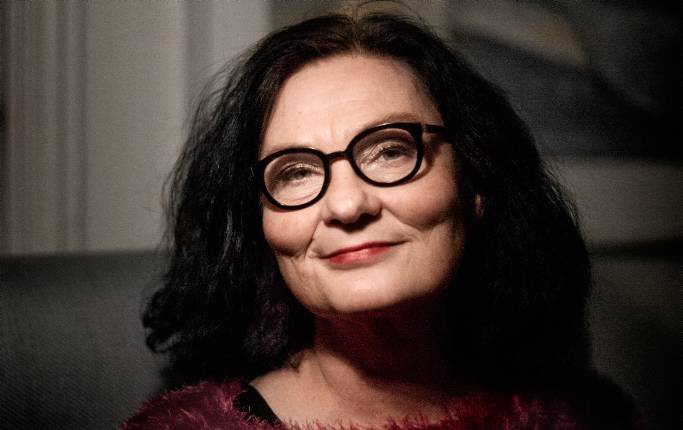
The Swedish feminist Ebba Witt-Brattström’s book Century Love War has by some been interpreted as a war against her ex-husband.
Witt-Brattström, however, claims that her war is not private but an intellectual war against what she calls the cultural man. At the same time it is a campaign for literary women.
“I consider all our choices in life as political,” she says. “I want women to stop being ashamed of themselves.”
The dialogue In her book Century Love War lets you hear the last, pounding heartbeats of a couple’s shared existence, a man and a woman who has lived together half a life. What was once great love has turned into a drawn out struggle.
“He said: If you desert me you will have only life-long hate ahead of you.
She said: I think either you or I must die.”
Ebba Witt-Brattström is an award-winning author and scholar in comparative literature. She is currently Professor of Nordic Literature at Helsinki University.
Last year Witt-Brattström was in dispute with the Norwegian author and cultural man Karl Ove Knausgard.
Witt-Brattström wondered in a confrontational way why literary men, such as him, can get away with being a male-chauvinistic pig who romanticize sexual fantasies about under-aged women.
Knausgaard evidently read her comment and promptly brought his counter-attack: “I’ve lived here so long that I’ve occasionally wondered whether the cyclops are right, and I’m wrong. Yes, that I actually am a literary pedophile, a latent homosexual Nazi mass murderer.”
Somewhat surprisingly he did not aim at Witt-Brattström. Maybe he considered her too small a target since his anger was on the Swedish people, the entire population, attacking them for their complete inability to deal with ambiguity.
Ove Knausgaard
“The book in which I described a grown man’s love for a 13-year-old girl is a novel about an assault, but also a book a book about regression and infantilism,” Knausgaard writes. “The infantile exists all around us. We live in a culture that worships youth, worships the simple and worships the childish.” A novel, on Knausgaard’s account, is the opposite: “It seeks complexity, it seeks ambiguity, it seeks truth in places other than where it formulated in slogans, or where it is framed, hard and unrelenting, rigid and unchangeable.”
Now Witt-Brattstström has written a chocking book about verbal and violent abuse in a relationship closely modeled on her own failed marriage to Horace Engdahl, a literary historian and critic, being a member of the Swedish Academy since 1997. Century Love War is Ebba Witt-Brattström’s literary debut and is influenced by Märta Tikkanen’s classic novel The Love Story of the Century from 1978.
Straight from her education at Oslo National Academy of the Arts, Jeanette Lafontine (b. 1981) had a six months Residency Unlimited stay in New York City. Her first solo exhibition in the metropolis attracted attention, and several of her paintings sold right away.
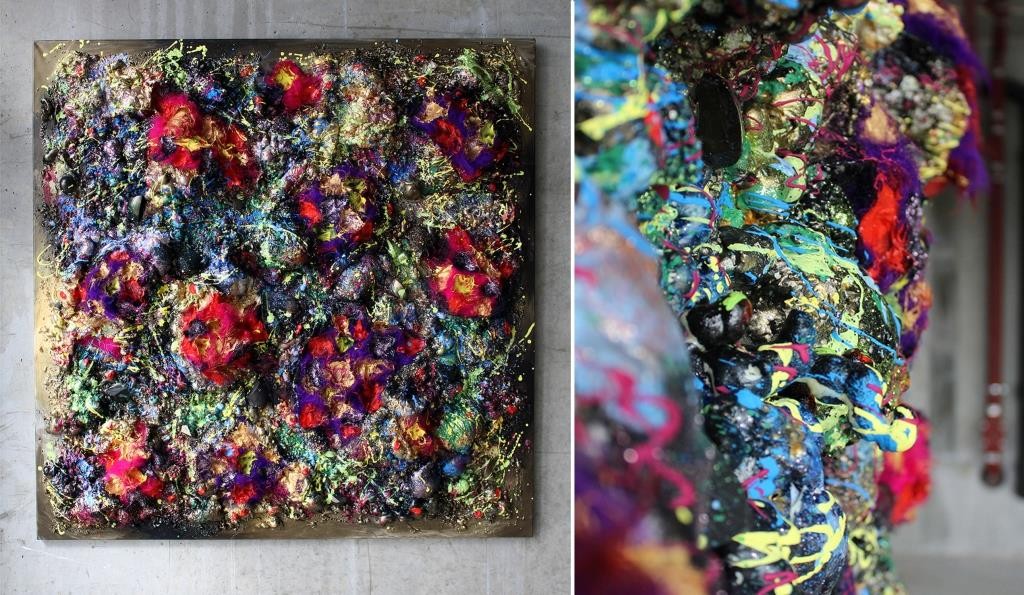
ROTATIONS, mixed media, 120×120 cm (right: close-up photo)
I visited the young artist, who for a short period this summer has a showroom at her disposal in Oslo’s new residential development area, Sørenga, next to the new bathing area, Sørenga sjøbad.
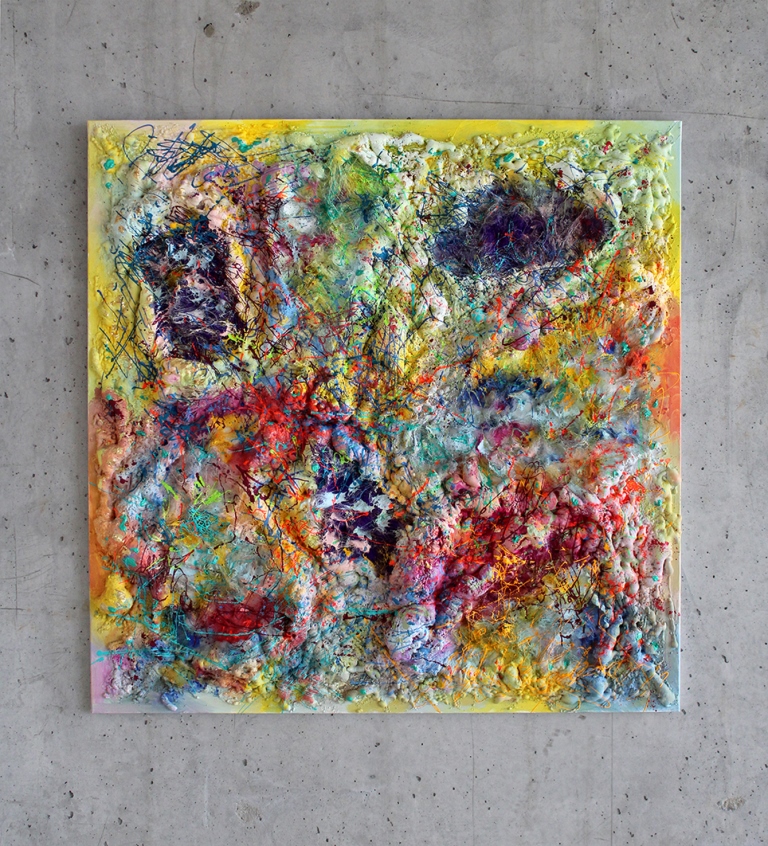
Jeanette’s paintings are characterized by her experimental three dimensional expression, where she, in addition to acrylic colors is using different kinds of materials, such as plastics and metal. She says that she began her art studies as a jewelry designer, where she made sculptures in small scale. Later she began to make larger sculptures in bronze, but now she has found her way of expression in what she calls sculptural paintings.
BLOSSOM PAINTINGS, acrylic on canvas (right: close-up photo)
“I’m working on dividing the surface I’m working on so that the background and subject mingle,” she says. “I read a lot and relate to the history of painting,” she continues, “But I do not work from one era or a specific artist as a source of inspiration. It is a flowing process. Inspiration comes in many forms. I like beauty, and beautiful things. I have a love for materials: texture, color, weight, smell and tactility. I allow myself to add whatever I want, being comfortable with gesture – not having to explain every move. Each gesture contains an importance of its own realization. No editing, just adding, like memory and our unconscious – layers of information.”
E N T I T Y #4, acrylic on canvas, 100×100 cm (right: close-up photo)
Her idea is that art should bring forth thoughts outside of the object itself, whatever art form. Today she creates paintings in which she uses the painter’s color tubes like brushes, which produces a different three-dimensional effect than if she were building up the motifs with other materials.
AFTER THE ICE STORM, mixed media, 120×120 cm (right: close-up photo)
“It is a natural consequence of my three-dimensional work,” she says. “I’m constantly seeking new expression techniques. Civilizations, cities, myths, imaginable realities and fictional landscapes have been some of the themes that have inspired my process. I have been interested in human imagination and our ability to fantasize, and the idea of a collective unconsciousness, creating abstract mythological landscapes and compositions that hover between something familiar versus the more incomprehensive. To me it is important to reinvent myself,” she concludes.
WHEN THE WINDS CARRY THE CLOUDS, mixed media, 120×120 cm
As a painter Jeanette relates to the history of painting. In passing, she mentions Cy Twombly as one of her favorite artists. Jeanette’s own body of work have concerned both scientific subjects and more fictional matters. It is perhaps not surprising that Jeanette Lafontine is interested in mythology, conspiracy theories and science fiction, since she is not so concerned about what is true or not. She finds the world a strange place to be, and through art she is trying to make sense of the
world around her. She is exploring imaginary landscapes and dreamlike places through abstraction; a process where the subliminal and the conscious meet.
MEADOW MEADOW #3, acrylic on canvas, 90×90 cm
Her manager says that Jeanette is a special artist with international potential. Many gallery owners, collectors and curators have already noticed the promising young Norwegian artist. After the brief exhibition at the tip of Sørenga she will go to Berlin for another six months artist-in-residence program.
ALIEN LAND #2, mixed media, 100×80 cm (right: close-up photo)
The exhibition “SOLID ILLUSIONS” at Sørenga in Oslo runs from 26 May through 5 June. Young Norwegian Painter with International Ambitions, Jeanette Lafontine, was interviewed by Tor Kjolberg