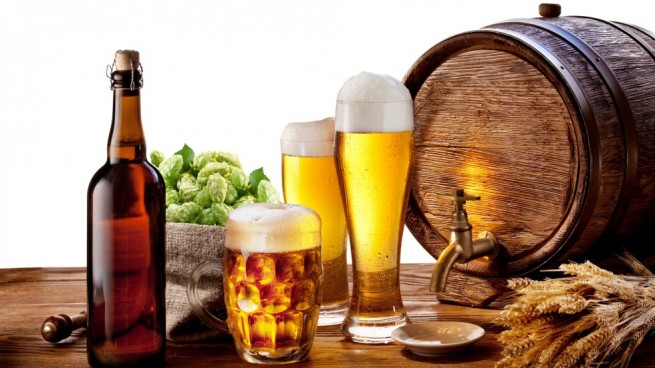
Best Beer in Scandinavia

Two Danish Brewers are among the World’s Top Ten. Reviews taken last year and weighted by performance within and outside of style and balanced by indicators of depth, show that two Danish brewers are among the top ten performing of more than 19,000 listed at RateBeer.

170315-mikkelier-copenhagen170315-To-øl-denmark
Mikkelier from Copenhagen was ranked no. 3, and To Øl, Copenhagen, was ranked at ninth place. The two first places are held by two US breweries.


On the Top 100 Beer list you also find
All In Brewing, Gothenburg, Sweden

170315-all-in-brewing_sweden

Amager Bryghus, Denmark

170315-Amager-bryghus

Omipollo, Stockholm, Sweden

170315-omnipollo-stockholm

Beer Here, Køge, Denmark

Haandbryggeriet, Drammen, Norway

170315_haandbryggeriet-norway

Lervig Aktebryggeri, Stavanger, Norway

170315-Lervig-aktiebryggeri

 170315-best-beer-2014

All winners in this category are eligible for award certificates.

Here is the Rate Beer’s guide to the best beer in Denmark, Norway and Sweden.

Buy a Viking Long-ship

After touring a museum, what do you think is the best gift shop souvenir to commemorate your visit? A post card? A magnet? The online gift shop for the Viking Ship Museum in Roskilde, Denmark, has got something far more appropriate: an actual Viking boat to stage your own conquests.

170315_;aking_a-Viking_Longship
The Viking Ship Museum is now offering the public the chance to buy a Viking longboat via its online shop.

Nordic Culture’s marketing director Anders Roge explained that the popularity of the Vikings is continuing to grow so they believe the opportunity to purchase an authentic Viking boat online is sure to be a great success. He said that the custom-built ships should be able to fulfill a childhood dream, and could be used in a company’s marketing strategy or taken for a weekend cruise by families and friends.

170315_Viking_Longship_2
The custom-build vessels come in a range of models, with the almost 10-metre Gokstad Ship – used for exploration, warfare, trade and commerce during the Viking Age – being among the most spectacular.

Roge pointed out that the popularity of TV series ‘Vikings’ as well as the success of the National Museum of Denmark’s Viking exhibition, which has been displayed in Berlin and London, proves that current interest in the Vikings’ history and culture is on the up.

The Viking Ship Museum is renowned for using the Vikings’ shipbuilding tradition to recreate the old wooden boats for exhibitions and research, but its new move will extend to companies and people in the private sector.

Norwegian Animated Characters Popular in France

The small town of Flåklypa is experiencing great lack of snow. The inventor Reodor Felgen is asked to create a snow machine. However, things do not go as planned. The main characters, Solan and Ludvig, are popular in France.

About 154,000 French movie goers have paid to see the film Christmas in Flaklypa by the perhaps most popular Norwegian movie maker Ivo Caprino.

Ivo Caprino with friends

‘A masterpiece and a pioneer work, first rate stop motion animation. The director and producer Ivo Caprino, invented a whole new ‘multi camera system’, which has turned into a brilliant result.’ says a French critic, enthusiastic when it comes to the Norwegian animated characters.

Producer Rasmus A. Sivertsen

The Norwegian producer Cornelia Boysen is proud to be so well received in a country with such a rich animation film story.

Christmas in Flaklypa (2013) was the most seen film that year in Norway with more than 800,000 visitors.

By Tor Kjolberg

Michael Booth On Scandinavia

When journalist and author Michael Booth moved to Denmark ten years ago, he wondered what the Scandinavian people was like. Was it a homogenous group of people? It had recently been ranked as the happiest people in the world. Was it true and is do, how come? It resulted in his book, The almost nearly happiest people in the world. We interviewed Booth in Copenhagen last month.

120315-booth-book-cover-the-almost-nearly-perfect-peopleHow long did it take you to write this book?
When I first came to Denmark ten years ago, I saw for the first time the differences between the three countries, which I was not aware of. I barely knew the geography. I didn’t know what languages they spoke, and didn’t know the differences with Scandinavia and the Nordic countries. I knew nothing. And as I came here, as most Brits and Americans, I put it together as one homogenous group.

At that time I thought this might be an idea for a book. It was always there, but it lacked something. Just explaining cultural differences wasn’t really enough to make a book.

Then was this amazing cultural wave that came from these countries; the new Nordic food, The TV-series, Stig Larson, Wallander. It was so many TV-shows, you wouldn’t believe it, newspapers, magazines and everything.  For years it had been, “Go to Spain or buy a house in Toscany, where your dream life would be.

120315-Stig_Larson-book-cover120315-book-on-scandinavian-cooking120315-lutefisk
Then came 2008 with its economic crises; the year which went down with the toilet water. People who had moved lost everything, or at least had to devaluate their properties. My theory is that the world somehow started to look somewhere else, a place with different values, less commercialized, more like work-life balance and less globalized. It was more about equality instead of what you could buy or what you could acquire. The Nordic countries were perfect for that. They became a kind of Utopia, which they are not.

120315-booth-michael
So there was the third stage of the book, to give a more nuanced picture of the people who was a kind of blinded by the Nordic light. I wanted to give it a more shaded image. That last process was about four years. I pursued my publisher to do it. In between I wrote another book actually.

Did you have a research team, or did you everything yourself?

I did the book alone, without a team. I wish I could have afforded a team. Six years before that I was always noticing things and reading articles, so I was aware of the stuff. I had a big file of cuttings. Somewhere in there was an idea.

My publisher was worried people would not be interested in Scandinavia, but he was wrong about that. The book has also created lots of buzz in the media; BBC among others, it caught on something.

3d character textured with flag of Denmark
The book is classified under ‘humor’. Did you intend to write a funny book, or what was your idea?

I was walking on a kind of tightrope, so I was very conscious about that, because I live here, and I like it very much. I am joking that I am living here almost of my free will, so you have to be careful not to be rude to your own hosts. I am, but I laugh at myself a lot, but I like an easy target to laugh at. So the humor is very important, I think. But some people hate the humor in a book.

You are often ironical when describing the Scandinavian people, not without quite a deal of British humor. Have writing the book changed your mind about the Scandinavian people?

I learned so much I didn’t know. I got to know the people better. The history is special, new to me and really interesting. Still I would never claim I am an expert on Scandinavia or the Nordic countries. The more I learn, the more I realize what I don’t know. There are so many places I haven’t visited, but coming to new remote destinations, I realize how amazing they are.
3d character textured with flag of Norway
As a journalist I had expected you to be more liberal to Mohammed cartoons than described in your book. Has your opinion changed after the incidents in Paris?

Not at all, if it is deliberately set out to cause grouse offence to someone, why should we do it? To prove a point of free speech? I disagree with that. I like nice good manners. I think we can arouse discussions without deliberately crossing borders. The cartoons in question weren’t even funny.

When traveling around to interview persons and experience the five countries, is there any experience not mentioned in your book you would like to add?

Memories keep actually coming all the time since I wrote the book. I was walking down a street in Copenhagen the other day, and I saw three young kids, maybe six or seven years old, having a race. The kid who won had a really celebration, almost like an American baseball player. His mom came and grabbed him by the ear and said, “Stop that right now!” That was a great illustration for me about the Scandinavian equality philosophy.

And there’s another one. My eldest son participated in a musical his class at school put on a Monday night. It wasn’t a big deal, just a performance that parents could watch. But the teacher who arranged it rotated the cast. It was Treasure Island. In one scene one child played John Silver, and in the next it would be a girl playing Long John. She did it to give everyone a chance. It was a joke. It was ridiculous. You wouldn’t follow anything So what was the purpose of that? It should be a kind of inclusiveness in the class. It’s a good example of misunderstood equality.

3d character textured with flag of Sweden

Having lived in Denmark for some years now, what do you as a Brit miss the most?

Politeness, manners to people you meet in the shops or in the streets. This is of course from a weird British perspective – we might have too much of it, but I miss it. I miss the chatting to people in working shops. I miss choices, cultural choices, compared to London, or even Brighton, where I come from. I miss good radio. This is not a criticism to Denmark, just a statement of what I miss. My Danish wife complaines about the Danes as well.

I like it when foreigners describe how they view our countries. Opinions from the outside are important. If you had been a politician, which advice, if any, would you give to our state leaders?

I have written just a humorous travel book. I have no solutions there, I am just an observer. Of course, I have trouble with the taxes. I don’t like to pay such high taxes. Just a reduction of four to five percent, like in Sweden, would have been a good thing. But I am not a politician.

Do you have any new projects?

Not, actually. I have written five books back to back during the last ten years, strictly with no break in between them, and it’s nice not to have to do it. And I am very busy working as a journalist, teaching, and my book has recently been published in the U.S, and is published again in Britain as a paperback. So you see, I am quite involved, giving talks, and other tasks have exploded.

I even had a talk at the Oslo University among other speakers doing TED-talks (Techological-Educational-Design), where people talk for 18 minutes for global organizations.

I wrote a book on Japanese food several years ago, which has been translated into Japanese,  so I will even go to Japan to talk on Japanese television by the end of this month. I will, however, never get rich from my freelance writing, paying 50 percent taxes.

As a journalist and writer, do you read a lot, for writing purposes or for pleasure? What book do you read right now, if any?

I am always reading subjects about my books. That’s all I am reading. My first book was about Hans Christian Andersen and his journey to Istanbul in 1840. So I was reading everything I came over about that, including a lot of research, and it gave me a new perspective on Andersen. I detected the places he had been to, and I actually got to know him a lot better.

He wrote a journal, he wrote letters, and he wrote a travel book about that journey, so I was going to the places where he had lived, places where he ate, museums he had visited and so on. My book was never translated into Danish. It came out just after the 200th anniversary, and I think people were sick of it all by then.

And then I did a couple of food books. The books might have been forgotten, and I move on to other things.

Japanes tekecision will make a series about my Andersen book. I still think that book’s got potential. It will have nothing to do with me, just about Andersen’s journey, but it’s my project. Now, that I have so little spare time, I read novels, mostly American.

Do you have any role models? Any book recommendations?

It’s a book called Danubia, about the Austrian-Hungarian empire, by Simon Winder, who also wrote Germania, which is a kind of historical travel book about Germany, and it’s very funny. Winder brilliantly mixes really interesting research with a lot of humor. Actually, he gave me permission to write more or less in his style.

What is the future of books in your opinion?

I have been very depressed for a while. But I just heard that ebook-sales have gone down again, and I think, or hope, that people go back to books, because we like the smell of the print, the sense of a book you actually has seen. I write for the magazine Monacle, a high quality product, so I am more optimistic actually. I would have been very worried if books had gone the same way as music has gone, and you can’t get them for free.

Any reactions from the Nordic readers of your book?

It’s quite funny to talk about the reaction to the book I have gotten from different Nordic countries, especially since I wrote a rather provocative article in the Guardian.

Mostly they are nice, they got the humor. Swedes have been rather pedantic about mistakes. In my book I cannot deal with stereotypes, so I generalize. I am absolutely guilty about that, but it’s fun. The Danes were somewhat crossed with me. The Norwegians had the strongest reactions, mostly negative, but more regarding the article than my book, probably because I talked about the oil and the climate change. I had actually been to Norway and spoken with experts, so Norwegians have told me this stuff. In fact, I got personal, nasty notes.

But all reactions were conforming to stereotypes.

What can the world learn about these stereotypes?

Americans could perhaps learn to redistribute the wealth a bit better, which is the bedrock of these societies. I would like to cite a Finnish journalist, who said, “Helsinki is a fantastic place to live, but you have to get away from it a lot.”

My favorite quotation appeared in the Economist, “Scandinavia is a great place in which to be born…but only if you are average.  If you have average talent, have average ambitions and average dreams, then you’ll do just fine, but if you are extraordinary, if you have big dreams,  great visions, or just a bit different, you will be crushed, if you do not emigrate first.”

Machael Booth on Scandinavia was interviewed by Tor Kjolberg
Portrait photo (on top): Tor Kjolberg
All illustrations: Graphic Stock

Read our review of The Almost Nearly Perfect People
The Norwegian Viking Fairhair Dynasti

0

The Fairhair dynasty (Hårfagreætta) was a family of kings founded by Harald I of Norway which united and ruled Norway with few interruptions from the latter half of the 9th century to 1387 (traditional view), or through only three generations of kings ending with Harald Greycloak in the late 10th century (the view of many modern scholars).

Harald Fairhair by William Borde

Harald Fairhair (c. 850 – c. 932) is thus considered the first king of Norway. He inherited a few, scattered kingdoms in eastern Norway from his father Halfdan the Black, but proceeded to unite Norway under his rule. According to legend, he proposed to Gyda, who refused to accept him until he was king of all of Norway – and in turn, he vowed to not cut nor comb his hair until he had reached his goal. This is why he was named Fairhair.

Harald was succeeded by his son Eirik Bloodaxe (c. 885 – c. 954), who ruled alongside his father for three years. After Harald’s death, Eirik’s rule was challenged by his brother Haakon, and he escaped to England to become king of Northumbria.

Haakon the Good (c. 920 – c. 961) was the youngest son of Harald Fairhair, and gained favour by promising reductions in property tax. He organized meetings for law making and was the originator of the nationwide naval defence. Haakon repeatedly fought battles against the sons of his brother Eirik, and was eventually killed in battle.

Saint Olaf of Norway


Saint Olaf
 (995 – 1030) was King of Norway from 1015 to 1028 and is traditionally given credit for the Christianization of Norway, but most scholars now recognize that he had little to do with the process himself, as the process of changing the country’s main religion was a lengthy one, and certainly not accomplished by one man alone.

However, Olaf was canonized as saint shortly after his death, and this act united the nation in a way no foreign monarch could have achieved. According to legend, his hair and nails kept growing after his death.

Feature image (on top): Norwegian Viking Fairhair Dynasty by Peter Nicolai Arbo

Source: Wikipedia

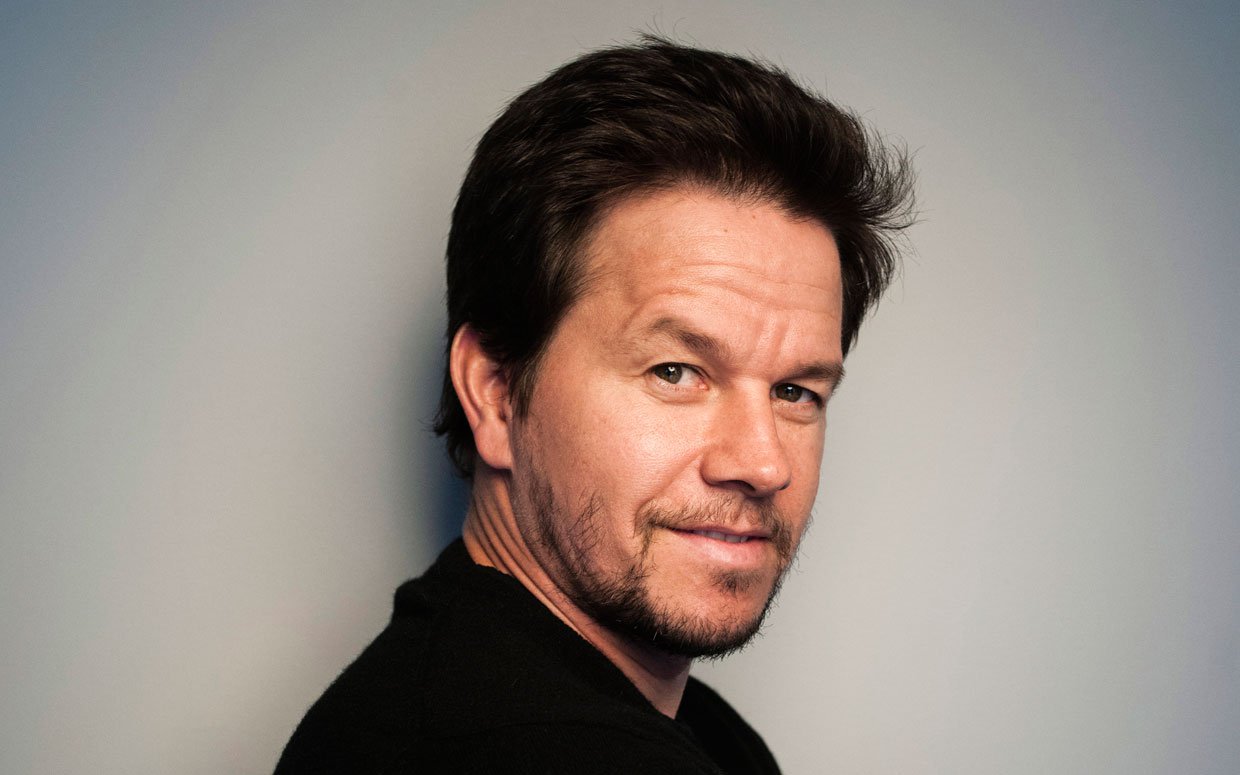
A Mark Wahlberg Portrait

From teen pop idol to respected Hollywood producer, American actor and producer Mark Wahlberg, born 1971, had troubles early in his life. With the film “Contraband”, which he produced and starred in, he sort of revisited his criminal past.

100315_Mark_Wahlberg_at_the_Contraband_movie_premiere_in_Sydney_February_2012Mark was the youngest of nine children. His father, Donald, was half Swedish and half Irish. Before starting acting he was known as part of the boyband New Kids on the Block, started in 1984 by his big brother Donny (b. 1996). Later he was best known as Marky Mark, the pants-dropping rapper, attaining fame with his group the Funky Bunch, most known for the 1992 hit single “Good Vibrations”.

Same year he received the lion’s share of attention for a Calvin Klein ad campaign, in which he was wearing nothing more than his underwear, Kate Moss, and his attitude.

Wahlberg turned his attention to acting with a role in “The Substitute”, which was a commercial failure, but “the Renaissance Man” (1994) with Danny De Vito, gave him positive notices. He garnered In particular early praise for his role in “Boogie Nights” (1997). The film was nominated for three Oscars and a slew of other awards by associations ranging from the British Academy to the New York Film Critics Circle to MTV.

From then on a wide range of magazine covers gave him greater Hollywood pulling power.

Wahlberg’s follow-up to Boogie Nights was 1998’s “The Big Hit” (1998), proved, however, to be a disappointment. His next film, “The Corruptor” (1999), co-starring Chow Yun-Fat, showcased Wahlberg’s familiar macho side and indicated that success in Hollywood is a strange and unpredictable thing.

The following year, with his lead role in Tim Burton’s much-anticipated remake of Planet of the Apes, the role that Charlton Heston made famous, received some hefty criticism.

100315-mark-wahlberg
A victim of one of Mark Wahlberg’s racially motivated attacks as a teenage delinquent in segregated Boston in the 1980s insists now that he shouldn’t be granted a pardon for his crimes. “I don’t think he should get a pardon,” Atwood, now 38 and living in Decatur, Georgia, said in an interview with Associated Press.

In 1988, Wahlberg, then 16, attacked two Vietnamese men while trying to steal beer near his Dorchester home.

Since these events, Mark Wahlberg has certainly been able to forgive himself. In an interview with ABC in 2006, he stated: “You have to go and ask for forgiveness, and it wasn’t until I really started doing good and doing right, by other people as well as myself, that I really started to feel that guilt go away. So I don’t have a problem going to sleep at night. I feel good when I wake up in the morning.”

“My cowboy-days are far gone,” he said in an interview some years earlier. “I now go to bed at nine o’clock every night. I feel good when I wake up in the morning.”

Written by Tor Kjolberg
All photos:  Wikipedia

Opera to the People

If you’re in Oslo during the seasons February through April and September through November, you may enjoy quality opera performances every Saturday for just about 13 USD.

Opera to the People is now in its 13th year, having rented the stage on the second floor of the old Oslo City Hall which dates back to 1641.

Performances are mostly by students from the Oslo Opera College and freelance singers, administered by the opera singer Gjøril Songvoll, who sometimes participates on the scene as one of the opera’s characters.
090315-Gjoril- Songvoll

“My motivation for doing this is twofold,” says Songvoll to Daily Scandinavian. “Firstly, we want the students to get experience, standing in front of a public. Secondly, we want people in general to know how beautiful the opera genre actually is. I noticed a statistic some years ago, claiming that just 10 percent of the population liked opera, while 90 percent liked football. Today the statistics show that 15 percent like opera. This is probably not due to Opera to the People but more likely to our new opera house at Bjorvika.
????????
Performances begin at 3.30 p.m. lasting for one and a half hours including two to  three short intermissions. The bar is open, serving mineral water, beer, wine and some snacks.

Audiences are a mix of members (some attend every performance!), opera lovers and just people like you and me passing by.
????????
We attended the opera a Saturday in February, thoroughly enjoying excerpts from Verdi’s La Traviata. The brilliant singers were Hanne Korsbrekke Askeland, soprano (make a note of her name), Knut Kristian Mohn, tenor and Sigmund Aasjord, baritone. Ieva Berzini brilliantly played the piano.

Hanne Korsbrekke-Askeland, soprano


Knut Mohn, tenor
Knut Mohn, tenor


Sigmund Asajord, barytone

The venue houses less than 100 guests, so it’s recommended to arrive in good time.

Ieva Berzina, piano
Ieva Berzina, piano


All portrait photographs, courtesy by Opera to the People.
Text and other images: Tor Kjolberg

Mirror House in Copenhagen – From Graffiti-Plagued Playground to Inviting Pavilion

0

The Mirror House in Copenhagen used to be covered in graffiti. Danish-American architects MLRP, has transformed an existing graffiti-plagued playground to an inviting and reflective pavilion as part of the new Interactive Playground Project in Copenhagen. 

Designer MLRP thought, why not make use of an “interactive element” that can serve as a “transition between natural and built environments”? The entire house seems to be playing tricks with your eyes and mind, as it would mimic the appearance of the surroundings, and even look like an invisible structure sometimes.
050315-mirror-house-playground-copenhagen
The Copenhagen Central Park has thus been transformed from an existing playground pavilion into the ‘mirror house’,  where the structure has been converted into an interactive element, inviting visitors to peer into the gable ends lined with funhouse trick mirrors. This engages a play with perspective, reflection and tranformation. Instead of a typical closed gable facade, the mirrored gables creates a sympathetic transition between built and landscape and reflects the surrounding park, playground and activity.

050315-mirror-house-copenhagen-city-denmarkWindows and doors are integrated in the wood-clad facade behind facade shutters with varied bent mirror panel effects. At night the shutters are closed making the building anonymous. During the day the building opens up, attracting the children who enjoy seeing themselves transformed in all directions.

With simple means it has succeeded to transform an existing, sad and anonymous building to a unique and respectful installation in the newly renovated park.

The roof and facade is clad with heat-modified wood and the gables and shutters are clad with mirror polished stainless steel. The Mirror House is a flexible space and restrooms, used by kindergarden classes.

Mirror House is an example of a successful transformation project for limited funds. The playground pavilion was run down by years of neglect and vandalism, but the masonry structure, roof and foundations were in good condition and therefore the building’s life could be extended.

Doing Business in Norway

0

So you’ve decided to do business in Norway! That’s a wise decision. This article focuses on how to best do business in Norway and how to avoid small missteps. The article is broken down into four areas, “Country Background”, “Business Practices”, “Protocol” and  “Cultural Orientation”.

Nice to know
– The Norwegian Trygve Lie was the first Secretary General of the United Nations.
– The Nobel Peace Prize is awarded in Norway
– As in other Scandinavian languages, Norwegian’s additional letters of “æ – ae” “ø – oe” and “å – aa” are listed at the end of the alphabet. Remember this when searching for words beginning with such sounds or letters in a telephone dictionary.
– Norwegians enjoy discussing sports – cross-country skiing began in Norway.
– There was a turn-of-the-century fashion in Norwegian interior design for disguising interior doors. You may have to search for a door in older homes; do not be surprised if the door is covered by wallpaper. Doors are traditionally kept shut.
– Some Norwegians believe in an old fishermen’s superstition that spitting at a departing person (towards them, not hitting them) brings that person good luck.

050315-Doing-buiness-in-norway-Daily-Scandinavian

Country Background

050315-doing-business-in-norwayHistory
The Vikings (also called Norsemen) were feared for their raids throughout northern Europe from the eighth to eleventh centuries. These Vikings eventually became the Norwegians, the Swedes and the Danes.

Political power became concentrated in Denmark, which came to rule much of Scandinavia, including Norway. Eventually, Sweden became a rival power. Denmark sided with Napoleon during the Napoleonic Wars. To punish Denmark, the postwar Congress of Vienna took Norway from Denmark and gave it to Sweden in 1815.

The fishermen, sailors, and merchants of Norway had little in common with the aristocrats of Sweden. Friction developed. Fortunately for the Norwegians, their rugged, rocky nation could not be divided up into the vast farming estates preferred by the Swedes. After a century of Swedish occupation, Norway peacefully gained its independence in 1905. The Norwegian parliament invited a Danish prince to become their constitutional monarch, so King Haakon VII became the first king of Norway.

Norway remained neutral in World War I. However, despite its neutrality, Norway was occupied by Nazi Germany during World War II. For this reason, the Norwegians shifted from believing in neutrality to collective security. Norway signed the North Atlantic Treaty of 1949 and participated in the foundation of the United Nations.

050315-doing-business-in-norway-3Type of Government
Norway is a multiparty (hereditary) constitutional monarchy. There are three branches of government. The executive branch is made up of the king, who is chief of state, the prime minister, who is the head of government, and the cabinet, or the Council of Ministers. Executive power actually resides in the Council of Ministers in the name of the king, or King’s Council. The prime minister sits on this council. The prime minister is chosen by the leading political parties. The legislative branch is a modified unicameral parliament, known as Storting. Members of the Storting are elected according to a system of proportional representation. They serve for four years. There is a Supreme Court.

Norway became a major oil and gas producer in the 1970s. The income from this sector allowed it to further advance its social welfare system. Today it hopes to make the non-oil sector of its economy more efficient and less dependent on subsidies.

The United States is Norway’s fourth most important trading partner. Norway has twice rejected to join the European Union, but is an associate member through an EEA (European Economic Area) agreement.

Language
The official language of Norway is Norwegian, which is a Germanic language related to Icelandic, Danish and Swedish. It has two forms, a “book language,” known as Bokmål, and a commonly spoken language, known as Nynorsk, a mixture of Norwegian dialects. According to law, Nynorsk must sometimes be used in instructions and in the media.

The principal minority language is Lappish (also called “Sami”), spoken by the Lapps or Laplanders. The group is also known as the Samis, although some find that term derogatory.

Most Norwegians have studied English. English is widely spoken in business circles and in major cities.

Religion
Norway has complete religious freedom, but it does have an official state church, the Evangelical Lutheran Church, or Church of Norway. About 90 percent of the population belong to this church.

Demographic
The population of Norway is about 5 million. About 65 percent live along the coast. Oslo, the capital, has about 500,000 people. Today many foreign workers and immigrants come to Norway, and about 2,000 people obtain citizenship per year.

050315-Doing_business_in_norway_2
Cultural Orientation

How Norwegians Organize and Process Information
The Norwegians are generally cautious toward outside information. New products and new ways of doing things are viewed with circumspection. The education is becoming more abstractive, and people are beginning to process information conceptually and analytically. Although they are deeply concerned with social welfare, their individualism disctates that all be subject to the same rules and regulations.

Negotiation Strategies: What Norwegians Accept as Evidence
Norwegians’ faith in the ideologies of the social welfare state dictates the truth in most cases. This is usually supported by objective facts rather than subjective feelings.

Value Systems: The Basis for Behavior
Norway is a highly nationalistic culture with a liberal philosophy of tolerance for dissent and deviation. The following three sections identify the Value Systems in the predominant culture – their methods of dividing right from wrong, good from evil, and so forth.

Decision Making
There is a strong belief in individual decisions within the social welfare system. There is an emphasis on individual initiative and achievement, with a person’s ability being more important than his or her station in life. Although the dignity and worth of the individual is emphasized, there is a strong feeling of obligation to help those who are not able to help themselves.

Sources of Anxiety Reduction
Life’s uncertainties are accepted and anxiety is reduced through a strong social welfare system. Life is given stability and structure by a strong nuclear family. Young people are encouraged to mature early and take risks to develop a strong self-image.

Issues of Equality/Inequality
Nationalism transcends social differences, and a largely homogeneous population minimizes ethnic differences. Norway is a fiercely democratic and egalitarian society in which those at different power levels have an inherent trust in people. It is basically a middle-class society that strives to minimize social differences. Husbands and wives share the responsibilities of child care.

Business Practices

Appointments

  • Remember that many Europeans and South Americans write the day first, then the month, then the year (e. g. December 3, 2014, is written 3.12.14). This is the case in Norway.
  • When you deal with a Norwegian firm, the secretary of the firm will make an appointment for you.
  • The workweek is Monday through Friday, 8:00 a. m. to 4:00 p. m. Business people leave their offices promptly and go home for dinner, which is typically held at about 5:00 p. m.
  • It’s best to avoid business trips ti Norway at Easter time and July and early August – most people take vacation then.


Negotiating

  • When writing to a Norwegian firm, it is gracious to use the name of the division head, even if you do not know the person.
  • Norwegians are relatively informal (far more so than the neighboring Swedes).
  • You can introduce yourself to the executive with whom you are meeting, rather than waiting for the secretary to introduce you.
  • It is a good idea to set a time limit on the meeting.
  • Norwegians are wary of the American concern with legal matters. Written confirmation of business deals is sufficient; if you mention bringing in a lawyer, be discreet.
  • Scandinavians appreciate knowledge about the differences among the countries of their region.
  • Avoid personal topics (employment of your host or family members, salary, and social status).
  • Hobbies, politics, sports and travel are good topics for conversation.
  • Avoid criticism of other people or systems. The Norwegians stress tolerance. Chastising Norwegians for permitting the hunting of whales will not win you any friends.
  • Avoid comparisons between Norway and the United States, especially concerning the cost of living. Norwegians are bored with hearing how expensive their country is.
  • Norwegians appreciate nature and are proud of their clean environment.

Business entertaining

  • If you have a late morning meeting, you can invite your Norwegian colleague to lunch.
  • The person who extends the invitation pays for the meal.
  • Lunch is a light meal but, if it is used for business, it will usually be a hot meal rather than just sandwiches.
  • In most Norwegian restaurants, alcohol is served only after 1:00 p. m.
  • You may discuss business at any time during the meal.
  • In restaurants, raise your hand to call the waiter over.
  • Norwegians usually eat dinner at 5:00 or 6:00 p. m.
  • When you go to a Norwegian home, wait to be asked in; wait again until you are asked to sit down. At the table, wait until the host invites everyone to begin eating.
  • Some Norwegians have a cocktail before dinner; others do not. It is possible that you will be directed to the dinner table as soon as you arrive. Arrive on time.
  • Hands should not be kept in the lap at the table.
  • It is preferable to finish what is on your plate.
  •  A dinner in a Norwegian home may have numerous courses and last several hours. Pace yourself.
  • At the end of the meal, people thank the hostess by saying takk for maten, or “thank you for the food”; you will please your hosts by saying this in Norwegian.
  • You should initiate your own departure, as your hosts will not. Expect the evening to end around 10:00 p. m. in the winter. However, in the summer, the sun does not set until around midnight. Your hosts may suggest a walk after dinner, followed by a final drink. In the summer, expect to leave around 11:00 p. m.

Time

  • Norway is one hour ahead of Greenwich Mean Time (G.M.T. + 1); or six hours ahead of Eastern Standard Time (E.S.T. + 6).

Protocol

Greetings

  • The handshake is the standard greeting for men and women.
  • People great each other by saying “Morn” (which means “morning”) or “Hei” at any time of the day.
  • Norwegians are a fairly quite people. Avoid speaking loudly.

Titles /Forms of Address

  • The order of names is the same as in the U. S; first name followed by surname.
  • The use of first names is not as common as in the United States. Follow the lead of your hosts. Indeed, many men are addressed solely by their surnames, without even a “Mr.” in front.
  • Among older people, titles are used; among younger people, usage varies. In general, professional titles (Doctor, Engineer, Professor, and so forth) are used, followed by a surname; business titles (Director, President, and so forth) are not typically used. With government officials, it is appropriate to use titles. Oddly, lawyers and clergymen do not use titles.

Gestures

  • A toss of the head means “come here.”
  • Norwegians do not always rise when another person enters the room. Don’t be offended by this.
  • However, do rise when you are being introduced to someone.
  • Talking with one’s hands in one’s pocket is considered too casual.
  • The North American “O.K.” gesture (thumb and forefinger forming a circle) is considered insulting.

Gifts

  • Flowers, liqueurs, wine, or chocolates are appropriate gifts for your hostess when invited to a Norwegian home.
  • When giving flowers, avoid the following, since they are all used only for funerals; little carnations, and all white flowers, as well as wreaths.
  • Alcohol taxes are high, so alcohol makes a prized gift.
  • It is not appropriate to give a business gift at the first meeting.
  • If you give a business gift, be sure it is wrapped in good-quality paper. Make the gift neither too extravagant nor too skimpy.

Dress

  • In general Norwegians dress more informally than American business people; however, visitors should dress as they would in a business context at home.
  • Men should always wear a tie for business appointments, but a sports jacket rather than a suit is usually acceptable.
  • Women may wear dresses or pants.
  • Clean blue jeans and t-shirt are standard casual wear, but torn clothes are unacceptable. Shorts are worn for hiking; they are not common in urban areas.

050315-world-business-statsiscs

Norway is ahead of US on Best Countries for doing business (No. 8) with GDP: $516 B, Tax Burden rank: 14, Innovation rank: 15, Monetary Freedom rank: 48, Red Tape rank: 22 (only minor changes from year to year).

Feature image (on top) Shutterstock

Compiled by Tor Kjolberg

Related article:
Doing business in Denmark


Swedish woman denied Sainsbury’s Nectar card because of her ‘rude’ first name

0

A Swedish woman living in London was denied a store card when she registered for it online because her first name is considered a rude word for vagina in the UK.

Having a name with sexual connotations may make you the unwilling target of sniggers and lame jokes, but being prevented from acquiring a supermarket loyalty card seems strange.

Fanny Carlsson, 19, from Uddevalla, in the southwest of Scandinavia, has worked at natural beauty chain The Body Shop for five months, but was rejected a points card by the supermarket Sainbury’s because her first name was “invalid”.

040315_Fanny-Carlsen-On_TwitterThe 19-year-old, however, saw the funny side of her predicament and tweeted a picture of her ‘invalid’ name being rejected. She has now got a card with her middle name, Linnea, on it. She explained that she knew the meaning of ‘fanny’ before moving to the UK so already went by Linnea at work and among all her new friends except the Swedes she meets.

‘My parents already knew I had had some problems with my name, so they’re mainly just happy they gave me a middle name that works better.

The website Svenska Namn (Swedish names) reports that there are more than 10,000 women and one man named Fanny in Sweden.

After she received her loyalty card she wrote on Twitter that she bore no ill will towards the supermarket chain.

Nectar released the following statement: ‘Like many companies we block a number of words on the Nectar website.

‘We are sorry for the inconvenience caused to this particular customer and are reviewing this going forward.’

SWNS_SAINSBURYS_AGIN_06.jpg

«Älskar att heta Fanny och bo i UK,» wrote Fanny Carlsson on Twitter.