Surfing in Norway

0

From Jæren in the south to the Lofoten Islands in the north, Norway is an exciting, relatively undiscovered surf destination. Not for long.

Norway is an increasingly popular ‘cold water’ surf destination. Consistent swell, fantastic scenery and pristine waters mean Norway is attracting more and more surfers, many of whom coming here in the hope of finding undiscovered waves and breaks along Norway’s notoriously long coastline.

Advances in wetsuit technology mean that it is now possible to surf in Norway year round, although the lack of light in winter, especially in the northern regions, cuts surfing down to a few hours a day – attracting only the most hardened surfers. For the rest, the season lasts from February to November: summer is most welcoming for beginners, while the late autumn and winter have more exciting conditions. So whether learning basic moves off the Jæren Coast in summer or storm riding in the Lofoten Islands in mid-winter – Norway has something for all surfers.

Learning to surf (Jæren near Stavanger)
The stretch of coastline along Jæren is an ideal spot to try the winds and waves of the North Sea. This area south of Stavanger offers surfing spots that range from easy and gentle beaches for beginners, to more demanding boulder rock points for more advanced surfers.

The beaches at Solastrand, Hellestø, Sele Point, Borestrand, Brusand and Ogna are particularly suited for those with less or no experience. Windsurfing and surf-kiting are also popular at Solastrand because of its relatively sheltered wave conditions even in strong winds (S-SW).

Stad: A hidden surfing paradise in Fjord Norway
Long considered a hidden surfing paradise, Stad in Sogn og Fjordane offers ideal conditions for those seeking good surf spots without the crowds. The best spot is Hoddevik, just 65 kilometres south of Ålesund. Here you will find clear waters framed by 300 metre tall mountains. In August and late September, as serious waves start making their appearance, water temperatures still average a pleasant 18 degrees Celsius. Few foreigners have traditionally come to “Stadlandet” as this stretch of the Norwegian West Coast is called, but this is beginning to change as more and more discover the joys of surfing here.
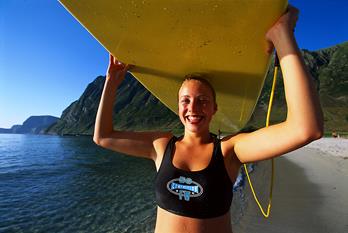
Surfing at Hoddevik
Surfing at Hoddevik

Arctic surfing in the Lofoten
Touted as one of the best places on earth to surf in cold water, the Lofoten Islands  in Northern Norway offer world-class waves and wild nature. Although there are many other good surfing spots, Unstad is the best known location in the archipelago – it gets waves almost every day of the year. Quite a contrast from crowded surfing beaches elsewhere in the world, the Lofoten Islands are particularly suited for surfers who love the great outdoors – where else can you surf alone with only a seal, a porpoise or a sea eagle for company? The midnight sun in summer means round the clock surfing is possible on good days, with surfers never missing the peak of a swell, which can often occur at night.
030315_Surfing_and_snow
Surf and snow
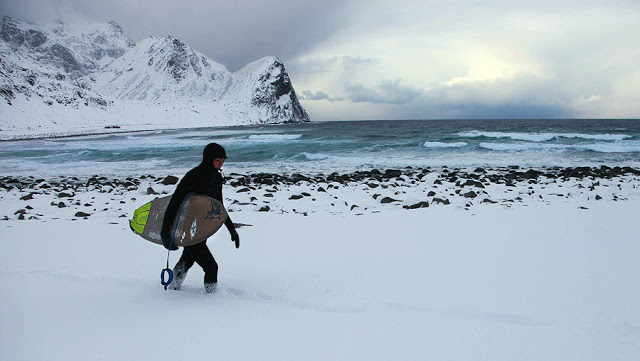
Many board sport enthusiasts like trying their moves on both water and snow, and Norway is particularly appealing in that it offers both great surfing and snowboarding. With their rugged peaks and steep slopes, the Lofoten Islands are a thrilling choice for those wanting to combine the two sports in one trip, and come winter offer the perfect playground – one where it is possible to catch the perfect snow and waves on the same day.

The Lofoten Masters
Focus once again on the Lofoten Islands in Northern Norway with the world’s northernmost surfing competition. An annual contest attracting local and international surfers to Unstad on the island of Vestvågøy, the Lofoten Masters take place in the autumn and feature a number of different categories (ladies, open, longboard, 11-16 and under 11). 50 competitors took part last year (2012). The next competition will take place 10-13 October 2013.

030315-unstad_for-surfing

Surfing in the Oslofjord
Did you know it was possible to surf in the Oslofjord? The best spot is Saltstein (see feature image on top), outside Larvik. The quality of the waves here varies hugely, with the best surfing to be had in late summer. The waves can get big but they also get crowded (due to the proximity of the capital – only 135 kilometres to the northeast). The spot is suitable for both beginners and more advanced surfers. On the other side of the fjord, the waters just outside Sletter and Jeløya in Moss are popular for kite surfing.

Norwegian surfing talents
A former Norwegian champion and team rider for Billabong, Jonas Paulsen is regarded by many Norwegians as the best surfer in the country. With a playful style and a good repertoire of moves, he has earned good rankings in European competitions. Now living in Stavanger, Paulsen is originally from Larvik, where he began surfing just outside his home at Saltsteinen (see above). This is the best place for surfing in Eastern Norway according to him. Other recent Norwegian champions include Åge Obrestadt (Norwegian champion 2012) and Gil Ferreira Kåberg (Norwegian champion 2011).

Useful websites

Wave-forecast in Norway and general spot information
surf-forecast.com (ditto)
Reliable and detailed wind forecast
Surfing in the Lofoten Islands
Norway’s only surf magazine (in Norwegian)
Jæren Surf School
Lapoint.no in Stadt (in Norwegian)
Stadsurfing.com in Stadt (in Norwegian)
Norwegian Surfing Federation (in Norwegian)
Surfing events in Norway
Norwegian Surfing Championship
, Nov, Jæren
Lofoten Masters, Sep/Oct, Unstad Campsite, Lofoten Islands

Did you know?
Norway Surf Association (Norges Surf Forbund, or NSRF) was founded in 1985. It was the brainchild of Roar Berge, one of the first to start surfing in Norway, and to this day a strong advocate of Norway surfing. Last year (2012) the NSRF became part of the Norwegian Confederation of Sports (NIF), reflecting the sport’s growing popularity and significance in Norway.

Although not recommended for beginners, storm surfing provides a real thrill for advanced surfers looking for a challenge. The best places in Norway to try this are again Stad in Sogn og Fjordane and the Lofoten Islands in Nordland.

International Surfing Day is held every year on or near the date of the summer solstice (usually 21 June). The event celebrates surfing and the surfing lifestyle, but also aims to raise awareness of environmental issues related to the sustainability of ocean resources. Various places in Norway celebrate International Surfing Day.

Over 1,000 surfers visit the Lofoten Islands every year between February and November (the surfable months). Just under half of them are foreigners, mostly from Sweden, Finland, France, the USA and Australia. Many of the overseas surfers are experienced surfers and some are even professional surfers.

Unstad Arctic Surf offers surfing courses for all levels, including coaching. They also arrange surf camps throughout the year (tel +47 48 23 33 80)

Unstad and Hoddevik offer affordable accommodation in small dorms or cabins of various sizes, and food prepared with locally grown ingredients. Tired after riding the waves? At Unstad Arctic Surf surfers can ease weary muscles in a hot tub or relax in the sauna onsite.

Fjord Surfboards is a Scandinavian brand for surfers believing in ‘cold waters and uncrowded lineups’.

There are no fewer than four surfing schools in the Jæren area south of Stavanger, offering a range of courses and private instruction. Some also offer accommodation.

Still off the radar for most surfers, the Saga Islands (Giske, Vigra, Godøya and Valderøya) a few kilometres from Ålesund in Fjord Norway also offer good surfing.

The Nixon Surf Challenge took place in Lofoten in 2011.

Thanks to advance in technology and good wetsuits, surfing in Norway in winter is not as cold as one might think.

Jæren has many ocean fronts and can receive both southern, western and north-western wave swells, which compensates for the less consistent swell and means one can almost always find a place to surf.

The movie Norwegian Tides, a documentary about surfing in Norway (in English) by surfer and director Hans Kristian Waarum, was released in 2008. The film gives an insight into the Norwegian surf scene with a strong focus on Jæren. Much good surfing also features in old and young Norwegian talents such as Jan Erik Jensen, Jonas Paulsen, Kristian Engstrom, Richard Bentley, Zano Beck, Åge Obrestadt, Per Arne Zahl, and others.

Source: Visit Norway
Dog Sled Vacations in Sweden

0

WARNING: Must Love Dogs…
Doggie drool. It’s slimy, smelly and disgusting! But if you LOVE dogs (or men for that matter)…well… you learn to live with it.

And if you really love dogs, you’ve GOT to check out…  … dog sled vacations!

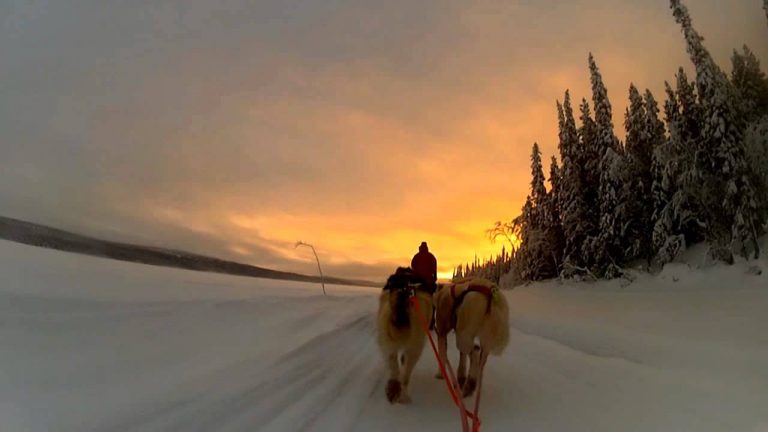
Dog sled vacations in Sweden? No experience or gear is required and all ages are welcome, and you may choose among several operators:

http://www.naturesbestsweden.com/arrangemang/lista.asp?ArrUtbudID=50

020315-dogsledding-in-sweden-daily-scandinavian
And best of all…

After learning voice commands, break, balance and the pedal kick, the only thing you can hear is the panting of the dogs and the sound of soft paws making their way through the pristine snow. Usually you share a team of 5-6 dogs with another participant and take turns driving and sitting on the sled through the Northern Swedish wilderness – with the assistance of an expert guide, of course.

Cool!

The sun is low in the sky and the shadows of the trees spread over the snow-covered swamp like silver streams.

Different packages are available from one-day excursions to all-inclusive multiday explorations into the wilderness.

Written and compiled by Tor Kjolberg

A Norwegian Furniture Design Icon

0

In this article we present snapshots of Sven Ivar Dysthe’s most prominent designs and innovations in industrial design , including his furniture for use in private houses as well as in public buildings,  hotels and companies.

This is a homage to Sven Ivar Dysthe’s sixty-year career as one of Norway’s most celebrated designers in the post-war period. Sven Ivar Dysthe (b. 1931), one of Norway’s few internationally trained designers, was graduated in 1954 with a masters degree in industrial design from the prestigious Royal College of Art in London.

Five year old, his grandfather had given Sven Ivar a carpenter’s bench. “I want to be a carpenter. A cabinetmaker!” he repeated after finishing his fourth form.

He had not been comfortable in school, but woodworking classes had filled him with confidence and belief in his own skill. Even so, his father was disappointed. He had built up an agency business, which he was probably hoping his son would take over. But the youngster had different ideas, and with the help of an acquaintance his father managed to find an apprenticeship at one of Trondheim’s most reputable carpentry workshops.

On 1951 Sven Ivar designed and crafted a huge master dresser, which he made in mahogany with rounded doors, dovetailed drawers, a slatted roll front, internal compartments for envelopes and A4 writing paper, a space to hang shirts and trousers, drawers for underwear and socks, a ventilated drawer for shoes, and even a drinks cabinet from which the owner could serve himself a little restorative, as respectable gentlemen were once inclined to do. This “daredevil creation” and the skills of the young man who made it were assessed by the jury of the Craftsmen’s Guild, and approved as outstanding with regard to all the disciplines involved.

Sven Ivar Dysthe did not exactly hide his ambitions in an interview he gave one September day in 1953. Like the Danish designer Poul Kjærholm, of the same age as Dysthe, the 22-year-old from Norway was trained as a cabinetmaker and the reason for the interview was that Dysthe was about to embark on his final year of training as an industrial designer at the Royal College of Art in London.
270215.sven-ivar-dysthe-visitor-chair-stackable-popcorn
270215-Sven-ivar-dysthe-planetHis professor at the Department of Wood, Metal and Plastics was far from unknown. In 1944 Richard Drew Russell had been appointed “Royal Designer for Industry”, and his influence had been crucial to the design of the forward-looking Festival of Britain in 1951.

In 1954, Dysthe graduated from the Royal College of Art with the best achievable grade, Diploma of Design, First Class.

In 1955 Dysthe returned to Oslo to take up a “summer job” working for the furniture dealer Einar Mortensen A/S. He was commissioned to design a living-room interior for the annual autumn exhibition organized by the Norwegian Association of Applied Art. He created an almost rectangular ensemble of upholstered chairs with a low table arranged around what was in those days the typical focus of such conversational spaces, the fireplace.

That autumn, Sven Ivar Dysthe also met his future wife, Trinelise Hauan, a recent graduate from the School of Interior Design in Copenhagen, where she had studied under Finn Juhl. The fact that both had spent time in the country meant they shared the same aesthetic outlook.

In 1958 Dysthe participated in a competition organized by Askim Gummivarefabrikk to design furniture that would use the company’s Viking foam rubber. Winning first prize, he received 2,000 kroner for the best chair and 2,500 kroner for the best sofa-bed. The chairman of the jury, architect Odd Brochmann, stressed that “Sven Ivar Dysthe’s chair and sofa-bed are in a class of their own, in terms of both design and the use of foam rubber.”

270215-sven-ivar-dysthe-swing-chair-planet
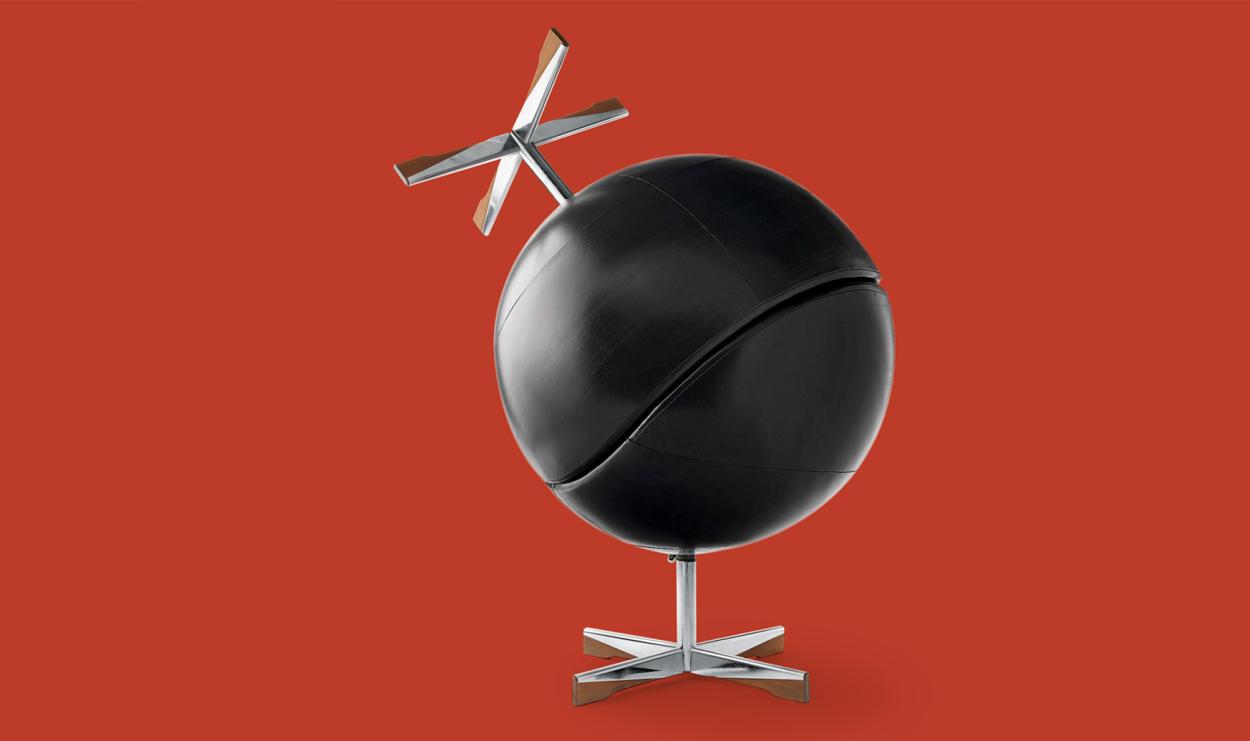
It was the Norwegian experiments with plastic moulding techniques and Lauritz Sunde’s so called “Sundolitt” (polyurethane) that provided the background for Sven Ivar Dysthe’s first shell chair, the hemispherical Globus. Designed in the autumn of 1963 for Møre Lenestolfabrikk, it was produced under the name Planet in 1964.

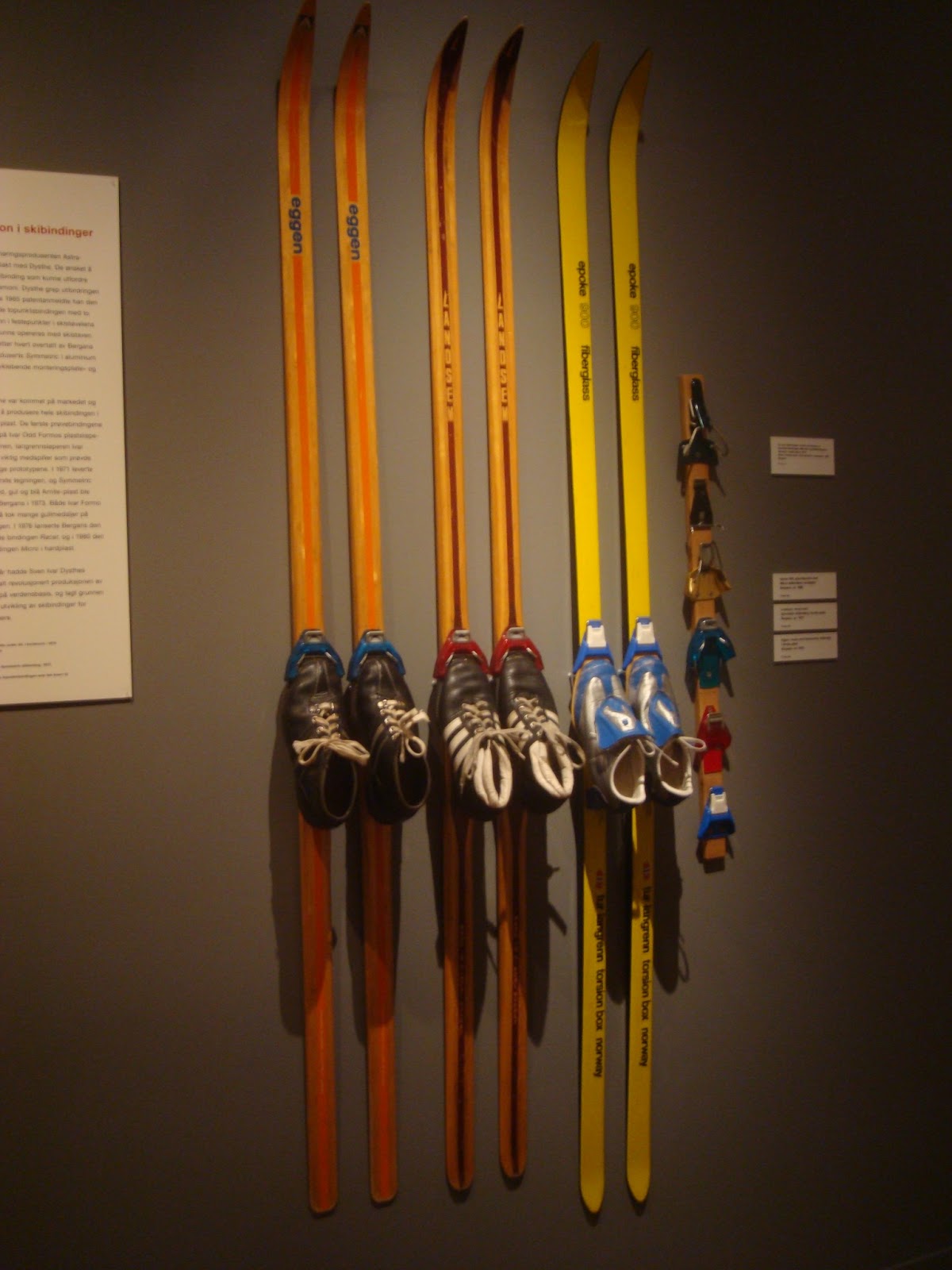
In the 1960s, Dysthe experimented with other inventions besides round plastic chairs, later re – marking that his new “plastic ski bindings were his biggest challenge. ”It was no easy matter to break the market dominance of the traditional Rottefella binding, yet this was the task Dysthe set himself when the ski wax manufacturer AstraWallco AS approached him in 1964.

270215-sven-ivar-dysthe-ski-binding-Symetric
His works represent something important in a dying Norwegian industry of finished products, not least within Norwegian furniture.

Sven Ivar Dysthe’s most famous designs
1960 Leather furniture series 1001
1963 Wall lamp Butterfly
1965 Laminette stack chairs
1965 Swing chair Planet
1966 Ski binding Symetric for Bergans
1968 Glass fiber chair Popcorn, designed for Heine Onstad Art Center
1975 Car adherent Pluss Plass (More Space)
1994 Waiting room benches Gardist for Oslo Airport Gardermoen
1999 Theatre chair Back-up for the amphi stage at Oslo National Theatre

270215-sven-ivar-dysthe-pluss-plass-car-follower
This article is based on excerpts from the book Sven Ivar Dysthe – Swinging 60s, edited by Widar Halén. 

You may read more here.

Love and Relationships in Scandinavia

The myth about «free Scandinavian love» – is it true or false?

Is the institution of marriage disappearing? “Marriage is slowly dying in Scandinavia,” wrote the Weekly Standard, as early as 2004. “Same-sex marriage has undermined the institution of marriage,” researcher Stanley Kurz claimed in the magazine.

The fact, however, is that statistics show that it’s not so, even if USA Today echoed the statement, suggesting that “marriage in parts of Scandinavia is dying.” Why is an American researcher worried about marital bliss, or lack thereof, among people living on the roof of Europe?

I admit that many Scandinavian couples live together as unmarried, so-called ‘sambo’. Some of these couples eventually decide to have a wedding, if only as an excuse to have a big party.

Norwegian weddings today look similar to those of the U.S. and other European countries. The typical bride wears a long white dress and her groom will have on a black tuxedo. After coming to America, many Swedish immigrants abandoned the wedding attire of their homeland in favor of the fashions that were popular there at the time. However, the first generation of Swedish-Americans often returned to the old traditions such as wearing the bridal crown. Bridal couples in Sweden today wear what we would consider traditional wedding attire: a white dress and tuxedos.

Are argument by Kurz and other researchers is debatable. The Nordic Statistical Yearbook shows that the number of marriages in the Nordic countries has increased since 1990, but with individual patterns and fluctuations among the different countries.

What exactly is a marriage?
One definition in the Webster dictionary is “an act, process, or instance of joining in close association.”

In Norwegian folklores and tradition we find wedding formulae that seem to be ancient, i.e., “He weds you to honor and to be the lady of the house, to half the bed and to locks and keys … under one blanket and one sheet.” Perhaps these words go far back in time.

People in Scandinavia today regard legal marriage as a serious step, but not more serious than having a loving, long-term relationship, or parenthood. “Marriage is a contract and symbolic commitment to remain together forever, said the unmarried model Maria Rhodin, when she was 27 and six-months pregnant. “At the same time, it is an expression of love. These ideals of stability, love and commitment haven’t gone out of style, even in progressive and liberal Scandinavia.”

“True love is still very popular as ideal, and people are getting married more now than they did years ago,” said Birthe Linddal Hansen, a researcher at the Copenhagen Institute of Future Studies. Love and relationships in Scandinavia are stronger than ever.

“The concept of a nuclear family is not disappearing, but changing. Marriage is no longer a precondition for settling a family – neither legally nor normatively. This can be illustrated by the fact that about 60 percent of all first-born children have parents who are unmarried and that a marriage certificate is no longer needed to be shown in order to get housing. In other words, what defines and makes the foundation of the Danish family can be said to have moved from marriage to parenthood,” wrote Mogens Nygaard Christoffersen at Danish National Social Research Institute.
260215-shutterstock_Guryanov-Andrey
Scandinavians seem, however, to be waiting longer to get married and waiting longer to get divorced. It’s quite normal to wait to get married until the couple is in their 30s, after having finished their studies.

To many Americans, this practice of waiting, even to have a child or two, before marrying seems strange.  But there are many reasons for this. Longer education, career or the price of buying the first apartment are some of them in addition to the fact that weddings in Scandinavia have become increasingly elaborate and expensive. The high cost of church weddings is a major reason why the majority of couples in Denmark now choose a civil ceremony.

Wedding rituals
Influenced by practices in other parts of the world, wedding rituals in Scandinavia are continuously changing.

“Young women’s participation in global media consumption across different sites indicates that many of the ‘opportunities’ for young women appear to exist beyond the school in the reconfigured labor and leisure patterns of late modern culture,” write Mary Jane Kehilyand Anoop Nayak in their paper Global femininities: consumption, culture and the significance of place.

The fact that Scandinavia is a more secular society than America, that daycare is readily available to working parents, and that government policies actively encourage equality between the sexes all contribute to the widespread pattern if uncertified or delayed marriage. In Norway, for example, parents of infants 1 to 2 years old who do not use subsidized childcare, receive monthly tax-free payments until the child is 19 months amounted to NOK 6,000 (about 860 US dollars) per month.

This is also a reason to a very high female participation in the labor force.

Uncertified marriages
The willingness to accept so-called “open unions” in the Scandinavia countries has existed for a very long time. In Scandinavia, where de facto unions are widespread, that partners also have rights and obligations concerning property, inheritance and maintenance payments following a separation.

The Finnish artist Heta Kucka says, “I have been there, done that. To me getting married just means finding someone to be with, and to be loved, and of course that is something that everyone wants.”

If you believe in the myth about “the Scandinavian sin”, we advise you to think twice.

Images: Shutterstock

Norwegian Screenwriter Wrote Script for Wim Wenders

Last month Wim Wenders won a honoray Golden Bear at the Berlin Fim Festival – the script was written by Norwegian screenwriter Bjørn Olaf Johannessen.

250215-Bjorn-olaf-johannessenNorwegian screenwriter Bjørn Olaf Johannessen made his debut with the stage play Silkematt produced by Norwegian National Theatre in 2000. Johannessen is by education a Marine Engineer and has worked many years as a research scientist and developer of environmental technology.

His main focus since then has been towards feature film and television, including Norwegian as well as International titles such as Bastard (2006), directed by Marius Holst; Nowhere man (2008), directed by Patrice Toye, which was awarded the Sundance NHK International Filmmakers Award in 2006 and the critically acclaimed comedy drama series Trial of Life (2014), written with Per Schreiner and Erlend Loe for Norwegian television (NRK) and which was nominated for the 2014 Prix Europa.

Johannessen’s upcoming work includes feature film Dirk Ohm – The Disappearing Illusionist (2015) directed by Bobbie Peers as well as feature film The Pyromaniac which will be directed by Erik Skjoldbjærg in 2015.

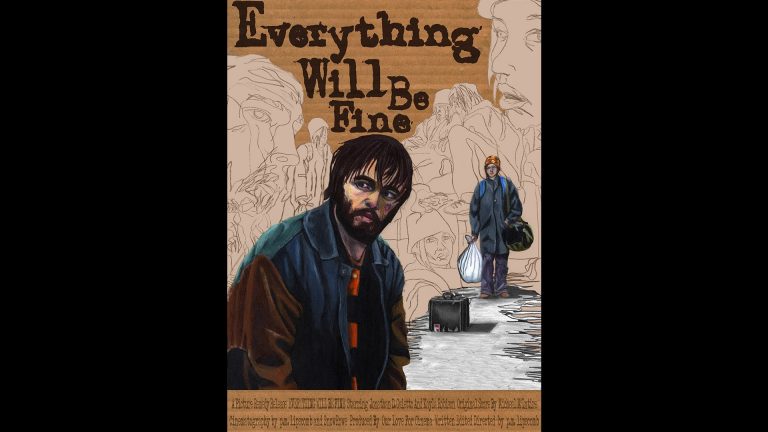
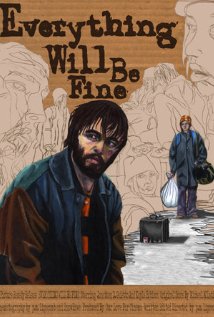
250215-Everything-will-be-fine-movie-posterHis most actual achievement is writing the original screenplay to Oscar nominated director Wim Wenders’ awaited 3D drama Every Thing Will Be Fine (2015), starring James Franco, Charlotte Gainsbourg and Rachel McAdams. The film had its premiering at the year’s Berlin International Film Festival last month.

Bjørn Olaf Johannessen met Wim Wenders at the Sundance Film Festival in USA in 2006. That turned out to be the beginning of a cooperation which resulted in the drama Everything will be fine.  This is one of eight feature films which have received funds from the Swedish Film Institute.

You may also like
Prestigeous Prize to Norwegian Film Director
Wow, What a Film By a Norwegian Director!
Famous Danish Film Directors

Stockholm Bloodbath

0

After more than one trial separation Denmark and Sweden were together again under the Danish king Kristian II (1841-1559). Anti-Danish feeling was growing apace in Sweden when the Swedish assembly voted to burn the fortress of the Archbishop of Sweden, a pro-Dane, Gustav Trolle.

240215-Gustav_Trolle,_Archbishop_of_Uppsala
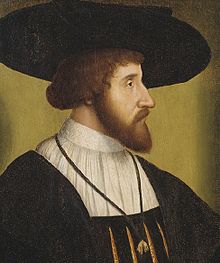
In the event Trolle was merely imprisoned, but in 1520 the Papal Court excommunicated the Swedish regent, Sten Sture the Younger, for this act. Kristian II had the justification he sought for invading Sweden. He invited Sweden’s leading nobles to a feast in Stockholm at which he chopped off the heads of 82 of Sweden’s finest. This has been named the Stockholm bloodbath.

240215-Christian-II_of_denmark
This “Stockholm Bloodbath” provoked a rebellion. Kristian was driven out of Sweden and Gustav Vasa, a nobleman whose family had been victims in the massacre, seized power. Thus began a Swedish dynasty of exceptional distinction and durability.

240215-Gustav_Vasa
Hounded out of Denmark, Kristian II sought refuge in the Netherlands. Norway’s clergy, staunchly loyal to Rome, made him an offer of the Norwegian throne, which provoked violent intervention by Danish and Hanseatic forces with far-reaching consequences.

Kristian spent the rest of his life in Sonderborg Castle, while the Norwegian Church was purged of Roman Catholics to make it Lutheran, and the Norwegian monarchy was abolished.

Norway was thereafter a mere province of Denmark. The tripartite Kalmar Union was dead.

Gustav Vasa, the enigmatic king, portrayed on the Swedish 1,000-krona note, is credited with founding the Swedish state. He’s a folkloric hero, yet his brutal behavior led to armed rebellions in Småland and Dalarne.

All images: Wikipedia

Spectacular Driving in Norway

0

Norway is a spectacular driving location with a number of scenic drives, but it is important to keep headlights on all the time and observe speed limits. 

You can drive on the photo license of most countries but if you hold a non-Scandinavian/English language license it may be best to use an International Driving Permit.

Roads are generally well maintained and in good condition, even minor roads, though in mountainous areas roads are steep, narrow and winding. In the North expect severe winter conditions and many minor roads may close. Winter tires are mandatory from approximately 1 November to 15 April (exact dates can vary year on year).Distances are great and driving takes longer than you think. Keep headlights on at all times and observe speed limits, which are, in general lower than the rest of Europe. Fines for speeding are high and are enforced by automatic cameras.

Alcohol limits for drivers are low and random checks for alcohol are frequent, with severe penalties if you’re over the limit. Driving standards are high and road rules are generally complied with.

Norway is a spectacular driving location with a number of scenic drives such as –

230215-Sognefjellet-National-Tourist-RouteThe Sognefjellet National Tourist Route is the highest mountain pass in Northern Europe  and is widely accepted as one of the most spectacular drives in Scandinavia. Along its 108 kilometres you will find The Sognefjord and Jostedalsbreen Glaciers, and Galdhøpiggen, Norway’s highest mountain.


230215-Hardanger-National-Tourist-Route

The Hardanger National Tourist Route is a 194-kilometre-long stretch of road east of Bergen passing by glaciers, mountains, moorland and waterfalls, it’s seen as the classic Norwegian drive.

230215-Lofoten-touristroute-Norway
The Lofoten National Tourist Route – a 166-kilometre-long stretch of road between the village of Fiskebøl in the north of the Lofoten islands and Å in the south.

230215-Helgeland-Coast-National-Norwegian-Tourist-Route
The Helgeland Coast National Tourist Route is divided in two parts; Helgeland Coast South and Helgeland Coast North.

Helgeland Coast South is a 101-kilometre-long stretch of road between Holm and Alstahaug. Helgeland Coast North is a 129-kilometre-long stretch of road between Stokkvågen and Storvika.

230215-Rondane-National-Tourist-Route-Norway
Rondane National Tourist Route is a 42-kilometre-long stretch of road that follows the border between the Rondane Mountains and the valley from Enden to Folldal . The area is part of the destination Villmarksriket Hedmark, Scandinavia’s southernmost wilderness.

230215-Old-Strynefjell-National-Tourist-Route-Norway
The Old Strynefjell Mountain Road (Gamle Strynefjellsveien) is a 27-kilometre long stretch of road between Videseter and Grotli.

More details of all these drives can be found on this website

The Scandinavian countries are notoriously expensive destinations for food and drink (especially alcohol!). For that reason, many travellers opt for a campervan holiday. This saves on hotel costs and allows you to be self-sufficient in terms of food and drink. The Scandinavian countries are perfect for campervan and caravan holidays as, away from main Cities, the roads are quiet and in good condition, and camp sites are plentiful and have good facilities.

Also, all the countries abide by what’s known as ‘Everyman’s Law’. (In Norway its allemannsrett – all men’s right) This varies by country but generally provides a ‘right to roam’ e.g. the opportunity to hike across or camp on another’s land , boating on someone else’s waters, and picking wildflowers, mushrooms and berries. However — with the rights come responsibilities; that is, an obligation neither to harm, disturb, litter nor to damage wildlife or crops.

Driving distances and times between main settlements in Norway
Oslo- Stavanger -550km, 8hrs
Oslo-Bergen – 520km, 8hrs
Oslo- Trondheim- 500km, 7hrs 15
Trondheim to Bodo- 715km,9 hrs
Bodo to Tromso- 561km, 7hrs
Trondheim- Tromso -1155km, 16hrs
Oslo- Tromso -1650km, 23hrs

Car Rental in Norway
SixtHertz, Europcar, AlamoNational, Avis, Budget,   have outlets here.Also usually features on Car rental broker sites such as Argus Car Hire and Web discount sites such as LastMinute.com.

This company is based in Moskenes in the Lofoten Islands

http://www.rentacar-moskenes.no/

This is a company is based in Svolvær..http://www.rentacar-lofoten.com/information-in-english/
Hertz, Avis and Europcar also have branches in the town

This well-known American company now operate in Denmark,  Norway and Sweden. They rent older vehicles and tend to be cheaper than most of the big companies. They also have less stringent rules on young drivers and renting without a credit card.

http://www.rent-a-wreck.no/eng/

Norway Self Drive Rules
The big companies generally allow Cross Border Rentals to Denmark, Finland and Sweden with no Greencard needed. Cross Border Rentals out of the Nordic countries may be allowed with written authority from the rental company. If they grant permission they will also arrange a green card which you will need to carry in the vehicle. One way rentals are allowed within Norway by some companies. (Sixt allow them between Kristiansand, Stavanger, Oslo, Bergen, Sandefjord and Trondheim.)

Feature image (on top): Aurlandsfjord viewpount, western Norway

All images: Innovation Norway

Getting To “Yes” In Northern Sweden

0

All it takes is a sharp intake of breath through pursed lips, a tradition that has been described as the world’s strangest way to indicate the affirmative.

A simple “ja” does it in other parts of the Scandinavian country, but people from up north don’t even have to say anything. The city of Umeå is located 250 miles south of the Arctic Circle. This may be why they’ve chosen to stop saying one of the most common words in Swedish, ja, which means “yes.”

200215-saying-yes--in-northern-sweden
Reporter Oliver Gee from The Local travelled to the region to delve deeper into this unusual tradition, admitting that at first he thought people were either impressed by him or a little bit shocked.

But locals were very happy to explain the sound to help Gee understand a little better, with some saying that it was even better to accompany the sound with a nonchalant shrug of the shoulders. One women, from Umea, noted that it was so easy because you didn’t even have to open your mouth, while another described it as like sucking a mint.

Swedes from Stockholm and the south revealed that to some extent the sound was being used, with variations like “shoop”, “fjo” and “whoosh” being adopted. However, one commenter, Jan Reuterberg, questioned whether any of the sounds were actually easier than “ja” or a simple nod.

But Stefan Andersson was all for the northerners’ way, noting that it took less energy than an “mm”, which requires exhaling with enough power to arouse your vocal chords, whereas a simple “suup” needs only a quick intake of breath through your teeth.

Some would claim this makes them sound silly, but this is Sweden, a nation of Viking-descended good-governance addicts who hand out Nobel Prizes every year and all speak decent English. Nearly every country has some variation of the world of confirmation that all sound somewhat similar. Except for the city of Umeå in northern Sweden.

Read more about Umeaa:
Umeaa – A Swedish Music Loving City

One of the World’s Best Public Toilets

0

According to DesignCurial, Akkarvikodden rest stop in Lofoten, Norway, is on the Top 10 list of the world’s best public toilets.

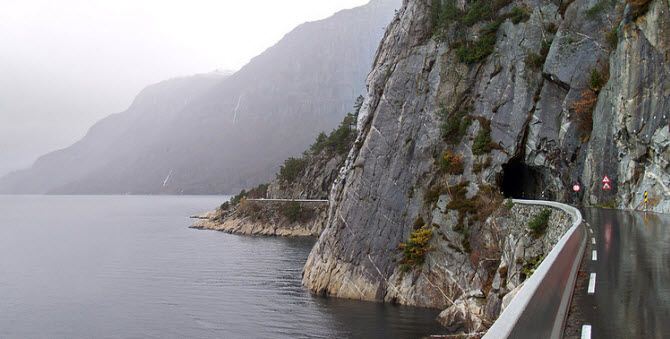
Designed by Manthey Kula Architects the rest stop in Lofoten is built to replace a toilet that had been blown off its foundations by the wind. You find the roadside rest stop in Akkarvikodden by one of Norway’s beautiful and wild National Tourist Routes.

190215-norwegian-public-toilet
There are eighteen such routes in Norway, all chosen for their spectacular and characteristic landscape. The facilities for the tourists that drive along these roads, such as rest stops, viewing platforms and links to local points of interest, are carried out by architects and landscape architects with the purpose of offering an experience of both nature and design. By now six routes already have Tourist Routes status and 12 more are in the planning. The project will be finished by 2016.

Given the fate of its predecessor, the new toilet in Lofoten needed to be solid and durable.

The building is made of 10-12 mm sheets of structural corten steel, which was welded together on site. Two large glass openings give views of the sky and the reflected horizon. The surfaces that come into contact with the visitors – the toilet itself and sink – are made of stainless steel or covered in clear glass to prevent rust staining.

190215-interior-public-toilet-lofoten-norway
The Roadside Toilet Facility at Akkarvikodden is built in connection with existing rest stop designed by landscape architect Inge Dahlmann/Landskapsfabrikken. The commission given to Manthey Kula was to design a toilet facility that could replace an existing structure that had been lifted off its foundations by the strong winds from the Atlantic Ocean. Lofoten is located at the 67th and 68th parallels north of the Arctic Circle in North Norway. The site for the project is extraordinary. The road runs on a narrow plateau between the mountains and the sea. Were the rest stop is the plateau widens out and one experience entering a space between the mountains from where the view to the horizon is very powerful.

The design had two aims. One was to make the small building very heavy so it would not be lifted off ground. The other was to make interiors that shut the scenery out. The first objective was of course very pragmatic, a direct response to the history of the building’s predecessor. The other objective was more obscure. The experience of the place, mountains and sea and the ever-present coastal climate is very intense. The restrooms were conceived to present a pause from the impressions of the surrounding nature, offering an experience of different sensuous qualities.

The rest room is open only during summer season thus the building did not have to be insulated. Initially it was planned in concrete. However, after having checked the work of some local mechanical industries the designed changed to a body of welded plates. The structure of the small building is not unlike the structure of a ship: welded steel plates locally reinforced with steel flanges – every part specially designed for its specific use.

All photos: Paul Warchol, DesignCurial

‘Rocket Man’ Plays at Tivoli, Copenhagen in July

With 250 million records sold worldwide, Sir Elton John is one of the biggest and most successful solo artists ever.

Over five decades, he has played more than 3,500 concerts in 80 countries and with his touching version of Candle in the Wind (Goodbye England’s Rose) he managed to sell 33 million copies.

180215-Sir-Elton-John
“Sir Elton John (‘Rocket Man’) belongs to the top of international pop icons. It will be a great musical summer, “says Tivoli artist manager Rune Erbs Led, referring to Mark Knopfler’s appearance on June 14 and later Tony Bennet and Lady Gaga on July 8.

If you want to experience Sir John there you may either spend 480 Danish kroner per ticket and get access to a restricted area in Tivoli Gardens, or you can just settle for paying the entrance fee to Tivoli, but then you must accept to stand at some distance from the stage.

Tickets can be purchase at Tivoli’s website or at the ticket counter at the entrance.

Sir Elton John will perform in Tivoli Gardens on July 6.