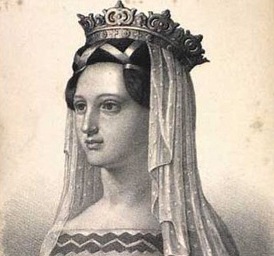
Margrethe I, who had married in 1363, at the age of 10 and given birth to Oluf at 17, knew what she was doing.
With Denmark under Oluf’s little belt and the Norwegian crown bound to follow in due course, she encouraged him to think of himself as “the true heir to Sweden” as well, a presumption that infuriated Albrecht, the reigning king of Sweden.
Nevertheless, Margrethe had to think again when Oluf died at 17. While personally keeping the Danish throne warm, she persuaded the Norwegian nobility to recognize her grandnephew Erik of Pomerania as Oluf’s successor.
Erik, too, was five at this turning point in his career. Margrethe went behind Albrecht’s back to offer the Swedish nobles perpetual rights to their property ab privileges in exchange for their support against him.
Albrecht could take no more. Raising an army of German mercenaries, he demanded satisfaction at Falköping. A chronicler was surprised by the outcome: “God gave an unexpected victory into the hands of a woman.”
The Danish queen Margrethe’s grand scheme was at last realized at Kalmar in 1397 when Erik, now 14, donned the three crowns of Norway, Denmark and Sweden. “Rash, violent and obstinate,” he faced the tall order of running an empire from the Arctic Circle (including Swedish Finland) to the Eider, and west to Greenland, with no money or support from the wary nobility.
Margrethe had her hands full nursing the damage caused by Erik’s railings against these constraints, and she was addressing the aftermath of a war with Holstein when she collapsed.
The Danish nobility wondered aloud whether their interests might be better served by Erik’s nephew, Christopher of Bavaria, and the talk in Sweden was of a separate constitution and a fresh crowned head.
Meanwhile, Erik retired to Visborg Castle in Gotland and applied himself, privately and very profitably, to the business of piracy.
Feature image (on top) Erik of Pommern crowned to King of Denmark, Norway and Sweden June 17, 1397 at Kalmar Castle.
The German photographer Candida Hoefer (born 1944) is often connected to magnificent interior images from historical buildings, libraries, national archives and theatres. Now she exhibits some of her works at Gallery K in Oslo.
Hoefer’s first solo exhibition was in 1975 at the Konrad Fisher Galerie in Duisseldorf. Since then, Hoefer has had solo exhibitions in museums throughiut Europe and the United States. She represented Germany at the Venice Biennale in 2003. The first comprehensive North American survey of her works was shown uncder the title “Architecture of Absence” at Norton Museum of Art in 2006.
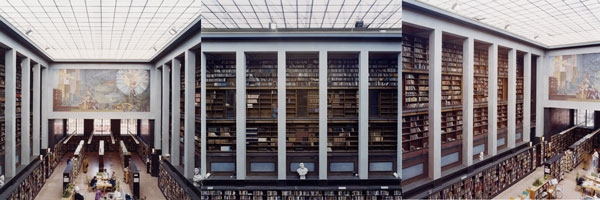
Deichmann Library in Oslo
The exhibition “Spaces of Knowledge” in Oslo shows examples of her play with angles, dimensions and her interpretations of rooms. Sometimes she sees a room from the center, other times from a gallery or an entrance.
The exhibition includes images from the Library in Weimar, Biblioteca América Universidade de Santiago de Compostela and Conway Library, London.
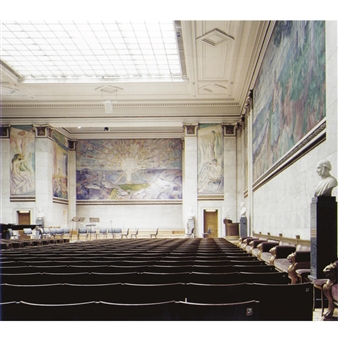
Oslo University Aula
The Oslo exhibition displays also the great works taken by Candida Hoefer in Oslo mid 1990s, culimination with the decoration of the National Museum – Architecture in 2008. In addition to the large photograph Deichmanske Bibliothek Oslo in 2000 (152 x 456 cm), you may experience motifs including the Aula at the University.
Palais des Beaux Arts, Brussels
Candida Höfer lives and works in Cologne. She studied under Bernd Becher together with Andreas Gursky, Axel Hütte, Thomas Ruff and Thomas Struth. They are representatives of the main direction in art photography in Europe, “Becher School”.
University Library in Hamburg
Hoefer is represented in major museums and collections worldwide, MoMA; N.Y, TATE; London, MET; N.Y, Centro de Arte Reine Sofia; Madrid, J. Paul Getty; L.A, Guggenheim Museum; N.Y, Centre Pompidou; Paris, Le Louvre; Paris.
In Norway Candida Höfer represented at the National Museum, Astrup Fearnley Museum, Nordea Kunstsamling, Storebrand Kunstsamling and several private collections. In 2007 she had a retrospective exhibition at Henie Onstad Art Centre.
Hoefer’s imagery has since the 1980s constantly focused on the depopulated interiors of institutional and geographical interiors, but the formal similarity among her images is their dominant organizing principle.
Feature image (on top), Viking Ship Museum in Oslo
When the British journalist and author Michael Booth, living in Copenhagen, read that Scandinavian people had been anointed the happiest people in the world in the so-called “Satisfaction with Life Index”, he was intrigued to find the truth about the Nordic miracle.
What he found resulted in the book, “The Nearly Almost Perfect People”, first published in England by Random House, then translated into Danish and subsequently released this month in the USA. In my opinion, this book is a must-read book for all persons interested in Scandinavia, working with Scandinavians, or planning a trip to this part of the world. It is always interesting for the happiest people on earth to read how we are seen by foreigners, and what we might learn from it.
Many people believe that Norway, Sweden and Denmark are a region populated by a homogeneous people – nothing is further from the truth, which one can really learn by reading Booth’s entertaining but also informative book.
Michael Booth has traveled extensively in the five Nordic countries, well aware of the fact that Finland and Iceland do not belong to Scandinavia, but as he says, “The Finns have reserved the right to opt in and out of the old marauders’ club as and when it suits them, and I don’t think the Icelanders would be too upset to be labeled as Scandinavians either.”
The author has met people in different situations in the five countries and has interviewed professors and economists as well as socio-anthropologists and inhabitants in general. When he describes the different countries and their peoples, he often makes preposterous statements, but instead of passing the assertion unchallenged, he most ably avoids being interpreted as accusing people or behavior by explaining why they are the way that they are.
Michael Booth. Photo: Tor Kjolberg
In spite of its humoristic and often cynical style, this book reveals supporting statistics, mentions other books and facts on the Nordic economies, as well as the lifestyles, habits and histories of each – all contributing to making this book a most reliable source of information.
Nevertheless , there are those who may be offended. Not everything or everyone is perfect, even in Scandinavia, and that is why I recommend that Scandinavians read it as well. As a snotty Brit, to use his own description, he drills into issues that are particularly sensitive for Scandinavians, asks sarcastic questions and analyzes the answers in both an ironic and candid way. For example – why are the Nordic people not known for being the most sober people on this earth when they have established their state wine and liquor monopolies. Booth’s keen observations take us through five different countries, full of surprises and pointing out characteristics which in his view are worth thinking about.
When Michael once wrote a subtle comment about the Nordic countries in a British paper, the most aggressive reactions came from Norwegians.
Throughout his book, Booth balances humor with facts and personal experiences. His chapter titles might, however, create some confusion and curiousness such as “Dixieland” and Denmark? Booth tries to compare Danish congeniality to American Dixieland jazz in a beer garden. In his chapter on “Elves” he stresses that 54 per cent of Icelanders believe in the existence of elves, and he cannot resist making jokes about Norwegian national costumes, which he mockingly refers to “dirndls” from the German Dirndlkleid . He also devotes a full chapter on Finland to “Santa” and on Sweden to “Donald Duck”.
Don’t be turned off by funny chapter titles, though. I would describe Booth’s book as an artful critique, sometimes revealing that what is superficially good may be bad in practice; Sweden’s long-standing neutrality, which has annoyed other Nordic countries, and Norway’s nationalistic and even egoistic attitude enhanced of “we know best”, all aided by the country’s oil economy. The author writes that Norwegians were traditionally thought of as Scandinavia’s “country bumpkins”, whereas the Danes’ emphasis on equality, leads to less individual success.
Booth embraces the Economist’s description of Scandinavia in the magazine’s special edition on the region, “Scandinavia is a great place in which to be born…but only if you are average. If you have average talent, have average ambitions and average dreams, then you’ll do just fine, but if you are extraordinary, if you have big dreams, great visions, or just a bit different, you will be crushed, if you do not emigrate first.
The Longitude Blog claims, “Regardless, Booth urges readers to see beyond tired tropes and become better acquainted with the quirks and charms of the Nordic region. His insightful and entertaining profiles define each country as unique destinations , inviting travelers to further explore the compelling and contradictory cultures of Scandinavia.”
You are hereby invited to read Michael Booth’s excellent book on the Nordic Utopia.
An interview with Michael Booth will follow next month.
The Nearly Almost Perfect People, review by Tor Kjolberg
The Oslo based design company Neue has created a modern, bold passport design and ID concept for Norway. Perhaps the world’s coolest passport, according to the British paper the Telegraph.
A competition to redesign the Norwegian passport has been won by the Oslo based design company Neue, which has created a modern, bold document already winning international praise for capturing the national identity
The designfeatures beautifully simplified depictions of Norway’s natural landscapes drawn with fine lines in pastel shades. The cover features a modernized version of the national crest, stamped in gold on unusually bold colors, either white, turquoise or red for immigrants, diplomats and standard passports respectively.
When shone under UV light, the landscapes within the pages transform to show the northern lights in the night sky, a magical touch that adds a deeper sense of intrigue to the already striking document.
“All Norwegians are so connected to nature, it’s a very strong part of our history and defines us as a country,” says Gørill Kvamme of Neue, who explains that the minimal concept came from seeking to find the “essence of something”.
“It represents the vast variety of nature and landscapes you find in Norway … which makes it relevant to all of us whether you have always lived there or just received your citizenship.”
Praising the design, the jury applauded its wide appeal. “It both illustrates the Norwegian identity and makes sure the passport will be viewed as document of high value,” they said. “The design is attractive and stylish, the colors are subtle and the abstraction of the landscapes are exciting. Aesthetically, the landscape motifs have been given a distinctive look. The jury appreciates the simplicity of the solution.”
Now Neue will work closely with the National Police Directorate to find a way to balance the design with the complicated security expectations of a passport – something they are not currently able to discuss in detail. No date for the passport’s release has been set but it is expected to be within the next two years.
Passports aren’t the only national symbol the state has opened up to the country’s design teams. Last month – as a result of a similar competition – Norges Bank picked proposals from design studios Snøhetta and The Metric System for their new kroner notes. Pixelated and also featuring bold colors, the new notes are due to be released in 2017.
Along with the country’s new passports, they show how progressive design is tied in with the Norwegian way of life. As Kvamme says: “Design has a natural role in helping express what country or culture you are a part of.”
The British paper the Guardian asks if the new Norwegian passports, due to be released in two years, already is a design classic.
“If the passport is a symbol of national identity, then the new design for Norway’s travel documents has undoubtedly cemented the country’s reputation as a land of sleek, minimalist beauty,” the newspaper claims.
Local authorities in Jutland, Denmark have proposed developing the largest waterpark in Northern Europe. Sondervig Feriepark (Holiday Park) is estimated to cost approximately one billion kroner (143 million dollars) and employ 1,000 workers by 2020.
The Danish Ministry of Environment must, however, approve the project as one of ten permitted to take place in western Jutland’s protected coastal zone.
Last year the government approved the initiative in an attempt to support rural communities, dependent on tourism. There are currently 3,000 people working within the tourism sector.
Mayor Iver Enevoldsen of Ringkobing-Skjerm believes the application for the outdoor waterpark and new summerhouses in Jutland will be approved since the
documentation is good and this is the only municipality in the region applying for such a project.
The Ministry of Environment claims on the other side that they have received applications for ten different projects from nine municipalities. The final decision will be taken before summer.
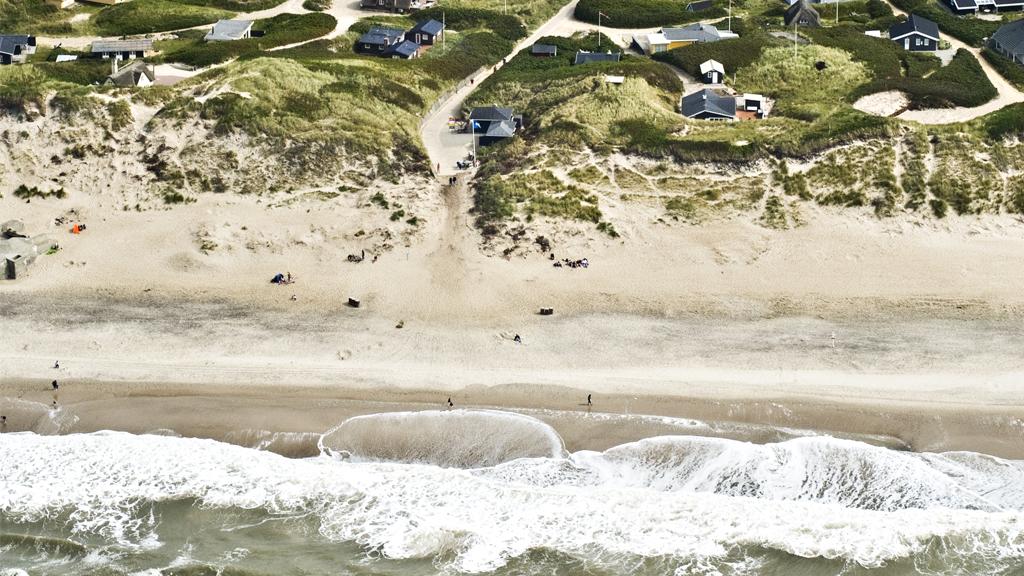
However, even today there is white sand as far as the eye can see. Three minutes’ walk from the city
center, you may experience the sand dunes and just beyond them the beach with plenty of space
and the sea. Walking along the small paths you can marvel at the beauty of nature.
The possibilities for biking are endless, or if you’re more the hiking type, why not pack a picnic basket
and enjoy the fresh sea air along the pedestrian paths. You decide the mileage, and the next
adventure is just around the corner.
From the holiday homes right along the dunes the sea can be clearly heard, so light a fire and enjoy
the indoor pleasures. It is therapy for the soul.
And don’t forget your binoculars. Sondervig offers bird adventures all year round. Each month
brings new birds to study.
17 years old Monica Fürst was sent to language school in Nice, France. That was the beginning of her lifelong relationship with France. After finishing high school she studied French and art history at the Sorbonne University in Paris.
The Norwegian painter Monica Furst has had a studio and apartment in Nice the past seven years, and now she exhibits her paintings in Oslo, illustrating the differences between Norway and France.
Fürst had her debut exhibition in Oslo in 1976. She is educated at the Oslo Drawing- and Painting School, and participated in the annual Oslo Autumn Exhibition in 1995. Since then she has regularly exhibited in Krageroe, Jomfruland and Oslo, but also participated in group exhibitions in Nice.
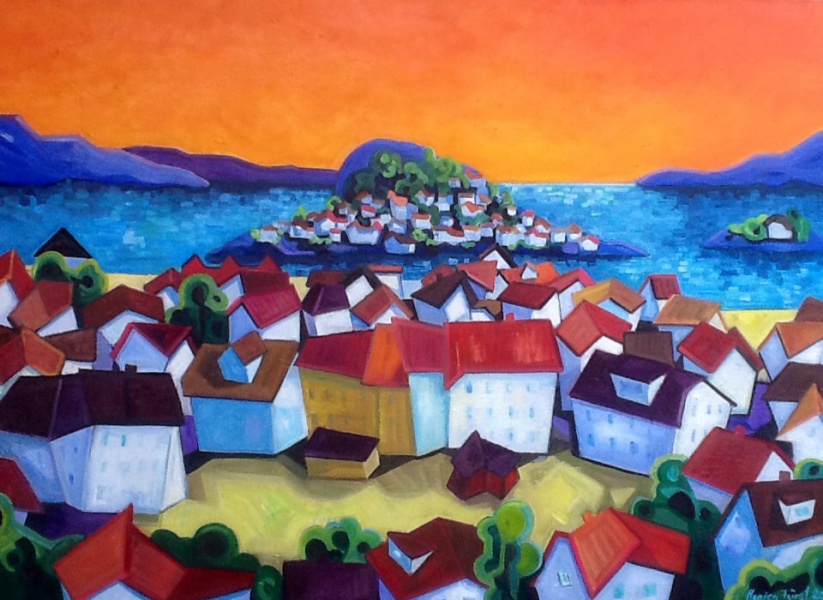
The last seven years she has lived in Nice during winter and in Krageroe, south in Norway, during summertime. And these two cities recur in her motifs. In her naïve style she paints regognizable places. The French Riviera has for generations attracted artists from all over the world, and the magical light is attractive even in January.
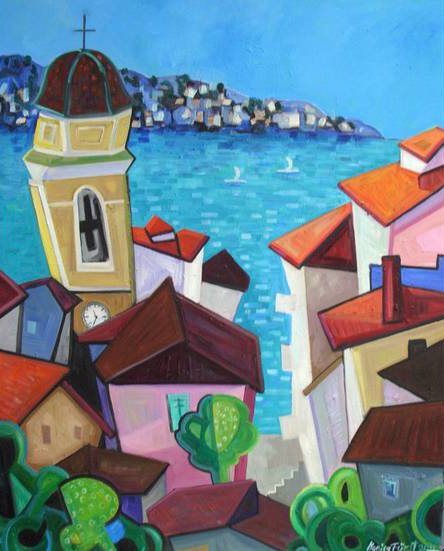
The old, crooked houses and the urban environment in Villefrance are her main motifs. Colors are happy and strong – a typical Fürst expression. Villefrance is a little place just east of Nice towards the Italian border. The houses are located as in an amphitheatre on a steep slope facing south and overlooking the Mediterranean. Here you will experience azure sea, green trees, crooked roofs and houses in all shades of red and orange clinging to the cliff edge.
In the bottom of the city center the church bells in the little yellow church are chiming every day. Fürst has used the old, crooked houses to create wider angles, and in the picture shown here she illustrates something quite common: a sense of happiness from the view of the blue, flashing sea and some old, venerable houses.
The exhibition at Gallery Artgate, Nedre Vollgate, Oslo, runs through February 14.
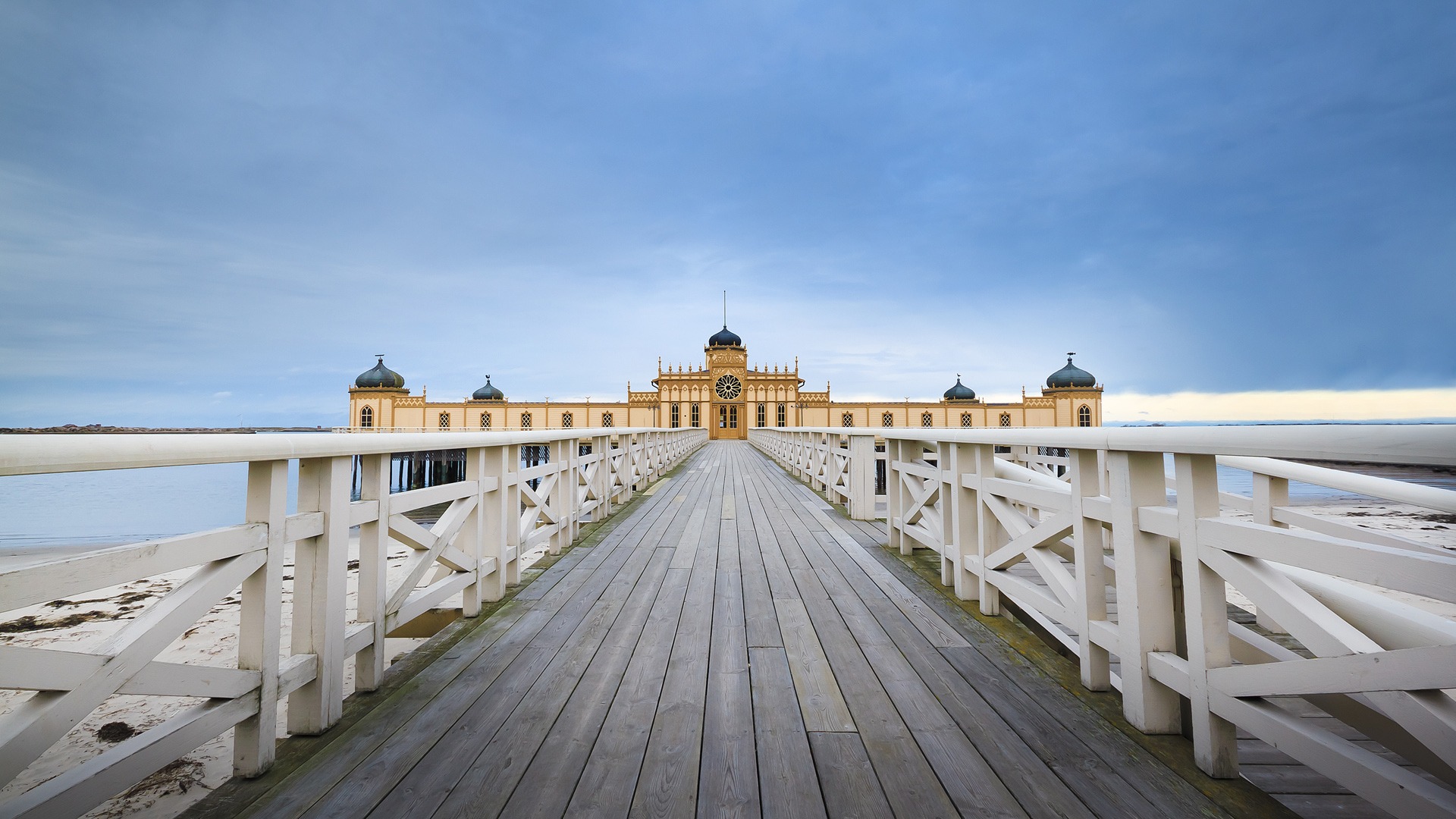
The Swedish Ice Castles have been the scene of sins and orgies, burned and blown away, and torn and rotted at root. Today though, the Swedish cold baths are filled again with naked bodies and a belief in the future.
West coast storms have devastated the buildings and bathhouses which have been in fashion in terms of health and water over the years. Today Varberg has the most Spa facilities in the country.
Each day throughout the winter hundreds of Swedes throw off their clothes and have no inhibitions to nurture body, mind and socializing around icy swimming holes. The cold bath in Varberg fortunately brings our minds to warmer latitudes.
The history of Varberg A health resort tradition has existed in Varberg since the 1800s. The large range of facilities and proximity to the fresh salty sea has led to the town becoming the municipality with the highest density of spas in the country. Over the years bathhouses have been built and equipped with the latest developments in water and health treatments.
Varberg’s first hot bathhouse was built in 1823 between the present customs house and the cold bathhouse. Initially the bathhouse only comprised five bathrooms, but as the number of guests increased, the building was extended and by 1860 it had no less than twelve bathrooms. The guests were served by six female bath attendants. The town was gaining an increasingly solid reputation as a health resort.
1852 was an important year for Varberg as steamer traffic began along the coast from Göteborg to Malmö increasing the desire to travel to Varberg. The town’s authorities also realized that this pressure would mean that the seaside resort would need to be developed.
The Varberg of today, with its health- and spa facilities, has so much more to offer. Since the 1920’s Varberg has been a seaside and health resort for everyone, as the old health resort concept is moving more and more over to the Spa concept – “Salus per Aqua” from the Latin, “health through water”.
Bjerreds Salt Sea Bath
The first meeting regarding a new bathhouse in Bjerred was held in September 2001. Two and a half years later the new building, located 600 meters into the Lommabukten (Lomma Bay), was inaugurated. In April 2014, the Bjerreds Saltsjöbad celebrated its ten year anniversary.
Most of the approximately 50 cold bath houses along the Swedish coast are experiencing a visit bonanza. In recent years, tens of millions of Swedish kronor have been spent to renovate the elegant seaside houses of Varberg and Malmö to their former glory. Nowadays, when the warehouse giant IKEA wants to show the world its roots, posters of the now ten year old Bjerreds Saltsjöbad are printed
The news of this futuristic, functionalist house hovering weightlessly like a flying saucer above Øresund struck like lightning in Sweden when it opened. For the first time in a very long time a new cold bathhouse was built and that in an embodiment which honored historical heritage and at the same time showed the way toward the future. Since then a small forest of modernist seaside bath houses has grown up along the west coast. Once again people are recalling the frenetic old days.
Ribersborg Coldbath House In June 1898 the new cold baths at Ribersborg in Malmo were Inaugurated.
Frozen lips distort a strange dialect over to pure babble. Bicycle chains freeze and even the ocean gets a cover. This hibernation is broken behind the elegant façade of the Ribersborg Coldbath House as splashing, gasping and lustful moaning rise towards the heavens. Nary a piece of cloth is to be seen, but when so many people are bathing naked together the sexual aspect somehow disappears.
The initiative for this was the cane factory CA Richter, which bought the building from the old cold bath house at the entrance to Nyhamn. The Scandinavian concept of cosiness has long been the key to surviving bleak, dark winters, and the inviting little café in the Kallbadhus epitomises this ideal.
Ribersborgs Coldbath House is named after the district Ribersborg. In 1902 a storm called “the Christmas hurricane” in western Sweden destroyed the bath. Reconstruction was made, and today large picture windows face out to sea, providing a much more calming view than the blasé nudity of the Swedes.
Whereas nouveau rich Norwegians check into spa hotels to pamper well-fed bodies in mud baths, chocolate mousse and spring water, the Swedes are swept with an opposite epidemic, “coldbath”, a physically and mentally ice cold dip in salty minus degree water, always followed by red-hot sauna.
Finnish researchers have concluded that the combination of sauna and ice swimming frees the body’s stores of the stress hormone endorphin. Overdoses of nature’s own morphine are why the cold bath houses smile when they should have been crying. They are high on the sea.
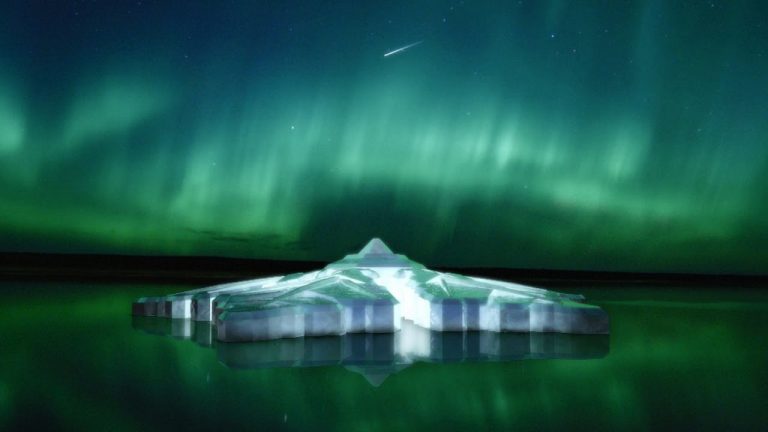
Norway will soon have the world’s first floating snowflake hotel.Dutch Docklands is currently working on a project of a floating 5-star hotel in Norway in one of the most beautiful natural surroundings on earth.
So this new floating hotel could be the perfect answer for holidaymakers who want to spend their evenings looking skyward for a glimpse of the glorious Northern Lights.
The design is based on an icecrystal which blends-in naturally with the “winter environment” between the most beautiful fjords. The hotel with a diameter of 120 meter will have 86 rooms, conference rooms, spa & wellness facilities and is completely self- supporting and self-sustainable.
A wall of windows will offer views of the snow-capped Norwegian coast, as well as the potential for some epic northern lights shows, according to Huffington Post.
The Snowflake hotel in Norway will be situated near Tromsø, a popular tourist town in the Arctic Circle known as a superb place to see the northern lights. Developers will tether the massive snowflake to the fjord’s floor, though it will be able to float about six to 10 feet from its center.
The Krystall is scheduled to open at the end of 2016, a hotel rep told The Huffington Post in an email.
“Scandinavia…actually consists of Denmark, Finland, Iceland, Norway and Sweden!” wrote a lady, working in an agency named Lila Travelpartners, to us some weeks ago.
The mail continued:
“Dear editors,
Times of 3 country Scnadinavia are definitely over…
The world has shrunk..
After working 30 plus years sending Americasns et all to all over.
The Scsndinavian tourist bureau comprised all 5 countries..
Do not shoot in your own foot by trying to promote just the three countries.
For instance Lapland continues till Russian border over Finland.
Even
You tube is full of Aurora borealis videos from all over Lapland.!!
..or
are you funded by SAS airtlines?
Most respectfully
(to be polite we have omitted the name of the sender, but not corrected the spelling mistakes.)
… and we could not hesitate to send our reply to the sender:
Dear xxxx,
I am sorry, but you are wrong. Scandinavia consists of just three countries, Denmark, Sweden and Norway. Please refresh your geography lessons,
As a Scandinavian I should know. Citing my British journalist friend, “The Finns have, however, reserved the right to opt in or out of the old marauder’s club as and when it suits them, and we don’t think the Icelanders would be too upset to be labelled Scandinavians either.”
If we are going to lump all five countries together we really ought to use the term “Nordic.
Thank you for your interest in our online magazine.
Yours sincerely
Tor Kjolberg, PhD, MNJ
Editor in Chief
(Both the Letter to the editor and our reply are authentic communication.
Oslo, Norway, is reinventing coffee in a very good way. That’s one of the reasons USA Today ranked Oslo as one of the ten top coffee cities in the world.
The signature roast in Oslo is exceptionally light, resulting in an unusual flavor that, for most, takes a little getting used to. But converts say the style celebrates the true nature of the beans, turning a great cup of coffee into a fantastic one.
“I’m a convert. After spending two weeks in Oslo and drinking some of the most extraordinary coffees I ever encountered. While many cities are resting on their creaking reputations, Oslo is forging a new standard,” wrote Oliver Strand, coffee writer in New York Times.
“Oslo is on top with Seattle, Portland and San Fransisco,” says an enthusiastic George Howell, behind the coffee chain “The Coffee Connection,” later bought by Starbuck.
The beginning of the huge interest for coffee in Norway was the trade with Brazil. Norway exported dry fish and received coffee in exchange
But it was not before 1994 the American trend with coffee bars based on Italian espresso culture arrived in Norway.
Here are some of Oslo’s hottest coffee bars recommended by the Daily Scandinavian team.
Fuglen (The Bird)
Having served coffee continuously since 1963, Fuglen has one of the longest pedigrees in Norway. Located in downtown Oslo, set slightly apart from the main streets in the area, it is at once both close by and tucked away. In 2011 Fuglen has been featured in global publications such as Monocle, where it was just listed as one of the world’s five best retail concepts. Fuglen opened a branch in Tokyo in May 2012.
Java at St. Hans Haugen offers their black coffee batch brewed, or brewed to order using a variety of different methods – normally a syphon or Hario V60 pour over. The exterior has no signage, but it’s hard to miss, with its enormous windows and tiled interior. The owner, Robert W. Thoresen won the Coffee World Championship in Monte Carlo in 2000.
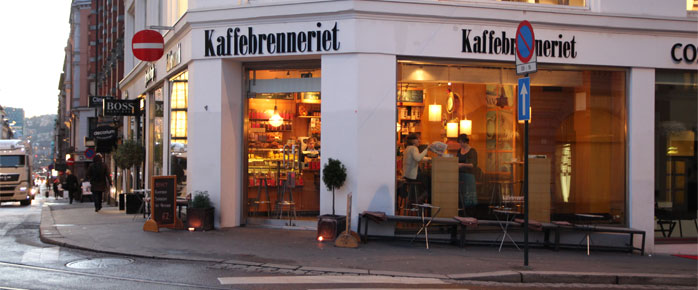
Kaffebrenneriet i(‘The Coffee Roastery’) is Oslo’s longest-running chain of coffee shops. Since opening their first shop in 1994, a stripped space in Oslo’s Bislett area, Thomas Pulpan and Steinar Paulsrud have built a thriving business that is now the single largest purchaser of Cup of Excellence coffee for the consumer market—globally.
Mocca Mocca Kaffebar & Brenneri is a laid-back coffee bar located at the upscale neighbourhood of Briskeby. This is a great spot to unwind while enjoying well-crafted black coffee and espresso drinks.
If you’re downtown in Oslo and in need of a fantastic cup of coffee, then head over to Stockfleth’s in Lille Grensen. Stockfleth’s happens to have several locations around town, but this is the original, dating back to 1895.
Tim Wendelboe micro roastery and espresso bar located at Grunergt 1, east in Oslo.
“It feels like a neighborhood shop, but it’s run like a Michelin-starred restaurant,” according to Strand. Tim Wendelboe won the Coffee World Championship in 2004.