The Bluest Light in Scandinavia

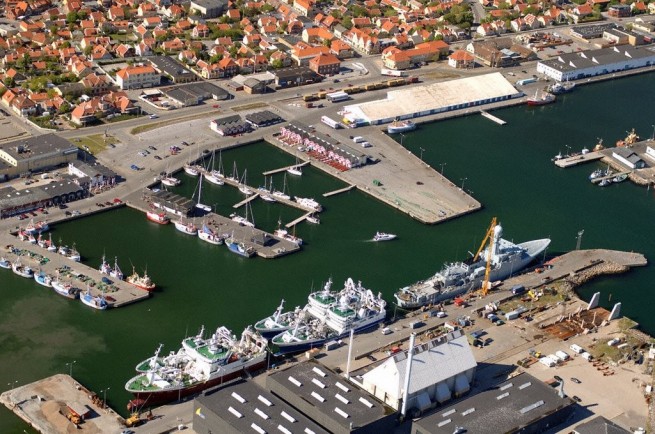
Skagen, a harbor village at the top of the Jutland Peninsula, was discovered by a group of painters in the middle of the 19th century who were drawn here by the unique play of light in this area of Scandinavia.

????????
As one Skagen painter said, “Where two seas meet, the light can’t help but be the bluest in cration.”

????????
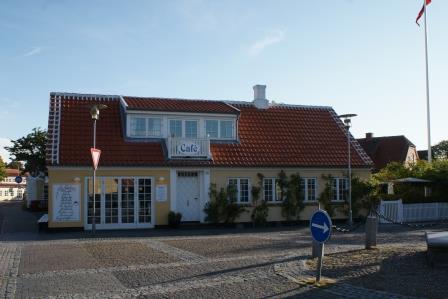
The Danes consider this something if a Riviera, while Americans liken it to Cape Cod. At the Jutland peninsula’s – and mainland Europe’s – northernmost tip pointing into the North Sea, the small weather-hardened fishing communities who for centuries inhabited these heathered moors and sea-swept coastline have been joined by a thriving artist’s colony – and the tourists who followed.

????????
All were lured by Skagen’s simple life – the characterful town and unspoiled dunes.

The small but excellent Skagen Museum illustrates works of the local, late-19th-century impressionist movement that was inspired by the land- and seascapes, and the shifting colors and quality of the light here.

????????
An all-year destination
In Skagen there’s always something exciting going on – whatever the time of year. Late summer, for instance, or magical Blue September as it is also called, there are exciting and crazy events with a blue theme.

Spring is a time for temptation. Spend a couple of days to enjoy the town, scenery and art before the bulk of the tourists arrive. Let the spring sun kiss your cheeks.

The atmosphere on a summer day is absolutely unique. The town and the harbor buszz with life and you can enjoy your meals outdoors.

When the great invasion of summer guests is over, you can experience the town in a completely new way. It’s your chance to meet the real Skagen.

????????
A winter holiday allows you to immerse yourself in the Skagen painters or the town’s history. Wrap up and go for a walk on the beach to experience the enormous forces of nature at first hand. Ore head for the dune plantation to shelter from the wind.

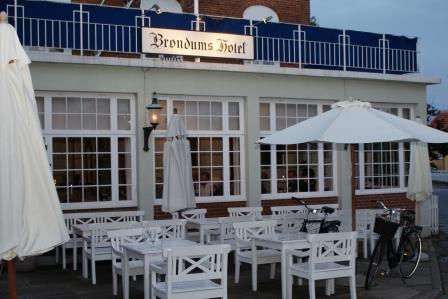
Writers have been equally moved: Isak Dinesen wrote much of Out of Africa while a guest at the wonderful charming, gabled Brøndums Hotel. Creaking floors and antique-furnished sitting rooms kame this feel like a private home, one distinguished by a number of old paintings given in exchange for lodging.

????????
The 150-year-old inn’s intimate dining room produces exceptionally fresh and delicious meals, with a predictable accent on seafood.

Every morning at dawn, the local townfolk have the pick of the best at the wharf’s barnlike fish-auction house before the day’s catch is spoken for and shipped off to markets all over northern Europe.

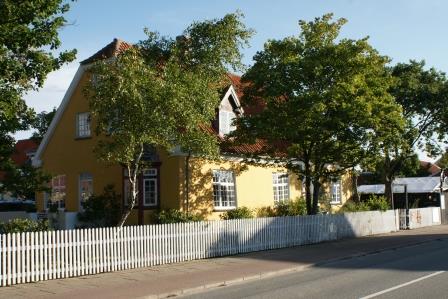
It was simply by chance that architect Ulrik Plesner was sent to Skagen in 1891 to supervise the erection of a lighthouse in Old Skagen. On arriving in the town, he checked in at Brøndums hotel and quickly got to know the Skagen painters. For the next 40 years Plesner left his mark on Skagen’s architecture, in addition to which several well-known architects followed in his wake.

????????
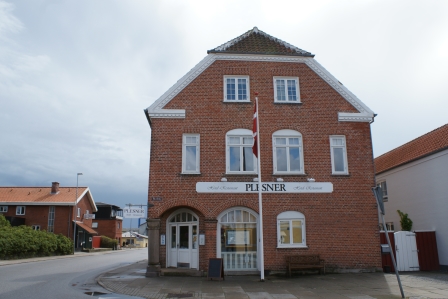
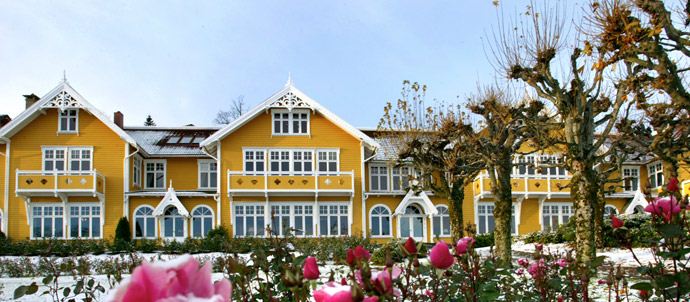
Plesner was a part of Skagen’s famous and infamous artistic community, which in the late 1800’s introduced an unprecedented decadent and liberated life style in town, and to this very day, Plesner hotel, which he designed in 1907, carries on his spirit.

We stayed at Brøndum hotel and Plesner hotel. Experience the bluest light in Scandinavia!

Reviews will follow soon.

Text and photos: Tor Kjolberg, except featured image on top by Lasse Tur.

Nine Pioneering Scientists Receive the 2014 Kavli Prizes Today

0

Oslo September 9, The Kavli prizes recognize scientists for their seminal advances in astrophysics, nanoscience and neuroscience. This year’s laureates were selected for pioneering the theory of cosmic inflation, for transformative contributions to the field of nano-optics and for the discovery of specialized brain networks for memory and cognition.

090914_kavli-week-oslo-norway
The Kavli Prize is awarded by The Norwegian Academy of Science and Letters and consists of a cash award of 1 million US dollars in each field. The laureates receive in addition a gold medal and a scroll. The announcement was made by Nils Chr. Stenseth, President of The Norwegian Academy of Science and Letters, and transmitted live to New York as part of the opening event at the World Science Festival on May 29.

Kavli Prize in Astrophysics
The Kavli Prize in Astrophysics is shared between Alan H. Guth, Massachusetts Institute of Technology, USA, Andrei D. Linde, Stanford University, USA, and Alexei A. Starobinsky, Landau Institute for Theoretical Physics, Russian Academy of Sciences, Russia. They receive the prize “for pioneering the theory of cosmic inflation”. The theory of cosmic inflation, proposed and developed by the three prize winners, has revolutionized our thinking about the Universe.

090914_Kavli_astro-three
According to this theory, very soon after our universe came into existence it underwent a short-lived phase of exponential expansion. During this brief period the universe expanded by a huge factor – hence the name inflation. The consequences of this episode were momentous for the evolution of the cosmos.The field of inflation theory now occupies thousands of theorists, and many variations of inflation are being actively debated.

Kavli Prize in Nanoscience
The Kavli Prize in Nanoscience is shared between Thomas W. Ebbesen, Université Louis Pasteur, Université de Strasbourg, France, Stefan W. Hell, Max Planck Institute for Biophysical Chemistry, Germany, and Sir John B. Pendry, Imperial College London, UK.

090914_Kavli-nano-three
They receive the prize “for transformative contributions to the field of nano-optics that have broken long-held beliefs about the limitations of the resolution limits of optical microscopy and imaging”.

With their respective work, they have challenged established beliefs about the resolution limits of optical imaging, showing that light can interact with nanostructures smaller than its wavelength.

Seeing at the ‘nanoscale’ was long considered to be limited in visible resolution by the finite wavelength of ‘light’, so that only objects larger than ~ 200 nanometers could be imaged. This is about 100 times smaller than the diameter of a human hair.

Each of this year’s prize winners, through their different insights and routes, has independently advanced our ability to ‘see’ nanostructures using ‘ordinary’ light. This ability to see and image nanoscale objects is a critical prerequisite to further advances in the broader field of nanoscience.

Kavli Prize in Neuroscience
The Kavli Prize in Neuroscience is shared between Brenda Milner, Montreal Neurological Institute, McGill University, Canada, John O’Keefe, University College London, UK, andMarcus E. Raichle, Washington University in St.Louis School of Medicine, USA. They receive the prize “for the discovery of specialized brain networks for memory and cognition”.

090914_Kavli-neuro-three
The recipients of the Kavli Prize in Neuroscience have all played major roles in advancing our understanding of memory and in the development of techniques to measure the brain. They have discovered that these functions are produced by specialized systems in the brain, which they analysed through a variety of research approaches. They have found the specific regions of the brain that are involved in memory, and how specialized nerve cells perform different roles.

The higher cognitive functions of our brains such as attention, memory, and planning are crucial to create our rich mental lives: memory is essential for humans, from the recognition of where we are, through learning new skills, to being able to recall events. In humans memory can be said to define who we are, and we know that loss of memory can have devastating effects on an individual’s personality. Knowing how memory function should work in healthy people could open the door to understanding what has changed in patients with dementia and memory loss.

About the Kavli Prizes
The Kavli Prize is a partnership between The Norwegian Academy of Science and Letters, The Kavli Foundation (USA) and The Norwegian Ministry of Education and Research. The Kavli Prizes were initiated by and named after Fred Kavli (1927 – 2013), founder of The Kavli Foundation which is dedicated to advancing science for the benefit of humanity, promoting public understanding of scientific research, and supporting scientists and their work.

Kavli Prize recipients are chosen biennially by three prize committees comprised of distinguished international scientists recommended by the Chinese Academy of Sciences, the French Academy of Sciences, the Max Planck Society, the U.S. National Academy of Sciences and The Royal Society. After making their selection for award recipients, the recommendations of these prize committees are confirmed by The Norwegian Academy of Science and Letters.

The 2014 Kavli Prizes will be awarded in Oslo, Norway, on the 9th of September. His Majesty King Harald will present the prizes to the laureates. This year’s ceremony will be hosted by Alan Alda and Haddy N’jie.

The ceremony is part of Kavli Prize Week – a week of special programs that celebrate extraordinary achievements in science, educate the public on important scientific advances, and bring together distinguished members of the international community to discuss key global issues in science and science policy.

Featured image on top: The laureates met President Obama
President Barack Obama greets the 2014 Kavli Prize laureates in the Oval Office, July 31, 2014. Clockwise from left: Kavli Laureates Andrei D. Linde, John O’Keefe, Alan H. Guth and Marcus E. Raichle; Kåre R. Aas, the Norwegian Ambassador to the United States; Rockell N. Hankin, Chairman of The Kavli Foundation; Robert W. Conn, President and CEO of The Kavli Foundation; Miyoung Chun, Executive Vice President of Science Programs of The Kavli Foundation.
(Official White House Photo by Pete Souza)

For more detailed information on each of the prizes, the 2014 laureates and their work, and Kavli Prize ceremony and other events during the Kavli Prize Week in September, see the Kavli Prize web page www.kavliprize.no

A Wild Land

Scandinavia’s countryside is cherished by its green-minded inhabitants, a spiritual retreat full of flush berries and wild animals.

060614_Norwegian_fjord
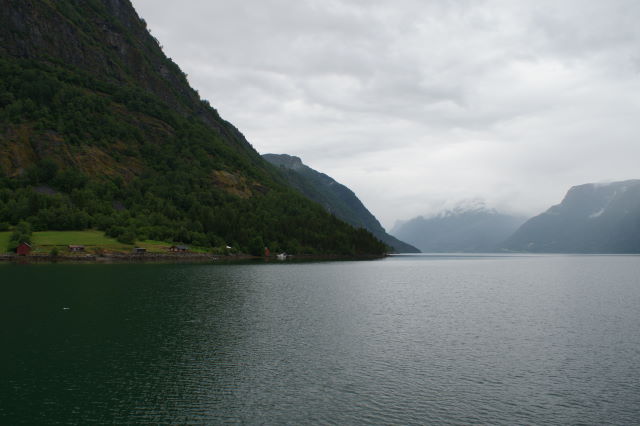
Stretching from mainland Europe to the North Pole’s back yard, Scandinavia’s vast territory covers all manner of environments. From well-groomed Danish farmland to Norway’s wild and breathtaking fjords; from Sweden’s great lakes and islands to white sand-beaches full of sunbathers and empty oceans drifting with iceberg – there’s a Scandinavian habitat to suit every mood.

060614_Swedish_cottage
Country retreats
Scandinavians, many only a few generations away from rural life, have a deep-rooted love of nature. With thousands of square miles of pristine countryside, and an enshrined legal freedom roam through it at will, it’s no wonder that they head for the hills at every opportunity. In Norway and Sweden, the family hytte or stuga is not just a holiday cottage, but a place for spiritual rejuvenation.

Berry-picking is a common summer pastime – crowberries, bilberries, lingonberries and precious Arctic brambles and cloudberries appear on kitchen tables, supplemented in autumn by earthy mushrooms.

Scandinavians have always integrated home and landscape, from wood-built cottages to turf-roofed houses. Modern architecture uses glass to bring nature inside, and the simple lines of Scandinavian design often echo the curves of a lakeshore, or the pale slant of winter sunlight.

Scandinavian landscapes
Denmark’s
countryside was compressed during the Ice Age. Mollehoj in East Jutland is its zenith, a vertiginous 170 metres (560ft) above sea level. Free from trees, 40 percent of Denmark is rich arable farmland, glowing with blossom in spring, and golden harvest fields in late summer. With more than 7,400 (4,600 miles) of coastland, no point in the country is more than a 45-minute drive from the sea.

060614_Mollehoj_East_Jutland
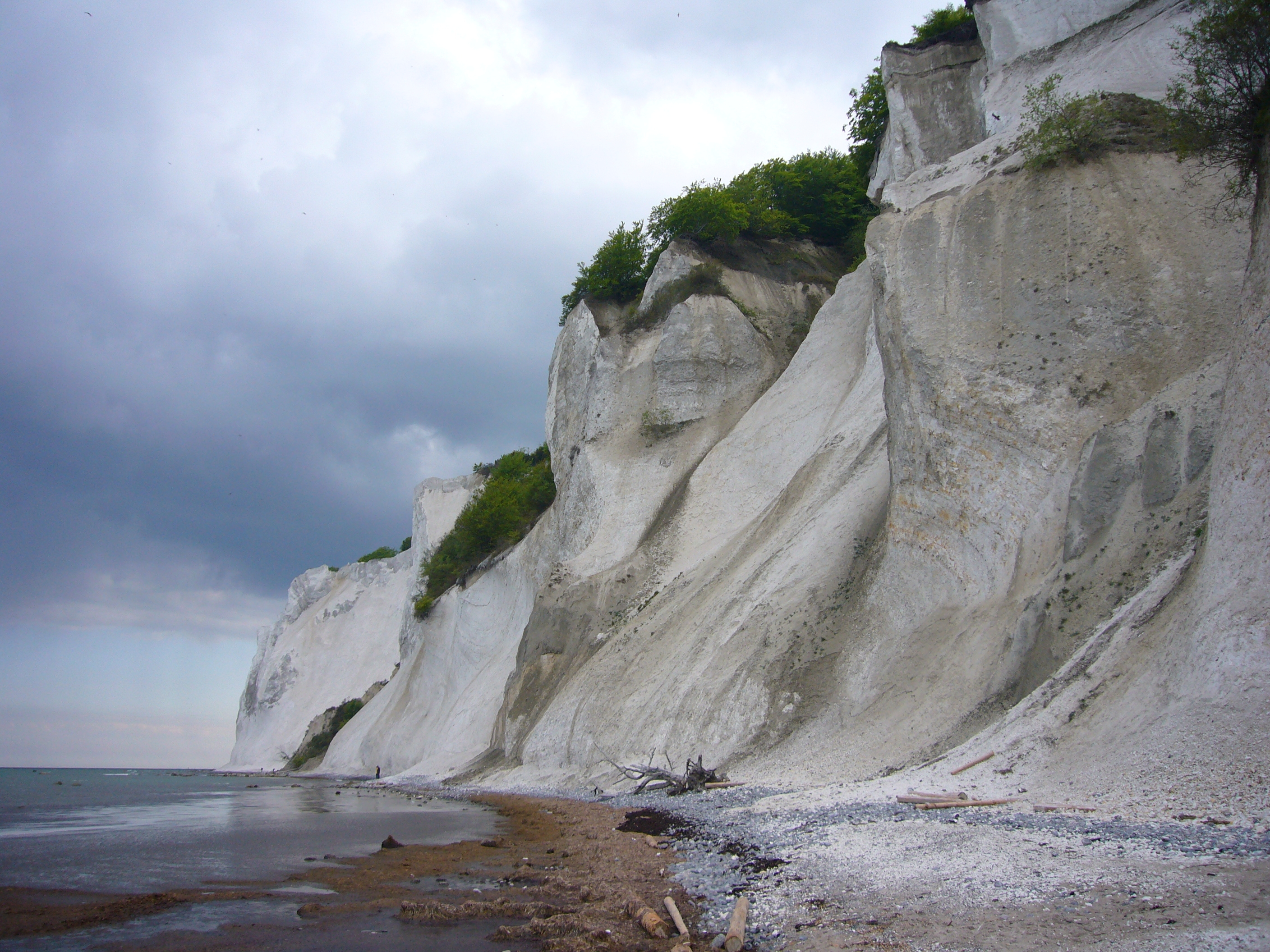
North Zealand and Jutland are filled by sandy beaches, which draw countless summer visitors, as do the wonderful 70-million-year-old chalk cliff at Møns Klint.

060614_Moen_white-cliffs
Composer Edvard Grieg acknowledged a hint of the “trollish in some of his music, a sound that summons up Norway’s mountains, fjords and valleys. The mountains run like a rocky spine over 46 percent of the country, during the Ice Age from south to northern tip, Glaciers scored great grooved valleys into the rock, which filled with water and became Norway’s amazing fjords when ice retreated.

SONY DSC
Sweden’s south is characterize by mild, fertile farmland. But Skåne’s rolling fields soon give way to vast lakes and heavy woods. In Dalarne, Lake Siljan was formed not by glacial retreat, but by the catastrophic impact of a 2.5km (1½ mile)-wide meteorite. In the northwest of Sweden, the land rises, Alpine peaks shrug off their tree cover, and huge boulders, glaciers and rushing rivers dominate the scenery.

The Arctic skies
contain other odd light displays besides the aurora borealis. Sundogs, ice pillars, arcs and coronas often appear in high-latitude skies, as ice crystals in the atmosphere cause the sun’s light to refract.

This is a wild land!

Featured image (on top) authorized by Shutterstock

A Destination for Fashion and Lifestyle in Oslo

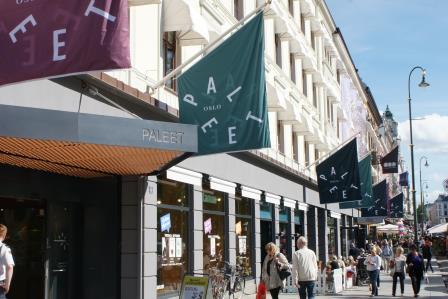
Paleet Shopping Center on Oslo’s main street,  Karl Johansgate, reopened on Wednesday of this week.

Artisans have labored strenuously since June of last year building space for almost 30 fashion and lifestyle stores and ten restaurants, showcasing real lifestyle in Oslo. 

????????
Get ready to shop “til you drop” as you are guaranteed to find delights that you have never seen nor tasted before and will want to see and taste again and again.

????????
Even with a multitude of temptations,  Paleet feels like an intimate shopping centre and is set to change the way Oslo citizens and visitors shop,  bringing several high-end retailers who will be making their first appearance in the center.

????????
“This is a totally new shopping experience for Oslo”, says Oystein Aurlien, centre manager of Paleet. “Paleet is a destination for fashion and lifestyle with handpicked shops, products, bars, eateries and restaurants. Central Oslo has been missing good lunch offerings, but that’s history now. I think we may revitalize Central Oslo. The center is going to be a great destination for customers to come to. What we wanted to put here was something that was indicative of the latest styles, the latest fashions and the things that people want”.  Aurlien has been in charge of planning and rebuilding for two and half years.

????????
Oystein Aurlien, centre manager of KLP Properties’ Paleet, inside the new center in Oslo’s high street.

????????
In addition to a bookstore, hair salon, pharmacy, and other service providers Paleet will feature stores such as Aphru, by TIMo,  Enzo Poli,  Follestad,  Ilse Jacobsen,  JohnnyLove, Kiman Woman,  Lara, Paleet Pop Up Shop,  Phase Eight, Riccovero, Svean, Timberland, Trent & Trent and Yme.

????????
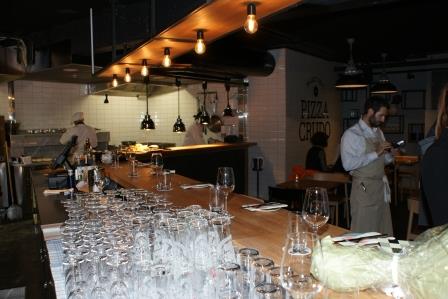
The center also features several interesting new cafeterias and restaurants.

????????
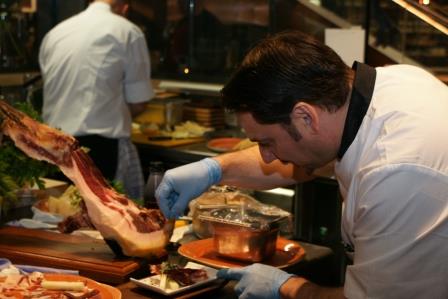
Chef Carlos Portela at El Godo Bodega is busy, preparing a delicious dish.

????????
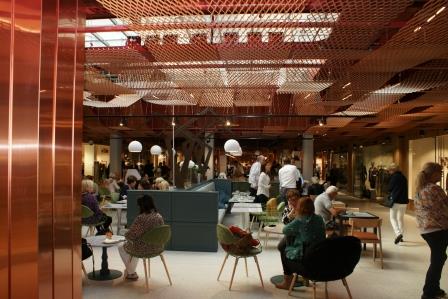
Paleet focuses on exclusive materials – even in the interior, which includes wooden walls and leather- and copper-covered pillars.

????????
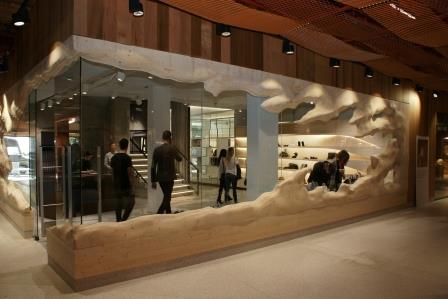
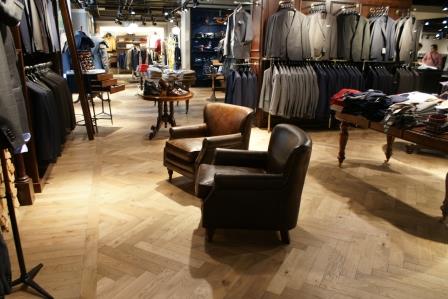
The beautifully manicured Follestad Young Men’s Fashion Shop, adorned in wood and new Finnish wooden floors  without formaldehyde, the first in the world, is designed to give visitors a British castle library feeling.

????????
Store manager William Follestad poses on the floor of the new 500 square meters’ Follestad Store. Follestad operates eight (soon nine) stores in the Oslo area.

????????
Among the celebrities and artists visiting Paleet on its opening day was artist Petar Tale from the Tale Art Museum. Petar Tale was born in Montevideo but has since 1977 lived and worked in Norway.

????????


Text and photos: Tor Kjolberg

Bronze Age Artwork in Scandinavia

As there were still no written records in Scandinavia by the Nordic Bronze Age (1800 – 500 BC), we can only guess at the religion, law, language and culture of the mysterious new settlers.

But they have left tantalizing glimpses of their lives. Swords, shields, jewellery and musical instruments have been found across Scandinavia. The Trudholm sun chariot appears to be a religious artefact, showing a horse pulling the sun across the sky.

050914_Trundholm_Sun_Chariot_Copenhagen-National_Museum
The Trundholm sun chariot (Solvognen), was discovered in Denmark, a statue of a horse and a large bronze disk, which are placed on a device with spoked wheels.

The sculpture was discovered with no accompanying objects in 1902 in a peat bog on the Trundholm moor in West Zealand County on the northwest coast of the island of Zealand (Sjælland) in Denmark, in a region known as Odsherred (approximately55°55′N 11°37′E). It is now in the collection of the National Museum of Denmark in Copenhagen.

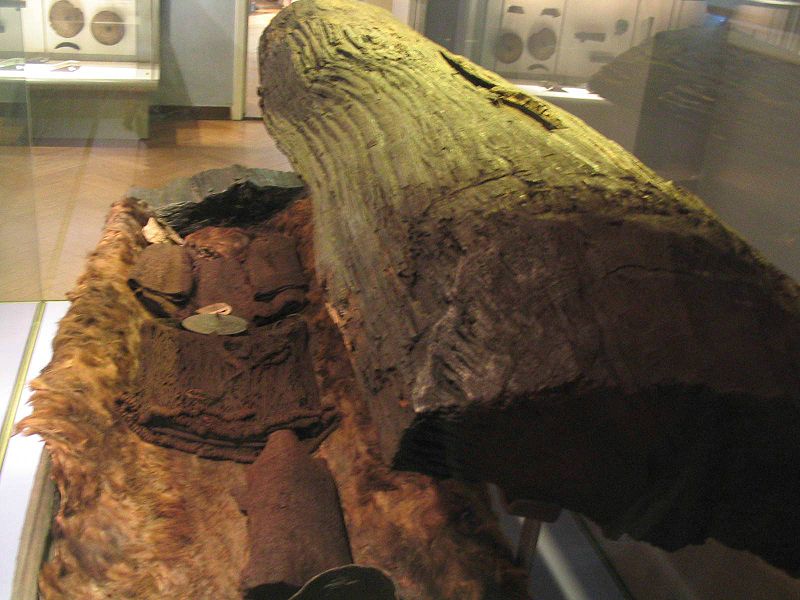
The well-preserved body of the Egtved Girl (c. 1390–1370 BC), found in southern Jutland in 1921, gives us a close-up view of a 3,500-year old person and her possessions. Aged 16–18 at death, she was slim, 160 cm tall (about 5 ft 3 in), had short, blond hair and well-trimmed nails. Her burial has been dated by dendrochronology to 1370 BC. She was discovered in a barrow approximately 30 meters wide and 4 meters high. Only the girl’s hair, brain, teeth, nails and little skin remain preserved.

050914_Egtved-girl_Copenhagen_National_Museum
Bronze Age artwork in Scandinavia includes rock carvings, such as those at Tanumshede in Sweden, reveal a well-appointed world of horse-drawn carts, ships with curious breaks at either end, weapons and a religion devoted to the worship of the sun and fertility.

The Rock Carvings in Tanum, near TanumshedeBohuslän, Sweden, has been declared a World Heritage Site by UNESCO because of the high concentration of petroglyphs.

050914_Tanumshede_rock_carvings
One of the larger rocks of Nordic Bronze Age petroglyphs in Scandinavia, the Vitlyckehäll, is located in Tanumshede.

In total there are thousands of images called the Tanum petroglyphs, on about 600 panels within the World Heritage Area. These are concentrated in distinct areas along a 25 km stretch, which was the coastline of a fjord during the Bronze Age, and covers an area of about 51 hectares (126 acres or 0.5 km²).

050914_Hjortspringsboat
Scandinavian Bronze Age and Iron Age people were sophisticated craftsmen and very competent travelers by water. (Dates for ages vary with the region; in Scandinavia, the Bronze Age is roughly 1800 to 500 BCE) Many of the glyphs depict boats of which some seem to be of the Hjortspring boat type carrying around a dozen passengers. Wagons or carts are also depicted.

Top Haunted Attractions in Oslo

Oslo has many popular attractions, including the Viking Ship Museum and the Vigeland Park, but there’s another side of Norway’s capital that few people see. Take a tour or visit Oslo’s top must-see spooky spots, and plan your next ghost adventure.

????????Christiania Square – A historic district
Christiania torv is a square in Rådhusgata in Oslo’s old city centre, an area known as Kvadraturen.

Some of Oslo’s oldest buildings are found around this square, and one block down you will find Christiania’s first town hall from 1641, today Gamle Raadhus Restaurant, one of the spooky places in Oslo. The building was raised in 1641 and there has been a restaurant since 1856. The rustic wine cellar and the men’s room downstairs are the haunted places. Once there were also prison cells there with chains connected to the walls. The prisoners were waiting to be beheaded. It’s probably some prisoners that remain to this day. Many are reluctant to go down in the basement.  At the Theatre Museum (in the same building) an older man again appears as a ghost, surrounded by strong cigar smell. People hear steps and some heavily breathing.

????????
Those who work there say they often hear the sound of shuffling steps and links that scrapes across the floors and also guests report that they have heard noises in the men’s room. A Swedish summer waitress claims she saw a white person in the wine cellar. It might have been a former chef, having worked in the establishment for more than 30 years.

Gamle Raadhus was the first Masonic Lodge in Oslo.

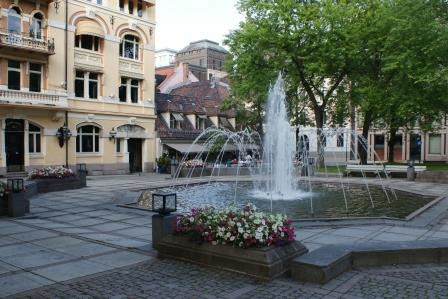
Christiania square is known for its fountain, with a sculpture of a hand pointing to the ground. After the big town fire in 1624, the Danish-Norwegian king Christian IV decided to rebuild the town in this area and name it after himself.  The sculpture is a symbol of King Christan IV pointing to this spot, saying, “The new town will lie here!” The fountain symbolizes that this was the only place with clean water.

Four women were found guilty in having put the town on fire in 1686, and were punished by decapitation on the square. Beheading was a popular amusement at that time.

At least 14 generations have lived in the district before, and many of them have apparently not abandoned us. It is no coincidence that the ghosts go again right here. In the old days people went to Christiania Torv to chat and shop, but the cobbled square was also a place for executions. At that time people could risk being put in the pillory for speaking ill of the king, and could be beheaded with either sword or ax.

????????
On the other side of the square you will find a yellow building, Celsius Restaurant, the other spooky place in this area. That’s where the executioner is said to have lived once.

A lot of people claim to have seen the executioner wearing black gown in front of the fireplace in the restaurant. The waiters at Café Celsius were even once resistant to go their nightshift there.    One of the girls saw a monk-like figure pass through what today is the coarse kitchen. In the café waiters have noticed a cold draft, that things move, and glass firmly and steadily falling from shelves inexplicably. It is always the innermost glasses that fall down.

Once, a cash register was ripped away under the fingers of one waiter as he was registering a receipt. A man dressed in black has also been seen in the restaurant after closing, and people claim to have heard whispers or suddenly been pushed.

Café Celsius to the left in image above) is the oldest half-timbered house in Oslo. Next door is a brick building from 1628, which is the oldest common house in town. Marthe has been down in the basement of the brick building and felt that it is terrible energies here, but she has not brought ghost hunters there.
????????
At the Bank Square, a few minutes walk from the Christiania Torv, we find the Waisen house in Kongensgt. 1. It was built 1638, rebuilt and enlarged 1640. Rebuilt 1871 by Jacob Nordan and 1920 by Arnstein Arneberg. Called Christiania Opfostringshus. Underneath there are escape tunnels from the Akershus Fort. It was the fines house in the 1600s. It was damaged by cannon balls during the Seven Years’ War. It was the first kindergarten in Oslo.
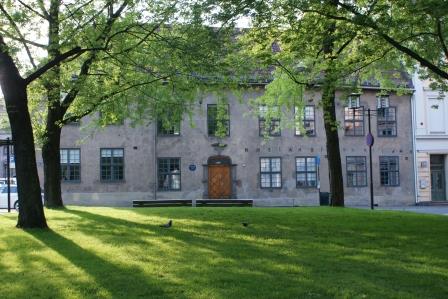
????????
The Waisen House has been described in the Norwegian folk tale collected by Asbjørnsen and Moe, An Old Fashioned Christmas Eve.

The Bank Square (Bankplassen) was surrounded by three banks, hence the name. Today only Norges Bank (Bank of Norway) has it’s headquarter there.

Oslo Ghost Trek
It’s Wednesday 7 pm and we meet our guide Marthe Andersen at Christiania Square. The group of about 15 people is tense and expectant, to take part in this ghost trek, organized by the Oslo City and Nature Walks.
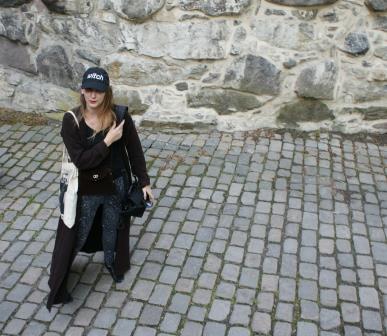
????????
Marthe tells about ghosts who walk aimlessly around in the streets of Kvadraturen, and in the houses from 1600 – and 1700. The darkness and silence descends on the Akershus Fortress. We shudder a bit when Marthe says that the fortress is the place in Norway that has the most ghosts. She provides historical facts, including the founding of the fortress, its function through the years, and several tragic destinies. The castle was for many years besieged by enemies. Many lost their lives here, people have died of plague and famine or tortured to death.
????????
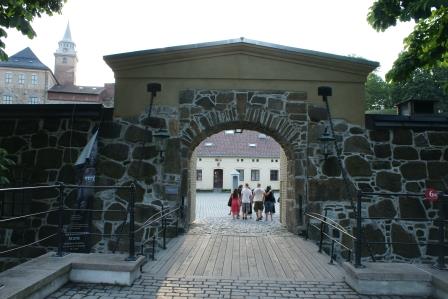
“No wonder there is a lot of energy here, and that people have heard screams or seen ghosts,” says Marthe and tells about the burning women, “Nightpyres”, who were visible before any fire on the fort. Nightpyres are baby sized females, who is said that to have ugly grin and a ghastly laughter.

????????
Many have felt someone breathing behind them when they walk across the drawbridge leading into the fortress. It might be the old gatekeeper.
????????
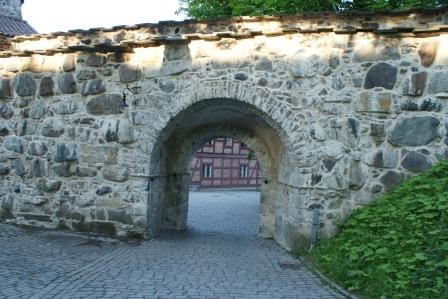
Marthe tells us the story of a Swedish drunken soldier riding alone against the fortress walls, cursing and screaming that he was going to conquer Norway. The Norwegian soldiers shot both him and his horse, and the horse’s ghost has scared many since that time. It is said the Akershus Fort is the strongest fort in Northern Europe.

????????
The Virgin Tower and the Suicide Wall are also haunted places in Akershus Fort.

????????
Leaving the fort we pass some white buildings raised in the 1800s. This was the old prison where the Norwegian Robin Hood and escape king, Ole Hoyland, was prisoned.

????????
Despite strict security measures he managed for four years and long planning to escape from Akershus. After three years of freedom he was reported and arrested, and this time he could not get free. He sought a pardon both in 1846 and in 1847, and shortly after the last rejection he committed suicide in the cell.

Haunted Hotel
Last stop on the Ghost Trail is Kongensgate, and Marthe says there was once found a mass grave from 1700s, probably a war grave of Karl 12’s campaign in 1716. Today Hotel Grims Grenka has been raised on the site, and it is still a haunted place.

????????
“Many employees quit after experiencing ghosts, for example, a night watchman alarmed when a white-haired, bearded man with black clothes appeared in the empty air. Others have found that it suddenly smelled cigar or wet wool.”

Marthe was even frightened when she saw an iron door go up by itself, and also found that a heavy chandelier in the lobby began to spin around its own axis.

One year a lot of young children, participating in Norway Cup, one of the world’s largest soccer championships for young people, stayed at the hotel. One night the alarm and electrical appliances were turned on and off, without anyone having been near them, and since then no participant from the cup has stayed there.

Haunted Eve
Sure enough, none of us got close encounters with ghosts in Oslo this evening, but Marthe confirms that she occasionally gets feedback from people who have seen and experienced things. Spooky occurrences including footsteps heard in empty rooms, unseen hands rattling, moving chairs and cold spots have all been reported by guests, patrons and staff.

????????

There is a book on “The Ghost Walk in Oslo” written by Kristin Amundsen and Ross Kolby. Kirstin Amundsen is an Oslo authorized guide, who organizes Oslo City and Nature Walks.

The season starts in April/May and lasts until mid-September.  Reserved guiding is available at other times.

Experience the top haunted attractions in Oslo.

For further information on time and place, can be found at Oslo Walks.
Text and photos: Tor Kjolberg


Islamic Community Protests Against Extremism in Oslo, Norway

0

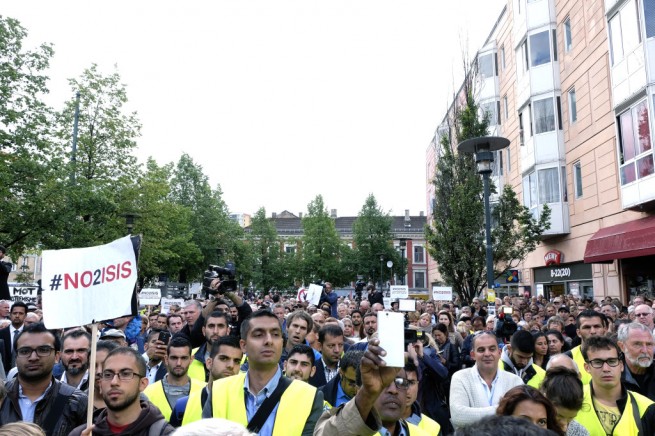
5000 people from both the Muslim and non-Muslim community in Oslo, Norway attended a demonstration aimed to show unified opposition to Islamic extremism both in Norway and abroad.

030914_Muslims_protest_against_ISIS_in_Oslo
Monday last week a group within Norway’s Islamic community had decided that they would no longer accept that the domestic debate around the Muslim community would be dominated by behaviour from extremist groups. They protested against extremism in Oslo and elsewhere in the world. This move had been sparked by continual reports of extreme violence on behalf of the Islamic State of Iraq and Syria (ISIS) and small groups within Norway that have recently been seen publicly supporting and spreading these messages of extreme violence.

ISIS is a self proclaimed caliphate that claims religious authority over all Muslims globally. It has captured large areas of territory in both Iraq and Syria in recent times and actively seeks to gain political control over the greater Islamic world.

On the 19th of August, 2014 ISIS uploaded a YouTube video entitled “A message to America” in which a US Journalist that was reported kidnapped in November 2012 named James Foley was beheaded. This sparked international condemnation with the President of the world’s most populous Muslim-majority country (Indonesia) Susilo Bambang Yudhoyono making the statement that the Islamic State militants were “embarrassing” to the religion.

030914_Muslim_demonstration_in_Oslo
One of the initiators of the demonstrations told the Norwegian state run media NRK that the demonstration has been “historic and successful to a degree” and that “the people who showed up today are genuinely concerned with peace, love and human dignity. They do not accept the hateful message of IS and their Norwegian supporters.”

The demonstrations started in the Grønland area of Oslo where people battled rainy conditions before and marching to the Parliament building (Stortinget) where numbers swelled and the predominantly muslim demonstration was joined by a greater number of non-muslims including members of various religious groups.

19 years old Faten Al-Mahdi Hussein spoke loudly on front of the Norwegian parliament building to applause. “It is not enough to be called a Muslim, Islam teaches us nothing but respect, tolerance and peace – and if beheading of people and destruction of churches and mosques, torturing innocents and rape of women is Islam for you, then you have misunderstood Islam. You do not follow Islam.”

No Mercy for Danish Smokers

0

More than half of Danes (52 percent) believe that work time shouldn’t include smoking breaks, according to a survey undertaken by Norstat for business advocate organization Dansk Erhverv.

250714_No_Smoking

The news comes just a few months after the telecommunications company TDC announced that it would begin docking its employees pay if they smoke during working hours.

“There’s no doubt that people are more aware of the time that smokers spend smoking, and that has impacted on tolerance regarding extra breaks for smoking,” Rikke B Ørum, the head of HR at Dansk Erhverv, told Avisen.dk

A dying breed
Lifestyle expert Henrik Byager argued that a ‘no mercy’ mentality towards smokers has evolved in recent times, and that has rubbed off on workplaces.

“That tunnel of smokers standing outside the main entrance at work will disappear soon too,” Byager said. “There is a zero-tolerance. Smoking is damaging to health, and people don’t think it should be tolerated. It’s over.”

The local union organization LO maintained that to avoid conflict among Danish smokers it was important for employers to have individual workplace agreements in place clearly conveying the rules in the area of smoking.

In related news, from tomorrow, all smoking on train platforms will be banned, according to the national railway operator DSB.

DSB contends that the decision is a result of complaints from its customers. A survey from 2012 showed that 70 percent of non-smokers wanted a complete smoking ban or special smoking zones, while smokers were not as opposed to bans as they have been previously.

Munch Through New Eyes

A new book gives a surprisingly approach to Edvard Munch. It contains new research on one of the world’s greatest expressive artists.

Authored by Marit Lande, Hans Grelland, Paul Nome and Haakon Mehren, the book reveals new material on several paintings, with astonishing conclusions. Through different approaches the four authors let us see Edvard Munch through new eyes.

290814_Munch_through_new_eyes
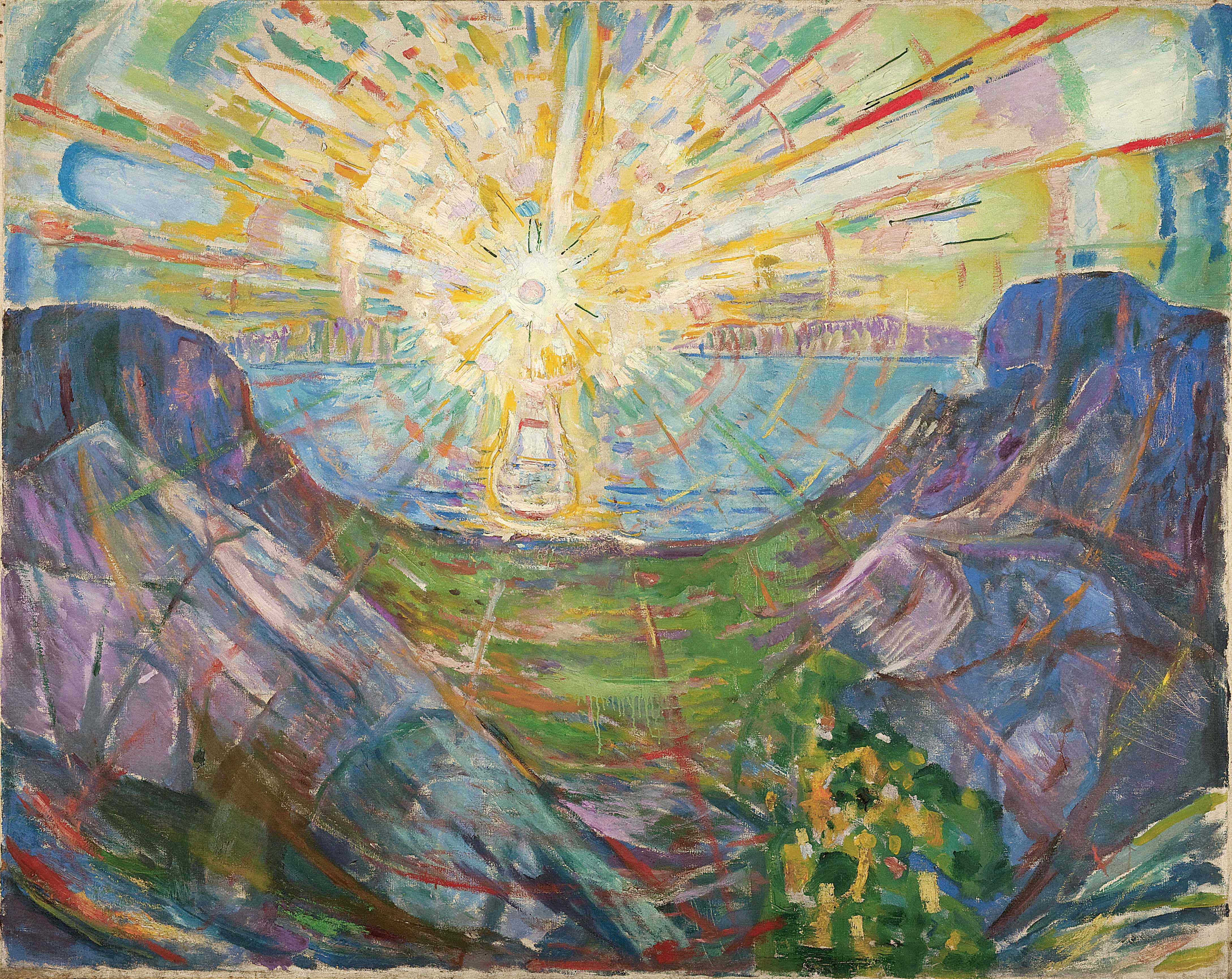
Edvard Munch (1863 – 1944) is described ad nauseam as the iconic Nordic, tormented 19th Century painter. His most famous piece, the pastel-on-board version of The Scream (1895) that sold at Sotheby’s for £73,921,284 in May 2012, depicts a deeply traumatic scene where a man screams in agony against the backdrop of a red, sinister sky. Unfortunately perhaps, The Scream series has somehow eclipsed Munch’s prolific body of work – drawings, paintings and prints that show a magnificent diversity in terms of subject, resonance and style.

An important part of this book throws new light on Munch’s position towards religion and philosophy emphasizing the artist’s strong relation to the Danish philosopher Søren Kierkegaard. This is probably the most unusual book ever on Munch’s life and work.

290814_Munch-The-Sun
The book is published by Orfeus Publishing, a publisher of art and design books, with big ambitions. It has become one of the leading publishers within art, architecture and design in the Nordics and collaborate closely with Arvinius Publishing in Sweden, I.B. Tauris and Philip Wilson in the UK in addition to working closely with the outstanding designers and proficient printers Livonia. The aim is to produce books which are a delight to the eyes as well as containing many a literary gems.

The publishers also edit projects regarding documentaries which dare to make intrepid voices heard. Orfeus Publishing was started by Ole Rikard Høisæther in 1995 and in 2011 became an independent publisher after having been part of Cappelen Damm for 10 years.

Feature image on top: Portrait of Edvard Munch (1895) by Akseli Gallen-Kallela | WikiCommons


Most popular hotels in Norway – according to Trivago

The search service Trivago presents the ten most popular hotels in Norway based on reviews from hotel guests. The ranking includes guest reviews on Trivago and booking pages that are integrated in trivago.no.

Trivago has set up a list of the 10 hotels in Norway boasting to have received the best guest reviews. The ranking is based on hotels with minimum 100 reviews and includes hotels from around the country. We emphasize that the hotels listed are not rated by Daily Scandinavian.

Thon Trondheim, Trondheim – Average Rating: 89.30

Are you looking for a charming atmosphere during your hotel stay, you will find Park Comfort in the heart of Trondheim along Nidelven by Bakke Bro. The hotel offers comfortable rooms, and the friendly service-minded staff will make you feel at home. In some rooms you can enjoy views over Nidelven.

280814_thon-hotel-trondheim

Walaker, Solvorn – Average Rating: 89.30

Walaker Hotel has an idyllic location on the waterfront in the village Solvorn in Luster. The hotel has been passed down from generation to generation and is the oldest family-run hotel in Norway, with over 370 years of history. Enjoy a 4-course dinner in the restaurant or a glass of wine in their garden, surrounded by mountains and overlooking the Sognefjord. Related article.

SONY DSC

Losby Gods Finstadjordet – Average Rating: 88.91

Losby Gods is one of the largest golf resorts, 20 minutes from Oslo city center. The hotel offers 70 rooms and a wide range of activities, outside as well as inside. The hotel has been awarded Norwegian Heritage Olavsrosa. In the restaurant you can enjoy fine dining at one of their four rooms decorated in manor style.

280814_Losby_Gods_Norway

Rica Park Hotel Stavanger – Average Rating: 88.67

Rica Park Stavanger Hotel is ideally located close to the bus and train station and a few minutes’ walk from the center of Stavanger. The rooms are spacious and suitable for business travelers, families and weekend visits. The hotel offers a tasty breakfast composed in collaboration with the Olympic top team, which can be enjoyed on weekends until 11 o’clock.

280814_Rica_Park_Hotel_Stavanger

Rica Rock City Namsos – Average Rating: 88.51

Rica Rock City is the only rock hotel where the concept actually  is based on Troender rock history. The hotel is adjacent to Rock City – a resource for pop and rock. The hotel interior reflects the genre, and is located on the seafront. The eco-friendly hotel is linked to Rock City through a glass corridor.  Exterior photo see feature image on top.

280814_Rock_City_Hotel_Namsos_Norway_interior

Solstrand, Os – Average Rating: 88.45

In the beautiful fjord scenery outside Bergen at Solstrand Bad & Hotel you can easily relax in a quiet and warm atmosphere. Their outdoor pool gives you the opportunity to enjoy birdsong, clear sea air and endless views of the fjord and mountains. You can also enjoy their spa for proper relaxation or explore the restaurant, offering local dishes and a taste of the coast.

280814_Solstrand_hotel_and_spa_Norway

Herangtunet, Øystre Slidre – Average Rating: 88.35

Close to the ski areas Beitostølen and Jotunheimen, three-hour drive from Oslo, you will find Herangtunet boutique hotel Norway. Herangtunet is a historic village square located on a hill in the woods. The hotel is built in traditional Valdres-style with rooms featuring a unique interior. The same applies to their restaurant where the floor is made of old Dutch cheese shelves.

280814_Herangtuner_Boutique_Hotel_Norway

Rica Nidelven, Trondheim – Average Rating: 88.29

Rica Nidelven is built on pillars 17 meters out into the river Nidelven and offers a great view of the river. If you choose to stay here you will almost certainly get a good start, as it is known to have Norway’s best breakfast. Need a break during the day, you can sit down in their river wing and enjoy a good cup of coffee enjoying the sights of the surroundings.

280814_Rica_Nidelven_Trondheim

Saga Hotel Oslo – Average Rating: 87.85

Saga Hotel can be found behind the Royal Palace in Oslo. The hotel, which dates from the late 1800s, has recently been restored and modernized but retains its beautiful and traditional architecture. At Saga Hotel, you can bring your refreshments from the lobby bar into their chill-out lounge with fireplace.

280814_Saga_hotel_Oslo_Norway 

Rica Airport Stavanger – Average Rating: 87.73

Right at the arrival hall of the airport you will find Rica Airport Hotel Stavanger. The hotel is not only convenient for airborne visitors, but also offers a variety of activities with its close location to Solastranden, Sola Golf Club and the Aviation Culture House. Rica Airport Hotel is also famous for its delicious breakfast.

280814_Rica_Airport_Hotel_Stavanger