Denmark’s Former Royal Capital

A onetime ecclesiastical seat and the royal capital of Denmark until 1455, fjord-side Roskilde recently marked its 1,000th anniversary, and some of the jubilee air lingers on.

The city’s hallmark edifice is its 13th-century Gothic cathedral, a kind of Westminster Abbey of Denmark. It is the burial place for thirty-eight Danish kings, whose royal marble and alabaster tombs reflect the changing styles of the times.

230514_Roskilde-Altar-Pulpit
Enjoying centuries of commercial prominence as trading center, Denmark’s former royal capital, Roskilde has never lost its identity as that handsome and pleasant town favored by royalty. It has a lively student population, and a large colorful market still performs the town every Wednesday and Saturday.

230514_roskilde-cathedral-denmark

The nation’s best Viking ship museum, the Vikingskibshallen, displays five perfectly preserved longships discovered and reconstructed in 1957. Dating from approximately 1000, they were presumably sunk in the Roskilde Fjord to stop the passage of enemy ships.

230514_Vikingshobsmuseet_Roskilde_Denmark
It’s worth jumping on the old wooden steamer that sails out of Roskilde to cruise the lovely fjord. For four days in late June or early July, an international twenty-something crowd descends upon Roskilde for northern Europe’s largest rock music festival, during which more than 100 bands play at seven venues around the ancient town.

Focus on Nutrition and Health

EAT Stockholm Food Forum is a unique conference where global leaders from the worlds of science, politics and business will share and discuss challenges and opportunities linking food, health and sustainability.

On the 26-27th of May 2014, EAT Stockholm Food Forum will present a mix of lectures, appeals, talks and inter-disciplinary panel discussions about nutrition and health. The two days will offer a unique possibility for updates on the latest science, the most pressing political issues, promising innovations and emerging markets.

220514_Gunhild_Stordalen_Eat
Among the keynote speaker are President Bill Clinton, Norwegian Parliament Member Jonas Gard Stoere,  Climate and health advocate Gunhild Stordalen and several authorities within medicine, nutrition and science. Moderator is Richard Horton, Editor in Chief, The Lancet. For full program read more here.

Richard Horton, The Lancet

In addition to her position at EAT, Gunhild is the Co-Founder and Chair of Stordalen Foundation.. Because of her passion for global health and climate issues Gunhild has joined the Norwegian Medical Association’s Committee for human rights, climate change and global health. Gunhild holds a Ph.D. in pathology and orthopaedics from the University of Oslo.

Our «Finds» in Scandinavia

We traveled by train and Norwegian coastal steamer throughout Scandinavia two years ago. Here are some of our “finds.”

Hotel Birger Jarl in Stockholm is “the first hotel in SWEDEN with the concept of modern design.” Rooms and the small lobby/bar have been decorated by some of the best fashion designers in Sweden. The hotel is a bit north of the main sights of the harbor and Old Town; we took the subway most of the time.

210514_Birger_Jarl_Hotel_Stockholm_Sweden_Double_Room
The rooms were pleasant and quiet, the breakfast was excellent and the desk staff very accommodating. There was free Internet in the lobby. We also enjoyed dinner one night in their restaurant.

For those of Swedish descent, the House of Emigration in Vaxjo, Sweden, in addition to having a small but informative museum of emigration, is a treasure trove of information about emigrant relatives.

210514_House_of_Emigration_Vaxjo_Sweden
Within walking distance of the train station and the House of Emigration is the Elite Stadshotellet, one of the small chain of Elite Hotels. It is a refurbished “grand” hotel with a nice restaurant, an excellent breakfast (included) and a very helpful staff.

210514_Elite_Statshotellet_Stockholm_2
The Tourist Information hotel-finding service in the railroad station in Copenhagen, DENMARK, found us a great hotel, The Square.

210514_square-hotel-copenhagen
The hotel was perfectly located near the rail station as well as Tivoli, shopping and other main sites. The hotel opened in 2003, and the lobby and rooms are very design-forward in a minimalist Scandinavian way, with the “square” theme carried thoughout. The included breakfast was delicious and provided in a very nice sixth-floor breakfast room.

Our «Finds» in Scandinavia, written by Guest Contributor

Norwegian Fashion Designer Kristine Vikse is Filling a Gap

0

In recent years, there has been an absence of a unifying arena for fashion and design in Norway. Despite of this fact, both scenes are thriving and growing in a rapid pace.

200514_KristineVikse_oslofashionweek2013
200514_kristinevikse_Spring_2014The Norwegian and the Nordic fashion market has become a melting pot of new creative actors, filled with passion and talent. Oslo Trend is an initiative meant to fill this gap, with the ambition of channeling all of Norway’s creative energy into one big event, aimed at both the Norwegian and the international industry.

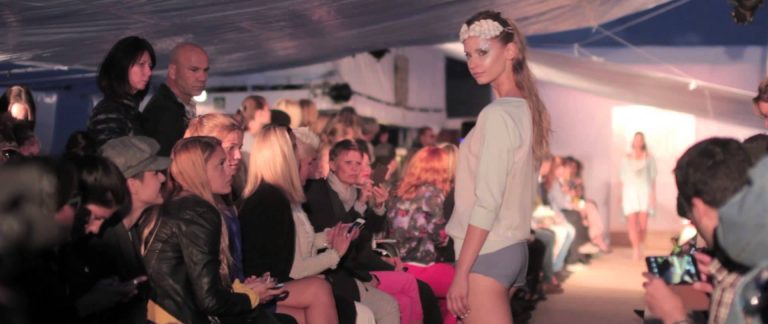
Norwegian fashion designer Kristine Vikse showed a comfortable wardrobe. The Vikse summer collection 2014, created for the Scandinavian woman, was made with the color inspiration of coral reefs, but with materials especially fitted for the Scandinavian cold climate. Colors like bright coral and pale greens was supplemented with materials as silk and silk chiffons, and the trick that made her collection so wearable, was the woolen garments. Wool has the ability to breathe and keep the warmth but also to keep the body cool. She presented her collection on a boat in the exotic Oslo fjord.

The boat was appropriately named MC Vikse and both models, tables – even the toilets were decorated with shells as Kristine showed her summer collection 2014. The sky was light pink and the sea dark blue as the sun set over the Oslo horizon. Not only had Vikse drawn inspiration from the colors of200514_Kristine_Vikse_SS_Collection_2014 the sea, but the whole collection reflected how the sea goes from calm and quiet to stormy and dramatic.

This was Kristine Vikse’s seventh women’s collection. She is also the designer behind the children’s clothing brand MeMini.


Jotunheimen seen from above

0

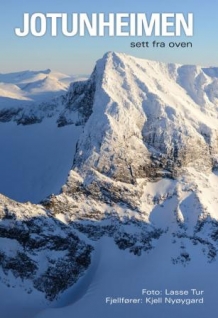
The new book from photographer Lasse Tur is an impressing work, consisting of landscape shots taken from above. It contains a foreword by mountain guide Kjell Nyøygard, which you may read here.

190514_Lasse_Tur_Jotunheimen2_Norway
Jotunheimen (the home of mountain trolls)…it is the powerful rustle of both the name and of the landscape. In the towering and variable mountain area in the middle of Southern Norway we find deep and lush valleys. The highest peaks in Norway, the light of snow and ice in many colors, the blueness of rivers, waterfalls, lakes.

You may buy the book here. 190514_Lasse_Tur_Book_Jotunheimen_seen_from_above

The reindeer roam this neighborhood along their ancient passages and willow grouse are watching you from both high and low. Mountain trout feels good here as well. And the flowers. Even on the most barren hillsides.

You will also find many mountain lodges in Jotunheimen, which proves the popularity of the place among tourists and nature lovers. Many of them were mainly mountain pastures, but when mountain tourism reached the area at the end of the 19th century, there was a quick need for overnight accommodation. Between these mountain lodges, safe and good paths have been built over the years, marked with permanent red signs.

190514_Lasse_Tur_Jotunheimen_Norway
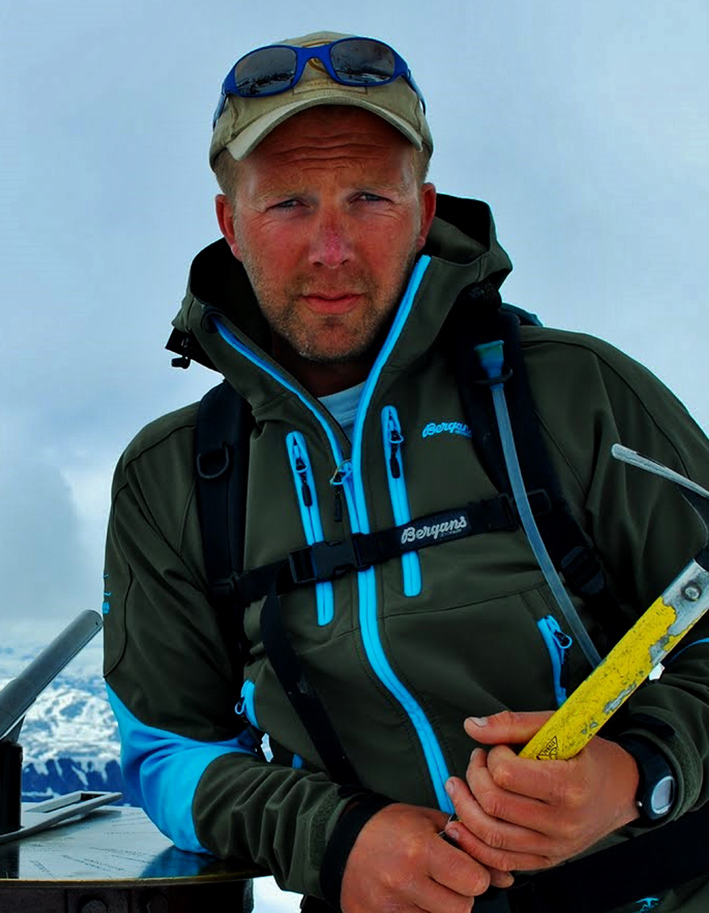
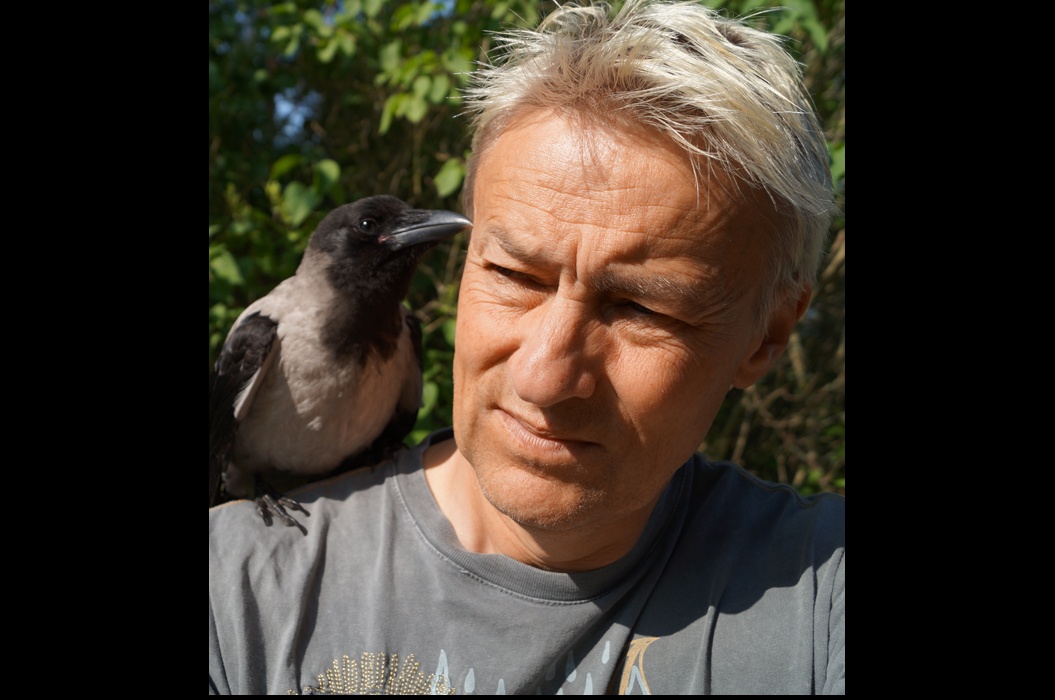
190514_Kjell_NyoygardWhen Lasse contacted me early summer 2013 and asked me if I would like to be involved in his Jotunheimen project, I did not need much time to think. I did not know Lasse, I had never met him. I had, however, seen many of his stunning photographs, so I knew that he was an excellent photographer. We both have worked on our passions since the end of the 1280s, Lasse as an aero photographer and I as a mountain guide. In addition Jotunheimen is my home place. The response was “Yes!”

In this book you will see known and beloved regions of this fantastic high altitude mountain area. You will see places you may have seen before and places you have always dreamed of experiencing.

All photos are shot with Nikon D3, D700, D4, and D800E cameras. 14-24mm, 24-70mm, 70-200mm and 200-400mm lenses have been used. The date of shooting and simple Facebook comments have been added to the photos.

Enjoy the book! You have never seen Jotunheimen like this before.

If you want to experience Jotunheimen you may contact Kjell Nyoygard personally at fjellforer@gmail.com

Best in Scandinavian Design

The first golden age of Scandinavian design extends from the 1930s to 1970s. Its founders are called Alvar Alto, Arne Jacobsen, Borge Mogensen, Hans J. Wegner, Verner Panton, Poul Henningsen, Maija Isola, etc. These precursors have provided the model and set of values which still inspire the new Scandinavian design: durability, functionality, reliability – but also less tangible values such as simplicity, equality, joy, courage, daily pleasure visible through the simple forms, not ostentatious and often colorful forms.

160515_Oslo_Opera_House
Oslo Opera House. Norway
This striking building in white granite and glass sitting on the waterfront is one of Oslo’s top attractions.

160514_Carl_Larsons-Hiuse_Museum_Sundborn_Sweden_Daily_Scandinavian
Carl Larsson’s house. Sundborn, Sweden
The artist’s beautiful riverside cottage is a humbling example of love, family life and Swedish design working in perfect harmony.

160514_Designmuseum_Copenhagen
Designmuseum. Copenhagen, Denmark
Ceramics, furniture, textiles, prints and posters – the best in Danish design is here.

160514_Ole-Bull-s-residence
Lysøen. Norway
The residence of violin virtuoso Ole Bull, on an island outside Bergen, is a daring blend of styles that never fails to wow visitors.


Scandinavian Perfection

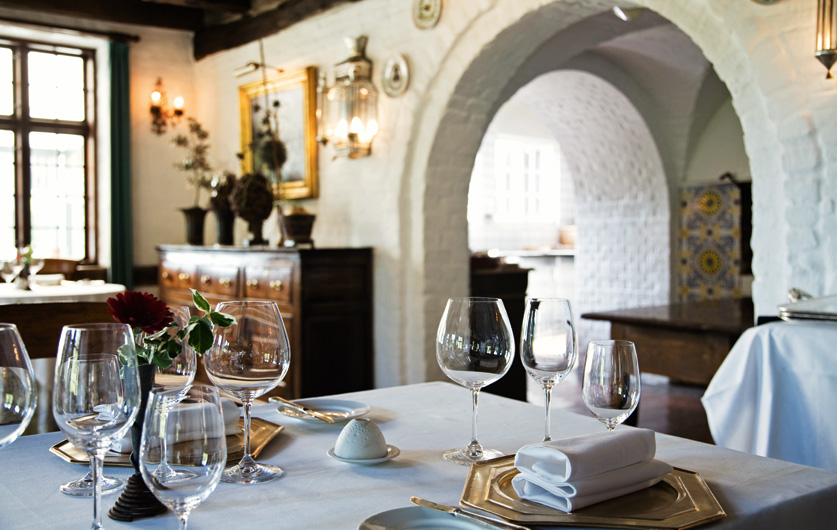
Located in a picture-perfect farming village on the southern coast of Funen, Falsled Kro consists of a charming complex of elegant but rustic buildings with thatched roofs and large open fireplaces.

150514_FalsledKro2_Funen_Denmark
But the charm of this quintessential Scandinavian country inn isn’t the reason patrons travel here from afar: it’s Falsled Kro’s stellar restaurant.

Together with suppliers and gatherers from neighboring castles and manor houses, chef and co-owner Jean-Louis Lieffroy, whose wife Ellen was Danish, created a kitchen with a reputation reaching far beyond the Danish border.

Today Randi Scmidt and Per Hallundbæk continue Falsled Kro with the same respect for quality and service which has been characteristic for the establishment throughout times.

This is Scandinavian perfection.

A Pilgrimage for Fairy-Tale Lovers

The island of Funen, Denmark, is known to the world as the birthplace of Hans Christian Andersen. Possibly the world’s most esteemed storyteller, Andersen’s work, including beloved classics like “Thumbelina” and “The Ugly Duckling”, is more widely translated and read than anything except the Bible and the writings of Karl Marx, and his Little Mermaid is Copenhagen’s world-recognized icon.

140514_From_Odense_Funen_Denmark
Odense, his hometown, is Denmark’s third-largest city. With a charming medieval core, it attracts fairy-tale lovers from all over.140514_HansChristianAndersen

Born in 1805 to a local shoemaker and washerwoman, both illiterate, Andersen was an inveterate traveler whose battered suitcases are on display at the museum adjoining his childhood home, as is the fire rope he never traveled without, hanging it outside his hotel window.

Visitors can view original manuscripts (officials still await the return of “The Emperor’s New Clothes”, which diapperead some years ago) and letters to his close friend Charles Dickens. Also make time to enjoy the island’s bucolic rolling countryside. Dotted with thatched-roofed farmhouses, orchards, country manors and inns called kro.

140514_Funen_map
An 11-mile suspension bridge connects Copenhagen, on the island of Zealand, to Funen.

140514_From_H_C_Andersen_Museum_Odense_Denmark

Come Celebrate the Norwegian Constitution

Eidsvoll House (Eidsvollsbygningen) is a house full of exciting history! For Norwegians it is one of the most important national symbols, inextricably tied to the constitution, independence and the dramatic events of 1814, which are celebrated on the 17th of May every year.

130514_Eidsvoll_House_Norway_Daily_Scandinavian
This is why Eidsvoll House became Norway’s first national monument in 1837. Numerous extensive restoration operations have all been directed towards recreating the historic site of the birth of the modern Norwegian state.

However, Eidsvoll House is more than just a monument to politics. An ironworks was situated here since the early 1600s, and a works owner residence dating from approximately 1770 constitutes part of the main building. When Carsten Anker created his luxurious residence around the turn of the 19th century, it became one of the country’s most modern private residences and was modelled on French and Danish ideals. Anker’s passionate attention to detail and sure sense of style is reflected in everything from the neo-classicist architectural main features down to the details of the interior.

1814 – The Year of Miracles
At the start of 1814 Norway was part of the absolute monarchy Denmark-Norway. By the end of the year the country had entered into a personal union with Sweden. In between, Norwegians had mobilised, drawn up the world’s most democratic constitution and elected their own king. It was hailed as ‘the year of miracles’ and the year of the Norwegian constitution.

The union between Denmark and Norway had begun 434 years before. In the years up to 1814 Denmark-Norway had allied itself with Napoleon Bonaparte in the French emperor’s wars with the other major European powers. Following Bonaparte’s defeat at a crucial battle near Leipzig in the autumn of 1813 , peace negotiations were opened in the port city of Kiel. Here, as punishment for Denmark-Norway’s support for France, Denmark’s King Frederik VI was forced to cede his Norwegian territories to Sweden, which had long wished to take control over Norway.

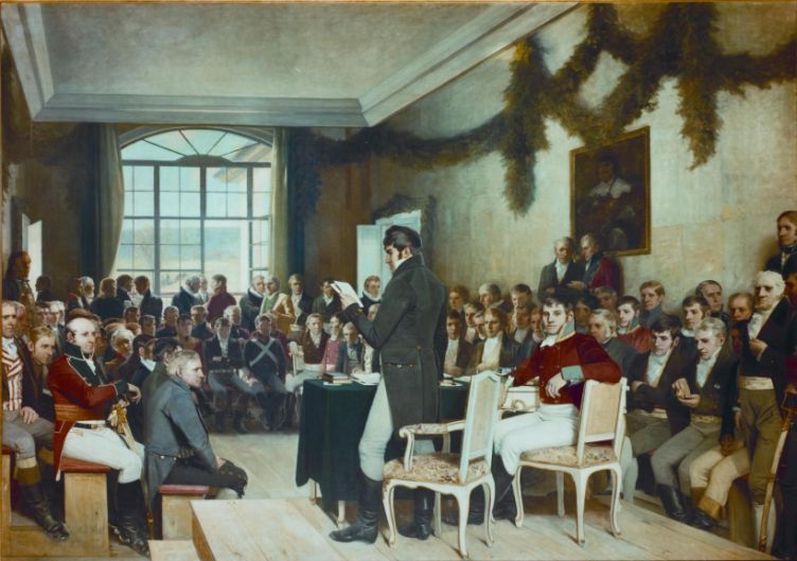
Denmark’s viceroy in Norway when news of the Treaty of Kiel arrived was Crown Prince Christian Frederik, heir presumptive to the Danish throne. He opposed the treaty, arguing that he was the rightful heir to the Norwegian crown, and was therefore entitled to take over as king as soon as Frederik VI’s rule no longer applied there. Initially the Crown Prince sought the advice of his good friend Carsten Anker, owner of the Eidsvoll Verk ironworks. Then he embarked on a journey up the Gudbrandsdalen valley and over the Dovre mountains to Trondheim to whip up support among the people. Having returned to Eidsvoll he convened a council of the country’s leading men. At this meeting, on 16 February, he presented his plan to declare himself king and, when time allowed, give the country a constitution.
130514_Norwegian_Constitution_Assembly_Daily_Scandinavian
Not everyone backed the plan. Professor Georg Sverdrup protested: “You have no more right to the Norwegian throne than I or any other Norwegian,” he said. According to Sverdrup, it was up to the people themselves to elect a new sovereign now that the union with Denmark was over. And before a king could be elected those very same people had to draw up a constitution for themselves. Giving assurances that Christian Frederik would be the one elected king, the meeting decided to call together representatives from the whole country to an assembly at Eidsvoll that would adopt a new constitution.

Christian Frederik instructed every parish in the country to swear an oath to support the Norwegian independence process, after which the parishioners were to elect delegates who would, in turn, choose the representatives who would make up the Constituent Assembly.

Restoration up to 2014
In connection with the Constitution’s bicentenary in 2014 the Norwegian Ministry of Culture has tasked Statsbygg (the Norwegian public construction and property management service) with restoring Eidsvoll House (Eidsvollsbygningenn) to how it may have looked in 1814. The main house and the two adjacent pavilions are being restored to give the public an idea of how they appeared in 1814. The project also includes the reconstruction of the Eidsvoll house basement, and an upgrade of the surrounding park. The restoration ahead of 2014 is the largest and most comprehensive ever undertaken at Eidsvoll House, and is provisionally estimated to cost NOK 380 million.
130514_Eidsvoll_House_Norway_Interior_Daily_Scandinavian

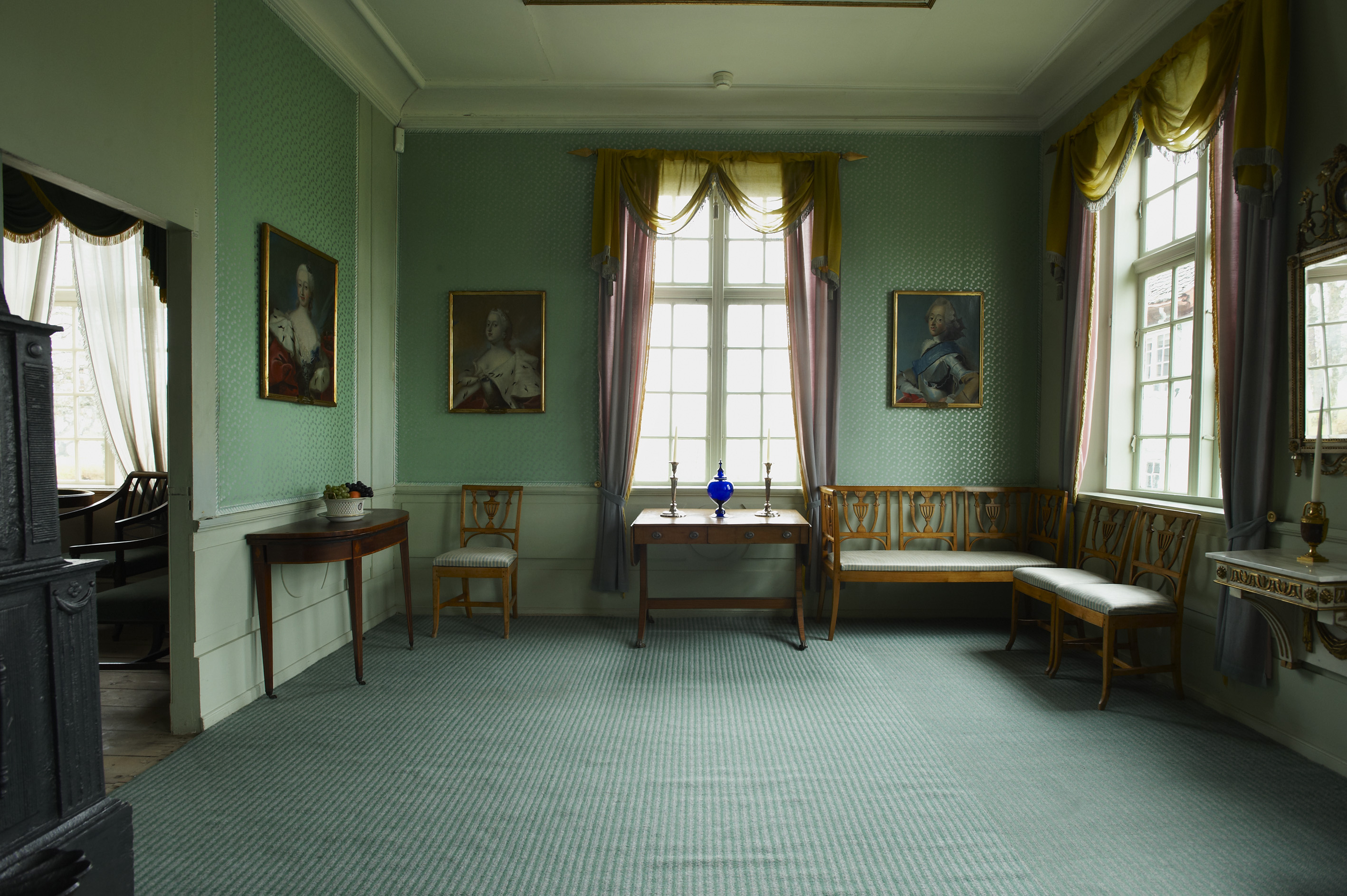
In October 2011 Statsbygg began the work of restoring Eidsvoll House to its former glory under the ownership of Carsten Anker and how it appeared to the men who assembled at this building “of extraordinary size” to draw up Norway’s constitution in the spring of 1814. Recreating Anker’s basement floor is one of the restoration project’s most exciting undertakings.

Before work commenced the buildings and park were comprehensively surveyed. Inside the house colour samples have been taken of the various surfaces in search of paint and other traces dating from 1814. The woodwork and structural elements have also been extensively tested to determine the building’s condition. Statsbygg has engaged the Norwegian Institute for Cultural Heritage Research (NIKU) to study the colour samples, and Multiconsult AS to assess the building structure. Geir Thomas Risåsen, art historian and curator at Eidsvoll 1814, has been engaged by Statsbygg to trawl the historical record in pursuit of documentation.

Eidsvoll House was first emptied of its contents and then closed to visitors. The extensive construction work means that the public cannot access the house or pavilions, unless by special arrangement with Statsbygg, when it is possible to see how far the work has progressed. However, the Eidsvoll 1814 museum remains open! While restoration is underway the public can still enjoy a wide range of activities and displays. Statsbygg and Eidsvoll 1814 have also set up a dedicated restoration information centre.

So when Eidsvoll House opens its doors in connection with the Constitution’s bicentenary celebrations in 2014, visitors will encounter a new entrance to the north, through which they will enter the basement floor, with its open hearth and servants going about the day’s household chores, and gain an insight into the social differences that existed in Norwegian society at that time. Then they will be able to go where no visitors have gone before – up the old staircase to the beautiful entrance hall. These stairs have not been in use for 150 years.

There they will find room after room looking just as they did when Carsten Anker turned Eidsvoll Manor into a fashionable modern home in 1814, with wallpaper-clad walls bordered in a colour palette far different to that we would feel comfortable with today, and accentuated by textiles of the sort Anker himself would have chosen. The ‘year of miracles’ in Norwegian history will come alive for new generations, and Eidsvoll House will stand ready to continue being the country’s foremost national symbol for another hundred years!

Norwegian Center for Constitutional History
Main attractions: Eidsvoll House, Wergeland’s House democracy centre, Kafé Standpunkt lunch café, Museum shop.

Due to restoration works for the bicentenary celebrations in 2014 the Eidsvoll House is closed for the public until February 2014. In the meantime you can hear the exciting history of 1814 in our visitors center, Wergelands Hus, which also includes a film about the danish Prince Christian Frederik, who was elected to be the new King in Norway in 1814.

Opening times 2014:
1 May – 31 August
Mon – Fri: 10am – 5pm
Sat – Sun: 10am – 5pm
Thurs: 10.00 – 8.14pm in May and June
(The museum shop opens every day at 11am)
1 September – 31 December
Wed – Fri: 10am – 4pm
Sat – Sun: 11am – 4pm
Thurs: 10am – 8.14pm in September
(The museum shop opens every day at 11am)
Contact
Tel: +47 63922210
Fax: +47 63922211
email: Booking@eidsvoll1814.no

Nordic Watercolor Museum exhibits Lars Lerin

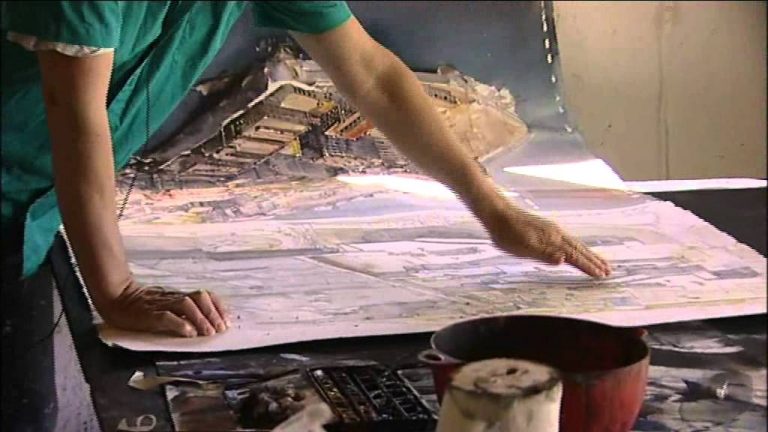
Lars Lerin is now back again a whole decade later at the Nordic Watercolour Museum. The 2014 summer exhibition presents new artworks, in which he continues to give fresh expression to atmospheres and feelings while at the same time depicting the visible world around us.

120515_Lars_Lerin_Library_watercolor
Lars Lerin’s watercolours, with their masterly play of light, affect us almost like an invocation. His images stick in our memory despite their not displaying any oddities. Our gaze wanders across the details – house facades, trunks of birch trees, patches of snow, abandoned farms and industrial towns. His pictures range from the chill of the Lofoten islands to the heat of India, from the forests of his childhood in Sweden’s Värmland province to unexplored stretches of Iran. Near and far brought together in one place.

120514_lars_lerin_photo_Manoel_Marques
Lars Lerin was born and raised in Munkfors, Värmland. He studied at the school of Gerlesborg 1974-75 and at the Department of Fine Arts, Valand 1980-84. Lars Lerin is considered to be one of Scandinavia’s leading artists in watercolor technique. He has had solo exhibitions and group exhibitions in art museums and galleries in Sweden, Denmark, Finland, France, the Faroe Islands, Iceland, Germany, Norway and the United States. Lars Lerin’s work is exhibited in County Councils and Municipalities in Sweden and Norway.

Lars Lerin is also a prolific author and has since his debute Utpost (1983), written and released more than fifty books.

Visitors come to the Nordic Watercolor museum to view world-class exhibitions, listen to interesting lectures or enjoy a concert. The museum’s unique coastal site means that you can combine art with a dip in the sea, mingle cultural experiences with good food, or you can also visit the open studio to paint for a while.

The Lars Lerin exhibition opens May 18 and lasts through September 14.

Nordiska Akvarellmuseet
Södra hamnen 6, 471 32 Skärhamn, Sweden, Tel. +46 304-60 00 80