Northern Lights

0

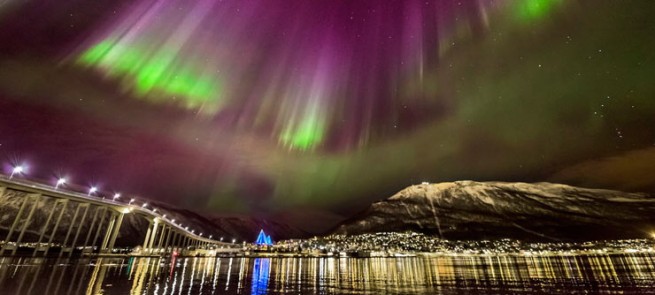
As summer ebbs away, the gloom is relieved by the bewitching greens, purples, pinks and reds of the aurora borealis, or Northern Lights, which flicker and pulse across the winter sky.

100614_Northern_Lights_Daily_Scandinavian (2)
Many a high-latitude tale was born while watching the display: the lights were the Sami, out-looking for reindeer, or sparks crackling from a fox’s fur as it ran across the sky, or even the spirits of the restless dead.

The scientific explanation is no less astonishing. The lights are caused by streams of charged particles – “solar wind” – that flare into space from our sun. When the wind comes into contact with the earth’s magnetic field, it is drawn towards the poles where its electric charge agitates particles of oxygen and nitrogen in the atmosphere, making them glow.

100614_Arctic_skies
Solar activity follows an 11-year cycle, peaking in 2011-12. The displays during that period was even more spectacular, and was witnessed in areas that don’t usual experience these mesmeric light displays.

The Northern Lights Festival 2015 in Tromsoe is from January 23 to February 1.

Northern Lights excursions.

Nordic Pavilion to Study Architecture’s Role in East African Independence

The National Museum in Norway has been chosen to curate the Nordic Pavilion for the 2014 Venice Architecture Biennale, in collaboration with the Museum of Finnish Architecture, the Swedish Centre for Architecture and Design in Stockholm, and architectural firm Space Group. La Biennale di Venezia, regarded as the world’s premier architecture exhibition, opens tomorrow and will be open to 23 November.

060614_14th_International_Architecture_Exhibition_of_la_Biennale_di_Venezia

The exhibition, “FORMS OF FREEDOM: African Independence and Nordic Models” will study modern Nordic architecture’s role in the liberation of East Africa during the 1960s and 70s.
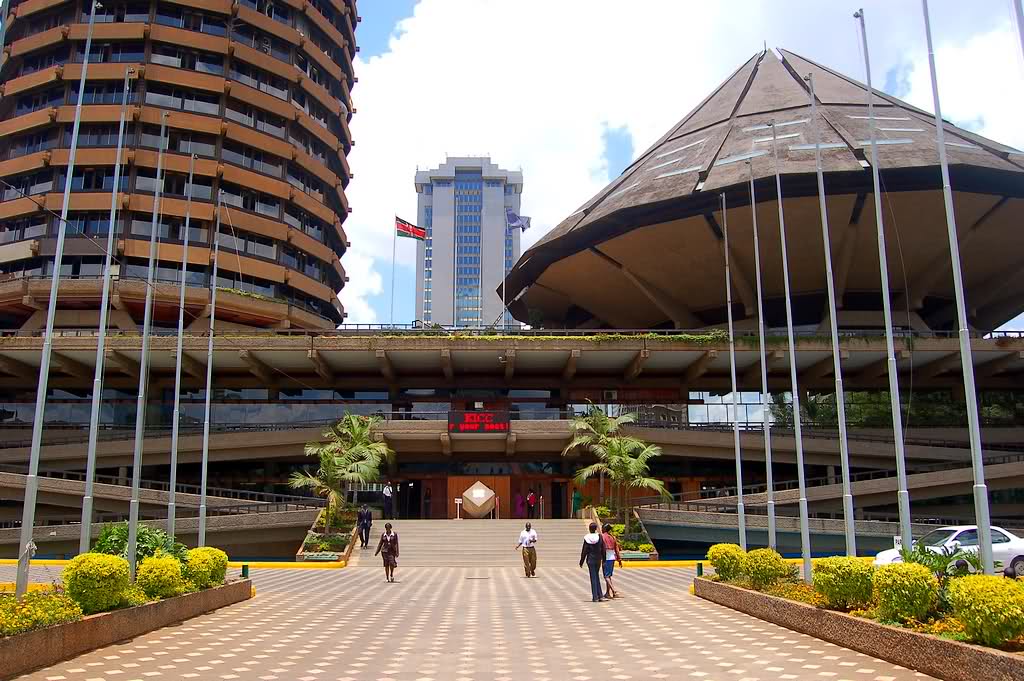
060614_Kenyatta_International_Conference_Centre

As the curators describe, “The liberation of Tanzania, Kenya, and Zambia in the 1960s coincided with the founding of development aid in the Nordic countries, where there was widespread belief that the social democratic model could be exported, translated, and used for economic growth and welfare. The leaders of the new African states, for their part, wanted partners without a murky colonial past and looked to emulate the progressive results achieved by the Nordic welfare states after WWII. The Nordic social democracies and the new African states established solid bonds built on a mutual belief in progress.”

060614_Kenyatta_International_Conference_Centre3The exhibition will revolve around two concepts: Building Freedom “denotes the architectural nation-building where masterplans were used to build cities and regions, prototypes and prefabricated systems were used to build education and health centres, and so on.” Finding Freedom, “conversely, denotes the experimental free area that emerged from this encounter between Nordic aid and African nation-building, where progressive ideas could be developed as architectural solutions on a par with the international avant-garde.”

Karl Henrik Nøstvik, whose archives remain intact, will be one of the few architects of the era studied. He was among the first employed by the Kenyan government in 1965, as part of the Norwegian aid package, to design the country’s first government building: The Kenyatta International Conference Centre, a national icon of independent, modern Kenya.

An unexplored field in architecture history 
The Nordic architecture in East Africa has yet to be studied and documented by historians of Nordic and international architecture. The exhibition, which the National Museum in Norway has developed in collaboration with the architectural firm Space Group, revolves around two concepts. “Building Freedom” denotes the architectural nation-building where master plans were used to build cities and regions, prototypes and prefabricated systems were used to build education and health centres, and so on. “Finding Freedom”, conversely, denotes the experimental free area that emerged from this encounter between Nordic aid and African nation-building, where progressive ideas could be developed as architectural solutions on a par with the international avant-garde.

Kenya: Karl Henrik Nøstvik
Karl Henrik Nøstvik, one of the few architects of the era whose archives remain intact, was among the first group of experts sent to Kenya in 1965 as part of the Norwegian aid package. Employed by the Kenyan government, Nøstvik was commissioned to design the country’s first government building. The Kenyatta International Conference Centre (1966–73), which adorns the Kenyan 100 shilling note, was East Africa’s tallest building until the 1990s and remains a national icon of independent, modern Kenya.

The world’s foremost architecture exhibition 
The International Architecture Exhibition of la Biennale di Venezia is considered to be the world’s foremost architecture exhibition. The appointed curator for Biennale Architettura 2014 is the renowned Dutch architect Rem Koolhaas. The biennale’s overarching title is Fundamentals, while the exhibitions at the national pavilions will address the theme “Absorbing Modernity 1914–2014”. Koolhaas’s idea is that each nation shall narrate its history of modernization over the past century in various ways, using their own approaches and hopefully presenting unofficial and hitherto untold stories. The biennale takes place in two larger areas in Venice: Arsenale and Giardini. The Nordic Pavilion, situated in Giardini, was designed by Sverre Fehn and built in 1962.

About the curators 
The National Museum in Oslo is the Commissioner for the Nordic exhibition 2014, and Dr. Nina Berre, Director of Architecture at the National Museum, is the main curator. Gro Bonesmo, partner in the architectural firm Space Group, was appointed co-curator and exhibition architect.  Space Group has its headquarters in Oslo, with local offices in São Paulo and New York. The three partners Gro Bonesmo (NOR), Gary Bates (US), and Adam Kurdahl (DEN) worked for several years with Rem Koolhaas at OMA in Rotterdam, before the three of them teamed up to found their own firm in Oslo in 1999. Gro Bonesmos is a Professor at the Oslo School of Architecture and Design, and has also taught at Columbia University, Harvard, and the Royal Danish Academy of Fine Arts in Copenhagen.


Mountain Biking in Norway

Our journalist on biking, Oyvind Wold, wishes to inspire visitors as well as natives to bike the Norwegian mountains. Oyvind has written several books on the pleasures of biking.

040614_Biking_in_Norway_Photo_Oivind_Wold

040614_Oivind_Wold_Book_on_Mountain_Biking_in_NorwayHis book on mountain biking is the result of various tours he has taken on attractive and easy to bike mountain roads in eastern Norway. Far between other cyclists, he reasoned that it was not due to an impression that it is difficult to bike here, but just that people don’t know about the tour options. His book contains more than 50 suggestions from 11 different mountain destinations, including Geilo, Sjusjøen, Gaalaa and Oppdal. A number of tips on equipment, clothing, current maps and websites are also included in the book.

– The aim of this book is simply to inspire people to take a fancy to cycle in the mountains, Wold says. – People believe it’s so exhausting, while the fact is that it is a very pleasant way to experience the mountains, partly because you can use the saddle bags and release the heavy backpack!

We asked him to give us a tip for a cycle trip in the mountains. Here it is.

040614_grimsdalen_map

Among mountains and mountain farms in Grimsdalen, a real find for enthusiasts of mountain biking in Norway.

Route: Fallet – Grimsdalshytta return trip

Starting point / end point : Fallet at County Road 27 (70 km north of Ringebu)

Distance : 36 km

Substrate: fine gravel

Difficulty: easy

Season: Around June 15 – October 1

Suitable for: Families with children used to cycling, from Age 10 to 11.

Description: A trip anyone can do, through one of the finest and easiest to bike mountain valleys in Norway. The road follows partly quite close to Grimsa River, with views to several of the largest peaks in Rondane National Park along the way. Animals grazing in the valley make the trip even more exciting. From Fallet the tour starts with a gentle uphill slope, but from Stakstosetra and west is the way almost completely flat. Generally there is very little car traffic and therefore safe for cycling. There are several nice picnic possibilities at the Grimsa River.

040614_Biking_in_Norwegian_Mountains3_Photo_Oivind_Wold

Arriving at the Grimsdalshytta you may enjoy food and accommodation in addition to very good hiking opportunities.

040614_Biking_in_Norwegian_Mountains_Photo_Oivind_Wold

The Rolling Stones Resumed Their World Tour In Oslo

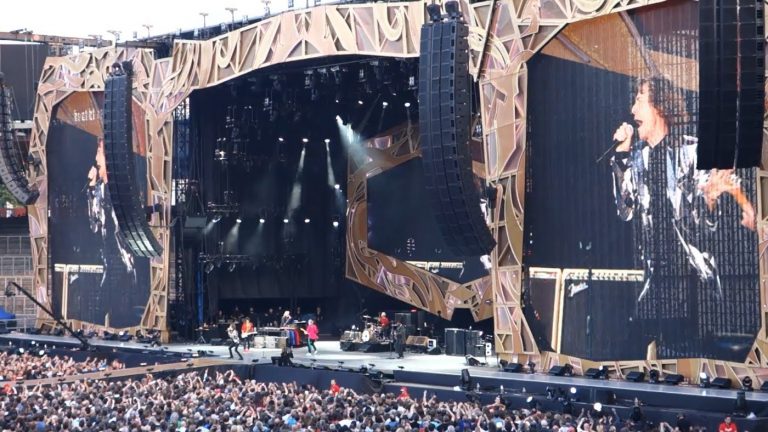
The Rolling Stones resumed their world tour in Oslo last Monday, interrupted more than two months ago due to the suicide of Mick Jagger’s partner.

040614_Rolling_Stones-23

Oslo was the first European stop of the “14 on Fire Tour”, and the show has caused a frenzy among the legendary band’s Norwegian fans with the 25,000 tickets selling out in just 13 minutes.

Ticket prices for the concert range from 115 to 310 euros ($157 to $423).

The Stones suspended their tour in March as they were about to perform in Australia after Mick Jagger’s partner, L’Wren Scott, committed suicide in her New York flat.

After Oslo, the next stops will be Lisbon, Zurich, Tel-Aviv, the Pinkpop Festival in the Netherlands, Berlin, Paris, Vienna, Dusseldorf, Rome, Madrid and the TW Classic Festival in Belgium, before returning to Scandinavia with shows in Stockholm and Roskilde (Denmark) in the beginning of July.

(AFP)

The Munch Trail

This trip is ideal if you want to learn more about the childhood and youth of the famous Norwegian painter Edvard Munch. Edvard Munch was born in Løten, 12 December 1863.

The Munch Center
The exhibitions at the Munch Center at Klevfos focus on the young Edvard Munch and the visits he made to the Hedmark area after his family moved to Oslo. It also focuses on his childhood work. Among other things, you can read the correspondence between the Munch family and their good friends at Ådalsbruk, and you can try your hand at painting skin tones, like Munch did.

030614_Munch_at_KLevfos_Norway_Daily_Scandinavian
Klevfoss

The Munch Trail
There are information points at places who Edvard Munch was attached to, such as Engelaug østre (Munch’s birthplace), By farm (Sophie Munch’s birthplace), Tofsrud (Christian Munch’s workplace), Worker’s home at Klevfos Museum.

Loeten skyssstasjon
Loeten Nærstasjon

Løten Nærstasjon
Another good starting point for the bicycle trip is Løten Nærstasjon. Løten’s old station building is home to a café, bakery, an outlet for local food and arts & craft, tourist information center and train ticket office. When booking in advance groups can enjoy a guided trip on a quiet country road to Klevfos and the Munch-Center.

Munch menu
Combine the bike trip with a 2 course Munch lunch at Løten Nærstasjon. The menu is based on local produce and what Edvard Munch would have had on his menu while living in Løten.

SEASON: June – September 15.
CYCLING DISTANCE: Munch-trail 7,5 km from Klevfos. From Løten Nærstasjon to Klevfos: 5 km.
SUITED FOR: Cyclists in moderate condition. Interests: History.
PRICE LEVEL: From NOK 150 per person, including guided tour at the Munch-Center and at the Munch trail from the Munch-Center.
2 course Munch lunch: NOK 160.


SF Bio opens the Nordic region’s first IMAX cinema in Stockholm

In autumn 2015, SF Bio will open the Nordic region’s first IMAX cinema at Filmstaden Scandinavia, which will be located in the Mall of Scandinavia in the ‘Arena’ district of Solna outside Stockholm. 

020714_Imax
Filmstaden Scandinavia will house 15 auditoriums, one of which will be equipped with IMAX technology, which involves an extremely large screen offering an audio and visual experience that is something truly special. IMAX is an innovation in entertainment and technology that combines software, architecture and equipment to create experiences that take cinema-goers to a whole new dimension. Around the world (as of 1/4 2014) there are 840 IMAX cinemas in 57 countries and now the first one is to be built in Sweden.

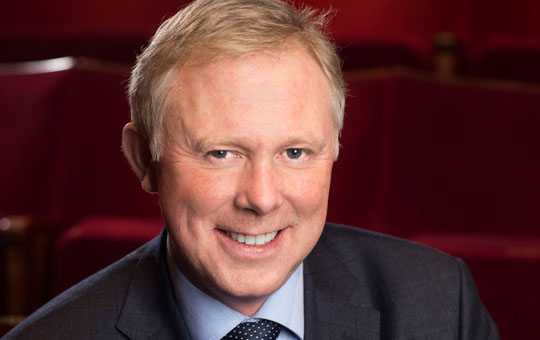
“We have seen the growth of IMAX in Europe and its popularity and we believe that the time is now right to make IMAX a substantial element of our contribution to the cinema experience,” says Jan Bernhardsson, President and CEO of the Nordic Cinema Group, which comprises SF Bio in Sweden, SF Kino in Norway, Finnkino in Finland and Forum Cinemas in Estonia, Latvia and Lithuania. “IMAX will be a brand new attraction at our new flagship Filmstaden Scandinavia, where big films will also have their premières. We are looking forward to this collaboration and will also be considering more such ventures in Scandinavia.”

020714_SFBio_JanBernhardsson
Big film-makers such as James Cameron, J.J. Abrams and Christopher Nolan and major film companies offer films in IMAX format to give the public an out-of-the-ordinary experience, and IMAX cinemas are now among the most important and successful cinemas around the world for big blockbuster films. Films like “Avengers”, “The Hobbit”, “Batman”, etc. are examples of films that have attracted large audiences to the cinema and an IMAX cinema takes the experience to a whole new level.

For more information about IMAX, visit https://www.imax.com/about/experience/

Filmstaden Scandinavia will feature:

11 auditoriums suitable for large audiences with northern Europe’s biggest screens and a strong focus on a superlative cinema experience. This venue will be Sweden’s biggest cinema, with the Nordic region’s biggest film screen and over 1,800 armchair seats. The biggest auditorium will be constructed as an IMAX cinema with around 500 armchair seats.

A separate luxury cinema wing with four VIP auditoriums and an exclusive restaurant and bar area offering food and drinks to accompany your film. This cinema will have approximately 160 exclusive armchair seats.

Mall of Scandinavia in Solna is planned to be the Nordic region’s biggest shopping centre with over 100,000 m2 of shop floor area.

The «Land’s End» of Denmark

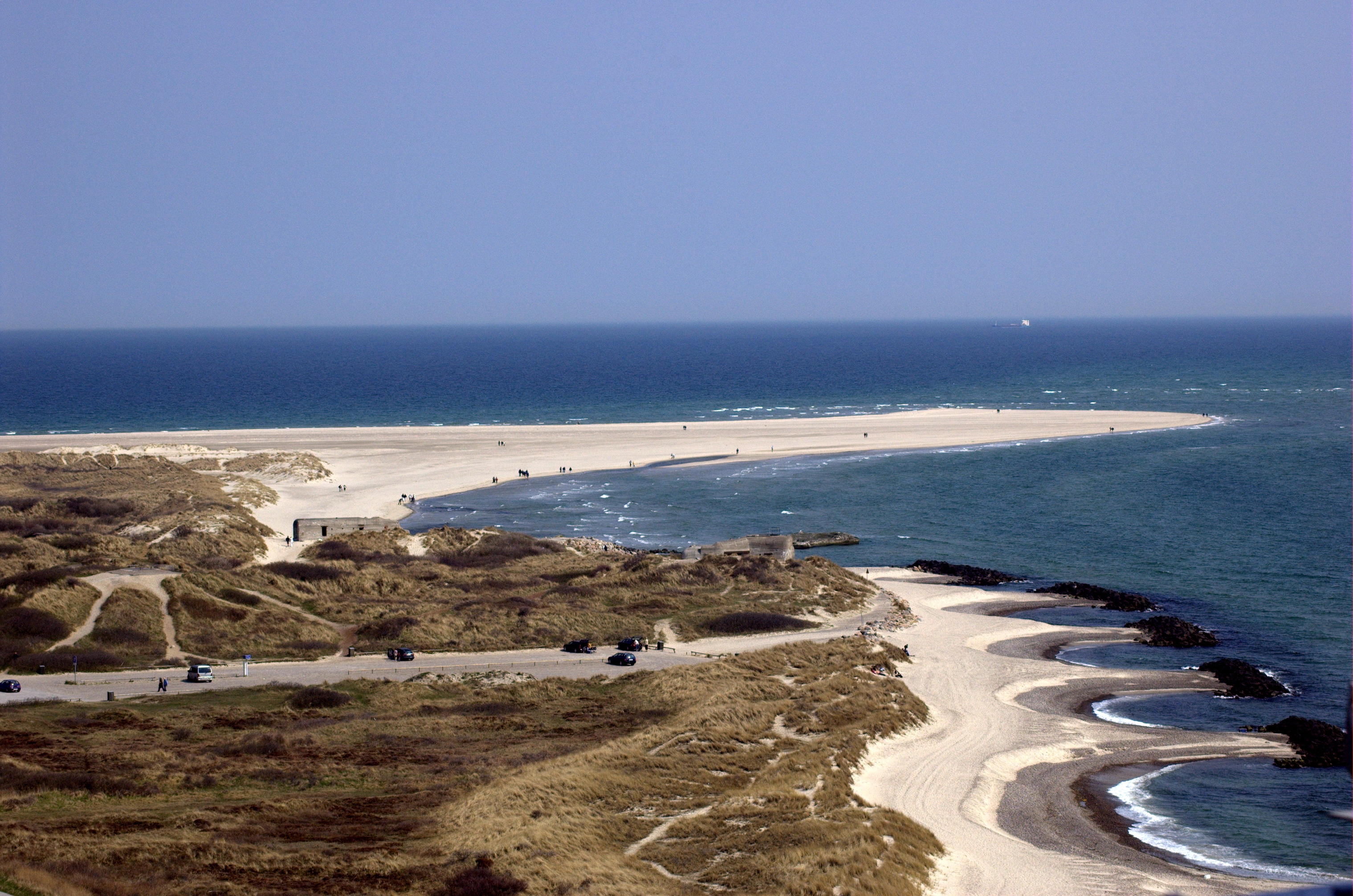
The Danes consider this something of a Riviera, while Americans liken it to Cap Cod. At the Jutland peninsula’s – and mainland Europe’s – northernmost tip pointing into the North Sea, the small weather-hardened fishing communities who for centuries inhabited these heathered moors and sea-swept coastline have been joined by a thriving artist’s colony – and the tourists who followed.

300514_Skagen_denmark All were lured by Skagen’s simple life – the characterful town and unspoiled dunes.
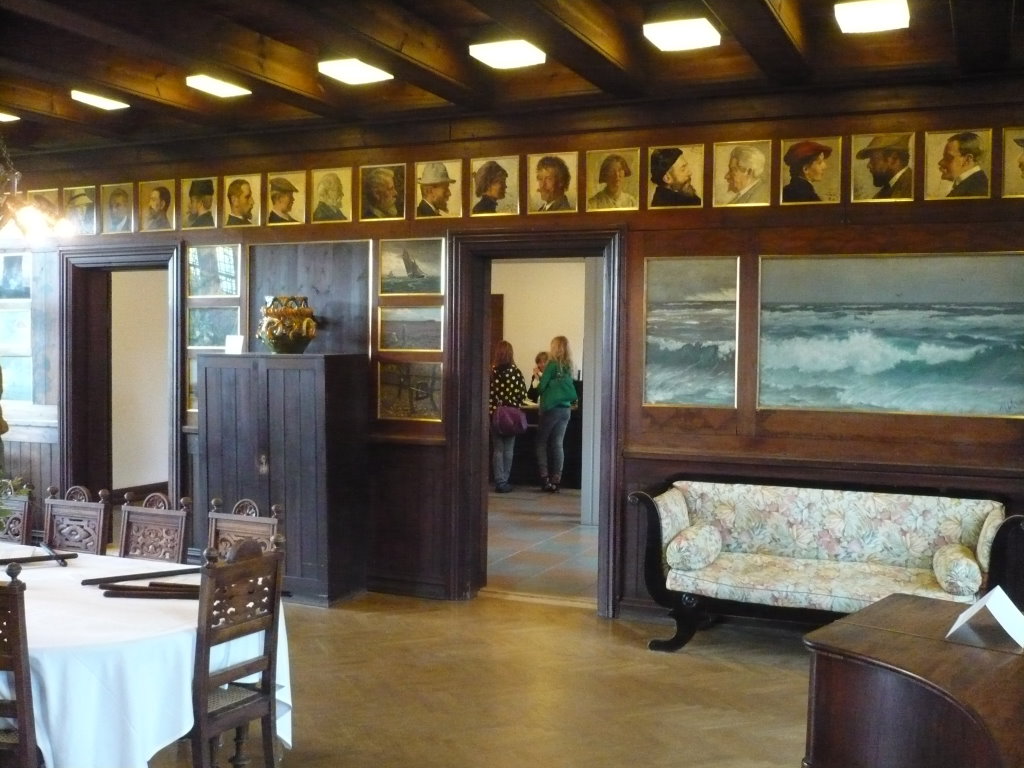
The small but excellent Skagen Museum illustrates works of the local, late-19th-century impressionist movement that was inspired by the land- and seascapes, and the shifting colors and quality of the light here.

300514_Skagens_Museum-Denmark
Writers have been equally moved about the “land-end” of Denmark: Isak Dinesen wrote much of Out of Africa while a guest at the wonderful charming, gabled Brøndums Hotel. Creaking floors and antique-furnished sitting rooms make this feel like a private home, one distinguished by a number of old paintings given in exchange for lodging.

300514_Broendum_Hotel_Skagen_Denmark_Daily_Scandinavian
The 150-year-old inn’s intimate dining room produces exceptionally fresh and delicious meals, with a predictable accent on seafood. Every morning at dawn, the local townfolk have the pick of the best at the wharf’s barnlike fish-auction house before the day’s catch is spoken for and shipped off to markets all over northern Europe.

Natural Wonders in Scandinavia

Water, fire and ice have combined to make some of the most spectacular scenery in the world — from giant crystal caves to mud volcanoes and rock formations that look like works of art.

If your office and daily commute aren’t a fitting reminder of the extraordinary natural diversity of planet earth, get some inspiration from these natural wonders in Scandinavia.

Stockholm archipelago. Sweden
Right on the city’s doorstep lie 25,000 islets and skerries, a sight that gave author August Strindberg “goose pimples of sheer delight”.

280514_stockholm_archipelago-daily_scandinavian
Preikestolen (Pulpit Rock), Norway
Featured in every tourist brochure on Norway, majestic Pulpit Rock has unbeatable fjord views.

280514_Pulpit_Rock_Lysefjord_Norway
Jostedalsbreen Glacier, Sognefjord, Norway
Europe’s largest glacier.

280514_Jostedalsbreen-Glacier_Norway
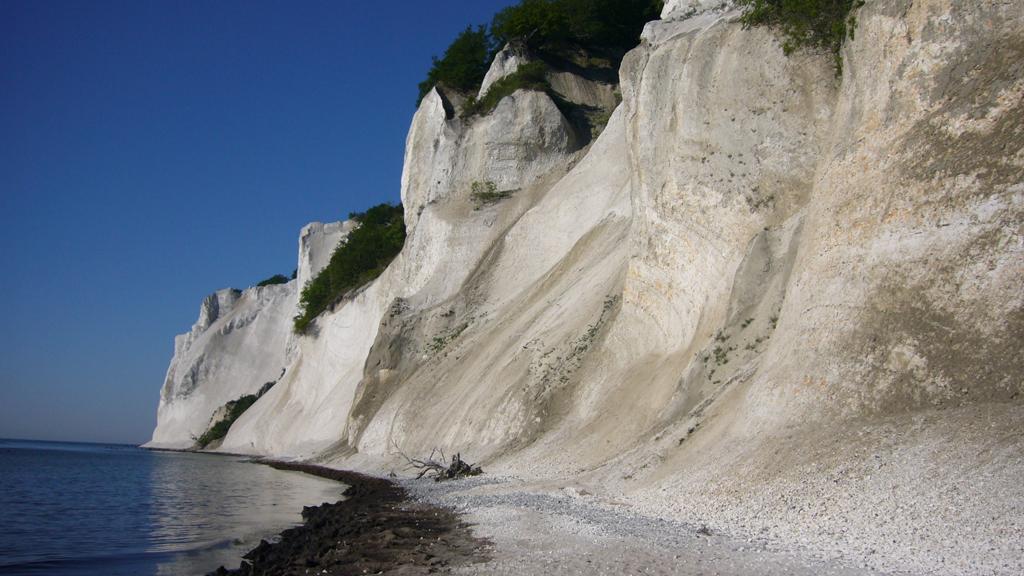
Cliff of Møn, Denmark
Hunt for fossils along the edges of Denmark’s most famous landscape, the shining white chalk cliffs of Møn.

280514_moens-klint-east-denmark

Oslo’s popular new attraction

Oslo´s newest attraction – the Ekeberg Park – opened in September 2013, and has already become a real must-see when you visit the Capital of Norway. The Ekeberg restaurant is also one of Oslo´s most highly recommended places to eat.

Ekeberg Restaurant. Photo Tor Kjolberg

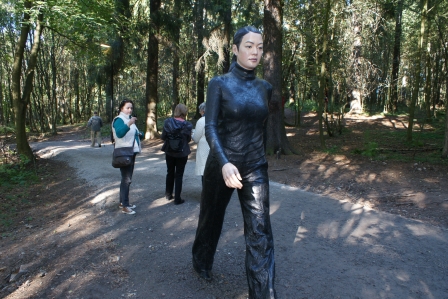
Ekebergparken is a sculpture and national heritage park for the people of oslo and visitors looking for a unique experience.

????????

Visitors to the park are offered a unique art experience in close proximity with Ekeberg’s rich natural landscape and diverse cultural history.

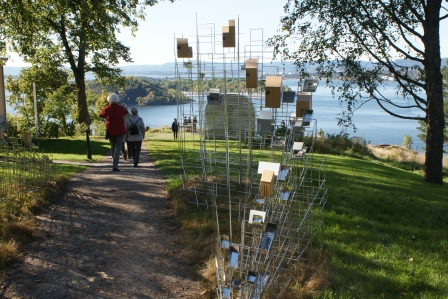
View from the Ekeberg Restaurant. Photo Lars Thomas Transkanen

The park, Oslo’s popular new attraction, is large and spacious enough for the artworks not to be visually intrusive, but they are of such high international standard that they justify the trip alone.

????????

Once here, however, visitors will in addition to the art enjoy the added value of fantastic views over the city as well as beautiful forested parkland steeped in cultural history.

Photo Tor Kjolberg
Photo Tor Kjolberg

All photos: Tor Kjolberg and Lars Thomas Tanskanen

Read also New Sculpture Park Opened in Oslo

Ida Klamborn – Not Just a Label

0

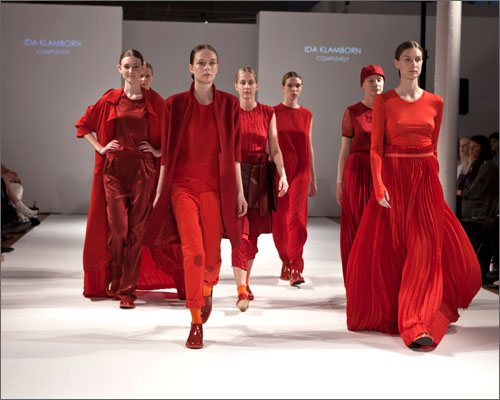
Ida klamborn is a Swedish fashion designer, situated in Stockholm. The language and focus in her work can be seen as a balanced union between color, shape and material where the momentum is to explore and develop simple ideas into intriguing collections.

260514_Ida_KLamborn
IDAKLAMBORN stands for a graphically strong expression where the textiles and prints together with the details and finish creat interesting contrasts and elongated silhouettes.

Besides her solid education from The Swedish School of Textiles, Ida also has several awards and scholarships behind her. Her BA degree collection received the prestigious Italian Fabric Award which also resulted in a presentation of a collection during Milan fashion week.
260514_Ida_modedesign
IDAKLAMBORN received in 2014 the Peroni Designer Collaborations, selected by BON Magazine, and also won the Elle Award for Best newcomer of the year in fashion. The first official show during Mercedes Benz Fashion week in Stockholm AW 14 got a great respond from the Swedish fashion world and the young designer received great reviews and praise for her work.

It was a collection with strong contrasts in colors, a layered silhouette with smooth lines together with a more ruff finish and a reworked camouflage print which conveyed a slightly aggressive undertone which was emphasized by a live performance by the rapper Silvana Imam.