
Sunday Walks in Copenhagen

The Danish Architecture Centre offers guided tours in English every Sunday during the summer called Sunday Walks. Choose between a tour to Kalvebod Brygge or the ‘inner city green walk’.

030714_Kalvebod_Boelge_DAC
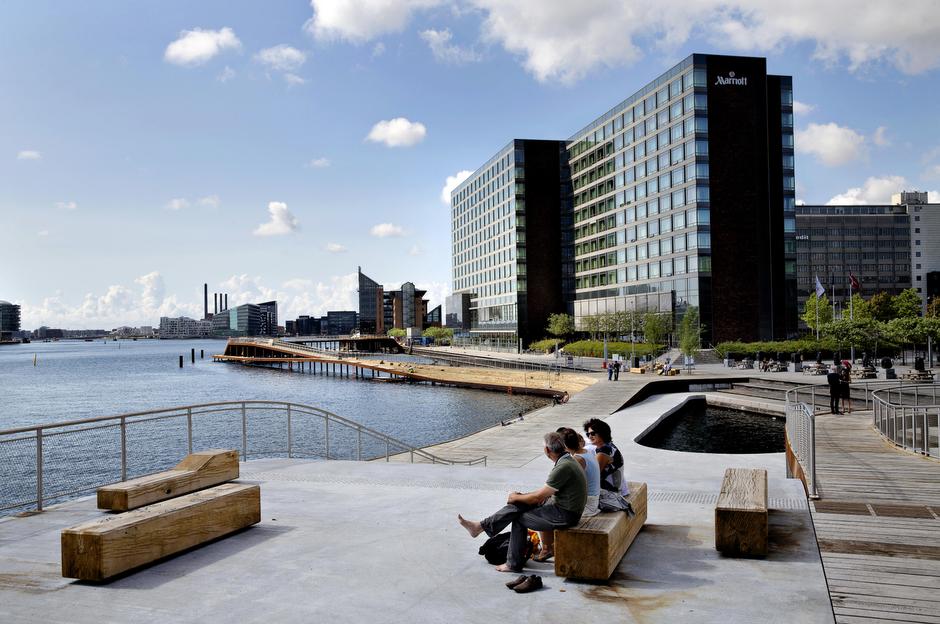
The tour to Kalvebod Brygge provides a fascinating insight into the on-going development along a substantial portion of the Copenhagen waterfront. In addition to the specific impact of new and upcoming buildings and public spaces, the walk also provides an insight into the latest development of Copenhagen Harbour, and how the harbour is being incorporated into overall plans for the city.

The tour begins at Kalvebod Brygge, where visitors are introduced to the upcoming construction on the brewery site, designed by Dutch OMA.

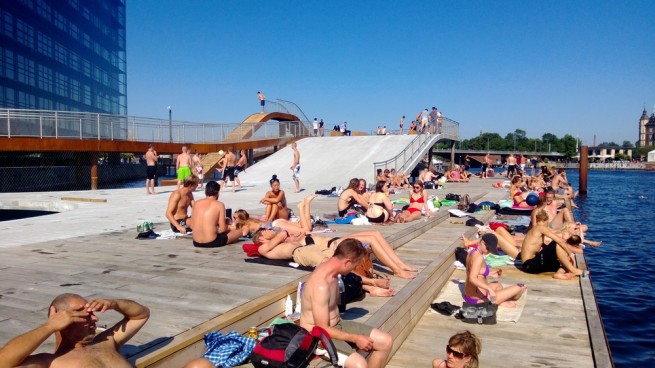
Kalvebod Brygge is a pedestrian pathway over the Copenhagen waterfront. The project for redevelopment of the area, which began with a public competition in 2008, was awarded to a group of architects including KLAR, JDS (Julien De Smedt architects), Niras, and Sloth Møller. The project is conceptually a continuation of the well-known project on the opposite side of the canal, Islands Brygge Park, constructed ten years ago by PLOT, which then split into the two well-known architectural practices JDS and BIG (Bjarke Ingels). With their experience working in the area, Julien De Smedt architects managed to transform a section of the coastline that was formerly an industrial area into a place for leisurely strolls that has become very popular with the people of Denmark’s capital as well as visitors, particularly in warmer weather.
Kalvebod Bølge

From there it is a short walking distance to Kalvebod Bølge, with a wonderful view over the inner harbour.

Leaving the waterfront, the tour continues across the public space under Krystallen, and then proceed via Dantes Plads to Vestervoldgade. A radical reorganization of traffic has been completed there, in order to create a better connection between the harbour and the city.

030714_Dantes_Place_Copenhagen_Daily_Scandinavian

Sunday Walks in Copenhagen end at the Tourist Information Centre after crossing Rådhuspladsen (The City Hall Square) and passing the new House of Industry.

030714_House_of_Industry_Copenhagen

Visitors get free entrance to the exhibition at Danish Architecture Centre together with their Sunday Walk.

It’s neccesary to sign up. Sign up through these links and please note, that the tour is in English. Remember to bring your receipt.

>> Sign up for Sunday July 6th

>> Sign up for Sunday July 20th

>> Sign up for Sunday August 3rd

>> Sign up for Sunday August 17th

>> Sign up for Sunday August 31st

>> Sign up for Sunday September 14th

>> Sign up for Sunday September 28th

Nothing In Return

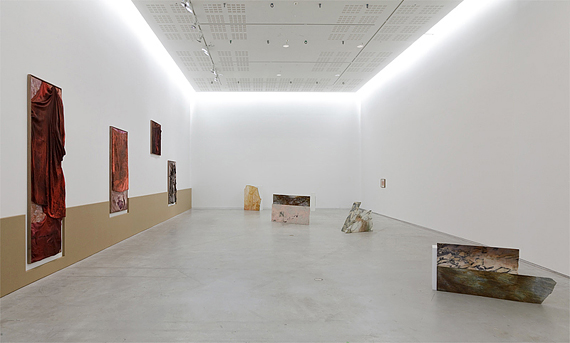
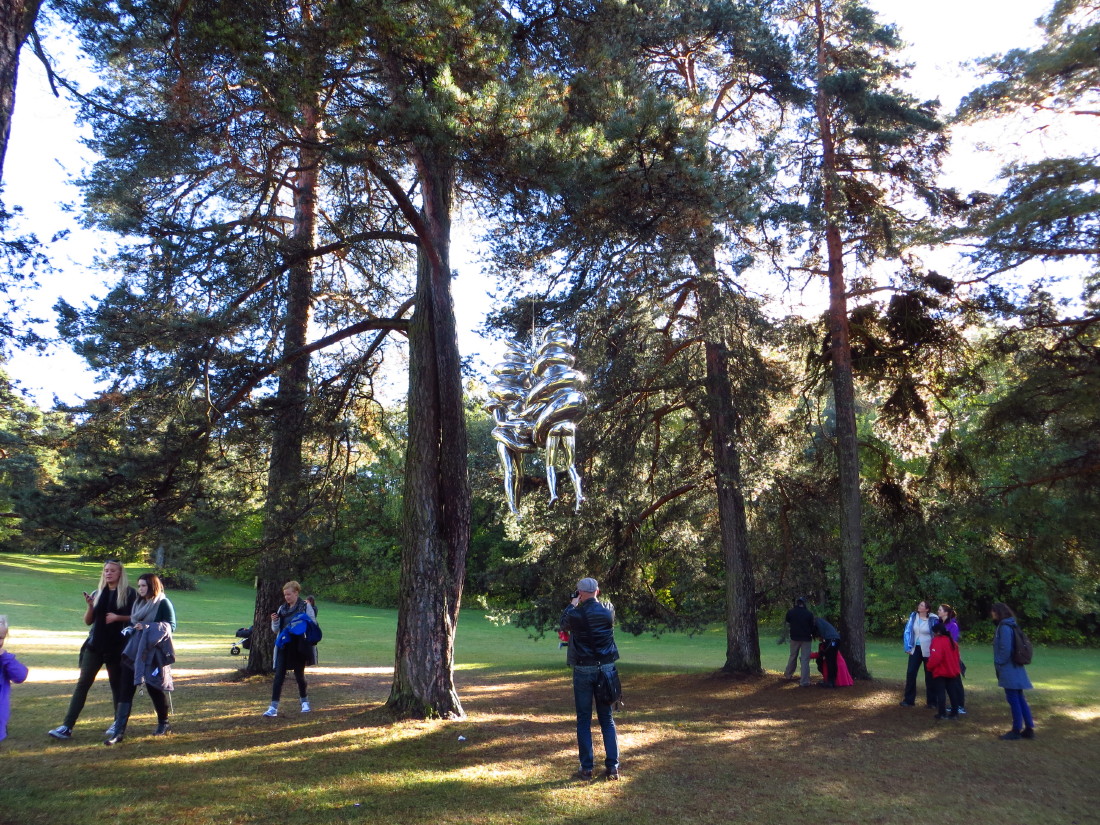
Until July 27 the art gallery Standard (Oslo) exhibits three new sculptural works by Oslo-based artist Marius Engh. Entitled “Nothing in Return”, Engh locates the starting point for his exhibition with Tel Megiddo in what is now northern Israel.

020714_Standard_(Oslo)

Known for its historical and geographical importance as the leading city-state of the valley of Jezreel, the more than 26 layers of ruins unearthed by various excavations bear evidence of a long period of settlement and of an ever-recurring pattern of destruction and reconstruction –offering some explanation to the Greek name for Megiddo being Armageddon.

A mere decade ago, Israeli archaeologist Yotam Tepper of Tel-Aviv University discovered the remains of a church, dating back to the third century, south of the Tel Megiddo. Among the finds was a large-scale mosaic stating in Greek that the church is consecrated to “the God Jesus Christ.” It is believed to be the oldest remains of a church in the Holy Land. The remains were initially found within the grounds of the military Megiddo prison by prisoner Ramil Razilo, and Israeli authorities are currently considering moving the entire prison.

“The power of historical artefacts derives from the duality of their nature; they are both a concrete proof of an historical fact and the basis for an abstract construction of meaning.”
– Peter J. Buxton: “Possessing the Past: The use and abuse of archaeology in building nation-states”, Ministry of Defence, London, 2009

“Gog and Magog are at work in the Middle East … The biblical prophecies are being fulfilled… This confrontation is willed by God, who wants to use this conflict to erase his people’s enemies before a New Age begins.”
– George W. Bush talking to Jacques Chirac on the telephone in early 2003

“Irrational modes of organization are gaining ground: main axes are forgotten, the most preposterous disproportions given their head, and one gets lost in the phantasmagoric density where the effort to keep one’s bearings is doomed. For Piranesi, prisons are a release into freer spatial experiment, but all spaces are in some sense prisons, entered voluntarily in high anticipation of their pleasing confusions.”
– Robert Harbison, “Ruins”, The Built, the Unbuilt and the Unbuildable, Thames and Hudson, 1991

This is Marius Engh’s fifth solo exhibition at Standard (Oslo). Other recent solo exhibitions include “Eschscholzia Californica” at Emanuel Layr, Vienna; “My Target Is Your Eyes” at Galleria Gentili, Prato; and “Exhume to Consume” at Supportico Lopez, Berlin. Marius Engh’s works have previously been included in exhibitions at Musée d’Art Moderne de la Ville de Paris, Paris; Kunsthalle Wien, Vienna; Tenerife Espacio de las Artes, Santa Cruz, Tenerife; Henie Onstad Art Center, Høvik; Kunsthall Oslo, Oslo; Museum of Contemporary Art, Chicago; Westfälischer Kunstverein, Münster; Bergen Kunsthall, Bergen; and Witte de With, Rotterdam. Currently Marius Engh is contributing to the group exhibition “Decorum – Carpets and Tapestries by Modern and Contemporary Artists” (curated by Anne Dressen) at the Power Station of Art, Shanghai.

Marius Engh takes possession of real objets by creating clones, providing new insights and new ideas about the “things” in this world of reality and experience.

Time has turned into space, 
and there will be no more
time till I get out of here.

Marius Engh


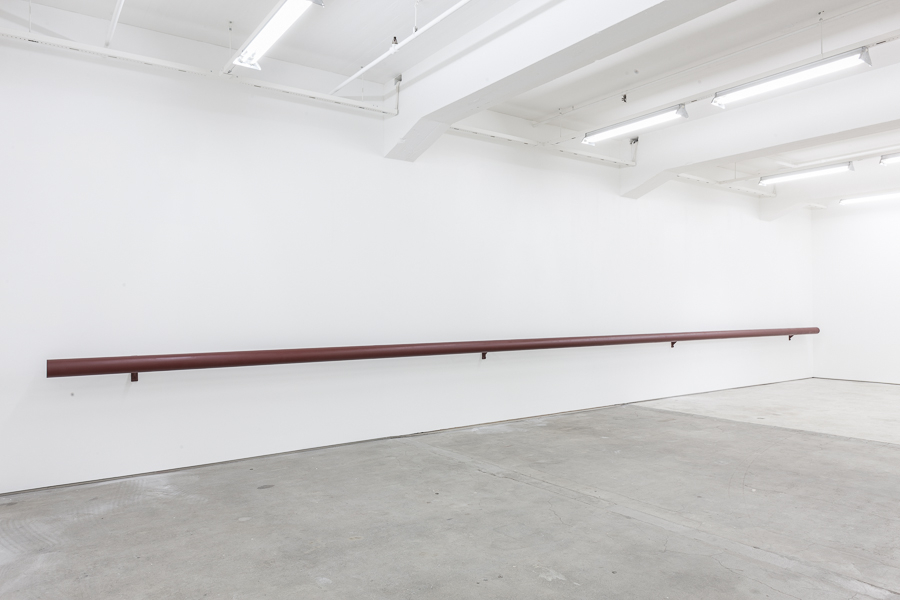
Bar behind bar behind bars by Marius Engh


Standard (Oslo) was established in April 2005. Based in Oslo the gallery aims at promoting contemporary Norwegian artists in the international field, as well as introducing international artists to the Norwegian audience.

Gallery artists have been included in a number of internationally renowned exhibitions, such as Documenta (2007 and 2012); The Whitney Biennial (2006 to 2012); The Venice Biennale (2003, 2005 and 2011); The Biennale of Sydney (2004, 2008 and 2010); The Istanbul Biennial (2005); The Lyon Biennial (2007); Manifesta (2004); and Momentum – the Nordic Art Festival (2000, 2004, 2006 and 2009). The gallery also participates in the following art fairs during the year: Art Basel, Art Basel Miami Beach, Art Los Angeles Contemporary, Frieze Art Fair London and Frieze Art Fair New York.

Standard (Oslo) is operating out of Waldemar Thranes gate 86C and 86B, after seven years in Hegdehaugsveien 3. The seven years and 56 exhibitions there have been documented in a book launched last year, “Hegdehaugsveien 3” published in English, 171 pp / Color / Hardback / ISBN 978-82-92930-02-1.

Located on the west side of Akerselven – and within walking distance of the Oslo National Academy of the Arts and The Oslo School of Architecture and Design – the 700 square meters gallery space marks a new phase in the development of Standard (Oslo).

Five child friendly biking routes in Oslo

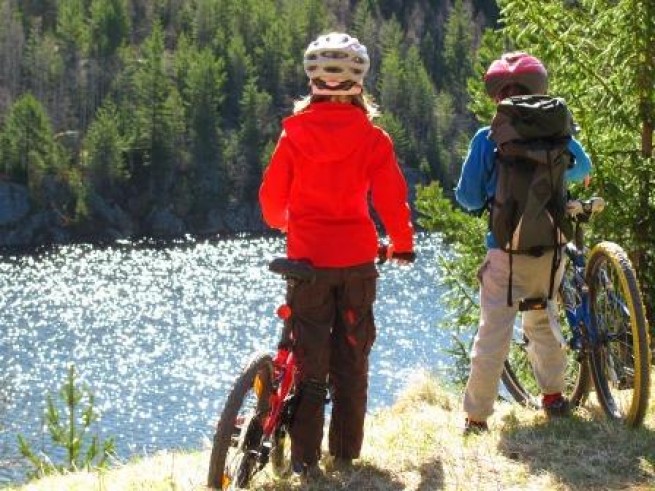
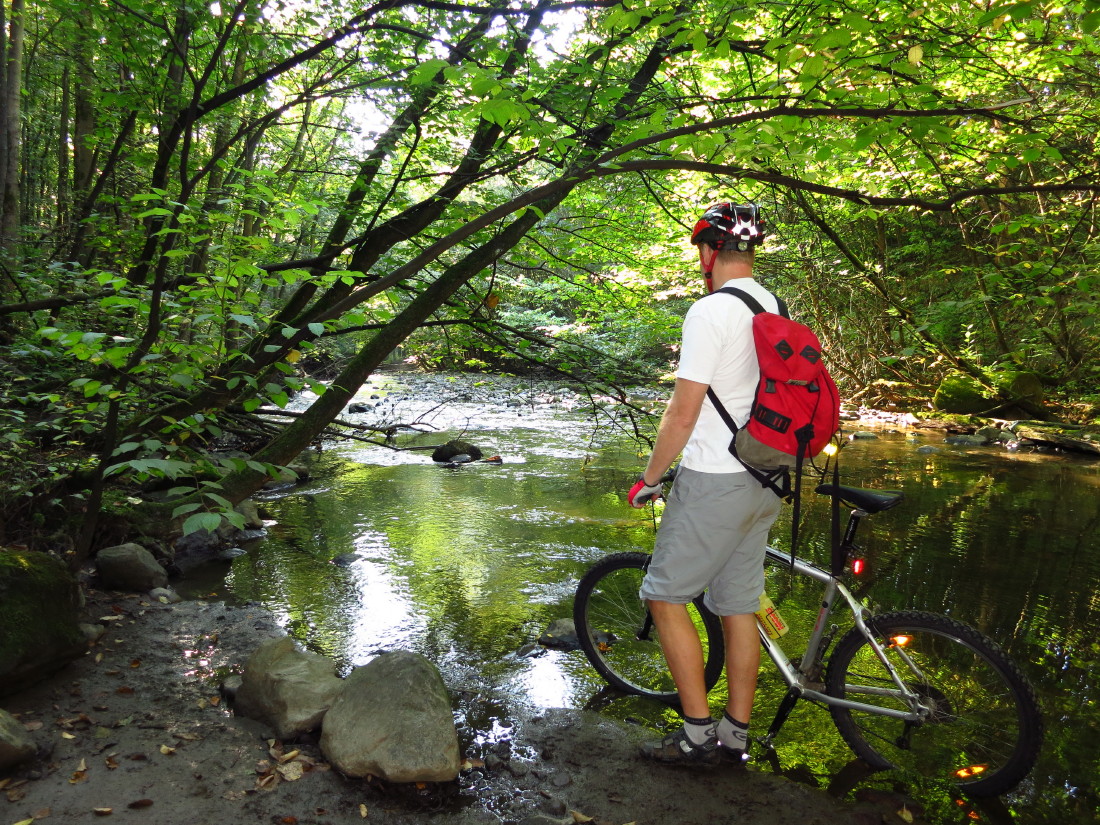
Summer is biking season and a wonderful time to explore Oslo by bicycle.  Enjoy your stay by biking in a  town that is quiet during holidays when Oslo is at it’s finest.  The bicycle might be just the best way to get acquainted with the city.

010714_Biking_in_Oslo_Photo_Oivind_Wold

Here are five child friendly biking routes in Oslo,  fine and not particularly demanding. They can be completed in just an hour or two, plus any breaks:

(These trips are through areas with little or no traffic. Recommended map is Oslo map book or hiking map ‘Oslo Marka summer’ in scale 1: 50,000.)

Eateries in Østmarka (Eastmark)
One of the easier hiking trips through woods begins and ends in the north at Ellingsrud subway station.  This bike ride is just over six miles long, on gravel roads through Østmarka down to Skullerud subway metro station in the south.  Along the way there are three pleasant eateries: Mariholtet, Rustadsaga and Skullerudstua, as well as nice picnic areas with swimming possibilities, such as Bremsrud and Katissa at Nøklevann.

Distance: 7.5 miles

Difficulty: easy, suitable for children from 7-8 years


Bygdøy roundtrip
One of the easiest and also one of the most attractive areas in Oslo for nice weekend- or afternoon walks is a Bygdoy roundtrip excursion starting at Skoyen station and ending at Skoyen square.  This is one of the first places where the snow disappears in the spring.  There are beautiful hiking trails through woods and farmland, past sea views, cliffs and grazing cows.

010714_Paradise_Bay_Bygdoy_Oslo_Photo_Oyvind_Wold
Along the way you pass the famous museum and attraction Oscarshall Castle, and some of the finest bathing spots in Oslo:  Huk, Paradisbukta (Paradise Bay) and the recently established Bygdøy seawater pool on the northwest side of the peninsula.  The finest part of this bike route is closest to the lake along Hengseng road, Christian Frederiks road on the west side, and Wedel road on the east side. Take a break at idyllic Rodeløkken cafe, with a view to Frognerkilen.

Distance: 5 miles, depending on route choice

Difficulty: very easy

Wild and green along the lower Alna River.
One of the most popular hiking trails starts at the intersection of Breivollveien and Smalvollveien, a short distance west of Alna Center and ends at Enebakkveien by the Galgeberg Crossing.

Although close to the country’s largest industrial areas, the hiking path along the Alna River is verdant and surprisingly quiet.  The lower Alna River meanders with wings of flood plains down to the narrow but gloomy Svartdalen (Black valley) with its runs and waterfalls.  At the newly constructed walking route west of Bryn Station is a suspension bridge and then a stretch where the road runs along a rock wall over the Alna.  It is quite spectacular. The path is winding and difficult in places and the width varies so pay attention to walkers!  Then it’s Enebakkvei downhill to the Galgeberg intersection.

Distance: 2.8 miles

Difficulty: easy to cycle, but some traffic on Nils Hansens vei between Tveten bridge and Bryn station (0.4 miles)

Bird Watching Eldorado at Østensjøvannet
Østensjøvannet is one of the most exciting bird watching areas in Eastern Norway, starting at Hellerudsletta subway station and ending at Skullerud metro station.

Along the water and south to Bogerud and Skullerud is a pleasant and very easy cycling trail through a green field resplendent with farms and wetland vegetation. There are many opportunities to get close to the birds.

From Hellerudsletta subway station follow Låveveien and Haakon Tveters way south to Østensjøvannet, pedestrian trail from here to Skullerud station. After crossing under General Ruges vei at the end of the walk, it is a short distance to Skullerud subway station.

Distance: 3.7 miles

Difficulty: very easy, fit for kids from 6-7 – years


Ekeberg Sculpture Park
This bicycle tour begins and ends at Sportsplassen city station, tramcar line 18 and 19.

Christian Ringnes opened the Ekeberg Sculpture Park in September 2013.  Thirty sculptures and installations have been placed along its paths.  Since they are spread over a fairly large area, a bicycle is a good way to get around and see the attractions. Directly below the Ekeberg restaurant is a café and visitor center where one can find maps of the location and information about the artwork.

010714_Ekebergparken_Oslo_Oyvind_Wold

Starting the bicycle tour at Sportsplassen station, follow the Jomfrustien road and pedestrian footpaths, then circle around Ekeberg restaurant and camp ground. In order to avoid the huge pressure of hikers along these roads, a trip on a weekday is recommended.

Distance: about 2.2 miles

Difficulty: easy

Text and Photos: Øyvind Wold

Books by Øyvind Wold

010714_Oyvind_Wold_books_1010714_Books_by_Oyvind_Wold_2

Inspector Norse

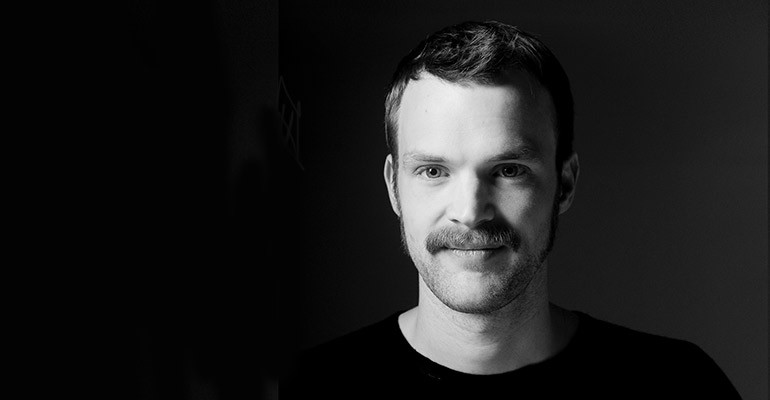
Nothing is perfect, but some things nearly are, and Todd Terje’s song Inspector Norse is one of them.

300614_Todd_Terje_Portrait_Daily_Scandinavian
Scandinavia’s electronic disco scene of the past decade or so has been especially fruitful, not least because of Terje Olsen, who records as Todd Terje. (The moniker is a tribute to the New York house DJ Todd Terry, whose cut-up production style, redolent of the hip-hop also ruling the city in the late ’80s, had an enormous impact on dance music’s future direction.) Terje started out making lush house — his piano-driven remix of Lindstrom’s “Another Station” is featured on Michael Mayer’s excellent DJ mix, Immer 2— with a healthy side of re-edits, in which producers slow down and trick out snippets of old disco records until they take on an otherworldly glow.

It’s the sound of pure faith in human kindness, a full glass of champagne at the inaugural beach party — before it all goes wrong, before you get blistering sunburn and an endless hangover and curse the loser who robbed you of what could have been the best summer of your life. Even if all of that does happen, you can just hit play the first day of the next summer. Same effect. This probably has something to do with Terje being Norwegian. Scandinavians often have a unique appreciation for annual rebirth by sunlight, after months of interminable darkness, and a unique ability to realize it through music; Terje has established himself as one of the most able.

“Inspector Norse” was originally released as a single in 2012, and it closes It’s Album Time, Terje’s debut LP. But don’t listen to it first; just know that it’s there. Let its presence impregnate the 11 songs that precede it, because Terje, in spite of his clear ability to make great singles, has actually made an album whose solstice is its conclusion.

From the cheeky proclamation of the intro to the propulsive penultimate “Oh Joy,” everything builds to that near-perfect moment. Even the mid-album relationship number, “Johnny and Mary,” with crestfallen vocals by Bryan Ferry, feels like a constructive step toward it; an emotional spring cleaning. The whole of It’s Album Time, not unlike a certain robotic French duo‘s latest effort, ebbs and flows with nostalgia for this journey to the light. Unlike the French, though, Terje seems to still believe that the moment will again be attainable, instead of forever lost to a bygone youth.

The effectiveness of this arc will probably depend on your personal philosophy. But even for the pessimists, It’s Album Time provides an escape in standalone moments of greatness like the piano disco of “Strandbar” and the hyperactive tropicalia of “Svensk Saas.” And, of course, even if you’ve already heard “Inspector Norse” a thousand times, it’s there, waiting for you.

Remarkable 1,000-Year-Old Relics

The Age of the Vikings, when Norsemen terrorized the coasts of Europe, lasted approximately from 800 to 1050 (the bold explorer Leif Ericsson is said to have discovered America in 1001).

270614_Viking_Ship_Museum_Oslo_3_Daily_Scandinavian

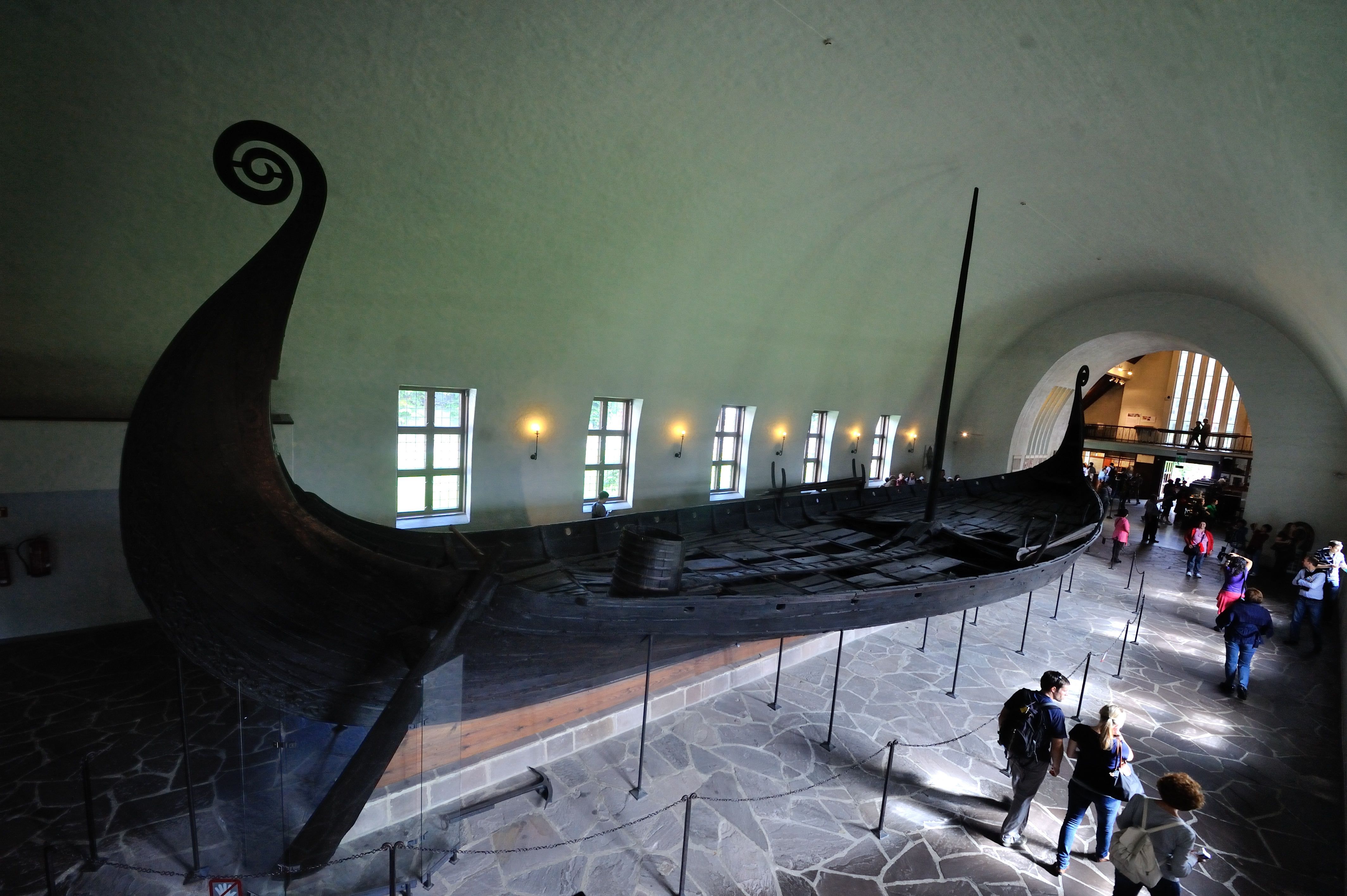
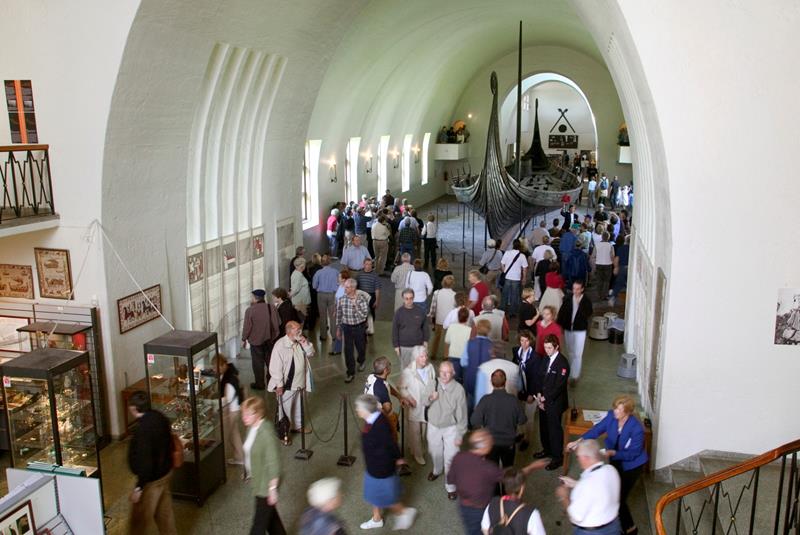
Little was written down of their vivid sagas and legends, embellished over the ages by word of mouth. The single best place to experience the wealth of their heritage is at the cathedral-like Vikingskipshuset or Viking Ship Museum, built in 1936 to house three incredibly well-preserved 9th-century Viking burial ships discovered at the turn of the century in the nearby Oslo Fjord.

OLYMPUS DIGITAL CAMERA
Considered the country’s most important archaeological cache, the three vessels contained the royal bodies of Viking chieftains and one queen (believed to be the grandmother of Harald Fairhair), all entombed with their servants, pets, and countless artifacts meant to serve them in their afterlife in the royal manner to which they were accustomed.

270614_Viking_Ship_Museum_Oslo_Daily_Scandinavian
Together they constitute the largest Viking find ever recorded, and have shaped the understanding of Norway’s distant maritime past.

270614_Viking_Ship_Museum_Oslo_Norway
This artistry and craftsmanship confirm that the Vikings excelled at more than sailing, when you witness 1,000-year-old relics at the museum.

Daily Scandinavian 2014 Summer Bucket List

There are lots of places to see and experience in Denmark, Norway and Sweden. So much that spending hours to plan a vacation and choosing places to see takes all the fun out of the expectations.
The Daily Scandinavian’s Bucket List makes the planning and choices easy for a fantastic vacation.

Welcome to our 2014 Summer Bucket List!

Denmark

260614_Legoland_Billund_Denmark
Legoland. Billund, Denmark
Win eternal admiration by taking your children to Legoland, with waterpark, rides and the marvelous Miniland, created from 20 million bricks.

Tivoli. Copenhagen, Denmark
Utterly delightful theme park and gardens, right in the heart of the capital city. Fountains and fairground as well as jugglers and acrobats make this a fun family day out for everyone. Related article.260614_tivoli-copenhagen

Fairy-Tale Island of Funen
If something is rotten in the state of Denmark, it certainly isn’t the garden island of Funen. Nor is it the island’s regal and privately owned Egeskov Castle, widely held to be Europe’s best preserved Renaissance island castle. The castle opened again last week.

260614_Egeskov_Castle_Denmark

260614_roskilde-cathedral-denmarkDenmark’s Former Royal Capital
A onetime ecclesiastical seat and the royal capital of Denmark until 1455, fjord-side Roskilde recently marked its 1,000th anniversary, and some of the jubilee air lingers on.

Hamlet’s Elsinore (Kronberg) Castle
So Elsinore Castle’s real name is Kronborg Slot, and so it was built centuries after the time of the Danish prince in whom Shakespare based his tormented, brooding Hamlet. But his fortified Nordic icon of secret passages, with its suitably dungeon and canon-studded battlements, could not have been a better backdrop for Shakespeare’s dark tragedy. 260614_Kronborg_Slot_Helsingor

The Natural Beauty of Aero Island
If Denmark is in your sights as a travel destination, consider a visit to one of the islands to see Danish life at a slower pace while you enjoy fresh air, natural beauty and plenty of options for exercise. 260614_aeroskoping_Denmark

Norway

260614_Vigeland_Park_OsloFrogner (Vigeland) Park. Oslo
Oslo is a very family-friendly city, with outdoor pools, an adventure playground and the Vigeland sculpture park.


Viking Ship Museum – Oslo
presents great Viking ship discoveries from Gokstad, Oseberg and Tune as well as other finds from Viking tombs around the Oslo Fjord.

260314_VikingShipMuseumOslo

The Opera House – Oslo
The highlights of the architectural route are one of the new prides of Oslo, Snöhetta’s opera building at Björvika.

260614_Oslo_Opera_House
Ekeberg Art Park/Restaurant – Oslo
Ekebergparken is a sculpture and national heritage park for the people of oslo and visitors looking for a unique experience.

26061414_Ekeberg_Sculpture_Park_Oslo_Photo_Oyvind_Wold

Oslo –Flåm Rail/Fjord Cruise – Bergen
The mountain railway from Myrdal to Flåm packs the most dramatic scenery – ravines, rivers and toppling waterfalls – into its 12 miles (20 km) route. This part of the “Norway in a Nutshell” trip that adopts a variety of forms of transport to experience Norway’s exhilarating natural beauty.

260614_Flamsbanen_norway

Bryggen – Bergen
The tourist website for Norway captures the spirit and history of Bergen with its description of this city as “a spectacular amphitheatre clambering up the mountainsides.”

260614_Bryggen_Bergen

Sweden

A Castle, a Special Inn and a Picture-Perfect Town
The endearing lakeside village Marienfred in Svealand, with its main attraction, the impregnable redbrick Gripsholm castle, is Stockholm’s perfect day trip.

260614_gripsholm_castle

The Versailles of the North
Clearly inspired by the style of Versailles, the official year-round home, Drottningholm Palace, of Sweden’s present-day King Carl Gustav XVI and Queen Silvia is widely held to be one of the most delightful European palaces.

OLYMPUS DIGITAL CAMERA

Stockholm archipelago
Water, fire and ice have combined to make some of the most spectacular scenery in the world — from giant crystal caves to mud volcanoes and rock formations that look like works of art.

260614-The-Stockholm-Archipelago

260614_Vasa_stern_color_modelThe World’s Oldest Preserved Man-of-War
On August 10, 1628, the magnificent royal warship Vasa sank on her maiden voyage in front of thousands of horrified onlookers before she even left the Stockholm harbor. Sudden gusts of wind and not enough ballast are the most popular explanation.

260614_Birka_Viking_MuseumBirka — The Swedish Viking trading center
One of the most important trading centers in Scandinavia during the Viking Age
In Lake Mälaren, 18 miles west of Stockholm, Sweden, lies the small island of Björkö. Its size belies its importance in the Viking world of 1,100 years ago.

A Swedish Island Retreat in Medieval History – Visby, Gotland
It has taken very little time to fall in love with Gotland, a mysterious sea-swept island in the middle of the stony grey Baltic, off the southeast coast of Stockholm.

260614_sweden-visby

Enjoy!

Compilation: Lars Thomas Tanskanen


Lofoten Opera Hotel

The Norwegian architect firm Snøhetta reveals sinuous hotel project for a Norwegian island.

Architecture firm Snøhetta has unveiled images of a hotel that will wind across a rocky outcrop in Norway’s Lofoten archipelago.

Expected to start on site later this year, the Lofoten Opera Hotel will be located on an outlying site in Glåpen flanked by a mountain range. The new low-rise structure will loop a central courtyard, but will offer views out across the sea to the south and west.

“The spectacular view and the feeling of being ‘in the middle’ of the elements are the premier qualities of the site,” said Snøhetta in a statement.

250614_Lofoten_Opera_Hotel_by_Snohetta_2_dailysdcandinavian

“In a unifying gesture the site is captured in a circular movement, the complex layers of references to nature, culture, land qualities are translated into a band that transforms the site into a place.”

The 11,000 square-metre building will accommodate a mix of hotels and apartments within its curved body. There will also be spa facilities, seawater basins, hiking resources and an amphitheatre.

The project looks set to attract new guests to Lofoten, which is home to one of Norway’s 18 national tourist routes.  Stretching along a 184-kilometre road, the route encompasses facilities for tourists exploring the natural landscape, including the Eggum rest stop completed by Snøhetta in 2007.

250614_Eggum_Reststop_by_Snohetta_dailyscandinavian

Here’s a description of the project from Snøhetta:


Lofoten Opera Hotel

Furthest west of Lofoten, in Moskenes community close to the town Sørvagen, is Glåpen.

The site extends out to sea to the south and west, linking the contact between ocean and the tall, shielding mountains to the north and northwest. The location is spectacular, sunny, in the mighty landscape elements, yet in touch with old settlement and sheltered harbors.

Snøhetta has developed a project and looked at a number of factors: the landscape “critical load” vs. new construction, functional and technical aspects of access, infrastructure, ecology and sustainability, connection to outdoors areas and existing buildings. The main goal is to find the development patterns and shapes that trigger the functional, architectural and experiential triggers the plot’s formidable potential. We think it will be essential to find a building program and a scale that “hits”, both in terms of economy, market and individual experience opportunities.

The spectacular view and the feeling of being “in the middle” of the elements are the premier qualities of the site. Plot view, organisation and habitat as form have been inspiring elements behind the concept. In a unifying gesture the site is captured in a circular movement, the complex layers of references to nature, culture, land qualities are translated into a band that transforms the site into a place.

This form creates an inner and outer space, and enhances the site’s inherent potential of an architectural expression. Concept and program are balanced in a mix of hotels, apartments, amphitheatre, spa, hiking and sea water basins within a total size of 11,000 m2. The local beach culture and storstuga are included in the project. The organic form protects and opens at the same time.

Location: Lofoten
Typology: Residential & Hotel
Client: Lofoten Opera AS
Status: Ongoing
Size: 11,000 sqm

Your Guide to Rural Pearls in Norway

Rural tourism, local food culture, nature, history, cultural landscape – all this and more helps to create an unique experience.

240614_Hanen_Tasteful_experiences
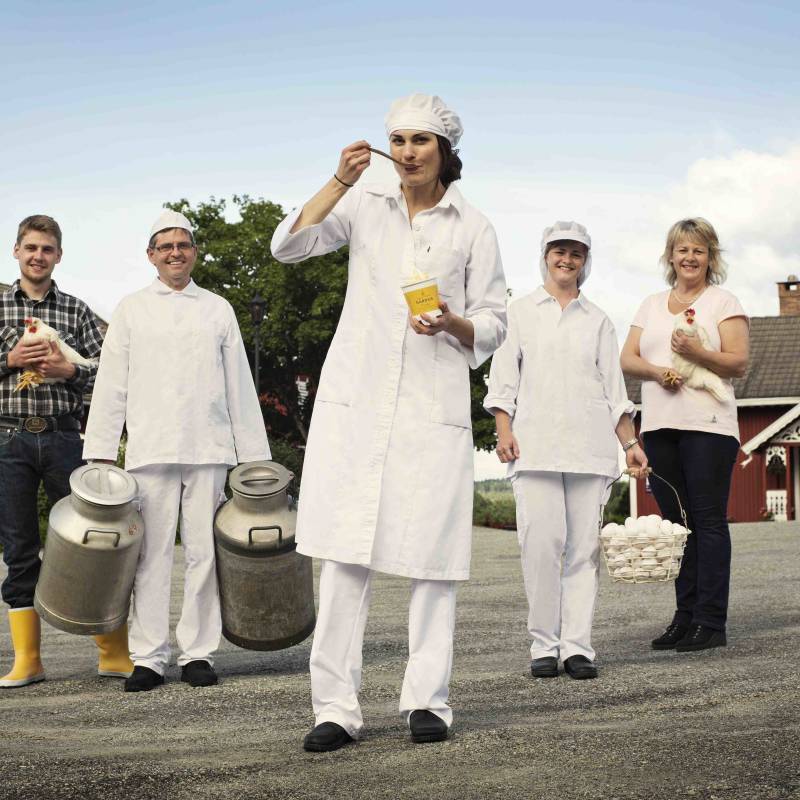
The 450 companies being a part of the chain Hanen (The Rooster/The Cock), offer visitors activities and services, all of which use nature and cultural experiences as a starting point based on the local village and farm’s resources. You will for certain find a lot of rural pearls in Norway with their assistance.

240614_Hanen_The_Rooster_The_CockThese companies communicate culture through history and special characteristics. They demonstrate responsibility for nature and the environment, and they provide experiences that impact all our senses.

240614_Hanen_Old_Grocery_shop
Please note that the various offers and servicse may vary from company to company, and therefore we encourage you to contact the places you want to visit in advance regarding their opening hours, overnight accommodation and food services.

240614_Hanen_Langedrag_Nature_Park
You can find further details about HANEN and its members here.

Daily Scandinavian intends to publish reviews and feature articles on destinations and activities which we believe will be of interest to our visitors and readers.

All Photos: Hanen

Wow, What a Film By a Norwegian Director!

That’s the expression Alex Billington in First Showing used when he reviewed the Norwegian director Eskil Vogs’s new picture Blind last February at the Berlin Film Festival.

230614_Eskil_Vogt
At the Berlin Film Festival, Norwegian filmmaker Eskil Vogt explained that too many films always feel the same, they’re always too predictable, and he wanted to make something different. Something that could even surprise him. And he has done exactly that. Blind, the first feature from writer/director Eskil Vogt, is deserving of the adjectives “brilliant” and “innovative” in the way it twists storytelling conventions and delivers the unexpected; something fresh, a film that stands alone. It’s uniquely captivating and surprisingly thoughtful, with a wonderful performance leading the way, writes Alex Billington.

230614_Ellen_Dorrit_Petersen
Blind
 follows a married woman named Ingrid, played by Ellen Dorrit Petersen, who is blind. She was not born blind, but went blind earlier in her life, allowing her to recall images in her mind. After first meeting Ingrid and listening to her explain the situation and what it’s like to live this way, we’re also introduced to a few other characters, who at first seem to have their own completely separate storylines unfolding. The overlapping narrative is brilliant in its concept and execution, and is part of the unexpected nature of this film. Watching it is like being caught up in a riveting mystery, trying to figure out what’s going while never feeling too out of touch. It’s best to save the revelation of the multiple stories for the experience of the film.

Along with the concept itself, what the film is actually about is the great struggle to live and loveafter going blind. How hard it must be to remain in love and be intimate with someone when it’s hard to even find your way around an apartment, or cook food, or figure out what to wear. It touches upon this struggle from the perspective of a woman, making it even more tender yet still brilliant in the way it dives into her mind and the way she thinks, and how this changes her interaction with her husband and those around her. It’s almost as if Charlie Kaufman took a few passes at the script. She gets jealous, she gets sad, she gets frustrated, but it’s utterly captivating seeing her work through all of it. Especially because it is so innovative, yet caring.

Beyond the script, Eskil Vogt’s work in this shows that he already has the talent of a much more experienced director. From the entire cast to the cinematography, it’s beautiful. There’s a very sensual side to the film that stands out in unique ways. And, as one might expect for a film about a blind person, sound (along with what we’re seeing while hearing these sounds) is important to the experience. Blind has a very lovely score by Henk Hofstede, but it’s also all the music that adds so much more to the story. It’s often worked in as diegetic sound, that transitions back and forth between background music and sound that interacts directly with the experience. There were a few moments that gave me chills I was so impressed by the scene at hand.

Vogt’s Blind is one of the most refreshingly original cinematic creations I’ve come across in recent years and stands out because of that. But it also stands out because it so delicately balances a story about emotional tribulations, intimacy and sensuality, personal relationships and interpersonal interactions, and the many mental struggles of so many people in today’s increasingly isolated/lonely society (especially in Norway). It’s an incredible new discovery in cinema and a movie that shows artistic storytelling can still be innovative in a time when we get so many original films every year. I have a feeling Blind will stay in my Top 10 throughout the rest of this year. Another outstanding film that I’m very glad to have the opportunity to fall in love with.

This is a film by a Norwegian director worth seeing.

Two Amazing Swedish Hotel Designs

This huge nest with a retractable staircase by Swedish designers
Inredningsgruppen
 forms part of a hotel in the trees in northern Sweden.

110614_Birds-Nest-by-Inredningsgruppen_dailyscandinavian

Part of the Tree Hotel, The Bird’s Nest is supported by existing trees and the exterior is covered in twigs.

The inside is covered with wooden panels throughout, with small round windows partially covered by the twigs outside.

110614_Birds-Nest-by-Inredningsgruppen_3_Dailyscandinavian

25 rooms are planned for the site in the next five  years.

This concept is based upon the contrast between exterior and interior. From the outside it appears as a big nest, only the scale separating it from other nests in the vicinity. Discreet windows are almost hidden by the network of branches.

Inside it’s a high standard room with modern design. A coachwork panel decorates the inner wall. There is space and beds for a family with two children. The bedroom is a separate room with sliding doors. You access the nest by a retractable staircase.

Year built: 2010

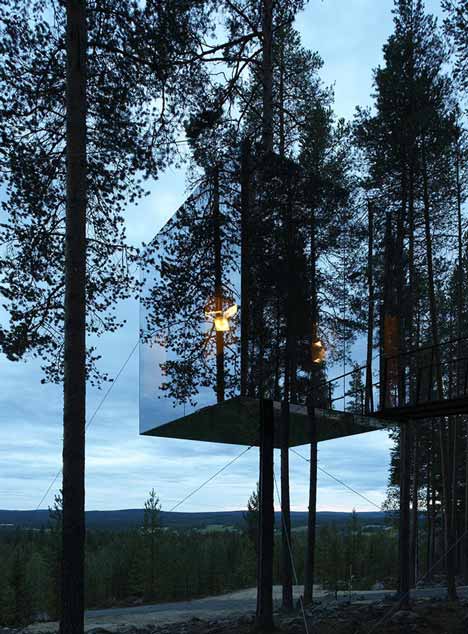
Here are some photographs of the completed Tree Hotel by Tham & Videgård Arkitekter, a mirrored glass box suspended round the trunk of a tree in Harads, northern Sweden.

110614_Tree-Hotel-by-Tham-and-Videgard-Arkitekter-Dailysdcandinavian110614_Birds-Nest-by-Inredningsgruppen-2_Dailyscandinavian

The 4x4x4 metre cube is accessed by rope bridge and reflects the surrounding forest and sky.

The hotel was opened to the public in July 2010.

Photographs are by Åke E:son Lindman

The information that follows is from Tham & Videgård Arkitekter:

Tree hotel in Harads (2008-2010)

A tree hotel in the far north of Sweden, near the small village of Harads, close to the polar circle.
 
A shelter up in the trees; a lightweight aluminium structure hung around a tree trunk, a 4x4x4 meters box clad in mirrored glass.

The exterior reflects the surroundings and the sky, creating a camouflaged refuge.

The interior is all made of plywood and the windows give a 360 degree view of the surroundings.

The construction also alludes to how man relates to nature, how we use high tech materials and products when exploring remote places in harsh climates (Gore-tex, Kevlar, composite materials, light weight tents etc).

The functions included provides for a living for two people; a double bed, a small bath room, a living room and a roof terrace.

Access to the cabin is by a rope bridge connected to the next tree.

To prevent birds colliding with the reflective glass, a transparent ultraviolet colour is laminated into the glass panes which are visible for birds only.

The tree hotel in Harads focuses on wild life-/eco tourism where one encounters and experiences the pristine nature of Sweden.