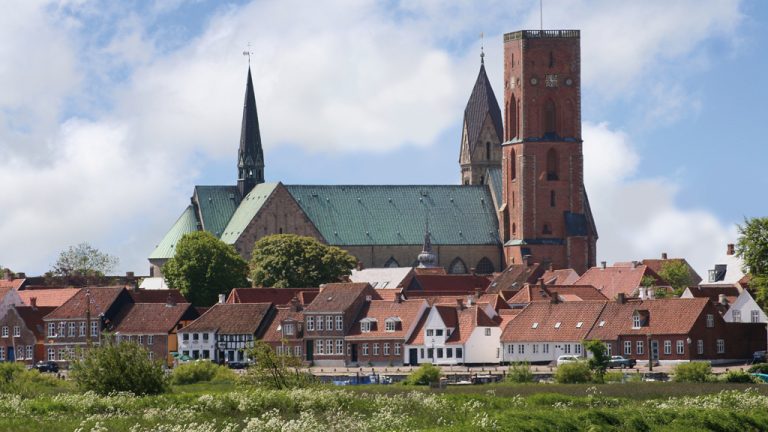
Ribe is Denmark’s oldest town, located in south-west Jutland, with a population of 8,365 (2023). The town is built around its 12th-century cathedral and celebrated its 1,300th anniversary in 2010. Ribe ranks high on the list of historic centers in Scandinavia.
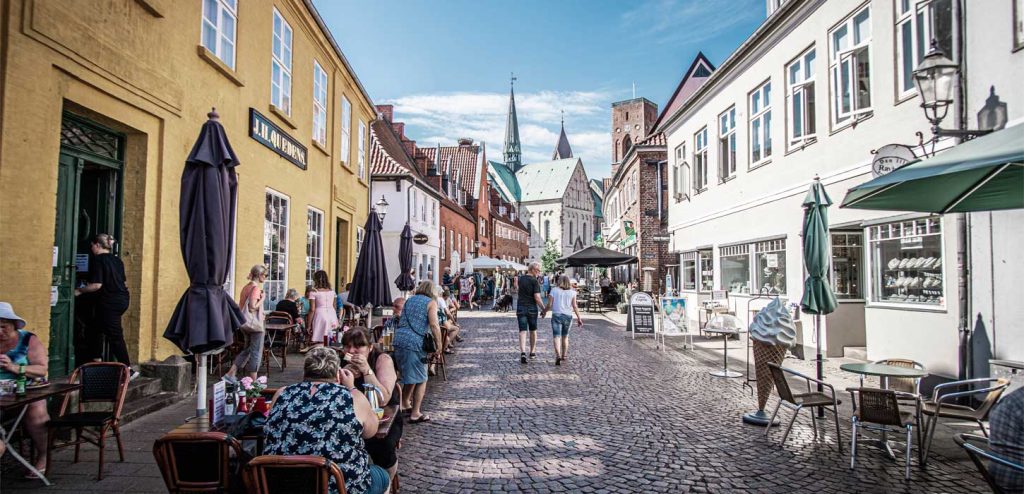
The town was a center of commercial activity in the early 8th century, and this may have originated with royal influence. Coins may have been struck there in 720. The atmosphere in the medieval city center cannot be described in words. It has to be experienced. The cobbled narrow streets, the well-preserved houses and plaques each tell their part of the proud history that stretches back to around 710 AD.
The courtyards and kroer (inns) are much as they were hundreds of years ago. Photo: Visit Denmark.
The courtyards and kroer (inns) are much as they were hundreds of years ago. When archbishop Ansgar set out to Christianize Scandinavia, he requested (in about 860) of King Horik II of Denmark that the first Scandinavian church be built in Ribe, which at the time was one of the most important trade cities in Scandinavia. However, the presence in Ribe of a bishop, and thus a cathedral, can only be confirmed from the year 948.
The ”Cat Head Door” was said to be the entrance for the Devil. The choir has been stunningly decorated by CoBrA artist Carl-Henning Petersen, and there are splendid views from the tower.
The ”Cat Head Door” was said to be the entrance for the Devil.
The Treaty of Ribe was proclaimed in 1460. Being located in a large region of low-lying marshland, Ribe has repeatedly been hit by storm floods, the most devastating being the Burchardi flood of 1634. The marks after this flood can still be seen on the cathedral’s walls and is also marked as the top point on a flood pillar in the town. Today Ribe, along with much of the Wadden Sea coastline, is protected by dykes.
Denmark is famous for its Vikings, and from Ribe their wooden ships set out into Europe to trade – and spread terror as well. This dramatic early history is in evidence in many city locations. Today, there is a peaceful, cozy ambience everywhere – in the pedestrian street, the art museum, the abbey and the old eateries.
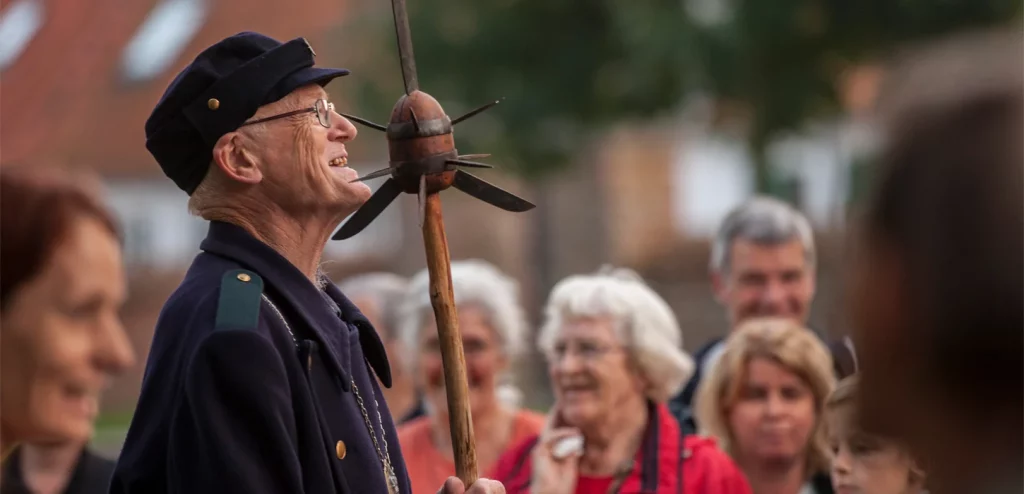
Ribe continues its medieval tradition of night watchmen. Photo: Vadehavskysten.
Ribe continues its medieval tradition of night watchmen. On summer evenings at 8pm and 10pm, the watchman walks around singing the traditional songs that once told the people that all was well and they could sleep soundly.
High on the List of Historic Centers in Scandinavia, written by Tor Kjolberg
Feature image (on top): Ribe cathedral. Photo: Visit Denmark
Explore The Bicycle Kingdom: Denmark’s love affair with cycling culture, from its rich history to its impact on daily life and beyond, in this engaging article.
Have you ever wondered what makes Denmark a paradise for cyclists? Picture this: you’re on a family trip, pedaling through serene Danish streets, surrounded by locals who’ve embraced cycling as a mode of transport and a way of life. In this post, we uncover Denmark’s love affair with cycling culture. From its rich history to the everyday joys it brings, we’ll explore how bicycles became more than just a way to get around in Denmark, transforming into a symbol of health, efficiency, and community. So, hop on and join us on this two-wheeled journey through the heart of The Bicycle Kingdom.
History of Cycling in Denmark
Denmark’s cycling story isn’t just about bikes. It’s about a culture that has grown and adapted over time. Imagine you are just moving to Denmark from the US, dealing with international movers and a heap of boxes. Once you settle in, one of the first things you notice is the omnipresence of bicycles. Surprised? Then let’s pedal back in time to see how this came to be.
The Early Days
Cycling in Denmark started as a luxury in the late 19th century, accessible only to the wealthy. As bikes became more affordable, they became popular for getting around. By the early 20th century, bikes were a mode of transport and a symbol of freedom and independence.
Post-War Expansion
After World War II, Denmark, like many countries, experienced a car boom. However, unlike many places where cars took over, Denmark maintained its cycling culture. That was due to thoughtful city planning and a public push to keep cycling safe and convenient.
The Cycling Renaissance
In the 1970s, the oil crisis hit. That was a turning point for Denmark’s cycling culture. There was a renewed interest in cycling as a sustainable, economic mode of transport. The government invested heavily in cycling infrastructure, reinforcing Denmark’s commitment to its two-wheeled friend.
Present-Day Prominence
Today, cycling is an integral part of Danish identity. However, that didn’t happen overnight. It resulted from consistent efforts in improving infrastructure, prioritizing safety, and fostering a community spirit around cycling. Bikes are a common sight, from young children to senior citizens, seamlessly integrated into everyday life.
The Bicycle Kingdom: Denmark’s love affair with cycling culture, article continues…..
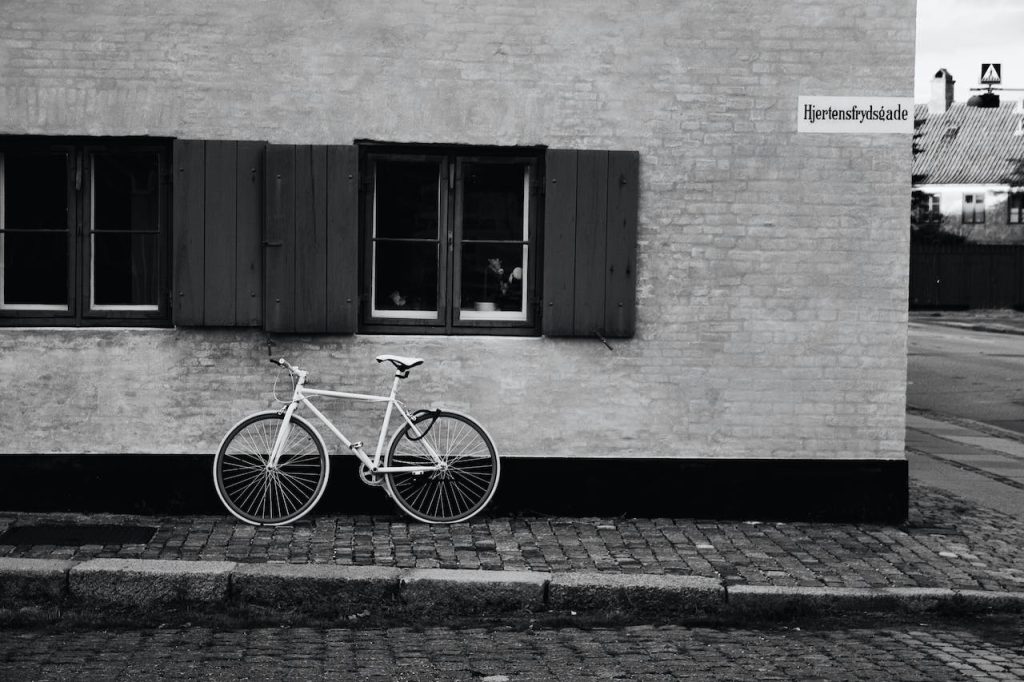
Cycling became popular in Denmark at the beginning of the 20th century. Photo by Sonja Braun.
Denmark’s Love Affair with Cycling Culture: Cycling in Daily Life
In Denmark, bicycles are more than just a way to travel; they’re a key part of daily life. Let’s see how Denmark’s love affair with cycling culture blends into everyday activities, from commuting to leisure.
Commuting with Ease
For many Danes, the day starts and ends with a bike ride. Cycling to work or school is the norm, not the exception. That is thanks to extensive bike lanes and traffic laws prioritizing cyclists’ safety. The convenience of biking in Denmark makes it a practical choice for daily commutes, reducing traffic congestion and pollution.
Health and Fitness
Riding a bike isn’t just good for the environment. It’s great for your health, too. In Denmark, cycling is a natural part of staying fit. It’s low-impact, suitable for all ages, and integrates exercise into daily routines without needing dedicated gym time.
Family and Social Life
Cycling in Denmark is a family affair. On weekends, it’s common to see families cycling together, whether it’s for running errands or leisurely rides through the countryside. Biking allows families to spend quality time together while staying active.
Exploring Beyond the City
Denmark’s cycling infrastructure isn’t confined to urban areas. It extends to places like Bornholm, where you can leisurely experience the island’s natural beauty. Cycling here offers a unique way to connect with nature and local culture, far from the whirl of city life.
Inclusion in Public Events
Cycling culture in Denmark also shines through in public events and festivals. Bike races, community rides, and cycling-themed events are commonplace, fostering a sense of community and belonging among cyclists of all skill levels.
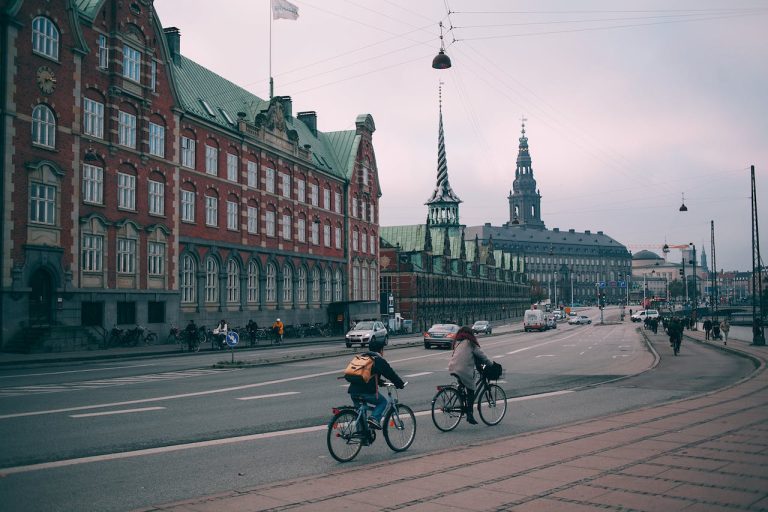
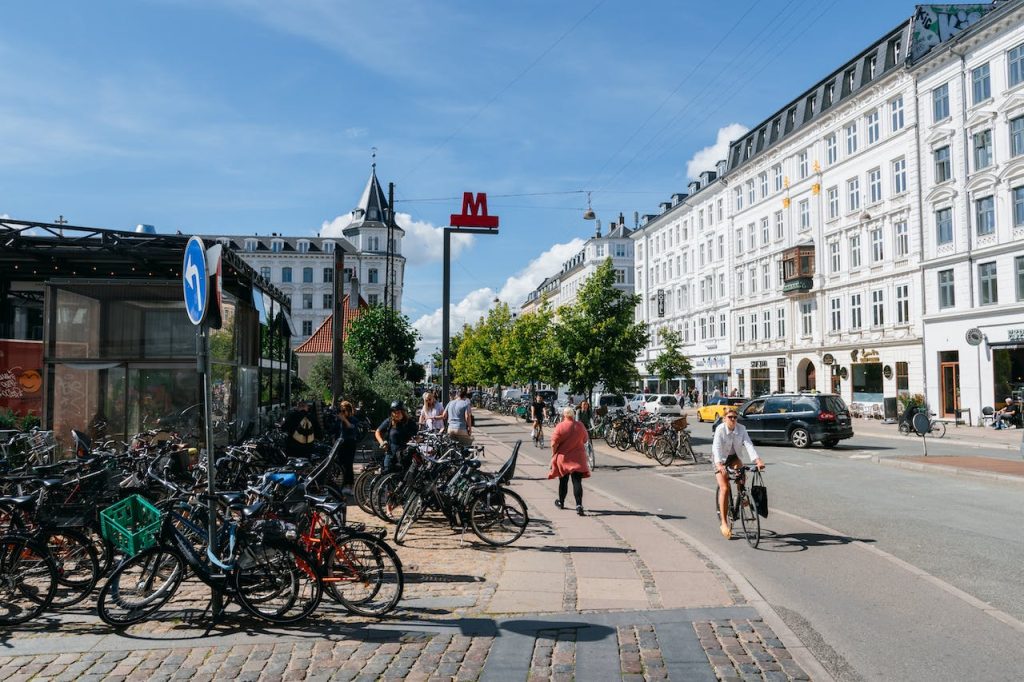
People on bicycles going around Copenhagen, Denmark. Photo by Grzegorz.
Danish Cycling Infrastructure: The Backbone of the Cycling Kingdom
Denmark’s cycling culture is underpinned by its world-class infrastructure. That doesn’t stop at having a few bike lanes. It’s about a comprehensive network that makes cycling safe, efficient, and enjoyable. Let’s look at the elements that make up this impressive infrastructure.
A Network of Bike Lanes
Denmark boasts over 12,000 kilometers of designated bike lanes. These aren’t just lines on a road; they’re often physically separated from car traffic, ensuring safety and comfort for cyclists. In wonderful cities like Copenhagen, bike lanes are wide, well-maintained, and marked, making navigation through the city a breeze for cyclists.
Bike Parking and Facilities
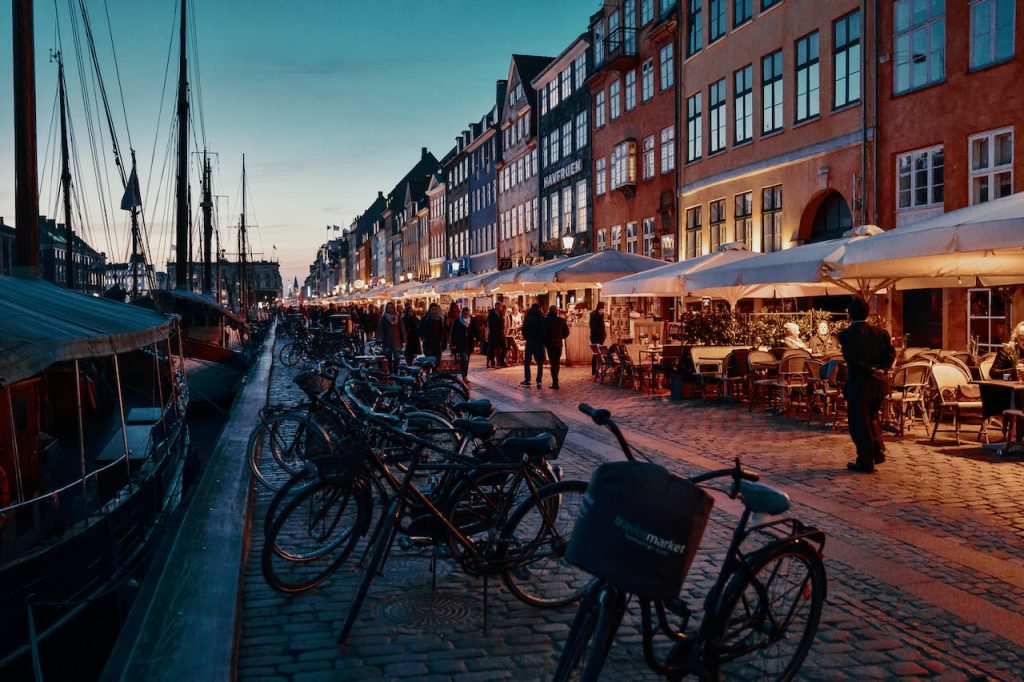
Finding a spot to park your bike is never a hassle in Denmark. There are extensive bike parking facilities, especially in urban areas. For instance, Copenhagen’s central train station has parking for over 5,000 bikes. This convenience encourages more people to choose biking over driving.
Integration with Public Transport
Denmark’s cycling infrastructure is seamlessly integrated with public transport. Most trains and buses have provisions for carrying bikes. This integration allows for greater flexibility in travel, making it easy for people to combine cycling with public transport for longer commutes.
Government Initiatives
The Danish government plays an important role in developing and maintaining cycling infrastructure. Regular investments are made not just in building new lanes but also in upgrading existing ones. For example, the government has allocated significant funds to develop super-bicycle highways designed for longer-distance commutes with minimal stops and smooth surfaces.
Bicycles parked on a street. Photo by Kai Pilger.
The Social and Economic Impact of Cycling: More Than Just Pedaling
Denmark’s cycling culture isn’t just a charming aspect of daily life. It has significant social and economic impacts. From improving public health to boosting the economy, let’s break down the tangible benefits of this two-wheeled lifestyle.
Boosting Public Health
Cycling is a great way to stay fit. The Danes have capitalized on this. Studies show that regular cycling can reduce the risk of chronic illnesses such as heart disease and diabetes. In Denmark, it’s estimated that people who cycle regularly take one less sick day per year than non-cyclists. That benefits individual health and reduces the strain on public healthcare systems.
Economic Advantages
The economic benefits of cycling are immense. In Copenhagen alone, cycling is estimated to contribute a net gain of 1.22 Danish Kroner per kilometer cycled due to reduced healthcare costs and improved traffic efficiency. In addition, the cycling industry, including bike shops and rentals, significantly contributes to the local economy, supporting small businesses and creating jobs.
Environmental Impact
Cycling’s positive impact on the environment is undeniable. Bikes emit no pollutants, making them a clean transportation alternative. In Denmark, the widespread use of bicycles helps reduce carbon emissions and air pollution, contributing to a healthier environment and a better quality of life for everyone.
Community Building
Cycling in Denmark goes beyond individual benefits. In truth, it fosters a sense of community. Group rides, cycling clubs, and bike-friendly events unite people, creating a more cohesive society. That shared interest in cycling strengthens community bonds and promotes a culture of mutual respect and cooperation.
Setting a Global Example
Denmark’s approach to cycling has set a benchmark for the world. By demonstrating the social and economic benefits of a robust cycling culture, Denmark inspires other countries to invest in similar initiatives, leading to global health, economy, and environmental sustainability improvements.
People on bicycles going around Copenhagen, Denmark. Photo by Grzegorz.
Cycling in Denmark: Beyond Transportation
In Denmark, cycling transcends its role as a mere mode of transportation. It’s woven into the very fabric of lifestyle and leisure, offering a unique lens to experience Danish life. Here is how cycling extends its influence beyond the daily commute.
Leisure and Recreation
Cycling is a favorite pastime for many Danes. It’s common to see people of all ages heading out on their bikes during weekends and holidays. Whether it’s a leisurely ride through Copenhagen’s picturesque streets or a challenging journey across the rural landscapes, cycling is a way to unwind, explore, and connect with nature.
Cycling as a Sport
Denmark has a vibrant cycling sports scene. The country has produced numerous renowned cyclists and hosts several high-profile cycling events yearly. These competitions attract professional cyclists and inspire local enthusiasts, further embedding the cycling culture in the Danish ethos.
Cultural Integration
Cycling is deeply integrated into Danish culture. It’s a common thread that connects various aspects of life, from fashion to food. You’ll find cafes and shops catering specifically to cyclists and bike-friendly policies in workplaces. This cultural integration highlights how cycling is more than just a transportation choice. It’s a lifestyle!
Tourism on Two Wheels
Denmark is a haven for cycling tourists. With its extensive network of cycling routes, tourists can experience the country’s stunning landscapes and historic sites at a more intimate and leisurely pace. This aspect of cycling promotes eco-tourism and supports local economies in smaller towns and rural areas.
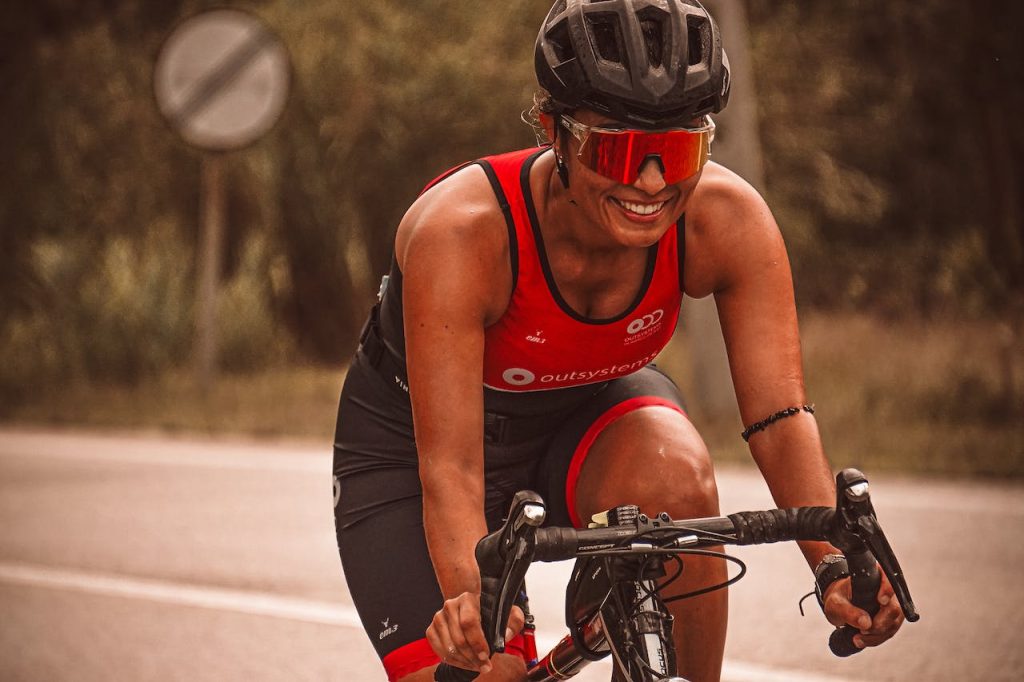
Danmark’s love affair with cycling culture shows even in sports. Photo by Run Ffwpu.
Embracing the Cycle: Denmark’s Inspirational Journey
Denmark’s love affair with cycling culture is not just a trend. It’s a testament to a lifestyle that values health, community, and sustainability. If you ever visit Denmark, you’ll experience this remarkable cycling culture firsthand. It inspires the world, showcasing how bicycles can be more than just a mode of transport – they can catalyze positive change in society.
Agnes Mckenzie
The Bicycle Kingdom: Denmark’s love affair with cycling culture, written for Daily Scandinavian by Agnes Mckenzie. Agnes is a passionate travel writer and avid cyclist with a flair for exploring different cultures on two wheels. Her writing combines personal experiences with in-depth research to provide readers with engaging and informative insights. Agnes’s work is fueled by her love for sustainable travel and her adventures across various countries, including the cycling haven of Denmark.
Some friends of mine purchased an all-inclusive tour to the Caribbean for $10,000 per person. That’s fine if you prefer your entire trip planned for you or you have the bank account balance to support it. However, by reducing costs and expenses while traveling, you’ll be abler to stretch your budget further and potentially travel for a more extended period of time. Part of Daily Scandinavian’s mission is to inform you, the reader, how to reduce your travel costs.
A short international trip can cost less than $1000 if you follow the tips we give you in Daily Scandinavian. That’s right…less than $1000 including flight, hotel, and food. The most expensive part of any trip are the flights and the hotels. Once you get those out of the way, you can choose how much you want to spend trying local food or booking local experiences. Our new series, Scandinavian Explorers, will give you hints on destinations all over the world, where you can follow our advice.
The first step to reduce travel costs and expenses is to choose a destination that is budget-friendly.
If you take certain steps, you can save a lot even before your trip starts
Luckily, you can find many ways to travel cheaper than you ever thought possible – and the good news is that you can choose to employ all the tactics revealed for you in Daily Scandinavian and travel on a student budget.
The first step to reduce travel costs and expenses is to choose a destination that is budget-friendly. There are many destinations around the world where the cost of living is low, where the quality of life and the range of attractions and activities are high. But if you have a little more money to play with, you can pick and chose the tactics that fit best with your budget and invest a little more into luxuries you are not willing to sacrifice in exchange for low price.
If you don’t’ have to travel on specific dates, check the hotel and travel fares a few days before and after your intended schedule.
Be flexible on dates
If you don’t’ have to travel on specific dates, check the hotel and travel fares a few days before and after your intended schedule. I am also willing to forego first or business class in lieu of a much cheaper airfare. And I don’t need a luxurious hotel. There are, however, some parts in the world where you can choose heritage hotels, which are really luxurious – at an affordable price.
While I am willing to scrimp on flights and hotels, I am not willing to sacrifice the quality of food or wine in order to save a few bucks. That is my travel preference. We each have our own list of must-haves and not-so-necessary to have, so pick and choose cafeteria style witch techniques presented in Daily Scandinavian work best for your travel preferences.
Content marketing seems like child’s play sometimes, but people always assume it’s only about social media and online engagement. The truth is that this sector is considerably difficult to tackle and cannot be leveraged similarly over the globe but instead adapted to each country’s features. Learn how to improve content marketing in the lands of legends and folklore.
The need for national adaption is why Italian ads push la dolce vita ideology, while content marketing in Germany is challenging to distinguish from advertising, often annoying consumers.
If we analyze the Nordic methods of creating content and promoting a product, we notice a profound expansion of local culture and norms mixed with high-tech and considerable interest in sustainability. While these elements seem easy to reach, entering a new culture through content marketing must be done in consideration of the people.
Overall, using content marketing to penetrate the Nordic market is fun and rewarding, but you must be patient. Here’s how to do it.
Using content marketing to penetrate the Nordic market is fun and rewarding. Photo: Samantha Grade/Unsplash
What to know about Nordic countries
The Nordic area includes the countries of Denmark, Finland, Iceland, Norway, Sweden, Greenland, and two other regions, the Faroe Islands and Åland. These countries are known to be the richest due to their exemplary economic model, they provide plenty of opportunities to grow for young people and are global leaders when it comes to trust, freedom, and happiness.
The public expenditure on culture is the highest in Europe, employment is at its best, and people still enjoy a great movie at the cinema. Hence, we can say that citizens are pretty achieved and might not be fooled by regular advertisements, which is why a straightforward approach is best.
This is also the business culture in the Nordic regions, where individuals are open and do not need to feel superior to others because they prioritize their own success.
The Nordic countries are known to be the richest due to their exemplary economic model
What does this mean to you as a content creator?
Although the population is small compared to an entire country, Nordic areas have significant purchasing power due to high levels of digitalization and understanding of their needs. Luckily, there’s an increased demand for imported goods, meaning any overseas company could enter the market with a little effort and consideration. Hence, B2B businesses across Europe have a chance to expand their products in the Nordic market.
Unfortunately, you must face the language barrier and adapt to the Nordic culture to appeal to people. Even if you can provide the products demanded by the market, you must consider marketing them in the local language. Of course, this depends on the target audience because in these regions, people have the highest English proficiency, so they wouldn’t have problems understanding the message. Still, you’d have to comply with the country’s requirements on product packaging, for example, which sometimes requires labels in the original language.
You should also be wary of cultural differences and respect them. Your content strategy should be friendly and humble, focusing on sustainability, quality and transparency regarding manufacturing and transportation.
The Nordic area is one of the most connected with the internet and social media.
Go all in with social media
Luckily, the Nordic area is one of the most connected with the internet and social media, so you can succeed with only posts on social media, blog posts, emails, and newsletters. The overall internet penetration is about 97%, with people using Facebook, Instagram, Twitter and Snapchat quite frequently, if not daily.
The steps you should take to develop the best content marketing strategy in the Nordic countries include the following:
Create your Nordic audience personas. Usually, they’re people with consistent technology knowledge and care about the environment as well as preserving culture.
Establish your brand story and positioning on the market by addressing the right message but being transparent with your mission and purpose.
Settle your mission statement by defining your media value proposition based on the audience type, the benefits and outcomes of your business strategy.
Identify your goals in the Nordic market, from offering digital customer service to providing high-tech platforms and communication channels.
Plan your content strategy based on your resources, timeline and outsourcing possibilities and try to approximate the time for results.
You must add a personal touch to an advertisement to make it appeal to them.
Approach integrated campaigns
Although they’re engulfed in social media and technology at every age, Nordics don’t really appreciate plastic and robotic campaigns, meaning you must add a personal touch to an advertisement to make it appeal to them. The best strategy here is integration, where you create a mix of posts on social platforms, podcast involvement and working with influencers to make your brand stand out of the competition.
Of course, this method is not easy to manage because you need to align all content in a way that makes sense for the viewer and consumer, which may be difficult to handle initially. For example, if you’re selling cooking utensils, you can invite Nordic chefs to podcasts to discuss various subjects, make social media posts about delicious meals, and work with influencers to create cooking contests.
All these activities involve various departments, from communication to financials and PR. Hence, coordinating them and polishing your message best takes a lot of work. However, it’s the best strategy for companies entering the Nordic market because you introduce local customs and citizens within your brand without making it unfitting or obvious you want to sell.
Remember to have a down-to-earth approach
Nordic people can always tell if you’re honest, which might help your business or not, depending on your brand image. Therefore, if you respect the culture and want to blend in, always be genuine with your social media campaign. You don’t need complex language, even if citizens are intelligent and well-spoken. At the same time, you don’t have to work on your storytelling department too much because being straightforward will be better. Telling what you want to achieve as a business is considerably easier than taking various routes to convince people to buy your products.
How to Improve Content Marketing in the Lands of Legends and Folklore – Wrapping up
Selling products in the Nordic regions might seem easy as pie, but it’s actually a challenge. As a content marketer, you need to understand the language, people, and culture to fit in. Moreover, you’ll sell only if your marketing strategy is simple and direct, so remember to be unambiguous and honest, and you’ll win the cold hearts of the Nordics.
How to Improve Content Marketing in the Lands of Legends and Folklore, written for Daily Scandinavian by Mary Hall.
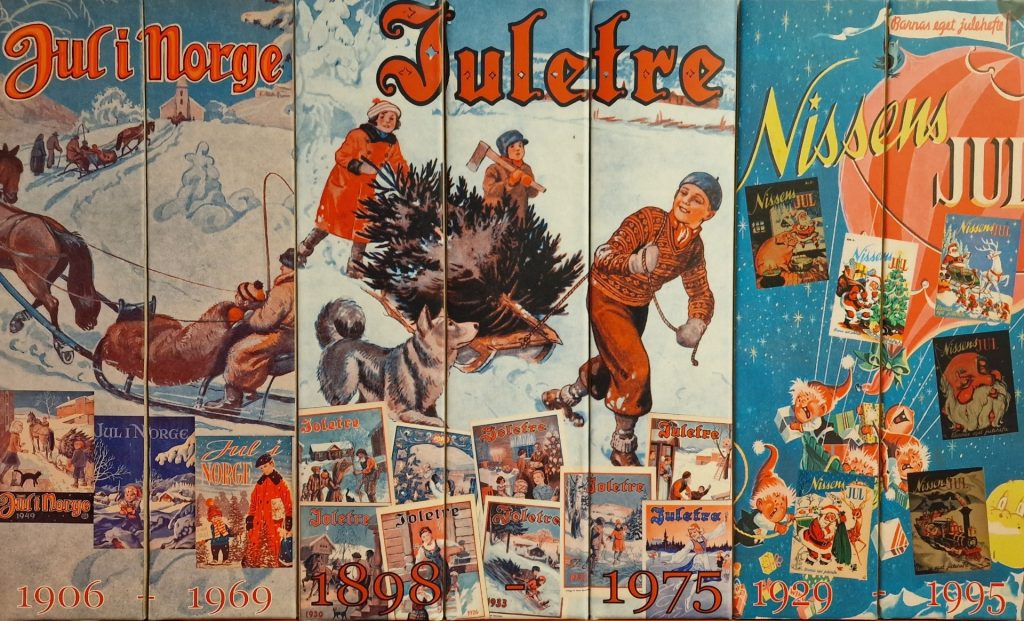
Tom Brenne’s interest in Norwegian Christmas booklets (julehefter) was awakened when, in 1986, he took part in the television quiz program Kvitt eller dobbelt (Double or Nothing). The subject was Norwegian author Mikkjel Fønhus – his life and writings.
When Tom delved into the subject, he discovered that Mikkjel Fønhus had not only written countless books, but also a number of short stories and articles in newspapers, weekly press, yearbooks – and not least Christmas booklets. From 1916 until his death in 1973, he wrote articles and short stories in more than 200 Christmas booklets.
Tom Brenne’s book on Norske julehefter was published in 2009. Photo: Tor Kjolberg
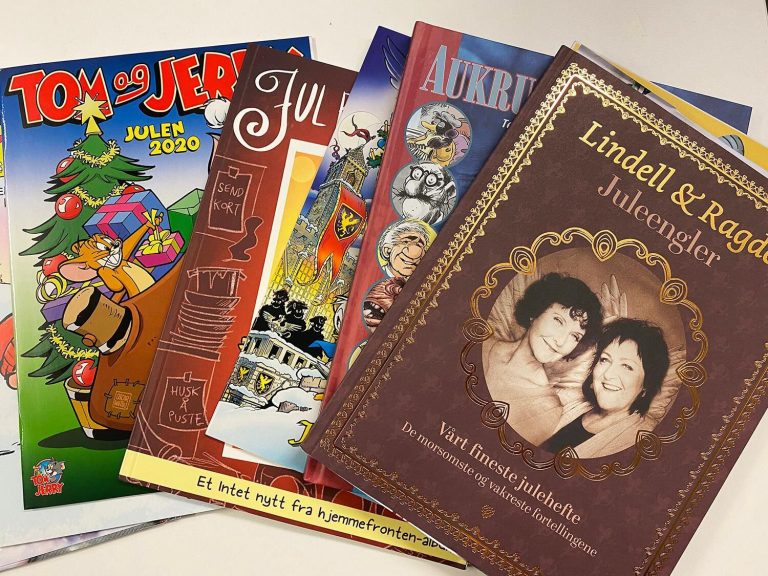
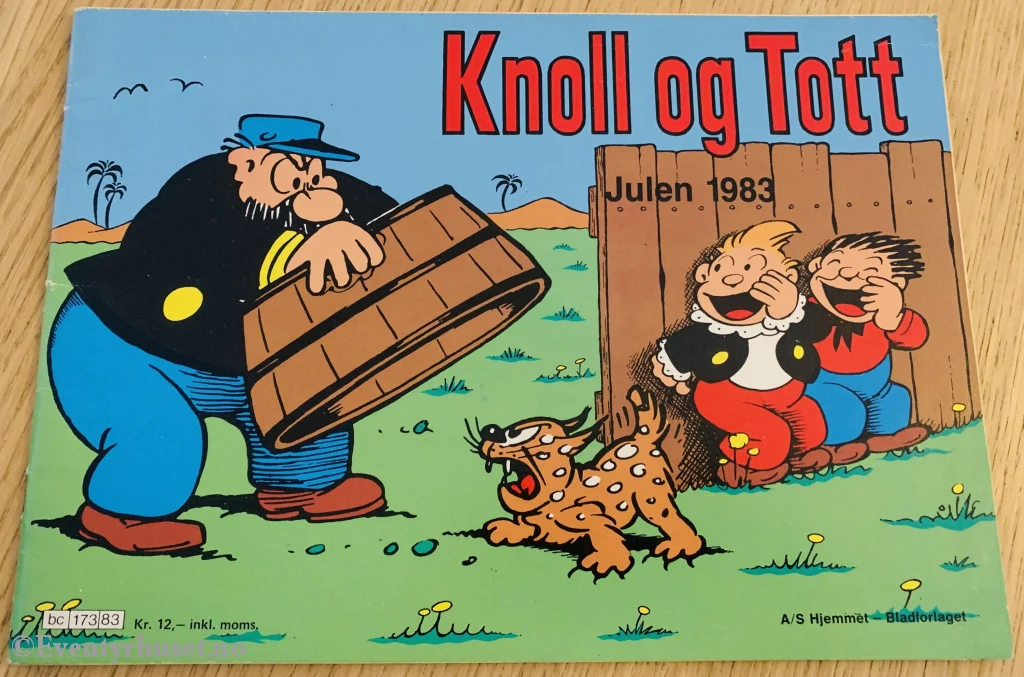
Tom Brenne’s book on Norske julehefter (published in 2009) is about the literary Christmas booklets. Today, the Norwegian Christmas booklets are probably associated with cartoons such as the Katzenjammer Kids and Bringing up Father. But comic strips Christmas booklets are not the subject of his book. Nor the so-called Christmas albums, of which there were some. Brenne has also left out Christmas issues by the satirical press, although some of these also contain literary material. The history of the satirical press is, however, told by Bredo Berntsen in the book Skarpt sett (Sharply seen) (1999).
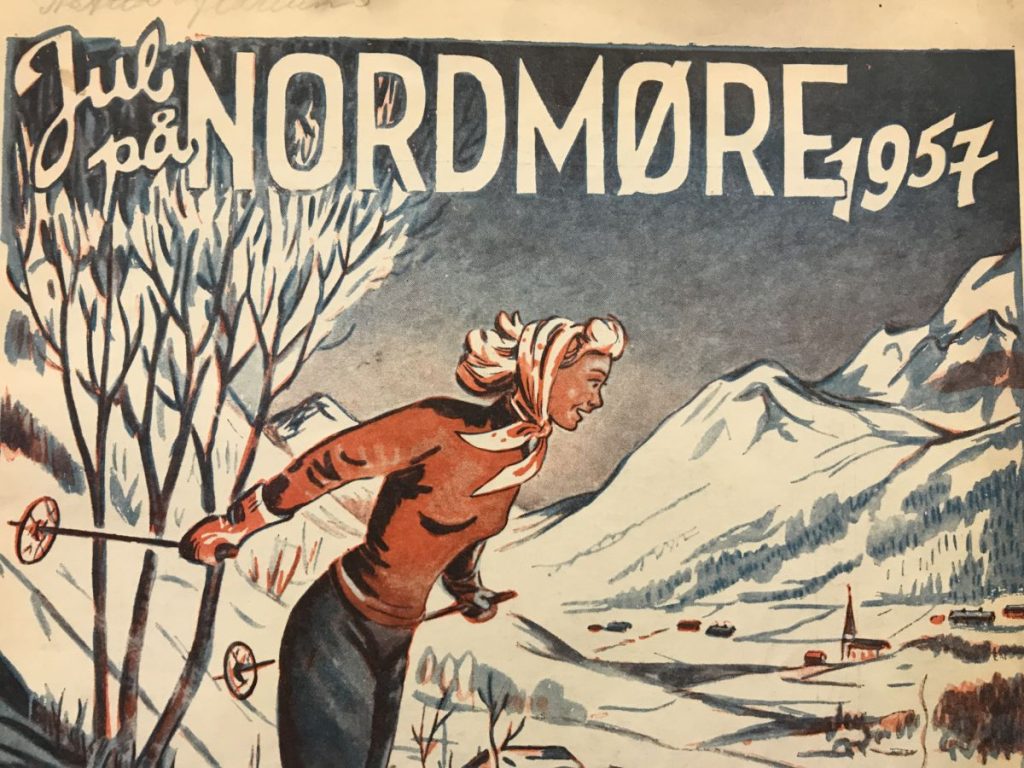
Jul på Nordmøre was a Cgristmas booklet from 1957.
The first Norwegian Christmas booklet already appeared in the early 19th century, for example Julegave (Christmas Gift) in Drammen in 1817. But the “proper” Christmas booklets with quality and four-color covers only started in the 1880s, and that’s where Brenne’s book also begins.
In the interwar period, the number of Christmas booklets “exploded”.
We find the peak in quality around the turn of the century. In these Christmas booklets, we find contributions from Norway’s best-known authors and illustrators with art supplements. “Back then, the Christmas booklet represented something, it was a small work of intellectual property,” wrote Audun Hierman in Småskrift for bokvenner in 1943. “In rural areas and villages, they arrived as a small breath of culture from outside.”
*******************************************
You might also like to read: The Scandinavian Christmas Card History
*******************************************
Te Katzenjammer Kids (Knoll og Tott)
But in the interwar period, the number of Christmas booklets “exploded”, and many were rather given a touch of what we might call folk reading. “Nowadays, when you think about or talk about Christmas booklets, most people shrug their shoulders condescendingly. Anyone who has followed Christmas booklet literature over the past 30-40 years will have had disappointing experiences about the development and quality. The literary and artistic element is gone. Very few Christmas booklets have any ideas or tasks anymore. Often, they seem directly discouraging,” writes Hierman.
However, Finn Arnesen, who has written Bladkompaniet‘s 75-year anniversary book “From Rudolf Muus to Margit Sandemoe” (1990), has a different view of them. “Only the most narrow-minded intellectual aristocrats would say that what has been reading material and leisure for a large part of the population is not worth bothering with,” he writes in his preface.
Bringing up Father (Finbeck og Fia).
It is difficult to say how many Christmas booklets have been published in Norway over the years. It depends on how you calculate. There is, for example, a smooth transition between Christmas booklets and Christmas issues. If you count all Christmas issues that are identical in content and appearance to Christmas booklets, it could perhaps be around 800 titles and 20 – 30,000 copies. Brenne has looked through the entire National Library of Norway‘s collection. Some Christmas booklets only came with one vintage, while, for example, Norsk Barneblad‘s Juletre has passed one hundred years.
In his book, Brenne has tried to systematize and give a review of the most important Christmas booklets, but far from all.
Norwegian Christmas booklets (Julehefter), based on the introduction in his book. Translated into English by Tor Kjolberg. Published by permission by the author.
Nuart is a non-profit organization run by a small group of idealistic volunteers, vandals and bored arts professionals. Nuart continues its mission to make Stavanger a more interesting, vibrant and international city and is consequently launching two new murals with the two artists Millo and his team from Italy and Hera from Germany. Newart Street Art is launching two major works in Stavanger – Norway. Read on….
The Nuart project: Planes, Trains and Automobiles
The project is a continuation of “Planes, Trains & Automobiles” which Nuart has been slowly adding to over the years. This is a concept that seeks to place art at highly trafficked locations of arrival and departure to a city. None-spaces are usually neglected as destinations themselves, but they have a huge amount of footfall. Taxi ranks, airports, train stations, bus stations etc. These are places that give you a “first impression” and a “last impression” of a destination.
Martyn Reed, Founder and Director of Nuart explains where the idea originated:
“It was born from my first trip to London from Leeds in the early 80’s. I was arriving at a run-down coach station which stunk of wee, broken lights and poverty. All my dreams of “London” were destroyed in 5 minutes. This stayed with me, and it’s only recently that cities are recognizing that these areas can be important destinations themselves.
When you marry this to the statement from Banksy which is also an inspiration “if you genuinely want people to see your work, if you have something to say, the last place you should be putting your work, is in a gallery, no one goes to them”. With this in mind…
The Stavanger train station and International Airport
Nuart has two sites where they’ve been producing works between 6 and 16 November.
Along platform 1 at the Stavanger train station, a 100-meter-long mural from Hera from former international street art stars Herakut (DE) in association with Bane Nor. Platform 1 will be seen by 2.3 million people a year.
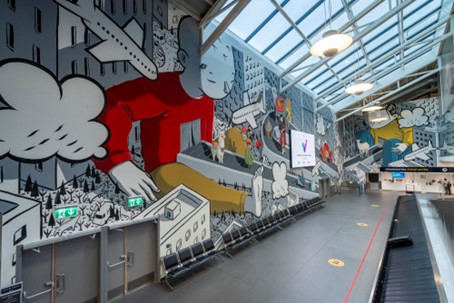
Secondly, at the arrivals and departure lounge, airside, at the Stavanger International Airport, Sola. A 40-meter x 10-meter wall that spans the length of the arrivals hall and is visible from the “sky bridge as you pass through security. With support from Avinor. The Arrivals and Departure area will be seen by 3.6 million a year. It’s fair to say that it is slightly more than your average gallery audience.
Nuart Street Art is Launching Two Major Works in Stavanger – Norway, article continues below image.
Gunhild Vevik, Communications Manager in Region Stavanger.
Gunhild Vevik, Communications Manager in Region Stavanger, finds the project exciting:
“Street art helps to renew and create new attractions in our city, which gives us more attention and visibility as a tourist destination.”
Anna Bang, Property Manager at Bane NOR Eiendom.
Anna Bang Eiendomssjef (Property Manager) at Bane NOR Eiendom:
“It’s great fun to be able to decorate Stavanger S with a work of art from Hera! We hope the artwork will arouse curiosity and engagement for our visitors at the station.”
Nuart Street Art is Launching Two Major Works in Stavanger – Norway, article continues below image.
Trains Planes & Automobiles. Hera for Nuart at the train station. Photo: Brian Tallman Photography @bktallman.HERA
HERA – Artist Bio:
HERA (Jasmin Siddiqui, *1981) is a Frankfurt-born German-Pakistani painter with artistic roots in the graffiti and street art genre. She has been travelling the world since 2001 painting large-scale murals, solo or as part of the duo HERAKUT. The biggest outdoor pieces are located in Sao Paulo, Miami, Moscow, Reykjavik, Melbourne, Berlin, Kampala and Washington DC. Besides the mural work, her artwork has been displayed in museum exhibitions such as the Rogaland Kunstmuseum in Stavanger, Norway, in 2007, the Pera Museum in Istanbul, Turkey, in 2015, the Urban Nations Museum in Berlin in 2018, and the STRAAT Museum in Amsterdam in 2022.
In December 2022 Hera was part of “Artists for Human Rights“, the first-ever street art exhibition inside the European Parliament in Brussels. In 2023, she worked for the United Nations-funded project “Streetart for Mankind“ creating #GenerationEqualityMurals. This is in line with Hera´s continuous effort to utilise street art for humanitarian causes. In the past she has collaborated with various humanitarian aid organisations, such as Unicef or The Global Fund, Save the Children and Viva Con Agua and more on art programs and workshops focusing on children and underprivileged youth.
Hera´s work has been featured in numerous books, starting with “Graffiti Woman” (2006), “Mural Art” (2008), “Beyond the Street” (2010), “Graffiti Alphabets” (2011), “Mural Masters” (2018), “Alter Ego” (2019), and “Street Art Guide Berlin” (2020), “Streetart is Female“ (2022), apart from her own books: “Herakut – The Perfect Merge” (2008) and After The Laughter – The 2nd book of Herakut” (2012).
MILLO
Millo – Artist Bio:
Italian artist Francesco Camillo Giorgino, known as Millo, paints large-scale murals that feature friendly inhabitants exploring their urban setting. “He uses simple black and white lines with dashes of colour when necessary, and often incorporates elements of architecture into his multi-story paintings.” C. Jobson, Colossal.
In the last decade, Millo has focused on the production of large-scale mural artworks that have brought him to paint all over the world. He has taken part in several street art festivals, non-governmental events and international social projects all over the globe.
Millo’s mural artworks are now visible in China, India, Australia, New Zealand, Canada, Thailand, Palestine, Jordan, the UK, Cyprus, Georgia, Ukraine, Bosnia and Herzegovina, Kosovo, Russia, Belarus, Argentina, Chile, Bolivia, Brazil, Mexico, French Polynesia, Morocco, United States and in all the European countries. In addition to a production that boasts over 150 mural artworks scattered across all continents, his works on canvas have been exhibited in London, Paris, Rome, Milan, Chicago, Los Angeles, Miami, Seoul, Dubai and Rio de Janeiro. His works of art are also part of two permanent museum collections: the Urban Nation Museum for Contemporary Art in Berlin, Germany and the Straat Museum for street art and graffiti in Amsterdam, Netherlands.
Nuart Street Art is Launching Two Major Works in Stavanger – Norway, based on a press release from Nuart.
Feature image (on top): Trains Planes & Automobiles. Millo for Nuart at the Stavanger airport, Sola. Photo: Brian Tallman Photography @bktallman
Norway’s outstanding performance in the Olympics is no mere stroke of luck. It’s the result of a well-organized training regime that is as rigorous as it is effective. Learn more about how Norway trains its athletes for the Olymics in this informative article.
Norwegian athletes rely on a comprehensive training system that blends physical, mental, and technical excellence. In addition to this, the modern educational landscape has platforms like essay service review to help young athletes excel in both training and learning. This system, refined over the years, has turned Norway into a powerhouse in various Olympic sports.
Understanding Norway’s approach to training its athletes offers valuable insights for aspiring Olympians and anyone interested in the art and science of sports training.
This diversified approach to training means that by the time athletes specialize, they have a well-rounded base. Photo: NTNU
1. A Culture of Cross-Training
Norway’s approach to training is characterized by a strong emphasis on cross-training. Athletes are encouraged to participate in multiple sports, which helps in building diverse physical capabilities and preventing burnout.
Benefits of cross-training include:
Enhances overall athleticism and coordination.
Reduces the risk of sport-specific injuries.
Keeps training routines fresh and engaging.
Develops complementary skills beneficial in primary sports.
Prevents mental fatigue and burnout.
Promotes different sporting strategies.
Encourages social interaction and teamwork across sports disciplines.
Fosters adaptability and flexibility in athletes.
This diversified approach to training means that by the time athletes specialize, they have a well-rounded base. It’s not uncommon to find a Norwegian winter Olympian equally adept at skiing, skating, and snowboarding.
2. Investment in Coaching and Facilities
Norway invests heavily in coaching and training facilities, ensuring that athletes have access to world-class resources. Coaches in Norway are mentors. Their work includes physical training as well as mental and emotional support.
Moreover, the country boasts top-notch training facilities. From state-of-the-art ski jumps to world-class cross-country trails, the infrastructure is designed to meet the needs of elite athletes. This accessibility to high-quality facilities helps nurture talent and prepare athletes for the rigors of international competition.
Norway boasts top-notch training facilities. Photo: Joshue Reddekopp/Unsplash
3. Emphasis on Early Development
In Norway, the foundation for Olympic success begins early. From a young age, children are encouraged to engage in sports, but with a focus on enjoyment rather than competition. This approach fosters a love for physical activity and sets the stage for future athletic pursuits. The emphasis is on developing a broad range of skills and a strong physical base before specializing in a specific sport. This early development strategy ensures that athletes have a well-rounded athletic ability when they specialize.
Young athletes are taught to value their academic pursuits as much as their athletic ones, creating well-rounded individuals. Besides, student-athletes can get academic support anytime, and EssayService reviews make it easy to find a reliable writer in any subject area. This holistic approach contributes to the development of not just strong athletes but also mentally resilient individuals who can handle the pressures of high-level competition.
Mental toughness is a crucial component of Norway’s training philosophy. Athletes are trained to be mentally resilient and capable of handling pressures. This focus on psychological strength is as rigorous as their physical training, with programs designed to enhance focus, perseverance, and stress management.
Teamwork is also a central tenet in Norwegian sports culture. Even in individual sports, the sense of being part of a team is strongly emphasized. Athletes are taught to support one another, share knowledge, and contribute to a positive team environment. This collective spirit fosters a supportive training environment and builds a strong sense of national pride and camaraderie among athletes.
How Norway Trains Its Athletes for the Olympics – article continues below the image.
Mental toughness is a crucial component of Norway’s training philosophy.
5. Seasonal Training Adaptation
Norwegian athletes are adept at adapting their training to different seasons, a necessity in a country with such distinct seasonal changes.
The key aspects of seasonal training are:
Tailored training programs for summer and winter.
Focus on indoor training and strength conditioning during colder months.
Utilization of Norway’s diverse landscapes for outdoor training in warmer months.
Emphasis on recovery and rest periods to prevent overtraining.
Adaptation of nutritional plans according to training intensity and season.
Incorporation of sports psychology sessions throughout the year.
Regular health and fitness assessments to monitor progress.
Strategic planning for peak performance during major competitions.
By training smartly and adapting to the seasons, Norwegian athletes can maintain peak physical condition throughout the year. This adaptability is crucial in a country where winter sports are a focal point, yet summer provides an opportunity for different training activities.
6. Community and Government Support
The success of Norwegian athletes is also attributed to the strong support they receive from their communities and the government. Local sports clubs play a crucial role in nurturing young talent, often providing the first platform for athletic participation. These clubs are well-supported by local communities, creating a nurturing environment for budding athletes.
On a larger scale, the Norwegian government actively supports sports and physical education. This includes funding for sports programs, infrastructure development, and initiatives to promote sports participation among the general population. This widespread support ensures athletes have the resources and backing they need to excel at the highest levels.
Norwegian School of Sport Sciences.
How Norway Trains Its Athletes for the Olympics – The Bottom Line
Norway’s approach to training its Olympic athletes is a fine blend of comprehensive development, state-of-the-art facilities, and a supportive environment. The Norwegian model emphasizes a holistic approach that is about nurturing healthy, resilient, and well-rounded individuals.
The success of Norwegian athletes on the world stage is a testament to the effectiveness of their training methods. As students and sports enthusiasts look to these Olympians for inspiration, the Norwegian model is a shining example of achieving excellence in sports while maintaining a healthy and balanced lifestyle.
Sue Ann Bowling
How Norway Trains Its Athletes for the Olympics, written dedicatedly for Daily Scandinavian by Sue Ann Bowling. Sue Ann Bowling, originally from Yorkshire, moved to California as a child. Her love for writing and reading led her to excel in essay writing during her education at California School and Stanford University. After graduating, she worked as an editor at the New York Times News, finding joy in helping readers through her articles. Upon retirement, Sue Ann started researching and reviewing essay writing services. She aimed to provide students with reliable information to make informed choices. With determination and the help of a friend, she launched her website, Essay-Reviews.com. Through her reviews, she intended to guide students toward the best essay writing services, ensuring they avoid unsafe options.
Blackcurrants have their home in the north of Norway, their ‘gene center’ which is where the generic variation of the wild plants is most varied. Read on and learn more about Scandinavian blackcurrant.
Blackcurrant thrive in the cool climate all over Scandinavia, as long as they are grown in full sun, as their Danish/Norwegian name solbær (“sun berry”), implies.
How it grows
Blackcurrant bushes spread easily – their branches taking root wherever they touch the ground – and can grow to an impressive size; an old bush can reach 5×5 square meters.
Blackcurrant thrive in the cool climate all over Scandinavia. Photo: Bama
Appearance and teste
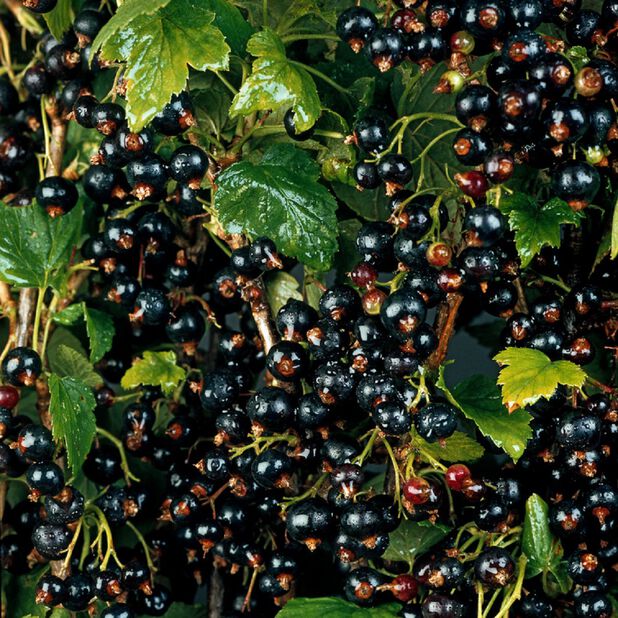
The berries are juicy, thick-skinned and almost black, a deep purple on the outside, a rich reddish purple inside. The most intensely flavored berry in the north, blackcurrants are not to everyone’s taste. But to us who love them, they are a marvel. The taste of fresh and cooked blackcurrants is so different that you would not imagine it was the same berry, if you did not know. Fresh berries are more like blueberries and have a definite fresh taste, much like the smell of fresh blackcurrant leaves. Once cooked, they become more intense.
The berries are juicy, thick-skinned and almost black, a deep purple on the outside, a rich reddish purple inside. Photo: Plantasjen
Blackcurrants are best when freshly picked; they will keep for a day or two in the fridge, but the taste will deteriorate. They freeze well, and the taste stays more or less intact.
Health benefits
Blackcurrants are full of vitamin C, especially when raw. They also contain antioxidants, iron and calcium, and plenty of essential minerals.
An uncooked jam (made with lingonberry) is a beautiful thing with all kinds of pork, veal, venison, game, cheese, pancakes and ice cream. Photo: Norrek dypfryst
Culinary uses
Blackcurrants make wonderful jams and cordials, of course. The sourness and intensity of the berries forbid eating them raw, but an uncooked jam (made with lingonberry) is a beautiful thing with all kinds of pork, veal, venison, game, cheese, pancakes and ice cream. Blackcurrant jam is made like raspberry jam.
You can make a purple fool by mixing equal amounts of fresh blackcurrant and sugar, until the sugar has dissolved, mashing slightly, and then folding in double that amount of whipped cream. Blackcurrants are also delicious made into ice cream. Whiz together200g blackcurrants and 200g sugar and add it to a cardamom ice cream.
The leaves of blackcurrants are like a magic wand of concentrated currant flavor that you can wave about, imbuing intensity to pickles, hams, cordials and herbal teas. . Photo: Spar
The leaves of blackcurrants are like a magic wand of concentrated currant flavor that you can wave about, imbuing intensity to pickles, hams, cordials and herbal teas. Blackcurrant leaves are a classic ingredient in pickled beetroot and gherkins: add a few leaves to the jar before pouring over the hot liquid.
Scandinavian Blackcurrant, written by Tor Kjolberg
Auto shop management software plays a crucial role in modern automotive service centers. Electric cars will become super popular in the next few years, so European countries are in a rush to set up enough places to power up. Sweden has an incredible plan: they want to make a particular highway that can charge electric cars while they’re driving by 2025. Read more and learn more about the future of electric charging infrastructure in Scandinavia.
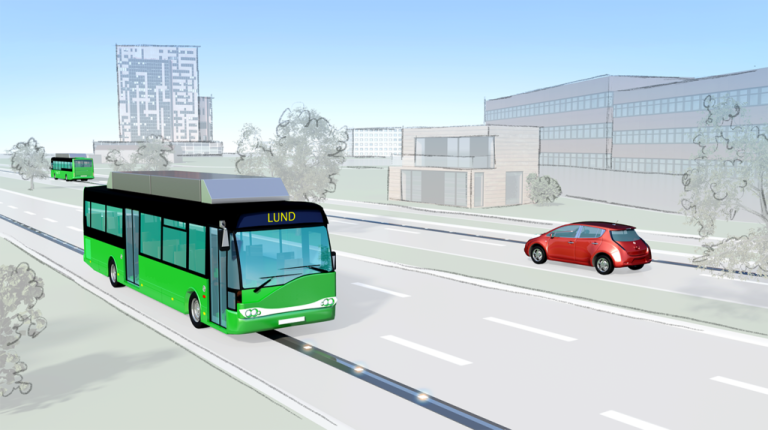
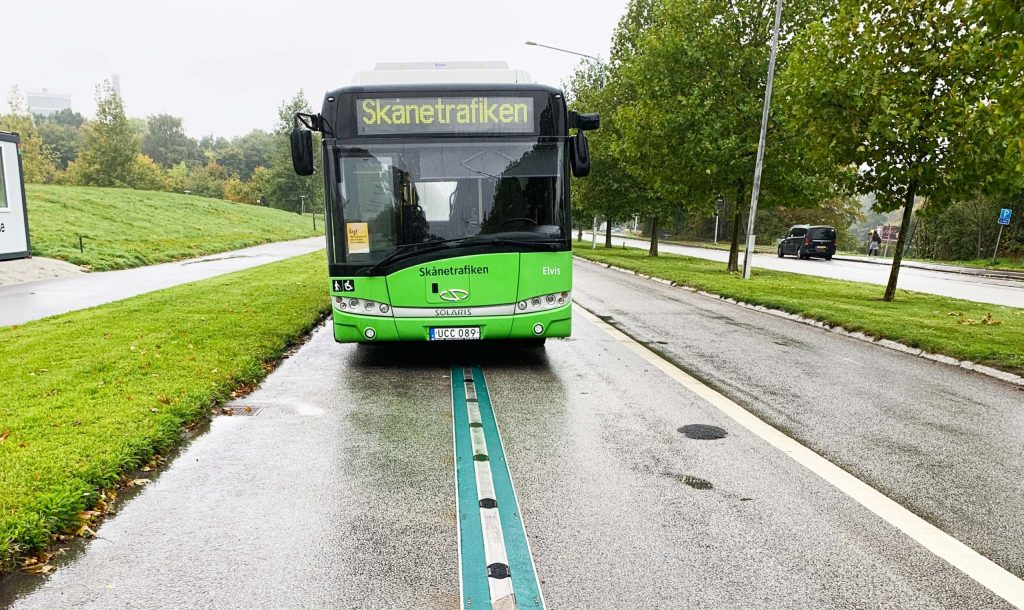
They’ve been trying to make roads power up electric cars in different ways. One Swedish company thinks they’ve got the best idea. They’ve set up a test spot in Lund, a town in southern Sweden, called EVolution Road.
This road looks like any other city road, but here’s the cool part: in one lane, there’s a unique rail under the asphalt. This rail can charge up cars as they drive over it.
What are the Most Critical e-mobility Trends Happening in the Current Era?
Evolution road, Southern Sweden
Electric Vehicles in Scandinavia:
Scandinavia leads globally in selling electric cars, with Sweden following Norway closely. By 2030, Sweden plans to stop selling cars with regular engines, aiming to boost electric vehicle usage. The country has big plans for sustainable energy and industries like green steel and building substantial battery factories.
Challenges for Electric Cars in Sweden:
Despite the success, there are hurdles. Sweden’s charging spots need to grow faster, especially for apartment folks. They have fewer public charging stations compared to the world average. Also, the cold weather up north affects battery life and the ability to drive long distances. Plus, the cost of owning an electric car increased after government incentives changed.
Solutions Ahead:
Right now, there are only about 2 million chargers for electric cars that people can use in public. But in the next seven years, we’ll need a lot more – about 18 million more chargers! This significant demand for electricity in cars is causing many changes. It’s not just in the car industry but also in how we store energy and even where we shop – they’re planning to put chargers there, too.
But there’s hope! Sweden’s working on boosting its charging spots, especially for apartment dwellers. They’re also looking into better batteries that can handle cold weather. They might rethink the costs to help more folks afford electric cars.
What kind of changes will happen to the charging system?
Customer satisfaction in Sweden with charging is 76%, lower than the global average of 82%. The country’s main cities need help meeting the rising demand for power due to an aging grid.
Sweden has high electric vehicle (EV) sales but needs more public charging spots. The government offers financial aid to install more stations, especially where apartment-dwelling EV owners need access. Private companies are also developing solutions for shared charging in residential areas.
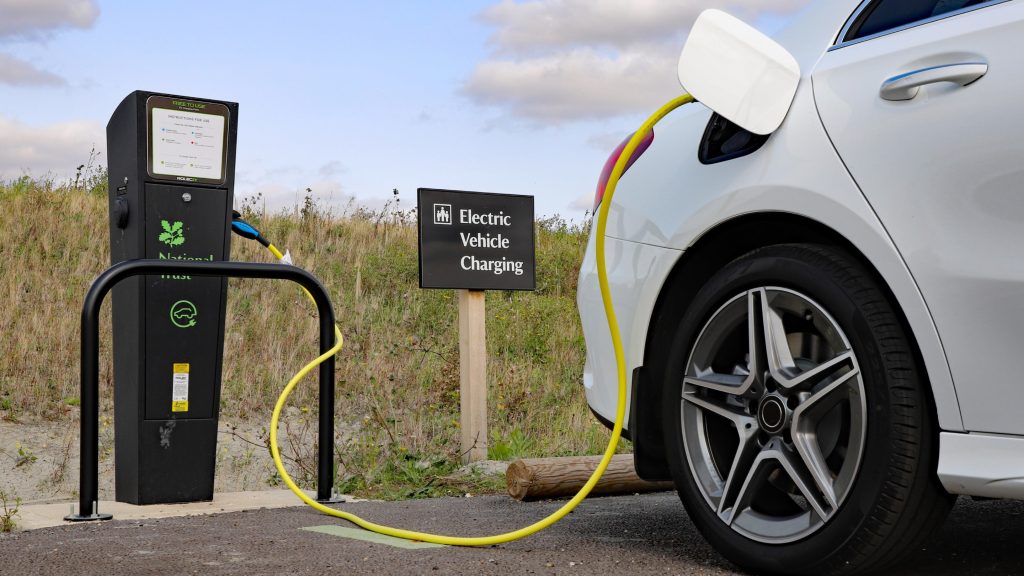
EV charging point. Photo: National Trust
The Growing World of Electric Cars
We need additional locations to charge electric cars since more and more individuals are opting to drive them across the globe. There must be plenty of places for electric automobiles to charge. Otherwise, they could be more awesome than they are.
Some big companies have already set up over 1,800 charging spots for electric cars. They offer different chargers, like AC, DC, and Fast Charging, to suit electric vehicles.
According to EMR data, in 2023, there were about 1.05 million charging stations for electric cars in India. And guess what? This number is expected to grow even more! It should reach 3.86 million charging stations by 2032, growing at about 22.20% annually between 2024 and 2032. That’s a lot of chargers!
Conductive charging. Illustration: ELE Times
Latest Developments and Future Possibilities
Let’s check out the newest things happening and what might happen next in the world of charging up electric cars:
Enhancing Electric Car Travel: The Importance of Fast Charging
Making long trips in electric cars easier needs high-speed charging. These super-fast chargers should be everywhere so people can take their electric vehicles on long journeys without problems. When this happens, more people in different cities will want electric cars, not just people in big cities.
Green Power for Electric Cars: Using Solar Energy at Charging Stations
Many electric car charging stations are using solar energy really well. This helps them run without adding pollution and also deals with places where there’s not enough power. By using the sun’s energy, these stations reduce their impact on the environment and tackle power shortages in some areas of the country.
Scandinavia Creating Road Charging
You can go farther with smaller batteries, and you don’t need to stop to charge. This matters a lot for big trucks or buses with huge batteries.
This new tech is called conductive charging and works like a small toy car on a track. There’s a metal strip under the vehicle, and when it moves along the rail, it gets electricity.
Finding Charging Stations: EVs and Digital Help
Some EV charging stations use digital platforms to show where the closest stations are nationwide. This helps drivers plan their trips because they can see where they can find nearby charging spots. EV makers even made an app to help users find these stations quickly.
The Future of Smart Grids and EVs
In the future, smart grid technology will be used to handle electricity better. As more and more electric cars hit the roads, using smart grids will become super important. It’ll help make electric cars even better!
Battery Swapping
Soon, EV charging might include battery swapping. Instead of waiting for a charge, you could quickly swap your used battery for a fully charged one. This will make traveling easier and boost people’s confidence in using electric cars. It could make more people want EVs in the country!
In addition, vehicle Inspection Software has a pivotal role in the evolving landscape of EV maintenance. With the potential integration of battery swapping in EV charging infrastructure, this software could adapt to facilitate seamless checks and assessments of swapped batteries.
Auto shop management software
Wrapping Up!Future of Electric Charging Infrastructure in Scandinavia
As technology advances, the landscape of auto shop management software is evolving to encompass the maintenance of electric vehicles (EVs). Therefore, charging electric vehicles becomes quicker, more eco-friendly, and more manageable. This will make many more people use EVs and help us rely less on fossil fuels. Since making charging easier is a big challenge for electric vehicles, there are plans to improve things and encourage more people to use them.
Emma Stone
Future of Electric Charging Infrastructure in Scandinavia, written dedicatedly for Daily Scandinavian by Emma Stone. Emma is a seasoned digital marketing expert and the senior content lead at Torque360. With years of honing strategies and crafting compelling narratives, she is all about sculpting brands’ stories into captivating digital tapestries. She thrives on weaving words that spark connections and ignite engagement, leveraging the power of content to fuel brand journeys. From brainstorming boardrooms to the click-happy realms of cyberspace, her passion for crafting impactful narratives propels brands to resonate in the bustling digital landscape. Armed with creativity and a knack for strategy, she navigates the ever-evolving digital sphere, shaping brands into vibrant, memorable entities.
The Minus Chair has one of the lowest carbon emissions for a serial produced dining chair in all of Scandinavia and is produced in Norway in Norwegian pine. Oslo-based Brit Thomas Jenkins together with his business partner Sverre Uhnger launched the Norwegian Minus Chair in collaboration with Norwegian furniture company Minus.
The chair, now a part of the Minus Furniture Collection, was launched in Milan in 2022 under Norwegian Presence and was an important participant during the Designers’ Saturday in Oslo last summer. The collection consists of single seater stools to long benches, tables small enough for anyone’s kitchen or large enough for dinner parties with friends.
Minus Furniture is a Norwegian furniture manufacturer with a vision to create a new standard of consumption with goals of radically carbon negative furniture.
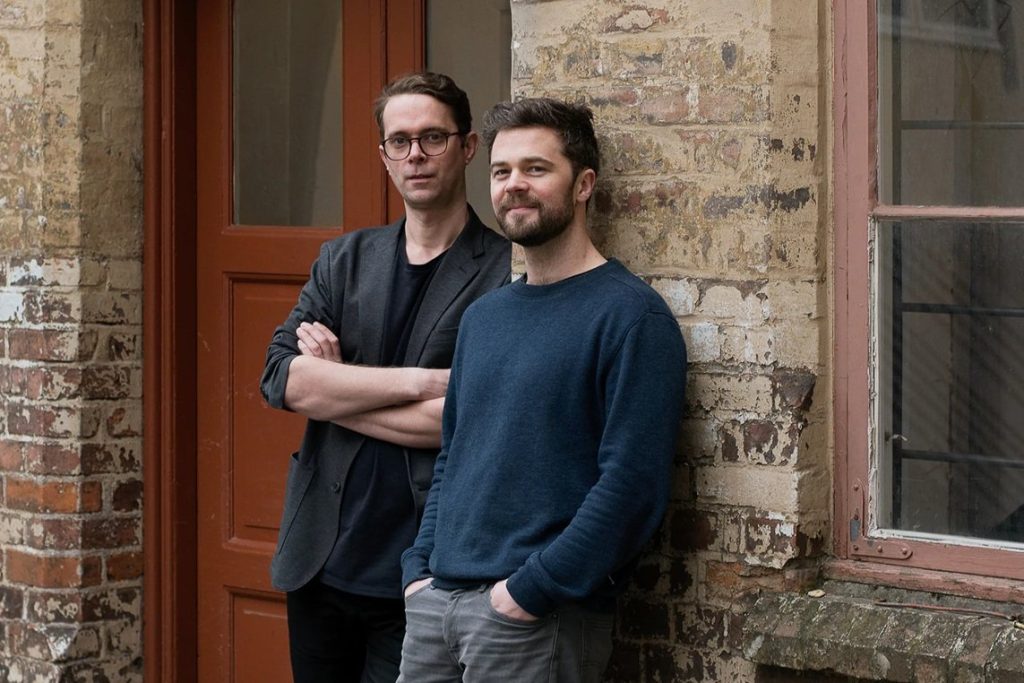
Thomas Jenkins and Sverre Uhnger. Photo: Objekt
“We wanted to create something that could be kept at its highest value for as long as possible,” says Jenkins. “This means that it must be easy to repair – and durable, both physically and emotionally, between furniture and the consumer.”
Minus Furniture is designing for beyond zero, or more accurately put, towards net carbon negative. The Minus Collection is designed with a 100-year perspective and a circular design approach. “Our relationship with Minus started with an email asking if it was possible to make furniture that stores more carbon than it emits, that creates more energy than used and at the same time sustain biodiversity,” says Jenkins.
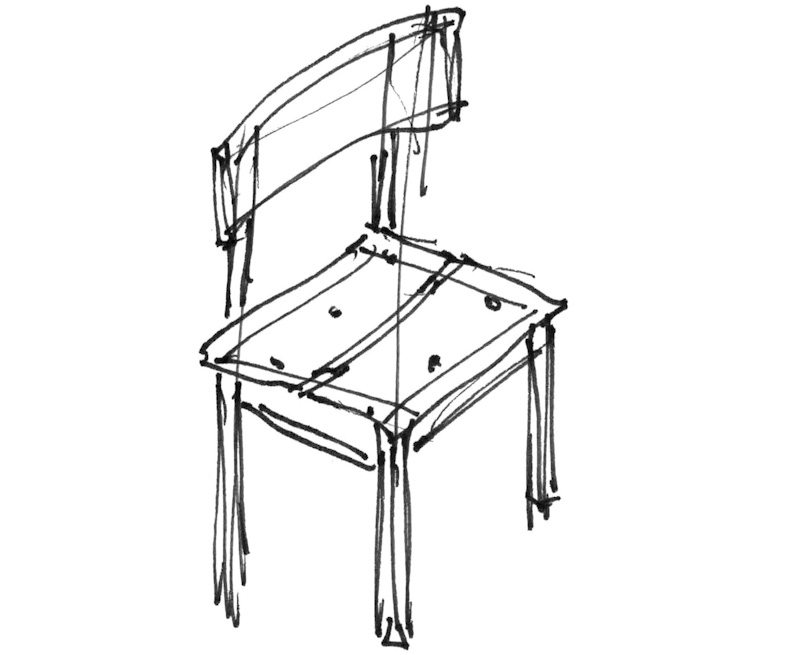
Minus chair sketch
***********************************************
Related: The Iconic Norwegian Siesta Chair
***********************************************
Minus Furniture is a research-driven furniture manufacturer collaborating with: SINTEF, SIVA, NMBU, NIBIO, and NTNU research. Trees absorb carbon as they grow, until they reach their capacity and begin to naturally deteriorate, releasing any captured carbon back into the atmosphere. When timber is felled at the optimum point of a tree’s growth cycle, the wood will then store the carbon for the rest of its life – providing that the furniture doesn’t end up on the waste heap.
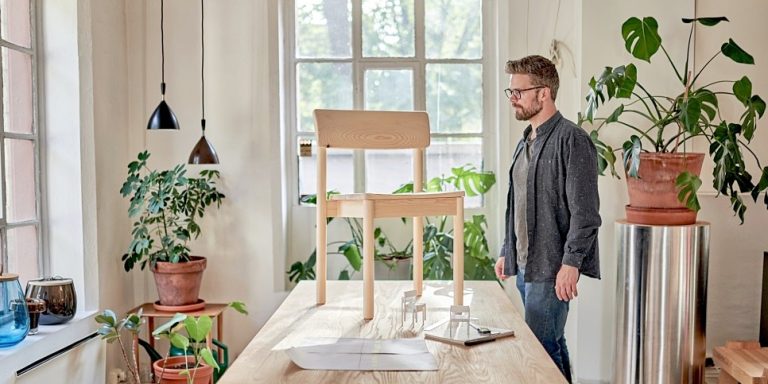
Jenkins/Uhnger in studio.
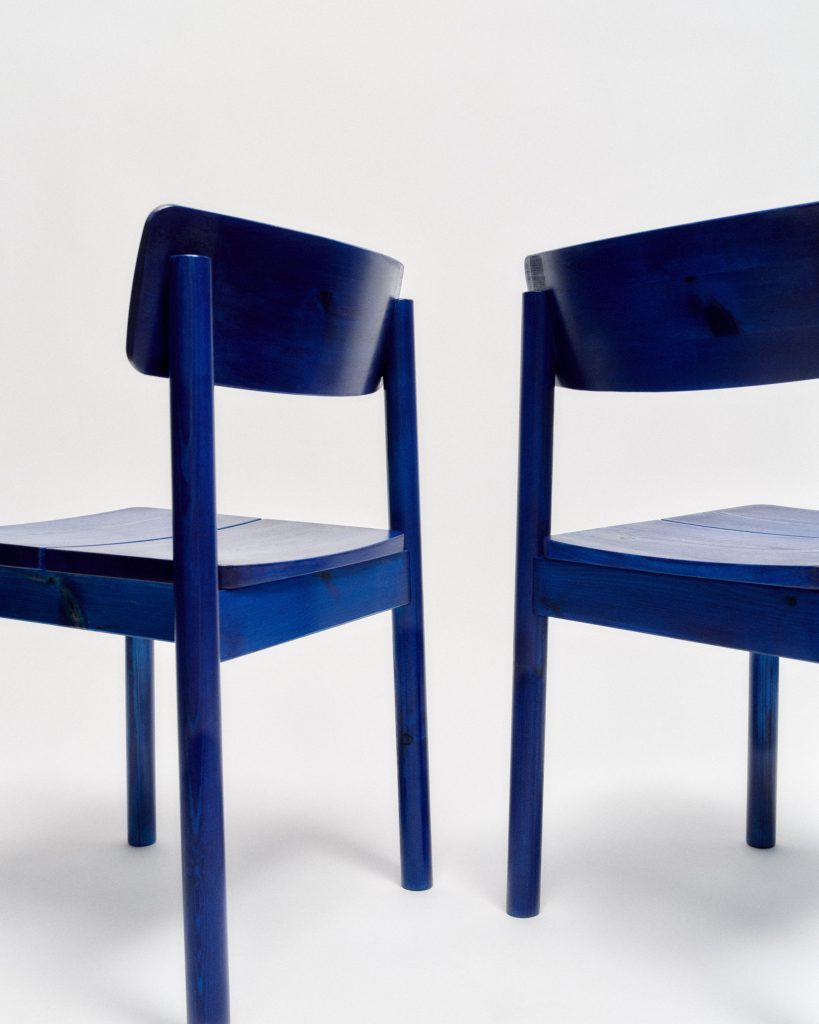
Minus is based on a super compact value chain using only local materials. That means the chair will mainly be made from softwood like pine and the manufacturing needs to utilize the log in an effective way. The components must be well dimensioned and rational to manufacture. Many of the parts are therefore straight/linear and the solid build has all wooden joints. The elements in contact with your body are prioritized creating both a visual identity for a chair like this.
Blue Minus chair
Jenkins is hopeful that the Minus Chair will pioneer a new environmental method by harvesting wood in its carbon-capture prime.
The Norwegian Minus Chair, written by Tor Kjolberg