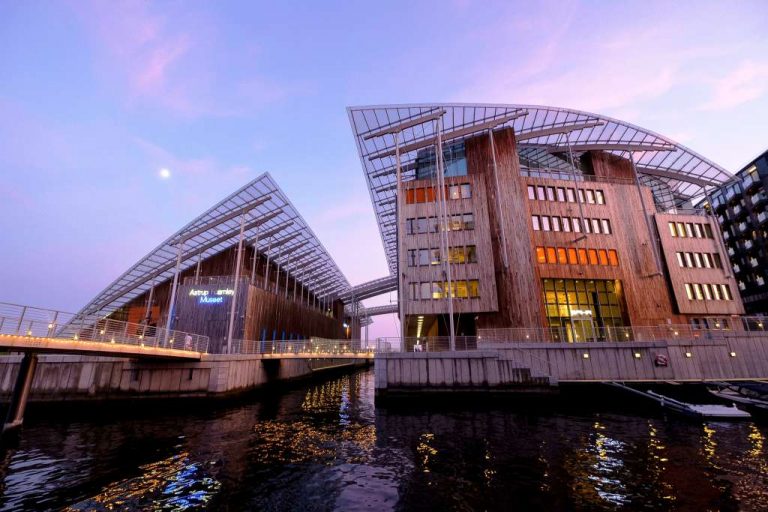
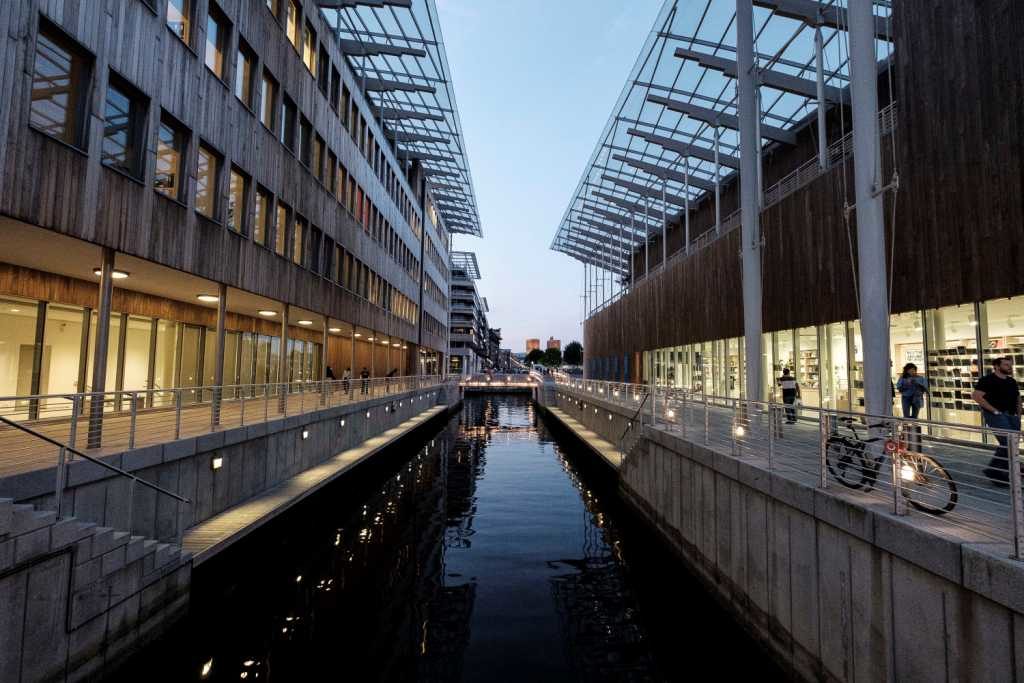
The Astrup Fearnley Museum in Oslo, one of the most notable private museums in the Nordic countries, was founded on 9 October 1993, and is now celebrating 25 years. It’s an exciting period when the contemporary art museum in Oslo is celebrating 25 years.
As a part of the celebration, the Astrup Fearnley Museum has given five selected young Norwegian artists the opportunity for a long-term exploration of their works and production towards a major exhibition at the museum in January 2019. Each artist is followed by a writer of the same generation.
The writers will produce a comprehensive text for publication in the exhibition catalog, and thereby launch a new generation of distinctive artistic voices both in Norway and as a part of the international art scene.
The Astrip Fearnley museum in Oslo is celebrating 25 years
Artists, writers and art collectors
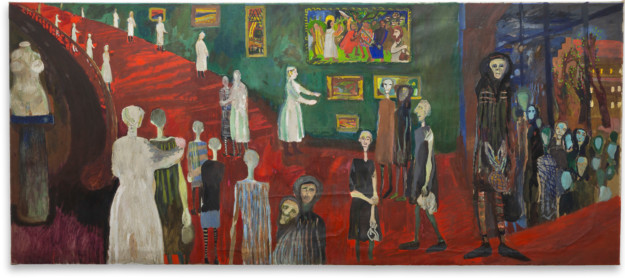
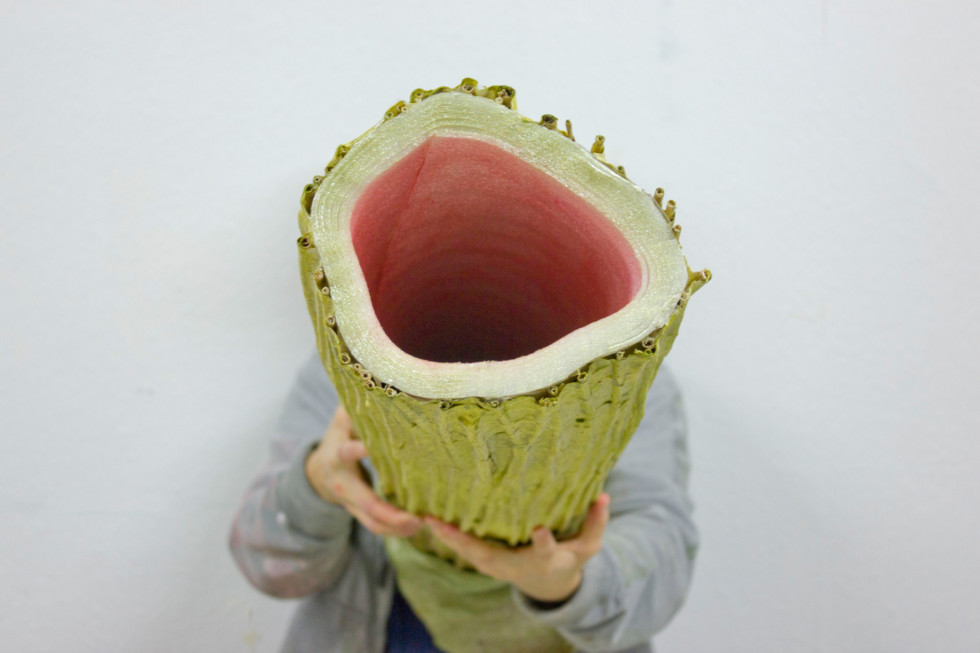
The selected artists are Miriam Hansen, Johanne Hestvold, Anders Holen, Henrik Olai Kaarstein, Mercedes Mühleisen and Constance Tenvik.
The selected writers are Ina Hagen, Ingrid Halland, Simen Joachim Helsvig, Maria T. Horvei, Nora Joung and Nicholas Norton.
The Astrup Fearnley collection is now considered one of the northern Europe’s leading collections of its kind
Five art collectors are attached to the project as contributors together with Talent Norway. The collectors’ contributions include support for the production and purchase of the artist’s work. The collectors are Clarkson Platou at Peter Anker, Knut and Cecilie Brundtland, Bettina Ford Jebsen, C. Ludens Ringnes Foundation represented by Christian Ringnes and AKO Art Foundation represented by Nicolai Tangen.
Contemporary Art Museum in Oslo Celebrating 25 Years
The original Astrup Feranly collection consisted of works of Norwegian and international contemporary art collected by the shipping magnate family the Fearnleys. The initiator of the collection, Hans Rasmus Astrup, first took interest in French art, then moved on to German expressionism and later to young British artists. The Astrup Fearnley collection is now considered one of the northern Europe’s leading collections of its kind.
The Astrup and Fearnley families have included accomplished businesspeople and artists for several generations. They have been known as philanthropists with a long tradition of supporting artists and collecting art.
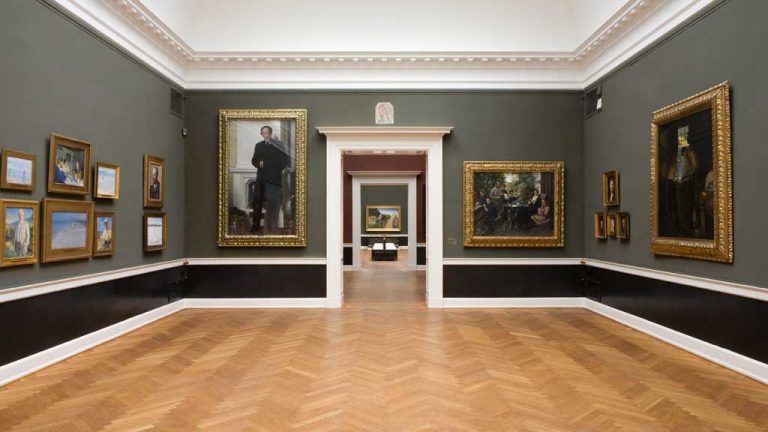
Controversial art has always been a natural part of the museum
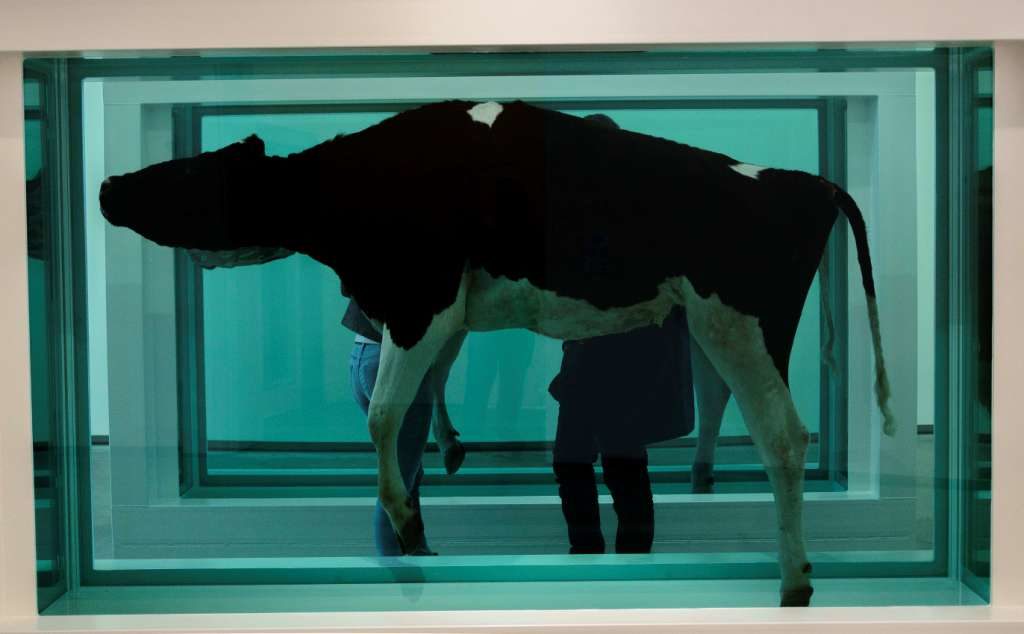
Among the works that was added to the collection is the installation Mother and Child (Divided) (1993) by Damien Hirst, which was quite controversial at the time, considering that it consists of glass-walled tanks that contain the two halves of a cow and a calf, each bisected and preserved in formaldehyde.
When Queen Sonja formally opened the museum in 1993, she emphasized in her speech that this was “art which had been selected with no government intervention, other than a simple desire to share it with others.”
All images by Jon Arne Foss
Contemporary Art Museum in Oslo Celebrating 25 Years, written by Tor Kjolberg
This classic Scandinavian dish works perfectly well with all kinds of fatty fish, including salmon, herring, mackerel, white fish and Greenland halibut. Learn how to make delicious Scandinavian gravid fish.
It is always generously flavored with dill. If possible, use whole fish with just the head and bones removed, the skin must be left on. You can have your fishmonger do this, or give it a try yourself. The important thing in filleting fish is a sharp knife, and patience; work slowly, using the tip of the blade as a finger, feeling your way through the flesh.
Scandinavian gravad fish is always generously flavored with dill
Scandinavian Gravad Fish
Gravad means a light salting, drawing moisture from flesh with a mixture of salt and sugar. The salting is not meant to preserve the fish for long, but long enough to allow a slight fermentation and add a depth of flavor.
The dill is not optional – it’s the only flavoring and it’s wonderful. The dill must be thoroughly cleaned in a large tub of cold water as the only risk of eating this lovely dish is from botulism bacteria from dirt. Keep all utensils absolutely clean and work with rubber gloves as fish is eaten raw.
Ot’s absolutely essential to use very fresh fish
It is of course, as with sushi, absolutely essential to use very fresh fish. The mustard sauce, along with rye bread, cold butter and lots of fresh dill, are perfect accompaniments, but you can also try it with new potatoes, butter and yet more dill.
You will also need a small rocky Swedish island, a keg of beer and a bottle of schnapps.
Gravad fish recipe
Wash and dry the fish. Mix together the spice rub ingredients. Choose a deep, non-corrosive dish and sprinkle a third of the spice mixture over the bottom. Place half of the fillets skin-side down on top, then sprinkle over another third of the spice rub and follow with the rest of the fillets, this time flesh-side down. Finish with another layer of the spice mixture.
Wrap the whole thing in clingfilm, then just pit a heavy board that fits neatly inside the dish on top. Place in the fridge.
The important thing in filleting fish is a sharp knife
After 12 hours, unwrap and dismantle everything and turn the fish over so the top becomes the bottom. Replace the clingfilm and board and let it sit for another 12 hours. While a total of 24 hours is sufficient for small fish, a large salmon will take 48 hours to cure, and needs to be turned over twice.
Eat very thinly sliced, within 3 days. The mustard sauce involves nothing more complicated than simply mixing everything together.
Rimmad lax Rimmad lax is basically the same as gravid fish: fish cured with the same rub of sugar and salt. However, the fish is cured for shorter time and tastes more like fresh fish. It is eaten as main course with dill creamed potatoes.
Denmark’s oldest housing development, Nyboder, is found just past Store Kongensgade. The construction of the long rows if ochre-colored houses began in 1631, after Kristian IV addressed the urgent need for housing for Danish Royal Navy personnel.
The 616 apartments are still used for staff and retired officers. The Nyboder seen today was in fact, except for a single row of houses in St. Paulsgade, built from 1757.
The 616 apartments at Nyboder are still used for staff and retired officers
Nyboder
Nyboder (Small houses) is very much associated with their yellow color and “Nyboder yellow” is in Danish often used as a generic term to refer to their exact hue of yellow. However, the original color of the development was red and white.
From its early days, the Nyboder area included a guardhouse which was replaced by a new building in the 1780s. It had an external bell which was used to gather people in the event of a military attack or fire. The building also houses the Nyboder barracks’ own guard and contained a jail, where trouble-making residents were deposited.
Nyboder (Small houses) is very much associated with their yellow color and “Nyboder yellow” is in Danish often used as a generic term to refer to their exact hue of yellow
It has several times been proposed to sell the houses and use the proceeds for various purposes, including investments in improved infrastructure in Copenhagen, but so far it has been rejected. In 2009 the A. P. Møller Foundation made a donation of DKK 50 million for a refurbishment of some of the houses
Fine Art Collections in Copenhagen
Nearby, where Øster Voldgade and Sølvgade meets, you’ll find the superb National Gallery of Denmark. A new extension houses four storeys of modern art within stunning glass and whitewashed walls. Other Danish and European works are displayed permanently, along with changing international exhibitions.
National Gallery and Danh Vo
Until 2 December 2018, the National Gallery of Denmark (SMK) presents a large-scale retrospective exhibition featuring one of Denmark’s most internationally acclaimed contemporary artists: Danh Vo. The exhibition at SMK is the result of a unique collaboration with The Solomon R. Guggenheim Museum in New York.
On display are also full-scale replicas of the folds of the Statue of Liberty’s robes, a chandelier that has witnessed major turning points in history, and letters from a warring and ballet-loving Henry Kissinger.
The Hirschspring Collection, Copenhagen
The Hirschsprungske Collection
Behind the museum and across the park is the Hirschsprungske Collection, a private collection of 19th century Danish art assembled by tobacco tycoon Heinrich Hirschsprung – including many of the originals from the Skagen painters.
In 1902, Pauline and Heinrich Hirschsprung gave their vast collection of Danish nineteenth-century art to the Danish nation. A museum was built to house the collection, opening in 1911.
Peder Severin Khrøder, The Hirschsprung family
Heinrich Hirschsprung’s family was of German-Jewish origin. His father, Abraham Marcus Hirschsprung, who originally came from Friedberg near Frankfurt, set up a tobacconist’s shop in the end wall of the prestigious Hotel d’Angleterre in Kongens Nytorv in Copenhagen in 1826. However, it was not until his sons Bernhard (1834–1909) and Heinrich Hirschsprung (1836–1908) took over the company in 1859 that it grew into a modern enterprise specialising in the manufacture of cigars at its own factory in Tordenskjoldsgade – entirely in keeping with the ‘Wirtschaftswunder’, the process of industrialisation that transformed Copenhagen into a modern city in the 1870-80s.
Feature image (on top) The Hirschspringske Collection
Fine Art Collections in Copenhagen, written by Tor Kjolberg
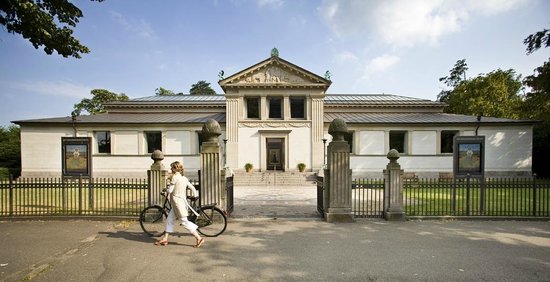
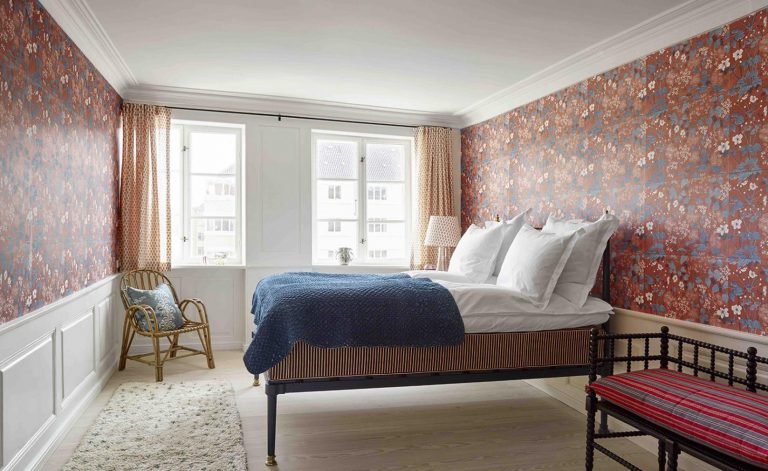
Design lovers can now spend a night at a fantastic retail space in Copenhagen! The Apartment is curated like a home and was launched by Danish decorator and dealer Tina Seidenfaden Busck in 2011 as a ‘shoppable’ home, complete with living room, office, kitchen and bathroom. Now you can stay at a Shoppable Apartment in Copenhagen.
Design lovers can now spend the night at hybrid Copenhagen gallery The Apartment, a retail space curated like a home.
The Apartment in Copenhagen, by Tina Seidenfaden Busck and Pernille Hornhaver
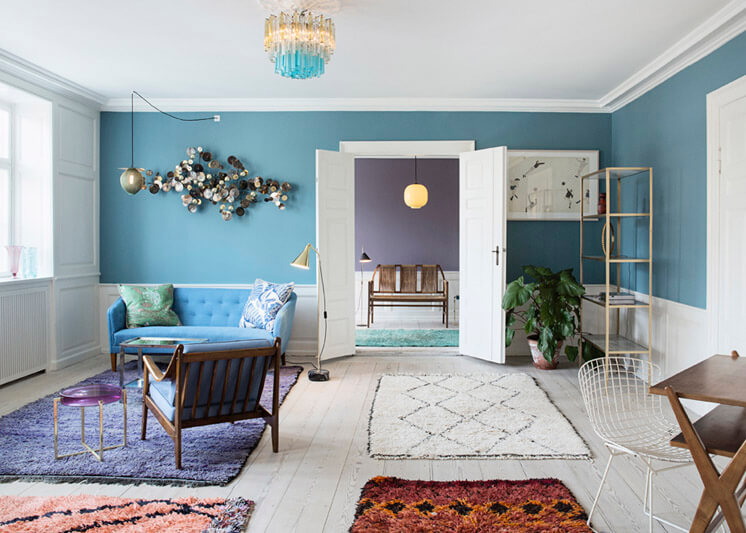
Set inside a restored 18th-century building in the Christianshavn district, The Apartment offers a surprising mix of mid-century and select contemporary pieces and has become the ultimate furniture showroom.
Design lovers can now spend the night at hybrid Copenhagen gallery The Apartment
Art and Interior
Tina is continually changing selection of wonderful design pieces and the Apartment is more a gallery than a shop, featuring the work of contemporary artists like François Halard, Tómas Saraceno and Nathalie du Pasquier. The Apartment provides “an ideal aesthetic experience and a restorative stay”.
Busck is working with international designers like Ilse Crawford and Muller Van Severen – from wall color to objects, but she’s expanded her gallery concept even further by adding two new bedroom suites open to guests (price on application).
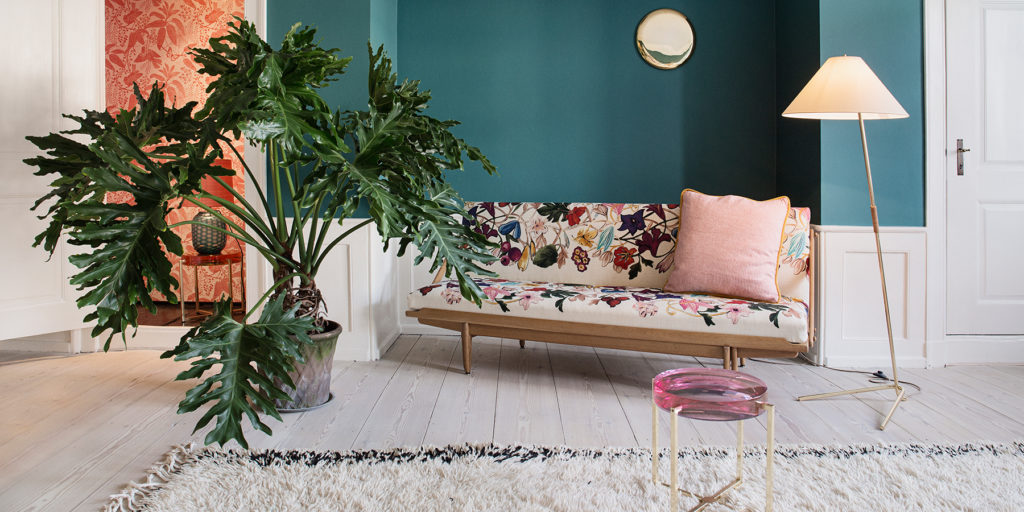
The Apartment offers a surprising mix of mid-century and select contemporary pieces
Intimate design sensibility
Says Busck: ‘It’s been a dream of mine to bring The Apartment’s personal design sensibility to a more intimate level.’ The Danish interior designer, art adviser and proprietor of Copenhagen showroom the Apartment has built her kingdom around a few tastes and tenets that fly in the face of polished perfection.
“I’ve spent the past decade acquiring art pieces and objects from stellar designers we’ve worked with over the years with this project in mind.” says Tina Seidenfaden Busck. Guests can make use of the apartment’s kitchenette, drawing room and hand-picked library, as well as its dining room which doubles as a workspace. Each room is decked in design pieces from the likes of Muller Van Severen, Michael Anastassiades and McCollin Bryan, as well as midcentury objects and artworks from Busch’s personal collection.
Tina is continually changing selection of wonderful design pieces
Opposite, not matching
“I don’t like when things match!” says Busck. “I like the opposite. I love textiles and pattern and color. I love when you can see the craftsmanship in a furniture piece,” she continues. “When I put different things together, I know immediately if it works or if it doesn’t.”
Tina Seidenfaden Busck
Busck is one of the best at creating an eclectic look that seems effortlessly put together. It’s not given to a lot of people to elegantly mix and match patterns, colors, design eras and origins the way she does. She is adventurous and she follows her instinct, and it pays off. See for yourself!
Stay at a Shoppable Apartment in Copenhagen
For bookings or more information:
The 2018 edition of Moderna Exhibition presents the works of nearly 40 artists connected to the Swedish art scene. An exhibition that only comes around every four years, the Moderna Exhibition aims to capture something of the essence of Swedish society in 2018, looking back on the history and the events that have led to where it is now. The Moderna Exhibition in Stockholm is Finally Here Again
This time, the mission was given to Joa Ljungberg, Santiago Mostyn and Lawen Mohtadi, who have researched Swedish contemporary art and present their findings in the exhibition that has just opened at Moderna Museet in Stockholm.
Participating artist Ohrman Ingela Jattebjornlokan
The Moderna Exhibition in Stockholm is Finally Here Again The Exhibition is a large-scale project looking back at Swedish history and exploring the events that have shaped and reshaped society. Other artists highlight alternative experiences of living in Sweden today, and in the midst of these local standpoints, the exhibition incorporates geographically distant perspectives that, in different ways, impact our lives here and now.
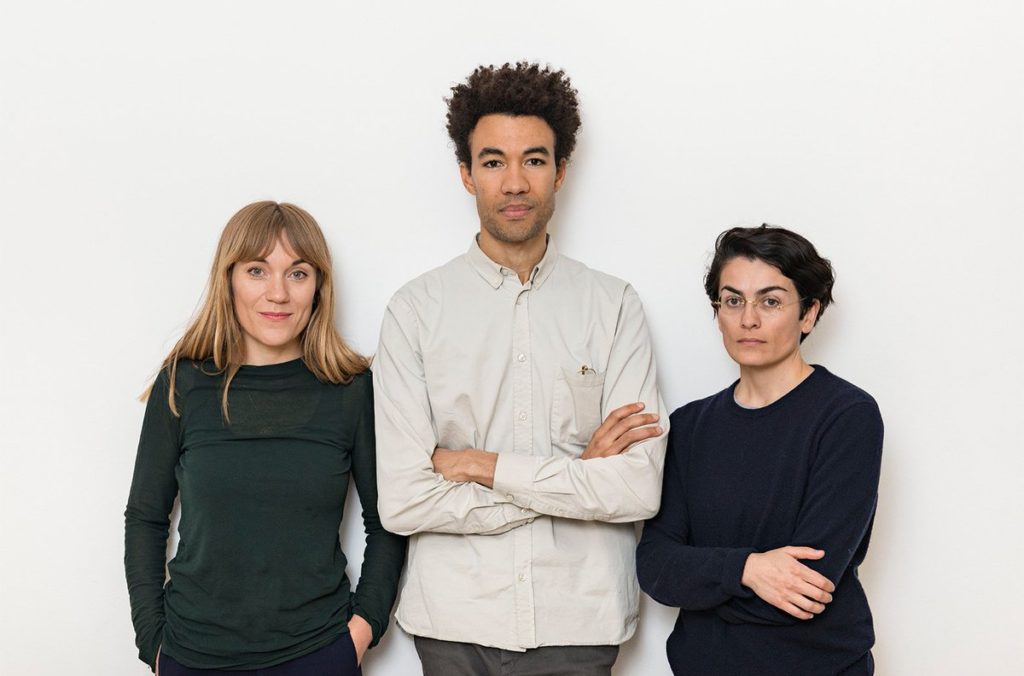
The curators (from left) Joa Ljungberg, Santiago Mostyn and Lawen Mohtadi
The curators
The curators Joa Ljungberg and Santiago Mostyn have painstakingly collected the works of almost 40 artists from the Swedish art scene. “It is with great expectations that we handed over this assignment to the Museum’s curator Joa Ljungberg, in association with the editor and author Lawen Mohtadi and the artist Santiago Mostyn. What is essential to Swedish art today, and how can we understand the contemporary regional and national perspectives? These are a few key issues of our time that the curatorial team will try to answer,” said Daniel Birnbaum, director, and Ann-Sofi Noring, co-director of Moderna Museet.
“How can we understand the contemporary regional and national perspectives in Swedish art today?’ asks director Daniel Birnbaum. Photo: John Scarisbrick
The Moderna Exhibition offers both sober and intimate reflections on Swedish society today, on a natural world that is no longer what it once was, and a future that appears to have already begun.
Joa Ljungberg
Joa Ljungberg (b. 1976, Uppsala) is a curator at Moderna Museet Malmö. She recently completed a project entitled THE NEW HUMAN, which explored, through contemporary art, our human condition in a rapidly changing world. The project was manifested in three international group exhibitions: You and I in Global Wonderland (2015), Knock, Knock, Is Anyone Home? (2016), and, finally, The New Human (2016-17). Ljungberg has also curated several solo exhibitions: The Social with Annika Eriksson, To What I Might Become with Ursula Mayer, Rip Image with Tala Madani (in collaboration with Andreas Nilsson), Plegaria Muda with Doris Salcedo, The Girl, The Monster and The Goddess with Niki de Saint Phalle, and Europe will be stunned with Yael Bartana, among others.
In 2004–2008, Ljungberg worked at the Public Art Agency Sweden, where she curated projects with the artists Jenny Holzer, Julia Peirone, Marjetica Potrc, Franz Ackermann, among others. She has also been the artistic director (together with Edi Muka) for the Göteborg International Biennial for Contemporary Art 2007: Rethinking Dissent, and co-director and curator (again with Edi Muka) for the Tirana International Contemporary Art Biennial 2009: The Symbolic Efficiency of the Frame.
She studied History of Art at Uppsala University and University of Warwick (ENG), and graduated as MA in Creative Curating from Goldsmith College, University of London.
In front and behind the objective
Related: Art and Culture in Sweden
Santiago Mostyn
Santiago Mostyn (b. 1981, San Francisco) is a Stockholm-based artist with a practice founded on politically resonant personal histories. His prints, videos, sculptures, and performances challenge established social norms by giving visibility to cultural outsidership.
Mostyn, a graduate of Yale University, Städelschule in Frankfurt, and the Royal Institute of Art, Stockholm, and has exhibited internationally at venues including Kunst-Werke, Berlin (2008); Turner Contemporary in Kent (2011); Malmö Konsthall (2013); Kunsthall Stavanger (2014); and Moderna Museet in Malmö (2015) and Stockholm (2016). In 2016, he created a large-scale commissioned work for the Public Art Agency Sweden; in autumn 2017, he will feature in the 9th edition of the Göteborg International Biennial for Contemporary Art. His work has been featured in The New Yorker, Interview Magazine, BBC Radio, and Creative Time Reports, among others.
Lawen Mohtadi Lawen Mohtadi (b. 1978, Stockholm) is a writer, documentary filmmaker and editor. For the past ten years, Mohtadi has been researching the life and work of Swedish-Roma civil rights activist Katarina Taikon. In 2012, Mohtadi published Den dag jag blir fri (The Day I Will Be Free), the first biography of Katarina Taikon. Three years later, the book became a feature film, co-written and co-directed by Mohtadi. Her research also resulted in public seminars at the Royal Dramatic Theatre in Stockholm, a national book tour, talks in Berlin, New York and Washington DC, and a photo exhibition at Moderna Museet, co-curated with Fredrik Liew.
Moderna Museet, Stockholm. Photo: Asa Lunden
The human body is tangibly present throughout the exhibition – surveilled and registered, caught between legal and geographic boundaries, and shaped by ideologies, technologies, power structures and norms. Also palpable are the remnants of nature, transformed beyond recognition to make way for vast industrial tracts of land where time passes ever more quickly.
Participating artists Meriç Algün, Muhammad Ali, Emanuel Almborg, Ragna Bley, Alfred Boman, Kalle Brolin, Fanny Carinasdotter, Anja Örn & Tomas Örn, Kah Bee Chow, Rebecca Digby, Sven X-et Erixson, Malin Franzén, Mark Frygell, Erik Mikael Gudrunsson, Thomas Hämén, Ingela Ihrman, Sara Jordenö & Amber Horning, Hanni Kamaly, Mårten Lange, Helena Lund Ek, Dinis Machado, Éva Mag, Eric Magassa, Tor-Finn Malum Fitje with Thomas Hill, Britta Marakatt-Labba, Fatima Moallim, Åsa Norberg & Jennie Sundén, Ida Persson, Anna-Karin Rasmusson, John Skoog, Anders Sunna, Cara Tolmie, Anna Uddenberg, Sophie Vuković, Knutte Wester, John Willgren and Christine Ödlund.
The Swedish Art Scene Artists active in Sweden today may have a background in one or many other countries and cultures. Some have been living in Sweden for just a few years, others considerably longer. There are Swedish-born artists based in other parts of the world, and artists who live and work outside of Sweden but did all of their studies here. The boundaries, then, of the “Swedish art scene” do not match the national borders, although within this scene, we find many content-related connections to the Swedish state, its histories, its civic and educational systems, and its relations to the rest of the world.
A book with also be released around the exhibition in associated with Konstnärsnämnden.
Feasture imaeg (on top): Sven X et Erixson ‘Refugees’- from Malmo Museum. Photo: jenny Eliasson
The Moderna Exhibition in Stockholm is Finally Here Again, edited by Tor Kjolberg
Five years ago, when Hotel the Thief opened there was a carefully selected selection of Norwegian design, including LK Hjelle, Magnus Petersen and StokkeAustad. The hotel’s ambition was to host an annual exhibition of art and design, but according to hotel manager Jarle Moen, there was never time to do it. Hotel the Thief in Oslo Showcases Norwegian Interior Design
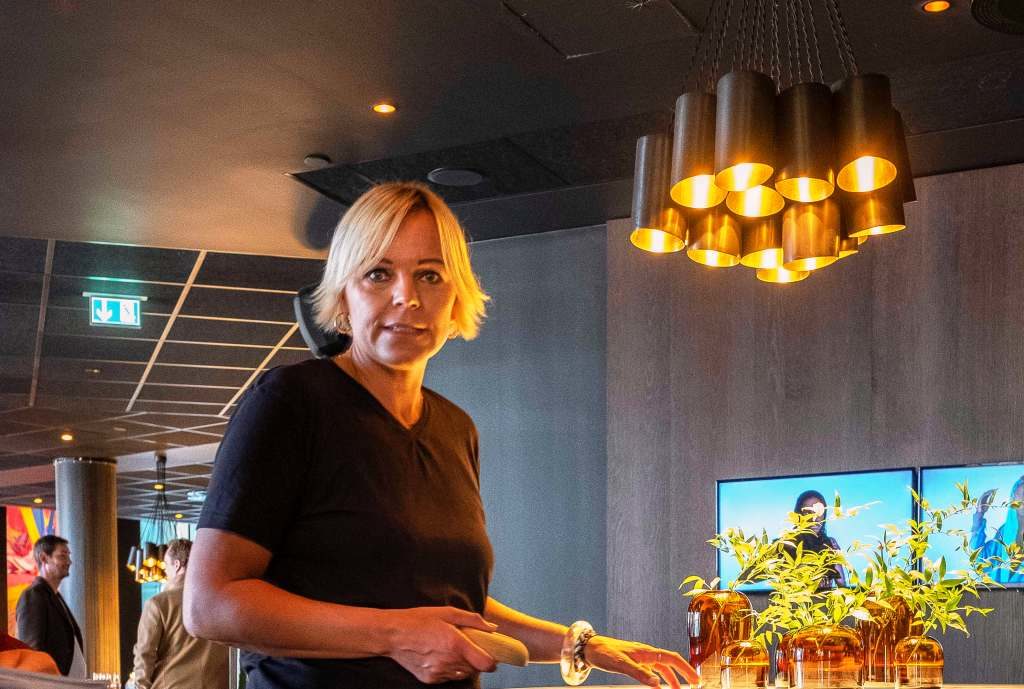
However, when Ragnhild Grytten from Noord Design proposed to host a New Norwegian Design sales exhibition, she was immediately invited to curate an exhibition displaying contemporary design innovations in all types of furnishings, lightning and décor from Norway’s foremost and youngest designers.
Ragnhild Grytten has curated the Norwegian Interior Design Exhibition at the Thief Hotel in Oslo
Hotel the Thief in Oslo Showcases Scandinavian Interior Design
Several Norwegian talented designers have already conquered the international design scene as well as interior and trend magazines and now hotel guests and visitors are provided with an insight into Norwegian design.
Ragnhild Grytten in Noord consultancy agency primarily works to convey current expertise on what is happening in Norwegian design to companies, which she encourages to choose Norwegian design whenever appropriate. The idea that the same products could be equally relevant to travelers made her want to put together a smaller sales show at The Thief. However, it got bigger than she had thought.
Ragnhild Grytten with the stool Drfted designed by Lars Beller
A tribute to Norwegian designers
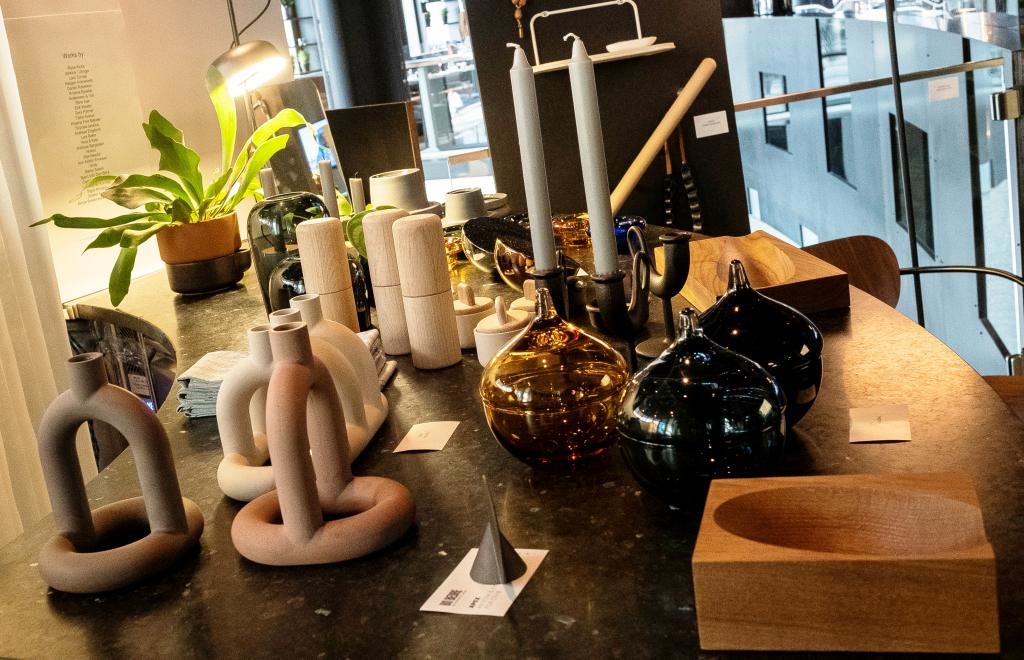
We couldn’t help to be drawn to the Lamella Lamps, designed by Hallgeir Homstvedt & Jonah Takagi, the Synnes chair by Falke Svatun, Pavilion stable chairs by Anderssen & Voll and the Spisolini chair designed by Andreas Engesvik for Swedish Fogia. All products seen on the image below.
“New Norwegian Design” is a tribute to Norwegian designers with its strong, distinctive design language, playful expression and uncompromising look for quality.
The exhibition at the Thief runs through 2 November.
The exhibition displays a selection of Norwegian interior design, like the Lamella Lamps, designed by Hallgeir Homstvedt & Jonah Takagi, the Synnes chair by Falke Svatun, Pavilion stable chairs by Anderssen & Voll and the Spisolini chair designed by Andreas Engesvik for Swedish Fogia
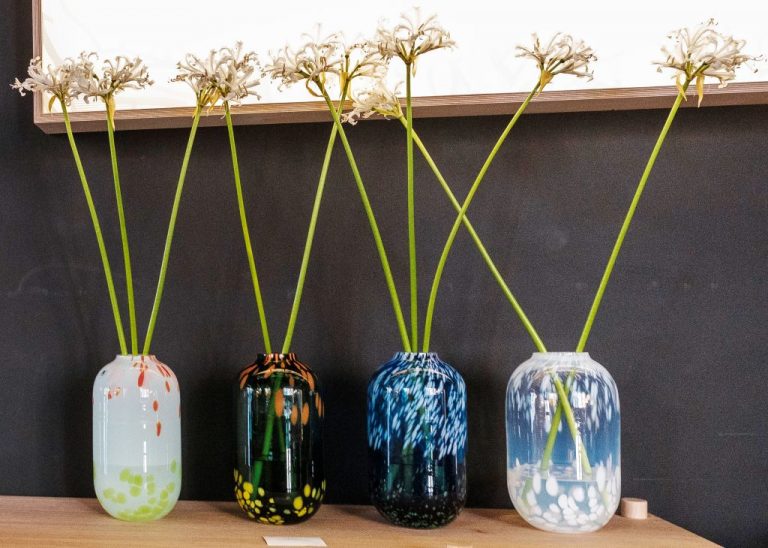
Feature image (on top): Seadons vases by Norwegian designer Kristin Five Melvær
All photos: Jon Arne Foss
Hotel the Thief in Oslo Showcases Norwegian Interior Design, written by Tor Kjolberg
A new island near Copenhagen’s harbor is projected for 2070. Fully established it will be housing 35,000 people. No doubt, Copenhagen is growing.
Thy project aims to create additional space for the city’s rapidly growing population. At a press briefing last week, Denmark’s prime minister Lars Løkke Rasmussen said that it will also protect the city from rising sea levels.
Copenhagen is growing
“The capital is in rapid development, being built as never before. That’s good but it also means that Copenhagen will run out of plots eventually, and that’s why we want to build a new island,” Rasmussen added.
The liberal prime minister was joined at the briefing by Copenhagen’s Lord Mayor Frank Jensen, a social democrat, indicating support for the project from the main opposition party in the national parliament.
The new island is called Lynetteholm
The project, tentatively called Lynetteholm, demands investment of around 20 billion Danish crowns ($3.1 billion) including a harbor tunnel and a metro line, but will be self-financing over time, the prime minister said.
Denmark’s prime minister Lars Løkke Rasmussen said that Lynetteholm will also protect the city from rising sea levels
At 15 Jerry began dabbling in EDM, by 19 he had released a slew of popular singles followed by his 2017 debut album, Purple Evenings. Meet Norwegian Electro Pop Star Jerry Folk.
Truly standing out in a crowd isn’t always the easiest task to accomplish. Even more so a challenge when the crowd itself is full of successful individuals. Herein lies the challenge for a Norwegian producer. However, Jerry Folk has built up a reputation for producing melodic and soulful deep house grooves that are as nostalgic as they are fresh.
Jerry Folk has built up a reputation for producing melodic and soulful deep house grooves that are as nostalgic as they are fresh
His latest hypnotic new release, “Sweetness On My Tongue” is the second single off his forthcoming EP, Leisure Tapes, a synth-rich and funk-driven track, a vivacious ‘70s throwback yet fresh with splashes of modern production.
Meet Norwegian Electro Pop Star Jerry Folk
Once the vocals begin, Folk reveals the beauty of this sonic landscape, while the music builds and begins to envelop you. As we move into the catchy hook, Folk features multiple synth lines, all of which rise and fall, spiraling in various directions.
Once the vocals begin, Folk reveals the beauty of this sonic landscape
Related: The Mythical Norwegian Electro Pop Wizard From Oz At the tender age of 22, Jerry Folk has become more successful than most others achieve in their lifetime. Within the past three years, Folk has managed to successfully remix huge names such as Chromeo and ZZ Ward.
Fusing disco, hip-hop and funk Drawing inspiration from the world around him he fuses disco, hip-hop and funk to create his own unique flavor of dance music. Two years back his ‘Suga Suga (Jerry Folk Remix)’ made its way to #1 on Hypemachine, receiving over 1 million plays and he is only scratching the surface of his production ability.
Folk has developed and continues to experiment with his style and has already made significant strides in his professional career for several years. A stand out among his remix collection came two years ago with Oh Wonder’s “Lose It”. The track pulled over 28 million streams on Soundcloud alone.
At the tender age of 22, Jerry Folk has become more successful than most others achieve in their lifetime
An artist on the rise Proving to be an artist on the rise, we know there is much more to come from this buzzing young producer. Though his close attention to funk and R&B, often off the beaten path for most EDM producers, the synthesis of these genres has become an essential element to Folk’s dynamic sound.
Drawing inspiration from the world around him Jerry Folk fuses disco, hip-hop and funk to create his own unique flavor of dance music
In addition to an impressive list of remixes and originals, Jerry Folk began to take on some of the most iconic stages during his first headlining North America tour back in 2016.
Meet Norwegian Electro Pop Star Jerry Folk, written by Tor Kjolberg
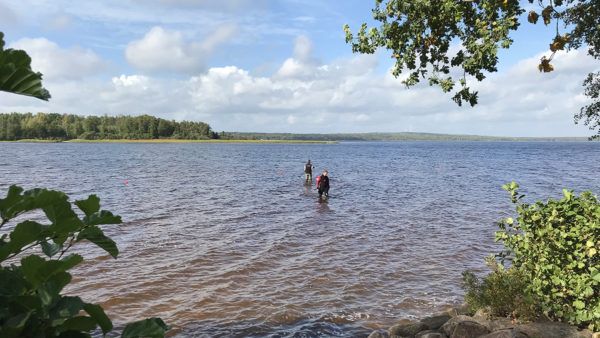
A statement from Jonkoping County Museum reports that eight-year-old Swedish-American girl Saga Vanacek found an exceptionally well-reserved Saga-sword in Sweden. The sword has been lost for more than a thousand years.
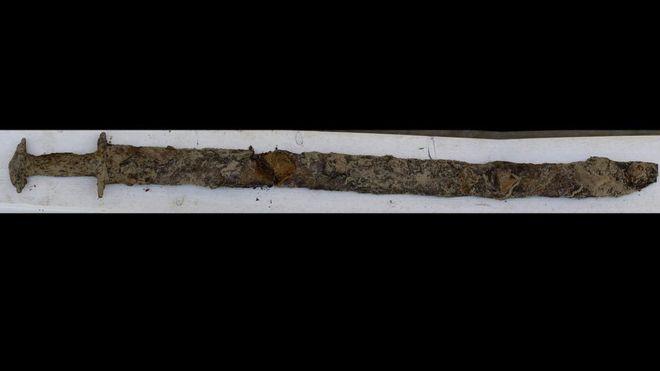
The sword included a cover made from leather and wood. The find was kept secret for months while archaeologists surveyed the site, the Vidostern lake. The museum has dated the sword to the 5th or 6th century, before the time of the Vikings.
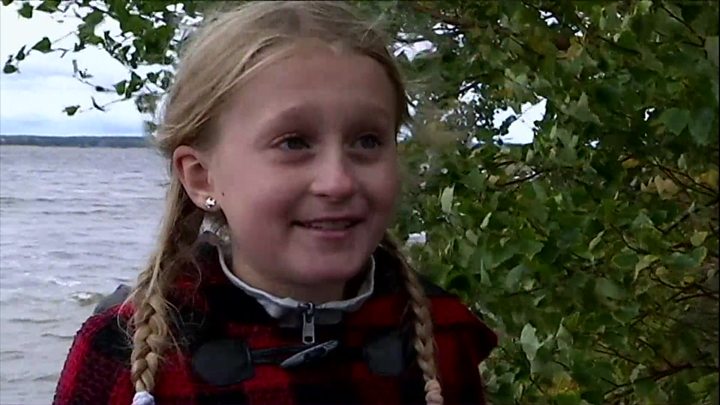
Eight-Year Old Girl Found Saga-Sword in Sweden Saga was paddling in a southern Swedish lake when she came across something she thought was a stick. However, it turned out to be a sword – about 33 inches long, black-brown with age and rust.
The 1,500 year-old sword found in Jönköping
In a Facebook post her father, Andy Vanecek, wrote that she “lifted it high above her head, and shouted, as if she was Pippi Longstocking, (a Swedish storybook heroine), ’Daddy! I found a sword!
Archaeologists made two surveys
According to Andy Vanecek’s Facebook post the find was made 15 July. “After the sword was found we have made two surveys, we found a fibula from the period 300-400 A.D.,” Anders Kraft, archaeologist with the County Administrative Board in Jonkoping said in an email. “It’s still unclear if the sword is from the same period, we need more scientific analyzes to find out.”
8-year old Sana Vanecek who found the sword
Visitors must wait one year to see the sword on display
The Vaneck family is relieved that they no longer have to hide the news. “I think maybe I found it harder to keep secret than she did,” Vanecek said. “It’s cool that it will be in a museum and it might even say ‘Saga’s sword’ and it might be there for thousands of years.”
According to the Jonkoping Museum, visitors in search of the sword will have to wait for about a year before seeing it on display, while specialists complete conservation work on the object.
Eight-Year Old Girl Found Saga-Sword in Sweden, written by Tor Kjolberg
The Award is named after Fridtjof Nansen, courageous Norwegian explorer and humanitarian who served as the first High Commissioner for Refugees for the League of Nations.DoctorEvan Atar Adaha received the 2018 Nansen Refugee Award for 20 years of giving medical care to people fleeing Sudan and South Sudan. The South Sudanese Surgeon Awarded the 2018 Nansen Refugee Award
The UNHCR Nansen Refugee Award is presented every year to an individual or organization who has dedicated their time going above and beyond the call of duty to help people forcibly displaced from their homes. The 2018 medal was awarded at a dignified ceremony in Geneva on the 1st October.
The 2018 Nansen award is in recognition of Dr. Atar’s for his outstanding 20-year commitment in providing medical services to people forced to flee conflict
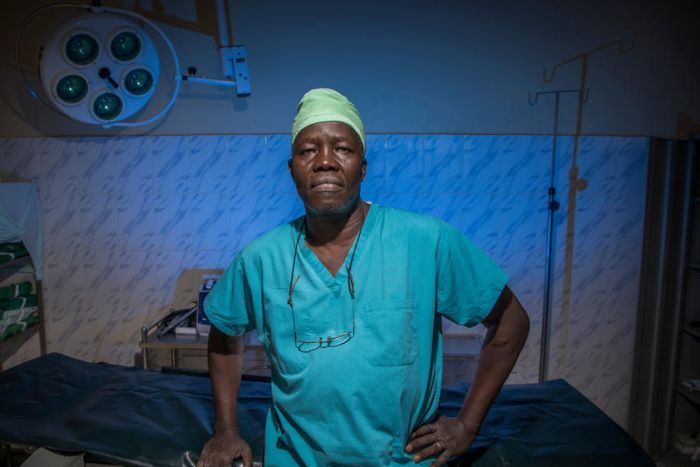
Dr. Evan Atar Adaha, who is age 52, is a surgeon and medical director at the only hospital still in operation in Bunj, north-eastern South Sudan. It serves around 200,000 people. The award is in recognition of Dr. Atar’s for his outstanding 20-year commitment in providing medical services to people forced to flee conflict.
South Sudanese Surgeon Awarded the 2018 Nansen Refugee Award Dr. Atar treats all those in need of care regardless of their background – a commitment that has earned him the respect of refugee and local people alike. His work shows the difference that one person can make, even when facing incredible odds.
surgeon and medical director Dr. Evan Atar Adah at the only hospital still in operation in Bunj, north-eastern South Sudan
Babar Baloch, a representative for UNHCR says that Adaha’s hospital is surrounded by an active conflict area. The doctor provides medical services under very dangerous conditions.
Around 58 operations each week
Baloch tells that Adaha and his medical team perform around 58 operations each week with limited supplies and equipment. He said the doctor may be called at any hour and sometimes sleeps only one hour each day.
Dr. Atar treats all those in need of care regardless of their background
Four finalists
UNHCR announced four finalists for the 2018 Nansen Refugee Award. These are individuals or organizations short-listed out of more than 450 nominees for the main award and whose work UNHCR wanted to highlight as particularly outstanding:
Samira Harnish (USA) for setting up ‘Women of the World in Salt Lake City, Utah. Her organisation has helped over 1,000 refugee women become self-reliant in the US.