The Michelin Nordic Cities Guide for 2016 was released last week and proves that Michelin Stars are shining bright in Scandinavia.
The most notable addition this year is that Michelin has handed down two new three-star awards, marking the first three-star rankings to appear in the Nordic Guide.
From Geranium restaurant in Copenhagen
Geranium in Copenhagen and Maaemo in Oslo are the first Scandinavian restaurants ever to earn three stars in the Michelin Nordic guide, making them part of the exclusive club of just 116 three-star restaurants worldwide.
From Maaemo restaurant in Oslo
In the two star category the Fäviken restaurant in Åre, Sweden jumped straight to two stars. Noma in Copenhagen remained at two stars. There were a total of 11 new one star restaurants added to the guide; five in Sweden, four in Denmark and two in Norway.
From Faviken restaurant in Aare, Sweden
The guide also included a total of 33 Bib Gourmands, which is up from 30 last year. These are restaurants 2hich “offer excellent value for money”.
Rebecca Burr, editor in chief of the Michelin Nordic Guide says, “This year’s Nordic guide is particularly exciting. We are welcoming two new three-star restaurants, and, for the first time ever, expanding our reach beyond the major cities and out into the country.”
Norwegian actor Kristofer Hivju came from nowhere – now he is Norway’s soon to be Hollywood hero.
The red carpet were rolled out when the movie about the ‘Birch legs’(The Last King) premiered in Norway last month.
The film is directed by Nils Gaup (Pathfinder, 1987 and The Kautokeino Rebellion, 2008) and set in the year 1204, telling the story of a flight that changed Norway. Two Norwegian warriors, played by Kristofer Hivju and Jakob Oftebro, escape across the mountains in order to bring the last remaining heir to the throne to safety.
From left: Kristofer Hivju, Jakob Oftebro and Paal Sverre Hagen
The Birkebeiner (birch legs) were a political-armed group in Norway between 1174 and 1218, during the period known as the Civil Wars. In its origin, it was a marginal rebel group that rose up in arms against the reign of Magnus V of Norway and his father, Erling Skakke.
They reached the throne in 1184 and were since then the most powerful group in the country until their King Haakon IV of Norway was recognized by the main opposing factor, the Bagler.
Kristofer Evju (37) has won the Oslo Championship of Rock, crashed three sail boats and was hit by depression at the age of 21. He grew up in a family, where even his father’s mother was an actor. His father, Erik Hivju, is a prominent character actor who appeared with his son in the short film Flax where Kristofer shared screenwriting credit with Bård Ivar Engelsås.
The Last King – production scene
Kristofer made his American film debut in Matthijs van Heiningen Jr.’s 2011 remake of John Carpenter’s The Thing. Next he was seen in M. Night Dhyamalan’s After Earth but he is most recognizable as fan favorite Tormund Giantsbane on HBO’s Game of Thrones.
But now Hivju jr. is of current interest with the new film, The Last King, or Birkebeinerne (The Birch Legs).
The picture above shows the coat of arms of Lillehammer. It is the only town in the world with a skier on its coat of arms.
The painting ‘Skiing Birchlegs Crossing the Mountain with the Royal Child’ by artist Knud Bergslien from 1869 is located at the Ski Museum, Holmenkollen in Oslo.
The film is based on real events and the painting is said to have had a major influence on the production design. Since the producers started casting in in 2013 to find several hundred ‘bearded, rugged men’ as well as ‘warrior women’ to star as extras, the anticipation has been high.
One Norwegian film critics states, however, that “there is too much sticky snow and that the dialogue is sometimes awkward. The film is not particularly nuanced. Evil is evil, and Birchlegs seem so good that you can almost see their glory. I had expected more depth.
The action scenes on the other hand are pretty good. Here it goes snowballed, literally. “The ski chases are masterfully portrayed. Sometimes you feel you are up on the ground, birkebeiner style”.
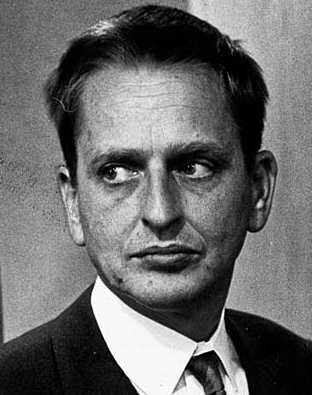
On Sunday, 28 November, it is 30 years since Sweden’s prime minister Olof Palme was assassinated in central Stockholm.
Despite Scandinavia’s economic ups and downs, an underlying sense of social wellbeing has always prevailed. This was shattered on 28 February 1986, when Sweden’s prime minister, Olof Palme, was assassinated in central Stockholm as he and his wife walked home from the cinema.
Shock and incredulity swept across Scandinavia – increasing when the police failed to find either the murderer or his gun. Palme was a politician of international standing, with strong socialist views that he did not hesitate to express. Conspiracy theories abound, with the KGB, the CIA and the Yugoslavian UDBA variously blamed, but a satisfactory explanation for the assassination has never been found.
Scandinavia was further stunned in 2003 when history appeared to repeat itself. The popular Swedish Minister for Foreign Affairs, Anna Lindh, widely tipped to be the next prime minister, was knifed while shopping in central Stockholm, and subsequently died of her wounds. Mijailo Mijalovic was eventually convicted of her killing: he blamed “voices in his head”.
Assassination Shockwaves in Sweden, written by Tor Kjolberg
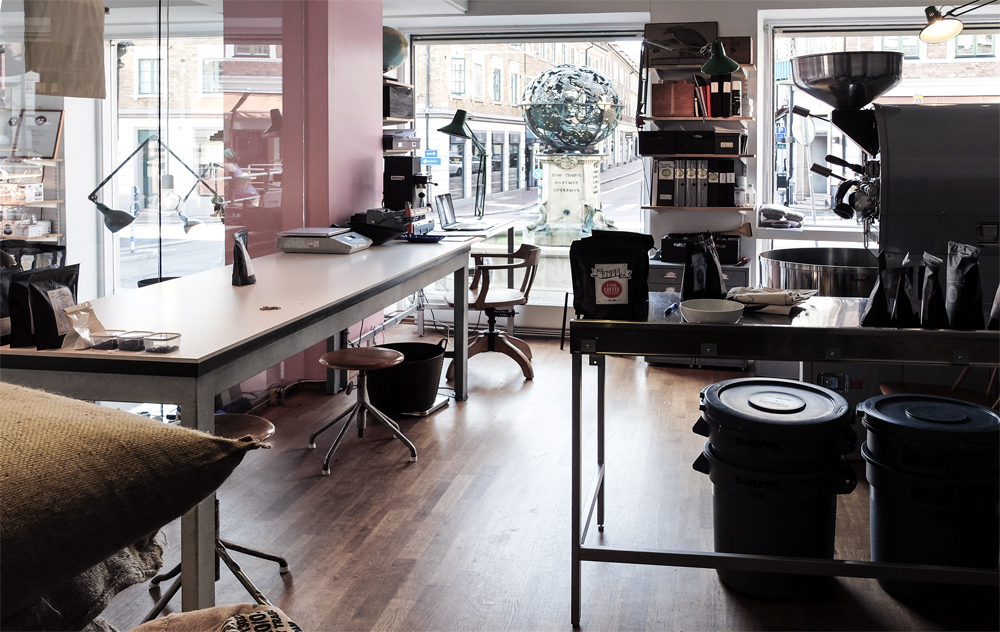
In Helsingborg, Sweden, between Gothenburg and Copenhagen, you’ll find one of Sweden’s finest coffee bars, Koppi. So, coffee lovers, look to Sweden!
The charming café has a vibrant atmosphere with a mix of on the go customers, people in the seating area socializing with friends, or catching up on work. Some are only dropping by to buy one of their eight varieties of beans.
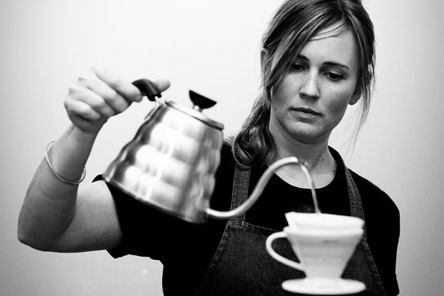
The two owners, barista champions Anne Lunell and Charles Nystrand have a taste for both great coffee and design and founded Koppi in 2007. Koppi has since then been described as the best café in Sweden with words like welcoming, pleasant, attractive, talented, world class and delicious.
“Our aim is to be one of the best roasters in the world by buying, roasting, brewing and serving coffee from the world’s best coffee producers,” they say.
Anne and Charles offer consistently delicious and surprising coffees. They work extremely hard to build direct relationships with farmers and travel to origin as often as possible.
The cafe space is unique with its large glass enclosed roaster, storage and cupping rooms. The dining space is also big, bright and contemporary, but warm and comfortable with flowers And wood paneled accent wall. The coffees are all roasted carefully to shine in their espresso and Aeropress or pour-over brews.
Anne and Charles coffee career started while they studied, working with coffee part time, and in 2005 Charles won the Swedish Barista Championship and was offered a job at a roasting company in Oslo, Norway. The following year, Anne won the same title and has been on the Swedish national team at the Nordic Barista Cup four times.
They both moved to Oslo and started their coffee careers full-time there. After two yhears they received a call from Niklas Eksted, chef and owner of Restaurant Ekstedt in Stockholm, telling them that his restaurant space in Helsingborg was for sale. They signed the contract within two weeks.
On their website they state: “We strive to buy the world’s finest coffee through as few intermediaries as possible and co-operate with small and passionate producers, who care for their crops, their co-workers and the environment.”
Nine years into the business, Koppi is now established as a popular brand due to their flavorful beans, roasted at the back of the flagship café. Buying their coffee directly from the producers or through as few distributors as possible, ensures that the producers are paid well under fair and just working conditions.
“The process of buying coffee is easier now compared to when we started,” says Anne. “We are continuously looking for unique and complex coffees that showcase the absolute best of their origin. By adjusting our roasting profile for each coffee we are able to bring out all the delicate flavors, notes and aromas that are characteristic to each varietal, processing method and origin.”
Koppi has established relationships with five producers in Costa Rica which they have been visiting for the past six years. They spend time with the families, see the progress at the farms and choose what micro-lots to buy.
A new Koppi shop will open in the brand new Malmö Saluhall in November 2016.
If you are staying in Copenhagen or Malmo, the 1 – 2 hour train ride to Helsingborg is doable in a day. Be sure to taste their sandwiches as well. It’s a total experience!
Coffee Lovers, Look to Sweden, written by Tor Kjolberg
In the Norwegian county of Telemark, traditions have been influenced by the industries that have been important there. The diet is solid; it was important that it be nourishing, and at the same time economical.
The family was a strong unit with the older and younger members together even if living in different households.
The food menu in Telemark from the last century might have looked like this:
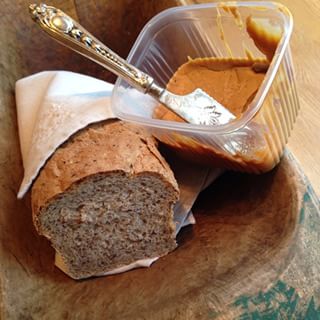
Homemade breas and prim
Morran (Morning meal):
As a rule there was oven baked bread, butter, cheese, prim (soft, sweet, brown whey-cheese) and milk on the table – alternatively kalvesuss (a dish consisting of head, feet and entrails from calf, cooked in milk), hot potatoes and coffee.
Fried ham and sauce
Medda (Midday meal):
Often meat, pork and vegetables, flat bread and milk gruel with barley. Other variants were fried sausage and bacon with duppe (sauce) or fresh herring, buttermilk porridge or milk porridge. Dessert was often saftsuppe (juice soup).
Herring and potatoes
Kveldsmat (Evening meal):
Milk porridge, beer cheese, water porridge of barley flour with sour or sweet milk. Potato porridge with milk, salt herring and potatoes or cold porridge with boiled milk.
On festive occasions grandparents were always guests, although they on a daily basis tended to themselves and stayed in the kårstue (cottage in which the retired farmer lived). Similarly, the young would arrive as guests in the cottage, or go there when they needed help from the more experienced elders.
Tveitenstua. Telemark museum
The inhabitants of Telemark are generous and good people who know how to care for the old and to keep ancient traditions alive.
Food Traditions in Telemark County, written by Tor Kjolberg
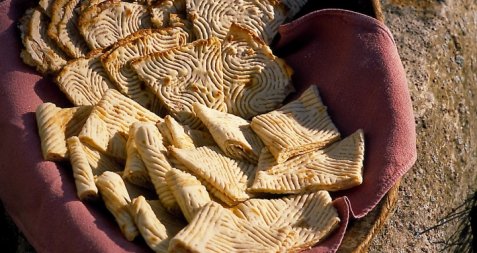
Lefsekling from Telemark
Ingredients
5 dl (2 cups) full fat milk
3 tablespoons margarine
500 g (8¼ dl, 3½ cups) flour
Directions
Bring milkand margarine to a boil.
Pour over the flour.
Stir to make a thick porridge.
Cover and refrigerate overnight.
Knead in flourto make a pliable dough.
Divide the dough into pieces of equal size.
Roll out into thin sheets and cook on a griddle , rolled side down.
Immediately as the lefse are placed on the griddle, sprinkle with lukewarm water.
Cook until light brown on both sides with small golden bubbles and crisp.
Store in a dark, cool place.
These keep well.
Soften in a damp cloth.
Spread with butterand sprinkle with sugar if served with coffee.
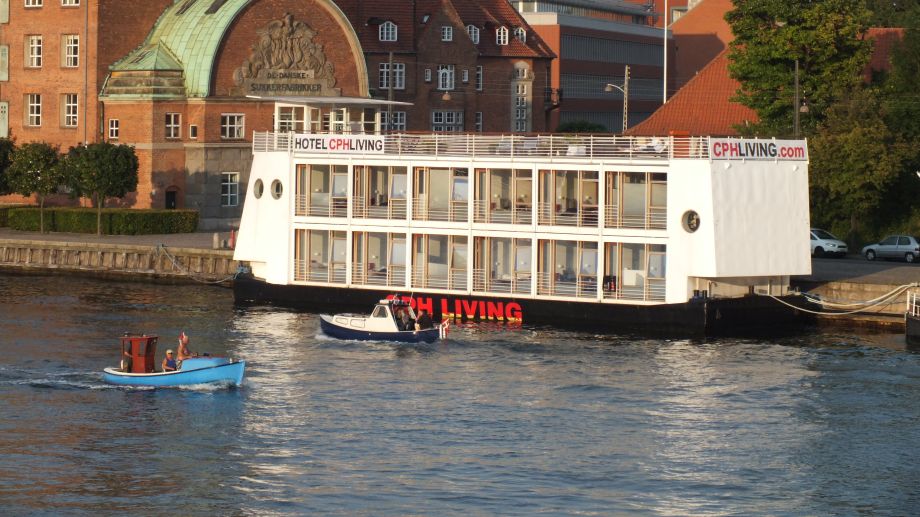
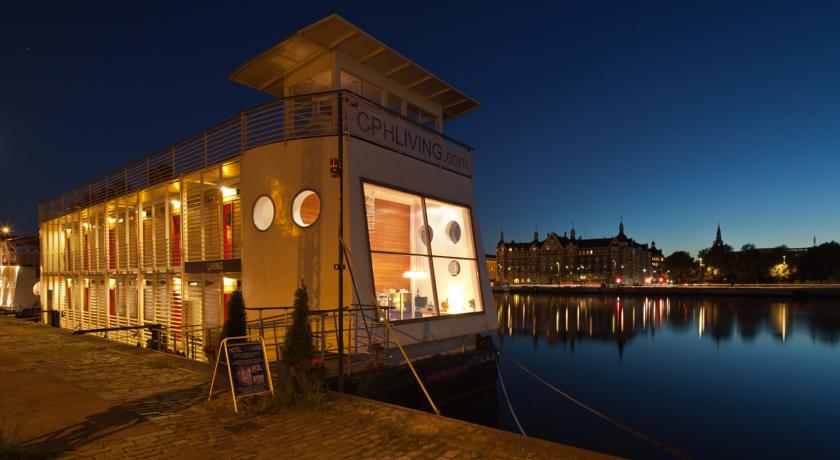
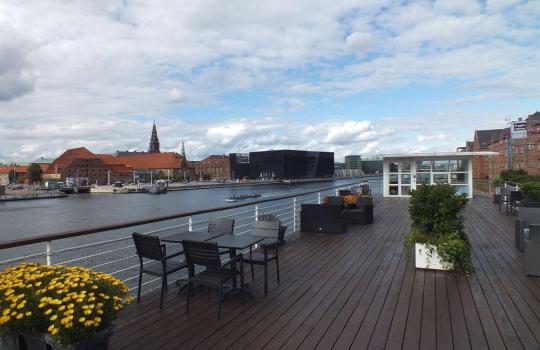
Next time you’re in Copenhagen, why not stay in an original barge in the middle of the busy metropolis?
CPH Living is perhaps one of the quirkiest hotels in Copenhagen. It was originally a barge built in Germany. The barge was towed from Germany to Poland, where it was extended by several meters. Then it was towed to the Loksa shipyhard in Estonia, where the rooms and the rest of the hotel were constructed.
In the spring of 2008 the boat was placed at its current position at the quay in Copenhagen’s city center, and officially opened as a hotel in 2009. This is the only ‘boat-el’ in Copenhagen, and you will be staying close to the heart of things, since the barge is moored in trendy Christianshavn, and offers guests a simple yet amazingly unique design experience.
Christianhavn itself is an intriguing mix of local hipsters, Greenlanders hanging out on the island’s main square and the denizens of Free Town Christiania. Spend a day there and explore the streets and squares.
A 10 minutes stroll takes you to the arty Islands Brygge and stock up on the great bread and pastries at Wulff + Konstali Food Shop, or continue for another few minutes to either Food Shop No 26 or Emmery’s, which both do scrumptious breakfast and really decent coffee.
There’s a breakfast buffet and vending machines for drinks and snacks on board the boat, but we recommend you to take the stroll.
There’s a breakfast buffet and vending machines for drinks and snacks, but if you really need good coffee (which can be hard to find in the city), and some fine baked goods.
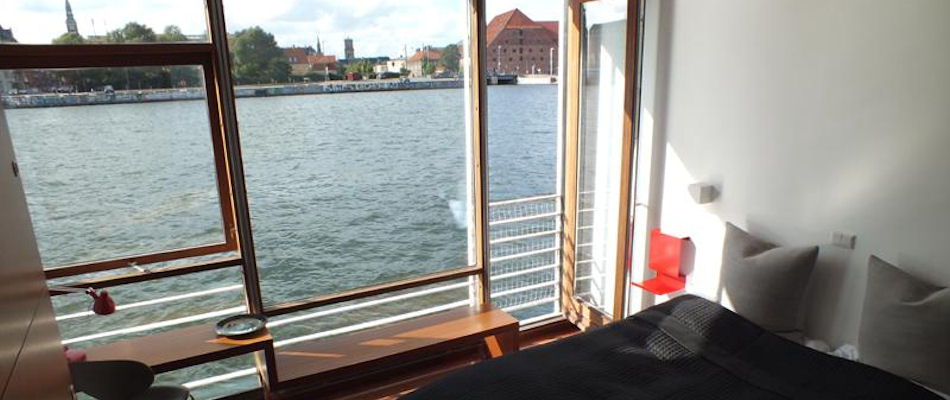
Denmark’s first floating hotel is privately owned by Lasse, Marianne and Michael, who run the hotel as a part of their family business. There are 12 minimalistic designed rooms that all are boasting of panorama river- and city views. However, the most striking part of this hotel is perhaps its sundeck, which invites guests to enjoy fresh air and sunshine from the unique rooftop terrace with seating and sun loungers.
Floating Hotel in Copenhagen, written by Tor Kjolberg
The Government Quarter in Oslo was one of the targets in the 22 July 2011 terrorist attacks, where nine people were killed by a bomb blast in the area.
After the attack the Government decided that the Norwegian ministries should be situated together in and around the present government quarter. The aim is to create inspirational workplaces in an attentively designed urban zone.
Around 100 architects, designers, and consultants from Norway and abroad have developed designs in a competition for the new Oslo Government Quarter. The intent of the competition has been to generate viable solutions for the relocation of the ministries, excluding the defense ministry. The emphasis should be on urban atmosphere and public elements.
Y-block with Picasso decorated facade
The H-block (1958) and the Y-block (1969), designed by Erling Viksjø, are key works of modernist architecture in Norway. The high-rise building and the Y-shaped building form a unified ensemble, symbolizing the growth and inventiveness of Norwegian post-war period. The Y-block is also famous for its two major designs by Pablo Picasso.
‘The Seagull’ decorates the wall of the lobby, while ‘The Fishermen’ in the main façade has become an iconic part of the Oslo cityscape.
Asplan proposal: Sleak towers
The decision to maintain an amalgamated government quarter was recommended from a security point of view as well as contributing to efficient interaction and short distance between the ministries and the parliament – the Storting. The high rise building, housing the Prime Minister’s Office and the Ministry of Justice had the greatest need for rehabilitation after the damage caused by the bomb.
Bjaerke-Ingels Group proposal: Three pyramids
Done right, Oslo has the opportunity to be on the absolute front edge of sustainable urban development, with a dense city center, beautiful open urban spaces and an attractive workplace. A ten-member committee of industry professionals has been appointed to assist Statsbygg, the public construction advisers collaborating on the government’s behalf.
LPO: 2011 Memorial Space
After initial discussions, including a proposal to build a new Government Quarter on a more remote site for security reasons, the Norwegian Cabinet decided to redevelop the existing area but to demolish the Y-shaped building, since a part of it is situated over a road that is a real security threat.
It has been decided that the high rise building, the tallest building, will be standing. Architects have presented different solutions, some pointing out a myriad of facilities for social gathering. Collaboration and exchanging of ideas are encompassed within the proposal zone.
White proposal: Open up the complex
One suggestion was to build three climbing towers, housing the administrative functions and reorganize the site for improved accessibility. At the ground level, the structures should maintain a public element through the intersection of open urban spaces. The three towers should consist of varying heights, the tallest reaching 105 meters.
The Society for the Preservation of Norwegian Ancient Monimenthas (Fortidsminneforeningen) ran an intensive campaign to save the Y-block, receiving support of a number of prominent organizations and individuals from Norway, as well as ICOMOS, and has nominated it for ‘The 7 Most Endagered’ program 2016.
The urban area within the city center is populated by over 6000 members of the government staff.
Minister of Local Government and Modernization, Jan Tore Sanner, has clarified that a mixture of features from the submitted proposals will be realized in the next stages of development.
What now, Oslo?
Feature image (on top): Government Square, as proposed by White architects.
IN 1979 WHEN BO LENANDER DIVED into a very small lake in the mountains of Jämtland in Sweden there was no Wikipedia to describe what he was doing and the “black space” he documented with his analog camera did not reveal its inner secrets.
The black space was forgotten until the summer of 1997 when some intrepid divers attempted to uncover its murky secrets, only to be beaten by strong currents, leaving the small lake quiet and undisturbed for another ten years.
The original photo of the cave from 1979, taken by Bo Lenander.
A new generation of cave divers took up the exploration in 2008. Now able to dive in the winter time, when the currents were more forgiving, they sawed a hole in the thick ice which finally revealed the black space from Bo Lenander’s photo. After relentless digging through the dirt and shifting heavy sands, they finally entered the void.
The entrance of the cave where all the divers go in to the unknown depths.
EVERY SPELEOLOGISTS* DREAM is to discover something no one has ever seen before. What the divers in Bjurälven discovered in 2008 is still only partially known – they’re far from the end. What has been revealed though is that Bo’s analog photo from 1979 shows the entrance to what is now Sweden’s biggest under water cave system.
“Why? Well… I think our drive is similar to other explorers’: We want to see something new. And the special thing with cave diving is that we can’t just take a look at Google Earth and get a pretty good idea about what we will find, like climbers and alpinists. We actually have to swim there and take a look. Every meter is… totally new, to everyone. That feeling, where every stroke with your fins brings you into something that no one has seen before, is a magic one.”
Oscar is getting ready to enter the cold water
Oscar Svensson loves what many people would describe as a claustrophobic nightmare. The eagerness in his voice when he’s talking about squeezing through a tight hole, hours of diving into the cave system, is special.
“No one can know what’s behind the next corner. We learn more and more about reading the caves. But then, when you thought you had a good idea about what will come next, something totally different will happen. The smallest opening can be the entrance to the widest part of the cave. It never gets boring. For me just seeing something new is wonderful, but exploring something that is new to everyone puts the experience on a different level.”
Dimitri: Since the caves most of the time are very narrov, the divers must hold their air cylinders by hand
Many would say this is just an extra level of scariness. And it’s not hard to imagine that something could go wrong.
Totally unexpected, a big cave in the underground system
“There are dangers, of course. The biggest fear is a leaking dry suit as the water is only fractionally above freezing. To get back from the far end of what we have now discovered takes about two hours. It’s always cold down there, but a leaking suit would be… too cold.”
“EVERY NEW ENTRANCE in the system is surrounded by potential dangers so you need to think about safety that little bit longer. But everyone in this group is aware of what we’re doing, we always carry backup tubes and equipment, and backups for the backups etc and we all know that the best safety comes from keeping a level head. But of course, if something goes really wrong, you’re not exactly in the best place…”
Oscar sounds calmer and more focused when talking about the safety aspects of exploring under water caves. Which is probably the best combination – a will to explore, but enough cool to not rush and to think through the consequences. But what is the dream? What is the ultimate discovery?
“Last winter we discovered a part of the cave that was bigger than anything else we have encountered in earlier expeditions. That was a highlight for sure as it is about seven meters wide and three meters high. We named it Broadway as that’s how it felt to us after swimming and pushing through tight caves for hundreds and hundreds of meters.
Not far beyond that we reached a big cave which was impassable. We were forced to swim back through smaller tunnels – thirty to forty centimeters high – to find a way around it. There’s not much room to wiggle around, but enough to get through. In the end we could only find an opening which was too tight to squeeze through. We started digging to push through on the last day of the expedition, but we were forced to turn back.”
WHERE IS THE END, and what is an end? The Bjurälven cave system is full of smaller and bigger openings, dead ends, tight holes and parallel tunnels – an almost endless task for the patient group of divers. But do they really want to find everything? Do they wish to reach the other side?
“Just like a climber, we want to reach the top. Which in our case is where Bjurälven “disappears” into the ground about three kilometers upstream from where we enter the cave. As a bird flies, that is. As a cave goes, it could be double, or triple. At the end of the 2015 expedition we had mapped almost two kilometers of the cave, which is a lot, but very far from close to the other side.”
When Oscar starts talking about the 2016 expedition the tempo once again picks up. He speaks with the voice of an excited explorer, eager to peek around the next corner. Push through to where no human being has ever been before.
*) Speleology (also spelled spelæology or spelaeology) is the scientific study of caves and other karst features, their make-up, structure, physical properties, history, life forms, and the processes by which they form (speleogenesis) and change over time (speleomorphology). (Wikipedia)
In the spring of 2015 Daniel Maudal, a student of marketing and leadership at Agder University in Kristiansand, Norway, was reading his local paper. In it he found a page titled ‘My Mandal’ that showed pictures of different venues and attractions in that area.
“Why not share beautiful pictures from all of Norway on the Internet?” Maudal thought. He checked if the domain name was available – and it was, and then began collecting images from professional photographers as well as amateurs who wanted to share their pictures. In a short time Maudal had an impressive collection of images showcasing Norwegian destinations and beautiful Norwegian nature.
Daniel Maudal
As a result of the high number of visitors to Mitt Norge, a former co-student of Daniels, Nicolay Reinhartsen, asked if Daniel had thought of commercializing the site, and soon the two were discussing this possibility. “Mitt Norge” (My Norway) was established, and today they are also offering workshops in how to use social media in marketing.
Mitt Norge has grown exponentially, attracting worldwide visitors, 65% of whom are Norwegians. It has turned out to be an enormous traffic building site for operators in the tourism business, as a result of Instagram.
The model is Såmund Botnen. You may read the story behind the picture here. (In Norwegian only)
Modell: Såmund Botnen
The Mitt Norge site is the fastest growing landscape based profile in Norway with over 10,000 followers each week, thus creating social influence and social value. “Social value is all about the potential of being present in social media.
“The more followers and deep relationships that you have, the more value. It’s better to have 1,000 loyal followers than one million unconcerned,” says Reinhartsen.
in the last few years social media has been a necessary part of the marketing mix in most businesses, and not least in the travel segment.
The challenge for many companies is that they have unidentified targets, too little understanding of how to utilize this new media and therefore need advice. Social media has become the most dynamic media today and requires regular updating. An understanding of social media is important.
Nicolay Reinhartsen. Photo: Tor Kjolberg
“Marketers must have courage enough to search for media in the sunrise,” says Nicolay Reinhartsen. “Don’t only trust media with large numbers. Your ability to change is very important. Guaranteed, new media channels will enter into the market place,” he adds.
Mitt Norge has already become a serious voice in the Norwegian travel business and now that Mitt Norge and Daily Scandinavian have partnered, a new chapter has been written in the future of tourism and the travel business – all over Scandinavia.
The Danes are generally warm, witty and welcoming. But they can also be cool and reserved. It depends where you meet them.
Danes have two reputations in the world, one at home and another abroad. Outside their homeland, Danes are known as warm, curious, friendly, funny and charming. In their modest way, Danish travelers bring on laughs and a sense of pure enjoyment for life.
They try not to act too offended when, outside Europe people ask: “Is Denmark the capital of Sweden?” or “What language do you speak- Dutch?”
A short, firm geography lesson is given on the spot, but modesty usually prevents the Dane from pointing out that Denmark is the oldest monarchy in the world, dating from AD 935.
At home, Danes are seen by foreign visitors as distant, sombre, even cold. They keep to themselves. Danes blame this image on the wet, cool climate. “Not much of our social life happens on the pavements or out in front of the home,” says Kjær Nielsen, a teacher. “We spend much of our time indoors with our families and friends.”
Cosiness prevails Inside this thin barrier of social contact, Denmark is one of the warmest countries in the world. People are genuine. They speak their minds. They thrive on making life cozy, relaxing and enjoyable – from festive occasions to mundane coffee breaks.
Cafes ar Vadestedet, Aarhus
This is what Danish hygge is all about. Hygge (pronounced whoo-guh) stands for any and every sense of coziness, and it is found everywhere in Denmark. A good meal has hygge, a house can have hygge, a story, a walk in the woods, a meeting at a café, even a person can have hygge.
Party in 19th century Denmark. Painting by Peder Severin Kroyer
Parties for weddings, birthdays, anniversaries and the like have hygge at their core. Tables are decorated with flowers and candles and creatively folded napkins. A three course meal is usually interspersed with songs and speeches, which end in a collective “Hurrah!” Wine flows freely. As the Danish poet and troubadour Benny Andersen wrote in a song well known among Danes: “One must keep the mood wet. I’m drink and I’m feeling great.”
Six hours into such a celebration and filled with spirits, a partygoer has a chance to get up from the table, dance a bit, then fetch some coffee and cookies and sit down again. Later, the host serves the final course, called “get out food”, and guests gradually take the hint.
Winter in Denmark
Hygge was born, no doubt, indoors during the grey winter months. From November to February, Danes go to work in darkness and return home in darkness. Warm candlelight fills flats, homes and offices in natural defense. During Jul (Christmas), live candles decorate Christmas trees indoors, around which families join hands and sing carols.
Local ferries light up the black water with strings of white lights. On New Year’s Eve, the Queen gives her annual talk to the nation on television, and fireworks spark and pop, lighting up the midnight sky.
Springtime in Denmark
A whiff of spring By February winter seems to drag on forever. In his essay, Oh! To the Danish, the author Klaus Rifbjerg writes of this time: “Sure, it can be grim, and now and then we might want to turn our collar up and jump in the river. But then the light suddenly changes and there’s a melody in the air, a whiff of spring to come, the smell of the sea and a blackbird singing on a rooftop.”
Fields of fluorescent yellow winter rape blossom in May, and the days grow longer, In spring and summer, urban Danes cycle out to their garden houses on the edge of town, and rural Danes collect dead braches and greenery into huge piles on the beaches and in the countryside.
Summer house in Denmark
On the evening of 23 June, Midsummer’s Eve, those piles of wood are topped with an effigy of witch and set on fire to drive bad spirits from the land. In July, nearly the whole country goes on holiday for three weeks. Barbecues are lit and bathing suits donned.
Autumn in Denmark
By late summer, farmer’s tractors haul grain and hay, holding ip traffic. Towns hold harvest festivals, children start school and families hunt for mushrooms and berries in the forests. People complain about the diminishing light and increasing rain, and soon temperatures can drop as low the sea freezes solid.
So the Danes light a candle, make some hygge with hot cooca and buns, and look forward to Jul again. A sense of Danish togetherness can be felt in society as well, starting with the generous welfare system. Social benefits are high, workers’ unions are strong, and the cooperative spirit prevails. Only four out of 100 Danes do not belong to an association.
“We have a joke that if two Danes sit together for five minutes, they start an association,” says Kjær Nielsen.
Nursing home in Denmark
Equality for all Denmark is an egalitarian country with a high standard of living where, as the Danes themselves say, “Few have too much and fewer has too little.” The welfare system gives everyone the same opportunities; free health service, education, support for the elderly and handicapped, unemployment benefits, pensions and more. The system carries a price; goods and services are taxed at 25 percent, and 50-70 percent of income is taxed.
Welfare equality carries through to social mores. Everyone is on first-name terms, the formal address, De, being reserved mainly for the Queen. Dress is casual and a tie in the workplace is rare.
Language More than 100 dialects are spoken in Denmark. Come vary greatly. People in south Jutland are hardly understood by the residents of Copenhagen.
Danish challenges But this idyllic-sounding vision of coziness and cooperation does have its darker side. During the 1980s, a wave of refugees shook up the homogeneity of this little Scandinavian country – threatening, perhaps, that all-important feeling of hygge. Denmark was unprepared, and immigration became a huge and emotive domestic issue – and today more than ever.
Immigration minister Inger Stoejberg, speaks in the Danish Parliament
Being a Dane today therefore involves a great deal of soul-searching on the subjects of tolerance, integration and immigration. The country came under intense criticism in 2005, after the newspaper Jylland-Posten published cartoons that caused offence across the Islamic world. Danes were polarized. Some turned to the far-right, anti-immigration Danish People’s Party to represent their hardening attitudes while others cleaved to their belief in an egalitarian society for all.
The 2008 economic crisis and a consequent spike in unemployment rates did not help the tense immigration question, but the country rolled with the punches, and in 2011 it had one of the strongest economies in Europe.
The government, however, is still looking around for ways to ease the financial burden. Danes are justly proud of their welfare safety net, and are still happy to pay high taxes to support it, but the system’s costs and benefits are another of the country’s major preoccupations. In June 2010, the government halved the country’s four-year unemployment benefits period to claw back some cash. Last month the government voted in favor of a law, forcing asylum-seekers to hand over any valuables to help cover their housing and food costs while their cases are being processed. This way it hopes to diminish Denmark’s appeal to migrants.
The system is still very supportive of women, though. Maternity and paternity leave is generous, the family is all-important in Denmark, and Danish men play a large part in raising their children.