Michael Booth on Sweden

0

Are the Swedes different from the Danes or the Norwegians? In his book «The Almost Nearly Perfect People» British author and journalist Michael Booth wonders what the Scandinavians really are like. Here are excerpts from his book, published by kind permission of the author. Michael Booth on Sweden.

Writing about what the three Scandinavian tribes really think of each other is a bit like discussing someone else’s marriage – you never really know how one feels about the other, deep down, how they talk to each other when they are taking their make-up off and brushing their teeth at the end of the evening. I only know how Danes, Swedes and Norwegians talk to an Englishman about each other, and it has to be said that the main topic of conversation on that front is how annoying the Swedes are. None of their neighbors seem to like Swedes very much. Historic enmities still simmer, resentments linger, the Swedes still have a habit of getting up people’s noses. The Swedes meanwhile, tend to remain aloof to the regional resentment.
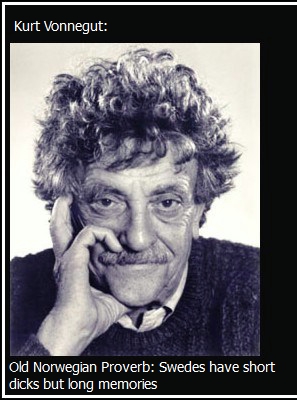
100615-norwegians-about-the-swedes-Kurt-Vonnegut_Fotor
“We really like the Danes, they are lovely people,” Åke Daun told me. “There are Danish characterizations of the Swedes, saying we are more efficient and hard-working, more serious and so on, while we think the Danes are charming, warm. Lovely, a little chaotic. We envy their lack of alcohol restrictions.”

“Tha Danes have always been seen as the more easygoing, cosmopolitan, less working, more drinking, more frivolous people; less, shall we say, industrious than Swedes,” Jonsson, the multiculturalism expert from Stockholm University told me. “We go to Copenhagen to breath Europe, to have a beer. It’s looser, freer, more European, and you also have this more open attitude to drugs and alcohol, but more recently people are shaking their heads that Denmark has become a fascist country, at war with Islam, extremely eager to send aircraft to bomb Libya.”
100615-denmark__sweden_and_norway_by_jennimakemake
Leaving aside the notion of Danes really ‘knowing how to have a good time’ (clearly he has never spent an afternoon on a sports hall in Slagelse watching a women’s handball matrch – neither have I, actually, but the though…), Jonsson, Daun and many of the Swedes I spoke to seemed oddly obvious to how disliked the Swedes are. I suspect they might be taken aback by the extent to which the Danes bad-.mouth them to anyone who’ll listen.

“They are so stiff and boring,” is the common Danish description of the Swedes, ‘and they don’t know how to handle their beer.’  They didn’t win back Skåne,’ one Danish friend told me, referring to the stroll traumatic (to the Danes, at least) year of 1658 when the Swedes wrestled the Danes’ southern province from them. ‘We granted them their freedom.’ (I once heard a Danish radio talk show in which the host only half-jokingly suggested that Sweden’s traditional August crayfish party season would be a good time to reinvade the south and take back their former territory.)

100615-danish-beerdrinker
I asked Henrik Berggren about Swedish-Danisk relations, pointing out that Swedes could afford to remain aloof from the Nordic trash-talk as they have, but just about every measurement, ended up richer, and more successful than their neighbours.

“Yes, we were the winners,” he agreed. “The big brother, definitely. But there is more animosity in it than we understand at first. When I was growing up we had a very positive view of the Danes and Denmark. They were like us – welfare state, modern – but by God they were a lot more fun than us. Danish women! Christiania! Smoking hash! I think a lot of Swedes felt like the Danes had it all, plus a bit more joie de vivre. But with this whole Danish anti-immigrant thing the perception of Denmark has changed drastically into “God, we don’t understand this. Where did this come from?” And it’s kind of funny because I think it’s kindled a kind of Swedish nationalism in a sense that before we felt a bit inferior to the Danes, but suddenly now we can get on a moral high horse.”
100615-swedes_attack_by_zabdyr
And boy don’t the Danes know it: they are mightily tired of the Swede’s sanctimony towards their immigration policy and their condescension regarding the rise of the anti-Islamist Danish People’s Party. Tee Swedes haven’t just got on their high horse over what they perceive as Danish racism and xenophobia, they are standing on its back, riding round the circus ring juggling fire and playing kazoos. Oh, how long they have waited to repay all the slights about their Nazi past and ‘cowardly’ neutrality, the jokes about the hairnets and the armament sales. And they have seized their chance.

In truth though, if we can set aside the typical younger brother resentment of a patronizing older sibling, the Danes don’t have very much reason to resent the Swedes, and neither do the Norwegians, who certainly those days have enough money to rise above ancient bitterness. They probably do have grounds for anger, but guys, I think it’s time to move on. For all the moaning about the Swedes, I remain convinced that there is greater fellow feeling up here in the North than between any of the other countries in Europe. I am not aware of much grudging affection emanating from the Belgians towards the French, for instance, or from the Swiss towards the Italians, do you? For all the bickering, the Nordic region is hardly likely to go the way of the Balkans. As Stefan Jonsson pointed out to me when I got a little carried away on the subject of inter-Scandinavian rivalry, “This isn’t Israel-Palestine, you know.”

100615-sweden_welfare
The fact that the Swedes have appeared fallible in recent years ought to have helped temper neighborly jealousies a little. They are facing similar problems to the Danes in terms of having to curb their welfare state and keep their provinces from dying a slow death, and have even greater challenges in the areas of integration and globalization.  The truth is that the great Swedish social democratic adventure hit the buffers a couple of decades ago when the country’s economy tanked and the then government introduced quite radical privatization programs, reduced taxes and began to tackle the welfare state. Yet the rest of the world has still not really cottoned on how much Sweden has changes – in the US, right-learning politicians still cite Swedish society as an example of socialist extremism when really it is no such thing. The Sweden we came to know and politely admire while secretly being glad we didn’t live there, is, these days, an uncertain place in a state of political flux.

According to Stefan Jonsson, his country has reached a crucial crossroads. “There is huge confusion in Sweden. I think it is a society on the edge of cracking up. Mentally it is disintegrating, questioning what it is. Questioning social democracy. Many are now wondering what to salvage, whether this is sustainable, and what will come if it is not sustainable.”

100615-swedes
This sounds dramatic – we are still talking about Sweden here, after all – but to pluck out one sobering statistic, as I write Sweden’s ratio if tax revenue to GDP is 47.9 percent – the fourth highest in the world (with Denmark third). To give you an idea of what kind of an indicator this is of the economic well-being of a country, Zimbabwe is second and Kiribati first.

“I am not optimistic for Sweden,” agrees Ulf Nilson. “We have to open up this rigid system; the welfare state is too bureaucratic. Too many people are invested in the system. Tax strategy is the obvious key to it all. I live in France and there, if I earned 100,000 kroner a month, they take maybe 30,000 of it. Here they take 50,000, but there is no doubt that French healthcare is better. So are we being taken for a ride? Yeah, we are being taken for a ride. The fact that we have thousands of people who could work living on the dole is of course not good. That dependence system is no good. I have left Sweden and become a millionaire by work. You could never do that here. I feel I have escaped, I was lucky.”

100615-leaving-sweden-banner
As always, Henrik Berggren remains a lone voice of optimism: “The system is doing rather well. I’ve lived through all these prognoses that it isn’t going to work because people aren’t motivated to work, and so on. Do you see a society decaying around you? Be honest. We might be a bit rude, but….”

One deeper issue did trouble me about Sweden’s long-term prospects: in rejecting their Lutheran principles to embrace consumerism and the various temptations of the modern world, had the Swedes perhaps thrown the puritanical baby out with the globalization bath water? Put differently, consider all those old agrarian principles of self-sufficiency, caution, modesty, equality and parsimony, the instinctive urge to compromise, to cooperate and share – the very characteristics that laid the foundations for the Social Democratic experiment. Are these characteristics not inevitably, fatally eroded by increased wealth, consumerism, globalization and urbanization? Is the country’s great modern, urban experiment not destabilizing the very foundation on which that modernity was constructed?

100615-Typical-swedes
Åke Daun answered this with the breezy “Oh yes, I think so, yes” of an elderly man who has seen it all before and has resigned himself to the world going to the dogs.

Andrew Brown appeared to agree to: “Whether prosperity can survive without the memories and disciplines of poverty is a question I don’t know the answer to.” In his book Fishing in Utopia Brown points to the marked rise in crime in Sweden since the 1970s, in particular rape (in recent years Sweden has seen the highest number of reported rapes per capita in Europe); to the McDonald’s fever sweeping the country with the result that he begins to notice obese people in the streets of Stockholm for the first time; to the changing media landscape (“A generation of flamboyant gangsters and businessmen, not always easy to tell apart, moved through the newspapers”);  to a new openness about alcohol, symbolized by the slick rebranding of Absolut Vodka, once a resolutely unglamorous state-owned alcohol producer (‘Drunkenness came back into fashion”), not to mention the loss of two-fifths of industrial jobs since the mid-seventies. All, he says, are signifiers of a country which is, essentially, making one final circumnavigation of the plughole.

100615-absolute-dislexia
I don’t believe this is the case, but Sweden does appear to be sitting on a demographic time bomb. It is the only country in the world in which people over eighty years old make up over 5 per cent of the population (the global average is 1 per cent). Almost 20 per cent of Swedes are over sixty-five, making Sweden the oldest country in Scandinavia, and the eighth oldest in the world. The World Bank predicts that by 2040 a third of Swedes will be over retirement age. But Sweden, as you would expect, is well prepared (unlike, say, Italy, which is truly screwed in this regard). It has a highly developed state pension system which is expected to be able to cope with future demographic challenges; the IMF ranked Sweden seventh globally for its current elderly care and its future preparedness in terms of looking after an aging population.

In the final analysis, perhaps we shouldn’t be so worried about Sweden. As Henrik Berggren pointed out, people have been writing off his homeland since the seventies, and even after the early nineties, when the Swedish model did appear to have been fatally undermined by its economic imbalance, it recovered quickly and strongly. Sweden still has one of the highest-achieving economies in the world chiefly because it overhauled the old Democratic structures and transformed itself into a rather unique type of mixed economy, and introduced both some marked liberal economic tendencies and strict fiscal and banking controls.

100-year-old Swedish twins Gunhild Gaellstedt (L) and Siri Ivarsson (R) with a cake from the "Twinregistry" as they holds their long lifes first pressconference in their home in Stockholm 28 January 2005. The birthday is on Sunday 30 January. The two are the oldest twins in Sweden that according to the Twinregistry, counts to 86 000 couples. The two manage their daily life without a permanent assistance. They will celebrate their 100th birthday on 30 January 2005.

So Sweden is probably safe economically for the time being. Politically it has endured the assassination of its prime minister and its foreign minister (the latter, Anne Lindh, was stabbed to death in a Stockholm department store in 2003; as it happened the day after I had visited). But how resilient is it culturally? One thing that often surprised me during my travels in Sweden was the dismissive attitude of many Swedes I spoke to about their country’s cultural output. I’ve always thought of Sweden as being home to heavy hitters like Strindberg and Bergman, as well as all those massively popular authors like Astrid Lindgren, Henning Mankell and of course Stieg Larsson. From Jenny Lind, the Swedish nightingale on whom Hans Christian Andersen doted, to ABBA and Robyn, Sweden has also sent forth great popular singers and songwriters into a grateful world.
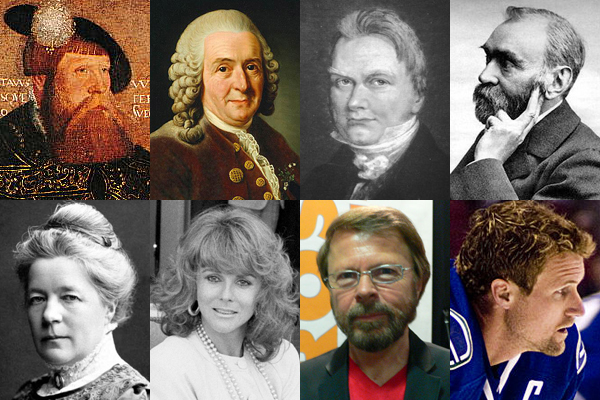
100615-famous-swedish-people
Nevertheless, comments such as this from Åke Daun were not untypical: “Culture is not a big thing in Sweden. We are technically creative, not artistically.” He suggested that Sweden’s self-image was more invested in being a successful manufacturer of ball bearings, zippers and safety matches.

“It’s true, you run out after Bergman and Strindberg,” agreed Stefan Jonsson. “Culturally and intellectually the international contribution of Sweden is quite limited, but the typical Swedish intellectual believes the country is big enough for him to have a career, and not so small that he feels he needs to go outside and bring things in. It’s the tragedy of being a mid-sized country.”

100615-swedish-safety-matches

When I tentatively mentioned the country’s paucity of cultural titans to Henrik Berggren, he reacted with his customary patriotic vigor.

From what objective standpoint are you saying this? That sounds rather typically British, to be honest, a rather snotty British attitude to the world: ‘I can sit on my island and I can judge all cultures…’”

Oh dear. Honestly, Henrik, that’s not what I meant.

Though, you are right, I probably am a snotty Brit.

You might laso like to read:

A Literary Masterpiece About the 22nd July Massacre in Norway

The Nearly Almost Perfect People

Danish Bacon

Michael Booth on Scandinavia

Egoiste from Norway

Positive Trend for Norwegian Salmon

0

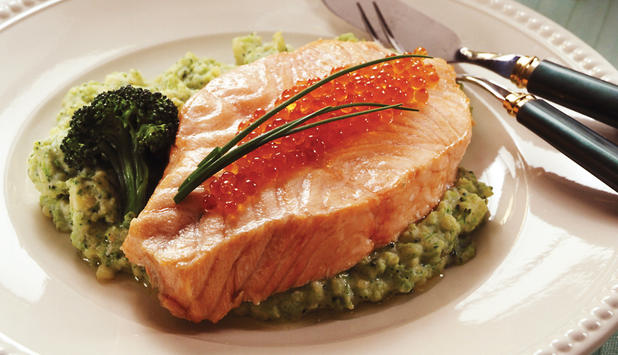
Norway exported salmon worth NOK 3.5 billion in May. This is the same value as in May 2014, according to analysis from the Norwegian Seafood Council.

Salmon from Norway is in a class by itself among international consumers, according to the latest statistics from the Seafood Council. “Salmon has its natural place in the future,” according to physician, professor and EAT-advisor Alessandro R. Demaio.

IMG0034.PCD;1
”The salmon market has developed broadly as expected following the exclusion of Norwegian salmon to the Russian market”, says Bjørn-Erik Stabell, Marketing Manager for Salmon at the Norwegian Seafood Council.

The annual global consumer research conducted by the Seafood Council shows that the public opinion of Norwegian salmon has improved from 64 to 69point in the course of only one year. More than three times of consumers prefer Norwegian salmon compared to salmon from Alaska, which has a good number two ranking.

”Exports to Eastern Europe have returned, increasing exports to core markets within the EU. Particularly pleasing is the positive development of the largest export market France. This is a market that has seen a negative trend in recent years, but that trend has now reversed”, observes Stabell.

“The world looks to the North when it comes to food, which gives food producers from these countries advantages on international markets. At the same time it is evident that the rest of the world cannot eat the way you do in the north. We have to change to a more vegetarian based diet and supplement with fish and poultry instead of red meat,» says Allessandro R. Demaio.

090615-Norwegian-salmon
84.739 tons of salmon were exported in May, an increase of 4 per cent compared with the same period last year.

So far this year, salmon exports have been worth NOK 18.1 billion. This is NOK 97 million more than during the same period in 2014. Export volumes so far this year, in total 408.000 tons, an increase of 7 per cent year-on-year.

090615-salmon_steak-daily-scandinavian
Last year the international fish farming group Cermaq, with head office in Oslo, were purchased by the Japanese Mitsubishi Corporation. The director of the board, Yu Sato, confirms that the organization’s sustainable profile was a decisive motivation for the acquisition.

Positive Trend for Norwegian Salmon, written by Tor Kjolberg

Scandinavia’s Largest Waterpark

0

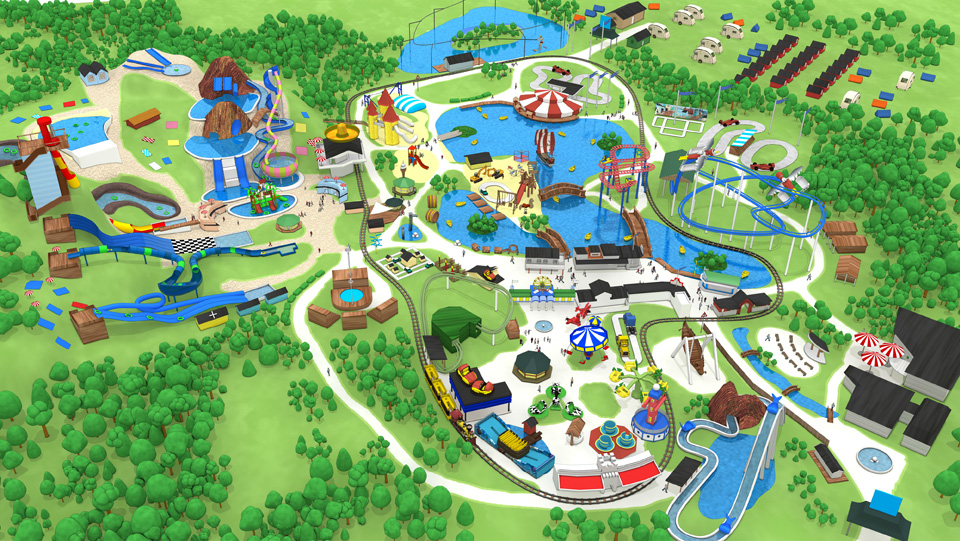
Skara Sommarland is sandwiched approximately halfway between the other two big Swedish theme parks – Liseberg and Grona Lund. Grona Lund is owned by the same company as Skara Sommarland. This is Skara’s 31st season.

160615-Skara-sommarland-plan
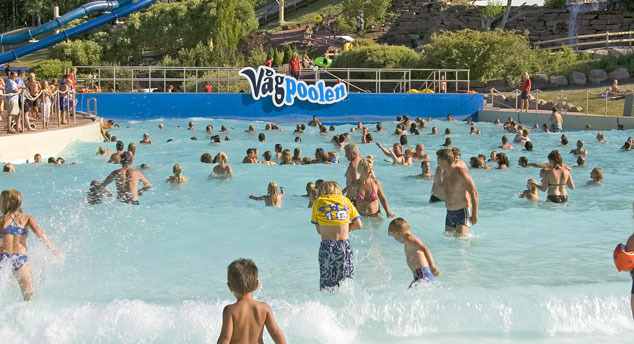
Four million liters of heated water are pumped into the several swimming-pools and attractions in Skara Sommarland (Summer Land). But there are not only wet experiences waiting you in the park. The entrance to Skara Sommarland may reveal very little of what’s in store for visitors, but when guests walk through the park will they discover the joy of exploring it. In every corner there is a surprising uniquely themed ride, which although mainly suited to children, should please a casual thrill seeker too.

Several carousels, restaurants and a play-area are just some of the attractions offered in the 400,000 sqaure meter park. If you have been to Liseberg amusement park in Liseberg, Skara Sommerland is twice the size. Over 350,000 visitors are coming to the park during the season.

160615-skara-sommarland-hara-kiri-slide
Skara Sommarland opened in 1984 by the Swedish entrepreneur and politician Bert Karlsson. Famous Swedish musicians play at the venue every season. Karlsson sold the park in 1994 to the Swedish restaurant chain Rasta since it was threated of bankruptcy. In 2001 the park was sold once again to the current owners, Parks & Resorts Scandinavia AB (P&RS).

160615-skara-sommarland-cobra
Since then more than 25 million dollars have been invested in the park, especially in attractions in the amusement park. Last year’s newcomer, the water attraction Cobra, was the largest investment in the park’s history. It is 116 meters long and 11 meters deep. In 2012 and 2013 Big Drop and Razer were unveiled.

P&RS installed many of the attractions that are present at the park today, including the one-of-its-kind Tranan roller coaster. Three coasters make up the ride line up, as do theme park favorites such as bumper cars, a log flume and a chair swings. There are about 40 attractions at Skara Sommarland. A lot of thought has gone into the various rides, with most of them offering unique, borderline bizarre, theming or even custom made ride cars.

160615-skara-simmarland-wave-pool
The park is a dream for families. The spectacular stunt- and diver show Wild Style is a 20 minutes show of acrobatics and stunts in a rough street style wrapping.  All attractions on land and in water are included in the entrance fee, except the go-carts.

Behind the rather plain, drab entrance, Skara Sommarland is one of Sweden’s biggest and prettiest parks. It’s very leafy with plenty of open space filled with play equipment, two lakes (one of which features a waterski attraction which is hysterical to watch) and a waterpark. There is camp site at the park which is useful as the nearest significant town is 9km (5.5 miles) away.

160615-skara-sommarland-waterfalls

Facts about Skara Sommarpark:

  • Last year almost 100,000 ice-crème cones were sold. Soft-ice is also popular with 28,556 units in 2014.
  • The most popular lottery in the park is the Milk Chocolate (Mjölkchokoladen) who sold 40,000 pieces during the summer of 2013.
  • The water in the pools holds about 25 degrees Celcius (77 Fahrenheit).
  • The operating season is between June and September.

Scandinavia’s Largest Waterpark, written by Tor Kjolberg

Bjornson Prize to Edward Snowden

Edward Snowden, the American whistleblower, gets the Bjornson Prize for his disclosures regarding governmental surveillance.

Former security contractor Edward Snowden won the Norwegian Bjornson Prize for freedom of expression last Tuesday and received yet another invitation to leave his exile and receive the award in person.

050615-Edward_Snowden
The Bjornson Academy said the 31-year old fugitive had won the Bjornson Prize, named after the Norwegian Nobel literature laureate, “for his work protecting privacy and for shining a critical light on US surveillance of its citizens and others.”

The Academy hopes to hand over the award to Edward Snowden at this year’s Bjornson Seminar in Molde on 5 September. Bjørnson Academy has been in contact with several lawyers to consider whether Snowden may come to Norway without being extradited to the United States.

Snowden was awarded Sweden’s Right Livelihood Award in 2014 but chose to accept it by video link rather than leaving his exile in Russia.

https://youtu.be/rgL0FDCyTrg

He has been nominated for the Nobel Peace Prize for the second year in a row. The Nobel Prize will be awarded in Oslo on October 9.

Bjornson Academy
The Norwegian Academy of Literature and Freedom of Expression (Det Norske Akademi for Litteratur og Ytringsfrihet) is a Norwegian institution, founded in 2003, and also called Bjørnstjerne Bjørnson-Akademiet. The background being that Norway, contrary to many other countries, lacked a free and independent academy of literature.

Who was Bjornstjerne Bjornson?
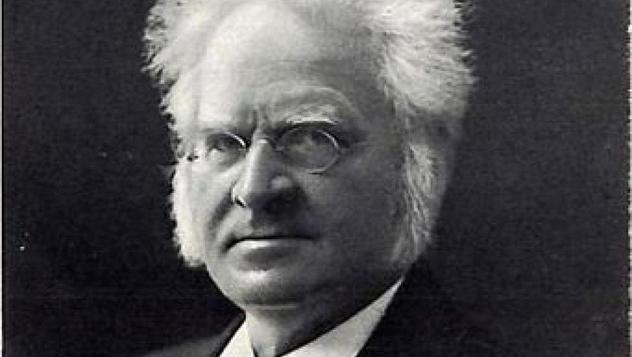
Bjørnstjerne Bjørnson (1832-1910) was the son of a Norwegian pastor. At school in Christiania (Oslo) Henrik Ibsen was one of his fellow students.

050615-bjornstjerne-bjornson
In 1857 he succeeded in starting a literary career when he wrote the historical play Mellem slagene (Between the Battles) and became stage director at the Norwegian Theatre in Bergen.

During the following years he took part in national politics (as he did all his life) and divided his creative activities between historical tragedies and country tales such as Arne (1858) and En glad gut (1860) “A Happy Boy”, both of which were meant to show a kinship between the contemporary peasant and the saga heroes of old in their taciturnity and love of adventure.

Bjornson on Norwegian bank note

The years 1860-1863 he spent abroad, mostly in Italy, where he was deeply affected by Michelangelo and Greek sculpture.

The seventies were marked by a second visit to Italy (1873-1875) and a turn toward realism and social problems which produced the plays En fallit (The Bankrupt) and Redaktøren (The Editor), both in 1875. In Kongen (1877) “The King”, he dealt with the loss of Christian ideals in today’s secular society, a concern which led him into a religious crisis and to a rejection of the church dogma.

Bjornson, painting by Peder Severin Kroyer

In 1882 he left Norway and spent five years abroad where En hanske (1883) “A Gauntlet” was written, a play in which he attacked hypocrisy concerning sexual matters as well as the liberal attitude of the Bohemians. During the following years he wrote educational novels such as Det flager i byen og på havnen(1884) “The Heritage of the Kurts” and På Guds veie (1889) “In God’s Way”, with its main theme of religious tolerance, as well as the educational play Over evne, annet stykke (1895) “Beyond Human Power”.

His last important plays were Paul Lange og Tora Parsberg (1899), which treats the theme of political tolerance, and finally Nar den ny vin blomstrer(1909) “When the New Wine Blooms”. Bjørnson’s collected works were published in nine volumes in 1919.

050615_Bjørnstjerne_Bjørnson_1909
Bjørnstjerne Bjørnson (1832-1910) was the son of a Norwegian pastor. At school in Christiania (Oslo) Ibsen was one of his fellow students. Bjørnson participated early in the movement for a national Norwegian theatre and wrote some poetic plays which he did not publish. While a student, he became a literary critic for theMorgenbladet in 1854 and contributed criticism as well as stories to various other newspapers. In 1857 he succeeded in starting a literary career when he wrote the historical play Mellem slagene (Between the Battles) and became stage director at the Norwegian Theatre in Bergen. During the following years he took part in national politics (as he did all his life) and divided his creative activities between historical tragedies and country tales such as Arne (1858) and En glad gut (1860) “A Happy Boy”, both of which were meant to show a kinship between the contemporary peasant and the saga heroes of old in their taciturnity and love of adventure. The years 1860-1863 he spent abroad, mostly in Italy, where he was deeply affected by Michelangelo and Greek sculpture.

The seventies were marked by a second visit to Italy (1873-1875) and a turn toward realism and social problems which produced the plays En fallit (The Bankrupt) and Redaktøren (The Editor), both in 1875. In Kongen (1877) “The King”, he dealt with the loss of Christian ideals in today’s secular society, a concern which led him into a religious crisis and to a rejection of the church dogma. In 1882 he left Norway and spent five years abroad where En hanske(1883) “A Gauntlet” was written, a play in which he attacked hypocrisy concerning sexual matters as well as the liberal attitude of the Bohemians. During the following years he wrote educational novels such as Det flager i byen og på havnen(1884) “The Heritage of the Kurts” and På Guds veie (1889) “In God’s Way”, with its main theme of religious tolerance, as well as the educational play Over oevne, annet stykke (1895) “Beyond Human Power”.

His last important plays were Paul Lange og Tora Parsberg (1899), which treats the theme of political tolerance, and finally Nar den ny vin blomstrer(1909) “When the New Wine Blooms”. Bjørnson’s collected works were published in nine volumes in 1919.

Bjornson received the 1903 Nobel Prize in Literature “as a tribute to his noble, magnificent and versatile poetry, which has always been distinguished by both the freshness of its inspiration and the rare purity of its spirit”, becoming the first Norwegian Nobel laureate.

Bjornson Prize to Edward Snowden, written by Admin

Hospital of the Future in Denmark

There will be room for healing in the new world-class hospital in North Zealand, designed by the internationally renowned Switzerland-based architects Herzog & de Meuron.

Herzog & de Meuron is particularly known for designing the Olympic stadium (Bird’s Nest”) in Beijing and the Tate Modern in London.

The hospital is built on a 124.000 square meter facility that serves 24 medical departments and provides more than 660 beds. There will be a garden in its center and the hospital is surrounded by nature. To foster exchange across the various departments the architects have chosen a horizontal building construction. Tall hospitals of the last decades have rarely achieved this goal.

Admission discharge at Nyt Hospital at North Zealand

The chair of the Copenhagen regional council, Sophie Hæastorp Andersen, looks forward to the opening of the new hospital in 2020: “It is hugely important for the residents in the Copenhagen Region that we get a functional and beautiful hospital that has been carefully planned from the very beginning. Something all citizens in Copenhagen can be proud of.”

“The hospital organically reaches out into the wide landscape. Simultaneously its soft, flowing form binds the many components of the hospital,” says the architects. “It is a low building that fosters exchange between staff and patients, ans it has a human scale despite its very large size.”

Courtyard
Courtyard

This way the architects marriage two seemingly contradictory goals: the desire for a large central garden and the necessity for short internal connections. The result is an organic cross shape.

“All citizens in North Zealand will have easy access to the best treatment in a new hospital that professionals will travel to North Zealand to see,” says Per Seerup Knudsen, chairman of the political reference group.

Situation plan
Situation plan

The landscaping concept consists of two typical Danish landscape typologies. A forest park with clearings for parking lots surrounds the building, while the central garden is Heathland. Circular hedges inhibit views into the pedestal and create the path network of the garden.
This project will be the heart of the new masterplan of Hillerød South.

“Herzog and de Meuron have designed a patient-centered hospital – a beautiful, healing and functional building that supports our patients’ recovery in the best possible way. The hospital’s great strength is its highly successful and fundamental fusion of form and function,” says hospital director Bent Ourø Rørth.

The park
The park

“When you walk through the glass doors, you’ll get an intuitive sense of calm and harmony. A homely feeling. I can easily imagine working in the hospital,” says head nurse Britt Holmgaard, who has been involved in the process as an advisor.

Head consultant Tomas Joen Jakobsen is particularly enthusiastic: “First and foremost, the wards will work really well. They will get light from both sides, the work stations will be near the patients, and there will be good access.” He is adding: “I’ll be proud to drive past with my grandchildren and show them what I’ve helped start.”

Feature image (on top): Main entrance

Hospital of the Future in Denmark, written by Tor Kjolberg

Images © 2014, Herzog & de Meuron Basel

Italian Passion – Norwegian Ingredients

0

Well, the heading is not completely true. Italian passion, yes, but some of the ingredients were more exotic, like the olive oils and the chocolate beans. The private dining at Vin og Grønt was however a delicious and happy experience.

SONY DSC


Raffaele (Raph) Regan (30) is a professional chef, coming from Naples, the Italian city of culinary tradition of food care.  He studied music for six months at the University in Oslo as an exchange student and fell in love with the place and the local vegetarian ingredients.

One year ago a friend told him about an Internet site called Eat with, which invites strangers to become friends over gourmet meals cooked by talented chefs.

I was curious if there were any private chefs in Norway, offering this opportunity. There was only one, in Oslo.

I contacted Raph and he invited me to his home last week, together with nine other fabulous guests, all Norwegians, except a couple from Belgium, Rina and Jan van den Berbm.

The long table for ten persons was the ideal setting for a delicious five course meal, and the conversation between the guests was soon so load that the background music had to be shut off.

Raph told me he doesn’t like to cook meat or fish. He prefers a tasty vegetarian cuisine, made from fresh local ingredients, unlike the meals other veggie restaurants serve.

Michel Cardarilli (left) and Raph Regan preparing the food
Michel Cardarilli (left) and
Raph Regan preparing the food

This evening he was assisted by another Oslo chef, his friend Michel Cardarilli.

The menu was as follows:

SONY DSC
Scapece
Fermented roots marinated in vinegars, dried garlic and fresh mint.


Sweet Pea Mousse
with mussels, apples, roasted onions and seaweed ash.

SONY DSC
Potatoes
and wild chicory with rhubarb and lovage.


Fregola
and chickpeas with stockfish and raw leek.

SONY DSC
Icecream
of Risotta from Røros milk with chocolate beans and black pepper.

SONY DSC
The dishes were accompanied by beer from Grünerlokka Mini Brewery, Oslo, cider and wines.

Strongly recommended!

Italian Passion – Norwegian Ingredients, text and photos: Tor Kjolberg

Nordic Cross Border Military Training

Arctic Challenge Exercise 2015 is a cross border training between the Nordic neighbors. It evolved from a Swedish exercise, Nordic Air Meet in 2009.

The training this year will be Europe’s largest jet exercise with more than 4,000 persons participating. Norway is lead nation as nearly a hundred fighter jets from nine nations gather for a joint training from May 25 to June 5, with up to 90 planes set to take the skies at the same time.

The exercise will take place in the High North, with activities divided between Bodoe in Norway, Rovaniemi in Finland and Kallax in Sweden. Soldiers from the UK, Switzerland, France, Germany, the USA and the Netherlands will join the Nordic neighbors.

Swedish Saab ias-39A

“This is the second time the multinational training exercise is carried out, the first being in 2013. The plan forward is to continue every other year. Even though Norway, Sweden and Finland are the host nations, all of the participating countries contribute to the planning, which helps build our national and allied capability to lead air operations,” says Brigadier General Jan Ove Rygg, head of RNoAF’s National Air Operations Center (NAOC), and ACE 2015 exercise director.

He continues, “The aim is to exercise and train units in the orchestration and conduct of complex air operations, in close relations to NATO partners. The unique cross border air space makes ACE 2015 a one of a kind training ground for increasing interoperability and skills in all parts of the chain.”

“It gives us an opportunity to exercise with different aircraft types from large composite air forces…tactics and procedures can be practised in a realistic threat environment” said Major General Karl Engelbrektson in a statement in Swedish on the Swedish Armed Forces website.

030615-arctic-challenge-exercise-2015
Sweden has recently increased defense spending, although there has been strong criticism of the Social Democrat-led government’s strategy, with many leading military experts arguing that Sweden would still struggle to defend itself in the event of an attack.

On a press conference Engelbrektson told that it was vital for Sweden to hold “large complex exercises with other nations” to enhance the country’s operational capabilities.

030615-daily-scandinavian-arctic-challenge-exercise-2015-feature-image
“We are getting great operational take-backs with such large scenarios and tactical training,” says Major Trond Ertsgaard at Bodø Main Air Station.

Last weekend there was a confrontation between Russian air fighters type “Sukhoi Su-24” and the U.S. warship “USS Ross”.

Feature image (on top): An F-15C Eagle, assigned to the 493d Fighter Squadron, flies above Bodø Main Air Station, Norway Sept. 24, 2013. Approximately 30 aircraft deployed from RAFs Lakenheath and Mildenhall, to multiple locations in Norway, in support of the Arctic Challenge exercise 2013 (ACE-13). ACE-13 is a combined exercise with NATO and regional allies, which promotes continued interoperability between the U.S., Norway, Sweden, Finland the U.K. and NATO. (Official U.S. Air Force photo by Master Sgt. Lee Osberry/Released)

Nordic Cross Border Military Training, source: Norwegian Armed Forces Website

Norwegian Rap Duo Madcon Hits the Charts

“God Forgive Me” was the duo’s first single in 2000 (Virgin records), but their first commercial breakthrough was in 2002 with the hit single “Barcelona”.

Television stars as well as hitmakers, Madcon enjoyed widespread popularity in their homeland, but after signing arecording contract with the Paperboys’ label Bonnier Amigo their popularity reached other Western European countries as well.

Madcon consists of Yousef Wolde-Mariam (36), aka Critical, born in Norway of Ethipian and Eritrean heritage, and Tshawe Baqwa (35), aka Kapricon; born in Germany of Sourh African heritage.) The duo was established in 19930, and their name was originally a shortened version of “Mad Conference”.

150515-madcon
Their first full-length album,” It’s All a Madcon” was produced in 2004, for which they won a Norwegian Grammy and several other awards. The album spawned the Top 20 hits “Doo-Wop” and “Infidelity”.

In 2005, Madcon worked with the Nordic music channel The Voice and became TV personalities. Their first international smash hit was “Beggin” in 2007, originally recorded in 1967 by the Four Seasons and Frank Valli. The single charts embraced the song; No. 1 in Norway, No. 7 in Austra, No. 11 in Sweden and No. 33 in Switzerland. The hit reached Gold sales in the U.S.

Norwegian Rap Duo Madcon Hits the Charts
In 2005, Madcon worked with the Nordic music channel The Voice and became TV personalities.

Later same year Madcon released their second album, “So Dark the Con” featuring soul singer Noora Noor and Paperboys, which certified to gold in 3 hours and platinum in 3 days in Norway. The album reached number 137 in the United Kingdom.

The Top Ten hit “Back on the Road” followed in 2009, the year in which their third album, “An Inconvenient Truth” was released.

In 2010 they performed an interval act at the Eurovision Song Contest with their song “Glow” which became one of the biggest hits of all times in Norway, with 10 times platinum status in Norway and platinum in Germany.

Their fourth album, “Contraband” followed in 2011, and after a two-year break their fifth album “Contakt” with all songs sung in Norwegian was released. The English version, “Icon”, was released later same year.

This year’s album “Don’t Worry”, featuring Ray Dalton, is perhaps not the duo’s best album, and contains  a couple earlier success hits.

150515-madcon
Yosef claims that the duo’s always happy appearance is due to the adversity the boys experienced earlier in life. Before his father died in 2006, he said to his son, “Your life has not been so good that you should smile so much. Get a decent job, and you will experience how hard life is. Then you will not smile that much, guaranteed.”

Their single “One Life” featuring Kelly Rowland sold multi platinum and has more than 14 million views on YouTube.

Their third album, Inconvenient Truth was released all over Europe in early to mid-2009, and the group saw other major releases, including in the USA, Japan and Australia.

Madcon performed their song “Glow”, as the background of the “Eurovision 2010 Flashmob dance” that
The single «One life» feat Kelly Rowland sold multi platinum and has almost 15 million views on youtube.

Norwegian Rap Duo Madcon Hits the Charts, written by Tor Kjolberg

The Great Scandinavian Exodus

The 19th century witnessed a mass exodus of Scandinavians in search of a better life in the New World.

010615-ANDERSEN_Collage_3-comp
“Potatoes, peace and vaccination” were blamed for a population explosion at home which contributed to an outflow of 300,000 Danes (1820–1920) 800,000 Norwegians (1825–1925) and one million Swedish emigrants (1868–1914) – a quarter of the Swedish population.

010615-ANDERSEN-1-comp
The new settlers sent back glowing accounts of their lives in America, and money to support those left behind. These signs of prosperity and other factors such as The United States Homestead Act of 1862, which promised land almost free to settlers who dared to travel west, encouraged others to follow.

010615-ANDERSEN-2-6-comp
Sweden was, for example, struck by crop failures and famines in the late 1860s that stimulated ro massive emigration. High unemployment and a lack of open land for new farms caused increasing numbers of Norwegian and Danes to emigrate to the US.

010615-ANDERSEN-2-9-c
Scandinavian immigrants settled primarily in the Midwest. Norwegians favored Minnesota, Wisconsin, and North Dakota. Danes settled primarily in the agricultural regions of Minnesota, Wisconsin, Iowa, Illinois, and Kansas, while Swedes settled across the entire upper Midwest. Few Scandinavians made their way to the West Coast.

010615-ANDERSEN-2-edited-c
While approximately 125,000 Scandinavians came to the United States before the Civil War, the majority arrived between 1865 and World War I. Many Scandinavians were lured to the United States after receiving “American letters” from friends and family that described fruitful land and employment opportunities. Prepaid transportation tickets from relatives and friends often helped finance the trip to the New World.

010615-ANDERSEN-7-c
One survey reported 65 Norwegians in Washington Territory and 47 in Oregon in 1870. By the 1880s, however, the railroads had reached the Pacific Northwest and within a decade, a significant number of Scandinavian organizations and churches had been established in Tacoma, Astoria, the Yakima Valley, and other areas environmentally familiar to the Nordic immigrants.  Evidence suggests that Scandinavians felt a kinship with the natural surroundings and economic opportunities in the Pacific Northwest. More than 150,000 Scandinavians settled in the region between 1890 and 1910 ― many attracted to the fishing, logging, and farming industries.
010615-Photo-collage-1-Andersen-comp
The Great Scandinavian Exodus, written by Tor Kjolberg

All images, family photos, courtesy Lars Andersen

A+ Award to the Community Church in Knarvik, Norway

Since its inception three years ago, the Architizer A+Awards has come to represent the very best architecture in the world. Reiulf Ramstad Architects, responsible for the Community Church in Knarvik north of Bergen was announced winners of Popular Choice last month.

“This year’s winners represent the best new architecture, interiors and products,” writes the A+Awards Winners Jury, consisting of over 300 industry leaders. Reiulf Ramstad Architects were recognized at the Architizer A+Awards Gala on May 14 in New York City.

The new Community Church in Knarvik, located on the scenic west-coast of Norway north of Bergen, is built on a privileged site overlooking the cultural landscape and local town centre. The building is carefully adapted to an existing hillside between built and natural environment, providing the church with an inspiring context of the surrounding heath landscape. Its distinctive and innovative character and central location makes it a landmark in the community, to be inviting and inclusive for all people to cultivate their faith throughout the week.

200515-community-church-knarvik-interior-reiulf-ramstad-architects-hundven-clements_photography
The church signals its function with a sacral dignity and recognisable form, where the church spire, sanctuary and chapel are emphasised by ascending roof planes. Inspired by the local tradition of Norwegian stave churches, the building utilizes clear and elemental geometries, materials and constructions. The compact building volume is split into two stories on a rectangular plan, separating the sacred spaces above from the cultural and administrative functions below. An internal “church square” connects the two levels with an atrium stair into a continuous space, and may be joined or separated from the sanctuary with sliding glass walls to accommodate more than 500 people.

200515-community-church-knarvik-reiulf-ramstad-architects-2_hundven-clements_photograph
Wood is the key material of the project, expressed in the homogeneous cladding of pre-weathered pine heartwood and mirrored by the light-coloured pine finish on all interior surfaces. The building permits daylight into its volume through lancet-reminiscent tall and narrow windows, splayed in plan to maximise admittance and reduce glare. At night, the warm glow of the interior reveals the activities of its religious and cultural events.

200515-community-church-knarvik-reiulf-ramstad-architects_hundven-clements_photograph
The church aspires to provide a platform for a safe upbringing for children and youth, to become a local venue for gatherings and faith, and to facilitate art, music and cultural development. The Community Church Knarvik has an architectural expression, spatial solutions and materiality which unites religion, culture and the sitespecific
context into a whole.

Photographs by Reiulf Ramstad Architects and Hundven-Clements Photography.

A+ Award to the Community Church in Knarvik, Norway, written by Tor Kjolberg