On the outskirts of Aarhus, Denmark, surrounded by woods, the new Moesgaard Museum (MOMU), designed by the world famous Danish architects, Henning Larsen Architects (HLA), offers a new perspective on the role of the museum as a public space. The past is brought to fascinating life at the new Moesgaard Museum in Aarhus.
Moesgård is an eighteenth-century manorial complex in open countryside a few kilometres south of Aarhus, the main city of Denmark’s Jutland peninsula. Expect the past to become alive and the people in the exhibits to step forward giving visitors with a better understanding of the past and how we arrived at where we are in the present.
Since the 1950s, this has been the home of Aarhus University’s departments devoted to the human past, and also home to Moesgård Museum, an independent body that has always been closely integrated with teaching and research.
Moesgaard Museum, which has been awarded two Michelin stars in the Michelin tourist attraction’s guide, appeals to visitors of all ages whilst also creating a sense of bonding, fellowship and shared experience across generations. On Tuesday 14 March, Moesgaard Museum was selected as Jury Award winner in the Museum category of the annual Architizer A+ Awards.
Extensive fundraising has enabled long-laid plans for a revitalized museum to be realized. After a period of closure, Moesgaard Museum reopened its doors to the public in October 2014, situated in an exciting new building with a new acronym—MOMU—and even a new spelling (the citizens of Aa/Århus have argued politely for years about their city’s name, and the same dilemma extends to Moesgård/gaard).
The Tollund Man
The evolutionary stairway at Moesgaard Museum is not only a key element of the architecture, which leads to the various exhibitions of the museum, it is also very much an opportunity for you to see where we human beings originate from.
The new museum has been constructed in what were previously green fields, 200m or so from the manor house complex that housed its predecessor.
Northern Europe now has a dazzling new museum of prehistory and ethnography, combining its responsibilities as the regional archaeological repository with an original public face for its wider collections, presented in one of the most strikingly designed new-builds of recent decades. We recommend you to pay it a visit.
A new novel by Norwegian crime fiction master Jo Nesbø is an electrifying thriller set in Oslo, Norway, in the 1970s.
Blood on Snow is the story about Olav, “the fixer”, and Nesbø lets him introduce himself standing over the man he just has shot in the chest and neck, blood dripping on the snow. This novel is about an unusually complicated contract killer whose unexpected capacity for love is as far-reaching as his talent for murder.
In his own eyes Olav is not a bad guy. “I have a weak, sensitive nature,” he says “so I have to stay well away from drugs”. Nesbø writes convincingly through the eyes of a hired killer who works for a crime boss, Hoffman, who deals in prostitution and heroin in Oslo in 1970s.
The book offers an excursion to a slightly different corner of the criminal underworld, where death and love become tangled together in the cold, dark streets of Oslo.
Blood on Snow is roughly a third of the length of Nesbø’s typical novels, which makes it move at a quicker pace. The book is also more noire than the psychologically driven Harry Hole books.
Nesbø reached the charts twice in 2014, with The Son and Police, in which the troubled alcoholic detective Harry Hole was removed from the action. We’ve been told that Warner Bros is planning to adapt Blood on Snow as a vehicle for Leonardo DiCaprio to produce and star in.
Norwegian crime author has succeeded again! written by Tor Kjolberg
Experience Denmark’s picturesque small towns and walk through centuries of Danish history. Each has an unique charm and special atmosphere, away from the bustle of everyday life.
Ribe, Denmark’s oldest town, was recently voted Europe’s Best Small Destination. Skagen is a popular seaside town in the North, which has drawn artists and holidaymakers for hundreds of years.
There are many beautiful towns in Denmark and eight of the most popular to visit are listed in this guide.
Ribe Visit Europe’s Best Big-Time Small Destination 2014! Ribe is Denmark’s oldest town, home to a fascinating Viking museum and a well-preserved medieval centre. Climb to the top of Ribe’s beautiful cathedral tower for lovely views of the region.
Ærøskøbing Head to the island of Ærø, off the South Coast of Funen Island, and see why Ærøskøbing is often called Denmark’s fairy-tale town. Ærøskøbing is over 750 years old and is without doubt one of Denmark’s most idyllic places.
Skagen Skagen, at the very North of Denmark, has been a favorite tourist destination for centuries. Stroll through the small seaside streets of yellow houses to the harbor and try the catch of the day in one of the town’s many fantastic fish restaurants.
Svaneke Svaneke is an atmospheric fishing community of half-timbered houses and winding streets, located on Denmark’s Baltic island, Bornholm. In 2013 Svaneke was awarded the most beautiful market town of Denmark.
Ebeltoft You’ll find one of Denmark’s most popular holiday towns on the scenic peninsula of Djursland, East Jutland. Ebeltoft is a quaint town of cobbled streets and crooked old houses. Visit the world’s longest vintage frigate here!
Mariager Nestled on a fjord near Jutland’s East Coast, the town of Mariager is a picturesque slice of rural Denmark. Walk the cobbled streets with a loved one for a romantic getaway or treat the whole family at some of the many outdoor activities in and around the town.
Sønderho This lovely little town, hidden in the dunes of Fanø Island on Denmark’s West Coast, is a well-preserved piece of Danish history. Combine a trip to Sønderho with the wetlands of the Wadden Sea National Park surrounding the island.
Christiansfeld Christiansfeld is a unique town in Denmark. Not only was it built in 1773 by Moravian monks, but it is an early example of precise town planning! This beautiful town in South Jutland is currently on the tentative list of UNESCO World Heritage Sites.
Faaborg In the 17th century, Faaborg was a bustling port town. Nowadays it’s a quiet escape and a fantastic day trip from Copenhagen or Odense. Hidden in rolling countryside on the South Coast of Funen Island, it’s easy to unwind into Faaborg’s old-world charm.
Dragør Take a break from the city at the lovely fishing town of Dragør, only 12 km south of Copenhagen. You can drive or cycle here across the moorland of Amager Fælled, or take the bus. The town has a scenic centre and a harbour with great places to eat.
Maribo Maribo is a quaint town on the island of Lolland, which dates back to the 15th century. Known for its jazz festival and beautiful lakeside location, Maribo is a place where you can enjoy both cultural and natural highlights.
Feature image (on top) Fanoe, Soenderho
The Eleven Prettiest Towns in Denmark, source: Visit Denmark. Compiled by Daily Scandinavian.
One hour drive from Kristiansand you arrive at Lyngdal in Southern Norway, where you may experience the real charm of this part of the country.
This is an ideal stop for the whole family. In the center of Lyngdal you find Sørlandsbadet with both indoor and outdoor pools, treatment rooms and a gym.
In Lyngdal there is an abuncance of shopping stores selling items you hardly find anywhere else. Lyngdal is actually famous for its shopping, so people travel for long distances to buy things there.
You should not miss the Lygna river where you find a salmon staircase consisting of concrete stairs built into a 220 meter long tunnel at the Kvås waterfall. They enable the salmon to swim up the river to lay their eggs. There is a viewing glass room where visitors can see the salmon.
The salmon staircase consist of concrete stairs built into a 220 metre long tunnel at the Kvås waterfall in Kvås, Lyngdal. They enable the salmon to swim up the river to lay their eggs. There is a viewing glass room where visitors can see the salmon.
Staying in Lyngdal You have several choices, but our recommendation is the unique historic hotel Paulsens Hotel & Café from 1894 with carefully preserved 19th-century interiors and home-cooked Danish and Norwegian cuisine.
In summer, guests can relax in the hotel garden, which includes a barbecue area. Concerts and other entertainment are regularly arranged.
The 17th-century Lindesnes Lighthouse, the oldest in Norway, is just a 30-minute drive from Paulsens Hotell.
The staff can help organize fishing, hiking and other recreation, and guests can buy green fees for Kvinesdal og Omegn Golf Club.
The hotel was a popular destination for German salmon lords. It closed its doors in 1971, but is now reopened and the staff is now even dressed in the original old costumes.
The Picturesque Coastal Town Lyngdal, Norway, written by Admin
The Norway Debate, which began May 7, 1940 was a significant debate in the British House of Commons. It caused Neville Chamberlain to resign, and he was succeeded as Prime Minister by Winston Churchill.
However, the real heroes of the Norway Debate were a group of rebels from the British conservative party, who for a long time had tried to fight the government’s reconciliation and compliance policy.
Neville Chamberlain by William Orpen,1929
Harold Nicholson calls the Norway Debate “a pitiful speech only applauded by yes-people” in his “Diaries and Letters 1930-1964”.
The Norway Debate took place on May 7, 1940. Here are some extracts.
As the House of Commons began its historic debate on the conduct of the war in Norway, the British public were seeing the first Newsreel of British ships in action off Namsos and troops in Norway. The upbeat tone of the Newsreel was not replicated in Parliament where the Prime Minister Neville Chamberlain was severely criticized for his handling of the war.
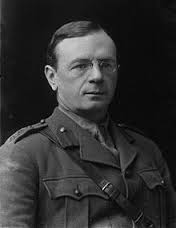
Lieut-Colonel Leo Amery M.P, spoke for many when he said:
“The right hon. Gentleman the Prime Minister—[…] in a digression explained why he used a certain unlucky phrase about Hitler missing the bus. He explained that what he meant was that during these eight months of war Hitler had lost the opportunity which he had at the beginning of the war because we had been catching up on Germany’s preparations. Believe me, that is very far from the truth. While we may catch up on her presently if only we do what we ought to, there is no doubt that during these eight months, thanks to Germany’s flying start and our slowness off the mark, the gap between the German forces and ours has widened enormously as far as troops, their equipment, tanks, guns and all the paraphernalia of land war are concerned.”
Famously, he concluded his speech with:
“I have quoted certain words of Oliver Cromwell. I will quote certain other words. I do it with great reluctance, because I am speaking of those who are old friends and associates of mine, but they are words which, I think, are applicable to the present situation. This is what Cromwell said to the Long Parliament when he thought it was no longer fit to conduct the affairs of the nation: You have sat too long here for any good you have been doing. Depart, I say, and let us have done with you. In the name of God, go.”
Caption feature image (on top)
British and French Commanders waiting to greet troops returning from Norway. General Sir Edmund Ironside, General Carton de Wiart, General Audet and General Mittelhauser
The Norway Debate 75 Years Ago, source: World War II Today
The call of duty stays strong, no matter where you are in the world, for four Swedish policemen on holiday in Big Apple. They made headlines in New York when they helped stop a flight on the subway.
The four men, all in their twenties, were taking a train to watch a performance of the musical Les Misérables on Broadway. Suddenly the train announcer on Uptown 6 informed the passengers that an assault was taking place in the front car and asked if any police officers happened to be on board and might be able to assist.
https://youtu.be/dDAB35SYIr0
At the next stop, Bleeker street, the Scandinavian policemen headed to the front and saw two passengers beating another. The New York Post reports that Makrus Åsberg, Erik Naslund, Samuel Kvarzell and Eric Jansberger subdued the attacker, managed to apply an arm lock and held him down until local police arrived.
“It was pretty routine. We came just to make sure that no one got hurt,” said Jansbereger to the Post. Asberg said, “We came here for vacation. We’ve only been here one day. We’re not heroes, just tourists.” Jokingly he added that they desperately needed a beer after.
New York Police Commissioner Bill Bratton swooned over the ‘boy band’, complimenting their use of safe and effective restraint tactics.
The story has received a lot of attention in Swedish media, and a number of US sites have featured the incident.
Swedish Police Officers Stopped Vicious Assault in New York Subway, written by Tor Kjolberg
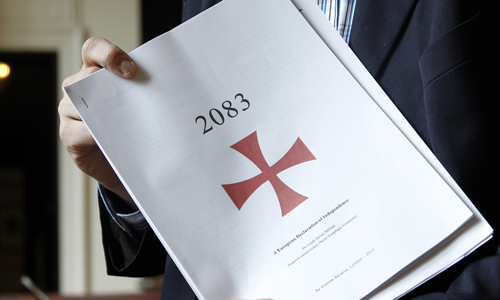
The 2011 Norway attacks conducted by a lone wolf terrorist on 22 July 2011 claimed a total of 77 lives. In his book «The Almost Nearly Perfect People» British author and journalist Michael Booth wonders what the Norwegians really are like. These are excerpts from his book, published by kind permission of the author.
‘Innocence ends when one is stripped of the delusion that one likes oneself.» John Didion
Even in midwinter the sun is so sharp it forces me to squint, reflecting off the snow it turns the landscape into a light box. The air is brisk and, as I make my way from the airport terminal, I catch the scent of fresh pine. The bus driver grunts when I ask if he is going to Oslo centre. I assume this is an affirmative but, as we drive, I scan the view anxiously for clues that we are heading in the right direction. We drive past the yacht harbours that fill the fjords surrounding Oslo and, between the regimented conifers, I catch glimpses of dayglow hikers bearing those high-tech walking sticks that make them look like they have mislaid their skis, striding in single-file along the forested hillside paths. I am reminded just how extraordinarily beautiful Norway is. It is perhaps the most beautiful country I have ever seen.
It is seven months since a 32-year old Oslo man, the racist extremist Anders Behring Breivik, single-handedly doubled Norway’s average annual homicide rate in one afternoon, killing a total of 77 people. One of his chief bugbears about non-Western immigrants – who were the indirect subjects of his attack that day – was that he held them responsible for most of the violent crime in Norway. Well, not now they weren’t.
From my seat in the bus nothing appears to have changed. What did I expect? Razor wire and police patrols? Hardly likely in a land where the then prime minister, at the memorial service to the dead of Utøya and the Oslo bomb, gave one of the most courageous speeches in defence of public freedom I have never heard. Jens Stoltenberg had called for ‘more openness, more democracy’, at a time when most politicians elsewhere in the world would have used an attack of that nature to pledge revenge, exploit the anxieties of the electorate, garner greater authority and power, and then compromise civil liberties. His speech was a reminder that the political leaders of the North have often served as moral compass of the world.
Wandering around the capital – mostly trying to find a restaurant I could afford, peering at the menus outside like some starving match girl – the atmosphere seemed to confirm my impression that little had changed. There were no barricades on Oslo’s streets; no new security measures in this sturdy, restrained city; no X-ray machines on the Metro; no armed police patrolling its malls; no security checks at public institutions. You could still walk right up to the front door of the royal palace, which remained free of any kind of fencing or gates.
Royal Palace Oslo. Photo: Tor Kjolberg
So the furniture and fabric of Norwegian society appeared not to have altered, and it occurred to me later that day, as I caught the tram to Blindern, the stop of Oslo University, that merely to ask the question, ‘How has Breivik changed Norway?’ was to grant the man a far greater significance than will ever be his due. But the question needed to be asked, and that was why I had returned.
Though eventually judged to be quite sane, this crazed narcissist, the son of a Norwegian diplomat and a nurse, was clearly mad as far as the average observer was concerned, his psychological well-being apparently fatally fractured – assuming it had ever been whole – from an early age. The crack-up had been compounded by personal setbacks in adulthood, his life in retrospect seeming to have traced an inevitable parabola towards destruction of one kind or another (his suicide at some stage in the future would seem to be the natural end point). Breivik was the classic tragic loner, living with his mother, fuelling his racist paranoia by browsing Islamophobic rantings on the Internet, meticulously, nerdishly cutting-and-pasting them into a garbled 1,500-page manifesto detailing everything from his multiple, hate-filled delusions about the Muslim threat, to his preferred aftershave – Chanel Platinum Egoiste – a diatribe that he then mailed to 1,003 people across Europe. (Therefore we can call him Egoiste from Norway, ed. remarks).
What could the actions of a mentally bill man tell us about the country that made him? Nothing, presumably. Yet Breivik’s attacks must have shaken the foundations of Norwegian society – the unprecedented scale of his slaughter would have ensured that – but there was also the inescapable fact of his ethnicity to deal with. This unthinkable act of violence had been carried out by a Norwegian, not a non-Western Islamic extremist, not a foreigner – as was the case with various, thankfully small-scale, attacks in Sweden and Denmark in recent years – but a Norwegian born and bred: Europe’s first anti-Muslim terrorist.
‘The first picture I saw of him on 22 July was where he was wearing his Lacoste T-shirt with upturned collars,’ one Norwegian had told me. ‘And, you know, I thought, “I know him, I see him at football games, I’ve gone to school with this guy.” He’s so ordinary.’
I have to admit, and I am not especially proud of this, but there was the very slightest sense of relief when, in the house after the first bomb had been detonated in central Oslo and the world’s media had jumped to its default Islamic terrorist conclusions, the real identity of the perpetrator emerged and it transpired that he was as Norwegian as one could be. The relief that this was not the work of Islamic terrorists was, of course, entirely separate from any reaction to the crime itself, relating more to fears of the potential retribution such as an attack might have inspired. An Islamic terrorist attack as heinous as this would have seen the political discourse om immigration and race blasted back to the Middle Ages. One presumes life would have become untenable for many Muslims living here, as was the case in the US in the wake of 9/11; and one assumes, too, that the attack would have been used by the mainstream right wing throughout Scandinavia to shore up their support, as also happened after 2001. In the few hours before Breivik’s identity became known, various far-right websites and blogs had already begun to unleash their predictable and violent anti-Islamic sentiments, and several Muslims were physically assaulted in the Norwegian capital.
Certainly, the Norwegian Police Security Service had not foreseen such an event; in a report written just a few months prior to the attacks they stated that right-wing extremists did ‘not represent a serious threat to Norwegian society in 2011’.
One presumes it would have been at least marginally easier – only very marginally, admittedly – to come to terms with the attacks had the perpetrator been an outsider, someone from an established category of aggressor. Instead, it was a blond-haired, blue-eyed Norwegian ‘patriot’. One of them.
The Norwegians had reacted to the attacks in various ways: horror, obviously; solidarity, mainly; revulsion at Breivik’s opinions, of course. Nut some felt there had been too much discussion of Breivik’s mental state and not enough about his views and the extent to which other Norwegians might agree with them. One Norwegian commenting on an online article on the Guardian website about a Danish theatre production based on Breivik’s manifesto, which premiered, rather tastelessly, during his trial, wrote: ‘Here in Norway there has been very little discussion of what he said. The fact is that it’s much less far from the mainstream than many are willing to accept – whilst most Norwegians are not racist, some held deeply troubling views…Norway does need to ask itself some very serious questions about why the world’s worst single-gunman atrocity happened here, in the apparently peaceful and harmonious country where nothing bad ever happens.’
Prior to 22/7, as the attacks are more commonly referred to in Norway, the country had the strongest mainstream right-wing party in all of the region, and one of the strongest in Europe: the Fremskrittsparti, or Progress Party. Though its popularity dipped following Breivik’s attacks, in the last parliamentary election to take place in Norway, in September 2013, the Progress Party, led by the pugnacious blond Siv Jensen, won 16.3 per cent of the vote. Its triumph was all the more astonishing given the fact that Breivik was, for many years, a highly active member of the party. Until 2013, the Progress Party had been routinely shunned by the other political parties but, crucially, this electoral triumph was enough to make it a partner in the new centre-right coalition government for the first time in its history.
The Progress Party’s unprecedented electoral success would appear to confirm the description of Norwegians I had heard from their neighbors as just a shade to the right of the Ku Klux Klan. Norway has accepted far fewer immigrants than either Denmark or Sweden, for instance, and has recently taken to repatriating denied asylum seekers at a rate of 1,500 or so a year. Coverage of the Breivik attacks had also mentioned numerous right-wing Norwegian organizations, activists and bloggers, highlighting what appeared to be a disturbing sub-culture of Islamophobia in the country, ranging from Facebook groups for people who refused to ride in taxis driven by Muslims, to those of the so-called Eurabian school, who believed their government was part of an early seventies conspiracy on the part of European oil-thirsty governments to allow Muslims to take over Europe in order to appease the OPEC nations (there are actually people who believe this, the fact that Norway is one of the largest oil producers in the world seeming to have escaped them).
Vidkun Quisling
On a previous visit to Norway I had read in Dagbladet that the Holocaust-denying British historian David Irving was going to be given a talk near Lillehammer that week. Though the Norwegians proudly boast of having a more active and successful resistance movement than the Danes, some Norwegians did collaborate with the Germans during the occupation of 1940-5, not least their then prime minister Vidkun Quisling, whose surname was famously adopted as an eponym for traitors everywhere. Norway’s most celebrated literary figure, Knut Hamsun (kind of their James Joyce), gave his Nobel Prize to Goebbels, and wrote a famous obituary of Hitler in the Norwegian collaborationist newspaper, Aftenposten, calling him ‘a reformist character of the highest order,’ adding, ‘We, his close followers, bow our heads at his death.’ Hamsun’s reputation never really recovered. Aftenposten remains the country’s most popular daily newspaper.
Just how right wing was Norway? How had Breivik’s actions altered the political landscape? Had the black shirts been tucked away at the back of the wardrobes, where the swastika neck tattoos being hidden by high collars, had the Islamophobic Internet trolls withdrawn to lick their wounds?
Five years ago, on May 21, Jan and Per Bromann opened Fotografiske in Stockholm. Their vision came true, and the five year celebration will go on for six whole days from May 21st! We are proud to present the program and a selected choice of photographs.
Thursday 21 May
Party, mingling and music. Preview images by Nick Brandt and enjoy stars on the stage; Emma Larsen, Anders Wendin (Moneybrother) and a secret guest.
Photo by Nick Brandt
Friday 22 May Opening of the Nick Brandt exhibition, book signing by Anders Petersen, private talk with Nick Brandt.
Drinking elephant by Nick Brandt
Saturday 23 May Have your portrait made by Fotografiske Academy’s teacher Knut Koivisto. Private talk with Nick Brandt. Inspiration afternoon follows with hints on how to be a better photographer. Mini courses by some of Sweden’s best photographers; Karolina Henke, Mia Galde (on mobile photo), Jacob Felländer, Anna Clarén, Erik Thor (on light), Anette Nantell, Knut Koivisto (on portraits), Lisen Stibeck, and Göran Segeholm (on how to view images).
Eskobar on the stage from 8 p.m.
Sunday May 24
Bring your children and let then experience the fantastic animal photos by Nick Brandt. The children will have the opportunity to draw pictures of what they have seen at the café. At 4 p.m. the brothers Jan and Per Bromann will tell their story from vision to the present time and a look into the future.
Monday May 25
Artist talks with Maria Friberg and Dutch-Swedish photographer Pieter ten Hoopen.
Travel off the beaten path, or rather way off the beaten path, and experience some of the three thousand polar bears on the island of Svalbard in the Barents Sea.
Svalbard is an island chain between Norway and the North Pole, well inside the Arctic Circle. There are no cities, no roads and if you want to get around you will need snow shoes, a dog team or snowmobiles, and that’s what Spitsbergen travel offers any visitors wanting to track polar bears. They will also remind you to bring a rifle, because carrying a gun is the law.
Spitsbergen is certainly a particular place. The temperature never go above 45°F (6°C) and four months out of the year the sun never sets.
After being briefed and equipped by the professional tour operator, you head out of Longyearbyen by snowmobiles towards the East coast of Spitsbergen. You’ll experience the characteristic natural beauty of Svalbard, over wide plains and narrow valleys, with plenty of stops underway, you can enjoy the ice covered mountains and nowhere can a tree be found. But it’s indeed far from lifeless. Svalbard is great for viewing birds, reindeer, arctic fox, whales, walruses, dolphins and seals. If you are lucky, you may see polar bears on the pack ice.
How do you spot a polar bear?
If your aim is to spot polar bears, you should rather hop on a boat cruise specializing in wildlife tours. They know what visitors want to see and know exactly where to go to get up close to these impressing beasts. The boats also allow you to squeeze into breathtaking fjords.
There are, however, lots of alternatives to choose from; exploring ice (glacier) caves, ice climbing, cross-country skiing, hiking and ice-hole fishing. Rent a kayak and follow the gentle whales and playful seals. Visit the coal mines and small villages and try the arctic cuisine.