Flight Foodies

0

People are traveling great distances only for food. We like to call them ‘Flight Foodies’. It’s the ‘next big thing’. Scandinavian food today is well worth the flight.

Traditional Danish Food Culture

Danish food culture and culinary heritage – has been cultivated and improved for many generations – and is mainly rooted from the old country kitchen – with ancient food recipes from all over the Danish kingdom – created first and foremost – as a shield to protect the Danes against the cold weather conditions in Denmark.

That’s why the Danes for centuries have eaten a lot of meat – especially loads of pork – but also beef together with plenty of potatoes and vegetables. Poultry and fish products are the Danes second choice. The cold and often wet climate in Denmark requires a lot of food with high nutritional values that contains many vitamins – minerals and proteins to mobilize a great potion of energy – which is a vital source – needed for work – at school – for sports and other form of daily activities – when living in a dynamic and modern society like Denmark that demands plenty of individual energy and human recourses every day.
051214-preserved-danish-food
Preserved Danish food
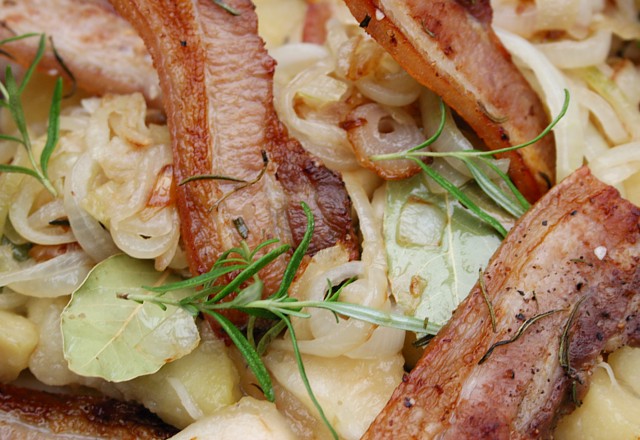
The natural content and ingredients in Danish food culture has been built up for centuries and flavored to match the taste of the traditional eating habits of the Danish people from region to region and up to this century. To preserve food in olden days – the items of meat – fish and fruit was either salted – smoked or brine-pickled and could be stored for a very long time. The modern Danish kitchen uses many old recipes from the non-refrigeration period – and is still highly preferred and enjoyed at the dinner tables in Denmark.

Traditional and Conservative Food Culture
Rye bread 
and beer has for thousands of years been a basic part of the daily food consumption and later potatoes and heavy gravy was the main supplement to fish and meat dishes. The present Danish food culture is still very traditional and conservative – and is nevertheless based on deep-rooted recipes prepared during generations and centuries – in spite of influence from foreign countries and cultures.

051214-danish-smørrebrød
Danish “Smørrebrød”
Almost every Danish restaurant in Copenhagen serve the traditional “open faced sandwich” called“smørrebrød” – with many different potions of food items as cold cuts – pieces of meat or fish – various paste – salad dressings and cheese on buttered rye bread and decorated with all types of toppings that gives the creation a great visual appeal – and is surely a piece of genuine art – when presented on a well laid table with cold Danish beer and snaps. “Smørrebrød” is normally served together with the famous Danish beer and snaps.

How much food is it physically possible to heap on top of a slice of rye bread? At Copenhagen’s smørrebrød restaurants you’ll find out! Smørrebrød comes in hundreds of varieties including veggie options, fish, pate or meat. And just for reference, you don’t fill a smørrebrød open sandwich, you decorate it!

Restaurant Ida Davidsen is probably the most famous place in inner Copenhagen to taste Danish smørrebrød also called open-faced sandwiches.

If you think Danish Crown Prince Frederik, footballer Michael Laudrup, or entertainer Victor Borge are dishy, Restaurant Ida Davidsen may be the place for you.

Danish Food Quotes:
“The impracticality of eating cold duck is that it has to be roasted first!”
(Det upraktiske ved kold and er – at den skal steges først!) Robert Storm Petersen – Danish Cartoonist – Writer – Animator – Humorist – 1882-1949

How to boil a three-minute egg?
“Bring a piano into the kitchen – and play the Minute Waltz* three times!”
(“Hvordan koger man et blødkogt æg på tre minutter? – Anbring et klaver i køkkenet og spil minutvalsen tre gange”!) Victor Borge – Famous Danish Entertainer – Comedian – Conductor and Pianist – 1909-2000

051214-norwegian-traditional-food
Norway’s traditional dishes
are being modernized for a new generation of visitors seeking choice local ingredients and delicate flavor combinations.


Smoked sheep-head
Smoked sheep-head


International media interest in Scandinavian culture has exploded in the last couple of years and a growing appreciation of Norwegian cuisine has been a part of that. With an emphasis on fresh local fish, meat and game served with sweet and sour flavours, the Norwegian kitchen today is a mix of traditional and global influences.

Fish can be prepared using almost every known cooking method; frying, dry-curing, brining, grilling and smoking. Meat dishes tend to be roasted, braised, stewed or fried, depending on the cut and recipe. Vegetables are usually boiled or braised. Root vegetable, fish and meat soups and stews are a link to Norway´s agricultural past but remain popular today.

Norwegian and Swedish chefs have long been exported to some of the world´s leading restaurants, but now many internationally trained Norwegian chefs have returned to open successful restaurants and cafes in their home market.

Three Norwegian restaurants now have a total of six Michelin stars awarded in 2014. Five restaurants have one star whilst Maaemo, the innovative Oslo restaurant has retained its two stars. StatholdergaardenYlajali and Fauna have single stars.

Norwegian cuisine is all about fantastic local ingredients such as king crab from the Barents Sea, excellent fish such as cod or halibut, organic Lofoten lamb or the tasty cloudberry for example. Norway also has chefs to rival the best in Europe; a vast array of local specialities; and traditional dishes for all seasons. Some local dishes may test your resolve as well as your tastebuds (‘smalahove’, salted and smoked head of sheep, is considered a delicacy, but only few foreign visitors dare try), but curious foodies will find plenty of unexpected, pleasant surprises awaiting everywhere.

Famous café on the ground floor of the Grand Hotel on Oslo’s main street, Karl Johan. Grand Café is steeped in tradition and one of the city’s great meeting places since the time of Henrik Ibsen and Edvard Munch. Ibsen himself ate here daily.

Norwegian waffles
Norwegian waffles

Norwegian Quotes on Food
“I am sure my music has a taste of codfish in it.” Edvard Grieg, Norwegian composer (1843-1907)

“A rich and varied menu is for people who have no work to do.” Roald Amundsen, Norwegian explorer (1872-1928)

What you should know about Sweedish Food

Lingonberries go with anything
Just like ketchup and mustard, lingonberry jam is widely used to accompany a variety of dishes, from meatballs and pancakes to porridge and black pudding (blodpudding). But despite its sweetness, it is rarely used on bread. Thanks to the Right of Public Access (Allemansrätten), which gives everyone the freedom to roam and enjoy nature, many Swedes grow up picking lingonberries in the forest, and using these tiny tart red fruits to make a jam-like preserve.

051214-swedish-lingonberries
Pickled herring – centre of the smorgasbord
You might swap meatballs (köttbullar) for mini sausages (prinskorvar) or pick cured salmon (gravad lax) rather than smoked, but your smorgasbord wouldn’t be complete without pickled herring (sill). This fishy favourite remains the basis of every typical Swedish buffet. With an abundance of herring in both the North and Baltic Seas, Swedes have been pickling since the Middle Ages, mainly as a way of preserving the fish for storage and transportation. Pickled herring comes in a variety of flavours – mustard, onion, garlic and dill, to name a few – and is often eaten with boiled potatoes, sour cream, chopped chives, sharp hard cheese, sometimes boiled eggs and, of course, crispbread.

051214-pickled-herring
Crispbread – what’s your favourite topping?
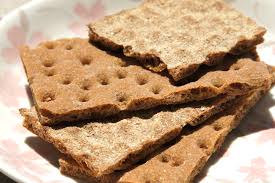
In addition to bread and butter, you’ll often find a type of crispbread (knäckebröd) served alongside your main meal. This is what the Swedes tend to reach for. Once considered poor man’s food, crispbread has been baked in Sweden for over 500 years, can last for at least a year if stored properly, and remains among the most versatile edible products. The Swedish National Board of Health and Welfare (Socialstyrelsen) ran a campaign in the 1970s suggesting Swedes should eat six to eight slices of bread a day, including crispbread. This comes in various shapes, thicknesses and flavours, with entire store shelves devoted to it. Crispbread can be topped with anything from sliced boiled eggs and caviar squeezed from a tube for breakfast; to ham, cheese and cucumber slices for lunch; to just plain butter along with your dinner.
051214-crispbread

The right of public access
Allemansrätten – the right of public access – gives everyone the right to enjoy Sweden’s outdoors. It allows the public to roam freely, even on private land, to camp overnight and to pick mushrooms and berries. The right also brings responsibilities – to treat flora and fauna and other people’s property with care. It can be summed up in the phrase ‘don’t disturb, don’t destroy’. The right of public access is written into the Swedish constitution. But it is not a law as such, rather a custom or part of the cultural heritage that has evolved and become accepted over the years.

Stockholm is a great city for foodies. However, rooting out places that serve traditional swedish (“husmanskost”) food can sometimes be difficult. Which is a shame, really, as there are some really interesting and unique dishes to sample in the city.

Tranan is a nice restaurant close to Odenplan tube. Traditional but not stuffy, with excellent service and atmosphere. Crowded most nights of the week – go early or book ahead. The fried herring (stekt strömming), meatballs (köttbullar), cured salmon (rimmad lax) and isterband (coarsely ground sausage) are all excellent and well worth a try. Also – try the biff rydberg, which is diced beef served with fried potatoes, horseradish and egg.

Räksmörgås and other open sandwiches
When you order a sandwich, don’t be surprised if it involves just a single slice of bread, the typical Swedish smörgås. The Swedish concept of open sandwiches dates back to the 1400s when thick slabs of bread were used as plates. In Sweden, the shrimp sandwich (räksmörgås or räkmacka) remains the option fit for a king. Piled high with a mix of boiled egg slices, lettuce, tomato and cucumber, this seafood snack is often topped with creamyromsås – crème fraîche blended with dill sprigs and roe. Shrimp sandwiches are such an integral part of Swedish culture, they have inspired a popular saying: ‘glida in på en räkmacka’ (literally ‘glide in on a shrimp sandwich,’ but roughly corresponding to the expression ‘get a free ride’), meaning to get an advantage without having done anything to deserve it.

Pea soup and pancakes
Many Swedes grow up eating pea soup and pancakes (ärtsoppa och pannkakor) every Thursday. This tradition has been upheld by the Swedish Armed Forces since World War II. While its true origins are widely debated – from Catholics not eating meat on Fridays, thus filling up on pea soup on Thursdays, to pea soup being very easy to prepare by maid servants who would work half-days on Thursdays – the tradition has well and truly stuck. Most traditional lunch restaurants serve pea soup and pancakes with lingonberry jam or any kind of jam (sylt) on Thursdays.

OLYMPUS DIGITAL CAMERA

A princess cake is not only for royals. Swedes eat it all year round to celebrate important events.

Prinsesstårta – a royal indulgence
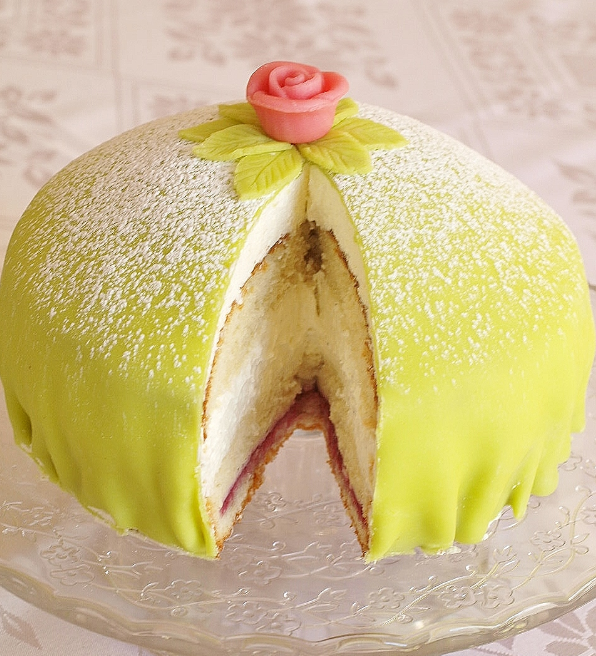
Colouring the window displays of bakeries throughout Sweden is the all-time favourite green princess cake (prinsesstårta), topped with a bright pink sugar rose. Comprising layers of yellow sponge cake lined with jam and vanilla custard, and then finished off with a heavy topping of whipped cream, the cake is carefully sealed with a thin layer of sugary sweet green marzipan. A relatively recent addition to Sweden’s culinary history, princess cake debuted in the 1920s, courtesy of Jenny Åkerström. She was a teacher to King Gustav V’s brother Prince Carl Bernadotte’s daughters – Princesses Margaretha, Märtha and Astrid – who loved it so much that they inspired its name.
051214-princess-cake
While the third week of September is officially princess cake week, this popular cake is now eaten during special festivals and is used to mark many milestones in people’s lives. Today, it comes in a variety of colours – from the classic green to yellow for Easter, red at Christmas, orange for Halloween and white for weddings.

The calendar of sweet delights
In Sweden, people can always find a good excuse to tuck into something sweet – so much so that specific calendar days are designated to the celebration of particular sugary specialties. Cinnamon Bun Day (Kanelbullens dag) is celebrated on 4 October. Buns filled with cream and almond paste known as semlor are eaten on Shrove Tuesday or ‘Fat Tuesday’ (fettisdagen) as the Swedes call it – the day before Ash Wednesday (askonsdagen), the first day of Lent. Waffles (våfflor) are consumed on 25 March, and creamy sponge cakes decorated with chocolate or marzipan silhouettes of King Gustav II Adolf (Gustav Adolfs-bakelse) on 6 November in memory of the Swedish monarch who was killed on this day in 1632 at the Battle of Lützen.

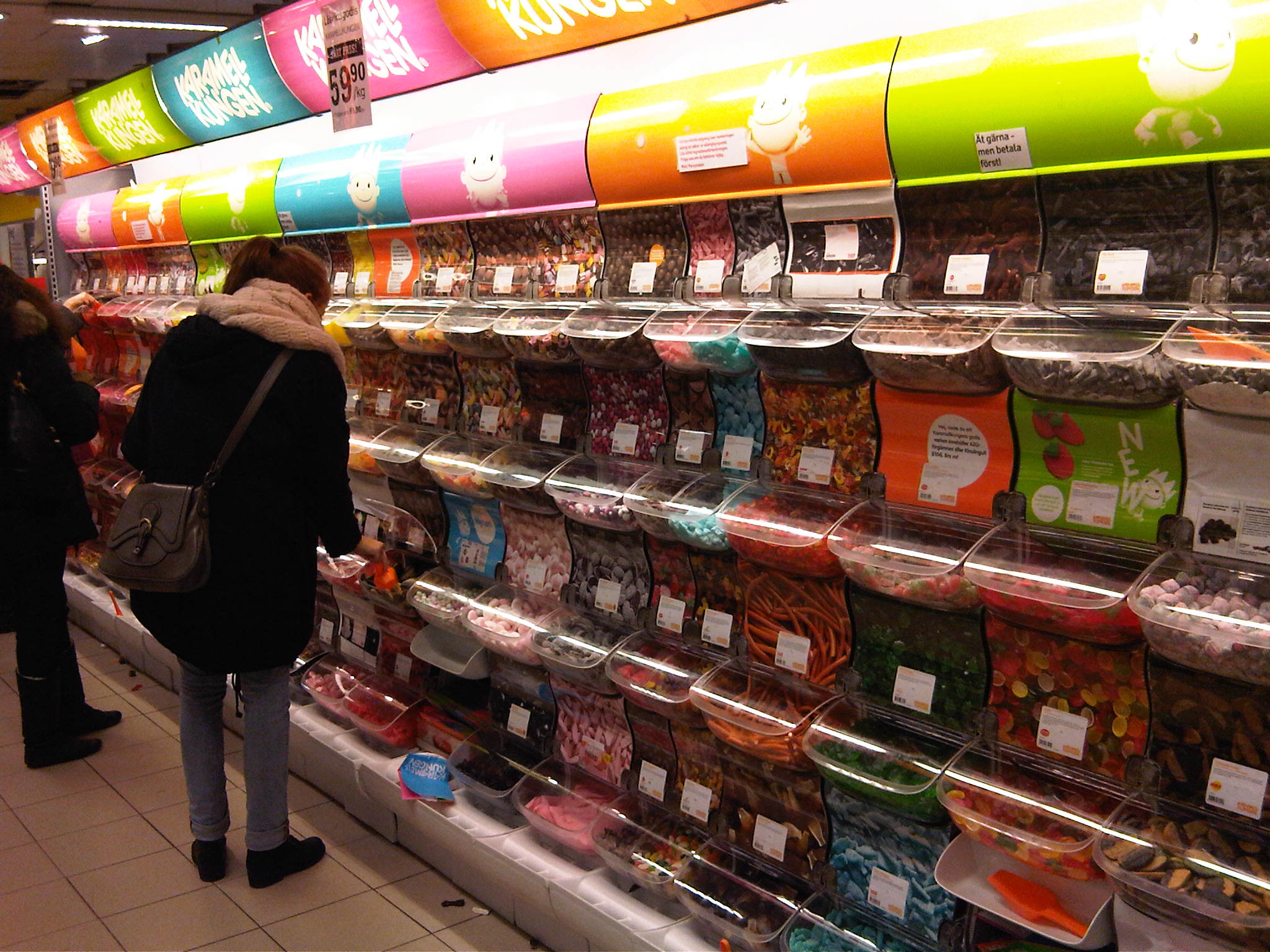
Swedes & their sweet tooth
The average Swede eats cakes and pastry equivalent to 316 cinnamon buns per year (2010). Even though the majority if 16 to 84-year-old exercise at least twice a week, it’s not quite enough to compensate for the calories gained.
051214-swedish-sweets

148,766,006 kilos is the total weight of cinnamon buns consumed by Swedes a year – or around 350,000 moose. (Source: The Swedish Board of Agriculture and Statistics, Sweden)

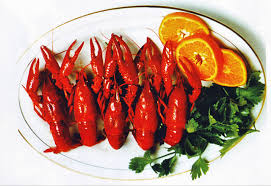
Crazy for crayfish
Crayfish parties (kräftskivor) are popular in August, when warm summer evenings are spent feasting on these red bite-sized freshwater shellfish – or saltwater shellfish (then called langoustine or, funnily enough, Norway lobster) – in gardens and on balconies all over Sweden. Eaten only by Sweden’s upper-class citizens and aristocracy in the 1500s, crayfish have become a national delicacy enjoyed by all, with mass importation having significantly brought down the price over the centuries.
051214-crayfish-dish
There’s something fishy about Surströmming
Every culture has at least one culinary speciality that makes both locals and visitors cringe. From late August to early September, a stinky tradition is upheld in Sweden, particularly in the northern part of the country. This is when cans of fermented sour Baltic herring (surströmming) are opened – a tradition dating back to the 1800s. The custom preferably takes place outdoors owing to the overpowering, unpleasant smell, which many compare with rotten eggs and raw sewage.

051214-surstromming
Lördagsgodis
 (Saturday sweets)
The average Swedish family, with two adults and two children, eats 1.2 kilos of sweets per week – most of it on Saturday, sweets day. Upheld mostly to protect people’s teeth and prevent dental cavities, the once-a-week tradition is historically linked to dubious medical practices. In the 1940s and 1950s, at Vipeholm Mental Hospital in Lund patients were fed large amounts of sweets to intentionally cause tooth decay, as part of a series of human experiments for research purposes. Based on findings from 1957 of the direct relationship between sweets and tooth decay, the Medical Board suggested Swedes eat sweets only once a week – an unwritten rule that many families still stick to.

Perhaps you now better understand why many travelers come to Scandinavia just as flight foodies?

Norwegian Enthusiast Supports Neil Young’s New Device Pono

Rock star Neil Young wants to revolutionize the music industry with his new music download device Pono, which looks like a box of  Toblerone chocolate. Norwegian enthusiast Haakon Olsen from Drammen, Norway, supports him.

Eamonn Forde in the British paper Guardian is one of the first who has listened to it. He says, “It delivers on its promises. I listened to tracks from Elton John’s Madman Across the Water, Led Zeppelin II and Beck’s Morning Phase as well as Heart of Gold by Neil Young (of course), Contact by Daft Punk and Take Five by Dave Brubeck.”

Pono music player
Haakon Olsen, taking part in an exclusive ‘prototype’ dinner at a luxury hotel in New York agrees. So far only 30 Ponos, or Omnifone as it probably will be named, have been produced.

The audience is a niche (people who pay for music) within a niche (people who want digital music) within a niche (people who care about the sound quality), so it’s not going to be for the mass market, at least not for some time.

In the middle of November there were more than 1,7 million songs available. According to Pono World Times the library increases by one new song every second second.

Canadian rock legend Neil Young wants to challenge Apple, Sony and everybody else using the file format mp3 to play digital sound. Mp3 is easy to use and take up little space, but the sound suffers, according to music enthusiasts.

The educator Haakon Olsen from Drammen has been a fan of Neil Young since 1990 and followed him around the world, seen the artist perform 23 times in 11 countries. His description of Pono?

“It might be compared to watching a film with or without high-resolution,” he says.

Feature image (on top) from left to right: Neil’s manager Elliot Roberts, Haakon Olsen and Neil Young. (Copyright Haakon Olsen).

The world’s most illuminating experiences

Northern Norway has been selected one of the world’s ten top regions in Lonely Planet’s new publication  “Best in Travel 2015”. 

2015 is the UN Year of Light – so make a beeline for these brilliantly bright, bedazzling places.
031214-Lonely-planet-best-in-travel-2015-b
Aurora, Abisko, Sweden
The northern lights shimmer right across the polar regions – if solar activity is particularly exuberant you might even glimpse the lights as far south as Scotland. But, really, to maximise your chances of seeing aurora action, head for Abisko’s Aurora Skystation, nearly 200km north of the Arctic Circle and a long way from pretty much anything else. The surrounding mountains keep the skies almost always clear – light pollution is zero – and long winter nights provide the perfect black canvas for the heavenly glow.

031214-Aurora_sweden

Abisko’s Aurora Sky Station (auroraskystation.com) is 100km west of Kiruna. The best time to visit is September to March.

Midnight sun, Svalbard, Norway
Wish there were more hours in the day? No problem, plan a summer trip to Svalbard. Nudging the North Pole, this Arctic archipelago has long, dark, gloomy winters but makes up for it come spring: in the capital Longyearbyen the midnight sun lasts from 15 April to 26 August. That’s more than four months of relentless rays, the sun never dipping below the horizon. Make the most of all this light – once the seas are accessible (usually from June), board an expedition cruise and spend the wee hours on deck watching calving glaciers, grunting walruses and polar bears patrolling the pack ice. Wild nights indeed.

031214-polar-bear-in-svalbard
There is no ferry service between Svalbard and
 Norway; Longyearbyen is served by flights from Oslo.

One of the best places to get a ‘yes’ is Trolltunga (See video). Why not together with illuminating experiences?

This is what Lonely Planet journalist Kerry Christian says after her visit to the region: : ‘ I was blown away by the region’s wildlife, kind-hearted people and out of this world beauty. There’s no place like it for adventure, either. Where else can you meet Sami reindeer herders, dart past the world’s strongest tidal current on a RIB, cross the Arctic Circle, and watch the Northern Lights come out to play all in the space of a day? Cities like Bodø and Harstad reveal surprises, too, with rich culture, terrific restaurants and party-loving people. I lost my heart to Northern Norway, so much so that I’ve never found it harder to catch a plane home.’

The Swedish Connection to Mardi Gras

Mummery in America is as unique to Philadelphia as Mardi Gras is to New Orleans.  The Swedes were Philadelphia’s first settlers, with settlements starting as early as 1639. When they arrived in Tinicum Township, just outside Philadelphia, the Swedes brought with them their custom of visiting friends and neighbors on “Second Day Christmas”, December 26.

Later they extended this period of merriment to include New Year’s Day, and welcomed the New Year with masquerades and the parading of noisy revelers. One can see the similarities to be found in Philadelphia’s mummers’ festivities compared to that what occurred with the Cowbellions in Mobile in 1830.

These New Year’s traditions then travelled to New Orleans where they were incorporated into the European Mardi Gras.

The Mardi Gras parade tradition began in 1856, when the “Mistick Krewe of Comus” — a group of Anglo-Americans from Alabama — rolled two floats through New Orleans’ streets at night. In subsequent years the krewe became renowned for its dream-like wood and papier-mâché floats inspired by classical themes.

Romances of Wales by Bror Anders Wickstrom

Comus is the Greek god of revelry, merrymaking and festivity. He was the son and cup-bearer of the god Dionysus.

Matholwich - King of Ireland by Bror Anders Wickstrom
Matholwich – King of Ireland by Bror Anders Wickstrom


Krew
 is an organization that puts on a parade or ball for the Carnival season (New Orleans Mardi Gras and some other carnival sites in the US).

Prior to Mistick Krewe of Comus, Carnival celebrations in New Orleans were mostly confined to the Roman Catholic Creole community, and parades were organized informally.

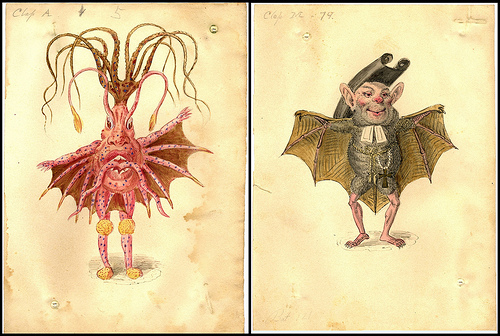
Alligator and Zebra by Charles Briton

New Orleans parade design reached its pinnacle in the late 1800s through the work of two cosmopolitan Swedish artist-emigres — Charles Briton and Bror Anders Wikstrom, which documents the swedish connection to Mardi Gras. Their fantastical creations — with titles like ‘The Prince of Darkness is a Gentleman” (a quote from King Lear) and “Sunset Dance of the Mosquito” — were whimsical confections bedecked with follies, flowers and grottos glittering with giant jewels. Comus ended its parade in 1992, in protest of a city ordinance that banned discrimination in Mardi Gras groups.

Sea-nettle and bat by Charles Briton

Comus was an outgrowth of the Cowbellion de Rakin Society, a group of Mobile revelers first celebrating New Year’s Eve a quarter of a century earlier and whose leader, Michael Krafft, was likely influenced by his Pennsylvania mummer traditions. The noisy group celebrated the coming of the New Year in a parade manned with cowbells, rakes and hoes. These mummer-oriented festivities would eventually make their way to New Orleans.

Charles Briton, a native of Gothenburg, Sweden arrived in New Orleans in 1865.  The young Swede, was soon employed by lithographer Emile Boehler, and resided with the Boehler family for ten years at 456 Bienville St.  Briton fell ill with yellow fever in 1688 and nearly died, but he was nursed back to health by the Boehlers. The following year brought Briton’s earliest known Carnival design, the ensemble tableau for the Comus Ball of 1870, “Louisiana: her founders and defenders”.

Throughout Carnival’s Golden Age, everything connected with the design, housing or construction of the pagents was sacred and hidden.  To the krewe captains and design committees, the anonymous Briton became quite well known, for all the early carnival societies turned to him to design every aspect of their production – floats, costumes, tableau, ball settings and invitations.

Charles Briton died at the age of 44 on July 1, 1884 while working in his studio on Exchange Alley.  His young neighbor and fellow Swede, Bror Anders Wikström, had helped him to finish the designs for Rex.  Wikström succeeded Briton and continued to design for Rex, and later for Proteus. He designed the carnival parades of the Krewe of Proteus from 1900 to 1910.

021214-bror-anders-wickstroem
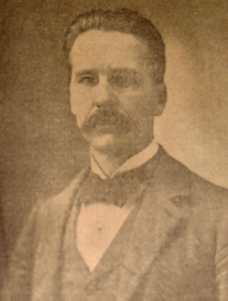
Bror Anders Wikström, born on April 14, 1854, came to New Orleans already in 1883, but his entrée to the world of carnival came when he began to work with Charles Briton. He was known for his marine paintings as a sailor, and also for his Louisiana landscapes, as well as portraits and historical subjects.   Wikström ran away to sea at a young age and spent a dozen years as a sailor.

When he returned to Sweden, he studied at the Royal Academy of Art in Stockholm and later in Paris before setting out to make his fortune in America.  Bror Anders Wikström died in New York City on April 27, 1909, while working on a design for a parade for the Hudson-Fulton Celebration.

021214-bror-anders-wickstrom-mangrove-swamp
Today many of Wikström’s paintings, such as Mangrove Swamp (1902), along with some of his etchings, Carnival sketches, and even some of his tools, can be found at the Louisiana State Museum in New Orleans.

Fature image (on top) Krew de vieux

Kindly submitted by Cecilia Kjellgren, New Orleans

Sources:
http://www.neworleanspubliclibrary.org/~nopl/exhibits/mg2002/prointr.htm

http://www.neworleansbar.org/uploads/files/Rambos%20Role%202-6.pdf


Queen of Skis

0

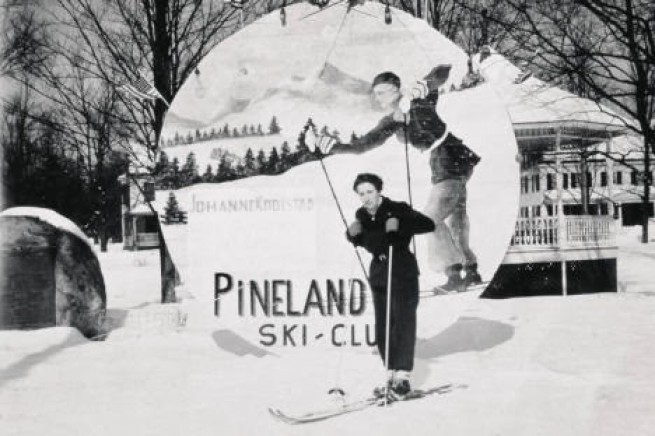
On March 6, 1938, 24 year old Johanne Kolstad from Dokka, Norway, set her latest world ski jump record of 72 meters in New Hampshire, USA, a record that would stand for 35 years.

Such a young woman should not be forgotten. In a ski jumping world dominated by men, she and other women struggled to gain respect as athletes.  It would take many years before their goal would be achieved at Holmenkollen with the advent of the women’s jumping competition.Until then Johanne had mostly done test jumps and entertainment performances during intermissions. But this she did so well that she got a good skijumping name –  worthily reminded at the exhibition “Queen of Skis”  at HolmenkollenSkiMuseum. The exhibition lasts through September this year.

011214_johanne_kolstad_queen_of_skis
Kolstad’s years in America were a sporting success, flooded with offers across the country, she was a topic of conversation in all US ski communities.

“The Queen of Skis” received invitations from Norwegian American ski clubs across the United States: Detroit, Salt Lake City, Auburn, Greenfield, New Boston and Portland. Johanne Kolstad was the young ski champion that everyone wanted to see and meet.

011214_Johanne-Kolstad_Daily_Scandinavian
In December 1937 she was the main attraction at an indoor winter event at Madison Square Garden in New York, performing single and triple jumps. Her homespun trousers were then replaced by red silk.

Two months later, Kolstad was a guest in Montreal, Canada. In an Alaskan dog sled, the popular ski champion was taken to the city hall where she was received by the Mayor of Montreal.

A newspaper reported that she was “starting to get Americanized, so the outlook is promising.  Miss. Kolstad, who last winter conversed with her American admirers by answering in her local Norwegian dialect, now has the American language in her power.”

The Norwegian press was curious about the new life of Johanne.  Mrs. Bruun, wife of the president of the Norway Club, Fred Bruun, reveals: “Johanne has never smoked, does not drink coffee, eats almost no meat, does not know what gin is, but drink milk and eat seven bananas a day.”

011214_Jump_Girls_JuSki historian Karin Berg is perhaps the person in Norway who knows most about ski jumping for women. In 1998 she published the book “Hopp jenter – hopp!” (Jump Girls – Jump !) in which Johanne was thoroughly portrayed. Berg wrote the book in cooperation with Johanna’s daughter, Anne Marie Aastad Braten. Karen Berg is at present director of the Holmenkollen Ski Museum, and participated also in a program about Johanne in the NRK (Norwegian Radio Cooperation) series “Forgotten heroes”.

Written by Tor Kjolberg
Feature image (on top): Skiforeningen, Norge

The Viking Silk Route

0

Birka was founded towards the end of the 8th century, and archeological excavations have revealed trade networks stretching east to Byzantium and as far as China.

281114-silk-for-the vikingsThe finds, which include silks from the Far East, Arabic coins and glass beads from the Arabic Caliphate, have challenged the belief that the Viking Age was all murder and mayhem. They point instead to a burgeoning, prosperous society made up of merchants, traders and farmers.

Birka was the first town in Sweden to come into contact with Christianity. But the town was never evangelized, and in some graves Thor’s hammer was found alongside a crucifix.

The Viking silk routes are described in the book “Silk for the Vikings” by Marianne Vedeler. It takes a closer look at the organization of production, trade and consumption of silk during the Viking Age. Beginning with a presentation of the silk finds in the Oseberg burial, the richest Viking burial find ever discovered, the other silk finds from high status graves in Scandinavia are discussed along with an introduction to the techniques used to produce raw silk and fabrics.

281114-Kilwa-coins
Later chapters concentrate on trade and exchange, considering the role of silk items both as trade objects and precious gifts, and in the light of coin finds. The main trade routes of silk to Scandinavia along the Russian rivers, and comparable Russian finds are described and the production and regulation of silk in Persia, early Islamic production areas and the Byzantine Empire discussed. The final chapter considers silk as a social actor in various contexts in Viking societies compared to the Christian west.

The museum at Birka is open between May and mid-September. Boats leave from outside Stockholm City Hall, at Stadshusbron.

281114_Birka-sweden

Related articles
Birka- the Swedish Viking Trading Center
The Vikings – Medieval Thugs or Merchant Traders?
Vikings’ Trade with Byzantium

This Robot Can Transform Norwegian fishing industry

0

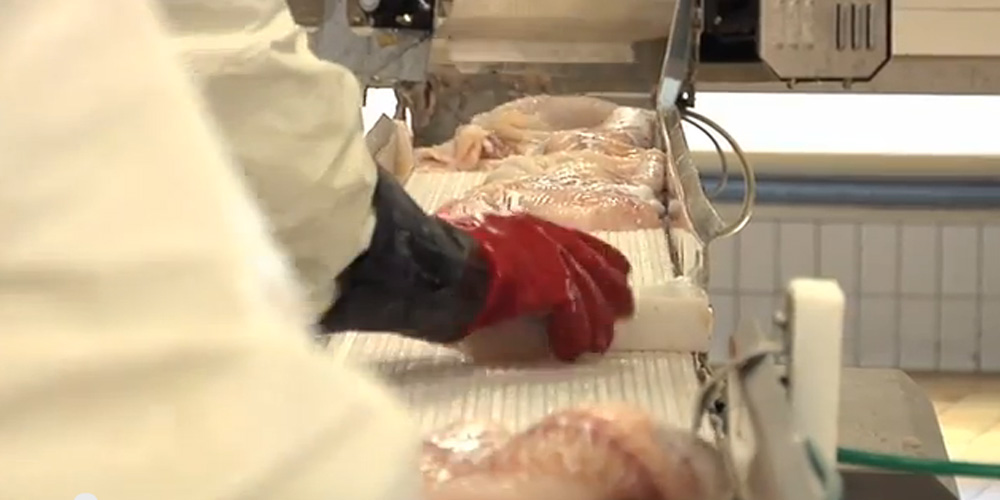
There is now a machine that locates the fish bones using X-ray technology, and fillets the fish quickly and precisely with a powerful jet of water.

Unlike farmed salmon, white fish varies greatly in size and weight. This means that until now, no one has been able to develop a machine that can fillet these fish.

271114-fileting-robot
The new filleting machine can, however, result in a positive upturn in the Norwegian fishing industry. The machine is a result of a development project run by Nordic Innovation, in which Sintef, Marel, Faroe Origin and Norway Seafoods have been working together.

Getting the bones out
White fish is complicated and time-consuming to fillet, because the bones are difficult to find and remove.

As a result, three to seven per cent of the most valuable part of the fish is currently cut away unnecessarily.

Researchers at SINTEF ICT have conducted X-ray tests in the laboratory, and have used CP scanners at Oslo University Hospital to learn more about where fish bones are located.

The technology focuses on image analysis and recognition. The new machine locates the fish bones using X-ray technology, and fillets the fish quickly and precisely with a powerful jet of water. This means that the fish is guaranteed to be boneless, with considerably less wastage than with manual filleting.

Processing in Norway
“Norway only exports 10 to25 per cent of processed products – depending on whether it is white fish or farmed fish”, says Marit Aursand, Research Director of SINTEF Fisheries and Aquaculture.

271114-Marit Aursand-SINTEF“Most of our most important seafood products – such as salmon, cod and herring – receive only minimal processing or treatment before they are sent abroad. In other words, the potential for carrying out more processing in Norway is huge, and this robot could provide a breakthrough, giving us a much-needed competitive advantage over low-cost countries in Asia, Eastern Europe and Russia”, says Aursand.

Currently, fish caught in Lofoten may travel through two other countries for filleting and packing before it returns to Norway. But this new invention would make it possible to send fresh fish direct to the shops from Norwegian facilities.

“Fish processing in Norway will soon become a thing of the past if the filleting process is not automated and made efficient and profitable. This is why this new invention is so important. It means that we can improve the quality and selection of fresh fish products, and keep the industry on Norwegian soil”, says Aursand.

Culinary Attractions in Gothenburg, Sweden

0

There are several interesting landmarks for the foodie to explore in Gothenburg. The two things that Sweden does exceptionally well are wild game and seafood, and for seafood, locals head straight to Gothenburg, Sweden’s second-largest city.

The cold clean waters of the North Atlantic Ocean blesses this city with the freshest fish and shellfish in the country, which has solidified Gothenburg its gastronomic reputation.

Here are some of the most famous market halls and culinary attractions in Gothenburg, Sweden you should not miss.

261114-fiskekyrka-fishchurch-gothenburg-sweden
Gothenburg has an iconic food market — dedicated to all things fish. A scenic walk along Rosenlund’s Canal, which surrounds the city’s core like a moat, takes you to the instantly recognisable Feskekörka, or  ‘fish church’ in Swedish, as it quickly became known, is an indoor fish and seafood market where you can buy all kinds of seafood delicacies caught on the day.

Feskekorka was built in 1874 and was an architectural experiment by Victor von Gegerfelt, a military man and architect and one of the two most influential architects from the mid-19th century. He was inspired by the wooden Norwegian stave churches and stone Gothic churches. The idea was to have a room without pillars.

???????????????????????????????
This reverence for fish and shellfish continues within the cathedral-style building of the iconic Sjömagasinet. Sjömagasinet is a flagship for Swedish gastronomy and offers excellent service in a rustic setting. The restaurant has a picturesque location by the waterfront in Klippan.

Sjömagasinet has one star in Guide Michelin and is run by owner Ulf Wagner and head chef Gustav Trägårdh (Chef of the year 2010). The restaurant building dates back to 1775 and was previously used as a warehouse for the East India Company. World-famous stars like Bruce Springsteen and U2 have dined at Sjömagasinet.

261114-kometen-restaurant-gothenburg-sweden
Kometen (The Comet) is a popular eatery with both locals and celebrities. Kometen has always been an entertaining place to visit. Countless are the authors, artists and musicians who made their mark on the atmosphere. Here customers have enjoyed well-known Swedish dishes of high quality ingredients since ages. Their renowned wiener schnitzel is really out of the ordinary. Today, the restaurant is under the direction of the famous star chef Leif Mannerström.

261114-Thörnströms-kok-gothenburg-sweden
A culinary experience beyond the ordinary is promised at Thörnströms Kök, You will find eight to 10 different types of sourdough bread alongside your meal, featuring flavours of fennel and sea salt, lemon and dill, walnut, onion, rosemary and cumin among others, which chef Håkan Thörnström has baked every day for the last 15 years. Modern Swedish cuisine using carefully selected regional products, served in an elegant restaurant setting. Thörnströms kök has one star in the prestigious Guide Michelin.

261114-restaurant-familjen-gothenburg-sweden
If you would rather eat meat over seafood, locals nod in consensus whenever restaurant Familjen (The Family) is mentioned. Familjen is a contemporary West Swedish brasserie with a warm and friendly atmosphere. The chefs have high ambitions and use locally produced ingredients after season.

From the menu you can either choose from a wide range of small dishes with classic Swedish flavours or a set three-course menu. In the summer you can enjoy the sunset at Familjen’s outdoor terrace.

261114-norda-bar-grill_gothenburg-sweden
Navigating Gothenburg’s culinary scene would be incomplete without a nod to native son-turned-celebrity chef, Marcus Samuelsson of Red Rooster fame in New York City’s Harlem neighbourhood, who is now one of the creative forces behind Norda Bar and Grill.

“If it’s difficult to get a seat at the bar, getting a table at the Norda Restaurant isn’t exactly easy either. Reservations are a must. The popularity of the restaurant is turbo charged by local celebrity chef hero Marcus Samuelsson adding his name and face to the concept, but the kitchen is headed up by the talented Jimmy Lappalainen on a daily basis. I’m always a skeptic when celebrity chefs attach their names to hotel restaurants on the other side of the globe from where they actually live, so my expectations were honestly not that high,” wrote Huffington Post.

Compiled by Daily Scandinavian

Prestigeous Prize to Norwegian Film Director

0

Norwegian film director Morten Tyldum won the Hollywood Director Award at the 18th annual Hollywood Film Awards earlier this month.

251114_The-imitation-game-posterRobert Pattinson, who won the New Hollywood Award at the 2008 awards, presented the Hollywood Director Award to The Imitation Game director Morten Tyldum, who thanked the crowd, saying, “I’m new to Hollywood and this is the warmest welcome I could imagine.”

Keira Knightley was honored with the Hollywood Supporting Actress Award for her role as Joan Clarke, a cryptanalyst who was part of Alan Turing’s code-breaking team, in The Imitation Game.  The film also picked up the award for best male actor (Benedict Cumberbatch) and best composer (Alexandre Desplat).

The Imitation Game is a film about a group of British experts selected to work in a covert operation in 1939 to crack the Nazi’s Enigma code.

Norwegian film director Morten Tyldum

The film is expected to receive several Oscar prizes as well.

Showing at selected theatres in USA now.

Eight Delicious Reasons Why You’ll Love Scandinavian Food

It’s only in the last couple of years that Scandinavian food has risen in popularity, but now it is getting global acclaim – especially after Rene Redzepi’s Copenhagen restaurant Noma was named the best in the world.

Sweden, Denmark and Norway are famous for their fresh flavours and foraged produce. From sweet berries to wild game and cured fish, Scandinavian cuisine relies heavily on wild, natural ingredients. Most Scandinavians are great foragers, bakers and preservers, making for a wonderful array of dishes and delicacies. As Scandinavian food writer Signe Johansen says: “There is so much more to our little corner of the world than herrings and meatballs – excellent though they are.”

Daily Scandinavian rounds-up eight delicious reasons why you’ll love Scandinavian food.

Fish
The cool waters of the Norwegian, Baltic and North Seas supply an abundance of sweet-tasting fish and shellfish; according to Camilla Plum, author of The Scandinavian Kitchen, these fish are the cornerstones of Scandinavian cooking.

241114-norwegian-fish-dish

Salted fish (known as clipfish/klippfisk) is a popular Scandinavian delicacy. It is usually made with cod that are gutted and salted as soon as they are caught at sea, then dried when the boats come back to shore. Salted fish is reconstituted by drawing out the salt in a few changes of water – the resulting taste is still quite salty, however.

Gravadlax is a well-known Scandinavian dish consisting of raw salmon cured with salt, sugar and dill. It is traditionally eaten with mustard sauce, rye bread and lots of fresh dill.

241114-graved-salmon

Cured fish, particularly herring, is another delicacy strongly associated with Scandinavia, in particular Sweden and Denmark. It is traditionally eaten with rye bread, crisp bread or potatoes, and flavoured with onion, sherry, mustard and dill.

Fermented herring (surströmming), sold in cans, is also popular. Known as Scandinavian rotten fish, due to the strong smell, it’s fermented for 1-2 months before canning, and is banned on some commercial flights as it is believed the pressurised containers could be dangerous.

Jansson’s Temptation is a popular Scandinavian dish that epitomises the cuisine: potatoes, cream and cured fish. Traditionally made with pickled sprats, the dish is now made with anchovies.

241114-Janssons-temptation 
Meat

Hunting is a popular sport in Scandinavia, and game such as venison, deer and wild boar is popular.

241114_scandinavian-game-dish

The traditional way of serving game and reindeer is with a creamy sauce, potatoes and a berry conserve or jelly such as lingonberry jam.

241114-scandinavian-meatballs
Meatballs
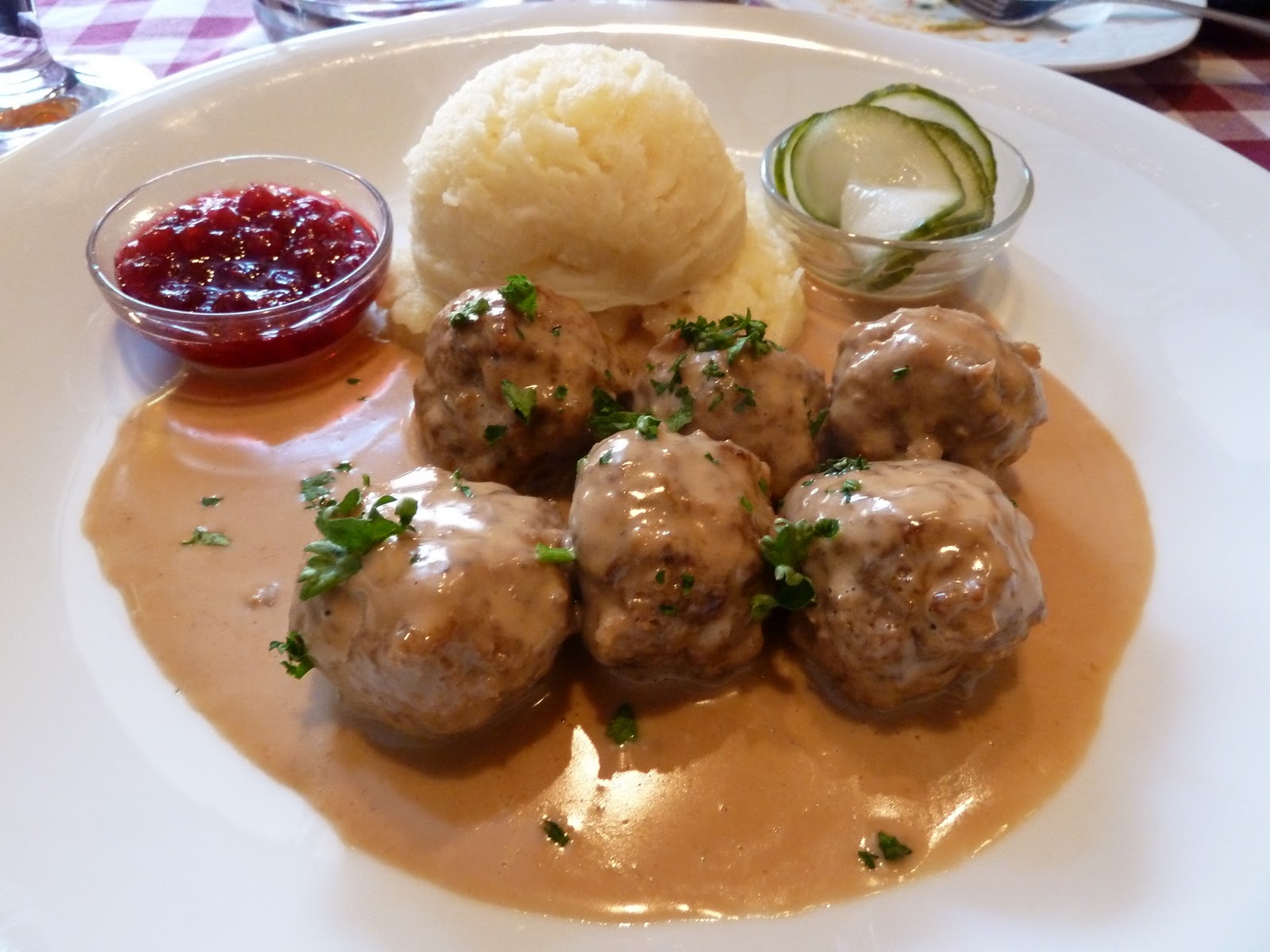
 are, of course, the dish everyone associates with Scandinavia – again, Ikea is known for its Swedish meatballs. According to Camilla Plum, this is the ultimate Scandinavian dish, eaten everywhere, every day. The shape and size of meatballs differ across Scandinavia, although most tend to be made from pork and veal. In Sweden, meatballs are usually served with mashed potato and lingonberry jam, whereas in Denmark they are served with pickled red cabbage in winter and creamed kale, potatoes and beetroot.

241114-scandinavian-strawberries
Berries

These feature heavily in sweet or savoury dishes. Although wild blueberries, strawberries and raspberries are popular, there are two berries that Scandinavia is known for. The lingonberry (known as the cowberry in the UK) is perhaps the most well-known and a cornerstone of Scandinavian cooking. They are a staple food in Sweden and are enjoyed with porridge and on toast as a jam, as well as forming the basis of many sauces for meats and other dishes. Similar to cranberries, and quite bitter, these berries need sugar, hence they are mostly eaten in jam form.

241114_Cloudberries
The cloudberry is another popular berry, but it’s extremely hard to find (and therefore expensive) due to the conditions it grows in. Found in acidic ground in damp areas such as bogs and marshes, they are almost impossible to grow industrially. Cloudberries have a striking golden appearance and are similar in shape to the raspberry, their cousin. They are mostly bought frozen or as a jam or juice.

Other delicacies
Scandinavians have a great tradition of baking – everything from rye bread and crisp breads to cinnamon buns and Danish pastries.

241114-scandinavian-bread
Rye bread is dark, rich bread made with rye, which used to be the staple grain in Scandinavia. It is often used as the basis for open sandwiches (pictured), known as smørrebrød, smørbrød, smörgås, another famed Scandinavian dish. One slice of rye bread is topped with anything ranging from herring to gravadlax to beef. Scandinavian Kitchen, a deli/café based in London, is well known for its beautiful and authentic open sandwiches.

Crispbreads are mainly thought of as a diet snack in the UK, but are a real favourite in Scandinavia and are often used as a base for pickled fish or cheese. Peter’s Yard crispbreads are said to be popular with Scandinavians in the UK, and are made to a Swedish recipe.

241114-Swedish-cinnamon-bun
Cinnamon buns
 (also known as cinnamon swirls or rolls) are very popular and in Sweden there is even a Cinnamon Roll Day (kanelbullens dag, on 4 October) dedicated to this sweet treat.