Daily Scandinavian 2014 Summer Bucket List

There are lots of places to see and experience in Denmark, Norway and Sweden. So much that spending hours to plan a vacation and choosing places to see takes all the fun out of the expectations.
The Daily Scandinavian’s Bucket List makes the planning and choices easy for a fantastic vacation.

Welcome to our 2014 Summer Bucket List!

Denmark

260614_Legoland_Billund_Denmark
Legoland. Billund, Denmark
Win eternal admiration by taking your children to Legoland, with waterpark, rides and the marvelous Miniland, created from 20 million bricks.

Tivoli. Copenhagen, Denmark
Utterly delightful theme park and gardens, right in the heart of the capital city. Fountains and fairground as well as jugglers and acrobats make this a fun family day out for everyone. Related article.260614_tivoli-copenhagen

Fairy-Tale Island of Funen
If something is rotten in the state of Denmark, it certainly isn’t the garden island of Funen. Nor is it the island’s regal and privately owned Egeskov Castle, widely held to be Europe’s best preserved Renaissance island castle. The castle opened again last week.

260614_Egeskov_Castle_Denmark

260614_roskilde-cathedral-denmarkDenmark’s Former Royal Capital
A onetime ecclesiastical seat and the royal capital of Denmark until 1455, fjord-side Roskilde recently marked its 1,000th anniversary, and some of the jubilee air lingers on.

Hamlet’s Elsinore (Kronberg) Castle
So Elsinore Castle’s real name is Kronborg Slot, and so it was built centuries after the time of the Danish prince in whom Shakespare based his tormented, brooding Hamlet. But his fortified Nordic icon of secret passages, with its suitably dungeon and canon-studded battlements, could not have been a better backdrop for Shakespeare’s dark tragedy. 260614_Kronborg_Slot_Helsingor

The Natural Beauty of Aero Island
If Denmark is in your sights as a travel destination, consider a visit to one of the islands to see Danish life at a slower pace while you enjoy fresh air, natural beauty and plenty of options for exercise. 260614_aeroskoping_Denmark

Norway

260614_Vigeland_Park_OsloFrogner (Vigeland) Park. Oslo
Oslo is a very family-friendly city, with outdoor pools, an adventure playground and the Vigeland sculpture park.


Viking Ship Museum – Oslo
presents great Viking ship discoveries from Gokstad, Oseberg and Tune as well as other finds from Viking tombs around the Oslo Fjord.

260314_VikingShipMuseumOslo

The Opera House – Oslo
The highlights of the architectural route are one of the new prides of Oslo, Snöhetta’s opera building at Björvika.

260614_Oslo_Opera_House
Ekeberg Art Park/Restaurant – Oslo
Ekebergparken is a sculpture and national heritage park for the people of oslo and visitors looking for a unique experience.

26061414_Ekeberg_Sculpture_Park_Oslo_Photo_Oyvind_Wold

Oslo –Flåm Rail/Fjord Cruise – Bergen
The mountain railway from Myrdal to Flåm packs the most dramatic scenery – ravines, rivers and toppling waterfalls – into its 12 miles (20 km) route. This part of the “Norway in a Nutshell” trip that adopts a variety of forms of transport to experience Norway’s exhilarating natural beauty.

260614_Flamsbanen_norway

Bryggen – Bergen
The tourist website for Norway captures the spirit and history of Bergen with its description of this city as “a spectacular amphitheatre clambering up the mountainsides.”

260614_Bryggen_Bergen

Sweden

A Castle, a Special Inn and a Picture-Perfect Town
The endearing lakeside village Marienfred in Svealand, with its main attraction, the impregnable redbrick Gripsholm castle, is Stockholm’s perfect day trip.

260614_gripsholm_castle

The Versailles of the North
Clearly inspired by the style of Versailles, the official year-round home, Drottningholm Palace, of Sweden’s present-day King Carl Gustav XVI and Queen Silvia is widely held to be one of the most delightful European palaces.

OLYMPUS DIGITAL CAMERA

Stockholm archipelago
Water, fire and ice have combined to make some of the most spectacular scenery in the world — from giant crystal caves to mud volcanoes and rock formations that look like works of art.

260614-The-Stockholm-Archipelago

260614_Vasa_stern_color_modelThe World’s Oldest Preserved Man-of-War
On August 10, 1628, the magnificent royal warship Vasa sank on her maiden voyage in front of thousands of horrified onlookers before she even left the Stockholm harbor. Sudden gusts of wind and not enough ballast are the most popular explanation.

260614_Birka_Viking_MuseumBirka — The Swedish Viking trading center
One of the most important trading centers in Scandinavia during the Viking Age
In Lake Mälaren, 18 miles west of Stockholm, Sweden, lies the small island of Björkö. Its size belies its importance in the Viking world of 1,100 years ago.

A Swedish Island Retreat in Medieval History – Visby, Gotland
It has taken very little time to fall in love with Gotland, a mysterious sea-swept island in the middle of the stony grey Baltic, off the southeast coast of Stockholm.

260614_sweden-visby

Enjoy!

Compilation: Lars Thomas Tanskanen


Lofoten Opera Hotel

The Norwegian architect firm Snøhetta reveals sinuous hotel project for a Norwegian island.

Architecture firm Snøhetta has unveiled images of a hotel that will wind across a rocky outcrop in Norway’s Lofoten archipelago.

Expected to start on site later this year, the Lofoten Opera Hotel will be located on an outlying site in Glåpen flanked by a mountain range. The new low-rise structure will loop a central courtyard, but will offer views out across the sea to the south and west.

“The spectacular view and the feeling of being ‘in the middle’ of the elements are the premier qualities of the site,” said Snøhetta in a statement.

250614_Lofoten_Opera_Hotel_by_Snohetta_2_dailysdcandinavian

“In a unifying gesture the site is captured in a circular movement, the complex layers of references to nature, culture, land qualities are translated into a band that transforms the site into a place.”

The 11,000 square-metre building will accommodate a mix of hotels and apartments within its curved body. There will also be spa facilities, seawater basins, hiking resources and an amphitheatre.

The project looks set to attract new guests to Lofoten, which is home to one of Norway’s 18 national tourist routes.  Stretching along a 184-kilometre road, the route encompasses facilities for tourists exploring the natural landscape, including the Eggum rest stop completed by Snøhetta in 2007.

250614_Eggum_Reststop_by_Snohetta_dailyscandinavian

Here’s a description of the project from Snøhetta:


Lofoten Opera Hotel

Furthest west of Lofoten, in Moskenes community close to the town Sørvagen, is Glåpen.

The site extends out to sea to the south and west, linking the contact between ocean and the tall, shielding mountains to the north and northwest. The location is spectacular, sunny, in the mighty landscape elements, yet in touch with old settlement and sheltered harbors.

Snøhetta has developed a project and looked at a number of factors: the landscape “critical load” vs. new construction, functional and technical aspects of access, infrastructure, ecology and sustainability, connection to outdoors areas and existing buildings. The main goal is to find the development patterns and shapes that trigger the functional, architectural and experiential triggers the plot’s formidable potential. We think it will be essential to find a building program and a scale that “hits”, both in terms of economy, market and individual experience opportunities.

The spectacular view and the feeling of being “in the middle” of the elements are the premier qualities of the site. Plot view, organisation and habitat as form have been inspiring elements behind the concept. In a unifying gesture the site is captured in a circular movement, the complex layers of references to nature, culture, land qualities are translated into a band that transforms the site into a place.

This form creates an inner and outer space, and enhances the site’s inherent potential of an architectural expression. Concept and program are balanced in a mix of hotels, apartments, amphitheatre, spa, hiking and sea water basins within a total size of 11,000 m2. The local beach culture and storstuga are included in the project. The organic form protects and opens at the same time.

Location: Lofoten
Typology: Residential & Hotel
Client: Lofoten Opera AS
Status: Ongoing
Size: 11,000 sqm

Your Guide to Rural Pearls in Norway

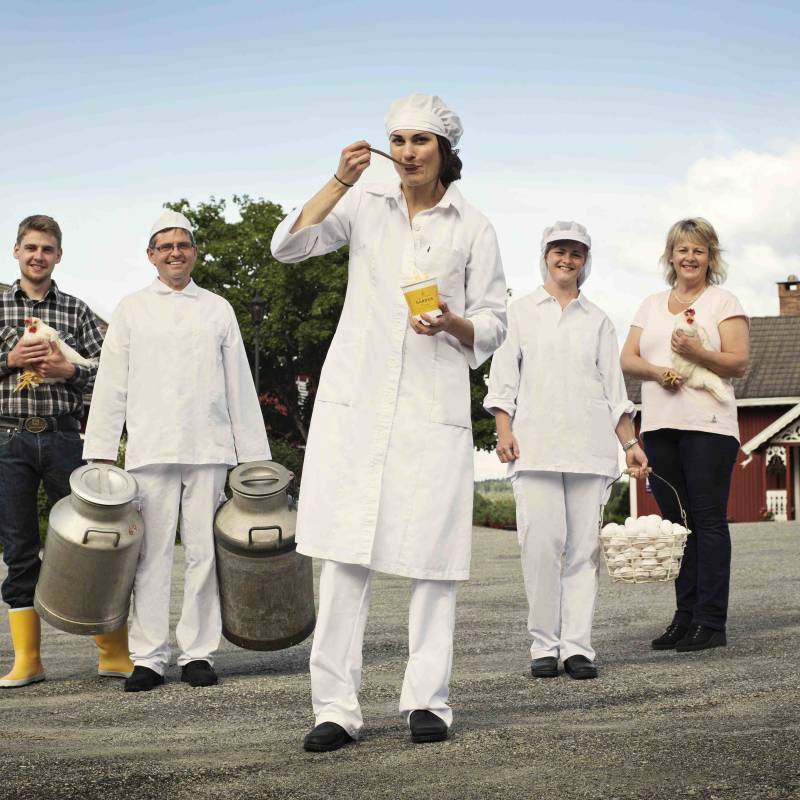
Rural tourism, local food culture, nature, history, cultural landscape – all this and more helps to create an unique experience.

240614_Hanen_Tasteful_experiences
The 450 companies being a part of the chain Hanen (The Rooster/The Cock), offer visitors activities and services, all of which use nature and cultural experiences as a starting point based on the local village and farm’s resources. You will for certain find a lot of rural pearls in Norway with their assistance.

240614_Hanen_The_Rooster_The_CockThese companies communicate culture through history and special characteristics. They demonstrate responsibility for nature and the environment, and they provide experiences that impact all our senses.

240614_Hanen_Old_Grocery_shop
Please note that the various offers and servicse may vary from company to company, and therefore we encourage you to contact the places you want to visit in advance regarding their opening hours, overnight accommodation and food services.

240614_Hanen_Langedrag_Nature_Park
You can find further details about HANEN and its members here.

Daily Scandinavian intends to publish reviews and feature articles on destinations and activities which we believe will be of interest to our visitors and readers.

All Photos: Hanen

Wow, What a Film By a Norwegian Director!

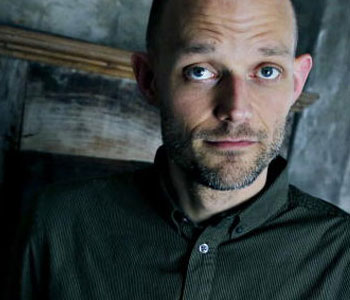
That’s the expression Alex Billington in First Showing used when he reviewed the Norwegian director Eskil Vogs’s new picture Blind last February at the Berlin Film Festival.

230614_Eskil_Vogt
At the Berlin Film Festival, Norwegian filmmaker Eskil Vogt explained that too many films always feel the same, they’re always too predictable, and he wanted to make something different. Something that could even surprise him. And he has done exactly that. Blind, the first feature from writer/director Eskil Vogt, is deserving of the adjectives “brilliant” and “innovative” in the way it twists storytelling conventions and delivers the unexpected; something fresh, a film that stands alone. It’s uniquely captivating and surprisingly thoughtful, with a wonderful performance leading the way, writes Alex Billington.

230614_Ellen_Dorrit_Petersen
Blind
 follows a married woman named Ingrid, played by Ellen Dorrit Petersen, who is blind. She was not born blind, but went blind earlier in her life, allowing her to recall images in her mind. After first meeting Ingrid and listening to her explain the situation and what it’s like to live this way, we’re also introduced to a few other characters, who at first seem to have their own completely separate storylines unfolding. The overlapping narrative is brilliant in its concept and execution, and is part of the unexpected nature of this film. Watching it is like being caught up in a riveting mystery, trying to figure out what’s going while never feeling too out of touch. It’s best to save the revelation of the multiple stories for the experience of the film.

Along with the concept itself, what the film is actually about is the great struggle to live and loveafter going blind. How hard it must be to remain in love and be intimate with someone when it’s hard to even find your way around an apartment, or cook food, or figure out what to wear. It touches upon this struggle from the perspective of a woman, making it even more tender yet still brilliant in the way it dives into her mind and the way she thinks, and how this changes her interaction with her husband and those around her. It’s almost as if Charlie Kaufman took a few passes at the script. She gets jealous, she gets sad, she gets frustrated, but it’s utterly captivating seeing her work through all of it. Especially because it is so innovative, yet caring.

Beyond the script, Eskil Vogt’s work in this shows that he already has the talent of a much more experienced director. From the entire cast to the cinematography, it’s beautiful. There’s a very sensual side to the film that stands out in unique ways. And, as one might expect for a film about a blind person, sound (along with what we’re seeing while hearing these sounds) is important to the experience. Blind has a very lovely score by Henk Hofstede, but it’s also all the music that adds so much more to the story. It’s often worked in as diegetic sound, that transitions back and forth between background music and sound that interacts directly with the experience. There were a few moments that gave me chills I was so impressed by the scene at hand.

Vogt’s Blind is one of the most refreshingly original cinematic creations I’ve come across in recent years and stands out because of that. But it also stands out because it so delicately balances a story about emotional tribulations, intimacy and sensuality, personal relationships and interpersonal interactions, and the many mental struggles of so many people in today’s increasingly isolated/lonely society (especially in Norway). It’s an incredible new discovery in cinema and a movie that shows artistic storytelling can still be innovative in a time when we get so many original films every year. I have a feeling Blind will stay in my Top 10 throughout the rest of this year. Another outstanding film that I’m very glad to have the opportunity to fall in love with.

This is a film by a Norwegian director worth seeing.

Two Amazing Swedish Hotel Designs

This huge nest with a retractable staircase by Swedish designers
Inredningsgruppen
 forms part of a hotel in the trees in northern Sweden.

110614_Birds-Nest-by-Inredningsgruppen_dailyscandinavian

Part of the Tree Hotel, The Bird’s Nest is supported by existing trees and the exterior is covered in twigs.

The inside is covered with wooden panels throughout, with small round windows partially covered by the twigs outside.

110614_Birds-Nest-by-Inredningsgruppen_3_Dailyscandinavian

25 rooms are planned for the site in the next five  years.

This concept is based upon the contrast between exterior and interior. From the outside it appears as a big nest, only the scale separating it from other nests in the vicinity. Discreet windows are almost hidden by the network of branches.

Inside it’s a high standard room with modern design. A coachwork panel decorates the inner wall. There is space and beds for a family with two children. The bedroom is a separate room with sliding doors. You access the nest by a retractable staircase.

Year built: 2010

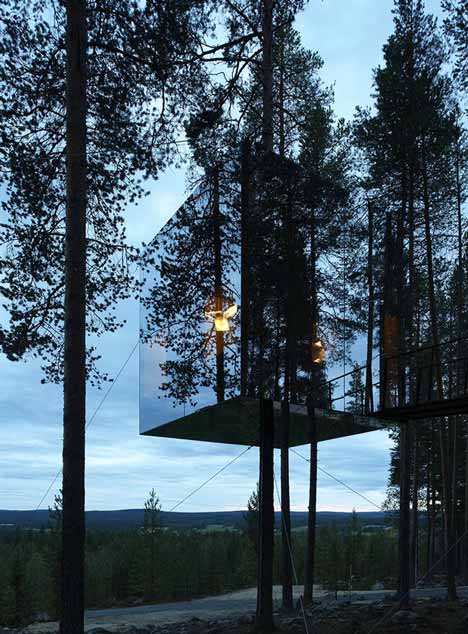
Here are some photographs of the completed Tree Hotel by Tham & Videgård Arkitekter, a mirrored glass box suspended round the trunk of a tree in Harads, northern Sweden.

110614_Tree-Hotel-by-Tham-and-Videgard-Arkitekter-Dailysdcandinavian110614_Birds-Nest-by-Inredningsgruppen-2_Dailyscandinavian

The 4x4x4 metre cube is accessed by rope bridge and reflects the surrounding forest and sky.

The hotel was opened to the public in July 2010.

Photographs are by Åke E:son Lindman

The information that follows is from Tham & Videgård Arkitekter:

Tree hotel in Harads (2008-2010)

A tree hotel in the far north of Sweden, near the small village of Harads, close to the polar circle.
 
A shelter up in the trees; a lightweight aluminium structure hung around a tree trunk, a 4x4x4 meters box clad in mirrored glass.

The exterior reflects the surroundings and the sky, creating a camouflaged refuge.

The interior is all made of plywood and the windows give a 360 degree view of the surroundings.

The construction also alludes to how man relates to nature, how we use high tech materials and products when exploring remote places in harsh climates (Gore-tex, Kevlar, composite materials, light weight tents etc).

The functions included provides for a living for two people; a double bed, a small bath room, a living room and a roof terrace.

Access to the cabin is by a rope bridge connected to the next tree.

To prevent birds colliding with the reflective glass, a transparent ultraviolet colour is laminated into the glass panes which are visible for birds only.

The tree hotel in Harads focuses on wild life-/eco tourism where one encounters and experiences the pristine nature of Sweden.

Northern Lights

0

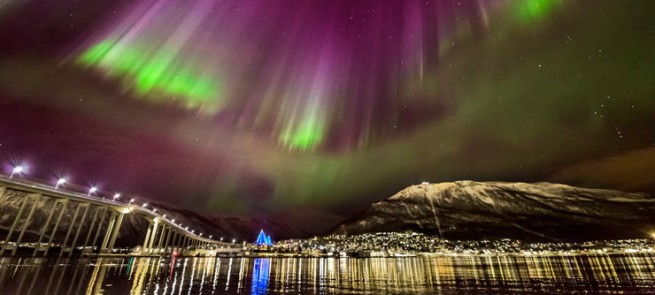
As summer ebbs away, the gloom is relieved by the bewitching greens, purples, pinks and reds of the aurora borealis, or Northern Lights, which flicker and pulse across the winter sky.

100614_Northern_Lights_Daily_Scandinavian (2)
Many a high-latitude tale was born while watching the display: the lights were the Sami, out-looking for reindeer, or sparks crackling from a fox’s fur as it ran across the sky, or even the spirits of the restless dead.

The scientific explanation is no less astonishing. The lights are caused by streams of charged particles – “solar wind” – that flare into space from our sun. When the wind comes into contact with the earth’s magnetic field, it is drawn towards the poles where its electric charge agitates particles of oxygen and nitrogen in the atmosphere, making them glow.

100614_Arctic_skies
Solar activity follows an 11-year cycle, peaking in 2011-12. The displays during that period was even more spectacular, and was witnessed in areas that don’t usual experience these mesmeric light displays.

The Northern Lights Festival 2015 in Tromsoe is from January 23 to February 1.

Northern Lights excursions.

Nordic Pavilion to Study Architecture’s Role in East African Independence

The National Museum in Norway has been chosen to curate the Nordic Pavilion for the 2014 Venice Architecture Biennale, in collaboration with the Museum of Finnish Architecture, the Swedish Centre for Architecture and Design in Stockholm, and architectural firm Space Group. La Biennale di Venezia, regarded as the world’s premier architecture exhibition, opens tomorrow and will be open to 23 November.

060614_14th_International_Architecture_Exhibition_of_la_Biennale_di_Venezia

The exhibition, “FORMS OF FREEDOM: African Independence and Nordic Models” will study modern Nordic architecture’s role in the liberation of East Africa during the 1960s and 70s.

060614_Kenyatta_International_Conference_Centre

As the curators describe, “The liberation of Tanzania, Kenya, and Zambia in the 1960s coincided with the founding of development aid in the Nordic countries, where there was widespread belief that the social democratic model could be exported, translated, and used for economic growth and welfare. The leaders of the new African states, for their part, wanted partners without a murky colonial past and looked to emulate the progressive results achieved by the Nordic welfare states after WWII. The Nordic social democracies and the new African states established solid bonds built on a mutual belief in progress.”

060614_Kenyatta_International_Conference_Centre3The exhibition will revolve around two concepts: Building Freedom “denotes the architectural nation-building where masterplans were used to build cities and regions, prototypes and prefabricated systems were used to build education and health centres, and so on.” Finding Freedom, “conversely, denotes the experimental free area that emerged from this encounter between Nordic aid and African nation-building, where progressive ideas could be developed as architectural solutions on a par with the international avant-garde.”

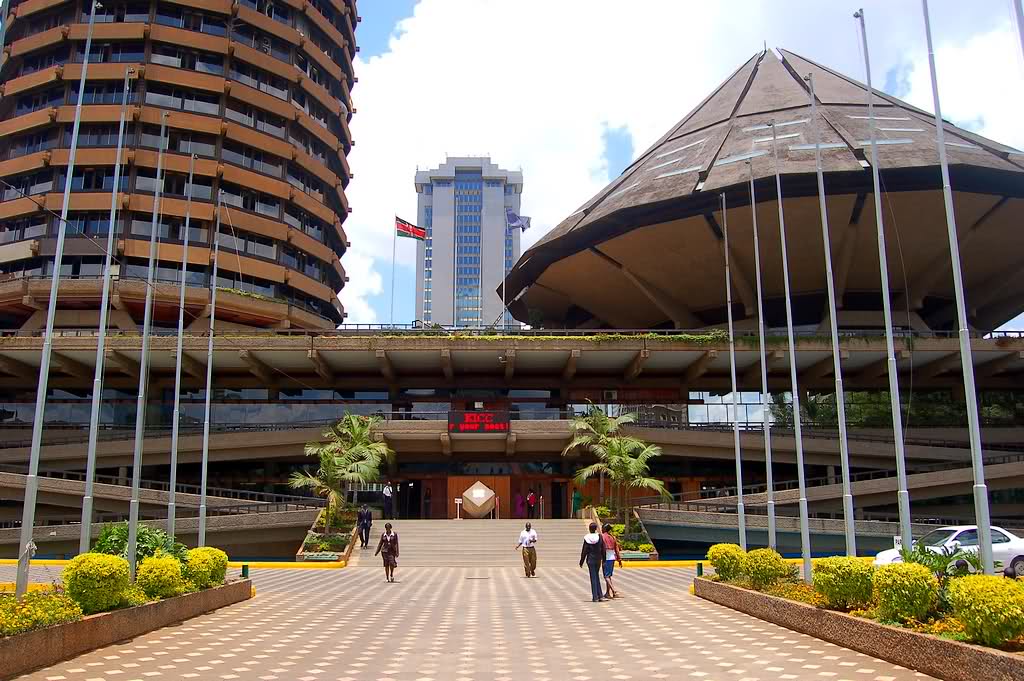
Karl Henrik Nøstvik, whose archives remain intact, will be one of the few architects of the era studied. He was among the first employed by the Kenyan government in 1965, as part of the Norwegian aid package, to design the country’s first government building: The Kenyatta International Conference Centre, a national icon of independent, modern Kenya.

An unexplored field in architecture history 
The Nordic architecture in East Africa has yet to be studied and documented by historians of Nordic and international architecture. The exhibition, which the National Museum in Norway has developed in collaboration with the architectural firm Space Group, revolves around two concepts. “Building Freedom” denotes the architectural nation-building where master plans were used to build cities and regions, prototypes and prefabricated systems were used to build education and health centres, and so on. “Finding Freedom”, conversely, denotes the experimental free area that emerged from this encounter between Nordic aid and African nation-building, where progressive ideas could be developed as architectural solutions on a par with the international avant-garde.

Kenya: Karl Henrik Nøstvik
Karl Henrik Nøstvik, one of the few architects of the era whose archives remain intact, was among the first group of experts sent to Kenya in 1965 as part of the Norwegian aid package. Employed by the Kenyan government, Nøstvik was commissioned to design the country’s first government building. The Kenyatta International Conference Centre (1966–73), which adorns the Kenyan 100 shilling note, was East Africa’s tallest building until the 1990s and remains a national icon of independent, modern Kenya.

The world’s foremost architecture exhibition 
The International Architecture Exhibition of la Biennale di Venezia is considered to be the world’s foremost architecture exhibition. The appointed curator for Biennale Architettura 2014 is the renowned Dutch architect Rem Koolhaas. The biennale’s overarching title is Fundamentals, while the exhibitions at the national pavilions will address the theme “Absorbing Modernity 1914–2014”. Koolhaas’s idea is that each nation shall narrate its history of modernization over the past century in various ways, using their own approaches and hopefully presenting unofficial and hitherto untold stories. The biennale takes place in two larger areas in Venice: Arsenale and Giardini. The Nordic Pavilion, situated in Giardini, was designed by Sverre Fehn and built in 1962.

About the curators 
The National Museum in Oslo is the Commissioner for the Nordic exhibition 2014, and Dr. Nina Berre, Director of Architecture at the National Museum, is the main curator. Gro Bonesmo, partner in the architectural firm Space Group, was appointed co-curator and exhibition architect.  Space Group has its headquarters in Oslo, with local offices in São Paulo and New York. The three partners Gro Bonesmo (NOR), Gary Bates (US), and Adam Kurdahl (DEN) worked for several years with Rem Koolhaas at OMA in Rotterdam, before the three of them teamed up to found their own firm in Oslo in 1999. Gro Bonesmos is a Professor at the Oslo School of Architecture and Design, and has also taught at Columbia University, Harvard, and the Royal Danish Academy of Fine Arts in Copenhagen.

Mountain Biking in Norway

Our journalist on biking, Oyvind Wold, wishes to inspire visitors as well as natives to bike the Norwegian mountains. Oyvind has written several books on the pleasures of biking.

040614_Biking_in_Norway_Photo_Oivind_Wold

040614_Oivind_Wold_Book_on_Mountain_Biking_in_NorwayHis book on mountain biking is the result of various tours he has taken on attractive and easy to bike mountain roads in eastern Norway. Far between other cyclists, he reasoned that it was not due to an impression that it is difficult to bike here, but just that people don’t know about the tour options. His book contains more than 50 suggestions from 11 different mountain destinations, including Geilo, Sjusjøen, Gaalaa and Oppdal. A number of tips on equipment, clothing, current maps and websites are also included in the book.

– The aim of this book is simply to inspire people to take a fancy to cycle in the mountains, Wold says. – People believe it’s so exhausting, while the fact is that it is a very pleasant way to experience the mountains, partly because you can use the saddle bags and release the heavy backpack!

We asked him to give us a tip for a cycle trip in the mountains. Here it is.

040614_grimsdalen_map

Among mountains and mountain farms in Grimsdalen, a real find for enthusiasts of mountain biking in Norway.

Route: Fallet – Grimsdalshytta return trip

Starting point / end point : Fallet at County Road 27 (70 km north of Ringebu)

Distance : 36 km

Substrate: fine gravel

Difficulty: easy

Season: Around June 15 – October 1

Suitable for: Families with children used to cycling, from Age 10 to 11.

Description: A trip anyone can do, through one of the finest and easiest to bike mountain valleys in Norway. The road follows partly quite close to Grimsa River, with views to several of the largest peaks in Rondane National Park along the way. Animals grazing in the valley make the trip even more exciting. From Fallet the tour starts with a gentle uphill slope, but from Stakstosetra and west is the way almost completely flat. Generally there is very little car traffic and therefore safe for cycling. There are several nice picnic possibilities at the Grimsa River.

040614_Biking_in_Norwegian_Mountains3_Photo_Oivind_Wold

Arriving at the Grimsdalshytta you may enjoy food and accommodation in addition to very good hiking opportunities.

040614_Biking_in_Norwegian_Mountains_Photo_Oivind_Wold

The Rolling Stones Resumed Their World Tour In Oslo

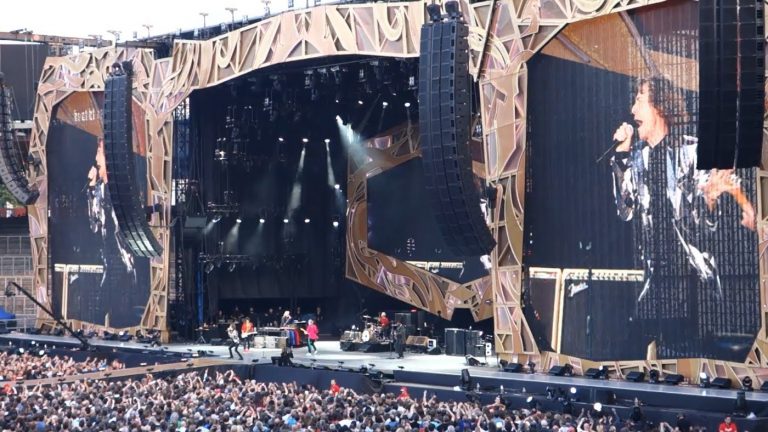
The Rolling Stones resumed their world tour in Oslo last Monday, interrupted more than two months ago due to the suicide of Mick Jagger’s partner.

040614_Rolling_Stones-23

Oslo was the first European stop of the “14 on Fire Tour”, and the show has caused a frenzy among the legendary band’s Norwegian fans with the 25,000 tickets selling out in just 13 minutes.

Ticket prices for the concert range from 115 to 310 euros ($157 to $423).

The Stones suspended their tour in March as they were about to perform in Australia after Mick Jagger’s partner, L’Wren Scott, committed suicide in her New York flat.

After Oslo, the next stops will be Lisbon, Zurich, Tel-Aviv, the Pinkpop Festival in the Netherlands, Berlin, Paris, Vienna, Dusseldorf, Rome, Madrid and the TW Classic Festival in Belgium, before returning to Scandinavia with shows in Stockholm and Roskilde (Denmark) in the beginning of July.

(AFP)

The Munch Trail

This trip is ideal if you want to learn more about the childhood and youth of the famous Norwegian painter Edvard Munch. Edvard Munch was born in Løten, 12 December 1863.

The Munch Center
The exhibitions at the Munch Center at Klevfos focus on the young Edvard Munch and the visits he made to the Hedmark area after his family moved to Oslo. It also focuses on his childhood work. Among other things, you can read the correspondence between the Munch family and their good friends at Ådalsbruk, and you can try your hand at painting skin tones, like Munch did.

030614_Munch_at_KLevfos_Norway_Daily_Scandinavian
Klevfoss

The Munch Trail
There are information points at places who Edvard Munch was attached to, such as Engelaug østre (Munch’s birthplace), By farm (Sophie Munch’s birthplace), Tofsrud (Christian Munch’s workplace), Worker’s home at Klevfos Museum.

Loeten skyssstasjon
Loeten Nærstasjon

Løten Nærstasjon
Another good starting point for the bicycle trip is Løten Nærstasjon. Løten’s old station building is home to a café, bakery, an outlet for local food and arts & craft, tourist information center and train ticket office. When booking in advance groups can enjoy a guided trip on a quiet country road to Klevfos and the Munch-Center.

Munch menu
Combine the bike trip with a 2 course Munch lunch at Løten Nærstasjon. The menu is based on local produce and what Edvard Munch would have had on his menu while living in Løten.

SEASON: June – September 15.
CYCLING DISTANCE: Munch-trail 7,5 km from Klevfos. From Løten Nærstasjon to Klevfos: 5 km.
SUITED FOR: Cyclists in moderate condition. Interests: History.
PRICE LEVEL: From NOK 150 per person, including guided tour at the Munch-Center and at the Munch trail from the Munch-Center.
2 course Munch lunch: NOK 160.