
The European Health Insurance Card – the most important thing you forgot to pack

You packed the sunscreen. You packed the sunglasses. Maybe even your travel insurance. And of course, your passport – though some people still forget that too. But there’s one thing even more people forget: the European Health Insurance Card – the most important thing you forgot to pack.

If you live in an EU or EEA country and are travelling in Europe, there’s one thing you shouldn’t leave home without: the little blue card that gives you access to public healthcare on the same terms as locals. It’s free, easy to order, and can turn a painful experience into something far less painful – for both your body and your wallet.

As with many things I write, this all started with an observation. I’m about to go on a trip and was reminded of the HELFO card—as we call it in Norway. I spent a few minutes looking for it before realizing it was pointless. I already knew it had expired a long time ago. And that got me thinking: How many others forget this card? More importantly, how many who remember it forget its expiration date?

***************************************
Related: Comparing Nordic Healthcare Systems: Similarities and Differences
***************************************

The European Health Insurance Card – the most important thing you forgot to pack
You shouldn’t leave home without it.

What is the European Health Insurance Card?

The card is a joint initiative between 32 European countries and gives you access to necessary medical care at public hospitals and clinics while visiting another EU/EEA country or Switzerland. You’ll receive the same rights and pay the same fees as residents.

It does not cover planned treatments, private clinics, or medical repatriation, but it works as a kind of health passport across Europe.

And it works. We know. We’ve tested it. Not on purpose – but still.

The European Health Insurance Card – the most important thing you forgot to pack
I sometimes travel abroad to fly in spectacular landscapes. Illustration: Estonian Health Insurance.

A foot here, a rib there – real-life experience

I fly paragliders; like many others, I sometimes travel abroad to fly in spectacular landscapes. Even more importantly, we go by train in more stable weather conditions than we often have in Norway. In parts of Europe, you can fly every day, while in Norway, good conditions may be days, weeks, or even months apart. When you fly often, you improve. You become a better pilot.

It’s hard to explain how deeply this sport gets under your skin. But I’ve tried – in the article Why Paragliding Sucks (Why Paragliding Sucks – and Why I Can’t Stop), which I originally wrote for the street magazine Virkelig in Tromso, back in 2006.

Among us paragliding pilots, there’s an unspoken truth we carry with us: When hundreds of pilots fly thousands of trips every year, the “zero-accident vision” is, honestly, just that – a vision. Because even if we strive for precision, it’s still an extreme sport.

On one trip to Greece, a friend broke his foot during a landing. According to him, the hospital treatment was already perfect. But it wasn’t until we went back to the guesthouse and picked up his HELFO card that things shifted. The process became smoother, communication improved, and everyone involved knew the situation: fewer questions, less paperwork, and more treatment. Things moved fast. And the bill? We never saw one.

This little anecdote is a good reminder that the card isn’t just “nice to have.” It makes a real difference in how you’re treated and what you pay.

The European Health Insurance Card – the most important thing you forgot to pack
The card must be ordered in advance and delivered physically to your address. Photo: AA Insurance

*****************************************
Related: Is it Safe to Travel Abroad?
*****************************************

Who can get it?

Everyone who lives in an EU/EEA country or Switzerland and is covered by their national social security system has the right to receive the European Health Insurance Card. It must be ordered in advance and delivered physically to your address – a photo on your phone isn’t valid.

The card is usually valid for up to three years, but the expiration date may vary from country to country. Check the expiration date before your next trip.
Remember to bring it with you, just like your bank card.

The European Health Insurance Card – the most important thing you forgot to pack, article continues below image.

The European Health Insurance Card – the most important thing you forgot to pack
The card gives you access to “medically necessary treatment”. Photo: Just Insurance

What does it cover?

The card gives you access to “medically necessary treatment” while staying in another member state – in other words, care that allows you to continue your journey as planned. You get the same treatment and pay the same copayment as residents.

Some examples:

  • Emergency clinic after a fall
  • Hospitalization for acute illness
  • Treatment for chronic conditions that worsen during travel

It does not cover:

  • Planned operations abroad
  • Private healthcare
  • Medical repatriation

So yes, you still need travel insurance. However, the EHIC is the first card you should show if something happens.

EHIC vs. travel insurance – what’s the difference?

The EHIC gives you access to public healthcare while travelling in Europe. Travel insurance covers your luggage, cancellations, theft, and transport home. One is a health policy, and the other is financial security.

Use your EHIC first, and save your insurance for what it’s designed to cover.

The European Health Insurance Card is small, silent, and free. It won’t remind you when you forget it. But the hospital will. And then it might be too late.

Double-check that it’s in your wallet before you leave. That tiny card might make a huge difference when things don’t go according to plan.

The European Health Insurance Card – the most important thing you forgot to pack, article continues below image.

The European Health Insurance Card – the most important thing you forgot to pack
Accessing healthcare without proper documentation can be complicated. Photo: If.ee

How does it work in your country?

Norway has a solid healthcare system. Whether you’re a citizen, a temporary resident, or a tourist, you’ll usually get help when you need it, under relatively equal conditions. Many are surprised by how accessible and affordable the system is, even for foreigners.

But that’s far from the norm. In many countries, both inside and outside Europe, accessing healthcare without proper documentation can be complicated. Especially if you’re not a local. In some countries, you’re expected to pay the full amount on the spot. That means everything, from doctor’s visits to X-rays and emergency care. And that adds up quickly.

That’s why the European Health Insurance Card exists. It applies in 32 countries and proves you are entitled to medical care, just like locals. The Nordic countries also have agreements, but the EHIC is still recommended for simplicity and documentation.

Have you ever used your EHIC?

Share your experience in the comments. Was it helpful? Were you met with understanding, or did you run into problems? Whether your card saved the day or discovered it had expired too late, your story might help others remember this small but mighty card the next time they travel.

P.S. Want to know more about how the Norwegian healthcare system works? Check out this Expat Guide to the Norwegian Healthcare System – Daily Scandinavian.

If you’re into practical perspectives, reflections, and playful takes on society, technology, work, psychology, and everything we don’t learn at school, check out my blog, hohoy.no. I write about life choices, leadership, everyday irony, and alternative ways of learning, always with an open mind and hoping that it sparks something in you, too.

The European Health Insurance Card – the most important thing you forgot to pack
Raymond Sebergsen

Raymond Sebergsen is a self-taught multidisciplinary problem solver with over 30 years of experience in IT, sales, product and service development, and management. His career began in local radio and TV, where he discovered the joy of communicating, creating, and doing things his way. This approach still characterizes his work: curious, practical, and driven to understand and improve. He will share his experiences and essential knowledge with Daily Scandinavian readers.

Feature image (top) © HELFO/Morten Rakke

Historical Swedish Military Rearmament Plan

These days, almost every metro station in Stockholm has billboards messaging military news—“for the sake of freedom.” The government launched a historical Swedish military rearmament plan.

“We are facing an entirely new security environment,” Swedish PM Ulf Kristersson said as he presented a plan to raise Sweden’s defense spending to 3,5% of GDP by 2030.

The Nordic country drastically slashed defense spending after the Cold War ended and in the early 2000s, but reversed course following Moscow’s 2014 annexation of Crimea.

The ads at the metro stations now proclaim that a newly refurbished, now top-class submarine recently went back into service; that 503 specialist officers are in training; and that the latest generation of the Jas Gripen fighter jet, the 39E, will soon be ready for take-off.

Image: Slide on the Swedish Fleet by 2030 during a media briefing by Admiral Ewa Skoog Haslum, Chief of Royal Swedish Navy, in May 2022.

Historical Swedish Military Rearmament Plan
The plan includes purchasing new defense material totaling SEK 25 billion (€2,31 billion) from 2025. Photo: Unsplash

*****************************************
Related: Swedish Gripen Jets Joined NATO
*****************************************

“Sweden and Europe are facing an entirely new security environment. That’s why today we unveiled Sweden’s largest military rearmament plan since the days of the Cold War,” Kristersson said on March 26.

The Nordic country dropped two centuries of military non-alignment and applied for membership in NATO in the wake of Russia’s invasion of Ukraine, becoming its 32nd member in March 2024.

Historical Swedish Military Rearmament Plan
Military defense budget for Sweden.

In the past five years, Sweden has upped its military spending by 138 per cent, from €5.5bn in 2020 to €13bn this year. The plan was to add another 30 per cent to the defense budget by 2030, but the prime minister, Ulf Kristersson, now wants to exceed this with the Rearm Europe Plan. “We will without a doubt belong to the countries that will be quickest in strengthening our defense,” he said.

The rearmament deal is based on an agreement with the Sweden Democrats, a far-right political party.

Historical Swedish Military Rearmament Plan
The future of the Swedish navy.

According to Oscar Jonsson, associate senior lecturer at the Swedish Defence University and the author of several books on Sweden’s rearmament, Sweden initiated perhaps the most radical disarmament in the Western world. These books are now helping Swedes to understand the new reality of remilitarization. However, Jonsson points out that “toing and froing still hurts the military today”.

Kristersson said that his country expected NATO to decide to increase the spending target at an upcoming alliance summit in June and was aiming at what it believed the new target would be.

Historical Swedish Military Rearmament Plan
Sweden unveils its largest military rearmament plan since the days of the Cold War. Photo: Forsvarsmakten.

However, Sweden risks spending its defense budget on the wrong things. Compared to its allies, Sweden disproportionately invests in expensive systems and technologies that take a long time to develop without prioritizing how they will be used in practice. Crucially, there’s a lack of focus on personnel, pilots, and logistics systems.

The plan includes purchasing new defense material totaling SEK 25 billion (€2,31 billion) from 2025, with deliveries in 2026–2028.

While previous defense spending increases have been financed through the country’s regular budget, Kristersson said that to rearm in such a short time, it was necessary to borrow funds for defense during a “transitional period”.

Lessons from the war in Ukraine are going unheeded: There is a need for heavy air defenses, up-to-date electronic warfare capabilities, and the ability to conduct long-range combat. Sweden’s fighter pilots, for example, are not putting in any more training hours today than they were five years ago, hovering at about 11,250 hours a year.

Historical Swedish Military Rearmament Plan
Sweden also intends to boost its defense against hybrid threats. Photo: Defence University of Navarra.

Sweden also intends to boost its defense against hybrid threats. An additional SEK 96 million (€8,86 million) will be spent in 2025 on a hybrid threats package to strengthen the capabilities of the Swedish Coast Guard, the Swedish Civil Contingencies Agency, and the Psychological Defense Agency. It will empower the authorities to counter and manage hybrid threats in various domains, including the maritime and cyber domains, Kristersson and his government explain.

US President Donald Trump has turbocharged a drive for Europe to rearm by casting doubt on Washington’s central role in NATO and his overtures towards Russia on Ukraine.

Sweden is a country that prides itself on being measured, reserved, and logical, but its military growth spurt resembles the sudden developments of puberty. If it’s not the legs that suddenly look too long, it’s the arms. Put together, the limbs can appear recalcitrant, uncoordinated, and even sometimes a little comical. The new tagline for Sweden’s military spending spree should read: “For the sake of freedom from ineptitude,” as Monocle’s contributor Lewitschnik says.

Historical Swedish Military Rearmament Plan, reported by Tor Kjolberg
Feature image (top) © Jimmy Croona/government.se


Scandinavian Interior Design: Achieving a Relaxed Nordic Aesthetic Through Art

Interior design is key in our homes and extends far beyond looks alone. Color palette, lighting, and even decor are all key players that can affect how we feel and can be curated to create a space that benefits mental health and wellness. Learn more about Scandinavian Interior design: Achieving a relaxed Nordic aesthetic through art.

For those who wish to change the interior design of their home, a Nordic aesthetic can be ideal for a calm and relaxed space, and you don’t need to be located in Scandinavia to do so successfully. From the power of minimalism to traditional artwork (and even the incorporation of nature as art), there are various ways to create a home through thoughtful artistic curation.

Strength in simplicity 

As with the general Scandinavian interior design style, minimalism and simplicity reign supreme for a Nordic approach. This concept extends from the artwork that hangs on the walls to the color palette of any given room. While art pieces featuring geometric shapes are a surefire way to accomplish a simplistic style that aligns with a Nordic aesthetic, focusing on the right color palette can be crucial. This includes focusing on lighter, neutral tones (whites, beiges, etc.), though this doesn’t mean that a pop of color is out of the equation. “Earthy” tones, for example, can bring warm colors into the mix, from deep browns to olive greens. Apart from the color used in paintings, however, there are other ways to introduce simple art that aligns with the Nordic aesthetic.

Scandinavian Interior Design: Achieving a Relaxed Nordic Aesthetic Through Art,article continues below image.

Scandinavian Interior Design
Focusing on the right color palette can be crucial. Photo: Tarkett

When searching for unique artwork that reflects a Nordic aesthetic, Nordic metalwork is a great example that can contrast nicely with light tones. In addition to its rustic simplicity, Nordic metalwork can be incorporated in a number of ways. While a feature wall piece can make for a statement, there are subtle ways to feature metal artwork in the home, too, such as through small sculptures. While this can introduce character into the home, it’s important to remember that Scandinavian interior design must involve balance throughout the house. This is especially important when the goal is to reflect Scandinavian design concepts like hygge, which prioritizes comfort. The House Beautiful article by Kelly Allen and Kate McGregor touches on the Swedish word ‘lagom,’ which translates to “not too little, not too much.” To balance both comfort.

Traditional pieces for a timeless flair 

Those who wish to incorporate a pop of color can find the perfect way to do so via the traditional folk art known as rose painting, also called rosemaling, which is often identifiable by its detailed floral designs. The Nordic Center of Duluth touches on the history of rosemaling, which goes back to the mid-1700s. According to the site, Norwegian artists who specialized in the art form were influenced by European styles, namely Baroque and Rococo. After learning the unique art of rosemaling, it’s noted that these artists traveled and brought their skills with them. Eventually, the designs found their way into homes and on furniture, cementing the art form into part of the country’s history.

Scandinavian Interior Design: Achieving a Relaxed Nordic Aesthetic Through Art,article continues below image.

Scandinavian Interior Design: Achieving a Relaxed Nordic Aesthetic Through Art
Traditional folk art known as rose painting, also called rosemaling. Photo: Digtial museum

The Nordic Center of Duluth further explains that as these artists traveled (and as rural artists began to don their own brushes), the style of the original art flourished into unique interpretations. Thankfully, the art form survives today and can be found in shops for those who want to add a pop of traditional and distinctive color. The intricate designs often reflect a ‘flowy’ floral pattern, often with colors that range from blues and reds to yellow, white, or green. Whether it be a rose-painted vase or a piece of furniture (like a trunk or chest), there’s no question that the incorporation of rosemaling will bring a tasteful and timeless touch of traditional Norwegian art into the home.

Outdoor elements for a refreshed perspective

Another primary touchstone of Nordic interior design is the focus on nature, specifically incorporating natural elements like wood and earthy tones. While this can be easily brought into the home via minimalistic art pieces that combine earthy colors and geometric shapes, there is a way to get even more creative with it. Textured pieces that mirror those found in nature are a great way to do this — for example, a textured landscape piece that features mountains can be a great way to bring Norway’s natural scenery to the forefront of any space. These types of pieces can even be created right at home with basic art supplies (paint and a texture tool, for instance), which can help result in artwork that is truly tailored to the space.

Scandinavian Interior Design: Achieving a Relaxed Nordic Aesthetic Through Art,article continues below image.

Scandinavian Interior Design: Achieving a Relaxed Nordic Aesthetic Through Art
Those wishing to inject a timeless aesthetic that perfectly reflects nature can showcase their photography skills. Photo: Gintchin Fine Art.

Those wishing to inject a timeless aesthetic that perfectly reflects nature can showcase their photography skills. Wildlife, landscape stills, and even a black and white photo of a leaf can all adhere to a Scandinavian-inspired interior design concept. Using personal photos can further bring a personal touch into the space, though it’s important to note that even frame choice can impact the room’s aesthetic. Custom photo mount solutions are key when the goal is to curate the photo even further to a specific interior design style. While a black acid-free mount can create high contrast between the image and the wall, a soft white mount can create a different, softer visual impact. While the right choice will vary based on personal preference and the room’s overall vibe, there’s no question that a professionally mounted photo can make a significant impact.

In addition to artwork that reflects nature and natural elements, incorporating plantlife as ‘art’ pieces can do plenty for an interior space, especially when the goal is to create a comfortable, simplistic, and ‘light-and-airy’ design. While large plants can be a statement themselves (much like a statue), other incorporations can include smaller plants in spaces like the kitchen or bathroom. Artistic elements, like an earthy-toned painted pot or macrame hanger, can further add to the design of a space. One Thursday, the article highlights several houseplants that mesh well with Scandinavian interior design, from rubber fig plants (Ficus elastica) to foliage-focused options like the famous and easy-to-care-for snake plant. Other options listed include the Monstera deliciosa or even the texture of the Boston fern. While there are some considerations regarding the plants you choose (how much light they need, and the best location for the plant to thrive in the home), there is certainly no shortage of options to choose from.

Several considerations must be made when achieving a Nordic aesthetic through art in the home. By keeping simplicity and natural elements at the forefront of the design, homeowners can successfully incorporate Nordic elements throughout the home, whether via houseplants or metalwork.

Scandinavian Interior Design: Achieving a Relaxed Nordic Aesthetic Through Art
Karoline Gore

Scandinavian Interior Design: Achieving a Relaxed Nordic Aesthetic Through Art, written explicitly for Daily Scandinavian by Karoline Gore. Karoline is a freelance writer from Stoke on Trent in the UK who left the corporate grind when she started a family and has never looked back. She enjoys contributing to a range of online publications on the topics that are important to her.

Feature image (top) © europosters.no

Iconic Danish Supermarket Chain is Relaunching

Customers were disappointed when Danish Coop announced in January 2023 that its high-end supermarket, Irma, would be closed. Now, its former CEO is relaunching the iconic Danish supermarket chain.

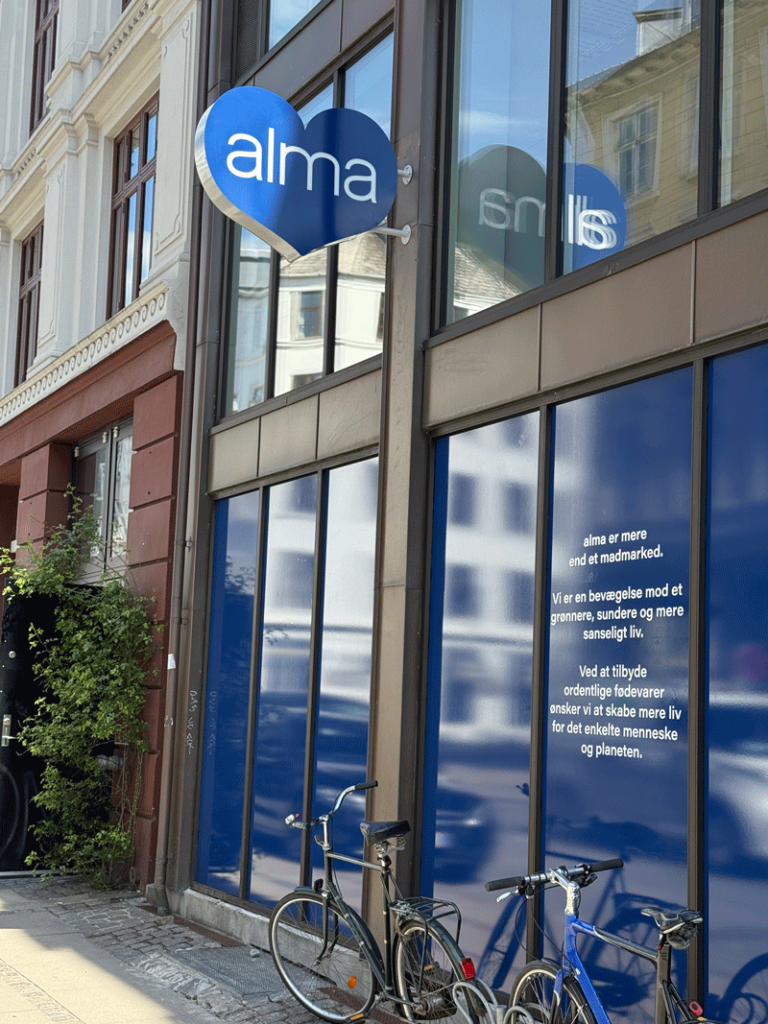
Alfred Josefsen, the former director of Irma, has just opened a new grocery store in Fredriksberg called Alma. Josefsen presided over Irma’s heyday, when customers adored its own-label lines, spacious shops, and attentive service. With Alma, he wants to attract young people and families who once thought Irma was unaffordable.

Together with 12 former Irma employees, Josefsen is opening a brand-new supermarket chain in the capital. The name Alma comes from Josefsen’s grandmother.

Iconic Danish Supermarket Chain is Relaunching
Alfred Josefsen, the former director of Irma, has just opened a new grocery store in Fredriksberg called Alma.

***************************************
You might also like to read Voluntary Climate Labelling in Denmark.
***************************************

How much Irma is there in Alma?

“There is something, because we, who have helped develop this, carry some values ​​and virtues from Irma. As we say, we have blue blood in our veins,” claims Josefsen.

Products adorned with Irma’s distinctive logo, a girl in a blue dress, were design classics and much-loved souvenirs among Japanese tourists. Alma’s logo, a blue heart, is similarly appealing. Meanwhile, the distinctive design of the brand’s interiors is intended to entice a new generation of shoppers.

Iconic Danish Supermarket Chain is Relaunching
Above all, Alma prioritizes customer experience.

“We want to create a good store experience again. You can come into beautiful and sensual stores; some employees know what it’s all about and want to share that knowledge with the customers. And we almost believe we can recreate that one-on-one. In other words, an environment where you experience the same virtues and values ​​as you did during the Irma era,” says Alfred Josefsen in an interview with the Danish newspaper Politiken’s food editor, Mette Mølbak.

*************************************
You might also like to read One of the World’s Best Shopping Centers – in Copenhagen.
*************************************

“But we are trying to develop ourselves and present something that is not Irma because it needs development,” he adds.

Iconic Danish Supermarket Chain is Relaunching
“We have blue blood in our veins,” claims Josefsen.

While meat will still be sold, Alma wants to inspire Danes to adopt a more plant-based diet. It will also avoid ultra-processed foods. “We are not saints or saved. Therefore, there will also be sweets and chips in small quantities, but you will never find a wall of chips at the entrance, sweets at the checkouts, or soda on sale,” he told Politiken.dk.

He says that Alma will build on Irma’s ” collaborative relationships with many manufacturers and suppliers.”

Above all, Alma prioritizes customer experience. (There’s not an automated checkout in sight.)

Iconic Danish Supermarket Chain is Relaunching, Tor Kjolberg reporting.

All images © Alma Mad

History of Oslo Botanical Garden

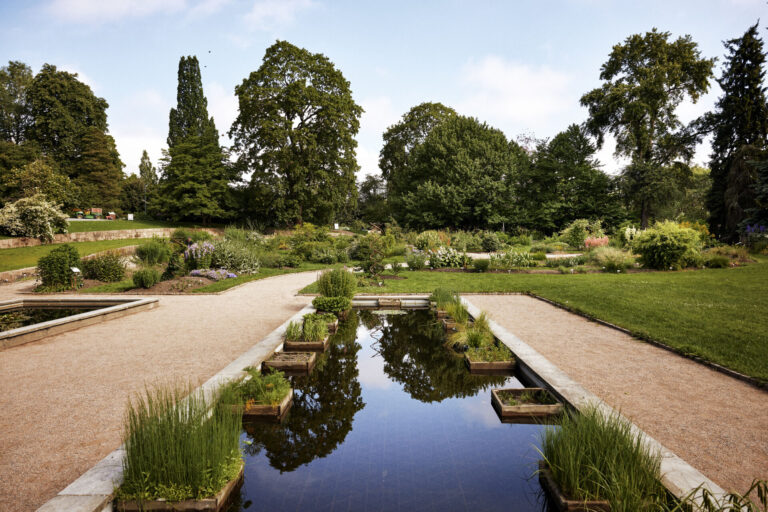
The University Botanical Garden in Oslo (Botanisk hage) was established in 1814. Learn more about the history of Oslo Botanical Garden.

The Natural History Museum’s premises include two museums: the Geological and Zoological Museum and the Botanical Gardens. In 1814, the Norwegian elite wanted to develop business and make the new nation self-sufficient. They envisioned that the Botanical Garden would significantly develop Norway’s natural resources.

King Frederik VI of Denmark acquired the estate and gifted it to the University of Christiania in 1812. In 1814, work began on the University Botanical Garden. The University of Oslo’s oldest building, Tøyen Manor (Tøyen hovedgaard), is in the garden. Today, the historic Tøyen Manor houses temporary exhibitions and a café for staff and visitors.

History of Oslo Botanical Garden
The Natural History Museum at the University of Oslo is Norway’s most comprehensive natural history collection. Photo: Wikipedia

The garden originally covered 75,000 square meters but has since doubled, containing about 35,000 plants of about 7.500 unique species. Through research, education, and plant conservation, the garden seeks to increase public awareness of the importance of plant diversity.

The garden’s first director, Johan Siebke, was a botanist and public economics professor. He contributed significantly to the planning and constructing the botanical garden and its operation during its first 40 years. The Botanical Museum (Botanisk museum), which dates to 1863, was merged with the Botanical Garden in 1975.

Its highlights include the Viking Garden, where plants, rocks, and animals used during the Viking Age are displayed in a 33-meter-long ship-shaped time machine made of corten steel. The Willow Sculptures and Green Houses, especially the Victoria House, were specially constructed for the giant waterlily of the Amazon. The Great-granny’s Garden is where plants are preserved in a living archive designed to help people suffering from dementia. The aromatic Scented Garden is designed for the visually impaired.

History of Oslo Botanical Garden
The garden contains about 35,000 plants of about 7.500 unique species. Photo: Wikipedia commons

In the book Botanical Garden 1814-2014, the author, professor emerita Liv Borgen, says that a botanical garden, and gardens in general, are never finished.

The Natural History Museum at the University of Oslo is Norway’s most comprehensive natural history collection. The Geological Museum and the Zoological Museum display specimens for the general public. The Natural History Museum in Oslo is where you can see the famous fossil “Ida,” the oldest known primate fossil, and the most complete fossil of an early primate. The museum bought it in 2007 and presented it to the world in 2009.

History of Oslo Botanical Garden
Grand-grand mother’s Garden. Photo: Wikipedia

In her book, Borgen guides the reader through the history of the garden. One of the botanists who left his mark was Frederik Christian Schübeler (1815-1892). He was the director from 1866 to 1892 and began building up what is today called the object collection: a curious, strange, and beautiful collection including fruits, seeds, and cross-sections of tree trunks.

History of Oslo Botanical Garden, written by Tor Kjolberg

Feature image (top) © University of Oslo (UiO)

Tracing the Footsteps of Viking Women Across Scandinavia

The legendary Viking warriors, raiders, and explorers often define the Viking Age. However, Viking women across Scandinavia also played critical roles that shaped their societies. These women were traders, spiritual leaders, and political figures, influencing their communities in ways often overlooked in traditional historical accounts. Here we’re tracing the footsteps of Viking Women across Scandinavia.

The Multifaceted Roles of Viking Women

Viking women were essential in Scandinavia before the Vikings became known for their raids and exploration. They contributed to family, community, and culture in more ways than are often credited. They were not limited to the domestic sphere but engaged in farming, trading, religious practices, and even warfare. Their responsibilities helped sustain the economy and structure of Viking communities, ensuring their survival and success.

Viking Women’s Roles in Shaping Scandinavian Society

Viking women across Scandinavia played vital roles that extended beyond domestic tasks. Their influence spanned various areas, from farming to leadership. Here are some key contributions they made to Viking society:

  • Farm Management: Viking women ran farms, ensuring food production and livestock care.
  • Trade: They facilitated long-distance trade, helping to grow the Viking economy.
  • Political Influence: Women had legal rights and could decide property and family matters.
  • Religious Leadership: Many served as priestesses, performing rituals and ceremonies to honor the gods.
  • Warfare: Some Viking women participated in raids, proving their strength and bravery.

Their diverse contributions ensured the prosperity and survival of Viking communities.

Tracing the Footsteps of Viking Women Across Scandinavia
Viking women were not limited to the domestic sphere but engaged in farming, trading, religious practices, and even warfare. Photo: Odin’s Treasures.

Viking Women’s Influence in the Household

In Viking settlements, women were the driving force behind domestic and public life. Far beyond the role of caregivers, they managed households, organized festivals, and took part in important community decisions. Women ran farms, oversaw livestock, and handled food production, ensuring the survival and stability of their families. They were also responsible for educating children and preserving cultural traditions. In addition to their domestic responsibilities, women played central roles in agricultural and economic activities, including market exchanges and resource management. Their leadership and labor formed the backbone of Viking society, making them indispensable to the smooth functioning of towns and villages.

Shieldmaidens: Viking Women in Battle

The idea of Viking Women fighting alongside men in battle is an enduring part of Viking lore. Although stories of shieldmaidens are common in sagas, they are also rooted in historical fact. Archaeological evidence suggests that some women took up arms and fought in Viking raids. These women were strong and courageous and fought to protect their homes and communities, proving that Viking women were not limited to passive societal roles.

Viking Women in the Sagas: Strong and Independent

The Icelandic sagas vividly portray Viking women, showcasing their strength, intelligence, and resilience. These stories depict women as leaders, strategists, and decision-makers. They had influence over their families, managed estates, and, in some cases, made pivotal decisions that shaped the course of Viking history. These sagas tell us that Viking women were much more than mere bystanders in the Viking Age—they were integral to its success.

Tracing the Footsteps of Viking Women Across Scandinavia
The Icelandic sagas vividly portray Viking women, showcasing their strength, intelligence, and resilience.

Viking Women as Traders: The Economic Backbone

Viking women across Scandinavia were central to economic life, ensuring prosperity while men engaged in raids and exploration. They ran family businesses, sold goods such as livestock and textiles, and helped build networks across Europe and the Middle East. Their efforts were key to the wealth and stability of Viking society.

The Legacy of Viking Women in Scandinavian Culture

The contributions of Viking women across Scandinavia have created a lasting legacy that is still felt today. Modern Scandinavian cultures honor these women’s roles during the Viking Age, from Norway to Sweden to Denmark. Museums, historical sites, and cultural projects increasingly highlight their achievements, offering a more complete picture of Viking history.

Viking Women’s Role in Shaping the Law and Political Influence

Viking women enjoyed legal rights far ahead of their time, giving them significant societal autonomy. They could own property, inherit land, and divorce their husbands, often representing themselves in court on land ownership and family disputes. These rights allowed women to make decisions about their personal lives and enabled them to shape the legal framework of Viking society. Viking women influenced the laws that governed daily life and reinforced their independence, playing a key role in the resilience and growth of their communities. They were also key participants in Viking politics, with some women even wielding enough power to influence decisions at local and regional levels. Their political power ensured that Viking society remained strong and organized.

Tracing the Footsteps of Viking Women Across Scandinavia
Viking women enjoyed legal rights far ahead of their time, giving them significant societal autonomy. Photo: Lorado/iStock

Women in Viking Mythology: A Powerful Influence

Viking mythology features influential female figures like Freyja, the goddess of love and war, and Skadi, the goddess of winter. These goddesses were central to Viking religious practices and symbolized strength and power. Viking women likely identified with these deities, drawing strength and guidance from their stories. The reverence for female deities in Viking culture highlights the respect for women in both the spiritual and social spheres.

Discovering Viking Women’s Graves and Artifacts

Archaeological discoveries continue to reveal the importance of Viking women across Scandinavia. Excavations of Viking graves uncovered evidence of women buried with weapons, jewelry, and valuable goods, indicating their roles as high-status individuals. These findings confirm that Viking women were influential members of their society, involved in everyday life and extraordinary events. Such discoveries continue to reshape our understanding of the Viking world.

Spiritual Leaders: Viking Women and Norse Religious Life

Religion was deeply woven into the fabric of Viking life, and women held powerful roles within its practice. As priestesses and spiritual leaders, they conducted rituals, offered sacrifices, and led ceremonies to honor the gods. Viking women ensured that sacred traditions were upheld, guiding their communities through hardships and helping maintain divine favor. Their influence in spiritual matters was symbolic and practical, as their leadership was seen as essential to the survival and success of Viking settlements. Through their deep involvement in Norse religion, women strengthened the community’s connection to the divine and played a key role in shaping Viking spiritual life.

Tracing the Footsteps of Viking Women Across Scandinavia
Today, historians, archaeologists, and filmmakers are re-examining the lives of Viking women. Photo: Vika Glitter/Pexels

The Continuing Revival of Viking Women’s Stories

Today, historians, archaeologists, and filmmakers are re-examining the lives of Viking women. As modern interpretations of Viking history continue to evolve, they are bringing the roles of Viking women to the forefront. In particular, books, documentaries, and television series now highlight their stories, rediscovering and celebrating their contributions. Consequently, these portrayals are reshaping our understanding of Viking society and are shaping it.

Viking Women as Keepers of Traditions

Viking women were responsible for preserving and passing down their people’s rich cultural traditions. They were storytellers, weaving together the histories and myths of their ancestors. Through oral traditions, Viking women kept the tales of gods, heroes, and warriors alive, ensuring the legacy of their culture endured through generations. Their role as keepers of history was vital to maintaining the continuity of Viking society, especially during war and migration.

Celebrating Viking Women

These women were not just homemakers but warriors, traders, religious leaders, and political figures who shaped the Viking world. As we continue to uncover their stories through archaeological discoveries and modern interpretations, we can better appreciate the profound impact Viking women had on their societies. Their resilience, strength, and leadership have left a lasting mark on history, and their contributions continue to inspire us today.

Tracing the Footsteps of Viking Women Across Scandinavia, written explicitly by Maria Thompson for Daily Scandinavian. Maria is a moving consultant at Heart Moving Manhattan, providing clients with practical advice and support throughout the relocation process. In her free time, she enjoys studying Viking history and Scandinavian culture, a hobby that has fueled her interest in historical research and storytelling.

Feature image (top): © Lorado/iStock

Vietnamese Boat Refugees Are Marking 50 Years as Exiles in Norway

A total of 1,680 refugees came to Norway in 1978–79. The largest group was the so-called “Vietnamese boat people”. Last Saturday, Vietnamese boat refugees and their families gathered in Mjøndalen outside Drammen to mark 50 years as exiles in Norway.

After the communists took control of South Vietnam, many of those who had supported the South Vietnamese government were persecuted and imprisoned. It is estimated that over a million people have tried to escape, many of them in small boats. The Vietnamese were therefore called “boat people”. Many of them were picked up by Norwegian ships.

Vietnamese Boat Refugees Celebrate 50 Years as Exiles in Norway
The passage, facing danger from pirates, overcrowded boats, and storms. Photo: Norsk Institutt for Kulturminneforskning.

The number of boat people leaving Vietnam and arriving safely in another country totaled almost 800,000 between 1975 and 1995. Many of the refugees failed to survive the passage, facing danger from pirates, overcrowded boats, and storms. According to the United Nations High Commission for Refugees, between 200,000 and 400,000 boat people died at sea.

*******************************************
You might also like to read Vietnam and Norway – Partners in Energy Transition.
*******************************************

The number of boat people leaving Vietnam and arriving safely in another country totaled almost 800,000 between 1975 and 1995. From the Mjøndalen Memorial. Photo: Jon Arne Foss.

Saved from certain death

42 years ago, a group of Vietnamese refugees were saved from certain death on the high seas by the Norwegian Høegh vessel MS Dyvi Kattegat. There was a touching moment in Mjøndalen last week, when one of the rescued people embraced two of the crew involved in the rescue operation on 12 August 1983.

The ship came to a full stop for a small, old, and very battered boat full of people. Thirty-two survivors of all ages who had fled by boat from their homeland, Vietnam, were saved from certain death. Small children, old men, young women, and some strong youth.

Norwegian ships rescued around 6,000 Vietnamese boat people, and vessels from many other nations also picked up the refugees.

Vietnamese Boat Refugees Celebrate 50 Years as Exiles in Norway
Thanks for the freedom. Photo: Tor Arne Foss.

The most successful of all non-Western immigrants to Norway

Billy Taranger, head of the Main Committee for Work, Activity and Inclusion in Drammen Municipality, said, “The Vietnamese refugees thank us for receiving them with open arms. We should thank them for coming. The Vietnamese seem to be the most successful of all non-Western immigrants to Norway. Some of them are my neighbors. They have been remarkably flexible and adaptable. They wanted to be integrated. They were determined to be part of ‘the Norwegian dream’. Perhaps they have been more willing than other immigrant groups to work with whatever they got and accept the situation as it was.”

Vietnamese Boat Refugees Celebrate 50 Years as Exiles in Norway
Scupture Seaflower. Photo: Jon Arne Foss

A gift, given in gratitude

The sculpture Sjøblomst (Sea Flower) is a gift, given in gratitude after a fundraising campaign, from Vietnamese boat refugees and their descendants. The memorial is a gift to Norway and Norwegian society. Sjøblomst stands in the water east of Bygdøynes and was created by sculptor Thor Sandborg.

The Project Group erected the monument for the Vietnamese Refugee Memorial. Sjøblomst is managed by the Department of Culture in the Municipality of Oslo.

Vietnam’s embassy protests

Vietnam is still a one-party state with a communist system of government, the same regime from which several 100,000 Vietnamese refugees escaped in the 1970s and 1980s, and around 6,000 came to Norway as boat people.

Vietnam established an embassy in Norway three years ago.

Vietnamese Boat Refugees Celebrate 50 Years as Exiles in Norway
The Seaflower sculpture at Bygdøynes. Photo: Jon Arne Foss.

“We boat people have not wanted an embassy here in Norway,” says Duc Nguyen. Many of the refugees are still critical of the current regime, and several of them have been refused entry to Vietnam after speaking out critically about the conditions in their homeland.

The embassy has requested several meetings with Oslo politicians and the Norwegian Maritime Museum on Bygdøy to try to stop the sea flower.

“We are afraid that the memorial could be used for political purposes,” explains the ambassador of Vietnam to Norway, Ta Van Thong.

Oslo City Councilor for Urban Development, Bård Folke Fredriksen from the Conservative Party, confirms that the embassy has tried to stop the memorial through several inquiries.

“The embassy alleged in meetings with us that those who fled Vietnam want to undermine Vietnam, and that they fear that the memorial will be used against the authorities. We will not let ourselves be dictated by such an attempt at censorship, and we have told the embassy so,” says the city councilor.

Even though the Vietnamese call Norway “home” and are unusually well-integrated, they are and will always be Vietnamese.

Vietnamese Boat Refugees Are Marking 50 Years as Exiles in Norway, Tor Kjolberg reporting.

Feature image (top) © Jon Arne Foss

Finnish Company Named One of the World’s 50 Most Innovative Companies

Finnish company Icey was ranked as the 20th most innovative company in the world and the 2nd most innovative company in the Space sector in 2025 by Fast Company. Learn more about the Finnish company named one of the world’s 50 most innovative companies.

Iceye is originally a spin-off of Aalto University‘s University Radio Technology Department. It is based in Espoo and has offices worldwide (Finland, Poland, Spain, the UK, and the US) and over 700 employees.

When it was suggested that an alternative to Starlink be found to keep eyes on Ukraine’s front line, shares in Eutelsat, a Franco-British satellite operator, soared. Meanwhile, Finnish satellite manufacturer Iceye – operator of the world’s largest constellation of data-collecting “synthetic aperture radar” (SAR) – confirmed its standing as one of Europe’s fastest-growing companies.

Finnish Company Named One of the World’s 50 Most Innovative Companies
Iceye’s Polish CEO and Co-founder, Rafal Moderzewski.

***********************************
You might also like to read  The World’s Largest Airship Fleet – in Finland.
***********************************

The acknowledgment highlights ICEYE’s pioneering contributions to the space industry and innovating its SAR technology, which allows for high-resolution imaging at any time, regardless of weather conditions. ICEYE’s unique SAR satellites are designed and purpose-built to be smaller, more flexible, and affordable than legacy satellite systems. The innovation in small satellites has enabled the quick build of the world’s largest SAR satellite constellation, owned and operated by ICEYE.

Finnish Company Named One of the World’s 50 Most Innovative Companies
The innovation in small satellites has enabled the quick build of the world’s largest SAR satellite constellation.

In September 2024, the company reported 2023 revenues of $100M and expanded its funding to $503M. “In five years, hundreds of European satellites in single constellations will provide us with military security, climate resilience, and data,” says Iceye’s Polish CEO and Co-founder, Rafal Moderzewski.

“Being named one of the World’s 50 Most Innovative Companies by Fast Company is an immense honor for ICEYE and a testament to the hard work and dedication of our team. ICEYE’s innovation in SAR satellite technology is redefining how government and commercial organizations make critical decisions and rapidly respond to challenges. Our dual-use technology has proven its capabilities also in defense and resilience, and we continue to innovate in this field with our customers and partners, aiming to become the primary provider of critical infrastructure for intelligence, surveillance, and reconnaissance (ISR) to allied nations,” he added.

In 2015, ICEYE demonstrated that synthetic-aperture radar could be used to monitor hazardous ice features such as pack ice. In 2022, after the Russian invasion of Ukraine, it signed new partnerships with BAE, Saab, and Rheinmetall.  Moderzewski says that Europe can no longer rely on US firms to solve defense issues. “We have to tap into new, disruptive entrants.”

**************************************
You might also like to read World’s First Fully Autonomous and Emission-Free High-Powered Street Cleaning Technology Born in Finland.
**************************************

Finnish Company Named One of the World’s 50 Most Innovative Companies
SAR Satellite testing in Anechoic chamber.

In 2019, the founders of ICEYE and the Aalto staff were awarded the Finnish Engineering Award by the Finnish Academic Engineers and Architects. The award citation called the achievement “a breakthrough in Finnish space technology.”

The company’s powerful SAR technology enables frequent revisits to any location, providing unparalleled coverage and detail. To date, ICEYE has launched 48 SAR satellites into orbit for its own and its customers’ use, of which four were launched recently, including the company’s new Generation 4 satellite.

Moderzewski takes inspiration from how Starlink shook up the global market. “We all thought that these US industries were being run efficiently, well-measuredly,” he says. “Elon Musk has shown us that those assumptions were wrong.”

Finnish Company Named One of the World’s 50 Most Innovative Companies, Tor Kjolberg reporting.

All images © Iceye.

The Scandinavian Approach to Home, Beauty, and Well-Being

Scandinavian culture is built on balance, self-care, and an appreciation for nature. Nordic wellness’s philosophy prioritizes physical and mental health, emphasizing simplicity and sustainability. Learn more about the Scandinavian approach to home, beauty, and well-being.

Whether in skincare, daily routines, saunas, or overall well-being, Scandinavians encourage a holistic approach that nurtures both the body and the mind. Their beauty rituals reflect this mindset, focusing on natural ingredients and minimalism rather than excessive products and treatments.  Those seeking to embrace a Scandinavian-inspired lifestyle can explore Nordic wellness practices like cold bathing, which is known for its health and longevity benefits.

This article will explore key elements of Scandinavian well-being, from skincare secrets and minimalist beauty routines to lifestyle habits that promote balance, resilience, and a deeper connection with nature.

The Connection Between Home Environment and Well-Being

Scandinavian interior design is renowned for its calming and functional spaces. Clean lines, neutral tones, and a clutter-free approach create an atmosphere of tranquility that directly influences mental well-being. The emphasis on natural light, open spaces, and functional furniture helps to reduce stress and promote relaxation. Scandinavians recognize that home is more than a place to live. It is a space that can significantly impact emotions, mood, and productivity.

The Scandinavian Approach to Home, Beauty, and Well-Being
It’s important to consider how environments influence our emotions and overall well-being. Photo Athena Advisors. 

To make a house feel like a home, it’s important to consider how environments influence our emotions and overall well-being. Nordic design embraces this philosophy, using thoughtful choices to create a sense of peace and strengthen the connection between surroundings and personal wellness.

A key element of this design philosophy is “hygge,” a Danish and Norwegian concept centered around coziness and comfort. This goes beyond physical space, creating a sense of warmth through soft textiles, candlelight, and meaningful interactions with loved ones. Similarly, “lagom,” a Swedish principle that means “just the right amount,” influences home organization and lifestyle choices. By embracing these philosophies, individuals can cultivate a living space that promotes contentment and relaxation.

The Scandinavian Approach to Home, Beauty, and Well-Being
The Scandinavian beauty standard has long emphasized a fresh, natural, and effortless look. Photo: Cutrin

Hair and Beauty Ideals in Scandinavia

The Scandinavian beauty standard has long emphasized a fresh, natural, and effortless look. Historically, Nordic beauty has been associated with clear skin, healthy hair, and minimal makeup. These ideals continue to evolve, but the core principle remains: enhancing one’s natural features rather than masking them. Scandinavian beauty routines focus on high-quality skincare, lightweight makeup, and hair care that promotes health over styling. A deeper look into Scandinavian beauty standards reveals how this region values simplicity and sustainability in personal care.

Another defining aspect of Scandinavian beauty is its deep connection to nature. Many skincare and haircare products are formulated with locally sourced ingredients such as birch sap, sea buckthorn, and arctic berries, all of which provide hydration and nourishment. These ingredients have been used for generations to protect the skin and hair from harsh weather conditions. With an increasing global interest in sustainable and clean beauty, the Nordic approach offers an excellent model for conscious consumers looking for practical, natural solutions.

Stress, Lifestyle, and Hair Health in Nordic Countries

Lifestyle choices profoundly impact hair health, and Scandinavians take a holistic approach to maintaining strong, vibrant hair. Climate, diet, and stress all play crucial roles in hair health. Cold, dry air can also be harsh on hair, but balanced nutrition and proper hydration counteract these effects.

The Scandinavian Approach to Home, Beauty, and Well-Being
Scandinavians take a holistic approach to maintaining strong, vibrant hair. Photo: Scandinavian biolabs.

Stress management is another vital component, as high stress levels contribute to hair thinning and loss. Practices such as sauna sessions, meditation, and time spent in nature are integrated into daily life to promote relaxation and reduce cortisol levels. Further, research on hair growth in Scandinavian countries sheds light on how climate and genetics influence hair care routines.

Many Scandinavians’ diets are also beneficial for hair health. Rich in omega-3 fatty acids from fish, vitamins from berries, and whole grains, their traditional eating habits provide essential nutrients that support hair growth and overall wellness. The emphasis on organic and locally sourced foods means fewer processed ingredients and a greater focus on whole, nutrient-dense meals. The Nordic diet, which aligns closely with Mediterranean dietary principles, has been praised for its role in promoting longevity, and its benefits extend to skin and hair vitality.

Another key wellness habit is the practice of “friluftsliv,” a Norwegian concept that translates to “open-air living.” This philosophy encourages people to spend time outdoors, regardless of the season, to reconnect with nature and find inner peace. This tradition highlights the importance of fresh air and movement, whether hiking, skiing, or simply sitting outside with a warm drink. Of course, marveling at majestic Scandinavian vistas is another reason to get outdoors.

The Scandinavian Approach to Home, Beauty, and Well-Being: Conclusion

Embracing Nordic wellness habits can be rewarding and straightforward. The Scandinavian approach to home, beauty, and well-being is profoundly intentional and centered on sustainability, minimalism, and self-care. Whether through thoughtful design, holistic beauty routines, or wellness practices promoting longevity, Nordic culture offers valuable insights for those seeking a healthier, more balanced lifestyle.

The Scandinavian Approach to Home, Beauty, and Well-Being
Ainsley Lawrence

The Scandinavian Approach to Home, Beauty, and Well-Being, written explicitly for Daily Scandinavian by Ainsley Lawrence. Ainsley is one of our regular contributors. She is a freelance writer from the Pacific Northwest. Ainsley is interested in better living through technology and education. She is frequently lost in a good book.

Feature image (top) © Magic K/Pexels

The First Norwegian Emigrant Ship Sailed for the USA 200 Years Ago

The first organized emigration to America began with the sloop Restoration, which set sail on 4 July 1825 from Stavanger. Now, Norway is marking its 200th anniversary. The first Norwegian emigrant ship sailed for the USA 200 years ago.

Restauration was a sloop built in 1801, in Hardanger, Norway. It became a symbol of Norwegian American immigration. Historical sources may contain variations on the sloop’s name, including RestaurationRestorationRestaurasjonen, and Restorasjon.

The vessel carried a crew of seven and 45 passengers, 19 children. The crossing was arduous and lasted for three months. A baby was born during the voyage, so the ship, on arrival in New York on October 9th, 1825, counted 53 people on board. The voyage is described in Ole Rynning’s Amerika-boka (The America Book, 1838).

The First Norwegian Emigrant Ship Sailed for the USA 200 Years Ago
Paul Petter Waldenström (1838 – 1917) preaching a sermon on board S/S Hellig Olav in 1905. Photo: Public Domain, Wikimedia Commons.

“At a time when America seems to be at a crossroads, knowledge about this part of our common history appears particularly relevant,” says Eline Skaar Kleven, Director of Cultural Communication at the National Library.

Many of this group probably belonged to a similar local movement, the Haugeans, a Lutheran sect named after Hans Nielsen Hauge.  Captain of the “Restauration” and leader of the group was the Quaker Lars Larsen Geilane. The other emigrants sympathized with the Quakers and joined them in America. The primary motivation for their endeavor is assumed to be America’s freedom of religion.

The First Norwegian Emigrant Ship Sailed for the USA 200 Years Ago
Norwegians in the United States travelled west on the prairie to find new, cheap land to settle. They travelled with the whole family and everything they owned. (Photo: Norwegian Emigrant Museum)

On Wednesday, May 7, the exhibition “Rett vest. Drømmen om et bedre liv i Amerika” (Going West: Dreaming of a Better Life in America) opens. It deals with one of the largest migrations in Norwegian history. In the century after the Restoration, almost 900,000 Norwegians followed the dream of a better life in America, with hope for land, freedom, and opportunities.

The First Norwegian Emigrant Ship Sailed for the USA 200 Years Ago
The book deals with one of the largest migrations in Norwegian history.

The United States Post Office issued two stamps to commemorate the 1825 arrival. The 2-cent stamp has for its central design a ship representing Restauration. The illustration on the two-cent stamp is an artist’s rendition of what Restauration probably looked like based on a drawing of its sister ship.

The First Norwegian Emigrant Ship Sailed for the USA 200 Years Ago, Tor Kjolberg reporting.

Feature image (top): Restauration, painting by Eivind Nielsen.