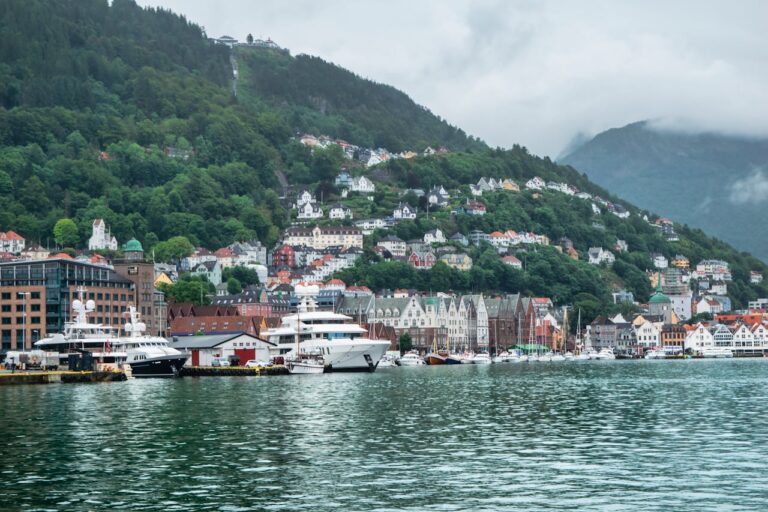

Ramme Gård: A Magical Estate Near Hvitsten

0

Petter Olsen took over Ramme Gård in 1966 at the age of 18. Over several decades, he transformed the estate into a spectacular garden and organic farm. The cultural destination of Ramme will continue in Olsen’s spirit, though his life’s work was sold to Kristian Siem in the fall of 2024. Learn more about Ramme Gård : A magical estate near Hvitsten.

In addition to the park and farming operations, the idyllic property features art exhibitions, a hotel, greenhouses, and cafés. Nedre Ramme Gård was once owned by the renowned artist Edvard Munch. The house and garden have been recently restored to their former glory. The final major project before the sale of Olsen’s life’s work was Villa Munch.

Munch’s old house has undergone extensive renovations both inside and out. The artist owned the Swiss-style villa from 1910 to 1944. In the lemon-yellow room, Munch reportedly slept best, famously saying, “My yellow room is the best bedroom in the world; it’s the only place where I have peace.”

Ramme Gård: A Magical Estate Near Hvitsten
A self-portrait of Edvard Munch (replica) on the lemon-yellow wall of the living room in the Swiss-style house from 1890 at Lower Ramme Gård, now known as Villa Munch.
2 & 3. The facade of the newly restored Villa Munch. The house is painted light yellow with green window frames.

When Munch purchased the property, complete with a year-round house built in 1890, he sought tranquility and fresh air to aid his recovery from a nervous breakdown a few years prior. He envisioned a peaceful haven where he could paint year-round, grow fruits and vegetables in the summer, and cool off in the sea on warm days. It was also at Nedre Ramme that he found the inspiration for his Aula decorations at the University of Oslo.

The lemon-yellow room on the first floor retains its vibrant color, as it was in Munch’s time. Thorough analyses of the original walls revealed the exact hues. Munch had a eye for unconventional colors, which stood out even during his era.

Petter Olsen acquired Nedre Ramme in 2010.

Ramme Gård: A Magical Estate Near Hvitsten
The hall of Villa Munch

*****************************
You might also like to read A Travel Guide to All the Places Edvard Munch Lived and Loved
*****************************

Ramme Gård: A Magical Estate Near Hvitsten
The yellow living room on the first floor of Villa Munch.

Munchs Legacy Lives on at Nedre Ramme Gård

Villa Munch’s guide, Camilla Augusta Søhoel, originally trained as an actress, has been leading tours at Ramme Gård for years. She also teaches yoga, often outdoors when the weather permits.

Ramme Gård: A Magical Estate Near Hvitsten
Tour guide at Ramme Gård, Camilla Augusta Søhoel.

Camilla highlights that, apart from Munch, another significant figure at Nedre Ramme was his housekeeper, Ingeborg Kaurin. Initially hired to maintain the house and garden, she also became Munch’s model. He portrayed her in various everyday scenes, such as picking apples in the orchard. Ingeborg Kaurin was Munch’s most-painted model between 1911 and 1915.

Ramme Gård: A Magical Estate Near Hvitsten
Munch painted several works at Lower Ramme Gård, including scenes of joyful people sunbathing on the rocky shores near his estate.

In the painting Under the Red Apples, created between 1913 and 1915, Ingeborg is depicted in the orchard below the main house. Dressed in a white dress with “rosy apple cheeks,” she contrasts with the male figure—likely Munch himself—who appears thin and passive. Copies of Munch’s paintings created at Ramme Gård are displayed around Villa Munch to show visitors the artist’s sources of inspiration.

Ramme Gård: A Magical Estate Near Hvitsten
The enchanting park trails at Ramme Gård.

“We, the staff at Ramme Gård, feel deeply connected to nature,” says Camilla. She believes Munch shared this connection.

It was at Nedre Ramme that Munch painted sketches for The Sun and Alma Mater, which adorn the walls of the University of Oslo’s Aula. The ridges in these paintings are thought to be the same ones visible from Nedre Ramme, near Moss. According to Camilla, the maternal figure in Alma Mater may have been modeled after Ingeborg’s mother, Karin Borgen. Both Ingeborg and her mother worked at Ramme Gård, preparing preserves and juice during the fall harvest.

Ramme Gård: A Magical Estate Near Hvitsten
In summer, one of the greenhouses operates as a café, serving organic food in lush surroundings.

“I think Munch found peace at Ramme,” Camilla muses. “Here, he likely felt deeply connected to the earth and sea on this blue planet.”

Munch was also drawn to Eastern wisdom and philosophy. Camilla believes living at Nedre Ramme revitalized him. Even then, a rural lifestyle was a counter-reaction to urban industrialism.

Ramme Gård: A Magical Estate Near Hvitsten
Villa Munch

“Munch enjoyed life by the fjord, where he tanned, walked barefoot, and listened to the waves. It was therapeutic for him,” she adds.

Between 4 and 5 a.m., the summer light at Nedre Ramme is spectacular, painting the rocky shoreline with pink hues. This same pink tone can be seen in the skin tones of the women sunbathing in Munch’s paintings created here. The artist was also a close friend of Petter Olsen’s parents, completing a portrait of them in 1932. Olsen’s great-grandfather, a shipowner, purchased Ramme Gård in 1857.

Ramme Gård: A Magical Estate Near Hvitsten
View from the bedroom on the second floor of Villa Munch.

Today, Munch’s house at Nedre Ramme can be rented by guests. Accommodating up to four couples with private rooms and en-suite bathrooms, the estate offers catered meals and suits celebrations or tranquil retreats just over an hour’s drive from Oslo.

“At Ramme Gård, we embrace open-mindedness and non-judgment. We want visitors to experience magical nature and enjoy organic, clean food,” Camilla explains.

Ramme Gård: A Magical Estate Near Hvitsten
An old gardener’s house at Ramme Gård.

Petter Olsen’s Life Work

Ramme Farm is a unique cultural destination. Havlyst Park, spanning 33 acres, was initiated in 1981 and stands as its centerpiece. The park resembles a fairytale landscape with different garden rooms, pathways, and bridges. The sound of water from streams, ponds, canals, and fountains adds to its charm.

Petter Olsen, who inherited Ramme Farm in 1966, showed an early interest in garden art. Since the 1970s, he has been an avid conservationist and environmental activist. Since 1989, the farm has operated organically.

Ramme Gård: A Magical Estate Near Hvitsten
Spectacular views from the balcony on the second floor of Villa Munch.

Olsen, who grew up in a family passionate about gardening, has worked to preserve an old orchard from the early 1800s and restore a garden established at Ramme Farm in the 1920s. Numerous experts have contributed to developing the garden, including Roger Green from England, who designed an open-air theater, water channels, fountains, and garden zones. Plant expert Tommy Aanby and renowned English garden designer Rosemary Verey, who left her mark on Ramme in the 1990s, have also played key roles.

Ramme Gård: A Magical Estate Near Hvitsten
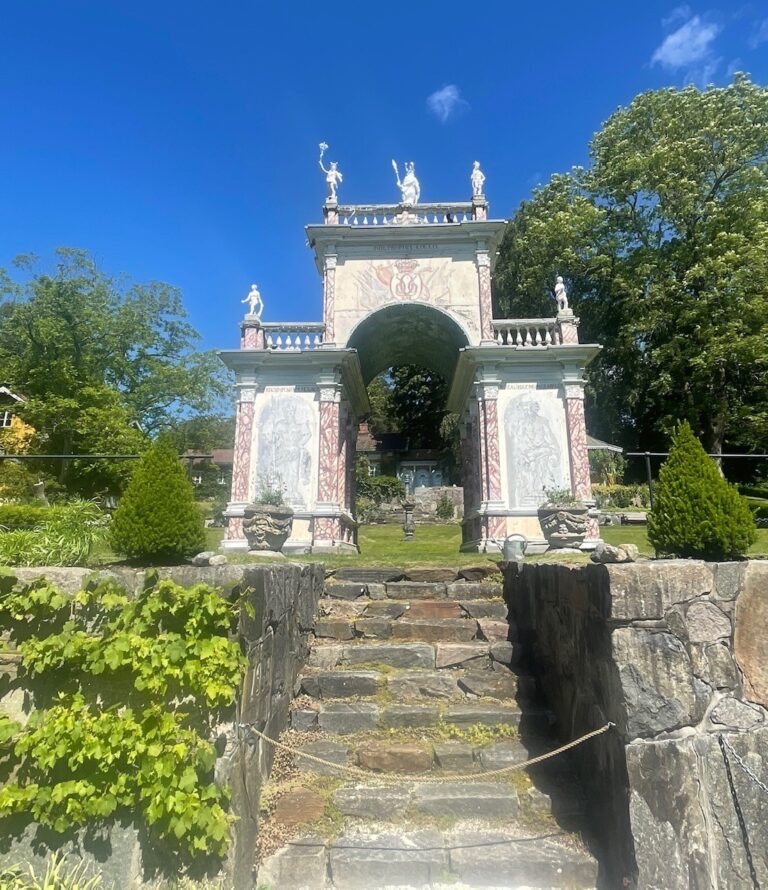
A portal in Havlystparken at Ramme Gård

At Ramme Farm, Petter Olsen realized his vision of promoting green values and inspiring through art to reach a broader audience. Olsen himself was the creative force behind the cultural site, with Havlyst Park named to evoke the meanings of “having desire” and “light” while also referencing the sea (hav) and gardens (hage). Over the years, Ramme Farm has been developed into a fairytale-like reality.

Petter Olsen has invested a significant portion of his fortune, which he primarily inherited, into developing Ramme Gård. When he sold the painting The Scream in 2012, it was to secure more financial resources to further his visions and make Ramme accessible to a larger audience. The Scream was sold for 850 million NOK. Olsen described The Scream as a warning about humanity’s impact on nature and the irreversible changes we are inflicting on the planet. In this context, he made the following statement in May 2012, after Munch’s artwork was sold at Sotheby’s in New York:

Ramme Gård: A Magical Estate Near Hvitsten
The entrance to Munch’s house

“I hope that the attention brought by this sale will increase public interest in Munch’s work and awareness of the important message I believe it conveys. For me, The Scream depicts the terrifying moment when humanity realizes its impact on nature and the irreversible changes it has initiated, making the planet increasingly uninhabitable. The image of The Scream may help more of us understand the extent of the consequences of our continued greenhouse gas emissions. These will inevitably trigger uncontrollable feedback mechanisms latent in nature’s physics. They will begin slowly, then accelerate, leading to the overheating of the Earth. The biosphere will shrink, and there will be less oxygen, water, and food. More death, less life. And very few lifeboats left when we go down.

Munch’s most significant work, The Frieze of Life, never completed but existing in many versions, revolves around themes of love, anxiety, and death. The Scream is about the approaching anxiety and foreshadows death. Munch’s hand-painted poem on the frame concludes with the words: ‘The great scream in nature.’ It is as if Munch had a premonition of what humanity would inflict upon nature. Meanwhile, Munch will continue to be a powerful force in my life. With my own Munch project, I aim to focus on life and love.”

Challenges and Legacy

In the autumn of 2024, news of Petter Olsen’s bankruptcy emerged, partly due to the tax authorities’ refusal to grant a VAT deduction of NOK 236 million for developing Ramme Farm as a cultural site. Total creditor claims amount to NOK 778 million (according to Dagens Næringsliv, November 15, 2024).

Developing Ramme Farm as a private owner without state support has been costly, but it has also inspired a broad audience to understand organic farming, garden art, and world-class art. Olsen spent NOK 1.75 billion on developing Ramme Farm. He could have kept it as private property but chose to share it with the public, offering deeper insights into one of Norway’s greatest painters, Edvard Munch, and his work at Ramme.

Recently, in November 2024, financier Kristian Siem purchased Olsen’s estate, including Ramme in Hvitsten, Ramme Hotel, the art collection, and Olsen’s childhood home, Langveis in Bærum. Siem plans to establish a sustainable operation for Ramme Farm to ensure continued public access for inspiration and recreation.

Petter Olsen has made an unforgettable contribution to giving nature a voice through organic farming at Ramme Farm. He also preserved Munch’s legacy by restoring Villa Munch. Though the challenges of being a visionary in Norway are evident, Olsen has left a lasting impact with his bold and forward-thinking visions for protecting the earth and providing cultural inspiration.

Facts about Ramme Gård

  • Location:
    Ramme Gård is situated by the Oslofjord, approximately 40 kilometers from Oslo, near Hvitsten.
  • History:

◦       The estate was originally purchased as a summer retreat by Fredrik C. Olsen, one of the three brothers who founded the Olsen shipping company in 1849.

◦       Edvard Munch owned the lower Ramme Gård from 1910 to 1944, drawing inspiration for several of his renowned artworks.

◦       Between 1875 and 1891, the estate was owned by Hans Pettersen, a relative of the Olsen family, who built the Swiss-style house Petersminde, now known as Villa Munch.

◦       Petter Olsen took over Ramme Gård in 1966.

  • Today’s Ramme Gård:

◦       A unique cultural destination featuring a hotel, art gallery, organic farming operations, outdoor theater, sculpture park, greenhouses, cafés, and restaurants.

                       Havlystparken, initiated in the 1980s, is a 33-acre baroque garden with rare plants, water channels, and an amphitheater.

  • Organic Farming:
    Agricultural operations have been organic since 1989, emphasizing sustainable farming and natural care.
  • Cultural Significance:
    Ramme Gård is a site for recreation, inspiration, and art, offering visitors an immersive experience into Edvard Munch’s creative universe and Petter Olsen’s vision of blending environmental preservation with culture.

    Ramme Gård: A Magical Estate Near Hvitsten
    Anne Marit Muri

    Ramme Gård: A Magical Estate Near Hvitsten, Text and photos © Anne Marit Muri. Muri is a former editor of, among others, Magasinet Kunst, and has written reports on art and culture for a number of years.

    She is the author and initiator of the book, Kunstnerliv, portraits of 19 contemporary artists, which was published in 2018, voted the year’s most beautiful art book in 2019 by Grafill. She is also the author of the book, Det gåtefulle lyset, Svalbard, which was published in autumn 2022, by the publisher Utenfor Allfarvei in Harstad.
    Muri is educated at the University of Oslo and Bergen. She is currently working on a master’s degree in media development, under the auspices of Oslo Met, in addition to developing new book projects and is a writer for several magazines. She is a regular writer on fine arts, culture and lifestyle for Daily Scandinavian.

Green Roofs in Scandinavia: A Fusion of Nature and Architecture

Somewhere between the earthy aroma of moss after rain and the futuristic hum of sustainable design, green roofs in Scandinavia represent a fascinating marriage of tradition and innovation. Learn more about the green roofs in Scandinavia: A fusion of nature and architecture.

These living, breathing rooftops are transforming urban and rural spaces alike, blending centuries-old Nordic practices with cutting-edge architectural techniques. So, let’s explore how Scandinavia leads the way in green roof adoption, unpacking its environmental, economic, and aesthetic impacts. Along the way, we’ll ponder why a roof covered in plants feels less like an accessory and more like a quiet revolution.

Rooted in Tradition: Scandinavia’s Green Roof Heritage

Centuries ago, before sustainability was a buzzword, Scandinavians were building green roofs for practical reasons. Sod roofs, as they were known, provided insulation during harsh winters and absorbed heat in summer. This was less about design and more about survival. Thick layers of grass, moss, and soil – supported by timber – kept homes livable long before modern HVAC systems existed.

Fast forward to today, and you’ll find architects across Scandinavia reviving these traditions with a twist. Modern green roofs integrate advanced waterproof membranes and lightweight growing mediums, balancing functionality with eco-consciousness. In a way, these rooftops are both a nod to the past and a declaration of the future.

A house on the Scandinavian shore
While not all Scandinavian houses have green roofs, they’re still a major tradition. Photo: Free Nomad/Unsplash

Green Roofs and Urban Ecology

The environmental benefits of green roofs are substantial. Cities like Copenhagen (last year’s UNESCO World Capital of Architecture) and Stockholm are using them to tackle urban heat islands – those pockets of intense warmth created by concrete and asphalt. A green roof can lower the surrounding temperature, reduce energy usage, and improve air quality by filtering pollutants.

But there’s more to this story. Green roofs also support biodiversity. They become habitats for insects, birds, and even small mammals, creating tiny ecosystems where nature thrives above the cityscape. This aspect resonates deeply in Scandinavia, where people are closely connected to the natural world.

Imagine this: a bumblebee, drunk on nectar, navigating a rooftop meadow against a backdrop of urban sprawl. It’s not just poetic; it’s part of an intentional movement to bring balance back to heavily built environments.

The Financial Side of Sustainability

Here’s where things get even more interesting. Green roofs aren’t just good for the environment; they’re good for your wallet, too. While the upfront costs of installation can be higher than traditional roofing, the long-term savings are significant. Green roofs insulate buildings, reducing heating and cooling costs, and they last longer than conventional roofs because the vegetation protects the underlying structure from UV rays and weather damage.

Now, let’s zoom out. The economic benefits of renewable energy are clear when you consider solutions like green roofs. By reducing reliance on fossil fuels and lowering energy consumption, these systems contribute to broader energy savings and align with the global push toward sustainable economies.

Scandinavia’s leadership in this area isn’t accidental. Governments here provide incentives for green roof installations, recognizing their dual potential for cost savings and environmental impact. It’s a small but powerful example of how policy can support practical sustainability.

An old cash register on a yellowish background
Sustainable roofing is good for the planet and also – your wallet. Photo:StellrWeb/Unsplash

Design Meets Philosophy: A New Aesthetic

It’s tempting to talk about green roofs purely in terms of practicality, but let’s not ignore their beauty. Green roofs transform drab, gray buildings into vibrant, textured canvases. A parking garage covered in wildflowers suddenly feels less sterile and more soulful, a landmark of urban design.

In Scandinavian architecture, this aesthetic aligns with a broader design ethos: minimalism meets nature. Buildings blend into their surroundings rather than standing apart. This mindset is as iconic to Scandinavia as the northern lights.

This design trend also plays into mental well-being. Studies show that access to greenery reduces stress and improves focus. When your office building is topped with a lush, living ecosystem, even Monday mornings feel a bit brighter.

Challenges and Opportunities

Green roofs offer many benefits, but they aren’t without their hurdles. Scandinavia, however, has turned these challenges into stepping stones for progress. Through innovation, collaboration, and research, the region continues to refine and adapt green roof practices.

  • Planning Requirements: Green roofs need thoughtful planning to ensure proper drainage, structural support, and the right selection of plants.
  • Maintenance Needs: While not overly demanding, green roofs require occasional care, such as pruning, weeding, and irrigation – especially during dry periods.
  • Guidelines and Innovation: Scandinavian cities are addressing these challenges by developing clear guidelines for green roof construction.
  • Architectural Advancements: Architects are designing innovative materials to improve functionality and sustainability.
  • Climate-Specific Research: Researchers are identifying plant species that thrive in northern climates, optimizing the performance of green roofs.
  • Collaborative Efforts: This ongoing work highlights one of Scandinavia’s core strengths: a collective approach to solving complex problems..
A cabin in the woods, on the shore
While they’re not overly demanding, green roofs do require occasional care. Photo: Guillaume Briard/Unsplash

A Green Future for Scandinavia

Scandinavia’s commitment to green roofs isn’t just a trend; it’s a statement. It reflects the region’s broader approach to sustainability, where every detail – from public transportation to energy grids – aims to minimize environmental impact.

And perhaps that’s the real magic of green roofs in Scandinavia. They’re not about showing off or chasing awards. They’re quiet, intentional, and deeply rooted in a respect for the natural world.

What is a roof, really, but the boundary between you and the world? In Scandinavia, that boundary is softening, becoming more porous, more alive. It’s no longer just a barrier but a bridge connecting people to nature in the most unexpected of places.

Green Roofs in Scandinavia: A Fusion of Nature and Architecture – Conclusion

Green roofs in Scandinavia are more than minimalist urban design – they’re symbols of a sustainable future. Rooted in tradition yet fully modern, they exemplify how innovation and nature can coexist. As cities around the world search for ways to combat climate change and create healthier environments, Scandinavia offers an inspiring blueprint.

In the end, a green roof isn’t just a roof. It’s a philosophy, a habitat, and a promise that we can build a future where the natural world and the built environment grow together.

Green Roofs in Scandinavia: A Fusion of Nature and Architecture, written dedicatedly for Daily Scandinavian by David Randall. David is a freelance writer from NYC who fell in love with Scandinavia during a life-changing trip to Sweden. Inspired by the region’s deep connection to nature and minimalist design, he writes about green architecture, renewable energy, and the subtle art of blending tradition with progress.

Feature image (on top)
A village in Scandinavia where some houses have green roofs.© David Dvořáček/Unsplash

Direct Access to Northern Culture: Finnair Expands Route to Kirkenes

0

Starting in April 2025, Finnair will introduce a new route to Northern Norway, connecting Helsinki with the town of Kirkenes via Ivalo. This service will operate three times a week, on Tuesdays, Thursdays, and Saturdays. Learn more about direct access to Northern culture: Finnair expands route to Kirkenes.

As Finnair’s northernmost destination, Kirkenes joins Tromsø and Bodø in the airline’s Northern Norway network, which already connects to both Rovaniemi and Helsinki.

This new route opens up opportunities for both Finnish and international travellers to explore the scenic region of Northern Norway and its unique experiences.

Direct Access to Northern Culture: Finnair Expands Route to Kirkenes
From Varanger. Photo: Visit Norway

Experience a King Crab Safari
Kirkenes, often referred to as “King Crab City,” has become a hub for Arctic king crab fishing, attracting visitors eager to experience this exceptional activity. The red king crab, which first arrived in the waters of the Varanger fjord over 50 years ago from Russia, thrives in the cold. The largest king crab caught in the region measured an impressive 1.8 metres from leg to leg, making it a remarkable catch for both locals and tourists.

The King Crab Safari takes guests out towards the Barents Sea. Guided by experienced fishermen, the trip offers opportunities to assist in pulling up cages containing the massive crabs while learning all about them. Along the way, visitors can enjoy views of the fjord, with the chance of spotting marine wildlife such as porpoises. Following the catch, guests are brought to a fjordside restaurant where the crabs are prepared and served in a traditional northern style, blending arctic adventure with local cuisine.

Direct Access to Northern Culture: Finnair Expands Route to Kirkenes
From Bugøynes. Photo: Wikipedia

Discover the Hidden Charm of Bugøynes
Following the thrill of a King Crab Safari, visitors can also explore the nearby village of Bugøynes, a place that feels like you are at the end of the world. Only 180 people live here, most of them descendants of Finnish settlers. The drive to Bugøynes is an adventure in itself, with narrow, winding roads and wide-open Arctic landscapes. Even though it’s a harsh place to live, the village thrives thanks to the King Crab and the nearby Arctic Sea, making it a unique and beautiful spot to visit.

Direct Access to Northern Culture: Finnair Expands Route to Kirkenes
From Kirkenes.

A Town Rebuilt: Kirkenes’ Wartime Story at the Borderland Museum
The Borderland Museum in Kirkenes offers a powerful glimpse into the town’s history as one of Europe’s most bombed places during World War II. Occupied by German forces and heavily targeted in over 320 Soviet air raids, Kirkenes was second only to Malta in destruction. By the war’s end, only as few as 13 buildings remained.

The museum showcases this turbulent past with artefacts like a Russian Ilyushin fighter plane and stories of survival in the Andersgrotta air-raid shelter. Visitors can also explore the town’s industrial heritage, shaped by the Sydvaranger mining company, and its post-war rebuilding, highlighting Kirkenes’ resilience and strategic role as a borderland.

Kirkenes offers travellers a chance to connect with its history and gain insight into the resilience of a community that has rebuilt and thrived through challenging times.

Direct Access to Northern Culture: Finnair Expands Route to Kirkenes
Experience Sami traditions at the museum Ä’vv Skolt Sámi (after a photo from 1871).

The Rich Sámi Culture and Heritage of Kirkenes
Sámi culture has deep roots in Northern Norway, including the Kirkenes area, as part of the indigenous Sámi homeland spanning across Norway, Sweden, Finland, and Russia. Historically, the Sámi were semi-nomadic hunters and later reindeer herders, adapting to northern Scandinavia’s harsh climate.

Today, Kirkenes offers a chance to connect with Sámi traditions through encounters with reindeer herders, artisans selling handcrafted goods, and you can deep dive into their rich history at the museum Ä’vv Skolt Sámi. The museum, a short 30 minutes drive outside of the city centre, highlights the history of the Skolt Sámi, the area’s indigenous people, with a distinct culture and language, numbering less than 2 000. The museum offers visitors the opportunity to explore their past from the Ice Age to today, as well as showcasing the influence and richness of the Sámi heritage.

Sleep in the Snow All Year Around at the Kirkenes Snowhotel
Located just 8 kilometres outside of Kirkenes, the Snowhotel has risen to become one of the largest activity providers in Northern Norway, offering visitors the chance to experience Arctic conditions for 365 days a year. Kirkenes takes great pride in this significant attraction, which showcases the region’s ingenuity and commitment to Arctic tourism. As one of only two ice hotels globally that remain open year-round, the Snowhotel uses advanced cooling technology to preserve its winter atmosphere even during the summer months.

Direct Access to Northern Culture: Finnair Expands Route to Kirkenes
The Snowhotel provides opportunities to sleep in the snow.

The Snowhotel provides opportunities to sleep in the snow, walk on snow, and engage in a variety of activities such as snowmobiling, dog sledding, and more. Guests can also enjoy dining in the hotel’s restaurant, where snow is even served, adding to the immersive experience of the unique Arctic atmosphere. Since opening in 2006, the hotel has focused on delivering an authentic Arctic wilderness experience, showcasing the region’s untouched landscapes.

Midnight Sun and Starry Nights at Øvre Pasvik
Øvre Pasvik National Park, located about 100 km south of Kirkenes, has earned the prestige of being Norway’s first certified International Dark Sky Place. While the park is renowned for its exceptional stargazing and Northern Lights views during the winter months, its summer appeal is equally remarkable.

Situated at 69 degrees latitude, visitors can enjoy the surreal midnight sun, where the sun doesn’t set for weeks, creating perfect conditions for outdoor activities like hiking and wildlife watching. With no artificial lighting within its boundaries, the park preserves its natural beauty year-round, making it an increasingly popular destination for those seeking a true wilderness experience in Northern Norway during the summer months.

Direct Access to Northern Culture: Finnair Expands Route to Kirkenes
Situated at 69 degrees latitude, visitors can enjoy the surreal midnight sun, where the sun doesn’t set for weeks. Photo: Visit Lofoten

Kirkenes is quickly becoming one of Northern Norway’s must-see destinations, and with Finnair’s new route starting in April 2025, it’s easier than ever to get there. With its local cuisine, thrilling fishing adventures, and influential history, Kirkenes offers a complete Arctic experience. Add in the rich Sámi culture, stunning landscapes and the authentic Snowhotel, and it becomes an unforgettable destination for every traveller.

To read more about Kirkenes, please visit nordnorge.com/destinasjon/kirkenes

Direct Access to Northern Culture: Finnair Expands Route to Kirkenes, a press release from Northern Norway Tourist Board

Starting a Business in the Nordics: 4 Reasons and Challenges

The Nordic region, which encompasses Sweden, Norway, Denmark, Finland, and Iceland, is increasingly seen as a hub of opportunity for entrepreneurs looking to start their own businesses.  Learn more about starting a business in the Nordics: 4 reasons and challenges.

The area offers the perfect setting for innovation and development because of its reputation for technological advancements, emphasis on sustainability, and economic stability.

However, there are challenges in starting a business here. Entrepreneurs are drawn to the Nordic region by its strong infrastructure and supportive ecosystems, but they also face unique difficulties when navigating high costs, constrained markets, and peculiar cultural norms. This essay looks at the compelling reasons to consider launching your company in the Nordic region, as well as the challenges you may encounter.

Starting a Business in the Nordics: 4 Reasons and ChallengesReasons to Start a Business in the Nordics

The Nordic countries consistently rank among the best places in the world to start a business. Here’s why:

1. Supportive startup ecosystem

The Nordic governments actively support entrepreneurship by offering a range of loans, grants, and mentorship initiatives. From networking opportunities to startup money, initiatives such as Finland’s Business Finland and Norway’s Innovation Norway offer vital tools to entrepreneurs.

Starting a Business in the Nordics: 4 Reasons and Challenges
A startup in the Oslo region. Photo: Kristoffer Hunstad/Oslo kommune

For those looking to establish private equity or venture capital funds, the region has access to strong operational support, creating an environment where these initiatives can thrive. This backing helps startups scale quickly by providing the resources they need and positions them for long-term success.

2. Technological advancement and innovation

Because they are eager to innovate, the Nordics are world leaders in technology. These nations excel in cutting-edge digital services, green technology, and healthcare innovations.

Starting a Business in the Nordics: 4 Reasons and Challenges
Map of the Nordics

Because of supportive cultures that place a high priority on research and development, Nordic entrepreneurs are often at the forefront of groundbreaking inventions. Businesses looking to transform industries would find this location ideal due to its inventive approach.

3. Access to talent and skilled workforce

The Nordic emphasis on education ensures a workforce equipped with advanced skills. International entrepreneurs can communicate more easily because many individuals speak English fluently.

Starting a Business in the Nordics: 4 Reasons and Challenges
The region draws a varied and driven talent pool due to its progressive policies and emphasis on work-life balance.

Furthermore, the region draws a varied and driven talent pool due to its progressive policies and emphasis on work-life balance. An important benefit for businesses looking to undertake large initiatives is the availability of highly qualified individuals.

4. Strategic business opportunities

The Nordic nations have some of the world’s highest purchasing power. The area is perfect for companies that respect quality and innovation because consumers here appreciate high-end and cutting-edge goods.

 Starting a Business in the Nordics: 4 Reasons and ChallengesThe Nordics are excellent at targeting business-to-business (B2B) clients in addition to consumer markets. Building solid ties with business clients is made easier for startups by sophisticated networks and a collaborative approach. The area is positioned as a well-rounded market for prospective business owners due to its simultaneous emphasis on consumer and business potential.

Challenges of Starting a Business in the Nordics

Although the Nordics presents exciting prospects, business owners must be ready to overcome formidable obstacles.

1. High costs and taxation

The Nordic region has some of the highest living and business expenses in the world. High salaries, pricey real estate, and energy expenses are among the challenges faced by entrepreneurs.

 Starting a Business in the Nordics: 4 Reasons and ChallengesTax rates, though reflective of the region’s strong public services, can be daunting. Startups need effective financial management strategies to mitigate these costs. Leveraging resources like government grants and tax deductions for innovation can provide some relief, but careful planning remains crucial.
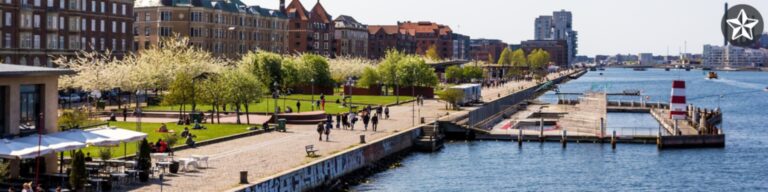
2. Small domestic market

Despite its wealth, the Nordics have a relatively small population spread across multiple countries. For startups, this means that scaling beyond national borders often becomes necessary early in the journey.

Companies need to get ready to grow globally, which calls for more funding for partnerships and market research. Although the limited domestic market presents difficulties, it also encourages an international perspective that may be beneficial for sustained expansion.

3. Logistical and geographic barriers

The topography of the Nordic region creates special logistical difficulties. Delivery timetables and supply chains are more complicated due to harsh winters and some regions’ relative isolation.

However, solutions like digital logistics platforms and partnerships with local providers are helping make logistics easy for Nordic startups. By leveraging technology and regional expertise, businesses can overcome these barriers and ensure smooth operations.

4. Cultural and competitive challenges

In the Nordic area, it is crucial to understand and adjust to local traditions. Every nation has its own set of business traditions and preferences, despite the fact that the populace is generally open and progressive.

Additionally, entrepreneurs must contend with fierce competition from both creative startups and well-established local companies. It takes dedication to market research, cultural adjustment, and competitive distinctiveness to succeed in the Nordic region.

 Starting a Business in the Nordics: 4 Reasons and Challenges – Conclusion

In the Nordics, launching a business is an exciting and promising experience. Ambitious entrepreneurs find the region to be a desirable location because of its rich markets, technological leadership, qualified workforce, and supporting ecosystems.

But the problems of high costs, small markets, logistical challenges, and cultural differences necessitate meticulous preparation and tenacity. Companies must embrace innovation, plan properly, and utilize all available resources in order to overcome these obstacles and thrive in the Nordic climate.

For those who are willing to adapt and seize opportunities, the Nordic region offers a unique combination of stability and energy, making it one of the most fascinating areas in the world for entrepreneurship. Your Nordic business endeavor could not only be successful but also establish new benchmarks for excellence if you take the proper strategy.

 Starting a Business in the Nordics: 4 Reasons and Challenges
Bash Sarmiento

Starting a Business in the Nordics: 4 Reasons and Challenges, written dedicatedly for Daily Scandinavian by Bash Sarmiento. Bash is a writer and an educator from Manila. He writes laconic pieces in the education, lifestyle and health realms. His academic background and extensive experience in teaching, textbook evaluation, business management and traveling are translated in his works.

Feature image (on top) © Enrique/Pexels

Copenhagen’s “Shit Island” has become the “Start-Up Island”

0

Once nicknamed “Shit Island” (Lorteøen) because the capital’s main landfill sites were located there until the 1970s, Amager has now become an industrial area that is a transition towards a mix of new housing and industry with a lot of soul and heritage. Copenhagen’s “Shit Island” has become the “Start-Up Island”.

Amager was a farming area and in the 1700’s the King decided to create a broad street from the farms on the island into the city so the farmers could easily bring their wares into the town markets. That street is Amagerbrogade.

Copenhagen’s “Shit Island” has become the “Start-Up Island”
Amager is an excellent place for startups due to several key factors that foster innovation and growth: Photo: Amager liv

The main building on Amager began in the 20th century, the area of villas around Femøren and Kastrup were largely built in the 1930’s and the more working class apartment buildings closer to the city slightly earlier. In the second half of the 20th century Amager gained the reputation as a slightly run down working class area but has recently undergone urban renewal and there are signs that even hipsters are starting to discover Amagerbrogade.

Copenhagen’s “Shit Island” has become the “Start-Up Island”
Amager benefits from its integration into Copenhagen’s vibrant startup scene with events like TechBBQ..

These days, numerous startups are coming to appreciate the variety, flexibility and lower costs of Amager’s post-industrial building-stock, the same built environment that once saw it nicknamed “Lorteøen” by snobby Copenhageners.

Copenhagen’s “Shit Island” has become the “Start-Up Island”
Amager bakke. Photo: ARC

Now, ski enthusiasts can hit the trails on the roof of a waste-treatment plant, Copenhill (Amager Bakke).

A whole ‘downtown’ area, Ørestad, has been created from scratch here; a shining new metro station brings shoppers to one of Denmark’s largest malls, and to the beautiful DR Koncerthuset, a part of the DR Byen (DR Town),home of the Danish Broadcasting Corporation. The concert complex consists of four halls with the main auditorium seating 1,800 people, in which you can enjoy listening to the Danish National Symphony Orchestra. The venue was officially opened in 2009.

Copenhagen’s “Shit Island” has become the “Start-Up Island”
Ørestad. Photo: News Øresund – Johan Wessman
© News Øresund(CC BY 3.0)

Today, Amager is an excellent place for startups due to several key factors that foster innovation and growth:

Proximity to Copenhagen’s Startup Ecosystem

Amager benefits from its integration into Copenhagen’s vibrant startup scene, which includes coworking spaces, accelerators, incubators, and events like TechBBQ. Copenhagen is home to top universities and technical institutes, providing startups with access to skilled graduates in fields like tech, engineering, and business.

Copenhagen’s “Shit Island” has become the “Start-Up Island”
Copenhagen Finetech Lab.

Strategic Location

Amager is close to Copenhagen Airport, making it highly accessible for international clients, investors, and partners. It is well-connected by metro and other public transport, facilitating commutes and meetings.

Community and Networking Opportunities

Amager hosts innovative areas like the Copenhagen FinTech Lab and Symbion, where startups can collaborate and share ideas. The district also attracts a mix of locals and expatriates, fostering diverse teams and global perspectives.

Copenhagen’s “Shit Island” has become the “Start-Up Island”
Amager Beach Park. Photo: Visit Copenhagen.

Quality of Life

Denmark consistently ranks as one of the happiest countries in the world, and Amager is known for its green spaces, like Amager Strandpark, which offers work-life balance. The Danish workplace culture emphasizes collaboration, trust, and flat hierarchies, which are conducive to startup growth.

Supportive Policies

Denmark provides grants, tax incentives, and startup visa programs to entrepreneurs, and Copenhagen is known for its straightforward regulatory framework, making it easy to establish and operate a company.

Copenhagen’s “Shit Island” has become the “Start-Up Island”
Amagerbrogade. Photo: AKF Holding.

Tech and Sustainability Focus

Amager is home to startups working in green tech, clean energy, and sustainability, aligning with Denmark’s leadership in renewable energy and sustainable development.

Amager’s combination of strategic location, access to talent, quality of life, and integration into Copenhagen’s broader innovation ecosystem makes it an ideal choice for startups looking to thrive.

Copenhagen’s “Shit Island” has become the “Start-Up Island”
Siljangade.

Grown Zero for startups

But grown zero for startups on Amager is Siljangade, a large co-working and living complex exclusively for small businesses, which opened in 2021. This is the only co-living space in Copenhagen that requires residents to have a CVR -a Danish company number, which was a way for the owners, property company NREP, to get around restrictions on residential properties in this part of the island.

Some apartments are purely used as company bases, other function as company premises and homes for the company owners. Rents start at DKK9,900 (USD1,400). There are 138 studio apartments in all, along with a gym, a café run by residents, shared workspaces, meeting rooms and a spectacular roof terrace.

Copenhagen’s “Shit Island” has become the “Start-Up Island”, written by Tor Kjolberg

UNESCO Culture Heritage List Honors Norway’s National Costumes

0

The bellowed Norwegian national costumes have been added to UNESCO cultural heritage list. This way, UNESCO Culture Heritage List honors Norway’s national costumes.

The list inscribed the traditional costumes, their craftsmanship, and their place in society at a ceremony in Paraguay on 5 December. Norwegian national costumes, known as bunad, represent an important part of Norway’s cultural heritage. Adding them to UNESCO’s cultural heritage list would recognize their significance and help ensure their preservation for future generations.

“The fact that the cultural heritage in Norway is so well documented and upheld by UNESCO’s list is a great recognition of those who work every day to preserve traditions and practices that change over time,” says Torbjørn Urfjell at the Norwegian Directorate of Culture to Norwegian newswire NTB.

UNESCO Culture Heritage List Honors Norway’s National Costumes
Torbjørn Urfjell at the Norwegian Directorate of Culture.

The Norwegian hand-made costumes are instantly recognizable due to their color schemes and patterns that belong to different regions, the silver the costume is usually adorned with, and the detail that goes into the embroidery. Accessories such as shoes with buckles and cloaks are also considered part of the costume.

The bunad is a symbol of Norwegian identity, often worn during important cultural and personal celebrations, such as Constitution Day (May 17th), weddings, and baptisms.

Each bunad reflects the local history, customs, and traditions of a specific region in Norway, showcasing the country’s rich diversity.

UNESCO Culture Heritage List Honors Norway’s National Costumes
Norwegian national costumes, known as bunad, represent an important part of Norway’s cultural heritage. Photo: Visit Norway

“It was a great honor to be at the meeting in Paraguay and to have the traditional Norwegian clothing included in UNESCO’s list of living cultural heritage,” says Urfjell. UNESCO’s inclusion of national costumes is the result of seven years of work from several institutions and organizations aimed at promoting the bunad or preserving cultural heritage. Input from professionals, craftsmen and traditional Norwegian national costumes (bunad) wearers across Norway has also been crucial in the process.

Creating a bunad requires highly skilled craftsmanship, including embroidery, weaving, and tailoring. These skills are often passed down through generations, preserving Norway’s intangible cultural heritage. Many bunads incorporate techniques and patterns that have remained unchanged for centuries.

UNESCO Culture Heritage List Honors Norway’s National Costumes, article continues below image.

UNESCO Culture Heritage List Honors Norway’s National Costumes
Creating a bunad requires highly skilled craftsmanship, including embroidery, weaving, and tailoring. Photo: Gjensidige.

Historical Significance

The widespread popularity of the bunad in Norway has its roots in the period of national romanticism in the 19th century, linked to the country’s struggle for independence and identity. However, older bunads are based on traditional folk costumes from the 17th and 18th centuries, making them valuable historical artifacts. In Setesdal, southern Norway, there is a tradition of folk costumes that stretches back to the 14th century.

*************************************
You may also like to read: Norway – World’s Best Democracy
*****************************************

Promotion of Sustainability

Bunads are made with high-quality, durable materials and are designed to last for generations, aligning with modern values of sustainability.

They are often handmade, reducing reliance on mass-produced and environmentally harmful clothing.

UNESCO Culture Heritage List Honors Norway’s National Costumes, article continues below image.

UNESCO Culture Heritage List Honors Norway’s National Costumes
The Norwegian hand-made costumes are instantly recognizable due to their color schemes and patterns that belong to different regions, Photo: Norsk folkemuseum.

Living Tradition

Bunads remain a vibrant part of Norwegian life, worn by people of all ages. They connect contemporary Norwegians with their ancestors and provide a sense of continuity. The active use of bunads in daily life and on festive occasions illustrates how cultural heritage can be both preserved and adapted.

Inspiration for Cultural Exchange

Recognizing bunads on a global stage would highlight Norway’s unique cultural contributions and foster greater appreciation for traditional dress worldwide. It might inspire other countries to preserve their traditional attire and craftsmanship.

UNESCO Culture Heritage List Honors Norway’s National Costumes
The widespread popularity of the bunad in Norway has its roots in the period of national romanticism in the 19th century, linked to the country’s struggle for independence and identity. Photo: Norges husflidslag.

Preservation of Local Variations

Over 200 variations of the bunad exist, each tied to specific Norwegian regions. Inclusion in UNESCO’s list could provide resources and attention to ensure these regional traditions continue to thrive.

Adding the bunad to UNESCO’s cultural heritage list would not only honor Norway’s rich history and craftsmanship but also help safeguard this tradition in the face of globalization and modernization.

UNESCO Culture Heritage List Honors Norway’s National Costumes, written by Tor Kjolberg
Feature image (on top) © OsloMet

Use The Norwegian Concept Of Kaffeepause To Design Interiors For Mindful Relaxation

0

You’ve probably heard of hygge, the Danish concept of coziness and appreciation for life’s simple pleasures that garnered mainstream popularity a few years back. The Swedish word for it is fika.  Here are some ideas on how to use the Norwegian concept of kaffeepause to design interiors for mindful relaxation

Now, kaffeepause — the Norwegian phrase for “coffee break” — puts a fresh twist on how to design your home for mindful rest and relaxation. Kaffeepause elevates the standard ten-minute coffee break, and transforms it into an intentional, calming ritual. The creation of a kaffeepause-inspired space in your home is all about attaining a snug and cosy ambiance that allows you to slow down and find peace in a fast-paced world.

Use The Norwegian Concept Of Kaffeepause To Design Interiors For Mindful Relaxation
Scvandinavian apartment in warm tones.

Understanding the vibe

In kaffeepause, the overall backdrop of calm is just as important as the rejuvenating cup of coffee. “Think freshly-brewed coffee made from the finest ground beans and a sweet Norwegian bolle (bun) such as a cinnamon bun, and you’re well on your way,” Niki Brantmark, founder of My Scandinavian Home, tells Better Homes & Gardens. “It’s also important to set a koselig (cozy) scene for absolute comfort—after all, it’s hard to appreciate the moment on a hard plastic chair under glaring lights.” At its heart, kaffeepause is an intentional ritual that centers around taking time out to relax and reflect, alone or with others. And, for that, you’ll need to create the perfect cosy, warm, and inviting backdrop—whether that’s within an entire room or a smaller nook in your home.

Use The Norwegian Concept Of Kaffeepause To Design Interiors For Mindful Relaxation
Scandinavian axxent chair. Photo: Mojo Boutique

Choose comfy furniture to create a kaffeepause space

To introduce kaffeepause into your home, choose large, comfy seating that you can curl up on. A huge, plush armchair, for example, is perfect for settling down with a book and a brew, but don’t opt for one based on aesthetics alone. It’s important the chair is comfortable enough to sit on for hours at a time — something with enough cushioning and a high back to support your neck, back, and lumbar spine.

If you also have space for a sofa, go for it. The more seating for friends and family, the merrier. A chaise, for instance, combines a chair and an ottoman with room enough for one person to recline. These sofas have a back, and either one, two, or zero arms, so think about what would be most comfortable for you. Two arms, in particular, are great if you want maximum support as you lay back and unwind. Alternatively, a big, cushiony sofa like a Chesterfield with a button-tufted back, deep cushions, and thick scrolled arms is also a solid choice. Chesterfields are comfortable, and also offer more support than the average sofa thanks to their hard backs. Also, if possible, choose furniture in luxury materials like velvet, boucle, or corduroy. These materials add cozy texture and are soothing to touch.

Use The Norwegian Concept Of Kaffeepause To Design Interiors For Mindful Relaxation, article continues below the image.

Use The Norwegian Concept Of Kaffeepause To Design Interiors For Mindful Relaxation
Hilma meadow rug. Photo: Oslo Deco

Use rugs to pull the space together 

The addition of a good rug is an easy way to add warmth and texture to your interiors, particularly if you have hardwood floors. It can also pull your kaffeepause space together. As long as you place the rug so it fits under the entirety of your coffee table and stretches to just under the front legs of your chairs and sofa, it can create a pleasing, seamless flow. Opt for natural materials like jute, sheepskin, or cotton to capture the classic Scandi look, and its emphasis on connection with nature. Similarly, the neutral colours found throughout Scandinavian design (such as, ivory, sage, grey, or grey-blue) instantly calm the senses, and naturally fit the kaffeepause vibe.

Use The Norwegian Concept Of Kaffeepause To Design Interiors For Mindful Relaxation, article continues below the image.

Use The Norwegian Concept Of Kaffeepause To Design Interiors For Mindful Relaxation
Scandinavian pendant lamp

Illuminate with soft lighting 

Don’t underestimate the importance of good lighting, which includes natural light. Sunlight is a natural mood-booster, so, if possible, position your kaffeepause space near windows that let in plenty of natural light. However, if natural light just isn’t prominent enough in your space to make good use of, that’s okay. Use soft, artificial lighting to create an ambiance that welcomes and uplifts. So, add layers of light — choose dimmable floor lamps, table lamps, wall sconces, and even fairy lights to create a gorgeous glow. Multiple lighting options provide flexibility throughout the day, as well as create a cozy space at night.

Kaffeepause is the latest concept to take Scandinavian interior design by storm. By incorporating the principles of kaffeepause-inspired design into your home, you’ll carve out your very own special sanctuary perfect for rest and relaxation.

Use The Norwegian Concept Of Kaffeepause To Design Interiors For Mindful Relaxation
Karoline Gore

Use The Norwegian Concept Of Kaffeepause To Design Interiors For Mindful Relaxation, written dedicatedly for Daily Scandinavian by Karoline Gore. Karoline is a freelance writer from Stoke on Trent in the UK who left the corporate grind when she started a family and has never looked back. She enjoys contributing to a range of online publications on the topics that are important to her.

Feature image (on top) © Cottonbro Studio/Pexels

The Finnish UFO Houses

What look like flying saucers are actually prefabricated homes designed by Finnish architect Matti Suuronen. Learn more about the Finnish UFO houses.

About 100 Futuro houses were built during the late 1960s and 1970s with early use of fiberglass technology and are today sought after by collectors. We first came across the Futuro House around December 2011 with a Futuro House located at the coast at Bamble in Norway.

******************************
Related: Modular Construction: Scandinavia’s  Answer to Urban Housing Challenges
******************************

The Finnish UFO Houses
The architect behind the Finnish UFO houses, Matti Suuronen .

Originally in 1865, Matti Suuronen was asked to design an easy-to-heat ski hut that could be placed in rough terrain. The architect, who had previously worked with polyester, decided to use the most affordable and lightweight hard plastic material. Finnish plastics manufacturer Polykem helped him build the prototype.

The western world had a utopian vision of a bright future for plastics. In the 1960s, the promise of infinite potential to shape products into forms that were once inconceivable. Plastics were seen as a solution to the post-war shortage of building materials and as a medium for audacious design, like prefabricated homes that could be manufactured off-site and subsequently transported, assembled and installed on-site.

The Finnish UFO Houses
Suuronen’s design had its roots in “pure mathematics” (something to do with pi),

The first house was displayed at an exhibition in London in October 1968 and received tremendous attention. Licensing rights were sold for the Futuro to be mass produced in 30 countries around the world. It stood approximately 13 feet high and 26 across, with one large room and a tiny bathroom, and sold for around $12,000 to $14,000 (about $84,000 to $105,000, adjusted for inflation).

*******************************
Related: Sweden – Leading the World in Prefab Houses
*******************************

The Finnish UFO Houses
Inside a Finnish UFO house.

The house was built in modules, making it easy to disassemble and reassemble, and its low weight also made it possible to transport it in its entirety on a flat-bed truck or flown in and lowered into position by helicopter.

A 1970 Tampa Tribune article describes a “furnished model with shag rug, wall hugging curved sofa, hooded fireplace and dimmer controlled indirect lighting.” Suuronen’s design had its roots in “pure mathematics” (something to do with pi), not a utopian ideal, according to the writer Marko Home, who has co-produced a book and a documentary about the house. Still, the Futuro “perfectly captured the ideas of space-age architecture and design.”

“We find it very easy and convenient to live in a Futuro house,” the Norwegian residents told D2 magazine. “The only thing we take extra care of is the steel foundation on which the house stands. That’s probably what will break the structure sometime in the future.”

Sadly, the aspirations of ‘plastic houses’ and the associated licensing model were victims of the chaotic and inflationary oil crisis in the mid-1970s. The houses that survive today are tracked by an enthusiastic mob of Futuro House spotters and coveted by collectors who see their historical importance, or who simply just like them.

The Finnish UFO Houses
Furnished Futuro house.

According to the impressively thorough website The Futuro House, just 96 were built and 67 remain standing. It has become the kind of cult object that inspires Flickr Pro subscribers to take cross-country road trips. Futuros can be found on every continent except Antarctica (where there are two Futuro-looking houses called Googie Huts; they’re technically their own thing), and there’s one in Tampa Bay serving as a strip club’s VIP room. But outside of Finland and architecture forums, the design is largely unknown.

The Finnish UFO Houses, written by Tor Kjolberg

Your Versatile Packing Guide for a Scandinavian Escape: Nature, Nightlife, and Relaxation

Scandinavia, a region renowned for its breathtaking landscapes, vibrant cities, and rich cultural tapestry, offers an array of experiences perfect for any traveler. Careful packing is essential whether you’re navigating Swedish weather, indulging in nightlife in Oslo, or rejuvenating in a tranquil spa in Finland. Here’s your versatile packing guide for a Scandinavian escape: Nature, nightlife, and relaxation.

Preparing for diverse activities while maintaining a sense of style and comfort is the key to a successful Scandinavian escape.

Packing for Nature Adventures

When venturing into the wilderness, packing the proper clothing is essential to ensure comfort while exploring the stunning landscapes. You simply must travel light to keep your energy up.  Start with breathable base layers made from moisture-wicking fabric that keep you dry during sweaty hikes or bike rides. Lightweight hiking pants are a fantastic option, as they can easily transition from rugged trails to a café in town. Additionally, a well-fitted, weather-resistant jacket will protect you from sudden rain showers or chilly winds, allowing you to enjoy outdoor activities without discomfort fully.

Your Versatile Packing Guide for a Scandinavian Escape: Nature, Nightlife, and Relaxation
Don’t forget versatile footwear! Photo: King Sportswear

Believe in Your Boots

Don’t forget versatile footwear! Sturdy, waterproof hiking boots can see you through forest trails and wet terrain while doubling as stylish options for walking around towns. Scarves and hats can also be lightweight, easily fitting into your daypack and providing warmth when temperatures dip. If you’re an enthusiast for other activities like golfing, consider packing quick-drying golf attire designed for movement, ensuring you’re ready for a tee time after a day of hiking. Emphasizing adaptability in your gear is critical to maximizing your nature adventure in Scandinavia.

Your Versatile Packing Guide for a Scandinavian Escape: Nature, Nightlife, and Relaxation
The right backpack is crucial for your Scandinavian adventure, Photo: Fjällreven.

Choosing the Right Backpack

The right backpack is crucial for your Scandinavian adventure, as it should cater to functionality and style. Opt for a medium-sized daypack that provides ample space for your essentials while remaining lightweight and easy to carry. Look for padded straps and a breathable back panel for comfort during long excursions. Compartments and pockets are vital for organization; consider a backpack with separate sections for your water bottle, snacks, and camera gear, allowing for easy access on the go. Water-resistant or waterproof material is a significant asset in the icy Scandinavian weather, ensuring your belongings stay dry during unexpected rain or snow.

Your Versatile Packing Guide for a Scandinavian Escape: Nature, Nightlife, and Relaxation, article continues below image.

Your Versatile Packing Guide for a Scandinavian Escape: Nature, Nightlife, and Relaxation
Opt for stylish yet comfortable clothing that transitions effortlessly from day to night. Photo: Cravat Club

Outfitting for Nightlife and Cultural Experiences

As the sun sets, Scandinavia becomes a vibrant haven of nightlife and cultural experiences. Opt for stylish yet comfortable clothing that transitions effortlessly from day to night for your evenings out. A chic dress or tailored trousers paired with a classy blouse allows you to blend in with locals while enjoying a night at a trendy bar or attending cultural events. Layering is crucial, as nights can be cooler; a light cardigan or sleek blazer can add warmth while enhancing your look.

Accessorizing can elevate your evening outfits, yet you must also prioritize comfort. Consider some activewear jewelry to shift from outdoor appropriate to nightlife standard quickly. A statement necklace or a pair of elegant earrings can transform even the simplest attire into something special. Consider packing a versatile clutch that can carry all your essentials without weighing you down and matches multiple outfits. Jewelry crafted from durable materials ensures longevity, allowing you to enjoy day and night outings without worrying about damage.

Your Versatile Packing Guide for a Scandinavian Escape: Nature, Nightlife, and Relaxation
. Regarding what to wear, comfort is vital. Photo: Anete Lusina/Unsplash

Creating a Relaxation Packing List

After days of adventure and city exploration, your short escape to Scandinavia deserves peace and relaxation. Start by including cozy loungewear that allows you to unwind at wellness retreats or during quiet evenings in your accommodations. Soft, breathable fabrics are ideal—think of a comfortable pair of lounge pants or a lightweight robe for those spa visits or relaxing at your hotel.

Enhancing your relaxation requires thoughtful additional items. Don’t forget to pack a pair of fluffy socks or warm slippers to keep your feet cozy after a long day of exploring. If you enjoy spa treatments, include a travel-sized kit of your favorite skincare products, complete with lotions and essential oils to pamper yourself.

Saunas are integral to Scandinavian culture, offering a unique space for relaxation and socializing. Traditionally, you can expect a serene atmosphere with wooden interiors and soothing heat that promotes detoxification and rejuvenation. Regarding what to wear, comfort is vital; lightweight swimwear, such as a swimsuit or shorts, is commonly accepted attire in public saunas.

Your Versatile Packing Guide for a Scandinavian Escape: Nature, Nightlife, and Relaxation, article continues below image, article continues below the image.

Your Versatile Packing Guide for a Scandinavian Escape: Nature, Nightlife, and Relaxation
packing smartly for a Scandinavian adventure is paramount for fully embracing the region’s diverse offerings. Photo: Viking River Cruises.

The Versatile Packing Guide for a Scandinavian Escape: Nature, Nightlife, and Relaxation – Conclusion

In conclusion, packing smartly for a Scandinavian adventure is paramount for fully embracing the region’s diverse offerings. By focusing on versatile clothing that suits nature, nightlife, and relaxation, you can create a packing list that caters to all your experiences. Always consider the climate and your personal preferences, which can guide your choices toward items that resonate with you.

With this balanced approach, you are well-equipped to enjoy every activity — from hiking majestic landscapes to lounging in serene retreats — ensuring that your travel memories in Scandinavia are both delightful and enriching. Tailor your packing to reflect your style and experiences, and prepare to embark on an unforgettable journey!

Your Versatile Packing Guide for a Scandinavian Escape: Nature, Nightlife, and Relaxation
Ainsley Lawrence

The Versatile Packing Guide for a Scandinavian Escape: Nature, Nightlife, and Relaxation, written dedicatedly for Daily Scandinavian by Ainsley Lawerence. Ainsley is one of our regular contributors. She is a freelance writer from the Pacific Northwest. Ainsley is interested in better living. through technology and education. She is frequently lost in a good book.

Feature image (on top) © Egil Liland/Pexels

Swedish Outdoor Clothing Company Navigating in Challenging Terrain

0

An eagerness to expand can take leaders down slippery slopes if they don’t have a clear direction. When Swedish outdoor clothing company Peak Performance now is expanding in the UK as well as in the US it is indeed navigating in challenging terrain.

This summer, the Swedish outdoor brand Peak Performance, owned by Amer Sports, confirmed it will open its first-ever store in the UK as part of its global expansion plans. At the same time it launches in the US along with Arc’teryx, the outdoor and ski wear brand being a part of Amer’s Technical Apparel segment.

Swedish Outdoor Clothing Company Navigating in Challenging Terrain
“The Shop is where you truly engage with your community, and get to understand customer desires,” says Molnar. “You rely on shop staff as key ambassadors,”

Luckily for Sara Molnar, the president and CEO of Peak Performance, she is a lifelong skiing and freeride competitor combined with a successful career in legal and financial sectors, making her fit for navigating in challenging terrain.

Peak Performance has selected Covent Garden in London for its debut UK store, following in the footsteps of its sister brand, Canadian high-performance outdoor wear brand Arc’teryx, which opened its biggest European store on King Street in May.

Swedish Outdoor Clothing Company Navigating in Challenging Terrain
Peak Performance concept store in Covent Garden

In the U.S., the brand is introducing its 2024 Ski Collection, a category where the company reported it is “well-known through its partnership with the Freeride World Tour.” The collection will be available through a new e-commerce platform.

Swedish Outdoor Clothing Company Navigating in Challenging Terrain
Store interior in Covent Garden

“I noticed how other people spoke about their work with pride and passion, and wanted to have that feeling too,” she said in an interview with the prestigious magazine Monocle. “My connection to Peak Performance goes back to my childhood, which I spent skiing, and the community around the brand.”

Its 1,700-square-foot UK flagship will be located at 49 Long Acre. It will offer a curated selection of its collections, including its lightweight Helium down series, its Vertical Gore-Tex Pro ski range and ISPO-award-winning technical items, with apparel and accessories for skiing, hiking, mountain biking, trail running, and urban exploration.

Swedish Outdoor Clothing Company Navigating in Challenging Terrain
Peak Performance concept store in Sioux City, USA

“Known for seamlessly blending high-performance functionality with Scandinavian minimalist design, Peak Performance has earned a dedicated following across Europe and beyond,” the company said in a media release. “Founded by skiers in the mountain town of Åre, Sweden in 1986, the brand was born out of a desire to create apparel that could meet the rigorous demands of extreme weather conditions while offering more stylish, progressive aesthetics. Over the years, Peak Performance has evolved into a versatile lifestyle brand, delivering innovative gear not only for skiing but also for a wide range of outdoor sports such as hiking, mountain biking, and golf, as well as for everyday urban wear.”

Now, Molnar is leading Peak Performance’s transformation, guiding it through unchartered territory as the company grows. “You cannot expand globally without knowing who you are and what you stand for,” she says. “It’s about disciplined growth.”

Swedish Outdoor Clothing Company Navigating in Challenging Terrain
Peak Performance biking outfit

The concept store in London will also showcase Peak Performance’s second-hand program ‘WearAgains’ offering a trade-in system from launch, allowing customers to exchange their pre-loved Peak Performance products for vouchers. This will sit alongside innovative services such as care and repair of garments and professional washing to spotlight the brand’s commitment to the longevity and upcycling of its products.

The company said the brand’s expansion into the U.S. builds on its recent growth in Canada, including opening a brand store in Vancouver in Fall 2023 to “showcase its pairing of progressive design with technical leadership.”

Swedish Outdoor Clothing Company Navigating in Challenging Terrain
Peak Performance hiking outfit

Peak Performance’s recent shop openings in Berlin, Vancouver and London, as well as a new location in China, offer the company fresh opportunities to learn and build a bigger community. For Molnar, retail remains at the heart of the business. As the business continues its slalom across the world, the challenge is becoming how to balance the company’s global aspirations with the importance of honoring its Scandinavian roots.

In a statement Sara Molnar said: “We are thrilled to be making our entrance to the UK, and it is a milestone moment for us to be doing so in Covent Garden – the ideal destination for this significant step. “This iconic location not only provides the vibrant and diverse backdrop essential for Peak Performance but also allows us to engage with both local enthusiasts and a global audience. As we prepare to open the doors to our new home at 49 Long Acre, our vision is to cultivate a space where London’s ski and outdoor community can gather, drawing inspiration and discovering the right apparel for their adventures.”

Peak Performance has deep roots in skiing, showcased by its presenting partnership with the Freeride World Tour (FWT) and the brand’s roster of athletes, including FWT champion Hedvig Wessel and two USA-born competitors, Alex Hackel and Svea Irving. With its launch in the U.S., Peak Performance said it is adding to its athlete roster and will continue to expand its team to support more riders and ambassadors in the U.S. and gain further insights into the North American market.

“The Shop is where you truly engage with your community, and get to understand customer desires,” says Molnar. “You rely on shop staff as key ambassadors,”

Commenting on the signing in London, Michelle McGrath, executive director at Shaftesbury Capital, added: “Peak Performance’s distinct Scandinavian heritage combined with its strong sustainability-focused ethos contributes to its reputation as high-quality experts in their space. It is this unique personality that makes this opening the ideal addition to Covent Garden, which is home to an unmatched selection of innovative concepts, diverse brand formats and world-class retail and hospitality.”

Swedish Outdoor Clothing Company Navigating in Challenging Terrain
Known for seamlessly blending high-performance functionality with Scandinavian minimalist design, Peak Performance has earned a dedicated following across Europe and beyond.

“The USA’s global influence within fashion and style, alongside a growing community of new outdoor adventure seekers, makes it an ideal destination for Peak Performance,” said Sara Molnar. “We couldn’t be more excited to finally offer North American skiers the chance to shop Peak Performance online. This marks a significant next step in our ongoing efforts to bring Peak Performance to the North American consumer, and we look forward to sharing more updates in the near future.”

Swedish Outdoor Clothing Company Navigating in Challenging Terrain, written by Tor Kjolberg