Irish Whiskey Association, launched its Irish Whiskey Passport to encourage locals and international travelers alike to ‘Discover Ireland’s Whiskey Distilleries’. Learn how you can obtain your own Irish Whiskey Passport.
Are you eager to see Ireland’s whiskey distilleries on your next visit to the Emerald Isle? In Northern Ireland people have a passion for distilling, and they love to share it with you.
In Northern Ireland people have a passion for distilling, and they love to share it with you. Photo: Irish Whiskey Museum
IrishWhiskey360°, passport will be a unique record of your journey through extraordinary Irish whiskey distilleries where you collect stamps at every distillery on your journey. Visitors who collect at least six stamps can become an IrishWhiskey360° Champion, with special rewards.
The Whiskey passport is part of an outreach campaign to help visitors discover the range and diversity of Ireland’s many whiskey distilleries. There’s a whole world of spirits to discover here, with a special welcome for everyone who explores it. Of course, if you’re going exploring, you’re going to need a guide. So the Discovering Ireland’s Whiskey Distilleries campaign includes a downloadable map and other information on the Irish whiskey distilleries that you can visit.
Stop by any of Ireland’s 24 distilleries that are currently members of the association and pick up your card. You can expect to encounter all sorts of characterful spirits along the way. There are some pretty special characters amongst their makers too. No need to rush. Let the distillers share their pride in their creations with you. Savor the nose and the mouthfeel of each spirit. Experience their individual tastes, the way they express the land of their birth, the grain and the water that brought them into being.
Stop by any of Ireland’s 24 distilleries that are currently members of the association and pick up your card. Photo: Courtesy West Cork Destilleries
************************************************
You might also like to read Danish Whisky Distillery Expanding
************************************************
William Lavelle, Head of the Irish Whiskey Association
“Irish whiskey distilleries have developed a world-famous reputation as great places to visit – all offering unique experiences. We hope the new IrishWhiskey360° Passport will encourage staycationers and future international tourists to explore Ireland’s diversity of distillery experiences,” says William Lavelle, Head of the Irish Whiskey Association.
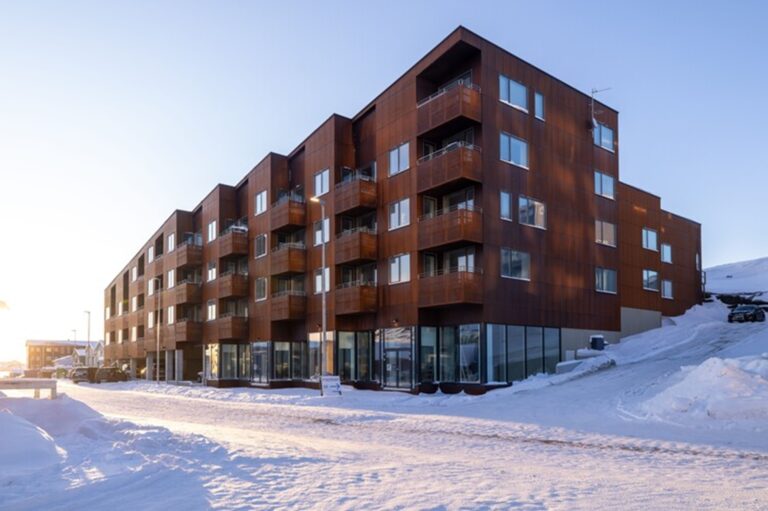
The brutal climate of Greenland’s capital, Nuuk, means that architecture must not only offer shelter but be in balance with nature. Entreprenørdalen, a district in Nuuk, is currently undergoing a transformation from a former industrial area into an attractive new urban district.
Copenhagen-based multi-disciplinary architects BIOSIS works from a climate-driven design approach which for Nuukullak 10 meant finding solutions that could break down the forceful northern winds and optimize the few daylight hours in winter.
Each of the building’s 45 suites also has a southeast-facing balcony, maximizing residents’ ability to enjoy the warm daylight hours.
And although the tundra climate brings cold, long, and snowy winters, it’s the wind — not the temperature — that makes for particularly grueling conditions. Then there’s the northern latitude’s seasonal lack of sunlight, which makes year-round outdoor life much harder to embrace. The challenge of accommodating the region’s wind and sun proved to be the genesis for the design of a striking new apartment complex that celebrates local culture and climate.
The project is a singular building containing 45 apartments for young professionals and families, strategically arranged around a central courtyard, allowing for sea and mountain views. This architectural form, with visual links to nature, shouldn’t come as a surprise, given that Biosis’s design philosophy advocates minimizing environmental impact and creating projects that are in harmony with the natural world.
*****************************************
You might also like to read: The Viking Mystery on Greenland
*****************************************
To provide the needed protection against the harsh northern winds, the building forms a distinctive horseshoe shape that envelopes the truncated triangle-shaped courtyard.
Thorough studies of wind, flow, and daylight were applied to refine the design and increase the building’s performance, and influence the livability of its residents during the entire design process. By creating an intimate scale of a low-rise building that orients according to the micro-climate, the architects created a building that improves the indoor and outdoor comfort for its residents. To provide the needed protection against the harsh northern winds, the building forms a distinctive horseshoe shape that envelopes the truncated triangle-shaped courtyard. The open end of the courtyard towards the south brings in light and views of the backdrop landscape and sea.
******************************************
You might also like to read: The Father of Eskimology
******************************************
Thorough studies of wind, flow, and daylight were applied to refine the design and increase the building’s performance.
Each of the building’s 45 suites also has a southeast-facing balcony, maximizing residents’ ability to enjoy the warm daylight hours. At street level, meanwhile, a 270-square-meter café welcomes pedestrians and cyclists. Like all of the building’s at-grade entries, its glazed façade is slightly tucked into the body of the building, making for a sheltered environment. Upstairs, the apartments — layouts range from one to four bedrooms — feature minimalist finishes and expansive south-facing bay windows.
Instead of flatting the sloping site, the structure steps with its natural contours reducing the need for rock blasting, and preserving critical, natural habitats. Biosis also developed the horseshoe-shaped layout to break down the fierce winds and maximize sunlight.
The inner courtyard space serves as the residents’ year-round landscape for play for children, communal space in summer, and wind-sheltered entrance points.
“By keeping the rocky features in the design, the building becomes a harmonious extension of its natural environment,” says BIOSIS co-founder Morten Vedelsbøl.
“Our aim is always to minimize the impact and preserve and respect the natural terrain, habitat, and biotopes by, for example, keeping blasting to a minimum. By keeping the rocky features in the design, the building becomes a harmonious extension of its natural environment,” says BIOSIS co-founder Morten Vedelsbøl. “This allowed us to map out a microclimate and refine the building’s form to respond effectively to its natural surroundings.”
The result is a building that offers comfort, connection and beauty to those who call it home.
Building Challenges on Greenland, reported by Tor Kjolberg
In six volumes about himself and his loved ones, “My Struggle” by Karl Ove Knausgård has become the longest novel in Norwegian history. Read on and learn more about the struggle of a Norwegian writer.
In six volumes of books published in English, Karl Ove Knausgård talks candidly about laying himself and his family bare on the page, and his interest in black metal and transhumanism.
In Norway, the author has become a literary phenomenon with the publication of his autobiographical novel “Min Kamp (My Struggle)“. Published in six volumes in Norwegian between 2009 and 2011, it has been an astounding success, with more than half a million copies of one of the titles sold in Norway, which means, one book for every nine adult inhabitants. Since then, the series has been available in 35 languages. The most demanding critics do not shy away from comparisons with Proust, Joyce or Virginia Woolf.
***************************************
You may also like to read: Century Love War
***************************************
“The story is written in a closed room and that is really the only place where what is said can be said. I was like an animal caught in floodlights,” the most famous Norwegian writer since Henrik Ibsen wrote after the books were published.
Syvert is the novel’s narrator for 400 pages. The book is fully Knausgaardian: here are family struggles, difficulties with girls, and extensive digressions into football and the frying of fish. But there’s something else. Syvert dreams of his father, killed in a car crash nine years ago – a dream that provokes a conversation with his mother. This, in turn, leads to some letters from a woman his father had been in love with before he died, and the revelation that he had a daughter with her: Alevtina, who narrates most of the book’s second half.
In sex volumes of books published in English, Karl Ove Knausgård talks candidly about laying himself and his family bare on the page.
In English, My Struggle is more than 3600 pages or as audio-book version, superbly interpreted by Edoardo Ballerini, more than 133 hours of listening. The “My Struggle” books have made Karl Ove Knausgård an international star. He has received awards all over the world. He is interviewed by the biggest newspapers and magazines and has even started his own publishing house (Pelikanen).
as audio-book version, My Struggle is, superbly interpreted by Edoardo Ballerini, more than 133 hours of listening.
But, in fact, he didn’t plan to write “My Struggle”. But when he was studying in Bergen in the 90s, there were some devil worshippers, black-metal musicians, more extreme than punk. Some were incredibly destructive. They burned churches, there were murders. “They were in the same city as me, the same age as me, but I didn’t really pay attention. Later, I started to get interested in the music and in the whole attitude, because in Norway, when I was growing up, there was nothing going on. There was only one TV channel. It’s a kind and gentle society, and then you have these violent outbursts, and I wondered where it came from. I thought that one day I’d like to write about it”.
Karl Ove Knausgard reading from My Struggle” by editrrix is licensed under CC BY-SA 2.0 (via Wikimedia Commons)
The radical thing about “Min Kamp” is that Knausgård tells his whole life story, at length, with details that at first sight seem trivial and banal. How he makes a cup of coffee or tea, goes out to smoke a cigarette on the balcony of his apartment and watches the neighbors, has to juggle three children and a stroller to get them to the nursery without having a nervous breakdown (and every now and then he does). When and how he meets, falls in love with, but also quarrels with Linda, his Swedish second wife (“A Man in Love”, volume 2).
Karl Ove was very nervous before the revelations in “My Struggle.” Has that changed since then? Has he gotten thicker-skinned?
“Yes,” he answers, adding that he has also accepted the consequences. However, he doesn’t read reviews of himself.
The Struggle of a Norwegian Writer, written by Tor Kjolberg
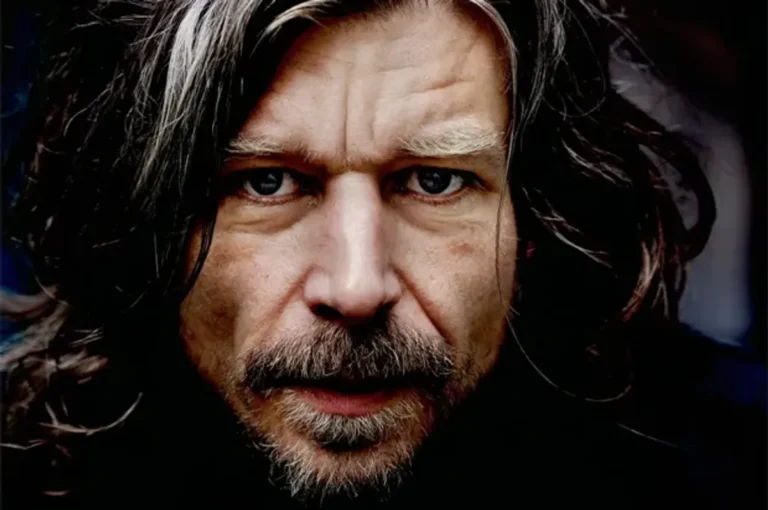
Feature image (on top): Karl Ove Knausgård, in cover detail of “My Struggle: Book 1” (Farrar, Straus and Giroux)
When you arrive in Tromsø, you are instantly captivated by the wild and pristine beauty of the Arctic. Yet, what makes this region truly extraordinary is undoubtedly the Sami people, their ancient traditions, deep connection to nature, and fascinating way of life. Read on and become immersed in the Sami culture – a unique culture at the edge of the world.
Many operators, like Ophelix Scandinavia, give visitors opportunity to dive into this remarkable culture in an authentic and respectful way. Explore the world of the Sami and learn about their history, lifestyle, and their incredible resilience in the face of modern challenges.
Tromsø harbor and city center. Photo: Yngve Olsen-Sæbbe/Wikipedia
To begin with, it’s important to understand who the Sami are. This Indigenous people have lived for thousands of years in the Sápmi region, which stretches across northern Norway, Sweden, Finland, and part of Russia. Their way of life is deeply intertwined with nature, and their culture is a celebration of the rhythms of the seasons.
Moreover, the Sami have their own languages (yes, plural!) and a rich cultural heritage that includes colorful traditional clothing, spiritual practices, and storytelling. Thanks to efforts to preserve their traditions, they continue to thrive despite historical pressures.
Immersed in Sami Culture – A Unique Culture at the Edge of the World, article continues below image.
This Indigenous people have lived for thousands of years in the Sápmi region. Photo: Orjan Bertelsen – Hurtigruten
Reindeer Herding: A Living Tradition
It’s impossible to talk about the Sami without mentioning reindeer. These animals are central to their culture, providing food, clothing, and even tools. But beyond that, they represent the Sami’s deep connection to their environment and nature.
During excursions you can visit a Sami reindeer farm and will immediately be struck by the serene atmosphere. The sound of hooves crunching on the snow and the quiet presence of the animals create a magical experience.
Furthermore, you can learn that reindeer herding is not just a job, but a way of life. Although this tradition has been passed down through generations, it is now facing modern challenges, such as climate change and shrinking grazing lands. After feeding the reindeer, take the opportunity to sit around a crackling fire and enjoy a traditional Sami meal while listening to stories about life in the Arctic.
During excursions you can visit a Sami reindeer farm Photo: Wikipedia
Joiks: The Soulful Music of the Sami
The joik is far more than just a traditional song, it’s a profound expression of the Sami spirit and their deep connection to the world around them. Unlike conventional music, a joik isn’t simply “about” something; it embodies it. Whether created for a loved one, a place, or even an animal, each joik is unique and personal, evoking emotions and memories in a way that words alone cannot capture.
Experiencing a live joik is a powerful moment. Imagine sitting by a crackling fire, under a blanket of stars, as a Sami performer sings a joik that resonates with the very essence of the land. It’s not just a performance, it’s an unforgettable, spiritual journey into the heart of Sami culture.
Immersed in Sami Culture – A Unique Culture at the Edge of the World, article continues below image.
Experiencing a live joik is a powerful moment. Photo: iFinnmark
Traditional clothing: The Gákti
The gákti is an essential part of Sami identity, representing not just clothing but a deep connection to their cultural heritage. Made from materials like wool, linen, and reindeer hide, the gákti is carefully crafted and tailored to the needs of the wearer. Its colors, patterns, and designs vary by region, family, and social status, making each garment unique and symbolic of the wearer’s personal and cultural story.
During a visit, you can have the chance to see the stunning craftsmanship up close. The intricate embroidery, vibrant colors, and the use of natural materials were truly remarkable. The gákti is not just for special occasions many Sami still wear it for ceremonies, festivals, and even everyday life in the Arctic. If you’re lucky, you may meet local artisans who create these garments and other traditional items, offering an opportunity to learn about the art of making the gákti and purchase handmade pieces, such as jewelry, scarves, and reindeer leather goods, as a lasting souvenir from your journey.
Immersed in Sami Culture – A Unique Culture at the Edge of the World, article continues below image.
The intricate embroidery, vibrant colors, and the use of natural materials in tha gakti are truly remarkable. Photo: Wikipedia
Why is it important to preserve Sami culture?
However, it’s crucial to remember that while Sami culture is incredibly resilient, it is also vulnerable. From climate change, which threatens grazing lands, to ongoing struggles for land rights, the Sami face many modern challenges.
Immersed in Sami Culture – A Unique Culture at the Edge of the World, based on a press release from Global DMC Alliance.
With a remarkable low crime rate, Iceland seems to foster the type of literature that can chill you to the bone. The Icelandic crime writer Vilborg Yrsa Sigurðardóttir’s first crime novel translated into English in 2008, was The Day is Dark. Learn more about Nordic noir – crime scene Iceland.
Vilborg Yrsa Sigurðardóttir (born 1963) has been writing since 1998 but it’s interesting to recall that she began her writing career with books for children and young readers. She scooped the Icelandic Children’s Book Prize in 2003.
Vilborg Yrsa Sigurðardóttir (born in 1963) has been writing since 1998.
Her début crime-novel “Last Rituals” was published in Scandinavia in 2005, published in the US in 2007, and the UK in January 2008. It was translated into English by Bernard Scudder,
Yrsa is the rare author who truly gets better with each new book, but then nothing about Yrsa Sigurdardottir is typical. As director at one of Iceland’s largest engineering firms, Yrsa’s second job just happens to be as a bestselling crime novelist with a growing international readership and fantastic movie adaptations of two of her novels, the first one being I Remember You. So far, she has written 20 crime-fiction books.
The central character in her first crime novels was Thóra Gudmundsdóttir, a lawyer, and Yrsa was soon hailed as “Iceland’s Queen of Crime”.
Two of Yrsa’s novels have lead to fantastic movie adaptations.
Yrsa has a confident command of the crime novel form, and she invariably spins together a heady combination of tension and unease, with a mixture of ironic humor. The lack of criminals in Iceland might do little to inspire gruesome plots, but the country’s small population (about 300,000 people) and the dramatic landscape might be a perfect backdrop for imaged crime.
The personal life of the protagonist plays an important role in her books, but it is never allowed to overwhelm the crux of a good crime story: a gripping plot. She has brought a breath of fresh air to Nordic crime-writing, by turning away from the Scandinavian gloom of her confrères in favor of a light touch of irony. The scenes she loves to write most are the ones where characters have no safety net.
The lack of criminals in Iceland might do little to inspire gruesome plots. Photo: Wikipedia
Yrsa makes use of themes from Icelandic tradition and history: in Last Rituals, for instance, Norse prehistory and Icelandic magical traditions are brought into a contemporary murder case, while in My Soul to Take, folk legends of ghosts and infanticide complicate a gruesome murder. But Yrsa does not confine her heroine to Iceland: in her fourth book, Veins of Ice (2008), Þóra investigates a mysterious disappearance in Greenland.
Yrsa Sigurdardottir’s latest book.
Her 20th consecutive crime novel, Can’t Run, Can’t Hide, is a tense tale set on a secluded fjord, a typical book in the Nordic noir genre. On a cold winter evening a neighbor visits the house of a family that has not been seen in a week. No one comes to the door when he knocks. After breaking down the back door, his worst fears are realized. Their home is now a horrific crime scene.
Policeman Týr and forensic pathologist Iðunn are called to the house to investigate. As the case advances, harrowing secrets about the family are revealed. Along with a young policeman Karó, the investigative team quickly realize that the case forces them to face their own suppressed past and opens a Pandora”s box to much darker crimes.
Sigurðardóttir now lives with her husband and children in the small suburb of Seltjarnarnes, a ten-minutes-drive from Iceland’s capital. Her novels are all set in her home country.
Nordic Noir – Crime Scene Iceland, written by Tor Kjolberg
Knut Ljøgodt, Dr. Philos in Art History and co-founder of the Nordic Institute of Art (since 2017), has brought Northern Norwegian landscape painting back into the spotlight, including exhibitions of Peder Balke and Lars Hertervig both in Norway and abroad. “Timelass Relevance: Classical Landscape Art from the North” is about the Institute’s latest exhibitions.
On Friday, February 21 this year, the exhibition Hertervig-Hill, Dream and Reality opened at the Stavanger Art Museum, showcasing selected works by Lars Hertervig (1830-1902) and Carl Fredrik Hill (1849-1911).
Lars Hertervig: Marine (Oil)
This exhibition was previously displayed at Prince Eugen’s Waldemarsudde in Stockholm in the fall of 2024 until January 25 this year. It is organized by the two art museums in collaboration with the Nordic Institute of Art. The project curators are Karin Sidén, Hanne Beate Ueland, and Knut Ljøgodt.
The exhibition featuring Hertervig’s expressive nature paintings and Hill’s visionary landscapes attracted more than 36,000 visitors when it was displayed at Prince Eugen’s Waldemarsudde in Stockholm last autumn.
Timeless Relevance: Classical Landscape Art from the North, article continues below image.
Lars Hertevig:Primeval forest (Watercolor and gouache on paper)
The Nordic Institute of Art was founded in Oslo as an independent organization aimed at stimulating research on Nordic art history, including from the Arctic, within an international context. It is led by Dr. Knut Ljøgodt, a Norwegian art historian with extensive experience from institutions such as the National Gallery in Oslo and the Northern Norwegian Art Museum in Tromsø. The institute’s core activities include collaborating with museums and other institutions both in Norway and internationally to organize exhibitions, conferences, and other events.
Lars Hertevig: Moorland landscape with carriage.
The Nordic Institute of Art has been involved in exhibitions such,Edward Burne-Jones: The Pre-Raphaelites and the North at Prince Eugen’s Waldemarsudde, Stockholm (2019), Visionary Romantics: Balke, Lucas, Hertervig at the Museo Lázaro Galdiano, Madrid / Stavanger Art Museum (2023), Peder Balke, The Spell of the Arctic at the Finnish National Gallery – Sinebrychoff Art Museum (2023), as well as The Atlantic: Myths, Art, and Science at Henie Onstad Art Center (2024). Previously, Dr. Ljøgodt has also initiated and co-curated projects like Peder Balke at the National Gallery in London (2014-15).
Daily Scandinavian meets art historian Knut Ljøgodt at the Nordic Institute’s library in Oslo for a brief conversation about his interest in Northern Norwegian art, just before he leaves for Seville in Andalusia.
Timeless Relevance: Classical Landscape Art from the North, article continues below image.
“To succeed in bringing 19th-century Norwegian painting abroad, you need a solid project and must think outside the box,” says Dr. Philos. Knut Ljøgodt.
Ljøgodt’s interest in Peder Balke intensified after living in Northern Norway for many years while serving as the director of the Northern Norwegian Art Museum in Tromsø. He led the museum for eight years and also worked as a curator for five years, connecting him to the museum for a total of 13 years.
In 2014, under the auspices of the Northern Norwegian Art Museum, an initiative was taken to organize a Peder Balke exhibition in London at the National Gallery, with Knut Ljøgodt as the driving force behind the project. At the Balke exhibition in London, Finnish museum director Kirsti Eskelinen was in attendance and was highly impressed. Several years later, in the fall of 2024, in collaboration with the Nordic Institute of Art, Peder Balke’s paintings were exhibited in the Finnish capital. The Balke exhibition in Helsinki focused on Arctic paintings, with several of the displayed works belonging to the Gundersen collection in Norway.
In connection with this exhibition, the book Peder Balke, Förtrollad av Arktis (The Spell of the Arctic) was published by the Finnish National Gallery, Sinebrychoff Art Museum.
“Balke was the first Norwegian artist to travel to Northern Norway in 1832 to paint the Arctic landscape,” says Ljøgodt.
The back cover of the book describes Balke as follows:
“The Norwegian painter Peder Balke (1804-1877) is one of the most fascinating pioneers of Romantic painting in Northern Europe. In 1832, he traveled to Norway’s northernmost regions, which inspired him for the rest of his life. Balke worked with impressions from the Arctic landscape, the mountains, the bright summer nights, and the Northern Lights. His paintings depict a world that few people, even today, are familiar with and which is threatened by climate change.”
What is it about Peder Balke’s art that inspires you, Knut Ljøgodt?
“Balke was the first Norwegian artist to travel to Northern Norway in 1832 to paint the Arctic landscape. He traveled by ship and experienced hurricanes. He was also attacked by swarms of mosquitoes. Balke was concerned with depicting the Northern Norwegian landscape as part of nation-building after 1814, which was a central issue in society at the time. Art and literature were important tools in creating a shared understanding of Norway as a strong and distinct identity.
Balke never visited Svalbard,” Ljøgodt explains. “He painted Arctic nature in Finnmark with a visionary and somewhat abstract expression. Balke had a distinctive artistic style, which he developed early in his career. Originally, Balke was the son of a servant from Helgøya in Mjøsa, and grew up in Toten. He attended the Royal Drawing School in Oslo and was an art student in Stockholm. Later he also studied with the famous Norwegian painter J.C. Dahl in Dresden.”
How do you organize this work?
“The Nordic Institute of Art has an Advisory Board and several profiled colleagues abroad – organized as Associate Fellows – with whom I maintain close dialogue and who support our work.”
What are your success criteria for promoting Balke and Hertervig art?
“To succeed in bringing 19th-century Norwegian painting abroad, you need a solid project and must think outside the box. By sharing knowledge and considering new perspectives, it is possible to gain support for projects. I was an advisory curator for the Balke exhibition in New York in 2017 at the Metropolitan Museum of Art, and together we also organized a conference at Scandinavia House. Later, the Institute helped organize a Balke exhibition in Paris at Cháteau de Fontainebleau, which provided me with many valuable contacts that have helped increase attention around Balke. As director of the Nordic Institute of Art, I also maintain a good dialogue with the Norwegian Ministry of Foreign Affairs, collaborating with individual embassies abroad.”
The Hertervig – Hill, Dream and Reality exhibition runs until May 18, 2025.
Dr. Philos. Knut Ljøgodt
Facts about Knut Ljøgodt:
Dr. Philos, Norwegian art historian, and director of the Nordic Institute of Art. He has previously served as curator at the National Gallery in Oslo, director of the Northern Norwegian Art Museum in Tromsø, and founder and director of Kunsthall Svalbard in Longyearbyen (now “Nordover”). He studied art history at the University of Oslo, The Courtauld Institute of Art in London, and the Norwegian Institute in Rome and earned his doctorate from the University of Tromsø. Ljøgodt’s research focuses on Nordic and European art from the 19th and 20th centuries, including Romantic landscape painting, history painting, and Symbolism. His publications include the monograph Peder Balke: Sublime North (Skira, 2020).
Anne Marit Muri
Timeless Relevance: Classical Landscape Art from the North, written by written by Anne Marit Muri. Muri is a former editor of, among others, Magasinet Kunst, and has written reports on art and culture for a number of years.
She is the author and initiator of the book, Kunstnerliv, portraits of 19 contemporary artists, which was published in 2018, voted the year’s most beautiful art book in 2019 by Grafill. She is also the author of the book, Det gåtefulle lyset, Svalbard, which was published in autumn 2022, by the publisher Utenfor Allfarvei in Harstad.
Muri is educated at the University of Oslo and Bergen. She is currently working on a master’s degree in media development, under the auspices of Oslo Met, in addition to developing new book projects and is a writer for several magazines. She is a regular writer on fine arts, culture and lifestyle for Daily Scandinavian.
Norway’s outermost luxury boutique hotel, Ytri, will open in spring 2026 on Træna, on the coast of Helgeland. Ytri is redefining Arctic hospitality in Northern Norway.
On one of the most remote island communities along the Helgeland coast, Ytri Hotel will feature 38 rooms, including six luxury suites, each with floor-to-ceiling windows that provide unobstructed views of the ocean and surrounding mountainous landscape.
What began as a vision for a unique hotel has evolved into a landmark project that will be part of transforming Træna’s tourism, infrastructure, and development.
Ytri comes from an Old Norse word that means “outermost,” which fits because Ytri Hotel is located at the edge of the horizon, on the Arctic Circle. The ambitious project was first initiated in 2016 through a community-lead development program run by local resident Moa Björnson. Over time, it evolved into a more formal investment initiative, leading to the creation of Træna 365 AS. By 2021, investors joined the venture, and in 2024, Mikael Forselius took on the role of working chairman of the hotel’s board.
****************************************
Helgeland is also one of the best places to experience the midnight sun in Norway.
Norway’s longest stone staircase with 3,000 steps sculpted into the highlands, called the Helgeland steps is found at the town of Mosjøen. ****************************************
Mikael Forselius has taken on the role of working chairman of the hotel’s board.
“We are not just building a boutique hotel; we are creating an experience. Ytri will be a combination of nature, gastronomy, and high-end hospitality while working closely with the local community,” says Forselius.
Sustainable Growth: A Community-Centered Vision
Ytri is a commitment to sustainable tourism that integrates Træna’s culture, history, and landscape into the hospitality experience. From the ground up, it has been developed in close collaboration with the local community to ensure that it strengthens, rather than strains, the island’s economy and social fabric.
Ytri Hotel will feature 38 rooms, including six luxury suites
“Ytri is being developed in harmony with Træna’s existing way of life, not at its expense. By supporting local businesses, creating jobs, and strengthening the island’s economy, Ytri will help Træna thrive while safeguarding the unique identity that makes it so special,” says Moa Björnson, CEO of Træna 365 AS.
Sustainability remains at the heart of Ytri’s philosophy. Locally sourced materials, energy-efficient architecture, and a commitment to minimizing environmental impact define the project. A minimum stay policy of three days during peak seasons will encourage deeper engagement with the island, ensuring tourism benefits both visitors and residents alike. The hotel will operate with a strong focus on reuse, durability, and seasonal scaling, adjusting its operations to align with seasonal demand and optimizing energy use to maintain a balanced ecological footprint.
Locally sourced materials, energy-efficient architecture, and a commitment to minimizing environmental impact define the project.
Redefining Hospitality at Træna
The hotel will offer more than just accommodations. Featuring a high-end restaurant focused on locally sourced seafood and Arctic ingredients, being located right above one of the region’s best crab spots. The wellness center will include two saunas, a relaxation lounge, and outdoor hot tub along the shoreline, as well as a unique Northern Lights lounge, offering guests a relaxing connection to nature.
Træna’s remote location is a key part of its charm and uniqueness. Alongside the hotel, a new dock and port will offer boat and seaplane access, improving connectivity while preserving the island’s peaceful atmosphere.
Elevating Helgeland’s Global Appeal
Ytri is set to make Helgeland an exclusive and popular destination for international travelers, especially from the U.S. and Central Europe. The development aligns with broader regional growth initiatives, including the opening of the new airport in Mo i Rana in 2027, which will improve accessibility to the region.
“This will not only elevate Helgeland’s global profile but also amplify our appeal to travellers who are seeking authentic, sustainable, and one-of-a-kind experiences in nature. By strengthening our visibility, we aim to position Helgeland as a must-visit destination for those who appreciate both the beauty of unique landscapes and the commitment to sustainability in one of the world’s most unique locations,” says Tina Østrem, Marketing Manager at Visit Helgeland.
Redefining Arctic Hospitality in Northern Norway, based on a press release from ytri.no
Nordic Sushi Cup Competition will be held in LIllestrom, outside Oslo, on 18-20 March. The celebrated Japanese chef Gentaro Yamazaki will judge Norwegian and Nordic sushi chefs at the UMAMI Arena. Welcome to the Nordic Sushi Cup in Oslo.
The winner of the Nordic Sushi Cup will be awarded with the title World Champion. The Nordic Sushi Cup is a spectacular competition and a culinary journey that combines technique, creativity and taste! “We invite you to our competition during the days at UMAMI Arena. Here we will crown the very best sushi chefs in the Nordic region in the prestigious Nordic Sushi Cup – a spectacular competition you definitely don’t want to miss,” says the organizer.
Main judge Gentaro Yamazaki graduated from culinary school and dedicated himself to mastering the art of sushi. Over the course of a decade, he honed his skills and deepened his knowledge through rigorous training. In search of a broader perspective, he spent two years in the United States, where he explored the fusion of ingredients and creativity in New York and witnessed the global appreciation of sushi in Washington, DC. This experience opened his eyes to the enormous potential of Japanese cuisine on the international stage.
Main judge Gentaro Yamazaki
*****************************************
Related: The Sushi Invasion in Norway
*****************************************
Upon his return to Japan, Mr. Yamazaki established his own sushi restaurant in Tokyo, where he embraced both the joys and challenges of restaurant management. Over time, his passion for sharing sushi culture grew, leading him to focus on training the next generation of sushi chefs. In 2015, he moved to Geneva, working with the Japanese government and local schools to promote sushi culture. Recognized as a WSSI certified instructor in 2023, he now conducts seminars around the world, sharing his expertise and passion for authentic sushi craftsmanship.
******************************************
Related: Sushi in Oslo
******************************************
Vladimir Pak welcomes you to the Nordic Sushi Cup 2025 at UMAMI Arena. (Photo: Adrian Leversby)
March 18 – World Sushi Skills Institute Certification
An exclusive introduction to sushi techniques! Experts will give demonstrations, and there will be exciting tastings. At the same time, you can watch the participants prepare for the big day of competition.
March 19 – Nordic Sushi Cup Competition
The competition begins! 12 talented participants will start making amazing sushi plates. Take a seat and follow this nerve-wracking battle to become the best in the Nordics.
March 20 – Nordic Sushi Cup Competition
The grand finale! The winner will be announced and celebrated with an exciting prize giving ceremony. The prize ceremony will take place at approximately 4 pm. As an added bonus, you can enjoy tastings from master chefs and amazing suppliers.
Nordic Sushi Cup in Oslo, based on a press release from UMAMI Arena
Thailand-based artist Elizabeth Romhild is now launching her new art book, “Odyssey”, offering a retrospective of her 40-year artistic journey. Learn more about theBangkok-Based Danish-Armenian Artist’s new book Odyssey
Odyssey showcases the artist’s diverse artistic influences, particularly from her experiences in Thailand, where she has spent much of her career.
“Odyssey” is a captivating visual journey through the richly textured life and career of self-taught Danish-Armenian artist Elizabeth Romhild. Spanning more than four decades, her art is a living tapestry woven from her diverse experiences living across multiple cultures. This collection presents a unique blend of styles and media – from oil paintings to bronze sculptures and design – where each work is deeply personal, yet universally recognizable.
“Odyssey” is a captivating visual journey through the richly textured life and career of self-taught Danish-Armenian artist Elizabeth Rømhild.
“The joie de vivre and sensuality of confidence, the female form, and the playful mysticism of music and theatre, are all great sources of inspiration and influence in my artwork,” says Romhild. “This book is not just a retrospective—it is a narrative of my life’s journey, expressed through the universal language of art,” she continues. “Each piece tells a story of joy and sorrow, hope and despair, strength and vulnerability—emotions that connect us all.”
In this beautifully curated coffee table book, Romhild reflects on the emotions, cultures and people that have shaped her work. More than just a retrospective, “Elizabeth Romhild’s Odyssey” is a testament to artistic exploration and personal discovery. It offers art lovers and ordinary viewers alike an immersive visual experience that will inspire, challenge and resonate long after the last page has been turned.
“This book is not just a retrospective—it is a narrative of my life’s journey,” says Romhild.
Romhild has lived and worked in Bangkok, Thailand since 1988. Her artwork is part of private collections in several countries around the world including Denmark, Germany, Switzerland, Holland, Italy, Thailand, Indonesia, Singapore, Hong Kong, Australia, and the US.
Bangkok-Based Danish-Armenian Artist’s Odyssey, written by Tor Kjolberg
Kjellander Sjöberg are a diverse community of architects, urban designers, and planners with exceptional talents collaborating closely across Sweden and the UK. The Swedish architects are shaping the future of cities.
Kjellander Sjöberg
“Cities and architecture should be for everyone,” says Stefan Sjöberg, co-founder of Kjellander Sjöberg, a company reknown for urban sustainability applying the fundamentals of Nordic architecture to their architectural work.
Kjellander Sjöberg focuses on delivering creative architecture and masterplans, and participates in the innovative urban discourse of three vibrant cities in which the company’s studios are based: Stockholm, Malmö and London.
The architects work has been featured in several national and international prestigious magazines. The company’s work with the regenerative masterplan Tendring Colchester Borders Garden Community for Latimer by Clarion Housing Group in the UK was featured in a recent issue of Arkitektur – the largest architectural magazine in the Nordics which has been analyzing, evaluating and documenting Swedish architecture and urban design since 1901.
Kjellander Sjöberg featured in Casabella magazine
Kjellander Sjöberg is one of the leading Scandinavian agencies of a new architectural generation – one they describe as an era where extensive variation and creative living combinations are preferred in lieu of white drywalls and deferred borders. According to the company, “these places champion the future of liveable environments and good growth development and allow us to drive new thinking which supports thriving communities based on the quality of life, social equity, and resilient, sustainable models.”
In the comprehensive article in Arkitektur ‘Big plans for small-scale cities’, Ylva Frid explored how garden cities of today can be designed, through four interviews with architects about the ideas for their current projects.
Since its inception in 1998, Kjellander Sjöberg has kept to a clear vision to engage and involve people, companies and communities at large to sustainable living and working solutions. “We want to see what happens when you let the public sphere into the private room,” said Sjöberg.
Earlier this month was the grand opening of Styrmansbron in Malmö
Collaborative by nature, the architects can also successfully fashion bespoke teams comprising leading UK practices to bring specialist expertise to large scale projects. The company’s Swedish and UK partnerships are valuable assets allowing it to combine the best experiences of both creative cultures to bring unique new perspectives to architecture, urban design, public realm strategies and spatial narratives.
Earlier this month was the grand opening of Styrmansbron in Malmö – the new pedestrian, cycle, and public transport route to the Varvsstaden neighbourhood. This awaited milestone designed by Kjellander Sjöberg marks a significant step in the ongoing regeneration of the area.
More than just a bridge, Styrmansbron is intended to be a lively new public space by the water and to serve as a vital connection between different parts of the city, while also symbolizing Malmö’s dynamic evolution. Where Kockums shipyard workers once cycled to their jobs, residents and visitors can now cross a bridge linking the city’s past with its future.
Swedish Architects Shaping the Future of Cities, reported by Tor Kjolberg










 “Odyssey” is a captivating visual journey through the richly textured life and career of self-taught Danish-Armenian artist


