
An Exploration of Royal Residences: The Rich History Behind Sweden’s Regal Structures

0

The Swedish Royal Family owns over a dozen palaces and residences throughout the country, from the Royal Palace in Stockholm that serves as the family’s official residence to the private residence of the country’s King and Queen, Drottningholm Palace. Here’s an exploration of royal residences: The rich history behind Sweden’s regal structures. 

Each residence boasts a long and rich history in addition to striking architectural details that have stood the test of time. Whether you wish to travel to Sweden to see one of the royal residences for yourself or you’re simply interested in the rich history behind the marvelous structures, there is no shortage of prominent royal structures worth an exploration.

Haga Palace

Constructed in 1802, Haga Palace is located in the Haga Park, Solna Municipality, just north of Stockholm. Constructed between the years 1802 and 1805, the residence has served as the official residence of Crown Princess Victoria of Sweden and her family. Unofficial Royalty details the history behind the unique royal residence, which boasts 1,500 square meters of living space. The palace itself was designed to include separate apartments for the King’s children, though it has seen many residents in its time. For example, it’s noted that in the 1820s, the palace served as the summer home of Crown Prince Oscar as well as Princess Josephine of Leuchtenberg. In the 1860s, the home was renovated for Prince August and Princess Therese of Saxe-Altenburg, who remained there until her death in 1914, highlights Unofficial Royalty.

An Exploration of Royal Residences: The Rich History Behind Sweden’s Regal Structures, article continues below the image.

An Exploration of Royal Residences: The Rich History Behind Sweden’s Regal Structures
Haga Castle. Photo: Wikipedia

The Daily Express further details the palace’s origins, noting that it was not initially intended as an official building, but a residence for the King’s children. In fact, it’s noted that the palace was originally called ‘Barns Palais,’ which translates to ‘the children’s palace.’ Although the primary purpose of the structure was to serve as a residence, the Daily Express points out that it was used to house homeless orphans after the First World War. It’s also noted that the palace itself appears much differently than it did in the past due to a 1932 refurbishment. The refurbishment included the installation of modern fixtures, such as fireplaces, bathrooms, and a kitchen remodel, though the building retains its original charm.

Drottningholm Palace 

Drottningholm Palace is located on the island of Lovӧn in Ekerӧ, with the Royal House of Bernadotte having made use of the residence since the era of King Oscar Ⅰ (1799-1859). According to the Swedish Royal Court, the current Royal Family moved from the Royal Palace in Stockholm to Drottningholm in 1981. Drottningholm has served as the King and Queen’s private residence ever since, and it’s not difficult to see why. The stunning palace is described by the Swedish Royal Court as “an excellent example of an authentic palace environment from the 17th and 18th centuries,” as it has been well preserved, so much so that it was officially designated as a World Heritage Site in 1991 by UNESCO. In addition to the parks and gardens that surround the palace, the grounds also feature a building known as The Chinese Pavilion, which adds to the property’s historic charm and architectural wonder. To be particular, the pavilion showcases a European Rococo style, though it combined with Chinese-inspired elements for a truly unique appearance.

An Exploration of Royal Residences: The Rich History Behind Sweden’s Regal Structures, article continues below the image.

An Exploration of Royal Residences: The Rich History Behind Sweden’s Regal Structures
Drottningholm Castle. Photo: Raphael Stecksen/Royal Castles of Sweden

Drottningholm boasts a long and colorful history — the original palace was constructed in the late 16th century by King Johan Ⅲ for his wife, with the name translating to ‘Queen’s Island.’ Unfortunately, the original structure burned down in 1661, and the palace foundation that stands today was constructed in 1662. According to History Hit, the palace was renovated in the image of Versailles by Crown Princess Louisa-Ulrika in the 18th century, an influence that can still be felt today. In regard to the architecture, UNESCO points out that Drottningholm is representative of 17th and 18th century western and northern European architecture, and was created with strong references to both 17th century French and Italian architecture as well. The gardens, buildings, and original interior furnishings are noted to be particularly well-preserved. To further expand upon the historical significance of the palace’s preservation, UNESCO explains that the Palace Theatre stands as the only surviving 18th century theatre “where the original machinery is still regularly used and the original stage sets are preserved.” History Hit further mentions that while the palace functions as a private residence today, there are some areas that are open to the public for tours, making it a great destination to learn more about the country’s royal history and prominent architecture.

In addition to Sweden’s spectacular mountains and other natural wonders such as the Northern Lights, Swedish architecture is yet another marvel that the country boasts — especially when it comes to the royal residences that can be found. Haga Palace and Drottningholm Palace are just two of many worth the exploration, as the residences boast a spectacular presence that extends well beyond their architecture.

An Exploration of Royal Residences: The Rich History Behind Sweden’s Regal Structures
Karoline Gore

An Exploration of Royal Residences: The Rich History Behind Sweden’s Regal Structures, written dedicatedly for Daily Scandinavian by Karoline Gore. Karoline is a freelance writer from Stoke on Trent in the UK who left the corporate grind when she started a family and has never looked back. She enjoys contributing to a range of online publications on the topics that are important to her.

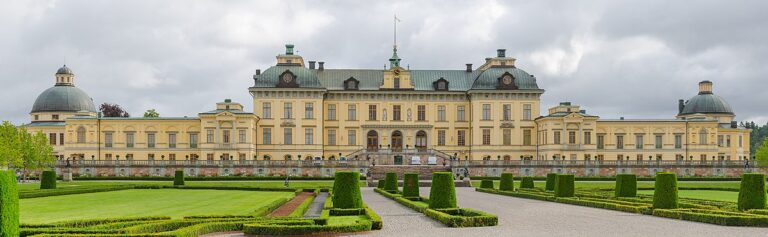
Feature image (on top) Drottningholm Palace. Photo: Wikimedia Commons

Nordics Join Forces Against Increasing Super Bacteria Resistance

Nordic countries co-operate to establish a holistic ‘One Health’ approach across various authorities in health, social services, food, agriculture, and the environment in an effort to address antimicrobial resistance. The Nordics join forces against increasing super bacteria resistance

Antibiotics are used in many different sectors, in everything from human medicine to food production. Meanwhile, antibiotic resistance is increasing. We often talk about reducing the use of antibiotics, but we also need to be able to treat infections. Effective antibiotics are essential for human and animal health, as well as the environment.

“We’re already experiencing challenges in the healthcare system due to bacteria that are resistant to antibiotics. Unfortunately, this problem is only expected to get worse if we don’t act. Such resistance is immune to international borders, which is why it’s best we work together within the Nordic Region and beyond. I’ve helped to start up a Nordic collaboration in the area, and I’m delighted that we’ve now jointly decided to step up our efforts so that we in Denmark and the rest of the Nordic Region will be well-equipped going forwards to deal with the growing threat posed by resistant bacteria,” says Sophie Løhde, Denmark’s Minister for the Interior and Health.

*****************************************
Related: Comparing Nordic Healthcare Systems: Similarities And Differences
*****************************************

Nordics Join Forces Against Increasing Super Bacteria Resistance
Sophie Løhde, Denmark’s Minister for the Interior and Health

One of the biggest threats to human health

The World Health Organization WHO has classified antibiotic resistance as one of ​the ten biggest threats to human health globally. The European Commission considers it one of​the three biggest health threats and, at its general assembly on antibiotic resistance in September, the UN adopted a declaration on how global efforts should proceed going forwards.

*************************************
You might also like to read Swedish Researchers Diagnose Alzheimer’s at an Early Stage
*************************************

Importance of a Nordic purchasing model

In April, the Nordic ministers for health and social affairs agreed to step up co-operation against antibiotic resistance and continue efforts to create a Nordic model which, among other things, guarantees remuneration for companies that supply antibiotics.

An inter-authority Nordic expert group has now been appointed in the area, which will propose a Nordic model for safeguarding access to effective antibiotics and determine how the Nordic countries should work in this area going forwards.

Nordics Join Forces Against Increasing Super Bacteria Resistance
Jakob Forssmed, Sweden’s Minister for Social Affairs and Public Health

“A lack of access to antibiotics is a reality in all the Nordic countries, largely because singly they constitute small markets. However, it is hoped that current efforts to strike closer co-operation will ensure better conditions for improving access to antibiotics,” says Jakob Forssmed, Sweden’s Minister for Social Affairs and Public Health

A declaration is expected on 25 November 2024 in conjunction with a Nordic conference for experts in the field where officials, researchers, and manufacturers will come together in an effort to safeguard access to antibiotics in the Nordics.

Nordics Join Forces Against Increasing Super Bacteria Resistance, a press release from Norden.org

Finland’s Security Strategy in Response to the Russia-Ukraine War

0

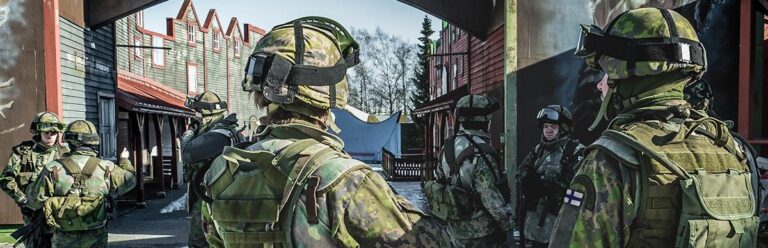
Following Russia’s invasion of Ukraine, thousands of Finns are learning to fight, mindful of their country’s 1,300km border with its bellicose eastern neighbor. Find out more about Finland’s security strategy in response to the Russia-Ukraine war

Significant changes in Finland have been made to national security with a stronger focus on the hard power attributes of deterrence. This has occurred alongside the strategic minimization of soft power and diplomacy in its engagement with Russia amid the War in Ukraine.

The Russian invasion of Ukraine in 2022 has already been identified by scholars as a turning point in contemporary politics, the impact of which is felt throughout the defense and security environment of all European nations. Finland is no exception, with its security concerns against external threats leading the country to rethink its reasons for previously not adhering to NATO membership.

***************************************
Related: Russia Wins Finland
***************************************

Finland’s Security Strategy in Response to the Russia-Ukraine War
Since joining NATO in the spring of 2023, Finland’s relationship with the Alliance has undergone significant transformation.

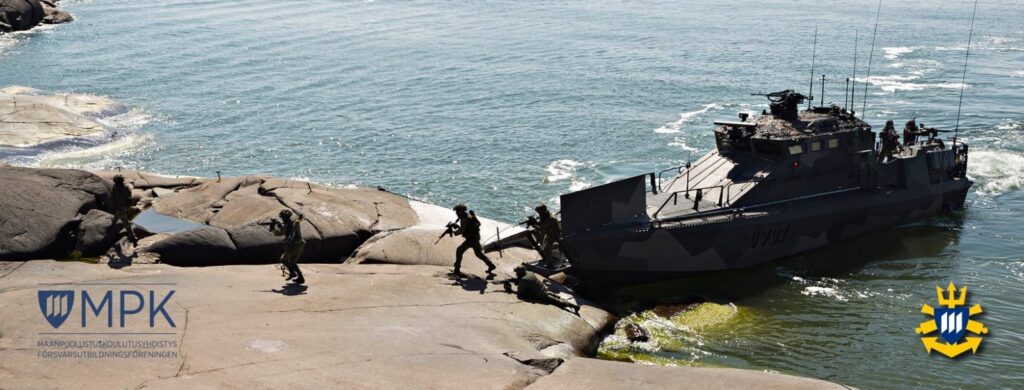
The National Defense Training Association of Finland, (MPK) established in 1993, is a national training organization, which trains and educates citizens to be prepared for and to survive dangerous situations in everyday life and under exceptional conditions. With this training, the Finnish government improves and supports the readiness of the Finnish Defense Forces and other authorities under normal and exceptional conditions. It works closely together with other volunteer organizations doing security training, educational and informational work.

When Russia lunched its invasion of Ukraine in 2022, applications to MPK courses grew tenfold. Most of them – many of which charge a 15$ enrollment fee – now sell out for hours. The Ukraine war is the reason for taking part. Courses such as these are a great way to learn basic military skills in a short period of time.

Finland’s Security Strategy in Response to the Russia-Ukraine War
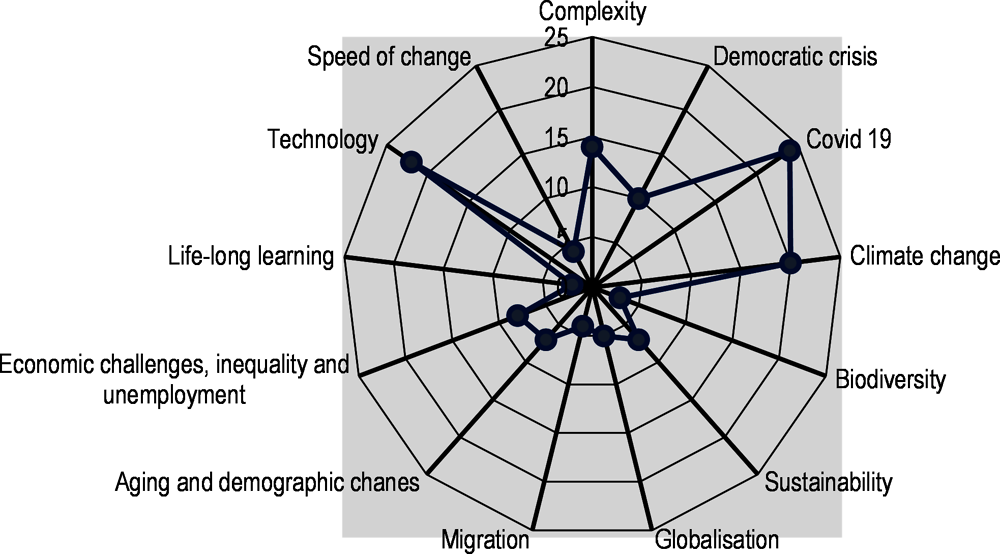
Assdessment of the Finnish governance system and its anticipatory capasity 2017

The Russia-Ukraine War has caused Finland to fundamentally shift its national security strategy by increasing the national defense budget and joining the North Atlantic Organization Treaty (NATO) as a full member. This recent development marks the latest dynamic shift in Finland’s post-Cold War security strategy vis-a-vis Russia, which took place across three pivotal eras: 1992-2013, 2014-2022, and the Russia-Ukraine War era.

The effects of the war on Finland’s ‘holistic’ approach to security are still awaiting debate and analysis by academics. Finland’s ‘holistic’ approach to security is an inclusive strategy that integrates military, civil, and societal aspects to ensure comprehensive national security. This model, often referred to as ‘comprehensive security’ has been pointed out by Finland and its representatives for its uniqueness. According to this perspective, Finland’s political choices consider “all security-related elements that, if threatened, could cause serious harm or danger to the public or society.

Finland’s Security Strategy in Response to the Russia-Ukraine War
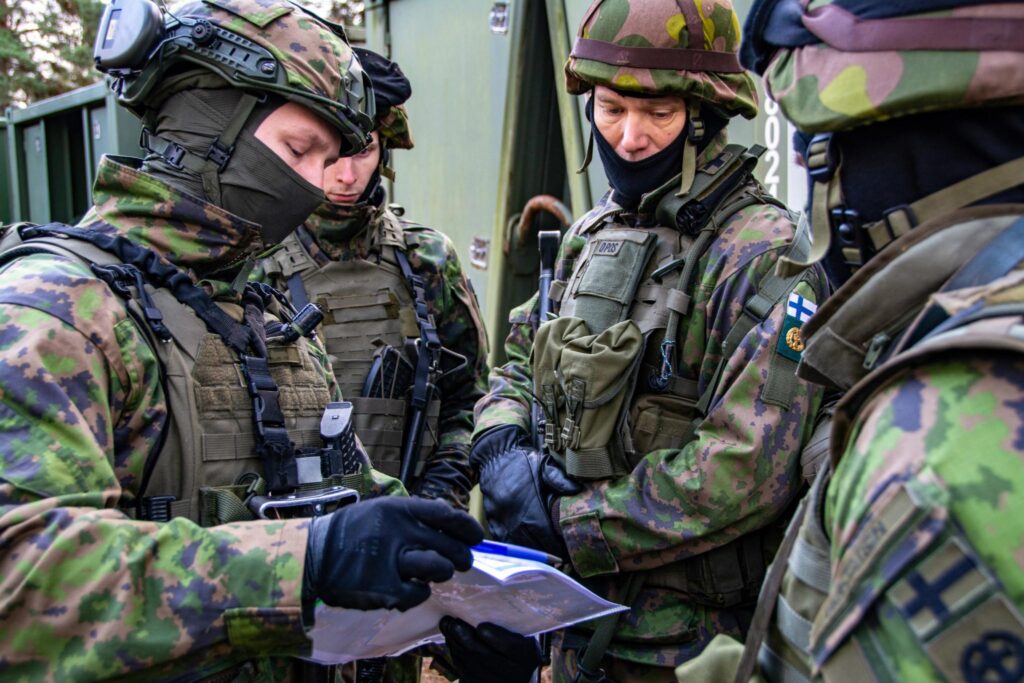
The National Defense Training Association of Finland, (MPK) established in 1993, is a national training organization, which trains and educates citizens to be prepared for and to survive dangerous situations in everyday life and under exceptional conditions.

*************************************
Related: Swedish Gripen Jets Joined NATO
*************************************

The Puolustusvoimat (Finnish Defense Forces) views the MPK as a strategic and operative partner. Despite the latter’s national independence, much of the training takes place on military grounds with military gear. Moreover, most of the courses that MPK runs, are designed in collaboration with the defense forces. The MPK’s mission statement, as defined by Finnish law, is to promote national defense while supporting and improving the country’s military preparedness.

Finland’s Security Strategy in Response to the Russia-Ukraine War
When Russia lunched its invasion of Ukraine in 2022, applications to MPK courses grew tenfold.

Remarkably, its courses train more than 70,000 participants a year on a budget of just $8m. And these numbers are set to grow.

Since its independence in 1917 from the Russian Empire, Finland has had a strained relationship with its neighbour. Finland’s strategic loss in the Winter War (1939) and the Continuation War (1941-1944), which it fought against Russia’s preceding entity, the Soviet Union (USSR), during World War Two, forced it to take a neutral policy amid the Cold War. To avoid a direct conflict with its grand neighbor and to preserve its independence, Finland successfully balanced its relations with the USSR and the West. The policy was led by Finnish Presidents Juho Paasiviki and Urho Kekkonen, who the Soviets pushed to sign in 1948 the Treaty of Friendship, Cooperation, and Mutual Assistance (FCMA), a deal known as “Finlandization,” which standardized their relationship. At the same time, Finland had to give up its desire to become part of the pro-West architecture, namely joining the Marshal Plan and the European Union (EU), not to mention the NATO alliance. (A summary by  Doron Feldman, a PhD candidate in the School of Political Science, Government, and International Affairs at Tel-Aviv University. Doron is also a national cybersecurity strategies researcher at TAU’s Yuval Ne’eman Workshop for Science, Technology, and Security).

The Finnish model of collective preparedness centers around a so-called ‘holistic approach’ (The Finnish Terminology Centre 2017, p. 15), with comprehensive security as its cornerstone. This entails an ideal situation where all threats aimed at vital societal functions are managed in a unified manner. Moreover, the term ‘comprehensive’ signifies that this model includes all pertinent stakeholders, ranging from individual citizens to governmental authorities (Nilsson and Strömberg 2022).

To properly understand this security model, it is essential to rewind to the beginning of 2022 and reflect on the essence of Finland’s comprehensive security. The primary reference point for understanding this model is the 2017 Security Strategy for Society. Within this Finnish government document, comprehensive security is delineated as the ‘Finnish model of joint preparedness’ (Government of Finland 2017). This model operates on the principle that all public authorities also function as security entities, and therefore collaboration is key to comprehensive security: not only are businesses, non-governmental organizations, and citizens expected to contribute but they are also entrusted with the responsibility of safeguarding vital functions — those crucial for the well-functioning of society, that must be upheld under all circumstances (Government of Finland 2017, pp. 14–24).

Finland’s Security Strategy in Response to the Russia-Ukraine War
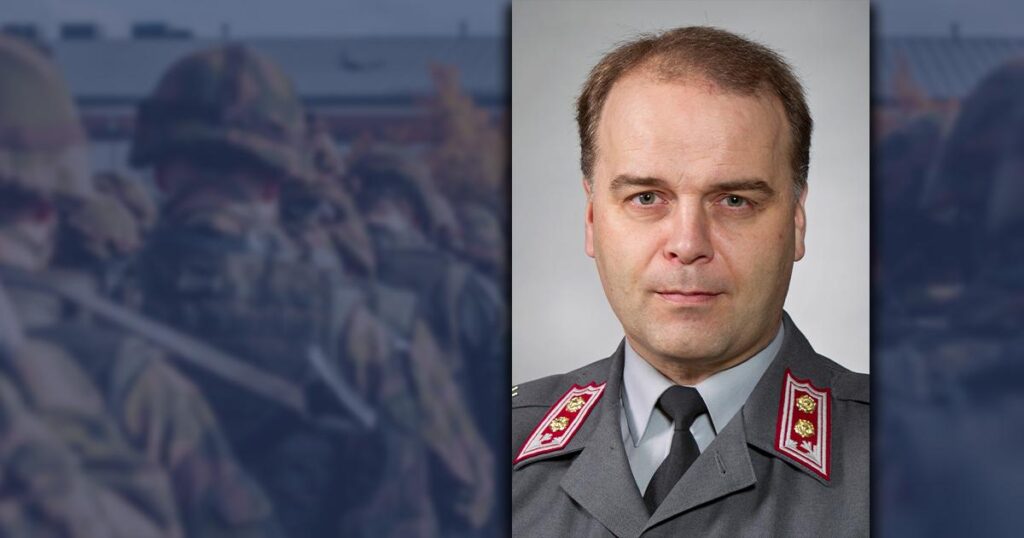
Vesa Sundqvist, head of MKP’s Southern Finland District.

“Without the 3,000 unpaid volunteers who run MPK and its exercises, none of this would be possible,” according to Vesa Sundqvist, head of the organization’s Southern Finland District. When Russia attacked Ukraine, public opinion about staying out of NATO in order to avoid provoking its eastern neighbor shifted rapidly. Mandatory national service still enjoys widespread popularity in the country, with surveys indicating that 70% of Finnish citizens would be willing to take up arms, among the highest number in Europe.

Fearing Russia’s aggression could drop Finland into a new armed confrontation with its neighbor, the Niinistö government expanded the 2024 defense budget to €6.2 billion and has planned to acquire advanced weaponry, including F-35 stealth jets at €8.4 billion and Israeli air defense system, David’s Sling. Finland also started building hundreds of kilometers of fencing across its 1,300 km eastern border to prevent Russia from weaponizing the immigration flows against it and bolstering its security relations with the US, the EU, and its Baltic and Nordic allies. Notably, the most critical move was joining as a full NATO member in April 2023. The strategic pivot marked Finland’s final abandonment of its neutral policy and adherence to hard power instruments in its national security strategy. The change was also expressed in the relative shrinking of Finland’s use of soft power and diplomacy in general and vis-à-vis Russia, though it does not mean Finland ultimately gave them away. Finland’s dedication to maintaining a robust national defense and fostering strong alliances with Western partners, along with unwavering support for Ukraine, is expected to persist under the leadership of the recently elected president, Alexander Stubb, who formerly served as the nation’s prime minister and foreign affairs minister. (Doron Feldman)

Since joining NATO in the spring of 2023, Finland’s relationship with the Alliance has undergone significant transformation. Politically, certain nations, particularly the United States, now regard Finland not just as a friendly partner but as a full-fledged ally. With Russia’s aggressive warfare fundamentally altering the security landscape, it’s unavoidable for Finland to reform its comprehensive security model.

Finland’s Security Strategy in Response to the Russia-Ukraine War, written by Tor Kjolberg

The Real Santa Claus Visits Thailand

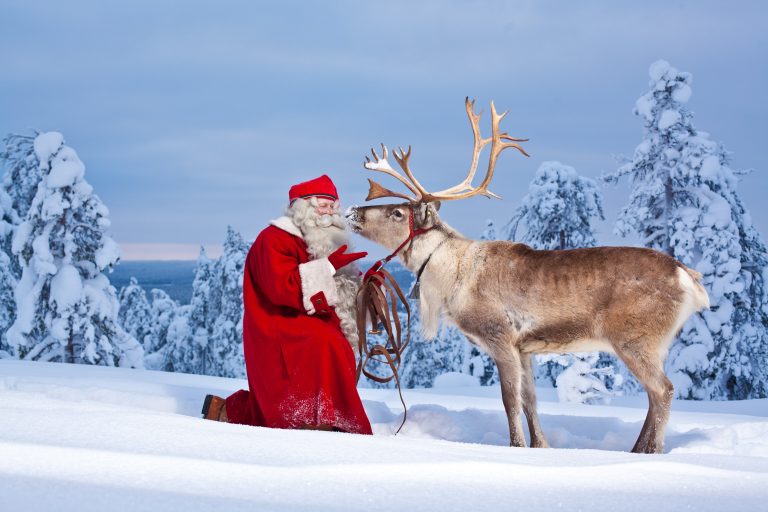
Finnish Ambassador to Thailand has revealed that the original Santa Claus from Rovaniemi, Finland will visit Thailand during the end of this month. The real Santa Claus visits Thailand this year.

The news were shared when the Finnish Ambassador to Thailand, Kristina Kuvaja, participated in the launch of “The World’s Great Celebration” Campaign by Central Pattana. At the same time, Ambassador Kuvaja shared how Christmas is traditionally celebrated in Finland; declaration of Christmas peace, Sauna, lots of food, time with friends and family and Santa or the elves visiting and bringing gifts.

The Real Santa Claus Visits Thailand
The launch event marks another step in bringing the Christmas spirit to Thailand.

***************************************
Related: Have Yourself a Truly Scandinavian Christmas
***************************************

As part of Central Pattana’s festive campaign, a lucky draw will offer winners a chance to travel to Finland via Finnair. This opportunity allows winners to explore the beauty of Lapland and visit Rovaniemi, known as the Official Hometown of Santa Claus, with experiences provided by Visit Rovaniemi and Santa Park Arctic World Professionals.

The Real Santa Claus Visits Thailand
Santa bringing gifts. Photo: On the Go Tours

The launch event marks another step in bringing the Christmas spirit to Thailand. Participants are eager to embrace the joy of the season, which is so cherished in Finland. As the festive period approaches, excitement continues to grow for Santa Claus’s arrival and the celebrations that await

The Real Santa Claus Visits Thailand, reported by Tor Kjolberg

The Oldest Portrait Drawing of H. C. Andersen to be Exhibited in Odense, Denmark

On his first visit to Rome, 1833 to 1834, H. C. Andersen met the Danish artist Albert Küchler who made the first known portrait drawing of the Danish fairytale king. In 2025, the oldest known portrait drawing of H. C. Andersen is scheduled to be exhibited in Odense, Denmark.

It took a good deal of nail-biting, patience and financial support before Museum Odense succeeded in securing the very special and valuable object for H.C. Andersen’s House – namely the oldest nown portrait drawing of H.C. Andersen, which has been preserved.

On 10 June 2024, the portrait was on offer at the Bruun-Rasmussen art auctions, but the museum lost the bidding and had to see the drawing go to an anonymous, foreign buyer.

The Oldest Portrait Drawing of H. C. Andersen to be Exhibited in Odense, Denmark
The portrait will be exhibited at the H C Andersen House, Odense next year. Photo: Benjamin Dalby.

When the drawing is now included in H.C. The Andersen collections at Museum Odense it is due to the Cultural Values ​​Committee, which administers the Act on Safeguarding Cultural Values ​​in Denmark, and which since 1987 has had the task of ensuring that rare works of art and cultural objects cannot be taken out of the country without permission.

The foreign buyer of the portrait applied to the Cultural Values ​​Committee for permission to take the drawing out of Denmark, but the committee imposed an export ban when the Cultural Values ​​Committee assessed that Albert Küchler’s portrait drawing of H.C. Andersen should remain in Denmark.

The Oldest Portrait Drawing of H. C. Andersen to be Exhibited in Odense, Denmark, article continues below the image.

The Oldest Portrait Drawing of H. C. Andersen to be Exhibited in Odense, Denmark
Albert Kühler portrait

Against this background, the buyer chose to accept a purchase offer, which Museum Odense with the support of the New Carlsberg Foundation and the contribution of H.C. Andersen’s Foundation had the opportunity to submit.

In this way, the museum succeeded in the second round in buying the youth portrait of H.C. Andersen and thus ensure that a piece of Danish cultural heritage remains within the country’s borders and not least in public ownership.

When H.C. Andersen arrived in the Italian capital in October 1833, the peer painter was one of those who welcomed him, and during January 1834 Albert Küchler portrayed the 28-year-old H.C. Andersen.

The story of the creation of the drawing is that Albert Küchler executed a portrait in the beginning of January 1834, which today is displayed in the National History Museum at Frederiksborg Castle. On 31 January 1834, he executed a second portrait with silver pen and pencil – or precisely the drawing that Museum Odense has acquired for the collection in H.C. Andersen’s House.

The Oldest Portrait Drawing of H. C. Andersen to be Exhibited in Odense, Denmark, article continues below the image.

The Oldest Portrait Drawing of H. C. Andersen to be Exhibited in Odense, Denmark
Danish artists gathering in Rome. Painting by Albert Kühler.

The drawing originally belonged to Albert Küchler himself and was later handed over to the Scandinavian Association in Rome, from where it, along with the association’s other friendship portraits, was separated from the collections in 2024 and offered for sale.

Albert Küchler (1803-1886) was a Danish painter associated with the Danish Golden Age. He mainly painted genre works and portraits. He was highly esteemed by his contemporaries but is little known today.

The Oldest Portrait Drawing of H. C. Andersen to be Exhibited in Odense, Denmark, reported by Tor Kjolberg

Sweden Applies for Trademark as the First Country in the World

0

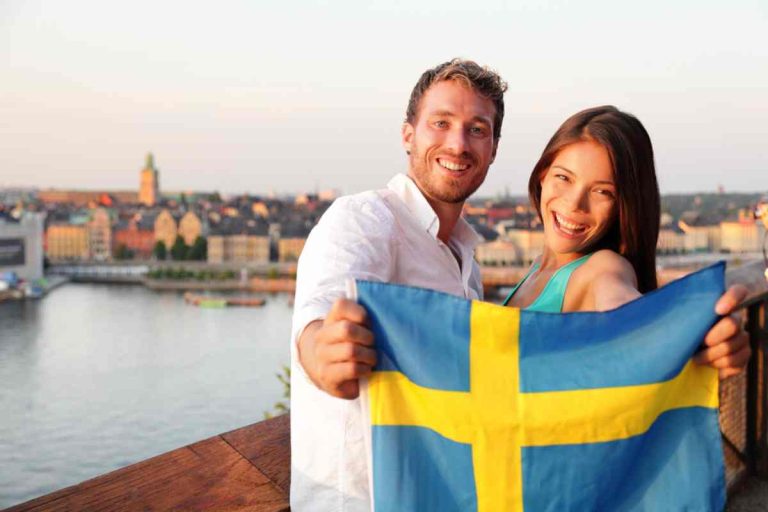
There are eight places in the world called Sweden. Now, Sweden applies for trademark as the first country in the world to avoid travelers ending up in the wrong Sweden.

Sweden is making a bold (and slightly cheeky) move to trademark its name, putting an end to travel mix-ups. The home of cinnamon rolls and fika has applied to the European Union Intellectual Property Office (EUIPO) to protect its name from international duplicates that might confuse unsuspecting travelers who want to experience the original Sweden and is calling on people around the world to support its application via an online petition.

Sweden Applies for Trademark as the First Country in the World
“It’s flattering that other places want to be called Sweden, but we’d prefer if there was just one,” says Susanne Anderson, CEO of Visit Sweden.

The trademark application aims to ensure no one packs for the Swedish lakes and forests only to find themselves in a far-off town with the same name but none of the Scandi charm. British travelers have, at some point, been caught out by two places having the same name – from Edmonton in North London versus Edmonton, Canada, to the legendary Liverpool football fans who wound up in Lille, Belgium instead of Lille, France.

Sweden Applies for Trademark as the First Country in the World
Seden is famous for its cinnamon rolls.

Eight places around the world are called “Sweden“. There are also multiple Germanys, dozens of Americas, and 34 Londons globally, so it’s not hard to see why a little brand clarity might be in order. Visit Sweden has decided it’s time to step in and help tourists avoid holiday blunders, so no one packs for the Swedish lakes and forests, only to find themselves in a far-off town.

According to Visit Sweden research, almost half (45%) of travelers in the UK admitted to finding it confusing with destinations having the same names when planning their travels and 7% have even confessed they travelled to the wrong place. With over 7.4 million British travelers interested in Sweden as a travel destination, there’s the potential for over 595,000 travelers to end up in the wrong Sweden.

The study also revealed a large share of younger travelers aged 20-32 support the idea of trademarking names to prevent location mix-ups (54% in the US, 45% in the UK and 44% in Sweden).

https://youtu.be/dOuj8a4GLHU?si=T4-xTcIqDB3Fac11
Swedish meatballs, mashed potatoes and lingonberry jam.

“It’s flattering that other places want to be called Sweden, but we’d prefer if there was just one. Our Sweden. The one with lakes, islands, forests, and the world’s best flat-pack furniture,” quipped Susanne Anderson, CEO of Visit Sweden. “When people think of Sweden, they should picture our rich landscapes, fika culture, and iconic design, not another city or town that happens to share our name. We want everyone to join us, sign the petition, and help travelers discover the one and only, and original, Sweden.”

Sweden Applies for Trademark as the First Country in the WorldSweden Applies for Trademark as the First Country in the World, information provided by PR Newswire. The author’s opinions and the content shared on this page are their own and may not necessarily represent the perspectives of Daily Scandinavian.

Exploring Copenhagen – the 2023 UNESCO World Capital of Architecture

Has Copenhagen become the coolest new city in Europe? Here we’re exploring Copenhagen – the 2023 UNESCO world capital of architecture. Come with us and judge for yourself.

Copenhagen was among the first cities to set up a strategic plan to achieve carbon neutrality, resulting in an 80% decrease since 2009. The capital of Denmark has become the most cited study cases for its urban planning and infrastructure. The city has transformed its harbor into a vibrant public space with recreational activities and residential developments. And Copenhagen was appointed the 2023 UNESCO world capital of architecture.

Just a 15-minute metro ride from Copenhagen’s central station, you arrive at Nordhavn. Århusgadekvartalet is the core of the new development there. The once-industrial port has been carefully planned to contain schools, restaurants, businesses, apartments and recreational spaces.

Exploring Copenhagen – the 2023 UNESCO World Capital of Architecture
A bike bridge named The Bicycle Snake was designed by Dissing+Weitling. Image by Daniel Rasmussen

**************************************
Related: Copenhagen’s New Recreational Hub
**************************************

Being named thr 2023 UNESCO World Capital of Architecture emphasizes the city’s position as a laboratory for innovative contemporary architecture and people-centered urban planning. In recent years, bathing areas and leisure buildings have been implemented in Copenhagen’s harbor and plans for further development aim to make the industrial area even more welcoming.

Last summer, I experienced dozens of people lying on colorful beach towels spread across the waterfront, all soaking in the Scandinavian summer sun. It was a peaceful, serene scene, with none of the morning commuter chaos in most big cities around the world.

The city of Copenhagen has had a somewhat unusual evolution. In 1947, the “Five Finger Plan” was developed to guide urban development and expand the city along five main arteries. This led to a transit-oriented infrastructure with small clusters or urbanity along the transportation routes. The major shift appeared in the 1960s, spearheaded by Jan Gehl’s initiative for Strøget,

Exploring Copenhagen – the 2023 UNESCO World Capital of Architecture
The harbor includes recreational activities and residential developments. Image by Daniel Rasmussen

**********************************
Related: Copenhagen – the World Capital of Architecture for 2023
**********************************

Copenhagen started transforming its car-heavy areas into pedestrian-friendly zones. What followed was a period of urban development that prioritized the well-being of its residents while encouraging architects to experiment with innovative human-centered designs. The plans for the harbor included creating more activities for visitors to engage with, improved access to the waterfront and more public space by the water.

Nordhavn (officially a district of Copenhagen, but described as a city due to its scale and scope) has been designed to make everything – from schools and play areas to businesses and recreational spaces – accessible within five minutes. It is setting a blueprint for a world where residents can fit in a morning workout before strolling to the office, grab lunch at a cute cafe, have a quick swim at the harbor and still make it home in time to take your kids to the playground – all before enjoying a cozy candlelit dinner at home.

Please join us on this excursion, showcasing 23 contemporary architecture projects that demonstrate the creativity and sensibility of Copenhagen architecture.

Exploring Copenhagen – the 2023 UNESCO World Capital of Architecture
CopenHill Energy Plant and Urban Recreation Center / BIG. Image © Hufton+Crow
Exploring Copenhagen – the 2023 UNESCO World Capital of Architecture
The harbor includes recreational activities and residential developments. Image by Daniel Rasmussen
Exploring Copenhagen – the 2023 UNESCO World Capital of Architecture
A recent development is a floating community centre developed in the area of Nordhavn. Image by Daniel Rasmussen
Exploring Copenhagen – the 2023 UNESCO World Capital of Architecture
The Maersk Tower / C.F. Møller Architects. Image © Adam Mørk
Exploring Copenhagen – the 2023 UNESCO World Capital of Architecture
Bicycle Snake / DISSING+WEITLING Architecture. Image Courtesy of DISSING+WEITLING Architecture
Exploring Copenhagen – the 2023 UNESCO World Capital of Architecture
Grundtvig’s Church / Peder Vilhelm Jensen-Klint. Image Courtesy of Flickr user Flemming Ibsen
Exploring Copenhagen – the 2023 UNESCO World Capital of Architecture
Tietgen Dormitory / Lundgaard & Tranberg Architects. Image © Jens M. Lindhe
Exploring Copenhagen – the 2023 UNESCO World Capital of Architecture
Israels Plads Square / Cobe + Sweco Architects. Image © Rasmus Hjortshøj – COAST
Exploring Copenhagen – the 2023 UNESCO World Capital of Architecture
Tingbjerg Library and Culture House / Cobe. Image © Rasmus Hjortshøj – COAST
Exploring Copenhagen – the 2023 UNESCO World Capital of Architecture
Copenhagen Harbor Bath / BIG + JDS. Image Courtesy of Bjarke Ingles Group
Exploring Copenhagen – the 2023 UNESCO World Capital of Architecture
Royal Arena / 3XN + HKS. Image © Adam Mørk
Exploring Copenhagen – the 2023 UNESCO World Capital of Architecture
Krøyer Square / Vilhelm Lauritzen Architects + Cobe. Image © Rasmus Hjortshøj – COAST
Exploring Copenhagen – the 2023 UNESCO World Capital of Architecture
Lille Langebro Cycle and Pedestrian Bridge / Wilkinson Eyre. Image © Rasmus Hjortshøj
Exploring Copenhagen – the 2023 UNESCO World Capital of Architecture
BLOX / OMA / Ellen Van Loon. Image © Rasmus Hjortshøj – COAST
Exploring Copenhagen – the 2023 UNESCO World Capital of Architecture
Park ‘n’ Play / JAJA Architects. Image © Rasmus Hjortshøj
Exploring Copenhagen – the 2023 UNESCO World Capital of Architecture
The Silo / Cobe. Image © Rasmus Hjortshøj – COAST
Exploring Copenhagen – the 2023 UNESCO World Capital of Architecture
8 House / BIG. Image © Maria Gonzalez
Exploring Copenhagen – the 2023 UNESCO World Capital of Architecture
Cirkelbroen Bridge / Studio Olafur Eliasson. Image © Anders Sune Berg. A gift from Nordea-fonden to the city of Copenhagen.
Exploring Copenhagen – the 2023 UNESCO World Capital of Architecture
The Blue Planet / 3XN. Image © Adam Mørk
Exploring Copenhagen – the 2023 UNESCO World Capital of Architecture
The Royal Library / SHL. Image © Adam Mørk
Exploring Copenhagen – the 2023 UNESCO World Capital of Architecture
Superkilen / Topotek 1 + BIG Architects + Superflex. Image © Iwan Baan
Exploring Copenhagen – the 2023 UNESCO World Capital of Architecture
The Royal Danish Opera / Henning Larsen. Image © Adam Mørk
Exploring Copenhagen – the 2023 UNESCO World Capital of Architecture
: Copehagen – Lille Langebro Cycle and Pedestrian Bridge . Image © Rasmus Hjortshøj

Exploring Copenhagen – the 2023 UNESCO World Capital of Architecture, compiled by Tor Kjolberg

The Childish World of a Canadian-Scandinavian Artist

He was born in Canada by a Norwegian mother and Danish father and had two younger brothers. He grew up in Tromsø, Northern Norway and received his diploma from Kolding School of Design in Demark. This mixture might have lead to the childish world of the Canadian-Scandinavian artist Shane Brox.

Shane speaks Norwegian, a soft and slow Northern Norwegian. The parents wanted to give their first-born son a name that did not stand out in British Columbia, hence the English-sounding name.

To enter Shane Brox’ inner world is to be transported to the mental freedom of childhood where the aim is for curiosity, creativity, and trust to take center stage. The author and multi-media artist has more than 20 creative books under his belt.

The Childish World of a Canadian-Scandinavian Artist
From the exhibition Beauty in the Beast at Nikolaj Kunsthal. Photo: David Sjernholm.

His father was a cabinetmaker. His mother had a fashion business in Tromsø. While his classmates played football, Shane played the piano and took singing lessons. He listened to classical music and played. He preferred to play alone, because there were few who were able to accompany him into the enormous play universes he built up in the mountains in Tromsdalen, both physically and in their imagination.

******************************************
Related: A Norwegian’s Journey From Professional Snowboarder to Visual Artist
******************************************

Do you ever wonder what would come tumbling out from your true self if you really took down your defenses? If you dared to shed your armor, stand emotionally naked and vulnerable and revert to a state of a pre-conditioned, non-judgmental and more authentic self? This is the on-going process that Shane Brox explores with his ethereal, soft sculptures created from recycled foam, acrylic paint and vintage textiles.

The Childish World of a Canadian-Scandinavian Artist
Blooming Spirit by Shane Brox. at Galleri Kant 2023.

In one of his books, you meet 12 creatures whose roots go back a long time. Some of them are more than 2000 years old. Back then, monsters were a natural part of our reality. They gave us a language and helped us to understand some of the emotions that dominated our everyday life.

The little boy with glasses and the English name was a slightly different figure in Tromsdalen. He is also slightly different as an adult in Copenhagen. To enter Shane Brox’s inner world is to be transported to the mental freedom of another dimension based on instinct, creativity and acceptance. Here, a strange and unpredictable universe opens up, surrounding the exhibition visitor in a sensual whole. In his works consisting of trippy, comical, creepy or just beautiful creatures, Brox draws on references from both surrealism and psychedelia to folkloric art and plant-like organisms. Sound, sight, touch and even vibration play their parts in this other world which is an emotional celebration of this inner universe.

The Childish World of a Canadian-Scandinavian Artist
Brox draws on references from both surrealism and psychedelia to folkloric art and plant-like organisms. Photo: FineArts

******************************************
Related: The Great Norwegian Comic Book Artist
******************************************

“There was a lot of storytelling,” says Shane. “I could build up my own universe for several weeks, universes that were about war, destruction, life and death. There were great epic tales.”

The use of the subconscious as a catalyst is a technique which has, among others, been used by French-American artist Louise Bourgeois but also by earlier surrealists such as Picasso and Miró in their search for the unspoiled. In his work, Brox consciously uses intuition as a method.

“I feel most balanced and find inner peace when I allow myself to follow my artistic impulses without overthinking or falling into self-doubt – when I dare to just create without having to debate at length with myself whether it is good or not…  This is my biggest challenge: to just be the best version of myself that I can be in each moment, both the good and the bad ones, and to trust and surrender to the process.”

Feelings like anger, fear, sorrow and glee are all real, even the uncomfortable ones. And space should be given to all of them, as it allows us to show how we really feel.

Well into his teens, Shane Brox loved building and drawing detailed houses. With secret rooms. By refusing to give in to fear and by letting go of control, Brox sets the stage for emancipation – and that in this liberation one discovers new, genuine aspects of oneself. Even if most of us don’t believe in vampires and dragons, we still create monsters when we don’t talk about our feelings. Then we create inner monsters. When we are hiding things, monster-large emotions develop in us and between people – just like in the old days.

After nine years as a designer for Levi’s, the corporate world became a bit too overwhelming, and he wanted to start over for himself. He got the idea for “The magical cookbook – a cookbook for wise children and childish adults”. The mother’s and grandmother’s cake recipes from Northern Norway became magical recipes with new names. Then the ball started rolling. In 2006, he was asked to make children’s television

Shane has since published numerous children’s books as well as developed Shanes Verden (“Shane’s World”), a series of programs on DR Ramasjang (a children’s channel on the Danish Broadcasting Corporation). Most recently, Brox has exhibited at Christiansborg and Kronborg Castle.

The nerve and driving force of his work have always been to inspire children and adults to trust and listen to their inner voice.

“Children should experience that the adults take time for them. I remember how nice I thought it was when I was little. It is hugely important for children,” he says.

The Childish World of a Canadian-Scandinavian Artist, reported by Tor Kjolberg

Feature image (on top) © KuBe

Why I Don’t Use Airbnb

While Airbnb may be a good option in some areas, I try to avoid it wherever possible when traveling abroad. In this article I reveal why I don’t use Airbnb.

Airbnb, once known for being an incredible and innovative platform for finding unique accommodations around the world, has fallen from grace with many travelers. Airbnb is typically much cheaper than getting a hotel in most places, but that is not always the case, but there are many reasons why I try to avoid Airbnb.

Travelers are tired of exorbitant service fees and cleaning fees, ridiculous rules, misleading listings, missing amenities, and inconsistent quality. But my main reason for choosing a hotel is the negative impact Airbnb has on the local housing market. It has significantly reduced the housing stock and led to higher rent prices for everyone.

Why I Don’t Use Airbnb
Once, I checked in to an Airbnb, only to find it hadn’t been cleaned at all after the previous guest left.

*******************************
You might also like to read Ryanair Owner Hates Norwegian – Norwegians Hate Ryanair
*******************************

Most of the time, I have also found the prices to be as high as the cost of a hotel. Moreover, the service is not usually as good as it is in a hotel, and I prefer to have my toiletries restocked and towels replaced mor often than an Airbnb host is typically willing to do. As a travel journalist, I have had many great experiences using Airbnb to book private apartments for stays of anywhere from one week to one month in many destinations around the world.

Why I Don’t Use Airbnb
My main reason for choosing a hotel is the negative impact Airbnb has on the local housing market.

But around the end of 2021, I started noticing a sharp decline in the quality of my Airbnb experiences. There are also some safety and security concerns when using Airbnb that travelers need to be aware of since they could become victims of multiple online scams or put themselves in jeopardy if they are not careful enough.

On one of my travels, I informed the host that I would be arriving late at night and he acknowledged my request to be admitted at the scheduled time. However, I was left out in pouring rain at an apartment building with fifty or so apartments, so I did not know where to go to inquire about my room – the owner only gave the street address of the building. A man outside offered to “sell” me information on where the owner was, but that was not the direction I wanted to go. Since the owner would not answer his phone after multiple attempts, I waited for three hours in the rain for a hotel in a different part of the town to open.

***********************************
You may also like to read A Travel Journalist’s Contemplations on a Hotel Stay in Stockholm
***********************************

Why I Don’t Use Airbnb
Most of the time, I have also found the prices to be as high as the cost of a hotel.

I found myself dealing with uncommunicative hosts and apartments that didn’t live up to the listing photos. Once, I checked in to an Airbnb, only to find it hadn’t been cleaned at all after the previous guest left, and the WiFi wasn’t working. It took hours of contacting Airbnb support to get this resolved.

The check-in and check-out process of Airbnb can become extremely tedious, making most people lose their patience, especially since their customer service could be better and many hosts do not respond to your messages on time. On average, many people have to wait hours for the host to show up and finally let them enter the property whenever they check in to an Airbnb.

Airbnb style rooms also appear on Expedia and other booking sites. The sites give you options for what type of accommodation you prefer such as “hotel” or “bed and breakfast”. Avoid the choice listed as “apartment” as these are the Airbnb style accommodations. There are many Airbnb groupies out there, and if Airbnb is your speed by all means, book away.

I have had some positive experiences as well, but the negative experiences has outweighed the positive. I simply choose not to risk it when traveling abroad. Expedia is my friend.

Why I Don’t Use Airbnb, written by Tor Kjolberg

Danish Design – Simple, Useful and Straight

0

Award-winning Danish industrial designer Cecilie Manz (born 1972) has contributed to the catalogues of manufacturers like Fritz Hansen, Bang & Olufsen, Kasthall, Maruni and Hermes. This is Danish design – simple, useful and straight.

After graduation from The Royal Danish Academy of Fine Arts – The School of Design in 1997 including exchange studies at the University of Art and Design in Helsinki, Cecilie Manz founded her own studio in Copenhagen in 1998.

Danish Design - Simple, Useful and Straight
Cecilia Manz. Photo: Jeppe Sørensen

Cecilie Manz’ work within furniture, glass, lighting, and ceramics has received international acclaim and is sold and exhibited all over the world. She has received numerous awards and honors for her work—amongst others The Crown Prince Couples Cultural Award and the Three-Year Working Grant from the Danish Arts Foundation.

In 2018, she was named Designer of the Year at Paris Design Fair. In 2019, she was named Chevalier des Arts et des Lettres by French Ministry of Culture. In 1921, she received the Honorable Award from the Danish National Banks Foundation, and this year she was named Designer of the Year at dhe Scandinavian Design Awards.

Danish Design - Simple, Useful and Straight
“My work has always revolved around simplicity,” says Cecilie Manz

“My work has always revolved around simplicity, the process of working toward a pure, aesthetic and functional object,” she says. “Nice design and quality, you might call it old-fashioned design virtues, but sometimes it’s as simple as that.”

Danish Design – Simple, Useful and Straight, written by Tor Kjolberg

Feature image (on top): Cecile Manz for B&O.