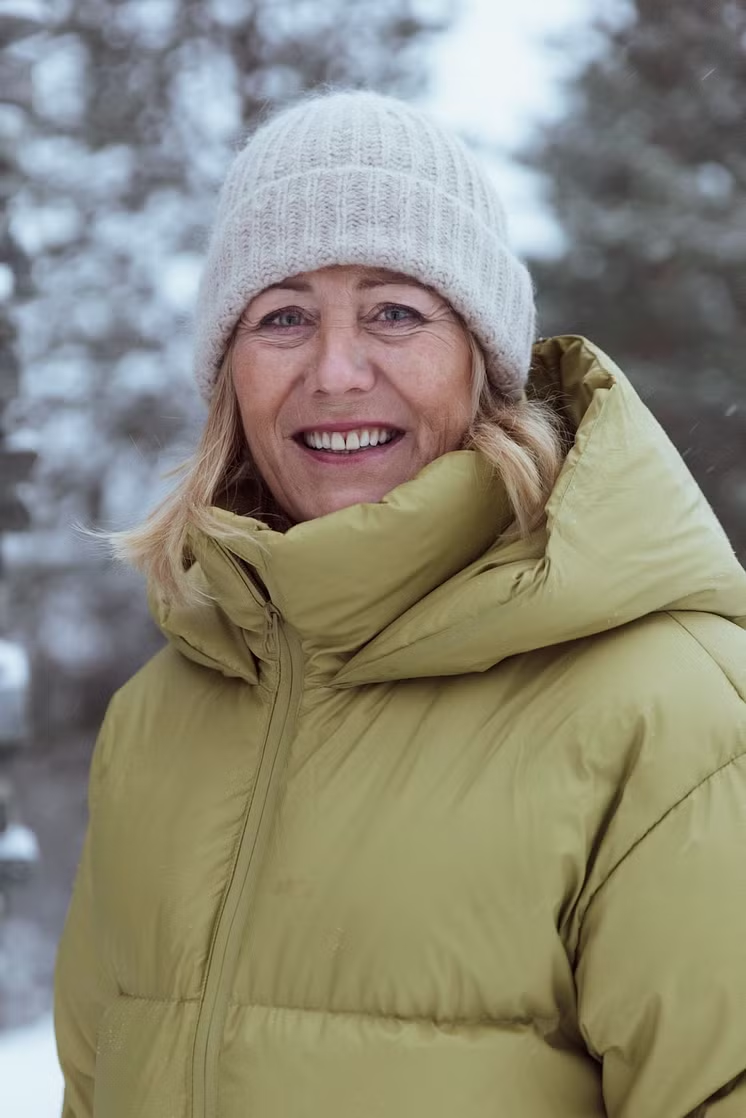
“My real favorite is a small village of Norrbotten,” says Ida Lundkvist, an experienced Swedish hiker and nature photographer In this article, “My favorite Northern Lights Places in Sweden”, she lists the most popular places for watching the Northern Lights in Sweden.
“This year I’ve already seen the northern lights in Stockholm archipelago and inland in the summer, which is unusual, both so far south but also to see northern light in the summer in the north would be very rare, “ says Ida. “My favorite spot has always been to walk up a small mountain with my dad close to my parents’ home in a small village in Norrbotten and watch it from there and maybe light up a fire”.
Warm winter boots, along with a hat, gloves are also key for keeping warm. Photo: Sara Merrell
Abisko National Park is known for its clear skies and low light pollution, making it one of the best spots to see the northern lights. The mountainous landscape adds a peaceful backdrop for viewing the aurora.
Kiruna is a popular destination for northern lights viewing, with various accommodation options and nearby attractions like the ice hotel. It’s a convenient spot to experience the lights.
The wide, open view of the sky at Torneträsk Lake makes it a wonderful place to watch the northern lights. Seeing the aurora reflected over the lake is a unique and memorable experience.
Photo by Ida Lundkvist
The Lapland Wilderness offers a remote setting to watch the northern lights without interruptions. The natural surroundings make it a calm and beautiful place for aurora viewing.
Jokkmokk is known for its Sami culture and beautiful landscape. It’s a nice spot to see the northern lights and learn about local traditions in a scenic environment.
“To safely enjoy northern lights hikes in Sweden’s autumn and winter, pack carefully for the cold and unpredictable weather. Essentials include merino wool base layers and socks, an insulated jacket, and a wind-and-waterproof outer layer to stay warm and dry, Ida advises.
“Warm winter boots, along with a hat, gloves are also key for keeping warm. Bring a headlamp with extra batteries for visibility, and pack a thermos with hot drinks and snacks. If you’re heading into remote areas, consider adding a GPS or compass, a first aid kit, an emergency blanket, and a fully charged power bank. These items will help keep you comfortable, safe, and prepared to enjoy the northern lights.”
My Favorite Northern Lights Places in Sweden, written dedicatedly for Daily Scandinavian by Ida Lundkvist. Ida is head of community at Merrell Hiking Club Sweden.
Why? American just work harder, says CEO of Norway’s $1.6 trillion oil fund. So, the CEOof the Norwegian Investment Fund prefers American companies over Europeans.
European companies are falling behind their American counterparts in innovation and technology because of a “mindset issue,” says Nicolai Tangen, CEO of the $1.6 trillion Norges Bank Investment Management. People in Europe are less ambitious and more risk-averse than their US peers, he claims.
Nicolai Tangen leads Nordic behemoth investment fund, which governs the revenue earned by Norway’s oil and gas resources, with the aim of ensuring its benefits are distributed fairly between current and future Norwegian generations.
“We are not very ambitious. I should be careful about talking about work-life balance, but the Americans just work harder,” he said in an interview with the Financial Times,
Under Tangen’s leadership since 2020, and over the past decade, the $1.6 trillion fund has invested more and more heavily in the U.S. instead of its closer neighbors in Europe – and it’s no coincidence.
Last quarter, the fund reported a record $213 billion in profit, boosted by its holdings in booming tech stocks like Nvidia.
The Norwegian Sovereign Wealth Fund, the largest in the world, has more than 11,000 investments in 72 countries — about 71% of which are in equities. Last quarter, the fund reported a record $213 billion in profit, boosted by its holdings in booming tech stocks like Microsoft, Apple, and Nvidia.
“There’s a mindset issue in terms of acceptance of mistakes and risks. If you go bust in America, you get another chance. In Europe, you’re dead,” said Tangen.
*********************************
You might also like to read Norwegian Politics for Dummies
*********************************
CEO of Norwegian Investment Fund Prefer American Companies over Europeans. The article continues below the illustration.
Under Tangen’s leadership since 2020, and over the past decade, the $1.6 trillion fund has invested more and more heavily in the U.S.
The chasm in work-life balance between the U.S. and European countries is wide. The European Union, for example, has a mandated four-week paid vacation period across all 27 of its countries. Some countries also require additional paid days off on top of that required period. Meanwhile, in the U.S., nearly one-third of employees say they don’t have any access to paid time off (PTO), according to a 2023 report.
Norway’s wealth fund owns around 1.5 percent of all globally listed shares and has stakes in more than 9,200 firms.
Data suggests that Tangen is right, but only by a fine margin. According to the European Union, in 2022 the average workweek of people between the ages of 22 and 65 was 37.5 hours. The longest working weeks recorded were in Greece, 41 hours a week, and Poland, 40.4 hours. By contrast, the Netherlands had the shortest working week of 33.2 hours, followed by Germany at 35.3 hours.
The Norwegian Sovereign Wealth Fund is the largest in the world.
U.S. shares make up almost half of all the fund’s equities portfolio. That’s up from 32% in 2013. The U.K., in contrast, accounted for 6% of its equities, down from 15% a decade ago. The malaise gripping European equities has been underlined by the shift in Norway’s investment priorities.
America’s performance, particularly in innovation, is “worrisome” in contrast to Europe, Tangen told the Financial Times.
CEO of Norwegian Investment Fund Prefers American Companies over Europeans, compiled by Tor Kjolberg.
The Finnish wood-fired mass ovens, described in our article Scandinavian Bread and Grains, were the predecessors of the famous Swedish AGA, an institution in many British homes, but originally invented in 1922 by the Swede Gustaf Dalén. Learn more about the Swedish gas accumulators.
Nils Gustaf Dalén was a man of his time, an entrepreneur starting his career as chief engineer at the Gas Accumulator Company and appointed the managing director for AGA when it was founded in 1909. In 1910, the company bought a large real estate in Lidingö and built a production plant that was completed around 1912, when they moved out from the facilities in Stockholm.
In 1912, Dalén was blinded by a gas explosion, and in the same year he was awarded the Nobel Prize in Physics for his “invention of automatic regulators for use in conjunction with gas accumulators for illuminating lighthouses and buoys”. It was a simple but effective sun-sensitive valve for lighthouses.
There were already 50,000 AGAs in Britain in the 1940s.
*********************************************
You may also like to read The Road to Net Zero in Stockholm
*********************************************
The stoves were an immediate success and worked on the exact same principle as the old Finnish mass ovens but was made of 600kg cast iron, fuel efficient and much cleaner and easier to regulate than the old stoves. It could even serve as central heating. There were already 50,000 AGAs in Britain in the 1940s. The stoves were produced in Sweden at first but sold to an English company in 1957. The stoves are still standing in many old Swedish houses and can be repaired and used indefinitely.
Nils Gustaf Dalén was a man of his time.
During his life, AGA was one of the most innovative companies in Sweden and produced a large variety of products that grew every year. Finally, in the early 1970s AGA, was forced to reduce the number of markets it was involved in and concentrate on the production of gases for industrial use.
AGA conceived and developed HiQ for specialty gases. In 2000, AGA was integrated into Linde AG.
The Swedish Gas Accumulators, written by Tor Kjolberg
Behind economic inequality, corruption was the most cited threat to democracy according to the recent study Democracy Perception Index 2024. A large majority of people in almost all democracies (67%) say that corruption is a threat to democracy in their country. Scandinavian citizens, however, consider corruption as a minor danger to their democracies.
The Democracy Perception Index (DPI) is the world’s largest annual study on how people perceive democracy, conducted by Latana in collaboration with the Alliance of Democracies. The 2024 edition offers an unprecedented comparison of global attitudes towards democracy during a time of rising geopolitical tensions and violent conflicts. Results are based on nationally representative interviews with over 62,953 respondents from 53 countries conducted between February 20th and April 15th, 2024.
Corruption was the most cited threat to democracy according to the Democracy Perception Index 2024.
“Around the world people want to live under democracy but these figures are a wake-up call for all democratic governments. Defending democracy means advancing freedom around the world, but it also means listening to voters’ concerns at home. The trend shows we risk losing the Global South to the autocracies. We are witnessing an axis of autocracies forming from China to Russia to Iran. We must act now to make freedom more attractive than dictatorship and unite through an alliance of democracies to push back against the emboldened autocrats,” says Anders Fogh Rasmussen, Chair of the Alliance of Democracies Foundation, former NATO Chief, and Danish Prime Minister.
Anders Fogh Rasmussen, Chair of the Alliance of Democracies Foundation, former NATO Chief, and Danish Prime Minister. Photo: Wikipedia
“War and violent conflict is seen as the world’s biggest challenge, followed by poverty and climate change. It is encouraging to see that people’s belief in the idea of democracy is at an all-time high, but if democratic countries are unable to help solve the world’s challenges, then it will be only a matter of time until support for democracy will suffer,” says dr. Nico Jaspers, CEO at Latana.
******************************************
Related: Norway – World’s Best Democracy
******************************************
The Democracy Perception Index (DPI)
The Democracy Perception Index (DPI) aims to understand how people around the world perceive the state of democracy in their country today and the major challenges that lie ahead. It is the largest annual study on people’s perception of democracy, spanning 53 countries that represent over 75% of the world’s population.
Opinions on NATO’s support to Ukraine
Despite the 18th consecutive year of decline in global freedom according to Freedom House, the vast majority of people worldwide consistently say that democracy is important to have in their country (85%).
Across the 53 countries surveyed in the Democracy Perception Index (DPI) study, an average of 85% of people say that democracy is important to have in their country, ranging from 94% in the birthplace of democracy, Greece, to 63% in Iran. This is a major opinion in all countries.
When asked how democratic people think their country currently is, only about half the world (58%) says that their country is actually democratic. This is true even in democracies labeled as “free” by Freedom House, where only 60% say that their country is democratic.
The results show that out of all the threats listed in the DPI, economic inequality is viewed as the most significant threat among the 44 democracies surveyed
Threats to Democracy
This part of the survey provides an overview of what people in democratic countries see as the biggest threats to democracy. The results show that out of all the threats listed in the DPI, economic inequality is viewed as the most significant threat among the 44 democracies surveyed: an average of 68% say that economic inequality threatens democracy in their country. Behind economic inequality comes corruption.
The countries being most concerned about corruption are Greece, South Africa, Ukraine and Nigeria. On the opposite site of the scale are Denmark, Germany, Switzerland and Austria (all 50%). Norway’s score is 55% while 60% of Swedish citizens say that corruption is a threat to democracy in their country.
The Norwegian Archery Association was founded in 1988 and is an interest organization for Norwegian hunters who want to hunt with a bow and arrow in Norway. The association’s overall goal is therefore to contribute to such hunting being allowed. Learn more about Norwegian bow hunters.
Building up first-hand experiences with bow-hunting and acquiring all relevant knowledge in connection with such hunting is therefore important. Whether it concerns technical, scientific, societal, moral or ethical matters.
As part of the training of Norwegian bowhunters, the association organizes, among other things, competitions with lifelike 3-dimensional animal figures made of plastic foam. The shooting mode is called 3D shooting because of the “flashes”. The competitions are very similar to the so-called hunting trails in which hunters with gunpowder weapons take part.
As part of the training of Norwegian bowhunters, the association organizes, among other things, competitions with lifelike 3-dimensional animal figures.
Unfortunately for Norwegian bow hunters, bowhunting is not legal in Norway due to a law which states that the flying projectile must be powered by gunpowder. The European Bowhunting Federation has, however, tried to change this law for many years. Some politicians have a positive attitude towards bowhunting, but animal rights activists, like the Norwegian “PETA” (People for Ethical Treatment of Animals) continues to spread inaccurate information about the effectiveness and accuracy of a compound bow. The result of this is that most people in Norway think that the animal will suffer for a long time, and eventually die from pain.
The Finnish veterinarian Mikaela Sauvala carried out a study in 2019
Bow hunting is both efficient and humane
The Finnish veterinarian Mikaela Sauvala carried out a study in 2019 that compared real hunting situations for free-ranging white-tailed deer.
The conclusion of the Finnish doctoral thesis was that bow hunting is both efficient and humane. During the research, 100 deer were shot with a rifle, while 130 game were shot with a bow. Video recordings, blood samples from wild game and collected data on the hunting situation and equipment were used to find out whether hunting with a bow can be as humane as big game hunting with a rifle.
****************************************
You might also like to read Norwegian Musk Ox Safari
****************************************
Nations including Denmark, France, Spain, Portugal, Italy, Hungary, Finland and Bulgaria use bow and arrow hunting as a hunting tool in modern game management.
Where is bow hunting allowed?
Nations including Denmark, France, Spain, Portugal, Italy, Hungary, Finland and Bulgaria use bow and arrow hunting as a hunting tool in modern game management. Some European countries, including the United Kingdom, prohibit bowhunting. Bowhunting, like target archery, was revived in the UK during the Victorian era, but has been banned since 1965. Recently a law was passed in Estonia that would allow bowhunting of small game.
In the 1980s, the skills of traditional archery were revived by American enthusiasts and combined with the new scientific understanding.
The History of Modern Bowhunting
Bowhunting dates back to the Stone Age and can be traced throughout history in many regions around the world, including Asia, Europe, and North America. Native Americans were skilled bowhunters. Although their bows and arrows were often crude, they overcame the limitations of their equipment with their exceptional ability to stalk within close range of wary prey. The ability to get close to game remains the essence of all bowhunting today.
As immigrants moved into North America, they gradually combined European and Native American archery techniques and technology. The first archery club in America, known as the United Bowmen of Philadelphia, was formed in 1828.
The writings of bowhunters Will and Maurice Thompson helped popularize bowhunting in the 1860s and 1870s. In 1878, Maurice Thompson published the book The Witchery of Archery, which inspired many more individuals to pick up a bow and arrow. In 1879, the newly founded National Archery Association (NAA) held the first U.S.–sponsored tournament.
In the 1980s, the skills of traditional archery were revived by American enthusiasts and combined with the new scientific understanding.
From the 1920s, professional engineers took an interest in archery, previously the exclusive field of traditional craft experts. They led the commercial development of new forms of bow including the modern recurve and compound bow. These modern forms are now dominant in modern Western archery; traditional bows are in a minority. In the 1980s, the skills of traditional archery were revived by American enthusiasts and combined with the new scientific understanding. Much of this expertise is available in the Traditional Bowyer’s Bibles Modern game archery owes much of its success to Fred Bear, an American bow hunter and bow manufacturer.
Norwegian Bow Hunters – Conclusion
According to a Norwegian bowhunter, hunting with a bow is not about filling the freezer with food. It’s about the experience, about sharpening your senses and experiencing close contact with the animals.
The impact of climate change is significant — for Norway, the impact can be felt from the fishing industry to shifts in the country’s biodiversity, not to mention the cultural impact in regard to Sámi practices. As such, around 48% of Norwegians report feeling angry when thinking about climate change. In this article, our British correspondent, Karoline Gore, looks behind solar panels:Innovations Highlight Sustainable Housing Solutions in Norway
While the country is well known as a pioneer in leading sustainable strategies to combat the threats of climate change, solutions extend well beyond the standard solar panel. Constant innovation highlights solutions that range from hydro-power to those led by creative individuals and concepts that are deeply rooted in Norwegian culture.
A pioneer in sustainable solutions
Buildings account for approximately 40% of the EU’s energy usage, and 36% of its energy-related CO2 emissions. These facts have prompted many European countries to take action through initiatives that are geared towards eco-conscious housing solutions. In regard to Norway, the country has been long known as a pioneer in zero-energy buildings. These structures feature zero net consumption of renewable energy, while energy-positive buildings generate more than they use — and feed it back into the grid. Business Norway highlights the National Museum in Oslo; once opened in 2021, it would be heated by water from the Oslo Fjord in addition to other renewable sources.
National Museum in Oslo; opened in 2021, will be heated by water from the Oslo Fjord in addition to other renewable sources.
In Norway, around 97% of the country’s energy already comes from hydro-power, though sustainable home design extends well beyond the concept of clean energy. Most homes, highlighted by National Geographic, are equipped with smart metres, which empower homeowners to harvest solar energy, store it, and sell it back to energy companies. “This makes renewables a smart investment on several levels and provides a strong incentive for people to get behind the technology,” the article states. However, innovation in Norwegian homes extend to prefab models and even individual initiatives that evoke inspiration all on their own.
The promise of prefab homes
Prefabricated homes are defined as housing that is manufactured off-site in advance, and is typically shipped and able to be assembled upon arrival. These homes boast a range of benefits, which include affordability and the ability to be customized. The concept of prefab homes isn’t necessarily new, and has become more prevalent throughout the world. “We get a thousand inquiries a month coming in to the website for our modular homes,” says Robert Pierson, the development director at a Vancouver-based prefab home development firm called Eco Homes. “And that’s spread across Canada and a little bit down into northern U.S.A..”
Beyond Solar Panels: Innovations Highlight Sustainable Housing Solutions in Norway, article continues below image.
Prefab house from Norgeshus.eu
Business Norway details Nordic Smart House, a modular home developed in order to meet the demand for smaller and more affordable sustainable housing. With added advantages that include reduced construction time, it’s noted that energy consumption is also nearly halved.
The drive behind eco-home inspiration
Many across the country have embraced environmentally friendly ways of life. ‘Open-air life,’ or friluftsliv, “conveys the importance of spending time outdoors to be healthy and happy,” explains one 2019 BBC article. Norwegian Axel Bentsen, founder and CEO of Urban Sharing, explains that the concept is deeply rooted in the culture. For example, a trip via public transit into the forest is noted to be a popular activity to do before or after work in order to spend more time outdoors. As such, friluftsliv has the potential to play a major role for those who wish to live a more environmentally friendly lifestyle.
The geodestic home of the Hjertefølger family.
While the adoption of friluftsliv can help one become more environmentally conscious, many have even reevaluated their home’s design for the sake of a more sustainable lifestyle. Love Exploring highlights the Hjertefølger family, who have called a sustainable glass dome in the heart of Norway’s Arctic Circle home since 2014. In regard to the home’s materials, cob (a natural material created from subsoil, fibrous organic material, water, and sometimes lime). “We were doing research online about different natural building techniques, and fell in love with cob houses,” Ingrid Hjertefølger said. Ingrid goes on to further note that the task seemed difficult to accomplish in Northern Norway due to the short summers and rainfall, though this didn’t stop their vision. The cob used for the home involved a mixture of sand, clay, and straw. The cob home is encapsulated in a glass geodesic dome, designed by the construction company Solardome, which results in a greenhouse, like effect that retains heat on the inside.
Sustainable features are attainable
The Hjertefølger’s Norwegian eco-home also boasts several sustainable features that extend well beyond the unique structure. Solar panels draw in energy from the sun, and natural materials have been utilized throughout, with a wooden front door prominent in the home’s design, Love Exploring highlights. Homeowners throughout Scandinavia can take a page from eco-homes like this through the incorporation of natural materials throughout a home, which presents an ideal way for homeowners to create a more eco-conscious environment. Successful eco-friendly home office design, for instance, is easily achieved through sustainable thinking — this involves considerations that range from the use of low-energy equipment to the prioritization of natural light, as well as the use of furniture that incorporates natural materials. Other factors, such as the establishment of paperless work practices and the incorporation of plant-life can further the environmentally friendly design.
Beyond Solar Panels: Innovations Highlight Sustainable Housing Solutions in Norway, article continues beow image.
Environmental friendly interior by Kristine Five Melvær. Photo: DOGA
Norway is home to a number of sustainable housing solutions that range from the incorporation of clean energy to eco-friendly building materials. While the country itself has taken to eco-friendly initiatives, creative individuals and concepts that are rooted in Norwegian culture further drive innovation and serve as inspiration to others who wish to live an eco-friendly lifestyle.
Karoline Gore
Beyond Solar Panels: Innovations Highlight Sustainable Housing Solutions in Norway, written dedicatedly for Daily Scandinavian by Karoline Gore. Karoline is a freelance writer from Stoke on Trent in the UK who left the corporate grind when she started a family and has never looked back. She enjoys contributing to a range of online publications on the topics that are important to her.
Today, collectors’ choice is original Nordic pine furniture. The 1960s Nordic design is more popular than ever.
“We need to know, understand and deal with history. We can use the knowledge to create sustainable designs that cause less damage and aid the green transition,” explains Professor of Design History at the University of Oslo Kjetil Fallan.
Professor of Design History at the University of Oslo Kjetil Fallan. Photo: UiO
One of the main trends at this year’s Stockholm Furniture Fair was the use of pine, with designers using heat-treated pine for outdoor furniture, creating lighting from pine veneer and reevaluating waterlogged pine.
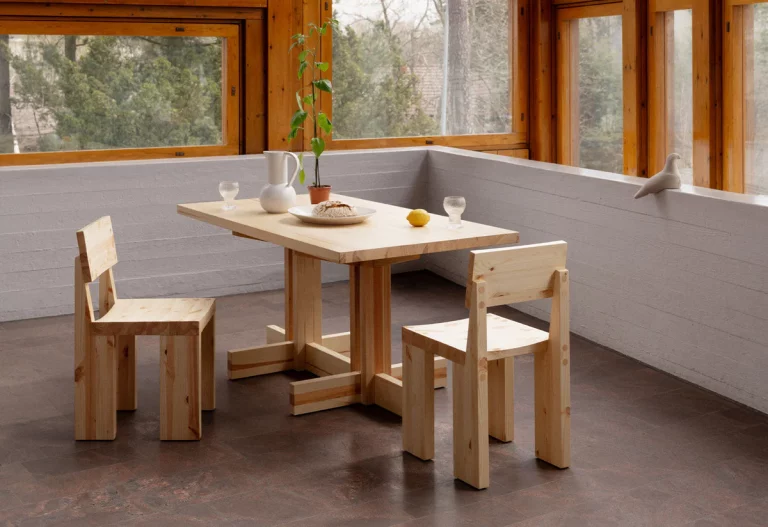
Long viewed as cheap, pine is changing in people’s perceptions. Today, young brands as Helsinki-based Vaarnii are shifting the narrative by using it for tables and chairs in bold forms inspired by mid-century pieces.
In Scandinavia, pinewood has become more popular in recent years as younger generations begin to appreciate the material. While it previously had connotations to the lacquered, yellowing pinewood furniture of the 1970s, pine is being reappraised by many designers for its ease of use and local availability.
It’s also helping collectors’ attention to original pine furniture from the 1960s and 1970s. Fallan’s research shows how Scandinavian designers started to question consumerism in the 1960s and 1970s. They saw – and reacted to – the dark aspects of design objects being created, used, discarded and continuously replaced.
Vaarnii co-founder Miklu Silvanto
At Stockholm Furniture Fair, there was a wide selection of pinewood furniture in different shapes and forms, with some designers using untreated pale wood that will weather with age while others chose to heat treat or stain the material.
Finnish brand Vaarnii, which works solely in pine, showcased its collaboration with British designer Faye Toogood as well as a new chair by French designer Ronan Bouroullec.
Chair from Chase & Sorensen.
One case in point was a dining chair by Ilmari Tapiovaara from London-based Chase & Sorensen.
Founder and CEO Antti Hirvonen at Varnii thinks the reason for pine’s newfound popularity is that it feels like a more unusual option since the material has languished in the background for a while.
Collectors’ Choice: Original Nordic Pine Furniture, written by Tor Kjolberg
Feature image (on top): Dining chairs and table designed by Fredrik Paulsen for Vaarnii
According to a press release from the Northern Norway Tourism Board, a remarkable 2.3 million overnight stays were recorded between June and August 2024, a record-breaking number of summer visitors to Northern Norway.
1,1 million of these visitors were international tourists, representing a 9 percent increase international traffic compared to the previous year, reflecting the region’s growing popularity among foreign travelers.
Siw Sandvik, Leader of Communication and Marketing at the Northern Norway Tourism Board.
Tourism has seen significant growth in central international markets such as Germany, Sweden, the United States, Italy, and the United Kingdom. In August alone, Northern Norway experienced an 11 percent increase in hotel stays compared to August 2023, underscoring the growing interest from international visitors.
“We are happy to report that this summer has been our best ever. This positive trend highlights the continued appeal of the region’s unique offerings to travelers from around the world, and the introduction of new airline routes has significantly improved accessibility,” says Siw Sandvik, Leader of Communication and Marketing at the Northern Norway Tourism Board.
“Our varied landscapes, vibrant local culture, and unique nature experiences continue to attract international visitors, and shows that Northern Norway is an attractive destination for people looking for genuine experiences and beautiful Arctic scenery,” she says.
Record-Breaking Summer as Visitor Numbers rise, article continues below image
Bodø has recorded a remarkable increase of 42 percent in foreign layovers compared to last year, strengthening its position as a top destination in Northern Norway. This rise can be attributed in part to Bodø being named the European Capital of Culture, attracting visitors from far and wide. The city’s status has had a significantly positive impact, not only boosting its profile but also benefiting the entire region. Additionally, Vesterålen and Narvik have also experienced impressive growth, with foreign overnight stays increasing by 31 percent from the previous year.
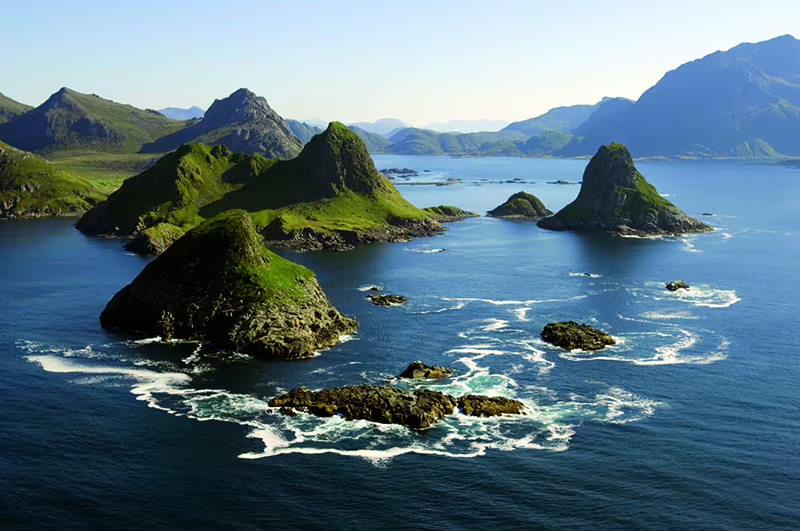
From Vesterålen
Northern Norway’s outstanding performance further underscores its appeal, topping the national growth rates.
“It is pleasing to note that both foreign and domestic traffic have increased across most places in the region, Sandvik states.
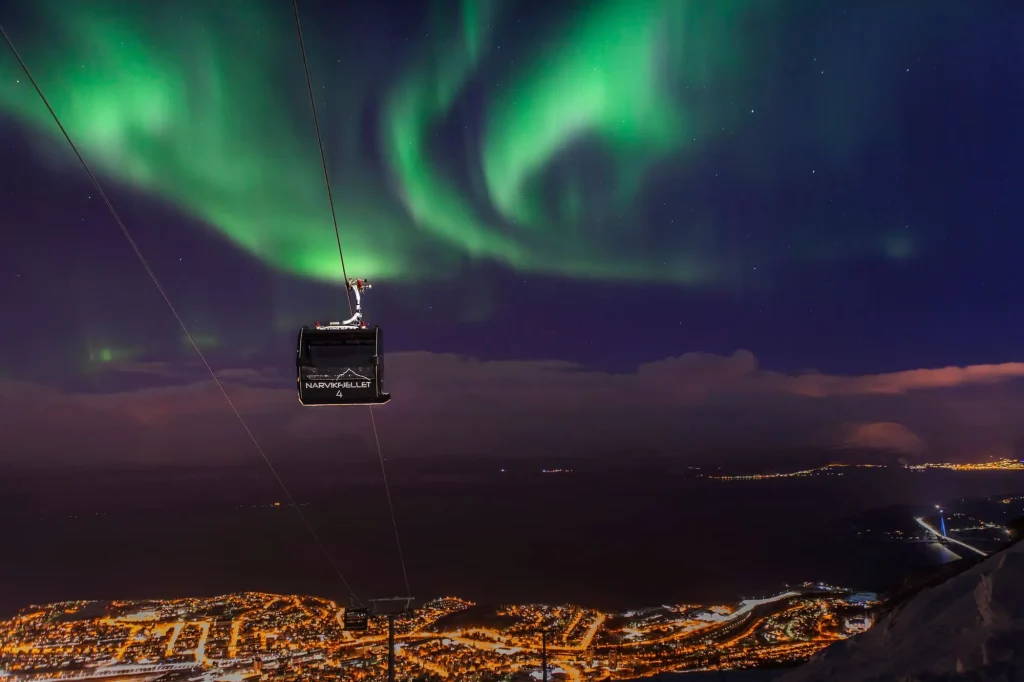
From Narvik. Photo: Fjord Tours
Since 2020, the development in foreign traffic has been exceptional, with an astonishing growth rate of 554 percent. These figures reflect the lasting appeal of Norway’s northern regions and the rich cultural landscape that attracts visitors year after year.
Record-Breaking Number of Summer Visitors to Northern Norway, a press release from the Northern Norway Tourism Board
Adjusting to the long winters in northern Norway can be both a challenge and a beautiful experience. The Arctic region is known for its cold, dark months, where the sun barely rises and temperatures drop significantly. Read on and learn more.
For those moving from a warm climate, the shift can feel extreme, requiring both physical and mental adjustments. However, the long winters offer breathtaking landscapes, from snow-covered mountains to the mesmerizing northern lights. To thrive during these winters, preparation, a positive mindset, and embracing the unique beauty of the season are essential for a fulfilling experience.
Understanding the Long Winters in Northern Norway
In Northern Norway, winters stretch from late October through April, with the most intense cold lasting from December to February. Due to the region’s position above the Arctic Circle, the phenomenon of the polar night occurs, where the sun remains below the horizon for weeks, plunging communities into constant darkness. This prolonged absence of natural light can affect sleep patterns, energy levels, and even mental well-being. Residents often turn to light therapy, outdoor activities, and maintaining regular routines to cope with these effects.
Aside from the darkness, Northern Norway experiences heavy snowfall, icy roads, and sub-zero temperatures. This combination can create challenges for day-to-day life, such as traveling, maintaining homes, and staying active outdoors. On the other hand, the long winters offer the beauty of snow-covered landscapes and the magic of the northern lights, which draw visitors from around the world.
Preparing Your Home for the Cold Season
Preparing your home for the long winter months in Northern Norway requires careful planning to ensure comfort and safety.
Proper insulation is a top priority to keep your home warm. Insulating windows, doors, and even walls can prevent heat from escaping and reduce energy consumption. Double-glazed windows and weather stripping are effective ways to keep the cold air out
Another key point is having an efficient heating system. Wood-burning stoves, heat pumps, and modern radiators are popular choices in the region. Regular maintenance of heating systems helps optimize their performance and keeps energy costs lower.
Moisture management is also critical in cold climates. For this reason, investing in a good dehumidifier can help prevent mold and dampness, which can thrive during the colder months. Snow and ice buildup on roofs and gutters is, so clearing these areas regularly helps avoid potential damage. In short, preparing your home properly can make enduring the cold season much more manageable, creating a cozy and efficient living space even during the harshest winter conditions.
Regardless of what your choice in the heating system, it should be efficient and functioning. Photo: Gaspar Zaldo/Pexels
Proper Clothing for Arctic Conditions
Dressing properly for the extreme cold in Northern Norway is necessary to stay warm and safe. For this reason, wearing layers is the best approach. Start with a thermal base layer to trap heat close to your body, followed by an insulating layer like fleece or wool, which are great materials for cold weather. A windproof and waterproof outer layer keeps snow and wind at bay, ensuring your body stays dry and warm. Suppose you’re moving from Dubai to Norway. In that case, hiring international movers will help you pack all of your new winter clothes and transport them. Make it easier for yourself, and let expert movers help you. All your cold-weather gear will be packed efficiently and arrive in good condition.
On the other hand, improper clothing can lead to serious health risks such as frostbite or hypothermia, especially if exposed to freezing temperatures for long periods. Gloves, hats, and insulated boots are equally important to protect extremities from the cold. In like manner, covering all skin reduces the risk of frostbite, making proper clothing an absolute necessity in Arctic conditions.
Tips for Mental Well-being and Adapting to the Darkness
The long periods of darkness during winters in Northern Norway can have significant effects on mental health. People who move here from warmer countries might not understand the impact of the lack of sun on people’s minds and daily lives. Some common negative effects include:
Fatigue and low energy levels
Mood swings or irritability
Difficulty concentrating
Sleep disruptions
Increased feelings of isolation
Taking proactive steps to maintain mental well-being is important. Light therapy, for instance, has been shown to improve mood by simulating natural sunlight. Many residents also take vitamin D supplements to compensate for the lack of sun exposure, which supports overall health.
Even in darkness, maintaining a routine helps create a sense of normalcy. Staying socially active, whether through community activities or gatherings, can combat feelings of loneliness. On the other hand, avoiding isolation by keeping up with hobbies or connecting with others is crucial.
Regardless of what your choice in the heating system, it should be efficient and functioning. Photo: Cottonbro Studio/Pexels
Staying Active Throughout the Winter
Staying physically active during the long winters in Northern Norway is important for both physical and mental well-being. Finding enjoyable activities is key to staying motivated. The snow and ice open up a variety of options for outdoor exercise. Skiing, for example, is a popular choice, offering both cross-country and downhill options. Snowshoeing provides a great way to explore snowy landscapes at a slower pace. Ice fishing is another winter tradition that combines patience with time in the fresh air.
Engaging in outdoor activities can help combat the winter blues and keep energy levels up. Staying active also improves mood and helps maintain physical fitness, which is important during months of limited sunlight. If outdoor exercise isn’t appealing, indoor activities like yoga or home workouts are good alternatives. Whether you prefer outdoor adventures or indoor exercises, maintaining regular physical activity can make the long winters more enjoyable and help you adapt to the cold climate.
There are many outdoor snow activities to keep you entertained during long winters in Northern Norway. Photo: Visit Almaty/Pexels
Finding Joy in the Northern Wilderness
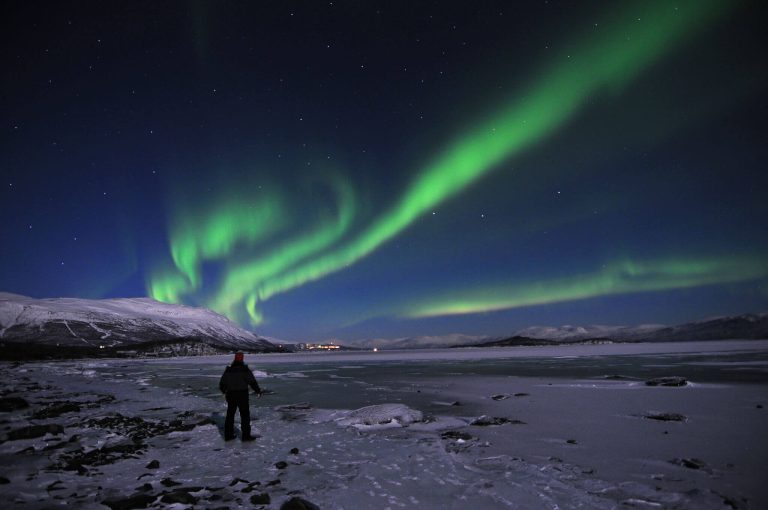
The winter landscape in Northern Norway is a sight to behold, offering breathtaking views that are unlike anywhere else. Snow-covered mountains stretch as far as the eye can see, and the northern lights paint the sky in brilliant shades of green and purple. These long winters provide the perfect opportunity to experience the wilderness in a new way. The stillness of the snowy forests and the clear, star-filled nights create a peaceful atmosphere that encourages reflection and appreciation of nature.
Even with the harsh conditions, outdoor exploration is incredibly rewarding. Snowshoeing through untouched trails or taking a quiet hike in the frozen landscape are just a few ways to embrace the beauty of winter. Long winters in Northern Norway may be cold and dark, but they offer moments of awe and wonder for those willing to venture outside.
Adjusting to the Long Winters in Northern Norway Conclusion
Adapting to the long winters in Northern Norway requires preparation, a positive mindset, and embracing the beauty of the season. While the extended darkness and cold may seem daunting, they offer unique experiences like witnessing the northern lights and exploring snow-covered landscapes. You can thrive during these winters by staying active, dressing appropriately, maintaining mental well-being, and preparing your home for the cold. On the other hand, finding joy in the wilderness helps turn the long winters into a rewarding experience, allowing you to appreciate the beauty of life in Northern Norway fully.
Alexis Mariano
Adjusting to the Long Winters in Northern Norway, written dedicatedly for Daily Scandinavian by Alexis Mariano Alexis is a seasoned moving expert with years of experience working at GI Movers UAE. Specializing in long-distance relocations, she has helped countless clients successfully transition to colder climates, like Northern Norway. Alexis provides practical advice on adapting to new environments and offers expert tips on managing the challenges of moving, particularly when preparing for harsh winters.
In February alone, more than 12,000 new seed samples entered the Svalbard Global Seed Vault. Last week, the seed vault received more than 31,000 new seed samples from 23 nations, among them war-torn countries like Palestine and Sudan. The Global Seed Vault in Svalbard (Norway) Receives Seed Samples From War-Torn Countries – read the article.
The global seed vault, which is the world’s largest security storage for seeds is located in the permafrost, 1,300 kilometers north of the Arctic Circle. Boxes of seeds from all over the globe are sent there for safe and secure long-term storage in cold and dry mountain halls.
Geir Pollestad, Norway’s Minister of Agriculture and Food. Photo: Wikipedia
“The Svalbard Global Seed Vault demonstrates the value of international cooperation and Norway’s role in this cooperation. In a world where climate change and conflict pose ever-growing threats to food security and sovereignty, this facility ensures that the genetic diversity we need to adapt our food systems remains available to all,” says Geir Pollestad, Norway’s Minister of Agriculture and Food.
A 400-year-old university in Bolivia is set to become the latest depositor to the Svalbard Global Seed Vault, thanks to support from the Government of Norway, channeled through the Crop Trust. Photo: The Crop Trust
In March, the Minister welcomed the seeds from the eight gene banks that deposited seeds for the first time and the 13 recurrent gene banks, together with representatives from the partners: Jaspreet Stamm, Director of External Affairs, CropTrust and Lise Lykke Steffensen, CEO, NordGen. Representatives from the Kazach gene bank, one of the first-time depositors, followed their box of seeds all the way from Kazakhstan to the frozen door to the seed vault.
“Climate change and conflict threaten infrastructure and impact food security for over 300 million people in more than 75 countries worldwide. Genebanks are ramping up efforts to back-up seed collections, and we are proud to support them by providing a safe haven in Svalbard,” said Stefan Schmitz, Executive Director of the Crop Trust.
Stefan Schmitz, Executive Director of the Crop Trust
Eight depositors – from Bosnia and Herzegovina, Cameroon, Kazakhstan, Kenya, Madagascar, Nigeria, and Zambia – are sending their seeds for safekeeping for the first time.
The purpose of the vault is to preserve the great genetic variation within the world’s food plants and to be an insurance policy for the food supply for future generations. The new seed samples will be sorted and categorized, before they are placed in the seed vault in February next year.
The Global Seed Vault in Svalbard (Norway) Receives Seed Samples From War-Torn Countries, compiled by Tor Kjolberg