The small Norwegian town Fossmork has been overrun by tourists looking for the famous Pulpit Rock (Preikestolen). The reason? A mistake in Google maps.
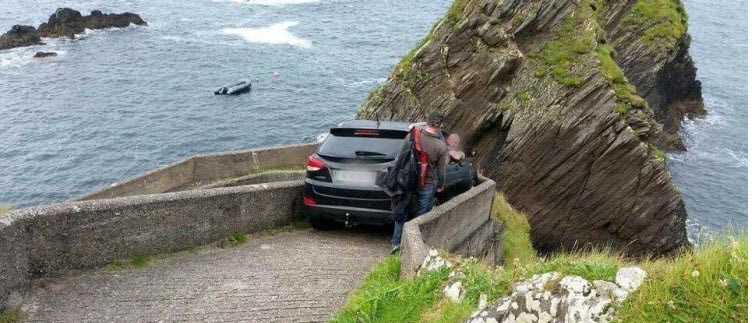
Local residents have complained of the tourists clogging up their picturesque village with cars, minibuses and vans every day. The village of Fossmork is 18 miles away from the famed Pulpit Rock, on the other side of a fjord.
Google maps route to Pulpit Rock
“When we are in the cabin, sometimes two, three, four or five tourists come in – every day, asking their way to the famed Pulpit Rock” Gunnar Bøe, a local resident, told the newspaper Stavanger Aftenblad.
Eidavatnet, Fossmork
The Preikestolen cliff is one of the most sought-after views in Norway. Rising some 604m above the limpid Lysefjord, the Pulpit Rock is a famous Norwegian landmark and reportedly receives more than 200,000 visitors annually.
Fossmark, the quaint village that the tourists stumble upon, is equally beautiful but, but that’s not what the visitors expect to see.
“We have sent hundreds of tourists away in no uncertainty that they’re on the wrong side of the fjord,” said Gunnar Bøe, who have spoken to tourists from all over the world.
Google maps lead the tourists over the Lysefjord Bridge and into Fossmork. The road is quite narrow and some get quite upset when they’re told they have to go back.
Rådhuspladsen (City Hall Square in Copenhagen) is the nexus of Denmark’s capital city, grandly lit up at night with its colored signs, digital news headlines and blinking neon, with the enormous City Hall (Rådhuset).
Constructed in the National Romantic style, its inspiration was drawn from medieval Danish and Norwegian architecture with a touch of the palazzo style of northern Italy. The façade and interior are trimmed with historic details from Nordic mythology.
City Hall Square in Copenhagen
For a bird’s eye view of the city’s spires and towers, climb the 106 meter (347ft) tower.
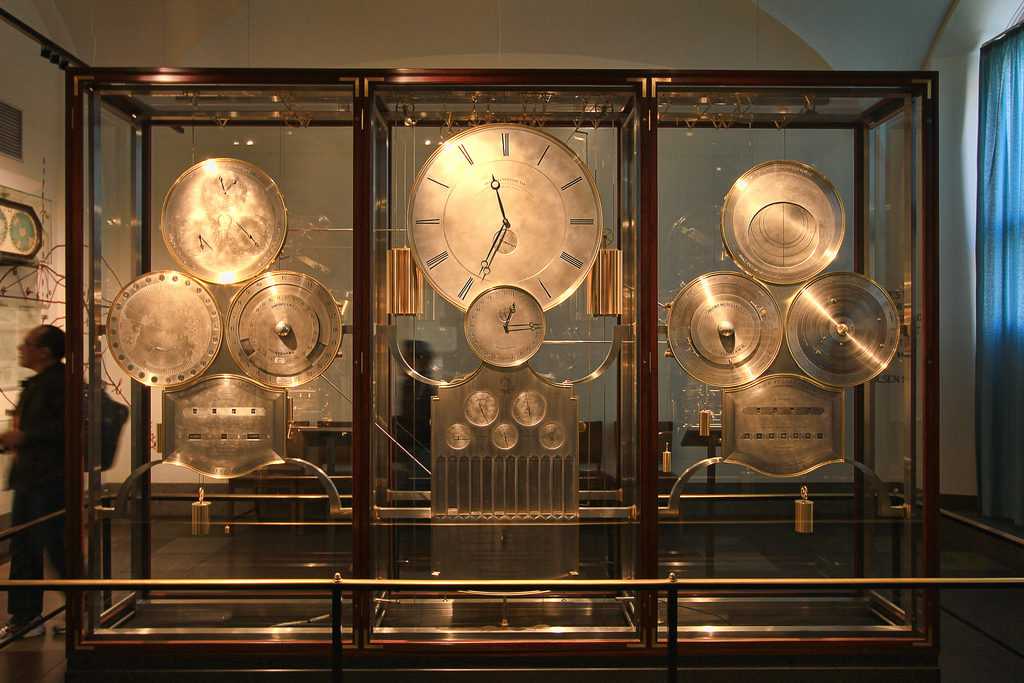
Inside the Rådhuset’s foyer, look for the entrance to Jens Olsen’s World Clock. Its star dial mechanism shows the path of the pole star in resettable periods, making it one of the most accurate and complicated clocks in the world. Unsurprisingly, the masterpiece of time-telling took 27 years to build.
Jens Olsen’s world clock
Bordering the square to the cast on Vester Voldgade, are two of Copenhagen’s fine traditional hotels. Closest to City Hall is the Palace Hotel, one of the few buildings in the Jugendstil (Art Nouveau style), and further north, past the square, Hotel Kong Fredrik with the smart and pricey Gastro Pub Restaurant.
Forget educational value, and take the family to marvel at animated tableaux of Andersen’s most famous stories, or shrunken heads, optical illusions, and a picture of Queen Margrethe carefully constructed from pocket fluff.
On the western side of Rådhuspladsen is Denmark’s most viewed attraction, the charming Tivoli Gardens. Opened in 1843, the amusement park updates its collection of rides and rollercoasters regularly while still retaining the air of a pleasure garden for a bygone age. The fair opening in April marks the beginning of summer. It’s a Copenhagen institution attracting visitors of all generations with its old-fashioned side-stalls, aquarium, gardens, cafés, theatres, an open-air stage, its own symphony orchestra, and a concert hall where classical concerts, jazz and musicals are performed. The park has more than 20 restaurants, including the Michelin-starred restaurant Herman.
City Hall Square in Copenhagen, written by Tor Kjolberg
Norwegian entrepreneur Stian Rustad (44), founder and co-founder of almost 40 companies, was interviewed by Daily Scandinavian in the beginning of this month. He said that one of the reasons for his success was the coinciding with the evolvement of the Internet.
Straight from his engineering and financial studies in Norway he served his military ‘dream duty’, as he calls it, at NATO in Brussels. His assignments there led him to understand the possibilities of having a web-based ERP-system delivered on Cloud Computing technology and SaaS (Software as a service).
After his military duty, Stian and soon eight more partners realized that they needed better management systems. In 1996, with the help from a regional business and organizational body in Norway, he established the first ERP web-based company in Europe for mid-sized companies, 24SevenOffice. Working via the cloud, the team could now work from everywhere.
“I like to build a company and stay as long as I know I can contribute to the company’s growth,” says Stuan Rustad. Photo: Tor Kjolberg
The solution was based on modules and included everything a medium-sized business needs to manage its business in one integrated system. In addition 24SevenOffice is integrated with over 200 third-party solutions including most banks, debt collection, disposal systems, online trading, production systems, industry solutions, pre-systems, etc.
Accountants for mid-sized companies were an important target group. With the help of the ERP system businesses were able to share information with shareholders, stakeholders, accounting, auditors, advisors etc.
Today 24SevenOffice has more than 20,000 customers in Norway and Sweden, and increased its turnover by 30 percent last year.
Stian Rustad in front of 24SevenOffice main office at Tjuvholmen, Oslo
What is the reason for your success, Stian? “I’ve always been working closely with my companies.
One company I started together with the main founder Bjørn Roland in 2002, Regnskapsfabrikken, (‘The Accounting Factory’) involved 50 people and was sold to PWC. The company focused on system development, implementation and consultancy in relation to hardware and software, as well as financial and administrative systems. That was my first larger exit.
I was engaged in Norway’s first cloud-based server company, which I sold to the Braathe Gruppen. That was my second exit.
Early on I realized the challenges related to telemarketing. Salespeople had to manually press the keys to contact potential clients. My company Oyatel replaced the traditional corporate phone system and became the first IP-based system in Norway. The system enabled businesses to manage without the traditional Cisco box. The company was sold to the A-group. This was my third exit.”
Propartner Defense at Notodden was offered for sale, and Stian bought it by chance. The company produced advanced high-tech electronics for domestic and international customers and had long experience in electromechanical assembly and cable assembly. Stian completed a turnaround and sold the company to an Orkla owned investmentcompany. That was his fourth exit.
Is it your strategy to buy, build and sell?
“I like to build a company and stay as long as I know I can contribute to the company’s growth. When I realize I cannot infuse more to the company than a potential buyer, I want to sell it. At the same time it is a social issue as I want to invest in new businesses in which I have more to add.
“Focus on sales and marketing and get your act together” is Stian’s advise to entrepreneurs. Photo: Tor Kjolberg
Six years ago I wanted to buy a new car and visited a car dealer in downtown Oslo. There was an extremely knowledgeable and accomplished salesman. It turned out that I knew his brother, and I was asked if I wanted to invest in the company. I did and together we restructured the company and slowly the company increased its turnover by NOK 200 million. In fact, this was not an exit, I am still one of the owners.
Today I am involved in almost 40 companies.”
There must have been some challenges? “Yes, indeed. One of the most common questions from the founders following an investment discussion is whether the investment company requires management representation and / or possibly the majority of the board as part of the shareholder agreement. As a minority shareholder I was once involved in a company where I was completely isolated. The board took many very important decisions that I and the rest of the management team knew were wrong. They did not understand the company culture well enough. The board did not understand that the company did not possess good enough systems, routines or tools to hire a large amount of sales reps. The company burned too much money and the growth ceased. The members of the board were competent enough, but they were unfamiliar with the business, prerequisites and restrictions. Group dynamics lead to the fact that too little or too much was being done. For readers interested in more information, read my LinkedIn article.” (In Norwegian only)
What is your advice to entrepreneurs? “Focus on sales and marketing and get your act together. Too many entrepreneurs use post-it notes and defer accounting and finance. You have to be structured and focus on project management. But not to such a degree that it takes away your attention from the company. Find the right level of attention in relation to the stage that your company is at. A success factor is electronic documentation. Too many business people use too much time looking for this and that.”
What next? I have recently moved to Manhattan, New York City with my family. I know there’s a market for 24SevenOffice in the USA. I know that expensive ERP cloud systems for big corporations and cheap systems for small companies already exist, but there’s a lack of systems for medium sized companies. My aim now is to start spreading the word about 24SevenOffice here. I love Manhattan – and I love challenges.”
The Sky is No Limit for Norwegian Entrepreneur: Stian Rustad was interviewed by Tor Kjolberg
Two Norwegian companies, Kongsberg and the chemical company Yara have teamed up for the launch if the world’s first fully autonomous, zero-emissions ship.
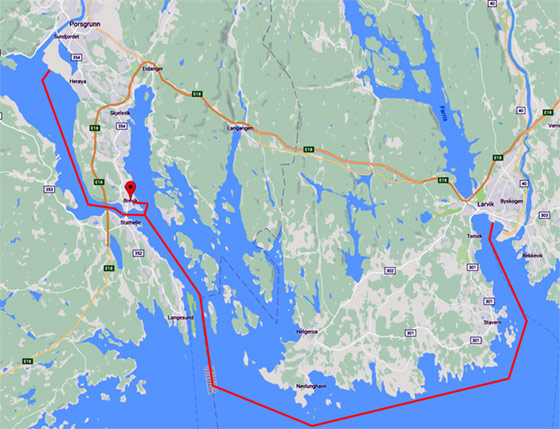
Operation is planned to start in the latter half of 2018, shipping products from YARA’s Porsgrunn production plant to the ports of Brevik and Larvik in Norway.
Yara Birkeland
Named “YARA Birkeland” after YARA’s founder, the famous scientist and innovator Kristian Birkeland, the vessel will be the world’s first fully electric container feeder.
Set to be a real game-changer for maritime transport, the vessel will reduce NOx and CO2 emissions by reducing diesel-powered truck haulage by around 40,000 journeys per year, and thereby also improve road safety. Autonomous and 100% electric, “YARA Birkeland” will be the world’s most advanced container feeder ship.
Kongsberg will integrate sensor, control, communication and electrical systems, and the eco-initiative will help to meet the UN sustainability goals. YARA Birkeland will initially operate as a manned vessel, moving to remote operation in 2019 and expected to be capable of performing fully autonomous operations from 2020.
Svein Tore Holseter in front of painting of Yara’s founder Kristian Birkeland
Svein Tore Holsether, president and CEO of YARA explains the need for such an initiative, stating that “every day, more than 100 diesel truck journeys are needed to transport products from YARA’s Porsgrunn plant to ports in Brevik and Larvik where we ship products to customers around the world.”
“As a leading global fertilizer company with a mission to feed the world and protect the planet, investing in this zero emission vessel to transport our crop nutrition solutions fits our strategy well,” he adds.
Geir Haaøy, CEO of Kongsberg
Geir Håøy, president and CEO of Konsberg elaborates that ‘developing systems for autonomous operations is a major opening and natural step for KONGSBERG, considering their decades of expertise in the development and integration of advanced sensors, control and communication systems for all areas of ship operations. “YARA Birkeland will set the benchmark for the application of innovative maritime technology for more efficient and environmentally friendly shipping,” he says.
About Yara Yara’s knowledge, products and solutions grow farmers’, distributors’ and industrial customers’ businesses profitably and responsibly, while protecting the earth’s resources, food and environment.
Its fertilizers, crop nutrition programs and technologies increase yields, improve product quality and reduce the environmental impact of agricultural practices. Its industrial and environmental solutions improve air quality by reducing emissions from industry and transportation, and serve as key ingredients in the production of a wide range of goods. YARA fosters a culture that promotes the safety of employees, contractors and societies.
Founded in 1905 to solve emerging famine in Europe, today, Yara has a worldwide presence, with close to 15,000 employees and sales to about 160 countries.
About Kongsberg Kongsberg (OSE-ticker: KOG) is an international, knowledge-based group delivering high technology systems and solutions to clients within the merchant marine, offshore, oil and gas industry, defence and aerospace. KONGSBERG has 7 200 employees located in more than 25 countries and total revenues of NOK 15.8 billion in 2016.
Norwegian Zero Emissions Ship Without Crew, edited by Admin
Natural wonders, fjords and glaciers, and northern lights are the most sought after search terms when foreigners consider a trip to Norway. A report prepared by Bloomberg Consulting and commissioned by Innovation Norway shows a significant increase in searches for Norway as a tourist nation in 2015 and 2016.
The most popular search engines in the world were monitored. These represent 90% of all searches during the period. Norway was associated with natural beauty in online searches as well. Many people also search for specific product information, such as attractions, destinations, cruises, accommodation and winter activities.
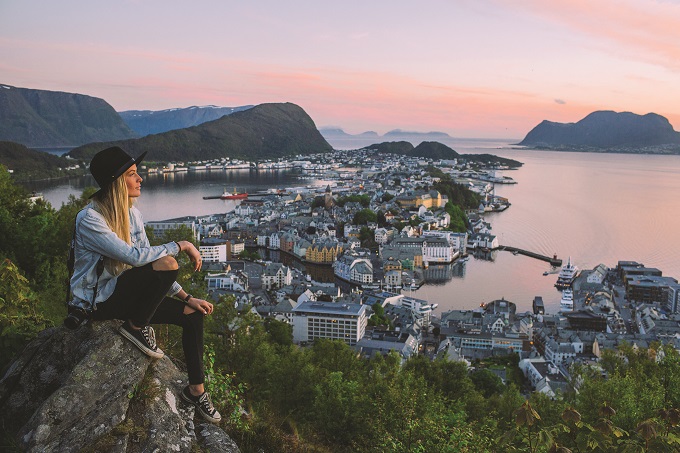
Axla viewpoint, Ålesund
“This proves that interest in Norway is increasing. The results coincide well with the attractions we have been promoting in the tourism industry over time, “says Bente Bratland Holm, Tourism Director of Innovation Norway.
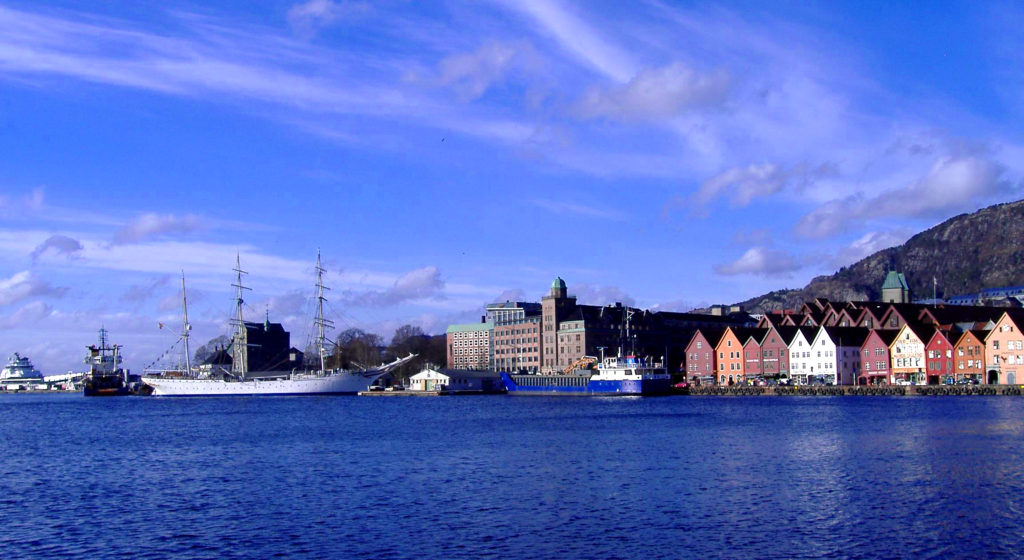
From Bergen. Photo: Andrea Giubelli
There were nearly two million searches for ‘natural wonders’ followed by 1,350,000 searches for ‘fjords and glaciers’ and 450,000 searches for ‘northern lights’.
The Geiranger fjord. Photo: Terje Rakke
The Germans are on the top of the search list with almost a million searches, but Americans show the highest increase, 34 percent from 2015 with 640,000 searches. In 2016 there were 5.8 million tourism-related searches for Norway, an increase of 24 per cent from the previous year.
From Lofoten. Photo: Terje Rakke
Germany is the largest market for Norwegian tourism, so it’s natural to see them on top, but it’s exciting to follow the United States, who lately has been showing an increase, both in interest and actual visits,” says Bratland Holm.
Big potential in the luxury segment
A search that is very noticeable is “luxury tourism”. Between 2015 and 2016, the number increased by 614 per cent, from 1560 searches to 11 140 searches. Although the numbers are still low compared to nature-based searches, it displays a good idea of the possibilities available in the other segment.
Norwegian mountains
“It’s natural to think that Norway is increasingly becoming available in markets that traditionally have many high end travelers,” Holm says, “but It’s not necessarily about five star hotels and private butlers, but about the exotic experiences only we can offer.”
Top 10 Keywords Most Wanted In 2016:
Natural wonders
Fjords and glaciers
Northern lights
Tourism packages and products
Tourism
Holiday packages
Tourism attractions
Busy
Cruises
Holiday accommodation
Oslo view. Photo: Nancy Bundt
Most active countries
Germany
United States
United Kingdom
Spain
France
Netherlands
Italy
Denmark
Sweden
Switzerland
“Despite terrorism and unrest in many places, people’s wanderlust is growing. Norway also saw a marked growth in the number of foreign tourists,” according to the Bloomberg report.
The Rauma Railway. Photo: Johan Berge
Facts about the report:
The reports contain 63 main categories, which have 232 subcategories.
The reports include over 150,000 tourism-related keywords in 15 languages: English, German, Spanish, Russian, French, Italian, Portuguese, Chinese, Japanese, Dutch, Finnish, Korean, Polish, Swedish and Danish.
The report covers the most widely used search engines in the world, representing 90 percent of all searches in the period.
All photos: Innovation Norway
Feature image (on top): Hurtigruten with northern lights in Tromsø
What Tourists Want to Know Before Visiting Norway, written by Tor Kjolberg
Sweden’s capital is a city of islands where palaces and peaceful hideaways line the shores, and where cobbled streets lead to city shops, cafés and lively cultural attractions.
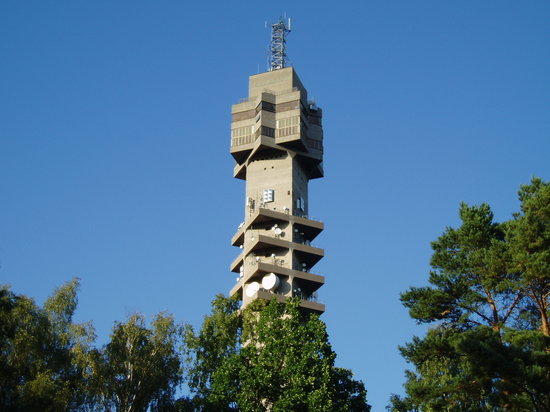
The novelist Selma Laferlöf called Stockholm “the city that floats on water”. Nowhere do you see this more clearly than from the dizzy observation platform on the top of Kaknäs Television Tower (Kaknästornet), Ladugårdsgärdet, which rises 155 meters (508ft).
Kaknäs Television Tower in Stockholm
Below, Stockholm spreads out in a panorama of blue water, the red of the old buildings contrasting with the stark white and glass of the new, and swathes of trees and grass. This pretty low-rise city, designated Europe’s first Green Capital in 2010, rests on its 14 islands, for all the world like a raft traveler drifting down a lazy river.
View from Kaknäs Television Tower
Fresh and salt water are separated by the island of Gamla Stan (Old Town) and the great lock gate of Slussen, at the southern end. The island barrier is where Stockholm originated some time before the 13th century.
From Gamla Stan (Old Town) in Stockholm
Today with a population of more than 2 million in the greater metropolitan area, Stockholm is a modern and sophisticated metropolis, famous for Scandinavian design in furniture, textiles and interiors, and a hotbed of innovation in information technology – Europe’s Silicon Valley.
Interior shop in Stockholm
The city features some of the most exciting cuisine in Europe. Stockholm’s nightlife has exploded into an array of young, hip clubs and older, more sedate nightspots. Infusing the old with the new is a specialty of today’s vibrant Stockholm.
Feature image (on top): Stockholm archipelago (Visit Stockholm)
Stockholm – The Capital City That Floats On Water, written by Tor Kjolberg
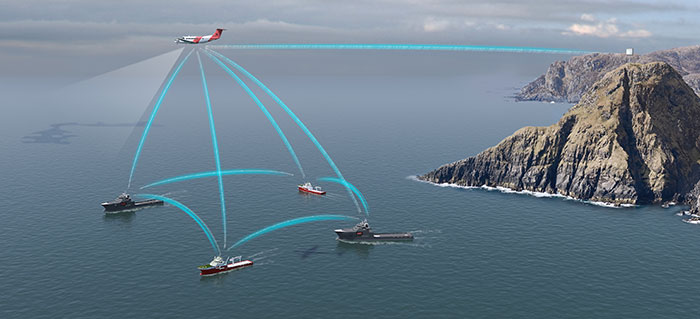
Norway has developed the first wireless network at sea to tackle oil spills. The Maritime Broadband Radio is developed for use in maritime applications where digital high-speed reliable communication and data transfer are crucial for efficient and safe operations.
The system will be implemented on ships and aircrafts in public service and enables exchange if information that can be crucial in limiting damage when accidents occur. To improve offshore oil spill preparedness, Norway’s government and the oil industry are building an offshore broadband wireless network.
Coastguard ship KV Bergen
The maritime “information highway, (MBR), connects crews and their vessels with a high-speed and high capacity digital communication channel with “fast track” priority options.
The two Norwegian companies Kongsberg Seatex and Radionor have teamed up to develop the MBR. In contrast to previous systems, MBR is highly stable and with extensive reach and enables streaming of HD-video.
According to the Norwegian Coastal Administration, the ability to exchange information quickly between ships, planes, and other actors can greatly limit the damage caused when oil spill occurs. The system can securely carry a diverse array of operational information, from real-time video to system data, and remotely situated teams can work together seamlessly, coordinating systems and activities for optimal performance, safety and operational success.
MBR used for coast guard purposes
MBR does not require an Internet connection to connect units in the network, though it is possible to transfer data from the network using Internet.
The Norwegian Clean Seas Association for Operating Companies (NOFO) – made up of oil industry organizations – will install the MBR system on all their oil recovery vessels. MBR is already installed on the surveillance aircraft LN-KYV, a joint initiative between the Coastal Administration, NOFO and the Norwegian Coast Guard. Three onshore base stations have also been installed, to aid in communications with ships and planes.
Kjetil Aasebø, senior advisor in the Norwegian Coastal Administration
“This is a significant improvement that allows us to communicate with all units participating in an oil recovery mission, and share the data without an Internet connection. MBR allows us to respond faster with the right actions,” says Kjetil Aasebø, senior advisor in the Coastal Administration, in a statement.
Norway’s maritime “information highway”, written by Tor Kjolberg
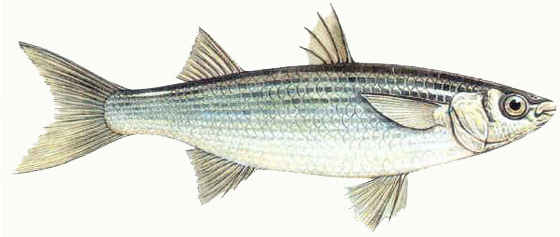
Grey mullet (Chelon abrosus) is a recent introduction in northern waters. The warm water around the power stations and the general warming of the seas are responsible for having provided breeding ground for this delicious vegetarian fish that eventually grows to a huge size, serving up to 12 people.
The fish has no teeth, just soft kissable lips, as it’s a grazer of soft seaweeds. This makes it almost impossible to catch on a rod; whereas a net close to the shore is ideal. It can grow to an impressive 80cm, but most grey mullets are much smaller.
Grey mullet
Appearance and taste The fish is covered in huge silver coin scales that need to come off before you cut it open. It’s easy to do yourself, or you can have the fishmonger do it for you. The flesh is white, flaky, sweet flavored, and so dense it will stick together even if grilled whole or in fillets. The flesh is fatty and rich in omega 3 fatty acids.
Culinary uses
Grey mullet has much of the same qualities as wild salmon, even if it’s not quite so fatty, and you can cook it instead of salmon, in every way you wish. It’s not farmed, and is a much better choice than farmed conventional salmon.
Vegetarian grey mullet
Grey mullet gas been a favorite fish for grilling whole in its home in southern European waters for millennia, but fits naturally into the northern repertoire of serving fish with spiky horseradish, or pickled cucumber salad. The bones and head are very good for fish soup.
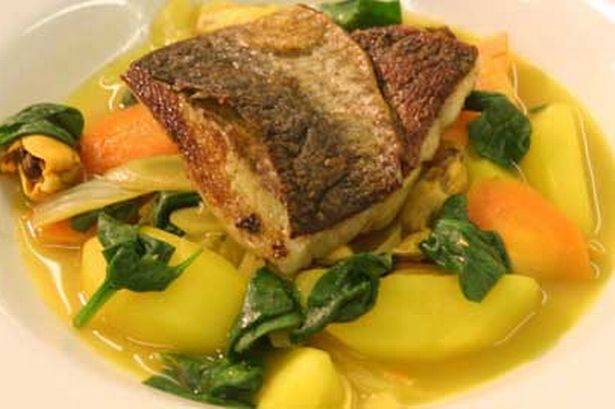
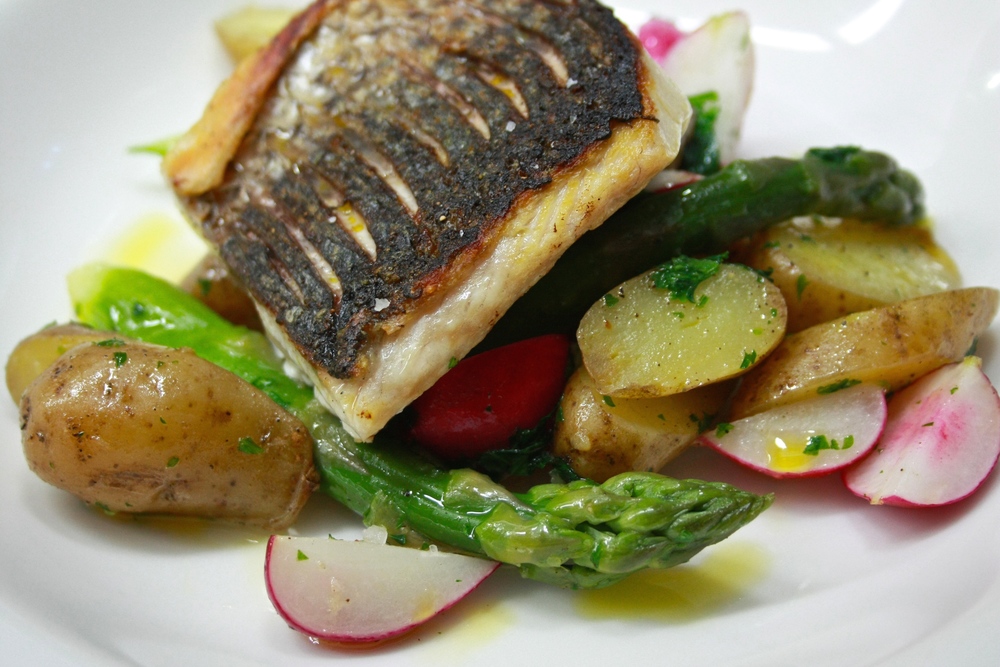
Grey mullet dish
The flesh will cook to an almost lobster-like firmness if cut into dice or strips and added at the last moment to the soup. But the preparation that will show of the mullet in all its glory is when fried crisp on the grill or in a pan. The skin is delicious and so is the flesh underneath.
It’s essential that grey mullet is not overcooked, either way you choose to cook it. It is extremely filling and 250g fish on the bone is enough for one serving. When the flesh is just firm, and it’s still little pink in the middle, or by the bone it’s cooked. Longer, and it will dry up, and what a shame that would be.
Grey mullet for lunch
Gravad with dill, or baked in slices on a plate are also very good ways to eat the fish, and prepared as the fried Mackerel with gooseberries, or with a rhubarb compote; new potatoes are perfect with grey mullet. The frying and the butter/olive oil works miracles.
Fried pieces of grey mullet are delicious when soused, like herring, and if it’s served with cucumber salad, you can pair the two in a deep dish and eat it for lunch the day after, with toasted rye bread.
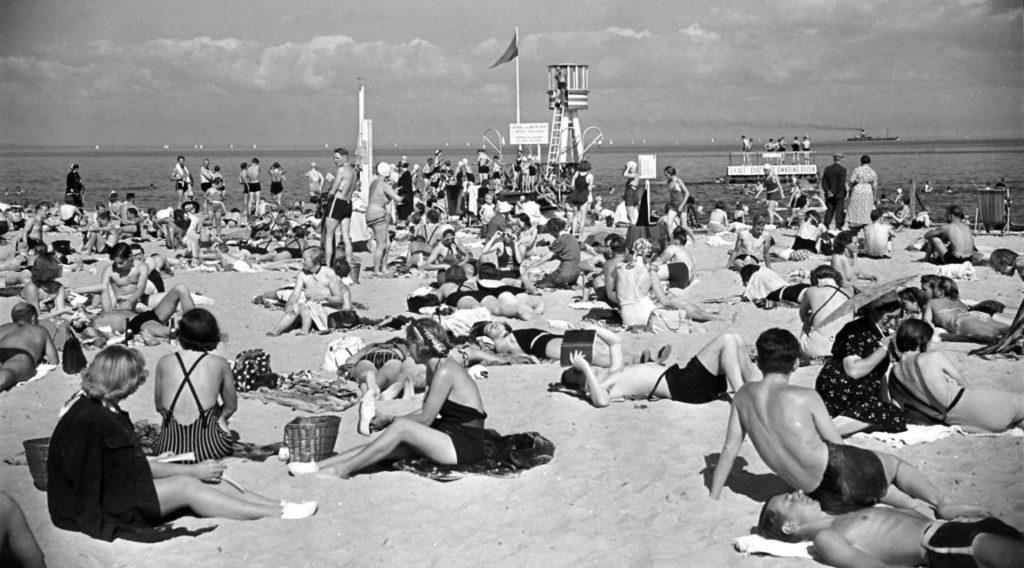
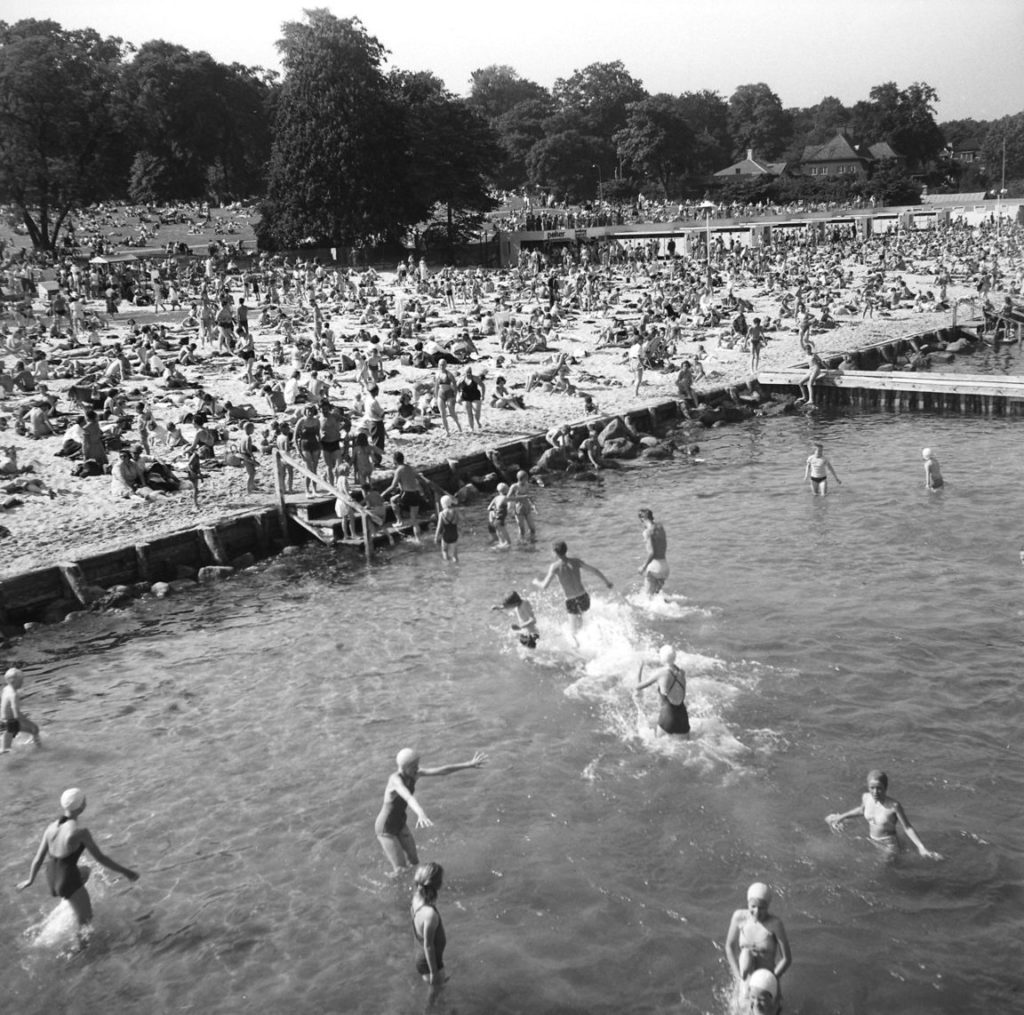
Bellevue isn’t just any old beach. In 1931, Arne Jacobsen was invited to enter a competition for a bathing area as part of Gentofte Municipality’s overall plan for the area. The beach is 700 meters of sandy shoreline behind which is a small park with trees.
The whole beach, park and surrounding area have played a key role in recent Danish cultural history, and it’s only a5 minutes’ walk from Klampenborg Station near Bakken.
Here an excavator in action at Bellebue. Photo: Sven Gjørling
In the summer of 1932, Bellevue Beach with its changing rooms, lifeguard towers and elegant, metal-sheeted kiosks, opened to paying bathers, designed by Arne Jacobsen, who won the competition. And the beach itself is still one of the most popular in the Copenhagen area.
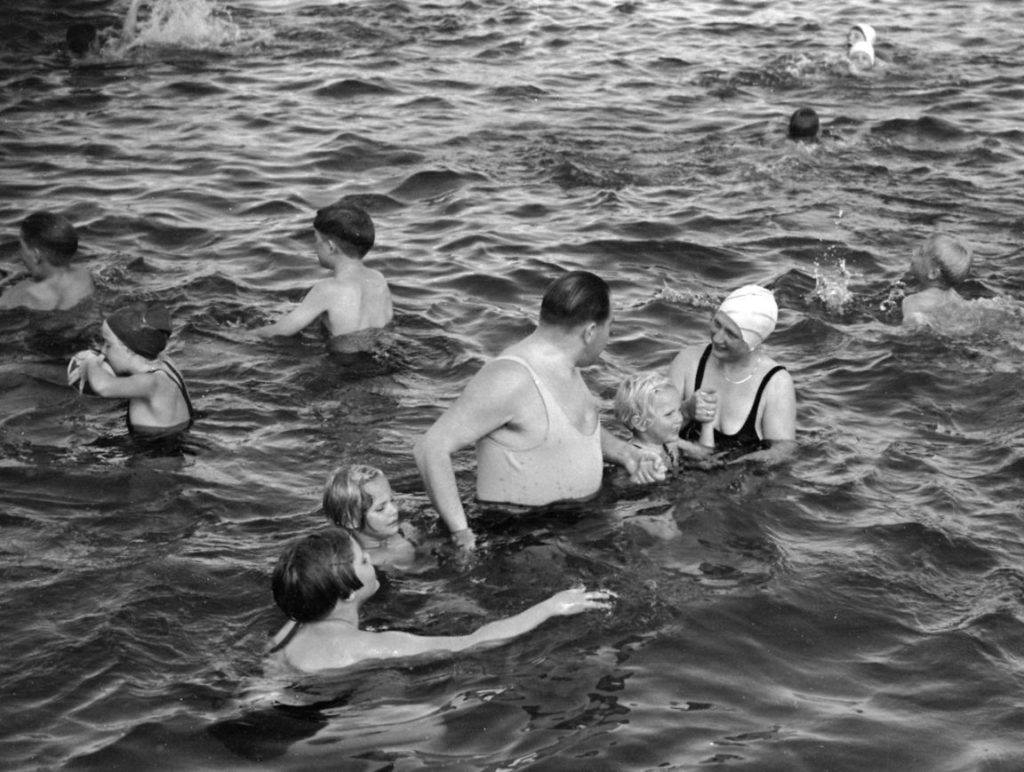
Summer holiday at the beach. A family enjoying the water. Photo: Sven HjørlingBellevue, anno 1938.; People are enjoying a lovely day on the beach of Bellevue north of Copenhagen.
It’s a great choice on really warm days because of the welcoming shade provided by the trees, and Jacobsen has designed everything down the smallest detail. Bellevue Beach was an early example of a consistent branding strategy.
A summer sunday at Bellevue Beach. Two bikini dressed women standing posing in front of the changing tents. Photo: H. G. E. AueBellevue Beach
As soon as the water and sand reach the appropriate temperature, the season’s latest swimsuit fashions are aired at Bellevue, as it did in 1932. The artificial beach was quickly nicknamed ‘the flypaper’ because bathers often were squeezed so closely together.
Bellevue, anno 1938.; People are enjoying a lovely day on the beach of Bellevue.Photo: Sven GjørlingBellevue Beach anno 1945. Photo: Unknown
Today, it is not just the Sound’s waves that attract people. Copenhageners have always loved Bellevue Beach. First they flocked to it on the boats that crossed regularly from Copenhagen to Klampenborg, then from 1934 on the newly opened suburban electric railway.
Bellevue Beach 1951: Lines of tents for change of dresses. Photo: Walther MånssonA hot summer’s day at Bellevue Beach. Photo: Olaf Ibsen
The two beach-volleyball courts are particularly popular, and now as then people shelter from the sun under the trees, spread out blankets for picnics and relax with a book.
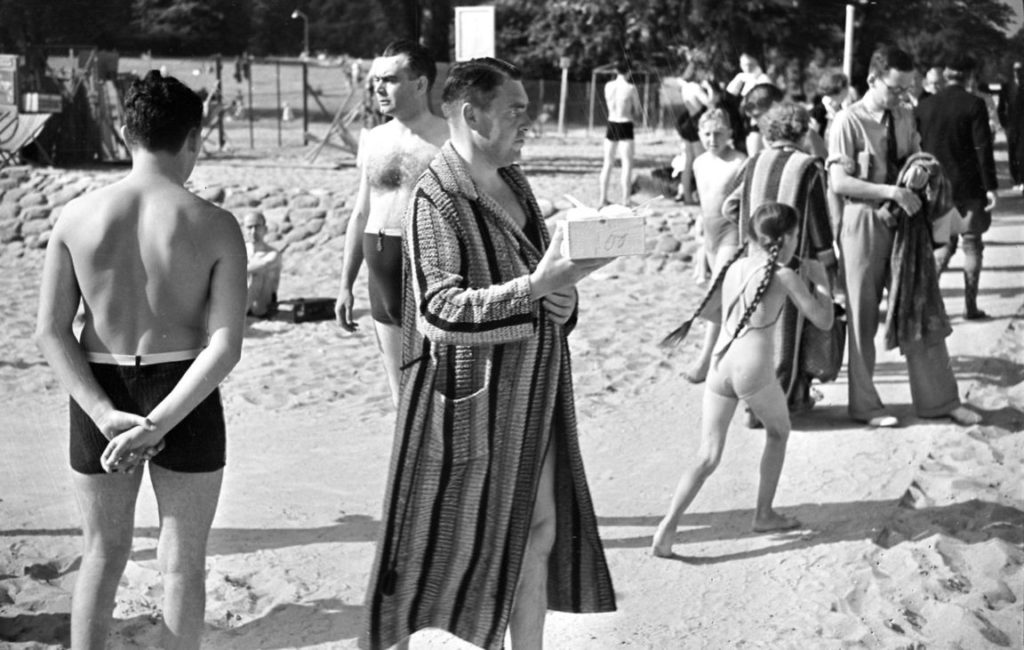
Bellevue Beach, anno 1938. Summer holiday at the beach. A family enjoying the weather. Father wearing a bathrobe. Photo: Sven GjørlingA summer sunday at Bellevue Beach. The beach is flypapered with people. Photo: H. G. E. Aue
The sweet life has come within reach of the masses
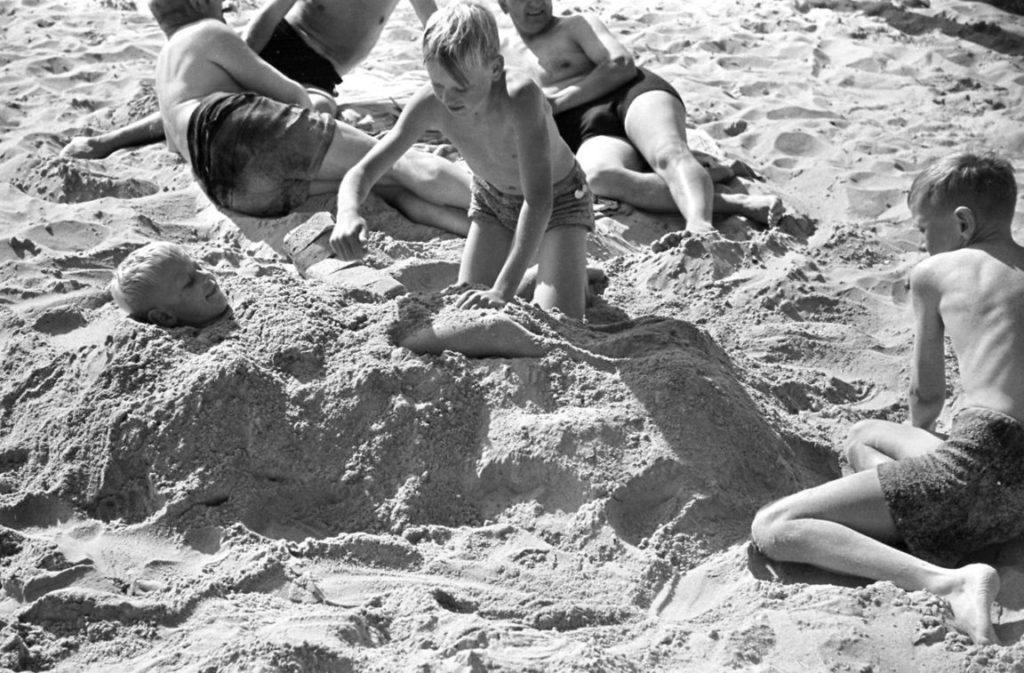
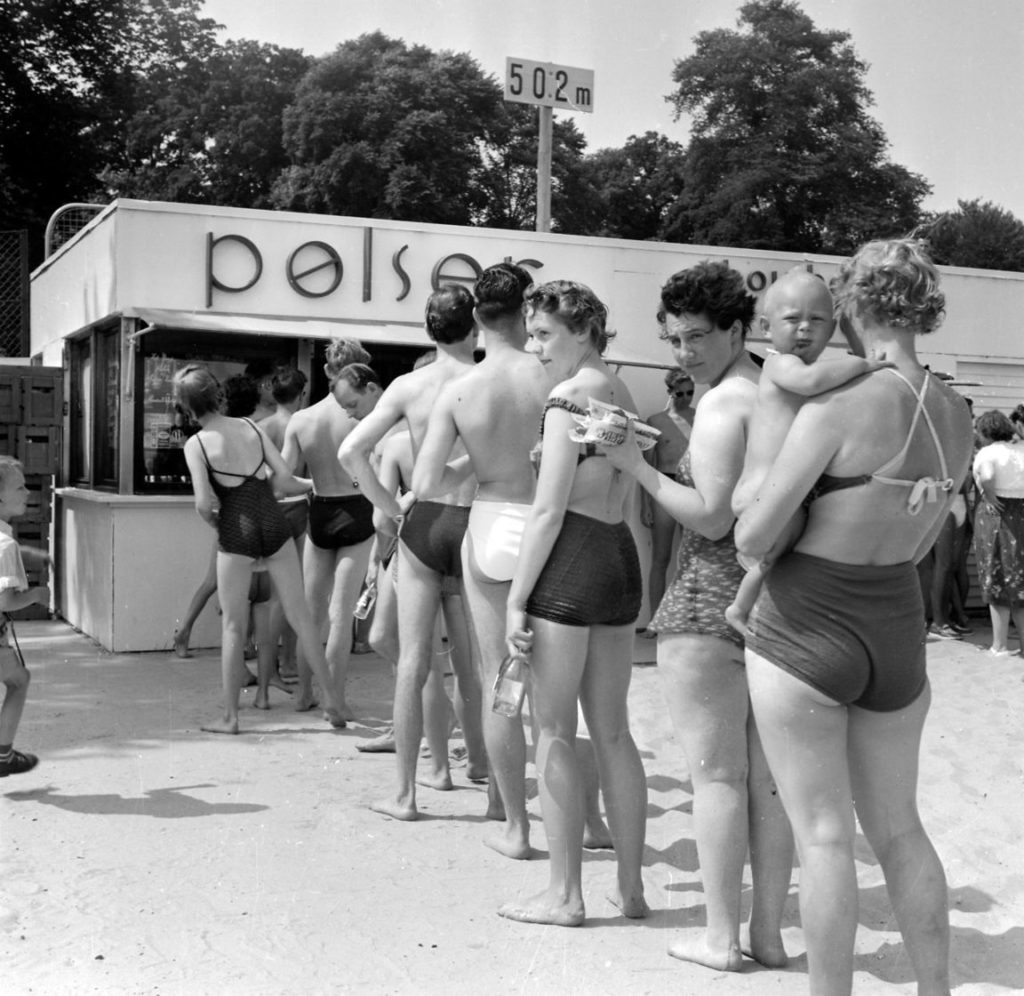
Bellevue, anno 1938. A young woman in bathing suit. Photo: Sven GjørlingDenmark, Klampenborg: A hot day on Bellevue beach anno 1952 north of Copenhagen. A young woman reading leaned against a commercial for chewing gum.. Photo: Sven HjørlingBellevue, anno 1938. Summer holiday at the beach. Boys playing in the sand. Phitoi: Sven GjørlingBeach life on Bellevue. Young people are playing with a huge beach ball. Photo: Mogens AmsnæsOn a hot day at Bellevue , the holidaymaker queuing up for hot dogs. Photo: Birthe MelchiorsBellevue, anno 1938. Father and son playing. Photo: Sven Hjørling
Feature image (on top): Bellevue beach, anno 1938. Photo: Sven Gjørling
Old Times at Bellevue Beach in Copenhagen, written by Tor Kjolberg
Norway’s capital city offers a lively mix of galleries, museums, shops, restaurants and nightlife, with magnificent forests, islands, ski trails and the beautiful Oslo Fjord close at hand.
Oslo still ranks as one of the world’s most expensive cities, but the “Nordic City of Light” has awakened to the attraction if city fun, and developed into an unexpected metropolis. In 2010 it was the only Scandinavian city to make it into the top 10 city break destinations at the World Travel Awards, the industry’s biggest and most prestigious award worldwide.
Akershus Fortress
Oslo’s cultural rebirth in recent years has been in part conscious, in part a natural outcome of injections of money in the right place. On the back of the oil boom came money for the arts and a flourishing of the arts scene. The new face of Oslo is represented by the magnificent white marble and granite Opera House, at the heart of the newly developing Bjørvika waterfront district.
The Astrup-Fearnley Museum of Modern Art in front of Oslo Town Hall
But in many ways Oslo remains the features of the ideal city of the 19th century. Within easy walking distance (and this is a perfect city for walking in), nestled around the northern tip of the fjord and the central boulevard, Karl Johans gate, are all the accoutrements of a capital – the Royal Palace and its park, Parliament, City Hall, a fortress, a cathedral, the National Theatre and excellent museums, the city’s biggest draw.
The Vigeland Park (also called the Frogner Park)
The attractions not in this compact grid of streets are just a few stops on the tram or T-Bane (metro) – Vigeland Park, the Munch Museum, the Nordmarka wilderness – whole the sights on the Bygdøy peninsula, Oslo’s other big draws are a short ferry ride away.
Oslo – the Nordic City of Light, written by Tor Kjolberg
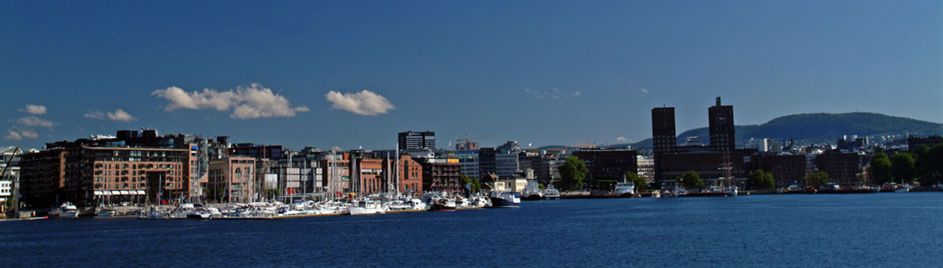
Feature image (on top): Modern architectire in Oslo – Barcode