Norway is making radical changes to lessen its currently substantial carbon footprint. In addition to limit the emission of cars, a ban to prohibit the use of fossil-based oil to heat buildings comes into effect in 2020.
Paradoxically, the world’s largest producer of oil and gas outside the Middle East, will ban the use of oil and paraffin to warm buildings from 2020 onwards. The Norwegian Government hopes that the upcoming ban will result in a reduction of the country’s carbon dioxide emissions by 340,000 tons per year, compared to overall national emissions of 53.9 million tons in 2015.
Methane emissions in Norway, by sector
The country has made concerted effort to introduce policies which shrink domestic emission of greenhouse gases. Norway also aims to ban the sale of fossil fuel-based cars by 2025.
the world’s largest producer of oil and gas
“Those using fossil oil for heating must find other options by 2020,” said Norway’s Environment Minister Vidar Helgesen in a statement.
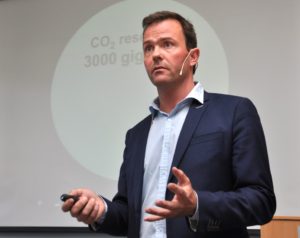
Norway’s Environment Minister Vidar Helgesen
Recommended alternatives to oil-based products include heat pumps, electricity from the country’s hydroelectric grid and even special stoves burning wood chips. Additional measures could include limitations on the use of natural gas for heating.
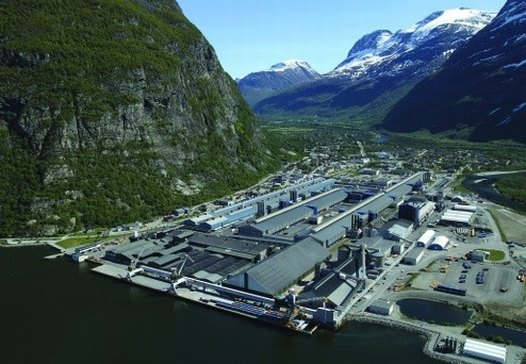
Hydro aluminium plant in Norway is a heavy user of electricity. Photo: Øivind Leren
The Ministry of Climate and Environment said the ban would apply to both new and old buildings and cover both private homes and the public space of businesses and state-owned facilities.
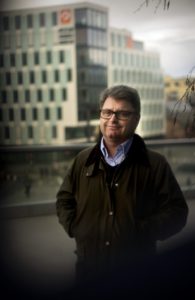
Photo: Norwegian District Heating Association (Norsk FjernvarmeMarius Holm
“This is a very important climate measure that significantly cuts emissions, sending a powerful signal that we are moving from fossil to renewable energy,” said Marius Holm, head of ZERO, a foundation that promotes emissions cuts, in a statement.
The ban marks a radical change in policy for Norway. Despite ratifying the Paris Agreement, the nation showed a 3.3 percent increase in emissions last year compared to 1990.
Feature image (on top): Downtown Oslo
Norway – First Country in the World to Ban Use of Gas to Heat Buildings , written by Tor Kjolberg
Is it already July? Halfway into the year, we have picked 7 eatery newcomers in Copenhagen. We have deliberately kept the list short and light, so you can eat your way around all of them.
Eattoday Tapasbar & Takeaway Waterfront The restaurant is located right next to The Lakes, and probably offers the best tapas in Europe outside of Spain. In this small, cozy restaurant you can buy a mix of everything and a beer – or two, and every dish costs the same when you mix different tapas.
Gro Spiseri på ØsterGRO
On top of a former car auction house, you’ll find Denmark’s first rooftop farm, ØsterGRO. Now you can even have an organic meal at its eatery and experience the farm’s special atmosphere.
GRO spiseri. PR-photo
In the kitchen, four guys work closely together to shape the menu and select natural wines to accompany the food. Here, there’s no head chef and no hierarchy. GRO spiseri is not like many other restaurants, and in the few square meters they have you can immediately feel the passion from the people working there.
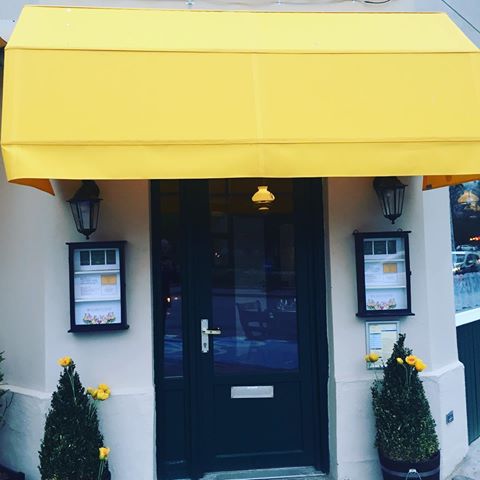
Enjoy beautifully flower-decorated dishes in the evening. Guldkroen (meaning Tavern of Gold) is located just north of The Lakes in a melting pot of small, quirky clothing stores and dozens of pizzerias and eateries of all types. At Guldkroen you can enjoy classic Danish food with lots of sauce and potatoes in a homely atmosphere.
Guldkroen restaurant
Enjoy their shrimp cocktail, Ad Libitum Tartelettes, Wienerschnitzel or English beef. Don’t miss their homemade Rainbow ice cream.
Hooked is a new seafood restaurant, located in the trendy Nørrebro. The chefs demonstrate a passion for cooking, and all delicious bites are made-to-order, promising the freshest experience. Hooked is tucked at a corned close to the famous assistant Kirkegården. Hyggestund (meaning “time of hygge” – Hygge is a Danish word meaning coziness, and from this year on the word hygge is incorporated in the New Oxdord Dictionary).
Hyggestund restaurant
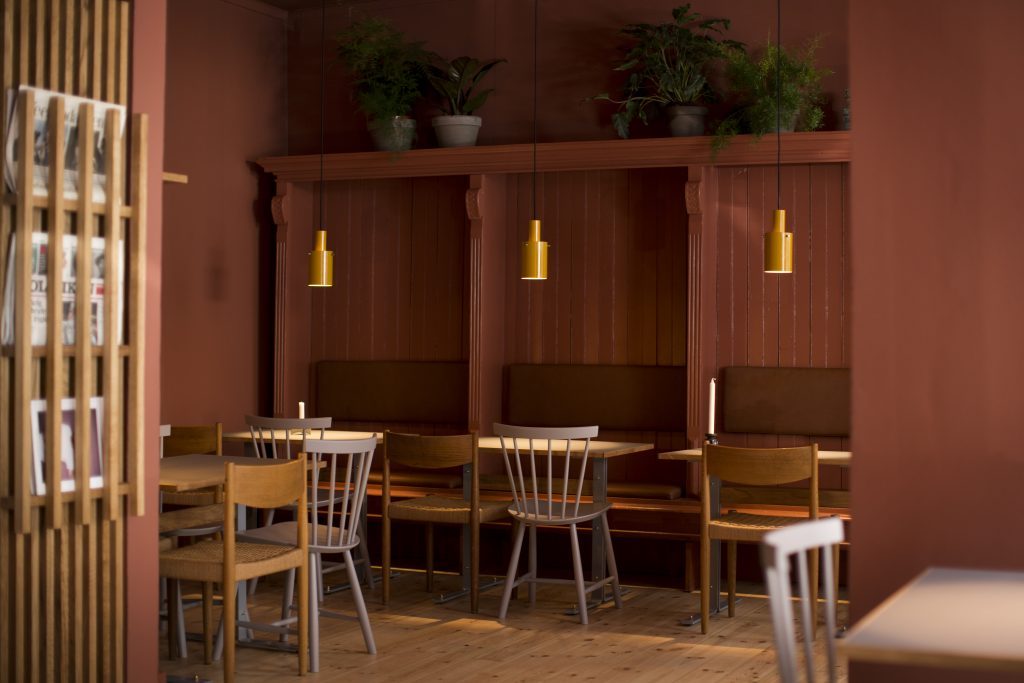
This is Copenhagen-s new all day breakfast spot in an old beautiful building at Vesterbro. The atmosphere is in fact cozy and the service simple. You simnply place your order and pick up your food at the counter. Throughout the summer there are seats outside so you can enjoy the peasant Copenhagen sunny days.
Jordnær (meaning ‘down to earth’) is housed in the historic, 350-year-old Gentofte Hotel, situated in Gentofte, just outside Copenhagen.
Gastronomically speaking, Jordnær is not very close to the earthy sphere. The ambitions are high, and the reviews since the restaurant opened in May this year have been positive indeed.
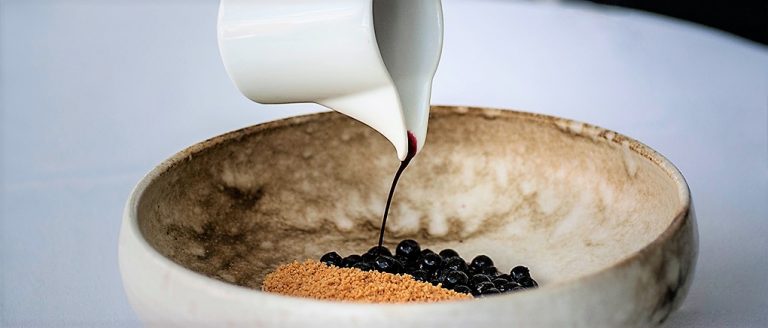
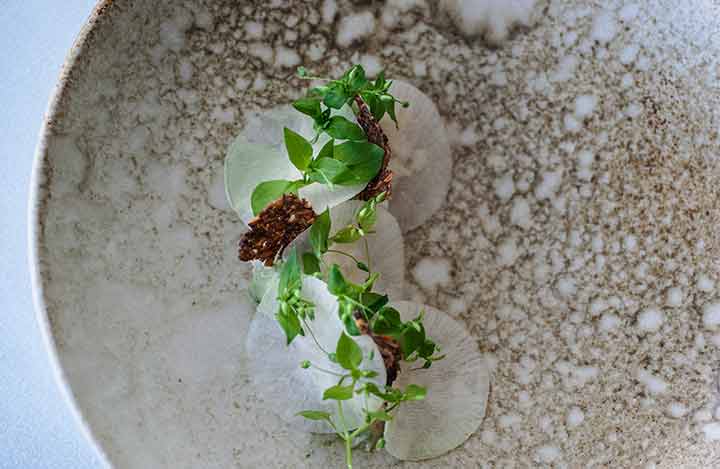
Dish at Jornær restaurant in Gentofte Hotel
The host couple consists of Tina Kragh and Eric Vildgaard, who can plot in three years at Noma, the gastronomic flagship of New Nordic Cuisine, on his resume. Both of them have a past at Fredensborg Store Kro.
The evening menu gives you the opportunity to go a la carte or choose between a 3-, 5- or 7-course menu, where you will visit almost all the pleasantries of the menu. Restaurant Jordnær is open for lunch guests.
Table reservation is recommended.
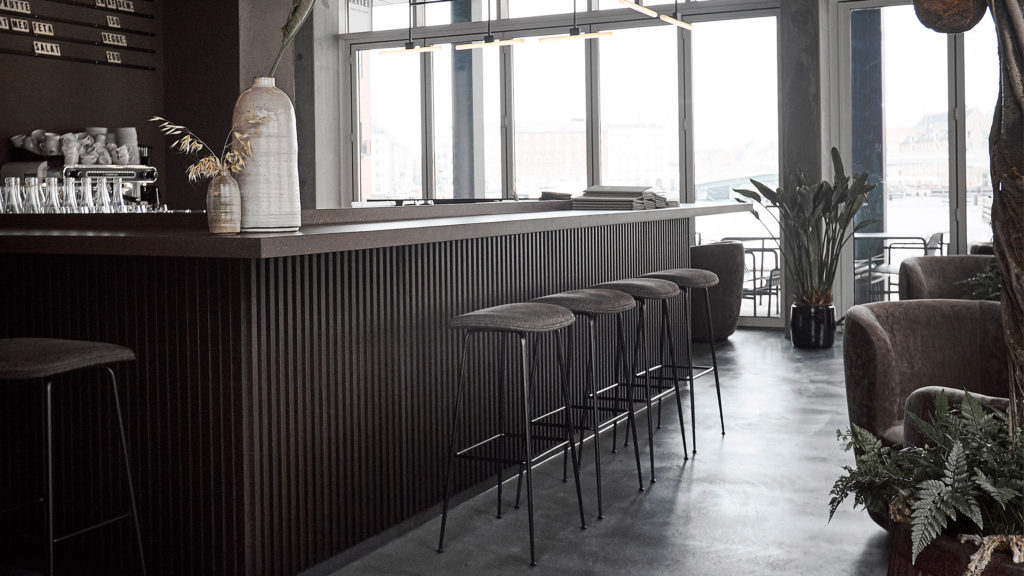
Nærvær Restaurant and Bar. Architects: Norm
Nærvær
(meaning presence) is Copenhagen’s new wine bar & restaurant, situated at Christianshavn on Krøyers Plads, overlooking the canal with a beautiful view over Copenhagen´s old city centre. The restaurant, Norm Architects can only seat ten people, and the space is divided into different areas to help enhance the intimate experience. Nærvær has the ambition of being a local non expensive wine bar as well as a restaurant serving guests from around the world.
P Eatery
P Eatery located next to Skt Petri Hotel. has created a Nordic Mediterranean cuisine. The atmosphere is intimate for two, but offers plenty of space for socializing. The servings are composed of many small dishes including vegan choices, heavenly desserts – and they offer more than 100 wines served by the glass.
Featured image (on top): Dessert at Nærvær Restaurant
New Restaurants in Copenhagen, compiled by Tor Kjolberg
On the fringe of the Oslo Fjord about 100 kilometers south of Oslo, you arrive at a little, exuberant summer paradise island, Hvasser. The mild sea air combined with long summer days and a seabed covered with shells, makes the island particularly suitable for growing delicious asparagus.
The three brothers, Bernt, Anstein and Edvart Freberg, acquired the asparagus farm in 2012, and today their handpicked asparagus is sought after by as well gourmet restaurants and shops as private customers, shopping directly from the booth by the green house.
On the fringe of the Oslo Fjord, you arrive at a little, exuberant summer paradise island, Hvasser
«The unique flavor of our asparagus is different from the imported ones,» says Ane Hjetland Holt, married to one of the Freberg brothers. “We are really proud of our products, which have been awarded the Unique Taste Foodmark,” she adds.
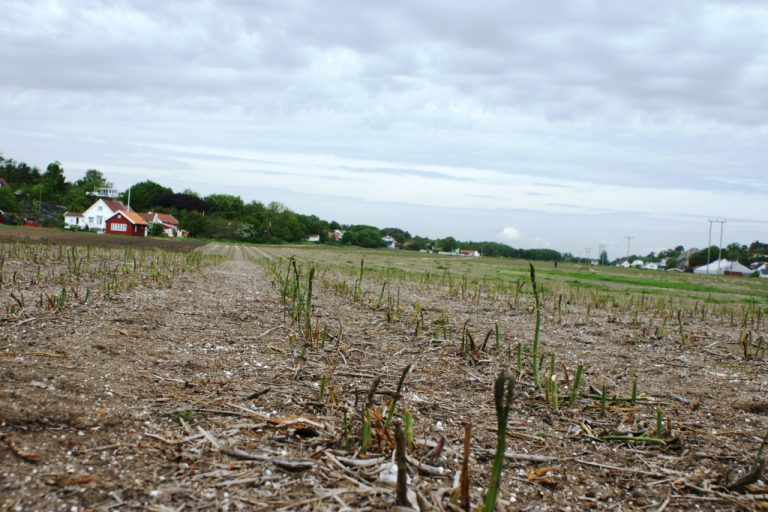
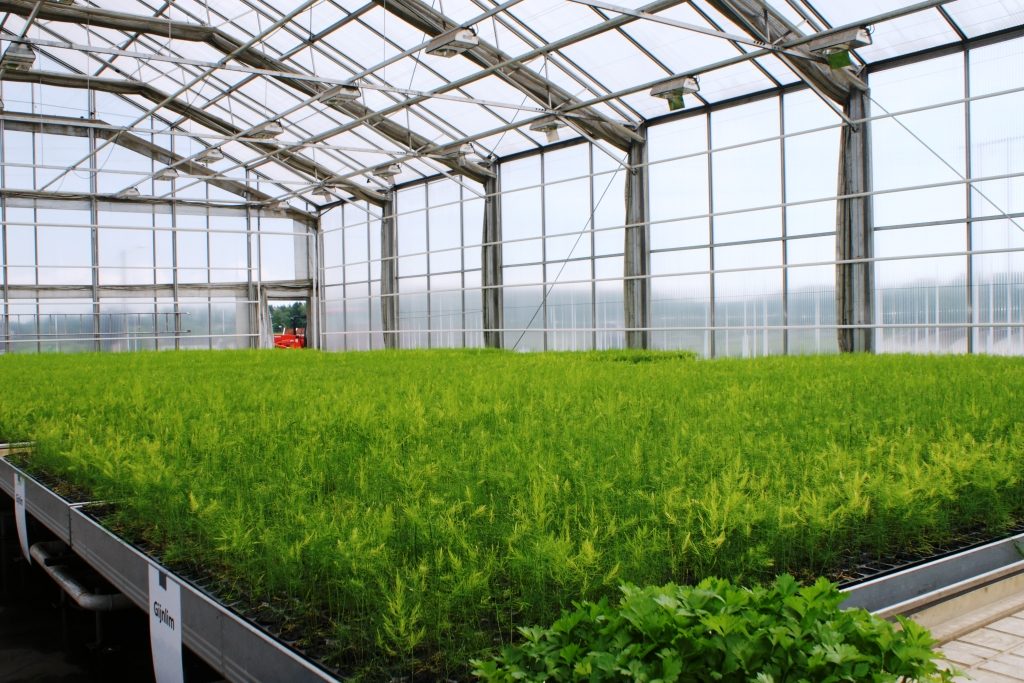
Sticking our fingers in the ground around the sparse green pins, we can feel it’s hot. Asparagus seeds are placed indoors in greenhouses in the spring and planted on the field at summertime. Only after three to four years, the green plants are large enough to be harvested, sorted and sold. However, the same plants can now be used for a further 8 to 10 years. He harvesting period is from May to Mid- June.
Sticking our fingers in the ground around the sparse green pins, we can feel it’s hot
Ever since the acquisition, the brothers Freberg have grown asparagus in a traditional way without importing plants. “That way we avoid sickness and can harvest strong, healthy asparagus that has only been here on Hvasser, the friendliest environment in the world, if you ask me, “says Ane, who had guided us around the farm.
Inside the greenhouse
The mysterious asparagus nodes with their long underground roots have been resting under the ground through a long and cold spring. Today on a sunny summer day hundreds of asparagus are sticking their nose tips over the earth’s crust.
Sorting the asparagys by han
Hvasser Asparges has focused on brand marketing the last few years and the brothers have lately experienced a significant increase in demand.
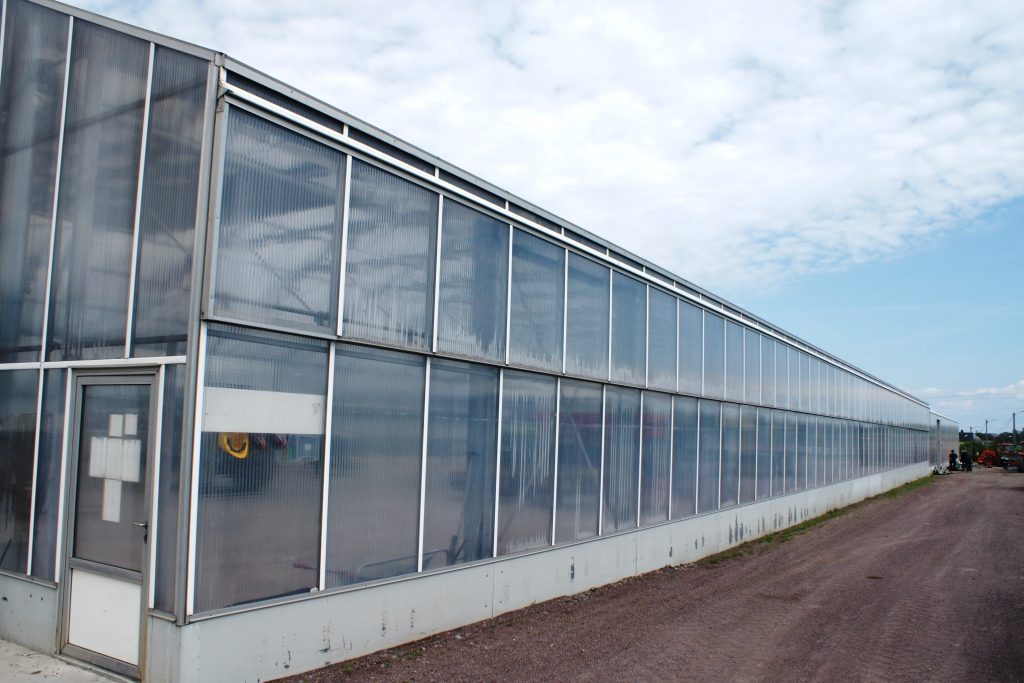
The asparagus farm
The season lasts from May to June, and during that time tons of local asparagus are picked from the fields. The stalks, which stand in neat rows like tin soldiers, are carefully cut by hand before they are washed, stacked and packed. That way Hvasser Asparges can supply asparagus, which is crispier, greener and with more flavor of nuts and grass than most other asparagus.
The greenhouse
Only one percent of Norway´s area is arable land and Hvasser Asparagus is growing in one of the best agricultural parts of Norway, located in fields with deep soil of old seabed which seems to provide extraordinarily good conditions for quality asparagus.
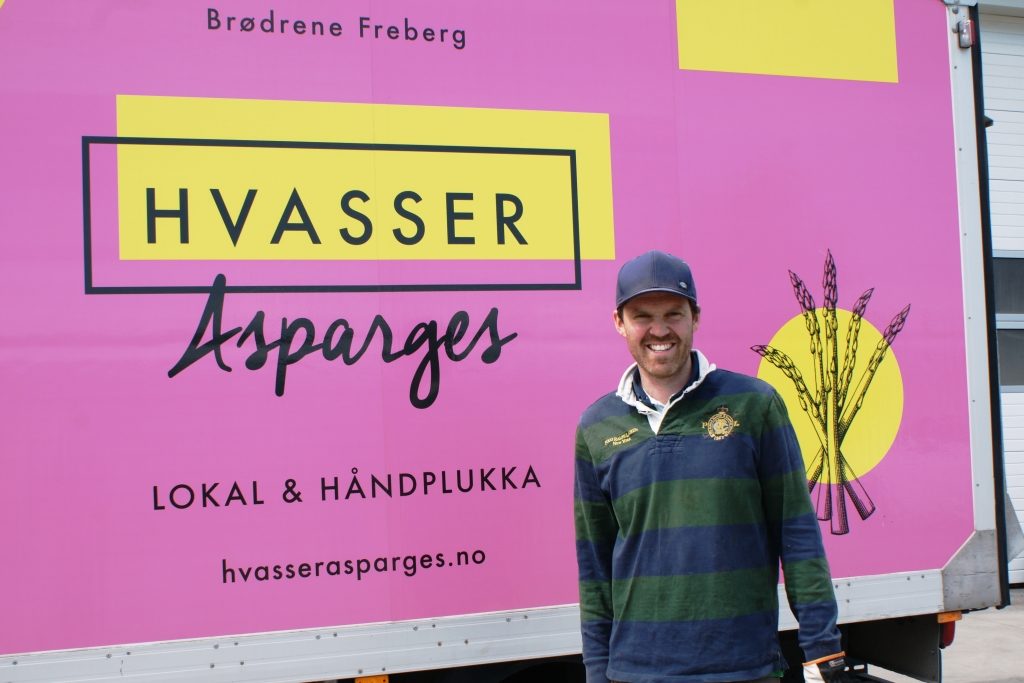
Edvart Freberg
Hvasser is not only home of the best asparagus in Norway. This is also a Norwegian summer paradise, where the population soars from 4 700 to 20 000 in summer, including the Royal Family and many from the elite of Norway. Hvasser belongs to the municipality of Tjøme. A warm climate, about 500 islands and islets and close proximity to Oslo, makes this the ideal place for summer vacation.
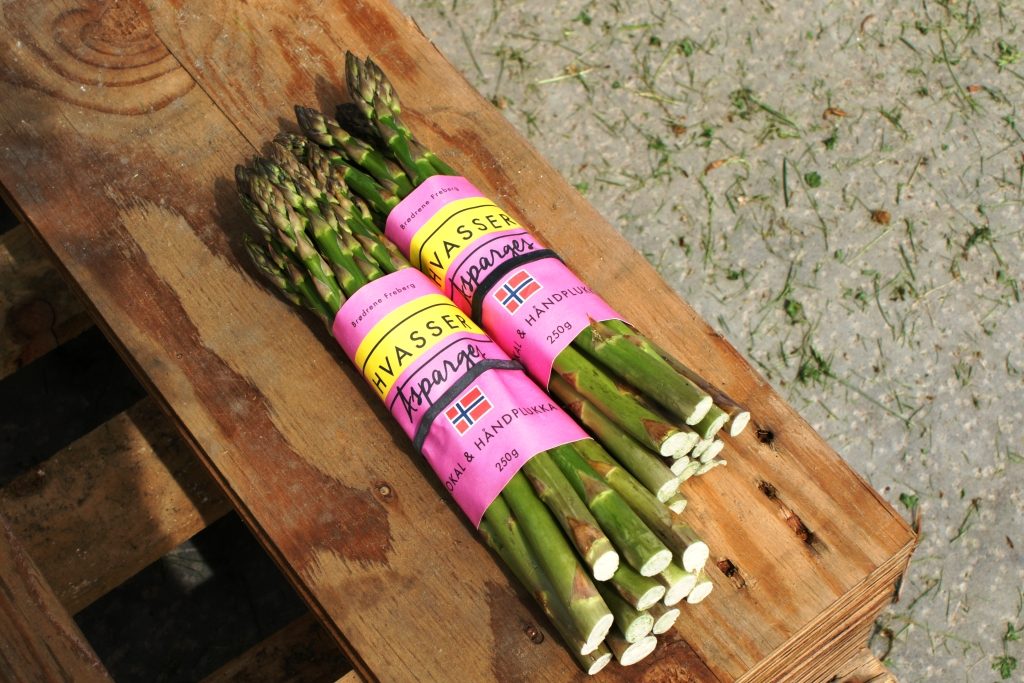
Hvasser handpicked asparagus
The Norwegian Asparagus Island, written and photographed by Tor Kjolberg (except photos below).
Here are some of Ane Hjetland Holt’s favorite dishes (all photos by Ane):
1. Raw asparagus from Hvasser with smoked, cured ham and herbs from her own garden
2. Asparagus Soup:
ingredients:
700 grams of Hvasser asparagus
2 tablespoons butter
6 dl vegetable juice
2 dl cream
Salt and pepper
crispy ham topped with chives
Cut the asparagus into pieces and fry it for a few minutes in butter. Add juice and cream. Cook until the asparagus becomes soft. Use hand blender to make the soup smoothly. Season with salt and pepper.
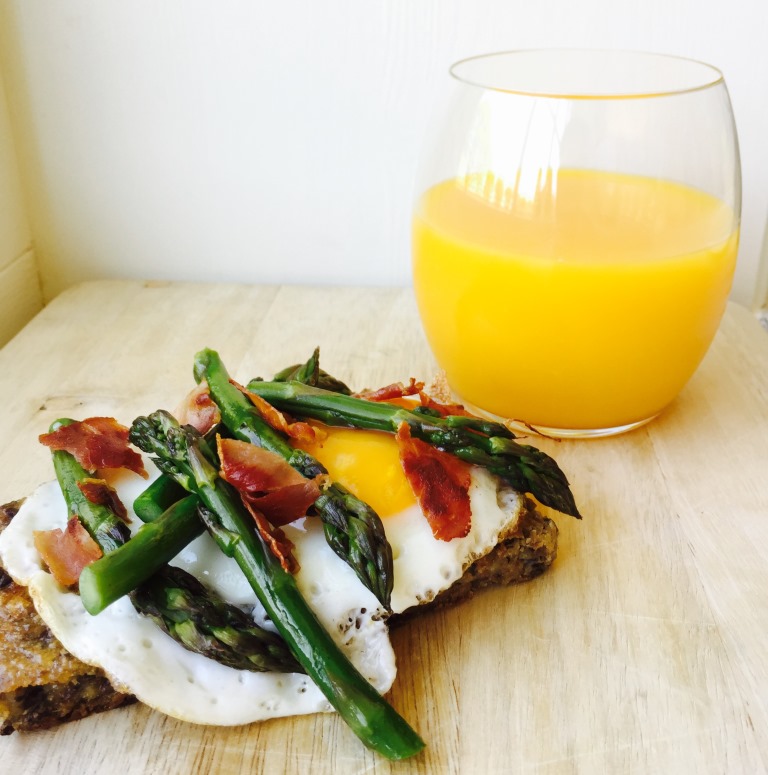
Homemade coarse bread with fried eggs, lukewarm asparagus and crispy cured ham for lunch.
Simple breakfast with egg and asparagus
Asparagus with avocado and ginger juice (all three ingredients are well known aphrodisiacs).
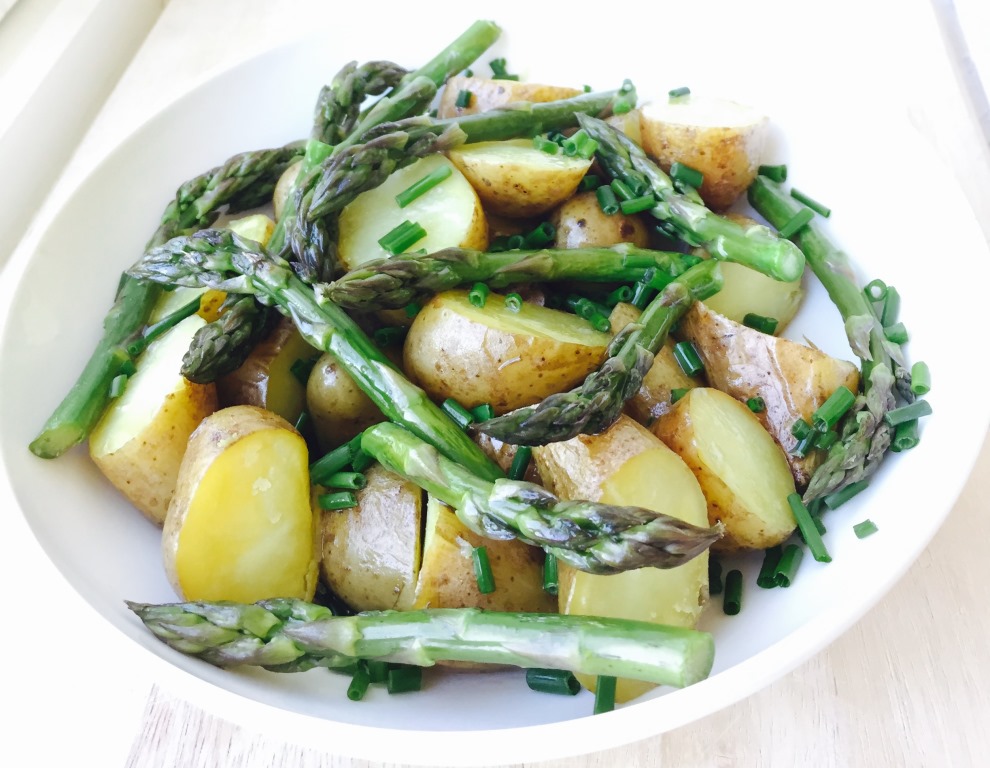
Potato salad with Norwegian almond potatoes, asparagus and chives from own garden
When Swiss entrepreneur Hubert Looser (79) got tired of business, banks and expectations he became an avid art collector. Now he lends a large part of his collection to the National Gallery in Oslo. The exhibition “Restless Gestures” is on display until 7 January 2018.
Hubert Looser in Oslo
American art is the main attraction in the National Gallery in Oslo this year. is showcasing. Earlier the graphic exhibition “The Great Graphic Boom” was on display, and the exhibition, “Restless Gestures – Works from Hubert Looser’s Collection” was officially opened this week, consisting of paintings, sculptures and graphics.
«I sold the shares in my company and began collecting art to learn» he tells Daily Scandinavian. “I prefer quality to quantity, and I decided to collect backwards in time, from present time and back to the 1930s. I concentrated on three movements; Surrealism, Impressionism and Minimalism.”
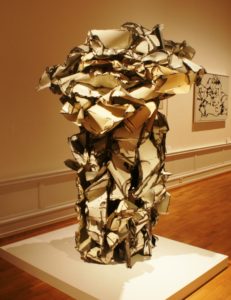
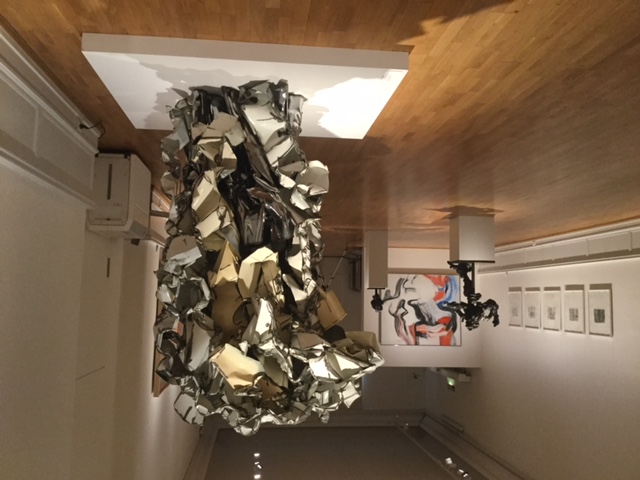
Doric Breath, by Sean Scully. Mr. Looser told us that the artist knew that Looser liked red colors.Archair Stooge, by John Chamberlain. Painted and chromplated steel
The exhibition is organized in four chapters and demonstrates how different attitudes towards artistic gesture has contributed to forming Surrealism, Abstract Expressionism, Minimalism, and more recent abstract art.
Herbert Looser was a businessman from 1964 to 1992, as shareholder and CEO of ELCO
Looser Holding and Walter Rentsch Holding. His art collection is considered one of the most important private modern art collections in Europe.
The exhibition in Oslo displays works of among others, David Smith, Willem de Koonig, Cy Twombly, Al Taylor and Fabienne Verdier.
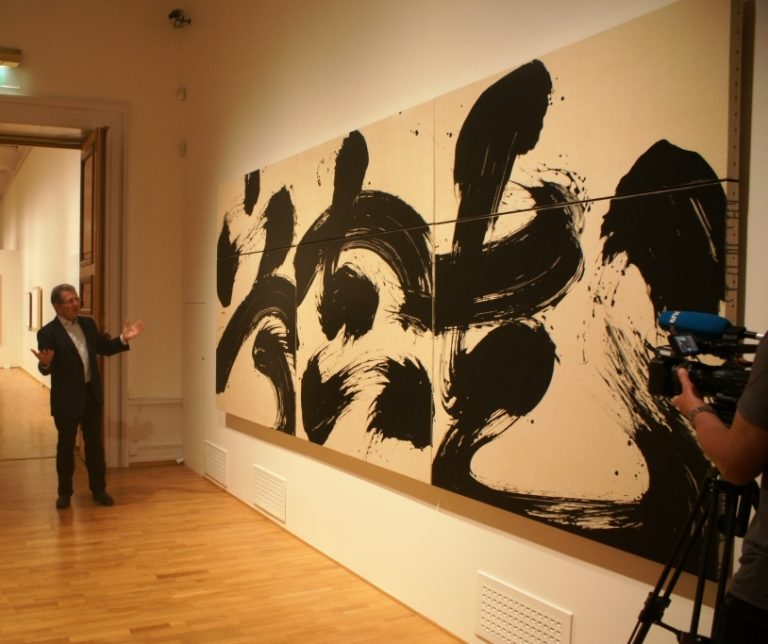
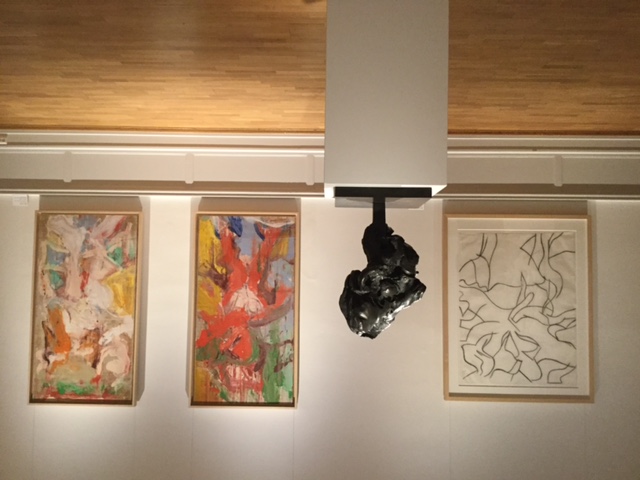
Hubert Looser explains the scupture Hostess made in bronze with black patina, by Willem de Koonig
“It is an immense pleasure and a unique opportunity to host this exhibition, not least since the art collection of the Swiss entrepreneur and philanthropist Hubert Looser is considered one of the finest private collections of its kind in Central Europe. It tells the story of some of the most important movements in 20th century art in the United States and Europe, with works by some of the best known artists of the time,” writes Sabrina van der Ley, Director of Contemporary Art at the National Museum, Oslo, in her introduction to the catalogue.
After the exhibition in Oslo, his art collection will be donated to Kunsthaus Zürich.
The exhibition is curated by Ingvild Krogvig.
Restless Gestures in Oslo, written by Tor Kjolberg
Feature image (on top):Hubert Looser in front of Tempête de flux (2007) by Fabienne Verdier
All photographs by Tor Kjolberg, except the selected photographs below, taken by Mr. Hubert Looser during the opening in Oslo.
From left to right: Archaic Stooge by John Chamberlain, Head III and Hostess, both 1973, by Willem de KoonigArchaic Stooge (1991) by John ChamberlainHead III (1973) by Willem de Kooning
In 1927 the State Wine Monopoly acquired Norway’s last operational distillery which signified the end of proud local and independent distilling traditions. In 2015 three partners decided to bring these customs back and to create high quality artisanal spirits enriched with Nordic botanicals.
Marius Vestnes of Cask Norway, Marcin Miller of Number One Drinks and Martin Krajewski, an Englishman of Polish descent, established Oslo Håndverksdestilleri (OHD), meaning Oslo Handicraft Destillery. The company produces gin, aquavit and bitters.
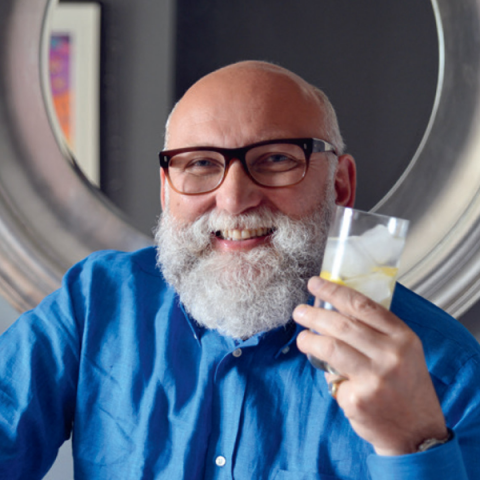
Marius Vestnes
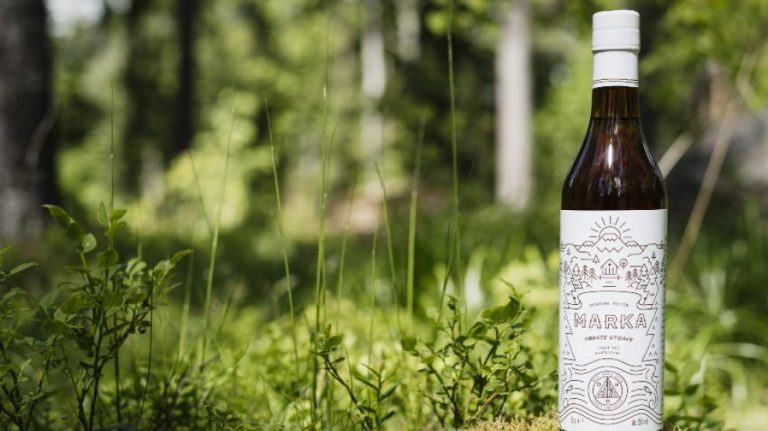
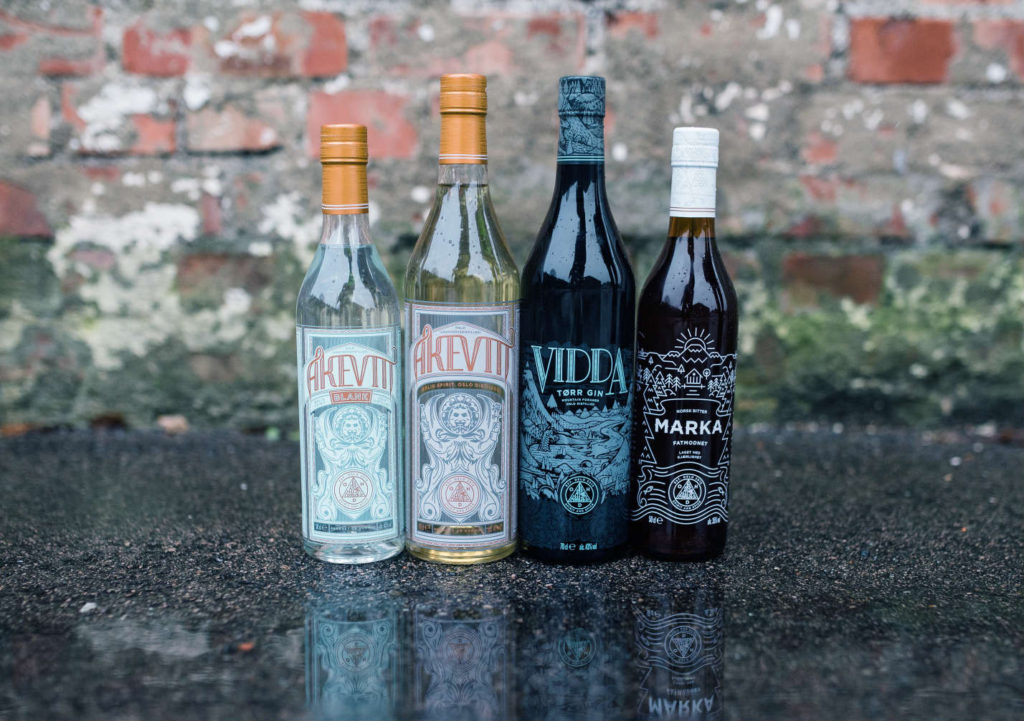
OHD’s core line includes Vidda Tørr Gin (dry gin) and Marka, a Nordic digestive bitter. Earlier this year the company released its first batch of cask-aged Akevitt.
Marcin Miller
The distillery is located just a stone’s throw from Oslo’s longest river, the Alna, situated in the Bryn neighborhood of Norway’s capital city. A long-established industrial district, traders first came to Oslo and settled in the area in the 1880s, the distillery’s original red-brick building dates back to this time.
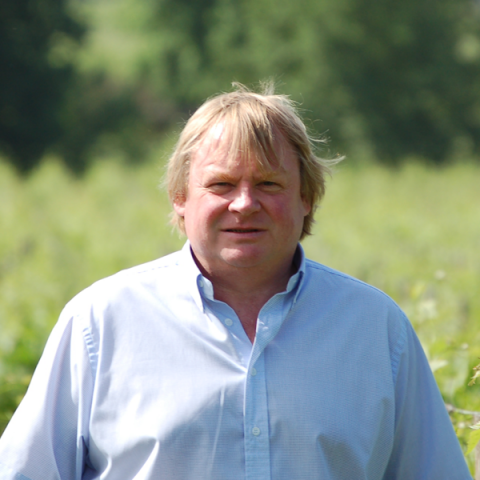
Martin Krajewski
“I’ve been interested in spirits for as long as I can remember and in fact my brother and I even made vodka on our father’s farm when we were still at school. I guess that is not so surprising given our Polish ancestry,” says co-founder Martin Krajewski.
Marka Bitter
Norwegians have been steeping herbs and spices to produce akevitt since the 15th century. Traditionally Norwegian aquavit is made with potato-based spirits and infused with botanicals with a predominant flavor profile of caraway. Oslo Håndverksdestilleri has sourced locally foraged ingredients such as meadowsweet, heather flower, St. John’s wort, dandelion root, angelica root, yarrow, chamomile flower, sorrel, hyssop and horehound to use in its recipe.
Nordic traditions within brewing and distilling are an important part of local culinary history and Norwegians passion for foraging (nyttevekst) goes hand-in-hand with this. Scandinavian customs, foraging and the Nordic way of life all contribute to the philosophy of OHD.
Vidda Dry Gin
Krajewski, who also co-owns Aristea, a small boutique winery in Stellenbosch, South Africa, said the opportunity to invest in a distillery had arisen when he travelled to Oslo to meet his business client Marius Vestnes.
“He took me to see an old building on the edge of the city – the proposed location for OHD. I asked if I could join the partnership immediately. The rest is history,” he adds.
OHD’s core line includes Vidda Tørr Gin (dry gin) and Marka, a Nordic digestive bitter
Head distiller is Dave Gardonio, a graduate of Edinburgh’s Heriot-Watt University and a trained biochemist, brewer and distiller.
Marius Vestnes comments: “Norwegian aquavit is a distinctive Scandinavian delicacy with a well-deserved reputation. It carries a sense of heritage and tradition of which we Norwegians are very proud. In completing our core range with Akevitt we now have engaging and exciting collection of Nordic spirits to offer.”
“I have a quiet suspicion that it won’t be too long before you will be able to order and drink Marka, Vidda and OHD Akevitt all around the world,” adds Martin Krajewski.
From sophisticated Stockholm to mountain wilderness, Sweden offers the traveler immense variety.
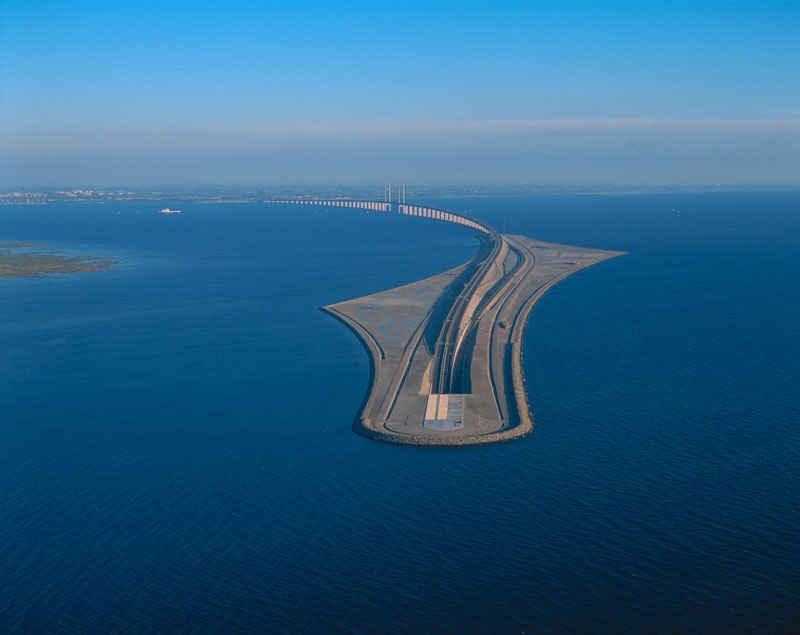
Not long ago, Sweden was an introverted country perched uneasily on the edge of Western Europe. Many Swedes talked about travelling “to Europe” as if it was on a different continent. All that changed with the country’s admission to the European Union in the 1990s and the opening in 2000 of the Öresund bridge between Sweden and Denmark.
The Örestund bridge tunnel connects Denmark and Sweden
The Swedes finally became “good Europeans”; in turn, the outside world began to discover the country’s hidden delights. More visitors every year flock to the bustling cultural venters of Stockholm, Gothenburg and Malmö, or escape into the rural regions or the vast wilderness areas of Lapland.
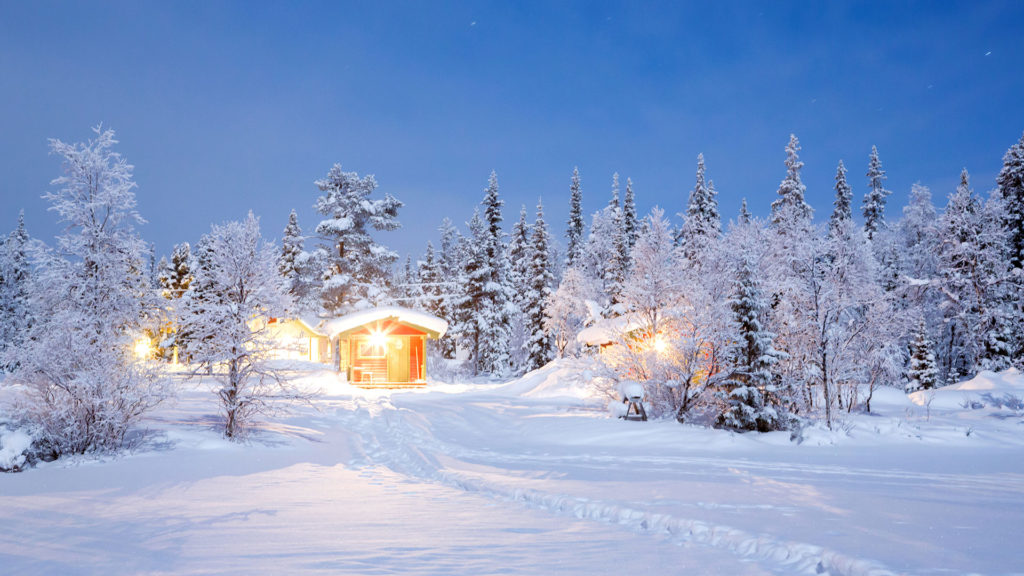
From Kiruna, Sweden’s Lapland
Sweden is ideal for those who like the great outdoors and activities such as angling, golf, riding, fell-walking, skiing, sailing or canoeing. Even the capital city Stockholm, is a place of waterways and green spaces, flanked by thousands of uninhabited islands.
Stockholm harbor
The flat, fertile south, including Skåne, was part of Denmark for centuries: a faintly Danish accent persists. South-central Sweden is dominated by the great lakes of Vänern and Vättern, the hub of a vast waterway network. Visitors can sail across the widest part of the country along the Göta Kanal, which links Stockholm to Gothenburg.
From Skåne
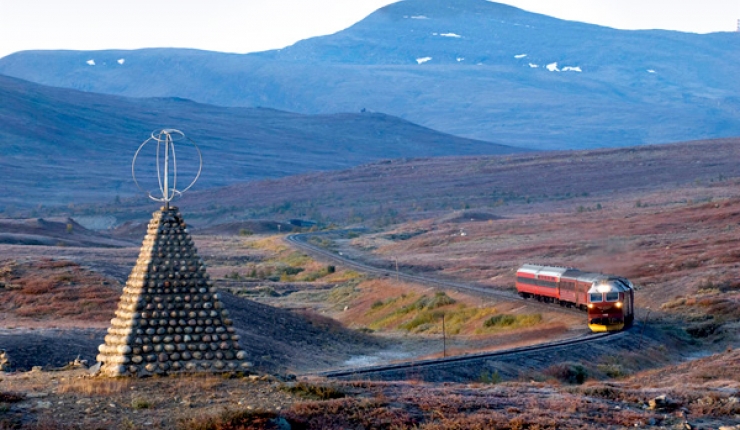
Sweden’s heartland holds Dalarne, a province that guards the country’s oldest folk traditions. From here, the lovely Inlandsbanan railway runs north into the Arctic, home to the indigenous Sami, many of whom still herd reindeer across Scandinavia’s remote mountains.
The lovely Inlandsbanan railway runs north into the Arctic
Culturally, state-of-the-art museums, well-oreserved historical sites like the Viking capital Birka, and the homes of artists such as Carl Larsson, who inspired the clean lines of contemporary Swedish design, are unique attractions.
Gothenburg Symphony Orchestra
Gothenburg’s Symphony Orchestra is in the top rank of world orchestras, and Sweden is increasingly admired as a center of gastronomic excellence.
Christmas eve, by Carl Larsson 1904
In winter, visitors are lured by the Northern Lights, the renowned Ice hotel – and the magic of a Swedish Christmas, with its traditional markets, brightly decorated streets and St. Lucia processions.
World-famous photographer Søren Solkær choose Skt Petri Hotel in the heart of Copenhagen’s Latin Quarter to create an art project along with some of the brightest stars of Copenhagen.
“When you enter a hotel, it is like entering a theater or a movie, where one becomes part of the performance. That fascinates me,” he says. “In a hotel you also get the opportunity to be another version of yourself. Daily life can be overlooked and you can make room to immerse yourself or focus on new sides of yourself. I have created a number of portraits in the hotel universe to investigate it further,” Solkær adds.
Søren Solkær in action
Textrures throughout Skt Petri hotel makes it really photogenic. In fact, it is almost impossible to find a white wall. Everything is designed. Nothing is accidental, and on the top floors you have a view of Copenhagen’s roofs and sprouts.
The Norwegian ‘hotel king’ Petter Stordalen and Norwegian designers at Wille Interior have managed to impress the Danes.
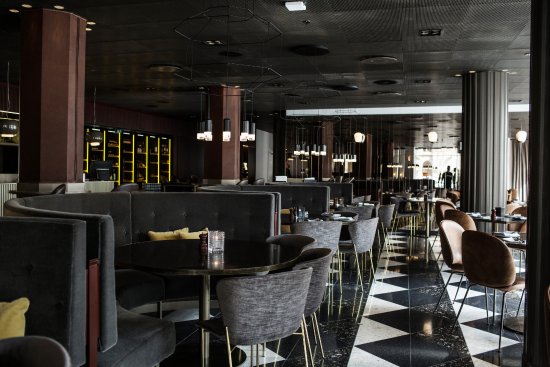
Skt Petri hotel – the restaurant
Søren Solkær has lived in the Latin Quarter himself and has chosen five people to be portrayed according to their connection to the old part of Copenhagen.
“Scholars, philosophers, artists, actors and writers have at all times populated Old Copenhagen,” says Solkær. “The people chosen are based on their personality and artistic weight, as well as their affiliation with Copenhagen.”
The contributors to the project are musicians Steen Jørgensen, Karl Emil and Mette Lindberg, actor Pilou Asbæk and fashion designer Henrik Vibskov.
Working session
The contributors have been staged in the hotel’s rooms, hallways and foyer. They were asked to bring personal belongings that would be put into play on the pictures. Henrik Vibskov entered the hotel with three huge bunches of salami from an art project in Paris. Steen Jørgensen brought classical literature.
Laid-back luxury at Skt Petri
The result is 12 works, 4 of them are in the same picture, fully voyeuristic as a Hopper painting. However, it’s not a painting, because photos have an inherent reference as truthful witness to reality, where you think that what you see actually occurred.
Søren Solkær
Skt Petri Hotel in the heart of Copenhagen has got a new design by the design team behind The Thief Hotel in Oslo. There are 20 new rooms, a new restaurant and bar and a backyard and a fitness area. The hotel has 288 rooms and 26 suites. Bjørn Nørgaard has stuffed the hotel with art.
For almost 15 years, Hotel SKT. PETRI in inner Copenhagen has been a place for local and international guests with a well-developed sense of luxury. Now it’s taken to new heights with the new design. Hotel Director Jesper
Stubgaard says that the goal of the hotel is not only to be a place for international guests, but also to be Copenhagen’s preferred hotel.
Feature image (on top): Supernova, by Søren Solkær
Five public kindergartens in Sweden have toys that are never divided into traditional gender camps. Some have called it “gender madness”, but Lotta Rajalin, the head of five preschools in Stockholm, refer to a small study published in Journal of Experimental Child Psychology.
The paper is stating that children who attended one gender-neutral preschool were more likely to play with unfamiliar children of the opposite gender, and less likely to be influenced by culturally enforced gender stereotypes, compared to children enrolled at other pre-schools.
From Egelia, Stockholm
At these five gender-neutral preschools you won’t find the usual designated gender camps. The teachers have been taught to avoid using the pronouns “him” and “her” when talking to children and instead speak of people, kids, humans and friends. “Hen,” a still rarely used gender-neutral pronoun that first came into use in the 1960s, borrowed from Finnish, but only made the official dictionary two years ago, has replaced han (he) and hon (she).
The concept began in 1998 when an amendment to Sweden’s Education Act stipulated that all schools must work against gender stereotyping. In 2011 Rajalin opened Egalia (equality in Latin), a school that specializes in gender equal teaching – an approach that does not assume that different genders have different characteristics, wants and needs.
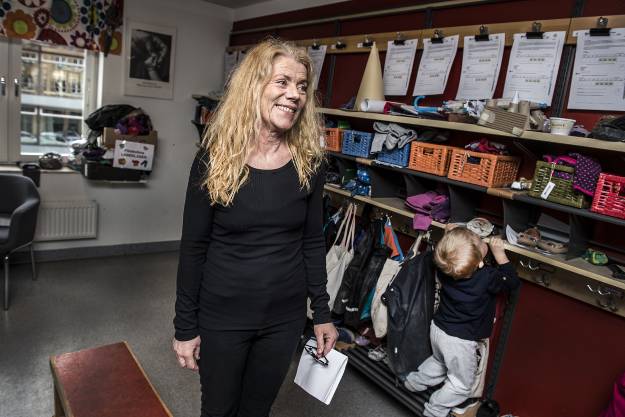
Lotta Rajalin at one of her preschools
Lotta Rajalin explains that at her schools, girls and boys can dabble in all kind of activities and are welcome to be as messy or tidy, rowdy, or passive as suits them. The efforts are probably paying off. Tests showed, for instance, that these kids were less likely to make choices in line with cultural norms when shown images of boys or girls and jeans or dresses.
Hen
However, it is not just the language that is different. Books and toys have been carefully selected to avoid traditional presentations of gender and parenting roles.
Gender-neutral dolls
‘Together the results suggest that although gender-neutral pedagogy on its own may not reduce children’s tendency to use gender to categorize people, it reduces their tendency to gender-stereotype and gender-segregate, which could widen the opportunities available to them,” Ben Kenward, a researcher in psychology at Uppsala University and Oxford Brookes University, and lead author of the paper, explained in an Uppsala news release.
“We want to give the whole spectrum of life, not just half – that’s why we are doing this. We want the children to get to know all the things in life, not to just see half of it,” Rajalin told BBC World Service. “It’s all about democracy,” she adds. “We want to give all children the same opportunities the same rights.”
When Rajalin started out, she filmed teachers to see if how they treated boys and girls varied. “We discovered that there is a big difference,” says Frida Wikströ, the schools’ coordinator. “For example, we would take a lot more time to comfort girls. Boys were just told, ‘Off you go, you’re fine.’”
Lotta Rajalin
Plenty of research has explored the ways gender assumptions in the classroom are equally harmful to boys and girls. Still gender-neutral kindergartens are rare, even in the country rated as the fourth-most gender-equal society in the world. In the Uppsala study, the researchers interviewed 80 students, aged 3 to 6; 30 were enrolled at the gender-neutral school and 50 at two other typical preschools.
The verdict of child psychologists and experts in gender is divided – with most supportive of the aims, but questioning the means. Although some parents chose the schools specifically for their gender-neutral policies, accepting the approach can be challenging for others.
Keeping children open to all life has to offer is a key tenet of the preschools’ pedagogical philosophy. “We don’t take anything away, Rajalin says. “We only add.” Gender-neutral Swedish Preschools Produce More Successful Children, written by Tor Kjolberg
Lophius piscatorius – the monkfish – must be the ugliest creature on earth. It is a sea dragon that can grow to a scary 2 meters, and is one of my favorite fish.
Appearance and taste
With its enormous head and cavernous mouth, the monkfish is unmistakable. The central spine is all the bone there is, sandwiched between two fat fillets of pure meat, the consistency of lobster tail and with much the same taste.
Scandinavian monkfish
Three antennas grow on its forehead, and a waving small flag of skin that resembles a shrimp. So the monkfish simply sits on the ocean floor waving the flag to attract smaller and dumber fish into the vicinity of its terrible wide mouth filled with several rows of razor-sharp teeth.
Fillets of monkfish
Culinary uses The fish is coated with several layers of strange, slippery skin that has to come off before you cook it – or the fish will end up looking like it’s been tied with rubber bands or yanked inside out. When you are lucky enough to find whole monkfish for sale, the enormous head , which constitutes more than half of the weight of the fish, is wonderful for stock, as are the skin and bones.
Removing skin from monkfish
The boneless fillets are perfect for grilling, roasting or frying like steaks, or can be just heated through in a soup made from the head and bone. The cheeks, which are sold separately, and are relatively cheap, are delicious little nuggets, fine for grilling on skewers or pan-frying, but you must remove all the membranes or they will look really strange when cooked.
Feature image (on top): Catching monkfish (Photo: Blogspot.com)
With Norwegian inland boats tourists and hikers alike can now experience Norwegian nature in a completely different way. Organized by the organization Hanen, these boat trips have become an important part of Norwegian tourism.
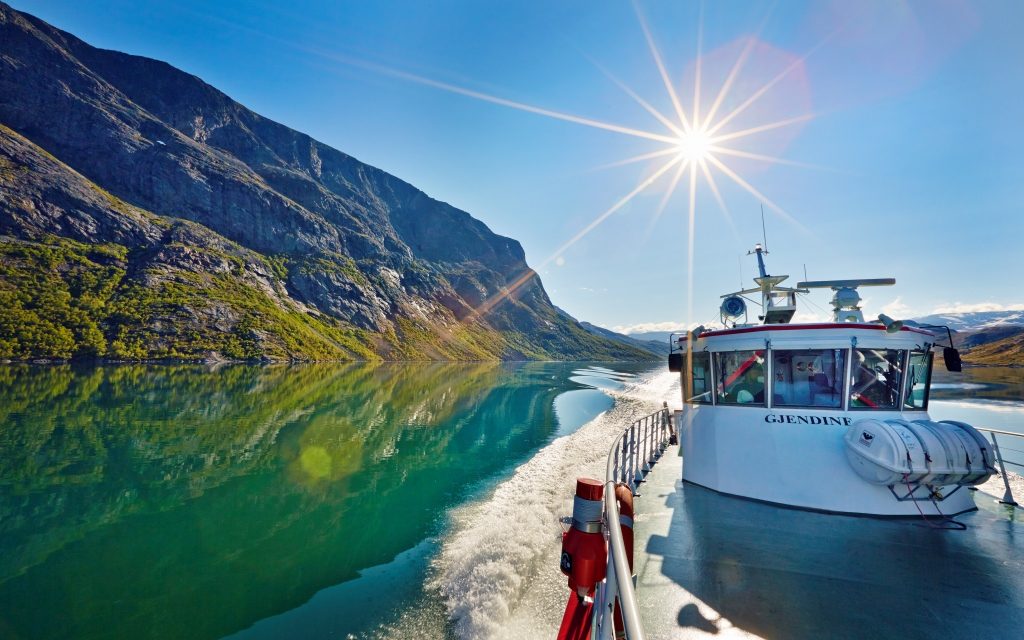
Gjendebåten – The Gjende Boat
“We have high expectations for the summer season,” says Harald Rune Øystedal, captain and owner of Gjendebåten AS. “We had 61,000 passengers last summer, and with a new boat and an electronic booking system, we expect a considerable increase this summer,” he adds.
Captain and owner of Gjendebåten AS, Harald Rune Øvstedah (photo: Cathrine Dokken)
The new booking solution means that hikers can buy a ticket in advance, thus avoiding standing in long queues on the dock. “But even more important is that we get an overview of the number of visitors and can adjust the number of boat trips to reduce the environmental impact on the Besseggen mountain,” says Øystedal.
The tourist companies in Jotunheimen have also employed a guide to pick up trash in the mountains and to lead inexperienced hikers over Besseggen.
MS Fæmund II (Photo: Jan Nordvaalen)
“Last week, the guide averted a rescue mission that would have cost the state a lot of thousands of dollars. We aim for quality in every aspect because we want the public to have positive associations to our destination, “concludes Øvstedal.
M / S Fæmund II carries passengers along scenic Femunden (Photo: Cathrine Dokken)
Serving local food M / S Fæmund II carries passengers along Femunden through scenic surroundings in Femundsmarka National Park. Based on the passengers’ interest in local food, it is now being served the Røros Tray, developed by Røros Delicacy and consisting local foods from Røroskjøtt, Galåvolden Gård, Eggen Gardsysteri, Auma, Taste of Røros and Rørosbakeren. In addition, you may enjoy M / S Fæmund II’s own beer.
“We are keen on local food and local food traditions, and wish to serve our passengers healthy and tasty mountain food. We have received very good response to the Røros Tray, and passengers appreciate both the food and the beer,” says Jan Aage Røtnes, chairman of M / S Fæmund II.
Bernt Bucher-johannessen, CEO Hanen (photo: Ketil Blom)
Impressive approach
Thanks to the inland boats, Norwegian mountain experiences have become more accessible, and I am impressed by the owners’ approach to developing such a product,” concludes Bernt Bucher-Johannessen, Managing Director of HANEN.
The domestic boats are organized in the HANEN’s Inland Boating Committee, and the CEO of HANEN finds it very exciting to follow the developments in this industry, creating both jobs and sustainable destinations.
Experience Norwegian Lake Boats This Summer, is based on a press release from Hanen












 2. Asparagus Soup: