
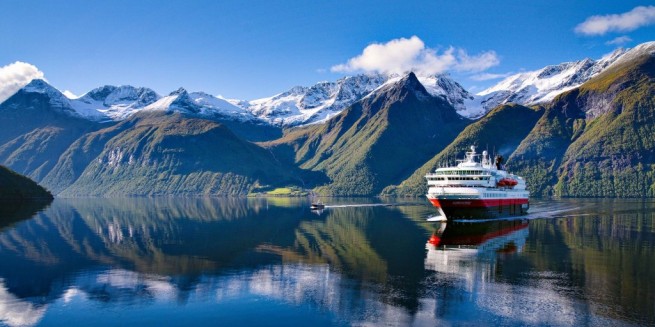
Coastal Norway – Wild and Beautiful

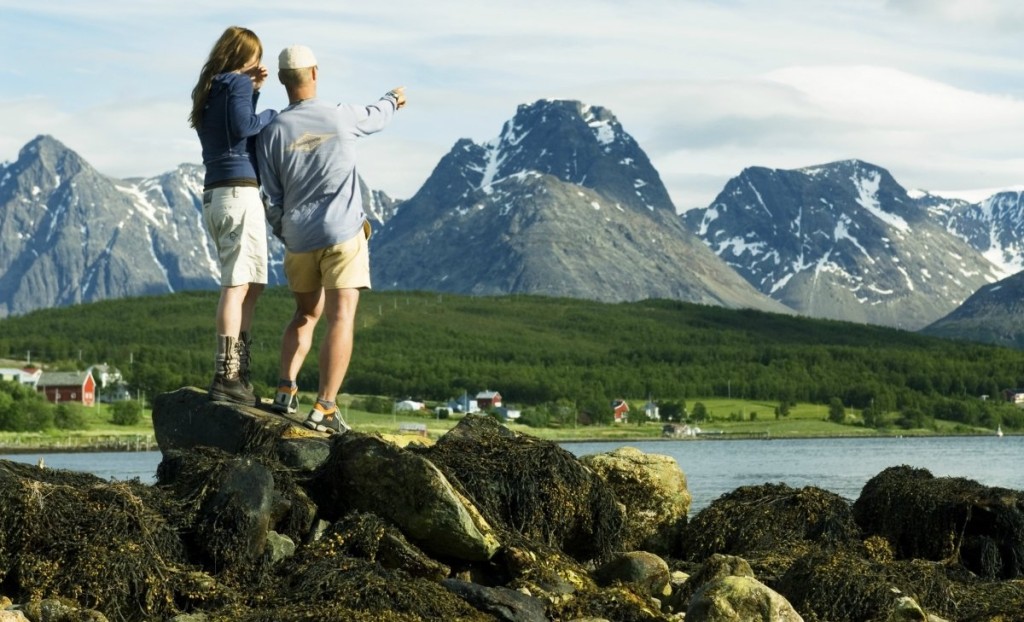
Foreign tourists have discovered Norway’s shoreline with its pretty ports and dramatic fjords. The exotic north has long been established as a popular travel destination for people from all over the world.

It was a massive ice sheet, which gouged out these fjords and valleys, and melted 10,000 years ago and thereby revealed this dramatic legacy.

More and more people discover that cruising along the Norwegian coast, or even crossing over to Svalbard or Greenland, is an adventure not to be forgotten.

Arctic Norway. Photo: Baard Loeken

Throughout the year the beauty of Norway comes in many forms. In winter multicolored buildings appear especially radiant during the short Arctic days. Through summer, cities and valleys are filled with green trees. The picturesque scenery along the vibrant Norwegian coast is always inviting.

Torghatten near Brønnøysund. Photo: Baard Loeken

And if you travel to the northern reaches of Norway between November and March, you may witness a spectacle that will imprint itself on your soul, the northern lights.

Northern lights. Photo: Ctjan R. Olsen
Northern lights. Photo: Ct. Jan R. Olsen

There are in fact more foreigners sailing along the Norwegian coast than natives. “The exotic North” has established itself as a popular destination for sailing enthusiasts from all over the world.  A midsummer cruise, on which the sun never sets, along angry cliffs, deep fjords and scattered islands, is a memorable experience.

Lofoten islands
Lofoten islands

The country’s stunning coastline is best seen from the water, and Hurtigruten is a favorite way to see it. It is part cruise shop, part ferry and part commercial vessel. Hurtigruten offers offshore excursions at ports from Bergen to Kirkenes with activities, educational talks, and other onboard events to liven up a week cruising the Arctic waters.

Midnight sun sailing

Sail Norway has established itself as a popular choice among groups of people who seek maritime experiences in the northern parts of Norway.

Norway is an under-inhabited land, but the nearly 5 million people living there are very serious about preserving their landscape, adhering religiously to their government’s severe building restrictions.

The magic Helgeland coast

Many people believe that the weather is quite rough up north, but the fact is that you may sail inshore all the way north to Tromsoe.

There is little along this coastline that isn’t a visual feast. For example, even the Norwegians themselves talk in awe of their Lofoten Islands – they have a mystical presence in the collective psyche of this nation. Say to a Norwegian that you’re heading there and they’ll nod with approval.

Northern lights in Tromsoe

One of the driving forces to visit the far north is the beguiling wonder of the aurora borealis. September through April are good months to catch sight of them, but the best odds are in January and February. Check out the highly accurate forecasts of NorwayLights.com, which shares specific hour-by-hour predictions for viewing the northern lights from various Norwegian cities.

Tromsoe from above
Tromsoe from above

Many people dream of a drowsy sailing vacation in the Carabbean. But the real sea adventure you’ll find along the beautiful Norwegian coast. Sail north and discover the natural treasures of Helgeland, Lofoten – and Svalbard.

Coastal Norway – Wild and Beautiful, written by Tor Kjolberg
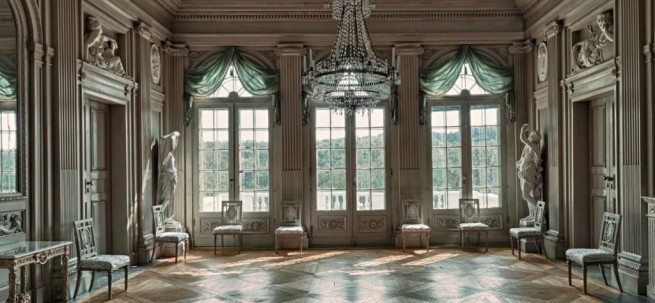
The Renaissance Castle in Gothenburg

0

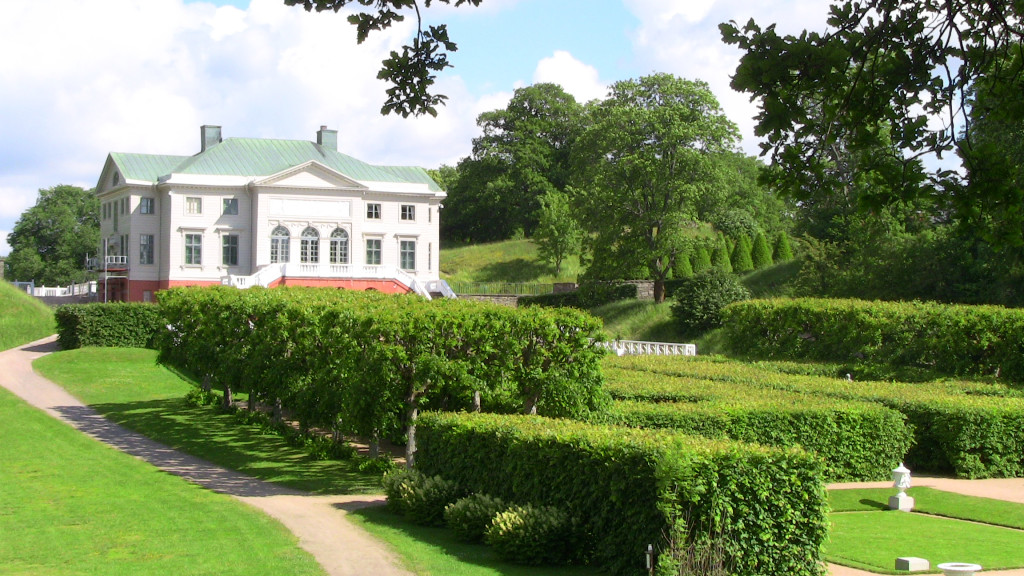
Gunnebo House and Gardens in Gothenburg, Sweden, is one of the finest 1700s establishments in northern Europe. It was built as a summer villa for the wealthy merchant John Hall and his family.

Today, Gunnebo is a living cultural environment with guided tours and events, coffee house and restaurant, a shop and a farm.

This summer Gunnebo was prepared for Gothenburg Green World, and visitors could experience the reconstructed orangery as an exciting part of Gunnebo’s exhibition program.

160916 Gunnebo_Gothenburg_Sweden
160916-funnebo-haouse-and-gardens-gothenburgThe decoration and fujrnishing of the house, and landscaping was originally designed by the city architect in Gothenburg, Carl Wilhelm Carlberg. It has two stars in the Michelin Green Guide. The area us a cultural heritage since 2003 and the whole park has been organically certified since 2006. It is organically managed, with emphasize on the historical garden crafts. The head gardener is Joakim Seiler.
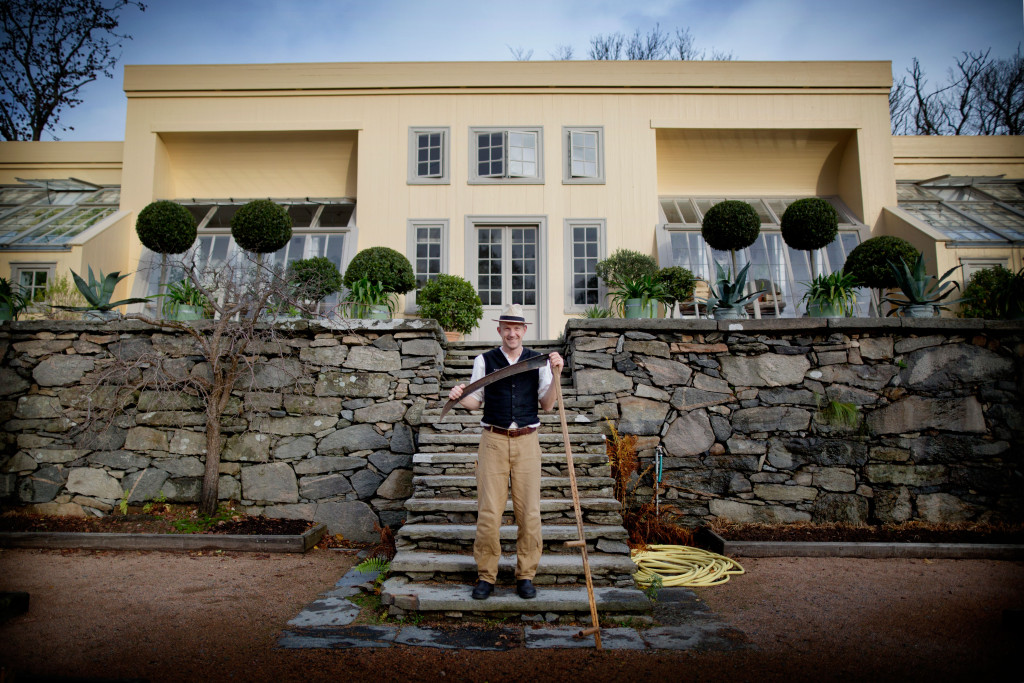
The orangery, which is located in the southern formal garden, was used to over-winter exotic species in the eighteenth century, everything from tulip trees to citrus and laurel. The building will be completed in 2018 and will then be used for the same purpose by Gunnebo’s gardeners.

“The orangery will be a fantastic addition to the gardens, both aesthetically and to enable over-wintering of non-hardy plants,” explains Joakim Seiler. “The orangery will give us unique opportunities to resume the cultivation of exotic plants, which were an important and prestigious part of the gardening activities in many historic gardens.”
160916-gunnebo-house-and-gardens-gotheburg
In its day, the orangery building was also a first-class attraction for visiting guests, who were treated to a variety of festive occasions. At the northern end of the building the city architect created a spectacular artificial grotto with stalactite formations on the walls and mirrored glass in the roof. The grotto alone demanded extensive expertise from the craftsmen who are recreating it – including specialist masonry skills. The carpenters and craftsmen who are working on the orangery project are collaborating with various educational institutions to preserve knowledge of traditional craft skills.

Head gardener Joakim Seiler

“In preparation for Gothenburg Green World, and in consultation with the estate manager and architect at Gunnebo House, I produced an orangery planter,” adds head gardener Joakim Seiler. The orangery planter, which is inspired by a planter designed by Carlsberg, the city architect, is made using traditional methods at one of Sweden’s three remaining barrel-making companies. Gunnebo will have an orangery parterre, consisting of attractive planters and citrus plants set out in front of the orangery.

For the ninth year in a row head gardener Seiler at Gunnebo welcomes visitors to the harvest market “Food from the soil”

For the ninth year in a row Gunnebo welcomes visitors to the harvest market “Food from the soil”.

Right in the lush kitchen garden, around twenty producers and retailers of organic food and sustainable textiles set out their goods for sale next weekend, 3 and 4 September.  Gunnebo’s kitchen and bakery moves out into the yard in front of the coffee house and restaurant to make cooking public. Gunnebo’s chef Patrik Sewerin and this year’s guest of inspiration Markus Junkala will talk about flavors and saving and storing this year’s harvest.

The Gunnebo shop, café and bar are open daily all year around.

The Renaissance Castle in Gothenburg, compiled by Admin.

Norwegian Landmarks in the Next Star Wars Production?

Norwegian landmarks like Pulpit Rock (Prekestolen), Troll’s Tongue (Trolltunga), Folgefonna and Lofoten are being scouted for an upcoming Hollywood production of Star Wars.

According to the Norwegian venerable newspaper Aftenposten, producers Tor Arne Øvrebø and Per-Henry Borch say that Norway is currently high on the list of location scouting international studios.

Pulpit Rock
Pulpit Rock

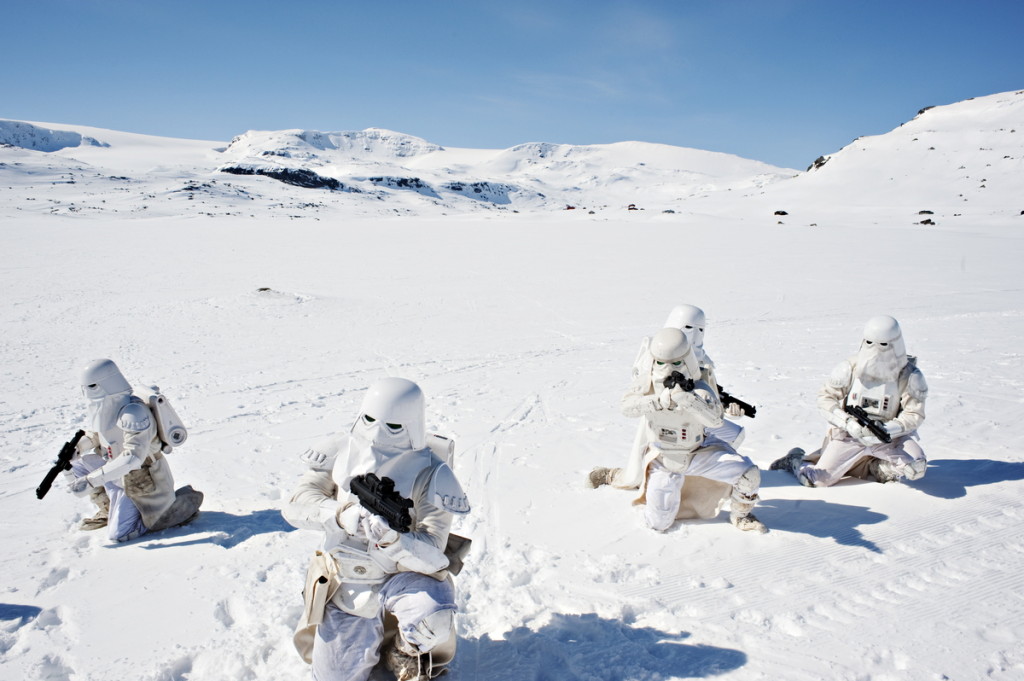
The country’s beautiful nature is thought to be ideal for certain productions. Will the Norwegian landscape be returning to the GFFA for the first time since The Empire Strikes Back, which was filmed in Finse? As Star Wars fans know, the Hoth scenes in The Empire Strikes Back were filmed in the small town of Finse, Norway and nearby Hardangerjøkulen Glacier in 1979.

Star Wars location in Finse

During the past months Øvrebø and Borch have led tours about the country, scouting locations for upcoming production without mentioning specific titles, but they reveal that Marvel and Lucasd Film are among interested studios. Pulpit Rock, Norway’s most visited tourist attractions, is one of the most attractive settings.

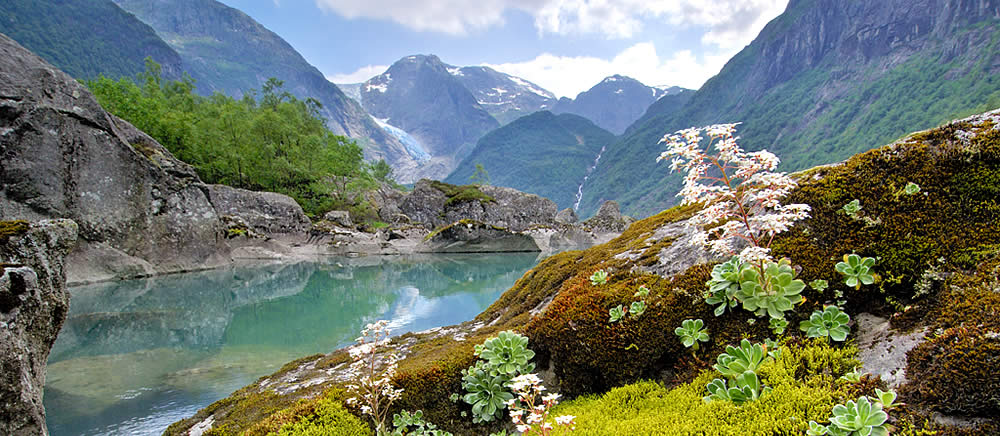
Folgefonna
Folgefonna

Having a couple of blockbusters set in Norway would increase tourism, but the limited scope of Norway’s incentive schemes for foreign filmmakers, combined with Norwegian bureaucracy, could be a sticking point for foreign countries looking to film here, warn film producers Per-Henry Borch and Tor Arne Øvrebø. This means that the opportunities for international producers filming in Norway may be lost to more generous countries, albeit with less dramatic scenery.

However, The Norwegian Film Institute is clearly flirting with Lucas Film, currently featuring a picture from The Empire Strikes Back filmed in Norway on its Incentive Scheme page.

Star Waes Batllefront

Star Wars: Episode IX, is scheduled for a December 2019 release.

In 2016 Hollywood films ‘The Snowman’ with Michael Fassbender and ‘Downsizing’ with Matt Damon were filmed at various Norwegian locations, so Norway seems to be a growing location for Hollywood blockbusters.

Feature image (on top): Lofoten

Norwegian Landmarks in the Next Star Wars Production? written by Tor Kjolberg

Scandinavian Deer

0

Endless forests and clear lakes, desolated and varied landscapes make up the nature of the three Scandinavian kingdoms of Sweden, Norway and Denmark. With such an enormous land area and a relatively small number of inhabitants, large parts of Scandinavia are unoccupied by people. They are also home to numerous of game and offer unique and exciting hunts. Every country has its unique and special charm and species of deer.

Roe deer
Roe deer

Roe deer
In Denmark, deer are primarily roe deer, the size of a small sheep, which have inhabited Scandinavia for at least 8,000 years. They exist in vast numbers and as many as 100,000 are shot every year, most of them consumed by hunters’ families and restaurants. Their meat is dark and has a pleasant, intensely game taste. They can be treated as other game, or lamb.

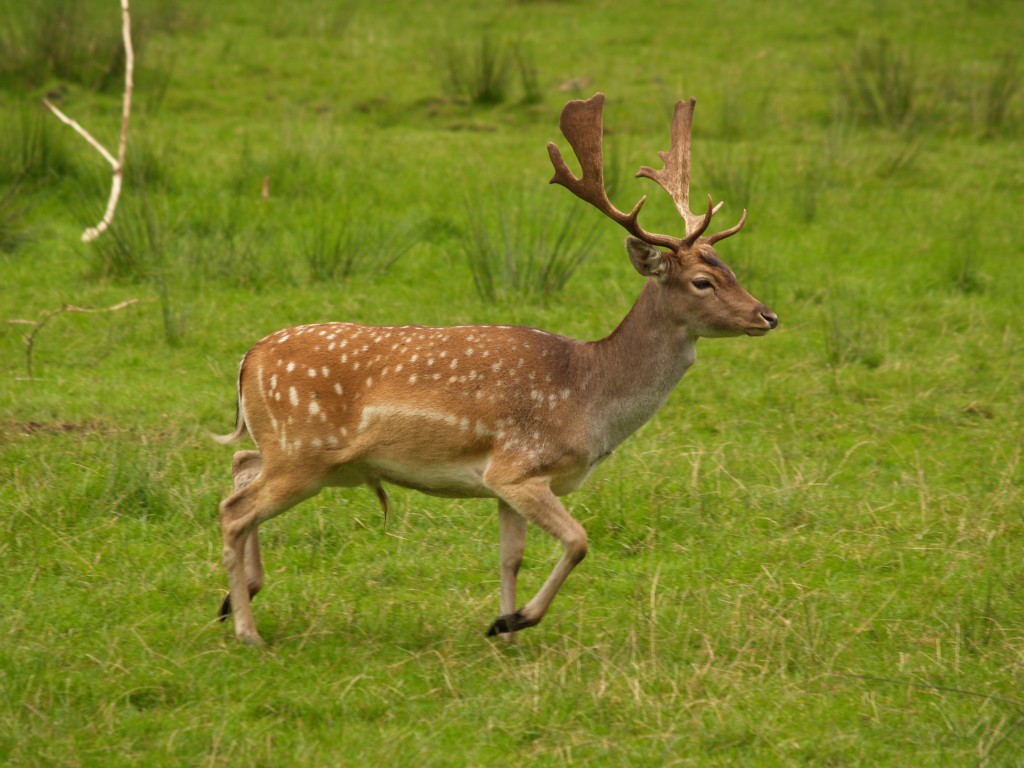
Fallow deer in the field

Fallow deer
This deer, about the size of a llama, is not indigenous to the Nordic countries, but was imported for hunting game in the Middle Ages and has spread all over southern Scandinavia. The meat has a very mild taste, much like veal. It can be successfully farmed and most of the fallow deer meat today is farmed. It does not have as much flavor as wild deer, but it is still a pleasant change from the other domestic meats.

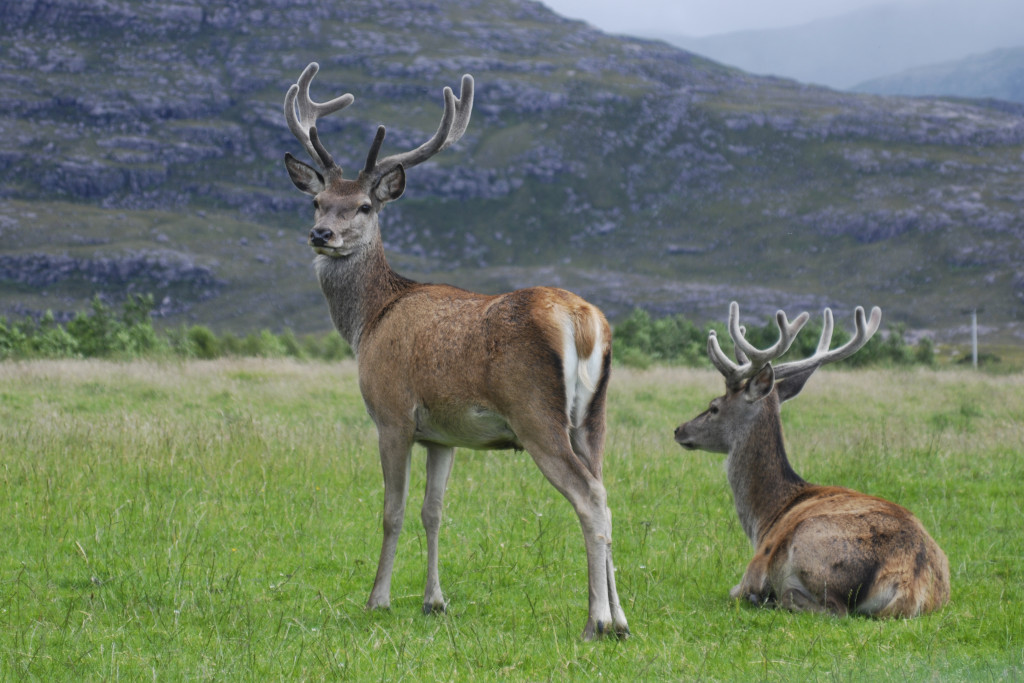
Red deer stags
Red deer stags

Red deer
The red deer is larger, similar to a small cow in size, and has been in Scandinavia since the last Ice Age. A red deer stag is an impressive sight, and the calves are lovely, if you are lucky enough to see such shy animals. The red deer has been threatened in the past, but the numbers are again on the rise so they can now be hunted legally. The meat is like gamy beef, very lean and tasty.

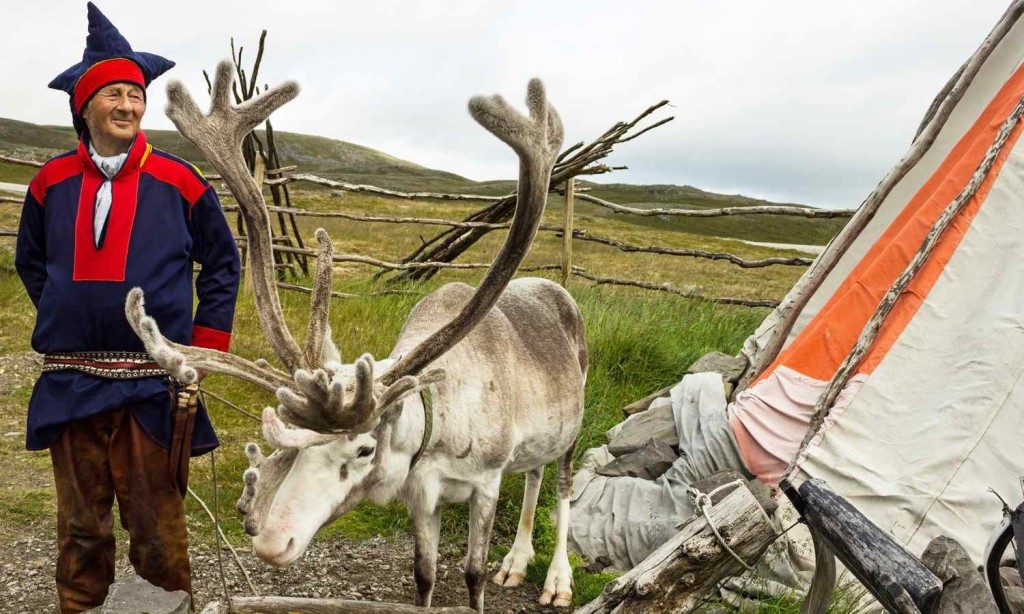
Strolling reindeer
Strolling reindeer

Reindeer
In northern Scandinavia the reindeer reigns, roaming over the low-growing Arctic tundra, finding food where there seems to be none. Reindeers are charming, relatively small animals, with spreading hooves designed to work like snow shoes, and a rather strange but very fast stride.

All reindeer have their particular owner, who keeps an eye on them and protects them from wolverines and other predators, but basically they are wild animals. They are not hunted, but butchered in special abattoirs.

Archangel reindeer
Archangel reindeer

Reindeer are more than a livelihood. They are part of a culture much older than the farm culture of the rest of Scandinavia. The Sami now have the exclusive right to reindeer herding in most of the vast area occupied by this ancient people. The Sami live in an expanse stretching across Norway, Sweden, Finland and Russia – an area as big as Sweden, known as Sapmi.

Their traditional culture is flourishing, now finally being supported by the governments after centuries of conflict and ill treatment comparable to apartheid on South Africa. Reindeer have been herded by Sami since the Middle Age; before that they were hunted along with other game.

Sami reindeer herding

Reindeer travel great distances, moving from the lower forests in the winter to the mountains in summer, and back again. The Sami once lived a nomadic existence as the followed the herds, but nowadays reindeer herding is done by helicopter, snowmobile and four-wheel drive; and the Sami are no longer nomads, though some choose to camp with the herd in the mountains in summer.

Reindeer meat us like no other, being extremely tender and with a sweet taste rather like a mildly gamy veal. Many of the various forms of preserved reindeer meat, and many traditional dishes, have their origins in the food eaten by the Sami shepherds on the long seasonal migrations. Every imaginable part of the reindeer is used: you get salted and smoked reindeer tongues, smoked hearts, and sausages in great variety, both smoked and fresh.

Suovas
The best-known of the dried reindeer meat, suovas (meaning ‘lightly smoked’), has been dry-salted, smoked and then normally dried. The smoking is traditionally done in a special smoking hut, in the form of a small Sami tent (called a kåte) placed on the ground with a smoking bonfire in the middle; the meat is simply hung up to smoke over the fire. The delicacy comes in different forms, some very dry and salty, others more mildly cured. The best cuts of leg are used.

Souvas
Souvas

When not excessively dried, suovas can be eaten like fresh meat, and is often cut thinly and eaten like other cold cuts, or cubed and skewered as a kebab. The drier forms of suovas are eaten with a soft flatbread and a topping of pickled mushrooms and lingonberries – it’s simply delicious.

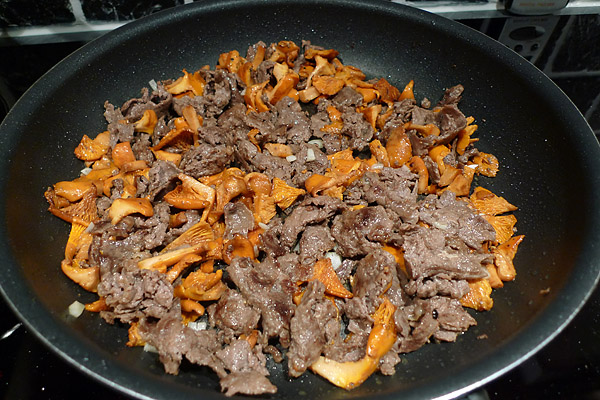
Renskav
This is thinly sliced, dried or frozen reindeer meat; as it’s shaved so thinly, it’s a way of using the less tender parts of the animal. Usually, it’s pan-fired with onions and mushrooms and served with mashed potatoes and lingonberries.

Renskav
Renskav

It is also used for the homely pytt in panna, a much-loved dish often made with leftovers if roast meat, but raised to something beautiful and celebrated when made with fresh renskav, the meat, onions and potatoes are fried separately and the mixed, and often finished with a little cream. It’s served with pickled mushrooms and the ubiquitous lingonberry.

All images: Wikipedia

Scandinavian Deer, written by Tor Kjolberg

A Mountain Bike Paradise

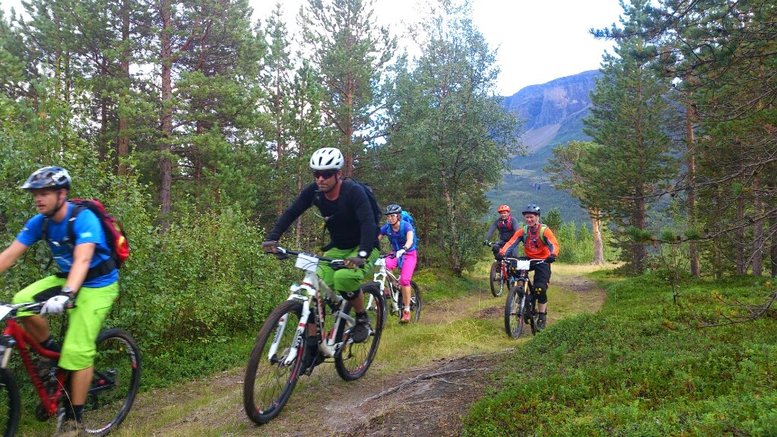
Skibotn in Northern Norway is probably the best place around the Lyngenfjord to go mountain biking. Here you will find a wide range of trails to choose from and in August the Downhillfestival “Stifestivalen” and the offroad race “Lavkarittet” take place.

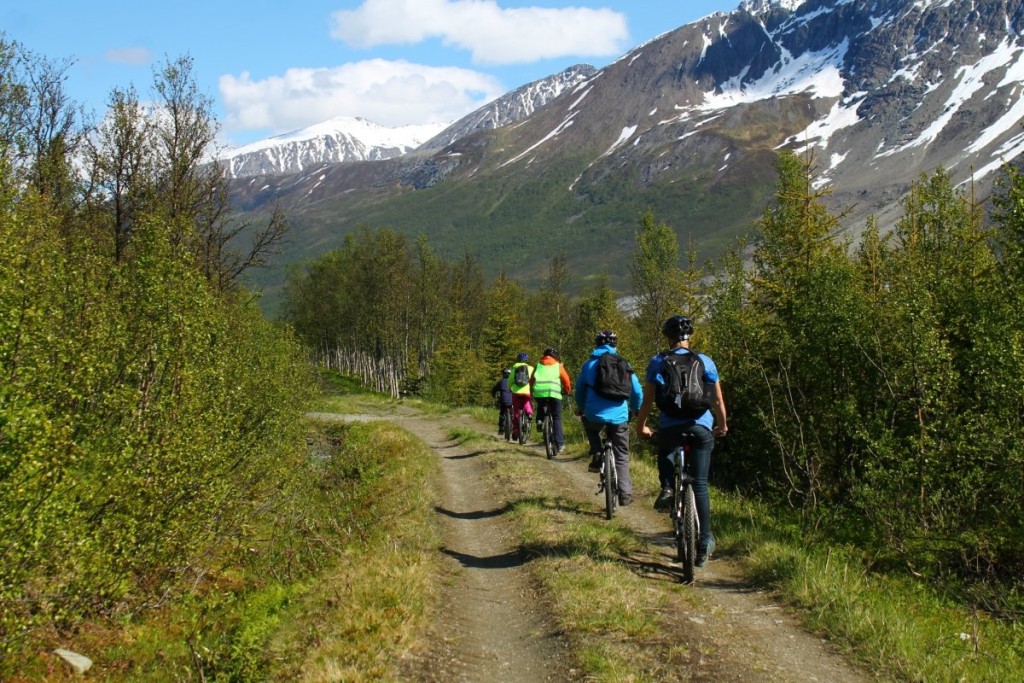
Bicycling toir at Jægervatnet. Photo: Inge Storsteinnes
Bicycling tour at Jægervatnet. Photo: Inge Storsteinnes
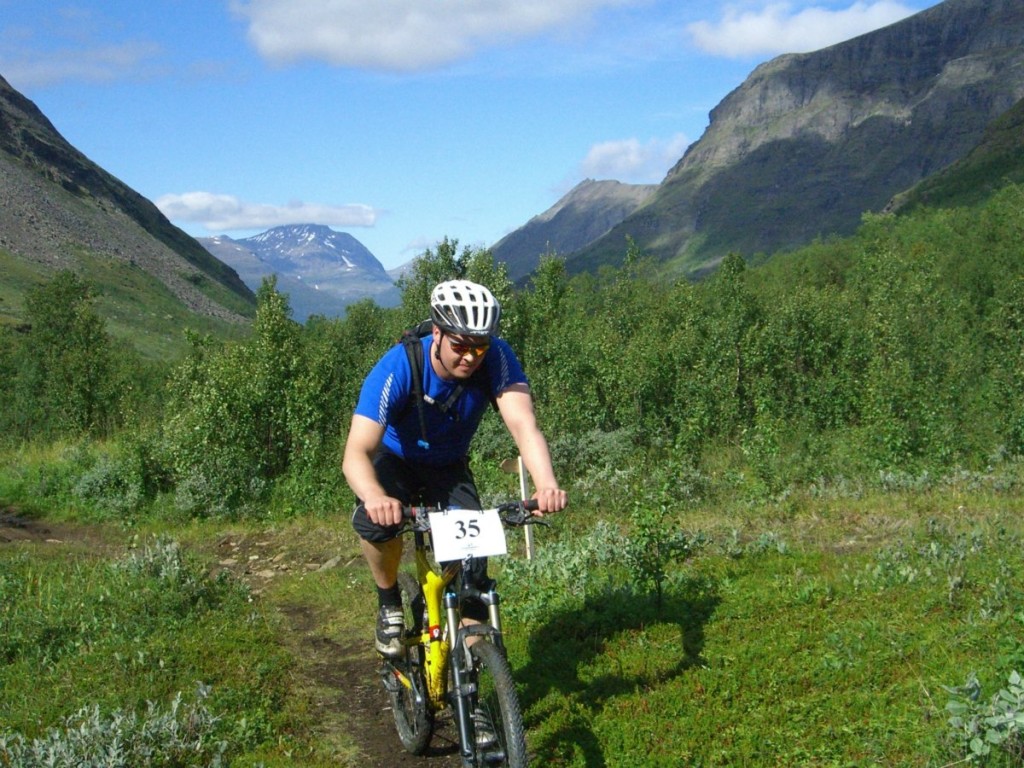
MTB race. Photo: Chris Brynjulfasen
MTB race. Photo: Chris Brynjulfsen

Mountain biking in Northern Norway, and especially in the Lyngenfjord region, is an arctic experience. Trails up to almost 1000 meters above sea level, creates views of the impressive Lyngen Alps and the Lyngen Fjord, the midnight sun that allows for trips 24/7 and in the autumn the possibility to see the northern lights.

The village of Skibotn and the Skibotn Valley are the center of the mountainbike activities in the Lyngenfjord region and therefore most information is about Skibotn. Also the nearby valleys Kåfjorddalen, Signaldalen, Kitdalen and the mountains in between, are an Eldorado for mountainbikers who are looking for something special. Around Lyngseidet you will also find some trails.

Mountainbiking in Skibotn
The dry climate in Skibotn and the Skibotn Valley ensures that you already early in the season can mountainbike here. The Lyngen Alps with the mountain Jiekkivarri (1834 meters) protects Skibotn from the wet weather coming from the Atlantic and is the reason for the dry climate. Skibotn have a rainfall of 300 mm per year, which is almost 10 times less than for example Bergen on the western coast of Norway.

Best time of year for Mountainbiking

Already in April/May, when there still is a lot of snow other places in Northern Norway you can go mountainbiking in the Skibotn region. From the middle of May the midnightsun is there, providing daylight 24 hours a day, giving you great experiences all day long.

Lavka race. Photo: Roy Mortensen

From July, when the snow has melted in the mountains, you can go higher in the mountains with the mountainbike. You will find several trails and smaller roads leading up to about 1000 meters providing great views of the region.

Skibotn biking
Skibotn biking

August can be considered the best month as there is no snow in the mountains, all trails are clear and it is still daylight for almost 24 hours a day.

Also September can be beautiful, with the autumn colors and northern lights dancing across the sky in the evenings.

View towards the Lyngen Alps. Photo: Inge Storsteinnes

In October the first snow normally falls in the mountains, it gets colder and darker which makes the forest-trails around Skibotn more attractive before the snow falls there as well.

Lavka race (Lavkarittet). Photo: Sigmund Steinnes

The trails
There are many single trails and forest roads in the valleys. In the mountains it is generally forest roads, ATV roads or construction roads for the power lines and/or the hydroelectric powerplants which you can use. There are also scattered hiking trails in the mountains, which can be difficult to navigate due to obstacles on the trails. Close to Skibotn, is also a partially prepared Downhill trail (“Hengen Ned”) which invites to fast downhill runs.

In general there are no marked mountainbike trails, with the exception of the Lavkarittet trail.

You will find a selection of tours here, in and around Skibotn. Furthermore you are reliant upon having your own map with you in order to find trails.

Visit Lyngenfjord
Visit Lyngenfjord

A possibility to experience new trails is to participate in the “Stifestival” which happens every august. At Stifestivalen you will meet likeminded people and join different guided tours in and around Skibotn.

Festivals/Races
There are some popular bike events in the region. The offroadrace “Lavkarittet”, as well as the Skibotn Stifestival in Skibotn and “Lyngen Exp Enduro” in Lyngseidet.
Skibotn Stifestival
The Skibotn Stifestival is a gathering of likeminded people, interested in mountainbiking and downhill. Every year in August this festival takes place between a weekend, Friday – Sunday. Several guides ensure that you find the right trails and the offered guided tours are quite different so there is something for everyone.

Strandbu Camping is the basecamp for this festival. Here you can put up your tent, camp in your car or rent one of the cabins. In the evenings we gather around the open fire or inside the big tent. The meals will also be served here and on Saturday evenings there is usually live music.

The website for the festival: http://www.skibotnstifestival.com

Sign up for the festival 2016 is here.


Lyngen Exp Enduro
This mountainbike and downhill gathering is a new festival in the region around Lyngseidet, showcasing what this region has to offer.

The basecamp is Magic Mountain Lodge in Lyngseidet, where you everyone can stay and eat together. Different guided tours will be offered and the social aspect of the festival is a big part of the gathering.


Lavkarittet
The first weekend in August the race “Lavkarittet” takes place in Storfjord. It is the biggest offroad race in Northern Norway with over 500 participants. The event is divided into three different difficulty levels, so that everyone can participate.

The “Mini-Lavka” is for kids under 10 years and is 2,5 km.

The “Lavka30” is for 10 – 16 years and for those who want to participate in a shorter race.

The main race “Lavkarittet” is 65 km and starts in Hatteng. At first you follow the gravelroad up Kitdalen, before heading up the mountain. The trail becomes narrower once you get to the mountain and the views more impressive. After you pass the highest point, it goes fast down the Skibotnvalley and after 65 km you reach Skibotn and the goal.

Professional mountain bikers from the whole of Scandinavia participates, as well as amateurs who want to experience the mountains here. Lavkarittet is really an offroad race for everone.

A Mountain Bike Paradise, source: Visit Lyngenfjord

Feature image (on top) photo: Norrøna

Related article:
The Water Trekking Route in Norway

Scandinavia’s Largest Drug Injection Room

0

H17, Scandinavia’s largest drug injection room in Vesterbro, Copenhagen, opened officially on 1st August.

H17 offers 1,000 square meters of supervised facilities and is a new drug consumption room (fixerom) designed and decorated to specially suit the needs of drug users. Here they  will find a sterile, supervised and supportive environment with access to medical and psycho-social services.

050916-h17-copenhagen-artwork
“Our primary goal is to reduce the impact of the harmful effects that come with living with a drug addiction on the street,” Louise Runge Mortensen, the head of H17, told Politiken.

Louise Runge Mortensen

“Here they can take their drugs in a safe environment, and because it’s so peaceful here, we can hopefully get some of them to consider talking to a treatment worker.”

Copenhagen Municipality estimates it will cost about 30 million kroner annually to run the facility.

Liselott Blixt
Liselott Blixt

Liselott Blixt, the health spokesman for Dansk Folkeparti, believes the fixerum indirectly supports the sale of controlled substances by offering a space for drug users.

“I don’t think we have any other options,” Jesper Christensen, the deputy mayor for social issues, told DR.

050916-h17-cipenhagen-interior-2050916-h17-copenhagen-interior3 “If we should give these people a life with dignity and a chance to move on, this is the best bet we have right now.”
According to Foreningen Fixerum, some 300 drug users die from overdoses in Denmark every year – one of the highest rates per capita in Europe.

Scandinavia’s Largest Drug Injection Room, source: Copenhagen Post

Photos by Nanna W. Gotfredsen (Danish Street Lawyers) and Sune Kehlet. Portrait photos:DR and private.

The Next Smallest County in Norway

0

Østfold is the second smallest county in Norway, about the same size as Tana in Finnmark.

In the Middle Ages the name of the county was Borgarsysla, first recorded in 1543. The name Østfold is based on Norse dialect, as “Fold” at that time was the word for “fjord”. Later, when Norway was under Danish rule, the Danish king divided the area into many baronies. These were merged into one county (amt) in 1662 – and it was then named Smaalenenes Amt ‘the amt consisting of small len‘. The name was changed back to Østfold in 1919.

060916-Norway-Østfold-Position-map
It is logical to divide Østfold into four parts; Halden and Halden water courses, The district of Fredrikstad and Sarpsborg, Askim / Mysen and the district of Moss.

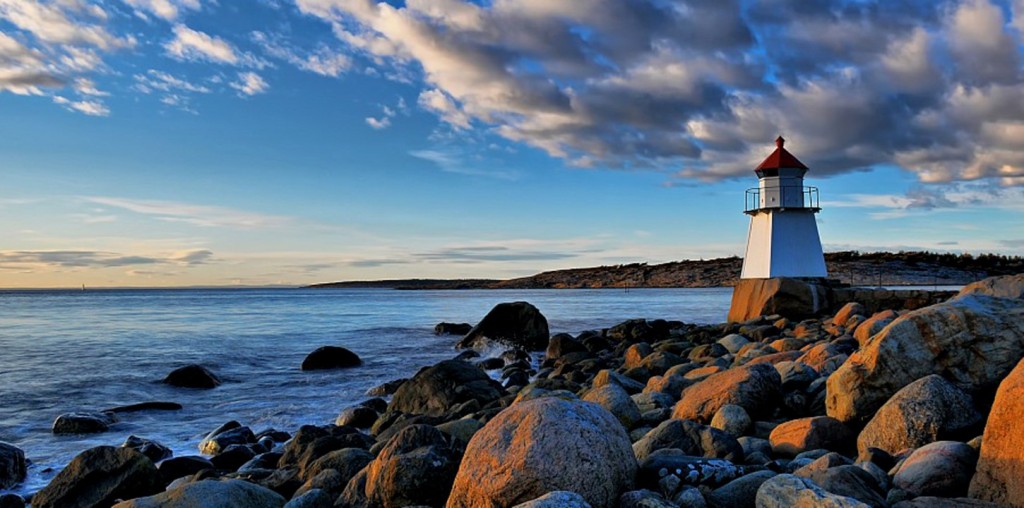
Walter Lighthouse
Walter Lighthouse

Østfold is among the nation’s oldest inhabited regions, with petroglyphs (rock drawings) and burial mounds throughout the area.

060916-østfold-norway-map-2
In the Viking Age, the area was part of Vingulmark, which in turn was part of Viken and included Båhuslen. It was partly under Danish rule until the time of Harald Fairhair.

Border between Sweden and Norway, Svinesund

The map may help us to describe Østfold.  We cannot deny that the small “appendix” has played an important role in many contexts.

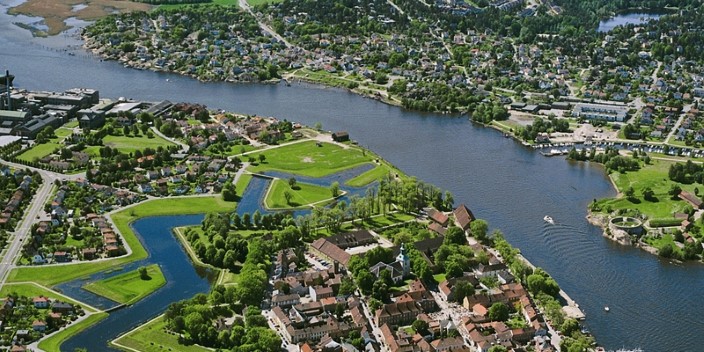
The old town in Fredrikstad

Østfold sits between the Oslo Fjord and Sweden. It is dominated by flat landscape with a lot of woodland in the north and along the Swedish border, a major lake system in the central part, and densely populated lowland area along the coast, with a relatively large archipelago.

The Glomma River
The Glomma River

Norway’s longest river, the Glomma, flows through the county and out into the Oslo Fjord in Fredrikstad.

Photos: Visit Oslofjord

Feature image (on top): Autumn in Old Town, Fredrikstad

The Next Smallest County in Norway, written by Admin, based on Wikipedia.org

Danish Whisky Distillery Expanding

0

Spirits accelerator Distill Ventures decided last December to make a DKK 100m+ investment to finance significant growth for the Danish whisky distillery Stauning in Ringkøbing Skjern Municipality.

“It’s a dream come true.” So says Alex Højrup Munch, co-founder of Stauning Whisky, after the announcement today that they have secured an investment of over DKK100m (£10 million) in the Danish distillery.

010916-inside-stauning-whisky-destillery
The investment is coming from Distill Ventures, an accelerator for spirits brands backed and funded by Diageo, the world’s leading premium drinks business, and sees the maker of whiskies such as Talisker, Lagavulin, Oban and Caol Ila become a minority shareholder in Stauning Whisky, with the nine founders retaining control of the business and continuing to run it as an independent Danish distillery.

Alex Højrup Munch
Alex Højrup Munch

“I have to pinch myself!. It is only 10 years ago that we started doing the first experiments with quality Danish whisky at Stauning. And now we suddenly get the opportunity to tell our story worldwide and let more people taste our unique whisky. We are obviously incredibly proud of the confidence that this investment shows in us and our whisky” says Alex Højrup Munch.

Ten years ago nine guys in the back of an old butcher’s shop stirred their very first mash in a 15 liter pot, getting ready to experiment with distilling in a 400 liter wash still and a 200 liter spirit still. One experiment led to another and soon their new hobby became a small distillery with one of them becoming employed full time.

010916-stauning-rye-whisky
010916-stauning-whisky-barrelsRecently the distillery has slowly expanded, and today it employs five at the distillery, making approx. 15.000 liters of Stauning Whisky every year. “At Stauning Whisky we do every part of the process ourselves, at the distillery – from floor malting to bottling, design, and everything in between. We use Danish ingredients for our whisky, with most of the rye and barley grown in the fields around us, and even the peat for our peated single malt is from Denmark, giving it a unique taste. Besides single malt, we are also making a malted Rye that has been very well received around the world. Distilling our malted rye in our very small direct fired pot stills definitely gives it a lot of oily and fruity intensity, and makes it stand out compared to other rye whiskies,” says Munch.
The future

Now Stauning has been given the chance to take the dream of the founders to the next level, and make its whisky available around the world. “We are proud to announce that after looking at many new distilleries around the world, Distill Ventures was impressed with our whisky, brand and story; actually so impressed that they have made an investment. We, the founders, are still the main shareholders, so we are still very much in charge of Stauning Whisky and can keep our focus on making handmade Danish whisky of the highest possible quality. We are just going to make more of it, and the investment will allow us to expand our production significantly. We will keep every process in-house using the same local Danish ingredients,” says Munch.

010916-stauning-whisky-building
Munch added: “We cannot wait to get started on building our new distillery which will stay true to how we make whisky today: using local barley and rye, doing all our own malting in house, using small stills and direct heat. Imagine the still house with more than 20 small potstills. It is going to be beautiful. We don’t know of another distillery of this size which does all of its own malting in house – doing it at a bigger scale has involved much planning and many experiments, until we were satisfied we can make exactly the same whisky as we do today.” The plan is to expand the distillery to a capacity of about 50 times the production of today. This will make it a similar size to the Scottish distillery of Oban. The construction is due to begin this autumn and the first distilling will take place in 2018. In the meantime Stauning will keep distilling in its current buildings.

Awards:
2014 World Whisky Awards
Stauning Peated

2014 World Whisky Awards
Best European Rye 7 years and under.

2013 International Review of Spirits Award: Platinum Medal (96 points)
Stauning Young Rye

The Whisky Bible Liquid Gold Award
2015: Stauning Peated 3rd Edition
2014: Stauning Young Rye
2014: Stauning Peated 2nd Edition
2013: Stauning Peated 1st Edition
Danish Whisky Distillery Expanding, source: Stauning Whisky

Telemark Skiing

0

In the mid-1800s, Sondre Norheim, a young farmer from Morgedal, in the county of Telemark, created a whole new style of skiing. Morgedal is in the mountains, so the skimakers there sought designs that would perform well in the surrounding rugged terrain, both in everyday winter skiing and for impromptu sporting meetings.

Norheim modified his skis by adding firm bindings, which hold the ski boots to the skis and allow rhe feet control over them. He also gave them “sidecut”, a slight hourglass profile when seen from above, which enables the skis to run true and turn easily.

Sondre Norheim
Sondre Norheim
Telemark ski binding and boots

Norheim and his friends used the adapted skis to perfect new manoeuvres, including landing from airborne flights off snow-covered rooftops and natural outcrops. Soon they were ready to show off their new skills, and this led to the first ski-jumping contest in 1879. The bent-knee stance with one ski trailing soon became known as the “Telemark”.

Telemark skiing in Telemark costume

In modern Telemark skiing, the heel is free to lift up from the ski and turns are steered, with one ski trailing and at an angle to the other. Competitive Telemark ski races are now held on packed slopes, as are Alpine ski races, but true Telemark skiing has spawned the revival of skiathlons, in which competitors must ski jump, ski through a slalom course, and run a cross-xcountry ski race, ll on the same pair of skis.

Telemark Skiing, written by Tor Kjolberg

Read also:
Never Stop Skiing

On Two Wheels in Scandinavia

0

The bicycle is an important mode of transport for Danes and visitors to Denmark alike. Bikes outnumber cars in some city areas, where the streets have bicycle lanes and traffic lights.

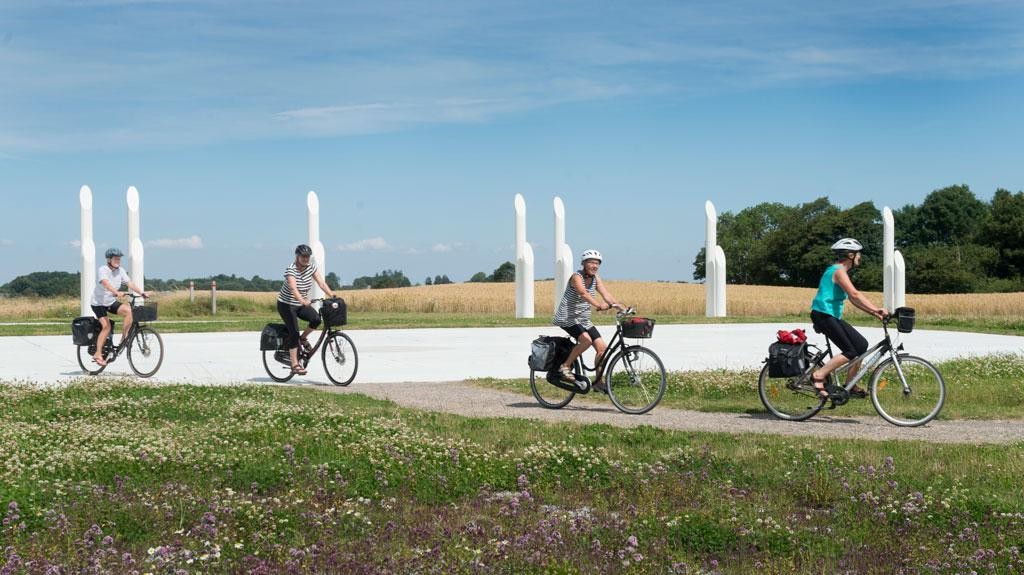
Denmark has thousands of miles of cycle paths, and bikes may be taken on most trains and ferries. Tourist offices can provide detailed maps of routes. Hærvejen is a bicycle and walking trail that stretches from the German border to Viborg in north-central Jutland.

Bicycling on Hærvejen

Traders and travelers beat this path a few thousand years ago, and much of it still looks as it did during Viking times. All along the route there are inns, hotels or hostels, as well as shops for provisions.

Hærvejen Cycle Route

Cycling is also a popular outdoor sport for Swedes, and there are many well-designed and well-lit routes all over the country. You could spend a week touring the islands of Gotland or Bornholm on a bike. Keen cyclists alsp head for Östergötland, particularly along the banks of the Göta Kanal where the towpaths make ideal cycling tracks.

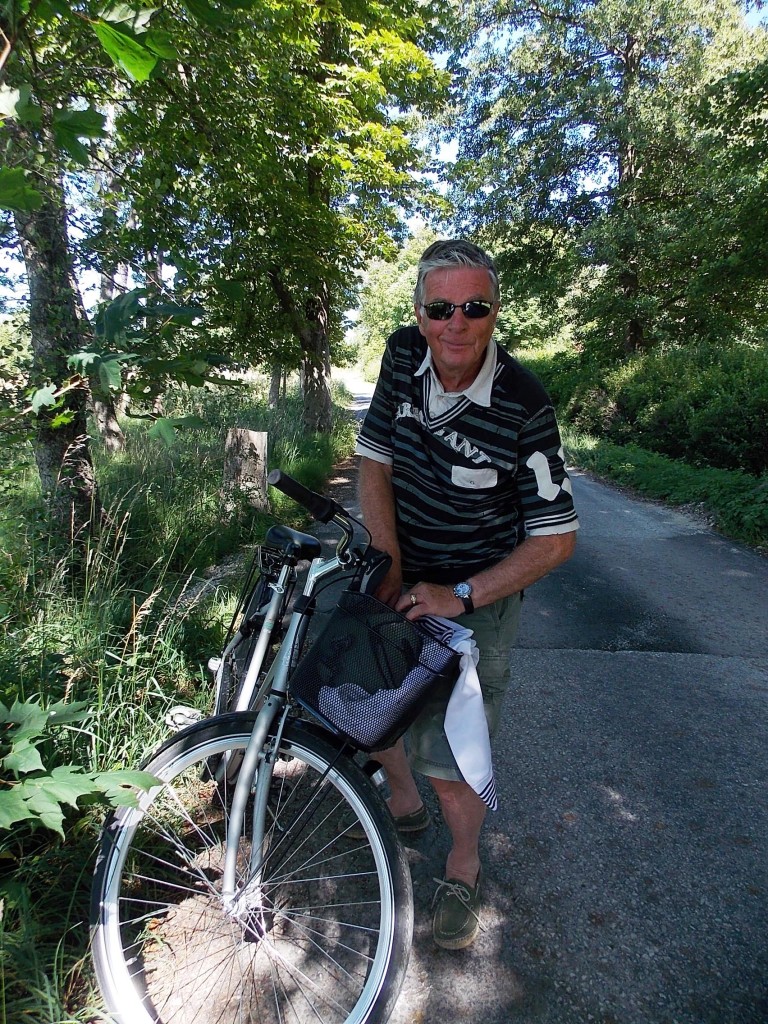
The editor bicycling in Sweden. Photo: Helgard Mahrdt

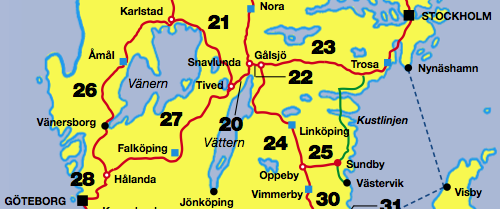
Bikes can be hired at several places along the canal, and the most popular stretch for cyclists is between Berg and Borensberg. For the truly ambitious, there is the Sverigeleden (Sweden Bicycle Route), from Stockholm to Gothenburg – a distance of 2,600km (1,600 miles).

Sverigeleden
Sverigeleden

On Two Wheels in Scandinavia, written by Tor Kjolberg

Related article
Cycling in Sweden