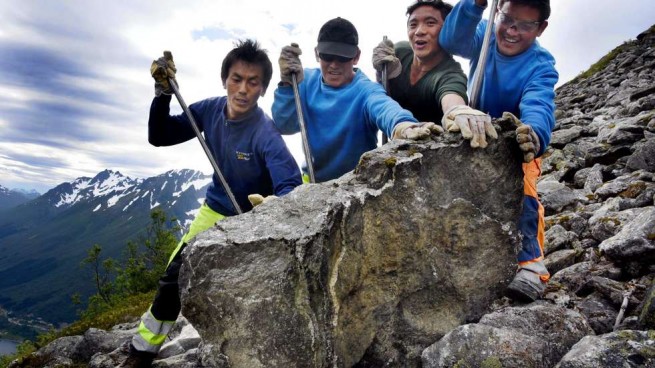
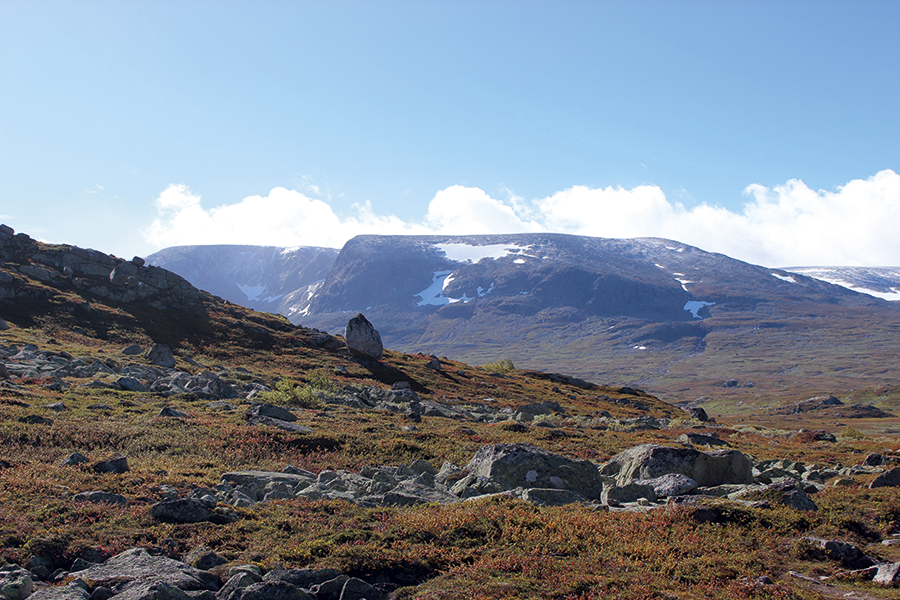
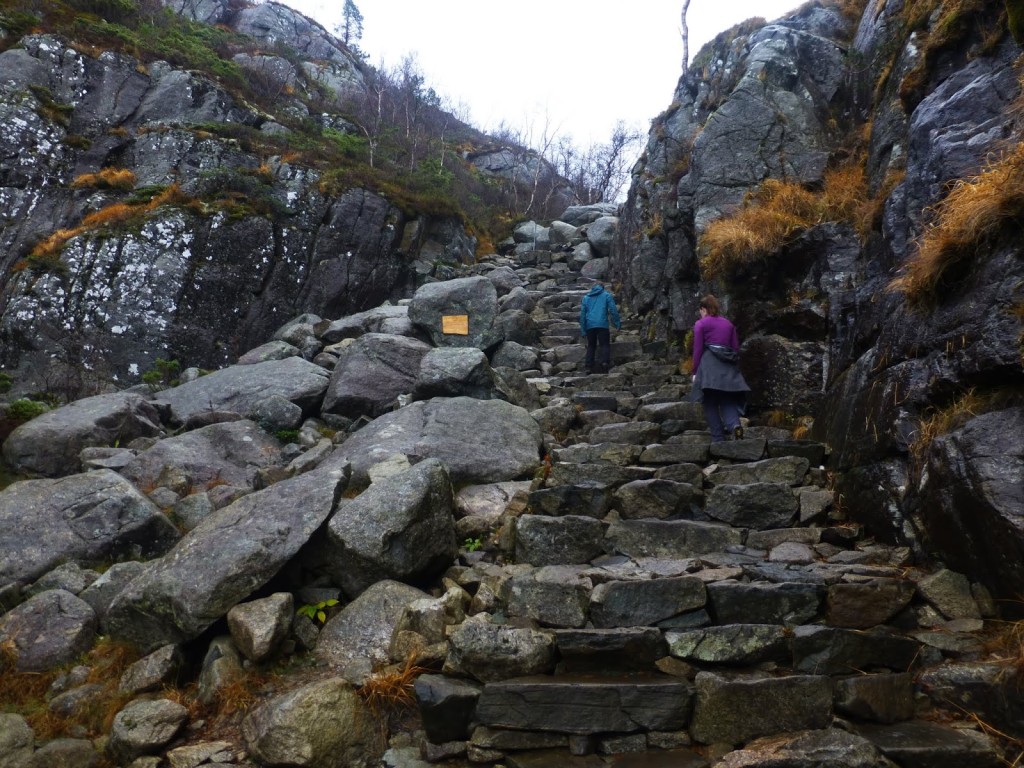
Two years ago, Sherpas from Nepal finished building the 2,000 stone steps at Hallingskarvet, Norway. Record number of visitors has walked the steps this year.
According to a NRK report, in the course of five weeks, 18,000 people have walked up to the characteristic Hallingskarvet, which is the highest mountain in the county of Buskerud.
Sherpa stairway at Hallingskarvet
The Sherpa team was contracted by Tinn and Vinje municipalities four summers in a row to improve trekking trails, including the one at Gaustadtoppen. Some of the Nepalis work on Himalayan expeditions, and this off-season work in Norway supplemented their income. They all came from Khunde village in Khumbu, situated at 3,840 m.
Crossing a river near Nesbo
“Everyone wants to walk the path to Hallingskarvet. It is easy, and you come to Prestholtseter, located 250 meters from the national park boundary. It is safe for everyone, young and old,” says Petter Braaten in the Norwegian Nature Inspectorate about the stairs the Sherpas built.
Hallingskarvet
“It has been a good investment. It saves the terrain from wear, which is important to preserve the national park. But at the same time it is important for the added local value, tourism and the Hol municipality,” explains Braaten.
Small portion of sherpas’ stonework
The Sherpa stairs extend from Prestholseter to Skarvsenden on Hallingskarvet, 1705 meters above sea level. The stairs were placed according to Nepalese traditions to fit the terrain and to make it easier to walk into the national park while protecting the landscape.
Sherpa stairs leading to record visitors at Hallingskarvet, source: NTB scanpix / Daily Scandinavian
What accounts for the Nordic countries’ strong welfare states? Hint: it’s not white homogeneity.
There’s a reason the Scandinavian welfare states are still the envy of many across the world. Even decades into a neoliberal project to reform them, Scandinavia sports relatively high income equality, large, tax-financed welfare programs, powerful unions, and relatively low unemployment rates.
Neoliberal textbooks tell us that the only way to societal prosperity is through low tax rates, deregulated business, and cut-throat competitive labor markets. Yet despite failing to meet the metrics of the Anglo-American variety of capitalism, Scandinavian countries stubbornly continue to prosper, and regularly come out on top of the global indexes of happiness and quality of life.
It is no surprise, therefore, to find neoliberals and conservatives devoting considerable intellectual energy to delegitimizing the “Nordic Model” of public welfare.
Earlier this year, the Institute of Economic Affairs, a British neoliberal think tank, devoted an entire book to Scandinavian “unexceptionalism.” The aim was to explain away the success story of the Nordic welfare states, arguing in classical Hayekian fashion that the success of the Nordic countries predates the era of public welfare, and that anything exceptional and successful about it has vanished since then.
Meanwhile in the US, where the Bernie Sanders campaign has thrown ideas of Nordic social democracy into the political mainstream, National Review’s Kevin Williamson has adopted the opposite strategy. In a couple of recent pieces he acknowledges the continuing exceptionalism of the Nordic experience and admits that the Nordic countries have indeed been relatively successful until very recently.
But in a strange plot twist Williamson also racializes the Nordic experience, tying the success of social-democratic policies to the alleged whiteness and homogeneity of the Nordic countries, thus undermining its credibility as a source of inspiration for American progressives committed to antiracism.
Bernie Sanders
The “Nordic Consensus”
In a National Reviewpiece published in early July, Williamson calls Sanders a “national socialist” and denounces his use of “Us and Them” rhetoric as un-Scandinavian.
Kevin Williamson
Williamson construes Sanders’s willingness to highlight conflicts of interest in popular power as being supposedly the “polar opposite” of how politics is done in Scandinavia — where politics is “consensus-driven” — and that where this “conformity” constitutes a “stabilizing and moderating force in politics, allowing for the emergence of a subtle and sophisticated and remarkably broad social agreement that contains political disputes.”
Scandinavian politics is much less partisan and more coalition-prone than in the US, with proportional representation effectively denying any one party an absolute parliamentary majority. But we should not mistake a contingent twentieth-century historical conjuncture of relative political civility for a supra-historical essence of Nordic political culture.
The Nordic consensus
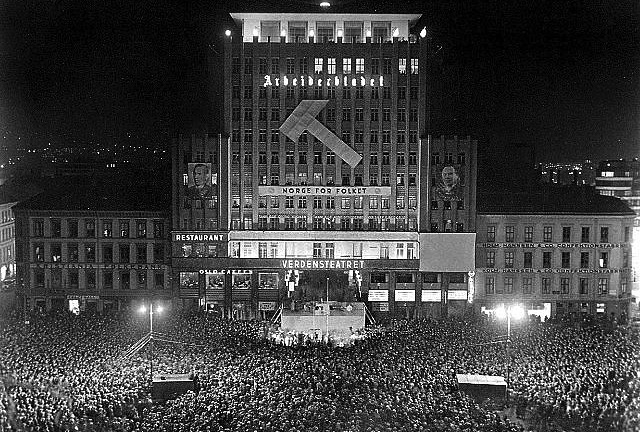
Today the universal welfare state and regulated, egalitarian labor markets, are so popular among voters that even liberal or conservative politicians wanting to dismantle them have to run as defenders of public welfare if they wish to avoid electoral suicide. But this situation did not emerge from the mists of history. It is the product of decades of struggles from organized labor and other popular movements throughout the twentieth century.
The social-democratic welfare state has faced strong historical challenges — both from the Left, by strong communist and new left movements, and from the Right, by organized business, such as the powerful Swedish employer organization SAF, and by Tea Party-like anti-taxation movements, which appeared in the 1970s in Norway and Denmark.
Simply put, the “Nordic Consensus” has never been as comprehensive as Williamson would have us believe.
Norway’s prime minister Erna Solberg is warning Britain’s prime minister David Cameron not to exit EU
Social-Democratic Privilege?
Shortly after the “national socialist” essay, Williamson published another piece entitled “The Whitest Privilege.” In it, he performs an astonishing piece of pseudo-psychoanalysis of those on the American left who point to the Scandinavian welfare states as a source of political inspiration.
White privilege
Progressives might say they want to adopt Scandinavian-style institutional models of public universal welfare, but what they reallymean, Williamson informs us — with a hefty dose of hermeneutics of suspicion — is that they don’t like ethnic diversity: “’We’d like to make America more like Norway or Finland’ is, among other things, a way of saying, ‘We’d like to make America more like a virtually all-white society.’”
This accusation seems all the more odd considering it was Williamson himself who only two days prior reminded us that it is conservatives — not progressives — who have long theorized ethno-cultural homogeneity as the key to political-economic success: “That the relative success of the Western European welfare states, and particularly of the Scandinavian states, is rooted in cultural and ethnic homogeneity is a longstanding conservative criticism of Bernie-style schemes to recreate the Danish model in New Jersey and Texas and Mississippi.”
In any case, the premise of Williamson’s masked attempt to racialize the Scandinavian success story is flawed. Williamson writes that the “nations of Northern Europe” were until recently “ethnically homogeneous, overwhelmingly white, hostile to immigration, nationalistic, and frankly racist in much of their domestic policy.”
The first two of these observations — homogeneous and white — are obviously true, but mundanely so. However, the ensuing claims bring Williamson onto thin ice. Perhaps half-realizing that it would be plainly false to directly describe his actual target, the Nordic countries, as particularly racist, xenophobic, or nationalist compared to other countries, in Europe or around the world, Williamson opts for the wider and vaguer descriptor “Northern Europe.”
Scandinavia is not exceptional by European standards when it comes to racism and nationalism, and one can readily find examples of both hostility to immigration, chauvinistic nationalism, and racist policies in the histories of the Nordic countries.
For example, like most European countries, antisemitism was bad in the Nordic countries before World War II, and nationalist fervor swept through all of the Nordic countries in the nineteenth century, as it did around the world.
Likewise, to the limited extent that the Nordic countries have colonial histories, there is also a history of institutionalized racism (á la Belgium, Germany, Spain, Portugal, the UK, the Netherlands, France, the US, etc.) that has survived into contemporary times. The abysmal treatment by Danish authorities of the indigenous population of Greenland is a case in point from the post–World War II period.
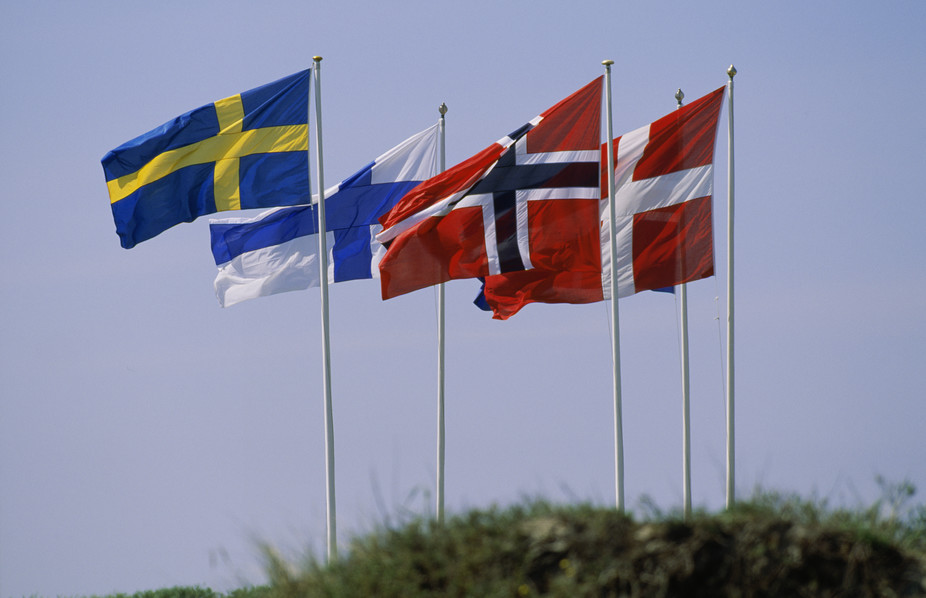
Prime ministers of the Nordic countries on a meeting
But Williamson fails to prove first, that the Nordic countries — whether we are talking about state policy or popular sentiment — really do have a consistently worse track record than other countries (including the US), and second, that racism played any part in the establishment of the Nordic-style universal welfare states in the twentieth century.
Williamson’s attempt at substantiation of the claim of intrinsic Nordic xenophobia is limited to a selective set of facts about Swedish immigration history, presumably the ugliest truths he could find. On closer inspection, they all seem to be derived from a single article by anthropologist Charles Westin, and none seem to really support Williamson’s insinuation of institutional Swedish racism.
We are given three pieces of information. First, that most of the worker immigrants coming to Sweden for many years were from other Scandinavian countries, because the trade-union confederation was worried about “cheap foreign labor.” In highlighting this fact, Williamson simply displays his ideological proclivities by identifying any opposition to controls on national labor market entry, whatever its motivations, as by definition “Buchananite.”
Pat Buchanan
Yet the stance of the Swedish trade-union confederation, the LO, was evidently not motivated by xenophobia. Rather, the purpose was to defend the living conditions of any worker in Sweden, regardless of race, ethnicity, or citizenship. As Westin writes (but Williamson conveniently forgets to add): “[The LO] agreed that importing cheap labor would not be allowed and that foreign workers were to enjoy the same wage levels and rights as Swedes, including access to unemployment benefits.”
Second, we are told that many Jews were rejected when seeking refuge in Sweden in the 1930s and 1940s due to prevalent antisemitism. What Williamson does not tell us is that this picture changed fairly drastically during the war itself, as large numbers of Jews from both Norway and Denmark (alongside members of the movements resisting the German occupation) escaped to Sweden. Here, again, Westin is informative: “At first there was some reluctance to accept these foreigners but fairly soon they were generally accepted and even welcomed.”
Parliament of Sweden (Riksdag)
Third, we are told that “the modern Swedish word for ‘immigrant’ does not mean ‘foreign-born person,’ but ‘non-Nordic person in Sweden.’” This fact does have some bite, but here too Williamson forgets to give us the whole story — this time about the active attempts of the Swedish state to combat this unfortunate habit of thought.
As Westin writes:
Today, authorities avoid the term “immigrant,” using instead “persons of migrant origin” in official discourse. A policy of diversity management was introduced some years back in order to counteract tendencies of social exclusion and stereotyping. More teeth have also been put in to the previously rather weak laws on ethnic discrimination.
In sum, Williamson’s case presenting the Nordic Model as inherently racist is weak at best. It is certainly true that the Nordic countries today all have sizable right-wing populist movements dominated by xenophobic sentiment, but this is equally true for most other European countries.
Obama hosts Nordic leaders
Indeed, if the Nordic-style welfare state is particularly compatible with and conducive to racism, how does one explain the similar growth of xenophobic right-wing populism in France, Switzerland, and the UK, all countries with distinctly different social systems?
It is true that we have yet to see strong antiracist and anti-discrimination movements in Scandinavia analogous to the Civil Rights Movement in the US. But on the other hand, one would also be hard-pressed to find examples in modern Nordic history of equivalents of the organized grassroots racism of the Ku Klux Klan or the institutionalized racism of Jim Crow.
We are not suggesting that the Nordic populations are inherently less racist than other populations. We are merely saying that Williamson fails to prove there is anything intrinsically racist or nationalist about the Nordic experience. Nor did twentieth-century Nordic welfare states make ethnic exclusion a key principle of functioning; on the contrary, they were based on universal principles of entitlement-through-citizenship, and not on internally exclusionary principles based on race or culture.
Scandinavian Exceptionalism
If “white homogeneity” is not a key variable, how should we then explain Scandinavian exceptionalism? The first step is realizing that many aspects of the development of the Scandinavian welfare state are not that exceptional — they are a variant of the general Western European experience.
The modern Nordic states have been in the fortunate position of developing in the immediate geographical proximity of the core countries of the capitalist world system, while also maintaining political independence. This serendipitous historical circumstance meant that the Nordic countries profited, directly or indirectly, first from the trade flows of early mercantile capitalism and later from industrialism and colonialism.
At first they developed through lucrative trade in primary commodities — processed agricultural goods in Denmark, timber and metal ore in Sweden — but from the late nineteenth century onward they managed to industrialize. As a result, the Nordic countries, like the rest of Northwest Europe, turned out comparatively rich and well-organized.
Scandinavia was also not alone in developing comprehensive social welfare systems in the twentieth century. Across Western Europe, the kernel of a social compromise around the building of universal welfare institutions emerged in the early twentieth century in step with the rise of organized labor movements.
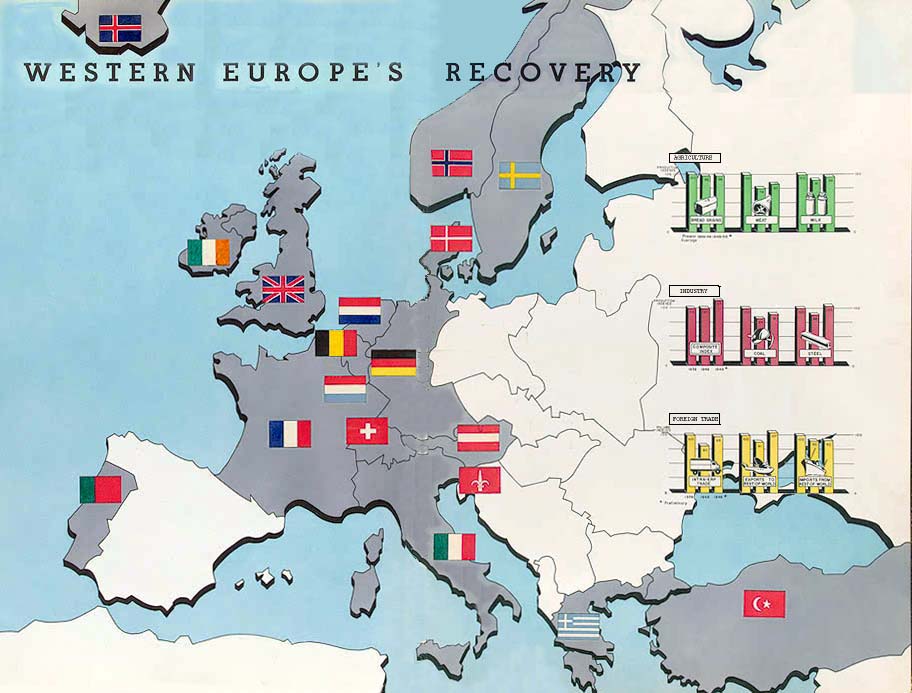
The Marshall plan
In the aftermath of World War II, European elites, wary of a radicalized workforce and the rise of Soviet Communism, found it necessary to compromise with labor in order to retain the capitalist system. This resulted in rapidly rising real wages and the building of social welfare institutions in all of US-controlled Western Europe, helped along by Marshall Aid and generous access to the American market.
Here again, Scandinavia conformed to the general West European trend. But this new model of social capitalism took a more radical form here than elsewhere. Under the hegemony of strong social-democratic parties, redistribution and welfare provisions in areas such as health care, education, transport, and housing reached an extent not seen anywhere else in Europe.
This was to a large degree the product of uniquely strong labor movements, politically empowered by robust alliances with social-democratic parties. Labor managed to achieve political hegemony by forging alliances with other popular movements supporting egalitarianism and democratization, most notably the peasant-based corporative movement and the women’s movement after the 1970s.
The Scandinavian welfare state probably reached its apex in the 1970s and ’80s, when inequality was at some of the lowest levels recorded in capitalist economies. In addition, Denmark and Sweden saw widespread union support for programs of economic democracy, which through wage-earner funds would gradually take over the ownership of the means of productions.
However, it was also at this time that the Nordic model started to show its first cracks.
The social-democratic project never managed to successfully challenge the power of privately owned capital. When the pressures of international competition and European economic integration narrowed the space for national policy and moved the political terrain decisively in favor of business, the social compromise underlying the “Nordic welfare model” started to unravel.
In this conjuncture, the Nordic model proved fragile, and Scandinavia was not immune to the neoliberal wave that swept the globe after the fall of the Berlin Wall. Since the 1990s even the Nordic social-democratic parties have largely adapted to a new policy consensus around privatization, deregulation, and reduction of social rights and benefits. As a consequence, the social systems of Scandinavia are gradually approaching the European mainstream.
The Rise of the Right
It is within the context of the welfare state’s deterioration that one can understand the specific form that right-wing populism has taken in Scandinavia.
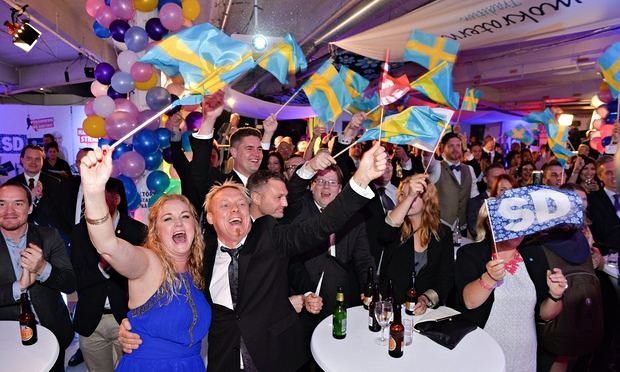
Sweden democrats
Williamson is actually on the mark when he points to “welfare chauvinism” as a contemporary malaise in the Nordic political climate, but he fails to understand the causes of this phenomenon. The rise of the True Finns, Norway’s Progress Party, the Danish People’s Party, and the Sweden Democrats is a product of national particularities. But common to all of these groups is the crucial support they draw from significant fractions of the working class that, since the 1980s, have become uprooted from relatively secure lives as a consequence of deindustrialization and welfare retrenchment.
Moreover, the weakening of the labor movement in the neoliberal era has produced a negative feedback loop that has cut the deep ties — the civil society infrastructure — between the labor movement, the Social Democrats, and the working-class public and undermined solidaristic values.
Magnus Marsdal
In his book on the rise of Progress Party, Norwegian author and researcher Magnus Marsdal describes how traditionally social-democratic working-class voters are unable to identify with a social-democratic party that seems absorbed by academic technocracy and completely detached from the worries of ordinary blue-collar voters. With the dominant parties advocating the same sort of economic policy, these voters instead turn to the issue of immigration when deciding their political allegiance.
The historical peculiarity of the xenophobic, right-wing populism now sweeping the Nordic countries and the rest of Northern Europe is its co-articulation with the defense of the crumbling welfare state. As social protection decreases, some people come to misconstrue two effects of globalization and capital restructuring — mass immigration and deteriorating welfare services — as being causally related.
It is precisely because the Nordic welfare states are universal, and not ethnically exclusionary, that two analytically distinct problems have become juxtaposed in contemporary Nordic politics: on the one hand, maintaining a welfare state under the pressure of neoliberal globalization; on the other, managing the transformation from mono-ethnic to multiethnic society.
The intermarriage between two forms of security-inducing nostalgia — ethno-cultural and material — is welfare chauvinism in a nutshell. But this welfare chauvinism is not a logical continuation of the Nordic welfare state. Rather, it is a sadly infectious deviation from it, produced by popular despair after more than three decades of neoliberal reforms.
Lessons From the Nordic Experience
This does not mean that there is no inspiration to be drawn from the Scandinavian social system for progressives abroad. From tax-financed free education to subsidized child care and generous unemployment benefits, there are plenty of programs that are still among the most progressive in the world.
The Nordic welfare system
But while drawing on these policies for inspiration, it is important to note that Scandinavian exceptionalism is not based on a given set of institutions and policies ready to be implemented by enlightened technocrats. The Nordic countries’ institutional blueprints were produced by a strong labor movement in alliance with other popular forces. When this basis started to erode, as happened in Scandinavia from the 1980s onwards, so did the welfare institutions.
The only way to get “Scandinavian levels” of redistribution and social protection is to start building powerful popular movements capable of advancing this agenda.
A successful US movement for a comprehensive welfare state in a multiethnic country would provide not only an excellent response to explicit or implicit cultural determinism, but could also be an important source of inspiration for European progressives in search of effective tools to combat welfare chauvinism.
What Makes Scandinavia Different? written by
Rune Møller Stahl and Andreas Møller Mulvad, PhD candidates in political science at the University of Copenhagen
“What Makes Scandinavia Different?” was first published by Jacobin Magazine. We thank the publishers for their kind permission to reprint the article.
In May 2001 Hans Rasmus Astrup paid almost six million US dollar for a larger than life gilded statue in porcelain made by the American artist Jeff Koons. It is a rendering of the King of Pop, Michael Jackson, and his beloved pet chimpanzee.
The statue was bought at a Sotheby’s auction in New York, 13 years after Jeff Koons had made the porcelain figure with religious associations likely based on a press photo titled “Banality”.
Michael Jackson with Bubble
The price the Norwegian collector paid was more than double of the artist’s previous auction record, even if the statue “Michael Jackson and Bubbles” exists in four versions. Since then prices on Jeff Koons’ works have increased considerably. Today you may watch Michael Jackson and other Jeff Koons works at the Astrup Fearnley Museum of Modern Art in Oslo.
Astrup Fearnley Museum of Modern Art in Oslo
Koons has a knack for genre-bending. His tolerance for all aspects of culture has garnered him more than a few celebrity fans. Lady Gaga commissioned Koons to create an artwork for her 2013 albun “Artpop”. Jay Z name-checked him in “Picasso Baby” and Kim Kardashian posted an Instagram photo of the artist with her and Kanye West’s infant daughter and Pharrell Williams collects his works.
Jeff Koons with his Michael Jackson Bubble sculpture
“Michael Jackson and Bubbles” depicts the legendary Michael Jackson leaning back on a flower bed while his pet chimpanzee Bubble rests on his lap. Jackson and Bubbles wear similar clothing, and are colored similarly while parts of their bodies mirror with each other.
The sculpture is fabricated by Italian ceramists using gold and white “Rococo” palette and measures almost six feet across. Michael Jackson will forever reign as King, but at the time Koons had the sculpture made, there were murmurings in the media and in society about Jackson’s lightening skin tone. Koons presents Jackson with almost stark white flesh.
Michael Jackson and his Bubble
“If I could be anyone,” Jeff Koons repeatedly proclaimed, “it would be Michael Jackson”. It made sense, then, that Koons would choose a portrait of the entertainer as the centerpiece for his 1988 exhibition. Koons produced four editions, and many of Jackson’s fans were offended by how the porcelain made Jackson appear white and feminine. Koons, however, claimed that Michael Jackson is the contemporary Apollo.
“…The work makes many people uncomfortable – angry, even. Why is that? Is it the physical relationship between the man and the animal? The fact that Bubbles is dressed? The mere fact of depicting Jackson at all? Or perhaps the gaudy use of gold? Jackson’s gilded costume brings out his red lips, and the dark make-up around his eyes. His porcelain-white skin may be the most unsettling detail of all.”
“…The works from “Banality” represent a line from Duchamp’s ready-mades and Andy Warhol’s silkscreen image transfers, but through the appropriation of such subject matter as fairytales, Buster Keaton, the Pink Panther or Michael Jackson. Their chief originality and achievement lies in the way in which Koons creates a new kind of artistic language, extracted from “mass consciousness.” “
Filmmaker John Waters, who had public conversations with Koons, refers to the sculpture as the artist’s “scariest piece”. Jackson himself, however, was “very supportive” of the project and even sending over press photographs at Koons’ request. “This was a time when Michael was going through a lot of plastic surgery, so I had to use multiple pictures to keep up with it,” says Koons.
This piece is now a beautiful representation of Jackson’s younger days before he was ridiculed by some and deified by others. The gold almost depicts a time when anything Michael Jackson touched turned to gold.
About Jeff Koons Jeff Koonswas born in 1955 in York, Pennsylvania. He studied at the Art Institute of Chicago, and received a BFA from the Maryland Institute College of Art, Baltimore (1976), and honorary doctorates from the School of the Art Institute of Chicago (2008) and Corcoran College of Art and Design, Washington, DC (2002). Koons plucks images and objects from popular culture, framing questions about taste and pleasure.
Watch Michael Jackson in Oslo, written by Tor Kjolberg
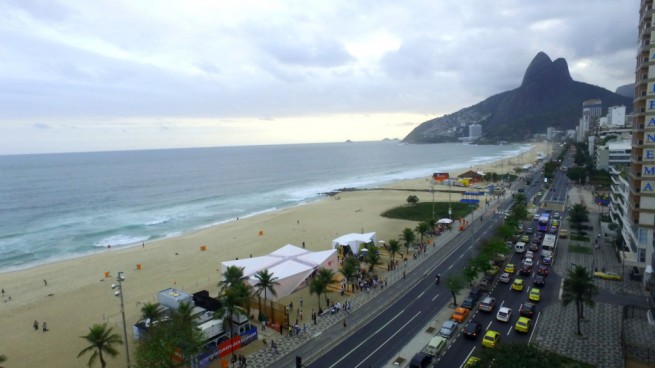
Visit Denmark and The Danish Ministry of Business and Growth are in charge of the Denmark House on Ipanema Beach in Rio – an initiative supported by and developed in cooperation with among others Industry Foundation, Nordea Foundation, Realdania and Grundfos.
Olympic Pavilion on Ipanema Beach, Rio de Janeiro
The Danish presence on the iconic Ipanema Beach has proved to be a success. Everyday hundreds of people are coming to see the innovative and interactive exhibitions and all exciting activities.
Activities at Danish pavilion in Rio
The Heart of Denmark pavilion brings action to the sands of Life Guard Post 10, on Ipanema, this August – and besides the permanent exhibition, concerts, sports games and cultural schedule, two activities will attempt to break world records:
Visitors working on making world’s biggest LEGO bicycle
On August 6 and 7, visitors to the pavilion accompanied the construction of the biggest bicycle made of LEGO® pieces during an Olympics Games, built by fans of the brand, known as AFOLS (Adult Fans Of LEGO®), while the general public took part, as pairs, to build miniature versions.
Danish bicycles in Rio
On August 16 and 17, a large heart made of recycled materials is another record that the Danish Hospitality House wants to break during the Rio 2016 Olympic Games.
Promoting Denmark at the Danish pavilion
”LEGO has become one of the world’s strongest brands, because they know how to take children’s play seriously and they recognize its significance in child development and learning. The same line of thought is reflected in other parts of Danish society, where play is used as a means to bring people together and to encourage innovation and creativity. We would like to share some of these Danish examples with the Brazilians and the rest of the world, while we are on Ipanema Beach. We hope to see many happy LEGO® fans, of all ages, at the Danish pavilion, having a lot of fun playing and learning,” says Jan Olsen, CEO of VisitDenmark.
LEGO in Rio
In order to show a little more about the values, interesting facts, and wealth of the Danish culture, on August 16 and 17, the objective will be to create the world’s biggest work of art in the shape of a heart, made from recyclable materials. To that end, the task will have the collaboration of a number of students from the NGO and art school, “Spectaculu”, which is coordinated by Eric Fuly, who is responsible for the project.
Danish pavilion by night
The Danish heart will be set up in the B2B area of the pavilion and, later, will be exhibited outside, until August 21, as a true symbol of the hospitality and sustainability of the Heart of Denmark house.
Danish royal family attending the opening of the Danish pavilion
The Danish pavilion on Ipanema Beach is an export drive aiming at strengthening international awareness of Denmark and generating interest in key Danish strongholds.
Heart if Denmark in Rio
The initiative builds on the successful experience from the Olympic Games in London in 2012, where VisitDenmark managed a similar Danish export drive, with up to 250,000 visitors from around the world. The Danish Pavilion will serve as a showcase for Denmark, Danish companies and Danish products throughout the Olympic Games in Rio and introduce fields of expertise and solutions from Denmark.
Refuel your thirst
The pavilion will also be a focal point for Danish athletes, representatives and spectators. The Olympic Games 2016 in Rio is expected to attract between 500,000 and 1 million affluent international visitors and more than 27,000 journalists.
To the north of Finse lie the Jotunheimen Mountains, literally the «Home of the Giants». Nonetheless, even the loftiest of the Jotunheimen peaks, Galdhøpiggen and Glittertind, which are the highest in Northern Europe, with summits rising more than 2,400 meters (7,900ft), rank low on the international scale of noteworthy mountains where sheer altitude, nit challenge, is the main criterion.
Jostedalsbreen
Though this fact has led to relative anonymity – few Norwegian peaks appear in the classic mountaineering literature – it does mean that you can ascend the equivalent of the Matterhorn or Mont Blanc without the problems associated with high altitude.
The Lyngen Alps in northern Norway
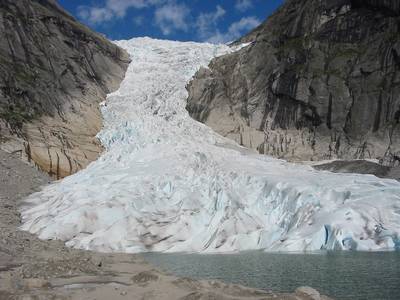
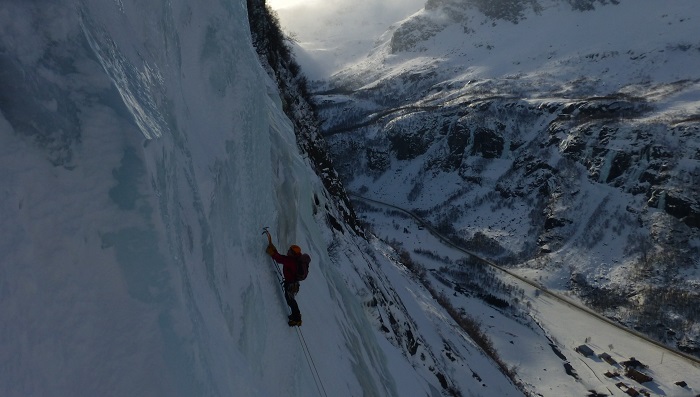
Some of the glaciers that hewed the Norwegian landscape left offspring. Jostedalsbreen (Jostedal Glacier), is the largest in mainland Europe. Jostedalsbreen and its siblings throughout the coutry are the places to see crampon-shod parties wielding ice axes from spring until summer.
From Aurland
Contact with the ice that shaped our land is currently the Norwegians’ fastest growing wilderness recreation, and many centers now organize specialist courses.
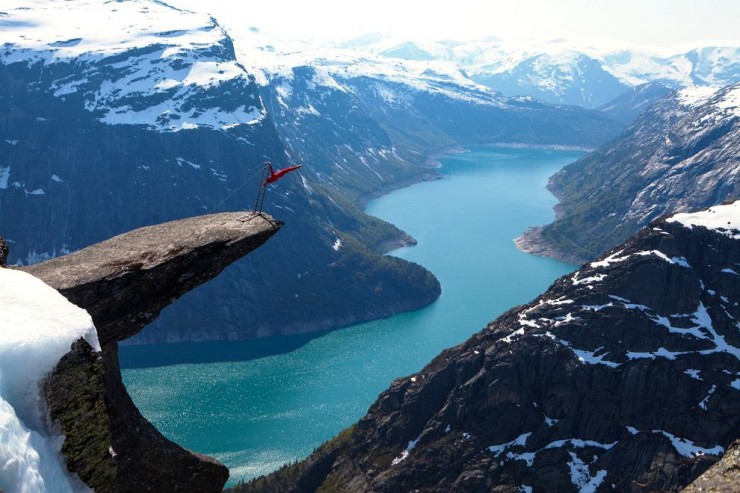
Troll’s tongue, Hardanger
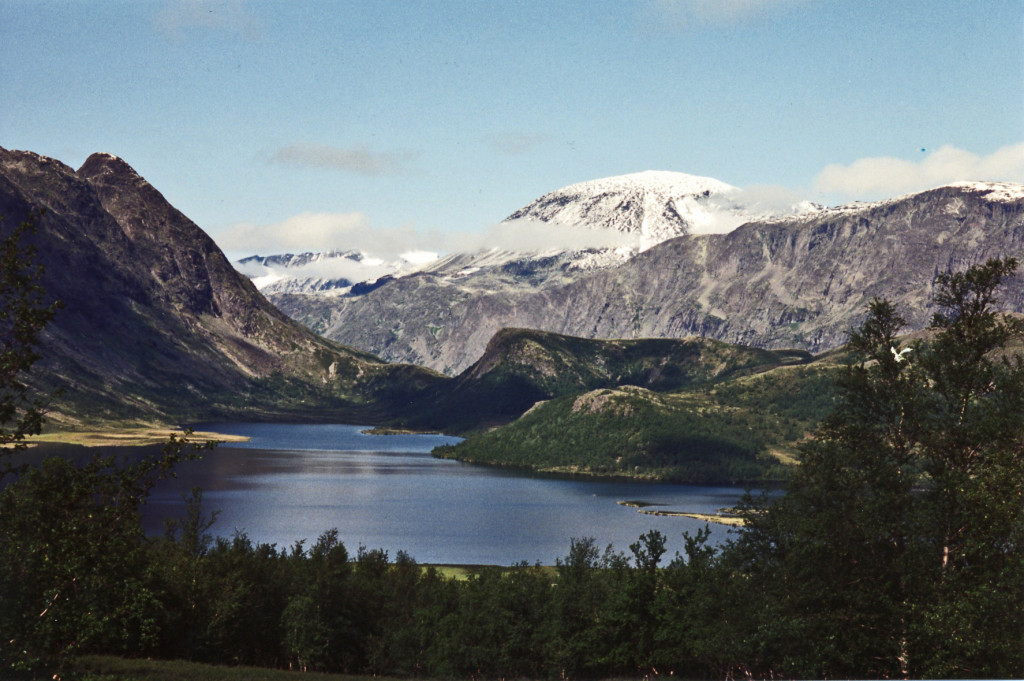
The most striking feature of outdoor recreation in Norway is its variety, people enjoy everything from a quiet stroll near home, to fishing, mountaineering and downhill skiing in winter. Such outdoor experiences may become memories of a lifetime.
Valdresflya
Nine out of ten Norwegians go for a walk or take part in other forms of outdoor recreation about twice a week. Studies show that people first and foremost seek peace and quiet, and fresh air.
Accessible Mountaineering in Norway, written by Tor Kjolberg
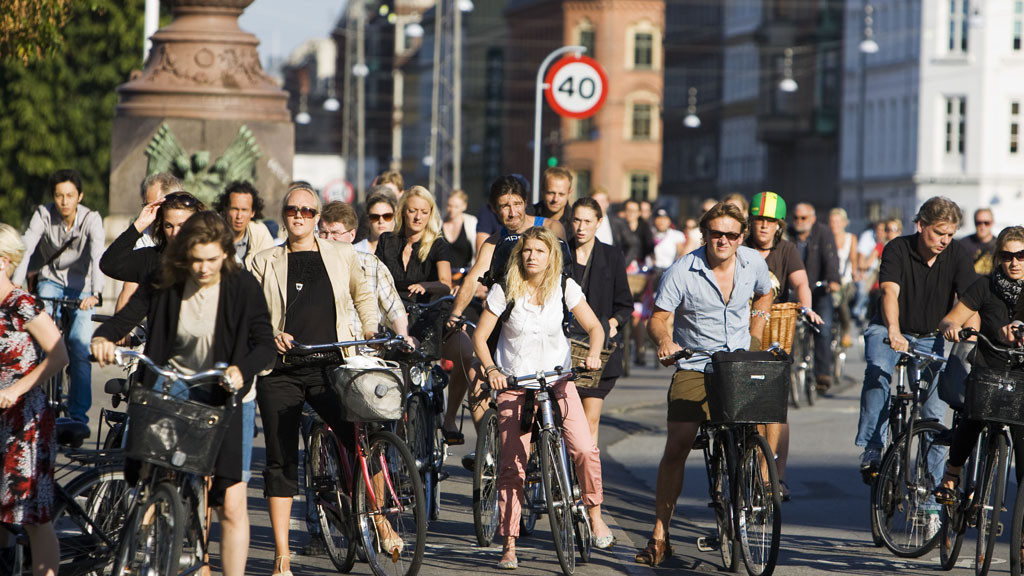
Every day 1.2 million kilometers (0.75 million miles) are cycled in Copenhagen, with 36% of all citizens commuting to work. There are five times more bikes than cars in Copenhagen. In Oslo there are twice as many.
95 percent of bikers in Copenhagen claim that they feel completely or quite safe in traffic. The count in Oslo is only 9 percent.
39 percent of people living in Copenhagen are biking to their workplaces or studies compared to Oslo with 8 percent.
Copenhhagen cyclists. Photo: Kasper Thyge
In the Danish capital almost eight out of ten bikers are biking all year round, compared to Oslo with one out of four.
Only one percent of bikers in Oslo are under 20 years old. 41 percent of people between 18 and 25 years never bike. Students in Oslo prefer commuting by four wheels.
Bicycling in Oslo
60 percent of students in Copenhagen commute by bike compared to 15 percent in Oslo, and only one percent during winter time. At every fourth school in Oslo none of the students are commuting by bike summer or winter.
Almost seven out of ten bikers in Oslo are men compared to Copenhagen where the ratio is 50-50.
About every third family with two children in Copenhagen use a bike trailer. The health benefit of biking in Copenhagen is estimated to two billion Danish kroner (250 million US dollars).
Cyclist with child carrier
Norwegians are buying almost 400,000 bikes every year, placing them second in Europe, counting by inhabitants. Only Denmark ranks higher with 550,000 bikes for 5,5 million Danes.
Girls cycling in Oslo
Five percent of Norwegians are bikers, placing the country number 10 in Europe.
Bicycling in Copenhagen and Oslo, compiled by Admin
Kristiansand is the beating heart of Norway’s favorite holiday destination; the place Norwegians go to relax and enjoy life or actively pursue their preferred leisure activities.
For many people the town and its surrounding area are synonymous with summer, sun, sea and unforgettable holiday memories. Kristiansand can offer a unique collection of activities and experiences. From boating and island-hopping in the archipelago, to strolls among inland fields and woods – all within walking distance of each other. Imagine watching the waves lapping the beach in the center of town, the wind blowing in your hair and the tang og salt in the air. A couple of hundred meters away you can fish for salmon in the Otra River. You can join a boat tour of the archipelago, take a trip out to one of the islands to bathe, or just sit still and enjoy life.
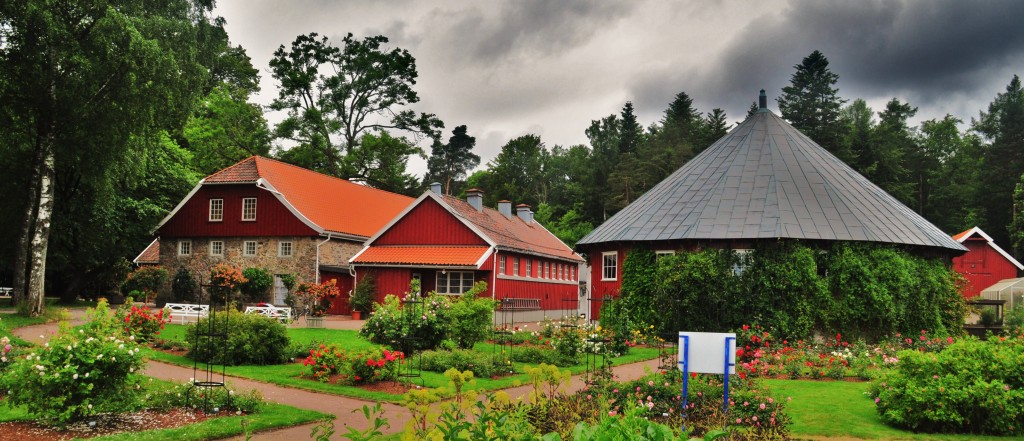
Gateway for travelers Kristiansand is also a hub for travelers, with Kjevik Airport and car ferry routes to Denmark’s Jutland peninsula. Seen from the European continent, Kristiansand is the gateway to Norway. If you decide to head east o west from Kristiansand, you will find an abundance of charming south coast holiday attractions. Museums In the eastern bank of the Otra River, just beside the E18 highway, lies the south coast’s largest cultural museum, Agder National History Museum and Botanical Gardens, which boasts one of Norway’s largest collections of cacti and a number of carnivorous plants.
Agder Natural History Museum and Botanical Garden
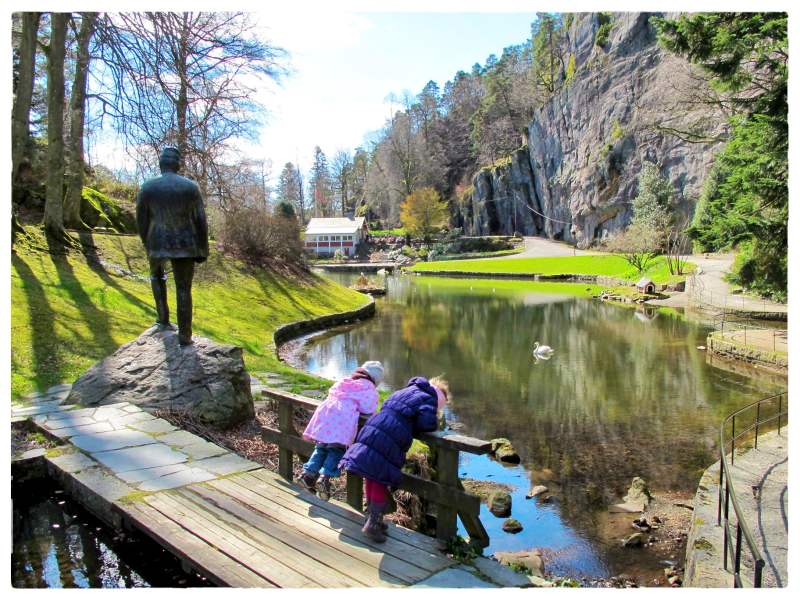
Ravnedalen Valley Country Park Just north of the town lies the Baneheia and Ravnedalen Country Park (Naturpark). It is a great area to walk in. Fiskebrygga is more than just a place for fishing boats to unload their catches. Here you will also find a wide range of restaurants and a fish market with tanks full of live fish to choose from. You can also make your way from here to Odderøya, with its rocks, footpaths, sea views and summer café. Beautiful!
Ravnedalen valley nature park
Pause for breath Sørlandet Art Museum is situated in the town center. It offers a permanent collection of Norwegian art in the period 1800-2000, as well as temporary exhibitions of paintings and arts and crafts. There are also several private art galleries.
Sørlandet Art Museum
White-painted villages Along the coast you will find a string of charming villages, with white-painted houses dating from the 18th and 19th centuries. Generations of seafaring, whether to far-flung fishing grounds or on merchant vessels plying European waters, has left an indelible mark.
From Lyngør
Zoo celebrations Once a small park with bears as its main attraction, now Kristiansand Zoo and Amusement Park is housing a number of large, national attractions. The facilities have evolved into one of Norway’s most popular tourist attractions. This year it is turning 50, an occasion that is being celebrated with two stamps prepared by Norwegian Post.
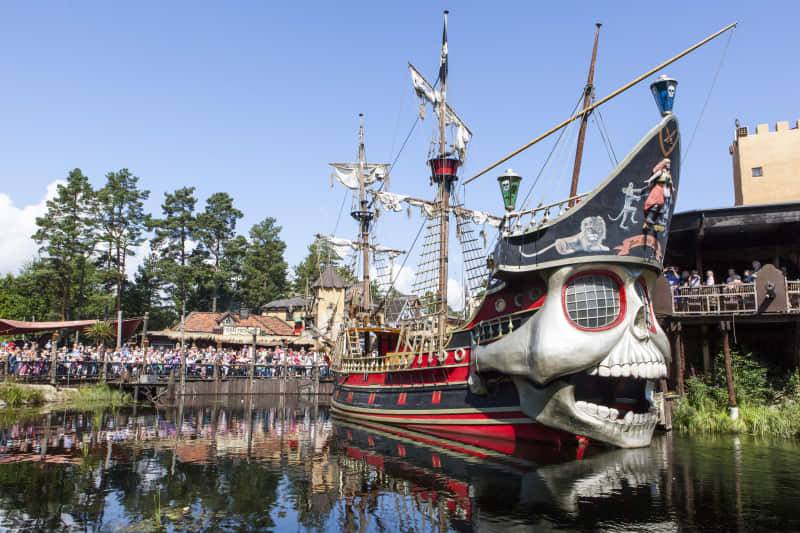
Kristiansand Zoo and Amusement Park
There is always a lot of fun to be had in the park. You can visit the waterpark, with its bathing facilities, you can go on the fairground rides, or visit the zoo and see giraffes and zebras, among many others. The endangered red panda is a popular attraction. The Kristiansand Zoo works closely with the World Wildlife Foundation to save species threatened with extinction.
The zoo also offers a rainforest full of monkeys and apes. Here you can see them swinging freely in the trees. Further into the steaming jungle are dark passageways filled with crocodiles, alligators and other reptiles. The zoo is home to more than 800 animals and birds, which live in surroundings, which are as close as possible to their natural habitats. You can also see native Nordic animals, such as wolves, lynx, wolverine and elk.
Tiger kingdom One of the zoos biggest attractions opened in 2002. Tiger Kingdom is a massive area which the zoo has reserved for among other Siberian tigers. Tiger kingdom has been nominated as the world’s best tiger area.
Tiger Kingdom
Kristiansand Zoo and Amusement Park also won the prestigious ‘Brass Ring Award’ in 2002 for its marketing campaign, in competition with the world’s most famous attractions.
Feature image (on top): View from Odderøya, Kristiansand
Danish pop promise Christopher and Norwegian super producer Matoma have teamed up on a brand new single called ‘Take Me Back’!
This collaboration is quite the Nordic pairing, joining together the musical minds of two artists that are already well known for their individual careers. Christopher has firmly established his reputation as one of Denmark’s biggest pop icons, and has been releasing a steady stream of collaborations throughout the year including ‘Limousine’ with Norway’s Madcon, as well as ‘I Won’t Let You Down’ featuring Bekah Boom.
Madcon
Matoma has also been keeping extremely busy in recent times, with his 2015 track ‘Running Out’ featuring Astrid S reaching more than 100,000,000 streams on Spotify, while his latest single, the Summer smash ‘False Alarm’ with Becky Hill, is edging ever nearer to the 20,000,000 stream mark.
Matoma
The pair have now joined forces to come up with a brand new track that will undoubtedly inject a heady slice of tropical pop into the August summer days! Led by Christopher’s distinctive and playful voice, the track plays host to Matoma’s trademark lush and lively electronic backdrop, producing a completely irresistible combination and a distinctively cool Nordic collab.
Astrid S.
Both artists are spending the Summer of the road, so make sure to check out Matoma on his Summer tour, while Christopher makes his way around Denmark in the coming weeks.
The German painter Kurt Schwitters’s work was banned by the Nazi regime in 1937 as “degenerate art”. The same year, the artist flied to Lysaker, Norway, where he constructed a second Merzbau.
He lived in exile in Norway, a country he had visited as a tourist several times. He stayed until the Germans invaded Norway in 1940. He lived in Lysaker, but during summers he stayed on Hjerøya, outside Molde, where he built his Merz-huts and worked with collages and assemblages. He traveled frequeltly around the Norwegian west-coast to grind the bread of life.
Kurt Schwitters
During his stay in Norway Schwitters built one Merzbau construction, Haus am Bakken in Lysaker, and also decorated his cottage on Hjertøya into an artwork. Haus am Bakken burned to the ground in 1951, while the remnants nif the installation in Merzhytta on Hjertøya now is preserved in Romsdalsmuseet.
Schwitters had to flee from Norway in 1940, and the cabin was left unattended for 50 years. Unprotected the interior was interior declined rapidly from the harsh climate and ravages of time. However, valuable items remained still when the project Kurt Schwitters and Norway started 70 years later, in 2010, and a large-scale rescue operation was launched. To best preserve what was left, the interior of Merzhytta was moved into what is called the children’s Schwitters-room.
The research project Kurt Schwitters and Norway, which started In 2010, aimed to put his art and his connection to Norway on the map, and to initiate new research. The initiative was a collaboration between Romsdalsmuseet, Henie Onstad Art Centre in Oslo and Sparebankstiftelsen DNB. Responsible for the project was mag. art. Karin Hellandsjø.
Hellandsjø has done research for many years on this unique artist’s life and work in Norway. Her book, “Ultima Thule” presents several of Schwitters texts , some of which have never been published. The book is richly illustrated.
Church at Fantoft by Kurt Schwitters
In a collage on the back wall in the entrance to Merzhytta, Schwittler had placed a reproduction of a woman portrait of the Renaissance. This has over the years become almost an icon of the museum. His Hjertøy-madonna appears still intact.
The image is a reproduction of a painting by Bernard von Orley, a portrait of Margaret of Austria, from ca.1518. So it is no secret Mona Lisa, but a beautiful, sensual woman portrait which urges contemplation and will forever be associated with Kurt Schwitters and Hjertøya.
Remainings of Schwitters’ merz-building at Hjertøya
After the German invasion of Norway in 1940, Schwitters escaped to Great Britain, where he was interned for over a year. He settled in London following his release, but moved to Little Langdale in the Lake District in 1945. There, helped by a stipend from the Museum of Modern Art, he began work on a third Merzbau in 1947. The project was left unfinished when Schwitters died on January 8, 1948, in Kendal, England.
Painting on plywood from Lysaker, about 1939
Kurt Schwitters (1887–1948) was one of the most innovative artists of the 20th Century. His creative diversity is evident in everything from collage, sound poetry, and architecture, to sculpture, painting, and typography.
Feature image (on top) Photo of Kurt Schwitters painting at Djupvasshytta, by Ernst Schwitters
Kurt Schwitters and Norway, written by Tor Kjolberg
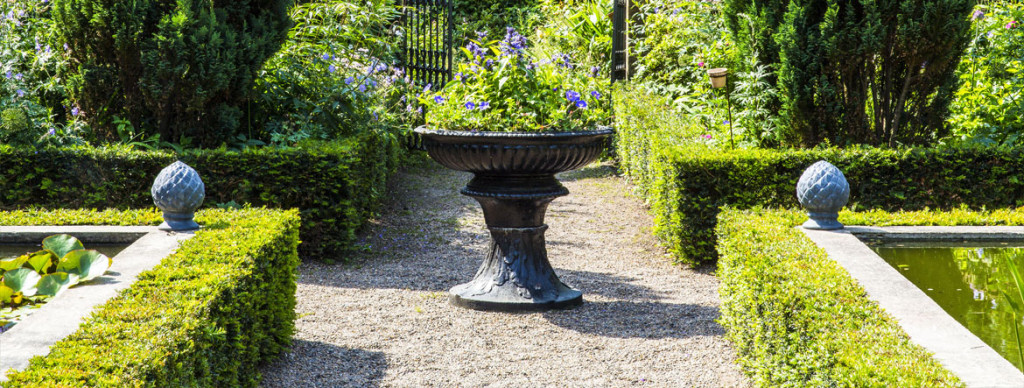
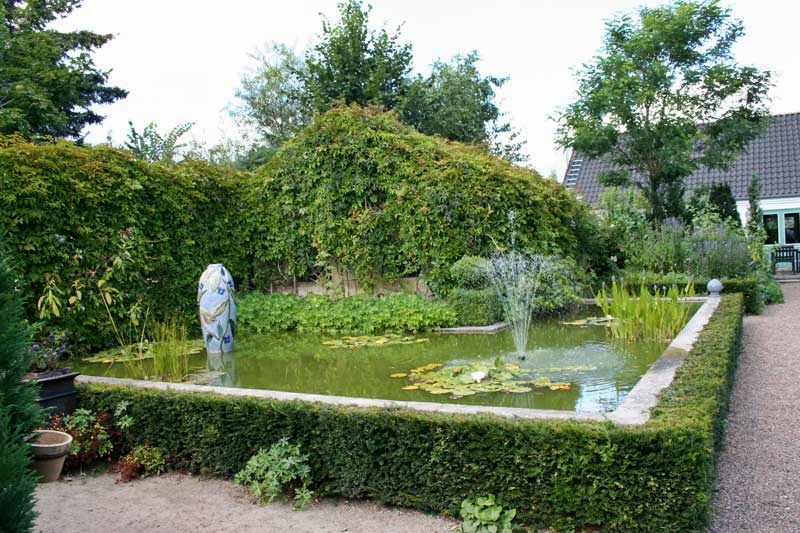
The Garden in Hune, also known as Anne Just’s Garden, is a truly a piece of art. Here you will find thematic gardens with colorful flowers in a beautifully architect-designed park.
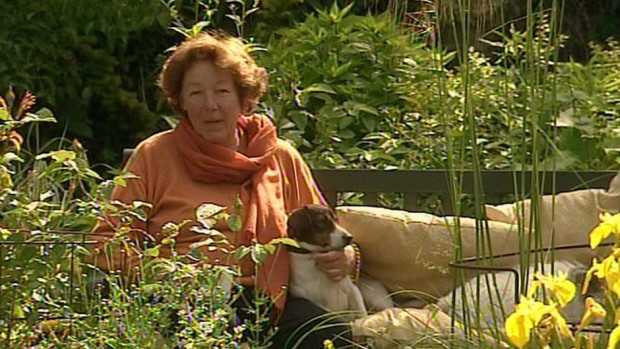
“My whole life has been a love affair with flowers,” said Anne Just, the avid painter of plants and blossoms, who gave birth to her Garden at Hune.
A childhood brim full of flowers, her favorite motives when, bedecked in beret, her bicycle basket full of water colors, brushes and canvas, she would cycle out to the countryside around her childhood home in Kalvehave, in southern Zealand, Denmark.
Later she would travel the world, soaking up sights and skills with a sole goal: becoming a painter. The garden of Anne Just – a painter’s garden, containing 5100 square meters of thematic gardens in hilly surroundings – was founded in 1991. At that time, the area was part of a great dune plantation; however, since then, the garden has constantly changed.
The southern section of the Rose House was constructed in 1993 and hedges planted, while the North Garden was planted and its elongated rainwater basin constructed the following year.
The house was built and the curved water basin between the pines was constructed in 1997. And so it continues up until today, where you may experience the iris hill and the forest floor, The Olympic Garden, The Pastel Garden with a small pond, raised beds, a pavilion, The Yellow Garden containing pergola and a garden house. Furthermore, the three-towered pigs’ house as well as the drift tower for winter storage, The Palette Garden, Erik’s Garden, a coffee house, a pottery pavilion and the latest built garden motel.
In 2014 the Garden at Hune was selected for Phaidon’s The Gardener’s Garden, featuring the world’s 250 most beautiful gardens.
In her spare time Anne Just studied art history and cookery books. The latter with a passion that met the standards of professional gastronomy at gourmet restaurants, with or without French chefs and hand-painted menus, before winding her way surreptitiously, coming finally to settle at Hune.
Perhaps in was the Duck House that made the difference. In any event, the architect Claus Bonderup designed one for her when she lived at one point at the manor house at Skeelslund, west of Aalborg. The very same Duck House that today takes pride of place in the rainwater basin coiling around Iris Hill, at Hune.
Claus Bonderup has designed underground nightclubs along the Amazon in Brazil, planned fishing harbors on the Aleutian Islands off Canada’s west coast, catalogued historic buildings in northern Yemen, and secured international fame with his Arctic Centre, which, like a beacon in the Polar night, transforms Rovaniemi in northern Finland into a space utterly unique.
On top of all this, Claus Bonderup has to his credit several outstanding works within Danish architecture.
In 1972 Claus Bonderup came across a plot of land behind the dunes on the outskirts of Blokhus which would constitute the beginning of his comprehensive experiments with space, its form and its volume generated by pure geometry.
One fine day he met the colorful Anne Just, for whom he built a house for the ducks she reared in her park-like garden. Designed with a west-facing terrace it adhered rigorously to the rules of the golden section.
But then the ducks gained weight, obviously, and the door soon became too small! To make a long story very short, the ducks ended up on the dinner table, as Claus and Anne found love and each other.
Anne Just
Today, it all appears as one great theme park, supplemented with a shop, a painting exhibition, plant sales, book publications created by the flower artist Anne Just and the professor, designer and architect MAA, Claus Bonderup, in a unique symbiosis between his house and her garden. The Garden in Hune is visited by more than 20.000 people every year. A newly founded fund secures the future of the house and garden.
B&B for Garden Lovers, source: The Garden in Hune.





 competitive labor markets. Yet despite failing to meet the metrics of the Anglo-American variety of capitalism, Scandinavian countries stubbornly continue to prosper, and regularly come out on top of the global indexes of



























 Schwitters had to flee from Norway in 1940, and the cabin was left unattended for 50 years. Unprotected the interior was interior declined rapidly from the harsh climate and ravages of time. However, valuable items remained still when the project Kurt Schwitters and Norway started 70 years later, in 2010, and a large-scale rescue operation was launched. To best preserve what was left, the interior of Merzhytta was moved into what is called the children’s Schwitters-room.