
The Norwegian West Country

0

The landscape of Norway’s western coast, with its snow-capped mountains, deep fjords and narrow inlets, is full of contrasts – both majestic and mild at the same time.

Roughly paraphrased, that is how the Norwegian poet Tore Ørjasæter (1886-1968) opens his hymn to the west country. He puts into words what so many people are struck by when they come here: it is wild and beautiful, but also gentle and hospitable.
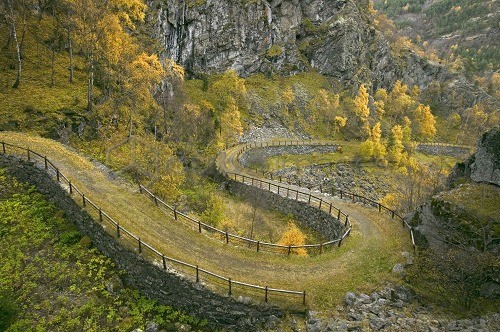
Norway, Sogn og Fjordane, Leardal, Vindhella, curves,Europe, Scandinavia, west Norway, Lv¶rdal, Vindhella-Stravüe,
Norway, Sogn og Fjordane, Leardal, Vindhella, curves,Europe, Scandinavia, west Norway, Laerdal, Vindhella-Stravüe,

The west country us probably the part of Norway that offers the greatest contrasts. Here you can climb up the mountains surrounding the busy city of Bergen, or take a boat from Ålesund to the islands dotted like stepping stones to the open sea.
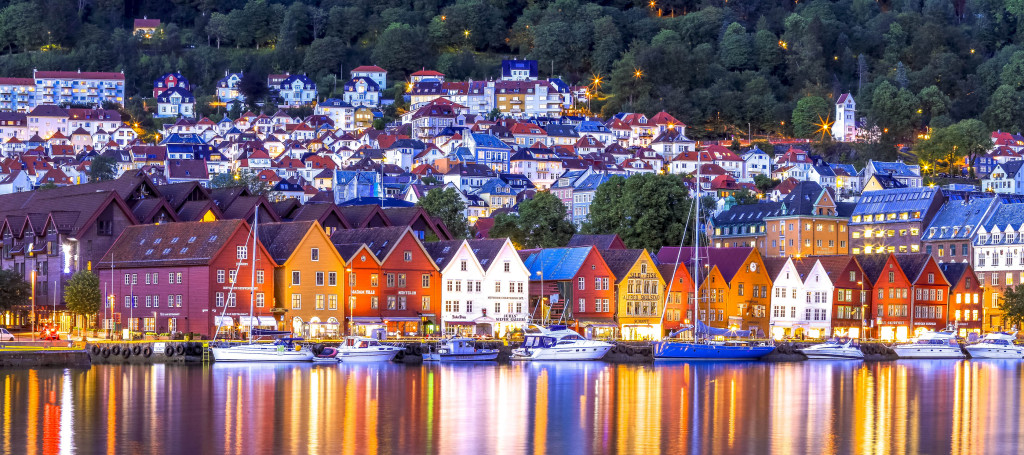
Old quay, Bergen
Old Quay, Bergen

You can wander in shady forests or rest in a quiet inlet. The west country can be described as the distillation of everything that is typical of Norwegian nature – the fjords, the sea, the mountains, wide open spaces and deep forests. All this must have left its mark on the people living here through the generations?
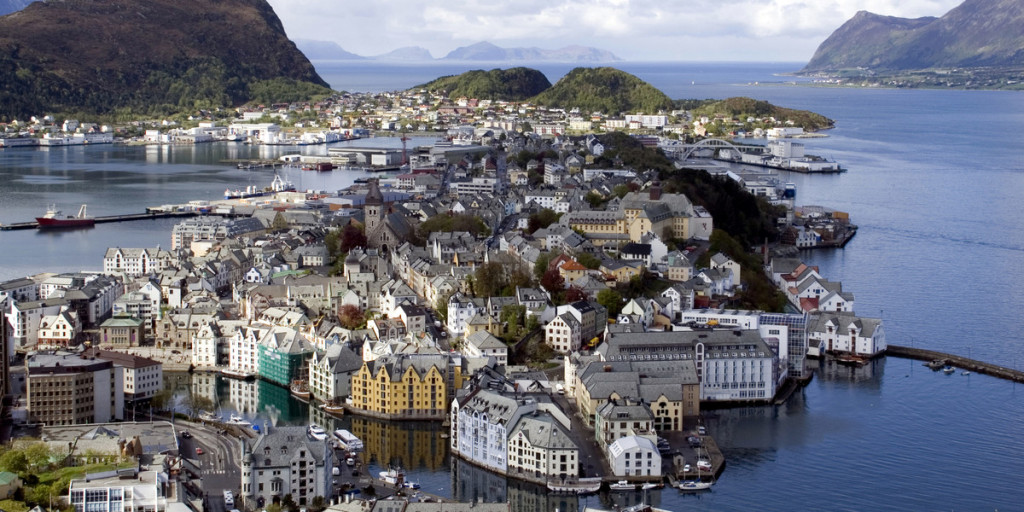
Aalesund, Norway
Aalesund, Norway

“Yes, I think so,” says Olav Grinde, who together with photographer Per Eide has written a richly illustrated guide to the region: “The Magic of Fjord Norway”. This is not a typical travel book which shows the surface of towns and villages, and tells you how to get there. “We did that too,” he goes on. “But first and foremost we wanted to paint a colorful and diverse picture. We also wanted to tell the story of the west country, about how the mountains were created, how the landscape has influenced the west country character, and how the people and culture have gone hand in hand for generations.”
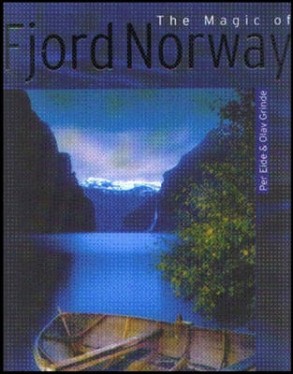
210716-magic-of-fjord-norway-book-cover
Olav Grinde talks enthusiastically about his roots and his love of the west-country. He is, like most west-countrymen, a fierce local patriot, but one that does not let it tip into maudlin sentimentality. That is certainly not part of the west-country character.

Geiranger fjord, Photo: Per Eide

“I think west-country people aee rather taciturn and unsentimental, frugal and temperate,” says Grinde. “I think that is to do with how they have learned to live with the elements and made a living from the land and the sea.”

Geiranger fjord with cruise ship

The power of nature
That is precisely what the first part of the book is about – the sea, the fjords, the mountains, woods and glaciers. Here the reader learns how the fjords were created through a series of ice ages, but is also tempted by the prospects in store for them if they decide to explore themselves on foot or by bike.

Huerigruten in Hjorundfjord. Photo by Erika Tiren
Hurigruten in Hjorundfjord. Photo by Erika Tiren

The second part of the book does not go as far back as the ice age, but the reader gains a deeper and more nuanced understanding of the Vikings and their way of life.

Norwegian stave church

The book is also about religion. For it is in this part of the country that Christianity was introduced in the 11th century, and it is here that strict Protestantism, Puritanism and temperance still hold sway in some local communities.

Surrounded by history
Character, local culture and customs are one thing. Just as exciting is to get an introduction into local architectural and craft traditions. And this book provides it.

Travel by traiun in Flåm

“You just have to look around you,” says Grinde enthusiastically. “Much of the architecture we see today is built in ancient wisdom. And today’s wooden fishing boats resemble the old Viking ships in their design and construction. The book is a result of countless hours of research and I have spoken to a great many people with knowledge I didn’t even know existed. I learned, for example, that people had waterproofs long before Helly Hansen. But they used garments made of oil-impregnated hides or birch bark. However, I don’t mean that we should focus only on history and get all romantic,” he adds.
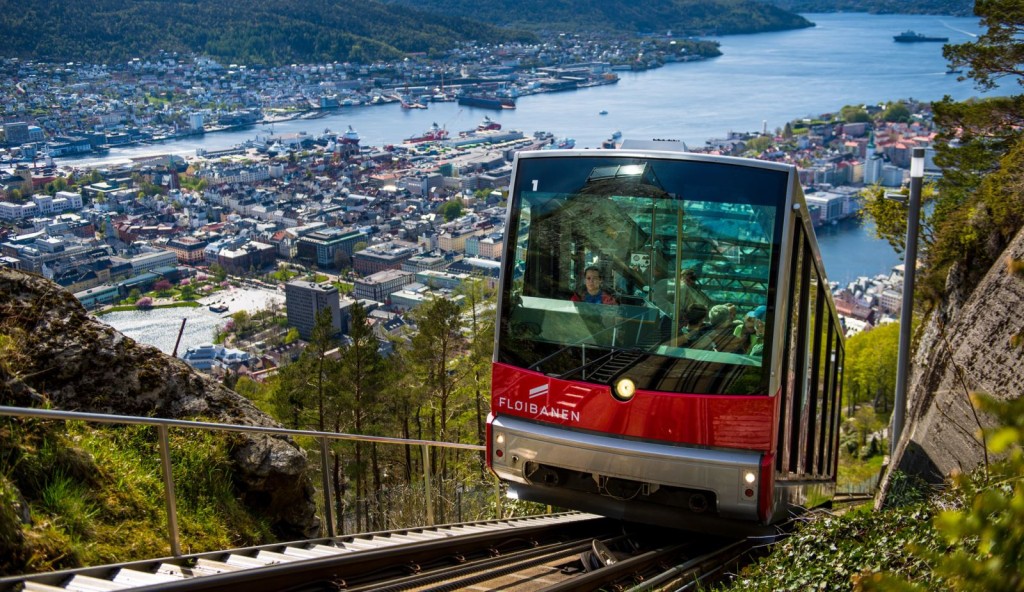
Trancar to Fløyen in Bergen. Photo: Sverre Gjørnevik, Visit Bergen
Tramcar to Fløyen in Bergen. Photo: Sverre Gjørnevik, Visit Bergen

“The west-country is also a modern region. That is why we have devoted a lot of space to presenting and describing our thriving towns and villages. Today. Road building, shipbuilding and oil production are important economic drivers. And the fishing industry. You could say that most of the raw materials exported from this country are produced here – oil and fish, the backbone of the Norwegian economy,” says Grinde, who emphasizes that the book is also published in English. You can also buy a paperback edition with the text in Norwegian, English and German.

Norwegian fjord
Norwegian fjord

Yes, we will allow him that much advertising space. The glossy hardback edition is certainly a joy to behold.

The Norwegian West Country, written by Admin.

National Parks in Scandinavia

The Scandinavian region has many national parks, each with its own claim to unique native flora and fauna.

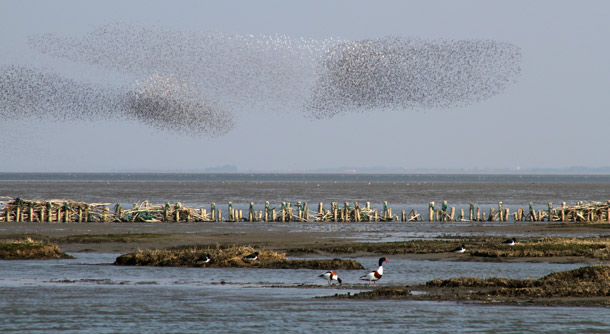
Denmark’s parks are very new – the first opened in 2008 – and contain small but unique environments such as the tidal flats of the Wadden Sea.

Parks in the other Scandinavian countries tend to be much bigger, with marked trails. In the more remote parks, you’ll often find a chain of mountain stations set a day’s walk from one another along waymarked footpaths, providing shelter for walkers. Most are equipped with cooking facilities, a shop and comfortable beds. Some have a self-service restaurant and a sauna.

Wadden Sea National Park, Denmark

They are not hotels, but simple accommodation designed to provide a haven at the end of the day for tired walkers.

Åmotdal Cabin, Norway

Large areas of Norway have been designated as national parks to protect special habitats and support biodiversity.

Jostedals Glacier, Norway

Sweden’s 28 national parks cover everything from low-lying marshland to Sarek’s trackless mountains and glaciers.

Sarek National Park, Sweden

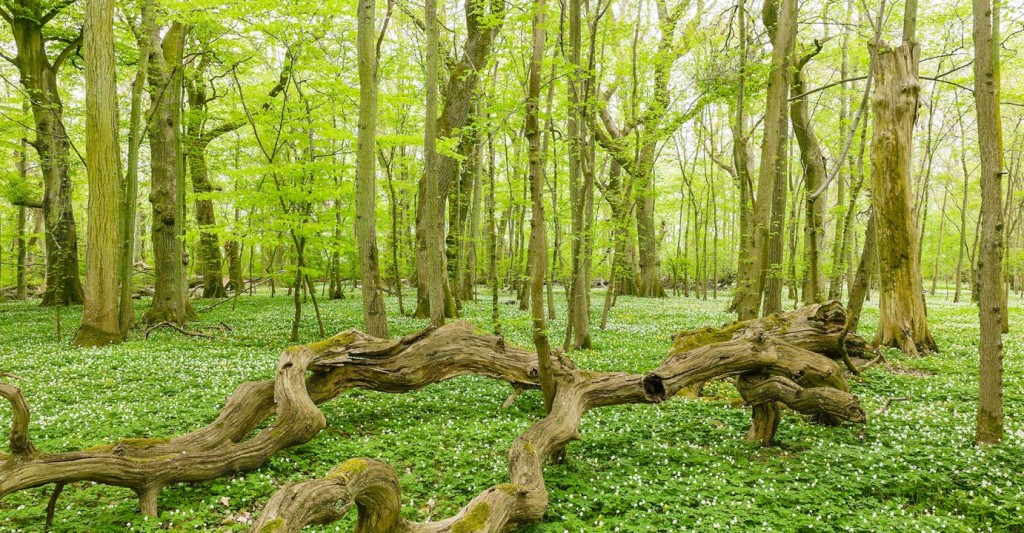
For spring flowers and birdsong, head to Dalby Söderskog in Skåne.

Dalby Söderskog, Sweden

Store Mosse in Småland is worth a detour for birdwatchers interested in whooper swans, marsh harriers and cranes.

Whooper Swans, Photo: David Fyles

In Sweden and Norway, the extensive networks of walking and hiking trails are marked by a red “T”.

020816-hiking-in-norway
National Parks in Scandinavia, written by Tor Kjolberg

Feature image (on top) Huldrefossen (Wood Nymph Waterfall)

Norway’s Views

0
200716-trolltunga-troll's-tongue-norway
Troll’s tongue

From precipices overlooking fjords to architectural lookouts, could Norway be the world capital of the spectacular view?

If you want to hang out over a terrifying precipice, Norway is your country. Spots like Trolltunga (Troll’s Tongue) in Skjeggedal, are left as close as possible to how nature intended. So don’t expect protective fences on the four-hour hike to the precarious rock hanging out 700m above the lake Ringedalsvatnet.

Pulpit Rock
Pulpit Rock

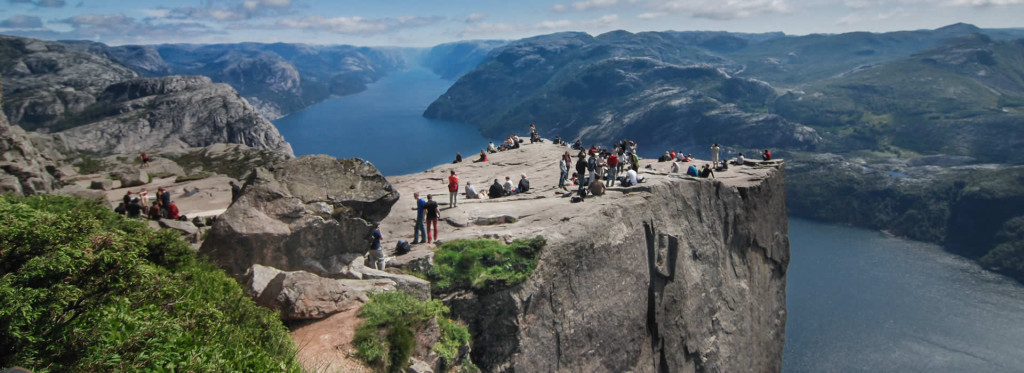
Slightly easier to get to is Prekestolen (the Pulpit Rock) in Forsand, which now attracts over 200,000 hikers a year for the 3.8km trek to its 25, by 25m flat top, perched 604m above the Lysefjord and the Ryfylke valley.

Kjeragbolt
Kjeragbolt

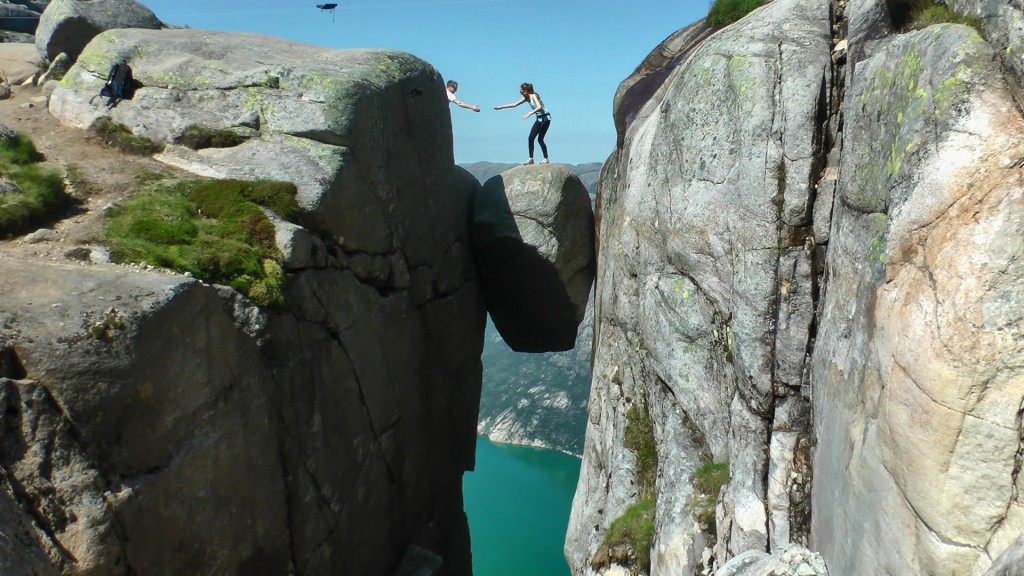
Nearby is the Kjeragbolt, a 5 square meter boulder lodged in a 984m-deep crevasse in the 1,100 in the 1,100m Kjerag mountain, which is popular with hikers and BASE jumpers.

From Andøya, Norway's national tourist routes
From Andøya, Norway’s national tourist routes

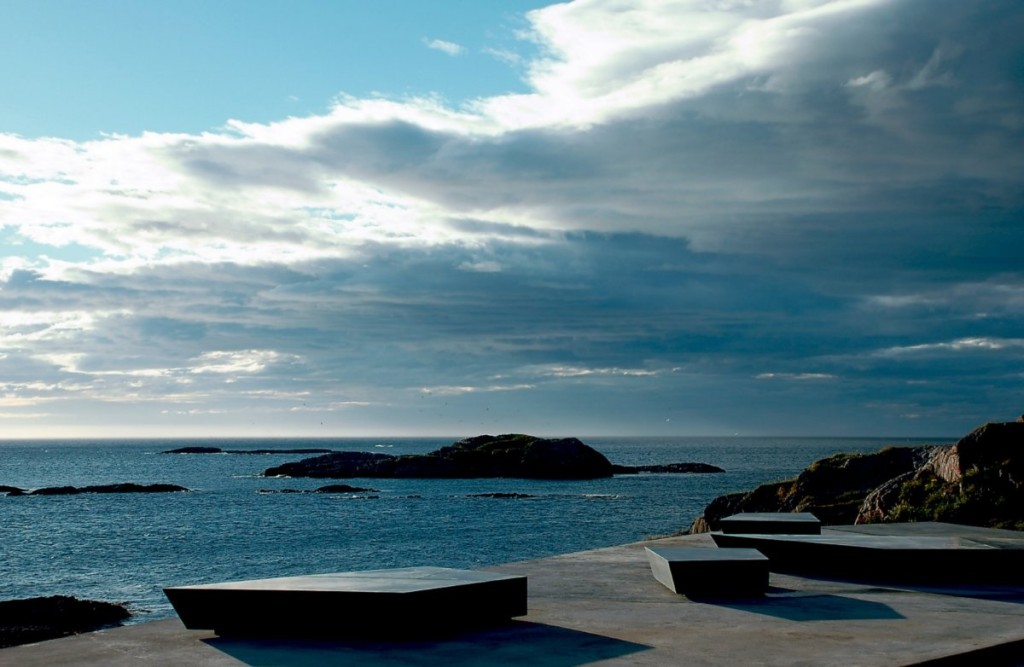
Norway has developed 18 National Tourist Routes to take the country’s landscape and many of these drives have been augmented with spectacular viewing points. Beautiful installations on the Andøya, Lofoten (above, designed by Snøhetta) and Trollstigen routes, for example. You will find protecting platforms at Gaularfjell, Ørnesingen and Aurlandsfjellet (by architect Todd Saunders and Tommie Wilhelmesen). These don’t just showcase Norway’s stunning outdoors, but innovative design too.

Feature image (on top) Eagle’s Bend, Geiranger, Norway. Photo: Statens Vegvesen

Norway’s Views, source: Visit Norway and Nasjonale Turistveier.

Norway Popular to Swedish Job Hunters

Between 1990 and 2007 studies show that the number of Swedes commuting to work in Norway had doubled. In spite of the recent fall in oil prices and downsizing in the oil industry, the number of Swedes seeking jobs in Norway is still on the rise.

According to the Confederation of Swedish Enterprise, this migration could result in long-term damage to the Sweden’s growth. The number of Swedes choosing to work for their Norwegian neighbors has risen by 25 percent in just two years, to 83,000 in 2009. Of those Swedes with a tax card in the country, 35 percent are in their twenties.

290716-salaries-norway-sweden
More than 90,000 Swedes work in Norway today, making up the largest immigrant group in the country. Staffing company worknorway.se said it has another 50,000 Swedish job hunters in its database, seeking better pay and conditions across the border.

In the years after World War II — in which Norway had been occupied by Nazi Germany and Sweden had stayed neutral, leaving its industrial base intact — Sweden’s economy grew at a breakneck pace. Workers came from all over Europe, and not least from Norway, to fill the factories, shipyards and construction sites of the boom years.

290716-prices-norway-sweden
Today the youth unemployment soars in Sweden, more youngsters are fleeing across the border to Norway in an attempt to find work. A quarter of Swedes aged between 15 and 24 now find themselves outside the labor market in their home country, with the ongoing economic crisis only making matters worse.

“Norway is an attractive country to work in,” worknorway.se’s recruiting manager Mikael Ljung told newspaper Dagsavisen. “We have more than 50,000 registered in our bases, who want to work in Norway. Norway is a nice country, and often offers better conditions than us. The service industry is the most popular. And it is the sector with the most jobs. But we provide staff within all sectors.”
“Most Swedes who come are 18 through 25, and are prepared to work hard,” said Mikael Svensson, a Swede who recruits countrymen for the staffing company Adecco. He added that Swedes are very popular among Norwegian employers.

“I have more questions than before about foreign opportunities from those with academic training,” said Pirjo Vaananen from the Public Employment Service in an interview with Stockholm News. “Often they show an active interest in working abroad just before they finish their education,” he added.

Charlotte Lundell had been a travelling youth since leaving her childhood home in Stockholm at 18. She first went to France, before she studied at the Uppsala University and in Australia and then getting a job in Oslo as Brand Manager at Orkla Confectionery & Snacks.

Working in Norway
Working in Norway

“I love Oslo. The streets are so nice. The houses are so charming. Everything is just around the corner. You’re close to nature. One of my first days in Oslo I saw a guy with a snowboard in the city center. Strange, I thought. Later I realized he had come straight from the piste. You can take the underground straight from the city center to the hills, and ten minutes on the bus takes you to the best beach. There are coffee bars everywhere. It is easy to grab a cup of coffee before going to work, or to meet friends for a five minute break in the afternoon. I have time to meet the lovely people I have met here, both Swedes and Norwegians. Life is more than work. The quality of life is very high in Oslo.”

Johannes Sorbo
Johannes Sorbo

“The Swedes who currently work in Norway largely work in the service industry, like shops, hotels, restaurants and so on,” said senior adviser Johannes Sorbo from Norway’s labor and welfare administration NAV. “In addition there are many who work in the Norwegian health system. In the future, the demand for labor will increase especially within health and care, because of the aging population. Here Swedes have the advantage of knowing the language and can easily go into these jobs straight away. At the same time, the need for this type of labor will probably also increase in Sweden in the future.”

Advisor for the Norwegian Employment Service, Johannes Sorbo, said, “It is certainly a plus that wages are better than in Sweden, and it is easier for young people to find jobs in Norway than in Sweden. We have a labor shortage.” Sorbo added that young Swedes are popular with Norwegian employers as, “they are known to be skilled and easy to deal with, and the language is of course no problem.”

Economist for the Confederation of Swedish Enterprise, Malin Sahlen, said the issue is not so positive for Sweden. “It’s really worrying that graduates and other young people see a reason to leave Sweden. For companies, who will need these employees later, a direct consequence is that key skill and potential is leaving the country. In the long term, this means lower growth and prosperity for the country as a whole,” Sahlen told Stockholm News.

Job opportunities in Scandinavia
The Riley Guide is an international job seeking guide founded in 1994 by a university librarian, Margaret F. Dikel (formerly Margaret Riley). The Riley Guide is a gateway to job, career, and education information sources available online.

For more information on job opportunities in Scandinavia, follow this link.

Norway Popular to Swedish Job Hunters , compiled by Admin

Open Air Viking Festival in Norway

The open air Viking festival Midgardsblot, runs from 18 through 20 August in Midgard, a park in Borre in the county of Vestfold, where the mighty rulers of the Norwegian Vikings lived, feasted, and were laid to rest.

Experience a three day blot with blasting metal and true Vikings at historic grounds. Some of the world’s leading metal bands will enter the Midgardsblot stage.

Autumn at Midgard
Autumn at Midgard

New Open Air festivals are sprouting like mushrooms all over Europe. Yet Midgardsblot in Norway has a very special touch. It is a larger, longer, and even more ambitious festival exploring the links between extreme metal and Viking culture. You are all summoned to the world of the Vikings with exceptional concerts in unique and historical surroundings.

Runa Lunde-Strindin
Runa Lunde-Strindin

Main organizer Runa Lunde Strindin says the idea to the festival came with the 200th anniversary of the Norwegian constitution in 2014. She got a call from the Akershus county, which has a constitution building from 1814 at a place called Eidsvoll, where the constitution of Norway was signed. They wanted to do a black metal concert at one of the Viking Grave mounds there. It was one festival day on the 13th of September that year, and it was a huge success.

Midgard historical center, Borre, Vestfold, Norway

Last year Midgardsblot was arranged in Borre. One of the performers, Wardruna founder Einar Selvik, a man steeped in Viking history, not least in his musical contribution to the much loved TV series, Vikings, emphasizes that Borre is a stunning place and the whole Vestfold region should be highly significant for anyone who is into Norse history. The area is full of historical sights. “Last summer I had the great privileged to perform a song on the site’s biggest burial mound in front of 700 Viking re-enactors honoring the past,” says Selvik.

Viking activity at Midgardblot Festival.Photo: Espen Winther
Viking activity at Midgardblot Festival. Photo: Espen Winther

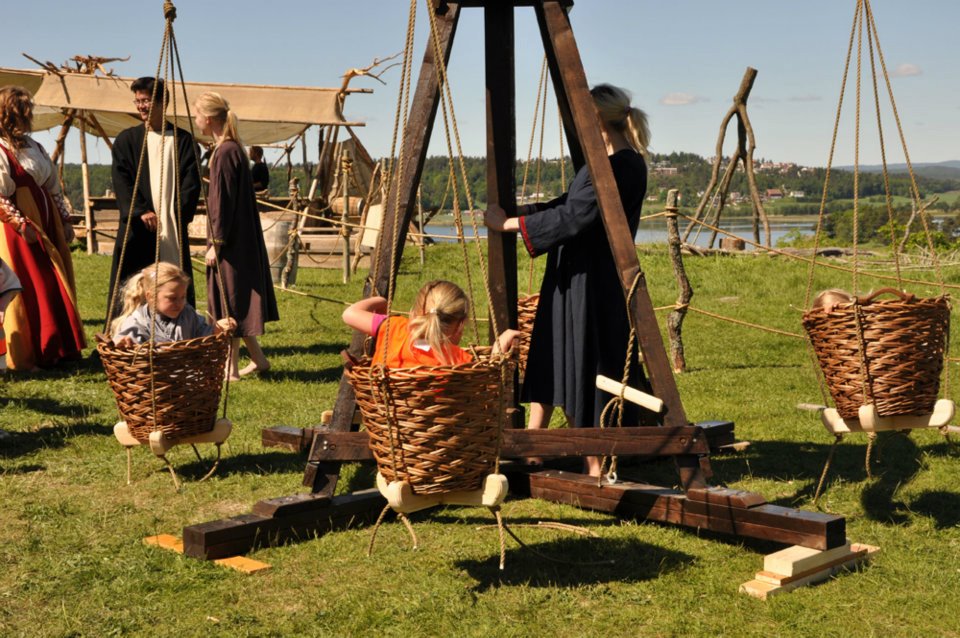
The festival this year is bigger than last year and will include a beer festival with craft beer and tastings, Viking village and market, festival camp at the beaches of Borre park where you can live like a Viking. There will be Viking battles and ancient Norse games, guided tours, exhibitions, lectures and activities for the whole family.

Feature image (on top): Midgardblit Festival in Borre, Norway

Open Air Viking Festival in Norway, written by Tor Kjolberg

Swedish Musician Turns 2,000 Marbles into Music

Swedish musician Martin Molin, 33, spent a year on a machine that turns marbles into part of a musical instrument. He spent 14 months working on the instrument that plays both melody and rhythm.

Martin Molin, 33, lead musician of Swedish band, Wintergarten, debuted the Wintergatan Marble Machine earlier this year to an outpouring of amazement and praise from the public.

Martin Molin and his Wintergatan marble machine

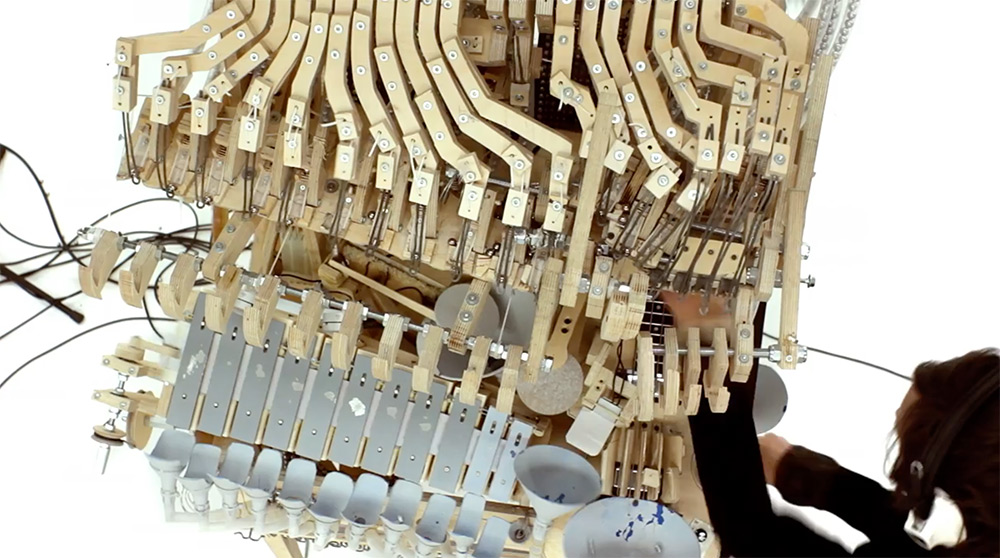
The Marble Machine is a hand-cranked music box loaded with instruments including a circuit of 2,000 cascading steel marbles. As the devices cycles it activates a vibraphone, bass, kick drum, cymbal and other instruments that play a score programmed into a 32 bar loop comprised of LEGO technic parts. The marbles are moved internally through the machine using funnels, pulleys, and tubes.

Molin officially unveiled his “Marble Machine” on Feb. 29 with a YouTube video featuring an original instrumental composition.

“It follows a long tradition of marble machines that ‘play with physics’”, Molin explains, except his marble machine “differs in the way that you can program how the marbles are falling.”
280716-martin-molin-and-hus-instrument

Molin began work on the marble machine in August 2014 and hoped to spend about two months on the project. Its complexity soon spiraled out of control as all 3,000 internal parts had to be designed and fabricated by hand, a time-consuming process that eventually took 14 months.

280716-wintergatan-marble-machine-detail
The Swedish musician was inspired to build his machine after visiting a museum with mechanical instruments in Utrecht, Netherlands.

280716-Wintergatan_Marble_Machine_and_Martin_MolinDespite the extreme interest an oddity like the Wintergatan Marble Machine is bound to generate—especially on the internet—don’t expect to see it on tour anytime soon, as the contraption has to be completely disassembled to move it. Molin hopes to build additional music devices, some smaller, or perhaps more suited for transport.
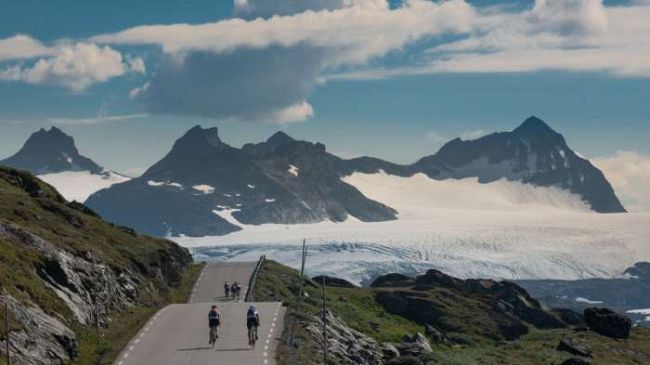
Feature image (on Top) Martin Molin in Liseberg amusementpark, Gothenburg

Swedish Musician Turns 2,000 Marbles into Music, written by Admin

Rolling Vikings

0

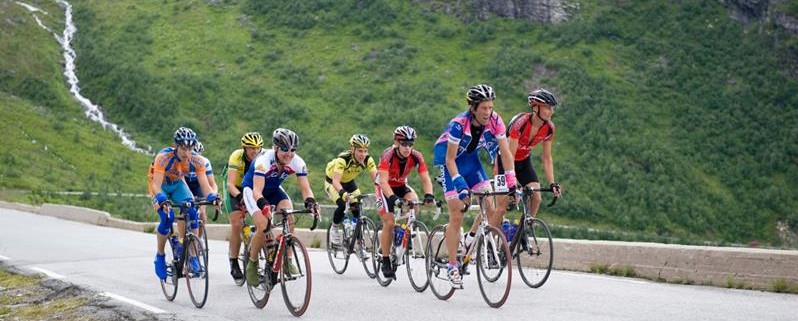
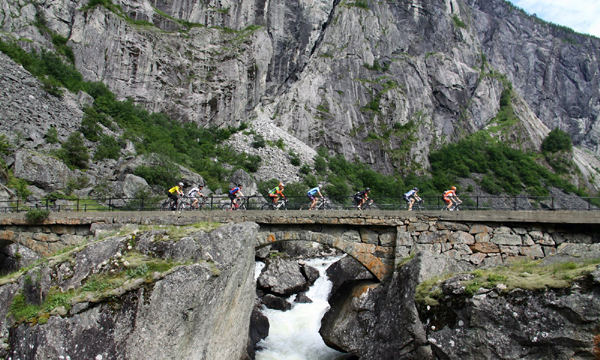
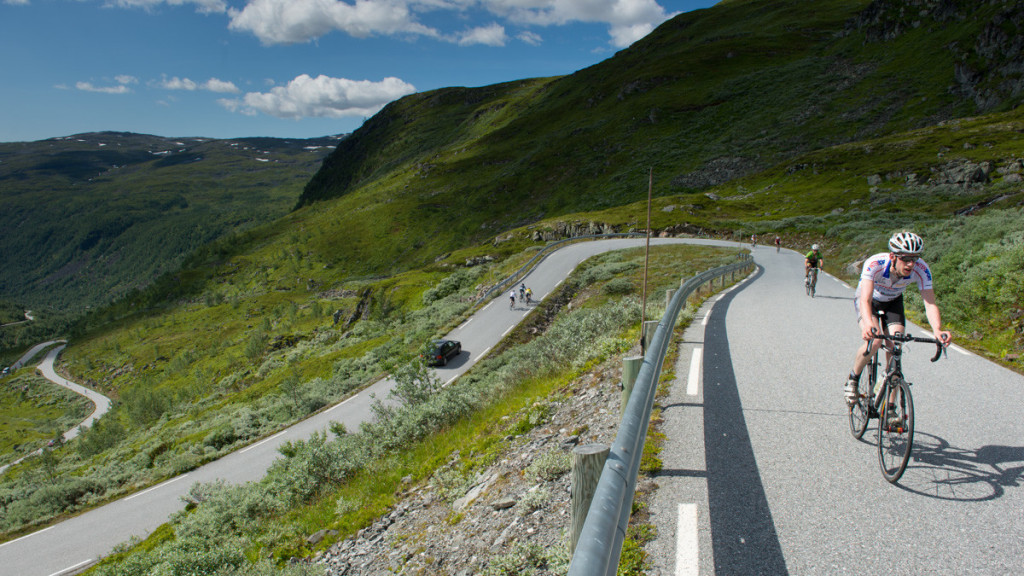
2016 will be the eleventh summer in a row with rolling Vikings in the world’s most beautiful 7 day cycling stage race in Norway, The Viking Tour.

There are no time limits and participants can choose to ride with non-timed enthusiasts in the touring class. The challenge is simply to reach the finish line every day and get all the shared thrill at evenings while recovering.

Participants from las summer say it is a heartwarming atmosphere in this steepest race north of the Alps through the World heritage Norwegian fjord land.

From Viking Tour 2013

“We hope to welcome just the right mix of young and old, fly-weight, bantams and elephants as in previous tears. This mix is surely the single most important contributor to the special informal and warm atmosphere that makes VT more than another cycling competition,” say the organizers.

180716-viking-tour
For anyone who has ever wanted to do a multi-day road cycling stage race/adventure, this is a great first event. It is low key, a relatively small field and a touring option if you miss a day.

Both organizers, roadside fans and not to mention the riders themselves are very keen to welcome anyone simply up for an ultimate cycling holiday. Whether your goal is to complete the week or to drown in lactic acid just a little later than your best competitor.

180716-Vikingtour-2
During Viking Tour you can skip stages. Having a bad day, needing rest or just wanting to take photos for a day: at any time you can step off and ride with the pick-up van to the daily stage finish.

Make no mistake: The Viking Tour is also a tough stage race, with a route unmatched north of the Alps. For the competition classes there are challenges in abundance. Creating new routes, the organizers always end up asking themselves if this is simply too much vertical madness.

180716-vikingtour-3
The Viking Tour 2016 runs from 6 through 12 August.

For more information:
http://www.vikingtour.no/

https://www.deltager.no/vikingtour2016

Rolling Vikings, written by Admin

The Food Halls in Stockholm

0

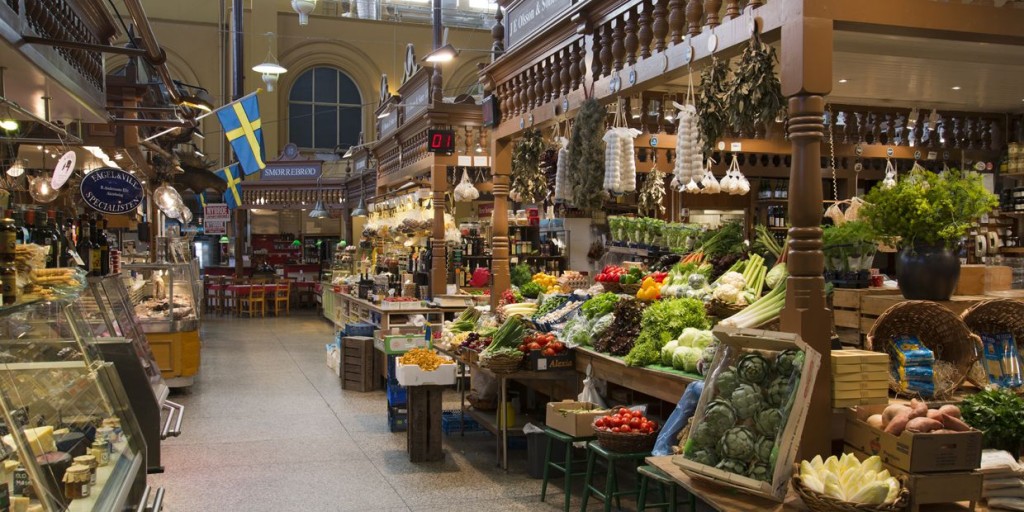
A gorgeous food hall from the 1880s, the busy Old Haymarket and the youngest one, the South Halls, have made Stockholm the most ‘appetizing’ capital in Scandinavia.

Østermalm Food Hall
with counters and shelves packed with the best of the finest also houses numerous restaurants and cafés where you can enjoy traditional Swedish delicacies, with an emphasis on seafood and “husmannskost” (classic Swedish fare).

270716-ostermalm-food-hall-stockholm-sweden-visit-sweden
When Jamie Oliver named Östermalms Saluhall one of his favorite places after a raving trip to Stockholm, the hall has been even more frequented and received several positive press reviews. You’d be hard-pressed to find any guidebook to Stockholm that doesn’t include this iconic landmark.

The new Ostermalm food kall 2018
The new Ostermalm food hall 2018

Until 2018 the food hall is being renovated and the food stalls and restaurants are moved to a temporary covered market situated on the square.

Old Haymarket (Hötorgshallen)
is the busiest of all three halls. Built in the 1950s and having undergone two major renovations in the 1990s and most recently 2011-2012, Hötorgshallen’s international flair makes it a practical shopping choice with vendors ranging from South America and the Middle East to Eastern Europe, Asia, and a few Swedish specialty booths as well.

270716-hotorgshallen-stockholm-sweden-visit-sweden

Hötorget is the epitome of Stockholm cosmopolitan bustle. Roll down the escalator from Hötorget for a quick herring sandwich at Kajsas Fisk, a Turkish burger at Izmir or a juicy, spicy merguez sandwich with ratatouille at La Gazelle. Swedish specialties? Bondens Matbod. Seafood? Melanders.

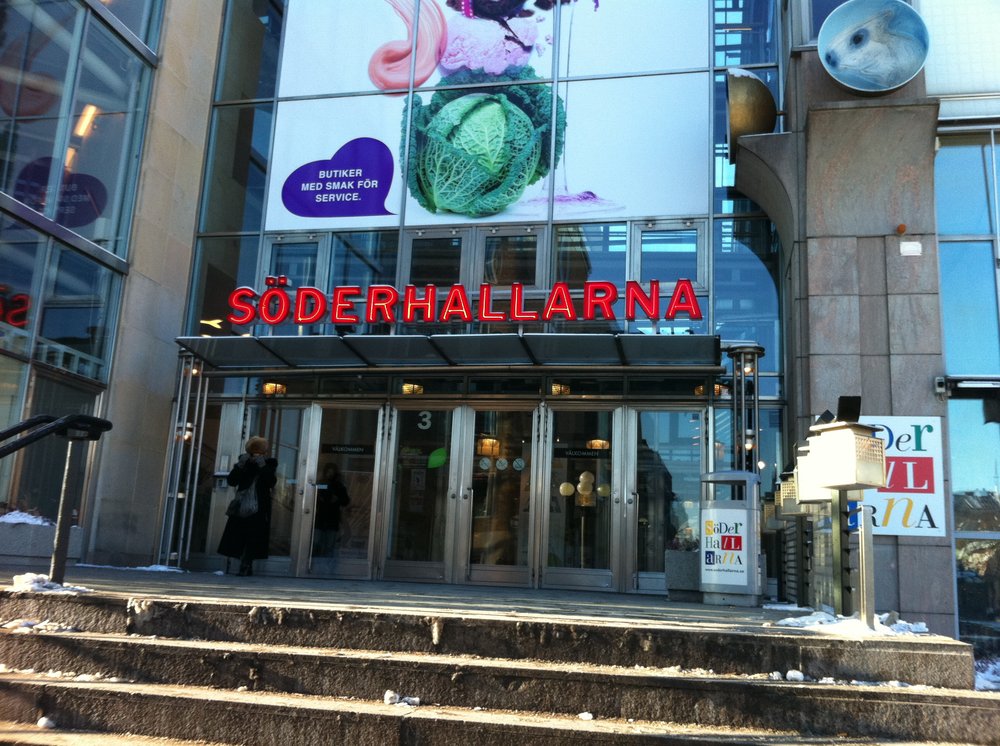
The South Halls (Söderhallarna)
inaugurated in September 1992 is located along Medborgarplatsen (“The Citizen’s Square). It might not be as colorful as the other two, but it holds its own in terms of quality and offerings.

270716-soderhallerna-stockholm-sweden
Get yourself a bellyful of bargain basement Omega-3 at Strömmingskiosken near the metro stop at Slussen. You can munch on strömming (Baltic herring), fried or pickled on hard bread with mashed potatoes – straight from the counter of this fishy kiosk. Made to order and served fresh. Worth queuing for.

From Melanders
From Melanders

Opening hours
The food halls are most popular at lunchtime. Embrace the bustle and elbow your way to the front of queue between 11.30 and 13.00.

The food halls have daytime opening hours (closed on Sundays).

Feature image (on top) From Melanders, the South Halls.

The Food Halls in Stockholm, compiled by Admin

Four Seasons at Juvet Landscape Hotel

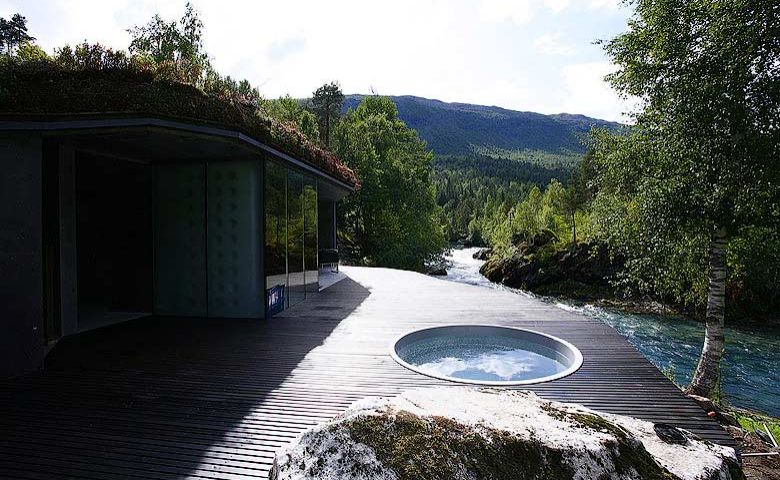
Juvet Landscape Hotel at Alstad in Valldal, Norway is a synthesis of raw Norwegian nature, cultural history and modern architecture.

The man behind the idea, Knut Slinning, grew up in Aalesund on the West Coast of Norway, about 100 kilometers from Valldal. He bought a summer house there in 1986.

Juvet.landsk.hotell.25
“Some years ago there was a project called the National Tourist Route,” he says. “The government invested 200 million Euros to improve the infrastructure along 18 selected stretches from the north to the south of Norway and all with very modern architecture.”

The architects of Jensen & Skodvin Arkitektkontor approached him with the idea of building a landscape hotel.

_MG_9527
“I was not planning on doing anything like this, but the guy who owned the farm asked me if I wanted to buy it, and soon after I was the owner of a 3 million square meter farmland,” recalls Slinning.

The idea resulted in the first landscape hotel in Europe on a steep, natural levee among birch, aspen, pine and age-old boulders.

180716-from-juvet-landscape-hotel-norway-2
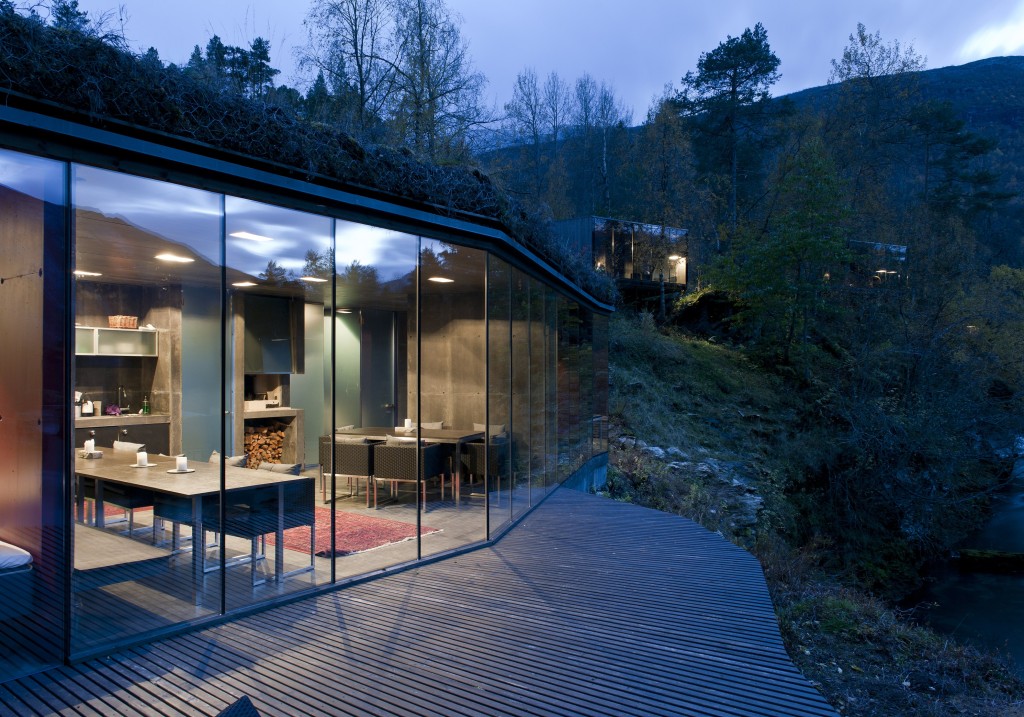
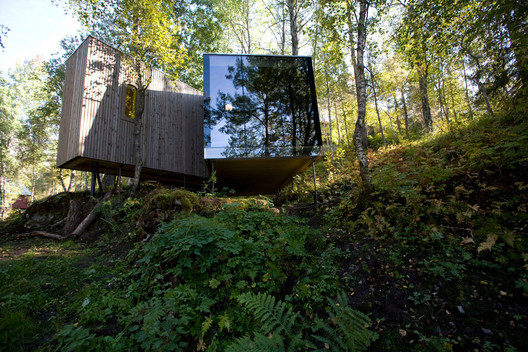
In 2009 Juvet Landscape Hotel welcomed its first guests. Today the hotel consists of nine detached rooms that are sited separately, each with a unique perspective on the rugged landscape. Basically each room is a detached small independent house with one, or sometimes two of the walls constructed in glass. In addition, there is the opportunity to stay in the old authentically restored farms, while meals are served communally in the old barn.

Per Eide
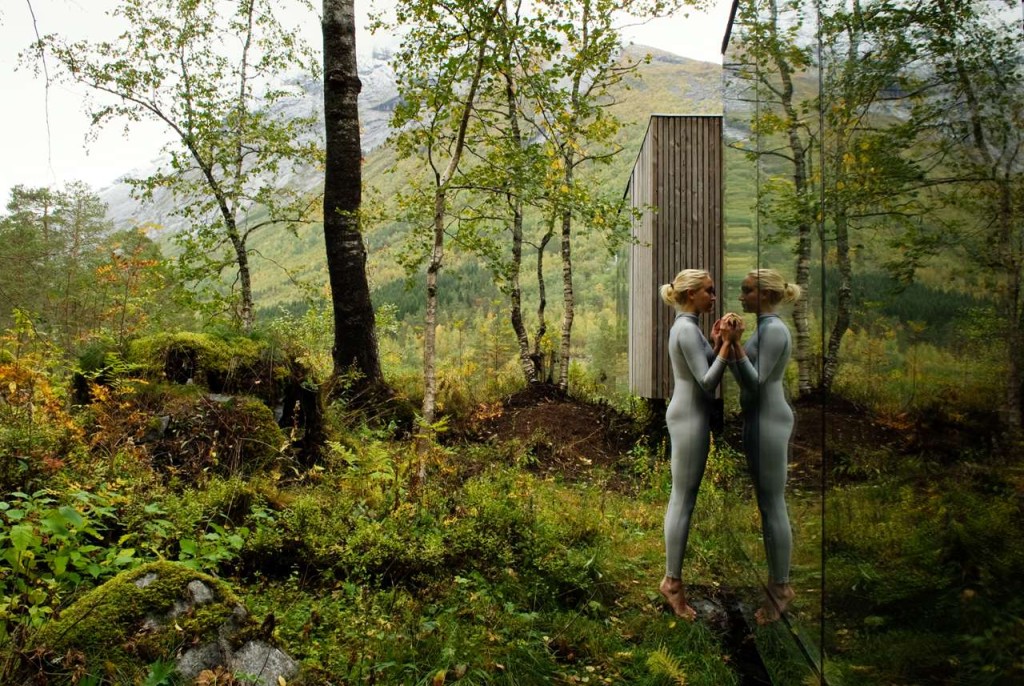
At the beginning the hotel was planned to be rather small with no shower or toilet, a container-like construction on stilts with futon beds inside. Today, however, the hotel is completed with nine separate rooms in a landscape considered spectacularly beautiful and varied and the topography allowed a layout where no room looks at another. In this way every room gets its own surprising view of a dramatic piece of landscape, always changing with the weather and the time of the day and the season.

180716-from-juvet-landscape-hotel-norway-4
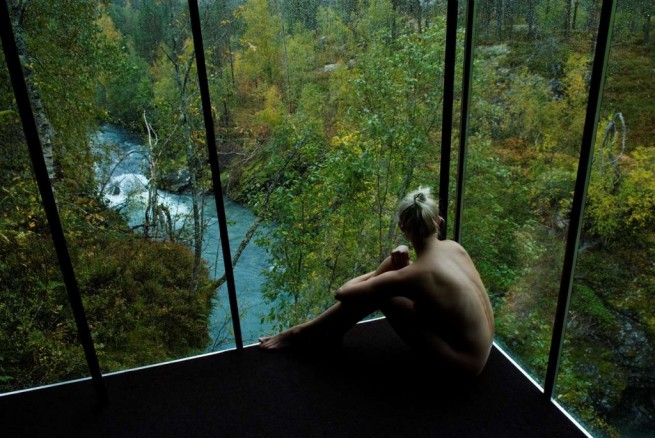
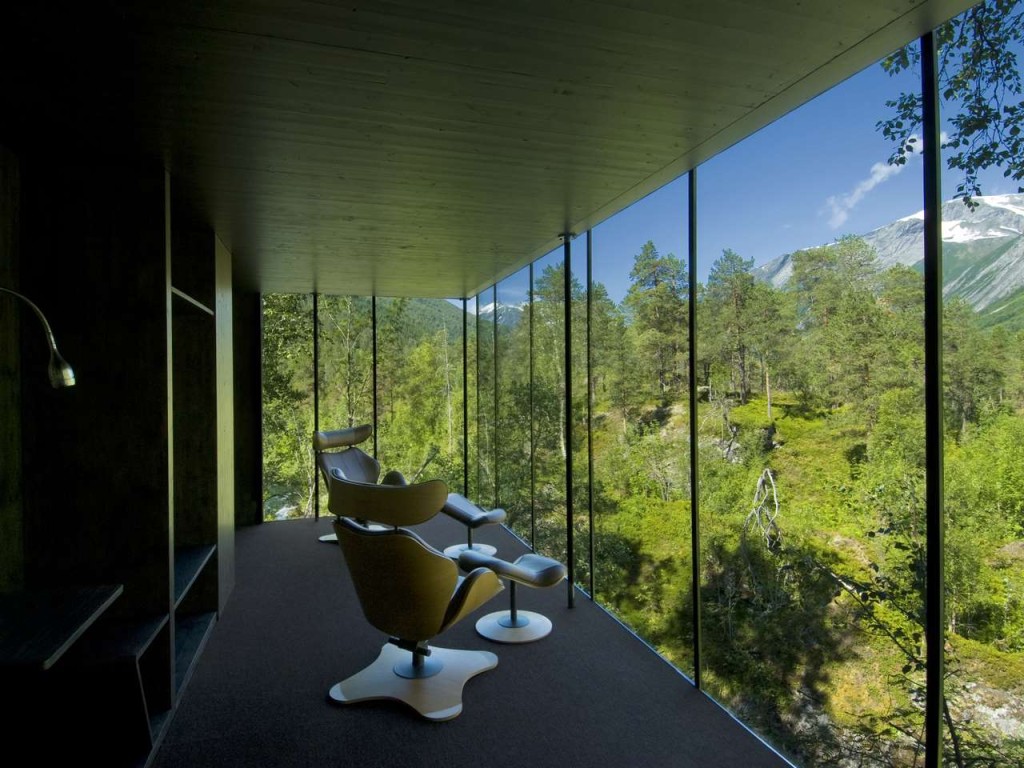
The landscape rooms are double rooms built like “cubes” on stilts, with glass walls with a striking view of the valley, the river, the courtyard or the dramatic gorge below.

180716-juvet-landscape-hotel-norway-dining-room
Juvet Landscape Hotel is resting on three ideas. The first is nature and nature experiences. The second idea is the cultural history of the place, and the third was to show what Norway is like today.

180716-from-juvet-landscape-hotel-norway-5
While no two rooms are alike, all the rooms have a dark interior to avoid stealing focus from the scenery. Apart from the small bathrooms, the sun shines even in the middle of the winter.

180716-from-juvet-landscape-hotel-norway-7
“I am entirely too modest to walk around naked, even when I am alone,” wrote Steve, a journalist from the US, Afar Maghazine. “But the first thing I wanted to do after closing the door if my cabin at the Juvet Landscape Hotel was shed anything that separated me from nature.”

180716-from-juvet-landscape-hotel-norway-6
“Nobody has asked for curtains,” says Slinning, “and if they had, the answer would have been no.”

Small zen inspired paths connects the rooms, furnished by famous local furniture procucers like LK Hjelle and Varier & Vad.

180716-room-at-juvet-landscape-hotel-valldal-norway
Another idea behind the Juvet hotel is to highlight how little we actually need to achieve a sense of well-being. The rooms are no bigger than 8 square meters in total, but provide a comfortable bed, a small sofa bench, a shower and a toilet.

Four Seasons at Juvet Landscape Hotel, written by Tor Kjolberg

Love – New Norwegian Novel

0

The novel Love by Norwegian author Hanna Ørstavik was voted the 6th best Norwegian book of the last 25 years

140716-love-kjærlighet-book-cover-hanne-orstavikThe publishing rights in English have now been sold to Archipelago Books. Love is the story about Vibeke and Jon, mother and son, who have just moved to a small place in the north of Norway. It’s the day before Jon’s birthday, and a travelling carnival has come to the village.

Jon goes out to sell lottery tickets for his sports club, and Vibeke is going to the library. From here on we follow the two individuals on their separate journeys through a cold winter’s night – while a sense of uneasiness grows.

Love illustrates how language builds its own reality, and thus how mother and son can live in completely separate worlds. This distance is found not only between human beings, but also within each individual. This novel shows how such distance may have fatal consequences.

“Hanne Ørstavik pulls the reader along until the very end, leading us astray, and tricking us to imagine the continuation of events, before she takes the story in a different, though not more comforting direction,” wrote La Croix.

Hanne Ørstavik was born 28 November 1969 in Tana in Finnmark province in the far north of Norway, and moved to Oslo at the age of 16. With the publication of the novel Hakk (Cut) in 1994, Ørstavik embarked on a career that would make her one of the most remarkable and admired authors in Norwegian contemporary literature.

140716-hanne-orstavik
Her literary breakthrough came three years later with the publication of Kjærlighet (Love), which in 2006 was voted the 6th best Norwegian book of the last 25 years in a prestigious contest in the Norwegian newspaper Dagbladet. Since then she has written several acclaimed and much discussed novels and received a host of literary prizes.

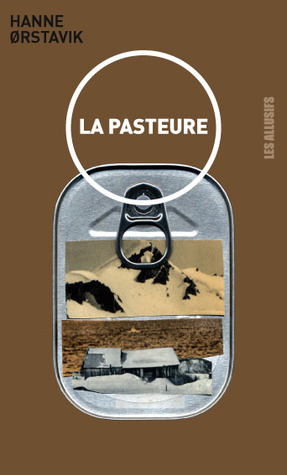
The Pastor, French issue

In 2002, she was awarded the Dobloug Prize for her literary works, and in 2004, the Brage Prize for the novel Presten (The Pastor).

Amour, French version

Ørstavik’s books have been translated into 15 languages.

Love – New Norwegian Novel, source: Aschehoug Agency