The Scandinavian countries, Denmark, Sweden and Norway, are according to the Global Gender Gap Report the best places to have a uterus. The report ranks countries based on where women have the most equal access to education and healthcare, and where they can participate most fully in the country’s political and economic life.
Norway ranks no 3, Sweden no 4 and Denmark no 7 on the list. (Iceland is no. 1). The last report was made in 2013.
Also on the World Database of Happiness, the three countries have a good standing, with Denmark no. 2, Norway no. 6 and Denmark no. 11.
Ansgarius preaches Christianity in Sweden (Hugo Hamilton)
Why could three countries, settled by Vikings, become leaders in gender enlightenment? Viking women could not be chiefs or judges and they had to remain silent in assemblies. They could, however, request a divorce and inherit property.
A part of the answer to the question is literacy. Early Christian missionaries were teaching all citizens to read the Bible. By 1842, Sweden had made education compulsory for both boys and girls. Research has documented that the more literate a society is, the more egalitarian it is likely to be.
And religion has in fact played an important role. The Scandinavian Lutherans, who turned away from the excesses of the medieval Catholic Church, were concerned about equality — especially the disparity between rich and poor. Norway has had female priests since the middle of the 20th century, and the Swedish Lutheran Church even has a female archbishop today.
However, Scandinavians aren’t big churchgoers. Scandinavia’s secularism decoupled sex from sin, and this worked out well for females. Girls and boys learn about contraception, and even the pleasure of orgasms, in school. Scandinavian women may have an abortion for any reason up to the eighteenth week, and the issue is not even politically controversial.
On the economical side, the Scandinavian countries have devoted fewer resources to the military than most countries in the world. Scandinavians established early on a social and economic system where everyone could get a job, expect decent pay, and enjoy a strong social safety net.
Striking workers organized in the Norwegian labour union UNIO
In the 20th century, farmers and workers in the newly populated Scandinavian cities tended to join together in political coalitions, and they could mount a serious challenge to the business elites, who were relatively weak.
Over time, Scandinavian countries became modern social democratic states where wealth is more evenly distributed, education is typically free up through university, and the social safety net allows women to comfortably work and raise a family.
Scandinavian mothers aren’t agonizing over work-family balance: parents can take a year or more of paid parental leave. Fathers are expected to be equal partners in childrearing, and they seem to like it.
Scandinavians have figured out that everybody is better off when men and women share power and influence. They have decided that investment in women is both good for social relations and a smart economic choice.
So when it comes to equality for men and women – look to Scandinavia.
Leaders in Gender Enlightenment, compiled by Admin
Here’s what passengers say: Affordable. Comfortable. On time.
Those are just some of the words Norwegian Air passengers are using to describe the discount airline, which is patiently waiting for a foreign air carrier permit from the U.S. government for its Irish subsidiary, Norwegian Air International (NAI). Many customers rave about its low fares, new planes and friendly service.
But that’s not how some U.S. airlines describe Norwegian Air. Critics, including labor unions and competitors, say the airline flouts labor laws, threatens American jobs and should be banned from flying in the United States.
Now, after two years in a holding pattern and extensive vetting by regulators, the Department of Transportation is on the verge of granting Norwegian Air the permission it requested. Last month, the DOT issued a “show cause” order for its Irish subsidiary, soliciting public comments. Observers believe the airline is about to get the all-clear from authorities, which will allow Norwegian Air to expand worldwide.
Norwegian Air Shuttle CEO Bjørn Kjos
How will that affect you? It depends on who you are. Edward Wytkind, president of the Transportation Trades Department, a coalition of 32 member unions representing transportation workers, predicts that NAI’s approval “will destroy fair competition and extinguish middle-class airline jobs here and in Europe.” In other words, if you or a loved one works in the transportation business, you might feel this a little.
Some members of Congress agree. Reps. Peter A. DeFazio (D-Ore.), Frank A. LoBiondo (R-N.J.), Rick Larsen (D-Wash.) and Lynn A. Westmoreland (R-Ga.) quickly introduced a bill that they say would prevent the DOT from permitting a foreign air carrier to operate between European countries and the United States unless the carrier complies with basic, fair U.S. or European Union labor standards — a law that would effectively throttle Norwegian Air’s expansion.
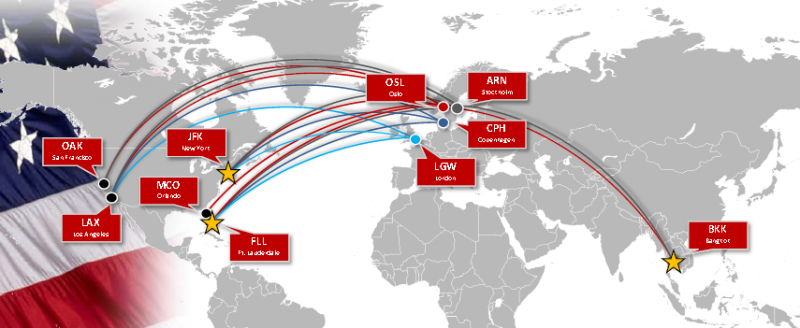
Norwegian Air Shuttle long haul network summer 2014
The bill is unlikely to pass.
“Our opponents have created a wildly inaccurate fear-mongering situation,” says Réal Hamilton-Romeo, a Norwegian Air spokeswoman. Green-lighting Norwegian Air, she says, would help create more American cabin-crew jobs working for Norwegian Air; help sustain and support more than 90,000 American jobs through an $18.5 billion order with Boeing; bring more tourists to the United States; and add direct air service to Europe for American air travelers.
“Protests against Norwegian Air are nothing but special interests in the U.S. airline industry worried about international competition,” agrees Jonathan Galaviz, an airline analyst with Global Market Advisors, a travel industry consulting firm. What’s more, he notes, denying Norwegian Air’s request would affect the U.S. tourism industry in other ways, hurting “thousands of American hotel workers and taxi drivers that rely on new inbound airline traffic from abroad.”
Norwegian Air Shuttle USA to Caribbean routes
Northeastern University economist Harlan Platt says the debate reminds him of taxis fighting the inevitable spread of Uber. But the new, better way of running an airline — Norwegian Air is finding ways to reduce costs by breaking the old model of basing an airline in one country, employing people there and hiring its crew there — will ultimately win, to the benefit of passengers.
“Denying Norwegian Air’s application is tantamount to saying that American consumers should subsidize United Airlines and its unions,” he says. “While it is true that many of these airlines went through bankruptcy a decade ago, since then, they have consolidated the industry and destroyed competition. They are now all highly profitable and greedier than Midas.”
Captain Halli Mulei, spokesman for US Airline Pilots’ Association protests over Norwegian Air Shuttle
Maybe the real question is: What do you give up when you fly on Norwegian Air? Not much, passengers say.
Norwegian Air follows the “a la carte” pricing model popularized by the airline industry about a decade ago, selling you a seat but asking you to pay for anything extra. That includes imposing fees for checked luggage, drinks, in-flight meals, phone reservations, seat assignments, snacks and ticket changes.
Even so, Annalisa Fernandez, an author based in Riverside, Conn., says Norwegian Air is surprisingly affordable. “We flew Norwegian Air to Spain last summer to take the kids to summer camp and plan to do it again this year,” she says. Airfare for a family of five set the family back $4,000, $2,000 less than she would have paid on a conventional airline. Fernandez did her research before choosing the flight. “I trust the Norwegians to not cut corners on safety,” she adds.
Norwegian Air Shuttle Dreamliner
Transatlantic airfares rise significantly during the summer, a time of peak demand. With only a handful of airlines competing on many popular routes, thanks to government-approved airline alliances that are granted antitrust immunity, you don’t often hear passengers talking about affordable tickets.
Here’s another word you rarely hear used to describe a flight: comfortable.
Lloyd Wheeler, who runs a production company in Tallahassee, flew from Orlando to Copenhagen last month on Norwegian Air and described it as a “decent” experience. “Norwegian’s layout in economy is more comfortable than I have experienced in many other airlines,” he says. That’s a sharp contrast to the U.S.-based carriers, who offer humane legroom and space only to their elites, to those willing to pay sky-high fares to sit in business class or to those who slavishly collect frequent-flier miles. Adds Wheeler, “We look forward to flying on Norwegian Air again and hope to use their service in other markets.”
Jonathan Weber, who owns a Web design firm in Stroudsburg, Pa., paid $256 to fly on Norwegian Air from New York to Oslo. He was impressed by the new aircraft and positive work ethic.
“They depart and arrive on time, and they have a professional and courteous crew,” he says, adding: “I’d fly them for a domestic route over the normal American alternatives any day.”
Actually, Norwegian Air isn’t applying to fly domestic routes — under an antiquated U.S. law, foreign carriers are not allowed to do that — but Weber’s comments underscore the level of unhappiness American air travelers feel with their own carriers. There’s a strong sense among passengers that the government shouldn’t prop up a system that doesn’t serve them well.
Time and again, the experts and air travelers I spoke with for this article mentioned the broken system: Airlines no longer compete, their fares are too high and their service levels are too low. And time and again, they expressed the hope that an airline like Norwegian Air can change the system by offering a better way to fly and disrupting an inefficient model.
Then again, what if the critics are right? What if Norwegian Air’s promises to offer low fares, better service and create American jobs turn out to be empty? What if Norwegian Air’s expansion decimates a vital American industry, taking with it the livelihood of thousands of taxpayers?
We’re about to find out.
Written by Christopher Elliott
Christopher Elliott is a consumer advocate, multimedia journalist and customer service expert known for his practical advice and creative solutions to customer-service problems.
Elliott is the author of Scammed: How to Save Your Money and Find Better Service in a World of Schemes, Swindles, and Shady Deals (Wiley), a manifesto for empowering consumers and encouraging corporate responsibility, and How to Be the World’s Smartest Traveler (and Save Time, Money, and Hassle) (National Geographic Books/Random House), the definitive manual for having a better trip.
Elliott is also a National Geographic Traveler’s reader advocate and a nationally syndicated columnist through King Features Syndicate, which distributes his work to publications from the Seattle Times to the Miami Herald.
We thank Christopher for his kind permission to publish this article (Should Norwegian Air Fly in America?), posted on LinkedIn.
Good game is difficult to come by if you are not from a family of hunters, but many Scandinavians are, as hunting is a very popular sport all over Scandinavia.
Wild meats have always been enjoyed as the flesh is rich-tasting and the difference from farmed animals is evident; the variety of their feed can be tasted in any wild animal. Venison is very lean compared to farmed meats, and free of pesticides as deer usually graze in the wild. In populated areas, the animals seem to prefer organic fields – and gardens.
Photo: Mikael Brandsten (Visit Sweden)
The hunting itself is a matter for debate, and what species to hunt is another. As hunting is no longer a means of survival, the ethos of it is a mystery to a growing number of people. The issue is hot, especially in the north, where wolves and bears are once again able to move freely over countries’ borders after the fall of the Iron Curtain.
Photo: Marie Mattsson (Visit Sweden)
These species are indigenous to Scandinavia, but have been extinct or extremely rare for centuries, and are now coming back, scaring people and threatening livestock.
Grey Wolf (Canis lupus). Photo: H. Kuchera (Visit Sweden)
Political battles are fought over the right to shoot them. The same controversy surrounds the shooting of wild boar, which are returning to Denmark from the south, after an absence of 200 years. Farmers see them as a safety risk to their domesticated pigs, while others want to safeguard the returning population. But wild boars are numerous in southern Sweden, and are hunted there in great numbers.
Wild boar in Scandinavian Wildlife Park on Mols
There are numerous wild mammals and birds in Scandinavia, most of the hunted and eaten locally, and many can be hunted for private consumption, but not for sale.
These species must be enjoyed when living in or visiting Scandinavia, but are allowed to be hunted by the communities that have lived with them, and hunted them for centuries, as an acknowledgement of their traditional lifestyle.
Buying and storing Good-quality game is not easy to find. If you don’t know a hunter personally, you must trust your butcher to know his game: for example, how old the animal was (there is a big difference between a young animal of 1-3 years and an old one of 4-12 years). Venison should be stored like all other mammal meats.
Scandinavian vension dish
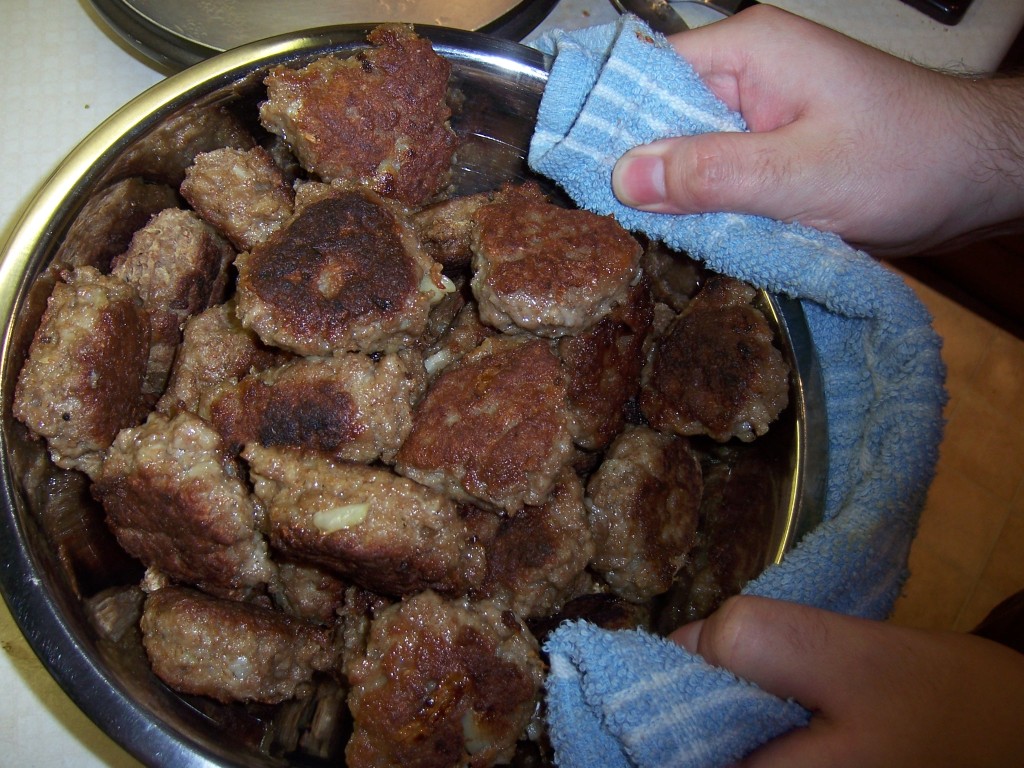
Culinary uses Young venison can be treated like domestic meats, which means that it can be fried, skewered and roasted, according to the cut, with beautiful results. Older meats should be minced or made into stews. As an everyday option, minced venison is actually very cheap and makes fabulous hamburgers. Frikadeller (Danish) and meatballs are also very good made with minced venison, served with the classic accompaniments for venison.
Danish frikadeller
Venison is often smoked, salted and dried to keep the summer and autumn glut of fresh meat for winter. The Sami suovas, a piece of reindeer that is salted, smoked and dried, is the most renowned. There are several kinds, some very dry and salty, others more mildly cured. Norrland tjälknöl, another preserved meat, or one that makes use of the freezing climate, consists of a frozen leg of venison that is gently baked for 12 hours, then brined.
The traditional Scandinavian way to serve game is with a thick creamed sauce, potatoes, and a flavorsome, sweet accompaniment such as lingonberry jam, crab apple jelly or rowanberry jelly. Other accompaniments that work well are sweet- and-sour salads, such as an celery, apple and walnut salad or apple, celeriac and beetroot salad.
Wild bird
The whole arrangement is lovely, if heavy, and there are many, especially with hunting relatives, who grow tired of all the hullaballoo and simply serve venison as you would domesticated meats.
Norwegian painter Peder Balke is an unsung forerunner of modernism, and still today few will recognize his name.
Peder Balke (1804-1887), explored the Arctic Circle as a young man and was so thrilled that he painted the frozen spectacle of the most remote regions of Norway for the rest of his life. The grandeur of the northern extremes got inside him. Balke’s imagination is ice-bound.
North Cape, 1853
In Peder Balke’s The Tempest (1862) a dark group of birds battle against a gale with more success than the stricken ships listing perilously on the grey waves beneath them. Th whole turbulent scene is contained on a small wood panel, painted with a sense of haste that befits the weather, almost calligraphic, with its confident sweeps of pure black over the white ground.
Peder Balke, portrait
Balke was also a political visionary – and it was therefore natural to highlight him when the North Norwegian Art Museum in Tromsø celebrated the 200 years anniversary of the Norwegian Constitution.
North Cape, probably 1840s
A lack of commercial success forced him to abandon his career as a painter, yet, so alluring was this wilderness on him that he continued to paint small scenes for pleasure.
Stetind in Fog
Last year several of his paintings, including The Tempest, were exhibited at the National Gallery in London, and thus brought the unjustly obscure visionary back into the light of the day. Balke brings out the ineffable mystery where tourists travel to see the midnight sun, where the sky above the massed rocks is terrifying empty and the sea stretches into inhuman void.
Peder Balke, The Tempest
Peder Balke was trained in Oslo, Stockholm and Dresden, before taking the unusual decision to journey north, to the Arctic Circle. He visited Norway’s spectacular North Cape in 1832. “I never, not in a foreign country, nor anywhere else in our country, had the opportunity to contemplate something so impressive and inspiring,” he wrote in his memoirs.
Peder Balke, The Lighthouse
Balke was the first Norwegian artist who painted the magnificent scenery in Northern Norway in his highly distinctive technique. His depictions of stormy seas, towering glaciers and threatening skies has made him recognized as one of the forerunners of modernism.
Peder Balke, The Stormy Sea
Explorers only reached the North Pole in the late 1900s, two decades after Balke’s death in 1887. In Balke’s day there was no knowledge of global warming and not very precise information about the Arctic Ocean.
Balke resorted to quick, dynamic brushwork to describe the landscape’s changeable atmosphere, often returning repeatedly to a particular scene in different conditions.
Peder Balke, Sami with Reindeer, about 1850. Northern Norway Art Museum
As his memoirs of the Arctic became more distant, it seems to have become ever easier for him to abstract it in a set of stupendous motifs. He paints icy mountains so high and steep they seem to hang over the shores below. His eerie vision has a lot in common with that of his predecessor, the German Romantic artist Caspar David Friedrich, who also painted landscapes as cold and perfect as gelid vodka. For both of them, the landscape’s grandeur is a psychological metaphor. Balke’s identification with extreme scenery communicates a boundless isolation. He is a poet of solitude.
If you happen to deal with Scandinavians from time to time, you will know how sensitive they are when being compared to their neighboring countries. If you do want to annoy them, here are some hints. If you want to be polite, just read on.
Claim that Denmark, Norway and Sweden are all the same
The three countries are Scandinavia all right, but they are three individual countries, with their own language and individual inhabitants.
Scandinavian joke:
Ole and Lars were business partners and good friends. One day Lars started off for work and discovered he’d forgotten his tools. Returning home, he looked around for his wife, Lena, and finally found her in the bedroom. To his surprise, she was on the bed with no clothes on. “Vat in the vorld are you doing vidout any clothes, voman?” Lars asked. “Vell, I yust don’t have any clothes to vear, dat’s why,” answered Lena. “Vat you talking about,” said Lars as he opened the closet door and began counting: “Vun dress, two dress, tree dress, four dress… Oh, hello Ole… Five dress…
A Scandinavian home
Forget to remove your shoes before entering a home Scandinavians don’t like dirt being dragged all over their homes, or heels on their wooden floors. It’s polite to remove your shoes in the hallway.
Scandinavia joke:
An elderly Norwegian named Lars decided to March to the alter at the ripe old age of 85 with a shapely miss who was only 35. His friends cautioned him about the health hazard involved, saying that the exertion of amour could prove to be fatal. “Vell, dat’s the chance I’ll have to take,” said Lars. “If she dies…she dies.”
Swedish fika
Asking for Tea Scandinavians drink more coffee than anyone else in the world, tons of it. Norway is rated no. 2 (7,2kg per capita) after Finland (9.6kg per capita). Denmark is no. 7 (5.3kg per capita).
Scandinavian joke:
Swede: When is your birthday? Norwegian: March 21st. Swede: What year? Norwegian: Every year.
Claim that the Danish language is Dutch. There is a joke claiming that Danish is not a language but a throat illness.
Scandinavian joke:
Judge: You’ve been brought here for drinking. Dane: Swell! Let’s get started.
Claim that Swedes are Swiss They are not even neighbors. Do you know your Europe?
Scandinavian joke:
A Swede was walking down the street with a duck under his arm.
“Where did you find that monkey?” asked the fellow pedestrian.
“It happens to be a duck.” claimed the Swede.
“Shut up, Swede! I am talking to the duck.”
Tell a Norwegian that KvikkLunsj is inferior to KitKats KitKats are so not even close to Kvikklunsj. Don’t compare them, don’t tell us KitKats are superior. Don’t go there.
Scandinavian joke:
Q: What is the difference between Swedes and Norwegians?
A: The Swedes have nice neighbours!
Asking if there are reindeer in the streets of Oslo Of course there are! Even in the roaming the streets of Copenhagen you’ll find them. Some Scandinavians keep them as pets, next to their penguins.
Scandinavian joke:
Norwegian was bragging to his friend:
– I just bought a piece of field that is 2 cm wide and 10 km long.
– What on Earth are you going to do with a field like that?
– Grow spaghetti, of course.
Saying that a Scandinavian doesn’t look like a Scandinavian Well, perhaps you don’t look like an American either.
Scandinavian joke:
There were two Swedish carpenters building a house. One of them opened a pack of nails, and asked the other: “Why are half of the nails lying in the wrong direction?”
The other replied: “You moron! They are supposed to be used on the other side of the house!”
Schedule a conference call at 12 a.m. Oh, no! That’s lunch time (fika in Sweden). Don’t infer with the Scandinavian coffee breaks. Remember, Scandinavians drink tons of coffee.
Scandinavian joke:
Interpol was looking for an escaped convict in Denmark, and sent pictures of the man to the Danish police. The pictures were taken from both sides and the front. After a few days the Danes replied: “We caught the guys on the left and the right but the one in the middle got away”.
How are you?
Not waiting for an answer when you ask “How are you?” Scandinavians WANT to answer, in great detail. Just skip the ‘how are you’ bit if you don’t want to listen to a Scandinavian complaining about his back pain.
Scandinavian joke:
Q: Why do Danish people never play hide and seek?
A: Nobody wants to look for them. Be on time Scandinavia hate lateness, so you better be on time.
Scandinavian joke:
The Danish man had a problem. His wife was coming home on the train but he could not remember if she was coming at 8:40 or 4:80.
Believing that Scandinavians can’t feel the cold Of course they can, just like you. Their veins are not made of ice. Don’t forget, they are filled with hot, strong coffee.
Scandinavian joke:
Q: What does it say at the bottom of Norwegian Beer Bottles?A: Open At Other End.
Danish frikadeller
Believing that Scandinavians only eat Lutefisk First of all, Lutefisk is a Norwegian dish. And they are of course eating it every day, all the time, for breakfast, lunch and dinner.
Just kidding, Norwegians only eat Lutefisk for lunch.
Scandinavian joke:
Q: What sign is at the bottom of Norwegian Swimming Pools?A: No Smoking.
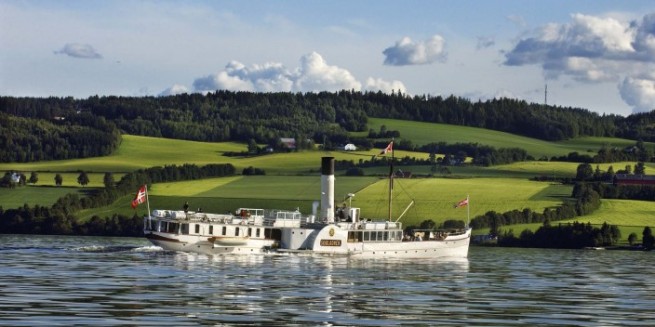
The counties of Hedmark and Oppland are found in the heart of Norway, a vast area where Mother Nature offers large variations.
In Hedmark and the districts around Hamar, we find lowlands with large expanses of excellent agricultural conditions. Valleys are narrow and have lots of forests. Lake Mjøsa is Norway’s largest, and is located midway between the counties of Hedmark and Oppland. Here we find the great mountain wildernesses – Jotunheimen and Rondane. These mountains are high and pointed and quite dramatic with their forested hills.
Lake Mjøsa
A common feature of Hedmark and Oppland is climate and weather conditions, with hot summers and cold winters. If the soil has meant a lot to the people here, the woods have been just as important – at least financially.
From Alvdal
These two eastern counties have no shoreline nor are they adjacent to the sea. Yet they are by no means closed off from the rest of the country. Routes criss-cross the region, and contribute to good communications.
Hedmark is a stout piece of Norway. Describing this county is not easy; it’s sort of rich and poor at the same time. If we look at its size and scope, Hedmark comes in a good third place after Finnmark and Nordland. Its name has been given by the Norse Heidmork.
Sveinhaug farm
Here we find some of the most fertile land areas and in its lowlands we may experience the mighty mansions. Some of these can be traced back in history to the time when chieftain mountain pastures chiefdoms existed there.
Biking at Stange
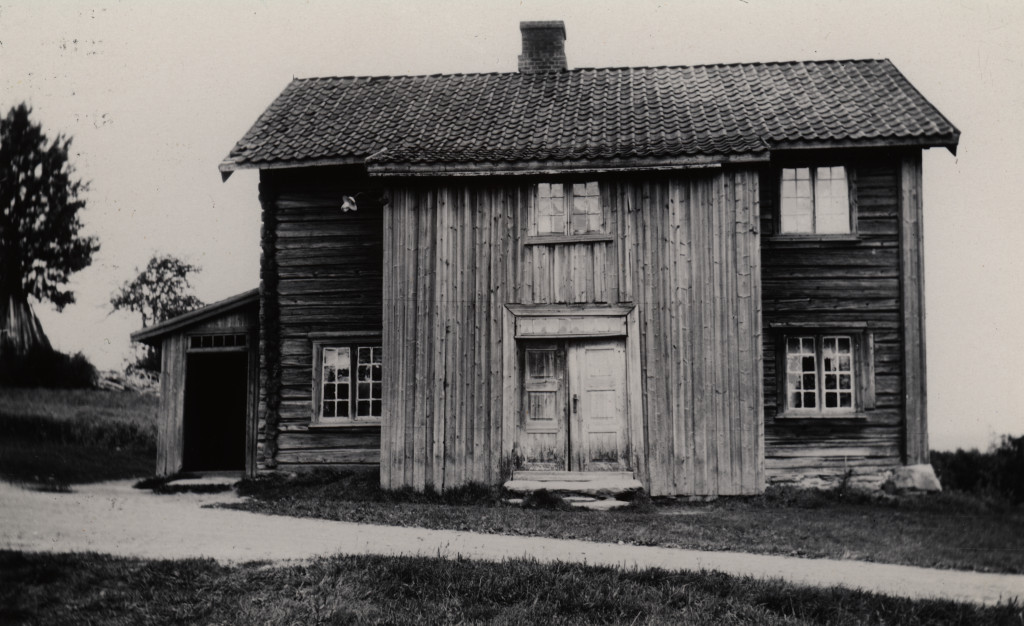
Peasants who struggled for their daily bread stood in sharp contrast to the noble forest owners’ lifestyle that existed on the large farms in Hedmark. Outside of the grey, small homemade wooden houses where the peasants lived, grew rhubarb, inside those timber walls we found rough wooden benches and stools. It was like another world compared to the big farms with their rose beds under rows of windows and up the sides of walls.
Old farm at Galterud, North Stensbøl, Hedmark
Inside you could find both rococo chairs and wide panels with acanthus decor. All large farms had cotters’ farms and it was important to know their lot in life. The son inherited the father and daughter the mother and so it had always been. In this way we can also signify Hedmark as a county of contrasts.
Bunåva, Hedmark
However, obviously there has been an equalization here as in other parts of the country. General modernization, economics and engineering have contributed to this development. Also the food culture has followed this trend. Old recipes from Hedmark’s large farms and the more general food market are still in use. It cannot be stressed strongly enough how important it is to preserve this part of the area’s common national treasures.
Hiking in Hedmark
Many poets, writers and artists have been concerned about Hedmark and its many charming contrasts, many of whom also have their roots in Hedmark. The poet and troubadour Alf Prøysen has described the everyday people of Hedmark in lyrics and music. Peasants have been given a face through countless popular songs.
Poet and singer Alf Prøysen
Asta Holt has immortalized the Finnish immigrants and their hardships in Finnskogen. The charm of peoples in Alvdal and Tynset has been humorously described in text and drawings by Kjell Aukrust. Several cultural personalities have given life to everyday living. Einar Skjæråsen is a name to mention in this context.
Soland and Ludwig, two of Kjell Aukrust’s popular figures
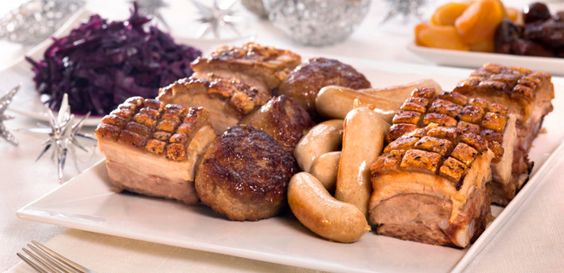
Several Norwegian national dishes also have their origin in the counties of Hedmark and Oppland especially in Hedmark. Many farms have existed since the Viking Age. The court house was to be found in Aker, and the Vang rectory was a famous dining venue. Some would argue that It was the best in the country, especially when Hanna Winsnes (1789 – 1872) was the pastor’s wife there. Much good food was served then, especially for Christmas. Twelve varieties of cakes belonged to the menu, and moreover vørterbrød was customary.
Christmas dish from Hedmark
The Christmas Eve the menu could look like this:
Whole grain milk soup, lutefisk, ribs, sausage – accompanied by good, home-brewed beer! Before church on Christmas Day it was served mølje with meat and pork – no one could travel before they had eaten this. Molja consisted of flatbread broken into pieces on the plate with the broth over so the bread was soft. This was taken before meat fat skimmed off the pot.
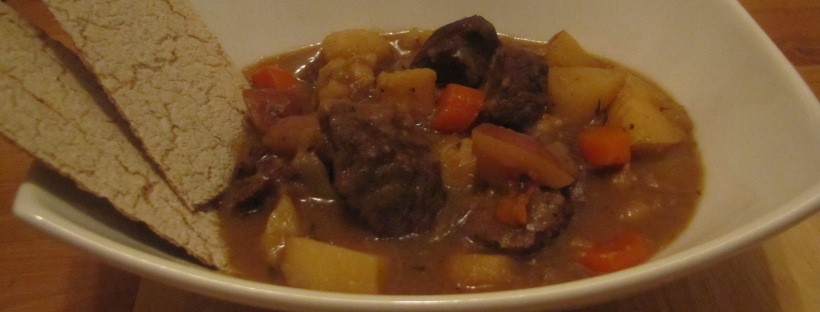
Norwegian lapskaus
Later in the day this was served meat and soup bowls. In all, a lot of food was served during the Christmas weekend. A farmer with respect for himself was a bit generous with his servants and tenant farmers during the festival.
Recipes from Hedmark are many and varied, and are still in use in many places – albeit in slightly more modern versions.
We will cover Oppland in an article in the near future.
The Inland Counties in Eastern Norway, written by Tor Kjolberg
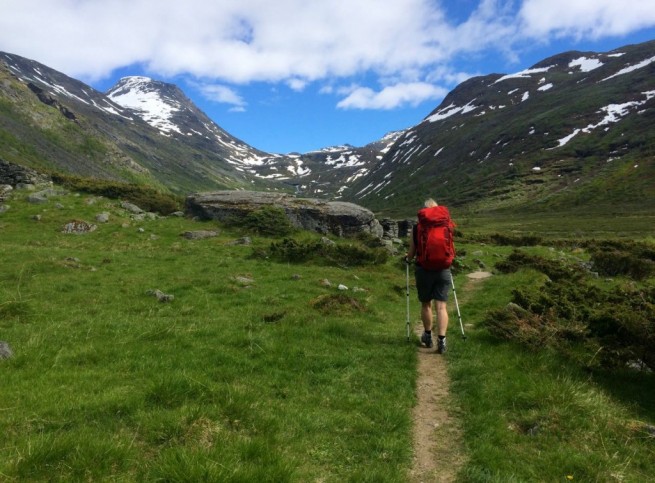
The Scandinavian region is known for its great open landscapes and is a mecca for hikers and backpackers. Waymarked footpaths are found in scenically outstanding areas.
The Danish countryside offers the most gentle introduction to walkers, with an appealing patchwork of dense forests, coastal dunes, marshes and meticulously manicured farmland. In every type of landscape there are paths or trails that stretch for miles, and a labyrinth of winding country roads.
Hiking in the dunes of Skagen, Denmark
The greatest proportion of Sweden is virgin country. You can stroll for miles along tracks without seeing another human being. Throughout Sweden there’s an excellent network of waymarked footpaths. Close to Stockholm is Södermansleden (Söderland trail), with over 1.000km (620 miles) of pathways, starting at Björkhagen underground station.
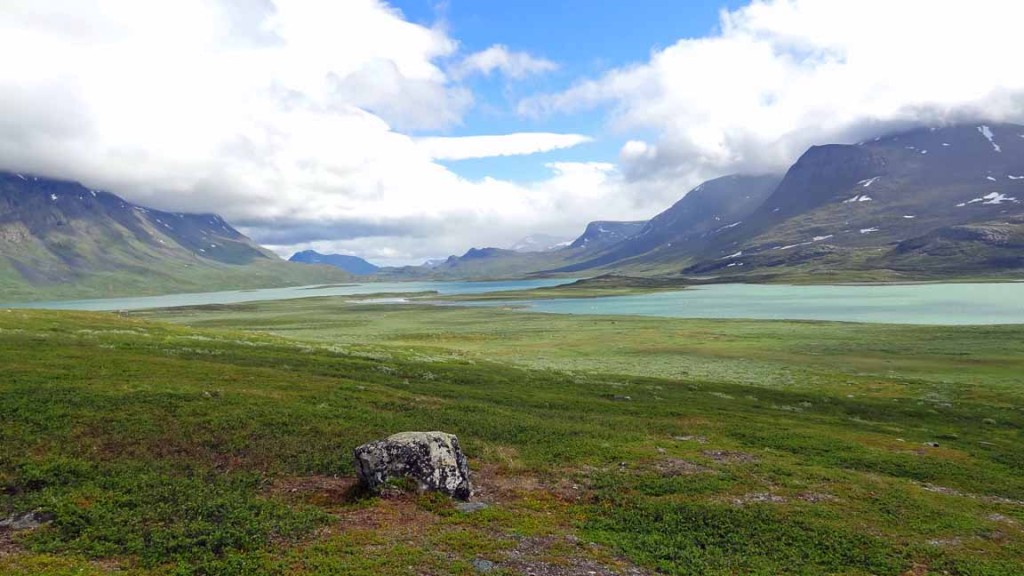
Kungsleden trail, Sweden
Carefully laid out, the trail offers hikers constantly changing vistas of deep forest, historic sites, lookout points and lakes. It passes several camps where you can eat, rest and buy supplies, with shelters at regular intervals.
Kungsleden trail, Sweden
Södermansleden, Stockholm, Sweden
Sörmlandsleden is an easy hike, but it offers plenty of excitement, with deer, elk, capercaillie, hawks and grouse along the way. For the most exotic views, head for the Kungsleden trail which runs for 450km (280 miles) between Abisko and Hemavan.
Hiking in Lofoten, Norway
Norwegians are quite at home in their wild, unspoilt country, and have a great feeling for its mountains. In Norway, the bulk of the trails and lodges are conveniently in the middle of the triangle bounded by the cities of Oslo, Bergen and Trondheim.
Finse, Norway
A central point is Finse, situated above the timber line at 1.200 meters (4.000ft). Finse’s main street is the station platform; there are no cars, because there are no roads.
Hitting the Walking Trails in Scandinavia, written by Tor Kjolberg
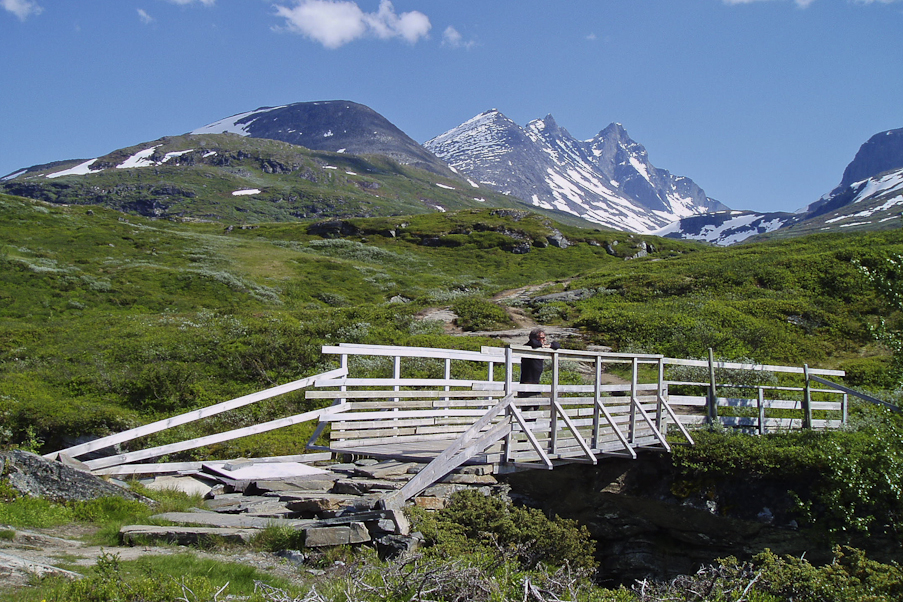
Fannaråken is one of the most well-known mountains in Norway. One reason is that the mountain is very visible, either you drive across the Sognefjell (highway 55), or the Turtagrø-Årdal road.
The mountain is also easily accessible for those who find the strength to hike this mountain, and the mountain is probably one of the most visited 2000m peaks in Norway. In addition, the mountain is known from Norwegian literature, as many of the famous Norwegian poets had a “warm heart” for this part of Norway, among them Henrik Wergeland.
Access
Locate the Turtagrø hotel on the west side of Sognefjellsvegen (highway 55). Drive north-east 1km and exit right onto a gravel road that takes you into Helgedalen valley. After a few hundred meters, the road ends by a gate, and you will find parking.
If the parking is full, go back to Turtagrø and find parking there. A “T” trail will take you into the Helgedalen valley.
Turtagrø hotel
The Trail A trail sign is found by the parking. Follow the “T” trail which will take you back onto the gravel road that continues into Helgedalen. The bypass is probably there for cabin privacy reasons.
After approx. 2,7Km, at the juncture of two streams, the road starts ascending. Follow the road for another 500m, and exit left when you see another trailsign to Fannaråken.
Ekrehytta cabin
Follow the trail up to Ekrehytta hut. The trail then forks. The right trail takes you towards Skogadalsbøen, while the left trail takes you directly up to Fannaråken. The climb up to 1500-1600m is the most strenuous part of the hike, but reasonable switchbacks in the terrain helps. Although the hillside might look steep, there are no exposed points on the trail.
Fannaråken
Once on the ridge, you see the “humps” that takes you towards the summit. A lot of effort has been made to make the trail easy to hike. Close to 2000m, you might run into snowfields leading towards the summit. The summit is a large, flat plateau with two buildings on top. The primary building – Fannaråkshytta, offers opportunities for food and shelter. The hut is operated by DNT (The Norwegian Mountain Touring Association).
Fannaråken cabin, Jotunheimen National Park
Upon return, you may choose to hike the trail down to Keisarpasset. Be aware of that the weather can change in an instant. Bring warm clothes even if the weather forecast is good. Fannaråken is known for its shift in weather.
A Trip Report
On a summer day in 2002, I suddenly got the urge to hike Fannaråken. The weather was shifting between sunshine and rain. Fannaråken summit was hidden in clouds, but of the lighter kind. I expected that the clouds might disappear in the afternoon.
I parked the car in Helgedalen and was on my way 15:50 pm. My dog Troll was kind enough to walk by himself all the way to the foot of the mountain, but then he requested the “back-seat service”. After hiking the first 100m, I remembered I hadn’t eaten all day. Here I was, running out of strength at the start of the hike, 1000m vertical to go. The rest of the hike was very strenuous. I can’t remember last time I was this tired. Then it started to rain. The rain was followed by hail. Higher up it began to snow, and on the summit it was freezing cold
Helgedalen valley, Jotunheimen
A small group heading down, informed me that it was “Mountain’s Day”, and that dinner was served at 18:00 at the summit hut. I hadn’t even thought about the DNT hut on top, and carried no money. As I reached the hut at 18:35PM, in a mixture of wind, snow, rain and fog, I heard the sounds of laughter and cutlery. That was too much. I went in the hallway, gave Troll his lunchbox and took a minute to worship misery. I never took a look inside; Anti-social behavior at its finest.
Rondane National park
I decided that Troll could walk all the way down, which he did. The trail is almost too good to be true. We were back at the car 20:00pm, and continued the trip towards Otta. I can still remember the taste of the hot dogs at the gas station in Lom…
In 2010, Hannah Modigh won the Swedish Photo Book Award for Hillbilly Heroin and now the publisher Bokförlaget Max Ström has published the book version of Hurricane Season which was released in conjunction with the opening of the exhibition by the same name at Fotografiska in Stockholm.
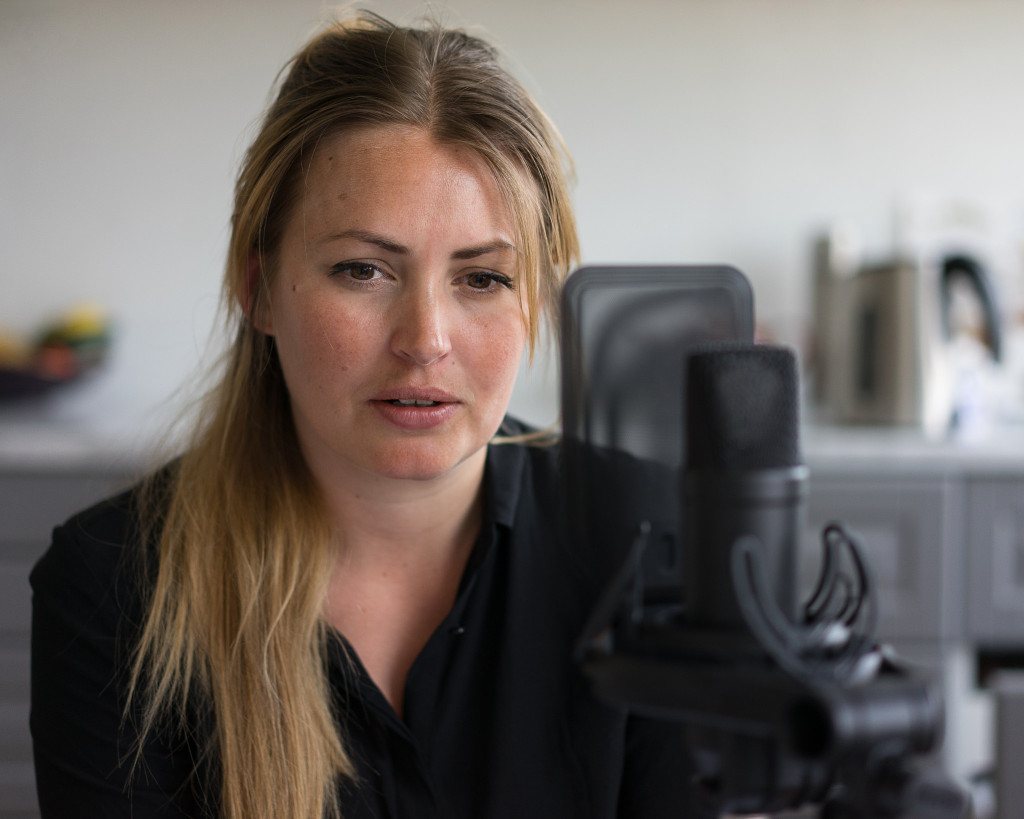
Hannah Modigh
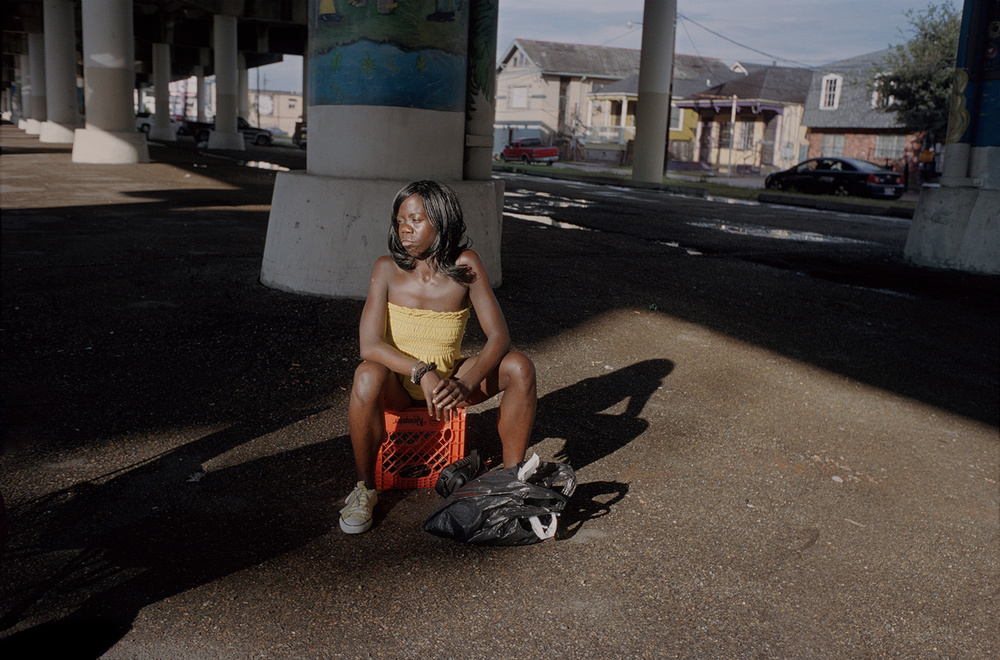
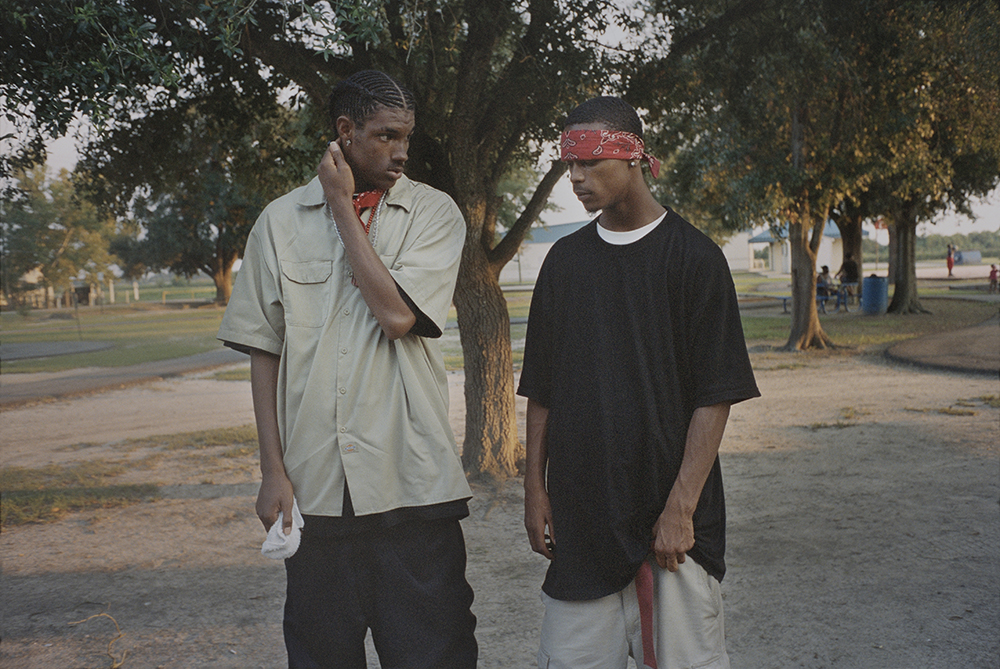
Louisiana is a place under constant threat of hurricanes and flooding. Hannah Modigh’s lyrical photographic series Hurricane Season captures profound human sentiments in the midst of inhuman suffering. Modigh’s images radiate threats of death and destruction combined with a powerful feeling of living in the moment.
The exhibition opened at Fotografiska in conjunction with the release of the eponymous book published by publishing house Max Ström. They are seated at a table full of papers. Three men. Their bodies covered by tattoos. In a room full of symbols. Symbols of the Ku Klux Klan. In an atmosphere of relaxed anticipation and a pervading sense of menace.
A feeling that imbues Hannah Modigh’s ethereal series Hurricane Season which is the result of having shared the lives of the people of the hurricane-battered and poverty-stricken Louisiana, where people face the same threat but seeming never side by side – always segregated, divided into we/them, depending on the colour of their skin. The poverty, however, they share. And an over- whelming majority of prisoners (who are often incarcerated in penitentiaries run by the private sector) are black. History repeats itself, as unfree black people work the cotton fields under the roasting sun …
“It all began because I wanted to explore a macho culture that I believed existed in the area. I was struck by how segregated it still is. Because the groups are so removed from each other, this destructive us-against-them system is entrenched,” Hanna Modigh says.
“I am attracted by nature and skin, which have been abandoned, which have been left behind. Nature and skin that are exposed and the connection between them. I’m very interested in how our surroundings affect us. Where we feel at home. And I often use many images in order to create a sense of being stuck in a repetition of emotions. It’s like a loop and it’s difficult to break free from your background,” she explains.
That she presents the KKK sympathizers seated at a table on “a normal day at the office “, instead of opting for the traditional imagery of people in hoods and burning crosses, creates an even stronger impression. The systemic need to belong, to be part of a clan, to have a place to go to, regardless of the aim of the activities.
“I try to find the everydayness in the most intense environments. Common- place situations with an awareness of death. Then I look for body language and attach importance to how people carry and move their bodies. It says a lot about a person, where you are and about your history. To me it’s important to use my art to interpret situations rather than documenting or judging them. I present my interpretation to the viewer and trust that the images will initiate a process in them, because I’m not trying to impose an agenda. Whatever the photograph may say is up to the viewer.”
This is the first solo exhibition of Modigh at Fotografiska, a delighted Pauline Benthede, Exhibition Manager, explains.
“We have followed Hannah Modigh’s exciting development for a long time and she participated in our 2015 Autumn Salon as one of the juror’s choices, with works from various series. That we now present Hurricane Season is a natural consequence of the fact that Modigh, with her unique photographic idiom, has established herself as one of the most interesting contemporary photographers. If there was only one camera left in the world, Göran Segeholm, our head teacher at Fotografiska Academy, would place it in the hands of Modigh, which tells all you need to know …”
This is the third time multiple award-winning photographer, Hannah Modigh, has explored a place in America with tough living conditions and created heartbreakingly beautiful photography, which, filtered through her poetic mind, turn into lyrical contemplations of how life turns out when the veneer of civilization wears thin.
When death is omnipresent, life is often lived in the fast and dangerous lane, and fate is tempted. Life can feel much more tangible and powerful when under threat, and when one lives in the moment the result is often a relaxed kind of joy. Thus it may not be strange that, on a hot summer’s day, one turns one’s car into a pool, because who knows, in two months’ time the car maybe crushed under a fallen tree. The images also contain a flourish of cultural expressions, such as the special Cajun cuisine with its seafood and legendary blues music.
“This attitude partly explains why I find it easy to approach people outside my usual context with its expectations on who I am and how I should behave. When I encounter strangers I also encounter new sides of my personality, and this is important to my photography. I don’t normally make any plans. I move randomly from place to place and allow myself to be guided in different directions by following what’s going on around me, through my encounters with the people.”
In 2010, Modigh won the Swedish Photo Book Award for Hillbilly Heroin and now the publisher Bokförlaget Max Ström has published the book version of Hurricane Season which will be released in conjunction with the opening of the exhibition. Modigh takes us to places where people deal with fear by transforming it into anger, combined with a happy-go-lucky kind of attitude.
“There is a subtle language here where things occur under the surface. There is an underlying tension, which is about to explode, or a feeling of being trapped under a glass dome. Not giving voice to one’s pain, but swallowing it. This is often what I portray. A silence, the energy of waiting. A condition that is very much about a person’s interior world. Questions which may have no answers, rather than answers which may have no questions.”
Working extremely intuitively with the atmosphere of the place vibrating in her body, her beautiful photography evokes a reality which is like being in the eye of the hurricane. The quotidian activities transmit the message that you cannot trust anything – nothing lasts.
Because, at any moment, things may blow up, by violence, by disaster. A punch on the jaw, delivered by Mother Nature in the form of yet another hurricane followed by flooding in the style of Katrina or an explosion between her children who live segregated with the threat of natural violence, in combination with wide-spread poverty and alienation. Because in the middle of the devastation after the disaster, you are lonelier than during the minutes that preceded it, attempting to patch up that which has been broken. A broken heart caused by the death of a dear one in the chaos, or just the ragged hopelessness of having to start all over again, knowing that there will be another hurricane season, which may demolish everything in its path.
The exhibition runs through 28 August
Hannah Modigh was born in Stockholm but spent big parts of her childhood in India and on Österlen in the south of Sweden.
She has during her adult life lived in Paris and Copenhagen and is now living and working in Stockholm.
Hurricane Season in Stockholm, source: Fotografiska, Stockholm
Since the Nobel Peace prizes are awarded to people and accomplishments that even laymen have opinions about, they are creating more controversies than most other prizes.
The Nobel Peace Prize is one of the most impressive awards around. When the Swedish chemist and engineer Alfred Nobel, who invented dynamite, died in 1986 he bequeathed about USD260 million to create prizes to reward various scientific and cultural advances produced by people or organizations around the world.
The Nobel Prizes are chosen in five categories: Physics, Chemistry, Physiology or Medicine, Literature and Peace.
According to Alfred Nobel’s will “the Peace Prize is to be awarded to individuals and institutions that “have done the most or the best work for fraternity between nations, for the abolition or reduction of standing armies and for the holding and promotion of peace congresses.”
Alfred Nobel
Since the late 1800s the Nobel Peace Prize has been awarded to scientists, writers and peace and political activists. Not everyone has agreed on who is or isn’t worthy of the $1.2 million prize.
Alfred Nobel stated in his will that the recipients of the Nobel Peace Price should be selected by the Norwegian Nobel Committee, a five member committee appointed by the Parliament of Norway.
Nobel Peace Prize ceremony in Oslo
Since 1990, the prize has been awarded on 10 December in Oslo City Hall each year. Formerly the prize was awarded in the Parliament (1901-04), the Norwegian Nobel Institute (1905-46) and the Atrium of the University of Oslo Faculty of Law (1947-89).
On rare occasions the committee’s choices may have been short-sighted or naïve, and a number of poor decisions have been made. Here are some of them.
Carl von Ossietzky (1936)
The journalist, anti-Nazi and camp prisoner Carl von Ossietzky was awarded the Peace Prize in 1936, when he revealed that the German authorities were secretly engagement in rearmament contrary to the Versailles Treaty. For this he was found guilty and imprisoned. After the seizure of power by the Nazis in 1933 he was arrested again and sent to a concentration camp.
An international campaign was organized to have Ossietzky released. As one step in this campaign, he was nominated for the Peace Prize. It attracted attention that the Norwegian Royal Family stayed away from the award ceremony in December 1936, probably prompted by the Government, which feared German reactions.
Hitler reacted to the news of Ossietzky’s Peace Prize with fury, and prohibited all Germans for ever from receiving Nobel prizes. The seriously ill Laureate was refused permission to leave for Norway to accept the distinction. He died in a prison hospital in May 1938.
Cordell Hull (1945) Cordell Hull was given the prize for his role in establishing the United Nations. He is considered a controversial winner due to an incident in 1939 when he was President Roosevelt’s Secretary of State.
The President was amenable to helping 950 Jewish refugees aboard a ship called the SS St Louis settle in America. But Hull and a group of Democrats from the American South voiced “strong opposition”, threatening to withdraw support for Roosevelt if he let the ship dock.
The president buckled, the SS St Louis was turned around and many of its passengers became victims of the Holocaust.
Henry A Kissinger (1973) The former US Secretary of State was awarded the prize together with Vietnamese leader Le Duc Tho for their efforts in bringing peace. The latter did not want to share the prize with Kissinger and rejected the award as he did not feel peace had been achieved.
Kissinger was also accused of playing a role in America’s secret bombing of Cambodia in 1969 and 1975.
Rigoberta Menchú (1992)
Rigoberta Menchú won the Nobel Peace Prize in 1992 for her autobiography I, Rigoberta Menchú, first published in 1982. The book was translated into 12 different languages, making people aware of the genocide of the indigenous Guatemalan people in the late ’70s and early ’80s.
Later the American anthropologist David Stoll discovered that Menchú had stretched the truth to make her story more emotionally persuasive. She did not witness the torture and murder of her brother, and her historical portrayals were not accurate.
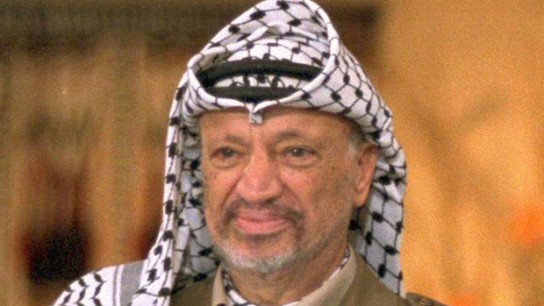
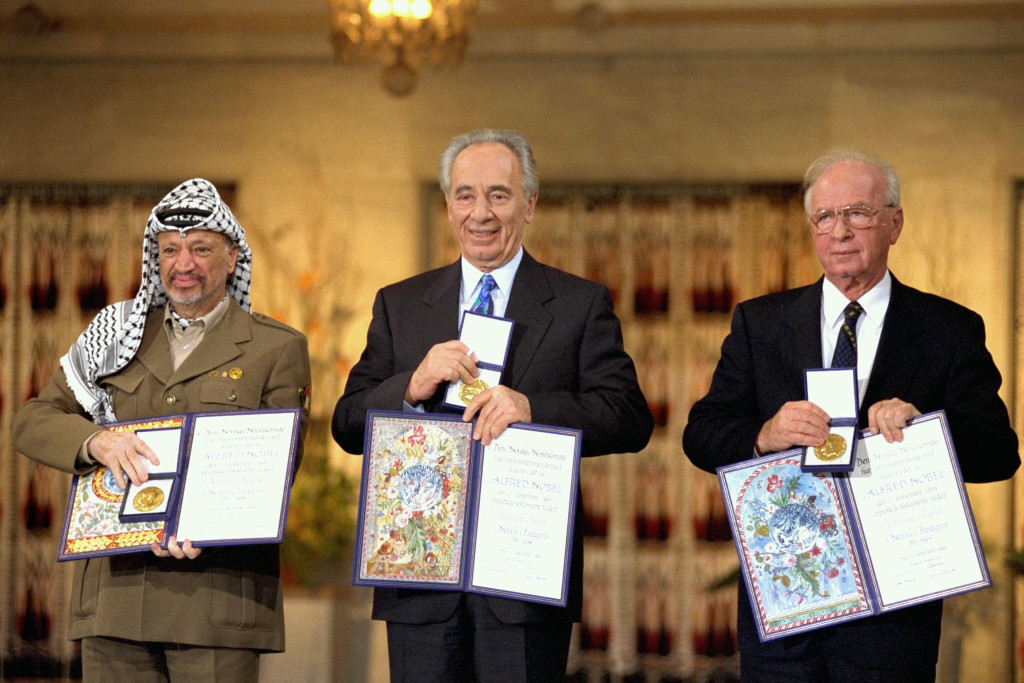
Yasser Arafat (1994) Palestinian leader Yasser Arafat shared the prize with Israeli Prime Minister Yitzhak Rabin and Israeli Foreign Minister Shimon Peres for their work on the Oslo Peace Accord, a document meant to create “opportunities for a new development toward fraternity in the Middle East.”
The committee has been criticized not only because of the failure of the Oslo accords, but for giving the prize to Arafat, who has been called “the worst man to ever win the Nobel Peace Prize”. The author Jay Nordlinger described Arafat in The Times of Israel as an “unrepentant terrorist with a long legacy of promoting violence” for terrorist campaigns against Israel.
The long list of Arafat’s numerous crimes has spurned many to call the Palestinian leader “the father of modern terrorism”.
From right to left: Prime minister Yitzhak Rabin, Foreign minister Shimon Peres and PLO Chairman Yasser Arafat
One member of the Nobel Commission, Kaare Kristiansen, also resigned to show his opposition to this award, also calling Arafat a terrorist. In 2002, several members of the Committee suggested Peres’ award should be withdrawn after the Israeli politician was named Foreign Minister of Ariel Sharon’s government.
Jimmy Carter (2002) Jimmy Carter was awarded the Peace Prize “for his decades of untiring effort to find peaceful solutions to international conflicts, to advance democracy and human rights, and to promote economic and social development”. It was very controversial because it was awarded right after the US senate authorized use of military force against Iraq to enforce UN resolutions.
Wangari Maathai (2004)
The first African woman to win a Nobel Peace prize died in 2011 at the age of 71. The New York Times has described her as an “environmentalist, feminist, politician, professor, rabble-rouser and human rights advocate” who created jobs for women and an organization that planted trees across Kenya in a bid to fight erosion.
The day before she was due to collect the peace prize in Oslo an African newspaper claimed she had likened Aids to a “biological weapon” and told participants in an Aids workshop that the disease was “a tool” to control Africans “designed by some evil-minded scientists.”
Maathai confronted the storm of controversy by insisting her comments had been taken out of context. “I neither say nor believe that the virus was developed by white people or white powers in order to destroy the African people,” she said in a statement released by the Nobel Peace committee. “Such views are wicked and destructive.”
Al Gore (2007)
The committee claimed that “Al Gore is probably the single individual who has done most to create greater worldwide understanding of the measures that need to be adopted” regarding climate change and global warming.
Many felt, however, that Gore was undeserving of the award since he hardly practiced what he preached. Shocking electric and gas bills from the Gore household in 2006 showed that his 20-room home and “pool house” were eating up over 20 times the national average electricity usage.
Barack Obama (2009) Barack Obama received the prestigious Norwegian award the same year he became president of the United States for “his extraordinary efforts to strengthen international diplomacy and cooperation between peoples” and, especially for his “vision of a world with no nuclear weapons.”
The award was heavily criticized as undeserved, premature and politically motivated. Obama himself said that he felt “surprised” to receive the prize and did not consider himself worthy of it. Nonetheless he accepted it.
Even if many consider Obama as an anti-war president, he has increased the US military presence in Afghanistan, ordered the military involvement in Libya in opposition to Muammar Gaddafi, and also ordered military intervention in Iraq in response to gains made by the Islamic State after the 2011 withdrawal from that country.
European Union (2012)
The Peace committee claimed EU deserved the award “for over six decades contributed to the advancement of peace and reconciliation, democracy and human rights in Europe.”
The award was widely criticized because it came at a time when social rights were suffering greatly due to discord between member states resulting from economic crisis.
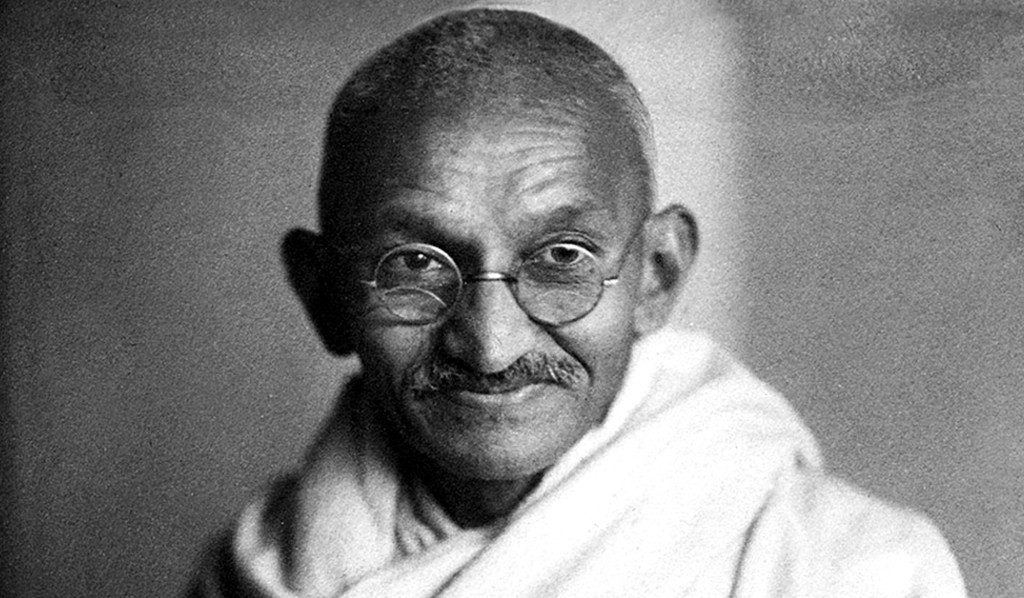
The prize never awarded The fact that Mahatma Gandhi never got the Nobel Peace Prize is considered one of the great blunders in the history of the Nobel Peace Prizes.
It’s hard to think of anyone in modern history who symbolizes non-violent struggle better than the Indian independence leader.
Gandhi was nominated five times but never won.
The Nobel committee later admitted that this was an omission, and in 1989 the chairman of the Nobel committee paid tribute to Gandhi as he presented that year’s award to the Dalai Lama.
The prize never to be awarded The list of official nominees for the 2016 Nobel Peace Prize is a tightly guarded secret, the award required to be posted to Nobel Institute in Norway by February 1.
The director of the Peace Research Institute of Oslo, Kristian Berg Harpviken, reveals however that U.S. presidential candidate Donald Trump has been nominated for the prestigious prize.
Harpviken said he had received a copy of a nomination letter for Trump – whose proposal to ban Muslim immigration to the United States has attracted international condemnation – that claims he deserves the Nobel prize for “his vigorous peace through strength ideology, used as a threat weapon of deterrence against radical Islam, ISIS, nuclear Iran and Communist China.”
Controversial Nobel Peace Prize Winners, compiled by Tor Kjolberg























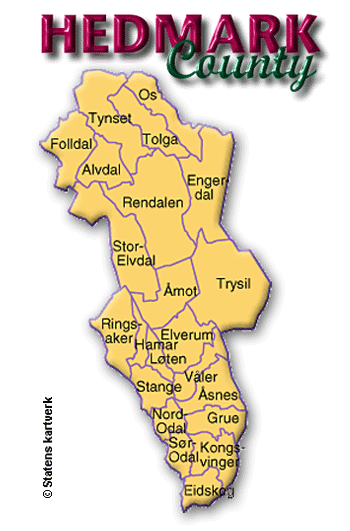 Hedmark is a stout piece of Norway. Describing this county is not easy; it’s sort of rich and poor at the same time. If we look at its size and scope, Hedmark comes in a good third place after Finnmark and Nordland. Its name has been given by the Norse Heidmork.














 “There is a subtle language here where things occur under the surface. There is an underlying tension, which is about to explode, or a feeling of being trapped under a glass dome. Not giving voice to one’s pain, but swallowing it. This is often what I portray. A silence, the energy of waiting. A condition that is very much about a person’s interior world. Questions which may have no answers, rather than answers which may have no questions.”