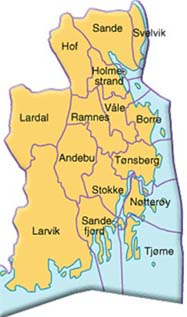
Since earliest times the county of Vestfold has been one of the main traffic routes through Norway. Vestfold county was navigable from north to south and to the west of the country. The European continent, being also accessible from Vestfold, has created trade with other countries to the south. It is for this reason that rich finds from the Viking Age are found here. Records exist in France from the late ninth century telling of the Viking fleets from Vestfold.
The districts of Larvik and Jarlsberg were merged in 1821 into the smallest county in Norway and was named Vestfold. From then on Tonsberg took over Kaupang’s function as port and trading center. Kaupang in Viksfjord, Larvik, was an important production and trade village for the Vikings in the 800s.
Kaupang – Viking trading town
Due to its natural conditions, Tonsberg was also preferred as a royal residence for many years in that the height of its tower on Castle Hill (Slottsfjellet) enabled detection of an approaching enemy from great distance.
Slottsfjellet – Castle Rock – in Tonsberg
Residents of Vestfold have always been oriented towards the sea and seafaring. Whaling earned wealth and good days for the residents. Other cities such as Horten and Larvik, have also played a part in promoting Vestfold internationally.
Harbour of Stavern. Photo: Wikipedia
Has the influence of this trade with other countries altered the distinctive Norwegian culture, tradition and way of life of which Norwegians are so proud? Perhaps the answer is both yes and no. By studying Vestfold compared to other nearby counties, we see tendencies to keep Norwegian traditions alive.
Vestfold national costume
There are exciting traits when it comes to food in Vestfold.
Living on large feet with much conviviality and delicate dishes spiced the food traditions of this county more than elsewhere in Norway.
Nature has also been generous to Vestfold. One does not have to wait long before spring bears fruit. Much earlier than in other parts of Norway, berries and fruits from nature’s own larder can be enjoyed here, something food recipes from Vestfold are marked by.
Herman Wildenvey
One of Norway’s great poets, Herman Wildenvey, after a long and wandering life, settled down in the little village of Stavern with his wife Gidsken, also a great writer.
Vestfold has more than just poets; you find also many talented culinary artists there. Maybe it’s worth to try Grilled Salmon?
This is our favorite way to eat salmon other than smoked. Prep time includes marinating.
From the Viking Age to the Present, written by Tor Kjolberg
Grilled Salmon
Ingredients Servings 4.
1 1⁄2lbs salmon steaks or 1 1⁄2 lbs salmon fillets
The exhibition Open Space – Mind Maps. Positions in Contemporary Jewelry at Nationalmuseum Design at Kulturhuset Stadsteatern in Stockholm intends to illustrate the point at which the actual art in jewelry arrived and what cultural messages take on the most crucial importance in this context.
Iris Eichenberg Brooch: New Rooms, 2008 Wood, Gold Photo by: Tim Thayer
The exhibition is positioned far from the merely decorative in the aesthetic and artistic discourse of our era. Thirty international artists present their works, arranged thematically by the buzzwords inhabiting current trends, such as the nomadic aspect and the tendency towards narrative imagery. You may also experience provocation that infringes on boundaries and poetic imagination in jewelry.
Jewelry long ago breached frontiers, and acts as artistic field research, participating in the current topics of art in our time. This exhibition emphasizes that jewelry no longer represents a simple decoration or a status symbol, but an aesthetic discourse and artistic position that reacts to everyday life events, to personal history and experience, to worldwide developments and new forms of communications and perception. It handles the contents as contributions to the art, within and beyond the same classical frames. We are moving in an open space and every object, every piece contains the mind map of the singular artist and his or her cultural background.
Lund Hagem Architects, based in Oslo, Norway replaced an existing building with two blocks by a decked walkway that widens out to serve as a terrace.
The area located off the coast of Helgeroa village in Southern Norway, consists of several small islands with exposed rock surfaces that are mostly accessible by boat.
The result is a charming holiday home on stilts perched over an uneven rocky site for a family of four; an interior architects, an artist and their two children. The 807 square-foot (75 square meters) Cabin Lille Aroya has become an extension of the majestic landscape.
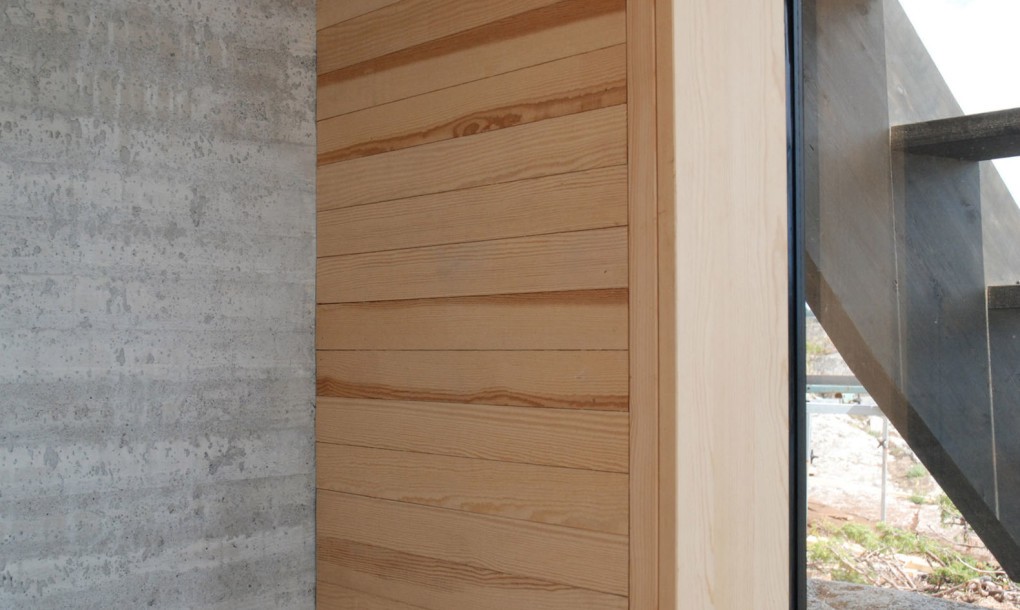
The cabins location just five meters from the water, offers amazing unobstructed sea views, but also strong winds. The wing containing the bedrooms, has been placed behind the front end of the building, helping to shelter it from offshore wind. It features pine with a natural finish. The interior seems to be finished in light wood and bare concrete. A slatted triangular frame to the front provides both anchorage against the wind and solar shading. “The new volumes sit naturally with the existing landscape and allow for free circulation and use of surround areas,” said the architects. Cabin Lille Arøya is one of three island cabins recently designed by the architects.
The architects add, “The topography of the site did not naturally lend itself to building and the existing house, which occupied the ridge of the island it stood on – the highest point and the only naturally horizontal surface there. The building seeks to enhance the qualities of the site and make use of areas that originally had no value.”
Pine cladding, glass and steel dominate the building. Laminated wooden beams and steel elements are visible in both the interior and exterior, while the black-painted segments of the roof and exterior walls reduce the building’s visual impact.
From the living room
The wing containing the main living spaces has a small kitchen to the back, a dining area and a living room to the front. Only the master bedroom is directly accessible from the living area; the other three bedrooms and bathroom appear to be completely separate and are accessed by the terrace.
“The materiality of the interior in this case is treated as the exterior, to minimise the threshold between inside and outside, and further enhance the idea of the summer cabin as a place where you live in harmony with the surrounding landscape,” said the architects.
The two parts of the house are fixed in place by thin galvanized steel stilts that help to create a level footing among the craggy boulders.
Remake of a Norwegian Summer Cabin, source: Lund Hagem Architects. Edited by Tor Kjolberg.
Photography is by Alexander Westberg and Lund Hagem.
How did three countries famous for flat-packs and meatballs, export of bacon, fish, oil and gas manage to be three of the leading exporting countries of pop sound?
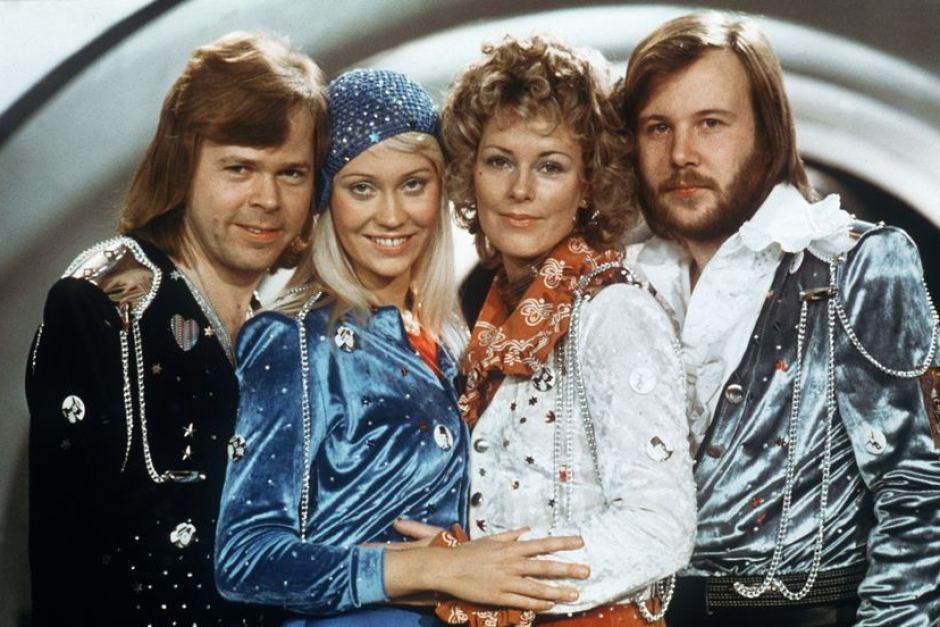
It all began with Abba’s Waterloo in 1974, and the group continued to produce international hits for nearly a decennium, followed by Ace of Base in the early nineties.
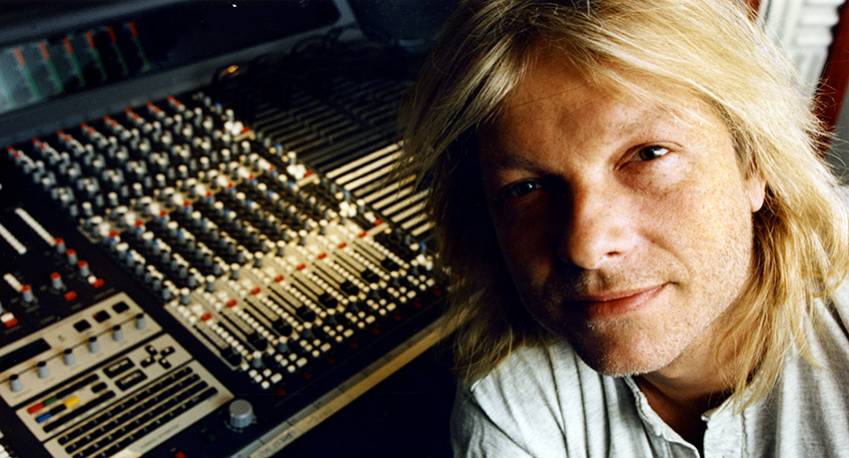
Then came Denniz Pop, also from Sweden, who was a popular DJ at trendy Stockholm nightclubs during the 1980s. His real name was Dag Volle, and has been named the Godfather of Swedish pop. Together with Dr. Alban, a Nigerian dentist, he produced their first big hit Hello Afrika. This 1990 release was their first international success.
Denniz Pop
Swedish songwriter Max Martin wrote several hit songs for artists like Katy Perry, Kelly Clarkson and Taylor Swift. The album “1989”, in which half the songs were co-written by Martin sold almost 1.3 million copies in its first week. Martin served artists as disparate as Frank Sinatra, George Jones and Whitney Houston.
Only Paul McCartney and John Lennon have had more US chart toppers than Martin – and if you include top ten hits, he is the most successful in pop history with 54 (ahead of Elvis, Madonna, and The Beatles).
Tove Lo
In the beginning of 2000 Stockholm residents Tove Lo and Mapei reinforced the fact that Swedish pop was reigning in the English speaking landscape.
Mapei
Norway
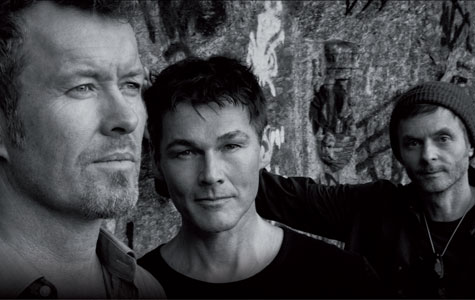
The Norwegian Group A-ha achieved their biggest success with their debut album Hunting High and Low. The album peaked at number 1 in their native Norway, number 2 in the UK and number 15 on the US Billboard album chart. The songs Take On Me and The Sun Always Shines on TV became international hits in 1986.
The best known international Norwegian artists in recent years are:
Aurora reached no. 9 in UK with her song Half the world away.
Coldplay reached no. 6 in UK with their Hymn for the Weekend.
Derulo, Jason reached no. 5 in USA with his Wiiggles.
Harris, Calvin reached no. 2 in UK with his How deep is your love.
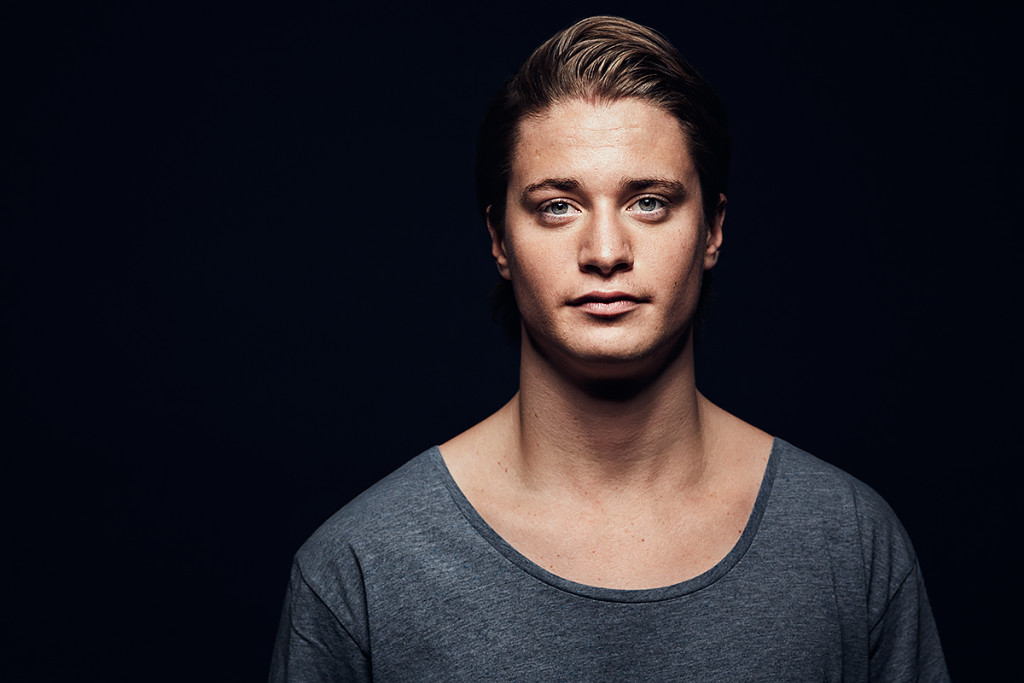
Kygo reached no. 20 in UK with his Stay, and no. 8 in UK with his Firestones.
Madcon reached no. 3 in Germany with their hit Don’t worry.
Nico & Vinz reached no. 1 in UK and no. 4 in USA with their Am I wrong.
Posner, Mike reached no. 1 in UK, no. 6 in USA and no. 5 in Germany with his hit I took a Pill in Ibiza.
Photo: Meredith Truax
Walker, Alan reached no. 7 in UK and no. 1 in Germany this year with his hit Faded.
Denmark
In 2000 Denmark joined the international Scandinavian pop sound with artists like Trentemøller, WhoMadeWho, Efterklang, The Astroids Galaxy Tour and the electro-pop starlet MØ. Since then, and in fact before, there has been a wave of artists doing wonderful things in this small Scandinavian country.
The best known international Danish pop artists in recent years are:
Agnes Obel (her debut album Philharmonics went double platinum in France and and Belgium).
Alfabeat had a hugely popular hit around Europe, The Spell. It sparked Alfabeat’s international success.
Aqua is the best-selling Danish music group ever. Aqua is especially known for their worldwide hit Barbie Girl. Aqua is a Danish-Norwegian pop group which enjoyed huge success in the late 90s.
Aqua-Lene
Asbjørn, who now lives, sings and dances in Berlin, built up his fan base with a series of visually striking videos. He is describing himself as a Danish pop kid with a relentless urge to dance.
Blaue Blume is a Copenhagen-based band, where singer Jonas Smith is loved for his cooing falsetto. The group has performed both at London and Berlin’s Ja Ja Ja events.
Broken Twin is singer-songwriter Majke Voss Romme who has crafted an intensely personal world around her music. Her debut album May was mixed by Ian Caple who’s known for his work with Tindersticks, Tricky and Late Bush.
D-A-D had an international breakthrough with the large rock hit single Sleeping My Day Away in 1989.
Dinner is an alias for pop-artist Anders Rhedin, who is calling Copenhagen, Berlin and Los Angeles home.
Photo: Julien Barrat
Fabricius-Bjerre, Bent is the composer of the instrumental Alley Cat from 1960, which is still hugely popular today.
Infernal reached high chart positions all over Europe and in Australia with their song From Paris to Berlin.
Linkoban, a rapper-singer is known for her eccentric, wholly impressive stage presence. The track “Like This” from her 2013 debut album OX received widespread attention from Boy George, Danish and Swedish radio and BBC and was used on Stella McCartney’s Paris runway show.
Photo: Thomas Topper Christensen
Whigfield achieved a no. 1 on the UK chart for 4 weeks with their song Saturday Night.
This is an impressive achievement considering that Saturday Night was Whigfield’s debut single.
As a Scandinavian music lover, I say “Thank you for the music!” and I apologize for all the fine Scandinavian artists not mentioned in this post.
Feature image (on top): Kygo
Scandinavian Sound of Success, compiled by Tor Kjolberg
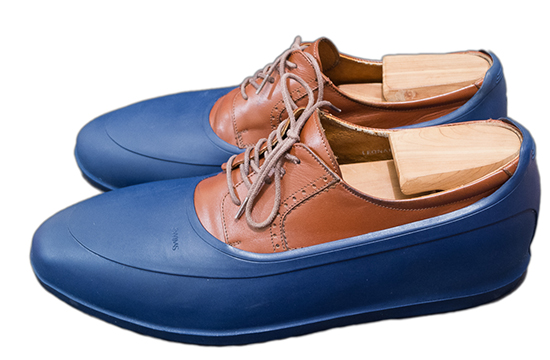
When British shoemaker John Lobb began collaboration with Norwegian Swims, the two companies created a fusion between old craftsmanship and new technology. As a student at Parsons School of Design in New York, The Norwegian Johan Ringdal noticed that many New Yorkers wore their fine leather-soled shoes in rain, sleet, and snow. Ringdal, who grew up in a home where old-fashioned galoshes still were the order of the day, decided to create a line of modern, active footwear in prismatic colors – including galoshes.
After graduating, Ringdal returned to his native Norway and formulated a plan and established his company Swims. Armed with his design and a pair of old-style galoshes, Ringdal traveled to a rubber and plastics trade fair in Germany. He talked to companies that manufactured everything from bottles to wetsuits, and a company in Taiwan was interested.
In the spring of 2008 the British company approached the Norwegian galosh producer Swims, set up by Johan Ringdal in 2005, on a cooperation to one of John Lobb’s most popular shoe lasts.
The British shoe manufacturer, established in 1849, is considered one of the real classics when it comes to footwear, and has made shoes for King Edvard the seventh as well as for Frank Sinatra and Ian Fleming’s James Bond.
The two companies teamed up, and in 2009 Swims, in collaboration with product designers from the Norwegian design office Work, used 3-D modeling to make an optimal fit, so the special adjusted galoshes were tailor made and thus also fit the expression “hand in glove”.
Galoshes were in fact outdated and seriously uncool – until Johan Ringdal single-handedly revived them. Last year, SWIMS sold galoshes, loafers, outerwear, and bags for more than €8.5 million.
Swim loafers
Swims’ second collaboration was with Armani fashion house for their Fall Winter 2012 collection. In January 2012, the Armani by SWIMS overshoe appeared on the runway in Milan. SWIMS had created a bespoke collection of modern day overshoes aligned with the unique artistry of Armani shoes.
Swims at Nick Hilton
However, there was one problem: good business depended on bad weather. In spring and summer nobody bought galoshes. The answer was a classic loafer, which is equally at home on the beach or on a boat. It took off and is now sold in 1200 high-end stores in 40 countries.
“SWIMS has become a lifestyle brand,” Ringdal says.
Swims loafers from 2013
“Mankind has been protecting shoes for millennia, but not until now has a viable, functional, handsome option been found. Situations like this call for galoshes. Yes, that’s right, the rubber overshoes your dad owns but never wears. Fortunately, what’s old has been made new (and better-looking) thanks to Swims, a footwear line out of Norway that’s redefining and reinventing wet-weather shoes,” states the company Jack Threads.
Over the past 10 years SWIMS has become a vibrant and sought-after lifestyle brand. “The more we grow, the more committed we are to our core philosophy. During the development process of new projects, we humorously often use the phrase: “to SWIMSify”. But make no mistake; this playful approach to design is always matched by an equally large commitment to the quality and the functionality of our products. Who says what are fun and friendly cannot also be great?” the company questions on their website.
In centuries past, pork was a rare household delicacy in Scandinavia. Each farm had a pig or two, carefully fattened and butchered before Christmas, and this was a true feast, as it was the only time of the year when fresh pork could be had.
The blood was carefully collected, the intestines rinsed, and used for fresh sausages, blood puddings and blood sausages. Most of the offal was eaten straight away. The rest of the pig was salted, dried and smoked for winter storage.
This means that pork is a revered part of our culinary heritage, and traditional, festive dishes with pork are numerous and very, very good. Scandinavians also have a rich heritage of recipes for preserved meats, primarily eaten at Christmas.
Christmas rib
With the advent of mass production, Scandinavians have long since lost faith in conventional pork as a food worth celebrating, and it is regarded by those who eat it as cheap and everyday commodity. However, the interest in organic and free-range flavorful and healthy pork is growing, and this has meant a recent revival of traditional and inventive pork cookery.
Roast pork wirh sauerkraut (surkål)
History The domesticated pig has been with Scandinavians since the Stone Age. For many centuries, pigs were reared on a very small scale. Each family had only the number of pigs they could look after in a sustainable way, feeding them on scraps.
A male pig wild-boar cross
In winter the pigs were kept indoors, while in summer and autumn they lived in the woods, foraging and growing fat on beech nuts and acorns. (The woods all belonged to the local kings, and huge taxes were paid for the privilege of using these areas and feeding grounds.) This practice meant that the pigs could breed freely with wild boar, and the distinction between the two was not always clear. You can only imagine how delicious the meat from these animals must have been. This is how it is still is in less developed parts of the world.
Historical photo of transport van
In the latter part of the 19th century, a time of great political change, farmers and workers in the cities began to unite in a widespread cooperative movement, most of which still exists today. An important part of this was the establishment of hundreds of local dairies, which were an immense success. A dairy produces huge amounts of buttermilk and whey, so this was returned in part, to the farmers, but as production boomed they could not use up the whey, and pig farms were established in connection with the dairies, feeding the pigs on the surplus.
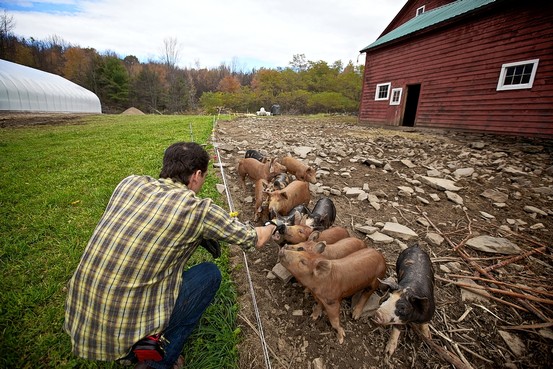
Organically pig farming
From these beginnings grew Denmark’s phenomenal export venture in pork and dairy products. As there were strict regulations for import in the rest of Europe, the first national system of veterinary control was established, reassuring the primarily English consumers of pork and bacon that the meat and butter they were buying was safe and healthy.
Having a wide genetic background, with the spread of pig farming the pigs were bred into a common Danish landrace, a meaty, relatively lean, long porker, designed for bacon production. They even succeeded in lengthening the pig’s body with an extra pair of ribs, for even more bacon, an achievement that saw the landrace pig spread worldwide.
Danish pig farm
Denmark still has an absurdly large population of pigs, in the region of 20 million (annually) – about four times the number of humans. The pig populations are more modest in the rest of Scandinavia, where pigs are reared mostly for local consumption.
The level of Danish pig production is not in any way sustainable, causing immense pollution, and the quality of this industrial meat is so bad that it has led to many people not wanting to eat pork at all.
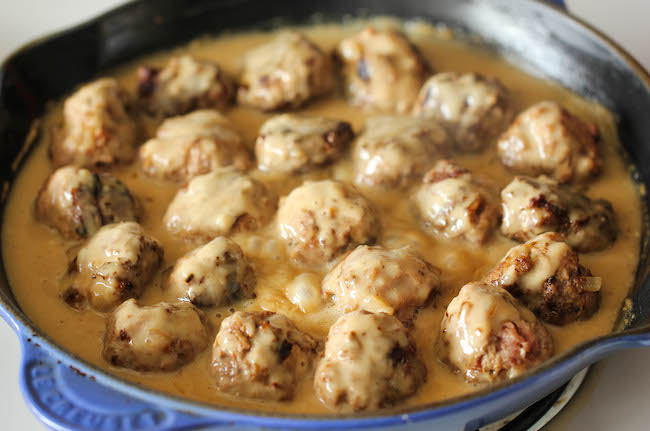
Swedish meat balls
Appearance and taste Organically reared pigs taste the best as they are left to roam, and use their incredible snout for foraging in the ground. They are fed organic food, and this amounts to happy pigs, with a superior taste and cooking qualities. Conventional pork is watery, chewy, far too lean and without the intense pork flavor that you are after.
Culinary uses Pork is extremely versatile and lends itself beautifully to every kind of preserving, as well as spicing. Pork is rarely made into stews, but is used minced in a great variety of ways, including the popular Scandinavian meatballs; pork chops and roasts are also popular.
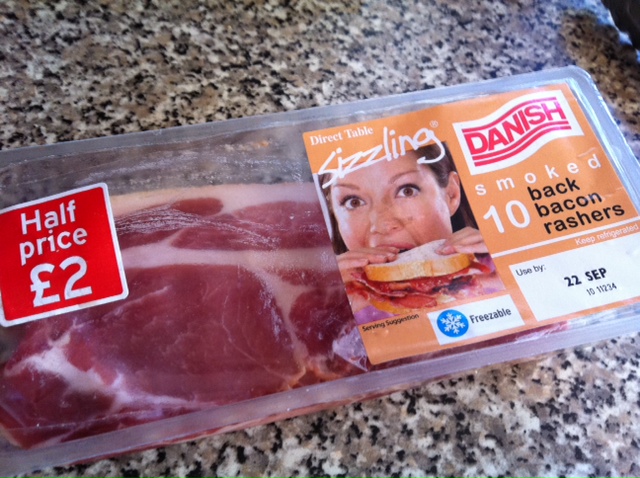
Every part of the pig is used; the bones are boiled for stock, and the fat is rendered and spiced, and used as a spread for open sandwiches. Meaty ribs are fried slowly in a brown sauce and eaten with mashed potatoes. The belly of the pig is made into bacon, or into tolled, salted sausages, the hind legs into ham, and the head into a delicious brawn. Odds and ends are usually made into sausages, fresh like medisterpølse, or cured, smoked and/or dried.
Medisterpølse
Modern pork is free from trichinella, a parasite formerly a threat when eating omnivores like pigs. This means that you do not have to roast pork beyond recognition. Toy can bake, fry or roast it until tender and pale pink, and retain the juiciness, which is so important when cooking pork.
History of Scandinavian Pork, written by Tor Kjolberg
Norwegian sprinter Ezinne Okaparaebo, ranked number 46 in the world for running, put her leaping skills on display when she earlier this year posted a clip of one of her workouts on Instagram.
She has certainly put the average person to shame by sharing this impressive training routines on social media. She needed only five leaps to cover 28 stadium steps.
It really is one of those see-to-believe moments – especially in slow-motion, which Okparaebo graciously did for her fans – because who can keep up with her at the regular speed?
On Instagram Okparaebo writes: “So overwhelmed with the response on my jumping skills. Thank you all :)”
https://youtu.be/j6gkjTKd-aI
The video showing her star-jumping drill has gained a ton of attention online. It definitely isn’t the typical approach to stair jumps.
Ezinne Okparaebo (born 3 March 1988) is a Norwegian track and field sprint athlete. She was born in Nigeria, and has been living in Norway since the age of nine.
Okparaebo represented Norway at the 2008 Summer Olympics in Beijing. She competed at the 100 meters sprint and placed second in her first round heat after Kerron Stewart in a time of 11.32 seconds. She qualified for the second round, in which she failed to qualify for the semifinals as her time of 11.45 was the fourth time of her race.
In the 2009 European Indoor Championships in Turin she won a silver medal on the 60 meters event
Okparaebo won the 100m IAAF Diamond League in Oslo on 7 June 2012 in a national record time of 11.31 seconds.
She returned to the 2012 Olympics, setting a new Norwegian national record in the semi-finals with at 11.10, but failed to advance against a very fast field.
Okparaebo is a member of the Christian sports organization Kristen Idrettskontakt (KRIK). (Wikipedia)
She produced a 15th-place finish in the 100m at the IAAF world championships in August 2015.
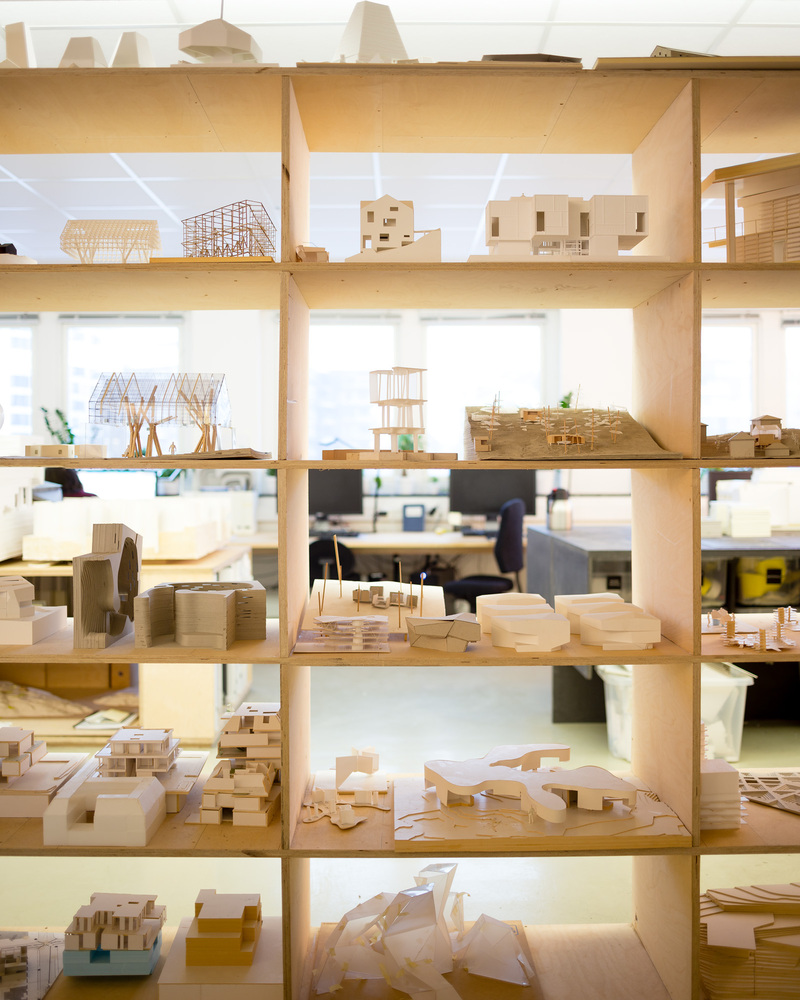
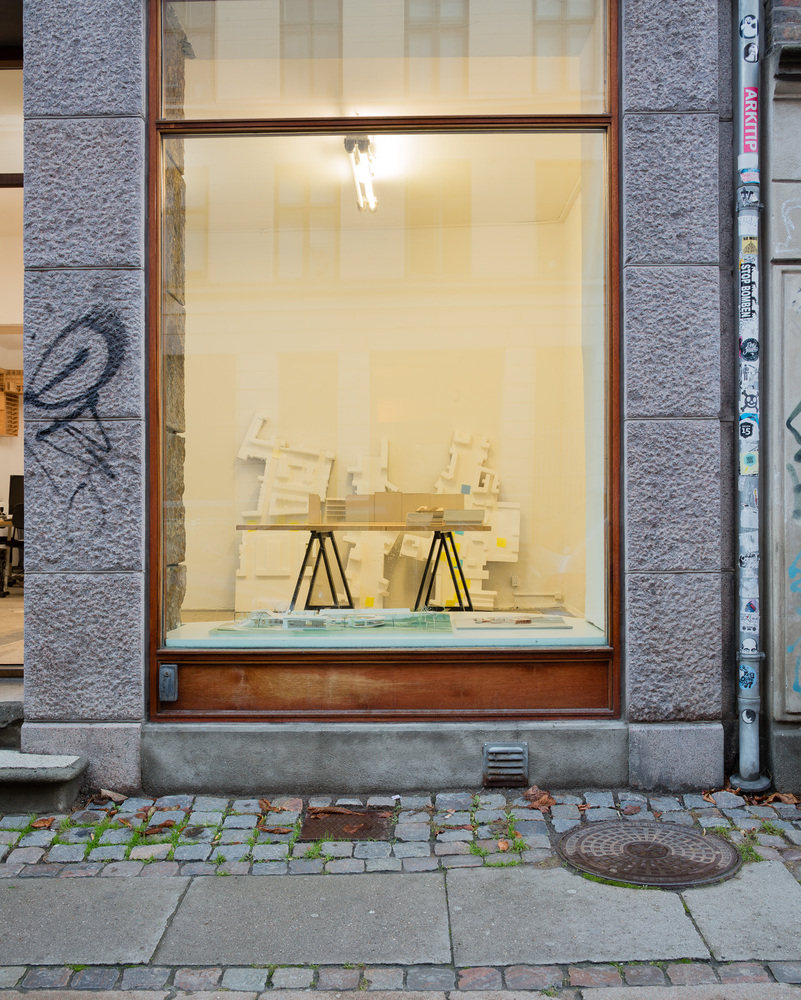
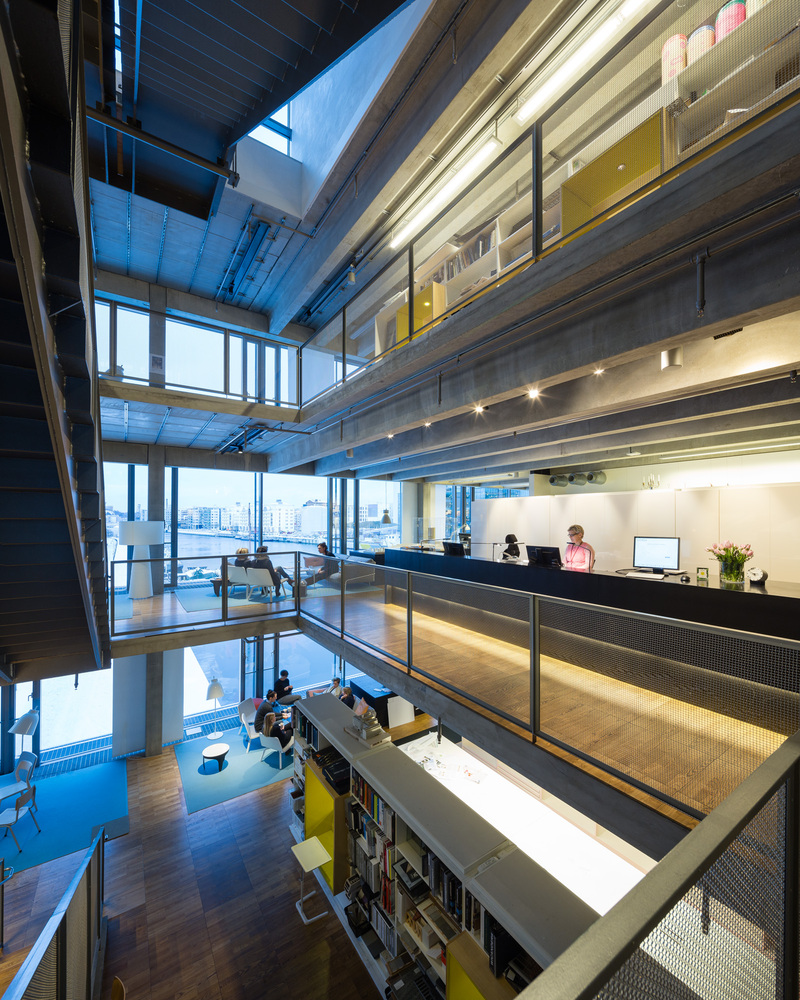
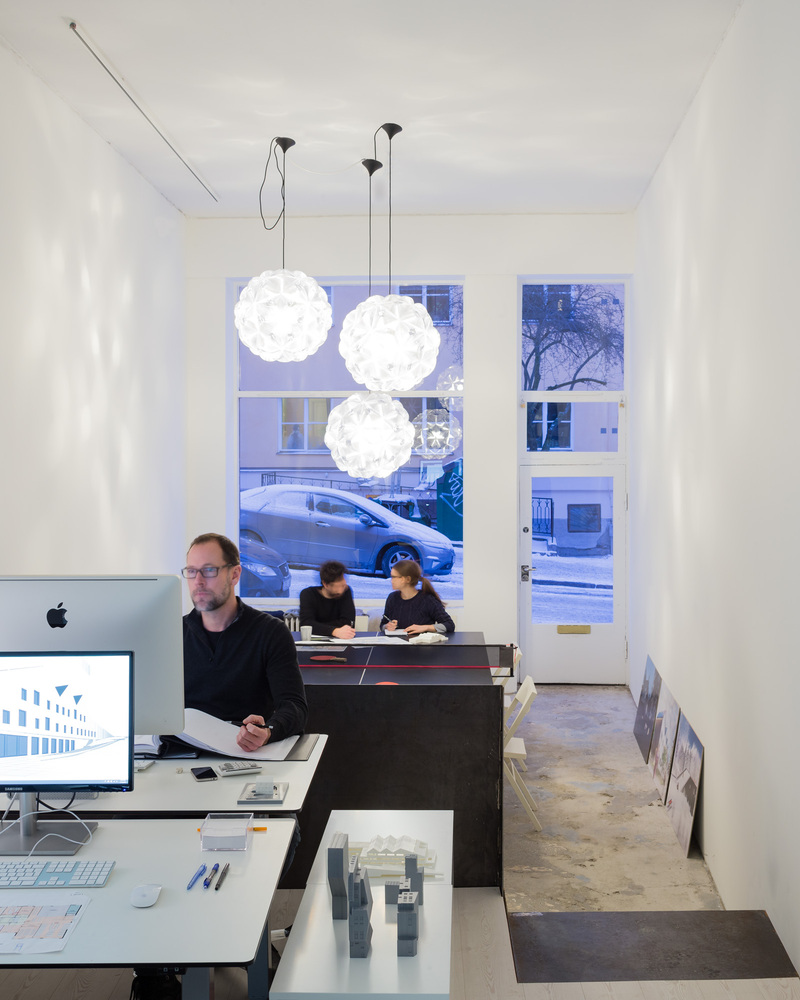
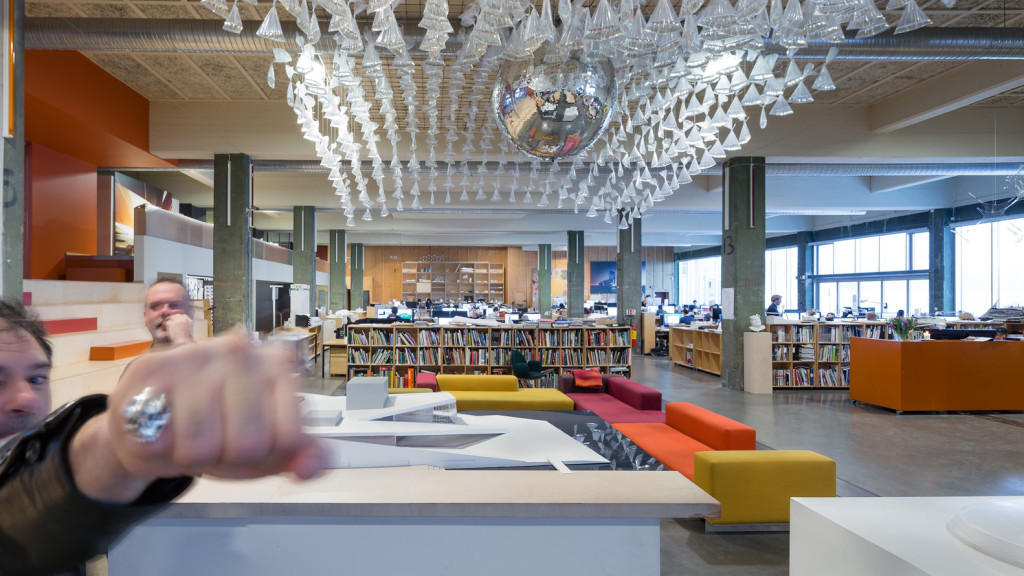
Late last winter architectural photographer Marc Goodwin completed an “ultra-marathon of photoshoots in four Nordic countries. He visited twenty-eight architectural offices in twenty-eight days, spread across four capital cities – Copenhagen, Helsinki, Oslo and Stockholm.
From Leth & GoriFrom Oopea/Lunden
His aim was to understand what sort of spaces architects in the Nordic countries operate in, and how they differ between each respective country. From former boathouses to stables and coal deposits, Goodwin has captured some of the most unique working environments the profession has to offer.
From 3XN
We interviewed Marc after his month on the road with Nordic architects.
Please tell us a little about your background and why you ended up as an architectural photographer.
I fell in love with architecture and large format photography at the same time, while studying, many years ago. It was too hard to choose, so I decided to put them both together and the rest is history. My love of travel has also meant this was a good decision.
From Atelier Oslo
Was it your idea to do the ultra-marathon photo tour to the Nordic countries – and why the interest for Nordic architects?
I got the idea because I had just finished two book projects that were amazing but took over two years each. I wanted to do something more compressed, and also see how it would affect my work if I were forced to produce images quickly.
As for the Nordic countries, I’ve spent the past five years in Finland. I went there initially to do a PhD and wound up getting work as a photographer. I am ready for another move, and my goal is to be based in Scandinavia and work all around the Nordics. This was a good way to spend a bit of time in different countries there and meet a lot of people very quickly.
C F Moeller
Did your experience of the architects working conditions tell you something about their architectural work/architectural icon projects?
Yes, surprisingly, you can learn a lot by spending a day in an office. This becomes increasingly true the larger your sample size is. By the end of this journey, I felt more like a consultant sent to analyse the atmosphere of each office than a photographer sent to take nice pictures. I guess my real task lied somewhere between those two missions.
From Ghilardi-Helsten
Your aim was among other things to find out if there are differences between the four countries. What is your answer to that question?
Both the architecture and the professionalism of this part of the world are very attractive to me. I think the Nordic countries are the ideal place to live and work. However, there are small differences in each city I visited. Stockholm and Copenhagen are much larger and international than the other two, so the pulse is faster and the general hustle and bustle far greater. People are used to foreigners as well, for that reason, in each. In Helsinki and Oslo, someone like myself is still something of a novelty, and people are really curious about why you are there. People are also quieter in Helsinki and Oslo.
From Jägnefält+Milton
Did you have time/opportunity to talk with the architects during your travels, and in case what did you ask about, and what were the answers?
People mainly wanted to know the same things you have asked me in this interview! I will add that the interaction with architects was as dependent on the size of the office as the country it was located in. In big offices a communications manager showed you around in a very polished, formal but friendly way. It was kind of like an official state visit. In small offices you had a cup of coffee and sat down directly with the partners who were often the only people there.
From Leth+Gori
Do Nordic architects work in a different manner than architects from other parts of Europe/World – in your opinion/findings?
Yes, I lived in Spain before Finland and in the UK before that. Each is totally different. I found Spain to be the biggest challenge as a photographer. Things work through connections and there isn’t much of a meritocracy. While living in Spain most of my work was from UK architects that were building there. This was a great disappointment because there are so many Spanish architects I admire. As for the UK, it is very professional and media savvy on the whole. Unlike anywhere else I have ever worked. Although brief trips to New York and LA gave me the impression that there it was still more so, perhaps not surprisingly. Big offices in all four cities reminded me of my work in London. The smaller offices are also great to work with though because you know how personal everything is to the people you are speaking with.
From Norrøn
Were there any memorable moments worth telling about from your tour?
There were a few disasters, such as me falling over on the ice and being sure I’d broken my equipment and cracked my skull. Luckily, neither was the case. And I got really sick, which is not surprising since it was minus ten or colder the entire month and I spent a lot of that time going from indoors to out.
I was astonished by how closely a cruise ship passed next to the Snøhetta office in Oslo. I managed to close my gaping jaw and photograph it just in time. The other surprises came from things people said.
From Snøhetta, Oslo
An incredibly successful company almost dropped out of the story when I showed them pictures of their office empty with lights off.
Another big office asked how much they would have to pay to be in this story. The answer was of course, nothing.
From PES
In Norway an architect first said they shared office space because of a belief in transparency. When I said everyone says that everywhere, they added that real reason is that people can’t afford office space.
In another office, a young architect offered to provide me with some nice pictures for my story. From an architect’s perspective that makes sense and is a kind offer. From a photographer’s it sounds slightly different!
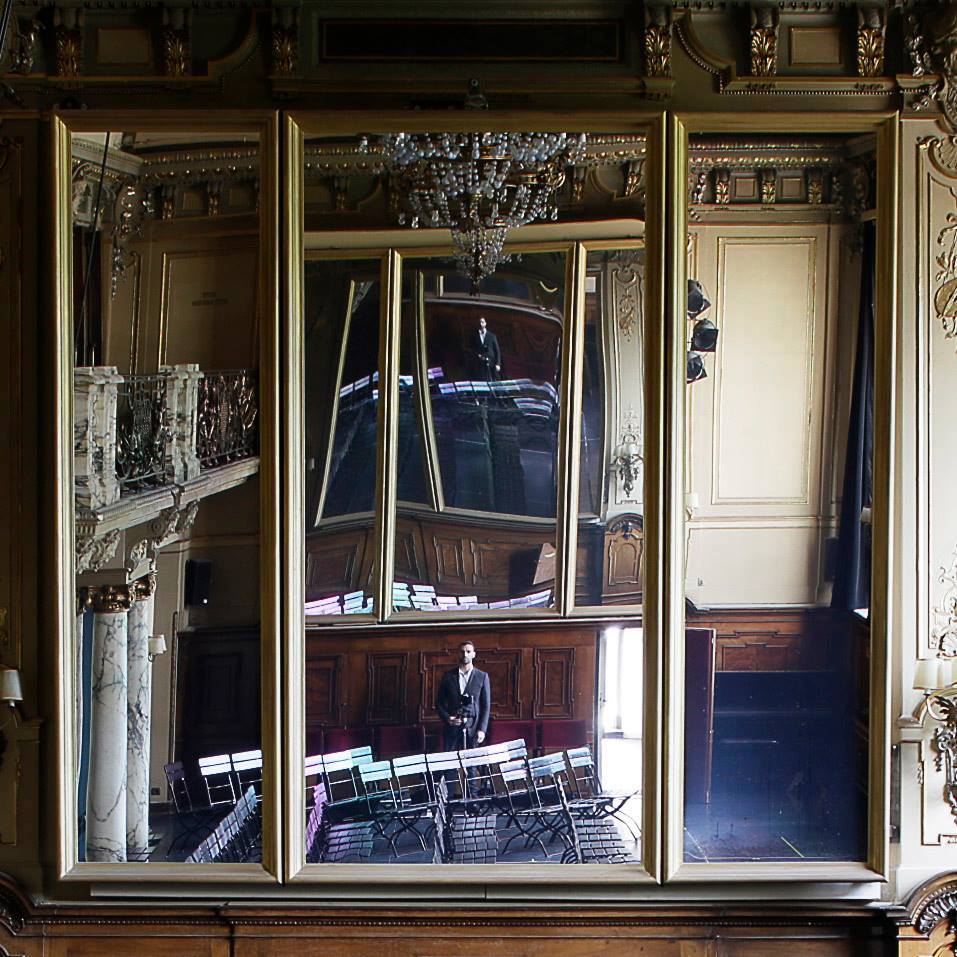
Marc Goodwin self portrait
About Marc Goodwin
Marc Goodwin founded his company Archmosphere in London with two goals. The first was
to provide its clients with the images they require, produced to meet the professional standard of the architectural press. Additionally, Marc works hard to restore the sense of place that is significant to architecture but lacking in most commercial photography. This second goal is achieved through attention to atmosphere.
The architects visited:
Denmark
KHR ArkitekterSince 2010 / Size: 1400m2 / Former use: boat houses built to store naval ships in 1813 after a war.
Henning LarsenSince 2001 / Number of employees: 170 in Copenhagen / Former use: department store completed in 1939, designed by architects H. Ortmann and V. Berner Nielsen
3XNSince 2014 / Size: 2000m2 / Number of employees: 85
Tham & Videgård ArkitekterSince: 2002 / Size: 200m2 / Number of employees: 15 / Former uses: head office including the telephone service for the local taxi company
Street MonkeySince: 2016 / Number of employees: 3 / Size: 46m2 / Former use: Built in 1940 as multifamily housing
From Streetmonkey
Kjellander + SjöbergSince: 2007 / Size: 260m2 / Number of employees: 40 / Former use: silk mill (today the mill’s operation is confined to one floor, a second floor is inhabited as a silk mill museum)
SWECOSince: 2012 / Size: 29,000m2 / Number of workstations: More than 1,400 / Former use: Newspaper HQ built in 1960-62 Norway
Superunion ArchitectsSince: 2015 / Size: 130m2 / Number of employees: 4 / Former use: soap factory
SnøhettaNumber of employees: 119 / Former use: storage area for harbour deliveries.
Snøhetta
Lund HagemSince: 2004 / Size: 1200m2 / Number of employees: 50 / Former use: storage area for harbour deliveries
LINKSince: mid 1980s / Number of employees: 59 in Olso branch (15 offices in Scandinavia) / Former uses: flour-mill
ghilardi+hellstenSince: 2007 / Size: 450m2 / Number of employees: 11 / Former uses: Dance studio
SPACEGROUPSince: 1999 / Size: 300m2 / Number of employees: 15 / Former uses: functionalist building from the 60s rehabilitated in 2013
Finland
ALASince: 2013 / Number of employees: 40 / Former uses: student housing with a shooting range in the basement (still there) and a tennis court under the vault, which is where we are
B&M ArchitectsSince: 2008 / Number of employees: 20 / Former uses: cable factory, which was turned into offices in the 1980s
JKMMSince: 2015 / Size: 1007m2 / Number of employees: 65 / Former uses: office building designed by Raoul Lehman in 1978
StudiopuistoSince: 2014 / Size: approx 90m2 / Number of employees: 6 / Former uses: fabric store, supermarket
OOPEAA / LUNDÉN (2 offices in shared space) Since: 2015 / Size: 260m2 / Number of employees: 10 LUNDEN / 10 OOPEAA / Former uses: Camera shop, antiques store. The building itself was built 1936.
Talli / Leviska / Helander (3 offices in shared space) Since: H&L moved in in 1997, Talli in 2012 / Size: 237m2 / Number of employees: 21 (Talli 14 people, Helander & Leiviskä 5, Micki Schnitzler 2) / Former uses: the building used to be an apartment building (built in 1929)
PESSize: 500m2 / Number of employees: 30 / Former uses: The office bought the site in the 1970’s and the office building was built 1976, area 300m2. The Atelier part was built 1990, area 120m2
Architectural Photo Marathon in Scandinavia, Marc Foodwin was interviewed by Tor Kjolberg
Karl Backlund (30), a graduate from Norwegian School of Economics in Bergen and ESSEC Business School in France had trouble finding a job in banking. Then he met Jon Ein, a Paris-based American financier looking to expand into luxury travel.
In 2013 they founded a private travel community for the executive traveler, focusing on the luxury market. The pool of travelers allows the company, Marchay, to create value by getting better rates and taking a fiduciary approach. The model is membership-based and applicants must be screened before approval.
From the Mark, New York
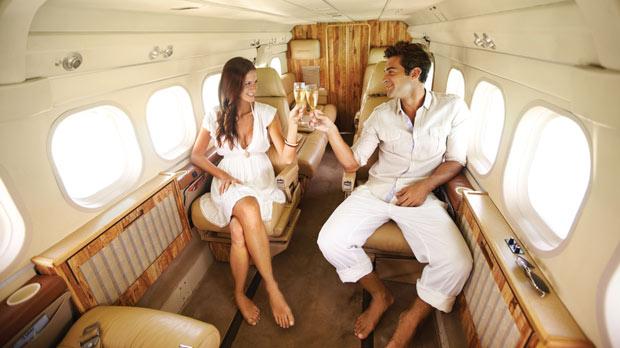
Focusing exclusively on the top end of business travel. Marchay chooses one or two of the best hotels in the world’s major business cities, e. g. The Connaught in London, the Mandarin Oriental in Paris, The Mark and The Peninsula in New York, the St. Regis in San Franciscp, Park Hyatt in Dubao and Beijing, Shangri la in Toronto and Emiliano in Sao Paulo.
Marchay luxury hotel
Members also share tailored travel tips and recommendations for each location. The ‘List of 5’, which is sent directly to members’ smart phones, is a condensed round-up of the best places to visit within a short walk of the hotel.
“We are revolutionizing high-end travel for a small subset of business leaders and accomplished individuals,” said Mr. Backlund to the New York Times.
Backlund explains that Marchay would rather acquire the accredited member than growing too fast. One trend Backlund identified in luxury business travel is the social component as peers turn to each other more than just relying on traditional travel services.
Now Marchay will transition from an invitation-only site to a public one, on which anyone can apply for membership. The yearly fee is $2,000 (up from $1,000 in 2013), with a $25,000 annual minimum spend on travel services brokered by the company.
“We focus on expensive markets because that’s where you can turn that $900 hotel into $300 or $400,” Mr. Backlund told NYT.
While the cost saving is the basis for Marchay, it is also about having a perfect user experience and making our work travel more efficient and fun.
Norwegian Founder of Luxury Travel Agency, written by Tor Kjolberg
According to a recent survey by the NUS Consulting Group, studying water rates around the world, rates have increased in 12 of the 14 countries surveyed. Water prices in Denmark were by far the most expensive. With prices of USD 6.7 per cubic meter, Danish water costs almost one dollar more per measure than in second-placed Scotland, and USD 6.20 more than in Mexico, the cheapest on the list.
Water rates in the United States were among the lowest in the countries surveyed, and were one half to one third the rates charged in most European countries.
Carl-Emil Larsen, DANVA
Head of the Danish water and wastewater supply association (DANVA) Carl-Emil Larsen, however, claimed that Denmark has long-standing policy that all costs related to fresh water and wastewater disposal should be paid by the consumer. “They don’t do that in countries like Italy,” he said.
Most countries included within the survey reported water prices increasing above their respective rates of inflation. South Africa had the largest percentage increase in pricing with a jump of 20.4 percent in the price of water from last year.
The OECD agrees with the Danish association DANVA. “High water costs can be beneficial to the environment, theorizing that when consumers pay high costs they appreciate the scarcity of the resource and its true value,” claims the organization.
While the world’s population tripled in the 20th century, the use of renewable water resources has grown six-fold. Within the next fifty years, the world population will increase by another 40 to 50 %. This population growth – coupled with industrialization and urbanization – will result in an increasing demand for water and will have serious consequences on the environment.
Europe has the highest water costs in the world and this trend is likely to continue. Germany and Denmark pay the highest prices for water on the Continent, at $1.78 and $1.72 per cubic meter, respectively. Rates in the United Kingdom, France, Belgium and The Netherlands were all above $1 per cubic meter of water.
Larsen claims high prices leads to greater water conservation. “We can see that Danes are saving more water,” states Larsen. “Over the past 20 years we’ve seen a considerable drop in water consumption, so expensive water does lead us to conserve it.”
Industrial water consumption
Having enjoyed success in deregulating their electricity and gas industries, some countries are grappling with this issue in the area of water. The United Kingdom is undertaking a pilot program and Germany is active in exploring ways of deregulating its market. However, water is one of the most politically sensitive subjects and quality supply, not price, remains the paramount concern.
Danish statistics on water consumption in dairy farms, agriculture and slaughterhouses have shown that consumption has fallen dramatically, but that these high consumption groups are now feeling the economic strain of the prices, with many saying they are not prepared to tolerate the charges any longer.
”We’re at our pain threshold,” said Danish Agricultural and Food Council environmental manager Annette Christiansen. “The food industry can’t save any more water than we’re already doing now. The difference in water prices between Denmark and other countries is distorting competition within the food industry.”
– – – –
The NUS Consulting Group is an independent cost control and consulting organization operating in 16 countries around the world through 11 wholly owned subsidiaries. More information on the organization and its water rates survey may be obtained by visiting the company’s website at www.nusconsulting.com.
Highest Water Prices in the World, written by Tor Kjolberg